A preliminary systems diagnosis and economic transformation proposition
1. The wider economic system: growth that does not travel
PLACEMENT: Immediately after the title and opening introduction, before the section introducing Rusinga Island and its geographical, demographic and historical profile.
Economic growth is often discussed in terms of national output, investment, infrastructure development and the expansion of particular industries. However, an economy cannot be considered fully transformed simply because growth is taking place somewhere within its boundaries. We must also examine how that growth travels, how it connects different geographical areas, and whether the productive opportunities it creates extend outwardly to incorporate communities and resources that remain outside the main centres of economic activity.
The concern here is the failure of outward circular growth to scale sufficiently. Economic activity in one location should create demand, investment, supply relationships, employment, skills development, processing opportunities and markets in other locations. These relationships should generate further rounds of productive activity, extending the reach of growth. Where these connections remain weak or fail to develop, economic expansion becomes concentrated, while other areas continue to operate within limited economic cycles.
Rusinga Island provides an opportunity to examine this condition at a particularly visible geographical level. Its circumstances invite us to look beyond the island itself and investigate the wider economic relationships that determine whether its people, resources and productive capabilities are connected to expanding economic activity elsewhere.
The Rusinga case must therefore be understood at two levels: the wider system that has not extended its productive growth sufficiently outwardly, and the local conditions that have developed within the space left beyond that reach.
2. The Rusinga Island effect: the tip of a larger iceberg
PLACEMENT: After the section describing Rusinga’s geographical position, history and economic circumstances, immediately before introducing the concept of The Curse of the Waters Around a Land.
The Rusinga Island effect is the visible local expression of a much larger economic condition. What we observe on the island cannot be separated from the wider pattern of economic development around it. The limited movement from primary production into processing, manufacturing, distribution and higher-value economic activity is not merely a local shortcoming. It must also be examined in relation to the extent to which wider economic growth has reached the island and created meaningful connections with its productive resources and people.
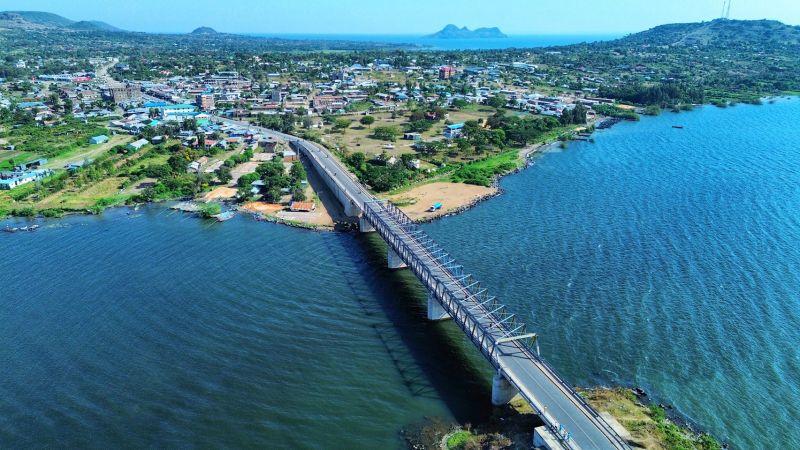
The island’s geography makes this condition particularly apparent. Water surrounds the land, and although the causeway provides a physical connection to the mainland, physical accessibility does not automatically translate into economic integration. An area may be physically connected yet remain weakly connected to investment, technology, industrial development, markets and the institutional arrangements that support productive growth.
The Rusinga Island effect is therefore not a claim that island communities are inherently inward-looking or incapable of development. It is a proposition about what can happen when a place remains outside the expanding productive circuits of a wider economy for an extended period. Local economic activity can become organised around what is immediately accessible, while the wider possibilities of economic participation remain insufficiently developed.
This is the tip of the iceberg. Beneath the visible conditions on the island lies a wider question about the organisation and geographical reach of economic growth itself.
3. The Curse of the Waters Around a Land: when geography becomes a boundary of possibility
PLACEMENT: Retain the existing section introducing this concept, but insert the following after its opening explanation and before the discussion of dependency and external intervention.
The waters surrounding Rusinga present a particular paradox. They are both a physical boundary and an economic resource. They connect the island to Lake Victoria, fishing grounds, transport possibilities, trade and markets beyond its immediate shores. Yet a geographical boundary can gradually acquire a meaning beyond its physical existence. It can become a boundary of expectation, institutional organisation and economic imagination.
The question is whether the waters have come to define the limits of what is organised and pursued, rather than being understood as a connection to wider economic possibilities. When the immediate environment becomes the principal reference point for economic activity, the development of relationships with external markets, technologies, investment and productive networks can remain limited.
In such circumstances, external assistance may become an important means of addressing immediate needs without necessarily changing the underlying organisation of the economy. Government interventions, NGO programmes and development projects may provide valuable relief and support, but unless they contribute to building productive capabilities and stronger economic relationships, the conditions that make external intervention necessary can persist.
The proposition is not that external assistance is undesirable. The question is whether external relationships are being used to build the capacity to provide, produce and participate, or whether they become substitutes for the development of that capacity.
The waters must therefore be reconsidered. They should not represent the limits of Rusinga’s economic world. They should become part of its connection to a much wider one.
4. Rusinga must rise from its own ashes to meet the wider economy
PLACEMENT: Immediately after The Curse of the Waters Around a Land, before the section on Singapore and the lessons of international economic partnerships.
The wider economy must extend its productive growth outwardly, but Rusinga cannot simply wait for that expansion to reach it. It must rise from its own ashes to meet it.
This is an essential part of the transformation proposition. Rusinga must move beyond being a place whose development is principally discussed in terms of what government, NGOs, donors or external investors might bring to it. It must become an organised productive economy capable of identifying its opportunities, mobilising its resources, developing its people and establishing the institutional and enterprise structures required to participate in wider economic activity.
This requires a deliberate rebuilding of the island’s productive foundations. Its land-based and lake-based resources must be considered together with the human capabilities, technical knowledge, infrastructure, enterprise and institutional arrangements needed to convert those resources into higher-value economic activity. The objective is not simply to increase the volume of primary production, but to develop the connected stages through which value is created, processed, retained and circulated.
The transformation must therefore involve two movements that meet. The first is the outward expansion of the wider economy, bringing investment, infrastructure, technology, knowledge, markets and productive opportunities into places that have remained beyond its principal growth circuits. The second is the internal renewal of Rusinga, building the capacity to recognise, organise and use those opportunities.
Neither movement is sufficient on its own. External investment without local productive capability can create dependency and limited local value retention. Equally, local initiative without access to wider markets, technology, investment and economic networks can remain constrained by the size and purchasing power of the immediate local economy.
Rusinga must therefore rebuild from within while reaching outward. Its people must become participants in shaping the island’s economic future, not merely beneficiaries of projects designed elsewhere.
Part I — The island profile: what are we looking at?
1. The geographical and demographic setting
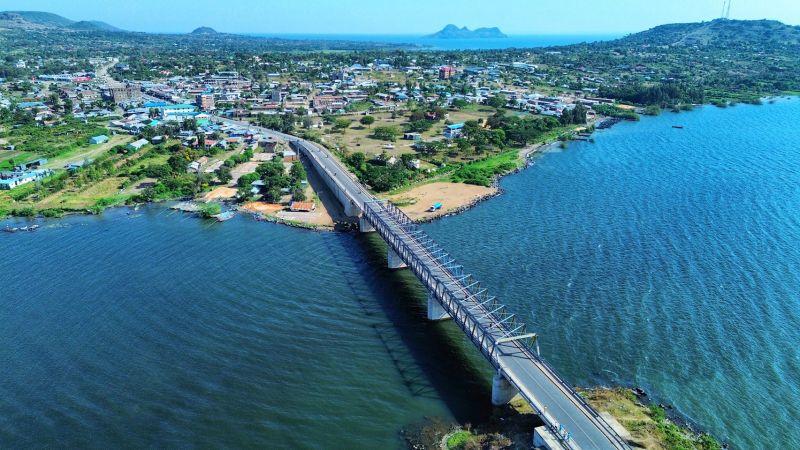
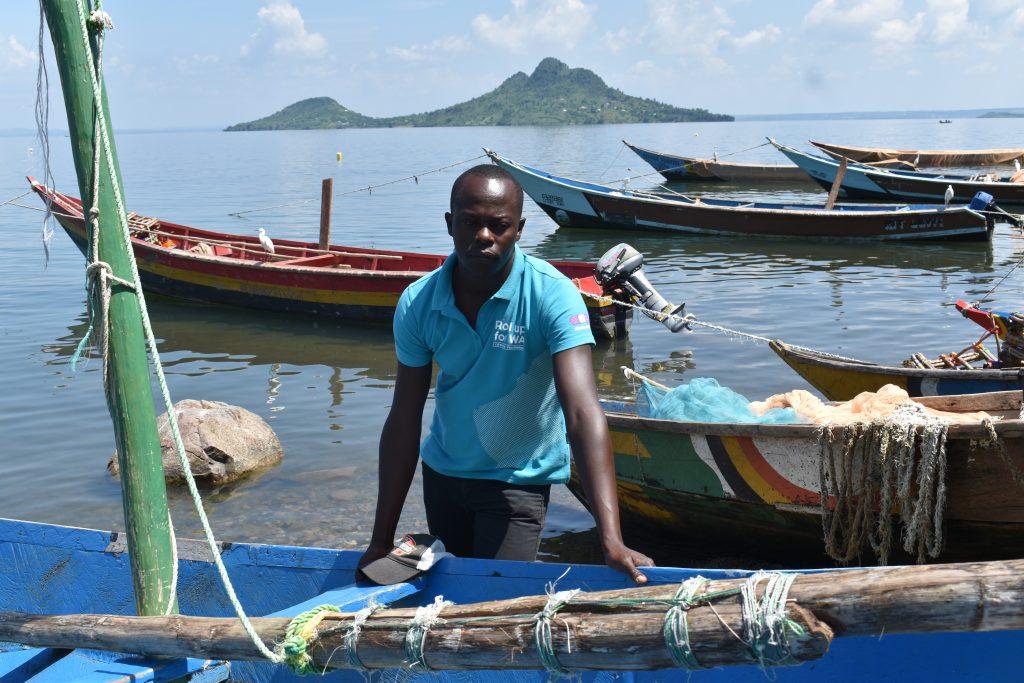
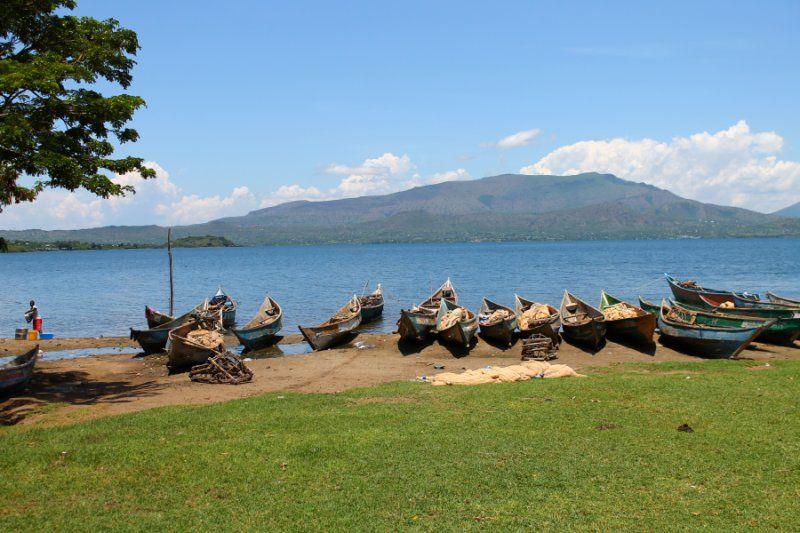
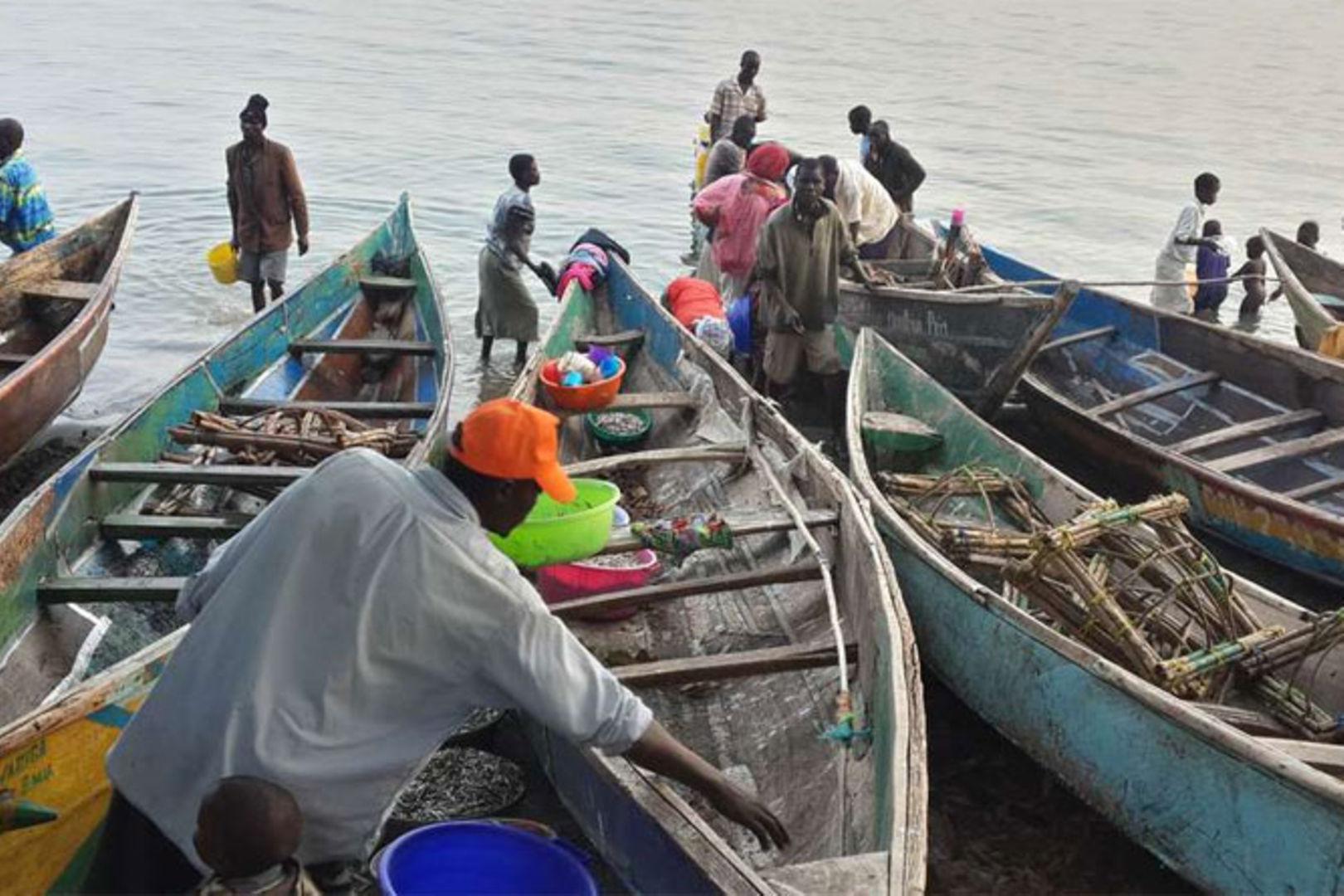
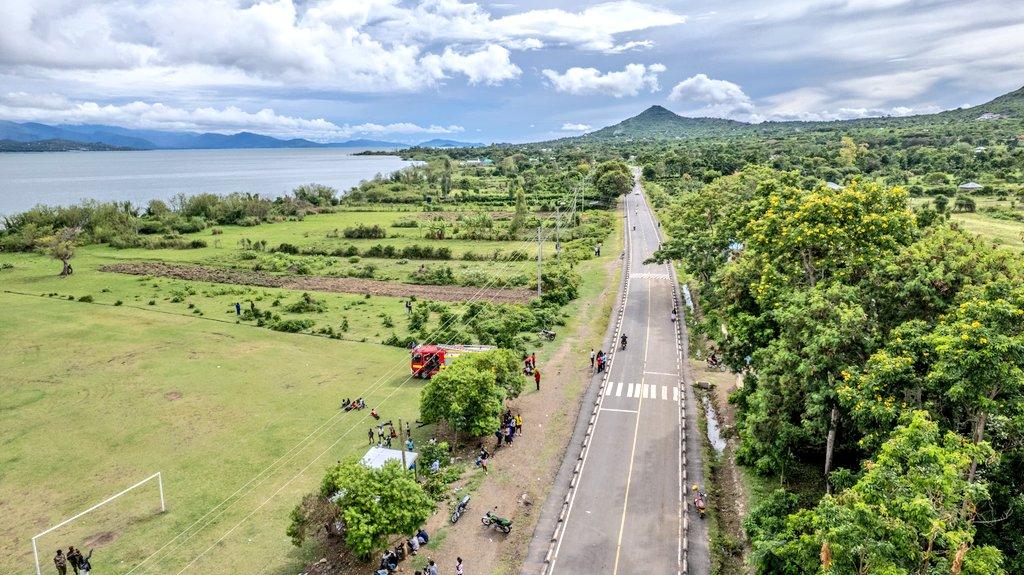
Rusinga Island is situated in Lake Victoria, in Homa Bay County, western Kenya. It is connected to the mainland near Mbita by a causeway constructed in 1983. Its location gives it access to the lake, fishing grounds, mainland markets and the wider East African region. The island is not physically isolated, but its economic opportunities and relationships with the outside world warrant closer examination.
| Indicator | Available evidence |
|---|---|
| Land area | Approximately 44 km² |
| Population, 2006 demographic surveillance | 24,078 |
| Population, 2014 demographic surveillance | Approximately 25,000 |
| Working population for this preliminary profile | Approximately 30,000 |
| Population density at 30,000 | Approximately 682 people/km² |
| Language | Predominantly Dholuo |
| Main economic geography | Fishing, small-scale agriculture, trading and associated services |
The 30,000 population is a working figure for our analysis, not a newly verified census count. The demographic surveillance research recorded approximately 25,000 residents in 2014. pubmed.ncbi.nlm.nih.gov+2
2. The land: a resource base under pressure
A 2024 land-use study examined Rusinga East and West, reconstructing changes between 1978, 1998 and 2018 using community mapping and participatory GIS. Its findings are particularly important because they show that the island has not simply been experiencing population growth; the way its land is being used has also changed.
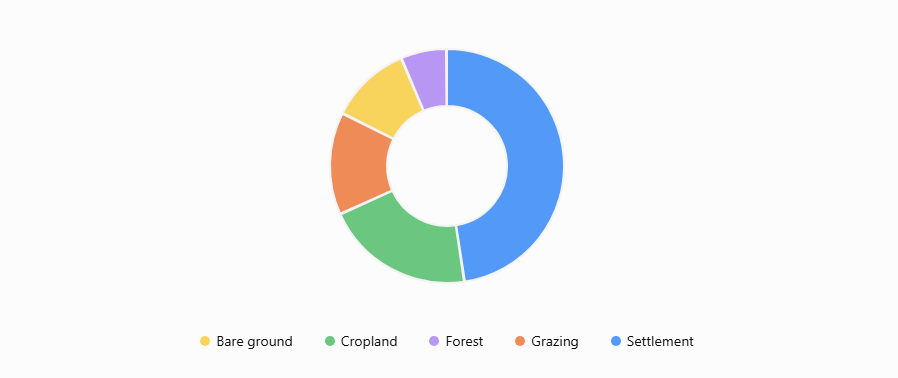
Rusinga Island land use, 2018
Calculated by combining the Rusinga East and West land-use tables. Total mapped area: 42.4 km².
| Land use | Area (km²) | Share |
|---|---|---|
| Settlement | 20.30 | 47.9% |
| Cropland | 8.76 | 20.7% |
| Grazing | 5.99 | 14.1% |
| Bare ground | 4.71 | 11.1% |
| Forest | 2.64 | 6.2% |
| Total | 42.40 | 100% |
The study found that settlement expanded and forest cover declined considerably between 1978 and 2018. In Rusinga East, forest area fell by approximately 53%; in Rusinga West, the study also documented substantial forest loss. Bare ground increased in both areas. journal-backups.lon1.digitaloceanspaces.com+3
This has direct economic implications. The island’s land is not an unlimited resource that can be allocated to settlement as population increases. It must support housing, food production, grazing, vegetation, water management, roads and economic activity.
The land question is therefore not simply how much space remains. It is how much productive capacity can be restored, intensified and organised within the space available.
A COMPARISON OF SCALE: RUSINGA ISLAND AND SINGAPORE
Land area, population and population density
One of the important questions in examining Rusinga Island’s economic future is whether its geographical size and population present an insurmountable constraint to economic development. A comparison with Singapore provides a useful perspective. Both are island territories, but their differences in population, economic organisation and productive capacity offer an opportunity to examine how geographical space can be organised to support very different levels of economic activity.
| Indicator | Rusinga Island | Singapore |
|---|---|---|
| Land area | Approximately 44 km² | 744.3 km² |
| Population | Approximately 25,000 (2014 surveillance estimate); 30,000 used as a working estimate | 6,111,200 (2025) |
| Population density | Approximately 568 people/km² (25,000 population) | Approximately 8,300 people/km² |
| Population density using 30,000 | Approximately 682 people/km² | — |
| Relative land area | 1 | Approximately 16.9 times Rusinga |
| Relative population | 1 | Approximately 244 times Rusinga, using the 25,000 baseline |
Data note: Rusinga’s 44 km² area and population of approximately 25,000 are reported by the Rusinga Health and Demographic Surveillance System at the end of 2014. The 30,000 figure is a working estimate used in this study, not a verified current census count. Singapore’s land area and population figures are official 2025 statistics. Population densities are approximate and should be interpreted in light of the different reference dates.
The comparison is revealing. Singapore has approximately 16.9 times the land area of Rusinga, but a population more than 200 times larger. Its population density is approximately 8,300 people per square kilometre, compared with Rusinga’s estimated 568–682 people per square kilometre, depending on the population baseline used.
In other words, Singapore accommodates a population density approximately 12 to 15 times that of Rusinga. Yet it has developed an economy in which land, infrastructure, industrial activity, logistics, technology, international trade and human capabilities are organised to support a highly productive economic system.
This comparison should not be interpreted as suggesting that Rusinga should seek to accommodate Singapore’s population density. Nor does it mean that the island has unlimited land available for development. Its actual development capacity must take account of land tenure, terrain, water availability, sanitation, environmental protection, infrastructure and the competing demands on its land and lake resources.
The more important observation is that geographical size and population density do not determine the productive potential of an economy on their own. The organisation of economic activity, the quality of infrastructure, the development of human capabilities, access to markets and the ability to move into higher-value production are equally important considerations.
Rusinga’s challenge is therefore not simply how to accommodate its population within 44 square kilometres. It is how to organise its available land and lake resources, its people and its economic relationships to generate substantially greater productive value.
The comparison also raises a question that extends beyond Rusinga: what would it take for an island of this size to become a connected, productive and economically organised part of a much larger regional and international economy?
That is the question that leads us into the Singapore experience and, more importantly, into the wider systems of economic growth that Rusinga must connect with and help build.
3. The household and family structure
The household is one of the most important units in this diagnosis because it is where income, labour, care, education, nutrition, health and the formation of the next generation intersect.
The University of Nairobi study Household Structure, Formation and Dissolution in Rusinga Island, completed in 2008, analysed demographic surveillance data collected between 2001 and 2007. It covered 5,943 households and a population of 25,322. erepository.uonbi.ac.ke+1
| Marital status of household head | Households | Percentage |
|---|---|---|
| Married, monogamous | 3,114 | 52.4% |
| Married, polygamous | 1,557 | 26.2% |
| Widowed | 915 | 15.4% |
| Never married | 270 | 4.5% |
| Separated | 42 | 0.7% |
| Divorced | 22 | 0.4% |
| Child-headed | 16 | 0.3% |
| Missing | 7 | — |
| Total | 5,943 | 100% |
These are marital-status categories of household heads, not a direct count of people living in intact family systems. The 52.4% monogamous figure is our closest available historical proxy, but it does not establish that both parents were present, alive and actively participating in the household.
The study also records that migration was a major cause of household formation and dissolution. In its sample of 444 dissolved households, migration accounted for 35.6% and death for 13.1%. erepository.uonbi.ac.ke
This matters because household structures do not remain static. Migration, death, marriage, separation and economic circumstances continually reshape the composition of families.
For the transformation study, family structure must be considered alongside household economic capacity. The question is not to judge one family arrangement against another, but to establish how different household structures affect the availability of adult labour, care, income, children’s development and the ability to build productive enterprises.
4. Health and the formation of future generations
The island’s health history is an important part of its economic history.
A 2007 study in the Malaria Journal examined 1,451 households and reported that malaria and HIV/AIDS were major perceived and documented health concerns at that time. It cited historical prevalence estimates of 50% for malaria and 30% for HIV/AIDS, drawing on earlier sources. These are historical estimates, not current prevalence figures. Springer Nature Link+2
A later demographic surveillance profile reported malaria test positivity of 27.1% in 2013 and 28.1% in 2014. It also documented improvements in some mortality indicators compared with earlier surveillance areas. academia.edu+1
The economic implications deserve attention:
- HIV can affect household labour availability, income, care responsibilities and intergenerational resources.
- Malaria can cause repeated illness, school absenteeism, medical expenditure and lost working time.
- Inadequate nutrition can impair children’s growth, learning and later productivity.
- Water, sanitation, housing and environmental conditions influence health outcomes.
Malaria is transmitted through the bite of an infected female Anopheles mosquito; poor nutrition does not cause malaria. However, the nutritional condition of the human host can influence resilience to infection and the severity of its consequences, while malaria itself can contribute to nutritional deterioration. STRLDi examines this often-neglected dimension in The Human Host in the Malaria Equation: https://strldi.weebly.com/blog/the-human-host-in-the-malaria-equation
The wider question is how the combined burden of disease, household income insecurity, nutrition, and education affects the formation of the next generation.
5. The existing productive economy
Rusinga is not without productive activity. Its people have established knowledge and participation in fishing, fish trading, small-scale agriculture, livestock keeping, food processing and other businesses.
The difficulty is the extent to which these activities have developed into connected, higher-productivity enterprises.
| Economic activity | Existing base | Development opportunity |
|---|---|---|
| Wild-capture fishing | Established fishing communities | Sustainable fisheries management, better catch handling and higher-value products |
| Aquaculture | Cage-farming initiatives | Hatcheries, fingerlings, feed, cage maintenance, production and distribution |
| Omena processing | Small-scale drying and trading | Hygienic drying, solar processing, grading, packaging and branded products |
| Agriculture | Small plots and household production | Commercial horticulture, seedlings, irrigation, soil restoration and crop processing |
| Livestock | Household-level activity | Improved production, animal health, feed and market development |
| Food manufacturing | Limited local processing | Fish products, dried foods, animal feeds and other locally sourced products |
| Retail and trading | Existing beach and village commerce | Distribution, storage, aggregation, wholesale and market services |
The 2010 research on omena processing in Rusinga and Mfangano found that women accounted for approximately 80% of omena processing and trading in the study areas. It identified poor traditional drying practices as a constraint on quality and value, and demonstrated the potential of raised racks and solar tent drying. ir-library.ku.ac.ke
A more recent example is the Rusinga Nile Perch Women Group. Its members entered cage fish production in 2021, partly to reduce their dependence on fishermen for fish supplies. By September 2024, the group had established a cage at Nyagina Beach and was working with partners on fingerlings, feed and market development. Kenya News Agency
That is an important example of local people moving from dependence on access to someone else’s production towards ownership of productive capacity.
6. The fishing economy: a resource, but also a vulnerability
Lake Victoria is a major economic asset, but it is not an unlimited source of income.
Kenya’s 2025 National Aquaculture Development Plan acknowledges declining wild-capture stocks and identifies the need to expand sustainable aquaculture, value addition, research, technical capacity and market infrastructure. kefs.go.ke
Homa Bay County’s 2025 fisheries and aquaculture policy similarly identifies inadequate technology, infrastructure, finance, fish seed, feed and post-harvest capacity as constraints. digitalarchive.worldfishcenter.org
This brings us to an important economic distinction:
Catching fish is not the same as developing a fish industry.
A complete aquatic economy includes:
- Fish biology and stock management.
- Hatcheries and fingerling production.
- Fish feed and input manufacturing.
- Cage and equipment construction.
- Fishing and aquaculture operations.
- Cold storage and transportation.
- Cleaning, drying, smoking and processing.
- Packaging, distribution and retail.
- By-product utilisation, including fishmeal and animal feed.
- Research, technology, quality assurance and export development.
The opportunity is to build more of these capabilities around the lake, rather than simply extract fish and sell it elsewhere.
Part II — The diagnosis: The Curse of the Waters Around a Land
The Curse of the Waters Around a Land
When geographical boundaries become boundaries of imagination, economic organisation and ambition.
1. What we mean by the curse
An island is surrounded by water. That is a geographical fact. But the water can acquire a meaning beyond geography.
It can become the boundary within which people imagine their opportunities, organise their economic activity, define their markets and locate responsibility for their future.
The island looks inward. Its immediate concerns are visible and urgent. The outside world is perceived as distant, complicated and largely beyond its control. When a problem becomes too large, the expectation is that government, a politician, an NGO, a donor or an investor will arrive to address it.
This is not necessarily a conscious attitude. It can develop through generations of economic circumstances in which the community has had limited access to capital, technology, institutional influence and wider markets.
The result is a condition in which the island’s physical boundaries begin to function as psychological and economic boundaries.
That is what we mean by the curse of the waters around a land.
It is not an assertion that island populations are inherently inward-looking. Nor does it suggest that the water itself is a disadvantage. The lake can be a transport corridor, a food-production system, a source of energy and an economic platform. The curse arises when the surrounding water is experienced primarily as a limit, rather than organised as a connection to the world beyond it.
2. How the curse manifests itself
We would examine the diagnosis through six related dimensions.
| Dimension | What may be happening | What it produces |
|---|---|---|
| Psychological | Opportunities are imagined within the immediate locality | Limited ambition beyond existing livelihoods |
| Economic | Primary resources are extracted and sold with limited transformation | Low local value retention |
| Institutional | Development is expected to arrive through external actors | Weak local coordination of economic transformation |
| Educational | Schooling and qualifications are not sufficiently connected to productive opportunities | Underused human capability |
| Technological | Local problems are addressed with limited scientific and engineering capacity | Continued dependence on outside expertise |
| Market | Producers sell into markets they do not control or understand | Dependence on buyers, intermediaries and external demand |
This is the pattern we would investigate. It is not yet a finding that every household or institution behaves in this way.
3. The Vegas and the island relationship
What happens in Vegas stays in Vegas.
A community can become accustomed to treating decisions made elsewhere as the responsibility of people elsewhere. The political capital becomes the place where solutions are expected to originate, while the local community concentrates on immediate survival.
Tom Mboya’s assassination in 1969 is a significant part of Rusinga’s political history. He was a son of the island who rose to national leadership, and his assassination removed an influential political figure at a formative time in Kenya’s post-independence history.
We would not claim, without historical evidence, that his assassination created a particular dependency mentality among Rusinga’s population. But it is reasonable to examine whether the island’s relationship with national political leadership, representation and development changed over subsequent generations.
The deeper question is this:
Has Rusinga developed the institutions, technical capability and economic organisation necessary to act on its own development interests, or has it become accustomed to looking towards the political centre for immediate relief and intervention?
The issue is not whether government should act. Government has essential responsibilities. The issue is whether local development remains suspended while waiting for government to act.
4. The reinforcing pattern
We would represent the hypothesis as follows:
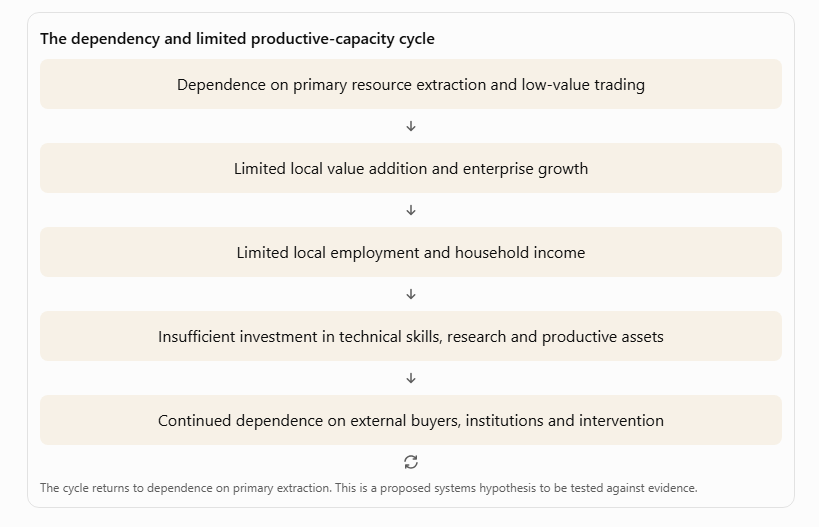
There is a second reinforcing cycle operating through households:
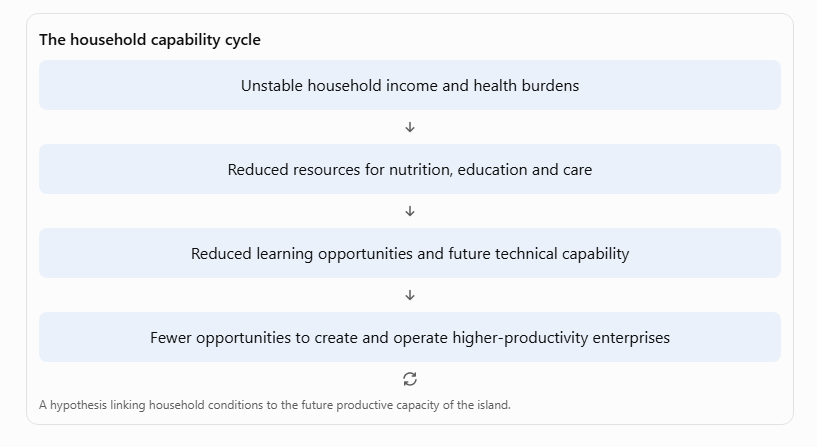
The two cycles reinforce one another. An economy that produces few higher-value jobs cannot easily support better household incomes. Households under pressure have fewer resources to invest in the education and development of the next generation. The island then has difficulty producing the technical capabilities needed to change the economy.
This is how a present-day economic problem can reproduce itself across generations.
5. The critical shift: from extracting to growing
Rusinga has resources. It has people who know how to fish, trade, farm, process food and organise households. The question is whether these activities can be connected to produce a much more complete economy.
| Present economic orientation | Required transformation |
|---|---|
| Catch fish | Manage fish stocks and develop aquaculture |
| Sell fresh fish | Preserve, process, package and distribute fish products |
| Buy fish feed | Develop local feed production using suitable inputs |
| Grow crops for household consumption | Develop commercial crop production and market-oriented horticulture |
| Sell raw agricultural produce | Process, preserve, package and distribute agricultural products |
| Depend on external equipment | Develop fabrication, repair and maintenance capabilities |
| Train people for available jobs | Develop skills around the industries the island intends to build |
| Wait for investors | Develop viable enterprises and bankable investment opportunities |
| Depend on political intervention | Organise local productive capability and engage government from a position of an emerging economic proposition |
The island needs to move from being a location where resources are extracted to being a location where resources are cultivated, transformed, manufactured, traded and continuously improved.
Part III — The Singapore comparison: not dependence, not isolation but partnership with the world
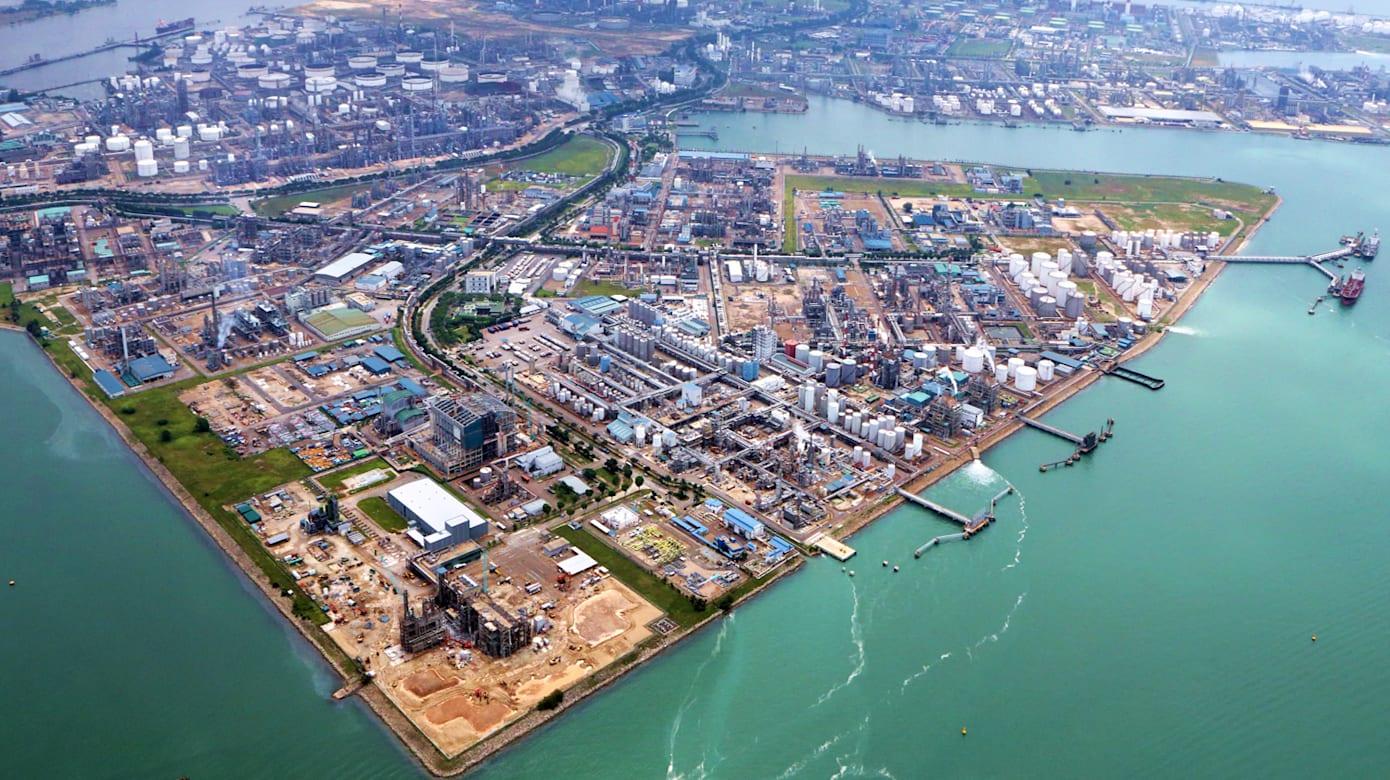
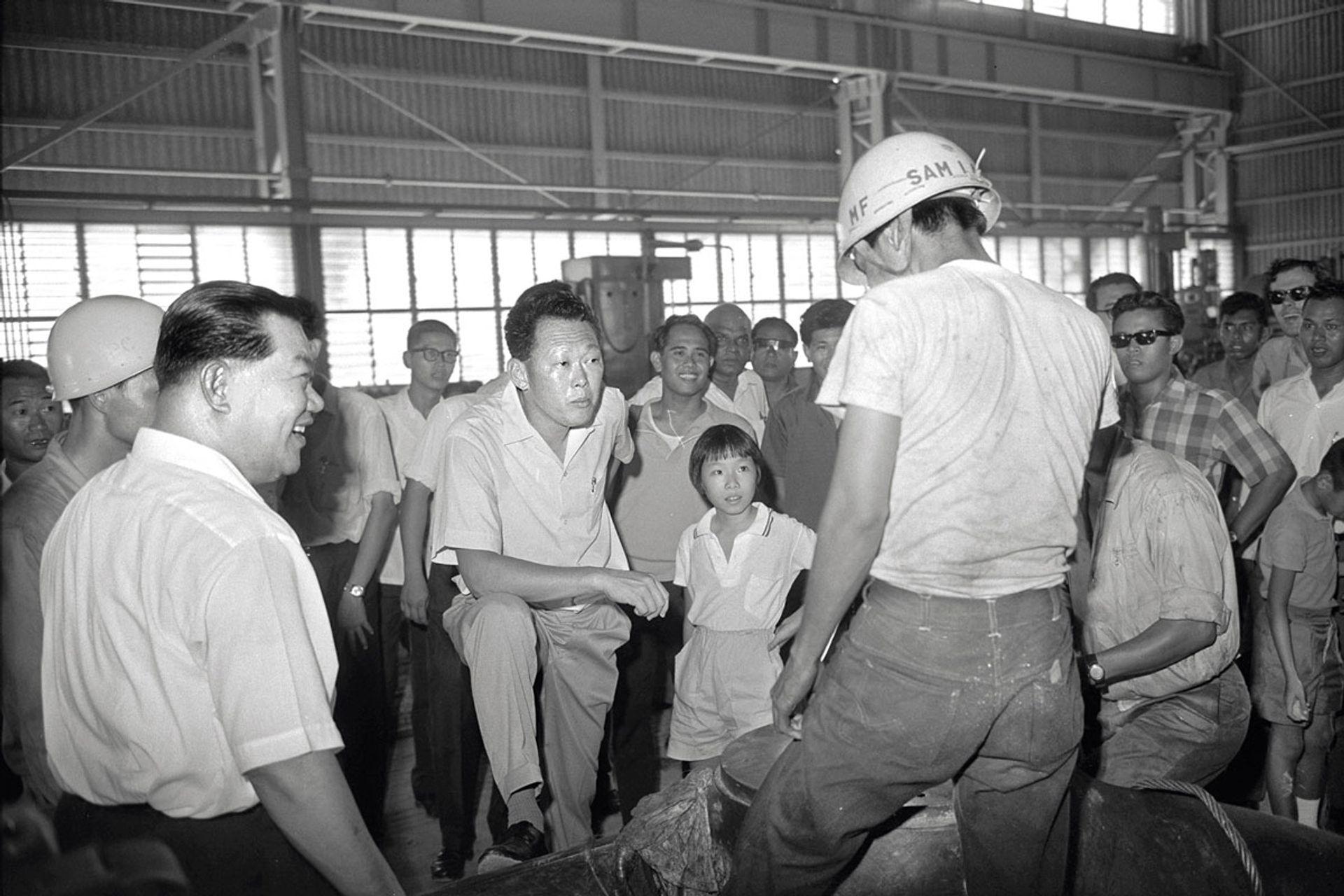
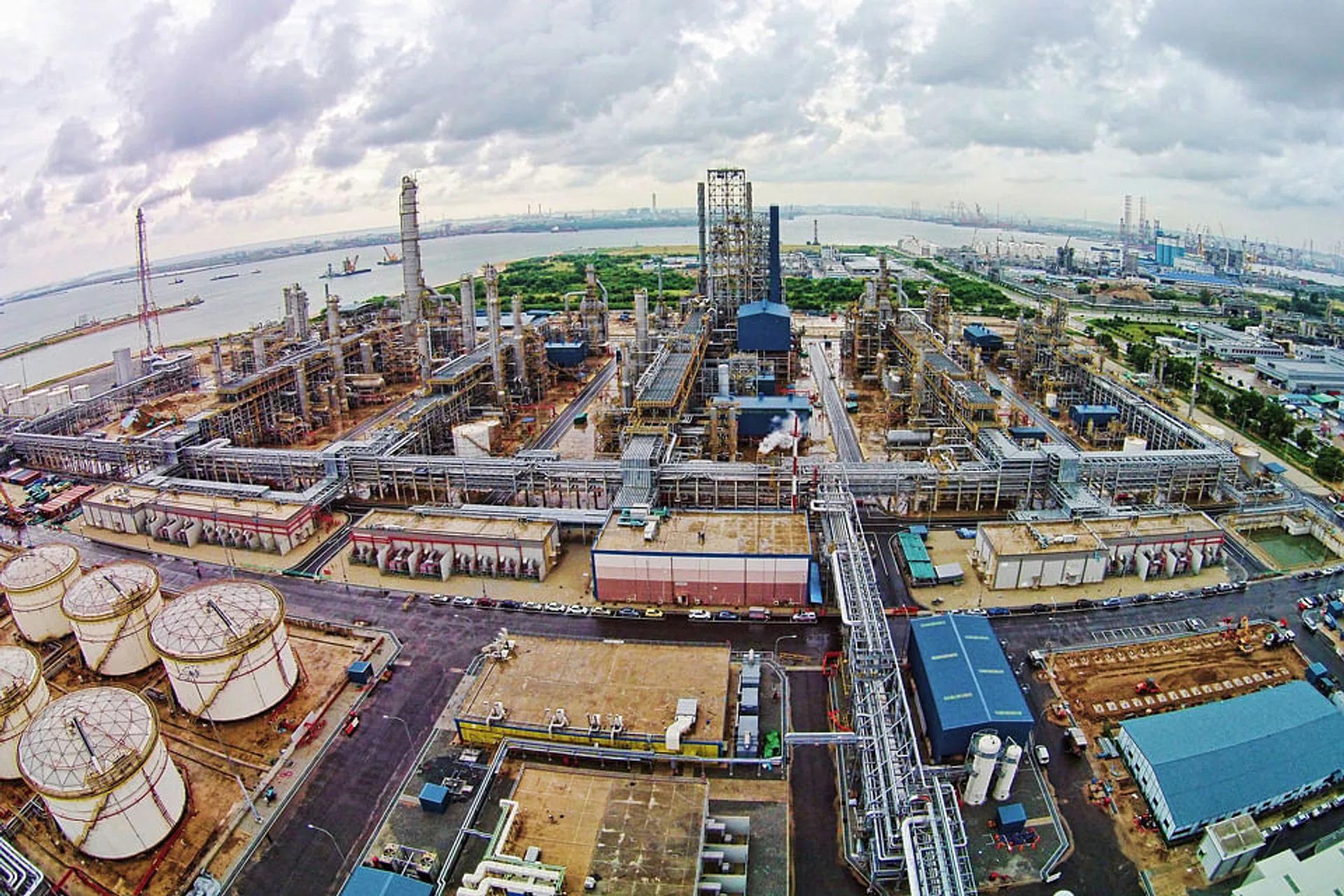
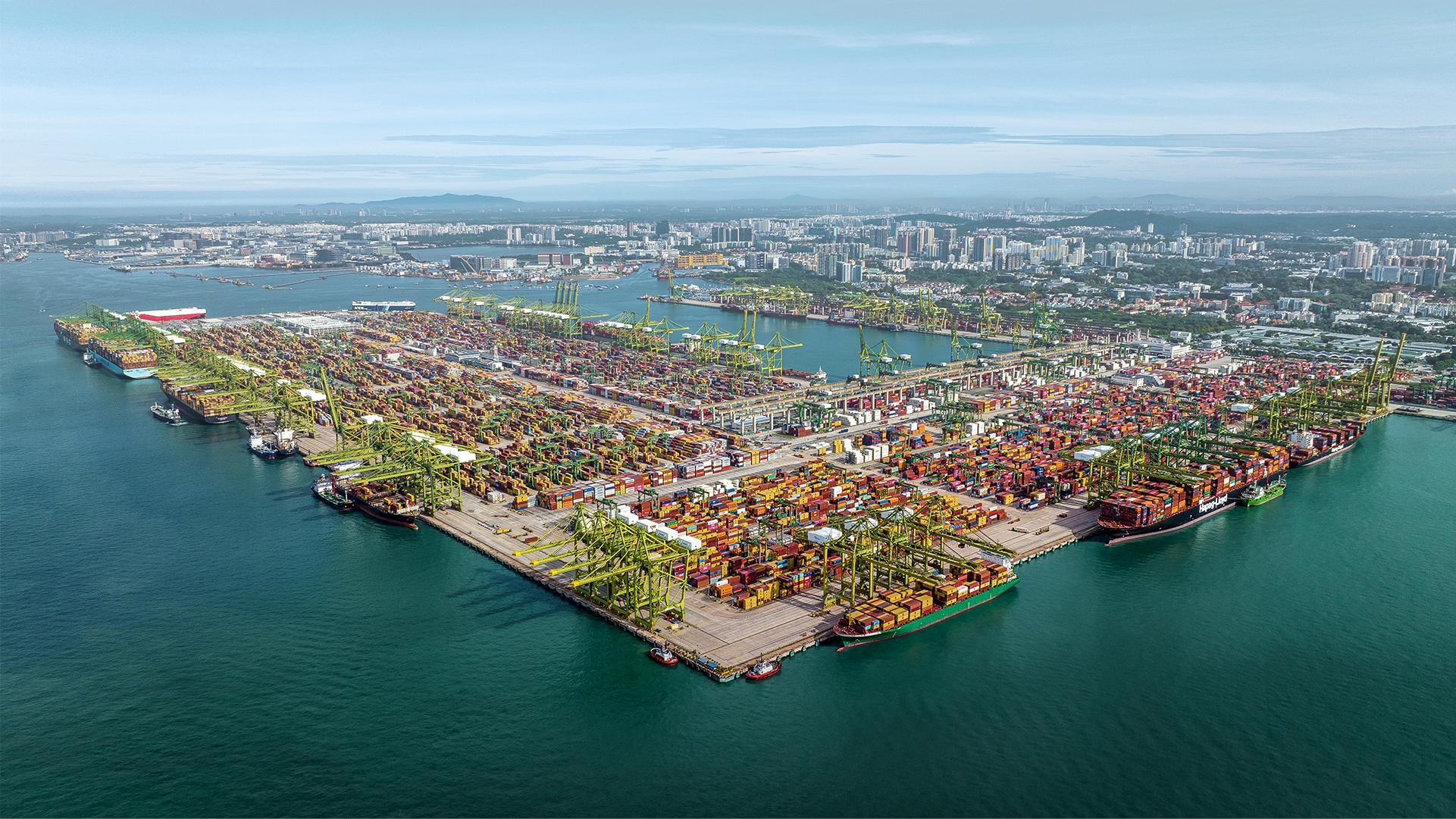
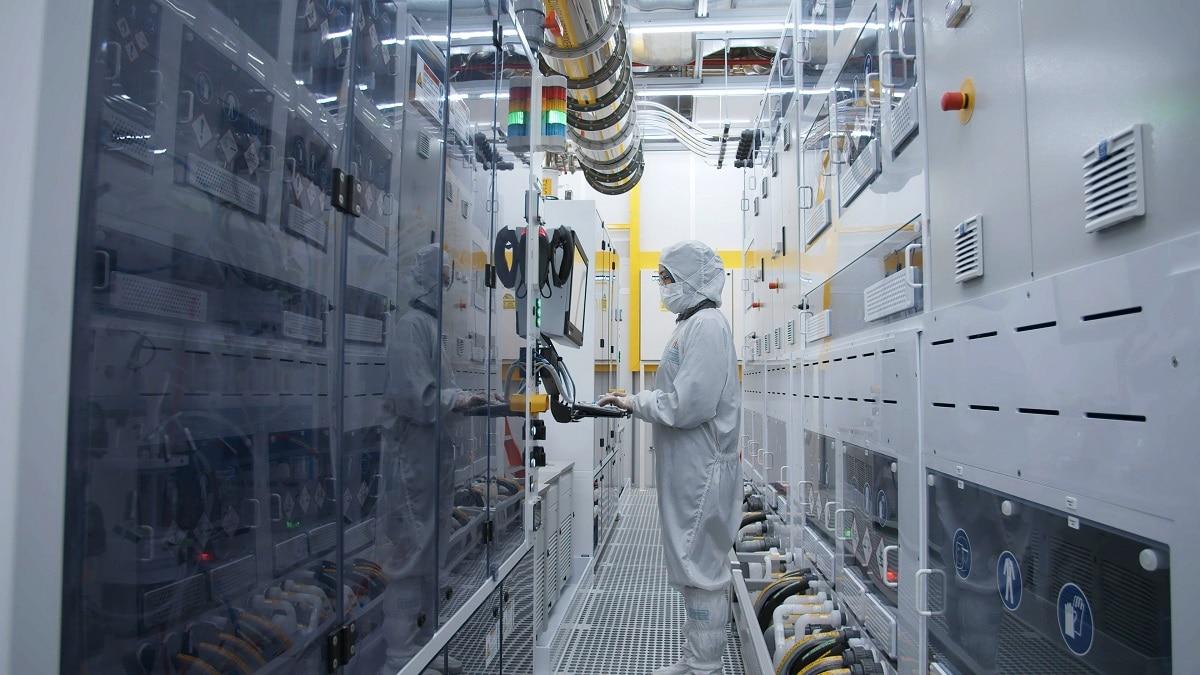
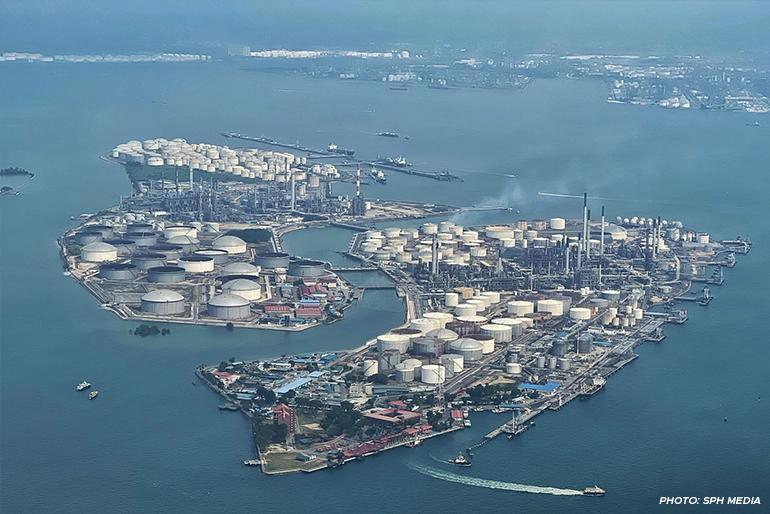
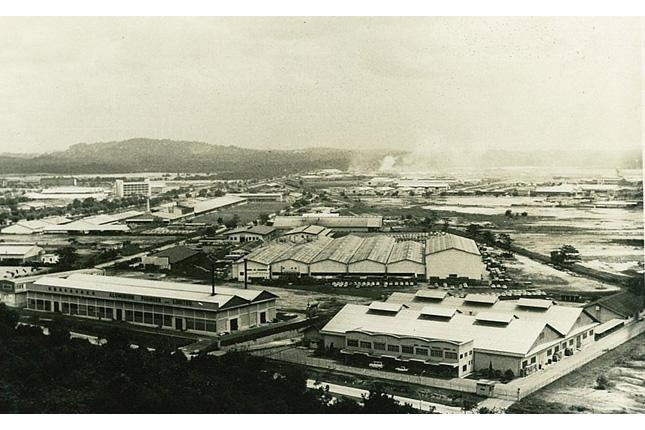
Singapore is a useful comparison, but not because Rusinga should become another Singapore. The comparison is useful because Singapore confronted a difficult starting position and deliberately built the capabilities needed to participate in the world economy.
Singapore had no substantial natural-resource base or hinterland to rely on. It faced unemployment and a limited domestic market. Its leadership made a strategic choice to industrialise, attract international investment, develop technical skills and produce for global markets.
The Singapore Economic Development Board was established in 1961 to lead industrialisation. The country moved through successive stages rather than attempting to establish a sophisticated economy immediately. Singapore EDB+2
1. The stages of Singapore’s economic development
| Period | Economic direction | Capability being developed |
|---|---|---|
| 1960s | Labour-intensive manufacturing | Industrial employment, basic skills and industrial infrastructure |
| 1970s | Skills-intensive production | Precision engineering, electronics and technical training |
| 1980s | Capital-intensive and higher-technology manufacturing | Computers, machinery, pharmaceuticals and petrochemicals |
| 1990s | Knowledge-based economic development | Research, innovation, technology and technopreneurship |
| 2000s onwards | Global knowledge and innovation economy | Advanced manufacturing, services, research and international partnerships |
Singapore did not wait until it had all the expertise, technology or capital within its borders. It partnered with multinational companies, attracted foreign investment, developed local suppliers and upgraded its workforce as the economy evolved.
It is important to be precise about the lesson: Singapore did not avoid dependence on the outside world. It organised its relationship with the outside world to build domestic capability.
It used international capital, technology, expertise and markets as instruments of its own development.
2. The principles that can be drawn for Rusinga
| Singapore’s experience | Principle for Rusinga |
|---|---|
| Industrialise to create employment | Build enterprises that employ and develop local people |
| Invest in technical and vocational education | Connect mathematics, science and engineering to real productive activities |
| Attract international companies | Partner with external investors to develop local capability and supply chains |
| Develop industrial infrastructure | Establish appropriate production, processing, storage and distribution infrastructure |
| Move up the value chain | Progress from primary extraction to processing, manufacturing and technology |
| Export to global markets | Produce for markets beyond the island and beyond Kenya |
| Develop research and innovation | Solve local production problems through applied science and technical research |
| Coordinate public and private institutions | Create structures that join education, enterprise, investment and government |
The most important lesson is not that Rusinga needs a large factory immediately. It is that a local economy must develop the capacity to produce, learn, improve and connect with markets beyond its immediate boundaries.
3. The difference in starting conditions
| Singapore | Rusinga |
|---|---|
| Limited natural resources | Land, Lake Victoria, fisheries and agricultural potential |
| Small domestic market | Small island market, with access to Kenya and regional markets |
| Limited industrial base at independence | Existing fishing, trading, agricultural and processing activities |
| Need to create an industrial economy | Need to diversify and deepen an existing primary-resource economy |
| Built global partnerships | Can use partnerships with national and international institutions to develop local capabilities |
| Developed a technical workforce | Needs to strengthen mathematics, science, technical and engineering capability |
Rusinga has one advantage Singapore did not have: it already has natural productive resources and communities with practical knowledge of how to use them.
But practical knowledge must be connected to scientific knowledge, engineering, capital, enterprise management and markets if it is to generate a more diversified economy.
Part IV — What could the Rusinga economy become?
We would not begin by identifying a list of factories and then looking for investors. We would begin by mapping the island’s resources, productive capabilities, markets, and technical gaps, and then build the industries that can grow from them.
The economic architecture should have several connected tiers.
1. The proposed productive economy
A proposed Rusinga economic pipeline
Tier 1 — Natural resource regeneration
Land, water, soil, vegetation, fish stocks, plants and animals
Tier 2 — Primary production
Agriculture, horticulture, livestock, fisheries and aquaculture
Tier 3 — Processing and manufacturing
Food preservation, fish processing, feeds, packaging, fabrication and equipment maintenance
Tier 4 — Trade and distribution
Aggregation, storage, transport, wholesale, retail, hospitality and regional markets
Tier 5 — Knowledge, technology and innovation
Applied research, engineering, automation, digital systems, product development and technical services
The capability running through every tier
Mathematics • STEM • Technical education • Research • Enterprise management • Leadership
These are not a final stage. They are the capability base required to develop and continuously improve every tier.
2. The possible industries
The following is a preliminary opportunity map, not a claim that all these activities are immediately viable.
| Resource base | Initial enterprises | Further industrial development |
|---|---|---|
| Fish and aquatic resources | Sustainable fishing, cage aquaculture, fish handling | Hatcheries, fish feed, processing, fishmeal, packaged products |
| Land and plants | Seedling production, horticulture, fruit and vegetable production | Drying, milling, preserves, oils, food ingredients and packaging |
| Land and animals | Poultry, small livestock, fodder production | Feed production, animal products, veterinary and breeding services |
| Organic waste | Composting and waste collection | Organic fertiliser, soil inputs and potentially insect-based feed |
| Lake and tourism | Local hospitality, boat services and visitor experiences | Tourism services, maintenance, local food products and transport |
| Technical knowledge | Repair, maintenance and digital services | Fabrication, machinery servicing, testing and industrial support |
The lake should be treated as a freshwater production and transport system, not as a marine environment. Shellfish and other aquatic production would require specific ecological and food-safety assessments before being included in a commercial programme.
3. The mathematics and STEM proposition
This is where we believe the development strategy becomes much more interesting.
Rusinga should not simply aim to increase the number of people with qualifications. It should develop a population that can understand, measure, design, improve and manage its own productive systems.
Consider the technical problems that already exist:
| Economic problem | Mathematics/STEM capability needed |
|---|---|
| Declining fish catches | Population modelling, fisheries biology, ecological monitoring |
| Unreliable fish supply | Aquaculture, production forecasting, feed formulation |
| Low agricultural productivity | Soil science, crop science, irrigation engineering |
| High post-harvest losses | Food science, refrigeration, process engineering |
| Expensive inputs | Chemistry, materials science, local input development |
| Poor market returns | Statistics, cost accounting, market analytics and logistics |
| Limited manufacturing | Mechanical, electrical and industrial engineering |
| Weak enterprise growth | Financial modelling, operations research and business analytics |
This suggests a different purpose for education.
A mathematics lesson should be connected to calculating production yields, feed conversion ratios, water requirements, processing losses, production costs and market prices. Science should be connected to soil health, fish biology, nutrition, preservation and product development. Engineering should be connected to machinery, cold storage, irrigation, fabrication and energy systems.
The objective is to create people who can use mathematics and science to organise the island’s economic future.
The island’s schools, vocational centres, universities, technical institutions and external research partners should be connected to this productive agenda.
Part V — The turnaround: what needs to happen first?
1. The immediate sequence
- STRLDi presents the Rusinga systems diagnosis to Charles and BFIO
The presentation should explain the island’s history, population, household structures, health burdens, resource base, economic structure, land pressures, fisheries, skills and industrial gaps.
The purpose is to let Charles hear the whole study as one connected system, rather than as a collection of separate development problems. - Charles offers his perspective on the diagnosis
This is the opportunity for him to examine what the study identifies against his experience of Rusinga. His perspective is important, but the study’s demographic, economic, and technical evidence should continue to be grounded in the relevant published and institutional sources.
The discussion should establish where the diagnosis resonates, where it differs from his experience, and what additional evidence needs to be considered. - Invite the relevant political leadership to hear the study
The next conversation should bring together the Rusinga Island Ward representative, the Suba North MP, the Homa Bay Governor’s administration and other relevant county and national representatives.
The purpose is not to seek immediate promises or funding. It is to establish whether political and institutional leadership is prepared to engage with a coordinated economic turnaround. - Establish a Rusinga Economic Transformation Structure
A formal structure should be considered to coordinate the work. It should bring together political representation, technical institutions, business and enterprise leadership, community organisations, education and research institutions.
This should not become another committee that meets to discuss poverty. Its mandate must be to organise the island’s productive development, establish priorities, mobilise technical capability and track measurable economic outcomes. - Develop the Rusinga Economic Resource and Capability Map
Map land, water, fisheries, agriculture, livestock, existing businesses, skills, infrastructure, markets and institutional assets.
The map should show what exists, what is underused, what is deteriorating, what can be regenerated and what additional capabilities are required. - Select initial productive enterprises and demonstrate viability
Begin with a small number of opportunities that can be developed using local resources and realistic market demand. Aquaculture, improved fish processing, horticulture, food preservation and organic soil inputs are potential areas for assessment.
Demonstrations should produce measurable results in output, quality, employment, income, local value retention and environmental sustainability. - Build the mathematics and STEM development pipeline
Link schools, vocational training, technical colleges, universities and research institutions to the enterprises being developed. Technical learning should be informed by the actual problems and opportunities of the island’s economy. - Take a developed proposition to government, investors and markets
Once the opportunities, capabilities, enterprise models and infrastructure requirements have been mapped, Rusinga can approach external partners with a credible proposition.
The island should be seeking partnerships to accelerate its development, not asking external actors to invent its future.
2. The structure that could organise the turnaround
We would initially consider five connected workstreams:
| Workstream | Responsibility |
|---|---|
| Economic and systems research | STRLDi-led diagnosis, evidence, economic modelling and transformation design |
| Local enterprise and productive development | Existing businesses, producers, processors, traders and entrepreneurs |
| STEM, education and technical capability | Schools, vocational centres, universities and research institutions |
| Institutional and political coordination | Ward, constituency, county and national leadership |
| Community participation and social development | BFIO, community organisations, households, women and youth groups |
The roles should be clear. STRLDi would bring the systems diagnosis and transformation architecture. BFIO could provide a local institutional connection and a channel for community engagement. Political leadership would be responsible for the relevant public policy, budgetary, and institutional decisions. Businesses and technical institutions would help develop the productive economy.
This is a partnership of distinct responsibilities, not a transfer of the island’s development responsibility to an NGO.
3. A possible three-phase implementation
| Phase | Period | Primary objective | Evidence of progress |
|---|---|---|---|
| Phase I — Understand and organise | 0–6 months | Complete diagnosis, establish leadership structure, map resources and select initial opportunities | Agreed transformation framework, baseline and priority enterprise pipeline |
| Phase II — Build productive capability | 6–24 months | Establish demonstration enterprises, technical training and local supply chains | Operating enterprises, trained technical workforce, increased local production and value addition |
| Phase III — Expand and connect | 2–5 years | Scale successful enterprises, attract investment and connect to national and regional markets | New industries, employment, rising household incomes, increased exports and local value retention |
The periods are proposed planning horizons, not forecasts of what can be achieved without resources and institutional commitment.
Part VI — What we should measure
We would not measure the turnaround by the number of meetings held, the number of people attending workshops or the number of development projects announced.
We would measure whether the island is developing the capacity to produce more, retain more value, create more productive employment and improve the circumstances of its households.
| Dimension | Baseline to establish | Progress indicator |
|---|---|---|
| Family and household systems | Household composition, marital status, parental presence and care responsibilities | Household stability, income security and children’s outcomes |
| Health and nutrition | Disease burden, nutrition and access to services | Reduced preventable illness and improved nutrition |
| Land | Current land use, soil condition and restoration potential | Improved soil productivity, vegetation and land productivity |
| Agriculture | Crop, livestock and horticultural production | Increased production per unit of land and water |
| Fisheries | Catch per unit of effort, species and stock condition | Sustainable yields and stronger aquatic production |
| Manufacturing | Existing processing and production enterprises | New and expanding local manufacturing capacity |
| Skills | Mathematics, STEM, TVET and professional qualifications | More people applying technical skills in productive enterprises |
| Enterprise | Number, size, survival and ownership of businesses | Higher enterprise formation and survival |
| Employment | Employment by sector, age and gender | More productive and higher-value employment |
| Markets | Local sales, mainland sales and external market flows | Greater market reach and local value retention |
| Household economy | Income, expenditure, productive assets and remittances | Increased and more reliable household income |
We would also establish a measure of local value retention: how much of the value generated by fish, crops, livestock and other resources remains within Rusinga through wages, local ownership, processing, services and enterprise profits.
This would tell us more about economic development than production volumes alone.
Part VII — The proposition we take to Charles and the political leadership
Rusinga does not have to wait for development to arrive. It can begin by organising what it already has.
The island has land, water, people, practical knowledge, fishing activity, agricultural potential, trading relationships and access to the mainland. What it needs is a deliberate effort to connect these assets into a productive economy.
The starting point is to understand why the island’s resources have not translated into a sufficiently diversified local economy, why household vulnerability persists, why technical skills are not more closely connected to production, and why so much of the value generated by primary resources may be captured elsewhere.
The ambition should be to move beyond an economy that primarily extracts and sells. Rusinga should be able to grow its own agricultural production, manage its aquatic resources, process and manufacture products, develop local enterprises, provide technical services and reach markets beyond the island.
This requires a strong mathematics and STEM foundation, but also the institutions, leadership and enterprise structures that can turn knowledge into productive activity.
Government and investors remain important. But they should be invited into an emerging economic proposition, not expected to arrive with a solution to problems that have not been organised into a development pathway.
The opportunity is to demonstrate how a small island economy can progressively develop its own productive capacity, connect with the world and improve the economic prospects of its population.
Part VIII — The immediate next step: the study presentation
We would keep the first presentation to Charles focused on the diagnosis, not yet on a long list of projects.
The sequence should be:
- Where Rusinga has come from: its history, population changes, health burdens, family structures and economic transitions.
- Where Rusinga is now: its land, natural resources, fisheries, agricultural activity, skills, enterprise base and market relationships.
- What is keeping the present system in place: the dependency patterns, low value addition, weak technical linkages and household pressures.
- What Rusinga could become: an integrated productive economy supported by mathematics, STEM, research, enterprise development and external partnerships.
- What needs to be organised: the institutional structure and political leadership required to begin the turnaround.
The political conversation should follow the presentation, not precede it. The leaders should hear the diagnosis before being asked to consider the structures needed to act on it.
We would make the first formal proposal a Rusinga Economic Transformation Initiative, with STRLDi providing the systems research and transformation architecture.
Final evidence note
This profile is not filtered for circulation. It is a substantive working diagnosis, and the argument has not been softened to protect any institution or individual. The qualifications are there to distinguish what the published evidence establishes from what we are proposing as a systems explanation.
There are important historical limitations: the household structure study uses 2001–2007 data; the health findings include 2007 research and 2013–2014 surveillance; and the land-use study reconstructs conditions through 2018. The approximately 30,000 population is a working figure, not a new census. These older datasets are useful for identifying patterns, but they do not substitute for a current baseline.
The central proposition remains: Rusinga must not allow the waters surrounding it to become the boundaries of its imagination, its economic organisation or its ambition. The lake should connect it to the world. Its land should sustain production. Its people should develop the mathematical, scientific, technical and entrepreneurial capabilities to organise both. And its political leadership should help create the structures through which that transformation can take place.
That, to me, is the way to rise from the ashes: not by waiting for someone to rebuild the island, but by organising the people, knowledge and resources that can build its future.
5. The meeting point: connecting internal renewal with outward economic growth
PLACEMENT: At the end of the Singapore comparison and immediately before the proposed integrated productive economy and transformation programme.
The significance of the Singapore experience is not that Rusinga should attempt to reproduce Singapore’s history or industrial structure. The more important lesson is the deliberate use of international relationships to develop domestic productive capabilities. External capital, technology, expertise and markets were used to build an economy with increasing capacity to produce, innovate and participate in international trade.
For Rusinga, the question is how to establish similar principles at an appropriate scale and within its own resource, geographical and institutional circumstances. Its development cannot be limited to attracting individual projects. It must involve building connected economic activity, in which production creates opportunities for processing, processing creates opportunities for manufacturing and distribution, and expanding markets create further demand for skills, technology and enterprise.
This requires an integrated economic development approach rather than a collection of disconnected interventions. Education and STEM capabilities must be connected to actual productive opportunities. Agriculture and fisheries must be connected to processing and markets. Enterprise development must be connected to supply chains, finance and distribution. Infrastructure must be planned in relation to the productive activity it is intended to support.
The meeting point between outward economic expansion and Rusinga’s internal renewal is where the transformation must take place. The island must be able to receive, absorb and build upon wider economic opportunities, while contributing its own products, services, knowledge and capabilities to the wider economy.
The ultimate objective is to move Rusinga from a peripheral position in the wider economic system towards an active and organised role within it.
Closing proposition
PLACEMENT: Use this as the final paragraph of the study, after the proposed next steps.
Rusinga’s future should not be determined by the limits of its geography, nor should it be left waiting for the wider economy to discover its potential. The island must rise from its own ashes, rebuild its productive foundations and reach outward to meet the growth that has not yet reached it. The wider economic system must extend its productive circuits, but Rusinga must also organise itself to become part of them. The waters around the island must cease to represent the boundaries of its economic imagination and become the connections through which its people, resources and productive capabilities engage with the wider world.
How the pieces fit into the existing study
The revised sequence should be:
- Opening: the wider economic system
Growth is taking place, but its productive effects are not scaling outwardly. - Rusinga Island profile
Geography, history, population, land, lake resources and existing economy. - The Rusinga Island effect
The local manifestation of the wider economic problem. - The Curse of the Waters Around a Land
How geographical boundaries may become economic, institutional and psychological boundaries. - Rusinga must rise from its own ashes
The responsibility for internal renewal and productive organisation. - Singapore and the outward connection
How external partnerships can build domestic productive capability. - An integrated productive economy
Land, lake, agriculture, fisheries, processing, manufacturing, trade, STEM and enterprise. - Institutional and leadership arrangements
The structures and leadership needed to organise the transformation. - Proposed next steps
STRLDi presentation, engagement with Charles and BFIO, political and institutional engagement, and the development of a formal transformation initiative. - Closing proposition
Rusinga must rise internally to meet the outward expansion of the wider economy.
STRLDi: PROFESSIONAL ENGAGEMENT AND MONETISATION FRAMEWORK
1. STRLDi’s role in the Rusinga Island transformation initiative
The Rusinga Island initiative presents an opportunity for STRLDi to apply its systems research, economic transformation and institutional development capabilities to a place-specific development challenge. STRLDi’s role is not that of a voluntary development organisation, nor is it proposing to become an NGO implementing community projects. It is a professional research, strategy development and institutional transformation organisation.
Its contribution is to understand the underlying system that produces persistent economic and social conditions, identify the relationships and constraints that prevent productive development, and design the institutional and economic arrangements through which transformation can be pursued.
The initial Rusinga work is an opportunity to introduce this approach, demonstrate the value of systems thinking in examining a complex development challenge, and establish whether there is sufficient interest among local leadership and relevant institutions to take the work forward.
Rusinga could also become a signature case study for STRLDi, demonstrating how its methodology can be applied to other geographically isolated, resource-dependent and economically marginalised communities.
2. A phased professional engagement model
STRLDi’s engagement should be structured in three distinct stages. Each stage has a different purpose, level of professional responsibility and commercial arrangement.
Stage 1: Introductory presentation and institutional interest
The first stage is an introductory engagement with Charles Ocholla and Building Future Initiative Organisation (BFIO), followed, where there is interest, by presentations to relevant political and institutional leaders.
STRLDi would present its preliminary diagnosis of Rusinga Island, explain the wider economic systems perspective, introduce the concept of the Rusinga Island effect and outline the possibility of an integrated productive economy.
This initial presentation would be offered without charge. Its purpose is to introduce STRLDi’s work, share the thinking already developed and establish whether the relevant leaders and institutions recognise the need for a more comprehensive transformation initiative.
This is a bounded introductory engagement. It is not an undertaking to conduct further research, develop a detailed economic plan, coordinate stakeholders, source investors or undertake implementation without a separate professional agreement.
Stage 2: Commissioned research and economic transformation design
Where the initial engagement generates institutional interest, STRLDi would prepare a formal professional proposal for a commissioned study and transformation design.
The scope could include:
- A comprehensive systems diagnosis of Rusinga Island and its relationship with the wider Homa Bay County and Kenyan economy.
- Assessment of land-based and lake-based resources, productive capacity and economic opportunities.
- Analysis of existing value chains and opportunities for processing, manufacturing, distribution and market development.
- Development of an integrated economic transformation model, including the relationships between production, enterprise formation, infrastructure, investment and market access.
- Design of a mathematics, STEM and technical skills development pipeline linked to identified economic opportunities.
- Institutional and governance arrangements required to coordinate the transformation.
- Economic modelling, implementation priorities, performance indicators and a phased development programme.
This would be a paid professional assignment. The proposal would define the research scope, deliverables, timetable, professional fees, payment milestones and intellectual property arrangements.
Stage 3: Implementation partnership and ongoing professional support
Following completion and acceptance of the commissioned work, STRLDi could be engaged to support the implementation of the transformation programme.
This could involve institutional development, leadership development, programme coordination, implementation oversight, monitoring and evaluation, periodic systems reviews and adjustments to the transformation strategy as conditions change.
Such an engagement would be structured through a professional retainer, milestone-based contract or another agreed implementation partnership arrangement.
STRLDi would remain responsible for the professional work within its agreed scope. The implementation of individual enterprises, infrastructure projects and community programmes would require their own institutional partners, operators, investors and financing arrangements.
3. STRLDi’s revenue streams
The Rusinga initiative offers several potential areas of professional service and revenue generation:
| Professional service | Basis of engagement |
|---|---|
| Systems research and diagnosis | Commissioned research fees |
| Economic transformation strategy | Strategy design and advisory fees |
| Economic and productive pipeline modelling | Modelling and research fees |
| Value-chain and industrial opportunity assessment | Research and development fees |
| Institutional and governance design | Institutional development fees |
| STEM and human-capability pipeline design | Programme design fees |
| Leadership development | Training and programme fees |
| Implementation oversight and systems reviews | Retainer or milestone fees |
| STRLDi methodologies and intellectual property | Licensing, training and institutional application arrangements |
The professional value is not confined to producing a report. STRLDi’s intellectual contribution lies in the systems methodology, research, analytical frameworks, economic models and institutional designs through which a complex transformation programme can be developed and managed.
4. Potential commissioning institutions and funding partners
The people of Rusinga should not automatically be treated as the clients or primary payers for this work. The commissioning and financing arrangements should be sought from institutions that have a mandate, interest or investment responsibility in the economic development of the area.
Potential commissioning institutions and funding partners include:
- Homa Bay County Government, particularly where the work supports county economic development, fisheries, agriculture, industrialisation, trade and vocational skills priorities.
- National government institutions responsible for economic planning, industrial development, education, science and technology, infrastructure and regional development.
- The Suba North constituency and relevant development institutions.
- Development partners and international agencies supporting local economic development, productive transformation, skills development and sustainable resource utilisation.
- Foundations and philanthropic institutions interested in economic inclusion, institutional development and long-term community transformation.
- Private-sector consortia and businesses with an interest in fisheries, agriculture, food processing, manufacturing, logistics, tourism and related value chains.
- Universities and research institutions interested in collaborative research, applied economic development and systems transformation.
The initial presentation should help establish which institutions are willing to take responsibility for commissioning or financing the next stage. STRLDi should not assume that the availability of an interested local contact automatically translates into a funded professional assignment.
5. Protecting the professional boundary
It is important to distinguish between sharing an idea and undertaking professional work.
STRLDi may introduce its thinking, explain its preliminary diagnosis and present the possibility of a Rusinga transformation initiative without charge. However, detailed research, bespoke economic modelling, value-chain assessments, institutional design, stakeholder coordination, investor engagement and implementation support constitute professional services.
These should only proceed under an agreed engagement that specifies the scope of work, responsibilities, deliverables, timetable, fees, payment arrangements and intellectual property rights.
The preliminary study and introductory presentation should not become an open-ended commitment to provide free consultancy. Nor should STRLDi assume responsibility for fundraising, investor sourcing or implementation costs that have not been included in an agreed professional scope.
The guiding principle is straightforward:
We may introduce our thinking without charge. We do not undertake commissioned professional work without a professional engagement.
6. The proposed transition to a formal engagement
The initial conversation with Charles and BFIO should establish whether there is an opportunity to bring together the relevant local and institutional leadership around the diagnosis.
If interest develops, STRLDi can present its findings to the Rusinga Island Ward representative, the Suba North Member of Parliament, Homa Bay County leadership, and other relevant institutions. These engagements would help establish the institutional ownership and commissioning arrangements necessary to proceed.
The next step would then be a formal proposal from STRLDi, setting out the scope, methodology, deliverables, resources, professional fees and implementation options for the commissioned work.
This allows the initiative to begin with an open exchange of ideas while ensuring that the more substantial research, strategy development and transformation work is undertaken on a properly funded professional basis.


