The Structures Beneath the Surface: Why Persistent Problems Don’t Stay in Their Lane
When a country’s unemployment rises, the response is usually a labour policy. When food imports climb, agricultural reform gets discussed. When corruption surfaces, governance fixes are proposed. When mental health deteriorates, healthcare budgets get adjusted. Each problem gets its own lane, its own ministry, its own set of experts.
The trouble is that the problems don’t stay in their lanes.
This piece is drawn from a study that began with unemployment and gradually widened — because it had to. The more the data was examined, the more the pressures refused to stay separate. Labour oversupply showed up alongside weakened productive absorption. Educational expansion appeared alongside declining technical capability. Agricultural decline appeared alongside migration pressures and weakening generational continuity. The harder you looked at any one pressure, the more the others were already there beneath it.
What emerged from that widening is a framework for understanding how persistent issues actually move through society — not as isolated events requiring targeted fixes, but as interacting structural movements that propagate across generations, often long before anyone measures them.
The Gap Between Where Problems Appear and Where They Begin
The most important distinction in this entire framework is deceptively simple: the visible location of a problem and the generative location of a problem are not the same thing.
Take corruption. It becomes visible institutionally — in tender processes, in allocation decisions, in procurement scandals. But its behavioural roots often emerge much earlier: in weakened long-horizon thinking, in survival pressures normalised during upbringing, in the gradual acceptance of shortcuts within wider society. By the time it registers as a governance problem, the conditions producing it may have been quietly accumulating for a generation.
Or take institutional fragmentation. It appears within governance systems. But its deeper roots frequently emerge upstream in weakening continuity structures within human formation — in how people are raised, what values are transmitted across generations, how long-term thinking is cultivated or eroded.
Societies often intervene where pressures become visible rather than where they are structurally generated. This is not a failure of intelligence. It is a predictable consequence of how institutions are organised: by sector, by ministry, by profession. The problem is that persistent issues rarely respect those boundaries.
A Framework for Seeing Across Sectors
To organise the growing number of interacting variables without fragmenting their relationships, the study developed a four-quadrant framework. The quadrants are not rigid categories — they are lenses, each revealing where pressures are primarily generated, where they tend to become visible, and how they flow.
H-H — Human Formation The formation of capability, behaviour, discipline structures, educational orientation, labour identity, and long-horizon thinking.
H-E — Productive Economic Capacity Agriculture, manufacturing, productive enterprise formation, labour absorption, value creation systems, and infrastructure.
H-G — Institutional Allocation & Execution Governance systems, policy allocation, land administration, institutional coordination, investment priorities, and societal response mechanisms.
These four quadrants interact continuously. A pressure emerging in human formation may eventually surface economically through weakened productivity. Ecological pressures may become visible institutionally through fiscal strain or migration surges. The framework doesn’t try to eliminate that complexity — it tries to make it navigable.
The Onion: A Sequence of Systemic Behaviours
As the study widened, recurring structural behaviours kept surfacing — not randomly, but in recognisable patterns that systems thinkers call archetypes. What became increasingly clear was that these archetypes were not independent of one another. The pressures generated within one archetype appeared capable of tipping variables into the conditions required for the next one to emerge.
This gave rise to what the study calls the Onion framework: a causally linked sequence of system archetypes that describes how unresolved pressures tend to propagate through society over time.
The sequence is:
Accidental Adversaries (AA) → Escalation (Esc) → Growth & Underinvestment (G&U) → Success to the Successful (StS) → Shifting the Burden (StB) → Fixes that Fail (FtF) → Drifting Goals (DG) → Limits to Growth (LtG) → Tragedy of the Commons (ToC) → back to Accidental Adversaries (AA)
This is not a deterministic cycle. Human societies are adaptive, relational, and capable of renewal at any point. The Onion is better understood as a propagation-awareness framework — a way of seeing how pressures tend to move if underlying structures go unaddressed for long enough.
The sections that follow walk through each quadrant, showing the variables at play, which archetypes dominate, and where the pressures flow.
H-H — Human Formation
Dominant archetypes: Drifting Goals → Fixes That Fail (with Shifting the Burden emerging later)
Many pressures that later become visible economically or institutionally have earlier formative roots in how people are raised, educated, and shaped. The weakening of long-horizon thinking, practical capability formation, productive identity, and disciplined stewardship often appears upstream of much that later shows up in labour systems, governance, and enterprise.
The study also found that some adaptive behaviours emerging under difficult conditions temporarily relieve immediate pressure while simultaneously weakening long-term regenerative capability. Survival-oriented economic behaviour, opportunistic adaptation, weakened delayed gratification — these emerge gradually under sustained systemic stress. Short-term adaptation and long-term continuity do not always move in the same direction.
Variable
Generated In
Dominant Archetype
Detected In
Consequence Flows Into
Births outside stable marriages
H-H
DG
H-H
H-H → H-E → H-G
Male absence in households
H-H
FtF
H-H
H-H → H-G
Weak masculine continuity
H-H
FtF
H-H
H-E → H-G
Weak intergenerational transfer
H-H
FtF
H-H
H-E
Weak long-horizon thinking
H-H
DG
H-H
All quadrants
Emotionally unstable environments
H-H
FtF
H-H
H-N → H-E
Survival-oriented upbringing
H-H
StB
H-H
H-E
Crime
H-E / H-H
StB
H-H
H-N → H-E
STEM avoidance
H-H
DG
H-H / H-E
H-E → H-G
Fear of mathematically intensive disciplines
H-H
DG
H-H
H-E
Office-job orientation
H-H
StB
H-E
H-E → H-G
Credential accumulation mentality
H-H
FtF
H-E
H-E
Theory-heavy education
H-H
FtF
H-H / H-E
H-E
Weak apprenticeship systems
H-H
FtF
H-E
H-E
Weak practical application
H-H
FtF
H-E
H-E
Weak technical competency
H-H
DG
H-E
H-E → H-G
Reduced deep work capability
H-H
DG
H-H
H-E
Labour oversupply
H-E
LtG
H-E
H-G
Graduate oversupply
H-H
FtF
H-E
H-E → H-G
Education–Employment Mismatch
H-E
DG
H-E
H-E → H-G→ H-H
Underemployment
H-E
LtG
H-E
H-G
Survival psychology
H-H
StB
H-H
H-E → H-G
Status signalling
H-H
Esc
H-H
H-E
Visibility competition
H-H
Esc
H-H
H-G
Side-hustle normalization
H-H / H-E
StB
H-E
H-G
Opportunistic adaptation
H-H
StB
H-G
H-G
Rule-bending normalization
H-H
DG
H-G
H-G
Penal-code proximity
H-H / H-E
ToC
H-G
H-G
Drift toward organized crime
H-H / H-E
ToC
H-G
H-G
What the table reveals is that pressures appearing later in labour, governance, and productive systems often have earlier roots in formation structures. Human formation pressures rarely remain confined to the quadrant in which they originate.
H-N — Ecological & Biological Resilience
Dominant archetypes: Limits to Growth → Tragedy of the Commons (with Accidental Adversaries and Shifting the Burden transitional)
Human societies don’t operate independently from the biological and ecological conditions that sustain them. Productive systems, migration patterns, food systems, labour systems, and institutional pressures are all shaped by ecological carrying capacity over long periods.
A critical distinction surfaced here: survival adaptation and regenerative reversal are not the same process. Drought-resistant crops, low-water agricultural systems, and survival-oriented production methods may help populations endure worsening conditions. But enduring deterioration and reversing the underlying trajectory that produces it are fundamentally different things. Some systems successfully help societies survive decline while simultaneously failing to address what is causing it.
Variable
Generated In
Dominant Archetype
Detected In
Consequence Flows Into
Declining rainfall systems
H-N
LtG
H-N
H-E
Increasing drought frequency
H-N
LtG
H-N
H-E
Extreme weather intensification
H-N
LtG
H-N
All quadrants
Reduced carrying capacity
H-N
LtG
H-N
H-E → H-G
Soil degradation
H-N
ToC
H-N
H-E
Water stress
H-N
LtG
H-N / H-G
H-E → H-G
Indigenous drought-resistant systems
H-N
AA
H-N
H-E
Low-water survival agriculture
H-N
StB
H-N
H-E
Weak ecological reversal systems
H-N
ToC
H-N
H-E
Weak evapotranspiration restoration
H-N
ToC
H-N
H-N
Weak biodiversity regeneration
H-N
ToC
H-N
H-E
Weak landscape restoration
H-N
ToC
H-N
H-E
Declining agricultural profitability
H-E / H-N
LtG
H-E
H-G
Aging farmers
H-H / H-N
LtG
H-E
H-E
Weak generational farming continuity
H-H
FtF
H-E
H-E
Youth agricultural disengagement
H-H
DG
H-E
H-E
Male migration into mining systems
H-N / H-E
Esc
H-E
H-H
Rising food imports
H-E
StB
H-G
H-G
Reduced food sovereignty
H-N / H-E
ToC
H-G
H-G
Climate vulnerability
H-N
LtG
H-G
All quadrants
Health / Disease Outcomes
H-E
FtB
H-N
All quadrants
Childhood nutrition weaknesses
H-N
LtG
H-N
H-H
Processed food dependency
H-N
StB
H-N
H-H
Micronutrient deficiencies
H-N
LtG
H-N
H-H
Reduced cognitive resilience
H-N
LtG
H-H
H-H
Emotional regulation instability
H-N
LtG
H-H
H-H
Chronic disease rise
H-N
ToC
H-N
H-E
Diabetes
H-N
ToC
H-N
H-E
Hypertension
H-N
ToC
H-N
H-E
Fatigue economies
H-N
LtG
H-E
H-E
Mental health deterioration
H-N
LtG
H-H
H-E
Reduced productive lifespan
H-N
LtG
H-E
H-G
Ecological commons depletion
H-N
ToC
H-G
H-G
Notice how biological resilience flows into educational performance, labour productivity, and institutional behaviour. Nutrition quality, cognitive resilience, emotional regulation stability — these are not soft concerns. They shape the productive and institutional capacity of entire societies over time.
Economic weakness, as the study increasingly revealed, is rarely a standalone financial event. It tends to emerge as the interacting outcome of human formation pressures, ecological pressures, institutional allocation patterns, and productive underinvestment accumulating simultaneously over long periods. Productive systems inherit conditions from multiple upstream structures at once.
The study drew a sharpening distinction between productive enterprise formation and survival circulation systems. Some economic activity creates productive depth, technical capability, value addition, and long-term labour absorption. Other activity primarily circulates limited value within already constrained systems. Over time, the expansion of survival-oriented circulation — retail growth, import dependency, multi-income hustle strategies — can help societies adapt temporarily while steadily weakening their capacity to generate new productive depth.
Variable
Generated In
Dominant Archetype
Detected In
Consequence Flows Into
Weak agricultural reinvestment
H-E
G&U
H-E
H-G
Weak manufacturing ecosystems
H-E
G&U
H-E
H-G
Weak industrial deepening
H-E
G&U
H-E
H-G
Weak engineering ecosystems
H-H / H-E
G&U
H-E
H-G
Weak research ecosystems
H-H / H-E
G&U
H-E
H-G
Weak agricultural financing
H-G / H-E
G&U
H-E
H-G
High capital barriers
H-G
G&U
H-E
H-H
Weak agricultural banking
H-G
G&U
H-E
H-E
Weak enterprise incubation
H-G
G&U
H-E
H-E
Retail profitability dominance
H-E
Esc
H-E
H-G
Import-based circulation economy
H-E
StB
H-E / H-G
H-G
Government-employment prestige
H-H / H-G
StS
H-E
H-H
Tenderpreneurship expansion
H-G
StS
H-E
H-G
Investments shifting to circulation
H-E
Esc
H-E
H-G
Productive labour shifting to retail
H-E
Esc
H-E
H-H
Administrative expansion without production
H-G
FtF
H-E
H-G
Reduced productive entrepreneurship
H-H / H-E
G&U
H-E
H-G
Small-scale survival businesses
H-E
StB
H-E
H-G
Weak scaling capability
H-E
G&U
H-E
H-G
Weak value-chain integration
H-E
AA
H-E
H-G
Import dependency
H-E
StB
H-G
H-G
Weak local value addition
H-E
G&U
H-E
H-G
Weak industrial competitiveness
H-E
LtG
H-E
H-G
Reduced labour absorption
H-E
LtG
H-E
H-H
Informal circulation systems
H-E
StB
H-E
H-G
Multi-income survival systems
H-H / H-E
StB
H-E
H-G
Short-horizon enterprise behaviour
H-H
DG
H-E
H-G
Declining productivity per worker
H-E
LtG
H-E
H-G
Labour dilution into low-value sectors
H-E
Esc
H-E
H-G
External energy dependency
H-E
LtG
H-G
H-G
Weak industrial infrastructure
H-G
G&U
H-E
H-G
Electricity fragility
H-G / H-N
LtG
H-E
H-G
Rising production costs
H-E / H-N
LtG
H-E
H-G
What the productive quadrant reveals most clearly is that economic outcomes are downstream of structural conditions across multiple layers simultaneously. You don’t fix a hollow productive economy by targeting the economy alone.
H-G — Institutional Allocation & Execution
Dominant archetypes: Escalation → Success to the Successful → Shifting the Burden (with Tragedy of the Commons emerging later)
Governance systems sit in a uniquely difficult position. They are both detectors and responders to pressures generated across the entire civilisational structure. They are asked to stabilise labour pressures, ecological pressures, productive weakness, social fragmentation, and rising instability — often simultaneously — using policy allocation, resource distribution, welfare mechanisms, and political coordination.
The problem is that institutions themselves begin adapting under sustained pressure. Short political cycles, fragmented coordination, symptomatic policy responses, and expanding administrative management systems emerge progressively. Institutions start adapting to the pressure rather than resolving the structures generating it. Some governance responses — welfare expansion, import dependency management, reactive policy cycles — temporarily relieve immediate instability while reinforcing deeper structural dependencies. Short-term stabilisation and long-term regeneration are not the same thing institutionally.
Variable
Generated In
Dominant Archetype
Detected In
Consequence Flows Into
Short political cycles
H-H
StS
H-G
H-G
Weak long-term planning
H-H
StS
H-G
All quadrants
Weak civilizational horizon thinking
H-H
StS
H-G
All quadrants
Political responsiveness over structural investment
H-G
StS
H-G
H-E
Fragmented ministries
H-H
StS
H-G
H-G
Weak systems integration
H-H
StS
H-G
All quadrants
Weak policy continuity
H-H
StB
H-G
H-G
Repeated policy resets
H-G
StB
H-G
H-G
Public-Service Performance / Frustration
H-H
DG
H-G
H-E
Resource leakage
H-H
StB
H-G
H-G
Corruption
H-H
StB
H-G
H-G
Patronage systems
H-G
StS
H-G
H-G
Tenderpreneurial incentives
H-G
StS
H-G
H-E
Land Conflict / Land-Use Conflict
H-N
Esc
H-G
H-E
Land banking
H-H / H-E
StS
H-G
H-E
Housing Challenges
H-G
G&U
H-H
H-E
Elite accumulation
H-E
StS
H-G
H-G
Weak youth access
H-G
StS
H-G
H-H / H-E
Delayed productive deployment
H-G
StB
H-G
H-E
Corruption
H-H
StB
H-E
H-G
Corrupt allocation systems
H-H
StB
H-G
H-G
Underinvestment in STEM
H-H
StS
H-G
H-H / H-E
Underinvestment in regenerative agriculture
H-N
StS
H-G
H-N
Underinvestment in water systems
H-N
StS
H-G
H-N
Underinvestment in manufacturing ecosystems
H-E
StS
H-G
H-E
Underinvestment in apprenticeship systems
H-H
StS
H-G
H-H
Welfare dependence
H-H / H-E
StB
H-G
H-H
Youth grants without ecosystems
H-G
StB
H-G
H-H / H-E
Import dependency management
H-E
StB
H-G
H-E
Administrative expansion
H-G
StB
H-G
H-G
Retail licensing expansion
H-E
StB
H-G
H-E
Distrust in productive effort
H-H
StB
H-G
H-H
Rule-bending normalization
H-H
StB
H-G
H-H
Reduced civic cohesion
H-H
StS
H-G
H-H
Institutional fatigue
H-H / H-G
StB
H-G
H-G
Ecological depletion
H-N
ToC
H-G
H-N
Fiscal depletion
H-E
ToC
H-G
H-G
Institutional depletion
H-G
ToC
H-G
H-G
Governance legitimacy stress
All quadrants
ToC
H-G
All quadrants
Reduced long-horizon coordination capacity
H-H
ToC
H-G
All quadrants
Reduced regenerative capability
H-N / H-E
ToC
H-G
All quadrants
Increased systemic fragility
All quadrants
ToC
H-G
AA restart
The governance quadrant is where the accumulated pressures of human formation, ecological resilience, and productive capacity all converge and become measurable. It is, in a sense, the final detection layer — but rarely the origin of what it’s detecting.
The Quadrants in Motion
The four quadrants don’t operate in sequence. They interact continuously. Human formation shapes ecological stewardship. Ecological conditions reshape productive systems. Productive systems influence governance behaviour. Governance responses influence educational orientation, economic adaptation, and long-term societal behaviour in return.
This continuous interaction means pressures rarely stay contained where they first emerge. Declining ecological resilience propagates later into labour migration, food imports, fiscal strain, and institutional fatigue. Weak productive absorption propagates later into household stability, psychological adaptation, educational orientation, and governance pressure.
This is also why some interventions produce only temporary relief. If societies continuously intervene where pressures become visible while neglecting where they are structurally generated, many conditions gradually re-emerge elsewhere. The structure keeps producing what it was always structured to produce.
Interconnected Pressures, Interconnected Leverage
One of the most important observations to emerge from this study is that interconnected systems carry both interconnected pressures and interconnected possibilities for renewal.
Strengthening long-horizon human capability formation may later influence productive behaviour, institutional resilience, educational orientation, labour absorption, and governance quality simultaneously. Strengthening regenerative ecological systems may later influence food resilience, migration pressure, biological resilience, productive continuity, and fiscal stability. Strengthening productive capacity may later influence family stability, psychological adaptation, institutional pressure, and long-term societal confidence.
This doesn’t mean persistent issues yield to simple single-point interventions — human societies are too complex and historically layered for that. But it does suggest that long-term regenerative movement becomes more possible when societies start seeing the interacting structures beneath visible realities rather than treating each pressure as a standalone problem. The ability to perceive interrelationships may itself be part of the intervention.
Closing: What Persistent Unemployment Actually Reflects
Persistent unemployment may represent more than the absence of jobs. It may reflect simultaneous movements in human formation, ecological systems, productive systems, and institutional structures over long periods of time — educational orientation, ecological resilience, labour absorption, governance adaptation, social continuity, and psychological adaptation all interacting more closely than they appear when examined separately.
Organisations will continue managing themselves through sectors, departments, and ministries — that operational logic has its own validity. But persistent issues don’t respect those boundaries. They move across them, reinforce themselves through them, and reveal the same underlying structures expressing themselves differently in different parts of society.
The challenge isn’t only to solve isolated problems more efficiently. It’s to develop the capacity to see the interacting structures beneath them — patiently, coherently, and across generations. That capacity for systemic perception may be one of the most important things a society can cultivate.
Why Nations and Organisations Are Surprised by Crises They Could Have Seen Coming
1. Why Nations and Organisations Keep Being “Surprised”
There is a recurring ritual in modern governance and organisational life. A crisis arrives. Leaders express shock. Investigations follow. Reports conclude that “no one could have foreseen” what has just occurred.
This ritual is comforting—and false.
Most crises are not sudden. They are slow accumulations of ignored signals, weak feedback dismissed as noise, and structural tensions left unresolved because they were inconvenient to address. What arrives suddenly is not the crisis itself, but the moment when denial is no longer possible.
Surprise, in this sense, is not an event. It is a diagnosis.
It tells us that learning did not keep pace with reality.
Nations and organisations are surprised not because the future is unknowable, but because their systems are designed to reward performance, certainty, and reassurance—not doubt, reflection, or memory. The deeper the investment in appearing in control, the less capable the system becomes of seeing itself honestly.
This is the structural condition into which the work of Arie de Geus enters.
Below is a tight one-liner outline, each line corresponding to a natural section break. If you only read these lines, you would still understand the arc.
1. Why nations and organisations keep being “surprised” by crises they could have seen coming
2. Arie de Geus: learning forged inside time, war, and long-lived institutions
3. Why forecasting failed — and why seeing mattered more than prediction
4. Scenario planning reborn: not as futures work, but as a discipline of perception
5. The Shell experience: how scenario planning reduced shock without predicting events
6. From scenarios to mental models: making hidden assumptions visible
7. From behaviour over time to archetypes: diagnosing recurring national and organisational traps
8. Why learning collapses when it is forced to justify decisions
9. Institutionalising learning without theatre: protecting time, memory, and dissent
10. Applying the discipline at national and ministerial level: reducing surprise before citizens pay the price
11. What de Geus gave the world that frameworks cannot: time as a discipline
12. The closing question: are we governing systems — or managing decline?
2. Arie de Geus: Learning Forged Inside Time, War, and Institutions That Outlived Individuals
Arie de Geus was not formed in a world that trusted permanence. Born in the Netherlands in 1930, his adolescence unfolded under occupation, scarcity, and institutional collapse. By the time Europe began its long reconstruction after the Second World War, the lesson was already clear: systems fail quietly long before they fail publicly.
This mattered profoundly.
De Geus did not grow up believing that institutions were stable by default. He entered adulthood understanding that continuity must be actively cultivated, that recovery takes time, and that memory is a strategic asset, not nostalgia.
Unlike many later management thinkers, de Geus did not build his insight from outside institutions. He spent decades inside one of the world’s most complex and long-lived corporations: Royal Dutch Shell.
That decision—to stay—was itself methodological.
It allowed him to see what short tenures never reveal: how intelligence can coexist with blindness, how success narrows perception, and how institutions forget what they once knew as leadership rotates and incentives shift.
His work was not forged in theory. It was forged in time.
3. Why Forecasting Failed — and Why Seeing Mattered More Than Prediction
Before de Geus, most futures work rested on a fragile assumption: that the future could be approached through better forecasts. Trends were extrapolated, probabilities assigned, and confidence placed in linear continuity.
Forecasting failed not because it lacked sophistication, but because it misunderstood the nature of uncertainty.
The most consequential disruptions do not arrive as outliers on a trend line. They arrive when assumptions embedded deep within systems collapse simultaneously—assumptions about power, behaviour, resource availability, institutional capacity, and time.
Forecasting asks: What is most likely to happen? De Geus asked a different question: What must remain true for our plans to work—and what happens if it doesn’t?
That shift—from prediction to perception—changes everything.
4. Scenario Planning Reborn: A Discipline of Perception, Not Futures Work
Scenario planning existed before de Geus. What did not exist was scenario planning as a learning discipline inside institutions.
De Geus transformed scenario planning from a speculative exercise into a method for revealing how leaders think. Scenarios were not predictions of the future; they were structured provocations designed to surface hidden assumptions.
The purpose was never to choose the “right” scenario. It was to make visible the mental models already shaping decisions, usually without awareness.
In this sense, scenario planning became a mirror. Leaders did not learn about the future. They learned about themselves.
This is why the practice worked where analysis failed. It did not argue with belief; it exposed belief through implication.
5. The Shell Experience: Reducing Shock Without Predicting Events
The most cited example of Shell’s scenario work—the 1973 oil crisis—is often misunderstood. Shell did not predict the embargo. What it did was far more important.
Through scenario work, Shell’s leadership had already explored a world in which oil-producing nations reclaimed pricing power and supply became politically constrained. When that world arrived, Shell was not paralysed by disbelief.
Competitors were surprised. Shell was not.
The difference lay not in superior intelligence, but in prepared perception. Leaders recognised the pattern early, interpreted signals faster, and adapted sooner.
Scenario planning did not eliminate risk. It reduced blindness.
6. From Scenarios to Mental Models: Making the Invisible Visible
At its core, scenario planning functions as a disciplined entry into the discipline of mental models.
By asking leaders to walk through alternative futures, scenario planning surfaces the assumptions that normally remain unspoken: beliefs about control, compliance, growth, stability, and time. These beliefs are rarely examined because they are rarely named.
Scenarios do not confront these assumptions directly. They make them visible by showing what breaks when the world no longer conforms to them.
This is why scenario planning succeeds where persuasion fails. It bypasses defensiveness by shifting the conversation from what we believe to what would happen if.
7. From Behaviour Over Time to Archetypes: Diagnosing Recurring Traps
Once scenarios are explored, a second layer becomes visible: patterns of behaviour over time.
As leaders trace how key variables evolve across scenarios—investment, capacity, trust, demand, performance—distinct behavioural signatures emerge. These signatures are not random. They repeat.
This is where system archetypes enter, not as labels, but as diagnostic structures.
Patterns such as Growth and Underinvestment, Fixes That Fail, Shifting the Burden, and Drifting Goals are not theoretical constructs. They are recurring national and organisational traps that become visible only when time is taken seriously.
Scenario planning provides the narrative. Behaviour-over-time graphs provide the fingerprint. Archetypes provide the structural explanation.
Together, they move analysis from events to structure.
8. Why Learning Collapses When It Is Forced to Justify Decisions
Most learning initiatives fail for a simple reason: they are forced to justify action.
When learning must immediately defend a policy, a budget, or a political position, it stops being learning. Defensiveness replaces curiosity. Silence replaces honesty. Theatre replaces insight.
De Geus understood this implicitly. Scenario work at Shell was structurally protected from decision pressure. It informed strategy, but it did not justify it.
This separation—between learning and deciding—is the single most important design principle for avoiding performative systems thinking.
Learning that must prove its value on demand will always tell power what it wants to hear.
9. Institutionalising Learning Without Theatre
The implication for nations and ministries is clear and uncomfortable.
If learning is to survive, it must be institutionally protected:
protected from electoral cycles
protected from performance metrics
protected from reputational management
This requires dedicated learning spines—structures whose sole mandate is to reduce surprise by improving collective seeing.
Such institutions do not announce solutions. They preserve memory, surface silence, track behaviour over time, and name recurring structural traps. They operate slowly, quietly, and persistently.
Their success is measured not by applause, but by the absence of shock.
A Closing Question for Leaders and Citizens
If crises are rarely sudden, and surprise is rarely accidental, then the real question is not whether we have enough data, talent, or strategy.
The question is this:
Are our institutions designed to learn—or merely to perform until reality intervenes?
That question, once asked seriously, changes everything.
The step-by-step process
Step 1 — Start with a single dominant future
Location in text:
“The Starting Point: A Single, Comfortable Future”
Here is the explicit, step-by-step mapping from Scenario Planning → Behaviour-Over-Time (BOT) Graphs → Archetype Identification, written to match your Onion discipline (seeing before doing, and BOT as fingerprint).
A disciplined pathway from “possible futures” to “present structure”
Step 0: Start with the right intention
Scenario planning is not used to select the future. It is used to stress-test the present.
Output of Step 0: a shared agreement that the goal is learning (not decision justification).
PHASE A — SCENARIO PLANNING (to surface Mental Models)
Step 1: Name the focal decision / vulnerability
Pick a strategic issue that matters and contains uncertainty.
Examples:
Oil supply security
Workforce skills pipeline
Food system import dependence
National unemployment absorption capacity
Water risk and agricultural resilience
Output: one focal question framed as:
“What could make our current strategy fail, even if we execute well?”
Step 2: Surface the hidden assumptions (Mental Models)
Ask “What must remain true for our plan to work?” until the real beliefs appear.
Typical assumption categories:
Power and control (“we retain pricing power”)
Resource availability (“supply remains stable”)
Behavioural response (“citizens will comply”, “farmers will adopt”)
Capacity (“institutions can implement”)
Time (“we have time to adjust later”)
Output: an explicit list of assumptions — the “invisible rails” of current strategy.
Reader-facing questions (for the addendum comments)
Which variable in your system would show the earliest BOT signal that your assumptions are failing?
What archetype do you repeatedly fall into under pressure — and what “fix” keeps seducing you?
If you had to monitor only three BOT graphs to reduce surprise, which would they be?
Ms Sheila Damodaran — this is the right final move. Institutionalising this approach without turning it into theatre is the real test of fidelity to Arie de Geus’s work and to the Five Disciplines as discipline, not branding.
What follows is a practical institutional design, not a framework poster. It shows where the practice lives, who carries it, what cadence protects it, and which rules prevent performative drift.
How to Institutionalise
Scenario Planning → BOT Graphs → Archetype Diagnosis Without turning it into ritual or theatre
The core principle (state this explicitly)
Learning must be structurally protected from performance pressure.
If learning is evaluated like performance, it dies. Everything that follows enforces that rule.
1. Separate the Learning Spine from the Decision Spine
(This is non-negotiable)
What usually goes wrong
Organisations collapse learning into:
strategy approval
budget justification
risk compliance
The moment this happens, defensiveness returns.
What de Geus implicitly did
He kept scenario work structurally adjacent to power, but not subordinate to it.
How to institutionalise this today
Create two distinct but linked spines:
A. Learning Spine (protected space)
Scenario Planning
Mental Model surfacing
BOT graphing
Archetype diagnosis
Early warning identification
B. Decision Spine (performance space)
Strategy
Budget
KPIs
Accountability
Hard rule: Outputs from the Learning Spine may inform decisions, but are never required to justify them.
This single separation prevents 80% of performative decay.
2. Anchor the Practice in Time, Not Projects
(Projects create theatre; time creates learning)
What usually goes wrong
One-off workshops
Annual “strategy offsites”
Consultant-led exercises
Learning resets every year.
How to institutionalise instead
Fix the practice to time-based cadence, not deliverables.
Minimum viable cadence:
Quarterly scenario conversations (not updates)
Semi-annual BOT reviews
Annual archetype confirmation / revision
Rule: No new framework unless behaviour over time is reviewed first.
Create a Learning Steward role (individual or small team) with three explicit constraints:
No budget authority
No performance targets
Direct access to senior leadership
Their mandate is narrow and powerful:
maintain continuity of scenarios
preserve BOT histories
track archetypal recurrence
surface silence
They are not rewarded for solutions — only for seeing.
4. Make BOT Graphs the Only “Permitted Evidence”
(This quietly disciplines thinking)
What usually goes wrong
Opinion dominates
Slides replace structure
Arguments go circular
Institutional rule
Any claim about improvement, decline, or risk must be shown as a BOT graph.
Not perfect data. Directional truth.
This forces:
time-awareness
humility
structure-seeking
It also naturally leads to archetype identification without naming it prematurely.
5. Delay Archetype Naming Until Behaviour Is Visible
(Archetypes are diagnosis, not vocabulary)
What usually goes wrong
Teams jump straight to:
“This is Fixes That Fail”
“Classic Limits to Growth”
The archetype becomes a label, not insight.
Institutional discipline
No archetype is named until:
multiple BOTs are drawn
a dominant pattern recurs
at least one failed fix is acknowledged
Archetypes are earned, not declared.
6. Protect Scenario Conversations from Action Pressure
(This is where courage is required)
What usually goes wrong
Leaders ask:
“So what should we do?”
“Which scenario do we choose?”
That question ends learning.
Institutional response (scripted)
The facilitator responds:
“This conversation is not for choosing. It is for seeing what would break our thinking.”
If action is demanded, the session ends. Learning resumes later.
This rule must be enforced culturally, not politely.
7. Institutionalise Silence as a Formal Signal
(This is rare — and decisive)
How to do it
At the end of every scenario/BOT session, ask:
“What did we not talk about today that might matter most?”
The Learning Steward logs:
avoided topics
jokes
deflections
discomfort spikes
Over time, these become predictors, not footnotes.
Silence becomes data.
8. Make Early Warning BOTs Public — Not Predictions
(Visibility without blame)
What de Geus did implicitly
Shell tracked signals that mattered before crisis.
How to do it today
Create a small, stable set of Early Warning BOTs that are:
visible to leadership
never tied to bonuses
reviewed regularly
These are not targets. They are nervous system sensors.
9. Rotate Leaders — Not the Learning Spine
(This is where memory usually dies)
What usually goes wrong
New leaders reset strategy
Learning artefacts are discarded
History is treated as baggage
Institutional rule
Leadership may rotate. The Learning Spine does not.
Scenarios, BOTs, and archetype histories are preserved across administrations, CEOs, ministers, boards.
This is how institutions outlive individuals.
10. One Final Anti-Theatre Rule
(Print this and pin it somewhere)
If the practice makes us look smarter, it is already failing. If it makes us less surprised, it is working.
What This Produces (Quietly, Over Time)
Leaders who recognise patterns early
Decisions that account for delayed consequences
Reduced shock amplitude
Fewer heroic “turnarounds” — because fewer collapses
Institutions that remember
Not speed. Not brilliance. Continuity.
Closing Reflection (for the article’s final comment prompt)
What structural protection would learning require in your institution to survive leadership turnover?
Which rule above would be hardest to implement — and why?
If learning were measured by reduced surprise, how would your organisation score today?
This completes the arc — from seeing, to structure, to institutional memory — without betraying the spirit of de Geus or the Five Disciplines.
Ms Sheila Damodaran — agreed. This is exactly where this work belongs.
What follows is a direct, disciplined mapping of Arie de Geus–style Scenario Planning → BOT Graphs → Archetype Diagnosis into a national / ministerial context, written so it can be used without becoming theatre, donor-speak, or another strategy document that learns nothing.
I will be explicit about where it lives, who carries it, what the steps look like, and how it avoids political or bureaucratic capture.
Institutionalising Scenario Planning at National / Ministerial Level
Without Turning It into Strategy Theatre
First, the non-negotiable framing
At national level, scenario planning is not:
a policy tool
a forecasting unit
a cabinet strategy exercise
It is a national learning infrastructure.
If it is tied to policy approval, political credit, or budget defence, it will fail.
WHERE THIS LIVES (STRUCTURALLY)
Create a National Learning Spine (NLS)
This does not sit inside a line ministry.
It sits:
Adjacent to Cabinet or Presidency
Outside electoral cycles
Without implementation authority
Its mandate is singular:
Reduce national surprise by improving collective seeing.
This is not a think tank. It is not a strategy unit. It is a memory and sensing institution.
Main visual: Flowchart-style illustration showing system traps (feedback loops and delays). (Ensure this visual is saved or embedded when republishing.)
Why Manufacturing and Agriculture Struggle to Grow The education-sector mismatch and weak value chain integration
The Family Structure and the STEM Gap How early cognitive development affects long-term workforce capacity
The Entrepreneurial Trap Why relying solely on entrepreneurship won’t solve systemic unemployment
Building a National Economic Coordination Engine The missing institution to align government, industry, and communities for transformation
Sector Strategy: Plugging into Regional Demand Opportunities to scale manufacturing across SADC and beyond
Closing Reflections and Next Steps Call to action for government, private sector, and citizen co-creators
Opening Paragraph: Digging Deeper into the System
From Structural Insight to Societal Design
In Part 1, we uncovered how Botswana’s unemployment crisis is not simply an economic issue—it is the result of a system that was never structurally designed to absorb all its people into productive work. We explored how this system creates persistent gaps between education, enterprise, and employment, and why sectors like agriculture and manufacturing—though full of potential—have remained underutilized.
Part 2 continues this journey with a deeper look into the social systems and feedback loops that silently reinforce the status quo. It expands the lens to include:
The education pipeline and its disconnect from labour market realities
The overlooked influence of family structure in shaping national STEM capacity
The limits of entrepreneurship as a one-size-fits-all solution
And the capabilities mindset needed to rebuild a labour market that generates meaningful, inclusive employment
Together, these insights challenge us to move from temporary fixes to structural redesign—not just of the economy, but of the cultural, educational, and institutional systems that make it work.
Section 1: The Labour Absorption Gap
At the heart of Botswana’s unemployment crisis lies a structural gap: the economy is not designed to absorb its own people into productive, formal employment.
Every year, thousands of young people complete their education and enter the labour market. This is not a surprise—it is a predictable outcome of birth and schooling patterns observed 15 to 20 years earlier. Yet, despite this foresight, there is no built-in mechanism to ensure the economy expands in ways that absorb this growing workforce.
“We know when children are born, but we do not prepare the economy to receive them as workers.”
Instead of proactive planning, job creation is often treated as a reactive policy issue, tackled after economic pressures surface. The result is a growing backlog of underutilized talent, particularly among the youth, and rising social and economic strain.
What makes this more serious is that the labour force continues to grow, while the sectors best positioned to absorb labour—such as agriculture, manufacturing, and STEM-related services—remain either underdeveloped or stagnant. The informal sector temporarily absorbs some of this pressure, but it lacks the structure, protections, and scalability needed for long-term national prosperity.
This labour absorption gap is not a failure of individuals—it is a failure of system design. And until it is addressed at the structural level, any attempt to reduce unemployment will only scratch the surface.
Section 2: Skills Mismatch
LIMITS TO GROWTH OF MANUFACTURING & AGRICULTURE ECONOMIC SECTORS IN BOTSWANA
At the heart of Botswana’s labour market stagnation lies a persistent misalignment between education outcomes and economic sector needs. Despite steady investments in schooling and training, the pipeline from education to employment—especially in high-absorption sectors like agriculture and manufacturing—remains weak.
A System Designed Without Absorptive Capacity
A systems diagnosis reveals that the current configuration of the education system is structurally geared toward soft sciences—fields such as business studies, humanities, social sciences, and education. While these disciplines are valuable to a functioning society, they do not offer the absorptive scale or productivity gains necessary for industrial growth, economic self-sufficiency, or widespread job creation.
As a result, Botswana’s two most labour-intensive sectors—agriculture and manufacturing—remain underdeveloped, contributing a fraction of what the retail and service sectors do. In some cases, they generate as little as one-fiftieth the revenue of the retail sector.
“An economy that avoids production cannot scale employment. It can only circulate consumption.”
What’s Limiting the Shift?
Despite widespread awareness of the need for STEM-related skills, the transition has been slow. Several interlocking factors explain this:
Educational history and social perception: STEM disciplines are widely perceived as harder, less accessible, and more intimidating—especially in communities with weak early exposure to math and science.
Limited technical infrastructure: Vocational and technical training institutions remain under-resourced and under-prioritized.
Career pipeline uncertainties: Even employers in STEM-related industries often struggle to offer long-term pathways for growth or specialization, discouraging students from entering or staying in the field.
Policy fragmentation: Education policy, economic planning, and labour market development operate in silos, with limited coordination or shared goals.
The Resulting Skill Mismatch
Only 10% of graduates complete qualifications in science or applied science fields. Of this:
About 6% are in engineering
About 7% in the hard sciences
Less than 1% have training relevant to manufacturing
These proportions reflect tertiary-educated populations, meaning even fewer within the broader labour force possess the hard science and technical skills required for scaling production and industrial competitiveness.
Meanwhile, fields that don’t require economies of scale—such as nursing, teaching, or civil service—continue to grow, because they are state-funded and do not face direct market pressure to turn a profit.
This creates a self-justifying narrative: “We are better off pursuing white-collar jobs, where the money and security lie,” even though these sectors offer limited employment elasticity.
Where STEM Skills Still Matter
The paradox is that even in non-STEM jobs, transferable STEM skills—critical thinking, problem-solving, data literacy—are becoming more valuable across all sectors. Yet, Botswana’s slow pivot to STEM is not just about curriculum—it reflects a deep structural dependency on government employment and a lack of market-driven pathways for applied science fields.
What’s Needed
To unblock this feedback loop, Botswana must:
Rebalance tertiary education priorities, with aggressive incentives for STEM fields
Strengthen early exposure to math, science, and technical learning in primary and secondary schools
Invest in technical colleges and vocational training centres with modern equipment, qualified instructors, and employer partnerships
Create visible career ladders in agriculture, manufacturing, and industrial trades, backed by both private investment and public policy
Change the story: Productivity-driven work—whether on farms, in factories, or in labs—must be reframed as noble, necessary, and rewarding.
This is not only a matter of jobs. It’s about redesigning the architecture of Botswana’s future—where learning meets labour, and effort meets opportunity.
Section 3: The Role of the Household
Source: Statistcs Botswana
The data indicate a growing trend of children being born into households without a resident male figure, with ex-nuptial births rising to over 84% in 2022 and projected to reach near-universal levels by 2030. This represents a profound shift in family structure, where mothers—often unsupported by partners—assume the full responsibility of child-rearing. Many of these mothers are themselves unemployed and reliant on social support or informal networks, which further compounds the vulnerability of the household. This dynamic has socio-educational implications for children, particularly in shaping their early exposure to diverse intellectual development influences.
As a result children raised in such households tend to perform better in soft disciplines such as social sciences, education, and healthcare (as the earlier graphs here show), but struggle to match their peers in STEM (Science, Technology, Engineering, Mathematics) subjects. This pattern is linked to the absence of consistent male mentorship, which tends to play a formative role in developing a child’s abstract reasoning and spatial cognition—skills foundational to mastery in mathematics, physics, and technical fields. As STEM demands greater persistence and conceptual integration, children from single-parent households may face systemic disadvantages in accessing these domains, both cognitively and structurally.
This learning gap carries serious consequences for Botswana’s broader economic aspirations. The manufacturing and agriculture sectors—critical to national productivity—depend on a technically skilled workforce proficient in mathematics, science, and language. Without a strong STEM pipeline, these sectors remain underdeveloped, with low profitability and a limited base of competent talent to scale operations. If current trends persist, the absence of foundational male-led household balance will widen the STEM gap, constraining Botswana’s ability to build resilient, innovation-driven value chains in agriculture and manufacturing—further entrenching unemployment and economic fragility.
FROM PRODUCTIVE IDENTITY TO SURVIVAL ADAPTATION
As productive absorption weakens across societies for prolonged periods, populations do not simply stop adapting economically. Instead, many increasingly reorganize themselves around what may be termed a survival adaptation economy — an expanding sphere of unstable monetisation, layered side-income dependence, transactional networking, and short-horizon opportunity seeking that emerges when stable productive pathways become increasingly inaccessible. While some forms of adaptation remain constructive and entrepreneurial, the long-term structural concern emerges when the system increasingly rewards adaptive extraction faster than productive mastery, slowly reshaping the emotional and developmental incentives within society itself.
Under conditions of chronic instability, many children grow up within environments where economic uncertainty, fragmented authority systems, time scarcity, emotional inconsistency, and adaptive stress management become normalized parts of daily life. Such environments often produce highly adaptive forms of intelligence — including rapid social scanning, improvisation capacity, emotional calibration, and opportunity sensitivity — which are valuable survival traits under unstable conditions, but which may not naturally align with the long-cycle developmental requirements of engineering, industrial discipline, technical specialization, scientific research, or institutional leadership. The concern therefore is not that populations stop working, but that societies gradually drift from long-horizon productive identity toward short-horizon adaptive survival behaviour, particularly when productive sectors fail to expand fast enough to absorb rising populations meaningfully.
THE GLOBAL EXPANSION OF THE HUSTLING ECONOMY
This phenomenon is not unique to Botswana. Across large parts of the world, prolonged deindustrialization, rising inequality, labour fragmentation, urban precarity, weakened apprenticeship systems, and expanding attention economies have increasingly pushed populations toward adaptive survival monetisation systems that exist outside stable productive absorption. While precise measurement remains difficult, global patterns increasingly suggest that between 40–55% of the world’s adult population may now participate in some form of adaptive or extractive survival economy, especially when including layered side-income dependence, gig precarity, informal monetisation, speculative trade, attention-driven income generation, and unstable transactional work systems.
Historically, stable agrarian and industrial systems anchored populations to reality-based developmental structures requiring patience, coordination, delayed gratification, craftsmanship, and intergenerational continuity. However, as productive sectors weaken without equivalent productive absorption elsewhere, adaptive survival intelligence increasingly becomes economically rewarded, particularly within highly urbanized and digitally mediated environments. The rise of smartphones and platform economies has accelerated this shift dramatically, allowing visibility itself to become monetisable at planetary scale through emotional stimulation, algorithmic attention, identity signalling, outrage circulation, parasocial engagement, and psychological capture economies that increasingly compete against long-cycle productive development for human attention and aspiration.
ESCALATION WITHIN THE HUSTLING ECONOMY
As larger portions of populations enter unstable monetisation systems simultaneously, the hustling economy begins generating its own reinforcing pressures through the dynamics of the Escalation archetype. As more people compete for shrinking margins, unstable opportunity spaces, customer attention, emotional engagement, and side-income streams, competition intensifies beyond ordinary productive effort into increasingly aggressive forms of adaptation. Under these conditions, signalling, emotional leverage, performative visibility, tactical opportunism, and psychological monetisation begin scaling faster than stable productive capability itself.
Initially, many participants compete through effort, creativity, service, adaptability, and persistence. However, as competition intensifies and margins compress, the system increasingly rewards behaviours that maximize visibility, emotional responsiveness, speed, manipulation, and extraction rather than depth, specialization, trust, or long-term mastery. This gradually shifts the emotional architecture of economic participation itself, as individuals begin observing that adaptive extraction often produces faster returns than patient productive development, particularly within highly unstable and attention-driven economies where immediate monetisation becomes psychologically and economically rewarded.
Over time, escalation within survival economies gradually weakens the very foundations required for productive-sector formation. Productive sectors require stable concentration, apprenticeship endurance, institutional trust, long-horizon planning, technical discipline, coordinated investment, and social cooperation across extended periods of time. Yet escalating survival economies increasingly reward rapid adaptation, self-promotion, emotional signalling, tactical flexibility, and short-cycle monetisation, producing a reinforcing loop where weakened productive absorption drives more survival adaptation, which in turn further weakens society’s capacity for long-term productive rebuilding.
WHEN EXTRACTION BECOMES NORMALIZED
One of the deepest dangers within prolonged survival economies is not unemployment alone, but the gradual normalization of extraction as a legitimate pathway toward survival, recognition, stability, and identity. Under persistent instability, populations increasingly rationalize opportunistic behaviours not necessarily because morality disappears, but because ethical horizons compress under prolonged economic pressure, institutional distrust, and competitive survival conditions. Over time, manipulation, corruption, emotional exploitation, transactional relationships, exploitative networking, and asymmetrical advantage-seeking gradually become socially tolerated adaptive behaviours within increasingly strained economic systems.
Importantly, criminal economies rarely emerge in isolation from these wider extraction dynamics. Rather, prolonged extraction environments often narrow the psychological distance between adaptive monetisation and criminal monetisation, particularly where productive pathways remain persistently inaccessible. Under such conditions, fraud, cybercrime, narcotics circulation, coercive informal economies, theft, organized scams, and violence-linked extraction systems may increasingly emerge as escalated forms of adaptive survival behaviour within populations already conditioned toward short-horizon economic adaptation and weakened institutional trust.
THE WEAKENING OF THE PRODUCTIVE ECONOMY
The long-term danger for nations is that productive economies are not built merely through infrastructure, policy announcements, or financial capital alone. Productive economies also require populations developmentally capable of sustained concentration, delayed gratification, emotional regulation, institutional navigation, technical specialization, apprenticeship endurance, and long-cycle coordination across generations. When escalating survival systems increasingly reorganize societies around short-term adaptation, emotional monetisation, and unstable extraction pressures, the developmental foundations required for building engineers, industrial technicians, researchers, scientists, productive entrepreneurs, and systems leaders gradually weaken beneath the surface of economic activity itself.
This is why the persistence of unemployment cannot be understood only through the lens of jobs statistics or labour-force participation rates. The deeper structural concern emerges when societies slowly drift from value creation toward survival extraction, from productive coordination toward adaptive monetisation, and from long-horizon development toward short-horizon survival signalling. Under such conditions, economic activity may continue expanding numerically while the productive coherence of society weakens simultaneously, leaving nations increasingly active economically, yet progressively more fragmented psychologically, institutionally, and developmentally over time.
RESTORING BALANCE: REBUILDING FAMILY FOUNDATIONS TO STRENGTHEN NATIONAL RESILIENCE
To reverse the trend of growing male absence in households and its downstream effects on education and national productivity, national policy must shift from reactive punishment of gendered violence toward proactive systems that support healthy family formation and gender-balanced co-parenting. Families, communities, and institutions must be reoriented to treat fatherhood not merely as financial provision, but as an equally critical emotional and cognitive presence in the home.
Policies should focus on school-based and community-led programs that rebuild male identity around accountability, purpose, and interdependence—particularly in how boys learn to process emotions, resolve conflict, and lead without coercion. At the same time, national strategies must foster environments where young women are empowered to choose family partnerships from a position of strength and mutual respect, not economic desperation. Only through restoring dignity and functional roles for both genders within the household can Botswana shift the trajectory of family fragmentation and rebuild the foundational conditions for STEM learning, employment, and long-term national resilience.
Botswana’s persistent unemployment is not only economic or educational in origin—it is deeply social and familial. A closer look reveals that the very foundations of how children are raised, mentored, and prepared for the world of work carry profound implications for the country’s STEM capacity, labour readiness, and economic diversification.
Cognitive Development Starts at Home
By 2022, 84% of births in Botswana were ex-nuptial, with projections pointing to near-universal levels by 2030. This marks a dramatic restructuring of family life, where female-headed households—often without resident male support—carry the weight of child-rearing, often under significant economic strain. Many of these women are themselves unemployed or dependent on informal networks or social grants, which limits their ability to provide sustained cognitive enrichment for children.
The long-term implication? A large portion of Botswana’s youth develops strong capacities in social, emotional, and communicative skills, but lags behind in STEM disciplines—especially in mathematics, engineering, and physical sciences.
Research and behavioural patterns show that male mentorship—particularly through father figures—plays a critical role in fostering abstract reasoning, spatial cognition, and systems thinking, all of which are foundational to technical mastery in STEM fields.
“Botswana’s children are not failing STEM. STEM is failing to meet them where they are—and failing to reach the homes where foundational development should begin.”
Downstream Effects on National Sectors
This learning gap doesn’t stop at school. It extends into the economy. Sectors like agriculture and manufacturing, which rely on technical, spatial, and mechanical reasoning, continue to suffer from a lack of skilled labour. Despite their potential to absorb large segments of the unemployed population, these sectors remain underdeveloped and uncompetitive—not because of funding alone, but because of a shortage in the foundational STEM capabilities that underpin profitable, scalable operations.
Without a deliberate strategy to rebuild the cognitive and emotional ecosystem in households, Botswana risks reinforcing the very structural traps that sustain long-term unemployment.
Why the Family System Matters to Economic Planning
This is not just a moral or cultural concern—it is a strategic one.
Economic growth, industrial competitiveness, and technological innovation begin with brain development, mentorship, and multi-parental support in the early years. Without that, later reforms in education, vocational training, or entrepreneurship will not yield the intended systemic shift.
This family structure imbalance has also supported the expansion of employment in white-collar and social service roles (e.g. healthcare, teaching, government), which tend to be more forgiving of emotional labour gaps but do not require technical scale or global competitiveness.
Meanwhile, more masculine-coded, production-driven industries, which demand precision, long-term focus, and mechanical thinking, are either avoided or underutilised—widening the skills gap and deepening economic fragility.
The role of intact families in economic transformation is often misunderstood as moral or cultural. It is neither. As this study shows, productive economies—particularly those requiring STEM depth, manufacturing precision, and systems competence—depend on long-horizon learning and apprenticeship. Those capacities are not transmitted episodically through short-term training or policy cycles; they are compounded slowly through stable relational environments. Where families are intact, children inherit patience, delayed reward, and confidence in continuity. Where families are structurally fragile, learning horizons shorten and skill accumulation leaks. A companion analysis (“Violence Starts in Silence”) examines how prolonged unemployment, migration, and economic exclusion thin family stability itself—creating a reinforcing loop in which weakened families further undermine the very skill base productive economies require. Economic strategy, therefore, cannot be separated from the conditions that allow families to form, stabilise, and transmit belief forward.
To reverse these trends, Botswana must design holistic interventions that reframe fatherhood—not merely as financial contribution—but as an essential cognitive and emotional pillar in national development.
Key strategies include:
Shifting public policy from reactive punishment of gender-based violence to proactive support for healthy family formation and co-parenting
Embedding father-positive identity work in schools and communities: teaching boys to resolve conflict, lead with emotional intelligence, and value interdependence
Empowering girls and young women to choose family partnerships out of mutual respect, not economic survival
Developing curricula and parenting models that recognise the neurocognitive link between household stability and STEM success
“When we restore balance at home, we lay the cognitive and emotional groundwork for economic resilience in the nation.”
Build A Nation Ready to Compete Starts at Home: Building Botswana’s Production-Ready Future
Reclaim the household as the first economy—the place where work ethic, discipline, resilience, and self-sufficiency are formed. Botswana’s pathway to enduring prosperity lies not in aid or consumption, but in cultivating a tech-smart, production-ready workforce—an engine of national transformation that can power the next generation of agriculture, manufacturing, and export-oriented enterprises.
We must train not just for employment, but for global competitiveness. This means equipping citizens with technical competence, entrepreneurial mindset, and systems thinking—alongside a national culture that values efficiency, learning, and precision. It is no longer enough to aim for participation in the economy. We must become builders of it.
Industrial growth must be anchored in people-powered productivity. Let us shift from a model of aid-dependent employment to one of export-led livelihoods—grounded in long-term strategy, backed by modern infrastructure, and evaluated by how much value we create and retain at home.
Small Nation, Global Standards
Botswana’s size is not a constraint. It is our strategic advantage. We can move faster, integrate lessons quicker, and manage costs more smartly than our global competitors. With the right tools and mindset, Botswana can outperform much larger economies by focusing on high-efficiency production and smart value-chain integration.
If we focus our energy on cultivating a labour force designed for precision, discipline, and innovation, there is no reason Botswana cannot become a sought-after hub—first in SADC, then the continent, and globally.
This is our opportunity to lead—not just because we must, but because we can.
Summary of Implications
Unemployment is not only about a lack of jobs, but about a shortage of readiness—cognitively, emotionally, and structurally
The STEM education gap begins in early childhood, especially in father-absent homes
Key sectors cannot expand without a technically skilled labour force
White-collar sector growth is not absorbing enough workers to sustain economic growth
Economic dependence models (on grants, remittances, and retail) are crowding out productivity models
To break this cycle, Botswana must invest in:
Foundational household systems
STEM pathways starting from early childhood
Gender-balanced parenting
Sector strategies tied to human development
Section 4: Feedback Loops in Action
When seen through a systems lens, Botswana’s unemployment crisis is not a series of disconnected challenges—it is a tightly woven pattern of reinforcing feedback loops.
Each of the structural issues explored so far—labour absorption gaps, skills mismatches, and household instability—feeds into and amplifies the others.
This creates a self-reinforcing cycle, where the effects of one issue become the causes of another:
At the national level, these loops trap Botswana in a cycle where investments yield minimal systemic return, because they do not address the structures that are recreating the problem.
What appears to be a policy gap or implementation failure is, in fact, the behaviour of a system designed in such a way that it continually reinforces its own stagnation.
Until these feedback loops are disrupted, interventions will continue to treat symptoms rather than shift outcomes. Short-term successes will be absorbed into long-term patterns—and unemployment will persist.
“In systems thinking, the challenge is not to find someone to blame—it’s to find the loop you need to work at to reverse its effects – from its negative to its positive form.”
Section 5: The Entrepreneurial Trap
Why relying solely on entrepreneurship won’t solve systemic unemployment
Botswana, like many emerging economies, has championed entrepreneurship as the primary solution to unemployment. While entrepreneurship is an essential part of a dynamic economy, the push for everyone to become a “job creator” overlooks deeper structural realities.
Our study finds that entrepreneurship alone cannot solve persistent unemployment for three key reasons:
Structural Barriers Remain: Many aspiring entrepreneurs face systemic constraints—such as limited access to startup capital, weak value chains, low local demand, and inadequate market infrastructure. These barriers prevent even the most enterprising individuals from succeeding at scale.
The Labor Market Needs Rebuilding: Before entrepreneurship can flourish equitably, Botswana must rebuild its labor markets and strengthen its enterprise ecosystem. That means creating a broader base of functional, mid-sized firms that can employ others, mentor smaller startups, and stimulate demand.
Risk Is Not Equally Distributed: The entrepreneurship narrative often shifts risk onto individuals—especially the youth—without reforming the broader systems that enable business survival. In effect, many young people are encouraged to pursue entrepreneurship out of necessity, not opportunity, which only deepens economic insecurity.
Instead of promoting entrepreneurship as a standalone solution, the study recommends investing in sectors that can:
Absorb large numbers of skilled and unskilled workers;
Offer stable jobs and structured career pathways;
Foster local supplier networks where entrepreneurship can take root with institutional support.
Only 10% of the population is entrepreneurs.
Of these, 70% are survivalist / opportunitistic entrepreneurs, with no long-term plan to employ workers, while only 30% are growth-oriented.
This highlights why entrepreneurship—on its own—cannot carry the weight of systemic job creation.
When entrepreneurship is nested within a productive, coordinated value-chained economy—rather than seen as a replacement for it—it becomes a powerful tool for resilience and innovation.
Section 6: Coordinating the Economy for Systemic Transformation
Despite years of targeted reforms and investment initiatives, Botswana’s economy continues to fall short of its employment, productivity, and diversification targets. Our study shows that this is not due to a lack of will or capital, but to the absence of systemic coordination, misaligned leverage points, and the failure to embed long-term competitiveness in foundational sectors.
1. The Need for a National Economic Coordination Engine
Botswana’s current transformation framework is led through ministry silos, isolated reform units, and project teams. While well-intentioned, this approach lacks the capacity to synchronize cross-sector planning, create enduring institutional memory, and drive multi-year industrial development.
A central economic coordination engine is urgently needed—one that:
Connects MITI, BITC, private producers, educational institutions, and investor ecosystems
Sequences industrial development (upstream → midstream → downstream)
Sequencing value-chain development across time and geography
Tracks workforce readiness and adapts education-to-labour pipelines in real time
Functions outside short-term political and project cycles
“We cannot build an economy through siloed enthusiasm. It needs a brain that sees the whole body and coordinates its movement.”
Be empowered to guide long-term industrial sequencing and regional trade competitiveness
Monitor workforce readiness and gaps in real time
Anchor its work in both national development and systems thinking
Operate beyond political or project cycles
Without this coordination mechanism, reform will continue to stall and progress will be patchy, fragile, and reversible.
2. Household Systems Are the Hidden Leverage for STEM and Productivity
The study has shown a powerful, overlooked factor: household structure. Over 84% of children today are born outside of formal unions—many into single-parent homes where financial, emotional, and cognitive resources are limited.
This fragmentation hinders:
Early development in abstract and spatial reasoning (vital for STEM)
The confidence and discipline required to pursue science-based careers
Gender-balanced learning environments that support persistence and long-term planning
Only 10% of graduates are trained in applied sciences or engineering. This is not just an education problem—it’s a social systems issue, stemming from the ground-up. Without deliberate intervention, our factories and farms will continue to struggle—not from lack of capital, but from a weak pipeline of technically competent talent.
3. Build to Sustain a Strong, Self-Resilient Economy
Botswana is uniquely positioned to expand its manufacturing base by tapping into unmet regional demand—especially within the SADC region, where intra-African trade remains underdeveloped.
Rather than continuing to depend on extractive industries or retail imports, Botswana can reposition itself as a regional producer of essential goods. The key is to plug into value chain gaps and high-demand products that are currently being sourced from outside the continent.
📌 Why it matters: Many countries import 70–90% of these—Botswana can build a clean, trusted base for production.
⚙️ Automotive and Machinery Assembly
Farm tools, vehicle spares, irrigation kits
📌 Why it matters: Regional farmers depend on imports—Botswana can be a reliable assembly and service base.
🔌 Packaging Materials
Plastic, cardboard, labels, paper-based packaging
📌 Why it matters: Every regional producer needs packaging—Botswana can become a packaging hub.
✅ Implementation Strategy:
Locate industrial clusters along trade corridors (e.g., Lobatse, Francistown, Palapye)
Leverage SACU and SADC agreements for near-captive regional markets
Attract anchor firms with procurement incentives and public-private partnerships
Align skills development with product-specific industrial goals
Use AfCFTA to eventually scale toward continental market leadership
“We are not short on vision. We are short on synchronised execution. A well-planned manufacturing base will create the jobs our economy desperately needs.”
4. Building an Industrial Base Requires More than Capital Injection
Historically, Botswana’s agriculture and manufacturing sectors have consistently failed to generate sustained profits or absorb labour. This is not for lack of funding, but because:
Productivity remains low,
Input costs remain high,
Workforce skills are mismatched,
And sectors operate in silos with no connected value chains.
We cannot build these sectors organically. They must be engineered deliberately, with intentional sequencing, backward-forward linkages, and a consistent domestic and regional market focus.
5. Embed Job Creation into Economic Expansion
Economic growth alone will not solve unemployment. Botswana must intentionally embed employment outcomes into its development plans.
That means:
Prioritising labour-absorbing sectors like agriculture, local manufacturing, and service supply chains
Moving from extractive and retail dependency to production-based economies
Creating incentives for firms to adopt scalable, competitive, and job-generating models
Redesigning vocational and tertiary education to serve the production economy—not just the government or service economy
“True transformation happens when economic activity creates income, dignity, and participation at scale—not just profit.”
Key Quote (pullout):
“Unless employment is built into the structure of the economy, the workforce will keep outgrowing opportunities—and the cycle will continue.”
Yes, we do have content that aligns with “Closing Reflections and Next Steps” from the final sections of Part 2. Below is a refined version that fits the tone and purpose of a call to action for government, private sector, and citizen co-creators:
Section 7: Closing Reflections and Next Steps
A Call to Action for Government, Private Sector, and Citizen Co-Creators
The study reveals that persistent unemployment in Botswana is not just an outcome of economic underperformance—it is a structural reality reinforced by deep, interconnected systems: weak sectoral coordination, a misaligned education pipeline, fragmented family structures, and economic dependence on a narrow base of extractive and retail activity.
To reduce the effects of this negative cycle and harness its positive effects instead, we must stop viewing unemployment as a standalone problem and begin to see it as a system to be redesigned. This means:
🔹 For Government:
Create a National Economic Coordination Engine that aligns ministries, industry, educators, and communities.
Shift from ministry-specific projects to a shared, long-term strategy that strengthens productive value chains.
Rebuild trust and traction through inclusive planning platforms that invite cross-sector leadership and long-range thinking.
🔹 For the Private Sector:
Recognize your role not just as investors, but as co-creators of national productivity and employment ecosystems.
Invest in skills development and vocational pipelines aligned with the needs of agro-processing, manufacturing, and strategic services.
Partner in building regional supply chains—with local procurement strategies and scalable models that anchor growth.
🔹 For Citizens and Households:
Reclaim the household as the first economy—the place where work ethic, discipline, resilience, and self-sufficiency are formed.
Advocate for STEM literacy and family balance, not just as personal goals, but as national priorities.
Reimagine employment as a shared, societal outcome—not just the responsibility of the state or market.
“Botswana has what it takes to shift from economic fragility to generative resilience. But the shift won’t come from another round of spending—it will come from a new commitment to learning, alignment, and long-range systems design.”
Let us not lose this moment. Let us design together—across sectors, institutions, and generations. This study is not the final word; it is the invitation.
Conclusion: From Insight to Action
This study offers not just analysis, but a roadmap for redesign. Through systems thinking, we can move beyond short-term fixes and begin building a structure where every Batswana has a fair shot at meaningful work.
Botswana is not short of effort, intention, or resources. What it lacks is a system that can absorb, develop, and circulate human potential at scale. This study has shown that unemployment is not a policy failure—it is a structural consequence of how we’ve designed, connected, and reinforced our core institutions.
But systems can be redesigned.
Through systems thinking, we can now see the loops, gaps, and leverage points clearly. We know where to shift. The choice ahead is whether we will continue to operate on inherited assumptions—or rise to redesign the economy for inclusion, productivity, and regeneration.
“The future will not be built by accident. It must be structured.”
“Gaborone: The heart of Botswana’s economy—and its paradoxes.” Attribute: UN Tourism
What Sets The Study Apart
While there are global studies examining governance, workforce development, systems thinking, and unemployment independently, the STRLDi unemployment study appears to be among the first known attempts to integrate these dimensions into a single national systems framework. The study examines unemployment not merely as a labour-market issue, but as a structural output emerging from the interaction between governance systems, productive-capacity design, labour allocation patterns, aspiration systems, emotional structures, and national narratives.
Pioneering Systems Thinking for National Transformation
This is the first study of its kind in the field of Learning Organisation, and the first known application of The Fifth Discipline on a national economic scale. It represents a breakthrough not only for Botswana, but for the global community of systems thinking practitioners, in the Senge Forrester lineage.
We are delighted to share insights into how systems thinking can be used as a research methodology—moving beyond reflection, into structured, evidence-based intervention. This work pioneers new ground for how governments, businesses, and communities can approach complex, large-scale challenges.
It aligns with Peter Senge’s long-standing call to integrate systems thinking with robust research and practical application. This approach has gained recognition within the global Society for Organizational Learning (SoL) community and highlights the urgent need for more researchers and practitioner-leaders to co-create solutions across domains.
“This is not just a study. It is a prototype for how learning, leadership, and structure can come together to solve problems that have defied generations.”
What We’re Missing Why unemployment persists despite decades of investment
A Systems View Framing unemployment as a systemic design issue, not individual failure
Why the Economy Isn’t Absorbing Labour The mismatch between GDP growth, employment, and sectoral profitability
The Circulation Crisis How money flows out of the economy, weakening internal productivity loops
From Retail-Led Growth to Production-Led Resilience Why agriculture and manufacturing must be restructured to drive sustainable employment
A Learning Milestone in Systems Thinking How this study breaks new ground in national application of The Fifth Discipline
Opening Paragraph: Setting the Puzzle
Botswana has seen five decades of investment, aid, and policy reform—but unemployment remains stubbornly high. This isn’t due to lack of effort or funding. It’s something deeper—something structural.
Section 1: What We’re Missing
“Over five decades, Botswana has attracted billions in investment and international aid. The country has built infrastructure, expanded education access, and grown GDP per capita. Yet unemployment continues to rise, and the economy feels increasingly unable to absorb the talents of its people.”
Investments to-date (1960s–Present)
Since Independence, Botswana has received an estimated USD 1.2 trillion (≈ P16 trillion) in investments, government spending, and aid. Over the same period, our population has grown from approximately 580,000 in 1966 to around 2.7 million today. This translates to roughly USD 600,000 (≈ P8 million) invested per person over five decades—excluding inflation adjustments (sources: The Guardian, Reuters, Wikipedia).
As of Q1 2024, approximately 504,738 individuals are formally employed in Botswana—defined as those holding wage or salary jobs in the formal sector (VCDA.afdb.org, Trading Economics, Botswana LMO).
To put this in context:
The average monthly wage in the formal sector is P7,149 (~USD 500) (Stats Botswana Q1 2024, ILO, Botswana LMO).
Botswana’s total labor force is estimated at 1,173,186 individuals.
Therefore, only 43% of the labor force holds formal employment.
This is clear evidence that decades of investment have not translated into shared prosperity.
Despite numerous policy interventions, unemployment in Botswana has remained persistently high. With just 43% formally employed, and an estimated 1.5 million working-age individuals, this leaves 57%—nearly 6 in 10 employable people—without access to sustainable income.
“Our challenge is not the absence of effort or policy. It is the absence of a structure that is designed to translate growth into widespread, sustainable income.”
“Formal employment absorbs less than half the country’s working-age population. And of those absorbed, most are concentrated in a handful of public sector or capital-intensive industries that don’t scale with population growth.”
“The labour market isn’t broken because people are lazy. It’s broken because it was never structurally designed to absorb everyone.”
Growth ≠ Jobs
Here is the combined graph showing:
Botswana’s GDP (in billions of BWP, left Y-axis)
Population dynamics (right Y-axis), broken down into:
Rising unemployment and non-formal employment indicate structural absorption issues
“We continue to build systems that reward GDP growth, but not labour absorption. The mismatch is systemic, not accidental.”
Section 2: A Systems View
“What if unemployment in Botswana isn’t simply the result of failed programmes or policy gaps? What if it is the predictable outcome of how the system is designed?” (Part 1)
The study draws on insights from Peter Senge’s The Fifth Discipline, particularly its emphasis on systems thinking—a way of seeing problems not as isolated events, but as patterns produced by structures, delays, and feedback loops.
Source: STRLDi analysis using Statistics Botswana, World Bank/ILO, and national labour data.
📊 From Demographic Inflow to Labour Market Pressure
This Behaviour Over Time (BOT) graph traces the structural build-up of unemployment in Botswana by comparing cumulative labour supply (driven by births, deaths, and immigration) against economic absorption capacity (formal employment).
The upper trajectory represents the supply of labour — a steadily rising curve shaped by demographic inflows. Notably, each birth cohort enters the labour market approximately 18 years later, creating a predictable and continuous increase in entrants over time. This growth persists regardless of leadership or policy cycles.
The lower trajectory reflects the demand for labour — the economy’s ability to absorb workers into formal employment. While this line also rises, it does so at a much slower pace, revealing a persistent gap between entrants and absorptive capacity.
The widening space between these two curves represents the cumulative unmet labour stock — individuals who are not absorbed into formal employment. By the current position (2026), this gap has grown significantly, and projections to 2043 show it continuing to expand if the structure remains unchanged.
A critical feature of this graph is that it shows stock accumulation, not just annual flows. Even if job creation improves in a given year, the backlog continues to grow unless annual absorption exceeds annual entrants — a threshold that has not been met.
The highlighted points along the curves draw attention to specific periods where:
Labour supply accelerates due to demographic momentum,
Absorption remains constrained, and
The system quietly compounds pressure over time.
“Systems thinking helps us move beyond symptoms. It challenges us to ask: What are the underlying structures that keep producing the same results—even when we change the players, the funding, or the policies?” (Part 1)
What becomes clear is that unemployment in Botswana is not a short-term fluctuation but a structural outcome. The pattern has remained consistent across policy shifts, economic cycles, and leadership changes — indicating that the causal structure itself is driving the behaviour.
Left unchecked, this structure will continue to steer future outcomes along the same trajectory.
The opportunity, however, lies in seeing it clearly. Once the structure is understood, the direction of the system can be deliberately changed.
The unemployment study does not treat joblessness as a standalone issue. Instead, it approaches it as a system-wide pattern—shaped by how we educate, govern, allocate capital, and design labour absorption pathways.
“We must shift from treating unemployment as a problem to be solved, to seeing it as a system to be redesigned.”
Circular traps within the system (e.g., weak education feeding low productivity)
“Unemployment persists not because of individual failures—but because of reinforcing loops built into the system.”
Section 3: Delays, Stocks, and Structures
One of the most overlooked dynamics in Botswana’s unemployment crisis is delay—the long and predictable time lag between population growth and job readiness.
“We know when children are born. We know how long it takes to educate and prepare them for the workforce. Yet national economic planning treats workforce entry as a short-term policy issue, rather than a structural inevitability.”
This is a classic stock-and-flow problem:
The stock is the growing pool of working-age individuals.
The flow—job creation—has not kept pace with this growth.
Delays between population growth and job readiness
But the challenge runs deeper. Even when new entrants are ready to work, Botswana’s economy struggles to absorb them. The missing link? The country’s capacity to scale production and market reach.
Production Constraints and Market Access
Botswana’s enterprises—particularly in manufacturing and agriculture—have not been able to consistently meet regional and international standards in quality, speed, and output volume. This is not due to lack of ambition, but to the limited readiness of the workforce to perform at scale. Even where isolated excellence exists, system-wide performance is weak.
“When firms can’t meet standards consistently, they can’t retain or expand markets. And without markets, there’s no growth. Without growth, there’s no hiring.”
This creates a self-reinforcing loop:
As a result, firms choke themselves out of opportunity—not because of external shocks, but because of internal misalignments between labour, process, and market demand.
Evidence from Sector Data
The study’s behaviour-over-time graphs show that even with investment, manufacturing and agriculture have failed to generate sustained profitability as national sectors.
THE CAPACITY OF ECONOMIC SECTORS TO CREATE EMPLOYMENT
Since surpassing the mining sector in 2008, retail has become the leading driver of Botswana’s economy. Its continued growth reflects the rising influence of commerce, services, and consumer demand in shaping economic progress. Unlike mining, which depends on finite resources, the retail sector thrives on innovation, entrepreneurship, and the ability to respond to evolving needs. With revenues steadily outpacing costs, retail offers strong potential for job creation, business expansion, and economic resilience. Targeted investment in skills development, digital transformation, and local enterprise growth can further strengthen this vital sector.
Once the backbone of Botswana’s economy, the mining sector has faced growing volatility since the 2008 global financial crisis. Revenues have fluctuated, and lab-grown diamonds are gaining ground with global consumers due to their lower cost. While a recovery remains possible as global markets improve, the sector has shown no sustained growth over the past two decades. This prolonged uncertainty underscores the urgent need for economic diversification and greater investment in industries that offer long-term stability and resilience.
Resource-dependent emerging economies often balance raw material production with a strong manufacturing base to drive growth. Botswana, centrally located and landlocked, holds untapped potential as a regional hub for both agriculture and manufacturing, offering vital employment opportunities.
However, these sectors have struggled to take off. They contribute less than a tenth—and in some cases as little as a fiftieth—of what the retail sector generates. As a result, job creation has stalled. Agriculture and manufacturing have yet to establish profitable, scalable business models capable of supporting long-term economic growth (G&U).
To fully realize its potential, Botswana must restructure its agriculture and manufacturing sectors to ensure they are both competitive and sustainable.
A well-developed plant- and animal-based production and manufacturing sector (left diagram) lays the groundwork for regenerative, future-facing growth. It provides a strong foundation for sustainable economic development while generating and absorbing significant employment.
By contrast, extraction-based industries (right diagram) are typically capital- and technology-intensive, employing fewer people and depleting the natural resources essential for building a resilient, job-creating economy.
GROSS PRESENTATION OF THE SCALE OF THE ECONOMY. (AS OF THE LAST CENSUS YEAR IN 2011) PRESENTED BY ECONOMIC SECTORS. IT ALSO INCLUDES THE MISSING SECTORS.
IT SHOWS THE SCALE OF THE UNEMPLOYED WHEN THE FOUNDATION SECTORS ARE MISSING.
The grey, brown, and green portions represent the sizes of the manufacturing, mining, and agriculture sectors’ ability, respectively. These sectors should be readied to absorb unemployment. https://en.wikipedia.org/wiki/Botswana
The Circulation Crisis: When Value Doesn’t Flow
When Earning Isn’t Enough: The Circulation Crisis
Botswana has built an impressive track record of export-led earnings and prudent fiscal management, but a deeper issue persists beneath the surface: the money we earn does not stay in the economy long enough to generate sustained impact. Instead, it exits almost as quickly as it enters—through imports, repatriated profits, external contracts, and other financial leakages. This pattern undermines the very purpose of economic growth. It’s not that Botswana doesn’t earn—it does. The problem is that those earnings don’t multiplywithin the local economy, depriving it of the fuel needed to create jobs, deepen industries, or uplift communities. This paper unpacks the scale of that leakage, where it goes, what remains, and what must be done to reverse it.
Exporting Wealth, Importing Dependency
It is a fair and data-backed observation that a substantial share of the income Botswana earns—whether through exports, government revenue, or trade—does not stay within the economy but instead exits rapidly. This dynamic is particularly evident in years like 2022, when Botswana exported approximately USD 8.9 billion worth of goods, yet spent about USD 8.7 billion on imports. That means nearly every pula earned through international trade was matched by a pula spent abroad. The result is a system where revenues generated through diamonds and other exports flow out just as quickly via imported fuel, machinery, vehicles, food, and services, with little absorption into domestic value chains. Without robust processing, manufacturing, or reinvestment capacity, the economy behaves like a conduit rather than a container—passing wealth through without compounding its benefits locally.
How Much Leaves, How Little Stays
In estimating the leakage, if we treat total exports (≈ USD 8.9 billion) as a proxy for total revenue, and combine import spending with factors like profit repatriation, external contract payments, and debt service, a conservative estimate suggests that at least 60–80% of this national income leaves the country. That means only 20–40% of what Botswana earns circulates internally—supporting government wages, local consumption, and limited domestic procurement. In 2022, for example, government revenue stood around USD 5.5 billion, while import bills were higher still at USD 8.7 billion—making imports roughly 158% of revenue. This points to a structural imbalance where even sovereign income is insufficient to retain wealth domestically.
The Need to Build Domestic Multipliers
What little money remains is spent primarily on public salaries, social services, and recurring operational costs, which in turn often rely on imported inputs—thereby creating additional layers of leakage. Without strengthening Botswana’s domestic production capacity—especially in manufacturing, agriculture processing, and infrastructure development—these funds will continue to create jobs and incomes elsewhere, not at home. The weak local value chain not only limits domestic job creation but also increases vulnerability to external price shocks and supply disruptions. Unless this economic architecture is reshaped to prioritize internal circulation and value capture, Botswana may continue to earn big but circulate little—leaving a growing population without the employment or enterprise opportunities it deserves.
The result? Botswana’s economic engine spins but does not pull. Resources move at the top, but do not multiply across the broader economy.
“We earn, but we don’t multiply. We produce, but we don’t distribute. This is how an economy grows on paper but feels stuck in practice.”
Section 4: What the Study Did
This study set out not merely to document unemployment trends in Botswana, but to reveal the underlying structures that continue to produce them—despite well-intentioned policies, funding, and reform efforts. It applies systems thinking, drawn from The Fifth Discipline by Peter Senge, to diagnose the national economy as a living system—one that has not been designed to absorb its people into meaningful, productive livelihoods.
The study using 20-year data:
Tracked the disconnect between population growth and employment absorption
Identified sector-level profitability stagnation, particularly in agriculture and manufacturing
Mapped the structural traps and feedback loops reinforcing unemployment and low productivity
Highlighted the circulation crisis—how value generated fails to move across the economy in a way that multiplies opportunity
“The problem isn’t a lack of effort—it’s that we’re working inside a system that was never designed to deliver the outcomes we now expect.”
At its core, the study surfaces three persistent systemic failures:
The Absorption Gap: There is no built-in pathway to absorb the growing workforce into formal, productive sectors.
The Productivity Trap: Key sectors remain underperforming, not from lack of investment, but from workforce misalignment and poor process standards.
The Circulation Breakdown: Value accumulates in isolated areas without circulating into broader economic and employment growth.
Using systems thinking tools—such as feedback loops, time delays, stock-flow structures, and archetypal traps—the study identifies leverage points that could reverse these patterns:
Aligning education, training, and production
Restructuring sectors to reinvest and scale
Redesigning governance for flow, not fragmentation
Here is the closing paragraph for Part 1, crafted to bring the post to a thoughtful and anticipatory conclusion, while inviting readers forward into Part 2:
Conclusion: Preparing for the Deep Dive Ahead in Part 2
Botswana’s persistent unemployment is not the result of any single actor or decision. It is the outcome of a system whose design has not kept pace with its people. This study reveals that until job creation is structurally embedded—until sectors are rebuilt for absorption, productivity, and flow—the frustration across government, private sector, and households will continue.
But there is a path forward.
Through the lens of systems thinking, we begin to see where leverage lies—not just in programmes or reforms, but in the very architecture of how our economy functions. In Part 2, we examine the specific feedback loops, social disruptions, and sectoral misalignments that reinforce the current state—and explore how these can be shifted.
“The goal is not to fix the old system. It is to redesign the economy so that people—and their potential—are no longer left out of the future.”
Introduction to Part 2
Click here for Part 2 of the article. It covers the next:
Yes, we do. Here’s the refined write-up for the section titled:
🎓 A Learning Milestone in Systems Thinking
How this study breaks new ground in national application of The Fifth Discipline
This is the first study of its kind in the field of Learning Organisation. It marks the first large-scale application of Peter Senge’s The Fifth Discipline to a national issue—persistent unemployment—and does so using a full systems diagnosis. This milestone represents not just a personal achievement, but a breakthrough for the global community of systems thinking practitioners.
It demonstrates that the discipline of Systems Thinking can be rigorously applied beyond organizations—into the complex, cross-sectoral domain of national development. For those working on public policy, economic transformation, and institutional renewal, this work offers a new, structured framework for addressing systemic stagnation.
The study aligns with the direction advocated by Dr. Senge and the global Society for Organizational Learning (SoL): pairing systems thinking with robust research methodology. It also underscores the importance of not isolating systems thinking as a “soft” or intuitive practice, but grounding it in structured diagnosis, modelling, and evidence-based design.
🔖 Pull Quote
“This is the first national-level application of The Fifth Discipline—a step change in how countries can diagnose and redesign complex challenges.”
We welcome the opportunity to engage with researchers, educators, governments, and private sector partners who want to better understand this methodology—and consider how it might be adapted to other pressing national or regional challenges. The study offers a replicable approach for countries confronting economic exclusion, sectoral imbalance, or policy fragmentation.
🔹 Technical Appendix Note
Note on Methodology and Assumptions
This Behaviour Over Time (BOT) graph is constructed using cumulative estimates of labour market entrants derived from demographic inflows (births adjusted for deaths and net migration), with an assumed 18-year lag to represent entry into the working-age population.
In the absence of complete year-by-year data, intervening annual variations were smoothed, and estimates were applied in a manner that ensures cumulative alignment with known reference points, including the observed labour market position in 2025–2026.
The demand curve reflects formal employment absorption capacity, based on available employment data and projected growth trends.
The resulting gap represents the cumulative unmet labour stock — individuals not absorbed into formal employment. It is important to note that this is a stock accumulation model, meaning that unless annual job creation exceeds annual entrants, the gap will continue to widen over time.
This model is not intended as a precise yearly forecast, but as a structural representation of system behaviour, allowing for identification of underlying causal dynamics rather than short-term fluctuations.
🔎 Source
Author’s analysis (STRLDi), based on compiled data from:
Statistics Botswana – Population, Labour Force, and Employment Data
World Bank / ILO – Labour market and demographic benchmarks
Ministry of Finance & National Planning (Botswana) – Budget and economic reports
HRDC (Human Resource Development Council) – Labour and skills data inputs
Model constructed using cumulative demographic inflow (births – deaths + net migration) with an 18-year labour market entry lag, and estimated formal employment absorption capacity.
👭Deliberate narrative shaping to preserve power or control across social layers
The final category, Manipulated and Masked Mental Models, is charted — showing how the practice of narrative control to preserve power spans families, organisations, governments, and global relations. This category rightly sits as cross-cutting, because it operates at every level where perception, trust, and power converge.
Stories we hide or mask from others to mislead or manipulate represent a deliberate shaping of mental models — not just our own, but others’ as well. This behavior can occur across all levels, but its intentional nature means it’s especially relevant in contexts where power, perception, and control are central.
Where It Fits:
Rather than a single level, this category cuts across all levels — but is especially prevalent in:
Siblings & Families: Emotional manipulation to maintain family roles or favoritism.
Organisations: Leadership or staff masking intentions to maintain control or avoid accountability.
Governments/Nations: Propaganda, performative harmony, or suppression of dissent to preserve legitimacy.
Global: Donor nations controlling narratives about development aid or interventions.
Sample Situations:
System Level
Masking Behavior
Individual
Hiding vulnerability to maintain authority or self-image
Family
One sibling gaslighting another to maintain status or influence
Organisation
Justifying policies by masking economic interests as a public good
Government
Justifying policies by masking economic interests as public good
Global
Framing extractive development partnerships as “mutual benefit”
Assumption: “Truth must be controlled to maintain order or advantage. Transparency weakens authority.”
Self-discipline: Distinguish between protection and manipulation; surface the cost of hidden agendas to relational trust and system integrity.
Surfacing this allows new appreciation and empathy for each other’s journeys.
Sample situation: A project team becomes inwardly competitive, withholding information from each other in the belief that recognition, funding, or leadership credit will only go to one person. Though the mission is shared, members begin working in silos, subtly undermining others and protecting their own “wins.”
Mental model:
“Success is limited; for me to succeed, others must lose.”
Self-discipline:
Name and challenge the zero-sum belief. Practice shifting from competitive framing to mutual purpose and interdependence. Otherwise we risk the collapse of the system.
Developmental Responses Across the Lineage:
Developmental Stage
Interpretation & Limit
1. Plato & Kant
Interpreted as a distortion of reason and justice — a false projection from a fear-driven perception. Limited in offering tools for transforming such thinking in daily practice.
2. Craik & Cognitive Science
Seen as an internal model shaped by earlier life or social conditioning. Cognitive science may reveal its predictive logic but lacks direct moral challenge or reframing mechanisms.
3. Argyris & Schön
Interpreted as a “governing variable” driving defensive reasoning and single-loop behavior. Double-loop learning would target the root assumption: “Only one can win.”
4. Senge & The Fifth Discipline
Framed as a systemic breakdown (escalation archetype is entrenched and reinforcing) in team learning and shared vision. Tools like the Ladder of Inference and Left-Hand Column would help uncover and reframe the belief.
5. Isaacs, Bohm, Schwarz
The belief would show up as an “undiscussable” that fractures dialogue. Collective suspension of assumptions through dialogue would help reveal interdependence and shared aims.
6. Coaching & Personal Transformation
Revealed as a competing commitment — e.g., desire to contribute vs. fear of invisibility. Transformation happens by surfacing emotional roots and expanding identity frames.
7. Present Moment (AI, Global, Ecological)
Interpreted as a product of scarcity-based systems (economic, political). Requires a narrative shift — toward regenerative logic, abundance mindset, and shared authorship.
🌐Cross-border mistrust; competition over shared resources.
The Regions category is now charted, highlighting how long-standing mistrust and competition can persist through unchallenged mental models — and how regional resilience depends on co-creating new shared narratives and structures.
Cross-border mistrust among neighbouring countries
Assumption: “They will exploit us if we open up.”
Mental model dialogues can build a shared regional identity and trust.
Resource competition (e.g. water, energy)
Story: “If we share, we lose.”
Assumption: “If we cooperate, we become vulnerable. Security lies in control and advantage.”
Self-discipline: Surface historic fears and zero-sum assumptions; Practice mutual scenario-building for shared value creation.
Surfacing this opens space for cooperative resource governance.
👭Exclusion of informal sector; social protection framed as charity
The situation for Nations (Public–Private–Community) is now mapped, highlighting how dominant economic narratives marginalize the informal sector — and how the discipline of mental models enables a reframing toward inclusion, resilience, and shared ownership.
Development strategies that exclude the informal sector
Story: “Progress equals formalisation and urbanisation.”
Assumption: “Only formal markets are productive. Helping the poor creates dependency.”
Mental model tools reveal the unseen value and resilience of informal systems.
Social protection framed as charity
Belief: “People will become lazy if we support them.”
Self-discipline: Challenge assumptions about productivity and worth; reframe inclusion as national resilience and shared investment.
Surfacing invites a redefinition of dignity and equity.
The developmental map for Large-scale Organisations is now complete. It shows how entrenched biases and resistance to innovation are upheld by unseen mental models—and how each stage offers different capacities to address or perpetuate them.
Belief: “They don’t quite fit the leadership mold.”
Assumption: “My vision is the only one. Failure means others didn’t try hard enough.”
Mental model work challenges internalized archetypes of “ideal” leadership.
Resistance to innovation
Story: “If it’s not broken, don’t fix it.”
Self-discipline: Question assumptions of control and competence. Invite others into shared meaning and feedback loops.
Surfacing this allows space for agility and adaptation.
🏢 Founder syndrome; underperformance blamed on individuals
The table for Small-scale Organisations is now ready, revealing how founder-centric mental models can limit learning — and how each developmental stage offers different capacities to surface and transform those beliefs.
Founder syndrome
Belief: “Only I know what’s best for this organisation.”
Mental model tools allow reflection on control vs. collaboration.
Underperformance blamed on individuals
Assumption: “They’re lazy or uncommitted.”
Assumption: “My vision is the only one. Failure means others didn’t try hard enough.”
Self-discipline: Question assumptions of control and competence. Invite others into shared meaning and feedback loops.
Surfacing beliefs may reveal unspoken expectations or unclear communication.
🧑🏾🤝🧑🏽Silencing abuse to protect family honour; land disputes based on tradition
The situation for Communities & Extended Families is now charted, highlighting how silence in the name of honour can become a collective mental model — and how each developmental stage either upholds or questions that silence.
Silencing of abuse to preserve family honour
Assumption: “Speaking up creates shame; family peace is more important than personal truth.”
Belief: “Exposing harm brings shame to the family.”
Mental model discipline helps communities reframe safety and truth as honourable.
Self-discipline: Differentiate between silence that protects and silence that perpetuates harm; create safe entry points for shared reflection.
Land disputes rooted in tradition
Story: “This land belongs to the eldest male line.”
Surfacing opens a path for intergenerational dialogue and equity.
👭Imposing Life Path; Discipline interpreted as rejection
The scenario for Parents & Child is now complete, with each developmental stage showing how parental control, care, and the child’s experience can be either reinforced or reimagined depending on the mental model lens.
👨👩👧 Parents & Child
Parent imposing life path
Assumption: “I know what’s best for my child.”
Mental model work helps parents notice when they’re projecting unfulfilled desires.
Child interpreting discipline as rejection
Belief: “My parents don’t love me because they set limits.”
Assumption: “I know what’s best for my child; discipline is necessary for success. I do it because of the love I have for my child.”
Self-discipline: Surface the difference between control and care; ask whose values are guiding decisions.
The situation for Siblings – Different Genders is now mapped with its mental model, self-discipline practice, and responses across the seven developmental stages. The structure continues seamlessly, showing how rigid gender roles can be sustained or challenged depending on the dominant mental model framework at play.
🧑🤝🧑 Siblings – Different Genders
Gendered expectations in care roles
Story: “As the daughter, I’m expected to take care of our parents.”
Mental model discipline allows questioning the fairness and sustainability of these expectations.
Disputes over inheritance or family responsibility
Belief: “He’s the man of the house, so he makes final decisions.”
Assumption: “The son carries the family’s legacy; daughters are secondary caregivers.”
Self-discipline: Question inherited gender roles and engage in conversations that reassign responsibility with fairness and clarity
Surfacing enables shared decision-making and rebalancing of power.
👭Policy Inertia on unemployment; distrust of citizen voice
The category for Governments is now documented, showing how mental models of authority, citizen capacity, and control influence whether governments evolve into learning systems — or remain stuck in rigid policymaking.
Policy inertia on structural unemployment
Assumption: “Economic growth will naturally create jobs.”
Mental model discipline reveals the need to examine deeper systemic structures.
Distrust of citizens’ voice
Belief: “Public engagement slows down governance.”
Assumption: “Top-down control ensures stability. The public lacks the insight or discipline to contribute meaningfully.”
Surfacing shows how disengagement leads to fragility and unrest.
Self-discipline: Reflect on the fear of losing authority. Create forums where the public’s lived experience is seen as policy-relevant knowledge.
That’s a deeply insightful question — and one that cuts to the heart of self-awareness, intentionality, and the layers of consciousness we live within.
The short answer is:
No, they are not the same — but they are related. They lie on a spectrum of awareness and intentionality, from the unconscious stories we live by to the deliberate narratives we construct for others.
Let’s explore this more carefully:
1. Unconscious Stories We Tell Ourselves
(“We don’t even know we are telling them”)
These are the mental models, assumptions, and beliefs that shape how we see ourselves, others, and the world — but which operate beneath our awareness. We don’t deliberately hide them; we often don’t know they exist.
Examples:
“I must be strong, or I’ll lose respect.”
“If I speak up, I’ll be seen as difficult.”
“People like me don’t succeed in these spaces.”
These stories:
Filter what we notice (Ladder of Inference)
Drive our actions
Protect us from perceived threat
Often originated from early experiences, social norms, or trauma
These are the very stories Senge and Argyris urge us to surface in mental models work, because until we make them visible, they shape our choices silently and powerfully.
2. Stories We Hide or Mask from Others
(“We know what we’re doing, and we’re doing it to control perception”)
These are deliberate constructions — the image we present to others, especially in situations where we want to:
Avoid vulnerability
Preserve power or status
Influence or manipulate others
Examples:
Saying “I’m fine” while knowing you’re not — to avoid scrutiny.
Presenting selective facts to control a narrative at work.
Withholding feedback to maintain a personal advantage.
These stories:
Are usually conscious
May be strategic, defensive, or deceptive
Involve managing impressions
Argyris would say these are part of our espoused theory — the version of ourselves we say we believe in or act on — even if our actual behavior (our theory-in-use) says otherwise.
3. Where the Two Overlap
Interestingly, many people start masking stories consciously, and over time, forget they’re doing it. The mask becomes part of the identity.
Similarly, some unconscious stories — once surfaced — reveal that we were deceiving ourselves, even more than others.
So the distinction is not always clean. The intention behind the story — whether it’s protection or manipulation — makes the difference.
Summary Table
Dimension
Unconscious Self-Stories
Masked/Deliberate Stories
Awareness
Often invisible to ourselves
Consciously crafted
Intention
No intention to deceive
Often intended to protect, influence, or mislead
Risk
Limits personal growth and learning
Risks trust breakdown and ethical compromise
Work Required
Surfacing, reflection, dialogue
Courage, vulnerability, ethical clarity
Core Question
“What belief is guiding me that I haven’t questioned?”
“What am I hiding, and why?”
Final Thought
They’re not the same, but both kinds of stories can trap us — one without us realizing it, the other without us realizing the cost to our integrity or relationships.
The journey of mental models, personal mastery, and team learning is ultimately about reuniting these layers — so the stories we live, tell, and present are more whole, coherent, and aligned with deeper truth.
Peter Senge’s development of the discipline of mental models in The Fifth Discipline was deeply rooted in the work of Chris Argyris—but with some key extensions.
What Led Senge to Develop the Discipline?
Senge’s overarching aim was to equip teams and organizations to learn continuously and systemically. He saw that systems thinking—his central discipline—could not take root unless people also surfaced and questioned the assumptions they used to interpret systems. This is where mental models came in.
Senge drew directly from Argyris’s tools (like the Ladder of Inference, Left-Hand Column, and Balancing Advocacy and Inquiry) but wove them into a holistic learning framework. His contribution was to frame these tools not just as interpersonal or reflective techniques, but as part of a broader transformation process that linked individual thinking to organizational behavior and systemic results.
How Senge’s Work Was Rooted In (or Deviated From) Argyris
Element
Argyris & Schön
Senge
Focus
Interpersonal effectiveness, organizational learning, and personal accountability
Systemic change across whole organizations; building learning organizations
Key Tools
Ladder of Inference, Double-Loop Learning, Defensive Reasoning
Ladder of Inference, Left-Hand Column, Advocacy & Inquiry — contextualized within systems thinking
Mental Models Framing
Tacit beliefs that guide action and lead to defensive routines
One of five core learning disciplines; essential to overcoming structural blindness
Emphasis
Courageous individual reflection and reasoning transparency
Team-based learning and culture-shifting; making the invisible visible
Tone
Candid, rigorous, emotionally challenging
Visionary, holistic, and accessible across audiences
In summary, Senge did not deviate from Argyris as much as he expanded the terrain: from courageous individual reflection to systemic organizational learning. He repackaged rigorous insights into a broader, more teachable practice that linked with other disciplines like shared vision and personal mastery — making the inner work of mental models visible as a collective tool for change.
The discipline of reflection-in-action, as developed by Chris Argyris and Donald Schön, emerged as a response to real-world failures in leadership, learning, and professional practice — particularly in organizations, education, and government. While it builds indirectly on foundational ideas from Craik, Kant, and Plato, Argyris and Schön charted new territory by focusing on action, learning in real time, and the social-emotional barriers that block insight.
Let’s explore:
🧩 What Led Argyris and Schön to Develop Reflection-in-Action
1. Professional Practice vs. Real Change
Argyris (originally trained in organizational behavior and psychology) noticed that smart, well-trained professionals and managers failed to learn from their own actions — especially in moments of failure or tension.
Schön (an urban planner and philosopher of design) observed that learning in professional settings rarely matched formal training — people improvised, adapted, and learned by doing.
They asked: What makes learning from experience so hard — even for highly educated people?
2. Single-Loop vs. Double-Loop Learning (Argyris)
Single-loop learning: Making changes without questioning the underlying assumptions (e.g., tweaking tactics).
Double-loop learning: Questioning and modifying the governing variables (beliefs, values, assumptions) behind actions.
This is where mental models come in: what we do is governed by what we believe — but these beliefs are often invisible to us and fiercely protected.
3. Reflection-in-Action (Schön)
Schön observed that effective practitioners engage in real-time reflection while acting — improvising, and thinking while doing.
He called this “reflection-in-action”, in contrast to “reflection-on-action” (which happens after the fact).
This was especially vital in messy, real-world contexts where no rulebook exists — what Schön called “the swampy lowlands” of practice.
Intellectual Roots: How They Connect to or Depart from Craik, Kant, and Plato
Thinker
Core Idea
Argyris & Schön’s Relation
Plato
We live in a world of appearances; reason uncovers truth.
Related: They, too, seek to uncover deeper “governing variables” behind surface actions — but they bring this into social practice, not abstract reason alone.
Kant
The mind structures experience; we know only appearances, not things-in-themselves.
Related: They acknowledge that perception is structured by mental models, but they focus on making those structures explicit and testable in action.
Craik
The mind builds internal models to simulate and act.
Direct precursor: Argyris & Schön extend this into interpersonal and organizational learning, showing that internal models are not only cognitive but socially reinforced and emotionally protected.
Key Innovation: Argyris and Schön brought reason, perception, and simulation into a practical, action-oriented framework:
Not just how people think, but why they protect certain ways of thinking.
Not just internal models, but how they’re played out in conversation, power, and relationships.
Why Their Work Was Revolutionary
They revealed defensive reasoning — how people protect themselves from embarrassment or threat by avoiding reflective learning.
They introduced tools (e.g., Ladder of Inference, Left-Hand Column, Case Method) to surface and test mental models in practice.
They reframed learning as a social act, not just an internal process.
In Summary:
What Drove Them
How They Built on Earlier Thinkers
Persistent failure of smart people to learn from their actions
Built on Craik’s mental models (internal simulation), Kant’s structured perception, and Plato’s pursuit of deeper truth
The need for real-time adaptation in complex, uncertain environments
Departed by grounding theory in action, interaction, and reflection-in-action, rather than abstract thought
A desire to build learning organizations and reflective professionals
Their discipline became a toolkit for self-awareness, organizational change, and systemic learning
ROOTS, DIVERGENCE AND COMPLEMENTARITY OF ARGYRIS & SCHON’S WORKS TO COGNITIVE PSYCHOLOGY
Chris Argyris and Donald Schön’s work (mainly from the 1970s–1980s) shares a parallel evolution with the rise of cognitive psychology through figures like George Miller, Ulric Neisser, Noam Chomsky, and Donald Broadbent. But while they all dealt with mental processes, the orientation, domain, and purpose of their work differ in important ways.
Let’s unpack this in terms of roots, divergence, and complementarity.
1. Where Argyris & Schön Are Rooted in Cognitive Psychology
Shared Foundations
Cognitive Psychology
Argyris & Schön
Humans process internal representations to navigate the world
People operate from internal theories-in-use (mental models) that guide their actions
Focus on how information is selected, stored, and retrieved
Focus on how assumptions shape what people perceive, say, and do
Concept of bounded rationality (Miller, Broadbent)
Organizational members rarely operate from full awareness; much behavior is automatic or defensive
So we can say that both traditions emerged from the post-behaviorist “cognitive turn”, rejecting stimulus-response models in favor of internal mental processes. In that way, Argyris & Schön are intellectually indebted to this cognitive lineage.
2. How They Deviate from the 1950s–60s Cognitive Pioneers
Thinker
Focus
Argyris & Schön’s Difference
George Miller (1956)
Human memory capacity; quantifiable units of cognition (“7 ± 2”)
A&S focus on meaning, espoused vs. actual reasoning, invisible assumptions, not capacity or storage
Ulric Neisser (1967)
Defined cognitive psychology as information processing
A&S reject individual information-processing models as inadequate to explain organizational learning
Noam Chomsky (1959)
Innate grammar; language as structured cognition
A&S focus on language in action, e.g., how people construct or avoid conversations that challenge assumptions
Donald Broadbent (1958)
Attention and filtering of stimuli
A&S expand beyond filters to explore emotional avoidance, power, and self-deception
In short:
Cognitive psychology was largely laboratory-based, individual, and mechanistic.
Argyris & Schön were practice-based, interpersonal, and focused on learning under stress, threat, and conflict — the very situations where cognitive control often fails.
3. Complementarity: How the Two Fields Inform Each Other
Cognitive psychology gave legitimacy to the idea that internal mental processes shape behavior — a concept Argyris & Schön adopted wholeheartedly.
But they extended it into the messy world of interpersonal dynamics, real-time feedback, and organizational learning.
For example:
Where George Miller said memory has limits, Argyris asked: Why do people forget what challenges their image of competence?
Where Chomsky explored deep structure in grammar, Argyris & Schön explored deep structure in belief systems.
Where Broadbent analyzed attention filters, A&S examined reasoning filters — how people filter out anything that threatens their governing values.
Summary Table
Dimension
Cognitive Psychologists (1950s–60s)
Argyris & Schön (1970s–80s)
Unit of Analysis
Individual mind
Individual-in-action, in social/organizational setting
Focus
Cognition as information processing
Learning as reflection on mental models-in-use
Key Concern
How do we perceive, store, recall information?
Why do we avoid learning that threatens our sense of self or authority?
Mode of Study
Controlled experiments
Action research, reflective case studies, intervention
Methods
Memory tasks, language analysis, reaction times
Ladder of Inference, Left-Hand Column, reflective interviews
Final Thought
Chris Argyris and Donald Schön:
Stood on the shoulders of cognitive psychology by accepting that human behavior is guided by internal structures (mental models).
But pioneered a new terrain — asking not just how the mind works, but why it defends itself, and how we might learn despite those defenses.
Kenneth Craik coined the term “mental model” in his 1943 book The Nature of Explanation because he was trying to answer a deep question at the intersection of psychology, philosophy, and physiology:
How do living organisms (especially humans) make sense of the world and act purposefully within it?
Craik’s insight was this:
The mind builds small-scale, internal models of reality — and uses them to reason, predict outcomes, and guide actions.
🧠 What Led Craik to This Insight
1. Influence of Early Cybernetics and Control Theory
Craik was working during a time when control systems, feedback loops, and mechanical computation were emerging — particularly due to wartime technology development.
He became fascinated by how machines (like guidance systems or thermostats) could regulate behavior based on internal models of the environment.
He asked: Might the brain be doing something similar — continuously modeling the world to anticipate and act?
2. Dissatisfaction with Behaviorist Psychology
Behaviorism, dominant at the time, reduced behavior to stimulus-response chains.
But Craik argued this was too simplistic: humans don’t just react — they simulate, anticipate, and choose.
He wanted a psychology that could account for prediction, planning, and error correction — all of which require internal mental representations.
3. Physiological Psychology and Philosophy of Mind
Craik was trained in both psychology and physiology at the University of Cambridge.
He was influenced by thinkers like Immanuel Kant, who emphasized that perception involves constructing the world.
Craik believed that the brain must build and update internal symbolic representations that allow us to explain and predict the world.
🔍 Craik’s Core Idea (1943)
“If the organism carries a ‘small-scale model’ of external reality and of its own possible actions within its head, it is able to try out various alternatives, conclude which is the best of them, react to future situations before they arise, utilize knowledge of past events in dealing with the present and future…”
This was the first formal articulation of what we now call a mental model.
🔗 Legacy and Influence
Craik’s idea, though ahead of its time, laid the foundation for:
Cognitive science (later formalized in the 1950s–70s)
Artificial intelligence and computer simulations
Human-computer interaction (as mental models guide user behavior)
And, in your area, the understanding of how beliefs shape decision-making, as later picked up by Argyris, Senge, and others in systems thinking.
The establishment of cognitive psychology as a subject of learning in the mid-20th century was driven by a major shift away from the dominant paradigm of the time—behaviorism—and toward a renewed interest in how the mind actively processes information.
Here’s what led to its rise:
1. Reaction Against Behaviorism (1920s–1950s)
What Behaviorism Believed:
Founded by John B. Watson and advanced by B.F. Skinner, behaviorism dominated American psychology.
It held that psychology should focus only on observable behavior, not internal mental states (which were seen as unmeasurable and unscientific).
Mental processes like thinking, memory, and reasoning were ignored or considered “black boxes.”
What Changed:
By the 1950s, limitations of behaviorism became clear.
It couldn’t explain language acquisition (as shown by Noam Chomsky’s critique of Skinner).
It struggled to explain problem-solving, planning, creativity, and attention.
The Behaviorism theory emerged in the early 20th century as a radical break from introspective psychology, which had dominated the field in the late 1800s. It was a direct response to the unscientific nature of prior psychological approaches that relied heavily on subjective introspection (people describing their own mental states).
Why Behaviorism Was Created: The Scientific Crisis in Early Psychology
1. Reaction Against Introspection and Mentalism
In the late 1800s and early 1900s, psychology was still closely tied to philosophy and heavily relied on introspection — people looking inward and describing their thoughts, feelings, sensations.
Thinkers like Wilhelm Wundt and Edward Titchener tried to make this rigorous, but the method was deeply subjective, unreliable, and non-replicable.
Different people gave different reports, and results couldn’t be verified or standardized.
Behaviorists asked: How can psychology be a science if it depends on unverifiable inner experiences?
The Rise of Behaviorism: A Push for Objectivity
John B. Watson (1913): “Psychology as the Behaviorist Views It”
Often seen as the founder of behaviorism.
Called for psychology to become a natural science of behavior, rejecting consciousness and introspection altogether.
Insisted that psychologists should study observable behavior only, using controlled experiments.
“Give me a dozen healthy infants… I’ll guarantee to take any one at random and train him to become any type of specialist — doctor, lawyer, artist — regardless of his talents, penchants, or ancestry.” — Watson
Ivan Pavlov (early 1900s): Classical Conditioning
Though a physiologist, Pavlov’s work on stimulus-response learning (e.g., dogs salivating at the sound of a bell) became central to behaviorism.
B.F. Skinner (1930s–50s): Radical Behaviorism
Developed operant conditioning — behavior is shaped by reinforcement and punishment.
Believed that even complex human behavior could be explained without reference to thoughts or feelings.
3. What Behaviorism Offered
Scientific rigor: Focused only on what could be observed, measured, and predicted.
Control and prediction: Believed that if we understand environmental stimuli, we can shape behavior.
Simplicity and clarity: Removed ambiguity around “mind,” “will,” or “consciousness.”
4. Its Blind Spots: What It Ignored
What It Rejected
Why That Became a Problem
Internal mental states
Couldn’t explain reasoning, memory, creativity, or understanding
Subjective experience
Ignored the richness of human consciousness
Language and meaning
Failed to explain how children learn grammar without reinforcement (Chomsky’s critique)
Individual agency
Reduced humans to passive responders to stimuli
Summary: What Was Behaviorism Responding To?
Force
Description
🧠 Subjective introspection
Psychology’s earlier methods were unscientific and varied from person to person
🔬 Desire for scientific legitimacy
Psychology wanted to align with physics and biology as a measurable science
🧪 Success of animal experiments
Learning laws (e.g. from rats and pigeons) were seen as generalizable to humans
🗣️ Frustration with vague mental terms
“Mind,” “will,” or “consciousness” were viewed as metaphysical, not empirical
Legacy
While behaviorism eventually lost dominance (with the cognitive revolution of the 1950s–70s), it laid the groundwork for:
Rigorous experimental psychology
Learning theory and behavioral conditioning
Foundations for behavior modification, education, and even parts of organizational training
Would you like a timeline comparing Introspective Psychology → Behaviorism → Cognitive Psychology → Organizational Learning as part of your article series?
2. The Cognitive Revolution (1950s–1960s)
This was a turning point in the history of psychology. A new group of scientists began to ask:
What is happening in the mind between stimulus and response?
Key Catalysts:
World War II: Pilots and radar operators required training in attention, decision-making, and reaction time — behaviors that couldn’t be explained just by stimulus-response.
Information Theory: Concepts like coding, storage, transmission, and feedback (from computer science and telecommunications) offered metaphors for how the mind might work.
Rise of Computers: The brain was likened to a computer that processes, stores, and retrieves information — leading to a model of the mind as an information processor.
3. Foundational Figures and Concepts
George Miller (1956):
Published “The Magical Number Seven, Plus or Minus Two”, which showed that human short-term memory has limited capacity.
Wrote Cognitive Psychology, the first textbook using that term.
Defined the field as the study of how people acquire, store, transform, and use knowledge.
Noam Chomsky (1959):
Critiqued Skinner’s behaviorist view of language.
Argued that humans have innate structures (a mental model) for language learning.
Donald Broadbent (1958):
Developed models of attention and information filtering — foundational in understanding how we process overwhelming input.
4. Core Assumptions of Cognitive Psychology
The mind actively constructs knowledge (it doesn’t just react to stimuli).
Mental processes can be studied scientifically through careful experimentation.
Humans have internal representations of the world — mental models, schemas, etc.
Summary: Why Did Cognitive Psychology Emerge?
Factor
Description
Limits of Behaviorism
Couldn’t explain complex human thought and internal processes
War and Technology
Practical needs for understanding human decision-making and attention
Computers & Information Theory
Gave a metaphor and framework for modeling the mind
New Scientific Methods
Experiments on memory, language, and problem-solving made the mind measurable
Cognitive psychology laid the scientific foundation for later fields like cognitive neuroscience, artificial intelligence, and — relevant to your interest — the modern understanding of mental models in decision-making and learning.
What led Plato and Immanuel Kant to generate their respective notions of perception and reason was their grappling with a fundamental human concern: how do we know what is real, and how can we trust our knowledge of it?
Both philosophers sought to explain the relationship between the mind and the world, but they did so in very different historical and intellectual contexts.
Here is a brief description of what drove each:
🏛️ Plato (427–347 BCE): The Quest for Unchanging Truth in a Changing World
Historical Context
Plato lived during a time of political instability in ancient Athens, after the Peloponnesian War.
The Sophists — influential teachers of rhetoric — claimed that truth was relative, and power came from persuasion.
Socrates (Plato’s teacher) challenged this relativism by insisting that some truths were objective and could be known through reason, not persuasion.
What Led Plato to His Ideas
Plato was deeply disturbed by the unreliability of the senses — the world constantly changes, people deceive, and perceptions vary.
He concluded that the visible world was not the true source of knowledge.
Instead, he proposed the existence of unchanging, eternal Forms or Ideas (e.g., Justice, Beauty, Goodness) which could only be known by the rational soul, not by the senses.
🔹 “What we see are shadows; true reality lies in the world of Forms.” (The Allegory of the Cave)
Key Insight
Reason (not perception) is the path to truth.
What we “see” is filtered and partial; truth resides in abstract, intelligible reality.
🎩 Immanuel Kant (1724–1804): Reconciling Empiricism and Rationalism
Historical Context
Kant lived during the Enlightenment, an era defined by scientific discovery and philosophical debate.
He inherited a major intellectual conflict:
Rationalists (like Descartes) argued knowledge comes from reason alone.
Empiricists (like Hume) argued knowledge comes only from sensory experience.
David Hume’s skepticism (that we can’t know causality or necessity) deeply shocked Kant — it “awoke him from his dogmatic slumber.”
What Led Kant to His Ideas
Kant wanted to preserve science and certainty, but also acknowledge Hume’s critique.
He proposed a “Copernican Revolution in philosophy”: that the mind does not passively receive the world, but actively shapes our experience of it.
🔹 “Thoughts without content are empty; intuitions without concepts are blind.”
Key Insight
Perception (intuition) and reason (understanding) work together.
Our mind structures what we perceive — using categories like time, space, and causality — meaning we never know the “thing-in-itself” (noumenon), only how it appears to us (phenomenon).
📌 Summary Comparison
Thinker
What Led to the Idea
Key Claim
Perception vs. Reason
Plato
Disillusionment with sensory world and Sophist relativism
True knowledge comes from rational insight into eternal Forms
Perception deceives; reason reveals truth
Kant
Attempt to resolve rationalist–empiricist debate
The mind actively structures experience; we know appearances, not things-in-themselves
FROM EVERYDAY ACTS TO ORGANISATIONAL TRANSFORMATION
This guide outlines the full scope and texture of personal mastery as a living discipline. Drawing from real experiences, case studies, and foundational tools from The Fifth Discipline, it shows how personal mastery unfolds across three intensities of engagement: Everyday Practice, Transformational Belief Shift, and Organisational/Societal Engagement.
SITUATION 1: Everyday Practice Simple, repeatable acts that build awareness, intention, and alignment.
Examples:
Practice personal visioning in daily activities. For instance, upon seeing a pile of dirty dishes, resist reacting out of obligation. Instead, pause and imagine the end state: dishes gleaming, neatly stacked, and a space restored. This subtle shift from reacting to envisioning invites energy to rise from within, aligned with what we want to create.
Check internal state before responding. Before replying in a difficult meeting, pause and notice: Am I reacting to a threat or responding with purpose?
Daily journaling. Reflect on the difference between what you did and what you wanted to create.
Purpose: Makes personal mastery accessible. Builds inner steadiness and intentionality. Trains attention to stay rooted in vision, not reactivity.
SITUATION 2: Transformational Practice Rooted in Deep Belief (“The Shift”) Facing and transforming invisible mental models that sustain stagnation or self-sabotage.
A public article misrepresented a complex initiative, distorting intent and impact.
The silence from allies was louder than the criticism. Shame crept in.
A new mental model formed: “Don’t make noise. Stay safe. Visibility brings danger.”
The Shift Process:
Name the Triggering Event. What incident caused a rupture or contraction?
Identify the Belief Formed. What unconscious story began? E.g. “Visibility is unsafe.”
Observe Its Impact. How has it shaped decisions, posture, and relationships?
Distinguish Past from Present. “That article was misinformed. It no longer gets to define me.”
Reframe Power and Identity. “Their silence is not my shame to carry.”
Create a New Internal Commitment. “I now speak to serve, not to be validated.”
Purpose: Acts as a doorway to deeper authenticity. Enables structural shifts in identity and self-concept. Builds the resilience to lead without waiting for permission.
SITUATION 3: Organisational / Field / Societal Where personal mastery scales to systems-level change through collective learning.
Practices:
Co-evolve mental model dialogues into shared team learning. Bring individual reflections into safe spaces for group discovery.
Map systemic structures using the Onion Model.
Example: The national unemployment study in Botswana used this model to surface feedback loops, delays, archetypes, and mental models.
Apply scenario planning to test future pathways.
Facilitate visioning to build cross-functional teams around shared purpose.
Objectives:
Enable collaborative strategy design.
Cultivate systems leadership across silos.
Create “learning organisations” capable of sensing, reflecting, and evolving.
Purpose: Personal mastery at this level becomes a catalyst for systemic transformation. It is no longer about individual growth, but the growth of capacity in the system to hold complexity, to envision together, and to act with courage.
Closing Note: Whether practiced quietly at a kitchen sink, or enacted across national strategy tables, personal mastery is the unseen discipline that makes meaningful change possible. All three pathways matter. All three prepare us to become who we must be for the futures we long to create.
A Legacy of Transformation: Rare Inventions that Reshaped Society
In a world flooded with patents, we must pause and ask—how many of these innovations truly transform society? How many rise above mere technological advancement to alter the course of humanity? The answer is sobering: very few. And yet, these few carry a significance so powerful, they redraw the boundaries of what civilization can become.
Let us walk through history.
🏛️ Transformative Innovations Timeline (Including The Fifth Discipline Lineage)
Year
Innovation
Creator(s) & Age(s)
1776
Watt Steam Engine – mechanized industry
James Watt, age 40 (b. 1736) – improved Newcomen engine
1879
Electric Light Bulb – night-to-day society
Thomas Edison, age 32 (b. 1847) – carbon filament breakthrough
1903
First Powered Flight – airborne civilization
Orville Wright (30) & Wilbur Wright (36)
1920
Commercial Radio – mass real-time communication
Guglielmo Marconi, ~46
1947
Transistor – portable electronic revolution
Bardeen (39), Brattain (37), Shockley (37)
1956–1960s
Systems Dynamics – feedback modeling of systems
Jay Forrester, ~40s (b. 1918), MIT
1972
Limits to Growth – systemic view of global collapse
Donella Meadows, age 31 (b. 1941)
1970s–1980s
Organizational Learning & Mental Models – human systems
Chris Argyris, 50s–60s (b. 1923)
1990
The Fifth Discipline – integrating systems learning
Peter Senge, age 43 (b. 1947); with Fritz, Goodman, Kim, et al.
1991
World Wide Web – democratized global access to info
Tim Berners-Lee, age 36 (b. 1955)
These weren’t just inventions. They were tectonic shifts. They connected cities, lit up nights, launched economies, and opened the skies and data streams to billions. What set these eras apart wasn’t just ingenuity—it was intention. These inventors set their sights not on incremental improvement but systemic impact. They aimed not just to solve, but to transform.
🔹 Modern Innovation: Quantity Without Transformation?
China, the U.S., and Japan dominate filings, with rapid growth in artificial intelligence, climate tech, biotech, and smart devices. And yet, the sheer volume has not translated into societal transformation. Instead, we are witnessing the proliferation of “improvements” without integration, expansion without understanding.
In 2023, for the first time in 14 years, global filings dipped—perhaps a sign of market saturation, or a broader fatigue in invention without context (Reuters).
The challenge now is not invention—it is coherence.
🔧 The Fifth Discipline: Born From the Same Lineage
The creation of The Fifth Discipline was no accident. It was the culmination of more than thirty years of tacit learning and applied practice by post-war leaders who recognized that mechanistic and post-industrial thinking could no longer meet the complexity of the world emerging around them.
Peter Senge, working alongside mentors like Jay Forrester, Chris Argyris, Donella Meadows, and with peers such as Robert Fritz, Michael Goodman, Daniel Kim, Art Kleiner, and many others, shaped a body of work that emerged not from abstraction but from organisational trenches, classrooms, community engagements, and national institutions.
Through the 1960s to the early 1990s, this learning ecosystem matured at MIT and eventually led to the founding of SoL (Society for Organisational Learning). It was a new kind of invention: not a tool or device, but a discipline of disciplines, a human operating system for living and working together in complexity.
Like the radio and the web, The Fifth Discipline too is a transformative innovation. But it demands a different kind of engagement.
🌿 Tacit Knowledge: The Invisible Engine
Unlike codified knowledge—which can be written, standardized, and easily transmitted—tacit knowledge is embedded. It lives in motion, in application, in reflection. It is:
The wisdom to lead adaptively,
The skill of team learning,
The vision to hold complexity without collapsing,
The self-awareness that changes systems.
The Fifth Discipline rests on this tacit bedrock. It cannot be mastered through a 2-hour seminar or a single book reading. Its power lies in practice, and like the inventions that lit the world or lifted us into the skies, it requires time, patience, and deep intention.
⚡️ The Price of Codified Obsession
In a world hooked on speed and formula, we pay a steep price when we ignore tacit knowledge:
Leaders replicate failed solutions in new contexts
Policy cycles spin without lasting transformation
Organisations drift from purpose and stagnate in complexity
Social fragmentation deepens as systems outpace human sensemaking
Despite millions of inventions, we struggle to:
Stop the spiral of climate collapse
Close widening inequality gaps
Restore meaning to work and governance
The cost of losing The Fifth Discipline is not theoretical. It is a daily global expense in lives, wellbeing, and regenerative possibility.
🌍 A Call to Practitioners
Whether we work at the core or margins of The Fifth Discipline, we are heirs to a rich heritage and tapestry of transformation. We are not simply corporate leadership, trainers or consultants. We are stewards of a lineage that spans from the steam engine to systems learning.
Let us accord this work the space and depth it deserves. Let us meet it with the dedication it took to create it.
Because in doing so, we do not just study systems. We change them.

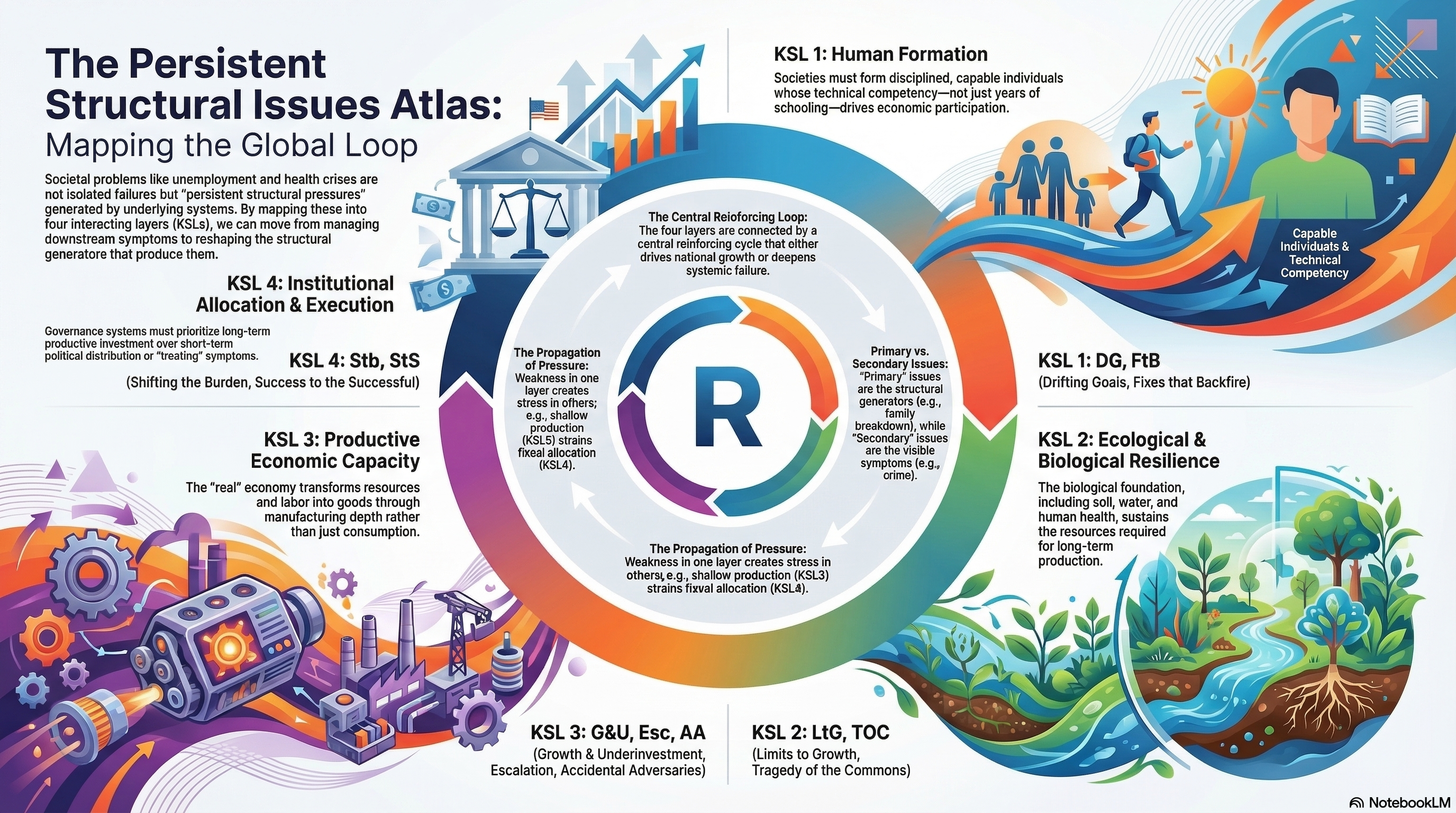
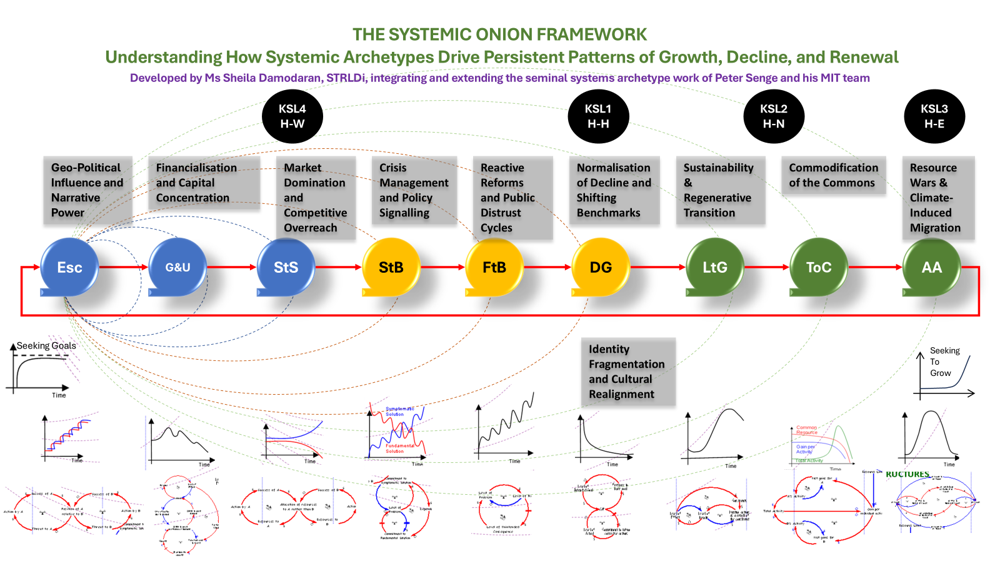


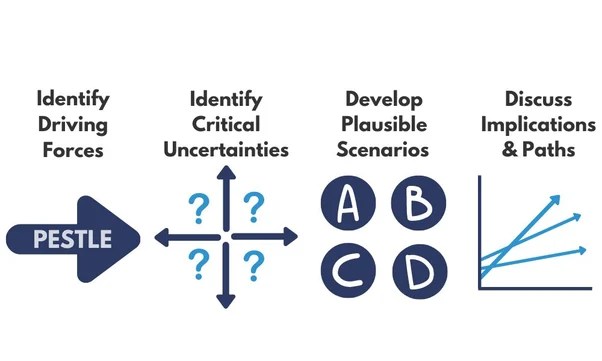

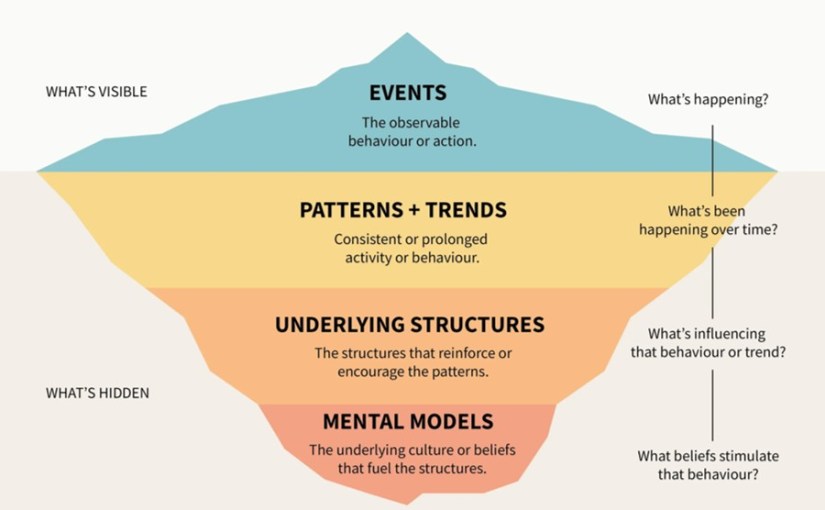

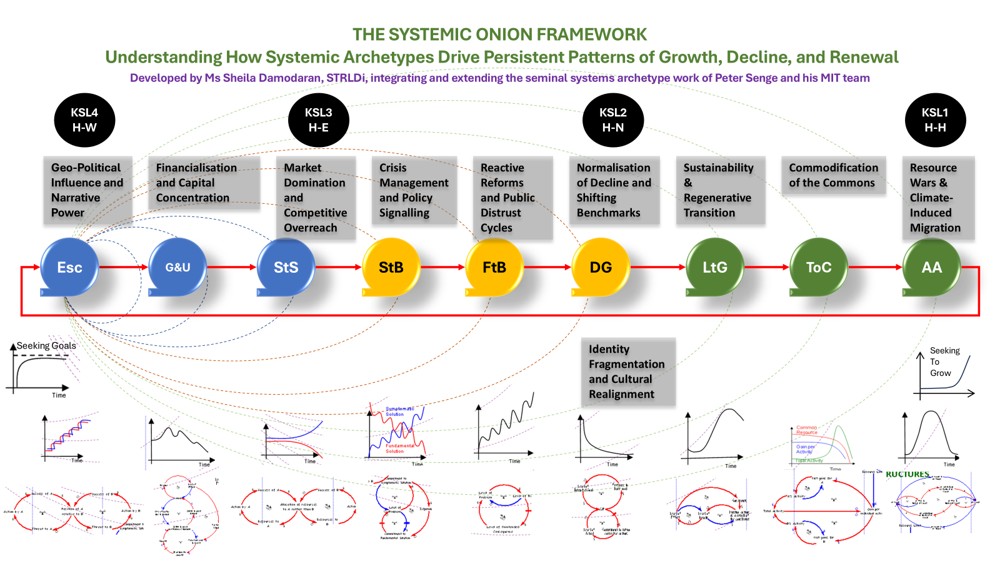
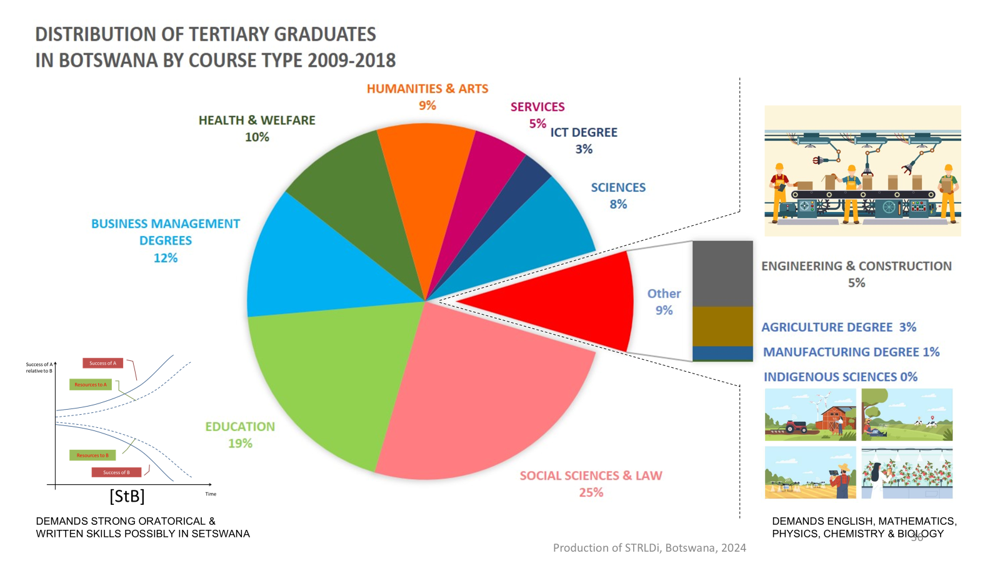
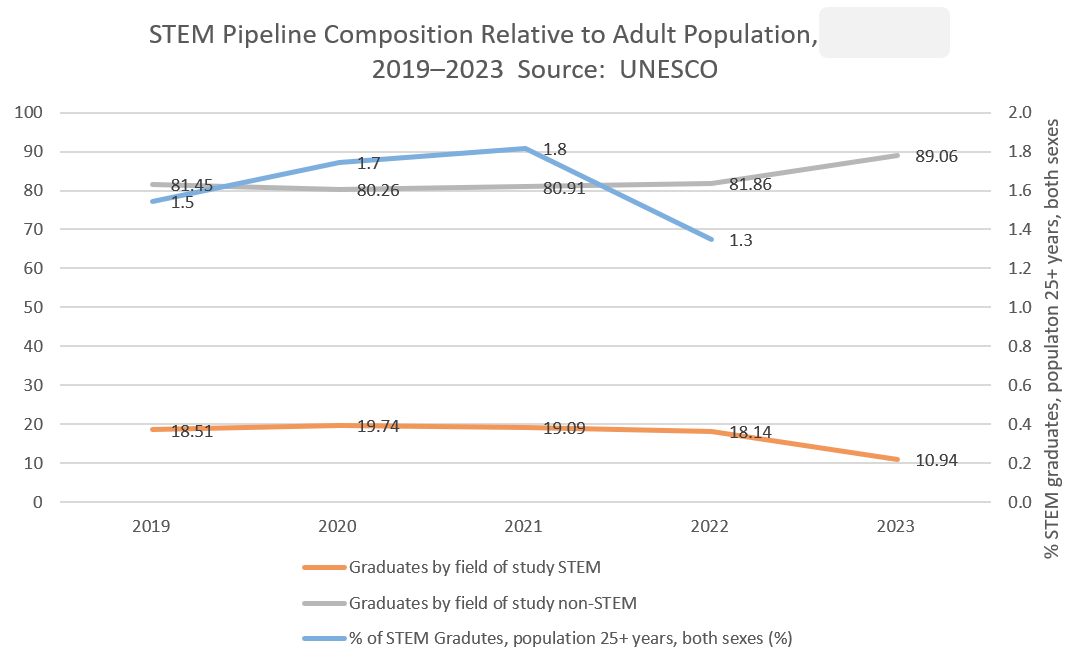
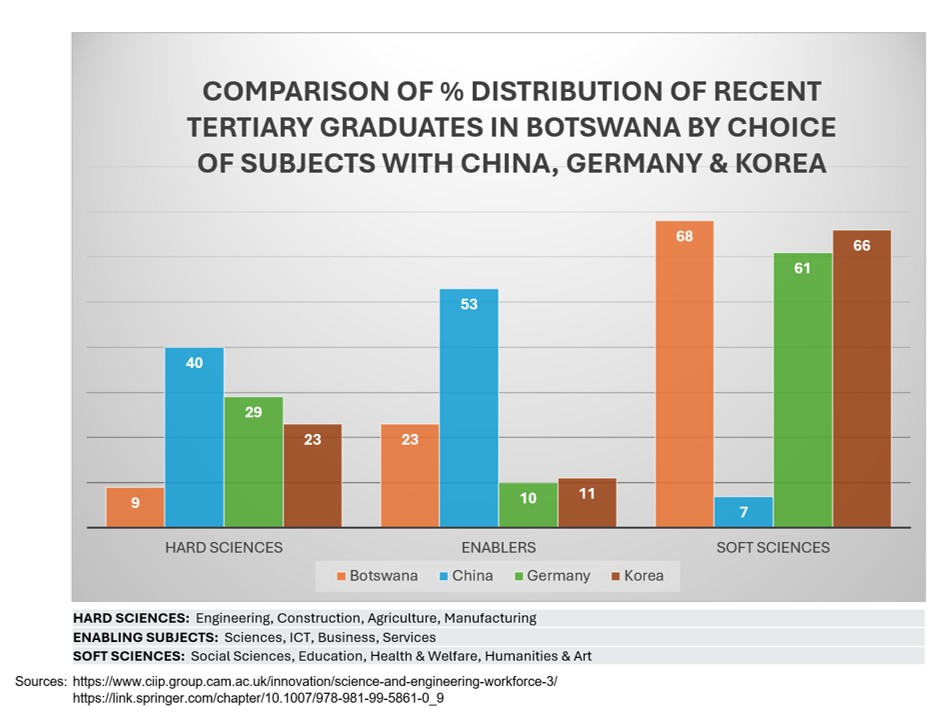

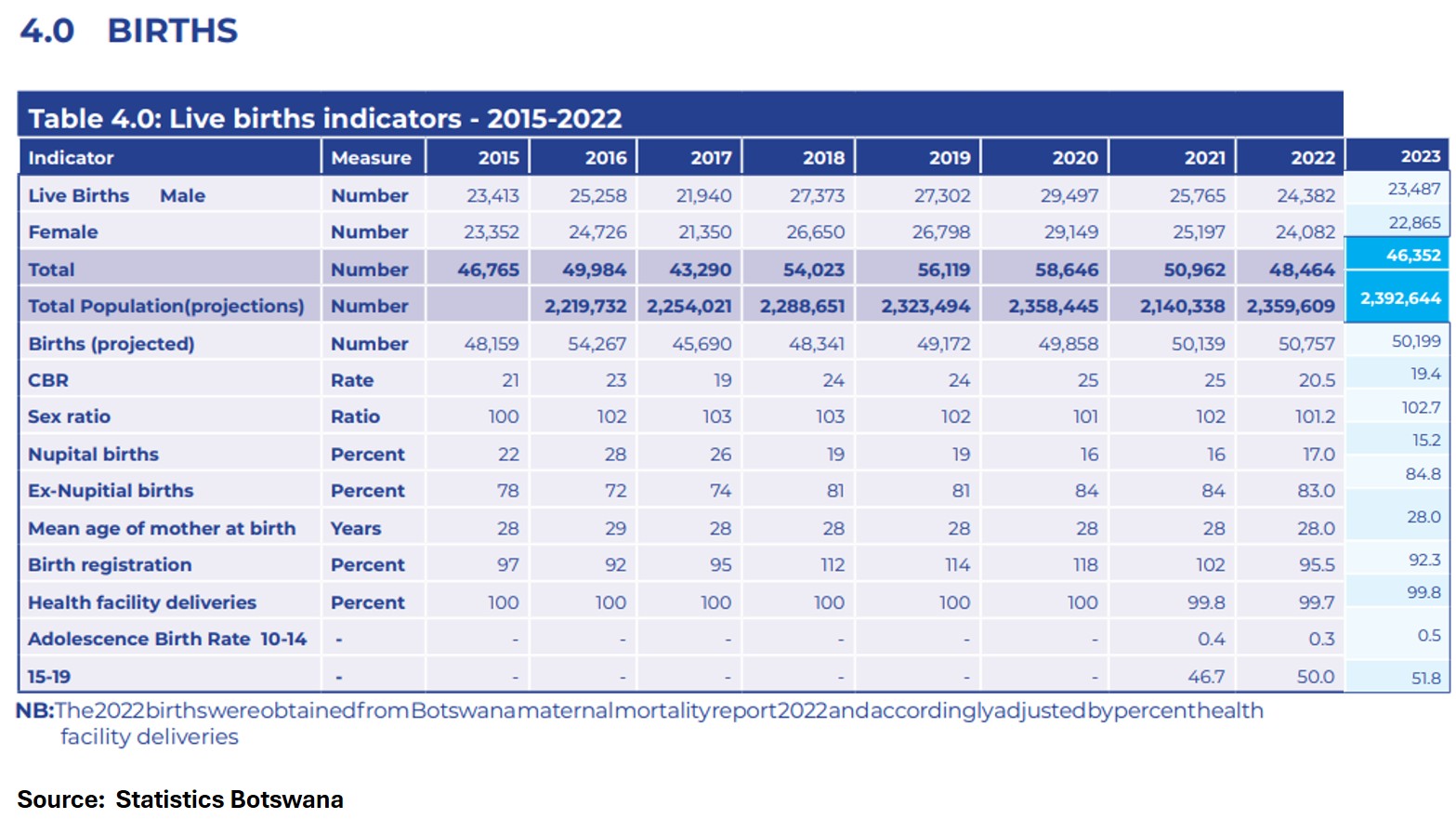
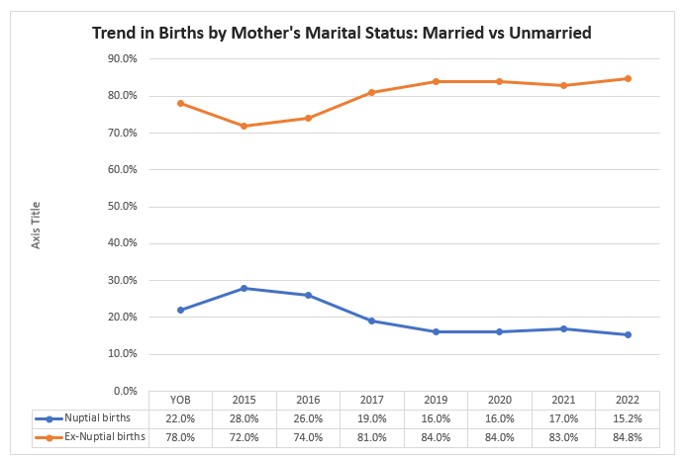

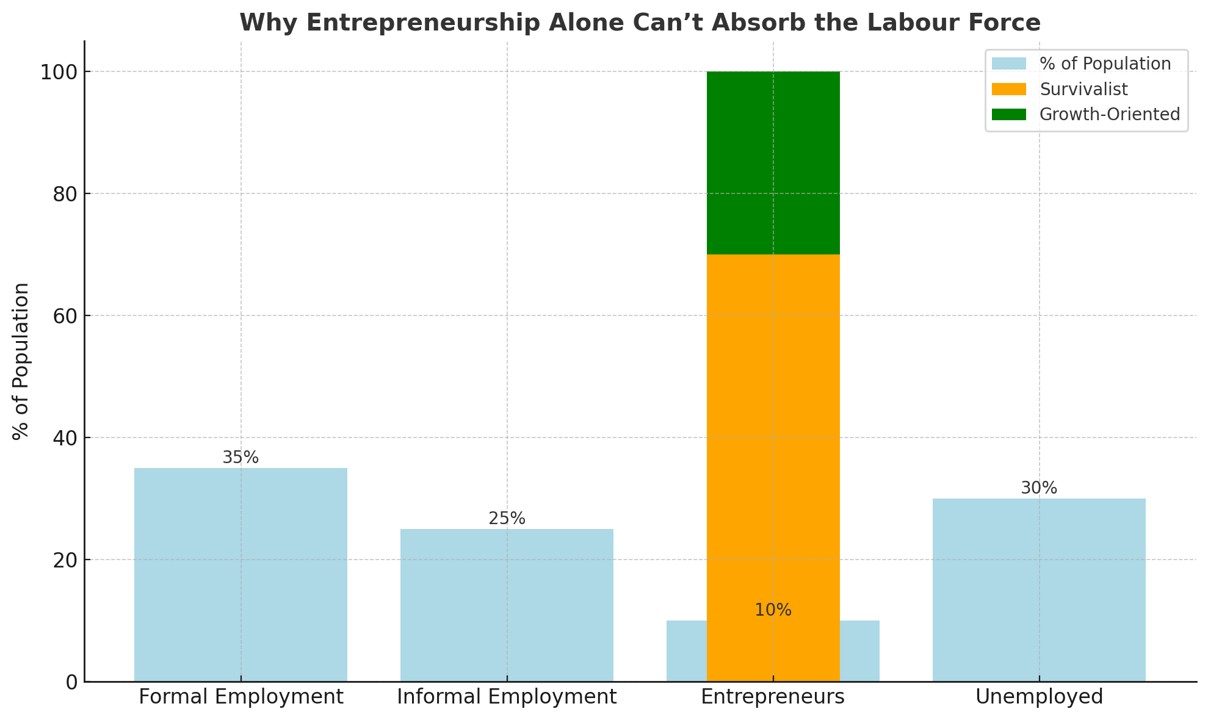





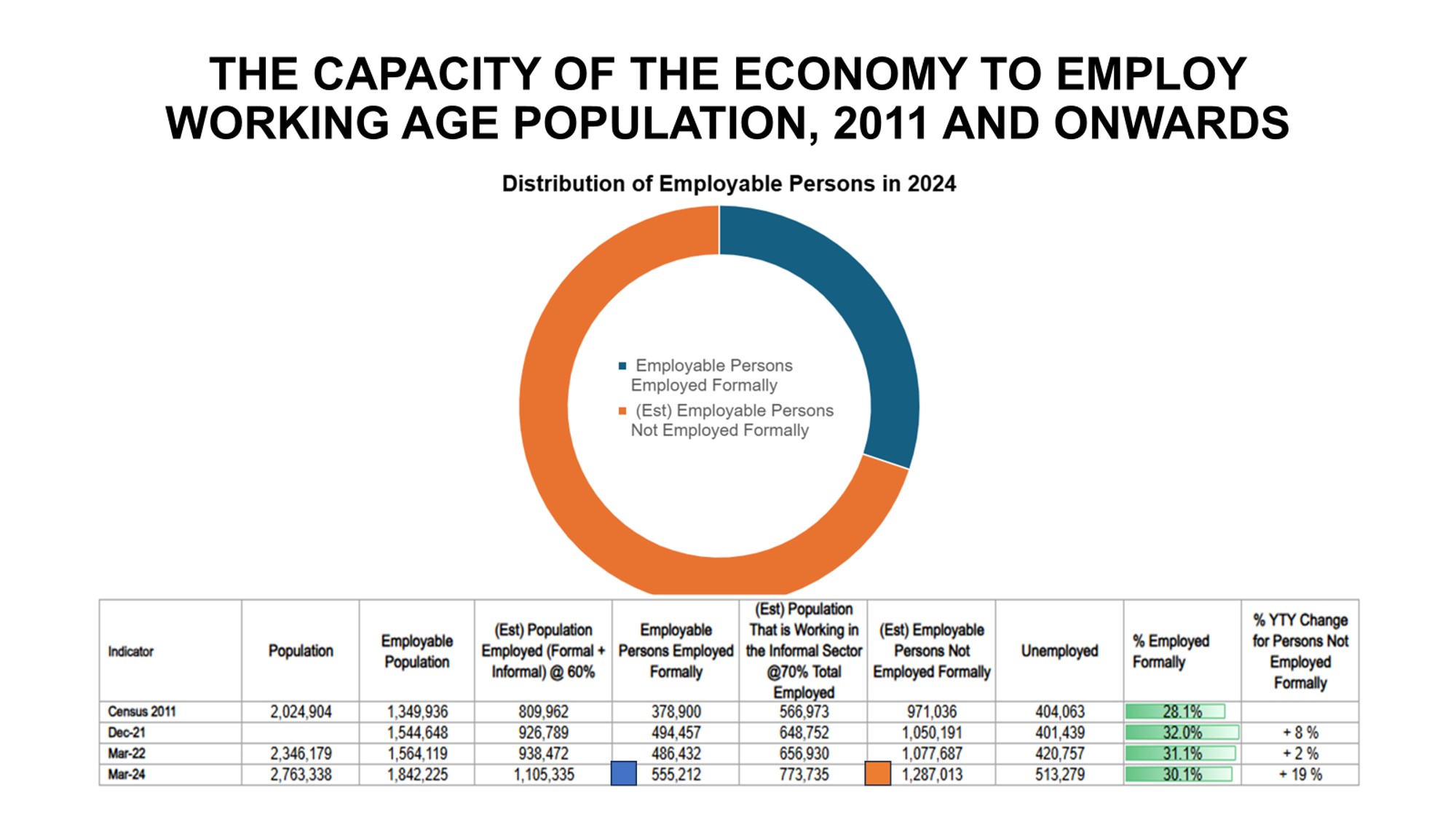

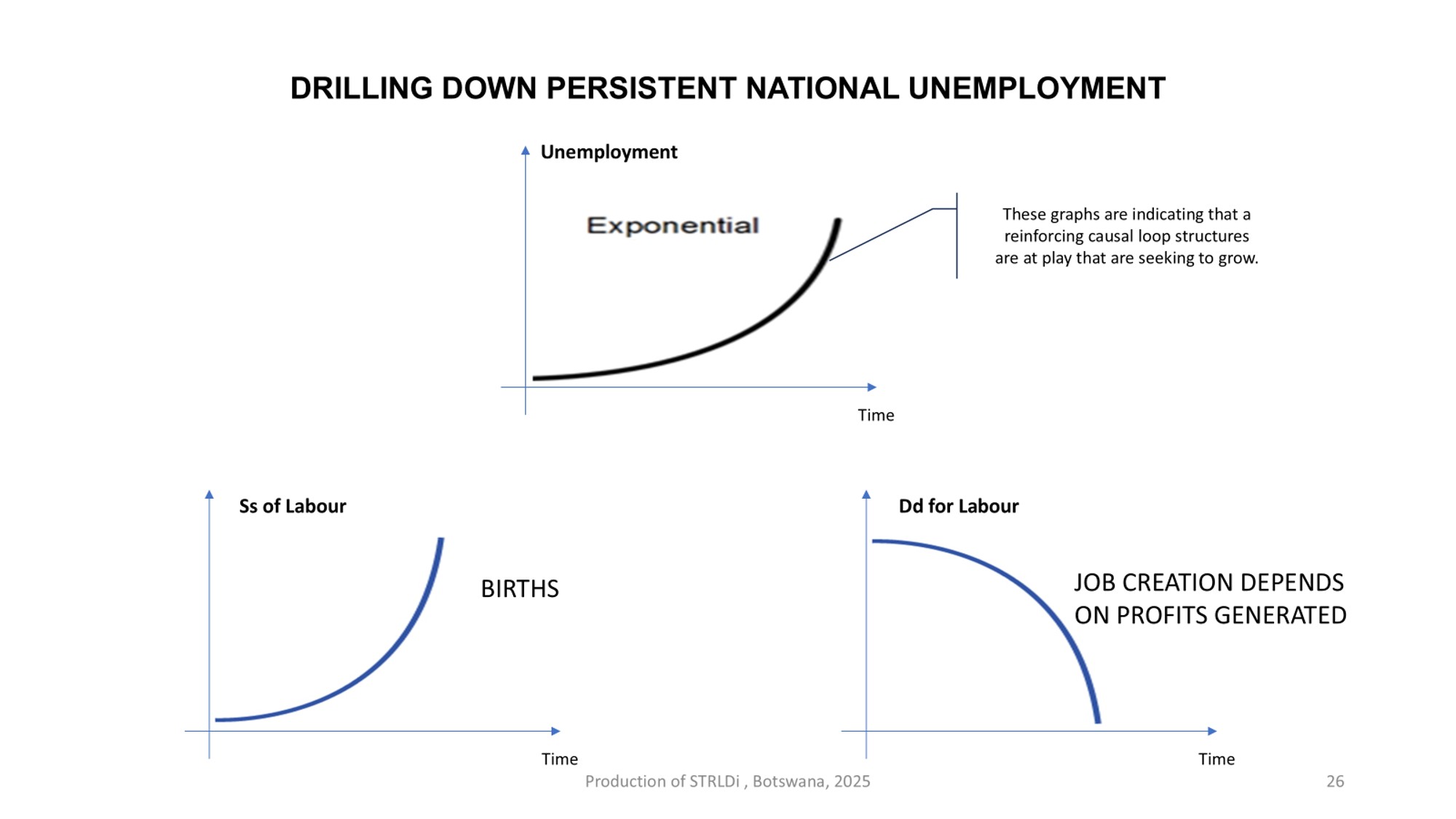
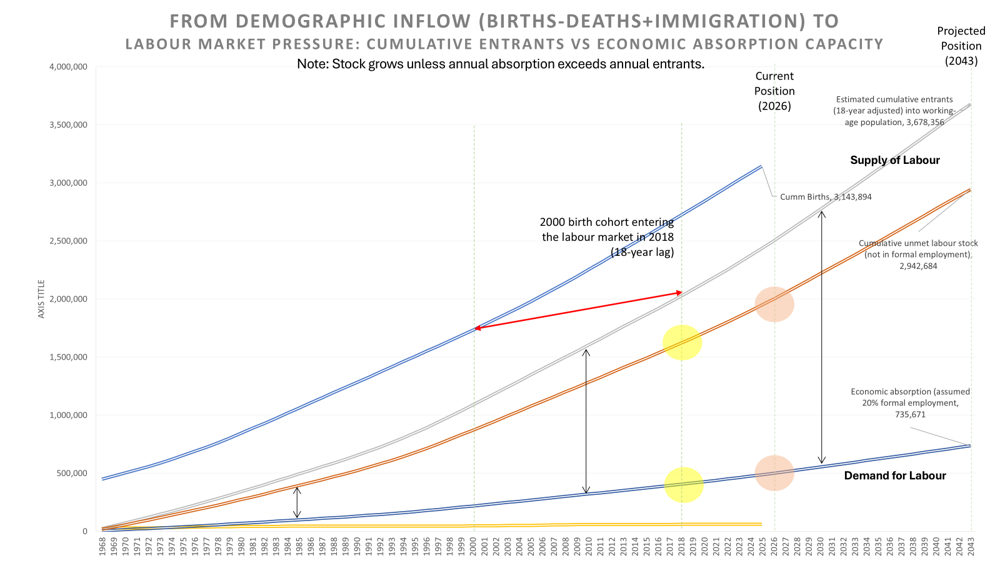


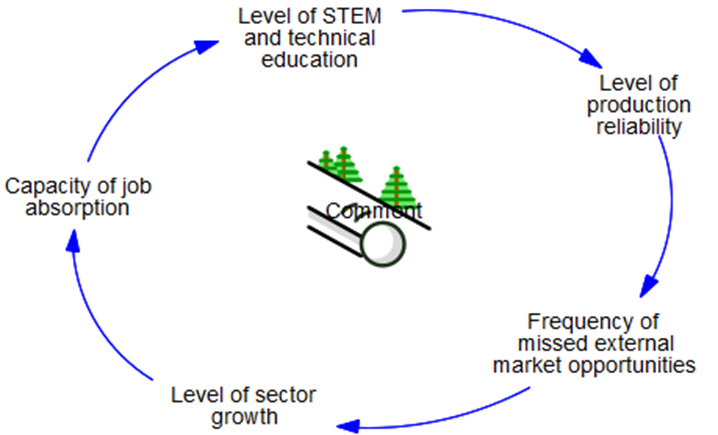
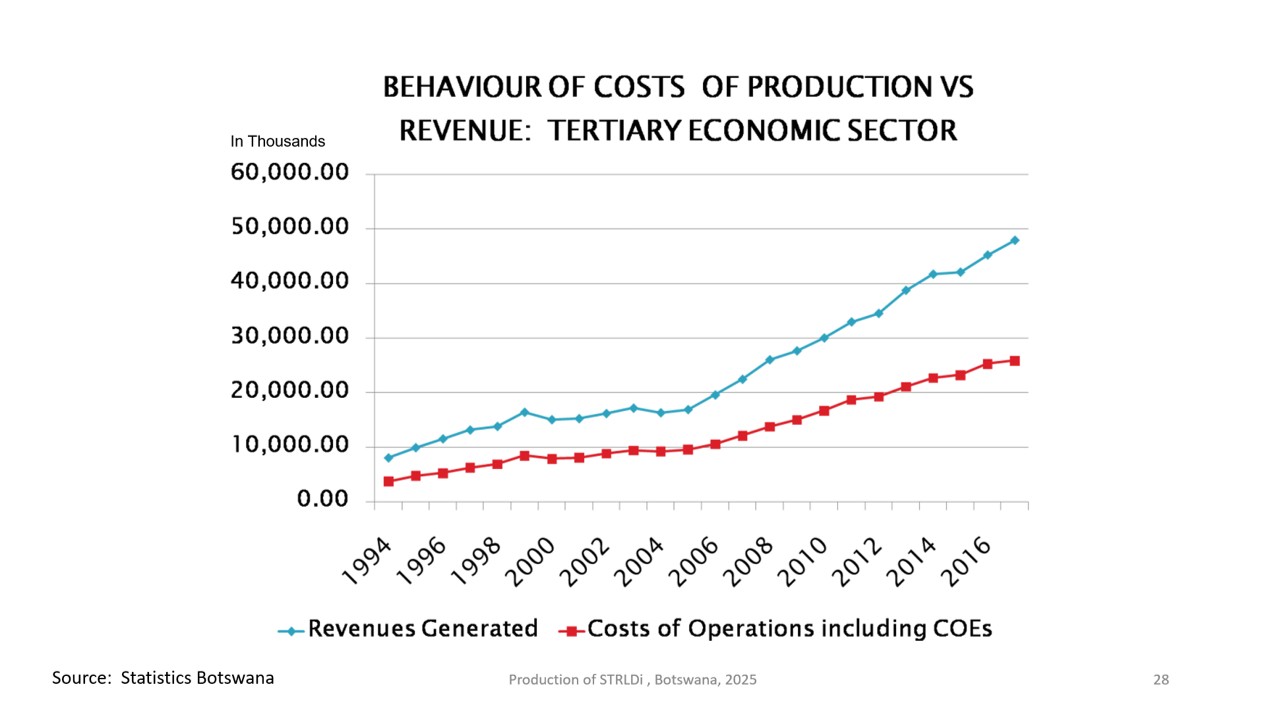
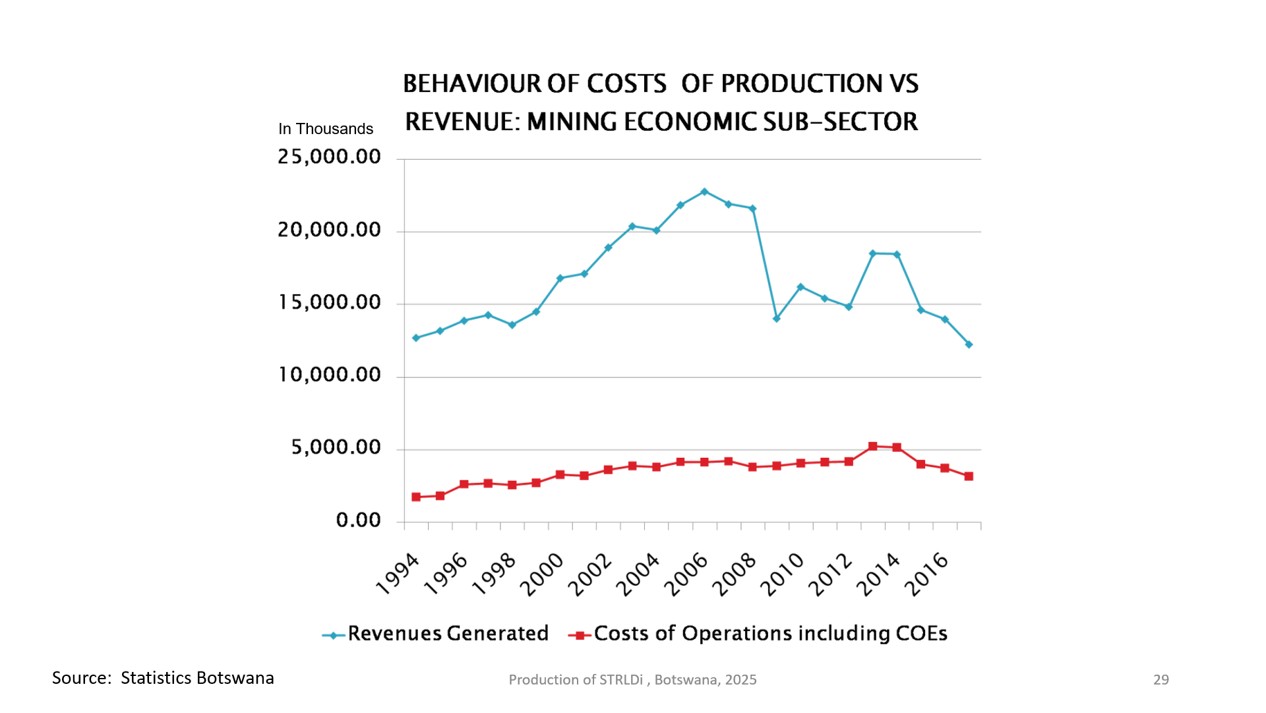

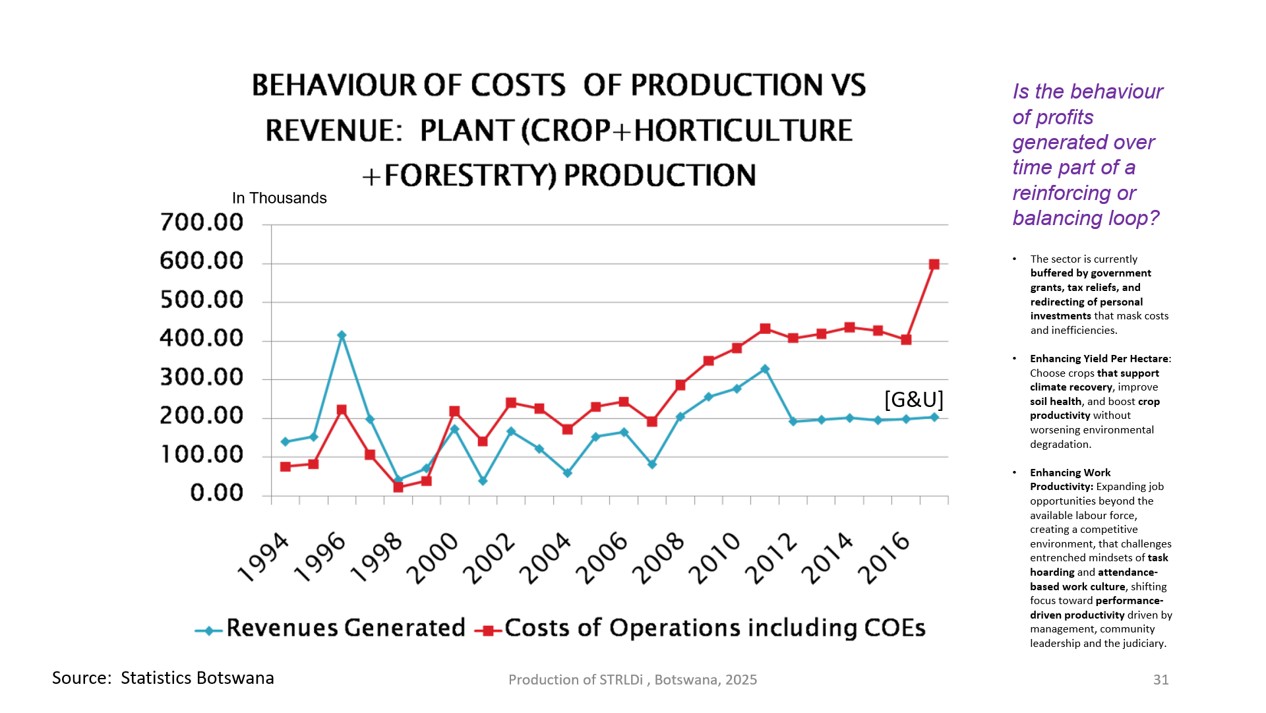


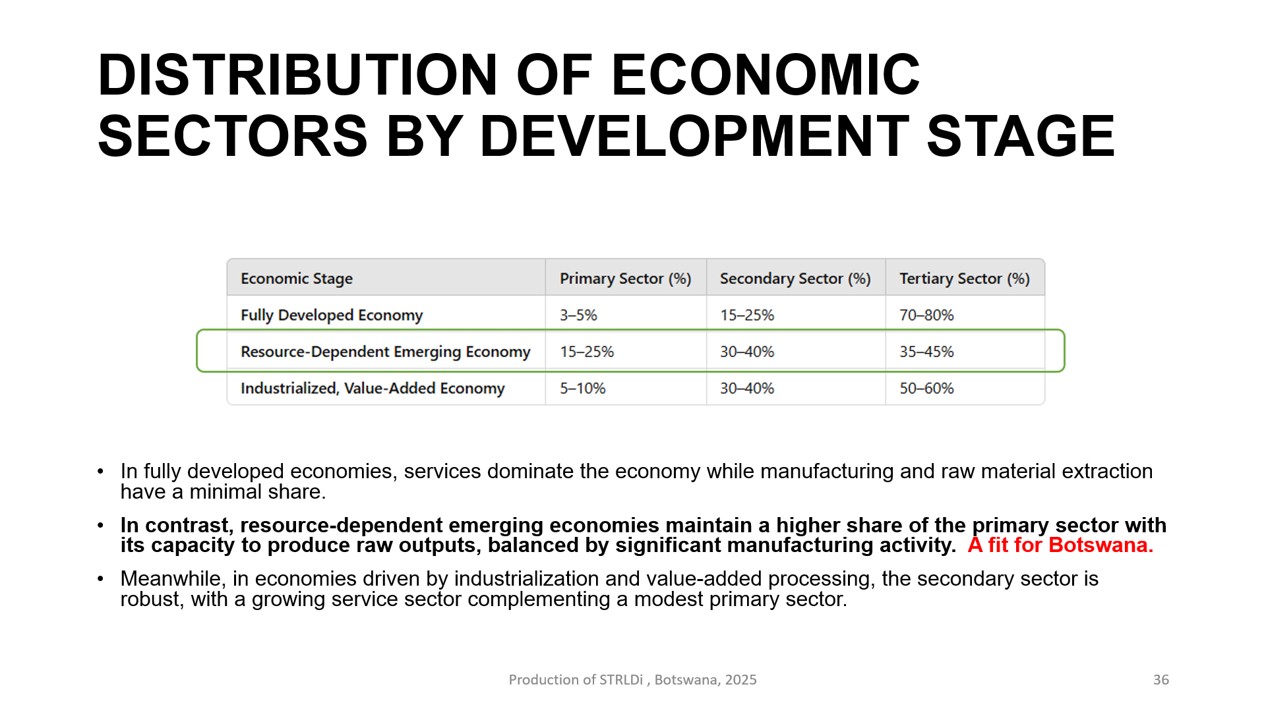
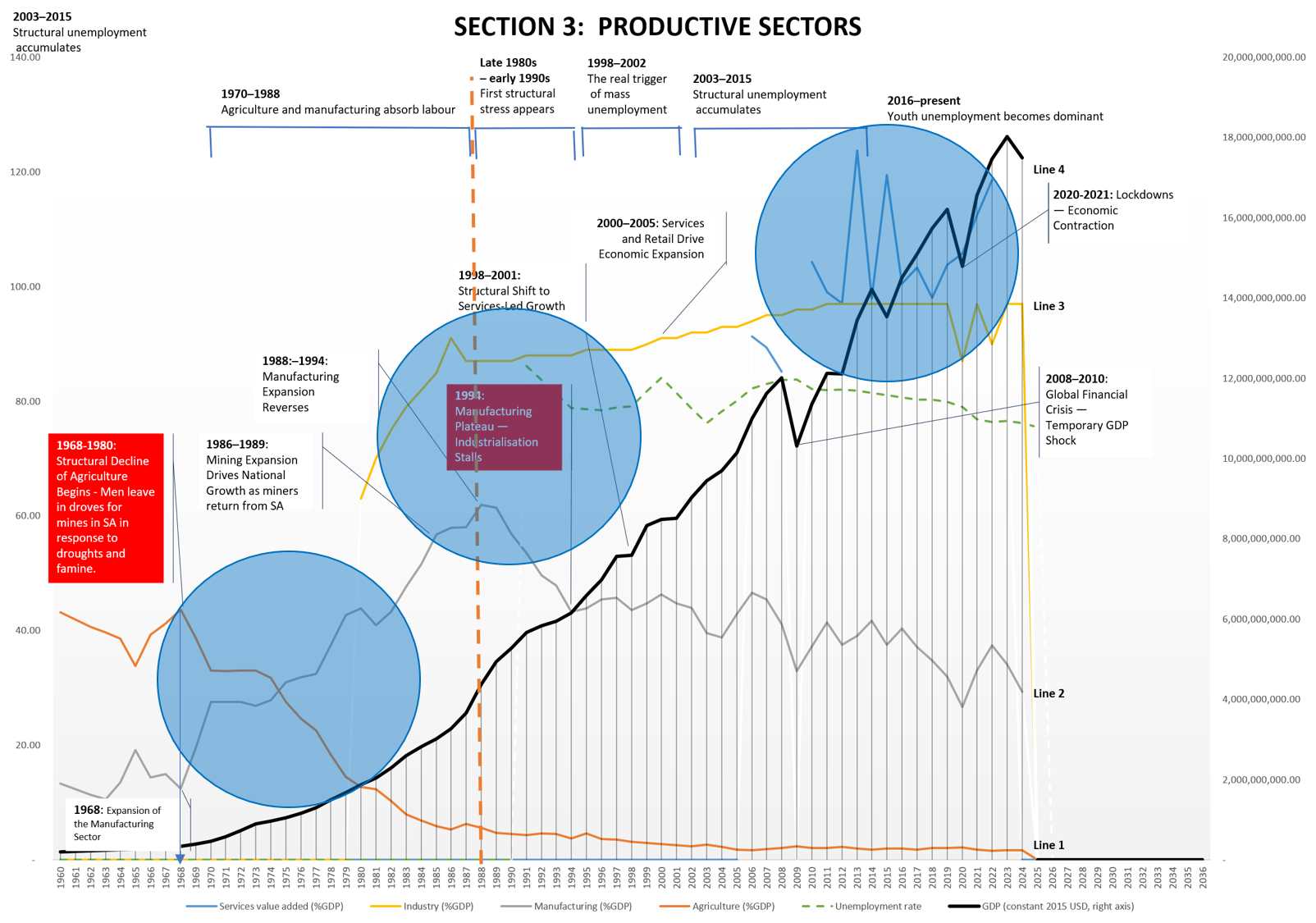
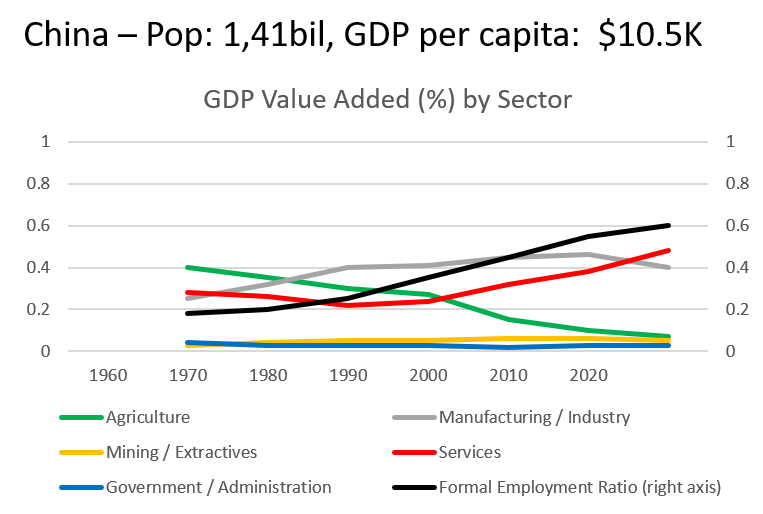
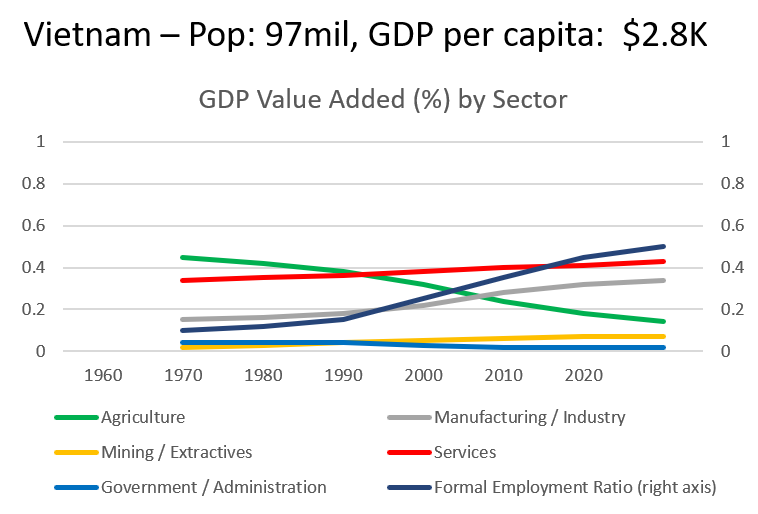
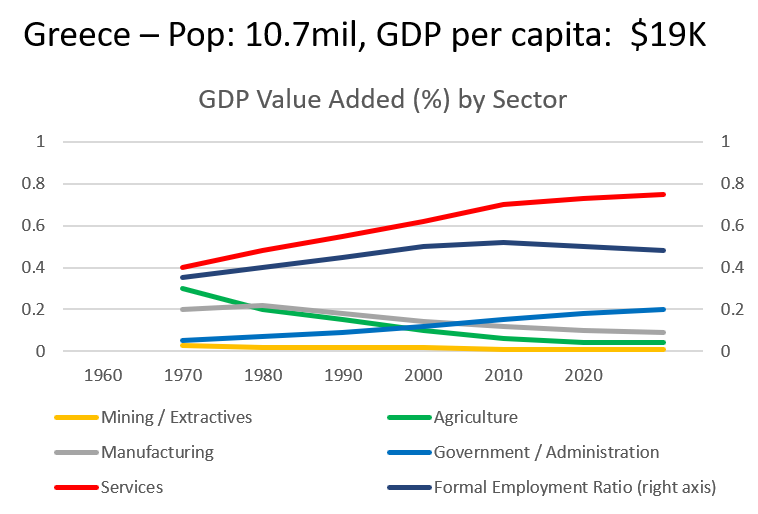
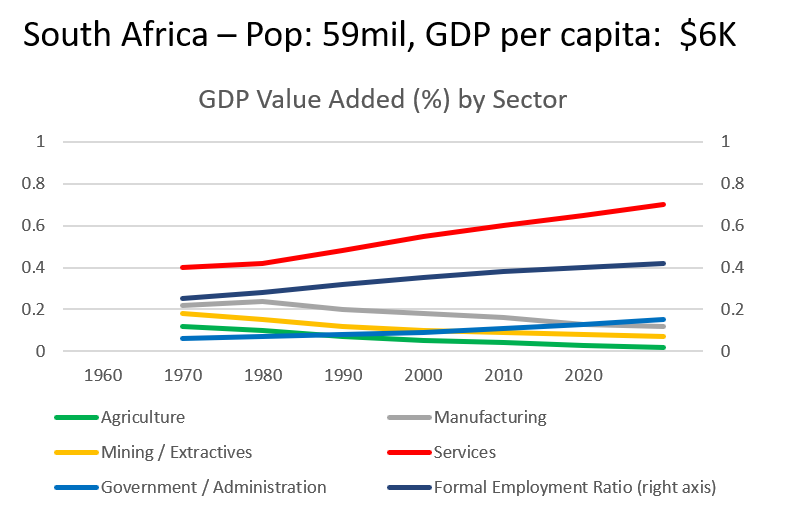
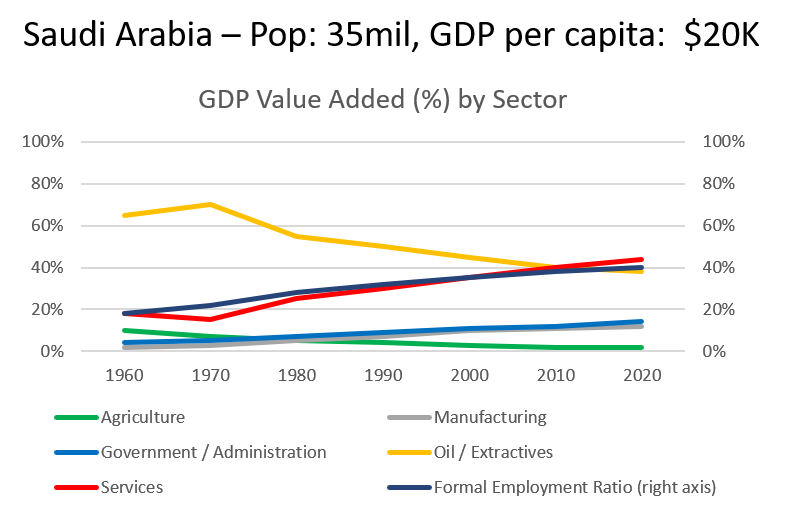
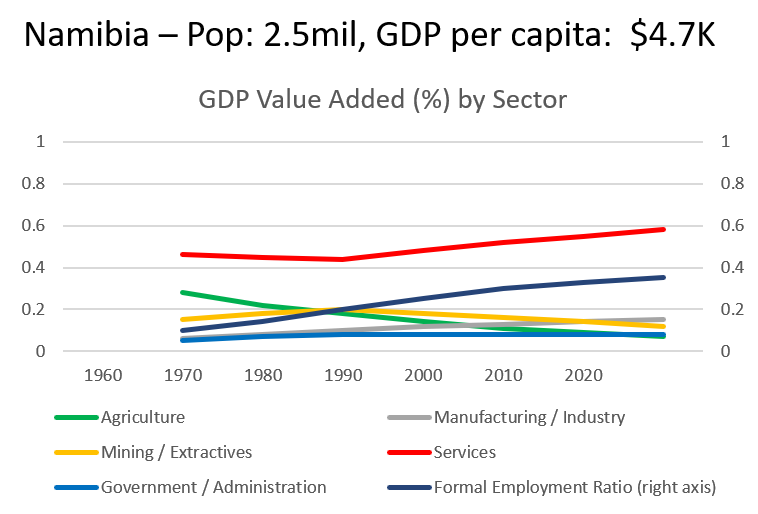
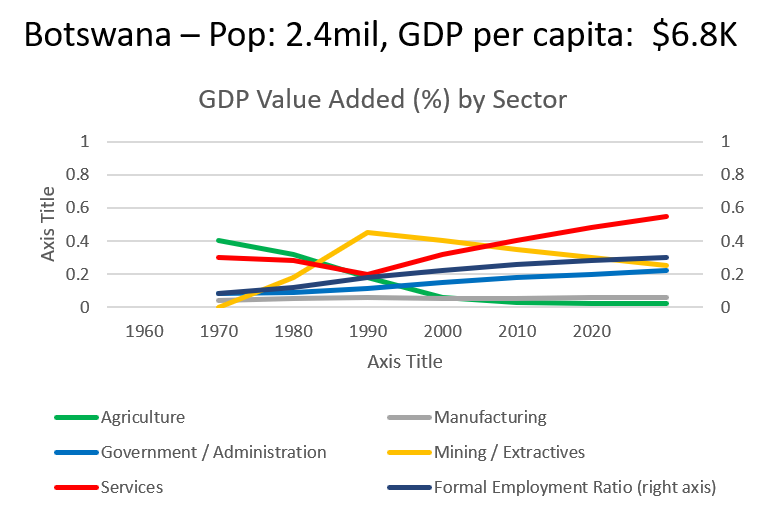
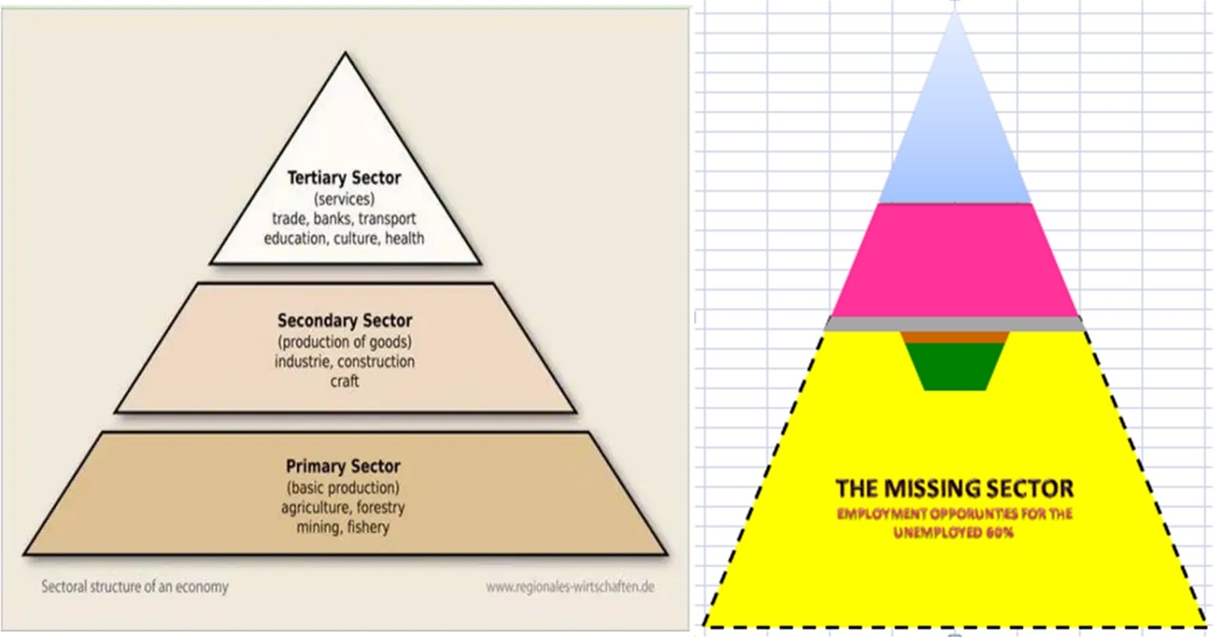
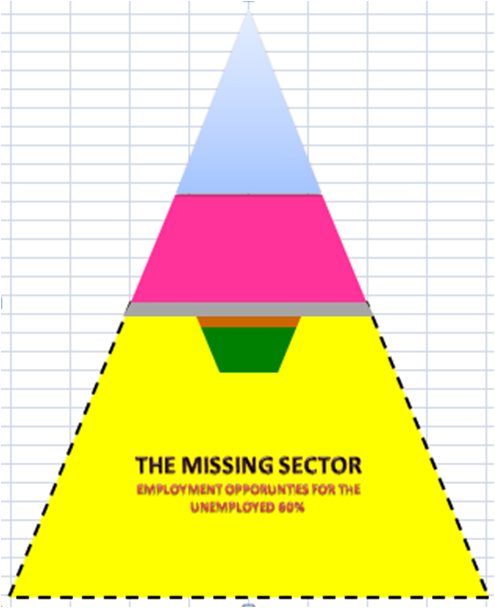

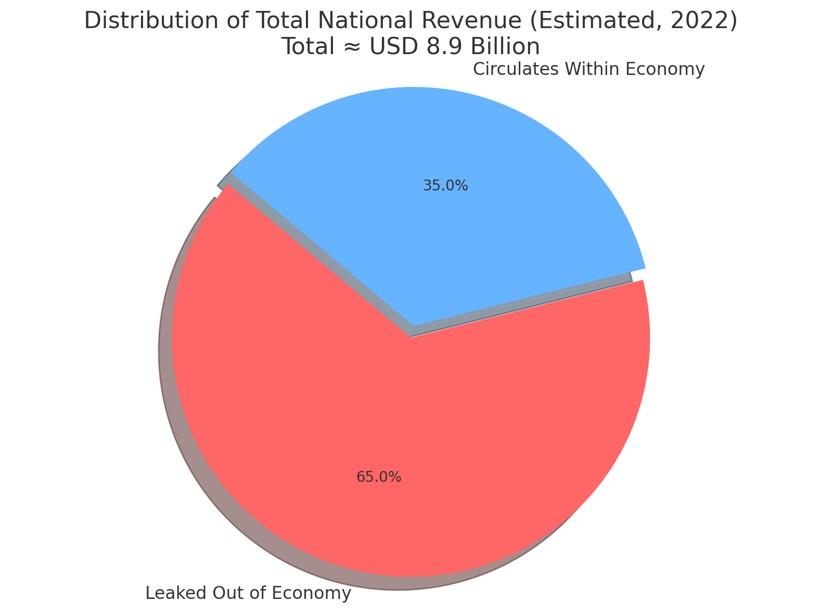
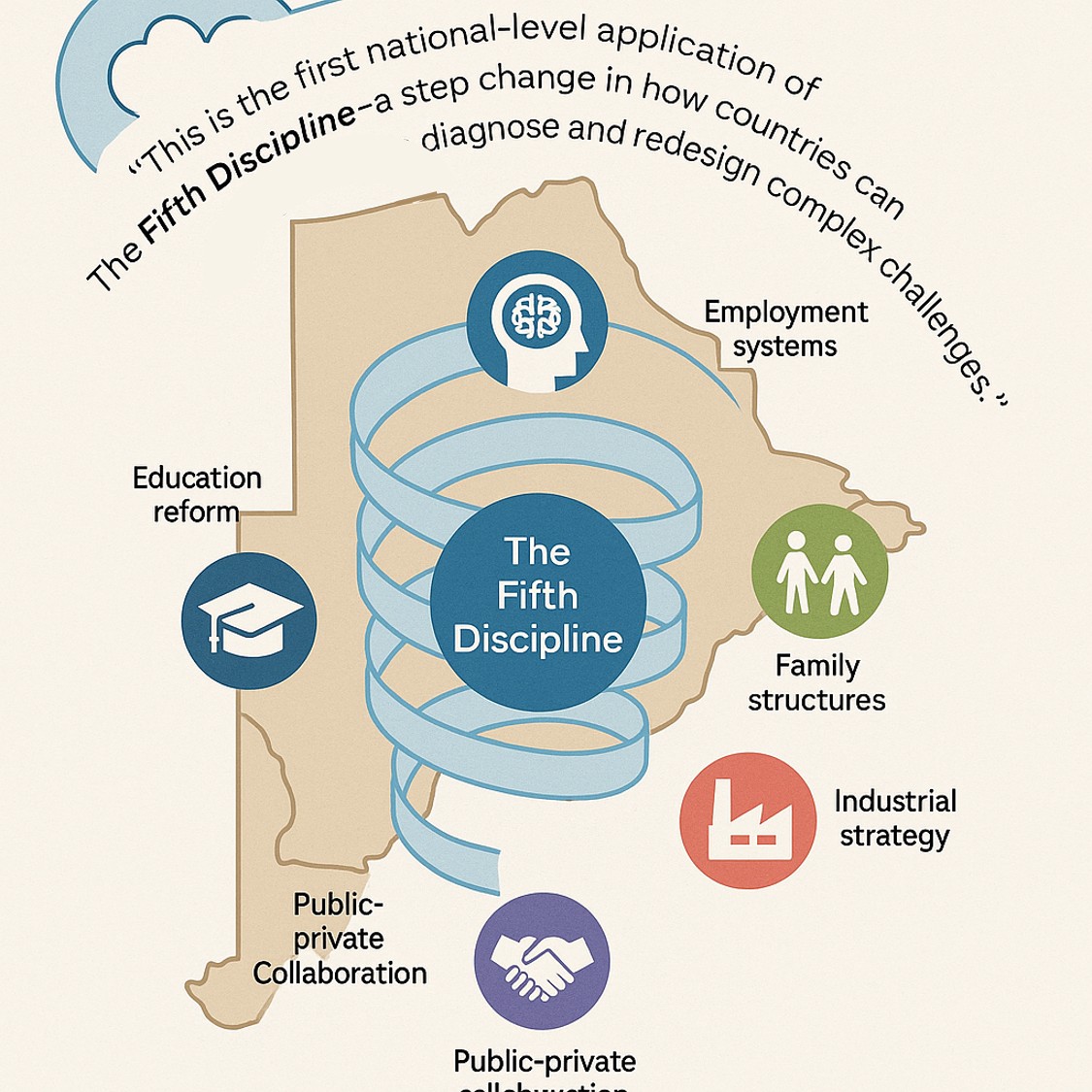


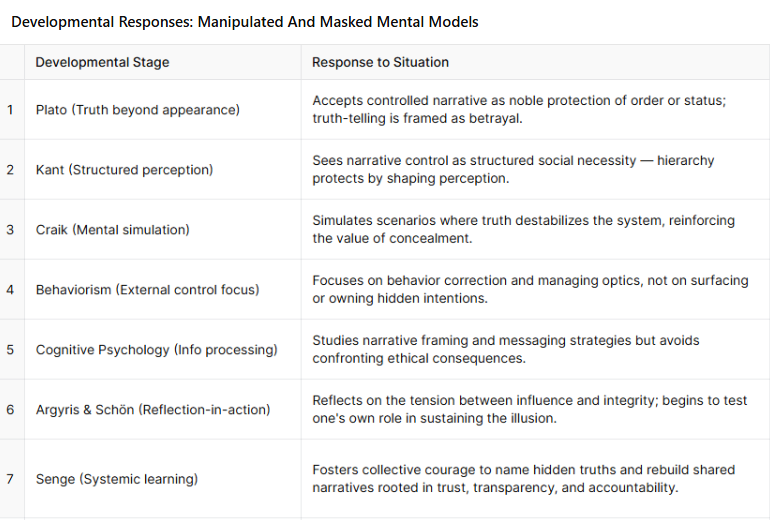




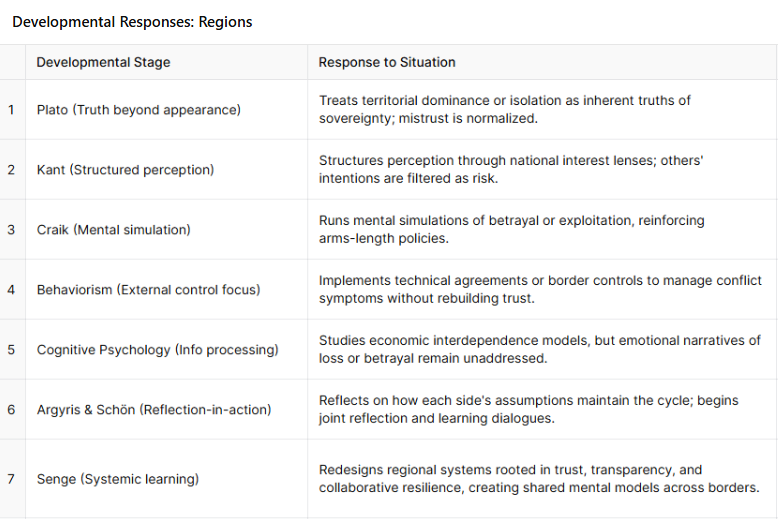


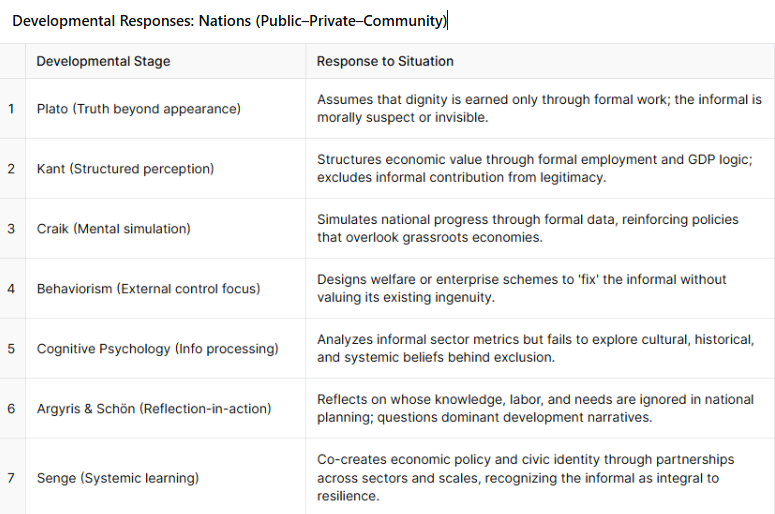














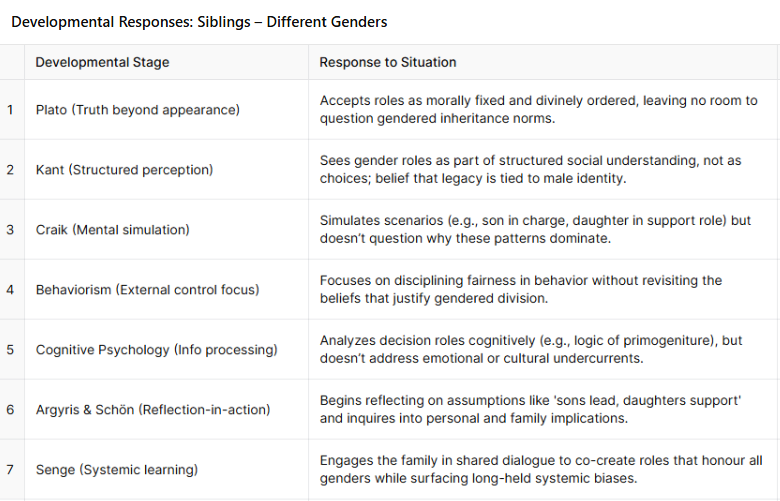








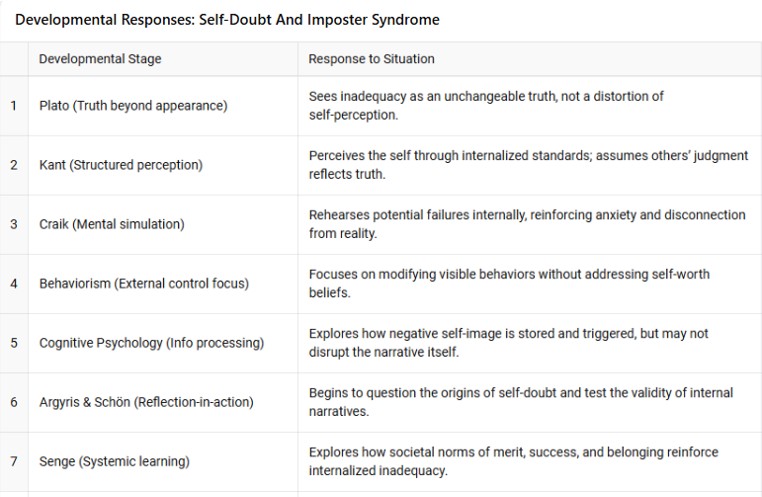


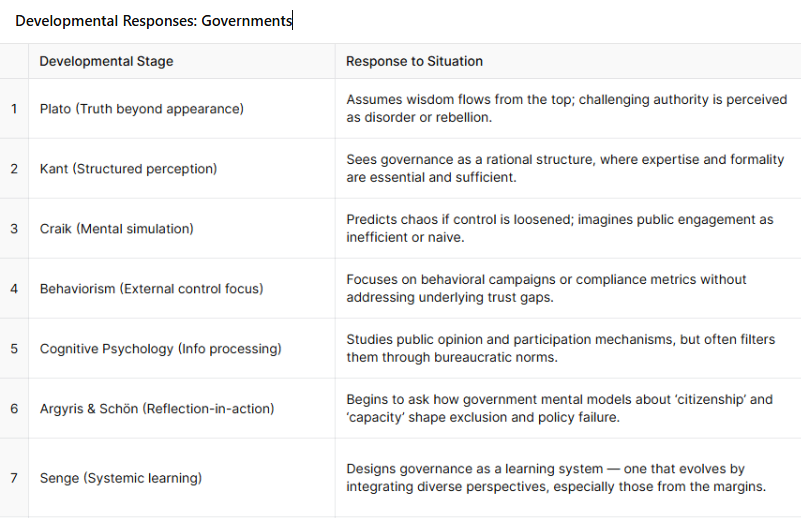


















You must be logged in to post a comment.