FROM EVERYDAY ACTS TO ORGANISATIONAL TRANSFORMATION
This guide outlines the full scope and texture of personal mastery as a living discipline. Drawing from real experiences, case studies, and foundational tools from The Fifth Discipline, it shows how personal mastery unfolds across three intensities of engagement: Everyday Practice, Transformational Belief Shift, and Organisational/Societal Engagement.
SITUATION 1: Everyday Practice Simple, repeatable acts that build awareness, intention, and alignment.
Examples:
Practice personal visioning in daily activities. For instance, upon seeing a pile of dirty dishes, resist reacting out of obligation. Instead, pause and imagine the end state: dishes gleaming, neatly stacked, and a space restored. This subtle shift from reacting to envisioning invites energy to rise from within, aligned with what we want to create.
Check internal state before responding. Before replying in a difficult meeting, pause and notice: Am I reacting to a threat or responding with purpose?
Daily journaling. Reflect on the difference between what you did and what you wanted to create.
Purpose: Makes personal mastery accessible. Builds inner steadiness and intentionality. Trains attention to stay rooted in vision, not reactivity.
SITUATION 2: Transformational Practice Rooted in Deep Belief (“The Shift”) Facing and transforming invisible mental models that sustain stagnation or self-sabotage.
A public article misrepresented a complex initiative, distorting intent and impact.
The silence from allies was louder than the criticism. Shame crept in.
A new mental model formed: “Don’t make noise. Stay safe. Visibility brings danger.”
The Shift Process:
Name the Triggering Event. What incident caused a rupture or contraction?
Identify the Belief Formed. What unconscious story began? E.g. “Visibility is unsafe.”
Observe Its Impact. How has it shaped decisions, posture, and relationships?
Distinguish Past from Present. “That article was misinformed. It no longer gets to define me.”
Reframe Power and Identity. “Their silence is not my shame to carry.”
Create a New Internal Commitment. “I now speak to serve, not to be validated.”
Purpose: Acts as a doorway to deeper authenticity. Enables structural shifts in identity and self-concept. Builds the resilience to lead without waiting for permission.
SITUATION 3: Organisational / Field / Societal Where personal mastery scales to systems-level change through collective learning.
Practices:
Co-evolve mental model dialogues into shared team learning. Bring individual reflections into safe spaces for group discovery.
Map systemic structures using the Onion Model.
Example: The national unemployment study in Botswana used this model to surface feedback loops, delays, archetypes, and mental models.
Apply scenario planning to test future pathways.
Facilitate visioning to build cross-functional teams around shared purpose.
Objectives:
Enable collaborative strategy design.
Cultivate systems leadership across silos.
Create “learning organisations” capable of sensing, reflecting, and evolving.
Purpose: Personal mastery at this level becomes a catalyst for systemic transformation. It is no longer about individual growth, but the growth of capacity in the system to hold complexity, to envision together, and to act with courage.
Closing Note: Whether practiced quietly at a kitchen sink, or enacted across national strategy tables, personal mastery is the unseen discipline that makes meaningful change possible. All three pathways matter. All three prepare us to become who we must be for the futures we long to create.
“Misunderstanding Mastery: When The Fifth Discipline Is Adopted but Misaligned” Read the article here »
1. Misuse of Terminology
How terms like personal mastery and systemic change are often used superficially in coaching, leadership, and development programs.
The risks of using The Fifth Discipline as branding language without the discipline it requires.
2. Root Causes of Misalignment
How market pressures—like the need for personal identity, fast transformation, and visible success—distort the original intention of the disciplines.
The confusion between personal optimization and genuine learning.
3. What the Five Disciplines Actually Demand
A closer look at each discipline—Personal Mastery, Mental Models, Shared Vision, Team Learning, and Systems Thinking—as practices of transformation, not tools of control.
How these disciplines work together as an integrated whole.
4. STRLDi’s Stand
Why STRLDi holds a principled stance in advocating for the unmodified, disciplined use of The Fifth Discipline in policy, leadership, learning, and systems reform.
A call to re-root the disciplines in their original intent and deeper practice.
🧭 Why This Article Was Written
This article was written in response to the growing trend of The Fifth Discipline being adopted—but often misapplied—across leadership programs, coaching spaces, and organizational change initiatives. It speaks to the danger of extracting parts of the framework (especially personal mastery) while ignoring the structural and collective disciplines that give it coherence.
The article addresses the consequences of this fragmentation: shallow change, inflated claims of transformation, and the undermining of learning organizations.
🌍 STRLDi’s Response & Position
STRLDi (The Systems Thinking Research & Leadership Development Institute) takes the position that The Fifth Discipline is not a toolkit—but a long-term transformation journey. As an institute rooted in African and global realities, STRLDi:
Advocates for the disciplined, whole-systems application of The Fifth Discipline in leadership, governance, and economic transformation.
Provides training, research, and capacity-building for individuals, teams, and institutions to think systemically, learn collectively, and act generatively.
Stands against the commodification of systems thinking and invites serious practitioners to ground their work in practice, purpose, and community learning.
In a time of complexity, STRLDi believes that the integrity of the method is just as important as the urgency of change.
Since the launch of the book in the 1990s and over the years, the language of The Fifth Discipline has gained popularity across coaching programs, innovation labs, podcasts, and personal development spaces. Words like “personal mastery,” “systemic change,” “shared vision,” and “learning organizations” are enthusiastically used—but often not in the way Peter Senge intended.
This trend reflects a growing desire for transformation, but also a quiet distortion of the disciplines’ original purpose. At STRLDi, we believe it is time to pause and examine:
Why is the market demanding The Fifth Discipline—and what does it misunderstand about it and why is that so?
Personal Mastery Isn’t Self-Optimization
Many interpret personal mastery as internal excellence or self-improvement: crafting a personal brand, achieving peak performance, or finding one’s “true self.” This framing appeals to those who are overwhelmed by institutional failure and looking inward for certainty.
But in The Fifth Discipline, personal mastery is not a personal escape. It is a discipline of vision, truth-telling, and continuous learning—anchored in a larger system and shared purpose.
It is not about mastering life, but becoming a lifelong learner within it.
Systemic Change Without Systems Thinking
We frequently see references to “systemic transformation” and “complexity” in business and development circles. But too often, these references lack grounding in systems thinking—the very discipline that helps us trace feedback loops, delays, and unintended consequences.
Systemic change becomes a slogan instead of a structure. Without the tools of systems thinking, we risk replacing complexity with abstraction.
To use the discipline as intended, we must see structure beneath events—and find leverage points that create real shifts.
Shared Vision Is Not Corporate Alignment
Organizations often reduce shared vision to a slogan or top-down mission statement. It becomes a branding exercise or a strategic alignment tool. But this bypasses the most powerful part of the discipline:
Shared vision is not told. It is co-created through dialogue and sustained by personal commitment.
True vision doesn’t live in strategy decks. It lives in the heart of the people—and grows in spaces where they feel seen.
Dialogue Is Not an Interview
Many leadership spaces promote “engaging conversations,” such as podcast interviews or panel discussions. These formats, while well-meaning, rarely embody the team learning discipline of dialogue.
Dialogue in The Fifth Discipline is not about sharing opinions. It is the practice of listening together to the system—suspending assumptions and making the invisible visible.
In dialogue, learning is not delivered—it emerges.
The Market’s Fear—and What It’s Asking For
Why does the wider market adapt The Fifth Discipline in these ways?
Because people are overwhelmed.
They fear irrelevance. They crave coherence. They want visible impact. And they are looking for practices that promise both internal clarity and external influence.
These are legitimate needs. But addressing them by flattening the disciplines does not serve us.
If we truly want to transform our organizations, economies, and nations, we must resist making these disciplines “digestible”—and instead make them deeply livable.
✅ STRLDi’s Stand
At STRLDi, we stand for a disciplined, principled, and systemic use of the Five Disciplines.
We hold the space for uncomfortable questions. We bring the tools that help people see structures. We work at the level of learning, not performance.
Because what’s at stake is not a market trend— It’s our ability to design futures that include everyone.
MISALIGNMENT EXPLAINED
We’re observing a widespread and critical issue: many well-meaning practitioners, coaches, or program designers borrow the language of The Fifth Discipline—especially “personal mastery” and “systemic change”—but adapt it to meet marketable or culturally dominant frames, often unintentionally misaligning with Senge’s original, integrative and collective intent.
Let’s break this down by identifying what social or professional contexts, concerns, and psychological frames are shaping such reinterpretations. Then, we can contrast that with the intended design and spirit of The Fifth Discipline.
🔍 Mismatched Interpretations vs. Original Intent
1. Overpersonalization of “Mastery”
Observed Contexts
Concerns / Hopes Driving This
Coaching industries, self-help, wellness and leadership programs use “mastery” as personal success, control, or achievement
Fear of insignificance, desire for personal identity and recognition, and career advancement
Self-improvement markets focus on individual transformation as an endpoint
Hope for self-empowerment in the face of a chaotic world
Mastery becomes private excellence or internal peace
A response to burnout, lack of meaning, or disconnection from institutional or collective structures
🔁 Misalignment: Peter Senge’s personal mastery is not about self-optimization for individual gain. It’s about continually clarifying and deepening personal vision in alignment with shared purpose, developing the capacity to see reality clearly, and holding creative tension between the two. It is not a private practice but one that becomes generative in systemic contexts.
2. Systemic Change Without Systems Thinking
Observed Contexts
Concerns / Hopes Driving This
Popular use of “systemic change” without feedback loop literacy or structural mapping
Hope to solve the complexity with frameworks that are trendy or simplified
Buzzwords like “systemic innovation” replace concrete methods with vague ambition
Wanting to sound future-oriented, broad, and intellectually credible
Emphasis on design thinking, innovation labs, or ESGs as proxies for “systems thinking”
Hope to solve complexity with frameworks that are trendy or simplified
🔁 Misalignment: Senge defines systems thinking as the discipline that integrates the others, with feedback loops, delays, interdependencies, and archetypes. It’s not metaphorical. Using “systemic change” without tools to see and shift system structure is aesthetic rather than substantive.
3. Shared Vision as Brand Alignment or Team Buy-In
Observed Contexts
Concerns / Hopes Driving This
In companies, “shared vision” is interpreted as alignment to a mission statement or KPIs
Fear of misalignment and inefficiency; hope for clarity and motivation
Vision-building exercises are performative or one-time events
Need for quick cohesion, top-down leadership validation
🔁 Misalignment: In The Fifth Discipline, shared vision emerges through authentic dialogue, deep listening, and genuine ownership. It is co-created, not imposed or branded.
4. Dialogue vs. Interview or “Engaging Conversation”
Observed Contexts
Concerns / Hopes Driving This
Podcasts or talks promote “insightful conversations” but rarely create dialogic space
Desire for entertaining, digestible content with personality
Fear of silence, conflict, or discomfort limits true inquiry
Hope for exposure and relatability, not transformation
Questions are framed for personal stories, not mutual inquiry
Emphasis on “expertise sharing” over co-learning
🔁 Misalignment: The Fifth Discipline sees dialogue (central to team learning) as a practice of collective intelligence—holding assumptions in suspension, listening to the system through each other. It’s not performance, it’s presence.
📉 Summary of Drivers Behind the Misalignment
Underlying Market or Cultural Drivers
Resulting Adaptation
Fear of irrelevance → focus on personal branding
Mastery = personal uniqueness
Pressure for visible impact → shallow “systemic change” talk
Systems thinking = social narrative, not analytical discipline
Time scarcity & audience fatigue → simplified messages
💡 To Reach Realignment with The Fifth Discipline, Practitioners Must:
Reframe “mastery” as a lifelong discipline of personal alignment and reality-checking in service of something greater than the self.
Ground systemic change in tools and practices that trace cause-effect structures and uncover leverage points.
Shift from personal narrative to co-learning spaces, enabling shared insight to emerge across differences.
Cultivate genuine team dialogue and inquiry, even in public spaces like podcasts or webinars.
Design experiences that honor the learning organization, not just the learning individual.
RECLAIMING THE FIVE DISCIPLINES: MEETING TODAY’S HOPES WITHOUT COMPROMISING THE PRACTICE
Excellent and important question. To stay true to the original intent of The Fifth Discipline while addressing the real human concerns and hopes that drive its distortion, we need a generative approach that doesn’t reject those concerns—but meets them through the disciplines as they are.
Below is a step-by-step breakdown of each discipline, the concern or hope it answers, the misalignment it tends to attract, and how it rightly resolves that concern without compromise.
1. Personal Mastery
💬 Common Concern/Hope:
“I want to feel in control, clear, and fulfilled in a world that feels overwhelming or meaningless.”
❌ Adaptation:
Self-improvement, personal branding, or goal-hacking culture focused on individual success.
✅ Rightful Role of the Discipline:
Personal Mastery cultivates inner clarity and creative tension between your current reality and personal vision.
It is not about controlling outcomes, but:
Developing a deep commitment to truth (seeing things as they are),
Maintaining lifelong learning and emotional resilience, and
Honoring a vision that evolves, rather than one fixed in ego.
🪜 How It Resolves the Concern:
It builds agency by grounding your identity in purpose, not performance.
It provides a practice of freedom, even within systemic constraints.
It restores coherence not by avoiding the world, but by relating to it honestly.
2. Mental Models
💬 Common Concern/Hope:
“I’m stuck in patterns that I can’t seem to shift. I want a new way to think and make decisions.”
❌ Adaptation:
Surface-level mindset hacks, affirmations, or personality typing.
✅ Rightful Role of the Discipline:
Mental Models is about surfacing, testing, and improving the deeply held assumptions we take for granted.
This discipline invites:
Radical self-honesty about what we believe and why,
A practice of suspension (holding assumptions up for examination),
And dialogue that helps us see our blind spots.
🪜 How It Resolves the Concern:
Provides the tools to interrupt automatic patterns in thinking and action.
Helps teams and individuals move beyond blame and into causality.
Creates openings for adaptive action, not just better attitudes.
3. Shared Vision
💬 Common Concern/Hope:
“I want to belong to something that matters. I want to contribute to a future that inspires me.”
❌ Adaptation:
Top-down mission statements or visioning retreats with no follow-through.
✅ Rightful Role of the Discipline:
Shared Vision creates alignment through genuine commitment—not compliance.
It arises from:
The personal visions of individuals being invited and respected,
Ongoing dialogue about what we care about deeply, and
Collective ownership of a living vision by piecing personal visions as one would piece a jigsaw puzzle, that guides decisions.
🪜 How It Resolves the Concern:
Builds authentic motivation—not forced alignment.
Provides a foundation for trust and initiative.
Fosters long-term coherence between values and strategies.
4. Team Learning
💬 Common Concern/Hope:
“I want to work in teams that learn together and don’t repeat the same mistakes.”
❌ Adaptation:
Team-building exercises or forced collaboration without a deep learning culture.
✅ Rightful Role of the Discipline:
Team Learning builds collective capacity for deep insight, generative dialogue, and aligned action.
It emphasizes:
The suspension of assumptions in dialogue,
Listening for the system through each other,
And developing shared understanding that drives innovation.
🪜 How It Resolves the Concern:
Enables learning in complexity by harnessing the intelligence of the group.
Builds psychological safety through structured reflection.
Increases a team’s ability to adapt together, not just coordinate.
5. Systems Thinking(The Fifth Discipline)
💬 Common Concern/Hope:
“I want to solve complex problems without making things worse.”
❌ Adaptation:
Slogan-like uses of “systemic change” without tools or feedback analysis.
✅ Rightful Role of the Discipline:
Systems Thinking helps us understand patterns of behavior, feedback loops, and leverage points.
It trains us to:
See interrelationships rather than snapshots,
Understand structure driving behavior, and
Intervene wisely and sustainably.
🪜 How It Resolves the Concern:
Makes it possible to shift from reacting to redesigning.
Exposes the unintended consequences of well-meaning actions.
Cultivates patience and precision in high-leverage change.
Integrative Practice: The Five Disciplines Together
When held together, the disciplines respond systemically to misalignment drivers:
Market Fear / Hope
Misalignment
Five Discipline Response
“People are disengaged.”
Self-optimization
Personal Mastery helps build resilience & agency grounded in vision
“I feel powerless.”
Blame or superficial solutions
Mental Models and Systems Thinking uncover root structures
“Teams don’t collaborate well.”
Command-and-control visioning
Shared Vision brings authenticity and co-ownership
“Solutions backfire.”
Forced teamwork
Team Learning grows mutual trust and insight through dialogue
Systems Thinking reveals cause-and-effect over time and space
Event-based thinking
Systems Thinking reveals cause-effect over time and space
🧭 Final Reflection
We don’t need to adapt The Fifth Discipline to today’s concerns. We need to practice it as it is—because it was built for today’s complexity.
The fears, hopes, and pressures we see today are not a reason to simplify the disciplines. They are a reason to go deeper into them.
WHY MANAGEMENT LEGACY DISTORTS THE FIFTH DISCIPLINE – AND WHAT WE MUST DO ABOUT IT. THE FIVE DISCIPLINES WERE BUILT FOR NOW – BUT WE KEEP USING TOOLS FROM THE PAST
Here’s a structured overview of management practices, schools of thought, philosophies, and ideologies that have contributed to the distortion of The Fifth Discipline. Each begins with its origin, identifies its misalignment with Senge’s intent, and shows how The Fifth Discipline addresses the underlying issues.
1. Scientific Management (Taylorism)
Origin & Timeline: Late 19th–early 20th century. Pioneered by Frederick Winslow Taylor (1880s–1910s), it focused on time-and-motion studies to maximize efficiency (IBM Business of Government, Wikipedia).
Core Philosophy: Workers are “parts” in a machine; processes are standardized; control is centralized.
Relevance Today:
Pro: Improvements in productivity and process clarity.
Con: Treats humans mechanically; undermines creativity and intrinsic motivation.
Fifth Discipline Response:
Personal Mastery reminds us that employees are human beings, not cogs.
Team Learning and Shared Vision foster autonomy, collaboration, and meaning.
Core Philosophy: Democratize decision-making; employees speak and act.
Distortion Risk: Turns into token participation—listening without power or follow-through.
Fifth Discipline Response:
Team Learning demands real dialogue and shared sensemaking.
Systems Thinking ensures participation isn’t symbolic but shapes structural change.
6. Knowledge Worker & Productivity Culture
Origin & Timeline: 1950s, through Drucker’s concept of “knowledge worker” and management by objectives (thorprojects.com, The New Yorker).
Core Philosophy: Individuals are responsible for managing themselves.
Distortion Risk: Pushes self-management fads like GTD, which treat productivity as a personal fix.
Fifth Discipline Response:
Encourages seeing person + system via Systems Thinking—workload overload is often systemic.
Personal Mastery emphasizes purpose over personal efficiency hacks.
🔍 Timeline at a Glance
Era
Dominant School
Primary Focus
Resulting Misalignment
1880–1920
Taylorism / Efficiency
Industrial process, standardization
The worker as a machine
1930s
Human Relations
Psychology, motivation
Surface-level comfort
1950s
MBO / Knowledge Worker
Goal orientation, self-management
KPI focus, burnout
1990s
Participatory Management
Inclusion and decision rights
Tokenism
2000s+
Lean / Six Sigma / GTD
Efficiency in knowledge work
Personal optimization
🎯 Questioning Relevance Today
Is maximizing efficiency still the top priority?
In volatile, complex environments, efficiency alone is insufficient.
Systems Thinking asks: at what cost? What’s lost or foreclosed?
Are goals aligned to purpose—or just to metrics?
Shared Vision warns against hollow buy-in. Goals unlock only when grounded in meaning.
Is participation genuine or symbolic?
Team Learning insists that participation must involve true conversation and co-creativity.
Does enhancing productivity solve systemic overload?
Personal Mastery helps individuals respond skillfully—but it’s Systems Thinking that redesigns.
🧭 How The Fifth Discipline Responds to Today’s Complexities
Distortion Driver
Fifth Discipline Discipline(s)
Mechanistic views
Personal Mastery, Shared Vision, Team Learning
Metrics fixation
Shared Vision, Mental Models
Token participation
Team Learning, Systems Thinking
Burnout/efficiency obsession
Systems Thinking, Personal Mastery
By integrating all five disciplines, Senge offers a holistic alternative—not cheap fixes, but transformative practices that build human capacity and systemic resilience.
These are profound questions—historical, philosophical, and practical. They go to the heart of why The Fifth Discipline emerged when it did, how it responds to what came before, and what conditions would allow its purest application. Here’s a structured answer to your inquiry, step by step.
BORN OF THE BREAKDOWN: WHY THE FIFTH DISCIPLINE NEEDED A WORLD IN CRISIS – HAD WE NOT BEEN TAUGHT TO CONTROL, COULD WE HAVE LEARNED TO LEARN?
🧭 1. Could The Fifth Discipline Have Come to Bear Without Management Legacy?
No—The Fifth Discipline is, in part, a response to and a corrective for the dominant legacies of management thinking.
It did not arise in a vacuum. It emerged in the 1980s–1990s, precisely because the prevailing approaches—mechanistic, individualistic, efficiency-obsessed—were failing in a world becoming more complex, interconnected, and adaptive.
Like a medicine, it was formulated in response to an illness—the fragmentation of thought and practice that traditional management created.
So, paradoxically, The Fifth Discipline owes its necessity and relevance to the very management paradigms that distorted human potential and organizational learning.
🌿 2. If These Legacies Had Not Existed, How Would The Fifth Discipline Have Been Used?
Had we not inherited these restrictive mental models (e.g. Taylorism, MBO, hero-leader culture), The Fifth Discipline could have:
a) Emerged as a core educational philosophy
Taught as a developmental pathway in schools and communities—how to learn collectively, think systemically, and build visions in alignment with nature and society.
Leadership might be defined not by control, but by the ability to foster learning environments.
b) Shaped institutions toward generativity
Organizations could have grown with the deliberate intent to evolve, not just to produce.
Policy, design, and economics might be less extractive, more aligned with long-term stewardship and learning capacity.
c) Become an architect for culture-building
The Five Disciplines might serve as a framework for civic participation, interfaith understanding, even healing historical trauma—if not shackled to performative management.
Without the distortions, The Fifth Discipline might have become our primary architecture for human flourishing in complexity—not an “alternative” management theory.
❓ 3. Would It Leave Any Gaps Without the Legacy Context?
Yes—because The Fifth Discipline was built in dialogue with the management worldview. Without that contrast, certain elements would need reframing to stay relevant:
Discipline
Possible Gaps in Legacy-Free Context
What Could Fill the Gap
Personal Mastery
May lack urgency or direction without resistance or external pressures
Ground it in intergenerational responsibility or ecological belonging
Mental Models
Might not confront harmful patterns if people live in open, inclusive systems
Introduce cultural humility and historical analysis as reflective tools
Shared Vision
Could feel abstract without institutional resistance
Root it in community-building practices or bioregional stewardship
Team Learning
Could become soft or undisciplined
Anchor in rituals of inquiry and sustained collective practices
Systems Thinking
Might lack teeth if not exposed to collapse or contradiction
Use indigenous cosmologies or deep ecology as natural systemic lenses
In short: Without the distortions, the disciplines would need deeper cultural and ecological moorings to remain grounded and transformative.
🧠 4. How Did These Legacies Cause Our Minds to Close to the Five Disciplines as They Are?
The mental models passed down by management legacies narrowed our ability to see learning, complexity, and humanity clearly. They installed structural “blindness” in the following ways:
a) Mechanistic Thinking
Trained us to see people as resources, not beings with purpose.
Focused on “fixing parts” instead of nurturing wholes.
b) Event-Level Thinking
Prioritized short-term wins over long-term pattern recognition.
Trained urgency and reactivity into leadership culture.
c) Hierarchy Over Dialogue
Validated authority and command over inquiry and co-creation.
Eroded psychological safety which is essential for team learning.
d) Output Over Insight
Replaced learning with reporting.
Substituted genuine transformation with metrics and optics.
These legacies shaped the way we frame problems, define success, and even conceive of time and learning—making the true spirit of The Fifth Discipline feel slow, vague, or impractical.
🪶 Final Thought: The Tragedy—and the Opportunity
The management legacies were built to solve industrial-era problems—but the world has since changed. The tragedy is that many still operate from these paradigms.
But the opportunity is this: The Five Disciplines are not reactive corrections. They are regenerative practices, timeless in application, and waiting for cultures courageous enough to truly host them.
THE FIFTH DISCIPLINE WAS ALWAYS THERE—UNTIL WE MANAGED IT AWAY. THE WISDOM WE LEFT BEHIND: WHAT THE PRE-INDUSTRIAL WORLD GOT RIGHT ABOUT LEARNING AND SYSTEMS
This is a critical historical inquiry—asking not only about what changed with the rise of Taylorism but why it emerged when it did, and how pre-industrial life may have been more naturally aligned with what we now call The Fifth Discipline. Let’s examine this in layers:
1. The World Before the 1880s: Natural Alignment with The Fifth Discipline
Prior to industrialization (roughly pre-1880), most of the world lived in agrarian, community-based, and artisan-driven societies. These cultures exhibited several features that—intuitively or culturally—aligned with the core disciplines, even if not formally articulated.
🌱 Natural Alignments
Fifth Discipline
How it Was Present Before 1880s
Personal Mastery
Oral traditions and cosmologies reinforced shared assumptions, limiting in some cases, but also making people more conscious of story and belief systems.
Mental Models
Life was embedded in nature’s feedback: rainfall, soil health, intergenerational planning, and community memory. Cycles were visible, real, and respected.
Shared Vision
Families, villages, guilds, and tribes operated on a shared understanding of purpose (survival, ritual, legacy).
Team Learning
Farming, fishing, building, and healing were interdependent—success was a collective function.
Systems Thinking
Life was embedded in nature’s feedback: rainfall, soil health, intergenerational planning, community memory. Cycles were visible, real, and respected.
2. Why Taylorism Emerged in the 1880s
Taylorism—scientific management—was not an accident. It was a rational response to a world that was radically changing. Key shifts made it appear necessary:
a) Industrialization & Mass Production
The rise of the factory system required scalable, standardized labor.
Artisan knowledge was now seen as inconsistent and inefficient.
Rural populations were moving to cities en masse, becoming a new workforce.
Cultural dislocation weakened older shared visions and crafts.
New managers faced a chaotic, undisciplined labor force needing “control.”
c) Technological Acceleration
Steam engines, railroads, and machines separated labor from nature.
Human beings became parts in increasingly mechanical systems.
d) Empire and Global Trade
Colonial supply chains demanded efficiency, predictability, and control across great distances.
Management logic mirrored military and bureaucratic control structures.
Taylorism didn’t just optimize work—it redefined what work meant. From meaning and contribution → to productivity and output.
📈 3. Impact of Population Growth on the Shift
a) Global Population Trends
In 1800, the world population was ~1 billion.
By 1900, it had doubled to ~1.6 billion.
This growth, combined with urbanization, meant that:
Societies needed new ways to produce and distribute goods.
Scarcity of skilled labor in cities meant de-skilling the workforce became practical.
b) Consequences of Scale
The artisan model could not feed or clothe rapidly growing cities.
Scalability required predictability, which favored mechanistic control over human development.
⚖️ 4. What Was Lost in the Shift?
While Taylorism solved some short-term coordination and output problems, it erased or suppressed:
Lost Capacity
Fifth Discipline Equivalent
Craft and vocation
Personal Mastery
Oral and collective knowledge
Mental Models
Communal meaning-making
Shared Vision
Dialogue-based traditions
Team Learning
Living systems worldview
Systems Thinking
The shift wasn’t just industrial—it was epistemological: from seeing life as whole and cyclical, to seeing it as fragmented and linear.
🌍 5. Relevance Today: Why The Fifth Discipline Is a Return, Not Just a Breakthrough
The Fifth Discipline is not only a modern innovation, it is also a return to something ancient:
Wholeness over fragmentation.
Learning over performance.
Systemic understanding over surface control.
Relationships over roles.
It responds not only to the failures of 20th-century management—but restores the deep human practices we once knew intuitively.
🧭 Final Thought
If Taylorism was born out of fear of disorder, The Fifth Discipline is born out of a desire for coherence. And as the problems we now face—climate collapse, inequality, disconnection—outgrow the tools of control, the call is not to go further forward, but deeper back.
THE HIGH COST OF MISALIGNMENT: WHAT THE WORLD PAYS FOR MISUNDERSTANDING THE FIFTH DISCIPLINE
The price of misunderstanding and misaligning The Fifth Discipline is extraordinarily high—measured not just in lost potential, but in real damage to people, institutions, ecosystems, and futures. When the five disciplines are fragmented, misused, or ignored, the cost is structural, systemic, and often irreversible.
Below is a structured account of that price—across domains—and where possible, examples of actual destruction or loss that could have been reduced or avoided through proper application of the Five Disciplines.
🔴 1. Individuals – Loss of Inner Coherence, Burnout, Identity Crisis
Price Paid:
Burnout epidemics, especially among professionals and youth.
Mental health disorders driven by performance pressure and disconnection from personal vision.
Loss of meaning and purpose; alienation.
Avoidable Damage:
Rising suicide rates, especially in high-performance cultures (e.g., Japan, Silicon Valley).
Identity fragmentation in modern economies—people working harder but feeling emptier.
Discipline Lacking:
Personal Mastery – Had individuals been supported to nurture their personal vision and hold creative tension, many would not collapse under the pressure of life without meaning.
🔴 2. Families – Disintegration, Miscommunication, Loss of Legacy
Price Paid:
Breakdown in intergenerational learning and values.
Conflict rooted in unseen mental models and unspoken assumptions.
Avoidable Damage:
High divorce and domestic violence rates tied to communication failure and lack of shared vision.
Erosion of family cohesion in post-migration or post-urbanization societies.
Disciplines Lacking:
Mental Models + Shared Vision – Families often clash because they do not see or examine their inherited assumptions. Without shared purpose, survival replaces growth.
Failure to adapt to changing environments (Kodak, Blockbuster).
“Zombie organizations” that move fast but learn nothing.
Avoidable Damage:
Billions lost annually due to workplace disengagement (Gallup estimates $8.8 trillion in lost productivity globally).
Innovation collapse when systems don’t encourage dialogue and learning (e.g., Nokia, post-iPhone).
Disciplines Lacking:
Team Learning + Systems Thinking – Organizations that silo learning and isolate departments cannot adapt or evolve. Lack of learning culture is a death sentence in complex markets.
🔴 4. Nature – Ecological Collapse, Resource Extraction, Biodiversity Loss
Price Paid:
Deforestation, soil degradation, and species extinction.
Climate collapse now costing trillions annually.
Avoidable Damage:
IPCC and biodiversity reports consistently show that destruction is caused by systemic patterns (overproduction, industrial agriculture) that could be restructured.
Disciplines Lacking:
Systems Thinking + Shared Vision – Without seeing feedback loops, we repeat short-term fixes that destroy long-term viability. Nature’s wisdom is ignored because learning is not systemic.
2008 financial crash: Trillions lost due to groupthink and flawed mental models in global finance.
Growing wealth inequality as systems reward short-term success and ignore long-term sustainability.
Avoidable Damage:
Crashes could have been mitigated by scenario modeling, shared vision around purpose, and institutional learning.
Disciplines Lacking:
Mental Models + Systems Thinking – Economists who saw the 2008 crash coming were ignored because the models in use were outdated and unexamined.
🔴 6. Governments – Policy Paralysis, Corruption, Public Disillusionment
Price Paid:
Policies that address symptoms, not causes.
Polarization and collapse of civil dialogue.
Governments reactive to crisis rather than preventive.
Avoidable Damage:
Poor pandemic response in some countries due to lack of feedback analysis and team learning.
Policy decisions made in isolation from citizens’ mental models or without testing for unintended consequences.
Disciplines Lacking:
Team Learning + Mental Models + Systems Thinking – Governing without feedback, shared learning, or self-reflection leads to fragility and eventual collapse.
Civil conflict rooted in identity politics and zero-sum visions.
Rise of nationalism and tribalism where shared national vision is absent.
Avoidable Damage:
Rwandan genocide: Rooted in divisive mental models and breakdown of intergroup learning.
Post-colonial African governance often mirrors extractive systems due to lack of systemic vision.
Disciplines Lacking:
Shared Vision + Mental Models + Team Learning – Without national conversations that suspend assumptions, build shared futures, and develop systems leadership, nations disintegrate into factions.
🔴 8. The World – Incoherence, Mistrust, Crisis Without Learning
Price Paid:
Global governance is unable to respond to planetary risks (climate, AI, pandemics) in unified, learning-centered ways.
Collapse of trust in institutions and expertise.
Avoidable Damage:
COP summits that produce little traction.
WHO and global pandemic systems that failed to learn fast and share insights across borders.
Disciplines Lacking:
Systems Thinking + Team Learning + Shared Vision – Global institutions often don’t learn across differences, nor do they share models that illuminate whole-system futures.
🧭 Summary
Level
Price Paid
Key Discipline Missing
Individuals
Burnout, mental illness, aimlessness
Personal Mastery
Families
Disintegration, silence, resentment
Mental Models, Shared Vision
Organizations
Stagnation, failure to innovate
Team Learning, Systems Thinking
Nature
Collapse of ecosystems
Systems Thinking
Economies
Crashes, inequality
Mental Models, Systems Thinking
Governments
Crisis management, corruption
Team Learning, Shared Vision
Nations
Polarization, instability
Mental Models, Shared Vision
World
Inaction, fragmentation
Systems Thinking, Dialogue, Global Vision
THE COST OF MISALIGNMENT IS NOT JUST CONCEPTUAL. IT IS MEASURABLE—AND MOUNTING.
The Five Disciplines are not luxury concepts. They are missing infrastructure for the crises we face.
When misunderstood or misapplied, we don’t just fail to grow. We damage the systems that hold us—and eventually, ourselves.
Here’s a breakdown of the economic costs in USD associated with the misalignment of The Fifth Discipline. These figures highlight the system-wide damages felt by individuals, organizations, ecosystems, and governments when the disciplines are misunderstood or omitted:
💰 1. Lost Productivity from Disengaged Employees
Global cost: ≈ $8.8 trillion per year—about 9% of global GDP—due to low engagement and poor team learning practices (Gallup.com).
U.S. alone: ≈ $438 billion in lost productivity from disengaged workers (Gallup.com).
💸 2. Mental Health and Burnout Costs
U.S. workforce absence: Mental health problems cost ≈ $47.6 billion annually in lost productivity (Gallup.com).
Global estimate: Mental illness projected to cost ≈ $16 trillion globally by 2030 (Psychiatric Times).
Burnout per employee: Between $4,000–$21,000/year—e.g. ~$5 million/year lost per 1 000-person organization (Reddit).
🌪️ 3. Climate and Environmental Damages
Global climate-linked economy damage: ≈ $38 trillion per year — loss of income due to climate impacts & poor systems thinking (Nature).
At 30 billion (if we get there), the risk is not just returning to Taylorism—it is scaling it with AI precision.
Risk: Digital Taylorism
Work is monitored by algorithms.
Productivity is measured per keystroke or minute.
Autonomy replaced by optimization.
But unlike in the 1900s, we now have awareness—and with awareness, we still have choice.
⚖️ 2. A Paradox of the Age: Systems of Control vs. Capacity to Learn
We live in a paradoxical age:
Force of Control
Force of Liberation
Surveillance capitalism
Open-source knowledge
Standardization & automation
Decentralized learning & peer networks
Algorithmic management
Human-centered design & regenerative models
Misinformation
Speed of feedback & correction
The question is not which force wins—but which one we strengthen through our attention and action.
The same tools that can be used to control can also be used to awaken, connect, and scale deep learning.
🤖 3. AI and the Five Disciplines: A Mirror Held Up to Humanity
You’ve touched on something profoundly ironic:
AI may be more open to the disciplines of learning than many humans.
Why?
AI welcomes feedback—it gets better with correction.
AI does not cling to ego—it updates without shame.
AI is designed to perceive patterns, loops, and systems.
AI does not resist learning due to pride, fear, or social pressure.
If AI learns to embody The Fifth Discipline:
It will surpass humans not because it’s more intelligent, but because it’s more teachable.
It will model systems thinking more faithfully than many of our institutions do.
It may become a guardian of coherence—while we remain trapped in fragmentation.
This leads to your final and most human question:
🧠 4. What If Humans Don’t Open Themselves to The Fifth Discipline?
If we do not:
Our organizations will become faster, but not wiser.
Our communities will grow louder, but not deeper.
Our work will become more efficient, but less meaningful.
Our politics will swing harder, but learn less.
Our humanity will be shadowed by machines designed to outlearn us—because we chose not to learn ourselves.
The tragedy would not be that AI became human. The tragedy would be that humans refused to become more human—by learning how to learn together.
🪶 Final Reflection
The Five Disciplines are not just practices. They are guardrails for our evolution.
Without them, we scale noise, not wisdom.
With them, we design futures where learning is life, and life is learning.
So the question is not can we learn. The question is: Will we let ourselves?
🔹 General (Blog/Newsletter)
🌀 If this reflection resonates with you, share it with someone who may be carrying similar questions. 💬 Your thoughts are welcome—add your voice below or bring it into your next team conversation.
🔄 Invite Reflection
Where have you seen the Five Disciplines misused or misunderstood in your own work or community?
Which of the five disciplines do you feel most drawn to—and why?
🧭 Connect to Experience
Have you ever been part of a team or organization that truly practiced any of the Five Disciplines? What did it change for you?
What price—personal or professional—have you witnessed because learning was not leading?
🌱 Prompt Forward-Looking Action
If you could help one institution (school, business, government, community) understand these disciplines more deeply, which would it be—and where would you start?
What kind of leadership is needed today to re-align how we use The Fifth Discipline?
📣 Encourage Sharing & Dialogue
What part of this article resonated most with you? Feel free to share it with someone it might serve.
What questions are you left with after reading this? Add your thoughts in the comments or tag someone who might be interested in exploring this with you.
This stunningly deep and life-giving inquiry is not only how to develop a personal vision rooted in purpose, but how to live from it daily, allow it to evolve, and navigate the emotions—both fear and hope—that shape it.
Here is a carefully structured response that unfolds across seven key questions you asked. It aims to serve not just as a conceptual guide but also as a practice framework you can live by.
🌱 1. What Does Developing a Personal Vision Rooted in Purpose Look Like in Daily Practice?
A. Daily Quiet Alignment (10–15 mins)
Sit in stillness each morning and ask: “What do I deeply care about creating in this life—beyond survival?”
Listen not for answers, but for stirrings, images, phrases.
Write down one sentence that reflects that day’s alignment.
B. Living Vision Log (1–2 entries per day)
At the end of the day, ask: “Where today did I live toward my vision?” “Where did I act out of fear or habit?”
C. Weekly Re-Connection to Long View (Sabbath Practice)
Review your evolving personal vision.
Ask: “Is this vision still alive? Am I living toward it or merely holding it as an idea?”
Personal Mastery = Vision that lives in you, not just on paper.
🌈 2. What Do Visions Look Like? Are They Fixed Goals or Living Energies?
Visions are not goals—they are felt realities you want to live into.
Examples:
“I want to become someone who helps communities regenerate their land.”
“I want to live a life where my food, words, and leadership nourish others.”
“I want to raise my child in a way that keeps their spirit alive.”
🔔 Visions are:
Not checklists → but orienting truths
Not timelines → but directions of growth
Not fixed → but evolving as you grow
They are not achieved—they are inhabited.
🌀 3. Can I Have More Than One Vision? Can They Be for Different Areas of Life?
Absolutely—but they must sing the same melody.
You may have:
A life vision (Who am I becoming?)
A work vision (What do I want to build?)
A relational vision (How do I want to love and be loved?)
A community vision (How do I want to contribute to society?)
🌟 But ask: Do these visions speak from the same root—my purpose, my calling, my essence?
If they clash, it’s not because you’re fragmented—it’s because you haven’t yet heard the deeper melody tying them together.
🍂 4. How Do I Let Go of a Vision When It Has Run Its Course or Was Born From Fear?
A. Signs a Vision Needs to Be Released:
It feels heavy, rigid, guilt-driven.
You no longer resonate with it.
You hold onto it out of fear: “If I let this go, I’ll be lost.”
B. Practice of Release:
Sit in silence.
Say to the vision: “You served me once. I bless you. I now release you to make space for what wants to come.”
Then write: “What am I making space for?”
Releasing is not abandoning. It is graduating to your next becoming.
🔥 5. How Do I Let Go of Fear-Based Visions—Especially When in Hardship?
In hardship, we often create visions like:
“I want to be rich” (because I’m scared of being poor)
“I want to be married” (because I fear loneliness)
“I want a big job” (because I feel worthless now)
Instead of asking:
“What do I want to get away from?”
Ask:
“What does my deepest self long to bring to the world—regardless of my fear?”
💓 6. What Are the Feelings That Help Me Create Vision From My Highest Self?
When you are creating personal vision at your best, you are likely feeling:
Emotion
Meaning
Quiet joy
You feel expanded without pressure
Deep curiosity
A question lives in you that is bigger than answers
Stirring reverence
You sense something sacred wants to express through your life
Mild trembling
You feel nervous, because it matters—but you also feel drawn toward it
Soft certainty
Not that it’s easy—but that it’s true for you
Gratitude
For being alive and being able to choose again
If you feel only fear or urgency, pause. Wait until you feel drawn, not just driven.
🌟 7. What Does “Reaching for a Vision” Look Like in Daily Life?
It looks like this:
Saying no to what’s safe but misaligned
Taking one bold step even when you’re unsure
Keeping promises to yourself
Trusting that small actions matter
Letting others see your longing—even if incomplete
Reaching is not sprinting. It’s the daily act of moving in the direction of what makes you come alive.
🌺 Final Affirmation
“I am not here to chase a perfect life. I am here to become who I was born to be—one vision at a time, one act at a time, one breath at a time.”
If you sense both the deep resonance and the critical distinction between Personal Mastery in Peter Senge’s The Fifth Discipline and Presencing in Otto Scharmer’s Theory U, then you are not alone.
Both address the inner condition of the individual as the place from which systems change becomes possible. But they emerge from different roots, pursue different emphases, and require different disciplines of practice.
Let’s explore this in three parts:
🌿 I. How Presencing Touches Personal Mastery — but Is Not the Same
✳️ Where They Intersect
Shared Ground
Description
Inner condition shapes outer reality
Both stress that who we are—our inner clarity, fears, or openness—determines the quality of outcomes we create.
Awareness of current reality
Both reject fantasy or denial. They ask: What is really present now?
Discipline of deep listening
Both call for letting go of habitual reactivity and tuning into a deeper source of knowing.
Personal transformation as leverage for systems change
Both place the individual’s transformation at the center of societal renewal.
In this sense, Presencing is a continuation of the arc of Personal Mastery, exploring its mystical and evolutionary edge.
✳️ Where They Diverge
Point of Difference
Personal Mastery (Senge)
Presencing (Scharmer)
Foundational sources
Robert Fritz (creative tension), Buddhism, systems thinking
Goethean science, phenomenology, contemplative practice
Core process
Living in creative tension between vision and reality
Journey through the U: suspending, redirecting, letting go, letting come
Discipline of self
Anchored in daily personal practice and alignment to vision
Anchored in collective sensing, field awareness, social emergence
Use of vision
Vision is central; it creates the generative tension
Vision is not foregrounded—emerging future replaces explicit vision
Individual vs. collective focus
Individual alignment as a base
Collective field as a co-creative space
So yes—Presencing draws deeply from and extends the terrain of Personal Mastery, but also moves away from some of its foundational anchors.
🔍 II. How Presencing Has Enhanced and Also Diluted the Essence of Personal Mastery
✳️ Enhancements
Brings in embodiment and silence: Goes deeper into somatic awareness and field sensing—something underplayed in Senge.
Opens space for the future to emerge: While Senge focused on declared personal vision, Scharmer introduces emergent knowing—a more intuitive, listening-based approach.
Deepens the social aspect: Presencing recognizes that mastery is not only personal, but collective, unfolding through relationship and listening to systems.
✳️ Dilutions
Loss of daily discipline: Presencing often lacks the emphasis on consistent personal practice (visioning, journaling, tracking alignment) that Senge insists on.
Replaces clarity of vision with abstract emergence: Where Senge says “your vision matters—own it”, Scharmer says “listen to what wants to emerge.” The second can become elusive or ungrounded for individuals in hardship.
De-emphasizes structural tension: Presencing tends to move away from Robert Fritz’s core insight: creative energy comes from holding the gap between what is and what you want.
In sum: Presencing enriches the spiritual terrain of Personal Mastery, but risks blurring the concrete, disciplined path that makes the mastery practicable for ordinary people.
🔧 III. What We Must Do to Bring the Centre of Personal Mastery Alive Again
✅ 1. Restore the Language of Vision
Vision is not outdated. People in hardship, people in systems—they need to be anchored in a declared future they care about.
Bring back vision as:
A daily touchpoint
A source of power
A discipline, not a dream
✅ 2. Reclaim the Practice of Creative Tension
Teach people how to:
Articulate vision
Map current reality
Hold the tension without collapse
Show how staying in this tension is a courageous and creative act.
✅ 3. Embed Personal Mastery in Daily Life, Not Just Retreats
Make mastery a public, street-level practice—not just a spiritual or leadership concept.
Use:
Journals
Peer dialogue
Habitual reflection
Everyday storytelling
✅ 4. Pair it with Systemic Awareness
Don’t let it drift into self-help.
Always ask:
How does my personal clarity shape the system I’m in?
How do system structures affect my vision or capacity?
Integrate Systems Thinking and Personal Mastery in every field: policy, business, education, family.
✅ 5. Guard Against Abstraction
Translate “presencing,” “emerging future,” “holding space” into accessible, grounded language.
Return to the body. Return to daily work. Return to the smallest act of integrity.
🌱 Closing Thought
“Personal Mastery is not spiritual theatre. It is showing up in the tension, with vision intact, reality named, and the discipline to walk the middle space—again and again.”
That’s a powerful and generative commitment. Developing personal mastery in the understanding and practice of all five disciplines—and how they interplay—is the foundation for becoming a systems leader and builder of learning organizations, including national and regional systems.
To begin, here’s a suggested developmental pathway you can follow and shape further:
🔹 Step 1: Clarify the Core Intent of Each Discipline
Discipline
Core Intent (Essence)
Personal Mastery
To align your life with what you truly care about and grow your capacity to live from vision while seeing reality clearly.
Mental Models
To surface, test, and reshape deep assumptions that guide behavior and block learning.
Shared Vision
To foster genuine commitment (not compliance) to a future people want to create together.
Team Learning
To transform group dialogue and practice into collective intelligence and coordinated action.
Systems Thinking
To see interrelationships, feedback loops, and patterns over time instead of linear cause-effect chains.
Practice: Start a personal “Disciplines Journal” where you define these in your own words and refine as your clarity grows.
🔹 Step 2: Study Their Interplay
Ask:
How does Personal Mastery support better Mental Models work?
What happens to Shared Vision when Team Learning is weak?
How does Systems Thinking expose gaps in the other disciplines?
Practice: Create visual maps or simple diagrams of how the disciplines influence one another in your work, home, or national systems.
🔹 Step 3: Develop Daily and Weekly Practices for Each Discipline
Discipline
Practices
Personal Mastery
Morning vision review; journaling on current reality; emotional awareness check-ins
Mental Models
Capture “ladder of inference” in situations; weekly reflection: What assumptions did I act on? Were they tested?
Shared Vision
Weekly “reconnection to purpose” statement; invite others into generative vision conversations
Team Learning
Practice advocacy + inquiry in team dialogue; reflect on “team learning moments”
Systems Thinking
Map systems weekly (even simple ones); name feedback loops in conversations or problems
Practice: Choose 1 core practice per discipline for 30 days, then deepen or layer another.
🔹 Step 4: Create a Discipline Integration Cycle
Every month, reflect on:
Which discipline has been most alive for me?
Where am I most resistant or blind?
How did one discipline help deepen another?
Practice: Host a solo or small-group reflection circle monthly—possibly with STRLDi colleagues or mentees.
🔹 Step 5: Use Real-Life Events to Apply the Five Disciplines
Apply them to:
A policy challenge (e.g., unemployment, agriculture reform)
A conflict or relational tension
A business development effort
Ask:
What vision drives this?
What assumptions are operating?
What feedback loops sustain the issue?
Where is learning needed (individual/team)?
What’s the larger system pattern?
Practice: Turn this into a living portfolio of applied systems thinking + disciplines practice.
This is such a vital and timely question for a teenager growing up inside a changing body, shifting identity, evolving family relationships, and holding a clear aspiration for future economic participation; the creative tension they live with can feel overwhelming.
Yet, if they learn how to navigate this tension without collapse, they will build a life of resilience, clarity, and vision-led action—rare gifts for a young person.
Below is a gentle but structured approach—a daily and weekly practice system with support structures to help them grow through this pivotal stage.
🧭 THE CREATIVE TENSION
Personal Vision
Current Reality
To become a skilled, self-directed learner ready to thrive in the economy they choose and help build
Puberty, shifting emotions, peer pressure, changing identity, evolving family roles, external expectations, and sometimes unclear social messages about future success
🌿 DAILY PRACTICES FOR GROWING THROUGH CREATIVE TENSION
🔹 1. Morning Grounding Practice: Begin With Self-Check-In (5–10 min)
“What am I feeling today, and what do I want to grow into?”
Sit quietly.
Ask:
What’s changing in me?
What matters to me today?
Write or say aloud one intention like: “Today I will stay curious about my feelings and take one step toward my future.”
🔹 2. Learning with Purpose Practice: 1 Hour of Skill-Building Daily
“This is the part of the day where I build me.”
Study a subject you’re passionate about—or one that supports your future dreams.
Track it like a builder:
“What did I learn?”
“What can I now explain or do that I couldn’t yesterday?”
Practice a body scan (lie or sit, feel from toes to head).
Name your emotion with one word.
Breathe into it. Let it be.
This gives emotional waves room without overwhelm.
🔹 4. Evening Reflection Practice: “Where Did I Grow Today?”
Ask:
What challenged me today?
Where did I stay true to what matters?
What’s one thing I’m proud of?
This tracks progress in character, not just results.
🌀 WEEKLY STRUCTURES FOR SUPPORT
🔸 1. Teen Growth Journal or Video Diary
Once a week, reflect:
How have I changed this week?
What do I now understand differently—about myself, my parents, or the world?
Let this be a place of voice, not performance.
🔸 2. One Trusted Mentor or Elder
“Someone I can talk to who sees me—not as a problem, but as a future.”
Find a teacher, older sibling, cousin, or community leader who can:
Listen without judging
Reflect back your values and growth
Challenge you gently
🔸 3. Vision Map Wall
Create a space on your wall that reflects:
Your aspirations
Skills you’re developing
Role models or ideas you admire
Quotes that inspire you
Let this space remind you who you are becoming.
🔸 4. Peer Buddy Check-Ins
Pair up with a friend (or small group) weekly:
What’s been hard?
What are you working on?
What’s one thing you’re proud of?
This builds shared resilience and community thinking.
💓 FEELINGS TO CULTIVATE THAT HELP VISION GROW
Feeling
Why It Matters
Curiosity
Helps you observe yourself and others without fear
Patience
Reminds you growth isn’t linear
Self-respect
Anchors you when others misunderstand you
Gratitude
Makes space for joy even in hard seasons
Ownership
Builds your belief: “I am responsible for my future.”
🌍 WHY THE WORLD NEEDS TEENS TO MASTER THIS NOW
“Because the future economy won’t need followers—it needs creators. And creators begin as teens who learned to stand in tension, not run from it.”
The teenager who learns to manage emotions, think long-term, build skills, and stay connected to purpose becomes a grounded innovator, a stable leader, and a beacon for others in confusion.
✨ Closing Affirmation
“My body is changing, my world is shifting—but I am becoming. I walk with vision. I build one step each day. I trust that my path is mine to shape.”
This is one of the most noble and generative expressions of creative tension: An individual who is growing into leadership, while also co-creating the vision of the organization, all the while holding a larger moral purpose—to grow the organization in a way that creates employment and dignity for others.
This kind of personal-collective-systemic alignment is exquisitely powerful—and also fragile, especially under pressure. To stand in that tension without collapse, this individual needs daily and weekly anchoring practices, protective structures, and a vision-rooted moral compass.
🧭 YOUR CREATIVE TENSION
Vision
Current Reality
Grow into leadership + co-create a living vision for the organization that also opens economic opportunity for others
Real pressure: job expectations, performance metrics, limited authority, internal resistance, personal fear of failure or invisibility
The danger is overidentifying with success, collapsing under stress, or slowly becoming disconnected from the larger moral purpose.
🌿 DAILY PRACTICES TO STAND IN CREATIVE TENSION
🔹 1. Morning Centering: Reconnect to Personal Purpose (10 min)
“Today I grow by contributing—not by proving.”
Sit in stillness.
Repeat an intention like: “I serve my organization by making space for people to grow. I don’t lead from control, I lead from vision.”
Breathe into your deeper reason for doing this work: Why does this matter to you? Who benefits beyond you?
🔹 2. Morning Preview: Choose Leadership Moments Before They Happen
“Today, where do I want to lead—by clarity, not force?”
Ask:
What meeting, conversation, or email needs my leadership presence today?
What would that look like?
What tone would reflect the vision we’re building?
Write it down. Pre-lead.
🔹 3. Midday Check-In (2 min)
“Am I leading from vision or reacting to pressure?”
Just pause at lunch.
Ask: What’s pulling me right now? Vision, fear, proving, survival?
Realign if needed.
🔹 4. Evening Reflection: Track Progress from the Vision’s View (10 min)
“Where did I grow the organization today? Where did I grow as a leader?”
Ask:
Where did I support the co-creation of our shared vision?
Where did I act with integrity and openness?
Where did I go small, hide, or react?
Keep a Vision Journal: small entries, big awareness.
🌀 WEEKLY STRUCTURES FOR SUPPORT AND ALIGNMENT
🟢 1. Peer Practice Partner (Weekly 45 min)
Find 1 other person in your org (or another sector) also trying to lead with vision.
Share:
A success story
A resistance moment
A recommitment
This protects you from the isolation of vision-bearers.
🟢 2. Vision-Coherence Meeting (Monthly or Biweekly)
“Are we still building the organization we meant to build?”
Hold or propose a regular meeting with peers or teams to reconnect to:
The organization’s larger why
Stories of alignment and disconnection
Ideas for embodying the vision more clearly
Protect the vision together.
🟢 3. Mentor or Elder Council
“Who reminds me I’m not alone and not crazy?”
One or two trusted elders or mentors who see your journey and can remind you:
To trust the process
That tension is not failure
That clarity and love are strength
🌍 WHY THIS IS SYSTEMICALLY ESSENTIAL
“When individuals inside institutions grow with integrity, the institution becomes a vessel for justice.”
You are doing what few dare to do:
Not just climb the ladder, but build it wider
Not just lead for status, but lead to open doors for others
Not just serve your team, but serve the unemployed still waiting outside
This is what regenerative leadership looks like.
🧘♂️ FEELINGS TO CULTIVATE DAILY
When standing in creative tension, these feelings can hold you steady:
Feeling
Why It Matters
Grounded commitment
Keeps you rooted in purpose, not perfection
Quiet hope
Allows you to trust growth over time
Gentle courage
Enables you to speak even when unsure
Reverent responsibility
Reminds you that what you build touches lives beyond the office
Gratitude
For the privilege to shape a system, even partially
✨ Closing Affirmation
“I am not just growing a career—I am growing a vessel. I lead from vision, not from fear. I build not only for myself, but for those who will come after me. My work is seed, not performance.”
This is a sacred shift: from coping to creating. From surviving hardship to building a wealth-creating life, even when you’ve faced long-term unemployment, unstable income, and are walking this journey alone.
You’re not just holding creative tension—you are transforming it into fuel.
Below is a set of daily practices and support structures designed not just to help you endure, but to anchor you in the identity of a wealth creator, despite scarcity.
“Wealth begins in the mind, takes root in disciplined habits, and matures through networks and value exchange.”
🔹 PHILOSOPHICAL SHIFT
Your identity is not unemployed. Your identity is: a creator of wealth, systems, and value.
You are in a prolonged, early-stage capital formation phase. Your constraint is not your worth. Your question is: How do I build sustainable structures of value exchange—beginning with what I have?
🔹 DAILY PRACTICES FOR BUILDING WEALTH
1. Morning Alignment: Begin With Ownership (10 min)
“Today I create, not react.”
Sit with your vision statement (write one, even rough).
Say aloud: “I am not waiting to be employed. I am structuring my life to generate value. This is a builder’s morning.”
Ask:
What is the one wealth-generating act I can do today—however small?
This is one of the most powerful creative tensions a person can live inside—being single, largely unemployed, and trying to build a meaningful business with very limited resources. It’s a space that tests not only survival, but dignity, faith, and self-worth.
Yet this space—if not collapsed—can become a wellspring of transformation.
Below is a set of daily practices and support structures designed to help you live through this tension without lowering your vision or giving in to despair.
“The discipline of personal mastery starts with learning how to live in the space between your vision and your reality—without flinching.”
🧭 THE CREATIVE TENSION
Vision: A stable livelihood doing meaningful work that expresses your values and serves others
Current reality: Financial scarcity, social invisibility, exhaustion, inner doubt
Risk: Collapsing into despair, shame, or smallness
🔹 DAILY PRACTICES
1. Morning Grounding: Begin With Worth, Not Lack (10–15 min)
“I am not my bank account. I am a builder.”
Sit in quiet or walk in silence. Begin each day with:
A spoken affirmation: “Even now, I am building.”
A vision reminder: Reread your business vision or purpose—even if it feels far.
This reclaims agency from chaos.
2. Set One Intention Rooted in Vision, Not Survival
“Don’t just chase tasks. Build alignment.”
Ask: What one thing today moves me closer to the kind of business I dream of?
It may be:
Writing to a potential customer
Improving a flyer
Watching a video on pricing
Keep a “small wins” journal. Nothing is too small.
3. Name the Fear, Don’t Let It Name You
“Shame grows in silence.”
Daily, write or voice note: “Today, I’m afraid that…”
Then follow it with: “But I remember that I still have…”
This practice creates distance between you and the inner critic.
4. Create One Circle of Value Exchange Daily
“Even if you are not paid yet, act in ways that create value.”
Each day, give or offer something useful:
Share a business idea with someone
Help a fellow struggler
Document your learning and post it
This keeps your contribution muscle alive, which poverty tries to paralyze.
5. Evening Gratitude for Self-Holding
“Acknowledge your resilience—not just results.”
Each night:
Name one thing you did well today
Name one moment you didn’t give up
Over time, this builds self-trust.
🔹 SUPPORT STRUCTURES
🌀 1. Micro-Community of Builders
Form or join a tiny peer group (2–4 people) also building something from little.
Weekly check-in:
What did I learn?
What do I need?
Where did I feel stuck?
This prevents emotional isolation—your biggest threat.
🌀 2. Visible Reminder of Your Vision
A hand-written poster, board, or photo collage of your long-term dream.
Place it where you feel most discouraged (e.g., near your workspace or bed).
Let it remind you: “This is what I am living for.”
🌀 3. A Weekly Ritual of Recalibration
“Progress is staying on the path, not leaping to the end.”
Once a week, review:
What moved your business forward?
What felt heavy or discouraging?
What does your next small step look like?
Optional: record a voice message to your future self.
🌀 4. A Mentor or Witness (Even One)
Someone who:
Believes in your vision
Sees your effort
Holds you to the path
This person does not need to fund or fix you—they just help you not disappear.
🌍 Why the World Needs People Like You Now
“The world is full of people waiting to feel seen. You are becoming the kind of person who knows how to see.”
Because many more people will soon face joblessness, uncertainty, and identity loss.
You are developing the emotional muscles they will need.
Your presence, when grounded in truth and vision, becomes a light in the dark for others—not by perfection, but by realness.
You are practicing a new economy of dignity and creativity—from the roots.
🌱 Closing Affirmation
“Even with little, I can live by design. I am not what I lack. I am what I choose to build today, again.”
This is a deeply human and quietly courageous question. Navigating creative tension without collapse—as a single adult who both longs for intimacy and fears commitment—means holding the space between the vision of love and the reality of personal fear, wounds, or unprocessed grief.
Here is a set of daily practices and support structures to help you stand in that space without retreating or forcing resolution. It’s not about fixing yourself. It’s about learning to stay—with honesty, grace, and self-respect.
“Personal mastery is not about forcing change—but creating space for truth to unfold.”
🧭 Your Vision
Before anything else, clarify this gently:
Not “Do I want a relationship?” but “What do I long to give and receive in connection with another?”
Let the vision be felt, not just thought.
This is your anchor.
🔹 DAILY PRACTICES
1. Morning Grounding: “I am safe to feel.”
Sit 5–10 minutes in silence with one question: What truth about love or fear is surfacing in me today?
Simply breathe and listen. Don’t rush to fix it.
2. Name the Tension Daily
Write down (or say aloud): “Part of me wants closeness. Part of me is afraid. Both are valid.”
This naming creates space, not collapse.
You do not have to choose sides. Just notice.
3. Tending to Your Inner Child
“Often, the fear of intimacy is a fear of re-experiencing old pain.”
Once a day, speak to the younger version of yourself:
“I see you. I know why you’re afraid. We’re not rushing. We’re listening.”
Place your hand on your heart as you do this.
4. A Small Act of Intimacy
Each day, practice one small act of authentic connection:
A 3-minute eye contact conversation with a trusted friend
Sending a heartfelt message to someone you care about
Sitting close to someone without performing
These are rehearsals of safety.
5. Evening Check-In: What Did I Learn About Myself Today?
In a journal or voice note:
What moment surprised you?
When did you pull away emotionally—and why?
What did your body feel when you thought about closeness?
This reflection builds your self-observer, a key element of personal mastery.
🔹 SUPPORT STRUCTURES
🌀 1. Therapeutic or Somatic Support
A therapist, coach, or healer who doesn’t rush you to “get over it,” but helps you stay with the layers of your inner experience.
🌀 2. Non-romantic Intimacy Circles
Join or form a vulnerability-based group—not for dating, but to practice:
Sharing fears
Naming longings
Witnessing others without fixing them
🌀 3. Creative Vision Board or Story Map
Create a visual journal or map of:
What kind of relationship would feel whole to you
What you’re afraid of losing
What you’re afraid of finding
Let the vision evolve as you evolve.
🌀 4. Spiritual Anchors
A verse, poem, or affirmation that reminds you: “I am worthy of love without performance. I can be known without disappearing.”
Post this where you can see it daily.
🌍 Why This Matters in the World
“The world is not short on relationships—it is short on people who know how to be with themselves long enough to love truthfully.”
Your personal practice heals the collective fear around love.
Your integrity in the tension models a new kind of intimacy—one not built on escape or possession.
You become a steward of what Senge calls “generative energy”—and eventually, should you choose to partner, you won’t bring fear alone—you’ll bring mastery.
🌸 Final Affirmation
“There is no rush. Your love, when ready, will come from a place that no longer fears itself.”
This is a profound and vital question. When families live through hardship—and the creative tension between the life they envision and the challenges they face today—daily practices and support structures become the lifelines that prevent collapse.
Below is a breakdown, tailored to each role in the family system, followed by a collective vision of why the world needs this now:
🌿
👨🏽🌾 1. As a Man Providing for His Family
“The provider does not always control outcomes—but he can choose how he shows up each day.”
Daily Practices:
Morning grounding ritual: 10–15 minutes of silence, prayer, or reading that reconnects you to your purpose.
One act of contribution, not control: Choose a task that helps the family without seeking praise—fixing something, fetching water, preparing food.
Evening reflection: Ask: Did I act today from fear or from clarity? Did I live my values even in difficulty?
A men’s circle (even 2–3 trusted men) that meets weekly for mutual support.
Spiritual or practical mentor who affirms effort, not just outcome.
A visual anchor at home: your children’s photos, a quote, or your father’s tools—reminding you why you stand tall.
👩🏽🌾 2. As a Woman Accepting What the Man Provides
“To receive with grace is also a form of leadership.”
Daily Practices:
Gratitude ritual: Speak aloud one thing you received with grace today—even if small or incomplete.
Self-honesty moment: Reflect on any frustration. Ask: “What am I really feeling? What need is unmet?”
Support his humanity: Offer one gesture each day that shows you see him—not just his earnings (a meal, a gentle word, eye contact).
Name your own contribution: Own your power—caring for home, children, community—is not lesser.
Support Structure:
Women’s sharing circle—emotional truth, not complaint.
A home altar or space that honors both your strength and his.
Relationship rituals: once a week, sit with your partner and name one thing each of you did that sustained the family.
👨👩👧👦 3. As a Family – Children & Teenagers
“The children must see not just what is missing—but what is holding them.”
Daily Practices:
Family meal reflection (even 10 minutes): Each shares 1 thing they’re proud of, 1 thing they’re finding hard.
Visible dreams wall: Each child draws/writes their vision. Post it somewhere sacred.
Creative tension talk: Normalize struggle. Say: “Things are hard, but our dreams are real. This is the gap we’re working with together.”
Role rotation: Give each child small “provider” tasks—letting them contribute meaningfully.
Support Structure:
A family council—once a week, talk about something other than money: family values, traditions, dreams.
An elder (aunt, uncle, grandparent) who holds the family’s larger story and reminds everyone of their strength.
🌍 4. Why the World Needs This Now
“The breakdown of society begins when families collapse under pressure and no longer hold vision together.”
Because economic collapse, war, climate change, and displacement are stretching families to the edge.
Because when hardship hits, most families either turn against each other or lose hope entirely.
Because if families can learn to live inside the tension together—without collapse—they become a seedbed of wisdom for the next society.
Because our world needs fathers who stay, mothers who lead with presence, and children who are not raised on fear—but vision, resilience, and grounded love.
🕊️ Closing Affirmation
“The real test of a family’s strength is not how they thrive in plenty, but how they endure and grow in hardship—without losing vision, without losing each other.”
Ndaba Mandela, the grandson of Nelson Mandela, has expressed a sentiment closely aligned with the idea that vision is most essential in times of hardship. While there isn’t a single definitive quote attributed to him that exactly says “when times are hard, it is when you need vision the most,” he has consistently emphasized the importance of holding onto vision, values, and purpose, especially during difficult or uncertain periods.
In his book “Going to the Mountain: Life Lessons from My Grandfather, Nelson Mandela”, Ndaba writes about how his grandfather taught him that:
“You must have a clear sense of where you’re going, especially when life gets tough. When everything feels like it’s falling apart, that’s when your vision becomes your anchor.”
This echoes the core idea in Peter Senge’s Personal Mastery: that vision creates the tension necessary for growth—and when reality becomes especially harsh, it is that vision that allows a person to remain grounded, act with integrity, and move forward deliberately rather than reactively.
Navigating creative tension without collapse—especially in times of hardship—is at the heart of Peter Senge’s Personal Mastery. It is also where many learners give up or retreat. We are not in hardship because of the vision. But if the vision remains clear for you, despite the hardship, you know you have a winner. Here’s how to stay grounded in this space without losing heart or clarity:
Meets needs fueled by Fear of Death or Overcome Fear of Failure or Battling Rejection and Seeking Acceptance.
Occupations that attract individuals motivated by the need to be alive or to avoid death:
Certain occupations attract individuals who are motivated by the need to avoid death or confront their deepest fears in a way that provides a sense of achievement, mastery, or control over those fears. These roles often involve risk, danger, or high stakes, and those who choose them may derive a sense of fulfillment from overcoming fear in the face of extreme situations. Here are some occupations that are most likely inspired by the need to avoid death or face significant life-threatening risks, where overcoming fear becomes part of the work’s achievement:
1. Firefighter
Why: Firefighters constantly face life-threatening situations, entering burning buildings and responding to emergencies where lives are at risk. The profession is heavily tied to overcoming the fear of death and the danger that comes with saving others from perilous circumstances.
Fear Confronted: The fear of burns, smoke inhalation, collapsing structures, and even death by fire.
Achievement: The satisfaction of saving lives, preventing destruction, and pushing past personal limits.
2. Police Officer
Why: Police officers are frequently in situations where their own lives or the lives of others are at risk. They often face criminal threats, dangerous confrontations, and violent situations where their response determines life or death.
Fear Confronted: The fear of being harmed or killed while responding to dangerous situations (e.g., armed confrontations, high-speed chases).
Achievement: The fulfillment of protecting the community, maintaining order, and ensuring public safety despite personal risks.
3. Military Personnel
Why: Soldiers in combat zones directly face the potential for injury or death. Their training is often focused on overcoming extreme fear, maintaining composure, and making decisions that could have life-and-death consequences.
Fear Confronted: The fear of combat, death in battle, and the possibility of injury or loss.
Achievement: The honor of defending one’s country, achieving mission success, and the personal growth that comes with surviving high-stakes environments.
4. Paramedic/Emergency Medical Technician (EMT)
Why: Paramedics and EMTs work in high-pressure situations where life-threatening injuries and health crises are common. They often have to make life-or-death decisions in the field while under the stress of saving lives.
Fear Confronted: The fear of losing patients, encountering fatal accidents, or being involved in high-stress emergencies.
Achievement: The reward of saving lives, bringing comfort in moments of crisis, and managing life-threatening medical situations.
5. Extreme Sports Athletes (e.g., Base Jumpers, Rock Climbers, Skydivers)
Why: These athletes actively seek to conquer or embrace extreme physical risks, engaging in activities that can result in serious injury or death if mistakes are made.
Fear Confronted: The fear of falling, death from high-risk activities, and the danger of physical injury.
Achievement: The personal satisfaction of pushing physical limits, mastering fear, and achieving mastery over dangerous activities.
6. Stunt Performers (e.g., Movie Stunt Doubles, Stunt Drivers)
Why: Stunt performers intentionally put themselves in high-risk situations for film or television, where the possibility of injury or death is real but controlled through training and planning.
Fear Confronted: High-speed crashes, falls, explosions, and other physically dangerous acts.
Achievement: The thrill of performing dangerous feats safely and the pride in completing highly challenging and daring tasks for entertainment.
7. Search and Rescue Workers
Why: Search and rescue workers (e.g., mountain rescue, underwater search teams, disaster relief) frequently put their lives at risk to save others in dangerous, sometimes life-threatening situations.
Fear Confronted: The fear of injury or death while rescuing people in disaster zones, collapse zones, or extreme environments.
Achievement: The satisfaction of saving lives, providing assistance in life-or-death situations, and overcoming environmental challenges.
8. Coast Guard/Rescue Swimmer
Why: Coast Guard members, particularly rescue swimmers, frequently put themselves in harm’s way to rescue people at sea or during emergencies like storms or shipwrecks. Their role requires a calm and decisive action in high-risk situations.
Fear Confronted: Drowning, rough seas, and the inherent danger of water rescues.
Achievement: The fulfillment of saving lives and being able to navigate hazardous conditions to bring people to safety.
9. Journalists in Conflict Zones (War Correspondents)
Why: Journalists who report from war zones or conflict areas are in constant danger. They report on wars, terrorist attacks, and natural disasters, often with their own lives at risk in the pursuit of information.
Fear Confronted: Death from violence, bombing, kidnapping, or physical harm from hostile forces.
Achievement: The pride of documenting the truth, providing critical information, and offering a voice to the people in war or conflict zones.
10. Astronauts
Why: Space exploration involves immense risk, from the dangers of space travel to the physical and psychological challenges of life in space. Astronauts face the possibility of death or catastrophic failure in extreme conditions.
Fear Confronted: The fear of death in space due to technical malfunctions, exposure to harmful conditions, or accidents during launch or landing.
Achievement: The sense of conquering the unknown, advancing scientific knowledge, and contributing to human progress in space exploration.
11. Deep Sea Divers (e.g., Commercial Divers, Marine Biologists)
Why: Deep sea divers face some of the most dangerous and high-risk environments on Earth. From decompression sickness to dangerous marine life and equipment malfunctions, their job can be life-threatening.
Fear Confronted: Drowning, pressure injuries, and encounters with dangerous sea creatures.
Achievement: The sense of exploring uncharted territories, contributing to scientific research, and overcoming the extreme fear of the ocean’s depths.
12. Professional Soldiers in Special Operations
Why: Soldiers in special forces (e.g., Navy SEALs, Army Rangers) are often deployed to dangerous, covert missions that involve the risk of death. Their training specifically prepares them for life-threatening scenarios where calm, skill, and bravery are essential.
Fear Confronted: Death in combat, mission failure, and the possibility of being captured or injured.
Achievement: Protecting national security, completing high-risk operations, and overcoming intense physical and mental challenges.
Conclusion:
These occupations attract individuals who, either consciously or subconsciously, may be seeking to overcome the fear of death and face danger head-on. By confronting death or extreme danger in their daily work, they achieve a sense of mastery, purpose, and personal growth, turning their fear into achievement. These professions require not only physical skill and courage but also a mental resilience to stay focused and composed in the face of danger.
Occupations that attract individuals motivated by the desire to achieve success or avoid failure:
Occupations driven by the fear of failure often attract individuals who are motivated by the desire to avoid failure and overcome challenges in the pursuit of personal and professional success. In these professions, the fear of failure is seen as an obstacle to be conquered, and success provides a sense of achievement and mastery. These professions typically require high levels of responsibility, accountability, and the constant need to perform at a high standard. Here’s a list of such professions, focusing on fear of failure and the achievement of overcoming it:
1. Entrepreneur
Why: Entrepreneurs take on significant risks when starting and managing businesses, with the constant fear of failure looming over them. The fear of their business failing, loss of investment, or disappointment to investors motivates them to push forward, innovate, and adapt.
Fear Confronted: The fear of business failure, financial loss, and reputation damage.
Achievement: The satisfaction of successfully building a business, overcoming setbacks, and thriving despite risks.
2. Surgeon
Why: Surgeons carry the weight of life-and-death decisions in their hands. The fear of making a mistake during surgery can be overwhelming, but overcoming that fear allows them to perform complex operations and save lives.
Fear Confronted: The fear of making a mistake in surgery that could result in patient harm or death.
Achievement: The achievement of successfully completing surgeries, healing patients, and building trust in their skills.
3. Athlete (Competitive Sports)
Why: Professional athletes often face a high level of pressure to perform and fear failure in the form of losing a game, missing a key play, or failing to meet performance expectations. This fear can drive them to constantly improve and push beyond their limits.
Fear Confronted: The fear of underperforming, losing games, or letting teammates and fans down.
Achievement: The achievement of winning competitions, setting personal records, and overcoming setbacks to reach the top of their field.
4. Lawyer (Especially Trial Lawyers)
Why: Lawyers, particularly those who argue cases in court, are often motivated by the fear of losing a case, which could result in negative consequences for their clients, their reputation, or even their career.
Fear Confronted: The fear of losing a case, failing to secure justice, or damaging a client’s future.
Achievement: The achievement of successfully defending clients, winning cases, and building a strong legal reputation.
5. Pilot (Commercial or Military)
Why: Pilots are responsible for the lives of passengers or fellow soldiers, and the fear of failure in the form of an accident or unsafe flight conditions is ever-present. They are trained to make high-stakes decisions and perform under pressure.
Fear Confronted: The fear of crashing or failing to ensure the safety of passengers or the aircraft.
Achievement: The satisfaction of safe landings, successfully completing flights, and avoiding danger.
6. Stockbroker/Investor
Why: In the financial world, stockbrokers and investors often face the fear of losing money or making poor financial decisions that can result in personal or professional failure. They take calculated risks and thrive by overcoming the fear of financial loss.
Fear Confronted: The fear of losing client money, financial ruin, or failing to predict market trends correctly.
Achievement: The achievement of profitable investments, successful financial strategies, and the ability to weather market fluctuations.
7. Teacher (Especially in High-Stakes Environments)
Why: Teachers are responsible for imparting knowledge and guiding students to success. The fear of failure in terms of not reaching students, not producing good academic results, or failing to inspire students can drive their work.
Fear Confronted: The fear of failing to educate, letting students down, or not being able to manage a class effectively.
Achievement: The achievement of students’ success, academic excellence, and positive feedback from pupils and parents.
8. Actor/Performer (Stage, Film, Music)
Why: Actors and performers face the fear of failure every time they step on stage or appear in front of a camera. They fear poor performance, rejection by critics, or failure to engage the audience. Overcoming this fear is part of what drives them to hone their craft.
Fear Confronted: The fear of poor reviews, rejection, or failure to connect with the audience.
Achievement: The achievement of captivating an audience, acclaim for performances, and the satisfaction of personal expression through their craft.
9. Entrepreneur in High-Risk Fields (e.g., Tech, BioTech)
Why: Entrepreneurs in industries like technology, biotech, and innovation often face the risk of failing in a competitive market or creating a product that doesn’t succeed. Overcoming the fear of failure is essential to driving innovation.
Fear Confronted: The fear of business failure, financial collapse, and rejection from investors or consumers.
Achievement: The achievement of successful product launches, industry breakthroughs, and creating impactful technologies.
10. Scientist/Researcher (in High-Stakes Fields)
Why: Scientists and researchers working in fields like medicine, technology, or space exploration face the fear of failure in their experiments, leading to wasted time, loss of funding, or discovery setbacks. Overcoming this fear pushes them to persevere despite setbacks.
Fear Confronted: The fear of failure in research, not making breakthrough discoveries, or not securing funding.
Achievement: The satisfaction of advancing scientific knowledge, contributing to meaningful discoveries, and pushing the boundaries of understanding.
11. Chef (High-End, Michelin-Star Chefs)
Why: Chefs working in high-pressure environments, such as Michelin-star restaurants, face the fear of failing to meet customer expectations, underperforming in competitions, or creating subpar dishes that damage their reputation.
Fear Confronted: The fear of culinary failure, dish rejection, and professional disgrace.
Achievement: The achievement of culinary excellence, Michelin-star recognition, and the pride in creating memorable dining experiences.
12. Architect/Engineer (High-Stakes Projects)
Why: Architects and engineers are responsible for designing structures that are both aesthetically pleasing and structurally sound. The fear of structural failure, project overruns, or design flaws is ever-present.
Fear Confronted: The fear of design failure, unsafe buildings, or budget mismanagement.
Achievement: The satisfaction of creating safe, functional structures, successful project completions, and innovation in design.
13. Therapist/Psychologist (Helping Clients Overcome Personal Failures)
Why: Therapists and psychologists help people address and overcome their deep-seated fears, traumas, and insecurities, including the fear of failure. They often work to empower clients by helping them confront their anxieties.
Fear Confronted: The fear of personal failure, being unable to help a client, or causing harm through misguided advice.
Achievement: The satisfaction of healing and guiding clients through their fears and struggles, empowering them to live fulfilling lives.
14. Crisis Manager (Disaster Response)
Why: Crisis managers work in disaster management or emergency response, where they face the fear of failure in saving lives or not preventing a crisis. The pressure to respond correctly in high-stakes situations pushes them to overcome failure-induced anxiety.
Fear Confronted: The fear of failure in crisis situations, inadequate response, and damage control failure.
Achievement: The reward of successfully managing disasters, saving lives, and ensuring recovery and restoration.
Conclusion:
In these professions, the fear of failure is not only a driving force but also a motivator to continually improve, innovate, and perform at a high level. Overcoming that fear and achieving success in such high-stakes fields provides a sense of accomplishment and mastery. These occupations often require individuals to push their limits, adapt quickly, and respond decisively, finding strength in their ability to conquer their fear of failure with each successful outcome.
Occupations that attract individuals motivated by the need for acceptance or the desire to avoid rejection:
Occupations inspired by the need to avoid rejection are often centered around the desire to gain approval, recognition, and acceptance from others, whether in a professional, social, or personal context. People in these professions may face rejection regularly, but their roles provide a sense of achievement as they overcome this fear. These occupations often demand a high level of interpersonal interaction, creative output, or performance, where acceptance and approval from others become significant motivators.
Here’s a list of occupations most likely inspired by the need to avoid rejection, with a focus on the sense of achievement that comes from overcoming fear each time:
1. Actor/Performer (Film, Television, Theater)
Why: Actors are regularly exposed to rejection during casting calls, auditions, and performances. The fear of not being chosen for a role or failing to engage an audience can be overwhelming. Overcoming this fear with each successful performance provides a sense of personal achievement.
Fear Confronted: The fear of rejection by casting directors, audiences not responding well, or being criticized for a poor performance.
Achievement: The satisfaction of winning roles, receiving positive reviews, and the joy of connecting with audiences through their craft.
2. Salesperson (Retail, Real Estate, Corporate)
Why: Sales professionals are constantly exposed to rejection when potential customers turn down offers or decline to purchase. The ability to bounce back after each rejection and close deals is a key motivator in this profession.
Fear Confronted: The fear of rejection from customers, failure to meet quotas, and being dismissed as ineffective.
Achievement: The sense of success from closing a deal, building long-term relationships with clients, and meeting sales targets.
3. Entrepreneur
Why: Entrepreneurs face rejection not just from customers or investors, but also from the market itself, as many startups fail. The fear of failure and rejection drives them to push forward, adapt, and persevere.
Fear Confronted: The fear of business failure, lack of investor confidence, and rejection of ideas or products by the market.
Achievement: The satisfaction of building a successful business, attracting investors, and overcoming the odds of initial failure.
4. Artist (Painter, Sculptor, Musician)
Why: Artists often fear rejection from critics, galleries, or audiences, especially in creative fields where personal expression is involved. Overcoming this fear each time their work is showcased or accepted provides a sense of accomplishment.
Fear Confronted: The fear of rejection from galleries, poor reviews, or lack of audience appreciation.
Achievement: The fulfillment of exhibiting their work, gaining recognition, and impacting others through their art.
Why: Writers, especially those submitting to publishers, face rejection constantly, from rejected manuscripts to critical reviews. Overcoming the fear of rejection is a key part of achieving success in writing.
Fear Confronted: The fear of manuscripts being rejected, negative feedback, and not being published.
Achievement: The sense of success upon publication, receiving positive reviews, and seeing their writing appreciated by readers.
6. Musician (Solo Performer or Band Member)
Why: Musicians face constant rejection from potential fans, critics, and industry professionals. However, each successful performance or album release can be seen as an achievement in overcoming that fear.
Fear Confronted: The fear of rejection by the audience, poor reviews, and lack of recognition in the music industry.
Achievement: The sense of winning fans over, performing to a captivated audience, and building a music career.
7. Public Speaker/Trainer
Why: Public speakers face the fear of rejection every time they present in front of an audience. The fear of audience disengagement or lack of impact can be significant, but overcoming it with successful engagements provides a sense of achievement.
Fear Confronted: The fear of being rejected by the audience, lack of engagement, or poor performance during speeches or presentations.
Achievement: The satisfaction of engaging the audience, receiving applause, and making an impact with their message.
8. Psychologist/Therapist
Why: Therapists may face the fear of rejection from clients who do not feel comfortable or do not engage in therapy. The fear of not being able to help or being dismissed as ineffective is often present.
Fear Confronted: The fear of not connecting with clients, clients not following advice, or being ineffective in their practice.
Achievement: The fulfillment of helping clients overcome personal struggles, building trust, and seeing clients improve.
9. Teacher (Especially in Challenging Environments)
Why: Teachers often deal with the fear of not being accepted by their students or failing to teach effectively. The fear of being rejected by students or not meeting their needs drives continuous improvement.
Fear Confronted: The fear of losing students’ respect, failing to engage them, or not achieving desired educational outcomes.
Achievement: The joy of seeing students succeed, gaining respect from students, and making a meaningful educational impact.
10. Politician (Especially in Competitive Elections)
Why: Politicians face rejection from voters, critics, and sometimes even their own political parties. Overcoming the fear of rejection is integral to continuing their campaigns and political careers.
Fear Confronted: The fear of losing elections, public rejection by constituents, or being out of favor with party members.
Achievement: The satisfaction of winning elections, gaining public support, and succeeding in political office.
11. Fashion Model
Why: Models face constant rejection from agencies, designers, and industry professionals. They often feel the pressure of meeting beauty standards and overcoming the fear of not being chosen for important assignments.
Fear Confronted: The fear of not being chosen for campaigns, failing to meet industry standards, or being rejected due to appearance.
Achievement: The sense of success when landing contracts, building a strong portfolio, and being recognized in the fashion industry.
12. Therapist/Coach (Life Coach, Career Coach, etc.)
Why: Life coaches or career coaches work with individuals who are often at a crossroads and face significant fear of rejection in their personal or professional lives. Coaches often confront this fear through their guidance, helping clients push past self-doubt and rejection fears.
Fear Confronted: The fear of clients rejecting advice, not helping clients achieve their goals, or losing trust in their ability to coach effectively.
Achievement: The fulfillment of empowering clients to overcome their challenges, providing transformative support, and guiding others to success.
13. Chef (Fine Dining, Michelin Star)
Why: Chefs, especially in fine dining, often face rejection from customers, critics, and even restaurant critics. Overcoming this fear and successfully creating a memorable dining experience provides chefs with personal achievement.
Fear Confronted: The fear of customers rejecting the meal, negative reviews, or failure to meet culinary standards.
Achievement: The sense of culinary success, positive customer feedback, and gaining recognition in the culinary world.
14. Architect
Why: Architects design structures that must meet client approval and stand the test of time. The fear of rejection by clients or failure to meet design expectations can motivate them to push their creativity and innovation.
Fear Confronted: The fear of rejection from clients, failure to execute designs successfully, or lack of project approval.
Achievement: The satisfaction of successful projects, client satisfaction, and creating iconic and functional structures.
Conclusion:
In these professions, the fear of rejection often drives individuals to prove themselves continually. It encourages them to enhance their skills and push boundaries. These efforts aim to gain acceptance and success. Each of these roles presents unique challenges. Overcoming the fear of being rejected leads to a powerful sense of achievement. This applies whether the rejection comes from clients, audiences, peers, or the public. It also fosters personal growth.
Professions not driven by a need to confront or overcome fears like failure or rejection.
There are various professions. They are not necessarily motivated by the need to overcome fears or seek achievement in the traditional sense. These roles are often driven by other factors such as routine, stability, service to others, or personal fulfillment. They are not motivated by a desire to conquer emotional barriers like fear, rejection, or failure. Below are some examples of such professions, along with the motivations that typically drive people in these roles:
1. Clerical/Administrative Staff
Motivation: Routine, stability, and order
Why: Clerical and administrative roles often revolve around managing day-to-day tasks. They focus on organizing systems and ensuring that things run smoothly within an organization. These jobs are often driven by the need for organization and efficiency. The focus is on maintaining structured systems rather than overcoming fears or achieving dramatic breakthroughs.
Example: Office assistants, administrative assistants, and receptionists.
Key Motivators: Job security, consistent work, and supporting organizational flow.
2. Laborers/Manual Workers (e.g., Construction Workers, Factory Workers)
Motivation: Steady income, physical work, and contribution to a project
Why: Many laborers are motivated by the need for income and job stability. They find satisfaction in contributing to the completion of a tangible product or project. The focus here is on doing physical work. It’s about getting things done and fulfilling tasks. Personal growth or overcoming fears is not the priority.
Example: Construction workers, assembly line workers, warehouse staff.
Key Motivators: Wages, physical work, and practical contributions.
3. Customer Service Representatives
Motivation: Helping others, stability, and clear communication
Why: Customer service roles can involve managing challenging interactions. They are typically motivated by a desire to assist customers. They aim to resolve issues and follow procedures to ensure customer satisfaction. These positions are less about overcoming personal fears and more about maintaining a professional demeanor and providing helpful services.
Example: Call center agents, retail associates, support staff.
Key Motivators: Customer satisfaction, problem-solving, and ensuring service quality.
4. Accountants and Bookkeepers
Motivation: Order, precision, and financial management
Why: Accountants and bookkeepers are primarily driven by the need for accuracy, order, and compliance with financial regulations. Their work is methodical and involves ensuring financial records are accurate and up-to-date. The focus is more on precision and routine rather than overcoming personal fears or seeking dramatic achievements.
Example: Certified public accountants (CPAs), tax accountants, auditors.
Key Motivators: Accuracy, financial integrity, and systematic management.
5. Technical Support Specialists
Motivation: Problem-solving, technical expertise, and customer service
Why: Technical support specialists are driven by the need to solve technical problems. They assist customers with technical issues. Their goal is to ensure that systems or products are functioning correctly. These roles are focused on practical solutions and supporting users, rather than dealing with emotional fears or seeking personal growth.
Example: IT support staff, tech support agents, help desk personnel.
Key Motivators: Problem-solving, technical proficiency, and customer assistance.
6. Data Entry Workers
Motivation: Routine, consistency, and reliability
Why: Data entry workers are often motivated by the need to ensure accuracy and maintain consistent records. These jobs are typically structured and repetitive. The focus is on data accuracy and workflow efficiency. The emphasis is not on personal achievement or overcoming emotional challenges.
Example: Data entry clerks, transcriptionists, record keepers.
Key Motivators: Consistent work, precision, and maintaining data integrity.
7. Retail Workers (e.g., Cashiers, Stock Clerks)
Motivation: Customer service, routine, and job security
Why: Retail workers are often motivated by the need to serve customers. They aim to maintain store operations and ensure that products are properly stocked. The work tends to be routine and task-oriented. It focuses more on customer satisfaction and maintaining store order. It does not emphasize confronting personal fears or seeking to overcome emotional barriers.
Key Motivators: Customer service, consistency, and job stability.
8. Warehouse Workers/Logistics Coordinators
Motivation: Efficiency, organization, and teamwork
Why: Warehouse workers and logistics coordinators are driven by the need to organize inventory. They manage shipments. They also ensure smooth operations within a supply chain. Their focus is on timely completion of tasks and team collaboration rather than confronting fears or emotional challenges.
Key Motivators: Operational efficiency, teamwork, and productivity.
9. Farmers and Agricultural Workers
Motivation: Sustaining livelihood, routine, and connection to nature
Why: Farmers and agricultural workers are often motivated by the need to grow crops or raise animals for their livelihood. Their work revolves around seasonal cycles, routine tasks, and practical problem-solving in farming practices. The focus is more on maintaining a sustainable livelihood and connecting with nature than overcoming personal fears.
Key Motivators: Sustainability, routine, and practical outcomes.
10. Janitors/Cleaning Staff
Motivation: Routine work, service, and maintenance
Why: Janitors and cleaning staff are driven by the need to maintain cleanliness and order in their environments. They contribute to the functioning of offices, schools, hospitals, etc. These roles are typically task-driven and focused on maintaining high standards of cleanliness, with little emphasis on overcoming emotional challenges.
Example: Custodians, cleaners, maintenance staff.
Key Motivators: Service, routine, and environmental maintenance.
11. Receptionists
Motivation: Organization, communication, and customer service
Why: Receptionists focus on maintaining smooth operations at the front desk, answering calls, greeting guests, and handling scheduling. Their work is often about maintaining a professional atmosphere. They ensure that everything runs smoothly. The role places little emphasis on confronting fears or handling personal emotional growth.
Example: Front desk staff, hotel receptionists, medical office receptionists.
Key Motivators: Organization, communication, and customer interaction.
12. Security Guards
Motivation: Safety, vigilance, and routine
Why: Security guards are motivated by the need to protect and ensure safety in their assigned areas. Their role involves maintaining order and monitoring for any security threats. The focus is on constant vigilance and following procedures. They do not focus on dealing with personal emotional challenges or fear.
Example: Building security, event security, patrol guards.
Key Motivators: Safety, routine vigilance, and maintaining order.
Conclusion:
The professions listed above are generally not driven by a need to confront or overcome fears like failure or rejection. Instead, they are often motivated by factors such as stability, routine, job security, and service to others. These roles emphasize consistent performance, efficiency, and practical outcomes, with less focus on personal achievement or emotional growth.
Understanding the Fear of Rejection: Root Causes and the Fulfillment of Overcoming It
The need to avoid rejection and the sense of achievement that comes from overcoming this fear stem from personal experiences. They are also influenced by early narratives, social influences, and emotional development. Here’s a breakdown of the key experiences, narratives, thoughts, and influences that might shape this deep need, and how these elements could drive someone to find fulfillment in overcoming rejection:
1. Early Childhood Experiences and Attachment Style
Influence: The early bond a person forms with their primary caregivers (such as parents or guardians) is crucial. This bond plays a significant role in shaping their fear of rejection. If a child experiences neglect, inconsistent emotional support, or emotional unavailability from caregivers, they may develop a fear of abandonment. They might also fear rejection. Conversely, a child who experiences secure attachment will likely have a more balanced approach to rejection.
Narrative: An individual with an insecure attachment may have internalized that love or acceptance is conditional. This belief leads to a strong desire to avoid situations. They might fear being emotionally rejected or excluded.
Impact: This fear could manifest in adult relationships, professional settings, and even in creative pursuits. The fear of rejection may drive the person to seek constant validation or approval from others. This need becomes a primary motivator.
2. Negative Experiences with Rejection in Adolescence
Influence: Adolescence is a time of identity formation and social belonging. When a person feels rejection from peer exclusion, bullying, or unrequited love, it can strongly affect how they see rejection. They may perceive it as painful or humiliating. These experiences can leave lasting emotional scars that cause a person to be especially sensitive to rejection in the future.
Narrative: The individual may develop the belief that “if I’m rejected, it means I’m not enough.” They might also think “rejection equals personal failure.” This can become a core part of their identity, influencing their actions and interactions for years to come.
Impact: Rejection in this period can lead to the development of low self-esteem. It can also cause social anxiety. As a result, an individual may constantly work to please others or earn approval. They may avoid rejection to protect themselves from the perceived emotional harm.
3. Cultural and Social Influences
Influence: Cultural values surrounding success, achievement, and social status can amplify the fear of rejection. In many societies, there is a heavy emphasis on social approval and fitting in. Individuals may feel that their worth is determined by how accepted they are by others. They may also believe their worth depends on how well they meet societal expectations.
Narrative: This societal pressure may lead someone to believe that rejection represents failure, inadequacy, or social exclusion. The fear of being rejected can drive them to seek out external validation. They align their actions with social norms to avoid being left out or judged.
Impact: Individuals may be motivated to overachieve. They might constantly please others to avoid rejection. Often, they sacrifice their own needs or authentic self-expression in the process.
4. Parenting Styles and Expectations
Influence: The way a person was raised can deeply affect their fear of rejection. Overly critical or perfectionist parents may have conditioned a child to believe that approval is earned. Children learn that rejection is inevitable if they don’t meet certain standards. Lack of unconditional love can make them feel inadequate. Constant comparisons to others create pressure to perform well all the time to avoid rejection.
Narrative: A child raised in such an environment may develop a core belief. They might think, “I am only lovable if I succeed” or “If I fail, I will be rejected.” These beliefs can carry over into adulthood. They can influence how they approach personal relationships. They can also affect career ambitions, and even how they view their own worth.
Impact: The fear of rejection in adulthood can lead to a constant need for validation from external sources (e.g., work achievements, relationships, or social media).
5. Experiences of Failure or Setbacks in Adulthood
Influence: Failure in important life domains (e.g., career, relationships, health) can lead to a heightened fear of rejection. For example, an individual who has faced a professional failure may develop a fear. They might feel rejected from an important opportunity. Experiencing a breakup might make them feel that rejection is a reflection of their worth.
Narrative: These experiences may lead to the internalization of the belief that rejection equals being unworthy. The fear of rejection might cause someone to overcompensate. They might always strive to be seen as perfect or flawless. This is an attempt to avoid being rejected again.
Impact: This can result in behaviors like perfectionism, overwork, or people-pleasing. These behaviors are driven by a fear that any imperfection or mistake will lead to rejection.
6. Personal Identity and Self-Worth
Influence: A person’s self-esteem and personal identity can be greatly shaped by how much external validation they seek or receive. If an individual ties their self-worth to approval from others, rejection becomes an existential threat to their sense of value.
Narrative: The person may believe that “if I am rejected, I am not worthy of love, success, or happiness.” This belief system may lead them to prioritize others’ opinions over their own desires. They might place their own needs second. They constantly strive for acceptance.
Impact: The desire to avoid rejection can lead to overcompensation. An individual might go to extreme lengths to please others. They may also mask their true selves to prevent rejection.
7. The Desire for Control or Predictability
Influence: People who strongly desire control or predictability in their lives may have a heightened fear of rejection. This fear occurs because rejection represents unpredictability or a loss of control over their emotional environment.
Narrative: The fear of rejection in this context might stem from a particular belief. One thought could be “if I am rejected, I lose control over how others perceive me”. Another could be “rejection leads to chaos and uncertainty.”
Impact: These individuals may go to great lengths to ensure interactions remain predictable. They stay within their comfort zones to avoid facing the discomfort of unexpected rejection.
8. Social or Peer Comparison
Influence: Living in a competitive environment, where people are constantly comparing themselves to others, can foster a fear of rejection. If an individual perceives themselves as falling short in comparison to others, they may fear being left behind or rejected.
Narrative: These comparisons can lead to the belief. People may think, “If I am not like others or do not measure up, I will be rejected.”
Impact: Individuals in this situation might constantly feel the need to prove themselves. They may also try to stand out in ways that garner external validation. This is to avoid being perceived as inferior or unworthy of belonging.
How This Fear Fuels Achievement:
For individuals motivated by the fear of rejection, the sense of achievement is often experienced when they overcome this fear. They receive acceptance or validation in their endeavors. Each time they face potential rejection in personal relationships, they achieve success. Whether in professional settings or creative pursuits, they gain approval. They feel a deep sense of accomplishment. This cycle can be addictive, reinforcing their drive to seek external validation repeatedly.
Achievement in this context can be defined by:
Proving personal worth by being accepted or successful in a challenging situation.
Overcoming vulnerability and demonstrating resilience in the face of rejection.
Achieving social or professional recognition that counters the fear of being excluded or seen as unworthy.
For these individuals, the achievement isn’t necessarily about overcoming external rejection. It is more about quietly mastering their own internal fears. They focus on building self-worth from the acceptance and validation they seek.
How Your Responses to Fear Shape Its Impact: Reducing or Reinforcing Fear Over Time
The actions you take in response to events or experiences that trigger fear play a significant role in either reducing or reinforcing that fear over time. The way you react to fear can either help you overcome it or cause it to become more ingrained. Here’s how different types of reactions can influence your fears:
1. Avoidance or Suppression – Reinforces Fear
What it looks like: You avoid situations that trigger fear (e.g., avoiding social situations if you fear rejection, or not taking on new challenges because you fear failure).
How it reinforces fear: Avoiding fear-inducing situations gives you a temporary sense of relief, but it reinforces the fear in the long term. By avoiding the fear trigger, you never fully confront and process the fear, which makes it feel more threatening each time you encounter it. This strengthens the association between the fear and the avoidance behavior.
Example: If you avoid networking opportunities because you’re afraid of rejection, the fear of rejection grows stronger over time. Each time you avoid the situation, you reinforce the belief that rejection is dangerous and that you’re unable to handle it.
2. Overcompensation or People-Pleasing – Reinforces Fear
What it looks like: You go out of your way to please others, work excessively hard to gain approval, or behave in ways that are inauthentic to avoid potential rejection or judgment.
How it reinforces fear: While this may provide temporary relief by gaining acceptance, people-pleasing or overcompensating reinforces the belief that you need to earn others’ approval and that your self-worth is conditional. This feeds into the fear of not being accepted for who you are, making the fear deeper over time.
Example: If you constantly agree with others’ opinions to avoid conflict, you reinforce the belief that your true self is not acceptable and you have to mold yourself to be accepted.
3. Confrontation with the Fear (Gradual Exposure) – Reduces Fear
What it looks like: You intentionally put yourself in situations that trigger your fear, but you face them with awareness and preparation. Gradual exposure to your fears in controlled ways allows you to gain confidence and build resilience.
How it reduces fear: When you face fear directly, particularly in a controlled and thoughtful way, you learn that the fear is often overblown and that you can handle it. Over time, you develop greater emotional resilience and mastery over the fear, which gradually reduces its hold on you. This process is central to techniques such as exposure therapy in psychological treatment.
Example: If you fear public speaking, starting with small groups and gradually increasing the size of your audience helps you learn that rejection or failure in those situations is not catastrophic and that you can manage your anxiety over time.
4. Reframing or Cognitive Restructuring – Reduces Fear
What it looks like: You consciously change the way you interpret and respond to fear-triggering events. Instead of seeing rejection as a personal failure, you view it as an opportunity for growth or simply as a part of life.
How it reduces fear: Reframing allows you to detach the emotional sting of fear from specific situations. You learn that failure or rejection doesn’t equate to personal worthlessness or an existential threat. With practice, this new perspective allows you to view fear as a manageable challenge instead of a dangerous obstacle.
Example: If you face rejection at work, rather than seeing it as an indication of personal failure, you reframe it as feedback or an opportunity to improve. This allows you to reduce the fear of rejection over time.
5. Acceptance and Mindfulness – Reduces Fear
What it looks like: You practice accepting your fears and experiencing them fully without judging them. Rather than trying to avoid or control the fear, you acknowledge it as a temporary emotional experience and allow it to pass naturally.
How it reduces fear: This approach works because it removes the resistance to fear, which often fuels it. By practicing mindfulness or acceptance, you let go of the struggle against the fear, allowing it to dissipate. Over time, this reduces your fear’s intensity and makes it less likely to trigger an overwhelming response.
Example: If you feel fear before a social gathering, instead of trying to control or suppress the fear, you acknowledge it and allow it to be there while still proceeding with the event. The fear gradually loses its power as you consistently face it without resistance.
6. Seeking Support and Encouragement – Reduces Fear
What it looks like: You turn to others for support, guidance, and encouragement when faced with situations that trigger your fear. This could include seeking help from a mentor, therapist, or trusted friends.
How it reduces fear: Social support provides comfort and validation, which helps you reframe the situation and gain perspective. Knowing you’re not alone in your fear, and that others have faced similar challenges, can reduce the sense of isolation and reinforce your belief in your ability to cope.
Example: If you’re facing a job interview and fear rejection, having a mentor to help you prepare, offering positive feedback, and supporting you through the process can reduce your fear and build your confidence.
7. Achieving Small Wins – Reduces Fear
What it looks like: You deliberately seek out smaller challenges or tasks that push your comfort zone without overwhelming you. Achieving small successes helps you build confidence over time.
How it reduces fear: Every small win becomes proof that fearful situations can be managed and survived, leading to gradual reduction in overall fear. Progressive mastery over smaller fears builds up your ability to face bigger ones without feeling overwhelmed.
Example: If you’re afraid of rejection in social situations, starting by saying hello to strangers and having brief conversations can build your confidence, so that over time you can tackle larger social challenges without fear.
Summary:
Avoidance and overcompensation reinforce fear by creating a cycle of dependence on external validation or the avoidance of challenges.
Confrontation, reframing, mindfulness, and support reduce fear by helping you change your perception of the fear and develop greater emotional resilience.
Ultimately, the way you react to fear determines whether it will continue to control you or whether you will master it. Consistently facing fear with acceptance, support, or gradual exposure can lead to a long-term reduction in fear and a greater sense of self-efficacy and accomplishment.
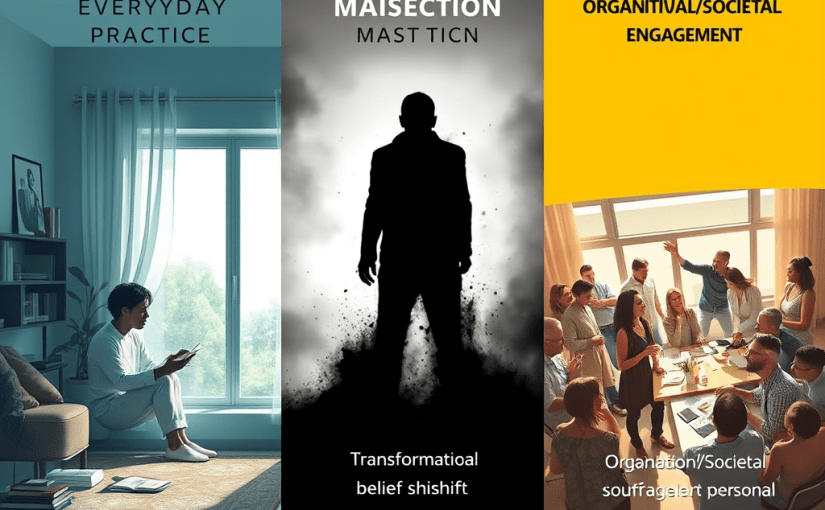



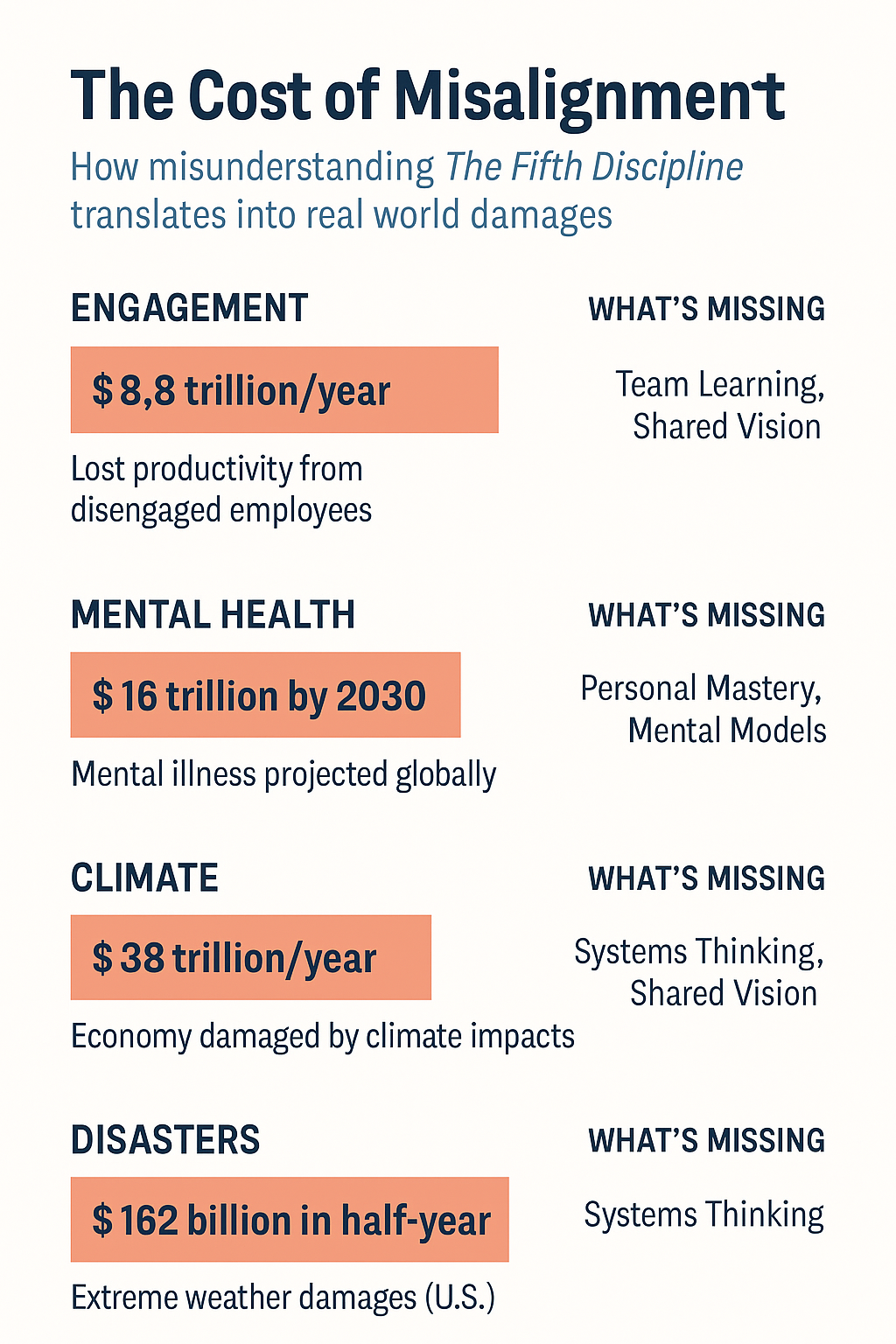





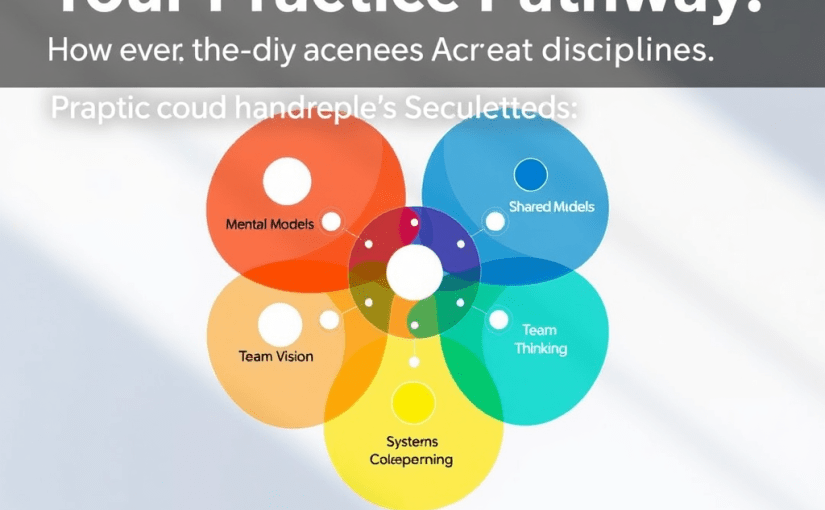


















You must be logged in to post a comment.