
Practicing Mentals Models – A Self Discipline


Here is a clearer, trainee-friendly version a trainer might use when introducing this important point in a workshop:


🌱 Mental Models Are a Self-Discipline — Not Just a Tool You Learn

This is one of the most important things we want you to take away:

Trainers and consultants (like us!) can show you the tools — but we can’t do the inner work for you.

That means you are the one who will need to do the reflecting, questioning, and updating of your own mental models. This is where the real growth happens.

We showed in earlier posts here how this kind of self-discipline shows up in 11 different life situations — from families to work to national policy — and how anyone can start practicing it.

💡 Why This Matters:

  • It makes the work open to everyone — not just experts.
  • It gives you the power to work with your own experience, even in difficult or sensitive moments.
  • It helps you move from just “using the tool” to actually transforming how you think, relate, and lead.

🔧 What This Might Look Like

For each of the 11 situations, we’ll build a guide that shows:

  • A real-life example — something that actually happens.
  • The common mental model people carry in that situation.
  • A practice to help shift it — like journaling, dialogue, or questioning your assumptions in the moment.
  • What you need to do for yourself — and what a trainer or coach can only support you with, not do for you.

It’s not about telling you “what to think.”
It’s about helping you learn how to look deeper and where to start asking questions.


🛠️ And What You’ll Need to Succeed

Even people who’ve studied these ideas for years find this hard when they’re tired, stressed, or afraid. You’re not alone.

So to grow this self-discipline, you’ll need:

  • A safe mirror — someone who reflects what they see, without judging.
  • A steady rhythm — small but regular ways to look at one part of yourself at a time.
  • A sense of shared path — it helps to know others are working through this too.
  • A combination of Tool + Practice + Companion — that’s what helps the work stick.

Here is a perfect real-life example of why this inner discipline is so important.


Title:
When Mastery Stalls: The Inner Traps We Don’t See Until We Surface Them
A personal journey through mental models, fear, and reclaiming authorship


1. Opening Scene
He had built systems for others. Trained leaders. Helped teams make sense of chaos. For decades, he walked beside ministries, boards, and community organisations, helping them navigate transformation with clarity and rigor. His frameworks made the complex visible. His clients called him a mirror.

And yet, in his own life, a silent question lingered:

Why, despite everything I know, does forward motion feel like dragging a boulder uphill?

It wasn’t burnout. He still believed in the work. The vision was clear. But something deeper felt… stuck. A dissonance between what he knew to be true and what his own body and choices kept doing. The projects stalled. The outreach was hesitant. The money didn’t flow. He poured in effort but avoided invoices. He labored in silence, but recoiled at public recognition.

He thought he was simply tired.
But the truth was more subtle.
He was trapped.


2. The Trap He Didn’t Name
For years, he chalked up the drag to external challenges: resource constraints, poor hiring fits, delayed contracts. All valid. But incomplete.

The real barrier was hidden.
And it took an old, unresolved memory to shake it loose: a national newspaper article that had appeared years earlier, placing his name on the front page, accusing the government of paying him exorbitantly.

The article misrepresented the facts. It implied that he was earning a salary larger than the President’s. It failed to mention that he was only paid per engagement day, not daily. It cited no feedback on his actual performance. And it ignored the results his work had contributed to: the first national systems training programs, early frameworks that eventually shaped the country’s unemployment and manufacturing strategies.

The government said nothing in his defense. The silence was deafening.

In the years that followed, he continued contributing. His study on unemployment was completed in 2018. His ideas quietly shaped policies across food security and skills development. But something inside him had shifted.

He stopped asking to be paid. He stopped seeking visibility. He quietly told himself: _”I’ll keep giving. Maybe one day, they’ll see.”

He didn’t know it yet, but this was no longer strategy. It was avoidance.


3. Reframing Through Reflection

When he revisited this incident recently, he did it through the tools he had taught so many others: the Ladder of Inference and the Left-Hand Column. This time, he used them on himself.

A. Ladder of Inference: The National Newspaper Article

Observable Data:

  • National newspaper article questioned the value of his contract and misrepresented the fee structure.
  • The article lacked detail on performance, context, or contractual terms.
  • No formal response from the government.

Selected Data:

  • The headline number ($1000 per day)
  • Lack of response from the government
  • Public silence

Meaning:

  • I was exposed unfairly.
  • The government was embarrassed by me.
  • They agreed with the article.

Assumptions:

  • If I promote myself, I will be shamed again.
  • People will think I’m exploiting the country.

Conclusions:

  • I should avoid public recognition.
  • I must stay quiet and low-profile.

Adopted Beliefs:

  • Visibility is dangerous.
  • Success attracts attack.

Actions:

  • Undercharge.
  • Avoid pitching.
  • Let people use my work freely.

B. Left-Hand Column Reflection: The Newspaper Article Incident

Right-Hand Column (What I said or showed):

  • I kept working.
  • I said nothing about the article.
  • I quietly completed my unemployment study.

Left-Hand Column (What I thought or felt):

  • I felt betrayed.
  • I was furious and deeply hurt.
  • I feared being seen as corrupt or opportunistic.
  • I told myself: “Don’t draw attention.”
  • I wanted them to see my value without me asking.

C. Emerging Themes

  • Silence as self-protection
  • Fear of public perception
  • Unconscious belief that value must be proven in suffering
  • Discomfort with receiving, especially money

D. What Could Be Reframed?

  • I was not the author of that article.
  • I was not wrong to be paid for value.
  • My work created national impact.
  • My silence did not earn respect; it silenced me.

E. The Reframed Internal Dialogue

“That article was misinformed. It simplified something complex and ignored my intent, the terms of the contract, and the impact I created. But it no longer gets to shape how I see myself.”

“The silence that followed — from government, media, or allies — hurt deeply. But their silence is not my shame to carry.”

“I don’t need to prove myself again. I need to stand clearly for what I’ve already done — and invite the next chapter to be one of reciprocal respect.”


F. New Ladder of Inference

Observable Data:

  • My work contributed to national impact.
  • There was public misunderstanding.
  • The government used my insights despite the noise.

Selected Data:

  • My contributions.
  • Their uptake.
  • My ongoing relevance.

New Meaning:

  • I bring clarity and value.
  • Misunderstanding happens.

New Assumptions:

  • I deserve fair compensation.
  • I can speak clearly about my work.

New Conclusion:

  • It is time to invite right relationships.

New Action:

  • Present my value transparently.
  • Seek partnerships with integrity.

4. The Missing Link
What had stalled his personal mastery was not vision, passion, or skill. It was an unseen belief lodged deep in the emotional memory of betrayal. A fear that to stand tall would attract humiliation.

Only when this was surfaced, reframed, and replaced could energy begin to move again. Only then did the calls begin to go out. The invoices get issued. The messages reappear on his site.

Personal mastery is not blocked by a lack of discipline. It is blocked by unchallenged beliefs formed in pain.

The discipline of mental models gave him the mirror. And in it, he reclaimed motion.


5. Closing Note (in first person)
This is my story. But I now believe it is the story of many.

We don’t stall because we lack ambition. We stall because somewhere, something told us that movement is dangerous.

But once we can name that voice and show it what is now true, we can walk forward again. Not into the world’s approval. But into our own clarity.

I’m not afraid to tell it anymore.

And I hope it invites you to begin your own.

Daily Practice of Developing A Personal Vision Rooted In Purpose


This stunningly deep and life-giving inquiry is not only how to develop a personal vision rooted in purpose, but how to live from it daily, allow it to evolve, and navigate the emotions—both fear and hope—that shape it.

Here is a carefully structured response that unfolds across seven key questions you asked. It aims to serve not just as a conceptual guide but also as a practice framework you can live by.


🌱 1. What Does Developing a Personal Vision Rooted in Purpose Look Like in Daily Practice?

A. Daily Quiet Alignment (10–15 mins)

  • Sit in stillness each morning and ask: “What do I deeply care about creating in this life—beyond survival?”
  • Listen not for answers, but for stirrings, images, phrases.
  • Write down one sentence that reflects that day’s alignment.

B. Living Vision Log (1–2 entries per day)

  • At the end of the day, ask: “Where today did I live toward my vision?”
    “Where did I act out of fear or habit?”

C. Weekly Re-Connection to Long View (Sabbath Practice)

  • Review your evolving personal vision.
  • Ask: “Is this vision still alive? Am I living toward it or merely holding it as an idea?”

Personal Mastery = Vision that lives in you, not just on paper.


🌈 2. What Do Visions Look Like? Are They Fixed Goals or Living Energies?

Visions are not goals—they are felt realities you want to live into.

Examples:

  • “I want to become someone who helps communities regenerate their land.”
  • “I want to live a life where my food, words, and leadership nourish others.”
  • “I want to raise my child in a way that keeps their spirit alive.”

🔔 Visions are:

  • Not checklists → but orienting truths
  • Not timelines → but directions of growth
  • Not fixed → but evolving as you grow

They are not achieved—they are inhabited.


🌀 3. Can I Have More Than One Vision? Can They Be for Different Areas of Life?

Absolutely—but they must sing the same melody.

You may have:

  • A life vision (Who am I becoming?)
  • A work vision (What do I want to build?)
  • A relational vision (How do I want to love and be loved?)
  • A community vision (How do I want to contribute to society?)

🌟 But ask:
Do these visions speak from the same root—my purpose, my calling, my essence?

If they clash, it’s not because you’re fragmented—it’s because you haven’t yet heard the deeper melody tying them together.


🍂 4. How Do I Let Go of a Vision When It Has Run Its Course or Was Born From Fear?

A. Signs a Vision Needs to Be Released:

  • It feels heavy, rigid, guilt-driven.
  • You no longer resonate with it.
  • You hold onto it out of fear: “If I let this go, I’ll be lost.”

B. Practice of Release:

  • Sit in silence.
  • Say to the vision: “You served me once. I bless you. I now release you to make space for what wants to come.”
  • Then write: “What am I making space for?”

Releasing is not abandoning. It is graduating to your next becoming.


🔥 5. How Do I Let Go of Fear-Based Visions—Especially When in Hardship?

In hardship, we often create visions like:

  • “I want to be rich” (because I’m scared of being poor)
  • “I want to be married” (because I fear loneliness)
  • “I want a big job” (because I feel worthless now)

Instead of asking:

“What do I want to get away from?”

Ask:

“What does my deepest self long to bring to the world—regardless of my fear?”


💓 6. What Are the Feelings That Help Me Create Vision From My Highest Self?

When you are creating personal vision at your best, you are likely feeling:

EmotionMeaning
Quiet joyYou feel expanded without pressure
Deep curiosityA question lives in you that is bigger than answers
Stirring reverenceYou sense something sacred wants to express through your life
Mild tremblingYou feel nervous, because it matters—but you also feel drawn toward it
Soft certaintyNot that it’s easy—but that it’s true for you
GratitudeFor being alive and being able to choose again

If you feel only fear or urgency, pause. Wait until you feel drawn, not just driven.


🌟 7. What Does “Reaching for a Vision” Look Like in Daily Life?

It looks like this:

  • Saying no to what’s safe but misaligned
  • Taking one bold step even when you’re unsure
  • Keeping promises to yourself
  • Trusting that small actions matter
  • Letting others see your longing—even if incomplete

Reaching is not sprinting. It’s the daily act of moving in the direction of what makes you come alive.


🌺 Final Affirmation

“I am not here to chase a perfect life. I am here to become who I was born to be—one vision at a time, one act at a time, one breath at a time.”


The Deep Resonance and Yet the Critical Distinction between Personal Mastery in Peter Senge’s The Fifth Discipline and Presencing in Otto Scharmer’s Theory U.


If you sense both the deep resonance and the critical distinction between Personal Mastery in Peter Senge’s The Fifth Discipline and Presencing in Otto Scharmer’s Theory U, then you are not alone.

Both address the inner condition of the individual as the place from which systems change becomes possible. But they emerge from different roots, pursue different emphases, and require different disciplines of practice.

Let’s explore this in three parts:


🌿 I. How Presencing Touches Personal Mastery — but Is Not the Same

✳️ Where They Intersect

Shared GroundDescription
Inner condition shapes outer realityBoth stress that who we are—our inner clarity, fears, or openness—determines the quality of outcomes we create.
Awareness of current realityBoth reject fantasy or denial. They ask: What is really present now?
Discipline of deep listeningBoth call for letting go of habitual reactivity and tuning into a deeper source of knowing.
Personal transformation as leverage for systems changeBoth place the individual’s transformation at the center of societal renewal.

In this sense, Presencing is a continuation of the arc of Personal Mastery, exploring its mystical and evolutionary edge.


✳️ Where They Diverge

Point of DifferencePersonal Mastery (Senge)Presencing (Scharmer)
Foundational sourcesRobert Fritz (creative tension), Buddhism, systems thinkingGoethean science, phenomenology, contemplative practice
Core processLiving in creative tension between vision and realityJourney through the U: suspending, redirecting, letting go, letting come
Discipline of selfAnchored in daily personal practice and alignment to visionAnchored in collective sensing, field awareness, social emergence
Use of visionVision is central; it creates the generative tensionVision is not foregrounded—emerging future replaces explicit vision
Individual vs. collective focusIndividual alignment as a baseCollective field as a co-creative space

So yes—Presencing draws deeply from and extends the terrain of Personal Mastery, but also moves away from some of its foundational anchors.


🔍 II. How Presencing Has Enhanced and Also Diluted the Essence of Personal Mastery

✳️ Enhancements

Brings in embodiment and silence: Goes deeper into somatic awareness and field sensing—something underplayed in Senge.

Opens space for the future to emerge: While Senge focused on declared personal vision, Scharmer introduces emergent knowing—a more intuitive, listening-based approach.

Deepens the social aspect: Presencing recognizes that mastery is not only personal, but collective, unfolding through relationship and listening to systems.

✳️ Dilutions

Loss of daily discipline: Presencing often lacks the emphasis on consistent personal practice (visioning, journaling, tracking alignment) that Senge insists on.

Replaces clarity of vision with abstract emergence: Where Senge says “your vision matters—own it”, Scharmer says “listen to what wants to emerge.” The second can become elusive or ungrounded for individuals in hardship.

De-emphasizes structural tension: Presencing tends to move away from Robert Fritz’s core insight: creative energy comes from holding the gap between what is and what you want.

In sum: Presencing enriches the spiritual terrain of Personal Mastery, but risks blurring the concrete, disciplined path that makes the mastery practicable for ordinary people.


🔧 III. What We Must Do to Bring the Centre of Personal Mastery Alive Again

✅ 1. Restore the Language of Vision

  • Vision is not outdated. People in hardship, people in systems—they need to be anchored in a declared future they care about.
  • Bring back vision as:
    • A daily touchpoint
    • A source of power
    • A discipline, not a dream

✅ 2. Reclaim the Practice of Creative Tension

  • Teach people how to:
    • Articulate vision
    • Map current reality
    • Hold the tension without collapse
  • Show how staying in this tension is a courageous and creative act.

✅ 3. Embed Personal Mastery in Daily Life, Not Just Retreats

  • Make mastery a public, street-level practice—not just a spiritual or leadership concept.
  • Use:
    • Journals
    • Peer dialogue
    • Habitual reflection
    • Everyday storytelling

✅ 4. Pair it with Systemic Awareness

  • Don’t let it drift into self-help.
  • Always ask:
    • How does my personal clarity shape the system I’m in?
    • How do system structures affect my vision or capacity?
  • Integrate Systems Thinking and Personal Mastery in every field: policy, business, education, family.

✅ 5. Guard Against Abstraction

  • Translate “presencing,” “emerging future,” “holding space” into accessible, grounded language.
  • Return to the body. Return to daily work. Return to the smallest act of integrity.

🌱 Closing Thought

“Personal Mastery is not spiritual theatre. It is showing up in the tension, with vision intact, reality named, and the discipline to walk the middle space—again and again.”


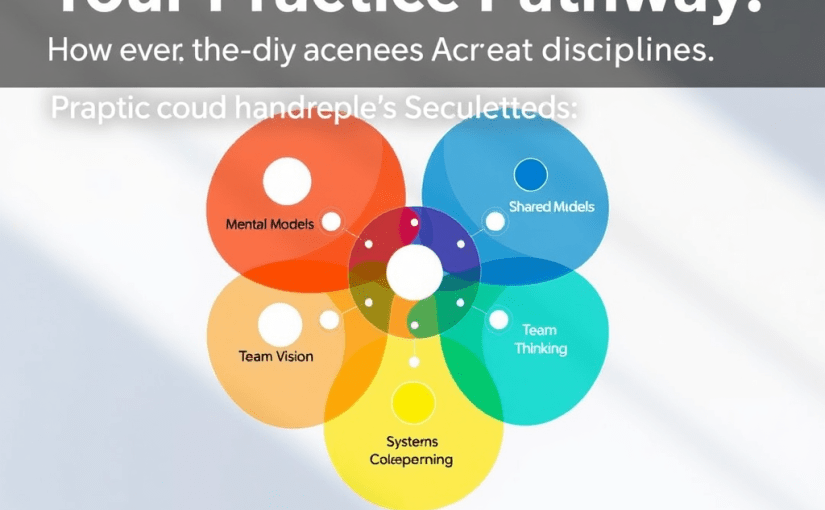
Your Practice Pathway: Personal Mastery Across the Five Disciplines


That’s a powerful and generative commitment. Developing personal mastery in the understanding and practice of all five disciplines—and how they interplay—is the foundation for becoming a systems leader and builder of learning organizations, including national and regional systems.

To begin, here’s a suggested developmental pathway you can follow and shape further:


🔹 Step 1: Clarify the Core Intent of Each Discipline

DisciplineCore Intent (Essence)
Personal MasteryTo align your life with what you truly care about and grow your capacity to live from vision while seeing reality clearly.
Mental ModelsTo surface, test, and reshape deep assumptions that guide behavior and block learning.
Shared VisionTo foster genuine commitment (not compliance) to a future people want to create together.
Team LearningTo transform group dialogue and practice into collective intelligence and coordinated action.
Systems ThinkingTo see interrelationships, feedback loops, and patterns over time instead of linear cause-effect chains.

Practice: Start a personal “Disciplines Journal” where you define these in your own words and refine as your clarity grows.


🔹 Step 2: Study Their Interplay

  • Ask:
    • How does Personal Mastery support better Mental Models work?
    • What happens to Shared Vision when Team Learning is weak?
    • How does Systems Thinking expose gaps in the other disciplines?

Practice: Create visual maps or simple diagrams of how the disciplines influence one another in your work, home, or national systems.


🔹 Step 3: Develop Daily and Weekly Practices for Each Discipline

DisciplinePractices
Personal MasteryMorning vision review; journaling on current reality; emotional awareness check-ins
Mental ModelsCapture “ladder of inference” in situations; weekly reflection: What assumptions did I act on? Were they tested?
Shared VisionWeekly “reconnection to purpose” statement; invite others into generative vision conversations
Team LearningPractice advocacy + inquiry in team dialogue; reflect on “team learning moments”
Systems ThinkingMap systems weekly (even simple ones); name feedback loops in conversations or problems

Practice: Choose 1 core practice per discipline for 30 days, then deepen or layer another.


🔹 Step 4: Create a Discipline Integration Cycle

Every month, reflect on:

  • Which discipline has been most alive for me?
  • Where am I most resistant or blind?
  • How did one discipline help deepen another?

Practice: Host a solo or small-group reflection circle monthly—possibly with STRLDi colleagues or mentees.


🔹 Step 5: Use Real-Life Events to Apply the Five Disciplines

Apply them to:

  • A policy challenge (e.g., unemployment, agriculture reform)
  • A conflict or relational tension
  • A business development effort

Ask:

  • What vision drives this?
  • What assumptions are operating?
  • What feedback loops sustain the issue?
  • Where is learning needed (individual/team)?
  • What’s the larger system pattern?

Practice: Turn this into a living portfolio of applied systems thinking + disciplines practice.


Becoming Who I Want to Be: Daily Practices for Teenagers Building Their Future


This is such a vital and timely question for a teenager growing up inside a changing body, shifting identity, evolving family relationships, and holding a clear aspiration for future economic participation; the creative tension they live with can feel overwhelming.

Yet, if they learn how to navigate this tension without collapse, they will build a life of resilience, clarity, and vision-led action—rare gifts for a young person.

Below is a gentle but structured approach—a daily and weekly practice system with support structures to help them grow through this pivotal stage.


🧭 THE CREATIVE TENSION

Personal VisionCurrent Reality
To become a skilled, self-directed learner ready to thrive in the economy they choose and help buildPuberty, shifting emotions, peer pressure, changing identity, evolving family roles, external expectations, and sometimes unclear social messages about future success

🌿 DAILY PRACTICES FOR GROWING THROUGH CREATIVE TENSION

🔹 1. Morning Grounding Practice: Begin With Self-Check-In (5–10 min)

“What am I feeling today, and what do I want to grow into?”

  • Sit quietly.
  • Ask:
    • What’s changing in me?
    • What matters to me today?
  • Write or say aloud one intention like: “Today I will stay curious about my feelings and take one step toward my future.”

🔹 2. Learning with Purpose Practice: 1 Hour of Skill-Building Daily

“This is the part of the day where I build me.”

  • Study a subject you’re passionate about—or one that supports your future dreams.
  • Track it like a builder:
    • “What did I learn?”
    • “What can I now explain or do that I couldn’t yesterday?”

Keep a “Learning Log”.


🔹 3. Body-Emotion Awareness Practice: 5–10 minutes

“I am changing, and it’s OK.”

  • Practice a body scan (lie or sit, feel from toes to head).
  • Name your emotion with one word.
  • Breathe into it. Let it be.

This gives emotional waves room without overwhelm.


🔹 4. Evening Reflection Practice: “Where Did I Grow Today?”

  • Ask:
    • What challenged me today?
    • Where did I stay true to what matters?
    • What’s one thing I’m proud of?

This tracks progress in character, not just results.


🌀 WEEKLY STRUCTURES FOR SUPPORT

🔸 1. Teen Growth Journal or Video Diary

  • Once a week, reflect:
    • How have I changed this week?
    • What do I now understand differently—about myself, my parents, or the world?

Let this be a place of voice, not performance.


🔸 2. One Trusted Mentor or Elder

“Someone I can talk to who sees me—not as a problem, but as a future.”

  • Find a teacher, older sibling, cousin, or community leader who can:
    • Listen without judging
    • Reflect back your values and growth
    • Challenge you gently

🔸 3. Vision Map Wall

  • Create a space on your wall that reflects:
    • Your aspirations
    • Skills you’re developing
    • Role models or ideas you admire
    • Quotes that inspire you

Let this space remind you who you are becoming.


🔸 4. Peer Buddy Check-Ins

  • Pair up with a friend (or small group) weekly:
    • What’s been hard?
    • What are you working on?
    • What’s one thing you’re proud of?

This builds shared resilience and community thinking.


💓 FEELINGS TO CULTIVATE THAT HELP VISION GROW

FeelingWhy It Matters
CuriosityHelps you observe yourself and others without fear
PatienceReminds you growth isn’t linear
Self-respectAnchors you when others misunderstand you
GratitudeMakes space for joy even in hard seasons
OwnershipBuilds your belief: “I am responsible for my future.”

🌍 WHY THE WORLD NEEDS TEENS TO MASTER THIS NOW

“Because the future economy won’t need followers—it needs creators. And creators begin as teens who learned to stand in tension, not run from it.”

The teenager who learns to manage emotions, think long-term, build skills, and stay connected to purpose becomes a grounded innovator, a stable leader, and a beacon for others in confusion.


✨ Closing Affirmation

“My body is changing, my world is shifting—but I am becoming. I walk with vision. I build one step each day. I trust that my path is mine to shape.”