Article 2: Setting goals is the easy part. Reaching them is not!


REACHING THE GOALS YOU HAVE SET IS NOT EASY TILL …. WE FACE AND DEAL WITH STUBBORN PROBLEMS

It is a management question.

Are you there yet?  What are you doing to get there?  Have you set goals for you and your team?

Yet, setting of goals is really the easy part.  And there are tons of research and help on how we may do so and even on how to manage the settings.  Making out a list of “Things to do today” is one such everyday activity and we are pretty good at it.

However, reaching them is another story.  And there is not as much research on why it does not happen or how it may happen for our organizations.  And not to say, much help.

It is an area that we stay quiet on.  Sometimes, even a undiscussable.

WHAT IS HAPPENING?

And we learn over time with experience that using charisma, meeting of heads, efforts at cascading, seeking to agree, cajole, counsel and sometimes even assuming punitive stances does not realistically make that much of a difference in reaching those goals or implementing programmes as an institution or as a nation in a sustainable way.

And we may carry out various activities to do so.  Be it implementing performance management systems, setting of directives, designing project management, re-engineering business processes, coaching, mentoring, going for corporate retreats, organizing seminars, conferences, district and village meetings and signing of memorandums, monitoring and evaluation and so on.  The list of work required to reach those goals is seemingly endless and appears necessary.  But the price we pay as a nation is heavy (including for our attorneys).

We all know this deeply; though we may not necessarily say it out aloud.  We do lead ourselves to believe they work, and yet sometimes we would rather choose to continue to lower our standards in reality to meet realistic levels of achievement over time and not understand what’s getting in the way of reaching those goals.   The former is easier.  The latter is harder.  And we are sometimes not aware that such things may be happening to us.  Often we assume the reason is the fault of the employee, or of the team manager or of the market or of the citizens or even the global recession.  And we get away by blaming “them out there”.  We get away with crime!

However, the bottom line is the ability of the organization and / or of the nation to sustain itself.

When we do not do so, it usually shows up in our balance sheets as deficits.  Eventually.  Sometimes sooner than we expect leading us to make call outs to government for bailouts, bank loans or grants and aids.  Nevertheless, we would start the same rigmarole all over again when given a second chance.

SO GIVEN THE ABOVE, WHY DOES IT HAPPEN AND WHAT COULD WE DO ABOUT IT?

What are we not learning?

The reasons cited above are what we see on the tip.  The obvious reasons.

The ones the problems present to us if we are not careful in search for the reasons more deeply.  Those are usually not the real ones.

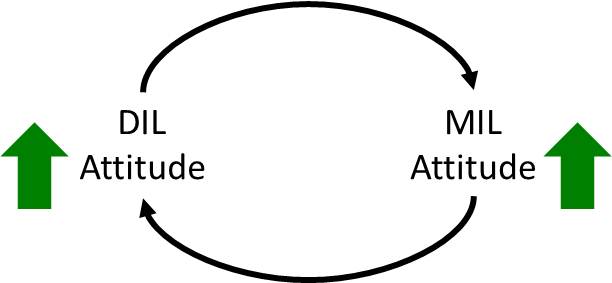
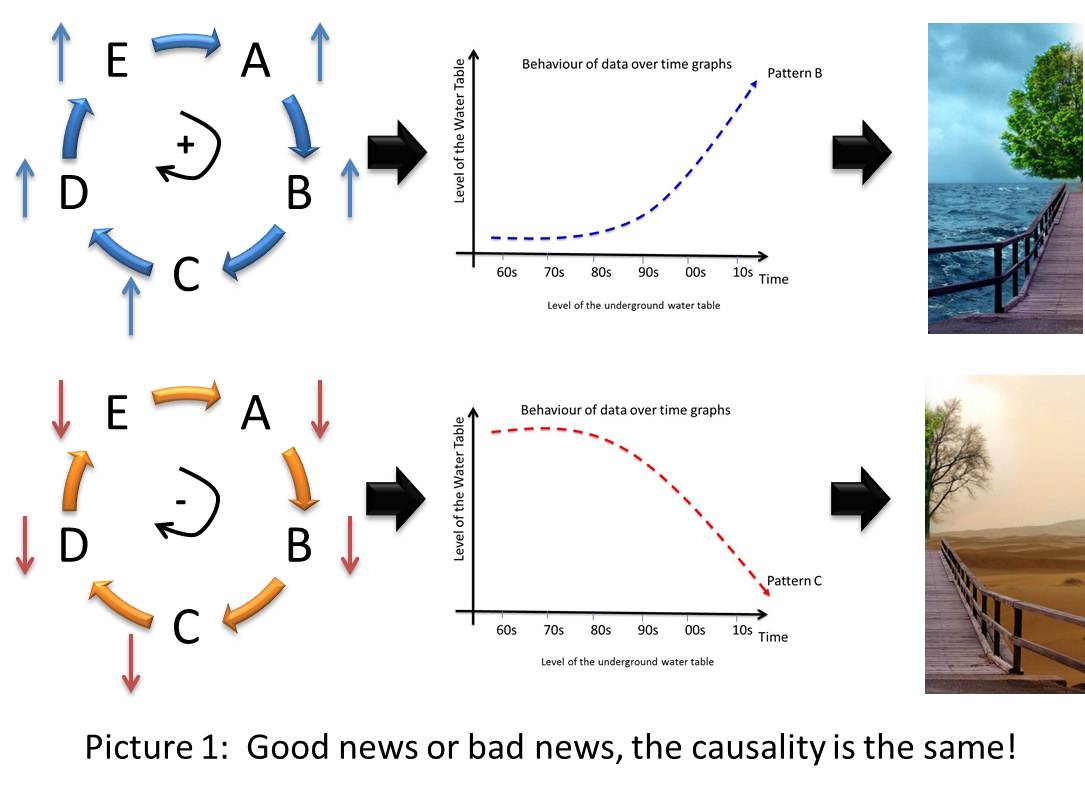
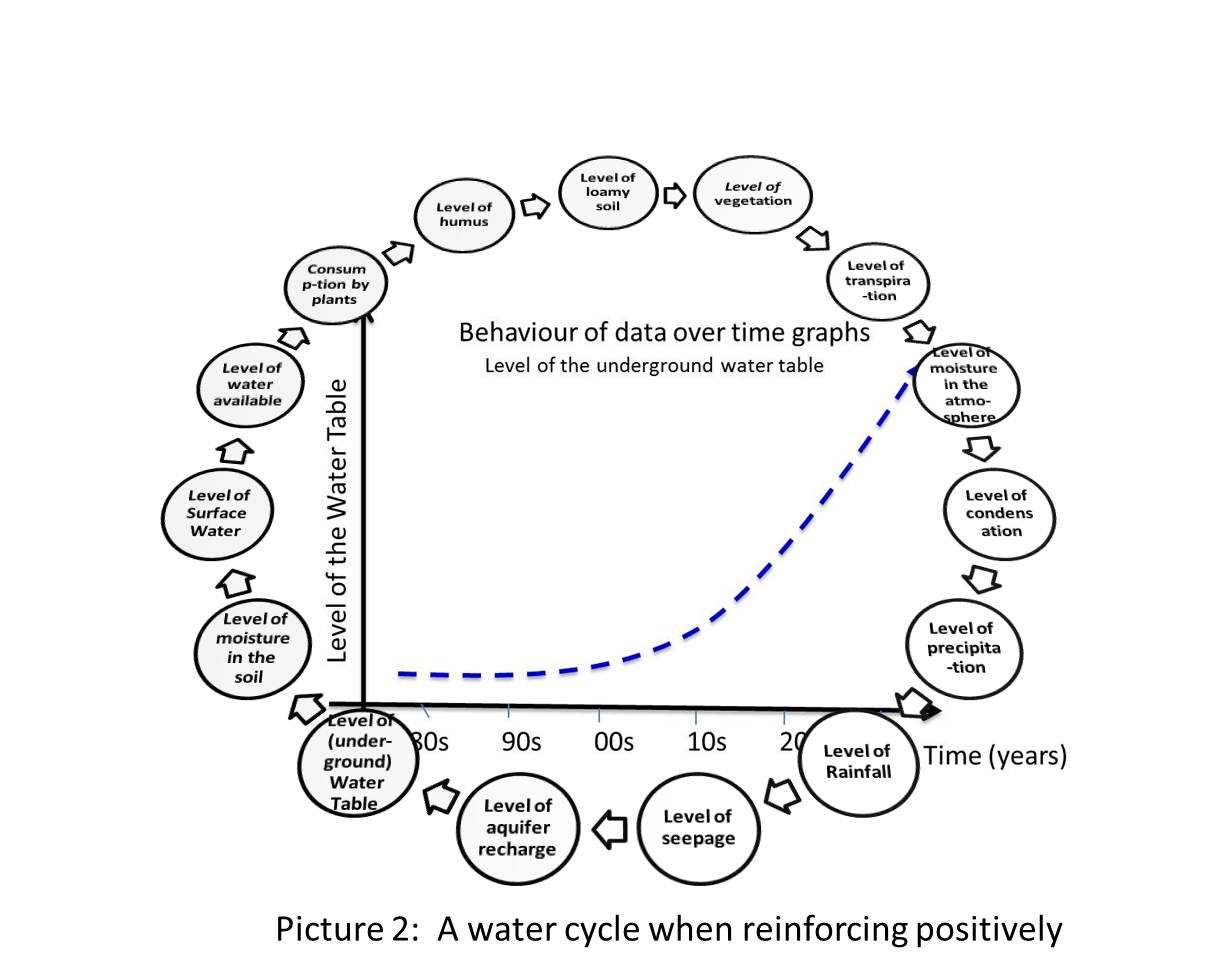
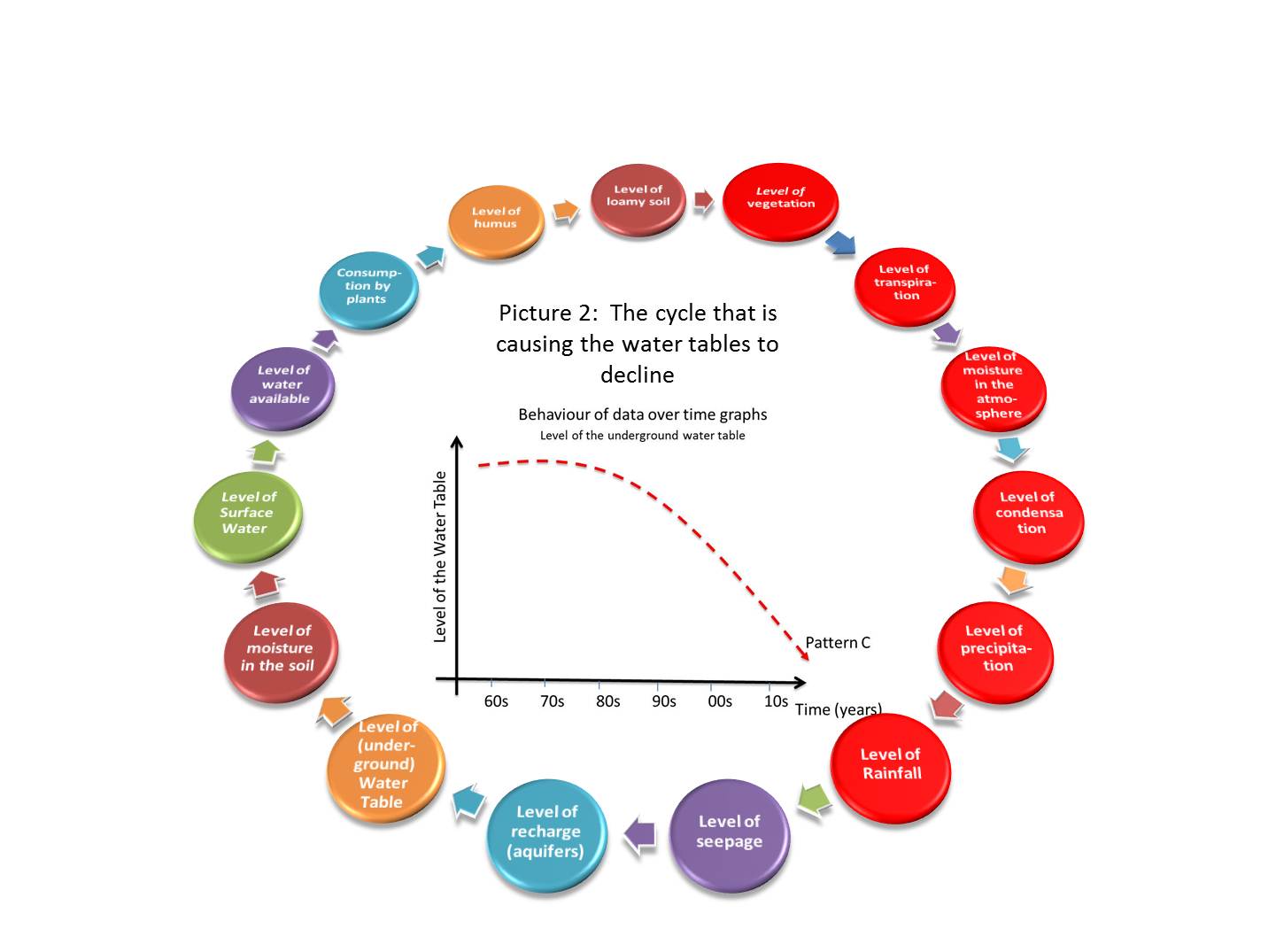
If you have come this far, I am sure you are not surprised by this conclusion.  The real reasons are less obvious because they have become what we call cyclical in nature or assumes a systemic quality.   Systemic because of key interrelationships (vicious circles) that have taken on a quality of recurrent influence / causality over time.

When they assume that recurrent influence, they also tend to worsen in each iteration of the cycle and therefore these cycles grows deeper and away from our everyday perceptions of reality (underlying).  These structures do also one more thing.  They typically learn to defy any efforts on our part to ‘correct’ the situation or a problem with the programmes or initiatives institutions come up with.  Therefore programme or activity implementation efforts tend to stand to fail or do not reach the goals set for them.

Identifying these vicious circles require investigation and a tactic that is very different from the straight-line approaches we are used to when dealing with them.  One that requires the mind ‘to bend’.  The causality is not that much different from one nation to another (and so much less differences exist between institutions), nevertheless, rather than leave participants with the solution, I prefer participants learn to discover the reasons jointly with each other whilst with the facilitator.  This is strategic.

In this way, the participants learn to leave the sessions carrying with them in their minds and hearts ways to continue to deepen their practice with each other over time to get to the bottom of the issue, and eventually to reach there by themselves.

Regional Article 23: Unemployment, labour disputes, economic diversification and fertility


Most countries think supply of labour should drive demand.  We forget then (or choose not to admit to ourselves) that it is demand that drives supply in any situation.  Not the other way around.  It is just not realistic to believe that because we have so many ‘young ones’ here, that there should be jobs out there for them.  But we do.  The two however are not related in reality.  But we ‘force that relationship in our minds’.

When we dug for data over time, to our surprise we were noticing that unlike what the country thought, its population was not declining.  Yes, it’s overall population numbers may be dropping to attrition due to deaths (in part speeded up along by HIV/AIDs) and migration.  However, its fertility rate on the other hand had been quite high and continues to grow.

English: Total Fertility Rate vs GDP per capit...
English: Total Fertility Rate vs GDP per capita (2009, USD). Only countries with over 5 Million population were plotted to reduce outliers. (Photo credit: Wikipedia)

So what was causing its fertility rates to increase?

This was in part driven by a few reasons.

The first, and the least inconspicuous of the three was a hidden matriarchal system (the mothers and women here wield more power than it thought).  This was fuelled by fears of security they held on to as young women themselves as they watched their husbands leave them for long-term employment in mines in neighbouring countries and had to learn to cope to fend for themselves and their children very quickly.  Over time, this evolved to driving their children to produce more children in the belief that the more there are children within one’s own family, the more potential the family had in  eventually bringing in income from their lands and the economy.  It was a long-term retirement plan for the women. (Need for Security on Maslow’s Hierarchy of Needs)

Diagram of Maslow's hierarchy of needs.
Diagram of Maslow’s hierarchy of needs. (Photo credit: Wikipedia)

Men on the other hand, played a hand in this too, each trying to outdo the other in producing children.  The more children he had, the better a man he was going to be in the eyes of the persons around him.  It was an immediate gratification or ego trip for the men (Need for Ego / Belonging on Maslow’s Hierarchy of Needs)

These children in turn grew up over time, seeing a world where they knew who were their friends and who were their enemies and this line was drawn up by who is within their core family and who was outside it (to a point it sometimes included the fathers who bore them).  This often meant that as they grew up they were learning not to ‘let go of the families they were born into’ enough to build long-term relationships with their spouses (someone who is ‘outside’ their families) and their in-laws to help build core family systems (husband, wife and their children) for themselves.   It was the need for maintaining or finding sense of belonging for the child or security in the familiarity or long-term childhoodness which sometimes perpetuated in older age as girlfriendhood or boyfriendhood syndrome and the need in not having to assume responsibilities for the consequences of one’s actions.  (Need for Security on Maslow’s Hierarchy of Needs)

The core Brodie family (L-R: Adeeb, Leyla, Con...
The core Brodie family (L-R: Adeeb, Leyla, Conor, Michael, Nicole) (Photo credit: Wikipedia)

Hence this meant the demise of the core family system and the growth and existence of the extended family as a support system for the individuals.  Today, these numbers are rising up to 70% levels.  Less than 30% levels of the population stay married and these numbers continue to decline.

However, when core families do not develop within the system, the system (particularly the males) does not learn a key lesson of life which is “what it takes to hold, build and share perspectives outside its comfort zones needed for a more “collaborative, extended and systemic organizations and industrial relations” and therefore the birth and growth of corporations (by the locals).

This would lead locals themselves particularly as the males to learn to build (not just participate) the economy.  For men to do so, it is in part as a result of the type of relation he enjoys with his spouse (but not his mother).  The more intimate the couple is emotionally (not just physically), the greater is his sense of resilience and motivation he is able to gain to meet and overcome the challenges he would face in the world of businesses and the economy.

Sir Robert Hotung, with his 3 generations of e...
Sir Robert Hotung, with his 3 generations of extended family (Photo credit: Wikipedia)

And so, when the economy does not grow, it is unable to create more jobs within the economy (as revenues are declining as much as costs may be rising) and therefore, unemployment continues to exist and worsens in the face of growing population numbers (fertility) which means the family in turn finds more of its people are not participating in the economy and therefore able to bring in resources into it. When this part of a man’s life is not growing, he becomes more conservative and reserved and succumbs to addictions, substance abuses and violence and a general disregard for respect for themselves and others.  The signals a death knell for the economy.   The organized economy suffers.  The subsistence economy takes over.

Gradually, this in turn leads women to bear children outside of marital relations (most children born in this country are born to women who are not married and that trend is rising).

In the mind of the woman, bearing a child to a man (particularly if he has the means to support relative to herself) would ensure a somewhat steady source of income for their family through their children (sometimes to the point of coercing the father of the child to continue to bear expenses for it and the family) or it stops the existing male persons within the extended family to build relations outside his family in order to support the needs of the family (to children and sisters who are not married).

Have we come full circle yet?  Do you see the vicious circle?

How would we treat this vicious problem?

Can the government realistically solve this problem?

Do not expect to learn to solve the problem, if one did not create the problem!


Sectoral Article 22: Not enough manpower! Where did all the good men go?


Regional Article 20: Why do disputes by labor (with unions) and employers go up?


  1. Despite our efforts to set up judiciary courts to preside over cases involving employers and employees embroiled in disputes with each other as well as educate ‘people’ on ways to avoid disputes with each other, why do relations between employers and employees continue to sour and such disputes tend to soar year after year?  Surely, it should have made a dent to the trend by now.  If not, why so?   As this forces us to allocate even further public resources to it the following year!
  2. Think how much money we have poured (country after country) to ‘douse the flames and put out the smoke’ after thirty, forty, fifty years of working at our industrial relation efforts.  Has that been little amount of money?
  3. So why do things not change?
  4. Will it get better?  Or can it get worse?

Why do things happen that way?  Why are such trends resisting our efforts to control it (for the sake of up-liftment of our economies, we would argue)?

National Article 19: What causes fidelity?


We know what causes infidelity?

But what causes fidelity?  Whatever that causes fidelity, when it is not there, causes infidelity!

So, what causes fidelity?

A couple goes through different stages or types of intimacy during their times together and experience one or more stages in their lifetime.  To the extent the couple moves through the different stages would depend on the time and attention they place on their relationship.  These include with no specific order or preference i.e. being:

  • Sexually intimate with each other (be it where the couple experiences sexual intimacy either regularly, or on an ad-hoc basis)
  • Physically intimate (where the couple moves to live in the same space together)
  • Emotionally intimate (where the couple enjoys a relationship where each helps the other meet their needs emotionally; here the couple has learned to understand each others’ pasts as well as learnt to share and value unique moments together such as dinners, holidays, family events, and so on.)
  • Mentally intimate (where the couple has learned to see the view of the partner not from one’s own perspective but that of the partner’s and in doing so learns to bring their minds together so that they may plan their lives together from the past, present and into the future and not meet their future as contingent (“let’s cross the bridge when we get there”. i.e, there is child born to them and so they need to meet its living and educational expenses, and so on)
  • Spiritually intimate (where each regard the other as their soul-mate and enjoy a celestial or soul mate experience together)

Where do you think sexual fidelity begins to happen for the couple?  Would it be at sexual intimacy or at physical intimacy or when the couple has learned to experience emotional intimacy?

What does sexual fidelity look like?  It includes among other things, a willingness by each person in the relationship to regard his or her partner as:

  • The only sexual partner for life;
  • Where the relationship is not given (as in blood relations), but the couple has chosen to learn to want to be together;
  • The relationship has grown beyond physical intimacy to include (or aspires to include) all or other forms of intimacy between the two and not limited to one or two out of the five;
  • The couple is in the relationship because they ‘want to’ and not because they ‘had to’ (it is an obligation or transaction or choices made by parents or forced to) be in it;
  • The couple regards each’s relationship with the other emotionally (as opposed to physically, materially, mentally) as equals and not assumes either as superior (head of the household) or inferior (submissive) to the other.

Did you say, the above (particularly sexual fidelity) happens when the couple learns to build emotional intimacy?  Yes, you are right!  We know couple who have reached the first two stages in the relationship and have even chosen to marry each other, yet, do not necessarily enjoy sexual fidelity with each other.

So how does emotional intimacy happen?  Does it happen magically or it requires hard work on both sides?  How would they need to work with each other so that they meet the other’s needs emotionally?

The following is something I have found useful as a I work with Dr Gray’s work.  It helps appreciate the level of intimacy that may happen for a couple.

  • What do you notice happening between the two (notice the threads in red)?
  • Does it happen one way or would it need to happen two-ways?
  • Are the needs of the two genders the same?
  • So who starts first?
  • Do these steps happen overnight or do they take time?
  • Do they happen by accident or it helps that both sides of the couple first really appreciate what really ticks the other in (or off)?
  • How would such learning happen?  It is easier if one sees one’s parents do it?  However, should that not be the case, what are the implications for society, the couple and the future?  What could happen differently?
NEEDS OF THE TWO GENDERS AND THE ORDER THESE NEEDS GROW  / REINFORCE OVER TIME TO CREATE SUSTAINABLE RELATIONSHIPS IN A COUPLE: BY DR JOHN GRAY, AUTHOR OF “MEN ARE FROM MARS, WOMEN ARE FROM VENUS”

She Needs He Needs
CaringWhen he shows interest in a woman’s feelings and heartfelt concern for her well-being, she begins to trust him more TrustWhen she believes in her man’s abilities and intentions that he is doing his best and that he wants the best for his partner, he is more caring and attentive to her feelings and needs
UnderstandingWhen he listens without judgment but with empathy, the easier it is for her to give her man the acceptance he needs AcceptanceWhen she receives a man without trying to change him, he listens and gives her the understanding she needs
RespectWhen he acknowledges her rights, wishes, and needs, she feels respected.  It is easier for her to give her man the appreciation he deserves AppreciationWhen she acknowledges having received personal benefit and value from a man’s effort and behaviour, he feels appreciated.  He knows his effort is not wasted and is thus encouraged to give more and he respects his partner more.
DevotionWhen he gives priority to a woman’s needs and proudly commits himself to supporting and fulfilling her, the woman thrives and feels adored.  When she feels number one in his life, she admires him. Admiration– When she admires him with wonder, delight and pleased approval, he feels secure enough to devote himself to his woman and adore her.
ValidationWhen he does not object to a woman’s feelings and instead accepts their validity, she truly feels loved and gives the approval the man needs. ApprovalWhen she sees her man as her knight in shining armour and recognizes the good reasons what he does, she signals that he has passed her tests and this becomes easier for him to confirm her feelings.
ReassuranceWhen he repeatedly shows that he cares and devotes himself to his partner (the woman should come to expect sexual fidelity and that the man provides and protects her exclusively), tells a woman that she is continually loved.  He must remember to reassure her again and again.  This moves her to encourage him to be a man bigger than himself. Encouragement– A man primarily needs to be encouraged, understood and if need to see the woman sympathize and he sees her stands by him.  Her encouraging attitude gives hope and courage to a man by expressing confidence in his abilities and character.  When her attitude expresses trust, acceptance, appreciation, admiration and approval, it encourages a man to be all that he can be.  This motivates him to give her the loving reassurance she needs.

National Article 18: What would it take to ‘cure’ HIV?


Should we pay attention to:

  1. Curing the disease when it is already transmitted (attack the problem that we can see)? or
  2. Preventing the disease from being transmitted (defend ourselves from the problem?) or
  3. ‘Cure’ ‘the reason that causes the disease to be transmitted (what causes the problem)?

Let’s take this situation.  Suppose there is a couple, both of whom are HIV positive and both are sexually fidel to each other.  Given so, would the two increase the prevalence of the disease ‘out there’ in society?   No, you say?  You are right!

So when does the disease increase its prevalence?

It (only) happens when one or both partners choose the act of infidelity with each other.  Should partners choose fidelity with each other, transmission of the disease is likely to plunge immediately across society.  And plunge faster than any interventions by government or organizations will make it possible.

And it is (way) cheaper.  There is the price we pay for not dealing with the causality.  And the price tag is US$27 billion! and that is just by one country – USA. That is money that could have been somebody’s salary increase. However, I suppose when we do not figure these out, we probably do not deserve those salary increases!  Otherwise, it can easily be there for our takings.

Now, this was interesting for the Department of HIV/AIDs because a big part of its efforts and budgets placed to curb the epidemic was to ‘prevent the disease being transmitted between mother to child’.  However when they recognized that 80% or so transmissions are because of indiscretions by couples in their sexual behaviour (and the primary causality of the disease), they began to realize that whilst they worked hard to stop the disease being transmitted from mother to child and hospitals therefore saved the child from its mother but when the child grows up, and becomes an adult, it is possible that the child may not be able to save from itself should it engage in sexually indiscriminate practices itself!  The money it had used to save the child, ‘literally was now become money that it had poured down the drain’!

But it is harder to ‘work on the fidelity between the couple’ in the bedroom.  It is easier to manage the transmission at the hospital between the mother and the child.  So we ignore it, choosing easier ways out such as resorting to dispensing condoms, or encouraging practices of circumcision among men or extolling the vices of maintaining sexual networks or encourage total abstinence.  They work somewhat, but not realistically enough to make sure the country will meet its target of zero infection rates.  Yet, we are not talking as yet for us to learn what it takes for couples to learn to want to be together and afterwards it learns to also exercise sexual fidelity between each other.  Till we get there, can we expect to solve this problem?  No.  You can deal a blow, but not solve it.

So, what causes sexual fidelity?  Or have you too given up that the idea is possible?

Notice most sexual indiscretions happen away from the glare of the ‘day’ and under the cover of the night and in spots that are deliberately designed to keep ‘the authorities out’ (see pages 3-5) and apparent ‘disorder in’?  What are we hiding from?  Who are we running from and then afterwards who are we running into?  There lies the answer to our questions on fidelity!

So what would lead a couple to become fidel with each other?

English: Diagram showing relative global AIDS ...
Image via Wikipedia
HIV/AIDS prevelance worldmap
Image via Wikipedia

Regional Article 17: Is unemployment real?


UNEMPLOYMENT = SUPPLY OF LABOUR > DEMAND FOR LABOUR

In a country, where levels of unemployment stay persistent over time, then it is a sign that the rates of growth of the supply of labour (population numbers -” child creation”) each year is growing at rates faster than the rate of growth of the demand for labor  (job creation).  And we as a nation are not noticing these two trends.  Period.

When the supply consistently outstrips demand over time, we have persistent unemployment.  It is an unhealthy situation (as we would have with when supply of manufactured goods exceeds their demand we would have a drop in prices, when supply of rainfall exceeds demand for water, we have  rising water levels, when supply of migrant influx exceeds rate of city planning we have slums, and so on).  Unemployment is a function of how these two variables are behaving relative to each other.  Period.

And should the problem be led by the supply of labour, we need to be realistic to expect that the demand for labour (be they by job vacancies by the private (employment) or the government sectors (education, employment) will grow fast enough to overtake and get rid of the state unemployment in the country.  Seeing scenes of citizens walking the streets looking for jobs is here to stay.  Period.  Again.

What influences the supply of labor?

The rate of supply of labour is influenced by the rate of the population’s growth (i.e. procreation).  The only issue is the supply we see today of twenty and thirty-year olds in the labour market, was set into motion twenty or thirty years ago.  By the population.  The children born then have today become the youth and labour of today …. and therefore today’s unemployment.

In most cases, the populace do not see the relationship of the birth-rates of yesteryears (well pretty much like what happens between the sheets and the timing of births) and much less so their impacts on the labor supply for tomorrow.  It is and is likely to stay “unrelated” in our minds for as long as these inter-relationships are not raised and discussed by all.  Instead, our mind replaces that (“vacuüm in our) thought by fears of our survival or security for our future should “if “the one, two or three” dies or moves away tomorrow?” (this is the voice of the grandmother in the lesser developed  countries).  So, we multiply … mindlessly.

But there is a misconception and it is unfortunate!

Supply does not drive the demand for labour.  This  means, that ‘should there be excess labour’, it is not to say that the demand for labour should go up.  It could go up for compassionate reasons but not on economic grounds.  We forget that in reality, it is the demand for labour that drives its supply.  Period.

What influences the demand for labour?

I sometimes joke, it is often easier to “create children” than it is to “create jobs”.   But in both cases,  the “jobs” are done by the “same person” – Adults.  So well, how is it then that we do not see how we are attempting to solve a problem we have created by our own volition?

Also the mind that ‘looks for a job’ for oneself to feed my children, is not the mind that learns to ‘create jobs’ for others, including for our children.

So it is the fault of the ‘bosses’ for not creating jobs, or the ‘fault of the rest of us’ for not thinking about creating jobs for others (while we are busy trying to find one for ourselves)?

What influences our ability to create  jobs?

It is dependent on the propensity by the same adults of the country to grow the economy, i.e. the private sector.  It includes us defining the ability of the country (and sector / industries) to see :

  1. Capital, flow into the economy (and not the family only)
  2. Increase of the economy’s revenue and
  3. Reduction in the costs of running the economy
  4. Diversification of the economy (systemic growth)
As the margin between the two widens, so to does the country’s / industry’s capacity to see:
  1. Creation of further posts for existing employees to progress into
  2. With progression of existing employees in moving to higher level jobs, it leaves the posts vacant for younger entrants (youths) to more easily enter the labour market
  3. More likelihood of higher wages increase across the board for all

This is dependent on the systemic development (what diversification could look like) of the economy, e.g. the story of the dairy milk production.

So, is this just a case of “not enough jobs”?  Yes? Given what?  We would need to complete the sentence … for everyone!

  1. What should we be doing today to solve the problem of  unemployment?  Who is the ‘we’?  The government?  The private sector?  The public sector?  The citizens?  The male or the man (the demand for labour?)?  The female or the woman (the supply of labour?)?
  2. What, in your view, would  citizens need to understand about these realities before they begin ‘discussions about unemployment’ in the country and to figure their own ways to turn the situation around?
  3. When should we be thinking about the solution to the problem?  When we create the problem or when the problem leads us to another problem?

What are the roles of the wife, mother and the man in turning these situations around?

Which role as a woman does she have an impact on the growing the demand for labour?

Which role does she have an impact on growing the supply of labour?  What is motivating her?

What roles are the men play in each of their relationships with these women?  As the son or the man?

Which role of the man helps grow the demand for labour (job creation) in the economy?

As the son or the man?

But this reasoning almost also begs the question, what were we doing when ‘the spark’ sparked the problem?

Sleeping, you say?

Ahh ….. SURE!

World map showing countries by nominal GDP per...

unemployment rate

English: unemployement rates in OECD countries...
Image via Wikipedia
English: Unemployment rate in Europe (UE) and ...
Image via Wikipedia

English: selfmade image of U.S. Unemployment r...

Population, Landscape, and Climate Estimates, ...
Population, Landscape, and Climate Estimates, v3: Population Density 1990, Africa (Photo credit: SEDACMaps)
Global: Settlement Points
Global: Settlement Points (Photo credit: SEDACMaps)

National Article 16: So, who is the (real) criminal?


Stressed so I took my boss hostage (thesun.co.uk)

I found this part interesting:

Thompson then tied his victim to a chair and subjected him to a 20-minute ordeal that left Mr Grady suffering depression and post-traumatic stress. He remains off work five months later.

The court heard the worker (Thomson) told his boss: “This is the only way people will listen to me. I told them I was dangerous.

It is painful to be the victim.  So we go after the criminal.

Yet there is no criminal until there is an act of crime.

But, who or what is the cause of the act of crime?

Do our Penal Codes deal with the reasons for the act or the acts themselves?

But if we wish to bring crime down, would it suffice to focus on the acts?

Do you think ‘crime’ and ‘the quality of our listening to each other’ are inter-related?

So can crime necessarily be linked by race, nationality or tribal or is there something deeper veiled by those words that we are not watching (or listening to)?  What is that?

Are the ways we listen to men (or boys), the same as it would be as listening to women (girls)?

By the way, does anyone have data on the overall budget we spend globally to fight crime?

Should we map the budget spent (including for the judicial systems and then incarcerations) against the crime rates over time (see below for a sample), what would the behaviour suggest to us?

Are we winning?

Do you think it is a battle we can win from the police stations?  Then if not, where?

crime trends

crime trends

National Article 15: Is one choosing to work because one needs to eat?


Or does one choose to work because one wants to carve a career (to advance the public or private good) for oneself and for others?

National Article 14: What is the right answer?


Focussing on how one teaches or how one learns?  Can one exclude the other?  Which would lead the other within the school system?

When a student shows he has understood (by his grades) what the teacher has taught him, would that mean he is learning?

Would that mean should the teacher stop teaching (such as when the child leaves school), what would happen to its learning?

Should the student or the child lead the learning instead i.e. when the child seeks it out or is curious to learn (even before the teachers teaches), what would we call that?  Do we have a name for that?  Often we usually do not even go there, because we say we are straying away from the syllabus (the point, the agenda, the plan, the meeting).  Sounds familiar?

An adorably curious kittyyay its adorable, i l...
Image via Wikipedia

It has fascinated me to watch, that should I google for the word “curiosity”, there are two (well three) images that would typically return from the search.

The first is it shows images of cats and their curiosity almost leading the foregone proverb, ‘Curiosity killed the cat’.  I am not sure which one we see more of.  The image or the proverb in our head.

The other often shows pictures of children looking cheekily up the skirt of a woman.  I am not sure whether to frown or to smile with this one.

And the third shows rows of children standing in a straight line within buildings that houses institutions of learning, I mean education.

But I could not easily find any other image to illustrate that word.   Try it out yourself.  Do let us know what you see.

But images and suggestions aside, what would inspire a child to want to be curious to learn?
Because should the child be curious to learn (anything), is there anything that could stop the education decline?

I say inspires because this is different from feeling desperation, meaning should I not learn, the school and eventually the society would leave me behind.  But I do not want to be left behind.  So, I’ll do anything to be number one.  Even if it means having to study under the lights of the street!

We sometimes carry such thoughts into the workplaces, often leading to corruption, underhanded work tactics becoming a way of life and these in turn create a general sense of lethargy and impasse among workmates (because no one wants to be left behind)!  So the consequences of that desperation would often show up as a stalemate.

So what today is killing the willingness of the child to want to be curious to learn?  Where did it start?  The child or the home?

What would encourage it to turn it around for the child?  Is it the child or the adult?

What if what we thought was right is wrong?   Then again, learning is not about arriving at the destination (concluding something is right or wrong) but being willing to be part of a journey.

I have found these two resources inspiring in trying to understand the answers to this question.

  • One is a quaint little book on Toto Chan.  One of the few books in my adult years that I could not put down until I had finished it.  It is touted as a must-read for all educators.Totto Chan: The Little Girl At The Window is a memoir by Tetsuko Kuroyanagi about her childhood, mostly about her days as a student at a unique school called Tomoe Gakuen.  Tomoe is a school for ‘special children’, and Tomoe was taken there by her mother because she was expelled from her first school in the first grade itself, for being a distraction to the rest of the class.  Her mother realizes that what Totto-chan needs is a school where more freedom of expression is permitted.  So she takes Totto-chan to meet the headmaster of the new school, Mr. Kobayashi.  From that moment a friendship is formed between master and pupil.Totto Chan, the name by which Tetsuko was fondly called, took to Tomoe instantly. Which child would not – when the classrooms are made of old railroad cars that are no longer in use? Tomoe is run by an exceptional headmaster, Mr. Kobayashi, who had extensively studied the imparting of ‘knowledge’ to children, rather than the imparting of ‘education’.The book goes on to describe the times that Totto-chan has, the friends she makes, the lessons she learns, and the vibrant atmosphere that she imbibes.  All of these are presented to the reader through the eyes of a child. Thus the reader sees how the normal world is transformed into a beautiful, exciting place full of joy and enthusiasm.  The reader also sees in their role as adults, how Mr. Kobayashi introduces new activities to interest the pupils. One sees in Mr. Kobayashi a man who understands children and strives to develop their qualities of mind, body and heart. His concern for the physically handicapped and his emphasis on the equality of all children are remarkable. In the school, the children lead happy lives, unaware of the things going on in the world.  World War 2 has started, yet in this school, no signs of it are seen.  But one day, the school is bombed, and was never rebuilt, even though the headmaster claimed that he looked forward to building an even better school the next time round. It was never done and this ends Totto-chan’s years as a pupil at Tomoe Gakuen.Tomoe was criticised by many for not being a conventional kind of school. Children were encouraged to study whatever subjects they liked first, they were taken to ‘field kitchens’ and ‘farming lessons’ to learn the practical aspects of cooking food and farming, first hand. The headmaster personally saw to it that the meals of all the kids was nutritious and balanced.  The headmaster knew the children in and out, and the children were so comfortable with him that they fought with each other for a chance to get on to his lap and climb on his back!  The headmaster personally saw to it that no child developed complexes, and no child felt any different from the rest.  This and much more was special at Tomoe.  If you are always one for practical education, you would like this book, which is all about ’free teaching” and ‘practical learning’?It was Tomoe that brought out the best in Totto Chan, as it did in a lot of other children. It was Tomoe that made Totto Chan what she bacame – an eminent TV personality in Japan. Tomoe was indeed a special school, and Mr. Kobayashi was indeed a gifted headmaster.

    Sounds impossible? It might, but it was not. Such a school actually existed in Japan before it met a rather sad end. The famous TV personality of Japan, Tetsuko Kuroyanagi, actually studied in Tomoe. The epitome of kindnes, love for children – Mr. Kobayashi – was really the headmsater of Tomoe.

  • The other must be this.  It is a publication by Dr Sandra Seagal called Human Dynamics: A New Framework for Understanding people and Realizing the Potential on Our Organizations presents a new body of work that identifies fundamental distinctions in people’s functioning — including distinctions in how people communicate, learn, problem-solving, exercise leadership, function on teams, become stressed, maintain wellness, and develop, personal, interpersonal and trans-personal.  The insights and tools that the book offers for enhancing the quality and efficiency of organizations are equally applicable in the context of family life. The book also indicates the significance of this new body for the fields of education, health care, and cross-cultural bridge-building.  The short of it.  She basically says that our personality distinctions (and our learning styles) are hard-wired at birth centred as either as physical, emotional or mental functioning.  In total there are nine distinct types of which five are dominant across the world.  Three in the western hemisphere an up to parts of Central Asia and two in the eastern hemisphere (and including Africa).  These distinctions play out differently in the ways we learn from and / or teach to others.

Human Dynamic Book

Love to hear your reactions to these publications!

National Article 13: Once it starts, it does not know how to stop!


Maybe somethings are best if we did not start them at all!

But the ball has been running since there were men (and women) – kind.

http://www.flickr.com/photos/the_missing_graph/4647545119/lightbox/

Hmm ….

National Article 12: Maybe the name ‘football’ is misleading


Striker Ilja Venäläinen (#10, in yellow) of Ku...
Image via Wikipedia

Because one foot really cannot make a difference to the game till the team is willing to work as a team but more importantly works to defend for its nation.  Yet we all relish that one foot that kicks “the dream goal” to reality!  It is what glues us all to the set and the field, is it not? It is what inspires the “next Pele”.  It is because of that special moment that football clubs around the world hope to attract millions of dollar to its doors: http://www.flickr.com/photos/the_missing_graph/4606501458/lightbox/

Heads of States are no exceptions either.  They play into the notion too.  They load promises of pomp and glory to the boys that bring the cup back home or scores the most hits into the opponent’s net.  We even have special awards just for the best player.  More often than not, it goes to the striker!  For that magic foot – ball.

Yet football cannot be won by strikers alone.  This is especially so when the defence is weak.  And it is not difficult to see that the quality of the defence can bring the best striker and even the team down.

Association football (soccer), Bloomington, In...
Image via Wikipedia

What makes a team strong in its defence?  Is it the promise of rewards of winning?  That’s for the striker!  It is easy for a striker to connect a reward with a strike into the net.  The more strikes that are in the more are the rewards.  That’s easy to figure.

But what about the defence?  The defence does not strike in.  It defends or strikes a ball  out!  What moves one to fight for that?  What do you think?

What stops the defence from leaving the defence wide open?  Without  a strategy?  We can’t use rewards to motivate something we do not want.

So then what else will?

Hello World! The grass can be greener on your side.


One day my neighbor as he passed by my garden, noticed how the grass in my garden appeared greener than the ones in his garden.  The next day he approaches his gardener and asks, “Tell me my man, why is the grass in Sheila’s garden greener than the one in mine?”

In all humility, the gardener turned and faced his boss, and said, “That’s because, Sir, Sheila feeds her grass with fertilizers (food) that then waters (water) them to allow them to turn greener (health)”.

The boss, my neighbour, realized at once what he had to do.

He turns to his gardener, “Come on my man, let’s go to the nursery.  We need to get those fertilizers to feed the garden so that the grass on this side too will be green!”