Thompson then tied his victim to a chair and subjected him to a 20-minute ordeal that left Mr Grady suffering depression and post-traumatic stress. He remains off work five months later.
The court heard the worker (Thomson) told his boss: “This is the only way people will listen to me. I told them I was dangerous.“
It is painful to be the victim. So we go after the criminal.
Yet there is no criminal until there is an act of crime.
But, who or what is the cause of the act of crime?
Do our Penal Codes deal with the reasons for the act or the acts themselves?
But if we wish to bring crime down, would it suffice to focus on the acts?
Do you think ‘crime’ and ‘the quality of our listening to each other’ are inter-related?
So can crime necessarily be linked by race, nationality or tribal or is there something deeper veiled by those words that we are not watching (or listening to)? What is that?
Are the ways we listen to men (or boys), the same as it would be as listening to women (girls)?
By the way, does anyone have data on the overall budget we spend globally to fight crime?
Should we map the budget spent (including for the judicial systems and then incarcerations) against the crime rates over time (see below for a sample), what would the behaviour suggest to us?
Are we winning?
Do you think it is a battle we can win from the police stations? Then if not, where?
Focussing on how one teaches or how one learns? Can one exclude the other? Which would lead the other within the school system?
When a student shows he has understood (by his grades) what the teacher has taught him, would that mean he is learning?
Would that mean should the teacher stop teaching (such as when the child leaves school), what would happen to its learning?
Should the student or the child lead the learning instead i.e. when the child seeks it out or is curious to learn (even before the teachers teaches), what would we call that? Do we have a name for that? Often we usually do not even go there, because we say we are straying away from the syllabus (the point, the agenda, the plan, the meeting). Sounds familiar?
Image via Wikipedia
It has fascinated me to watch, that should I google for the word “curiosity”, there are two (well three) images that would typically return from the search.
The first is it shows images of cats and their curiosity almost leading the foregone proverb, ‘Curiosity killed the cat’. I am not sure which one we see more of. The image or the proverb in our head.
The other often shows pictures of children looking cheekily up the skirt of a woman. I am not sure whether to frown or to smile with this one.
And the third shows rows of children standing in a straight line within buildings that houses institutions of learning, I mean education.
But I could not easily find any other image to illustrate that word. Try it out yourself. Do let us know what you see.
But images and suggestions aside, what would inspire a child to want to be curious to learn?
Because should the child be curious to learn (anything), is there anything that could stop the education decline?
I say inspires because this is different from feeling desperation, meaning should I not learn, the school and eventually the society would leave me behind. But I do not want to be left behind. So, I’ll do anything to be number one. Even if it means having to study under the lights of the street!
We sometimes carry such thoughts into the workplaces, often leading to corruption, underhanded work tactics becoming a way of life and these in turn create a general sense of lethargy and impasse among workmates (because no one wants to be left behind)! So the consequences of that desperation would often show up as a stalemate.
So what today is killing the willingness of the child to want to be curious to learn? Where did it start? The child or the home?
What would encourage it to turn it around for the child? Is it the child or the adult?
What if what we thought was right is wrong? Then again, learning is not about arriving at the destination (concluding something is right or wrong) but being willing to be part of a journey.
I have found these two resources inspiring in trying to understand the answers to this question.
One is a quaint little book on Toto Chan. One of the few books in my adult years that I could not put down until I had finished it. It is touted as a must-read for all educators.Totto Chan: The Little Girl At The Window is a memoir by Tetsuko Kuroyanagi about her childhood, mostly about her days as a student at a unique school called Tomoe Gakuen. Tomoe is a school for ‘special children’, and Tomoe was taken there by her mother because she was expelled from her first school in the first grade itself, for being a distraction to the rest of the class. Her mother realizes that what Totto-chan needs is a school where more freedom of expression is permitted. So she takes Totto-chan to meet the headmaster of the new school, Mr. Kobayashi. From that moment a friendship is formed between master and pupil.Totto Chan, the name by which Tetsuko was fondly called, took to Tomoe instantly. Which child would not – when the classrooms are made of old railroad cars that are no longer in use? Tomoe is run by an exceptional headmaster, Mr. Kobayashi, who had extensively studied the imparting of ‘knowledge’ to children, rather than the imparting of ‘education’.The book goes on to describe the times that Totto-chan has, the friends she makes, the lessons she learns, and the vibrant atmosphere that she imbibes. All of these are presented to the reader through the eyes of a child. Thus the reader sees how the normal world is transformed into a beautiful, exciting place full of joy and enthusiasm. The reader also sees in their role as adults, how Mr. Kobayashi introduces new activities to interest the pupils. One sees in Mr. Kobayashi a man who understands children and strives to develop their qualities of mind, body and heart. His concern for the physically handicapped and his emphasis on the equality of all children are remarkable. In the school, the children lead happy lives, unaware of the things going on in the world. World War 2 has started, yet in this school, no signs of it are seen. But one day, the school is bombed, and was never rebuilt, even though the headmaster claimed that he looked forward to building an even better school the next time round. It was never done and this ends Totto-chan’s years as a pupil at Tomoe Gakuen.Tomoe was criticised by many for not being a conventional kind of school. Children were encouraged to study whatever subjects they liked first, they were taken to ‘field kitchens’ and ‘farming lessons’ to learn the practical aspects of cooking food and farming, first hand. The headmaster personally saw to it that the meals of all the kids was nutritious and balanced. The headmaster knew the children in and out, and the children were so comfortable with him that they fought with each other for a chance to get on to his lap and climb on his back! The headmaster personally saw to it that no child developed complexes, and no child felt any different from the rest. This and much more was special at Tomoe. If you are always one for practical education, you would like this book, which is all about ’free teaching” and ‘practical learning’?It was Tomoe that brought out the best in Totto Chan, as it did in a lot of other children. It was Tomoe that made Totto Chan what she bacame – an eminent TV personality in Japan. Tomoe was indeed a special school, and Mr. Kobayashi was indeed a gifted headmaster.
Sounds impossible? It might, but it was not. Such a school actually existed in Japan before it met a rather sad end. The famous TV personality of Japan, Tetsuko Kuroyanagi, actually studied in Tomoe. The epitome of kindnes, love for children – Mr. Kobayashi – was really the headmsater of Tomoe.
The other must be this. It is a publication by Dr Sandra Seagal called Human Dynamics: A New Framework for Understanding people and Realizing the Potential on Our Organizations presents a new body of work that identifies fundamental distinctions in people’s functioning — including distinctions in how people communicate, learn, problem-solving, exercise leadership, function on teams, become stressed, maintain wellness, and develop, personal, interpersonal and trans-personal. The insights and tools that the book offers for enhancing the quality and efficiency of organizations are equally applicable in the context of family life. The book also indicates the significance of this new body for the fields of education, health care, and cross-cultural bridge-building. The short of it. She basically says that our personality distinctions (and our learning styles) are hard-wired at birth centred as either as physical, emotional or mental functioning. In total there are nine distinct types of which five are dominant across the world. Three in the western hemisphere an up to parts of Central Asia and two in the eastern hemisphere (and including Africa). These distinctions play out differently in the ways we learn from and / or teach to others.
Love to hear your reactions to these publications!
Because one foot really cannot make a difference to the game till the team is willing to work as a team but more importantly works to defend for its nation. Yet we all relish that one foot that kicks “the dream goal” to reality! It is what glues us all to the set and the field, is it not? It is what inspires the “next Pele”. It is because of that special moment that football clubs around the world hope to attract millions of dollar to its doors: http://www.flickr.com/photos/the_missing_graph/4606501458/lightbox/
Heads of States are no exceptions either. They play into the notion too. They load promises of pomp and glory to the boys that bring the cup back home or scores the most hits into the opponent’s net. We even have special awards just for the best player. More often than not, it goes to the striker! For that magic foot – ball.
Yet football cannot be won by strikers alone. This is especially so when the defence is weak. And it is not difficult to see that the quality of the defence can bring the best striker and even the team down.
Image via Wikipedia
What makes a team strong in its defence? Is it the promise of rewards of winning? That’s for the striker! It is easy for a striker to connect a reward with a strike into the net. The more strikes that are in the more are the rewards. That’s easy to figure.
But what about the defence? The defence does not strike in. It defends or strikes a ball out! What moves one to fight for that? What do you think?
What stops the defence from leaving the defence wide open? Without a strategy? We can’t use rewards to motivate something we do not want.
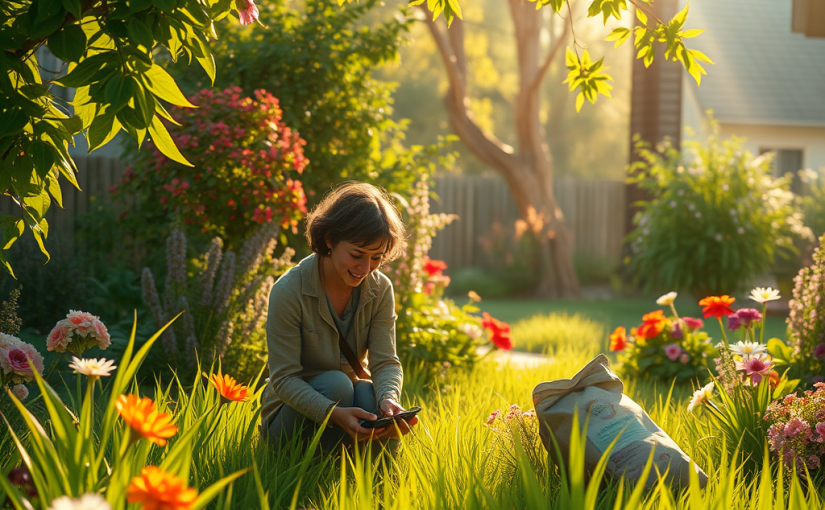
One day my neighbor as he passed by my garden, noticed how the grass in my garden appeared greener than the ones in his garden. The next day he approaches his gardener and asks, “Tell me my man, why is the grass in Sheila’s garden greener than the one in mine?”
In all humility, the gardener turned and faced his boss, and said, “That’s because, Sir, Sheila feeds her grass with fertilizers (food) that then waters (water) them to allow them to turn greener (health)”.
The boss, my neighbour, realized at once what he had to do.
He turns to his gardener, “Come on my man, let’s go to the nursery. We need to get those fertilizers to feed the garden so that the grass on this side too will be green!”








You must be logged in to post a comment.