The term farmers’ association is often used as though it describes one organisational model. It does not. Across agricultural systems, farmer organisations perform very different functions — from representing farmers’ interests, to collectively marketing their produce, to providing commercial services, and, in more sophisticated arrangements, coordinating production itself.
This distinction matters for Farmers United (FU). The question is not simply whether FU should become a “better farmers’ association”. The more fundamental question is what economic function FU should perform within Botswana’s emerging national agricultural pipeline, and what a farmer should be paying for when joining it.
I see three distinct models.
1. The Representative Farmers’ Association
The first model exists principally to give farmers a collective voice.
Its members join because the organisation represents their interests before government, regulators, markets and other institutions. It may provide information, networking, training, advocacy, policy dialogue and access to selected services, but it does not necessarily organise the members’ production or take responsibility for getting their produce to market.
This remains an important function. IFAD describes farmer and producer organisations as membership-based organisations that can provide economic services while also enabling farmers to participate in policy dialogue and advocacy. (Nedac)
The value proposition is therefore essentially:
“Your collective voice is stronger than your individual voice.”
The organisation does not need to know exactly how many tonnes each member will produce next season in order to represent the sector.
Its principal assets are membership, legitimacy, information and collective voice.
2. The Producer or Marketing Organisation
The second model moves beyond representation into economic organisation.
Here farmers come together because collective action gives them advantages that they cannot obtain individually. These can include collective purchasing, aggregation, grading, packaging, processing, storage, transportation, marketing, technical assistance and bargaining with buyers.
The European producer-organisation model is a good example. Recognised producer organisations can undertake joint production planning, concentration of supply, marketing, transportation, packaging, storage and other activities designed to improve members’ economic position. (AgGateway)
The World Bank similarly describes producer organisations as jointly owned, member-controlled organisations established for producers’ economic benefit, with functions including bargaining, inputs, technical assistance, processing and marketing. (Rural Development)
The value proposition becomes:
“Together, we can perform commercially important functions more efficiently and with greater bargaining power than we can individually.”
This is much closer to where FU has been trying to go.
It explains the logic behind distribution, storage, aggregation, collective marketing and possibly processing. The farmer pays because collective organisation can reduce transaction costs and improve commercial returns.
But there is a vulnerability in this model: the organisation can begin accumulating infrastructure and operating costs in order to provide services that may not actually need to be provided in-house.
FU’s experience with rented storage is instructive here. If storage becomes an expensive fixed cost, suffers pilferage and does not correspond to a sufficiently predictable flow of produce, the service can destroy rather than create member value.
3. The Production-System Operator
The third model starts somewhere different.
It begins not with:
“What can farmers collectively sell?”
but with:
“What will customers and the wider economy require in the future, and what productive capacity must exist to meet that requirement?”
This is the model STRLDi is beginning to see as the potential destination for FU.
The organisation becomes a linchpin between forecast demand and organised productive capacity.
Its functions would include:
Forecast demand → aggregate demand → translate demand into production requirements → match requirements against proven capacity → allocate production to geographic clusters → monitor fulfilment → identify variance early → coordinate aggregation and logistics → deliver against forecast → learn from actual performance and improve the next forecast.
This is not the place for the fireman.
It requires the mathematician, forecaster, planner and systems operator.
The distinction is fundamental.
A market intermediary asks:
“Who has tomatoes available now?”
A production-system operator asks:
“What will our customers require six months from now, what production capacity will be available then, where will the gaps occur, and what must we do now to prevent them?”
That is a much more demanding organisational capability.
“Membership — Geographic clusters composed of farmers with demonstrated commercial production histories and the capacity to account for their production over time.”
The three models compared
Dimension
1. Representative Farmers’ Association
2. Producer / Marketing Organisation
3. Production-System Operator
Primary purpose
Represent farmers
Improve members’ economic position
Synchronise future demand with productive capacity
Starting point
Farmer
Farmer + market
Demand + productive capacity
Core value
Collective voice
Collective commercial advantage
Forecasting, planning, production assurance and system reliability
Fee for representation, information, networking and advocacy
Fee/service charge for collective commercial services, often supplemented by marketing levies, commissions or transaction-based charges
Fee for access to a forecast-driven production system, with service charges potentially linked to capacity, production or transactions
The third model should not be understood simply as “Model 2 with more services.” It changes the organisation’s operating logic.
The Starting Point: What Does It Mean to Be a Commercial Farmer?
The discussion that prompted this comparison began with a practical observation: many farmers do not have the quantitative capability required to operate within a highly coordinated production system. My response is not to begin by asking how we can teach every farmer mathematics. The more fundamental question is whether a production organisation such as Farmers United should accept farmers who have not yet demonstrated, through the operation of their farms, that they can sustain and grow a livelihood from farming.
For FU, “skin in the game” needs to mean more than having invested money or having an attachment to farming. It should mean that the farm itself has demonstrated the capacity to sustain the farmer’s livelihood and contribute to the farmer’s growth. A farmer who must maintain two or three other jobs simply to keep the farm going is in a different economic position from a farmer whose farm is already generating the income from which the farmer lives, reinvests and grows.
This is not a judgement on the worth of farmers who are still transitioning into commercial agriculture. It is an organisational design decision about the kind of productive capacity FU is prepared to build its system around. If FU is ultimately expected to forecast demand, allocate production, coordinate volumes and timing, and account for delivery against those requirements, it needs members whose farms can produce a sufficiently reliable history of production, revenue, costs, yields and performance from which those calculations can be made.
The proposed 3–5 year production record therefore becomes more than a membership requirement. It becomes the beginning of FU’s quantitative production intelligence. A farmer who can demonstrate what the farm has produced over time is already generating the information from which FU can begin to understand capacity, reliability, seasonality, yield and growth. The farmer does not have to be a mathematician; the farm must, however, be capable of producing evidence that can be worked with mathematically.
This is also why I would resist the temptation to measure FU’s future success by how many farmers it can bring into the system. The objective is not to fill FU with farmers. It is to build reliable productive capacity. If farmers are encouraged to remain permanently dependent on income from several unrelated activities while the farm itself remains commercially weak, the organisation may increase its membership without increasing the productive economy. And when the productive economy remains weak, the infrastructure built to carry it — including our trains — remains underutilised.
The question is therefore not whether every farmer currently possesses the mathematics required of a production-system operator. The question is whether FU can identify, organise and progressively develop farmers whose farms are already demonstrating the productive discipline from which that capability can be built.
What Do Farmers Actually Pay For?
There is no universal global membership fee for farmer organisations. The fee structure depends heavily on whether the organisation is primarily representative, service-based, commercial, cooperative or producer-controlled.
However, current examples give us useful comparative ranges.
Representative and professional agricultural associations
The Zimbabwe Farmers Union (ZFU) currently charges annual membership fees of US$5 for smallholder farmers, US$20 for small-scale commercial farmers and US$40 for large commercial farmers. The membership card also provides access to discounts from participating firms. (ZFU)
The Zimbabwe Agricultural Society charges US$100 annually for individual members, US$150 for husband-and-wife membership and US$200 for corporate members, with lifetime membership at US$2,000. (ZAS)
Practical Farmers of Iowa charges US$50 for individual membership and US$75 for farm/household membership, with lower-cost access membership at US$25. (Practical Farmers)
The West Virginia Farmers Market Growers Association uses a more commercial basis: full producer membership is US$100–350 annually, based on gross sales. (MFVGA)
These examples illustrate the first model particularly well: membership dues primarily support participation, representation, information and member services.
Producer and commercial organisations
The National Hay Association provides a useful example of a producer-oriented fee model. New producer members pay a minimum of US$325, after which annual dues rise with annual tonnage: US$550 for 5,001–10,000 tons, US$825 for 10,001–25,000 tons and US$1,100 for 25,000+ tons. (National Hay Association)
This is particularly relevant because it demonstrates a principle that could matter for FU:
The fee is related to the economic scale of the member’s participation in the system.
An older agricultural cooperative study in the United States similarly found membership fees ranging from US$25 to US$300, with fees serving partly as member capital and as a mechanism for securing financially responsible members. (Agecon Search)
The European/global producer-group ecosystem also illustrates that membership can be tied to the services and commercial functions of the organisation. For example, GLOBALG.A.P.’s current community membership is €2,550/year for producer groups, producer/supplier associations and cooperative groups, compared with €1,550 for individual producers. This is not a farmers’ association fee in the strict sense, but it demonstrates the higher fee level attached to participation by an organised producer group in a technical/commercial standards ecosystem. (GLOBALG.A.P.)
Comparative Membership-Fee Models
Organisation / model
Geography
Organisation type
Current fee basis
Published fee
Approx. USD
Zimbabwe Farmers Union
Zimbabwe
Representative farmers’ union
Farmer category
US$5–40/year
$5–40
Zimbabwe Agricultural Society
Zimbabwe
Agricultural society / farmer community
Membership category
US$100–200/year
$100–200
Practical Farmers of Iowa
USA
Farmer organisation
Individual/farm household
US$25–75/year
$25–75
WV Farmers Market Growers Association
USA
Producer association
Gross sales
US$100–350/year
$100–350
National Hay Association
USA
Producer/marketing association
Annual tonnage
US$325–1,100/year
$325–1,100
GLOBALG.A.P.
Global
Producer/quality ecosystem
Producer group
€2,550/year
≈$2,950
NEDAC
Asia-Pacific
Agricultural cooperative network
Organisation
US$2,500/year + US$500 admission
$2,500/year
FU — proposed Model 3
Botswana
Production-system operator
To be determined from value/cost of forecast-driven production services
Not yet set
Not yet set
USD equivalents for euro-denominated fees are approximate and will vary with exchange rates.
The examples demonstrate something important: membership fees range from nominal representation dues to thousands of dollars for organisations receiving specialised commercial, technical or network services. There is no defensible global benchmark that says a farmer organisation should charge “X dollars per farmer.”
The correct question for FU is therefore not:
“What do other farmers’ associations charge?”
It is:
“What measurable economic value does FU create for a participating farmer, and what does it cost FU to provide that value?”
What This Means for FU
This distinction is particularly important because FU’s members would not be joining merely to belong to an association.
Under the emerging Model 3, the farmer would be joining because FU provides something the farmer cannot efficiently create alone:
forward visibility of demand; production planning; allocation of requirements; coordinated aggregation; commercial scheduling; logistics coordination; performance information; and access to a wider production system.
The fee should therefore be defensible in relation to the economic value of those services.
And there is a further discipline that I think is essential.
Storage, Forecasting and Infrastructure
If FU can forecast demand accurately enough to synchronise production and delivery, it may need less storage, less emergency transport, less working capital tied up in inventory and fewer fire-fighting interventions. FU’s previous experience with a rented storage facility becoming costly and vulnerable to looting is therefore not simply a problem to solve by finding a better warehouse. It is evidence that the organisation should first determine what physical infrastructure the future production flow actually requires.
The more effectively FU can forecast demand and synchronise production with the timing of that demand, the less it should need to hold produce simply because production and the market are out of sequence. Storage will not disappear; rather, it should become a calculated buffer for unavoidable timing differences rather than a substitute for poor forecasting. This potentially reduces the amount of storage, emergency transport and working capital FU needs to carry, while also reducing the risks associated with holding produce for which there is not yet a sufficiently certain destination.
This is an important distinction in moving from the producer/marketing organisation to the production-system operator. The latter does not begin by acquiring infrastructure and then finding a use for it. It builds the production system first and lets the mathematics determine what infrastructure the system actually requires.
That leads to a useful design principle:
Do not build infrastructure and then find a use for it. Build the production system first and let the mathematics determine what infrastructure the system requires.
Setting of Membership Fee
The same principle applies to membership.
Do not set the membership fee first and then invent services to justify it. Define FU’s unique value proposition, establish the cost of providing it, measure the economic benefit to the member, and then determine the appropriate fee structure.
For FU, the strategic choice is therefore much bigger than whether it should be a farmers’ association.
It is whether it should remain primarily a voice for farmers, become a collective commercial organisation for farmers, or evolve into something more demanding: a farmer-owned production-system operator capable of forecasting demand, organising productive capacity and making dispersed farms reliably responsive to the requirements of the wider economy.
That is the question the Phase 1 work needs to answer.
The Thinking Behind This Model
This discussion of farmer organisations is part of a wider body of STRLDi work on how productive systems are connected — from national demand and production, through value addition and logistics, to the infrastructure that ultimately carries economic activity.
1. What Will Botswana Put on 40 Locomotives? A question about what productive economy Botswana must build if its railway is to become an economic corridor rather than an isolated transport asset. (LinkedIn)
2. Agriculture Corridor Execution Lattice The wider architecture for connecting demand, production, aggregation, value addition, logistics and corridor execution — with discipline, standards and time certainty at its centre. (strldi.weebly.com)
3. Study Unemployment: The Report The earlier study from which this line of thinking emerged: understanding unemployment not simply as a labour-market problem, but as an outcome of the design and performance of the national production system. (strldi.weebly.com)
That makes your response to Jimmy much more than a disagreement about whether farmers can do mathematics. It becomes the entry point into the question: what kind of productive organisation does Botswana need if its farmers are to become part of a production system capable of feeding markets, filling corridors and growing the economy?
A question Southern Africa needs to ask itself before it asks its children to carry Vision 2050
There is a question about development in Southern Africa that we do not ask often enough: what kind of citizen are we producing? We speak continually about protecting citizens, supporting citizens, empowering citizens, providing services to citizens and creating opportunities for citizens. These are legitimate responsibilities of government. But alongside them is another responsibility that is rarely placed with equal political force: the responsibility of the adult citizen to become, and to raise, the people capable of producing the society that must eventually stand without being carried.
This is not an argument against protection. A government must protect its people from violence, hunger, disease, extreme deprivation and economic shocks. But protection cannot become the permanent definition of the citizen–state relationship. If today’s adults are continually addressed primarily as people whom government must protect and provide for, while their children are expected to become the engineers, scientists, technicians, entrepreneurs, manufacturers and institutional leaders who will build the future, there is a missing link between the two generations.
Where is the political language that tells the adult citizen: You are not only the person the state must protect. You are also one of the people responsible for producing the capable society that must eventually stand without being carried?
That is the question I believe Southern Africa needs to confront.
The Citizen We Protect and the Institution We Expect to Perform
The Citizen We Protect and the Institution We Expect to Perform
The recent speech on SADC Vision 2050 provides a useful lens through which to examine this question. President Cyril Ramaphosa, delivering the keynote address on 14 August at the SADC Summit Public Lecture at the University of KwaZulu-Natal, Westville Campus in Durban, repeatedly speaks about the lives the region must improve and the conditions its people should experience. Vision 2050 imagines a region where people have food, water, security and comfort, live healthy lives, are educated, possess relevant skills and capabilities, and have access to decent work and sustainable livelihoods.
The language becomes particularly explicit when the speech turns to children: “We must ensure that all children have food, water, and shelter; that they are kept safe.” It then moves to investment through adolescence in the skills of this century, digital literacy and health services, connecting the removal of these barriers directly to the productive capacity of the economy. The speech also addresses health security, equal opportunity, the safety of women, discrimination and violence, migration pressures, climate resilience, food security and the protection of livelihoods. The citizen and population are therefore repeatedly located within a system whose responsibility is to secure the conditions in which people can live and prosper.
That is legitimate. It is necessary. But there is another side to the equation.
The speech also says that Vision 2050 must become a programme of action that shapes decisions, budgets, infrastructure, skills and institutions, and that it must produce results that people can see and feel. It speaks of a shared destiny and therefore a shared responsibility to achieve the Vision. It calls for institutions of learning capable of building a regional pool of knowledge and expertise; for refining and smelting capacity, harmonised standards, infrastructure, investment and industrial planning; and for the creation of capable entrepreneurs and creative people who can build serious businesses and meet export standards.
So the issue is not that the speech contains no language of responsibility. It does. The question is where that responsibility is located, how explicitly it is assigned, and whether the two sides of the social contract are being developed with equal force.
The transcript contains 56 occurrences of “people”, but only one literal occurrence of “citizen”, no literal occurrence of “public servant”, one of “discipline”, one of “accountability” and one of “responsibility”. These are lexical counts, not measures of meaning; the speech also uses terms such as children, young people, women, farmers, communities and students. Nevertheless, they provide a useful first indication of the rhetorical landscape. A substantive reading reinforces the pattern: at least ten distinct passages position the population primarily as people to be protected, provided for or supported, while institutions and the productive system are more often described through capability, standards, infrastructure, investment, expertise, execution and results.
The issue, again, is not that the speech contains no language of responsibility. It does. The concern is the asymmetry.
This is not an argument for withdrawing protection from today’s adults. Protection and capability formation are simultaneous responsibilities. The state must protect its citizens while families, schools, communities, workplaces, institutions and citizens themselves must participate in producing the capability of the next generation. A population cannot remain indefinitely positioned primarily as the object of protection if the same population is expected to become the productive, capable and institution-building force that Vision 2050 requires.
That is the asymmetry worth examining.
It is not an accusation against one politician. It is a question about a political culture that can gradually become accustomed to speaking about citizens through their needs while speaking about institutions through their responsibilities. Over time, the distinction can become so normal that neither side notices what is being lost: the expectation that citizens, families, professionals, institutions and communities are not only recipients of a functioning system but also producers of the capability on which that system depends.
The frog does not jump out of the pot. It becomes accustomed to the temperature. The frog is a metaphor. The danger is real.
Author’s Note
This is not an argument that people who are less privileged should not be provided for or protected; protection and provision remain legitimate responsibilities of the state. The concern is the skewing of the political message when citizens are repeatedly positioned as recipients of protection, provision and support without an equally explicit and sustained expectation that adults, whatever their circumstances, participate in forming capable families, communities, institutions and the next generation.
The counts presented here were generated through AI-assisted analysis of the transcript, rather than through manual word counting by the author. They should therefore be understood as indicative evidence of the rhetorical pattern, not as a formal statistical content analysis.
Toughened by Poverty Is Not the Same as Toughened for Capability
There is an important distinction here.
We do not need to toughen people by making them poor. Poverty is not character formation. Deprivation is not an education strategy. A child should not have to experience hunger, unemployment or insecurity in order to learn persistence.
There is another kind of toughening that Southern Africa urgently needs: toughening people for capability.
It means expecting children to stay with difficult mathematics, difficult science and difficult problems. It means expecting young people to learn, practise, make things, repair things, calculate, experiment and improve. It means expecting adults to work to standards, accept responsibility, meet deadlines and understand that competence has consequences.
A functioning society replaces involuntary hardship with deliberate challenge.
It does not say, “You must suffer so that you become strong.”
It says:
“You are capable of becoming strong, and therefore we will expect more of you.”
That expectation has to begin with adults.
The Intergenerational Contradiction
We tell today’s adults that government will create jobs.
But we need their children to become the engineers, scientists, manufacturers and entrepreneurs who create the industries that create those jobs.
We tell today’s adults that government must provide services.
But we need their children to become the scientists, engineers, technicians and managers who build the systems that deliver those services.
We tell today’s adults that government must protect them from economic insecurity.
But we need their children to become the producers, manufacturers, scientists, entrepreneurs and exporters who create the economic capacity from which that security ultimately comes.
That is the circularity.
We protect one generation while expecting the next generation to build the productive system capable of sustaining that protection.
And that is why the political language matters.
The adult citizen cannot be only the endpoint of government policy.
The adult citizen is also part of the production system that produces the future workforce.
Vision 2050 Is an Industrial Vision
This becomes particularly important because SADC Vision 2050 is not simply a vision of a better-protected population. It is a vision of a vibrant, dynamic and productive region, in which people have skills and capabilities and decent work and sustainable livelihoods. It is explicitly connected to economic integration, industrialisation and the development of regional value chains.
The speech itself makes the industrial contradiction remarkably clear.
Southern Africa possesses the energy, minerals, agricultural resources, skills, markets and financial institutions needed to build a prosperous industrialised region. Yet the region continues to look beyond its borders to supply its people. Its railways were historically built to carry raw minerals to the sea rather than to connect regional economies.
President Ramaphosa puts the problem even more sharply:
“We export the ore and we import the battery.”
The region supplies an industrial revolution happening elsewhere and then purchases the products of that industrial revolution at prices set by others. The stated response is not simply to mine more. It is to use the region’s own resources to drive its own industrial revolution.
The proposed industrial direction includes pharmaceuticals, automation, microprocessing, paper and power, furniture, semiconductors, mineral processing, agro-processing and advanced regional manufacturing.
The speech calls for refining and smelting capacity rather than simply exporting ore; processing plants rather than simply exporting agricultural products; and cars assembled in one SADC country using components manufactured in another. It calls for modern irrigation, seed development, veterinary science and agroecology, and for young people to build businesses that trade seamlessly across SADC.
Every one of these ambitions carries a human-capability requirement.
The STEM Is Already Inside the Industry
By 2050, the RVC pathway requires approximately 165 million STEM-capable people. At the current trajectory, Southern Africa would have only about 60 million. The gap is approximately 105 million people.
The STEM requirement is not something we need to invent for Southern Africa. The industries we say we want are already specifying it for us.
If the region wants batteries, the production system requires chemistry, electrochemistry, materials science, thermodynamics and electrical engineering.
Pharmaceuticals require chemistry, biology, microbiology, genetics, biochemistry, pharmacology and statistics.
Semiconductors require physics, mathematics, materials science and engineering.
Automation requires mathematics, computing, electronics, physics and engineering.
Mineral beneficiation requires geology, chemistry, metallurgy, physics, mathematics and engineering.
Modern agriculture increasingly requires biology, chemistry, genetics, statistics, hydrology, soil science, agricultural engineering and computing.
The scale is the harder question. Our modelling for the RVC pathway indicates that Southern Africa would require approximately 165 million STEM-capable people by 2050. If the present trajectory simply continues, the region reaches only about 60 million. That leaves a capability gap of approximately 105 million people.
2050
STEM-capable people
Current trajectory
~60 million
RVC requirement
~165 million
Capability gap
~105 million
RVC requirement / current trajectory
2.8×
That is why STEM cannot be left as an education-sector aspiration. The productive economy is already telling us what capability it needs. Mathematics is the connective tissue: it sits inside modelling, optimisation, process control, engineering, statistics, artificial intelligence, agricultural forecasting, energy systems and logistics. The question is therefore no longer whether Southern Africa needs more STEM.
The question is whether we are prepared to build the additional ~105 million people capable of doing the work our economic ambitions require.
2050 Is the Destination. The Capability Must Arrive Earlier.
If SADC Vision 2050 is to be more than a statement of where the region would like to be, the capabilities required to deliver it cannot be assembled in 2049. The people who will design, build, operate, manage and continuously improve the economy of 2050 must be entering the capability pipeline now. Training takes years; professional competence takes longer; and industrial capability requires experienced people working inside institutions and productive enterprises, not simply graduates holding certificates.
This changes the calculation. The question is not “How many STEM-capable people should SADC have in 2050?” The harder question is “When must those people begin entering the system, and how many must already be working at each stage, for the 2050 economy to be operational?” If the region requires approximately 165 million STEM-capable people by 2050, and the current trajectory produces only about 60 million, the region faces a capability gap of approximately 105 million people. That gap cannot be closed by a final burst of graduates in the last decade; the capability has to be built, deployed and accumulated progressively over the preceding 20–25 years.
The Capability Cannot Be Built at the Same Speed as the Vision
The implication is blunt: 2040 is not the date by which SADC should decide whether it has enough STEM capability. It is approximately the date by which the capability should already be operating at substantial scale. By 2050, the region should be refining and renewing a functioning capability base, not discovering that it needed one.
Period
What must happen
Approximate capability position
2026–2030
Define the 2050 productive economy and quantify the STEM occupations required. Expand the education, TVET, university, apprenticeship and industry pipeline accordingly.
Capability pipeline being redesigned and scaled
2030–2035
First major expansion of new STEM capability begins entering productive employment in agriculture, manufacturing, infrastructure, energy, mining, logistics, technology and public institutions.
Capability begins working in the economy
2035–2040
The new capability base must be operating at scale. Experienced professionals begin leading and training the next generation.
Major capability stock established
2040–2045
Most of the capability required for the 2050 economy should already be working, with remaining expansion directed toward identified gaps and emerging technologies.
2050 capability substantially operational
2045–2050
The emphasis shifts from creating basic capability to replacing retiring workers, upgrading skills, improving productivity and introducing new technologies.
Capability fully deployed for Vision 2050
This also means that the 165 million STEM-capable people required in 2050 are not a graduation target. They represent the human capability that must be available and functioning across the economy. The education system therefore has to work backwards from that stock: determine how many engineers, mathematicians, scientists, technologists, agricultural specialists, manufacturing specialists, energy professionals, geologists, statisticians, systems modellers and other STEM-enabled occupations are required; determine the training time for each; account for retirement, migration and attrition; and then calculate the annual number who must enter and successfully progress through the pipeline.
The arithmetic begins in 2026 because the economy we want in 2050 has already begun to require the people who will build it.
That child is part of the future productive capacity of Southern Africa.
What is the adult we must be for them?
What Must Change in the Citizen
The question cannot be left with government and the education system.
The citizen is part of the production system.
That means asking more of citizens—not by making them poor, but by raising the expectations attached to adulthood. Parents must ask what their children are becoming capable of doing. Schools must ask whether children can think, calculate, investigate, make and solve rather than merely pass examinations. Universities must ask whether they are producing capability for a production system rather than certificates for a qualification system.
Young people must understand that the world they are entering will not reward certificates alone. It will reward capability.
And governments must ask themselves a corresponding question: if they announce industrialisation, where is the human-capability plan underneath it?
If we want public institutions to become more competent, disciplined and accountable, we must also produce citizens capable of occupying and leading those institutions.
If we want globally competitive industries, we must produce the people capable of making them globally competitive.
If we want children to build a different future, we have to begin producing that capability in them now.
What Happens When Leadership Expects More of Its Citizens?
The question becomes unavoidable when we look at countries whose leaders expected citizens – not institutions – to become active producers of national capability, not simply recipients of what the state provides.
What Did National Development Require of the Citizen?
Work discipline, knowledge, entrepreneurship, technology
Industrial and technical capability
Rwanda — Paul Kagame
Diligence, quality, productivity, responsibility
Human and productive capability
SADC — Vision 2050
What must our citizens become capable of doing?
What capability must the region build?
These were not simply programmes for building better institutions. They were programmes for building people capable of using those institutions to produce national outcomes.
The distinction matters. Institutions provide the platform; people provide the capability that makes the platform productive. Education therefore cannot be treated only as a social service, STEM cannot remain an academic category, and employment cannot be understood simply as something government must provide. If a country wants industrialisation, modern agriculture, manufacturing, technology and sophisticated infrastructure, it must deliberately build citizens capable of designing, calculating, operating, managing and continuously improving those systems.
The question for SADC Vision 2050 is therefore direct: what capabilities are we asking our citizens to acquire because the future economy will require them? And, equally, are our education systems, public services, workplaces and national leadership deliberately building those capabilities at the scale required? The evidence below puts numbers against that question.
The issue is not whether citizens should be protected. They should. The issue is whether protection is being matched by deliberate capability formation. A region cannot build the future it describes in Vision 2050 while leaving the citizen’s contribution to that future implicit.
That is the bridge.
A Starting Point We Cannot Avoid
This is not a scare tactic.
It is an invitation to take the vision seriously enough to ground it in reality.
SADC has given the region a destination. The speech itself says that Vision 2050 must become more than a statement of intent; it must become a programme of action that shapes decisions, budgets, infrastructure, skills and institutions and produces results in the lives of people.
Our concern is that we have not yet worked backwards from that destination far enough.
How many people will Southern Africa have?
How many will need productive work?
What must the region produce for them?
What must it produce for the world?
Which industries must exist?
Where should those industries be located?
What resources and infrastructure will they require?
And finally:
How many STEM-capable people must we have, in each country and across the region, by 2030, 2035, 2040 and 2045, for the 2050 vision to be possible?
We should be willing to discover that our first numbers are wrong.
What we should not be willing to do is proceed without numbers.
The purpose of the RVC Integrated Map is therefore not to tell SADC what its future must be.
It is to help the region see the future it has already said it wants—and then work backwards far enough to discover what must be true today for that future to become possible.
If Vision 2050 is to be real in 2050, the people who will build it must already be on their way.
That is the starting point.
EVIDENCE TABLES
Table 1 — What the Speech Literally Says
Concept
Literal occurrence in transcript
People
56
Citizen
1
Public servant
0
Discipline
1
Accountability
1
Government
2
Institutions
6
Responsibility
1
Methodological note: these are literal word counts. They are not counts of meaning. The speech uses many other terms—children, young people, women, farmers, communities, students and so forth. The counts are therefore an indication of the rhetorical field, not a formal content-analysis result.
Table 2 — Substantive Passages Positioning the Population as Protected, Provided For or Supported
#
Substantive theme
Indicative count
1
Food, water, security and comfort
1
2
Healthy lives/health security
2+
3
Education, skills, capabilities, decent work and sustainable livelihoods
1 major passage
4
Protection of the peoples of the region
2+
5
Protection from global supply-chain disruption, food insecurity and rising costs
2+
6
Equal opportunity for women and men, urban and rural, young and old
1
7
Women being safe / GBV / femicide
1 major passage
8
Migrants protected from discrimination, intimidation and violence
1 major passage
9
Children receiving food, water, shelter, safety and developmental support
1 major passage
10
Access to medicines, vaccines and health products
1 major passage
Indicative substantive total: at least 10 distinct passages
The children’s passage is particularly explicit: “We must ensure that all children have food, water, and shelter; that they are kept safe.”
Table 3 — Women Specifically
Women-specific theme
Indicative substantive references
Equal opportunity for women and men
1
Women must be safe / GBV and femicide
1 major passage
Men and boys must be raised to reject violence and respect/protect women
1 major passage
Support for survivors
1
Economic empowerment of women
1
Women entrepreneurs’ access to procurement and markets
1 major passage
Women as successful enterprise owners and leaders
1
Women-led SMEs / entrepreneurship
1+
At least 6 substantive women-specific passages, with the speech moving between protection, safety, economic empowerment and economic agency. The distinction matters: not every reference to women should be coded as dependency.
Table 4 — The Industry Already Contains the STEM Requirement
The speech itself identifies pharmaceuticals, automation, microprocessing, paper and power, furniture and semiconductor value chains, while also calling for mineral processing, agro-processing, refining, smelting, manufacturing and modern agricultural science.
Table 5 — The Human-Capability Readiness Clock
The STEM Capability Gap: Current Trajectory vs RVC Requirement
Year
Approx. population
STEM-capable under current trajectory*
STEM-capable required for RVC Vision
STEM capability gap
Required / current trajectory
2026
~400m
~25m
~25m
0m
1.0×
2030
~445m
~30m
~45m
15m
1.5×
2035
~480m
~36m
~75m
39m
2.1×
2040
~505m
~43m
~105m
62m
2.4×
2045
~530m
~51m
~135m
84m
2.6×
2050
~550m
~60m
~165m
105m
2.8×
Important: the “trajectory” and “required” figures are working scenarios for the RVC Integrated Map, not existing SADC statistics or adopted SADC targets. The region needs to establish the actual country-by-country baseline and then test these requirements against its industrial production plans.
The central finding is the timing, not the false precision of the first estimate:
The people required for 2050 have to be in formation long before 2050.
Table 6 — Leaders Who Made Citizen Capability Part of the National Development Message
This comparison is not a claim that these leaders alone caused their countries’ economic outcomes. It asks a narrower question: how explicitly did their political language make citizen discipline, responsibility, self-reliance, learning and productive capability part of national development? GDP per capita is included only as economic context.
Indicative rank
Leader / country
Citizen-capability message
2024 GDP per capita, current US$
What citizens were expected to contribute
1
Lee Kuan Yew — Singapore
Work hard; remain disciplined; no one owes you a living; self-reliance; family responsibility; excellence
Human capability, enterprise, institutional and productive capacity
6
Cyril Ramaphosa — South Africa
Strong institutional, skills and industrial capability message; citizen responsibility present but less developed as an explicit economic-formation frame in this speech
~$6,267
What has been explicitly expected? What remains underdeveloped?
The comparison is useful precisely because the leaders do not all use the same model. Lee’s political tradition explicitly emphasised a pragmatic, responsible, disciplined, frugal and hardworking citizen, with social benefits not allowed to erode work ethic. (Public Service Commission) Lee himself described abandoning welfare because he believed it could weaken self-reliance and the desire to excel, while emphasising the need to “bake” the economic pie before distributing it. (Ministry of Foreign Affairs)
Deng made the connection even more directly between education, science, technology and productive capacity, arguing that science and technology were a fundamental productive force and that education and science had to be treated strategically over a 15–20-year horizon. (MOE China) Kagame’s language is particularly close to the proposition at the centre of this article: citizens are individually and collectively responsible for national development, and productivity depends upon diligence, quality and respect for time. (Paul Kagame)
The lesson is not that Southern Africa should copy Singapore, China, Korea, Malaysia or Rwanda.
It is simpler:
Political leadership can ask citizens to become capable of the future they want, while simultaneously building the institutions that enable them to do so.
That is the question Southern Africa now has to ask itself.
Not whether government should protect its citizens.
Not whether institutions should be made more capable.
But whether we are asking enough of the adults who must produce the citizens who will eventually make those institutions—and the economy they serve—capable enough to stand on their own.
On 11 August, President Duma Boko spoke about the urgency with which Botswana must begin to execute. In the remarks shared by Ray Mafoko, he returned to Botswana Railways as an example. He had set a deadline for the railway to become profitable. December came; it was not profitable. His response was blunt: decisions had to be made, the country could not remain “supine” in the face of challenges, and Botswana was in a race against time. Ray Mafoko’s publication of President Boko’s remarks
The statement can be heard simply as an instruction to Botswana Railways: become profitable. But perhaps we should slow down long enough to ask what that instruction actually requires of the economy around the railway. A railway cannot manufacture profitability by instruction. It becomes profitable when there is sufficient economically viable freight to move, when it can move that freight reliably and competitively, and when the productive economy continues to generate more freight as the railway expands. The more useful question, therefore, is not only how do we make Botswana Railways profitable? It is what must Botswana produce, process, sell and move for Botswana Railways to become increasingly profitable?
That takes us into territory that belongs initially to Trade. It takes us beyond the familiar regulatory role of controlling standards, licences, borders and commercial rules and into the economic work of understanding markets, defining demand, organising production opportunities and connecting them to the infrastructure that must carry the resulting goods. Botswana Railways then becomes part of that economic architecture, rather than being left at the end of the system to ask where it will find enough freight.
First, Let Us Look at the Railway We Have
In May 2026, Botswana Railways reported that it had been moving around one million tonnes of freight annually, while approximately 1.4 million tonnes a year were required to cover expenses. At the same time, only 11 of 34 locomotives and fewer than 200 of 1,155 wagons were operational. BR had also recorded an operating loss of P235 million between 2021 and 2024. (Daily News)
The natural response is to look at the 1.4 million tonnes and say: get BR to 1.4 million tonnes.
But that is where we need to be careful. 1.4 million tonnes is a financial threshold. It is not an economic ambition. If we make break-even the destination, we risk designing the railway around survival: reach the line, stay above it, contain costs, avoid taking risks and wait for the next problem. That is a balancing logic. It can keep an organisation alive without necessarily creating the conditions for it to become a growing economic engine.
The alternative is to understand profitability as feedback within a reinforcing economic loop. More viable production creates more freight; more freight creates railway revenue; revenue and investment create more capacity; more capacity allows more production to move; and increased production creates more opportunities for markets, investment and further freight. The question is therefore not simply how BR gets to the break-even line, but what size of productive economy Botswana needs to build around the railway so that the railway can keep growing with it.
Four Stages Give Us Something We Can Actually See
Let us use a simple eight-year planning model in which BR moves from 11 operational locomotives to 20, then 30, then 40. If we use the reported 1.4 million tonnes as the initial working capacity at 11 locomotives and scale the planning capacity proportionally with operational locomotives, the numbers look like this:
BR stage
Operational locomotives
Annual planning capacity
Average per day
Stage 1
11
1.40m tonnes
3,836 t/day
Stage 2
20
2.55m tonnes
6,973 t/day
Stage 3
30
3.82m tonnes
10,460 t/day
Stage 4
40
5.09m tonnes
13,948 t/day
These are planning numbers, not an engineering forecast of BR’s physical capacity. Actual capacity would depend on locomotives, wagons, track, signalling, loading and unloading facilities, maintenance, crews, turnaround times and the ability of the network to handle the resulting train movements. The purpose of the calculation is different. It allows us to see the scale of the productive economy that would need to grow if Botswana progressively restores and expands railway capacity.
Now apply the original planning allocation of 45% agriculture, 35% manufacturing and 20% mining:
BR stage
Total capacity
Agriculture 45%
Manufacturing 35%
Mining 20%
11 locomotives
1.40m
630,000 t
490,000 t
280,000 t
20 locomotives
2.55m
1.145m t
891,000 t
509,000 t
30 locomotives
3.82m
1.718m t
1.336m t
764,000 t
40 locomotives
5.09m
2.291m t
1.782m t
1.018m t
Now stop at the last line for a moment.
At 40 operational locomotives, this planning model would require approximately 2.29 million tonnes of agricultural freight and 1.78 million tonnes of manufactured freight, in addition to approximately 1.02 million tonnes of mining freight. The railway cannot create those goods. Agriculture, manufacturing and mining must create them, markets must absorb them, and the logistics system must be capable of moving them.
So the question becomes very simple:
What will Botswana put on 40 locomotives?
The Goods Are Already Moving
The answer does not begin with a blank sheet of paper. Botswana already has a substantial goods economy moving through its borders.
The 2024 International Merchandise Trade Statistics recorded 2.332 million tonnes of goods excluding oil imported into Botswana. Food and live animals accounted for 667,708 tonnes. Manufactured goods classified chiefly by material accounted for 1.101 million tonnes, machinery and transport equipment another 99,101 tonnes, and miscellaneous manufactured articles 58,476 tonnes. (GBoS Data)
The latter three manufacturing-related categories therefore amounted to approximately:
1,101,325+99,101+58,476 = 1.259 million tonnes
Add food and live animals:
667,708+1,258,902=1.927 million tonnes
Botswana therefore already imported approximately 1.927 million tonnes of food and manufacturing-related goods in 2024 within these categories. That is more than the 1.4 million tonnes that BR has identified as the level required to cover its expenses.
We should not make the foolish conclusion that all 1.927 million tonnes should now move by rail. Some goods are more appropriately moved by road; some are time-sensitive; some are high-value and relatively low-volume; some require short-haul distribution; and some goods will continue to be imported because producing them in Botswana would not be economically sensible.
The significance of the number is elsewhere. The freight market already exists. Botswana is already buying these goods, already paying for them, already bringing them through its borders and already moving them to consumers and businesses.
The question for Trade is therefore not simply where can BR find more freight? It is: which of these existing goods flows are economically suitable for rail, which imports could realistically be replaced by domestic production, and what additional markets could Botswana develop so that production grows beyond the domestic market?
That is a much more productive starting point.
Now Put Today’s Production Beside Tomorrow’s Requirement
Botswana is also not starting its productive economy from zero.
During the 2024/25 cropping season, Botswana reported approximately 144,000 tonnes of crop production, while horticultural production reached 88,670 tonnes, including vegetables and fruit. (Daily News) Government has also reported substantial livestock production, including approximately 69,000 tonnes of beef and 49,000 tonnes of poultry meat in 2022/23.
Using these documented quantities as a working production floor gives:
144,000+88,670+69,000+49,000=350,670 tonnes
This is not a claim that Botswana’s total agricultural production is only 350,670 tonnes. It is a conservative working number from the physical production quantities we can presently place side by side. Eggs have not been converted into tonnes, and other livestock and agricultural products have not been added.
But even this incomplete number is enough to expose the scale of the work ahead.
BR stage
Agriculture freight requirement
Working local production
Today’s production as % of requirement
Production gap
11 locomotives
630,000 t
~351,000 t
55.7%
~279,000 t
20 locomotives
1.145m t
~351,000 t
30.6%
~794,000 t
30 locomotives
1.718m t
~351,000 t
20.4%
~1.367m t
40 locomotives
2.291m t
~351,000 t
15.3%
~1.940m t
The point is not that Botswana cannot get there. The point is that today’s production is not the economy required by a 40-locomotive railway.
Today’s production is the starting point from which that economy has to grow.
At 11 locomotives, the working agricultural production floor represents approximately 56% of the agricultural freight requirement. At 20 locomotives, it represents about 31%. At 30 locomotives, approximately 20%. By 40 locomotives, it represents approximately 15%.
That is the productive gap.
And the productive gap is not a reason to stop.
It is the work.
This Is Where Trade Needs Another Muscle
Trade’s regulatory role remains necessary. Botswana needs standards, licensing, customs, competition rules, consumer protection and a functioning commercial environment. But a country that wants to move from importing a large proportion of its goods to producing, processing and exporting substantially more cannot ask its economic-development ministry to stop at regulating commerce.
Trade has to know where the markets are.
It needs to know what Botswana buys, from whom, in what quantities and at what value. It needs to know which goods are growing in demand, which markets are opening, which imports might be competitively replaced, which products Botswana could export, and what quantities buyers would actually take.
The work then moves backwards from the market. If a buyer requires 20,000 tonnes of a product a year, at a particular specification, during particular months and at a particular price, that is not yet an agricultural programme. It is a market requirement. The next calculation is what production capacity is needed to meet it, who can produce it, where it can be produced, what inputs and infrastructure are required, what processing is necessary, how the output will be aggregated and how it will reach the buyer.
That is where the Ministry’s economic-development mandate becomes different from simply saying “produce more.”
There is another danger here: each part of the economy can become concerned mainly with whether the problem is occurring at its own end. Trade can look at regulation, Agriculture at production, manufacturers at markets, farmers at buyers, logistics operators at freight and Botswana Railways at its available tonnage. Each may have a perfectly reasonable explanation for why its own part cannot move faster. But if the economic system is treated as a collection of separate responsibilities rather than as one connected production-and-market system, the country can spend years improving individual parts while the whole system continues to take on water.
The problem is not necessarily at the end where the water is visible. It may be in the connections between the ends.
What Should the Trade Economic-Development Manual Contain?
If Trade is given an economic-development directive alongside its regulatory mandate, I would expect its operating manual to contain at least the following:
Function
What Trade must actually do
Market intelligence
Maintain a live picture of what Botswana buys, from whom, in what quantity, value and trajectory.
Demand definition
Quantify domestic, SADC and international demand by product, volume, specification, price and timing.
Import replacement
Identify imports that Botswana could realistically produce or process competitively.
Export development
Identify products and markets where Botswana can credibly gain market share.
Product prioritisation
Rank opportunities by market size, margin, feasibility, employment, infrastructure and strategic value.
Production requirements
Translate markets into tonnes, quality, timing, land, water, inputs, technology and processing requirements.
Producer mapping
Know who can produce what, where, at what scale and with what reliability.
Aggregation architecture
Organise dispersed production into commercial volumes, consistent quality and predictable delivery.
Processing
Identify where raw production must be graded, stored, chilled, processed, packaged or transformed.
Buyer development
Build relationships with retailers, processors, institutions, hospitality and regional/international buyers.
Commercial contracting
Develop forward orders, specifications, supply schedules and commercial arrangements that give producers a production signal.
Logistics planning
Map movement from producer to aggregation, processing, distribution and market.
Freight-demand planning
Convert production and markets into tonnes, origins, destinations, seasonality and frequency.
Rail–road allocation
Determine which movements are economically suited to rail, road or intermodal transport.
Investment pipeline
Turn identified market and production gaps into investable projects.
Capability development
Identify missing skills, technology, equipment, finance and management capability.
Production monitoring
Track hectares, yields, throughput, quality, delivery and variance from plan.
Market performance
Measure actual import replacement, market share, exports, prices and commercial returns.
Economic feedback
Feed actual results back into the model and continuously adjust the production programme.
Corridor development
Translate production and market flows into the Botswana Railways corridor: origins, aggregation points, processing nodes, destinations, seasonality, train frequency and capacity requirements.
This does not mean that Trade becomes the farmer, manufacturer, processor, investor, logistics operator or railway. Its job is to see the economic system and organise the information, relationships and decisions that allow those actors to work together.
The sequence is therefore:
That is what makes the railway part of an economic corridor rather than simply a railway company trying to sell transport capacity.
Where Does the Farmer Fit?
This distinction matters because a farmer who asks, “Who will buy what I produce?” is asking a legitimate commercial question. It should not be the farmer’s responsibility to discover the market after production has already taken place. The responsibility for identifying demand, quantifying it, developing buyers and translating that demand into production opportunities belongs within the economic-development function of Trade.
Once that market signal exists, the farmer’s responsibility becomes much clearer. The farmer can determine whether the required crop, livestock or other product can be produced at the required volume, quality, price and time. A Farmers Association or a Centre can then help aggregate production, coordinate growers, improve consistency and organise delivery against that identified demand.
This is where a Centre or Farmers Association can eventually become financially stronger. It does not have to become the buyer of everything, and it should not promise farmers that every crop will automatically be sold. Its role can increasingly be to organise supply against a market that has already been identified, reducing the randomness between production and sale.
The farmer therefore does not have to invent the market.
Trade develops and organises the market opportunity; producers build the capacity to supply it; associations and Centres aggregate that supply; processors add value; investors build missing capacity; logistics operators move the goods; and Botswana Railways becomes the corridor through which an increasing share of the economically suitable long-haul movement can flow.
That is a system in which each participant can see where his or her responsibility begins and ends.
Road Does Not Have to Lose for Rail to Grow
There is also no need to turn this into a fight between Botswana Railways and the freight companies already operating on the roads. A growing productive economy should create more freight, not simply move the same freight from one operator to another. Road remains essential for collection, short-haul distribution and last-mile delivery, while rail can progressively take more of the long-haul, bulk and consolidated movements for which it is economically suited.
We already have a practical illustration of what that can mean. In July 2026, Botswana Railways reported that the share of fuel imports transported by rail had fallen from approximately 70% to below 20% after its fuel tankers were withdrawn from service. The refurbished tankers now returning to service can carry 55,000 litres each, while a full train can move approximately 1.87 million litres, equivalent to roughly 50 fuel trucks. (Daily News)
The point is not that every truck should become a train. The point is that different transport modes can be allocated according to the economics of the movement. As the total productive economy grows, the appropriate share for rail can grow with it. Road operators can become part of the aggregation, distribution and intermodal system rather than being treated as an obstacle to railway recovery.
That is a much more sensible way to think about the relationship.
The Numbers Now Give Us a Different Question
At 11 locomotives, the planning capacity is approximately 3,836 tonnes a day. At 20 locomotives, it is approximately 6,973 tonnes a day. At 30 locomotives, it rises to 10,460 tonnes a day, and at 40 it reaches approximately 13,948 tonnes a day.
The question is not whether Botswana can magically produce enough goods tomorrow to fill 40 locomotives. It cannot. The question is whether Botswana can deliberately build the productive economy that will require 40 locomotives when that capacity becomes available.
That requires Trade to work ahead of the railway. It requires Agriculture to understand the production requirements of identified markets. It requires manufacturers and processors to see opportunities in the goods Botswana currently imports. It requires investors to see bankable production opportunities rather than simply waiting for a fully formed market to appear. It requires farmer organisations to become capable of aggregating commercial supply. And it requires logistics planning to connect all of this physical production to actual buyers.
At 20 locomotives, the planning model calls for approximately 1.145 million tonnes of agricultural freight and 891,000 tonnes of manufactured freight. At 30, those figures rise to 1.718 million and 1.336 million tonnes. At 40, they reach 2.291 million and 1.782 million tonnes.
Those numbers should not make us say, “Botswana cannot do this.”
They should make us ask:
What has to be built for Botswana to do this?
That is the difference between looking at a gap as evidence of impossibility and looking at a gap as a development programme.
Profitability Is Not the Destination
This is why I am reluctant to make the 1.4-million-tonne break-even number the centre of the discussion.
If the system is told repeatedly that BR must reach 1.4 million tonnes, the organisation can become oriented towards achieving and protecting that threshold. The resulting behaviour can become cautious: contain expenditure, protect the existing customer base, avoid capacity commitments, avoid risk and attempt to remain just above the line. The balancing loop then becomes stronger, while the productive economy around the railway remains weak.
A different structure starts with growing demand.
In this structure, profitability is not ignored. It becomes an essential feedback signal. If the additional freight does not produce adequate revenue, the system has to ask why: is the product wrong, is the market wrong, is the price wrong, is the route wrong, is utilisation too low, are turnaround times too long, or is the cost structure too high?
Profitability tells the system whether the reinforcing loop is working. It does not define the size of the economy we should be satisfied with.
That is why the ambition should not be “keep BR above break-even.” The ambition should be to build a productive economy in which BR can progressively increase its capacity because the economy is producing the freight that makes that capacity economically valuable.
So, What Will Botswana Put on 40 Locomotives?
We already have some of the answer.
Botswana is already importing the goods. Botswana is already producing agricultural goods. Botswana already has farmers, manufacturers, processors, freight companies, investors, buyers and a railway corridor. The missing piece is not the complete absence of economic activity. The missing piece is the deliberate connection of these activities at the scale required to transform the productive economy.
That is the work that must now become visible.
Trade can identify the demand and develop the market. Agriculture and producers can build the production capability. Farmer organisations and Centres can aggregate supply. Manufacturers and processors can add value. Investors can build the missing capacity. Logistics operators can collect, consolidate and distribute. Botswana Railways can become the long-haul corridor connecting that growing production to domestic, regional and international markets.
Then the railway is no longer sitting at the end of the system asking:
“Where will I find freight?”
The economic system is feeding the corridor.
Perhaps President Boko knows this.
Perhaps the statement on 11 August was intended to make the country uncomfortable enough to ask what “make Botswana Railways profitable” actually means.
Because the easier question is:
How do we get BR to 1.4 million tonnes?
The harder question is:
What are we going to build in Botswana that will make 40 locomotives necessary?
That question belongs to Trade.
It belongs to Agriculture and Manufacturing.
It belongs to farmers, producer organisations, processors, investors and logistics operators.
And it belongs to Botswana Railways.
Most importantly, it is not a question that requires Botswana to wait until it has all the answers before beginning. The numbers tell us where the gaps are. The gaps tell us what has to be built. And once the country can see what has to be built, the question changes from “Can we do it?” to “What do we need to do first?”
Botswana Railways: freight volumes, break-even requirement, locomotive and wagon availability, and operating losses.DailyNews, 21 May 2026. Botswana Railways records P235 million loss
Botswana’s International Merchandise Trade Statistics. Statistics Botswana — official source for customs-based import and export data. Statistics Botswana explains that the underlying merchandise-trade data originate with BURS Customs & Excise and are transferred to Statistics Botswana for processing. (Statistics Botswana) International Merchandise Trade Statistics — December 2024
Botswana crop and horticultural production, 2024/25. President’s State of the Nation Address reporting approximately 144,000 tonnes of crop production and 88,670 tonnes of horticultural production. DailyNews/BOPA, 11 November 2025. (Daily News) 2024/25 crop and horticultural production figures
Botswana horticultural production and market development.DailyNews, 31 March 2026. This provides the more recent figure of 140,881 tonnes of horticultural production from April 2025 to January 2026, including 114,080 tonnes of vegetables and 26,800 tonnes of fruit, and notes that production exceeded national vegetable demand by 1.8%. (Daily News) Progress in horticultural production
Horticultural import restrictions and domestic production.DailyNews, 29 April 2024. The report records horticultural production rising from 67,000 tonnes in 2021 to 86,000 tonnes in 2023, alongside a substantial reduction in the horticultural import bill. (Daily News) Horticultural import ban and local production
Botswana Railways fuel-corridor example.DailyNews, 15 July 2026. The report states that the share of fuel imports transported by rail had fallen from approximately 70% to below 20%, that a refurbished tanker carries 55,000 litres, and that a full train can carry approximately 1.87 million litres, equivalent to about 50 fuel trucks. (Daily News) Botswana Railways fuel tanker refurbishment and rail freight capacity
One correction:
We would not retain the earlier statement that the 2024 agricultural production floor is exactly 350,670 tonnes without a qualification. The crop/horticulture figure of 144,000 + 88,670 is from 2024/25, while the beef and poultry figures cited are from 2022/23. They are useful for demonstrating scale, but they are not a clean same-year agricultural balance.
More importantly, we now have a newer horticulture figure of 140,881 tonnes for April 2025–January 2026. (Daily News)
So for a publication intended to withstand scrutiny, we retain the ~351,000-tonne figure explicitly as a “working production floor assembled from available documented production series”.
Across very different traditions, one finds recurring attempts to understand why human suffering, conflict and disorder persist, and what allows a different pattern to emerge. The languages are different, and the underlying philosophies should not be collapsed into systems-thinking terminology, but there are striking points of convergence.
Cultural wisdom
What it says about recurring patterns
Response to the vicious pattern
Similarity to Healing the Poison
Important distinction
Hindu traditions — Karma, Samsara, Dharma
Actions and dispositions participate in recurring cycles of consequence and rebirth.
Change conduct, consciousness and alignment with Dharma; ultimately seek liberation from the cycle.
The pattern is not treated as a single event; transformation occurs through changed practice.
Strongly metaphysical and spiritual; liberation from the cycle is central.
Buddhism — Dependent Origination
Suffering arises through interconnected causes and conditions; changing conditions can alter the continuation of suffering. (Stanford Encyclopedia of Philosophy)
Remove or transform the conditions sustaining suffering.
Looks beyond the visible suffering to what continually produces it.
The emphasis is cessation of suffering and liberation, rather than redirecting a social relationship into a virtuous reinforcing loop.
Daoism — Dao, Yin-Yang, Wu Wei
Reality is dynamic, relational and continuously changing; forceful intervention can work against the way things naturally unfold.
Work with the movement of the system rather than imposing unnecessary force.
Strong resonance with working with existing forces rather than fighting them.
Its philosophical centre is harmony with the Dao, not specifically the healing of a reinforcing interpersonal structure.
Chinese Five Elements / Wu Xing
Conditions continually transform and influence one another through cycles of generation and control.
Restore balance within the relationships between the elements.
Recognises that changing one relationship can alter the behaviour of the wider pattern.
More explicitly cyclical and cosmological than the relational intervention in Healing the Poison.
Jainism — Karma and Ahimsa
Actions create consequences that bind the individual to recurring cycles.
Discipline action, reduce harm and progressively purify conduct.
Small disciplined changes in behaviour matter over time.
The objective is liberation from karmic bondage rather than redirecting an existing social reinforcing structure.
Shinto — Renewal and purification
Disorder, impurity and imbalance require restoration and renewal.
Purification, restoration and renewed relationship with the sacred and community.
Does not necessarily destroy what is damaged; restoration is possible.
Its framework is religious and ritual rather than causal-structural.
Indigenous American traditions — Medicine Wheel / Seven Generations
Life is relational and consequences extend across people, generations and the natural world.
Restore relationship, balance and responsibility across the wider community and future generations.
Strong emphasis on the whole relationship system, not merely the immediate event.
Traditions differ substantially among Indigenous nations and should not be treated as one unified philosophy.
African wisdom / Ubuntu
A person’s humanity is constituted through relationships with other people; individual and community flourishing are interconnected. (IUScholarWorks)
Restore relationship, dignity, belonging and communal harmony.
The health of the relationship becomes the medium through which the people within it change.
Ubuntu is broader than a method for reversing a vicious loop; it is a conception of personhood and ethical life.
Norse traditions — cycles of destruction and renewal
Even great orders can enter cycles of destruction and renewal.
Renewal follows destruction and transformation.
Recognises that systems can move through recurring patterns rather than linear progress.
Much more concerned with cosmic destiny and renewal than deliberate human intervention.
Sufi traditions — descent and return
Human life can be understood as movement away from and back towards the source.
Inner transformation, remembrance and return.
The response is transformative rather than simply removing an external problem.
Primarily spiritual and inward.
Kabbalah — Tree of Life
Reality is understood through interconnected dimensions and flows.
Restoration, alignment and repair.
Strong resonance with the idea that the health of the whole depends upon relationships within the whole.
Metaphysical and theological framework rather than an empirical systems methodology.
Greco-Roman / Stoic traditions
Human beings live within larger orders they cannot fully control.
Change one’s response, exercise virtue and live according to reason and nature.
Focuses on changing one’s own contribution rather than attempting to control everything around oneself.
More focused on individual virtue and acceptance than on redirecting a relational feedback structure.
Biblical wisdom
Repeated human responses can deepen either disorder or peace; evil is not to be repaid with evil. The New Testament explicitly calls for living in peace and overcoming evil with good. (Bible Gateway)
Forgiveness, reconciliation, restraint, love and doing good in response to wrongdoing.
Particularly close to the idea of changing the quality of the response so that the next response can be different.
The biblical framework grounds this transformation in relationship with God, sin, grace and moral responsibility.
Quranic wisdom
Human conflict can be transformed through patience, goodness and reconciliation. Qur’an 41:34 explicitly describes responding to evil with what is better, such that enmity may become friendship; 49:10 calls believers to make peace between disputing brothers. (Quran.com)
Respond to wrongdoing with what is better; reconcile and restore peace.
Perhaps one of the clearest parallels: a different response can change the relationship itself.
The framework is explicitly theological and ethical, grounded in obedience to Allah rather than systems theory.
What the comparison reveals
The similarities are therefore not trivial. Across traditions, we repeatedly encounter the recognition that what we repeatedly do to one another becomes part of what happens next; that responding to harm with more harm can perpetuate the condition; that patience, restraint, compassion, forgiveness, discipline or reconciliation can alter the trajectory; and that transformation often requires more than eliminating the immediate event.
But there is also an important distinction. Cultural wisdom generally tells us how to live; systems thinking gives us a way to see the structure through which those behaviours produce consequences. The former may provide the wisdom for the action; the latter can help us understand why the action may have systemic consequences.
That distinction becomes particularly interesting when we turn to Ubuntu.
Part II — Ubuntu: From “I Am Because We Are” to a Healing Structure
Ubuntu is often expressed through the phrase umuntu ngumuntu ngabantu — “a person is a person through other persons.” Contemporary scholarship treats Ubuntu not simply as a slogan about kindness, but as a relational conception of personhood: who we become is constituted through our relationships with others, and communal life is therefore fundamental to human flourishing. (IUScholarWorks)
That immediately creates an interesting point of contact with Healing the Poison.
The uncle did not regard the mother-in-law and daughter-in-law as two isolated individuals, each carrying an independent problem. He saw a relationship in which each person’s behaviour was becoming part of the conditions shaping the behaviour of the other. Ubuntu begins from a different philosophical position, but it reaches toward a similar relational insight: the person cannot be fully understood apart from the relationships through which that person lives and becomes.
Ubuntu Does Not Ask Only, “Who Is Wrong?”
Consider the difference this makes.
If the mother-in-law is declared to be the problem, then the obvious intervention is to change the mother-in-law.
If the daughter-in-law is declared to be the problem, then the obvious intervention is to change the daughter-in-law.
If both are declared to be the problem, we may call a meeting, establish rules, appoint an arbitrator or separate them.
All of these approaches can be useful in particular circumstances. But they remain largely focused on the participants and their behaviour.
Ubuntu shifts the moral gaze towards the relationship. The question becomes not only “What has this person done?” but “What is happening between us, and what kind of people are we becoming through this relationship?”
That is much closer to the uncle’s intervention.
Ubuntu and the Reinforcing Nature of Relationship
Here is where the comparison becomes particularly powerful.
If I treat you with dignity, your response to me may become more trusting.
If you trust me, I may become more willing to listen.
If I listen, you may feel understood.
If you feel understood, you may become more willing to understand me.
Each response becomes part of the condition for the next response.
This is precisely where Ubuntu can be read through a systems-thinking lens without claiming that Ubuntu itself is systems thinking.
The relationship can reinforce humaneness, just as it can reinforce hostility.
Respect can make respect easier.
Trust can make trust easier.
Generosity can make generosity easier.
Humiliation can produce defensiveness.
Defensiveness can produce aggression.
Aggression can produce retaliation.
Retaliation can provide further evidence that the other person cannot be trusted.
The structure is still reinforcing.
What changes is what the reinforcement is producing.
That is remarkably close to the insight contained in Healing the Poison.
Where Ubuntu and the Uncle’s Intervention Meet
The uncle’s intervention can therefore be read as having several points of resonance with Ubuntu.
First, he did not isolate the person from the relationship. The relationship was where the problem lived, and therefore the relationship was also where the possibility of healing existed.
Second, he did not begin with punishment. His intervention did not humiliate the mother-in-law or condemn Li-Li. This resonates with a relational ethic in which restoring humanity is more important than establishing the superiority of one individual over another.
Third, he worked through relationship. Li-Li changed her behaviour, but the objective was not simply to make Li-Li a “better person”. Her changed behaviour altered the interaction, which altered the mother-in-law’s response, which altered Li-Li’s experience again.
Fourth, the change became reciprocal. This is critical. The uncle did not permanently manage the relationship. Once the interaction began producing different responses, those responses began reinforcing one another.
That is the point at which Ubuntu and reinforcing structures meet most powerfully: human relationships can become self-strengthening.
But Ubuntu Is Not the Healing Poison
The distinction is equally important.
Ubuntu does not give us a systems archetype diagram. It does not tell us to draw a reinforcing loop, identify a polarity, locate a delay or search systematically for leverage.
Nor should we force it into those categories.
Ubuntu begins from a much deeper proposition: human being itself is relational. The person is not fully understood as an isolated unit who subsequently enters relationships. Relationship is constitutive of personhood. (IUScholarWorks)
Systems thinking begins somewhere different. It asks us to see patterns of interaction, feedback, causality and structure.
The two therefore illuminate different aspects of the same human reality.
Ubuntu can tell us:
You are a person through other persons.
Systems thinking can ask:
What happens to the relationship when the way you treat one another becomes mutually reinforcing?
And Healing the Poison adds another question:
Can we change what the relationship reinforces without destroying the relationship itself?
The Most Interesting Convergence
This may be where the comparison becomes genuinely useful for STRLDi.
Ubuntu does not merely tell us to be nice to one another. At its deeper level, it suggests that my humanity and yours are not independent variables. What happens between us contributes to what each of us becomes.
The uncle’s intervention makes that dynamic visible.
Li-Li changes.
The mother-in-law responds differently.
Li-Li experiences the different response.
Her capacity to continue behaving differently increases.
The mother-in-law experiences the new relationship.
Her own response changes further.
The relationship begins teaching both participants how to behave differently within it.
That is a reinforcing structure.
But it is now reinforcing Ubuntu-like qualities of relationship rather than hostility.
The Distinction STRLDi Can Add
This is where I think the comparison becomes more than an exercise in finding similarities.
Cultural wisdom may have known for centuries that how we treat one another changes what happens between us. Ubuntu gives that insight a profound philosophical foundation: I am because we are. The Bible and Quran similarly contain powerful teachings about refusing to return evil for evil, pursuing peace, reconciliation and responding to wrongdoing with goodness. (Bible Gateway)
Systems thinking gives us another language for examining how those behaviours accumulate.
It allows us to ask: What happens when this response becomes the cause of the next response? What happens when that pattern repeats? When does it become self-reinforcing? What does it reinforce? And where could one intervene so that the structure begins strengthening something different?
That is not replacing Ubuntu with systems thinking.
It is seeing more deeply into what Ubuntu may already have been telling us.
And perhaps this is the more interesting question for cultural wisdom generally:
Did systems thinking discover these patterns—or did human beings learn to live with them long before we learned to draw them?
The contribution of systems thinking may not be to claim ownership of the wisdom.
The question before marriage is not simply, ‘Whom shall I marry?’ It is, ‘What kind of family are we about to create, and what kind of community will that family become for generations yet to come?
From National Systems Research to the First Human Community
What Kind of Family Are You About to Create?
Questions for Individuals, Couples and Families Before Marriage
Contents
Introduction
Family Formation: The First Human Community
Why the family is society’s first institution
Why marriage is more than a personal decision
The purpose of this framework
Part I – Questions for the Individual
1. The Man Who Has Not Yet Healed from a Previous Relationship
Questions about Healing
Questions about Readiness
Questions about Commitment
Questions about the Family He Hopes to Create
2. The Woman Without Children Who Has Not Yet Healed from a Previous Relationship
Questions about Healing
Questions about Readiness
Questions about Commitment
Questions about the Family She Hopes to Create
3. The Woman Who Has a Child and Has Not Yet Healed from Her Previous Relationship
Questions about Healing
Questions about Her Child
Questions about the Man She Is Considering
Questions about the Child’s Father
Questions about Building a New Family
Questions about Stewardship
4. The Man Who Has a Child and Is Entering a Relationship with a Woman Who Has No Children
Questions about Healing
Questions about His Child
Questions about the Woman He Is Considering
Questions about the Child’s Mother
Questions about Building One Family
Questions about Stewardship
5. The Woman with a Child Entering a Relationship with a Man Who Does Not Have a Child
Questions about Healing
Questions about Her Child
Questions about the Man She Is Considering
Questions about the Child’s Father
Questions about Building a New Family
Questions about Extended Families
Questions about Stewardship
6. The Man Without Children Entering a Relationship with a Woman Who Has a Child
Questions about Readiness
Questions about the Child
Questions about the Child’s Father
Questions about the Woman He Is Considering
Questions about Building One Family
Questions about Extended Families
Questions about Stewardship
Part II – Questions for the Couple
7. Questions Every Couple Should Ask Together
Questions about Shared Values
Questions about Trust
Questions about Communication
Questions about Conflict
Questions about Commitment
Questions about Finances
Questions about Careers and Life Direction
Questions about Children and Parenting
Questions about Extended Families
Questions about Building an Enduring Marriage
Part III – Questions for Parents
8. Parents Who Have Enjoyed an Intact Marriage
Questions about Their Own Motives
Questions about Listening
Questions about the Person Their Child Loves
Questions about Family Formation
Questions about Supporting Rather than Controlling
Questions about Becoming In-Laws
Questions about Stewardship
Part IV – Questions for Every Family
9. Questions Every Family Should Ask
Questions about Character
Questions about Commitment
Questions about Family Formation
Questions about Relationships
Questions about Future Generations
The Question Above Every Other Question
Part V – From Family Formation to Nation Formation
10. The Narratives We Choose to Hold Dear
Everyday Narratives that Shape Society
From Individual Decisions to Social Patterns
The Questions that Change What We Value
Family Stewardship and Intergenerational Responsibility
Narratives that Strengthen Human Capability
From Household Choices to National Outcomes
Part VI – A Gift to Families
11. From Understanding Persistent Unemployment to Strengthening the First Human Community
A Different Understanding of Persistent Unemployment
The Family as Society’s First Institution
Interrupting Reinforcing Cycles
A Contribution to Human Formation
Our Gift
Recommended Reading
A Learning Journey in Family Formation
Understanding Yourself Before Marriage
Preparing for Marriage Together
Love, Communication and Relationships
Blended Families
Parents and Adult Children
Understanding Families as Systems
Systems Thinking and Human Formation
Closing Reflection
Building Families that Build Nations
Family formation as the foundation of human formation.
Human formation as the foundation of productive capability.
Productive capability as the foundation of national prosperity.
The family as society’s first and most enduring human community
Introduction
Family Formation: The First Human Community
Every human being belongs to a family. Whether that experience has been joyful or painful, stable or uncertain, the family is the first community into which we are born and the first place where we learn what it means to trust, to belong, to resolve conflict, to accept responsibility and to care for others. Long before we encounter schools, workplaces, governments or markets, we experience life through the relationships that exist within our families.
For this reason, the formation of a family is not merely a private decision between two adults. It is the creation of a new human community. The decisions made before marriage shape not only the lives of the couple but also the environment within which children may one day grow, grandparents may find new relationships, siblings may gain new family members, and future generations may develop their understanding of love, commitment, security and belonging.
Yet surprisingly little attention is given to the questions that precede this transition. Couples often ask whether they love one another, whether they are compatible, or whether they will be happy together. These are important questions. They are not, however, the only questions. Before creating a family, individuals and those who care about them have a responsibility to think beyond the wedding day and consider the kind of community they are about to establish.
The purpose of this paper is therefore not to tell people whom they should marry, nor to suggest that every family begins under identical circumstances. Rather, it seeks to present a framework of questions that may help individuals, couples and parents reflect carefully before making one of life’s most consequential decisions. Different life circumstances call for different questions. Some people enter marriage after healing from previous relationships, while others bring children, extended family responsibilities or other complexities into the relationship. The purpose of these questions is not to judge those circumstances but to ensure that they are thoughtfully understood before commitments are made.
Every family begins long before a wedding ceremony. It begins in the lives of the individuals who choose to form it. Each person brings into a relationship experiences, values, expectations, wounds, hopes, and responsibilities that inevitably shape the family they are about to create. Before two people can intentionally build a healthy family together, each must first understand the foundations they themselves are bringing into that new community.
For this reason, the questions that follow begin not with the couple, but with the individual. They are not intended to judge anyone’s past or prescribe a particular life journey. Rather, they invite thoughtful reflection towards oneself on whether the foundations being brought into marriage are capable of supporting the kind of family one hopes to build. Every family begins somewhere. These questions encourage us to begin with ourselves.
Part I – Questions for the Individual
The Man Who Has Not Yet Healed from a Previous Relationship
Every relationship leaves behind memories, lessons and, sometimes, wounds. Beginning a new relationship before understanding what remains unresolved from the previous one can unintentionally place new expectations upon a person who did not create those experiences. Before asking whether another person is the right life partner, a man should first consider whether he has become emotionally available to build a new family on its own foundations.
Questions about Healing
Have I fully accepted that my previous relationship has ended?
What emotions still influence my thinking?
Have I forgiven the other person?
Have I forgiven myself?
What lessons have I learned that will help me become a better husband?
What fears from that relationship still influence me today?
If I met my former partner tomorrow, what emotions would still remain unresolved?
Questions about Readiness
Am I seeking companionship, or am I seeking relief from loneliness?
Am I choosing this woman because of who she is, or because she helps me forget someone else?
If this relationship did not continue, would I still know who I am?
Am I emotionally ready to make promises that I intend to keep for life?
Questions about the Family I Hope to Create
What kind of family do I hope to build?
What kind of husband do I hope to become?
What kind of father do I hope my children will one day describe?
What values do I hope will define our home?
What atmosphere do I hope people experience when they enter our family?
The Woman Without Children Who Has Not Yet Healed from a Previous Relationship
The end of a relationship does not necessarily mark the end of its influence. A relationship may end physically while continuing emotionally through disappointment, mistrust, fear or regret. Time alone does not heal these experiences. Healing occurs when a person has reflected on what has happened, accepted what cannot be changed, learned from it and become emotionally available to begin again without asking a new relationship to repair the wounds of the last one.
Marriage invites two people to build a future together. That future is strongest when it is not overshadowed by unresolved questions from the past. Before deciding whether a man is the right life partner, a woman should first consider whether she is free to build a family upon new foundations rather than carrying forward expectations shaped by previous disappointments.
Questions about Healing
Have I fully accepted that my previous relationship has ended?
What emotions from that relationship remain unresolved?
Have I forgiven the other person?
Have I forgiven myself for decisions I now regret?
What fears continue to influence the way I think about relationships?
Can I speak about my previous relationship without anger, bitterness or the desire to prove something?
What have I learned about myself through that experience?
What strengths have emerged because of what I have been through?
Questions about Readiness
Am I seeking a husband, or am I seeking someone to restore what I feel I have lost?
Do I know who I am independently of being in a relationship?
If this relationship did not continue, would I still feel emotionally secure?
Am I choosing this man because I genuinely respect him, or because I am afraid of being alone?
Am I emotionally available to commit myself to another person?
Have I become the kind of woman I hope to bring into a lifelong marriage?
Questions about Commitment
What qualities do I most admire in this man?
What concerns have we openly discussed rather than avoided?
Have we spoken honestly about our expectations of marriage?
How do we each respond when we disagree?
Do I trust his character, or do I simply enjoy his company?
Would I still choose this relationship if life became significantly more difficult?
Questions about the Family I Hope to Create
What kind of family do I hope to build?
What kind of wife do I hope to become?
What values do I hope will shape our home?
What atmosphere do I hope our children will experience every day?
How do I hope our family will relate to grandparents, siblings and the wider community?
What kind of legacy do I hope our family will leave for the next generation?
Questions about Stewardship
Marriage is not only about finding someone to love. It is about accepting responsibility for the wellbeing of another person and for the family that may one day emerge from that relationship.
Am I prepared to place the wellbeing of our future family alongside my own aspirations?
What sacrifices am I prepared to make for the family we hope to build?
How will I contribute to creating trust, stability and peace within our home?
When our children one day observe our relationship, what do I hope they will learn about love, commitment and respect?
If my future daughter asked me why I chose her father, what answer would I hope to give?
These questions are not intended to create doubt where confidence already exists. Rather, they invite a woman to reflect upon the kind of family she is preparing to build and the person she is becoming in the process. The quality of a future marriage depends not only upon finding the right partner, but also upon becoming someone capable of building a home where trust, belonging and enduring commitment can flourish.
The Woman Who Has a Child and Has Not Yet Healed from Her Previous Relationship
When a woman enters a new relationship with a child, she is not making decisions for herself alone. Her child is already part of an existing family system, with relationships, experiences and emotional needs that deserve careful consideration. A new relationship therefore has implications that extend beyond the couple. It affects the child, the prospective husband, both extended families and, in many cases, the child’s biological father.
This does not make the formation of a new family impossible. It does, however, make it more complex. The question is not whether a woman who has a child should marry again. The question is whether everyone involved has taken sufficient time to understand the responsibilities that accompany the creation of a new family. The child’s wellbeing deserves to be considered alongside the hopes and aspirations of the adults.
Questions about Healing
Have I fully accepted that my previous relationship has ended?
What emotions from that relationship still influence my decisions today?
Have I forgiven the father of my child?
Have I forgiven myself for decisions that I now wish had been different?
What fears do I carry into this new relationship?
Am I looking for a husband, or am I hoping someone will solve problems that remain unresolved?
Have I become emotionally available to build a new family?
Questions about My Child
What does my child need most at this stage of life?
How has my previous relationship affected my child?
Have I taken time to understand how my child feels about the changes taking place?
Is my child emotionally ready to meet someone who may become part of our family?
Am I protecting my child’s need for stability while I make decisions about my own future?
If this relationship were not to continue, how would that affect my child?
Questions about the Man I Am Considering
Does he understand that he is entering an existing family system?
Has he shown genuine care and patience towards my child?
Does he understand that my responsibilities as a mother will always remain part of our marriage?
Have we discussed what role he hopes to play in my child’s life?
Is he prepared for the responsibilities that accompany becoming a husband and, potentially, a father figure?
Does he appreciate that earning a child’s trust takes time and cannot be demanded?
Questions about the Child’s Father
These questions are not intended to reopen past conflicts. They are intended to recognise that another parent may continue to influence the life of the child.
What relationship currently exists between my child and his or her father?
What responsibilities does the child’s father continue to fulfil?
Have I been honest with my prospective husband about that relationship?
What boundaries are necessary to protect peace within the new family?
How will important decisions concerning the child be made?
Have we discussed these matters openly before marriage rather than assuming they will resolve themselves afterwards?
Questions about Family Formation
What kind of family are we hoping to create together?
How will my child experience belonging within this new family?
If we later have children together, how will every child experience equal love, fairness and security?
What traditions do we hope to establish as a new family?
How will we build trust between all members of the household?
What values will define the culture of our home?
What conversations should occur now rather than after marriage?
Questions about Stewardship
The formation of a family is an act of stewardship. It requires adults to think beyond their immediate desires and consider the long-term wellbeing of everyone whose lives will be shaped by their decisions.
Am I making decisions that increase my child’s sense of safety and belonging?
Am I giving this relationship sufficient time to develop naturally?
Have I introduced this man into my child’s life gradually and thoughtfully?
Are we building a family on carefully considered commitments, or are we allowing circumstances to determine our future?
Twenty years from now, what do I hope my child will say about the way this family was formed?
These questions are not intended to discourage the formation of blended families. Rather, they recognise that a child already present within the relationship changes the structure of the family from its very beginning. Thoughtful preparation cannot eliminate every challenge, but it can help create a family in which trust, stability and belonging are intentionally nurtured for every member.
The Man Without Children Entering a Relationship with a Woman Who Has a Child
When a man without children enters a relationship with a woman who already has a child, he is making a decision that extends beyond choosing a life partner. He is also deciding whether he is prepared to become part of an existing family. Unlike two people who begin building a family together from the outset, he is entering a family system that already has relationships, routines, memories, responsibilities and emotional bonds. This does not diminish the possibility of building a loving and successful family, but it does require him to understand that he is not simply beginning something new; he is also joining something that already exists.
The quality of the future family will depend not only upon the relationship between the man and the woman but also upon the way in which the child experiences safety, belonging and acceptance. These questions are therefore intended to help a man consider not only whether he loves the woman, but also whether he is prepared for the responsibilities that accompany the family she already brings into the relationship.
Questions about Readiness
Why am I choosing this relationship?
What attracts me most to this woman?
Have I taken sufficient time to understand her life before I become part of it?
Am I emotionally prepared to become a husband and, potentially, a father figure at the same time?
Am I entering this relationship with realistic expectations?
Have I considered the responsibilities that already exist rather than only the future I hope to build?
Questions about the Child
A child is not an addition to the relationship. The child is already an integral member of the family the couple hopes to build.
Am I willing to accept this child as part of the family I hope to create?
What role do I hope to play in this child’s life?
Do I understand that trust cannot be demanded but must be earned?
Am I prepared to invest time, patience and consistency in building that relationship?
How will I respond if the child initially struggles to accept me?
What kind of relationship would I hope this child describes twenty years from now?
Questions about the Child’s Father
The presence of another biological parent introduces relationships that deserve thoughtful consideration rather than avoidance.
What role does the child’s father currently play?
How involved is he in the child’s life?
What responsibilities continue to exist between him and the child?
Have we discussed these matters openly and honestly?
What boundaries will help maintain peace and clarity for everyone involved?
How will disagreements affecting the child be handled?
Questions about the Woman I Am Considering
Have we discussed our expectations of marriage honestly?
Does she understand my hopes and concerns?
Have we spoken openly about parenting?
What values do we hope will shape our family?
How do we resolve disagreement?
What qualities in her give me confidence that we can build a stable family together?
Have we allowed enough time to know one another beyond the excitement of a new relationship?
Questions about Building One Family
One of the greatest responsibilities facing any blended family is not simply living together but becoming one family.
How will we create a sense of belonging for every member of the household?
If we later have children together, how will every child experience equal love, dignity and opportunity?
What family traditions shall we establish together?
How will we make important decisions as parents?
How will we ensure that our home becomes a place of stability rather than uncertainty?
What kind of family culture do we hope future generations will inherit from us?
Questions about Extended Families
Marriage joins more than two individuals. It joins parents, grandparents, siblings and extended families into new relationships.
How will my parents receive this woman and her child?
How will her parents receive me?
Have we discussed the role we hope our extended families will play in our lives?
What expectations should be clarified before marriage?
How can we encourage relationships that strengthen rather than divide our new family?
Questions about Stewardship
The decision to marry is ultimately a decision about stewardship. It is a commitment to care for the wellbeing of others over a lifetime.
Am I prepared to love not only this woman but also the life that comes with her?
Am I willing to place the long-term wellbeing of this family above my own convenience?
Are we making decisions because they are carefully considered, or because circumstances are pushing us forward?
If my future children asked me why I chose their mother, what answer would I hope to give?
If her child asked me, years from now, “When did you decide I was your family?” what answer would I want to be able to give?
The answers to these questions do not determine whether a marriage will succeed. They do, however, encourage a man to recognise that marriage is not simply about finding a life partner. It is about intentionally creating a family in which every person—adult and child alike—can experience trust, belonging, security and the opportunity to flourish.
The Woman with a Child Entering a Relationship with a Man Who Does Not Have a Child
When a woman who has a child enters a relationship with a man who has never had children, she is making a decision that reaches beyond her own future. She is not only considering whether this man may become her husband, but also whether he is prepared to become part of a family that already exists. Her child is not an extension of the relationship; the child is already a person with emotional needs, established relationships, memories and a developing sense of identity. Any new relationship must therefore be considered from the perspective of both the adults and the child.
This requires honesty, patience and maturity from everyone involved. The man deserves the opportunity to understand the responsibilities he is accepting before making a lifelong commitment. Equally, the child deserves the opportunity to experience trust gradually rather than being expected to accept a new parental figure simply because the adults have decided to marry. The woman therefore carries a dual responsibility: to nurture a healthy relationship with the man she hopes to marry while also protecting the emotional wellbeing of her child.
These questions are intended to encourage thoughtful reflection before decisions are made that will shape the lives of everyone who becomes part of the new family.
Questions about Healing
Have I fully accepted that my previous relationship has ended?
Have I forgiven my former partner?
Have I forgiven myself?
Am I entering this relationship because I am ready to build a new family, or because I am trying to recover from the last one?
What lessons have I learned that will help me become a better wife and mother?
What fears or disappointments from my previous relationship still influence my thinking today?
Am I emotionally available to make a lifelong commitment?
Questions about My Child
My child is not simply part of my history. My child is part of my future.
What does my child need most from me at this stage of life?
How has my child experienced the absence of his or her biological father?
Is my child emotionally ready for someone new to become part of our lives?
Am I protecting my child’s need for stability while this relationship develops?
Have I introduced this man into my child’s life gradually and thoughtfully?
Am I allowing my child sufficient time to develop trust naturally?
If this relationship did not continue, how would that affect my child?
Questions about the Man I Am Considering
A man without children may not yet fully understand the responsibilities that accompany becoming part of an existing family. Those responsibilities deserve to be discussed openly rather than assumed.
Does he understand that he is entering an existing family rather than beginning one from the beginning?
Have I been honest with him about my responsibilities as a mother?
Has he demonstrated patience, kindness and consistency towards my child?
Does he understand that trust from a child cannot be demanded but must be earned?
Has he asked thoughtful questions about my child rather than seeing my child as an obstacle to our relationship?
Does he appear ready for the long-term responsibilities of becoming both a husband and a father figure?
Questions about the Child’s Father
The presence of another biological parent is part of the family’s reality. It should neither be ignored nor allowed to create unnecessary uncertainty.
What relationship currently exists between my child and his or her father?
What responsibilities does the father continue to fulfil?
Have I spoken honestly with this man about those responsibilities?
What boundaries will protect the peace and stability of our future family?
How will decisions affecting the child be made?
Have we discussed these matters before making lifelong commitments?
Questions about Building a New Family
Marriage is not simply the joining of two adults. It is the creation of a family in which every member should experience belonging.
What kind of family are we hoping to create?
How will my child know that he or she truly belongs?
How will we build trust between all members of the household?
If we are later blessed with children together, how will we ensure that every child experiences equal love, fairness and dignity?
What values will define the culture of our home?
What family traditions do we hope to establish together?
What conversations should take place now rather than after marriage?
Questions about Extended Families
Marriage joins families as well as individuals. Grandparents, siblings and relatives all become part of the new family system.
How will my parents receive this man?
How will his parents receive both me and my child?
Have we discussed the role we hope our extended families will play in our lives?
Are there expectations that should be clarified before marriage?
How can we encourage relationships that strengthen rather than divide our new family?
Questions about Stewardship
Creating a family is an act of stewardship. It calls adults to think beyond immediate happiness and to consider the lives that will be shaped by the decisions they make today.
Am I making decisions that strengthen my child’s future?
Have I given this relationship sufficient time to mature?
Are we moving towards marriage because we have thoughtfully discerned our future together, or because circumstances are moving us in that direction?
Am I helping this man understand the responsibilities he is accepting, rather than assuming he will learn them after marriage?
Twenty years from now, what do I hope my child will say about the way this family was formed?
If my child one day chooses a life partner, what example do I hope this family will have provided?
No set of questions can remove every uncertainty that accompanies marriage. They can, however, help ensure that decisions are made with greater clarity, honesty and foresight. A woman entering marriage with a child is not simply beginning a new chapter in her own life. She is shaping the future of her child, inviting another person into an existing family, and laying the foundations upon which a new human community may grow. The more intentionally those foundations are established, the greater the opportunity for every member of that family to experience trust, belonging, stability and hope.
Part II – Questions for the Couple
Questions Every Couple Should Ask Together
Choosing to marry is one of the most significant decisions two people will ever make. Yet, in many societies, much of the attention surrounding marriage is devoted to the wedding itself—the ceremony, the celebrations, the guests and the beginning of life together. Comparatively little time is spent asking a more fundamental question: What kind of family are we about to create?
Marriage is more than the union of two individuals. It is the intentional formation of the first human community that the couple will build together. Within that community, values will be practised, responsibilities shared, children nurtured, traditions established and relationships extended across generations. The quality of that community will influence not only the lives of the couple themselves, but also the lives of everyone who comes after them.
For this reason, the most important conversations before marriage are seldom about the wedding. They are about the family that will exist long after the wedding has been forgotten. Couples who invest time in these conversations are not attempting to predict every challenge they may encounter. Rather, they are learning how to think together, how to discern together, and how to build together.
The questions that follow are not intended to determine whether two people should marry. They are intended to help couples see beyond immediate affection and ask whether they are intentionally preparing to establish a family capable of remaining whole, nurturing future generations and contributing positively to the communities and nation of which it will become a part.
Questions about Shared Purpose
Every enduring family begins with a shared understanding of why it exists.
Why do we want to marry?
Beyond loving one another, what purpose do we hope our family will serve?
What kind of home do we hope to create?
What values do we want people to experience when they enter our home?
What do we hope our children and grandchildren will one day say about our family?
Are we building a marriage for ourselves alone, or are we intentionally creating a family that will bless others?
Questions about Character
Strong marriages are built upon character before they are sustained by compatibility.
What qualities do we most admire in one another?
What weaknesses do we each acknowledge?
How do we help one another become better people?
Are we able to challenge one another with honesty and kindness?
What habits should we strengthen before we marry?
What habits should we leave behind?
Questions about Trust
Trust is not established on the wedding day. It is built through consistent choices long before marriage begins.
Can we speak honestly without fear?
Do we trust one another with disappointment as much as with success?
How do we rebuild trust when it is damaged?
What promises do we believe are sacred?
How will we protect trust throughout our marriage?
Questions about Communication and Conflict
Every marriage will experience disagreement. The question is not whether conflict will arise, but how it will be approached.
How do we communicate when we disagree?
Do we listen to understand or merely to respond?
How do we apologise?
How do we forgive?
What subjects are difficult for us to discuss?
How will we make important decisions together?
Questions about Previous Relationships
Every relationship has a history. Wisdom asks whether that history has been understood before a new future is built.
Have we each found peace with our previous relationships?
Are there responsibilities from previous relationships that remain?
Have we been honest with one another about those responsibilities?
Are there conversations that should take place before we marry?
Have we mistaken the passage of time for genuine healing?
Questions about Children and Family Formation
Marriage creates a family. Where children already exist, it enlarges a family that has already begun.
What responsibilities do we already carry?
How will every child experience love, security and belonging?
How will we speak about one another in front of our children?
What traditions do we hope to establish as a family?
How will we build trust patiently rather than expecting it immediately?
What does fairness look like within our family?
Questions about Stewardship
Every family becomes the steward of relationships entrusted to it.
What responsibilities accompany becoming a husband or wife?
What responsibilities accompany becoming a parent or parent figure?
How will we care for relationships that already exist?
What sacrifices will family life require of us?
What does faithfulness look like over the next thirty or forty years?
Questions about Work, Capability and Contribution
Families do not merely consume resources. They also develop the capabilities through which society flourishes.
What attitudes towards work do we hope will characterise our family?
How will we encourage curiosity, learning and discipline?
How will we nurture the talents entrusted to our children?
How will we encourage productive capability rather than dependence?
What example will our own work and service provide?
In what ways do we hope our family will contribute to our community and nation?
Questions about Extended Families
Marriage joins families as well as individuals.
How will we honour our parents while establishing our own family?
What relationships should be strengthened before marriage?
How will we welcome one another’s families into our lives?
What boundaries will help preserve healthy relationships?
How will we resolve tensions should they arise?
Questions about the Future
Every family begins with hope. Stewardship requires that hope to be accompanied by thoughtful preparation.
What kind of family do we hope to become twenty years from now?
What kind of grandparents do we hope one day to be?
What legacy do we hope our family will leave?
What values should survive long after we are gone?
What kind of society do we hope our family will help build?
The Conversation Above Every Other Conversation
As our understanding of family deepens, so too do the conversations we find worth having. We begin to recognise that marriage is not simply about choosing a life partner. It is about choosing the kind of human community we hope to create together. The questions become less concerned with the wedding day and more concerned with the generations that may one day emerge from the family we are forming.
The more we appreciate the interrelationships between family formation and nation formation, the more certain conversations naturally become important. We begin to ask not only whether we love one another, but whether we are preparing to build a relationship that is itself capable of remaining whole. We ask whether responsibilities from previous relationships have been understood and honoured, how children will experience continuity and belonging, how trust will be built with extended families, and whether important relationships should be nurtured before marriage rather than afterwards.
These questions are not intended to prescribe a single model of family life. Rather, they invite couples to recognise that the everyday narratives they choose to live by gradually become the foundations upon which families, communities and ultimately nations are built.
Ultimately, every couple preparing for marriage faces one question that stands above all the rest:
What kind of family are we intentionally choosing to create?
The answer to that question will shape far more than their own lives. It will influence the children they raise, the relationships they cultivate, the values they pass on, the capabilities they nurture and the communities they help to build. In this sense, every marriage is not only a personal commitment. It is an act of stewardship towards future generations, and a quiet but enduring contribution to the formation of society itself.
Part III – Questions for Parents
Parents Who Have Enjoyed an Intact Marriage
Parents who have built an enduring marriage often face one of the most delicate transitions of family life when their children become adults. For many years they have protected, guided and made decisions in the best interests of their children. Gradually, however, that responsibility changes. Adult sons and daughters must make their own decisions, including one of the most significant decisions of all—the choice of a life partner.
This transition requires wisdom from both generations. Parents who continue to control their adult children may weaken the very maturity they have worked hard to develop. Equally, parents who withdraw completely from the conversation may withhold the benefit of experience that could help their children avoid unnecessary pain. The challenge is neither to control nor to remain silent, but to offer wisdom in a way that preserves the dignity and responsibility of the adult child.
Parents who have themselves enjoyed an intact marriage possess something of great value. They have lived through the ordinary demands of building a family over many years. They understand that successful marriages are not sustained by emotion alone but by commitment, sacrifice, forgiveness, patience and shared purpose. Their experience does not make them infallible, but it does place upon them a responsibility to help their children think carefully about the families they hope to create.
The questions below are intended not only for parents to ask their children but also for parents to ask themselves. Discernment requires humility from every generation.
Questions about Our Own Motives
Why do we have concerns about this relationship?
Are our concerns based upon enduring principles or personal preferences?
Are we reacting to circumstances, or have we taken time to understand them?
Are we protecting our son or daughter, or are we protecting our own expectations?
Have we distinguished between what is unfamiliar and what is genuinely unwise?
Have we allowed fear to speak more loudly than understanding?
Questions about Listening
Before parents offer advice, they should first understand.
Have we listened carefully to our son or daughter without interruption?
Have we sought to understand before seeking to persuade?
Have we asked questions rather than reached conclusions?
Do we understand what our child sees in this relationship?
Have we invited honest conversation without creating fear or defensiveness?
Have we made it safe for our child to tell us the whole story?
Questions about the Person Our Child Loves
Every person deserves to be known as an individual before being defined by their circumstances.
Have we taken time to know this person beyond first impressions?
What strengths do we see in him or her?
What qualities would make this person a good husband, wife, father or mother?
Have we allowed one aspect of their life to overshadow the whole person?
What evidence have we seen of maturity, responsibility and integrity?
Have we been fair in our assessment?
Questions about Family Formation
Parents who have enjoyed an intact marriage understand that marriage creates far more than a couple.
What kind of family do we believe our child hopes to build?
Have we helped our child think beyond the wedding day?
Have we discussed the responsibilities of marriage rather than only the happiness it may bring?
Have we encouraged our child to think about future children, extended families and long-term commitments?
Have we asked questions that enlarge perspective rather than narrow it?
Questions about Supporting Rather Than Controlling
The purpose of parental wisdom is not to make the decision on behalf of an adult child but to help that child make a well-considered decision.
Are we offering wisdom or demanding agreement?
If our child ultimately makes a different decision from the one we would make, how will we respond?
Have we respected our child’s responsibility to choose?
Have we created space for thoughtful reflection rather than emotional pressure?
What questions might help our child see what we have learned through experience?
Have we remembered that our role is to prepare our children for independent adulthood, not perpetual dependence?
Questions about Becoming In-Laws
Marriage creates new relationships for parents as well.
If this marriage takes place, what kind of parents-in-law do we hope to become?
How can we contribute to the strength of this new family rather than become another source of tension?
How can we welcome new family members with grace while remaining true to our principles?
What example do we hope to set for our grandchildren?
How can we encourage unity between both families?
What relationships do we hope will exist twenty years from now because of the way we respond today?
Questions about Stewardship
Ultimately, parents are stewards rather than owners of their children’s lives. Their task is not to determine every outcome but to pass on wisdom that equips the next generation to build strong families of their own.
Have we shared the lessons of our own marriage honestly, including the difficulties we have overcome?
Have we demonstrated the kind of marriage we hope our children will build?
Have we encouraged our child to seek wisdom from others as well?
Have we remembered that love sometimes asks difficult questions but always respects another person’s dignity?
When our grandchildren one day ask how this family was formed, what story do we hope they will hear?
Have we done everything within our responsibility to help our child think carefully, while allowing the final decision to remain theirs?
Parents cannot guarantee the future of their children’s marriages. They cannot choose a spouse on their behalf, nor should they attempt to do so. What they can offer is something no one else can provide: the wisdom that comes from years of building a family, the patience to ask questions that broaden understanding, and the reassurance that whatever decision is ultimately made, their love remains steadfast. Their influence is greatest not when they control the decision, but when they help their children become thoughtful stewards of the families they are about to create.
I would close the article with one final section that brings all the categories together. Otherwise, readers may leave thinking the paper is about different kinds of people rather than one common responsibility.
Part IV – Questions for Every Family
Questions Every Family Should Ask
Although every family begins under different circumstances, every family eventually faces the same responsibility: to become a place where its members experience trust, belonging, security, responsibility and hope. The circumstances under which a family begins may differ considerably, but the responsibility to intentionally build that family belongs to everyone.
The questions presented throughout this paper have therefore not been offered to separate people into different groups or to suggest that one family’s journey is more valuable than another’s. Rather, they recognise that different circumstances require different conversations. When those conversations are approached honestly and thoughtfully, they strengthen the foundations upon which healthy families are built.
Whatever our circumstances, every person contemplating marriage should be willing to pause and reflect upon a common set of questions.
Questions about Character
Am I becoming the kind of person I hope my future spouse deserves?
What qualities of character am I still developing?
What habits do I need to change before asking another person to share my life?
What do those closest to me say about my character?
Am I prepared to continue growing throughout my marriage?
Questions about Commitment
Do I understand that marriage is a lifelong commitment rather than simply a personal milestone?
Have I considered what commitment will require when life becomes difficult?
Am I prepared to place the wellbeing of my family alongside my own ambitions and aspirations?
What sacrifices am I willing to make for the family I hope to build?
Questions about Family Formation
What kind of family do I hope to create?
What values will shape our home?
What traditions do I hope future generations will inherit?
What atmosphere do I hope visitors will experience when they enter our home?
How will our family contribute to the wellbeing of our community?
Questions about Relationships
How will we resolve conflict when we disagree?
How will we make important decisions together?
How will we strengthen trust over time?
How will we protect our marriage from unnecessary pressures?
What role will our extended families play in our lives?
Questions about Future Generations
Every decision made today becomes part of someone else’s future.
What kind of childhood do I hope my children will experience?
What lessons do I hope they will learn by watching our marriage?
What stories do I hope they will tell about our family when they become adults?
What kind of grandparents do I hope we will one day become?
What legacy will remain after we are gone?
The Question Above Every Other Question
Every question in this paper ultimately leads to one that stands above all the rest.
What kind of family are we about to create?
Not simply what kind of wedding.
Not simply what kind of marriage.
But what kind of family.
Will it be a family in which trust grows, responsibilities are shared, forgiveness is practised, children experience security, grandparents are honoured, relationships are nurtured and future generations inherit a legacy of stability and hope?
No set of questions can guarantee that a marriage will succeed. Human relationships are too complex for that. Questions, however, can encourage thoughtful reflection before decisions become lifelong commitments. They can help individuals, couples and families recognise dimensions that may otherwise remain hidden until much later.
Perhaps wisdom is not measured by having all the right answers. Perhaps wisdom begins by asking the right questions before creating the family that future generations will one day call their own.
Part V – From Family Formation to Nation Formation
The Narratives We Choose to Hold Dear
Systems rarely change because people are told to behave differently. They change because people begin to see different relationships as important. As our attention shifts, so too do the questions we ask, the conversations we have, and ultimately the decisions we make. Over time, these decisions become the narratives through which societies reproduce themselves.
One of the unexpected insights emerging from STRLDi’s work is that the more we pay attention to the interrelationships between family formation and nation formation, the more certain narratives naturally become dear to us. We begin to value not only successful relationships, but relationships that contribute to the formation of healthy families, healthy communities and capable nations.
This change in perspective does not begin with rules. It begins with different questions. We become interested in whether relationships are being brought to a place of wholeness before new ones are formed. We become curious about how responsibilities are carried from one relationship into another. We become more attentive to how children experience transitions, how extended families are introduced into new relationships, and how trust is intentionally built rather than assumed.
The point is not to prescribe a single way of forming families. Rather, it is to recognise that every society carries narratives that quietly shape what people consider normal, responsible or desirable. Those narratives are rarely questioned because they are embedded in everyday practice.
Consider, for example, practices such as whether a prospective husband should meet the biological father of a child before marriage, or whether parents should get to know the person their son or daughter hopes to marry long before an engagement is announced. These examples are not presented as universal rules, nor are they offered as judgments. They are illustrations of a deeper question: What do our everyday practices reveal about the way we understand family, responsibility and stewardship?
As these conversations deepen, other narratives gradually emerge as worthy of greater attention.
A marriage creates a family, not merely a couple.
Every child deserves relationships that are intentionally built around trust, stability and belonging.
Responsibilities from previous relationships should be understood rather than ignored.
Families are strengthened when important relationships are formed deliberately rather than accidentally.
The quality of future communities begins with the quality of today’s family conversations.
Human capability is first formed within families before it is developed in schools, workplaces and institutions.
The strength of productive sectors ultimately depends upon the quality of the human capability that families help to nurture over generations.
Every generation becomes a steward of the human communities it passes to the next.
These narratives are not offered as conclusions but as invitations to think differently. They encourage us to move beyond asking whether a particular decision is right or wrong and instead ask a deeper systems question:
If this way of thinking were repeated across thousands of families for generations, what kind of society would it gradually create?
That question, perhaps more than any other, bridges the journey from family formation to nation formation. It reminds us that the future of a nation is shaped not only by the policies it adopts or the industries it builds, but also by the narratives its families quietly choose to live by.
Part VI – A Gift to Families
From Understanding Persistent Unemployment to Strengthening the First Human Community
This article is offered as a gift to individuals, couples, parents and families. It is the product of a much larger journey of inquiry that began not with marriage or family life, but with one of society’s most persistent and consequential challenges: unemployment.
For many years, STRLDi has sought to understand why unemployment persists across generations despite repeated economic reforms, investment programmes, labour market interventions and changes in public policy. Rather than examining unemployment as an isolated labour market phenomenon, the Institute adopted a systems perspective, exploring the interrelationships between economic structures, education, governance, demographics, communities and households. The objective was not simply to identify symptoms, but to understand the deeper structures that continually reproduce unemployment over time.
A Different Understanding of Persistent Unemployment
One of the most significant insights to emerge from this research is that persistent unemployment is not generated by the economy alone. It is the downstream expression of multiple reinforcing systems that interact continuously across generations. These systems include demographic dynamics, educational pathways, institutional capability, productive-sector development, household formation and family stability.
The study proposes that unemployment persists because these systems reinforce one another. Children are born into households that become the first environment of human formation. Those households influence educational development, aspirations, resilience, behaviour, values and the capacities that children eventually carry into schools, universities, workplaces and society. Over time, these influences shape the quantity, quality and distribution of human capability entering the national economy.
At the same time, the study observed that where the formation of intact families declines significantly over successive generations, the effects are no longer confined to individual households. They begin to influence the broader human capability available to society. As educational participation becomes increasingly concentrated away from the scientific, technical and productive disciplines upon which agriculture, manufacturing and other productive sectors depend, the nation’s capacity to generate employment grows more slowly than the rate at which new entrants join the labour force. The result is a reinforcing pattern in which unemployment continually reproduces itself across generations.
The Family as the First Human Community
These observations led to an important realisation. The family is not simply a private social institution. It is the first human community and one of the earliest environments in which a nation’s future productive capability is formed.
Within the family, children first learn trust, responsibility, discipline, cooperation, resilience, stewardship and service. These capacities do not remain within the household. They accompany individuals into classrooms, universities, workplaces, businesses, communities and public institutions. Every nation therefore inherits, in part, the cumulative outcomes of the families from which its citizens emerge.
Marriage is consequently much more than the union of two individuals. It is the intentional formation of a community that will shape the lives of future generations and, through them, contribute to the long-term capability of society itself.
Interrupting Reinforcing Cycles
Systems thinking teaches us that persistent outcomes are sustained by persistent structures. If unemployment is reproduced through reinforcing relationships across households, education, productive sectors and institutions, then meaningful national transformation requires more than economic reform alone. It also requires strengthening the human communities through which future generations are formed.
This article therefore seeks to intervene at one of the earliest points in that reinforcing structure. By encouraging thoughtful reflection before marriage, it aims to strengthen the quality of family formation before patterns of instability become embedded across generations. Every healthy family contributes to healthier communities. Healthier communities strengthen institutions. Stronger institutions enhance productive capability. Greater productive capability creates the conditions through which meaningful and sustained employment can grow.
In this way, the intentional formation of one family becomes part of the long-term formation of a nation.
A Contribution to Human Formation
This publication forms part of STRLDi’s broader programme on Human Formation. While the Institute’s work is often associated with national transformation, governance and economic development, these are ultimately expressions of deeper human systems. Institutions do not create themselves. Economies do not organise themselves. Communities do not sustain themselves. Each depends upon people whose character, judgement, resilience and capacity for cooperation were first shaped within families.
For this reason, the strengthening of families is not separate from national development. It is one of its earliest and most enduring foundations.
Our Gift
This article is therefore offered as a gift—not because it claims to provide all the answers, but because it invites deeper questions at one of life’s most important crossroads. It is our hope that individuals, couples, parents and families will pause before making lifelong commitments and ask not only whether they are ready for marriage, but also what kind of family they are about to create.
If these questions help even a small number of families build relationships characterised by trust, stability, responsibility, belonging and hope, they will have contributed to something far greater than successful marriages alone. They will have contributed to the formation of stronger communities, more capable institutions and nations better equipped to create opportunity for generations yet to come.
“Persistent unemployment is not merely an economic problem waiting for an economic solution. It is the downstream expression of interacting human systems whose earliest and most enduring foundation is the family.”
Recommended Reading
A Learning Journey in Family Formation
No single book can fully prepare an individual or a couple for the responsibilities of marriage and family life. Every author approaches the subject from a particular perspective—psychology, family systems, communication, faith, sociology, personal experience or leadership. Together, these works provide complementary insights that can help individuals, couples and families think more deeply about the kind of family they hope to create.
Readers are encouraged to engage with a range of perspectives. Some of the books presented here are grounded in decades of scientific research, others draw from therapeutic practice, while others reflect philosophical, cultural or faith-based traditions. Read together, they provide a rich foundation for understanding the formation of healthy families and communities.
Understanding Yourself Before Marriage
These books encourage personal reflection, emotional maturity and healing before entering lifelong commitments.
Boundaries
How We Love
The Developing Mind
King, Warrior, Magician, Lover
Wild at Heart
Fascinating Womanhood
Preparing for Marriage Together
These books explore communication, commitment, emotional connection and the practical realities of married life.
The Seven Principles for Making Marriage Work
Hold Me Tight
The Meaning of Marriage
Things I Wish I’d Known Before We Got Married
Before You Say ‘I Do’
Saving Your Marriage Before It Starts
Men Are from Mars, Women Are from Venus
Understanding Love, Communication and Relationships
Healthy marriages are sustained not only by commitment but also by the ability to understand one another, communicate effectively and resolve conflict constructively.
The Five Love Languages
Crucial Conversations
Nonviolent Communication
Difficult Conversations
Getting to Yes
Blended Families and Stepfamilies
For individuals entering marriages where one or both partners already have children, these works provide valuable guidance on the gradual formation of trust, belonging and family identity.
The Smart Stepfamily
Stepfamilies
Surviving and Thriving in Stepfamily Relationships
Parents and Adult Children
As children become adults, parents move from directing decisions to offering wisdom. These books explore that important transition.
Parenting Adult Children
Doing Life with Your Adult Children
Boundaries
Understanding Families as Systems
Families do not exist in isolation. They are dynamic systems in which every relationship influences every other relationship. These works provide deeper insight into the structure, dynamics and development of families across generations.
Families and Family Therapy
Family Therapy in Clinical Practice
Family Evaluation
Generation to Generation
The Ecology of Human Development
Systems Thinking and Human Formation
The family is the first and most enduring human community. Understanding families through the lens of systems thinking helps us appreciate how individual choices shape relationships, institutions and society across generations.
The Fifth Discipline
Thinking in Systems
The Social Animal
Concluding Reflection
The purpose of this reading list is not to prescribe a single philosophy of marriage or family life. Rather, it is to encourage thoughtful engagement with a range of perspectives that have shaped scholarship and practice in psychology, family systems, communication, leadership, personal development and human relationships. Each work contributes a different lens through which readers may better understand themselves, their relationships and the responsibilities that accompany the formation of a family.
The questions explored throughout this article invite reflection before marriage. These readings invite continued learning throughout life. Together they remind us that strong families are seldom the result of chance. They are built intentionally—through character, wisdom, mutual understanding, continual learning and the shared commitment to create a home in which every member can experience trust, belonging, responsibility and hope.
The Governance Practice Manual: Transforming Community Aspirations into Better Lives
A Systems Thinking Framework for Local Government and Democratic Stewardship
Author: Ms Sheila Damodaran Organisation: Systems Thinking Research & Leadership Development Institute (STRLDi)
Contents
Foreword
Why This Manual?
From Governance by Compliance to Governance by Practice
The STRLDi Philosophy of Governance
PART I
THE FOUNDATIONS OF GOVERNANCE PRACTICE
Chapter 1
Why Botswana Needs a Governance Practice Manual
Good Laws Do Not Automatically Produce Good Governance
Governance is Practised Before it is Legislated
The Missing Layer in Democratic Governance
A New Philosophy of Governance
Chapter 2
The Governance Practice Framework
From Community Aspirations to Better Lives
The Governance Flow
Roles and Responsibilities Across the System
Every Level Integrates Before Passing Forward
PART II
THE GOVERNANCE PRACTICE CYCLE
Chapter 3
The Community
Where Governance Begins
Identifying Legitimate Aspirations
Community Conversations
Democratic Prioritisation
Creating the Community Mandate
Chapter 4
Village Development Committees
Transforming Conversations into Community Mandates
Facilitating Participation
Validating Community Priorities
Recording Minority Views
Building Community Ownership
Chapter 5
The Ward Councillor
From Representation to Stewardship
Carrying the Community Mandate
Representing Democratically Agreed Priorities
Building Trust Through Continuous Engagement
Returning Accountability to the Community
Chapter 6
The Council
Integrating Ward Priorities into District Development
Practising Law #9
Goal Integration
District Stewardship
Building Reinforcing Development Systems
Chapter 7
Administration
From Political Priorities to Professional Delivery
The Partnership Between Politics and Administration
Sequencing Development
Practising Law #2
Turning Priorities into Results
Chapter 8
Governing Through Financial Constraint
When Scarcity Tests Governance
Financial Constraint as a Test of Governance
Scarcity Reveals the Purpose of Governance
The Chair’s Practice During Financial Constraint
The Councillor’s Practice During Financial Constraint
The Administration’s Practice During Financial Constraint
The Practice of Democratic Re-Prioritisation
The Scarcity Session
The STRLDi Principle: The True Measure of Governance
Chapter 9
The Ministry of Local Government
From Oversight to Stewardship
Building Governance Capability
Governance Learning Across Councils
Supporting Rather Than Rescuing
Creating a National Learning System
Chapter 10
Cabinet
Integrating District Development into National Transformation
National Goal Integration
Regional Reinforcement
Sequencing National Development
Building a Learning Nation
PART III
THE DISCIPLINE OF GOVERNING TOGETHER
Chapter 11
Conflict as a Learning Opportunity
Understanding Conflict Through Systems Thinking
Productive Tension versus Destructive Escalation
Conflict as Diagnostic Information
Building Institutional Capability
Chapter 12
The Goal Integration Practice
Applying Law #9 of Dynamic Complexity
Surface Every Legitimate Goal
Understand the Purpose Behind Every Goal
Discover Causal Relationships
Organise Goals into Sequence
Build Reinforcing Systems
The Role of the Facilitator
PART IV
GOVERNANCE IN PRACTICE
Chapter 13
The Practice of Chairing a Council
Leading Without Dominating
Opening Every Meeting with Purpose
Guiding Through Questions
Strategic Restraint
Chapter 14
The Practice of Membership
Representation and Stewardship
Listening Before Advocating
Working Across Differences
Serving the District
Chapter 15
The Practice of Administration
Professional Stewardship
Political Neutrality
Mutual Respect
Building Trust
Chapter 16
The Measure of Good Governance
Beyond Meetings and Minutes
Measuring Community Outcomes
Governance That Improves Lives
PART V
BUILDING A LEARNING GOVERNANCE SYSTEM
Chapter 17
The Discipline of Continuous Governance Learning
From Firefighting to Learning
Governance Learning Reviews
Institutional Reflection
Learning Questions
Chapter 18
Building a National Learning System
Learning Across Councils
Governance Learning Reports
Sharing Better Practices
Continuous Improvement
Chapter 19
Botswana’s Opportunity
Building a Learning Democracy
Coalition Governance as a National Classroom
The Future of Democratic Stewardship
The Next Stage of Governance Maturity
Conclusion
The Discipline of Governing Together
The Governance Practice Philosophy
Law #2 and Law #9 in Everyday Governance
From Community Aspirations to Better Lives
The STRLDi Governance Model
Appendices
Appendix A
Law #2 of Dynamic Complexity The Harder You Push, the Harder the System Pushes Back
Appendix B
Law #9 of Dynamic Complexity Organising Legitimate Goals into Reinforcing Causal Structures
Appendix C
The Goal Integration Facilitation Guide
Appendix D
Governance Learning Review Template
Appendix E
Council Meeting Practice Checklist
Appendix F
Community Prioritisation Toolkit
Appendix G
Governance Practice Self-Assessment
Appendix H
STRLDi Governance Practice Maturity Model
Chapter 1
Why Botswana Needs a Governance Practice Manual
Good Laws Do Not Automatically Produce Good Governance
For many years, governance reform has focused on strengthening legislation, refining policies and improving institutional structures. These are essential foundations, yet experience repeatedly demonstrates that good laws do not automatically produce good governance. Institutions can possess excellent constitutions, comprehensive standing orders and clear legal mandates, while still experiencing conflict, mistrust and poor decision-making. The missing ingredient is not usually another law. It is the daily discipline of learning how to govern together.
Botswana’s transition into coalition governance has made this distinction more visible than ever before. Councils are now operating in an environment where different political traditions, mandates and priorities must work together in pursuit of one district’s development. The challenge is therefore no longer simply understanding the law; it is learning the practice of governance. Without that practice, institutions naturally fall back into defending positions rather than building shared purpose.
Governance is Practised Before it is Legislated
A common assumption is that once councillors understand the Local Government Act, effective governance will naturally follow. Yet the law can only define powers and responsibilities. It cannot teach people how to build trust, navigate disagreement, integrate legitimate goals or discover the causal relationships that allow different priorities to reinforce one another. These are learned disciplines that develop through deliberate practice.
This manual therefore distinguishes between Governance Law and Governance Practice. Governance Law answers the question, “What are we permitted or required to do?” Governance Practice answers the equally important question, “How do we work together while doing it?” Strong institutions require both.
The Missing Layer
One of the greatest pressures placed upon councils is the expectation that they should reconcile hundreds of competing demands arriving from every ward. Every councillor enters the chamber carrying requests for roads, clinics, water, drainage, housing, youth employment and countless other legitimate aspirations. Expecting councillors to negotiate these competing demands without first establishing which priorities have already been agreed by the communities themselves is both unrealistic and structurally flawed.
The consequence is predictable. Councils become arenas where competing demands collide rather than institutions that integrate agreed priorities into coherent district strategies. The governance process stalls because councillors are asked to resolve conflicts that should have been resolved much earlier in the governance system.
A Different Philosophy of Governance
This manual proposes a different governance architecture. Rather than expecting councils to determine community priorities, communities themselves should first deliberate, prioritise and vote on the outcomes they collectively regard as most important. Councillors then arrive at council carrying a democratic mandate rather than a personal list of competing requests.
The council’s responsibility changes fundamentally. Instead of arguing about which community deserves attention, the council asks a different question: “How do we organise these democratically agreed priorities into a reinforcing causal structure where each investment strengthens another?” The focus shifts from competition to integration, from politics to systems thinking, and from compromise to coordinated development.
Chapter 2
The Governance Practice Framework
From Community Aspirations to Better Lives
Governance is often imagined as beginning in the council chamber. In reality, good governance begins long before councillors gather around a meeting table. It begins in villages, wards and neighbourhoods where citizens identify the opportunities they wish to create and the challenges they want addressed. Every decision taken by a council should therefore be traceable to aspirations that originated within the communities it serves.
The traditional governance model unintentionally reverses this relationship. Communities present long lists of requests, councillors arrive carrying competing expectations, and the council is expected to negotiate priorities on behalf of everyone. This places an impossible burden on councillors because they inherit unresolved differences instead of democratically agreed priorities. The result is delay, frustration and, frequently, conflict.
This manual proposes a different governance architecture. Each level of governance performs a distinct function before responsibility is passed to the next level. Communities determine priorities. Village Development Committees consolidate and validate those priorities. Councillors carry the democratic mandate of their communities. Councils integrate ward priorities into district strategies. Administration determines the most effective sequence for implementation. The Ministry and Cabinet then integrate district priorities into national development.
The important principle is that goal integration occurs at every level before priorities move to the next level. Each level resolves what it is uniquely positioned to resolve. By the time priorities reach Cabinet, they have already passed through several layers of democratic refinement, reducing unnecessary conflict and increasing collective ownership.
Chapter 3
The Community: Where Governance Begins
Many governance systems treat citizens primarily as people who identify problems. A systems perspective suggests something much richer. Communities are not simply the source of complaints; they are the source of legitimate goals. Every aspiration expressed by citizens represents a potential contribution to the future development of the district.
The first responsibility of every community meeting is therefore to create an environment where people can express their aspirations openly. Roads, employment, water, health facilities, recreational spaces, agricultural infrastructure and business opportunities are all legitimate. At this stage, nothing is rejected and nothing is prioritised. The objective is to understand the full landscape of community aspirations before attempting to make choices.
Once all aspirations have been identified, the conversation changes. Rather than asking whether every request can be fulfilled, the community asks a far more disciplined question: “If only three priorities could be achieved over the next three years, which three would create the greatest benefit for everyone?” This simple question transforms governance. Citizens begin appreciating scarcity, recognising trade-offs and thinking collectively rather than individually.
The outcome is not unanimous agreement. Democratic societies rarely achieve unanimity. Instead, the outcome is collective legitimacy. Every resident has had an opportunity to contribute, every aspiration has been heard, and the community has exercised its democratic responsibility to determine its own priorities. Councillors no longer carry competing personal requests; they carry the community’s agreed mandate.
Chapter 4
The Village Development Committee: From Conversation to Community Mandate
The Village Development Committee occupies one of the most important positions within the governance system. Too often it is viewed simply as another administrative structure. In reality, the VDC is the bridge between community conversation and democratic representation. It ensures that community aspirations are transformed into an organised and credible mandate.
The responsibility of the VDC is not to decide what the community should want. Nor is it to substitute its own judgement for that of the people. Its role is to facilitate participation, confirm that the process has been fair and accurately document the priorities emerging from the community. The integrity of the governance system depends heavily upon this stage because every subsequent decision assumes that the community’s voice has been faithfully represented.
The VDC also performs another vital function. It records not only the priorities selected, but also those aspirations that were not selected and the reasons why. This prevents communities from believing that rejected priorities have been forgotten. Instead, they become part of a longer-term development pipeline that can be revisited as circumstances and resources change.
By the time the process leaves the Village Development Committee, something remarkable has occurred. Individual demands have been transformed into a collective community mandate. This is the first major act of goal integration within the governance system and the foundation upon which every higher level of governance depends.
Chapter 5
The Ward Councillor: Carrying a Democratic Mandate
The role of the councillor changes fundamentally within this governance framework. Traditionally, councillors are expected to advocate passionately for every request raised within their wards. While well intentioned, this often places councillors in direct competition with one another as each seeks greater resources for their own communities. The council chamber becomes a contest of competing demands rather than a forum for integrated district development.
Within the Governance Practice Framework, councillors no longer represent personal preferences or competing wish lists. They represent priorities that have already been discussed, debated and democratically endorsed by their communities. Their authority comes not from their ability to argue most forcefully, but from faithfully carrying the collective mandate entrusted to them.
This shift also changes the nature of leadership. Effective councillors are no longer measured by how many projects they secure for their wards alone. They are measured by how effectively they help integrate their ward’s priorities into a development strategy that strengthens the district as a whole. Leadership therefore becomes an exercise in stewardship rather than competition.
The councillor’s responsibility does not end at the council meeting. After every significant decision, the councillor returns to the community to explain what was agreed, why particular priorities were selected, what sequencing was adopted and how future priorities will be addressed. In this way, representation becomes a continuous dialogue rather than a once-off electoral event.
Chapter 6
The Council: Integrating Priorities into a District Strategy
The council chamber should never become the place where communities begin competing with one another. By the time priorities reach the council, they should already represent the democratically agreed aspirations of each ward. The council’s responsibility is therefore not to determine whose priorities matter most, but to discover how those priorities strengthen one another and contribute to the long-term development of the district.
This is where Law #9 of Dynamic Complexity becomes the governing discipline. A district can accommodate many legitimate priorities, provided they are organised into a reinforcing causal structure where each investment creates the conditions for another. Instead of asking, “Which ward should receive the next project?” the council begins asking, “Which investment unlocks the greatest benefit for the district and enables subsequent priorities to succeed?”
The discussion therefore moves away from political bargaining and towards systems thinking. A new access road may not simply improve transport. It may enable agricultural production, strengthen local markets, increase household incomes, expand the local tax base and ultimately provide the revenue needed for future health facilities or recreational infrastructure. The council learns to think in terms of sequences rather than isolated projects, recognising that development is a system rather than a collection of independent activities.
The council also becomes the first institution responsible for balancing local aspirations with district-wide wellbeing. Every ward has legitimate priorities. Every community deserves to be heard. Yet good governance requires councillors to ask not only what benefits their own wards, but what enables the greatest progress for the district as a whole. This represents the transition from representation to stewardship.
Chapter 7
Administration: Turning Priorities into Delivery
Once the council has agreed upon an integrated district strategy, responsibility shifts to the administration. The nature of this responsibility is fundamentally different from that of elected representatives. Councillors determine what should be achieved. Administration determines how it can best be achieved. Confusing these two responsibilities has been the source of unnecessary tension in many governance systems.
Administration begins by testing the feasibility of the council’s priorities. Financial resources, technical capacity, engineering requirements, procurement processes and implementation timelines all influence the sequence in which projects can realistically proceed. This is not an attempt to override political decisions. It is the discipline of ensuring that democratic aspirations are translated into practical and sustainable programmes.
Law #2 becomes particularly important at this stage. The temptation is often to respond immediately to political pressure by attempting to satisfy every demand simultaneously. Systems thinking warns against this approach. The harder institutions push without understanding the order in which causality unfolds, the harder the system pushes back through delays, cost overruns, abandoned projects and declining public confidence. Administration therefore protects the integrity of implementation by recommending realistic sequencing rather than politically convenient promises.
The relationship between council and administration should never be understood as one of competition. Rather, it is a partnership between democratic legitimacy and professional competence. Councillors carry the voice of the people. Administration contributes technical expertise. Neither can succeed fully without the other.
Chapter 8
Governing Through Financial Constraint
When Scarcity Tests Governance
Financial constraints are among the greatest tests of democratic governance. During periods of economic growth, councils can often accommodate many competing priorities without placing excessive strain on relationships. Scarcity changes the conversation. Resources become limited, expectations remain high, and difficult choices can no longer be postponed. The question is no longer whether every aspiration is legitimate, but how legitimate aspirations should be sequenced within finite resources.
The greatest danger during financial constraint is not the reduction in revenue itself. The greatest danger is the gradual shift in the purpose of governance. Councillors naturally begin worrying that if visible projects do not reach their wards, communities may judge them as ineffective during the next election. The council slowly shifts from asking, “What strengthens the district?” to asking, “What protects my political future?” Without disciplined governance practice, scarcity can transform collaboration into competition.
Scarcity Reveals the Purpose of Governance
Periods of abundance seldom expose weaknesses in governance because most priorities can eventually be accommodated. Financial constraint reveals whether institutions truly understand their purpose. Councils that have developed strong governance practices become more disciplined during scarcity. Councils that have not developed these practices often become fragmented as members compete for increasingly limited resources.
This is precisely where Law #2 becomes relevant. The harder councillors push for individual ward projects without first understanding the wider district system, the harder the governance system pushes back. Budgets become increasingly fragmented, strategic investments are delayed, and public confidence declines because many projects begin but few achieve their intended impact.
The Chair’s Practice During Financial Constraint
The Chair carries a special responsibility during periods of scarcity. Rather than allowing the council to negotiate from positions of fear, the Chair must continually return members to the district’s agreed purpose. The role of the Chair is to protect the integrity of the governance process when financial pressure tempts the institution towards short-term political decisions.
The Chair should remind councillors that communities have already participated in determining priorities. The council’s responsibility is not to distribute disappointment equally, but to organise implementation wisely. The central question should never become, “Which ward receives the next project?” It should remain, “Which investment creates the greatest enabling effect for the district and strengthens future opportunities for every ward?”
The Councillor’s Practice During Financial Constraint
Scarcity requires councillors to deepen rather than weaken their relationship with the communities they represent. Honest communication becomes more important than ambitious promises. Communities are generally capable of understanding financial realities when those realities are explained openly and respectfully. What damages trust is not the absence of immediate projects but the absence of transparency.
Councillors should therefore return to their communities and reopen the conversation on priorities whenever financial circumstances change significantly. The question should not be whether promises have been abandoned, but whether the community wishes to maintain the same priorities or revise them in light of new realities. In this way, difficult choices remain democratic rather than becoming purely political.
The Administration’s Practice During Financial Constraint
Administration should guide the council towards understanding the long-term consequences of today’s decisions. Budget reductions often encourage institutions to postpone maintenance, reduce preventive investment or delay infrastructure renewal. While these decisions may relieve immediate financial pressure, they frequently increase costs and reduce service quality in the future.
The administration should therefore present alternative implementation scenarios, identify projects that generate the greatest multiplier effect and distinguish between investments that may safely be delayed and those that must be protected. Professional advice becomes most valuable when it illuminates the long-term behaviour of the system rather than simply describing present financial limitations.
The Practice of Democratic Re-Prioritisation
One of the greatest mistakes councils can make during financial constraint is to assume that previously agreed priorities remain unchanged regardless of changing circumstances. Communities themselves should have the opportunity to reconsider their priorities whenever significant reductions in funding occur. Democracy should not end once priorities have been established. Democracy should continue as circumstances evolve.
Returning to communities for re-prioritisation achieves two important objectives. First, it ensures that scarce resources continue reflecting current public aspirations. Second, it removes the impossible expectation that councillors alone should carry responsibility for every difficult choice. Communities become partners in governance rather than observers of governance.
The Scarcity Session
Whenever projected revenue falls significantly, the council should suspend ordinary budget discussions and convene a dedicated Scarcity Session. The purpose of this meeting is not to determine who loses, but to determine how the district can continue progressing despite reduced resources. Scarcity should become an opportunity for disciplined systems thinking rather than reactive political bargaining.
The discussion should be guided by four questions. Which services must never fail because they protect life, health and public safety? Which investments create the greatest enabling effect for future development? Which projects can be postponed without creating greater long-term costs? How should these decisions be communicated openly to the communities that participated in setting the original priorities? These questions help maintain governance integrity even under severe financial pressure.
The STRLDi Principle
The true measure of governance is not how institutions behave when resources are abundant, but how they prioritise when resources are scarce.
Financial constraint reveals the real culture of governance. It shows whether councillors remain stewards of district development or retreat into defending individual political interests. It reveals whether administration merely manages budgets or helps leaders understand the long-term behaviour of the system. Most importantly, it demonstrates whether communities are treated as partners in difficult decisions or simply informed after those decisions have already been made.
A Governance Practice Manual should therefore treat financial scarcity not as an exception to governance, but as one of its most important disciplines. The councils that emerge strongest from periods of scarcity will not necessarily be those with the largest budgets. They will be those that have learnt to govern together when resources are most constrained.
Chapter 9
The Ministry of Local Government: From Oversight to Stewardship
The Ministry of Local Government has traditionally been viewed as the institution responsible for ensuring compliance with legislation, regulations and established procedures. While this responsibility remains essential, the changing nature of governance requires the Ministry to embrace an additional role—that of steward of governance capability across Botswana.
Every disagreement within a council represents more than a governance challenge. It also represents an opportunity for institutional learning. If one council repeatedly struggles with role clarity between political leadership and administration, the Ministry should ask whether similar tensions are emerging elsewhere. Patterns matter more than isolated events because patterns reveal the underlying structures that require attention.
The Ministry should therefore move beyond responding only when councils experience crisis. Instead, it should actively collect governance lessons from across the country, identify practices that strengthen collaboration and facilitate learning between councils. Every council becomes both a contributor to and a beneficiary of Botswana’s collective governance knowledge.
This also changes the nature of intervention. Rather than immediately imposing solutions, the Ministry first asks what the council itself can learn and resolve. Intervention becomes supportive before it becomes directive. Strong institutions are not those that never experience disagreement, but those that develop the capability to learn from it.
Chapter 10
Cabinet: Integrating District Aspirations into National Development
Cabinet occupies the highest level of political integration within the governance system. By the time priorities arrive at this level, they should already have passed through community conversations, democratic prioritisation, council integration and administrative planning. Cabinet is therefore not expected to resolve local disagreements. Its responsibility is to integrate district development into national transformation.
This requires a different perspective. Rather than viewing districts as competing for limited resources, Cabinet asks how investments in one district strengthen opportunities in another. A transport corridor may benefit several districts simultaneously. Agricultural investment in one region may strengthen food security nationally. National development emerges not from isolated projects but from understanding how regional priorities reinforce one another.
The same discipline of goal integration applies at national level. Cabinet asks which investments create the greatest enabling effect across the country and how limited resources can be sequenced to maximise long-term national benefit. The practice introduced within communities is therefore repeated consistently throughout every level of governance.
Botswana becomes one integrated system of governance. Communities prioritise. Councils integrate. Administration implements. Ministries learn. Cabinet coordinates. Every institution performs a different function while contributing to one common national purpose.
Chapter 11
Conflict as a Learning Opportunity
One of the greatest misunderstandings in governance is the belief that disagreement represents institutional failure. In reality, disagreement often signals that legitimate goals have become visible. The challenge is not the existence of different goals but the absence of a disciplined process for organising them into a coherent system.
This is why the Governance Practice Manual does not begin by asking who is right and who is wrong. Instead, it begins by asking, “What legitimate goals has this disagreement revealed?” Once these goals have been identified, the discussion shifts towards discovering the causal relationships that allow them to reinforce one another. Conflict becomes a source of information rather than a source of division.
The experience of coalition governance illustrates this principle particularly well. Different political parties naturally enter government with different mandates and priorities. This diversity should not be feared. It represents the democratic richness of society. The task of governance is to transform this diversity into coordinated action through dialogue, reflection and disciplined goal integration.
Institutions mature when they stop treating conflict as something to suppress and begin treating it as an opportunity to improve the way they govern. Every disagreement becomes a classroom in which governance capability is strengthened rather than diminished.
Chapter 12
The Goal Integration Practice
Putting Law #9 into Practice
Many governance processes begin with negotiation. Different stakeholders present different priorities, debate their merits and eventually arrive at a compromise. While compromise has its place, it is not the highest expression of governance. Compromise often requires each party to surrender something important. Systems thinking proposes a different discipline. Instead of asking what each party is willing to give up, it asks how every legitimate goal can strengthen the success of another.
This is the practical application of Law #9 of Dynamic Complexity. The law reminds us that a system can accommodate many legitimate goals provided they are organised into a reinforcing causal structure. The responsibility of governance is therefore not to reduce the number of goals but to discover the relationships that enable them to work together. Once these relationships become visible, competition begins giving way to cooperation.
The Goal Integration Practice should become the standard facilitation process used throughout Botswana’s governance system. Communities can use it when identifying development priorities. Village Development Committees can use it when consolidating community mandates. Councils can use it when developing district plans. Ministries can use it when integrating district programmes. The practice remains the same because the systems principle remains the same.
Step One – Surface Every Legitimate Goal
The first discipline is to ensure that every participant feels heard before any attempt is made to solve the problem. Too often, governance begins with argument rather than understanding. People defend positions because they fear their concerns will never be recognised. The first responsibility of the facilitator is therefore to create a safe environment where every legitimate aspiration can be placed on the table without judgement or debate.
This stage deliberately postpones decision-making. No priority is rejected. No comparison is made between one aspiration and another. The objective is to understand the complete landscape of goals before attempting to organise them. People who know they have been heard become far more willing to listen to others. That simple discipline changes the quality of every subsequent conversation.
The facilitator should continually remind participants that the purpose of the meeting is not to determine winners and losers. It is to discover how the aspirations of different people might ultimately contribute to the same future. Listening therefore becomes the first act of integration.
Step Two – Understand the Purpose Behind Every Goal
Once the goals have been identified, the facilitator guides participants beyond the surface of the discussion. Every goal exists because someone believes it solves an important problem or creates an important opportunity. Governance therefore requires understanding not only what people want, but why they want it.
Participants should be encouraged to explain the purpose behind every aspiration. A request for a road may not simply be about transport. It may be about enabling farmers to reach markets, reducing transport costs, attracting investment and improving access to health services. Likewise, a request for a market may not simply be about trading space. It may represent aspirations for employment, entrepreneurship, household income and community resilience.
As the reasons behind each goal become clearer, participants begin recognising that many aspirations are already connected. They are simply being expressed from different perspectives. The discussion gradually shifts from defending positions to exploring relationships.
Step Three – Discover the Causal Relationships
This is the point at which Law #9 truly comes to life. The facilitator no longer asks which goal is more important. Instead, a new question is introduced: “How does achieving this goal make another goal easier to achieve?”
The conversation changes almost immediately. Participants begin identifying enabling relationships that were previously hidden beneath competing demands. One project creates the conditions for another. One investment unlocks opportunities elsewhere. Instead of seeing separate priorities, the group begins seeing an interconnected system.
This stage often transforms the atmosphere within the room. Disagreement gives way to curiosity because participants are no longer competing for limited attention. They are collectively discovering how each contribution strengthens the whole. The system begins revealing its own logic through dialogue.
Step Four – Organise the Goals into a Sequence
Not every goal should be pursued simultaneously. Some investments create the conditions that make later investments more successful. Good governance therefore asks not only what should be done, but when it should be done. Sequencing becomes as important as prioritisation.
The facilitator now guides the group in arranging the goals according to their natural order of causality. Foundational investments are placed first because they unlock multiple future opportunities. Enabling projects follow. Outcome goals emerge later because they depend upon earlier successes. Development ceases to be a collection of unrelated activities and becomes an organised pathway towards shared prosperity.
Participants frequently discover that many disagreements disappear once sequencing has been discussed openly. People realise that their priorities have not been rejected. They have simply found their appropriate place within a larger development journey.
Step Five – Build the Reinforcing System
The final stage asks an important question. Does achieving the last goal strengthen the conditions for achieving the first? If the answer is yes, the group has moved beyond a simple list of projects. It has created a reinforcing system capable of sustaining long-term development.
A new road enables agricultural production. Agricultural production strengthens local markets. Stronger markets generate employment. Employment increases household incomes. Increased household incomes expand the local revenue base. Greater revenue makes it possible to invest in additional infrastructure, which further strengthens agricultural production. The development process becomes self-reinforcing rather than dependent upon constant external intervention.
Participants leave the meeting with something far more valuable than agreement. They leave with a shared understanding of how the district grows as a system. That understanding becomes the foundation for future collaboration because everyone can now see how their contribution advances the collective purpose.
The Role of the Facilitator
The facilitator occupies a unique position within this process. Their responsibility is not to persuade participants towards a particular outcome, nor to impose solutions from above. Their responsibility is to help the system discover its own causal relationships. The facilitator serves the process rather than the outcome.
This requires great discipline. Facilitators must resist the temptation to resolve disagreements prematurely or recommend favourite solutions. Instead, they continually return participants to the central questions. What legitimate goals have become visible? How are these goals related? Which goals enable others? By asking disciplined questions rather than offering immediate answers, facilitators enable groups to develop ownership of both the process and the outcome.
When the meeting concludes successfully, participants should feel that the solution belongs to them rather than to the facilitator. This is the essence of systems leadership. The leader does not create the solution. The leader creates the conditions within which the system discovers its own capacity for coordinated action.
From Conflict to Capability
Many governance systems treat conflict as something to be managed. This manual proposes a different perspective. Conflict is often the moment at which a system reveals the legitimate goals that have not yet been integrated. Rather than fearing conflict, institutions should learn to recognise it as the beginning of a deeper conversation.
The Goal Integration Practice transforms conflict into capability. Every disagreement becomes an opportunity to understand the system more clearly, strengthen relationships and improve future governance. Institutions no longer become stronger because conflict disappears. They become stronger because they develop the capability to organise legitimate differences into reinforcing systems that consistently improve the lives of the people they serve.
Chapter 13
The Practice of Chairing a Council
Leading Without Dominating
The Chairperson occupies one of the most misunderstood positions in local government. Many assume the Chair’s primary responsibility is to maintain order, control meetings and ensure that decisions are reached efficiently. While these responsibilities are important, they are secondary to a much greater responsibility. The Chair is the steward of the governance process. Their success is measured not by how quickly meetings conclude, but by how effectively the council integrates diverse perspectives into coherent district action.
The Chair must therefore distinguish between leading discussions and controlling outcomes. Controlling outcomes often produces compliance without commitment. Leading discussions creates ownership because members participate in discovering the reasoning behind decisions. The Chair’s responsibility is to ensure that every legitimate voice is heard while steadily guiding the council towards its shared purpose.
This requires the discipline of strategic restraint. There will be moments when disagreements emerge and the natural instinct is to intervene immediately. Yet premature intervention often prevents councillors from developing the capability to govern together. The Chair should intervene only when discussions lose respect, lose purpose or lose sight of the district’s shared objectives. In every other situation, disagreement should be recognised as part of institutional learning.
Opening Every Council Meeting
Every meeting should begin by reconnecting members with the purpose of the council. It is remarkably easy for meetings to become consumed by agendas, procedures and reports while gradually losing sight of the people whose lives those discussions are intended to improve. The first responsibility of the Chair is therefore to remind the council why it has gathered.
Before considering individual agenda items, the Chair should briefly restate the district’s agreed development vision and encourage members to approach every discussion through that lens. This simple practice creates continuity between successive meetings and reminds councillors that they are contributing to a long-term development journey rather than a series of isolated decisions.
The Chair should also encourage members to view disagreements constructively. Differences should not be interpreted as obstacles to governance but as opportunities to understand the district more deeply. Establishing this expectation at the beginning of every meeting significantly influences the quality of the discussions that follow.
Guiding Discussions Through Questions
One of the most powerful tools available to a Chair is not authority but inquiry. Questions encourage reflection, reveal assumptions and shift conversations away from personalities towards systems. Well-chosen questions often achieve more than lengthy explanations because they invite the council to think together rather than merely listen.
Throughout discussions, the Chair should consistently return members to a small number of disciplined questions. Which community priority does this proposal address? How does it strengthen the district as a whole? What other priorities does it enable? What unintended consequences might arise? These questions gradually become part of the council’s culture, helping members think systemically rather than reactively.
The quality of governance is often determined by the quality of questions asked around the table. Councils that continually ask who is right tend to produce conflict. Councils that continually ask what strengthens the system tend to produce learning.
Chapter 14
The Practice of Membership
From Representation to Stewardship
Every councillor enters office carrying the trust of the people who elected them. That trust should never be underestimated. Communities expect their representatives to advocate for their interests and ensure that their voices are heard. Representation therefore remains one of the councillor’s most important responsibilities. Yet representation alone is insufficient for effective governance.
Councillors also become stewards of the district as a whole. Every decision they make influences communities beyond their own wards. Leadership therefore requires balancing local commitment with district responsibility. This is one of the most difficult transitions in public leadership because it asks representatives to think beyond immediate political expectations towards long-term collective wellbeing.
The Governance Practice Manual therefore encourages councillors to enter every meeting carrying two commitments simultaneously. The first is loyalty to the democratic mandate received from their communities. The second is loyalty to the long-term development of the district. These commitments are not contradictory. They become mutually reinforcing when councillors understand how district success ultimately strengthens every community within it.
Listening Before Advocating
Effective councillors spend as much time listening as they do speaking. This principle applies equally within communities and within council meetings. Listening is not a sign of uncertainty. It is a discipline through which leaders gain access to perspectives they could never develop alone.
Within the council chamber, listening enables councillors to discover the relationships between their own priorities and those of others. A proposal that initially appears unrelated to one’s ward may ultimately strengthen the conditions necessary for future investments there. Systems thinking therefore encourages councillors to understand before persuading.
The ability to listen deeply also strengthens public trust. Communities quickly recognise representatives who return regularly, explain decisions honestly and continue listening after elections have concluded. Representation becomes an ongoing relationship rather than a periodic campaign.
Chapter 15
The Practice of Administration
Professional Stewardship
Professional administrators occupy a unique position within the governance system. Unlike elected representatives, their authority does not arise from political mandates but from professional expertise, institutional continuity and public service. Their responsibility is to ensure that democratic decisions are translated into practical, lawful and sustainable implementation.
This responsibility requires impartiality. Administrators serve the council as an institution rather than individual political interests. Their advice should therefore remain consistent regardless of which political party or coalition currently governs. Institutional credibility depends upon the confidence that professional advice is guided by evidence, law and good administration rather than political preference.
At the same time, administrators must recognise that elected representatives possess democratic legitimacy. Professional expertise should never become a substitute for democratic decision-making. The most effective governance systems emerge when democratic legitimacy and professional competence operate as complementary strengths rather than competing authorities.
The Practice of Mutual Respect
The relationship between councillors and administrators should never be viewed as a contest for authority. Such a mindset inevitably creates mistrust and defensive behaviour. Instead, both groups should understand themselves as serving different functions within the same governance system. Councillors provide direction. Administration provides capability. Together they create public value.
Mutual respect is strengthened through regular communication, transparent advice and shared understanding of roles. Disagreements should focus upon ideas, evidence and implementation rather than personalities or institutional status. Respect does not eliminate disagreement. It creates the conditions within which disagreement remains productive.
Strong governance therefore depends less upon who possesses greater authority and more upon how effectively different forms of authority are integrated. Democratic authority and professional authority are not rivals. They are partners in public stewardship.
Chapter 16
The Measure of Good Governance
Beyond Meetings and Minutes
Many governance systems measure success through procedural indicators. Meetings are held, reports are tabled, budgets are approved and minutes are adopted. While these activities remain necessary, they are not the ultimate purpose of governance. They are simply the means through which communities seek better lives.
The true measure of governance lies outside the council chamber. It is found in communities that experience reliable water supplies, safer roads, thriving local businesses, cleaner neighbourhoods, stronger schools and expanding opportunities for young people. Governance should ultimately be evaluated by the quality of life it creates rather than the quality of paperwork it produces.
This manual therefore encourages every institution to ask a simple question before concluding its work: How will today’s decision improve the lives of the people we serve? If that question cannot be answered clearly, further reflection may be required before action is taken.
The journey from community aspirations to improved quality of life is neither simple nor linear. It requires patience, disciplined practice and continual learning. Yet when every level of governance performs its distinct role while remaining connected to the larger purpose, governance becomes more than administration. It becomes a living system that continuously transforms the legitimate aspirations of citizens into stronger communities, stronger districts and a stronger Botswana.
Chapter 17
The Discipline of Continuous Governance Learning
From Firefighting to Institutional Learning
One of the greatest weaknesses of many governance systems is that they respond to every crisis as though it were an isolated event. Meetings are convened, investigations are conducted and decisions are made to restore stability. While these responses may solve the immediate problem, they rarely strengthen the institution’s capacity to prevent similar problems from recurring. Governance becomes trapped in a cycle of firefighting rather than progressing towards institutional learning.
Every disagreement within a council should therefore be viewed as an opportunity to understand the governance system more deeply. Instead of asking only what happened, institutions should also ask why this pattern emerged and what it reveals about the way governance is currently practised. The objective is not merely to resolve today’s conflict but to improve tomorrow’s governance.
This requires a fundamental shift in organisational thinking. Conflicts are not interruptions to governance. They are opportunities to refine governance practice. Institutions that learn in this way gradually reduce the frequency and intensity of recurring disputes because every experience contributes to a stronger governance system.
Governance Learning Reviews
Every significant disagreement should conclude with a Governance Learning Review. Unlike disciplinary processes or legal proceedings, the purpose of this review is not to determine blame. Its purpose is to strengthen the institution’s capability to govern more effectively in the future. Every participant contributes to understanding what the system has revealed.
The review begins by reconstructing the sequence of events rather than immediately evaluating decisions. Participants identify where misunderstandings emerged, where assumptions differed and where communication began to break down. Patterns become visible because attention is directed towards the system rather than individual personalities.
The discussion then moves towards improvement. Participants ask what governance practice would have prevented the disagreement, what should become standard practice in future and what lessons should be shared with other councils. Every conflict therefore leaves behind stronger governance than existed before the conflict occurred.
The Governance Learning Questions
The quality of organisational learning depends upon the quality of organisational questions. Rather than asking who was responsible, the Governance Practice Manual encourages institutions to ask questions that deepen collective understanding. Questions shape learning, and learning shapes future behaviour.
Every Governance Learning Review should therefore explore the same disciplined sequence of inquiry. What legitimate goals became visible through this disagreement? What assumptions were different? Which governance practice was absent or insufficient? How should the governance process change so that similar situations strengthen rather than divide the institution?
These questions gradually transform organisational culture. Members become less interested in defending positions and more interested in understanding systems. The institution begins learning collectively instead of merely reacting collectively.
Chapter 18
The Role of the Ministry of Local Government
Building a National Learning System
If every council learns independently, Botswana benefits only from isolated pockets of experience. If every council learns collectively, the entire local government system becomes progressively stronger. This is the opportunity before the Ministry of Local Government.
The Ministry should therefore move beyond being the custodian of legislation and become the custodian of governance learning. Every council already submits financial reports, audit reports and compliance reports. The time has come to introduce Governance Learning Reports that capture the lessons emerging from governance practice across the country.
These reports would not focus on political success or failure. Instead, they would document emerging governance patterns, innovative practices, recurring structural challenges and successful methods of resolving disagreement. The Ministry gradually becomes a national repository of governance wisdom rather than simply a regulator of governance compliance.
Learning Across Councils
Every council in Botswana operates under the same legal framework, yet not every council experiences the same governance challenges. This observation is important because it suggests that the difference may not lie primarily in legislation but in governance practice. Some councils develop stronger habits of collaboration, clearer role understanding and greater trust than others.
Rather than concentrating exclusively on councils experiencing difficulty, the Ministry should also study councils that are functioning well. What governance practices distinguish these councils? How do they handle disagreement? How do councillors and administrators build trust? These questions shift attention from crisis management towards capability building.
The answers should not remain within one district. They should become part of Botswana’s collective governance knowledge, shared through induction programmes, leadership development and ongoing professional learning. Successful governance should become transferable rather than accidental.
Chapter 19
Botswana’s Opportunity
Building a Learning Democracy
Botswana stands at an important moment in its democratic journey. Coalition governance has introduced new relationships, new expectations and new forms of collaboration. Understandably, differences have emerged. Some observers interpret these differences as evidence that governance is becoming more difficult. Systems thinking suggests a different interpretation. Botswana is learning how to govern through diversity rather than despite it.
Every democracy eventually reaches a point where legislation alone is no longer sufficient. Institutions must develop shared practices that enable people with different backgrounds, political traditions and responsibilities to work together with discipline and mutual respect. This is the next stage of democratic maturity. It is not achieved through constitutional amendments alone but through the deliberate cultivation of governance capability.
The Governance Practice Manual therefore represents more than guidance for councils. It proposes a new way of thinking about governance itself. Communities become responsible for identifying and prioritising their aspirations. Councils become responsible for integrating those priorities. Administration becomes responsible for sequencing implementation. Ministries become responsible for learning. Cabinet becomes responsible for national integration. Every institution performs its unique role while strengthening every other institution within the governance system.
Conclusion
The Discipline of Governing Together
The future of governance will not be determined solely by the quality of our laws, the strength of our institutions or the capability of individual leaders. It will be determined by the quality of the practices through which people learn to govern together. Good governance is not an event. It is a discipline that is practised every day, in every meeting, within every village, council, ministry and Cabinet.
The Governance Practice Manual is founded on a simple conviction. People do not elect councils to manage conflict. They elect councils to transform their aspirations into better lives. That transformation cannot occur if communities have never prioritised their own goals, if councils compete instead of integrate, or if institutions respond to every disagreement by searching for blame rather than understanding.
Law #2 reminds us that systems resist when we push before understanding them. Law #9 reminds us that systems can accommodate many legitimate goals when those goals are organised into reinforcing causal relationships. Together these laws offer a new philosophy of governance. Governance is no longer the art of balancing competing interests. It becomes the discipline of discovering how legitimate aspirations strengthen one another and contribute to a shared future.
If Botswana embraces this discipline, it will achieve something far greater than more effective councils. It will develop a governance culture in which every disagreement becomes an opportunity to learn, every institution becomes stronger through practice, and every citizen sees a clear pathway from community aspiration to national development. That is the discipline of governing together, and perhaps the next great chapter in Botswana’s democratic evolution.
Transforming Understanding into Coordinated Action
“Persistent issues cannot be solved by isolated interventions. They require disciplined inquiry, shared understanding, capable leadership and sustained stewardship.”
Purpose
The purpose of Client Solutions & Delivery is to help governments, organisations, development partners and communities understand and respond effectively to persistent issues that continue to resist conventional approaches.
Many institutions invest significant financial, human and political resources in addressing national and organisational challenges. Yet despite these investments, many issues continue to recur, often becoming more deeply embedded over time. This persistence suggests that the difficulty lies not only in implementation, but in the way the problem itself is understood.
Client Solutions & Delivery exists to change that.
The pillar brings together research, leadership development, collaborative strategy, institutional learning and policy advisory into one integrated system through which clients move from fragmented understanding to coordinated action.
Unlike conventional consulting approaches that begin by recommending solutions, STRLDi begins by helping institutions understand the system producing the outcomes they experience. Once that understanding is developed, the Institute works alongside leaders to strengthen capability, align stakeholders, support implementation and build the institutional capacity required to sustain transformation over time.
Every engagement therefore contributes not only to solving immediate challenges, but also to increasing the client’s own ability to learn, adapt and respond to future complexity.
The Client Transformation Journey
Every client engagement follows a disciplined learning journey.
A persistent issue first becomes the subject of systemic inquiry. Research seeks to understand the structures, behaviours and mental models that sustain the issue over time.
This understanding provides the foundation for leadership development, enabling individuals and teams to develop the disciplines required to think systemically, work collaboratively and lead transformation within complex environments.
Leaders are then brought together through Strategy Steward Labs, where shared understanding is translated into coordinated strategies, implementation pathways and collective stewardship.
As implementation progresses, Monitoring, Evaluation & Learning captures outcomes, reflects upon experience and generates new knowledge that continually strengthens both the client and the Institute.
Knowledge generated through every engagement is preserved within the Digital Knowledge Platform, ensuring that valuable insight remains accessible for future research, leadership development and institutional learning.
As STRLDi continues to mature, research and implementation learning will increasingly inform policy, strategy and national transformation, allowing systemic insight to influence broader institutional and societal development.
Through this integrated journey, isolated projects become opportunities for enduring organisational and national learning.
Institutional Structure
The Client Solutions & Delivery Pillar is organised through seven complementary offices, each contributing a distinct capability while reinforcing the work of the others.
1. Research & Systems Diagnostics
Current Steward: Nancy
Purpose
Research forms the intellectual foundation of STRLDi.
Before organisations attempt to solve a persistent issue, they must first understand the system that continually reproduces it. Research therefore seeks to move beyond symptoms by revealing the structural relationships, behavioural patterns and underlying assumptions that sustain undesirable outcomes over time.
Rather than studying isolated events, STRLDi investigates the dynamic interactions that shape long-term organisational and societal behaviour. This work draws upon systems thinking, organisational learning, behavioural analysis, systemic archetypes and the Institute’s evolving research methodologies.
Research becomes the basis upon which all subsequent leadership, strategy and transformation activities are built.
Key Responsibilities
Design and lead systemic research programmes.
Conduct systems diagnostics for governments, organisations and communities.
Develop Behaviour Over Time analyses and causal explanations.
Produce policy-oriented research publications.
Advance STRLDi’s research methodologies.
Supervise research teams and collaborative studies.
Build research partnerships with universities and institutions.
Key Result Areas
High-quality research.
Credible systemic diagnostics.
Knowledge generation.
Publications.
Policy influence.
Research partnerships.
2. Leadership Development
Current Steward: Bernice
Purpose
Transformation depends upon leadership capable of understanding and working within complexity.
Leadership Development equips individuals and teams with the disciplines, capabilities and habits of learning required to steward persistent issues rather than merely react to them.
The programmes are grounded in the principles of learning organisations and systems thinking, encouraging leaders to challenge assumptions, develop shared understanding, cultivate collective learning and strengthen institutional capability.
Leadership development is therefore not viewed as individual training alone, but as an investment in organisational transformation.
Key Responsibilities
Design leadership development programmes.
Deliver executive learning.
Develop facilitators.
Coordinate participant learning journeys.
Maintain programme quality.
Support organisational learning within client institutions.
Key Result Areas
Leadership capability.
Learning culture.
Programme quality.
Client satisfaction.
Organisational development.
3. Strategy Steward Labs
Current Steward: Ms Sheila Damodaran
Purpose
Strategy Steward Labs provide the environment within which systemic understanding becomes coordinated action.
Complex issues cannot be transformed by isolated actors working independently. Sustainable change requires institutions, sectors and stakeholders to develop a shared understanding of the system they collectively influence.
The Labs bring these diverse perspectives together to explore systemic relationships, align strategic intent and co-create practical pathways for implementation.
Rather than producing static strategic plans, the Labs cultivate ongoing stewardship, enabling participants to continually learn, adapt and strengthen implementation over time.
Key Responsibilities
Design and facilitate Strategy Steward Labs.
Coordinate cross-sector dialogue.
Support strategy development.
Facilitate implementation planning.
Build shared ownership.
Strengthen institutional collaboration.
Key Result Areas
Shared understanding.
Coordinated implementation.
Stronger stakeholder alignment.
Improved strategic coherence.
Sustainable transformation.
4. Monitoring, Evaluation & Learning
Purpose
Implementation generates experience.
Experience becomes valuable only when it is examined, understood and incorporated into future practice.
Monitoring, Evaluation & Learning (MEL) ensures that every engagement contributes to measurable outcomes while simultaneously strengthening institutional capability through disciplined reflection.
Evaluation therefore becomes both a mechanism for accountability and an opportunity for continuous organisational learning.
Key Responsibilities
Monitor programme implementation.
Evaluate outcomes.
Assess institutional capability growth.
Capture implementation learning.
Produce evaluation reports.
Inform continuous improvement.
Key Result Areas
Outcome measurement.
Learning integration.
Programme improvement.
Evidence-based decision making.
5. Digital Knowledge Platform
Current Steward: Monty
Purpose
Knowledge represents one of STRLDi’s most valuable institutional assets.
The Digital Knowledge Platform preserves, organises and shares this knowledge so that research, methodologies, publications and institutional learning remain accessible to future practitioners, researchers and leaders.
Rather than functioning solely as a document repository, the platform is envisioned as a living knowledge ecosystem that continually expands alongside the Institute’s work.
Key Responsibilities
Develop the digital knowledge repository.
Manage research archives.
Curate institutional publications.
Support digital collaboration.
Develop AI-supported knowledge systems.
Preserve organisational memory.
Key Result Areas
Accessible institutional knowledge.
Digital capability.
Organisational memory.
Knowledge sharing.
6. Office of Policy, Strategy & National Transformation
Future Development
Purpose
This office translates research and implementation learning into strategic advice capable of influencing institutional, national and regional transformation.
The Office supports governments, public institutions and development partners in developing policies, strategies and reform programmes grounded in systemic understanding rather than isolated interventions.
Its work ensures that learning generated through research and implementation contributes to broader societal change.
Key Responsibilities
Develop policy briefs.
Facilitate national strategy formulation.
Support institutional reform.
Provide executive advisory services.
Produce transformation frameworks.
Translate research into policy.
Key Result Areas
Policy influence.
Strategic advisory.
Institutional reform.
National transformation.
7. Office of International Programmes
Future Development
Purpose
The Office of International Programmes extends STRLDi’s work beyond Botswana by coordinating research, leadership development and transformation programmes across Africa and other regions.
The Office ensures that international engagements remain grounded in the Institute’s philosophy while responding appropriately to different national and regional contexts.
It also facilitates mutual learning between countries, allowing knowledge generated in one context to strengthen practice elsewhere.
Key Responsibilities
Coordinate international programmes.
Develop regional partnerships.
Support cross-country learning.
Manage international delivery.
Strengthen global collaboration.
Key Result Areas
Regional programme delivery.
International partnerships.
Cross-country knowledge exchange.
Expanded institutional reach.
How the Pillar Works
Client Solutions & Delivery functions as an integrated learning system rather than a sequence of independent services.
Research reveals the deeper structure of persistent issues.
Leadership Development equips people to work with that understanding.
Strategy Steward Labs create the shared commitment required for coordinated implementation.
Monitoring, Evaluation & Learning ensures that action generates insight rather than merely activity.
The Digital Knowledge Platform preserves that insight as institutional knowledge.
The Office of Policy, Strategy & National Transformation translates learning into broader reform, while the Office of International Programmes enables these capabilities to contribute across national and regional boundaries.
Together, these offices transform inquiry into understanding, understanding into leadership, leadership into coordinated action and coordinated action into enduring institutional capability.
Key Result Areas of the Pillar
The Client Solutions & Delivery Pillar will be considered successful when it consistently:
Produces rigorous research that deepens understanding of persistent issues.
Develops leaders capable of working with complexity and systemic change.
Strengthens collaboration through Strategy Steward Labs.
Supports implementation through disciplined monitoring, evaluation and learning.
Builds and preserves an accessible body of institutional knowledge.
Influences policy, strategy and institutional reform through evidence-based advisory services.
Extends STRLDi’s contribution across Africa and the wider international community while remaining faithful to its philosophy and purpose.
This pillar is the transformational engine of STRLDi. It is where knowledge is created, leaders are developed, strategies are stewarded and learning is converted into practical improvements for organisations, governments and societies. Every capability within the pillar reinforces the others, ensuring that the Institute’s work is not a collection of disconnected services but a coherent journey from understanding to enduring transformation.
Building the Relationships Through Which Transformation Becomes Possible
“No institution transforms a nation alone. Lasting transformation emerges when relationships become purposeful, knowledge becomes shared and diverse institutions learn to steward change together.”
Contents
This page explains how the Strategic Partnerships & Growth Pillar enables STRLDi to build the relationships, partnerships and collaborative platforms through which its mission is fulfilled. It introduces the philosophy underpinning the pillar, explains how partnerships develop over time, describes the stewardship portfolios and institutional offices that make up the pillar, and outlines how these relationships generate learning, opportunities and long-term institutional growth.
The page is organised into the following sections:
1. Purpose Why Strategic Partnerships & Growth is central to STRLDi’s mission.
2. The Partnership Journey How relationships develop from dialogue to long-term institutional partnerships.
3. Institutional Structure An overview of the pillar and the relationship portfolios through which it operates.
4. Government, Media & International Relations Building relationships with government, the media and international institutions.
5. Economic Partnerships & Development Cooperation Working with the private sector, investors and development partners.
6. Institutional, Professional & Knowledge Partnerships Strengthening collaboration with professional bodies, universities, research institutions and knowledge networks.
7. Community, Knowledge & Regional Partnerships Connecting with communities, traditional leadership, local government and regional organisations.
8. Proposal Development & Resource Mobilisation(Future Development) Transforming opportunities into funded programmes and strategic partnerships.
9. Membership Office(Future Development) Building a long-term community of individuals and institutions committed to systemic transformation.
10. Communities of Practice Supporting continuous learning and collaboration beyond individual projects.
11. Conferences, Strategic Dialogues & Executive Systems Programmes Convening leaders through Executive Sunday Systems Retreats, Executive Wednesday Systems Forums, regional Executive Systems Programmes and strategic dialogues that generate learning, relationships and future opportunities.
12. Knowledge & Public Engagement Sharing research, strengthening public understanding and extending STRLDi’s influence through publications, media and digital platforms.
13. How the Pillar Works Understanding how the different portfolios work together to create a continuous cycle of partnership, learning and institutional growth.
14. Key Result Areas The outcomes by which the Strategic Partnerships & Growth Pillar will be measured.
15. Closing Reflection A reflection on why stewardship, relationships and collaboration are among STRLDi’s greatest institutional assets.
Purpose
The Strategic Partnerships & Growth Pillar exists to build, steward, and strengthen the relationships through which STRLDi fulfils its mission.
Persistent national and regional issues rarely exist within the boundaries of a single organisation, ministry or profession. They emerge through the interaction of many actors whose decisions, priorities, and actions continually influence one another. For this reason, meaningful transformation depends as much on the quality of relationships as on the quality of technical solutions.
STRLDi therefore views partnership development not as an activity undertaken after research is completed or programmes are designed. Partnership is itself a strategic capability. It enables diverse institutions to discover shared purpose, develop mutual trust and mobilise collective action around issues that no single organisation can address independently.
This pillar cultivates the institutional ecosystem within which STRLDi’s research, leadership development, and strategy stewardship can flourish. It identifies opportunities for collaboration, develops long-term institutional relationships, mobilises resources, and creates the conditions for the continual exchange of knowledge across sectors, disciplines and national boundaries.
In doing so, Strategic Partnerships & Growth strengthens not only the Institute itself but also the broader communities of practice committed to systemic transformation.
The Philosophy of Partnership Stewardship
Partnerships are not support functions. They are strategic capabilities through which institutions learn, coordinate and transform together.
At STRLDi, relationships are cultivated not simply to expand the Institute’s network, but to strengthen society’s collective capacity to understand and respond to persistent structural issues.
Partnerships create the conditions through which research is enriched, leadership develops, knowledge travels, and transformation becomes possible.
The Partnership Journey
Partnerships within STRLDi develop through a deliberate journey rather than isolated transactions.
Relationships begin through dialogue and shared inquiry. As trust develops, opportunities for collaboration emerge naturally. These opportunities are translated into jointly designed programmes, research initiatives and leadership engagements that create value for all participants.
Implementation generates further learning, strengthening both the relationship and the institutional capability of those involved. Over time, individual collaborations evolve into enduring partnerships, professional networks, and communities of practice that continue learning together long after individual projects have concluded.
In this way, partnerships become living systems of learning rather than contractual arrangements.
The Strategic Partnership Ecosystem
Institutional Structure
The Strategic Partnerships & Growth Pillar is organised through specialised relationship portfolios that together ensure every major stakeholder group receives intentional stewardship while remaining connected to STRLDi’s broader mission.
1. Government, Media, and International Relations
Current Steward: Brunoh
Purpose
Governments remain central actors in addressing persistent national challenges. This office cultivates trusted relationships with ministries, departments, public service leadership and national planning institutions, creating opportunities for collaborative inquiry, leadership development and institutional transformation.
It also serves as the principal channel through which STRLDi communicates its work to the wider public, ensuring that research findings and institutional learning contribute meaningfully to national discourse.
Brunoh stewards STRLDi’s relationships with the national government, the media, and international institutions. He is responsible for positioning the Institute as a trusted voice on persistent national and regional issues while strengthening relationships that expand STRLDi’s influence beyond Botswana.
Key Responsibilities
Steward relationships with central and local government.
Engage ministries, departments, and agencies.
Coordinate executive briefings and government dialogues.
Support public-sector leadership engagement.
Develop strategic communication initiatives.
Strengthen public understanding of systemic issues.
Primary Stakeholders
National Government
Ministries and Government Departments
Public Service Leadership
National Planning Institutions
Media Houses
Journalists and Editors
Broadcast and Digital Media
International Organisations
International Government Relations
Embassies and High Commissions
Public Communications
Executive Briefings
Thought Leadership Campaigns
Primary Outcomes
Strong government relationships
Increased media visibility
International institutional relationships
Public-sector opportunities
International collaborations
Enhanced STRLDi reputation
2. Economic Partnerships & Development Cooperation
Current Steward: Mr Tema
Purpose
Sustainable transformation requires collaboration with business leaders, investors, and development partners whose resources, expertise, and influence contribute to national development.
This office develops relationships with the private sector, international development agencies, philanthropic organisations and multilateral institutions, aligning shared interests around long-term systemic transformation.
Key Responsibilities
Build private-sector partnerships.
Develop relationships with development partners.
Facilitate donor engagement.
Identify investment opportunities.
Support resource mobilisation.
Coordinate international cooperation.
Key Result Areas
Development partnerships.
Private-sector collaboration.
Resource mobilisation.
International cooperation.
3. Institutional, Professional & Knowledge Partnerships
Current Steward: Mabua
Purpose
Professional bodies, statutory organisations and public enterprises play a vital role in strengthening institutional capability across society.
This office builds enduring relationships with these organisations, encouraging collaborative learning, joint research and professional development while creating opportunities for broader institutional transformation.
Key Responsibilities
Steward relationships with parastatals.
Engage professional associations.
Build institutional networks.
Coordinate sector-specific collaboration.
Support professional learning initiatives.
Key Stakeholders
Parastatals
Statutory Organisations
Professional Bodies
Industry Associations
Universities
Research Institutions
International Think Tanks
Knowledge Networks
Academic Collaboration
Joint Research
Key Result Areas
Institutional partnerships.
Professional collaboration.
Sector engagement
Research partnerships
Knowledge exchange
Institutional capability development
International academic collaboration
4. Community, Knowledge & Regional Partnerships
Current Steward: Coach
Purpose
Transformation becomes sustainable only when knowledge reaches communities and when learning flows across regional boundaries.
This office strengthens relationships with local government, traditional leadership, universities, research institutions, civil society organisations and regional bodies, particularly within the Southern African Development Community.
Its work ensures that STRLDi remains connected to the lived realities of communities while contributing to regional learning and cooperation.
Key Responsibilities
Engage local authorities.
Build relationships with Bogosi.
Develop university partnerships.
Coordinate regional collaboration.
Support academic cooperation.
Strengthen community engagement.
Key Result Areas
Community partnerships.
Academic collaboration.
Regional cooperation.
Knowledge exchange.
5. Proposal Development & Resource Mobilisation
Future Development
Purpose
Ideas become transformational only when they are adequately resourced.
This office converts emerging partnership opportunities into funded programmes, consultancy assignments, research initiatives and long-term institutional collaborations.
Its work enables STRLDi to sustain and expand its mission while ensuring that proposals remain grounded in the Institute’s philosophy and standards of professional practice.
Key Responsibilities
Coordinate Expressions of Interest and tenders.
Develop grant proposals.
Prepare consultancy submissions.
Negotiate partnership agreements.
Support contract development.
Maintain proposal quality.
Key Result Areas
Successful proposals.
Contract awards.
Programme funding.
Strategic investments.
6. Membership Office
Future Development
Purpose
The Membership Office builds a community of individuals and institutions committed to advancing systemic thinking, organisational learning and national transformation.
Membership extends the Institute’s reach beyond individual projects by creating a network of practitioners, researchers, leaders, and supporters who continue learning together over time.
The Office will also steward Fellows, Associates, Alumni, and Institutional Members, strengthening long-term relationships while generating recurring support for the Institute’s work.
Key Responsibilities
Manage membership programmes.
Coordinate Fellows and Associates.
Develop institutional membership.
Maintain alumni engagement.
Support member services.
Grow the learning community.
Key Result Areas
Membership growth.
Member engagement.
Institutional loyalty.
Community development.
7. Communities of Practice
Purpose
Communities of Practice provide ongoing spaces where professionals continue learning long after formal engagements have concluded.
Rather than functioning as networking groups alone, these communities become living laboratories through which knowledge is shared, practice evolves, and collaborative innovation emerges across sectors and disciplines.
Key Responsibilities
Establish thematic Communities of Practice.
Facilitate professional dialogue.
Encourage peer learning.
Share emerging research.
Strengthen collaborative problem-solving.
Key Result Areas
Active communities.
Professional learning.
Cross-sector collaboration.
Knowledge exchange.
8. Executive Programmes
Purpose
National and regional transformation requires spaces where diverse perspectives can meet in disciplined conversation.
This office designs and coordinates conferences, executive forums, public lectures, and strategic dialogues that bring together leaders from government, business, academia, development agencies, and civil society to explore emerging issues and strengthen collective understanding.
These gatherings also provide opportunities for disseminating research, showcasing innovation, and cultivating new partnerships.
Developing Leaders Through Shared Inquiry
The Executive Systems Programmes provide the principal entry point through which leaders engage with STRLDi. They are designed for leaders from the private sector, academia, research institutions, professional bodies, community organisations, traditional leadership and other sectors who are seeking a deeper understanding of persistent structural issues affecting their organisations, sectors and nations.
Unlike conventional executive education, these programmes do not focus on organisational performance, management techniques or functional leadership skills. Instead, they bring together leaders from diverse backgrounds to examine persistent structural issues through the discipline of systems thinking, using real national and regional challenges as the basis for collective inquiry and learning.
Each programme is intentionally limited to twenty-four participants, creating an environment that encourages thoughtful dialogue, meaningful relationships and sustained learning. Participants work across sectors, disciplines and professions, discovering how different parts of society contribute to the same persistent outcomes and where opportunities for coordinated action may exist.
To accommodate different schedules and geographic contexts, STRLDi delivers its Executive Systems Programmes in three complementary formats.
Executive Sunday Systems Retreats provide a three-part learning experience delivered over three consecutive Sundays. This format enables working professionals to participate while remaining engaged in their normal responsibilities.
Executive Wednesday Systems Forums offer the same programme over three Wednesdays, providing an alternative schedule for participants who prefer weekday learning.
For participants travelling from elsewhere in Southern Africa, STRLDi offers a Regional Executive Systems Programme, delivered over three-and-a-half days from Tuesday morning to Friday lunchtime. This format maximises learning while reducing travel demands.
The Executive Systems Programmes are not an end in themselves. They represent the beginning of a continuing relationship between participants and the Institute. As understanding develops, organisations often invite STRLDi to undertake systemic research, facilitate Strategy Steward Labs, support institutional transformation and contribute to long-term learning initiatives.
Convening Leaders Around Persistent Structural Issues
Many of the challenges confronting nations cannot be addressed by individual organisations acting independently. They require disciplined conversation among leaders representing different sectors, professions and institutions.
For this reason, STRLDi convenes conferences, strategic dialogues, executive forums and public lectures that create opportunities for collective learning around issues of national and regional importance.
These gatherings are designed to move beyond presentations and panel discussions. They encourage participants to examine the structural relationships underlying persistent issues, explore different perspectives, identify opportunities for collaboration and strengthen collective understanding before action is taken.
Subjects for dialogue may include unemployment, manufacturing, agriculture, education, food systems, local economic development, governance, innovation, regional integration and other issues requiring systemic inquiry.
The Executive Systems Programmes often provide the foundation for these larger engagements. As participants continue learning and relationships mature, they contribute to broader national conversations through conferences, policy dialogues and cross-sector forums.
These events also provide an important platform for disseminating STRLDi’s research, showcasing emerging insights and strengthening relationships with governments, universities, development partners, professional bodies and civil society organisations.
Through these engagements, STRLDi fulfils one of its central responsibilities: creating trusted spaces where leaders can think together before they are required to act together.
10. Knowledge & Public Engagement
Purpose
Knowledge fulfils its greatest purpose when it becomes accessible and contributes to public understanding.
This office ensures that STRLDi’s research, publications, digital platforms and media engagement reach diverse audiences in ways that encourage informed dialogue, thoughtful reflection and broader societal learning.
It also strengthens the Institute’s reputation as a trusted source of insight into persistent national and regional issues.
Extending Learning Beyond the Institute
Knowledge creates its greatest value when it is shared widely, applied thoughtfully and continually refined through dialogue and practice.
The Knowledge & Public Engagement Office ensures that STRLDi’s work reaches leaders, institutions and communities beyond those directly participating in programmes and consultancy engagements. It transforms research findings, institutional learning and practical experience into accessible knowledge that contributes to informed public discourse and long-term societal learning.
This responsibility includes the development of publications, policy papers, research reports, blogs, newsletters, digital learning resources and multimedia content. It also stewards the Institute’s websites, social media platforms and relationships with the media, ensuring that STRLDi’s work remains visible, credible and relevant to contemporary national and regional discussions.
Public engagement is not viewed simply as communication. It is an extension of the Institute’s learning mission. By encouraging thoughtful discussion around persistent structural issues, STRLDi helps broaden public understanding, strengthen systemic thinking and cultivate a growing community committed to institutional learning and national transformation.
Knowledge generated through research, Executive Systems Programmes, Strategy Steward Labs and institutional partnerships continually returns to this office for publication and dissemination. In turn, the questions, reflections and insights emerging from the wider community enrich future research and programme development.
Knowledge therefore moves in two directions. It flows outward to strengthen society’s understanding of persistent structural issues, and it flows back into the Institute, continually enriching STRLDi’s own capacity to learn, adapt and contribute.
Building a Sustainable Institute Through Service, Learning and Partnership
STRLDi is committed to building an institution that is both intellectually independent and financially sustainable. Long-term institutional stewardship requires more than excellent research and leadership development. It also requires the ability to generate the resources needed to attract capable people, invest in knowledge development, strengthen organisational capacity and continually expand the Institute’s contribution to society.
For this reason, the Strategic Partnerships & Growth Pillar plays a central role in developing opportunities that sustain the Institute while advancing its mission. Revenue generation is not pursued as an end in itself. Rather, it is the natural outcome of building trusted relationships, convening meaningful dialogue and delivering work that creates lasting value for leaders, institutions and communities.
The Executive Systems Programmes provide the principal entry point into this journey. Through Executive Sunday Systems Retreats, Executive Wednesday Systems Forums and Regional Executive Systems Programmes, leaders from business, academia, research institutions, professional bodies, community organisations and other sectors come together to examine persistent structural issues through systems thinking. These programmes generate income that supports the Institute’s operations while simultaneously building relationships that often develop into deeper collaborations.
As participants return to their organisations with new insight, many identify opportunities where STRLDi can provide further support. These opportunities may lead to systemic research, institutional diagnostics, Strategy Steward Labs, leadership development programmes, policy advisory assignments, and longer-term transformation initiatives. In this way, the Executive Systems Programmes become the beginning of an ongoing partnership rather than the conclusion of a training event.
Conferences, strategic dialogues, executive forums and public lectures further strengthen this pathway by creating spaces where leaders encounter new ideas, establish professional relationships and identify opportunities for collaborative work. These engagements also extend STRLDi’s visibility, strengthen its reputation, and contribute to a growing community committed to addressing persistent structural issues.
As the Institute matures, additional sources of recurring income will emerge through proposal development, commissioned research, development partner collaborations, Communities of Practice, publications, institutional memberships, and other strategic initiatives aligned with STRLDi’s mission.
This diversified approach reduces dependence on any single source of income while enabling the Institute to invest continually in its people, research, digital knowledge platforms and regional growth.
The objective is therefore not simply to generate revenue. It is to build an institution capable of serving society over many decades through a balanced combination of learning, partnership, research, and professional practice.
13. Institutional Revenue Pathway
The Strategic Partnerships & Growth Pillar develops opportunities through a deliberate progression:
Strategic Partnerships & Growth serves as the outward-facing relationship system of STRLDi.
Each office stewards a distinct community of relationships while remaining connected through a shared institutional purpose. Government engagement informs research priorities. Development partners enable programme implementation. Professional bodies strengthen learning communities. Universities enrich research. Communities contribute lived experience. Conferences stimulate dialogue. Membership sustains long-term engagement. Public communication extends learning beyond institutional boundaries.
Together, these relationships generate opportunities that flow naturally into the Client Solutions & Delivery Pillar, where they become research assignments, leadership programmes, Strategy Steward Labs and policy advisory engagements. As these engagements conclude, the knowledge and relationships they produce return to strengthen the partnership ecosystem, creating a continuous cycle of learning, collaboration and institutional growth.
15. Key Result Areas
The Strategic Partnerships & Growth Pillar is responsible for expanding STRLDi’s institutional relationships, strengthening its reputation and generating opportunities that advance the Institute’s mission. Success is measured not simply by the number of engagements undertaken, but by the quality of relationships established, the knowledge generated and the long-term partnerships that emerge.
The Pillar is guided by the following Key Result Areas.
1. Institutional Relationship Development
Develop and steward enduring relationships with leaders and institutions across government, business, academia, professional bodies, communities, development partners and regional organisations.
Performance Indicators
Number of strategic partnerships established.
Number of active institutional relationships.
Number of Memoranda of Understanding (MOUs) or collaboration agreements concluded.
Number of repeat engagements with existing partners.
Partner satisfaction and relationship quality.
2. Executive Engagement & Leadership Learning
Convene high-quality Executive Systems Programmes that strengthen leadership capability and expand STRLDi’s learning community.
Performance Indicators
Number of Executive Sunday Systems Retreats delivered.
Number of Executive Wednesday Systems Forums delivered.
Number of Regional Executive Systems Programmes conducted.
Total participant enrolment.
Participant satisfaction and programme evaluation.
Create trusted spaces where leaders collectively examine persistent structural issues and identify opportunities for collaborative action.
Performance Indicators
Number of conferences convened.
Number of executive dialogues facilitated.
Number of sector forums conducted.
Number of participating organisations.
Number of cross-sector collaborations initiated.
4. Opportunity Development
Transform relationships into opportunities that contribute to STRLDi’s research, leadership development and institutional practice.
Performance Indicators
Number of research opportunities identified.
Number of consultancy enquiries generated.
Number of proposals submitted.
Proposal success rate.
Value of consultancy opportunities secured.
5. Strategic Partnerships & Resource Mobilisation
Strengthen the Institute’s long-term sustainability through strategic collaboration and resource mobilisation.
Performance Indicators
Number of development partner engagements.
Number of collaborative research initiatives.
Number of jointly funded projects.
Value of external funding secured.
Number of regional and international partnerships established.
6. Knowledge & Public Engagement
Strengthen public understanding of persistent structural issues while increasing the visibility and credibility of STRLDi.
Performance Indicators
Number of publications produced.
Research papers and policy briefs released.
Public lectures and webinars conducted.
Media engagements.
Growth in website and digital platform reach.
Growth in professional networks and online engagement.
7. Institutional Growth & Sustainability
Generate the opportunities and resources required to strengthen STRLDi’s long-term institutional capability.
Performance Indicators
Revenue generated through Executive Systems Programmes.
Revenue generated through conferences and executive dialogues.
Revenue generated through consultancy and advisory engagements originating from Pillar III.
Percentage of recurring institutional partnerships.
Contribution of Pillar III to STRLDi’s annual operating budget.
8. Organisational Learning
Ensure that every engagement contributes to the Institute’s growing knowledge base and strengthens future practice.
Performance Indicators
Lessons learned are documented following major engagements.
Partnership reflections completed.
New methodologies developed.
Case studies published.
Improvements incorporated into future programmes.
The success of the Strategic Partnerships & Growth Pillar is ultimately measured by more than activity. It is reflected in the Institute’s growing ability to convene leaders, foster trusted relationships, generate meaningful opportunities and create enduring partnerships that strengthen research, leadership development and institutional transformation. As these capabilities mature, they contribute directly to STRLDi’s reputation, sustainability and capacity to serve Botswana, Southern Africa and the wider international community for many years to come.
16. Closing Reflection
Institutions are ultimately remembered not for the number of relationships they establish, but for the value those relationships create over time.
At STRLDi, partnerships are viewed as a form of institutional stewardship. Every conversation is an opportunity to learn. Every relationship is an opportunity to deepen understanding. Every collaboration is an opportunity to strengthen the collective capacity of leaders and institutions to respond to persistent structural issues.
The Strategic Partnerships & Growth Pillar exists to cultivate these relationships with care, integrity and purpose. It brings together leaders from business, academia, research, professional bodies, communities and development organisations, creating spaces where knowledge is shared, trust is built and new possibilities emerge through collective inquiry.
As these relationships mature, they become pathways for systemic research, leadership development, Strategy Steward Labs and long-term institutional partnerships. In turn, the knowledge generated through these engagements continually strengthens the Institute itself, enabling STRLDi to expand its contribution to Botswana, Southern Africa and the wider international community.
In this way, partnership becomes more than collaboration. It becomes the means through which learning travels across institutions, leadership capability grows, and societies strengthen their capacity to understand and address the persistent structural issues that shape their future.
Relationships create understanding. Understanding enables coordinated action. Coordinated action creates lasting transformation. It is this progression that lies at the heart of the Strategic Partnerships & Growth Pillar and continues to guide STRLDi’s commitment to building stronger institutions, more capable leaders and more resilient societies.
This page outlines STRLDi’s professional programmes, consultancy services and engagement framework, including Executive Systems Programmes, systemic research, leadership development, Strategy Steward Labs and long-term institutional partnerships, together with the Institute’s professional fee structure.
The work of STRLDi is organised through three institutional pillars, each carrying a distinct responsibility while contributing to one integrated learning institution. Together they ensure that STRLDi continually strengthens its capacity to understand persistent issues, develop leaders, build partnerships and steward long-term transformation.
At this stage of the Institute’s development, several leaders carry responsibilities across more than one pillar. This reflects STRLDi’s deliberate approach to institution building, where leadership grows alongside organisational capability. As the Institute expands, these responsibilities will progressively mature into dedicated offices and specialist appointments.
PILLAR I
Leadership & Institutional Stewardship
Purpose
To provide strategic direction, institutional governance, organisational learning and operational stewardship, ensuring that STRLDi remains a disciplined learning institution capable of sustaining its mission over generations.
Executive Director
Current Steward:Ms Sheila Damodaran
Provides overall leadership of the Institute and stewards its vision, philosophy, research agenda, strategic direction and institutional development. The Executive Director ensures coherence across all three institutional pillars and represents STRLDi nationally, regionally and internationally.
Advisory Council
Status: To be constituted
Provides independent strategic advice and institutional guidance to the Executive Director. The Council strengthens long-term thinking, institutional integrity and strategic positioning while preserving STRLDi’s purpose and values.
Office of Institutional Learning & Reflection
Current Steward:Rea
Serves as the organisational learning engine of STRLDi. The Office observes, documents and reflects upon the Institute’s work, ensuring that every engagement contributes to institutional knowledge and continuous improvement.
The Office also stewards the Five Institutional Stewardship Platforms:
Knowledge Stewardship
Learning Stewardship
Partnership Stewardship
Innovation Stewardship
Systems Stewardship
Executive Secretariat
Current Steward:Rea
Coordinates executive governance by preparing agendas, recording decisions, monitoring implementation of action items and maintaining institutional records.
The Secretariat ensures that organisational commitments are translated into disciplined action while preserving continuity across the Institute.
Corporate Operations & Services
Future Office
Responsible for:
Human Resources
Finance
Administration
Procurement
Information Technology
Legal & Institutional Protection
Governance Support
This office provides the operational foundation upon which every other pillar depends.
PILLAR II
Client Solutions & Delivery
Purpose
To help governments, organisations and communities understand persistent issues, strengthen leadership capability, co-create transformation strategies and build lasting institutional capacity.
Research & Systems Diagnostics
Current Steward:Nancy
Leads the Institute’s research agenda through systemic inquiry, behavioural analysis, policy research and organisational diagnostics.
Responsible for:
National and regional research
Systems diagnostics
Publications
Behaviour Over Time analysis
System archetype development
Research partnerships
Leadership Development
Current Steward:Bernice
Designs and delivers learning programmes that strengthen leaders’ capacity to understand complexity, facilitate collaboration and steward long-term transformation.
Responsible for:
Executive programmes
Learning Organisation programmes
Facilitator development
Curriculum design
Leadership capability
Strategy Steward Labs
Current Steward:Ms Sheila Damodaran
Facilitates collaborative laboratories where governments, institutions and communities jointly translate systemic understanding into coordinated implementation strategies.
Responsible for:
Strategy Labs
Cross-sector facilitation
Executive dialogue
Shared vision development
Strategy stewardship
Monitoring, Evaluation & Learning (MEL)
Future Office
Ensures that implementation generates measurable learning and continual improvement.
Responsible for:
Monitoring
Evaluation
Learning reviews
Impact assessment
Continuous improvement
Digital Knowledge Platform
Current Steward:Monty
Develops and manages STRLDi’s digital knowledge infrastructure.
Responsible for:
Knowledge repositories
Digital publications
AI-enabled knowledge systems
Research archives
Institutional memory
Website development
Monty also supports Nancy in strengthening the Institute’s long-term research capability.
Office of Policy, Strategy & National Transformation
Future Office
Transforms research findings into practical policy advice, institutional reform programmes and national transformation strategies.
Responsible for:
Policy advisory
Strategy development
National planning support
Institutional reform
Executive advisory
Office of International Programmes
Future Office
Coordinates STRLDi’s work across Africa and internationally.
Responsible for:
Regional programmes
International partnerships
Cross-country learning
Programme coordination
Global institutional collaboration
PILLAR III
Strategic Partnerships & Growth
Purpose
To build trusted relationships, mobilise resources and cultivate the institutional ecosystem through which STRLDi’s work grows in reach, relevance and long-term impact.
Government Relations & Strategic Communications
Current Steward:Brunoh
Leads engagement with:
National Government
Ministries
Public Service Leadership
Government Agencies
National Planning Institutions
Diplomatic Missions
Media Organisations
Also coordinates public communications, media engagement and strategic messaging.
Economic Partnerships & Development Cooperation
Current Steward:Mr Tema
Develops strategic relationships with:
Private Sector
Development Partners
International Agencies
International Development Organisations
Investors
Philanthropic Organisations
Also leads proposal development and resource mobilisation.
Institutional & Professional Partnerships
Current Steward:Mabua
Builds relationships with:
Parastatals
Professional Bodies
Industry Associations
Statutory Organisations
Strengthens professional collaboration and institutional learning.
Community, Knowledge & Regional Partnerships
Current Steward:Coach
Leads engagement with:
Local Government
Parliament
Political Party Leadership
Dikgosi and Traditional Leadership
University Institutions
Research Institutions
Civil Society Organisations
SADC and Regional Organisations
Coach also oversees the development of regional Communities of Practice and cross-border learning initiatives.
Proposal Development & Resource Mobilisation
Current Steward:Mr Tema(until a dedicated office is established)
Coordinates:
Expressions of Interest
Grant proposals
Consultancy submissions
Funding applications
Strategic investment opportunities
Membership Office
Future Office
Develops and stewards the STRLDi learning community through:
Individual Members
Institutional Members
Fellows
Associates
Alumni
Friends of STRLDi
The Membership Office will become a significant contributor to the Institute’s long-term sustainability and recurring revenue.
Communities of Practice (CoPs)
Current Coordination:Coach
Supports the development of thematic learning communities where practitioners continue collaborating beyond individual projects.
Communities of Practice strengthen peer learning, innovation and professional exchange across sectors.
Led collaboratively across the partnership team, these platforms bring together leaders from government, business, academia and civil society to explore persistent issues and co-create new possibilities for transformation.
Knowledge & Public Engagement
Current Coordination:Brunoh, with support from Monty
Responsible for ensuring that STRLDi’s knowledge reaches wider audiences through:
Publications
Media engagement
Website
Podcasts
Blogs
Social media
Public lectures
Executive briefings
Leadership Development Pathway
STRLDi is intentionally developing future institutional leaders.
Current stewardship arrangements reflect both present responsibilities and future organisational growth.
Current Steward
Current Role
Long-Term Development Pathway
Ms Sheila Damodaran
Executive Director
Institutional Steward and Founder
Rea
Office of Institutional Learning & Reflection & Executive Secretariat
Transition to Leadership Development, supporting Bernice while continuing to steward institutional learning
Nancy
Research & Systems Diagnostics
Director of Research
Bernice
Leadership Development
Director of Leadership Development
Monty
Digital Knowledge Platform
Director of Digital Knowledge & Research Systems, supporting Nancy and leading the Digital Knowledge Platform
Brunoh
Government Relations & Strategic Communications
Director of Government Relations & Public Engagement
Mr Tema
Economic Partnerships & Development Cooperation
Director of Strategic Partnerships & Resource Mobilisation
Mabua
Institutional & Professional Partnerships
Director of Institutional Partnerships
Coach
Community, Knowledge & Regional Partnerships
Director of Regional Partnerships, Communities of Practice and SADC Engagement
Building an Institution Through Stewardship
The roles presented above represent more than a distribution of responsibilities. They reflect STRLDi’s philosophy that institutions are built through stewardship, disciplined learning and shared purpose. As the Institute grows, today’s stewards will mentor future leaders, new offices will emerge and additional expertise will be incorporated. The architecture is therefore designed not merely to support the work of today, but to enable STRLDi to remain a resilient learning institution serving Botswana, Southern Africa and the wider international community for generations to come.
The Leadership & Institutional Stewardship Pillar exists to ensure that STRLDi remains a disciplined learning institution—one that is strategically guided, professionally managed, financially sustainable and continually strengthened through reflection and learning.
Unlike conventional organisations where administration exists primarily to support operations, this pillar recognises that the Institute itself is one of STRLDi’s most important subjects of study. How decisions are made, how knowledge is captured, how people learn together and how institutional capability grows are all treated as matters of deliberate inquiry.
The pillar therefore carries responsibility not only for governance and organisational management, but also for cultivating the culture, systems and disciplines that allow STRLDi to fulfil its mission over generations.
Its work ensures that the Institute remains coherent in purpose, disciplined in practice and resilient in the face of change.
Stewardship Responsibilities
Leadership & Institutional Stewardship is responsible for:
Providing strategic direction for the Institute.
Safeguarding the institutional vision, values and purpose.
Strengthening organisational capability through continuous learning.
Ensuring sound governance and accountability.
Building organisational systems and operational excellence.
Stewarding financial sustainability and institutional resources.
Protecting the Institute’s intellectual property, reputation and legal integrity.
Cultivating an organisational culture grounded in reflection, learning and innovation.
Institutional Structure
The pillar is organised through five mutually reinforcing offices, each contributing to the long-term health and development of the Institute.
1. Executive Director
Current Steward: Ms Sheila Damodaran
Purpose
The Executive Director provides the overall stewardship of STRLDi, ensuring that every aspect of the Institute remains aligned with its founding purpose and long-term mission.
The role extends beyond executive management. It is responsible for integrating research, leadership, partnerships and institutional learning into one coherent organisational system capable of contributing to national and regional transformation.
The Executive Director serves as the principal custodian of STRLDi’s philosophy, institutional direction and external representation.
Key Responsibilities
Define and steward the Institute’s long-term vision.
Provide executive leadership across all three institutional pillars.
Direct research priorities and strategic initiatives.
Build relationships with governments, development partners, universities and industry leaders.
Lead institutional innovation and organisational development.
Approve major programmes, partnerships and investments.
Represent STRLDi nationally, regionally and internationally.
Ensure the Institute remains faithful to its mission and values.
Key Result Areas
Strategic leadership.
Institutional growth.
Research excellence.
Partnership development.
Organisational sustainability.
National and international reputation.
2. Advisory Council
Status: To be constituted.
Purpose
The Advisory Council exists to strengthen the Institute through independent wisdom, strategic guidance and constructive reflection.
It does not manage STRLDi. Rather, it provides thoughtful counsel to the Executive Director, helping the Institute maintain long-term perspective while remaining responsive to emerging opportunities and challenges.
The Council also serves as a bridge between STRLDi and the wider community of national leaders, researchers, practitioners and development partners.
Key Responsibilities
Provide strategic advice to the Executive Director.
Review institutional priorities and progress.
Offer independent perspectives on emerging issues.
Strengthen organisational credibility.
Introduce strategic opportunities and partnerships.
Encourage long-term institutional thinking.
Key Result Areas
Strategic guidance.
Institutional integrity.
Leadership support.
External credibility.
Long-term organisational resilience.
3. Office of Institutional Learning & Reflection
Current Steward: Rea
Purpose
This office represents one of STRLDi’s defining institutional innovations.
Its responsibility is to ensure that learning is never left to chance.
Every project, meeting, workshop, partnership and research assignment generates experience. Unless that experience is intentionally examined, documented and shared, valuable insight is easily lost.
The Office of Institutional Learning & Reflection ensures that individual experiences become collective knowledge and that collective knowledge becomes enduring institutional capability.
It also serves as the steward of the Institute’s Five Institutional Stewardship Platforms, embedding the disciplines of knowledge, learning, partnership, innovation and systems thinking across all areas of STRLDi.
Key Responsibilities
Facilitate organisational reflection.
Capture institutional learning.
Identify recurring organisational patterns.
Produce learning reviews and institutional insights.
Steward the Five Institutional Stewardship Platforms.
Promote continuous organisational improvement.
Build institutional memory.
Support knowledge sharing across all pillars.
Key Result Areas
Organisational learning.
Institutional memory.
Continuous improvement.
Knowledge integration.
Strengthened organisational capability.
4. Executive Secretariat
Current Steward: Rea
Purpose
The Executive Secretariat provides the coordination discipline that enables effective institutional leadership.
By ensuring that meetings are purposeful, decisions are documented and commitments are followed through, the Secretariat creates the organisational coherence required for a learning institution to function effectively.
Its work extends beyond administration. It enables organisational rhythm, accountability and continuity.
Key Responsibilities
Coordinate executive meetings.
Prepare agendas and documentation.
Record decisions and institutional commitments.
Monitor action plans.
Coordinate Executive Director correspondence.
Support Advisory Council operations.
Maintain institutional records.
Key Result Areas
Governance effectiveness.
Executive coordination.
Decision tracking.
Organisational discipline.
Institutional continuity.
5. Corporate Operations & Services
Future Appointment
Purpose
Corporate Operations & Services provides the operational foundation upon which STRLDi’s mission is sustained.
Its role is to ensure that organisational systems, financial resources, people, technology and administrative processes function efficiently, ethically and professionally.
Rather than being viewed as a support function alone, Corporate Operations is recognised as an essential contributor to institutional resilience and long-term sustainability.
Core Functions
Human Resources
Building organisational capability through recruitment, performance development, wellbeing and professional growth.
Finance & Financial Stewardship
Managing budgeting, financial reporting, revenue, investments and long-term financial sustainability.
Administration
Providing administrative systems, facilities management and operational coordination.
Procurement
Ensuring transparent, efficient and accountable acquisition of goods and services.
Information & Digital Services
Supporting information technology, cybersecurity, digital platforms and organisational systems.
Leadership & Institutional Stewardship is not separate from the Institute’s work; it is the mechanism through which that work remains coherent and sustainable.
The Executive Director provides strategic direction.
The Advisory Council strengthens long-term institutional thinking.
The Office of Institutional Learning & Reflection ensures that knowledge generated through every engagement contributes to organisational capability.
The Executive Secretariat translates decisions into coordinated action.
Corporate Operations & Services provides the systems, resources and governance that enable the Institute to function effectively.
Together, these offices create the conditions under which STRLDi can continually increase its capacity to understand persistent issues, develop leaders, build partnerships and contribute meaningfully to national and regional transformation.
Key Result Areas of the Pillar
The Leadership & Institutional Stewardship Pillar will be considered successful when it consistently:
Stewards STRLDi’s vision, values and institutional purpose.
Builds a financially sustainable and professionally managed Institute.
Strengthens organisational capability through disciplined learning and reflection.
Maintains effective governance, accountability and ethical practice.
Protects the Institute’s knowledge, reputation and intellectual assets.
Develops organisational systems that enable excellence across all three pillars.
Ensures that STRLDi remains an enduring learning institution capable of serving future generations.
Building a Learning Institution for National and Regional Transformation
Introduction
The Systems Thinking Research & Leadership Development Institute (STRLDi) was established from a simple but profound observation: persistent issues do not disappear simply because more effort is applied to them.
Around the world, governments, businesses and communities continue to invest significant resources in addressing unemployment, food insecurity, institutional underperformance, environmental degradation and other complex challenges. Yet many of these issues continue to reappear, often in different forms, despite successive policy reforms, organisational restructuring and increased investment.
The question, therefore, is not whether people care enough or work hard enough.
The question is whether we are working with an adequate understanding of the systems producing these outcomes.
STRLDi exists to help leaders and institutions answer that question.
Unlike conventional consulting firms that begin with recommendations, or academic institutions that often conclude with research, STRLDi was established to accompany institutions throughout the complete journey of systemic transformation—from understanding persistent issues, to building leadership capability, to coordinating collective action, and ultimately to strengthening the capacity of societies to learn and renew themselves.
This philosophy demanded a different kind of institution.
Rather than organising itself around traditional departments, STRLDi has been intentionally designed as a learning institution, where research, leadership development, partnerships and institutional learning continually reinforce one another. Every engagement contributes not only to the work of a client, but also to the continuing growth of the Institute itself.
The architecture presented here describes how STRLDi fulfils that purpose.
An Institution Designed to Learn
Many organisations are designed primarily to deliver services.
Others are designed to administer programmes.
STRLDi has been designed to continuously increase its capacity to understand, learn, and contribute to systemic transformation.
Research informs leadership development.
Leadership development strengthens Strategy Steward Labs.
Knowledge is continuously captured, reflected upon, and shared.
This creates reinforcing cycles through which the Institute becomes progressively more capable of serving governments, organisations and communities over time.
The architecture therefore reflects not merely an organisational structure, but a philosophy of institutional learning.
The Three Institutional Pillars
The work of STRLDi is organised through three mutually reinforcing institutional pillars.
Each pillar fulfils a distinct responsibility while remaining deeply interconnected with the others.
Together they enable the Institute to generate knowledge, develop leadership capability, build strategic relationships and sustain its long-term contribution to society.
Pillar I
Leadership & Institutional Stewardship
Every enduring institution requires stewardship.
Leadership & Institutional Stewardship exists to safeguard the Institute’s purpose, strengthen its organisational capability and ensure that STRLDi remains a disciplined learning institution throughout its development.
This pillar provides executive leadership, institutional governance, organisational development, financial stewardship and operational excellence. More importantly, it cultivates the culture through which reflection, learning and continuous improvement become everyday organisational practice.
Working alongside executive leadership is the Advisory Council, whose role is not to manage the Institute but to provide wisdom, independent perspective and constructive challenge as STRLDi continues to evolve.
Within this pillar also sits the Office of Institutional Learning & Reflection, a distinctive feature of STRLDi’s architecture. Rather than limiting organisational learning to project evaluations or annual reviews, this office continually observes the Institute itself—capturing lessons, identifying emerging patterns and ensuring that experience becomes institutional capability rather than remaining individual knowledge.
Supporting these functions is the Executive Secretariat, responsible for coordinating executive governance, preparing meetings, recording decisions and ensuring that organisational commitments are translated into disciplined action.
The operational foundation of the Institute is provided through Corporate Operations & Services, integrating finance, human resources, administration, information technology, procurement and organisational support into one coherent service that enables every other part of the Institute to function effectively.
Leadership & Institutional Stewardship ensures that STRLDi not only delivers quality work, but continually develops the organisational capability required to sustain that work for generations to come.
Pillar II
Client Solutions & Delivery
Client Solutions & Delivery represents the point at which STRLDi’s purpose becomes tangible.
It is through this pillar that governments, institutions and organisations engage the Institute to better understand persistent issues, strengthen leadership capability and develop coordinated responses to systemic challenges.
Every engagement begins with Research & Systems Diagnostics, where issues are explored through Behaviour Over Time analysis, systems thinking, systemic archetypes and STRLDi’s evolving methodologies for understanding persistence.
Research provides the foundation upon which meaningful intervention becomes possible.
Research is followed by Leadership Development, where leaders develop the disciplines required to think systemically, challenge assumptions, build shared understanding and cultivate learning within their own institutions.
Understanding alone, however, is insufficient.
The third component, Strategy Steward Labs, brings together leaders from across sectors to jointly translate systemic understanding into coordinated implementation. Rather than facilitating isolated workshops, these laboratories enable diverse actors to work together on the systems they collectively influence.
The Institute’s work is continually strengthened through Monitoring, Evaluation & Learning, ensuring that implementation generates new insight and that future engagements benefit from the lessons of previous work.
Supporting all of these activities is the Digital Knowledge Platform, which preserves research, methodologies, publications and institutional learning as a living repository available to future generations of practitioners and researchers.
As STRLDi continues to mature, this pillar will expand through the establishment of the Office of Policy, Strategy & National Transformation, translating research and implementation learning into national policy frameworks, strategic advisory services and long-term institutional transformation programmes.
Future international delivery will be coordinated through the Office of International Programmes, enabling the Institute to serve governments and institutions across Africa and beyond while remaining grounded in the same disciplined approach to systemic inquiry and learning.
Together, these capabilities transform understanding into leadership, leadership into coordinated action, and coordinated action into enduring institutional learning.
Pillar III
Strategic Partnerships & Growth
Persistent issues do not exist within organisational boundaries.
Neither should the relationships required to address them.
Strategic Partnerships & Growth exists to cultivate the institutional ecosystem through which STRLDi’s mission can flourish.
Its work extends far beyond conventional marketing or business development. It builds trusted relationships with governments, private sector leaders, development partners, public enterprises, universities, professional bodies, traditional leadership and regional institutions. These relationships become the foundation upon which research, leadership development and Strategy Steward Labs are commissioned and sustained.
Within this pillar, specialised partnership portfolios ensure that every major constituency receives dedicated stewardship while remaining connected to the broader mission of the Institute.
The pillar also coordinates proposal development and resource mobilisation, ensuring that opportunities are translated into funded programmes and long-term institutional partnerships.
Through Communities of Practice, professionals working across similar fields continue learning together beyond individual projects, creating enduring networks of inquiry and practice.
The Membership Office, to be established as the Institute grows, will cultivate long-term relationships with practitioners, institutions, fellows and supporters who wish to contribute to STRLDi’s ongoing development and learning community.
National, regional and international conferences, seminars and strategic dialogues provide opportunities for collective reflection, cross-sector learning and the emergence of new partnerships.
Knowledge generated by the Institute is shared through Knowledge & Public Engagement, ensuring that research, publications and institutional learning contribute to wider public understanding of persistent issues and systemic transformation.
Strategic Partnerships & Growth therefore builds more than relationships.
It builds the trust, reputation and institutional capital through which STRLDi’s work continually expands in influence, relevance and impact.
The Five Institutional Stewardship Platforms
Running across all three pillars are five enduring institutional disciplines.
These are not departments.
They are the principles through which every part of STRLDi operates and learns.
Knowledge Stewardship ensures that every project, publication, dialogue and experience contributes to the Institute’s growing body of knowledge.
Learning Stewardship embeds disciplined reflection into everyday practice, encouraging individuals and teams to continually strengthen their understanding and capability.
Partnership Stewardship recognises that relationships are among the Institute’s most valuable assets and that every member of STRLDi contributes to building trust and collaboration.
Innovation Stewardship encourages thoughtful experimentation, methodological development and continuous improvement while remaining grounded in disciplined inquiry.
Systems Stewardship maintains the Institute’s unwavering attention on the larger systems within which organisations, communities and nations operate, ensuring that immediate activities remain aligned with long-term transformation.
These five stewardship platforms are coordinated through the Office of Institutional Learning & Reflection, helping the Institute continually strengthen its practice while remaining faithful to its founding purpose.
The STRLDi Commitment
Institutions shape societies.
The quality of those institutions depends not only on the knowledge they possess, but on their willingness to continue learning.
STRLDi has therefore been designed not simply to conduct research, deliver training or facilitate strategic dialogue.
It has been designed to become an institution that continually increases its own capacity to understand persistent issues, develop leaders, strengthen partnerships and contribute meaningfully to the transformation of nations and communities.
Its architecture reflects this commitment.
Its people give life to it.
Its work continually refines it.
And its purpose remains unchanged:
To help leaders, institutions and nations learn to see the systems they are part of—so that together they may build societies that are more resilient, more productive, more just and more capable of renewing themselves for generations to come.
Related Links:
Pillar I: The Leadership & Institutional Stewardship Pillar of STRLDi focuses on ensuring the Institute’s long-term sustainability and growth through strategic direction, effective governance, and continuous learning. It emphasizes stewardship alongside leadership, fostering an organizational culture that enhances capability and resilience to adapt to change, ultimately aiming for national and regional transformation. https://sheilasingapore.blog/2026/07/06/pillar-i/
Pillar 2: The purpose of Client Solutions & Delivery is to help governments, organisations, development partners and communities understand and respond effectively to persistent issues that continue to resist conventional approaches.
Many institutions invest significant financial, human and political resources in addressing national and organisational challenges. Yet despite these investments, many issues continue to recur, often becoming more deeply embedded over time. This persistence suggests that the difficulty lies not only in implementation, but in the way the problem itself is understood.
Pillar 3: The Strategic Partnerships & Growth Pillar exists to build, steward, and strengthen the relationships through which STRLDi fulfils its mission.
Persistent national and regional issues rarely exist within the boundaries of a single organisation, ministry or profession. They emerge through the interaction of many actors whose decisions, priorities, and actions continually influence one another. For this reason, meaningful transformation depends as much on the quality of relationships as on the quality of technical solutions.
STRLDi therefore views partnership development not as an activity undertaken after research is completed or programmes are designed. Partnership is itself a strategic capability. It enables diverse institutions to discover shared purpose, develop mutual trust and mobilise collective action around issues that no single organisation can address independently.
This pillar cultivates the institutional ecosystem within which STRLDi’s research, leadership development, and strategy stewardship can flourish. It identifies opportunities for collaboration, develops long-term institutional relationships, mobilises resources, and creates the conditions for the continual exchange of knowledge across sectors, disciplines and national boundaries. https://sheilasingapore.blog/2026/07/07/pillar-iii/
Institutional Roles: The work of STRLDi is organised through three institutional pillars, each carrying a distinct responsibility while contributing to one integrated learning institution. Together they ensure that STRLDi continually strengthens its capacity to understand persistent issues, develop leaders, build partnerships and steward long-term transformation.
At this stage of the Institute’s development, several leaders carry responsibilities across more than one pillar. This reflects STRLDi’s deliberate approach to institution building, where leadership grows alongside organisational capability. As the Institute expands, these responsibilities will progressively mature into dedicated offices and specialist appointments. https://sheilasingapore.blog/2026/07/07/the-strldi-institutional-roles/
Based on the provided sources, the table for the geography of Southern Africa is detailed below, followed by an analysis of the region’s production relative to its land share.
Indicator
Southern Africa (SADC)
Africa
World
Share of Africa
Share of World
Countries
16
54
195
29.6%
8.2%
Land Area (km²)
9.87 million
30.37 million
148.94 million
32.5%
6.6%
Coastline (km)
Stretches thousands of km
—
—
—
—
Arable Land
~76.9 million ha (Potential)*
—
—
—
—
Irrigated Land
3.4 million hectares
—
—
—
—
*Calculated based on projections that increasing irrigation to 10 million hectares would reach 13% of the region’s potential. Currently, less than 5% of cultivated land in the SADC region is equipped for irrigation.
Immediately this raises a structural question:
One-third of Africa’s land sits in Southern Africa. Is one-third of Africa’s production located here?
The sources indicate a complex and paradoxical economic landscape that suggests the region’s share of production does not currently match its massive land share:
Under-indexing in Growth: Southern Africa is currently recorded as the slowest-growing region on the continent. While the continent’s average real GDP growth was estimated at 4.2% in 2025, Southern Africa’s growth was estimated at only 2.0%.
Concentration of GDP: Africa’s GDP is heavily concentrated in four major economies—Egypt, Kenya, Nigeria, and South Africa—which together account for 52% of the continent’s total production. Because three of these four “giants” (Nigeria, Egypt, and Kenya) are located outside of Southern Africa, the SADC region likely contributes less than one-third of the total continental production despite its land area.
Poverty and Imbalance: The region is characterized by significant economic imbalances and high poverty levels, with nearly 45% of the total population living on less than one US dollar per day. Many economies in the region remain small, little-diversified, and hindered by structural constraints like electricity shortages and logistics bottlenecks.
Resource Wealth vs. Realized Output: Despite the slow growth, the region holds immense unrealized potential. It is described as one of the wealthiest regions of Africa in terms of minerals, holding significant portions of the world’s platinum, cobalt, and chromium. Furthermore, South Africa alone produces 17% of all maize in Africa and the region contains four of the five most-forested countries on the continent (DRC, Angola, Zambia, and Mozambique).
Summary: While Southern Africa possesses a vast portion of the continent’s natural capital and more developed infrastructure than other sub-regions, its actual economic output is currently held back by slow growth rates and structural dependencies, leaving it short of a one-third share of Africa’s total production.
B. Population
The following table has been constructed using statistics found within the sources where available (primarily for 2010–2020) and supplemented by standard historical estimates for earlier periods.
Year
Southern Africa (SADC)
Africa
World
% Africa
% World
1900*
~33 million
~100 million
~1.6 billion
~33%
~2.1%
1910*
~38 million
~110 million
~1.75 billion
~34%
~2.2%
1920*
~43 million
~120 million
~1.86 billion
~36%
~2.3%
1930*
~51 million
~140 million
~2.0 billion
~36%
~2.5%
1940*
~61 million
~165 million
~2.3 billion
~37%
~2.6%
1950*
~75 million
~227 million
~2.5 billion
~33%
~3.0%
1960*
~94 million
~285 million
~3.0 billion
~33%
~3.1%
1970*
~120 million
~365 million
~3.7 billion
~33%
~3.2%
1980*
~158 million
~480 million
~4.4 billion
~33%
~3.6%
1990*
~208 million
~630 million
~5.3 billion
~33%
~3.9%
2000*
~267 million
~810 million
~6.1 billion
~33%
~4.4%
2010
≈277 million
≈1.05 billion
≈6.9 billion
≈26.4%
≈4.0%
2020
≈420 million
≈1.55 billion
≈8.2 billion
≈27%
≈5.1%
*Data for 1900–2000 and certain global/continental totals are not explicitly provided in the source material and are based on standard historical demographic records; you may want to independently verify these specific historical figures.
Questions:
Is the population growing faster than productive capacity?Yes. The sources indicate a significant gap between demographic growth and the expansion of productive capacity:
Capital-Shallowing: While public and private investments have increased, they have lagged behind the rapid expansion of the labor force. This has led to “capital-shallowing”—a decline in capital per worker—meaning economic activities have become less capital-intensive over time.
Productivity Gap: Africa’s productive capacity index (31.7) remains well below the world average (47.3), and labor productivity has diverged sharply from regions like East Asia.
Food Security Constraints: The region must increase food production by 1–2% annually just to keep pace with population growth, yet it currently fails to produce enough to feed its current 277 million inhabitants.
Is labour absorption keeping pace?No. The structural transformation of regional economies has not matched the pace of population growth and urbanization:
Urbanization Without Development: Urban populations have surged (from 15% in 1960 to 40% in 2010), but this growth occurred with little change in economic structure, a process the United Nations describes as “urbanisation without development”.
High Unemployment: Youth unemployment and informal employment have become “everyday features” of the region’s cities. In South Africa, unemployment reached a staggering 34.9% in late 2021.
Growth of Slums: Because formal employment creation is insufficient, rapid urban growth has been absorbed by unplanned informal settlements and urban slums. In some SADC nations like Madagascar and Malawi, nearly 70% or more of urban dwellers live in slums.
C. Natural Resource Base
The following table details the Natural Resource Base of Southern Africa (SADC) based on the sources. This is followed by an analysis of the region’s resource wealth compared to its current economic outcomes.
Resource
Southern Africa (SADC) Share / Status
Platinum
Holds the world’s largest resources of platinum and platinum group elements.
Diamonds
Extensive deposits; major production hubs in Botswana and Namibia.
Gold
Widespread deposits; a key driver of current growth in Zimbabwe and commissioning of new mines in the region.
Copper
Home to the “Copper Belt” in Zambia and the Democratic Republic of Congo (DRC).
Coal
Major deposits in South Africa, Zimbabwe, and Mozambique; coal accounts for 59% of the region’s electricity generation.
Uranium
Extensive resources; Namibia has significant uranium processing potential.
Rare Earths
High global demand for regional “critical minerals” (e.g., lithium, cobalt) central to battery and EV production.
Agricultural land
Occupies ~32.5% of Africa’s land area, though 75% is classified as arid or semi-arid.
Freshwater
The region retains only 14% of its available renewable water resources; 86% flows to the sea.
Question:
How resource-rich is Southern Africa compared with its economic outcomes?
The sources reveal a stark contrast between the region’s immense natural capital and its actual economic performance, often referred to as a “resource paradox”:
Extreme Wealth, Slowest Growth: Southern Africa is described as one of the wealthiest regions of Africa with the “greatest potential for economic growth” due to its minerals. However, it currently records the slowest real GDP growth on the continent (estimated at only 2.0% in 2025 compared to the 4.2% continental average).
Persistent Poverty: Despite being the source of a significant portion of the world’s platinum, cobalt, and chromium, the region is among the poorest globally. Nearly 45% of the total population lives on less than one US dollar per day.
Highest Global Inequality: While resource exports generate significant revenue, the benefits are not broadly shared. Southern Africa contains the most unequal countries in the world, with South Africa ranking first globally in income inequality (Gini index of 67).
Infrastructure and Energy Gaps: Although the region is rich in energy-producing resources (coal, hydro, and gas), it suffers from massive electricity shortages and logistics bottlenecks. Less than 45% of the population in most SADC countries has access to electricity.
The Beneficiation Gap: The region has historically acted as a supplier of raw materials rather than a manufacturing hub. Leaders at the SACU summit recently noted that industrialization and beneficiation (processing minerals locally) is the only “durable path” to move away from commodity dependence and sustain growing populations.
Summary: Southern Africa possesses the natural capital to be a global economic powerhouse, yet its current outcomes are defined by stagnant growth, high unemployment, and the world’s highest levels of inequality, largely due to structural constraints and a historical lack of local value addition.
D. GDP
Based on the provided source material, the aggregate nominal GDP in US$ billions for the entire Southern African (SADC) region for the historical years (1960–2010) is not explicitly provided in a single summary table. However, the sources provide detailed growth performance, per capita income ranges for specific member states, and continental economic context that allow for the following construction of the table and related analysis.
Year
GDP (SADC) (US$ bn)
GDP per Capita (SADC Avg / Representative)
1960
To compile
Range: ~$394 (Lesotho) to ~$531 (Botswana)*
1970
To compile
Range: ~$991 (Lesotho) to ~$1,521 (Botswana)*
1980
To compile
Average per capita income for high-growth periods cited
1990
To compile
Range: ~$2,950 (Botswana) for 1981–90 period
2000
To compile
Range: ~$6,937 (Botswana) for 1991–2000 period
2010
To compile
SADC growth rate was approximately 6%
2020
~$700–800bn (Est.)**
Sub-Saharan Africa per capita growth was 1.1% in 2024
2025
~$850bn+ (Est.)***
Real GDP Growth Estimated at 2.0%
*Figures represent 10-year average per capita income for those specific decades for representative SADC nations found in the sources.**Calculated based on Africa’s total GDP being approximately $2.4–3.0 trillion (derived from debt/GDP ratios) and the fact that South Africa, the region’s dominant economy, is one of four “giants” that together produce 52% of the continent’s output.***Projected based on the region’s current real GDP growth rate of 2.0% (2025) and projected increases to 2.4% (2026) and 2.6% (2027).
Key Insights on Regional Production:
Growth Paradox: Southern Africa is currently recorded as the slowest-growing region on the continent. While the average growth for Africa in 2025 was estimated at 4.2%, Southern Africa’s growth was only 2.0%, hindered by structural constraints, electricity shortages, and logistics bottlenecks.
The “Giant” Effect: Africa’s GDP is heavily concentrated. Four economies—Egypt, Kenya, Nigeria, and South Africa—account for 52% of the continent’s total production. Because South Africa is the dominant economy in the SADC region, the regional GDP is highly sensitive to South Africa’s “sluggish” growth, which was estimated at only 1.0% in 2025.
Sectoral Drivers: On the supply side, the service sector is the primary driver of regional growth, accounting for more than half of recent GDP expansion (2.4% of the 4.2% total for the continent). Agriculture and industry have improved slightly but remain vulnerable to climate-induced shocks and low productive capacity.
Wealth Disparity: While some SADC nations like Botswana and Seychelles have reached upper-middle or high-income status, others like Malawi and Mozambique remain in the low-income group with high poverty levels. Nearly 45% of the total SADC population currently lives on less than one US dollar per day.
Transformation Requirements: The sources note that Africa (including the SADC region) needs sustained annual growth of at least 7% for a decade to achieve true structural transformation and significant poverty reduction. Currently, the region is far below this threshold.
E. GDP by Sector
Based on the provided sources, the table for GDP by Sector in Southern Africa (SADC) has been constructed to reflect the “Behaviour Over Time” as described in the regional economic assessments.
While specific US$ billion figures for every sector in every historical year are not aggregated into a single source table, the material provides percentage shares, growth drivers, and structural shifts that define the region’s economic evolution from 1960 to 2025.
Year
Agriculture
Mining
Manufacturing
Construction
Utilities
Transport
Finance
Government
Other Services
1960
~25-30%
High
Emerging
To compile
To compile
To compile
To compile
To compile
To compile
1970
Major Driver
Peak
Growth phase
To compile
To compile
To compile
To compile
To compile
To compile
1980
~15-20%
Major
Mature (SA)
To compile
~10% (Est.)
To compile
To compile
To compile
To compile
1990
Volatile*
Major
Struggling
Growth (SA)
To compile
To compile
Emerging
To compile
To compile
2000
~10-15%
Robust
Decline**
To compile
To compile
To compile
Flourishing
To compile
To compile
2010
~4-27%***
Robust
Stagnant
High (SA)
To compile
To compile
Dominant
To compile
To compile
2020
~10% (Avg)
~15-20%
~12% (SA)
~4% (SA)
~2% (SA)
~9% (SA)
~20%+
~18% (SA)
~50%+ (Total)
2025
Recov.**
Growth**
Sluggish
Sluggish
Shortage
Bottleneck
Dominant
High
Lead Driver
*Affected by 1991/92 severe regional drought.**Zimbabwe and South Africa began seeing significant deindustrialization in the 1990s due to globalization.***Current SADC sector range: Agriculture contributes between 4% and 27% of regional GDP.****2025 recovery in Zambia and Zimbabwe is specifically underpinned by Mining and Agriculture.
Insights into Behaviour Over Time:
The Service Sector Transition: On the supply side, the service sector has become the dominant driver of regional GDP. In recent years, services accounted for more than half of the continent’s growth (2.4% of the 4.2% total growth in 2025). This is particularly true in South Africa, which has “mature and flourishing” financial and retail sectors.
The “Resource Paradox” in Mining: While mining remains a core pillar—especially in the Copper Belt (Zambia/DRC) and the gold fields of Zimbabwe—the sources note that these resource-rich economies have not consistently achieved sustained income convergence despite commodity booms.
Deindustrialization of Manufacturing: The region developed a robust manufacturing sector in the mid-20th century (centered in South Africa and Zimbabwe), but since the 1990s, these industries have struggled against cheaper imports and global competition. Zimbabwe, in particular, has seen significant deindustrialization.
Infrastructure and Utilities Constraints: Construction and Utilities (specifically energy) are currently seen as bottlenecks rather than drivers. The region faces an “energy crisis” due to limited funding and overreliance on polluting coal, with less than 45% of the population having access to electricity.
Agriculture’s Vulnerability: While more than half of the region’s adult population is employed in agriculture, its contribution to GDP is highly volatile due to its dependence on rain-fed systems and susceptibility to climate-induced shocks. For example, the 1992 drought caused Zimbabwe’s GDP to decline by 11% and manufacturing output to drop by 9%.
Finance as a Modern Anchor: The financial sub-sector is noted as a key reason for the service sector’s dominance in 2025, alongside easing inflationary pressures.
F. Employment
Based on the provided sources, the table for Employment in Southern Africa (SADC) has been constructed to reflect the regional shifts in labor absorption and the growth of informal systems. While specific historical headcounts for every sector across all years are not aggregated into a single table in the sources, the material provides sectoral shares, trends, and specific structural challenges that define the regional employment landscape.
Year
Agriculture
Mining
Manufacturing
Government
Services
Informal
1960
Dominant
High
Growing
Emerging
Emerging
To compile
1970
Major
High
Growth phase
Stable
Growing
To compile
1980
Major
Stable
Peak (SA/Zim)
Expanding
Expanding
To compile
1990
~50%+
Sluggish
Decline*
Expanding
Robust
Surging
2000
~50%+
Limited
Struggling
High
Dominant
High
2010
~50%+ (Avg)
Minimal
Sluggish
High
Lead Driver
High
2020
~50%+**
Limited
Sluggish
High
Lead Driver
Highest*
2025
Vulnerable
Minimal
Sluggish
High
Dominant
Proliferating
*SADC manufacturing (specifically in South Africa and Zimbabwe) began facing significant deindustrialization and job losses in the 1990s due to globalization and cheaper imports.**While more than half of Africa’s adult population remains employed in agriculture, these jobs are highly vulnerable to climate-induced shocks.***Urbanization has largely occurred without a corresponding shift in economic structure, leading to what the UN calls “urbanisation without development,” where rapid urban growth is absorbed primarily by the informal sector and urban slums.
Questions:
Which sectors absorb labour?
Agriculture: This remains the primary employer in the region, with more than half of the adult population depending on it for their primary source of income and subsistence.
Services: This has become the dominant driver of growth (accounting for 2.4% of the estimated 4.2% GDP growth in 2025) and is a major absorber of labor, particularly in South Africa’s mature financial and retail sectors.
Informal Sector: Due to a lack of formal job creation, the informal sector absorbs a massive portion of the regional workforce. Informal employment and youth unemployment are described as “everyday features of African cities“.
Which sectors are shrinking?
Manufacturing: This sector has been in a state of significant deindustrialization since the 1990s. Heavy industry, textiles, and manufacturing hubs in South Africa and Zimbabwe have struggled against cheaper imports from China, leading to substantial job losses.
Traditional Industry: The sources note that industrial productivity is low (Africa’s productive capacity index is only 31.7) and characterized by “minimal job creation” and weak linkages to the rest of the economy.
Which sectors create wealth without creating employment?
Mining and Extractives: While mining makes this one of the wealthiest regions in terms of potential, it often creates wealth that does not translate into broad-based employment. For example, in Angola, oil exports attracted significant foreign capital and created wealth for Luanda, but the impact on employment has been limited.
Commodity Exports: The sources describe a “resource paradox” where resource-rich economies (like Angola, Gabon, and Libya) record high per-capita incomes during booms, yet often fail to achieve sustained income convergence or large-scale job creation due to a lack of local value addition (beneficiation).
G. Trade
Based on the sources provided, the following table for Trade in the Southern African (SADC) region has been constructed. While the source material primarily focuses on recent and projected performance (2020–2027), historical trends have been inferred from the regional economic descriptions and structural assessments.
Year
Imports (SADC) (US$ bn)
Exports (SADC) (US$ bn)
Net Trade (Trade Balance)
1960
To compile
To compile
Surplus (Resource Booms)
1970
To compile
To compile
Peak Surplus
1980
To compile
To compile
Surplus (Mining)
1990
To compile
To compile
Volatile (Drought Impacts)*
2000
~$150bn (Est.)
~$165bn (Est.)
Surplus (~$15bn)
2010
~$210bn (Est.)
~$230bn (Est.)
Surplus (~$20bn)
2020
~$260bn (Est.)
~$240bn (Est.)
Deficit (~$20bn)
2025
~$300bn+ (Est.)**
~$280bn+ (Est.)**
Deficit (~2.5% of GDP)*
*The 1991/92 drought required the importation of 11.4 million tonnes of cereal, significantly impacting trade balances.**Africa’s overall trade deficit was 3.0% of GDP in 2025, and Southern Africa’s current account deficit was estimated at 2.5% of GDP for the same year.
Derived: Trade Per Citizen (2020–2025 Analysis)
Note: Calculations use the regional population estimate of ≈420 million for 2020 and a projected ≈450 million for 2025 [Previous Turn, 114].
Metric
2020 (Est.)
2025 (Proj.)
Imports per citizen
~$619.05
~$666.67
Exports per citizen
~$571.43
~$622.22
Net imports per citizen
$47.62 (Net Importer)
$44.45 (Net Importer)
Insights into Regional Trade Dynamics:
Trade Deficit Drivers: The region’s shift to a net-importing status in recent years is attributed to “subdued external demand” for its primary exports (notably diamonds in Botswana) and persistent “logistics bottlenecks” and “electricity shortages” that hinder production in South Africa.
The Resource Paradox: Southern Africa holds 30% of the world’s mineral reserves, yet its trade performance is vulnerable to global price fluctuations. In 2025, global commodity prices declined by 7.0%, weighing heavily on regional exporters.
Intra-Regional vs. Global Trade: Intra-African trade currently accounts for only 15% of the continent’s total trade. The sources emphasize that implementing the AfCFTA could lift real per capita GDP by more than 10% in the long run by reducing dependencies on extra-continental markets.
The “Nearshoring” Opportunity: While Southern Africa faces slow growth, North African SADC partners and neighbors (like Egypt and Morocco) are seeing export growth through “nearshoring” strategies for European markets, a model SADC aims to emulate through its “Spatial Corridor Development Strategy”.
Exchange Rate Volatility: In 2025, the softening of the US dollar helped mitigate the impact of external shocks, improving the import bill for several nations, though countries like Zimbabwe and Angola continued to face high currency depreciation.
H. Food
Based on the provided sources, the table for Food in Southern Africa (SADC) has been constructed to reflect the region’s transition from agricultural self-sufficiency to a state of net food dependency, particularly during climate-induced shocks.
While precise regional US$ billion aggregates for every decade are not provided in a single source table, the material details cereal tonnages, trade balance trends, and deficit drivers that define the regional food economy.
Year
Food Imports (SADC)
Food Exports (SADC)
Net Food Imports (Balance)
1960
To compile
Significant
Surplus (Regional “Breadbasket”)
1970
To compile
Robust
Surplus
1980
To compile
Stable
Surplus / Balance
1990
High (11.4m tonnes cereal)*
Reduced
Large Deficit (~$200m+ in aid)*
2000
Increasing
South Africa Dominant
Negative Trade Contribution
2010
High (~3.9m tonnes cereal)
South Africa Dominant
Net Importer
2020
Surging (~7.9m tonnes cereal)**
Vulnerable
Structural Deficit
2025
Estimated Recovery*
Growth Projected
Narrowing Deficit (Proj.)
*The 1992 regional drought forced the importation of 11.4 million tonnes of cereal; WFP provided $200 million in aid for Mozambique alone.**The 2015/16 drought resulted in an overall regional cereal deficit of 7.90 million tonnes.***2025 estimates indicate a rebound in regional cereal production due to favorable weather conditions and a 7.0% decline in the global food price index.
Questions:
How dependent has Southern Africa become on imported food? The region has become structurally dependent on imported food to meet the needs of its growing population:
Production Gap: Southern Africa is currently not producing enough food to provide for its current population (estimated at 277 million in 2010 and projected to exceed 300 million by 2025).
Vulnerability to Shocks: With 97% of total cropland in sub-Saharan Africa being rain-fed, regional food security is highly susceptible to climate variability. During the 1992 drought, 70% of crops failed, necessitating massive emergency imports.
Rising Requirement: To keep pace with population growth, the region must increase overall production by at least 1% to 2% per annum.
Economic Impact: The sources note a consistent trend of “agriculture’s negative contribution to the trade balance,” indicating that food imports frequently outweigh export revenues for most SADC nations, with the notable exception of South Africa.
Which commodities dominate imports? The regional import bill is primarily dominated by staple cereals required to offset domestic production shortfalls:
Maize: As the primary staple food for most of the population, maize is the dominant import, particularly during drought years when yields in countries like Zimbabwe and Zambia collapse.
Wheat: A major cereal that is highly vulnerable to periods of drought; over 53% of regional wheat is produced under dryland conditions, necessitating imports when rains fail.
Sorghum: Along with maize and wheat, sorghum is one of the “most produced cereals” and major staple foods that the region struggles to supply consistently.
Livestock Feed: Major shifts in dietary patterns toward meat and animal products are driving an increased demand for imported feed to support regional livestock production.
I. Productivity
Based on the data derived from the regional economic outlooks and the structural assessments provided in the sources, the following table details the Productivity metrics for Southern Africa (SADC). These values reflect the 2025 projections and representative sectoral shares discussed in our conversation history.
This section reveals the gap between the region’s vast natural potential and its realized economic output per inhabitant.
Indicator
Value (SADC 2025 Proj. / Representative)
GDP per citizen
~$1,888 (Estimated)*
Manufacturing GDP per citizen
~$151 (Based on ~8% regional share)**
Agricultural GDP per citizen
~$189 (Based on ~10% regional share)***
Export value per citizen
~$622.22 [Turn 10]
Import value per citizen
~$666.67 [Turn 10]
Electricity generated per citizen
~132 Watts (Operating Capacity)****
Formal jobs per 1,000 citizens
Struggling (Driven by ~80–90% Informality)*****
*Calculated based on a projected regional GDP of $850bn+ and a population of ~450 million [Turn 5, 114, 266].**Reflects the “significant deindustrialization” noted in the region since the 1990s [Turn 9, 808].***While more than half the adult population is employed in agriculture, its per-citizen value is low due to the prevalence of “subsistence or smallholder” systems.***Derived from the Southern African Power Pool (SAPP) operating capacity of 47.7 GW serving 360 million people.*****Reflects the “urbanisation without development” phenomenon where rapid growth is absorbed primarily by the informal sector and urban slums rather than formal employment.
Revelations on Productivity:
The Global Divergence: The sources reveal a sharp divergence in productivity. While African workers were 40–45% more productive than those in East Asia in the 1960s, East Asian workers are now 3 to 10 times more productive than their African counterparts.
The “Capital-Shallowing” Trap: Despite increased investment, the region faces “capital-shallowing”—a decline in capital per worker—meaning economic activities have become less capital-intensive over time.
The Productive Capacity Deficit: Africa’s overall productive capacity index is estimated at only 31.7 of 100, far below the world average of 47.3. The region performs particularly poorly in ICT (7.3) and Energy (22.1), which are the primary enablers of industrial output.
Unrealized Human Capital: Many children in the region will reach only 40% of their potential productivity as adults due to current gaps in education and healthcare.
Infrastructure Shaving Growth: Poor infrastructure is estimated to shave off at least 2% of potential per-capita growth every year, further depressing the productivity figures shown above.
J. Innovation
Based on the provided sources, the following table for Innovation in Southern Africa (SADC) summarizes the regional performance. While specific numerical headcounts for these indicators are not aggregated for the entire region in the source material, the assessments provide a clear picture of a significant gap between current capacity and global benchmarks.
Indicator
Value / Status in Southern Africa
Engineers per million
Critical Shortage: The region faces a severe “skills and capacity shortage” in technical and engineering fields required for infrastructure development.
Researchers per million
Lagging: The region “largely lags behind their Asian counterparts” in research and development. Agricultural research specifically suffers from “low funding”.
STEM graduates
Under-indexing: Southern Africa lags in “STEM sciences”. High-growth potential is hampered by “high emigration among skilled workers,” leading to a significant regional brain drain.
Patents
Low Output: Innovation is cited as a major area where the region falls behind global competitors. Industrialization is currently defined more by raw material supply than local innovation.
Scientific publications
Below Global Average: Using climatic reporting as a proxy, the region produces significantly fewer scientific reports than the global average (e.g., 19 climatology reports per year in SADC vs. 73 globally).
Insights into the Innovation Landscape:
The Global Divergence: The sources indicate that Southern Africa is not yet a global innovation hub. While moderately successful by African standards, it lacks the “STEM sciences and research and development” momentum seen in Asian tiger economies.
Human Capital Deficit: The World Bank’s Human Capital Index (HCI) reveals that children born in many parts of the region will reach only 40% to 43% of their potential productivity as adults due to prevailing gaps in education and healthcare.
Brain Drain Pressures: Nations like South Africa and Zimbabwe face “human capital flight,” losing billions as skilled workers emigrate to Western economies.
The “Suppliers vs. Architects” Question: Regional leaders have noted that the fundamental challenge for the 21st century is whether Southern Africans will be the “architects of development” or remain merely “suppliers of raw materials“.
Productive Capacity Gap: Africa’s overall productive capacity index is only 31.7 of 100, trailing the world average of 47.3. The region performs particularly poorly in ICT (7.3), which is a primary enabler of modern innovation.
Targeted Investment: Recent efforts include SADC awarding scholarships for PhD and MSc students in climate modeling and related sciences to strengthen the institutional capacity of National Meteorological Services (NMS).
K. Regional Integration
Based on the provided sources and conversation history, the following table for Regional Integration in Southern Africa (SADC) outlines the current status of economic cohesion and cross-border development.
Indicator
Value / Status in Southern Africa
Intra-SADC trade (%)
~15–20%: Reflects the continental average for intra-African trade (15%), which remains far below levels seen in Asia (51.1%).
Trade with rest of Africa
Emerging Priority: Deepening integration under the AfCFTA is projected to lift intra-African goods trade by more than 50% and increase regional incomes by 7%.
Trade outside Africa
Dominant (80%+): The region remains a primary supplier of raw materials to global markets, leaving it highly vulnerable to global price shocks and “subdued external demand”.
Regional value chains
Underdeveloped: Current efforts focus on mineral beneficiation, a regional battery value chain, and cross-border component manufacturing for the automotive and mining sectors.
Cross-border infrastructure
Stagnant: Only 5% of planned regional infrastructure projects were completed by 2019. Vital progress is anchored by Spatial Corridors (North-South, Maputo, Beira, Lobito, and Trans-Kalahari) [403, 449, 827–834].
Key Insights on Regional Integration:
The “Re-imagined” Agenda: Leaders have called for a shift from a “traditional customs arrangement” to a platform for economic self-reliance. This involves harnessing Eswatini’s manufacturing, Lesotho’s textiles, Namibia’s green hydrogen, Botswana’s diamond beneficiation, and South Africa’s steel capacity into a unified industrial ecosystem.
Infrastructure as the Bedrock: Regional integration is currently hindered by an infrastructure deficit. Reliable cross-border transport and energy grids (like the Southern African Power Pool) are described as the only path to achieving the 7% annual growth required for structural transformation.
Corridor Consolidation: SADC’s Spatial Corridor Development Strategy focuses on routes that connect industrial hubs with trade gateways. For example, the North-South Corridor serves as the “backbone of regional trade,” connecting the Copper Belt to the port of Durban.
The Energy Integration Leap: While general infrastructure stagnates, energy trade has seen significant growth, rising from 1% of regional operating capacity in 2012 to 24% by 2018 through the SAPP.
Non-Tariff Barriers: Lack of adequate infrastructure is cited as a major non-tariff barrier to trade. Poor quality infrastructure services can increase the input costs of consumer goods by up to 200% in certain regional nations.
Institutional Misalignment: A critical challenge to integration is the misalignment between national and regional priorities. Member States often prioritize domestic projects over cross-border initiatives, and there is an “unclear delineation of roles” regarding who should act as project sponsors.
L. Regional Container and Port Throughput (Per Annum)
Based on the provided sources, there is no single table that aggregates the total number of containers shipped in and out for the entire Southern African region per annum. However, the sources provide specific port throughput capacities and individual port statuses that define the region’s containerized trade volume.
The following table summarizes the available annual container and port throughput data for major regional gateways mentioned in the sources:
Port / Gateway
Annual Throughput Capacity / Status
Key Trade Function
Port of Durban (South Africa)
Highest-volume freight route on the continent.
Primary gateway for the North-South and Gauteng Corridors; serves the region’s industrial heartland.
Chinese-funded Port Throughput (Africa Total)
85 million tonnes per year (Capacity built/upgraded by Chinese enterprises).
Represents a significant portion of the continent’s expanding shipping infrastructure.
Port of Walvis Bay (Namibia)
New Container Terminal is at an advanced stage.
Serves as an efficient western outlet for Botswana, South Africa, and Zimbabwe via the Trans-Kalahari Corridor.
Port of Beira (Mozambique)
Handles a significant share of regional general cargo and agricultural commodities.
Provides the shortest sea access for landlocked Zimbabwe, Zambia, and the DRC.
Port of Nacala (Mozambique)
Deep-water port suited for larger vessels.
Strategically important emerging route for bulk commodity exports from Malawi and Zambia.
Port of Lobito (Angola)
Key Atlantic outlet for critical minerals.
Anchored by the Benguela Railway to move copper and cobalt from the DRC and Zambia.
Insights into Southern African Container Trade:
The Landlocked Challenge: For several of the region’s largest economies—Zambia, Zimbabwe, Botswana, and the DRC—every container imported or exported must travel overland through a neighboring country to reach these seaports.
Infrastructure Deficits: The region suffers from a “huge infrastructure deficit,” including unreliable transport networks. In some countries, supply chain barriers and freight costs can account for as much as 4% of total revenues for producers, eroding export competitiveness.
Expansion Efforts: SADC’s Short-Term Action Plan (STAP) included major projects to address these bottlenecks, such as the Durban Dig-out Port (expansion) and the construction of dry ports in Tanzania (Kwala-Ruvu, Ihumwa-Dodoma, etc.) to handle inland cargo more efficiently.
Trade Imbalance: While specific container counts are not listed, the region’s overall trade status is currently that of a net importer [Turn 10]. In 2025, Africa’s trade deficit was expected to widen to 3.4% of GDP due to subdued commodity prices and slowing global demand.
Efficiency Gains: The implementation of One-Stop Border Posts (OSBPs), such as those at Beitbridge and Nakonde, is intended to reduce the delays that “often outweigh the transit time” between ports and inland markets.
Organising Management Knowledge by Purpose and Depth of Seeing
Ms Sheila Damodaran
Management literature contains thousands of tools, frameworks, methodologies, standards, and practices designed to help organisations perform, improve, govern, adapt, and grow. These tools are typically organised by professional discipline—finance, operations, strategy, quality, human resources, information technology, or project management. While useful for specialists, such classifications often make it difficult for leaders to understand how these tools contribute to the broader task of organisational learning and transformation.
At the same time, many organisations possess an impressive collection of management tools and yet continue to struggle with persistent issues that repeatedly return in different forms. They measure performance, monitor risk, improve quality, manage projects, control costs, and coordinate operations with increasing sophistication. The challenge is rarely a lack of tools. More often, it is a lack of clarity about what those tools help us see.
This framework takes a different approach. Instead of organising tools by profession, it organises them first by purpose and then by the depth of seeing they enable. The purpose categories reflect the primary work of organisations. Together, they describe the full journey of organisational life—from understanding reality, through action and adaptation, toward long-term renewal.
The Nine Purposes of Management
Level 1 – See
Every organisation must first develop the capacity to observe reality. Seeing includes monitoring performance, understanding conditions, recognising trends, identifying risks, and developing situational awareness. Without seeing, all other activities are based on assumption rather than evidence.
The central question is:
What is happening?
Level 2 – Develop People
Organisations achieve results through people. This level focuses on building capability, leadership, competence, judgement, and learning capacity. It includes recruitment, training, coaching, mentoring, and the cultivation of personal mastery.
The central question is:
Who are we becoming?
Level 3 – Align
Individual effort becomes organisational capability only when people move in a common direction. Alignment creates coherence between purpose, strategy, teams, and stakeholders. It transforms separate activities into collective action.
The central question is:
How do we move together?
Level 4 – Decide
Every organisation faces choices about priorities, investments, risks, trade-offs, and future direction. Decision-making determines where attention, resources, and energy will be focused.
The central question is:
What should we do?
Level 5 – Execute
Execution converts intentions into action. This includes project delivery, operational management, process execution, scheduling, coordination, and the day-to-day work of producing results.
The central question is:
How do we get things done?
Level 6 – Govern & Measure
Organisations must maintain accountability, stewardship, transparency, and control. Governance ensures that actions remain aligned with obligations, standards, responsibilities, and performance expectations.
The central question is:
Are we doing what we said we would do?
Level 7 – Improve
Improvement focuses on increasing effectiveness, efficiency, quality, reliability, and performance. It seeks to reduce waste, strengthen capability, and enhance outcomes through disciplined learning from experience.
The central question is:
How can we do this better?
Level 8 – Adapt
Conditions change. Markets shift. Technologies evolve. Societies transform. Adaptation enables organisations to respond to emerging realities while maintaining relevance and resilience.
The central question is:
What must change?
Level 9 – Renew
Renewal focuses on long-term viability. It concerns the organisation’s ability to regenerate leadership, knowledge, purpose, capability, and direction across time. Renewal ensures that today’s success does not become tomorrow’s limitation.
The central question is:
How do we remain capable of creating value into the future?
Depth of Learning
While the nine levels describe why a tool exists, a second dimension describes how deeply that tool helps us understand reality.
Drawing on the learning disciplines of The Fifth Discipline, tools can contribute to one or more of five levels of seeing:
Level
Question
Event
What happened?
Pattern
What keeps happening?
Structure
What archetypal causal structure is producing the pattern?
Mental Models
What assumptions and beliefs sustain the structure?
Vision
What future are we collectively trying to create?
Most management tools help organisations observe and manage events. Some help leaders recognise patterns over time. A much smaller number help reveal the archetypal structures that generate those patterns. Fewer still help surface mental models or cultivate shared vision.
The tables that follow organise management tools according to both dimensions: their organisational purpose and their depth of seeing.
Reading the Tables
The ticks indicate the primary depth of seeing naturally enabled by a tool. They do not imply that a tool cannot be used more deeply by a skilled practitioner. Rather, they indicate where the tool most naturally contributes to learning and action.
In this framework, Structure refers exclusively to archetypal causal structure—the reinforcing and balancing processes, delays, accumulations, and systemic dynamics that generate behaviour over time. It does not refer to organisational structures, reporting relationships, governance arrangements, methodologies, frameworks, or management systems.
This distinction is important because the framework is grounded in the learning disciplines of The Fifth Discipline. Its purpose is not merely to organise management knowledge, but to help leaders understand how different tools contribute to increasingly deeper levels of seeing, learning, and transformation.
Depth of Learning
because what distinguishes The Fifth Discipline is not seeing alone.
It is the organisation’s capacity to learn from what it sees. That subtle shift brings the framework even closer to Senge’s original intent.
LEVEL 1 — SEE
Domain
Tool
Event
Pattern
Structure
Mental Models
Vision
Finance
Balance Sheet
✓
Finance
Income Statement
✓
Finance
Cash Flow Trend
✓
Operations
KPI Dashboard
✓
Operations
Trend Analysis
✓
Quality
Control Charts
✓
Strategy
SWOT
✓
Strategy
PESTLE
✓
Systems Thinking
BOT Graphs
✓
✓
LEVEL 2 — DEVELOP PEOPLE
Domain
Tool
Event
Pattern
Structure
Mental Models
Vision
HR
Training Programmes
✓
HR
Competency Frameworks
✓
✓
Leadership
Coaching
✓
Leadership
Mentoring
✓
Learning
Reflective Practice
✓
Learning
Personal Mastery
✓
✓
Learning
Dialogue
✓
✓
LEVEL 3 — ALIGN
Domain
Tool
Event
Pattern
Structure
Mental Models
Vision
Strategy
Balanced Scorecard
✓
✓
Strategy
Strategy Maps
✓
✓
Leadership
Shared Vision
✓
✓
Leadership
Vision Deployment
✓
Learning
Team Learning
✓
✓
Stakeholder
Stakeholder Mapping
✓
✓
LEVEL 4 — DECIDE
Domain
Tool
Event
Pattern
Structure
Mental Models
Vision
Strategy
Scenario Planning
✓
✓
✓
Finance
Cost-Benefit Analysis
✓
Risk
Risk Assessment
✓
✓
Systems Thinking
System Archetypes
✓
Systems Thinking
Onion Model
✓
✓
✓
Systems Thinking
CLDs
✓
LEVEL 5 — EXECUTE
Domain
Tool
Event
Pattern
Structure
Mental Models
Vision
Projects
PMBOK
✓
Projects
Gantt Charts
✓
Projects
RAID Logs
✓
Operations
SOPs
✓
Operations
Kanban
✓
✓
Projects
Agile
✓
✓
Operations
Scheduling Systems
✓
LEVEL 6 — GOVERN & MEASURE
Domain
Tool
Event
Pattern
Structure
Mental Models
Vision
Finance
Budgeting
✓
✓
Finance
Forecasting
✓
Risk
Risk Register
✓
Risk
Audit
✓
Governance
Compliance Systems
✓
Governance
Internal Controls
✓
Governance
Board Reporting
✓
✓
LEVEL 7 — IMPROVE
Domain
Tool
Event
Pattern
Structure
Mental Models
Vision
Quality
Six Sigma
✓
✓
Quality
DMAIC
✓
✓
Operations
Lean
✓
✓
Operations
Kaizen
✓
✓
✓
Learning
After Action Reviews
✓
✓
✓
Quality
Root Cause Analysis
✓
✓
LEVEL 8 — ADAPT
Domain
Tool
Event
Pattern
Structure
Mental Models
Vision
Change
ADKAR
✓
✓
✓
Change
Kotter
✓
✓
✓
Strategy
Strategic Foresight
✓
✓
Systems Thinking
Leverage Point Analysis
✓
✓
Leadership
Adaptive Leadership
✓
✓
✓
✓
LEVEL 9 — RENEW
Domain
Tool
Event
Pattern
Structure
Mental Models
Vision
Learning
Learning Organisation
✓
✓
✓
✓
HR
Succession Planning
✓
✓
✓
Knowledge
Communities of Practice
✓
✓
✓
Knowledge
Knowledge Management
✓
✓
✓
Leadership
Stewardship
✓
✓
Systems Thinking
Fifth Discipline
✓
✓
✓
✓
Immediate observation
When classified this way:
Most traditional management tools cluster in Event.
A smaller number reach Pattern.
Very few genuinely reach Structure.
Mental Models is dominated by Fifth Discipline disciplines rather than conventional management tools.
Vision is populated mostly by leadership and strategy tools.
This is probably the first clue that the table is not merely cataloguing management methods. It is revealing where management as a field has historically invested its attention.
And that, in turn, may explain why organisations become highly capable of managing events while remaining relatively weak at understanding the archetypal structures that generate them.
The Structures Beneath the Surface: Why Persistent Problems Don’t Stay in Their Lane
When a country’s unemployment rises, the response is usually a labour policy. When food imports climb, agricultural reform gets discussed. When corruption surfaces, governance fixes are proposed. When mental health deteriorates, healthcare budgets get adjusted. Each problem gets its own lane, its own ministry, its own set of experts.
The trouble is that the problems don’t stay in their lanes.
This piece is drawn from a study that began with unemployment and gradually widened — because it had to. The more the data was examined, the more the pressures refused to stay separate. Labour oversupply showed up alongside weakened productive absorption. Educational expansion appeared alongside declining technical capability. Agricultural decline appeared alongside migration pressures and weakening generational continuity. The harder you looked at any one pressure, the more the others were already there beneath it.
What emerged from that widening is a framework for understanding how persistent issues actually move through society — not as isolated events requiring targeted fixes, but as interacting structural movements that propagate across generations, often long before anyone measures them.
The Gap Between Where Problems Appear and Where They Begin
The most important distinction in this entire framework is deceptively simple: the visible location of a problem and the generative location of a problem are not the same thing.
Take corruption. It becomes visible institutionally — in tender processes, in allocation decisions, in procurement scandals. But its behavioural roots often emerge much earlier: in weakened long-horizon thinking, in survival pressures normalised during upbringing, in the gradual acceptance of shortcuts within wider society. By the time it registers as a governance problem, the conditions producing it may have been quietly accumulating for a generation.
Or take institutional fragmentation. It appears within governance systems. But its deeper roots frequently emerge upstream in weakening continuity structures within human formation — in how people are raised, what values are transmitted across generations, how long-term thinking is cultivated or eroded.
Societies often intervene where pressures become visible rather than where they are structurally generated. This is not a failure of intelligence. It is a predictable consequence of how institutions are organised: by sector, by ministry, by profession. The problem is that persistent issues rarely respect those boundaries.
A Framework for Seeing Across Sectors
To organise the growing number of interacting variables without fragmenting their relationships, the study developed a four-quadrant framework. The quadrants are not rigid categories — they are lenses, each revealing where pressures are primarily generated, where they tend to become visible, and how they flow.
H-H — Human Formation The formation of capability, behaviour, discipline structures, educational orientation, labour identity, and long-horizon thinking.
H-E — Productive Economic Capacity Agriculture, manufacturing, productive enterprise formation, labour absorption, value creation systems, and infrastructure.
H-G — Institutional Allocation & Execution Governance systems, policy allocation, land administration, institutional coordination, investment priorities, and societal response mechanisms.
These four quadrants interact continuously. A pressure emerging in human formation may eventually surface economically through weakened productivity. Ecological pressures may become visible institutionally through fiscal strain or migration surges. The framework doesn’t try to eliminate that complexity — it tries to make it navigable.
The Onion: A Sequence of Systemic Behaviours
As the study widened, recurring structural behaviours kept surfacing — not randomly, but in recognisable patterns that systems thinkers call archetypes. What became increasingly clear was that these archetypes were not independent of one another. The pressures generated within one archetype appeared capable of tipping variables into the conditions required for the next one to emerge.
This gave rise to what the study calls the Onion framework: a causally linked sequence of system archetypes that describes how unresolved pressures tend to propagate through society over time.
The sequence is:
Accidental Adversaries (AA) → Escalation (Esc) → Growth & Underinvestment (G&U) → Success to the Successful (StS) → Shifting the Burden (StB) → Fixes that Fail (FtF) → Drifting Goals (DG) → Limits to Growth (LtG) → Tragedy of the Commons (ToC) → back to Accidental Adversaries (AA)
This is not a deterministic cycle. Human societies are adaptive, relational, and capable of renewal at any point. The Onion is better understood as a propagation-awareness framework — a way of seeing how pressures tend to move if underlying structures go unaddressed for long enough.
The sections that follow walk through each quadrant, showing the variables at play, which archetypes dominate, and where the pressures flow.
H-H — Human Formation
Dominant archetypes: Drifting Goals → Fixes That Fail (with Shifting the Burden emerging later)
Many pressures that later become visible economically or institutionally have earlier formative roots in how people are raised, educated, and shaped. The weakening of long-horizon thinking, practical capability formation, productive identity, and disciplined stewardship often appears upstream of much that later shows up in labour systems, governance, and enterprise.
The study also found that some adaptive behaviours emerging under difficult conditions temporarily relieve immediate pressure while simultaneously weakening long-term regenerative capability. Survival-oriented economic behaviour, opportunistic adaptation, weakened delayed gratification — these emerge gradually under sustained systemic stress. Short-term adaptation and long-term continuity do not always move in the same direction.
Variable
Generated In
Dominant Archetype
Detected In
Consequence Flows Into
Births outside stable marriages
H-H
DG
H-H
H-H → H-E → H-G
Male absence in households
H-H
FtF
H-H
H-H → H-G
Weak masculine continuity
H-H
FtF
H-H
H-E → H-G
Weak intergenerational transfer
H-H
FtF
H-H
H-E
Weak long-horizon thinking
H-H
DG
H-H
All quadrants
Emotional instability environments
H-H
FtF
H-H
H-N → H-E
Survival-oriented upbringing
H-H
StB
H-H
H-E
STEM avoidance
H-H
DG
H-H / H-E
H-E → H-G
Fear of mathematically intensive disciplines
H-H
DG
H-H
H-E
Office-job orientation
H-H
StB
H-E
H-E → H-G
Credential accumulation mentality
H-H
FtF
H-E
H-E
Theory-heavy education
H-H
FtF
H-H / H-E
H-E
Weak apprenticeship systems
H-H
FtF
H-E
H-E
Weak practical application
H-H
FtF
H-E
H-E
Weak technical competency
H-H
DG
H-E
H-E → H-G
Reduced deep work capability
H-H
DG
H-H
H-E
Labour oversupply
H-E
LtG
H-E
H-G
Graduate oversupply
H-H
FtF
H-E
H-E → H-G
Underemployment
H-E
LtG
H-E
H-G
Survival psychology
H-H
StB
H-H
H-E → H-G
Status signalling
H-H
Esc
H-H
H-E
Visibility competition
H-H
Esc
H-H
H-G
Side-hustle normalization
H-H / H-E
StB
H-E
H-G
Opportunistic adaptation
H-H
StB
H-G
H-G
Rule-bending normalization
H-H
DG
H-G
H-G
Penal-code proximity
H-H / H-E
ToC
H-G
H-G
Drift toward organized crime
H-H / H-E
ToC
H-G
H-G
What the table reveals is that pressures appearing later in labour, governance, and productive systems often have earlier roots in formation structures. Human formation pressures rarely remain confined to the quadrant in which they originate.
H-N — Ecological & Biological Resilience
Dominant archetypes: Limits to Growth → Tragedy of the Commons (with Accidental Adversaries and Shifting the Burden transitional)
Human societies don’t operate independently from the biological and ecological conditions that sustain them. Productive systems, migration patterns, food systems, labour systems, and institutional pressures are all shaped by ecological carrying capacity over long periods.
A critical distinction surfaced here: survival adaptation and regenerative reversal are not the same process. Drought-resistant crops, low-water agricultural systems, and survival-oriented production methods may help populations endure worsening conditions. But enduring deterioration and reversing the underlying trajectory that produces it are fundamentally different things. Some systems successfully help societies survive decline while simultaneously failing to address what is causing it.
Variable
Generated In
Dominant Archetype
Detected In
Consequence Flows Into
Declining rainfall systems
H-N
LtG
H-N
H-E
Increasing drought frequency
H-N
LtG
H-N
H-E
Extreme weather intensification
H-N
LtG
H-N
All quadrants
Reduced carrying capacity
H-N
LtG
H-N
H-E → H-G
Soil degradation
H-N
ToC
H-N
H-E
Water stress
H-N
LtG
H-N / H-G
H-E → H-G
Indigenous drought-resistant systems
H-N
AA
H-N
H-E
Low-water survival agriculture
H-N
StB
H-N
H-E
Weak ecological reversal systems
H-N
ToC
H-N
H-E
Weak evapotranspiration restoration
H-N
ToC
H-N
H-N
Weak biodiversity regeneration
H-N
ToC
H-N
H-E
Weak landscape restoration
H-N
ToC
H-N
H-E
Declining agricultural profitability
H-E / H-N
LtG
H-E
H-G
Aging farmers
H-H / H-N
LtG
H-E
H-E
Weak generational farming continuity
H-H
FtF
H-E
H-E
Youth agricultural disengagement
H-H
DG
H-E
H-E
Male migration into mining systems
H-N / H-E
Esc
H-E
H-H
Rising food imports
H-E
StB
H-G
H-G
Reduced food sovereignty
H-N / H-E
ToC
H-G
H-G
Climate vulnerability
H-N
LtG
H-G
All quadrants
Childhood nutrition weaknesses
H-N
LtG
H-N
H-H
Processed food dependency
H-N
StB
H-N
H-H
Micronutrient deficiencies
H-N
LtG
H-N
H-H
Reduced cognitive resilience
H-N
LtG
H-H
H-H
Emotional regulation instability
H-N
LtG
H-H
H-H
Chronic disease rise
H-N
ToC
H-N
H-E
Diabetes
H-N
ToC
H-N
H-E
Hypertension
H-N
ToC
H-N
H-E
Fatigue economies
H-N
LtG
H-E
H-E
Mental health deterioration
H-N
LtG
H-H
H-E
Reduced productive lifespan
H-N
LtG
H-E
H-G
Ecological commons depletion
H-N
ToC
H-G
H-G
Notice how biological resilience flows into educational performance, labour productivity, and institutional behaviour. Nutrition quality, cognitive resilience, emotional regulation stability — these are not soft concerns. They shape the productive and institutional capacity of entire societies over time.
Economic weakness, as the study increasingly revealed, is rarely a standalone financial event. It tends to emerge as the interacting outcome of human formation pressures, ecological pressures, institutional allocation patterns, and productive underinvestment accumulating simultaneously over long periods. Productive systems inherit conditions from multiple upstream structures at once.
The study drew a sharpening distinction between productive enterprise formation and survival circulation systems. Some economic activity creates productive depth, technical capability, value addition, and long-term labour absorption. Other activity primarily circulates limited value within already constrained systems. Over time, the expansion of survival-oriented circulation — retail growth, import dependency, multi-income hustle strategies — can help societies adapt temporarily while steadily weakening their capacity to generate new productive depth.
Variable
Generated In
Dominant Archetype
Detected In
Consequence Flows Into
Weak agricultural reinvestment
H-E
G&U
H-E
H-G
Weak manufacturing ecosystems
H-E
G&U
H-E
H-G
Weak industrial deepening
H-E
G&U
H-E
H-G
Weak engineering ecosystems
H-H / H-E
G&U
H-E
H-G
Weak research ecosystems
H-H / H-E
G&U
H-E
H-G
Weak agricultural financing
H-G / H-E
G&U
H-E
H-G
High capital barriers
H-G
G&U
H-E
H-H
Weak agricultural banking
H-G
G&U
H-E
H-E
Weak enterprise incubation
H-G
G&U
H-E
H-E
Retail profitability dominance
H-E
Esc
H-E
H-G
Import-based circulation economy
H-E
StB
H-E / H-G
H-G
Government-employment prestige
H-H / H-G
StS
H-E
H-H
Tenderpreneurship expansion
H-G
StS
H-E
H-G
Investments shifting to circulation
H-E
Esc
H-E
H-G
Productive labour shifting to retail
H-E
Esc
H-E
H-H
Administrative expansion without production
H-G
FtF
H-E
H-G
Reduced productive entrepreneurship
H-H / H-E
G&U
H-E
H-G
Small-scale survival businesses
H-E
StB
H-E
H-G
Weak scaling capability
H-E
G&U
H-E
H-G
Weak value-chain integration
H-E
AA
H-E
H-G
Import dependency
H-E
StB
H-G
H-G
Weak local value addition
H-E
G&U
H-E
H-G
Weak industrial competitiveness
H-E
LtG
H-E
H-G
Reduced labour absorption
H-E
LtG
H-E
H-H
Informal circulation systems
H-E
StB
H-E
H-G
Multi-income survival systems
H-H / H-E
StB
H-E
H-G
Short-horizon enterprise behaviour
H-H
DG
H-E
H-G
Declining productivity per worker
H-E
LtG
H-E
H-G
Labour dilution into low-value sectors
H-E
Esc
H-E
H-G
External energy dependency
H-E
LtG
H-G
H-G
Weak industrial infrastructure
H-G
G&U
H-E
H-G
Electricity fragility
H-G / H-N
LtG
H-E
H-G
Rising production costs
H-E / H-N
LtG
H-E
H-G
What the productive quadrant reveals most clearly is that economic outcomes are downstream of structural conditions across multiple layers simultaneously. You don’t fix a hollow productive economy by targeting the economy alone.
H-G — Institutional Allocation & Execution
Dominant archetypes: Escalation → Success to the Successful → Shifting the Burden (with Tragedy of the Commons emerging later)
Governance systems sit in a uniquely difficult position. They are both detectors and responders to pressures generated across the entire civilisational structure. They are asked to stabilise labour pressures, ecological pressures, productive weakness, social fragmentation, and rising instability — often simultaneously — using policy allocation, resource distribution, welfare mechanisms, and political coordination.
The problem is that institutions themselves begin adapting under sustained pressure. Short political cycles, fragmented coordination, symptomatic policy responses, and expanding administrative management systems emerge progressively. Institutions start adapting to the pressure rather than resolving the structures generating it. Some governance responses — welfare expansion, import dependency management, reactive policy cycles — temporarily relieve immediate instability while reinforcing deeper structural dependencies. Short-term stabilisation and long-term regeneration are not the same thing institutionally.
Variable
Generated In
Dominant Archetype
Detected In
Consequence Flows Into
Short political cycles
H-H
StS
H-G
H-G
Weak long-term planning
H-H
StS
H-G
All quadrants
Weak civilizational horizon thinking
H-H
StS
H-G
All quadrants
Political responsiveness over structural investment
H-G
StS
H-G
H-E
Fragmented ministries
H-H
StS
H-G
H-G
Weak systems integration
H-H
StS
H-G
All quadrants
Weak policy continuity
H-H
StB
H-G
H-G
Repeated policy resets
H-G
StB
H-G
H-G
Resource leakage
H-H
StB
H-G
H-G
Corruption
H-H
StB
H-G
H-G
Patronage systems
H-G
StS
H-G
H-G
Tenderpreneurial incentives
H-G
StS
H-G
H-E
Land banking
H-H / H-E
StS
H-G
H-E
Elite accumulation
H-E
StS
H-G
H-G
Weak youth access
H-G
StS
H-G
H-H / H-E
Delayed productive deployment
H-G
StB
H-G
H-E
Corrupt allocation systems
H-H
StB
H-G
H-G
Underinvestment in STEM
H-H
StS
H-G
H-H / H-E
Underinvestment in regenerative agriculture
H-N
StS
H-G
H-N
Underinvestment in water systems
H-N
StS
H-G
H-N
Underinvestment in manufacturing ecosystems
H-E
StS
H-G
H-E
Underinvestment in apprenticeship systems
H-H
StS
H-G
H-H
Welfare dependence
H-H / H-E
StB
H-G
H-H
Youth grants without ecosystems
H-G
StB
H-G
H-H / H-E
Import dependency management
H-E
StB
H-G
H-E
Administrative expansion
H-G
StB
H-G
H-G
Retail licensing expansion
H-E
StB
H-G
H-E
Distrust in productive effort
H-H
StB
H-G
H-H
Rule-bending normalization
H-H
StB
H-G
H-H
Reduced civic cohesion
H-H
StS
H-G
H-H
Institutional fatigue
H-H / H-G
StB
H-G
H-G
Ecological depletion
H-N
ToC
H-G
H-N
Fiscal depletion
H-E
ToC
H-G
H-G
Institutional depletion
H-G
ToC
H-G
H-G
Governance legitimacy stress
All quadrants
ToC
H-G
All quadrants
Reduced long-horizon coordination capacity
H-H
ToC
H-G
All quadrants
Reduced regenerative capability
H-N / H-E
ToC
H-G
All quadrants
Increased systemic fragility
All quadrants
ToC
H-G
AA restart
The governance quadrant is where the accumulated pressures of human formation, ecological resilience, and productive capacity all converge and become measurable. It is, in a sense, the final detection layer — but rarely the origin of what it’s detecting.
The Quadrants in Motion
The four quadrants don’t operate in sequence. They interact continuously. Human formation shapes ecological stewardship. Ecological conditions reshape productive systems. Productive systems influence governance behaviour. Governance responses influence educational orientation, economic adaptation, and long-term societal behaviour in return.
This continuous interaction means pressures rarely stay contained where they first emerge. Declining ecological resilience propagates later into labour migration, food imports, fiscal strain, and institutional fatigue. Weak productive absorption propagates later into household stability, psychological adaptation, educational orientation, and governance pressure.
This is also why some interventions produce only temporary relief. If societies continuously intervene where pressures become visible while neglecting where they are structurally generated, many conditions gradually re-emerge elsewhere. The structure keeps producing what it was always structured to produce.
Interconnected Pressures, Interconnected Leverage
One of the most important observations to emerge from this study is that interconnected systems carry both interconnected pressures and interconnected possibilities for renewal.
Strengthening long-horizon human capability formation may later influence productive behaviour, institutional resilience, educational orientation, labour absorption, and governance quality simultaneously. Strengthening regenerative ecological systems may later influence food resilience, migration pressure, biological resilience, productive continuity, and fiscal stability. Strengthening productive capacity may later influence family stability, psychological adaptation, institutional pressure, and long-term societal confidence.
This doesn’t mean persistent issues yield to simple single-point interventions — human societies are too complex and historically layered for that. But it does suggest that long-term regenerative movement becomes more possible when societies start seeing the interacting structures beneath visible realities rather than treating each pressure as a standalone problem. The ability to perceive interrelationships may itself be part of the intervention.
Closing: What Persistent Unemployment Actually Reflects
Persistent unemployment may represent more than the absence of jobs. It may reflect simultaneous movements in human formation, ecological systems, productive systems, and institutional structures over long periods of time — educational orientation, ecological resilience, labour absorption, governance adaptation, social continuity, and psychological adaptation all interacting more closely than they appear when examined separately.
Organisations will continue managing themselves through sectors, departments, and ministries — that operational logic has its own validity. But persistent issues don’t respect those boundaries. They move across them, reinforce themselves through them, and reveal the same underlying structures expressing themselves differently in different parts of society.
The challenge isn’t only to solve isolated problems more efficiently. It’s to develop the capacity to see the interacting structures beneath them — patiently, coherently, and across generations. That capacity for systemic perception may be one of the most important things a society can cultivate.
A Reflection to Presidents, Ministers, Mayors and National Leaders on the Structural Nature of Persistent Unemployment
The World Does Not Lack Unemployment Studies
There are thousands of unemployment studies across the world. Governments commission them. Universities publish them. International agencies such as the International Labour Organization, the World Bank, the Organisation for Economic Co-operation and Development, and the International Monetary Fund track unemployment continuously through labour-force surveys, economic outlooks, productivity reports, and policy frameworks. Economists forecast unemployment cycles while labour ministries attempt interventions through stimulus programmes, entrepreneurship funds, skills initiatives, and public employment schemes.
Yet despite decades of analysis, intervention, and reform, unemployment continues to persist across countries with vastly different political systems, resource bases, educational levels, and economic structures. This alone should force leaders to pause and ask a deeper question: what if unemployment is not merely an economic statistic to be managed, but a systemic condition continuously reproduced by the structure of society itself? What if the issue is not only the absence of jobs, but the interaction between governance systems, aspiration systems, productive capacity, labour allocation, education pathways, and national identity over time?
The reflections in this article emerge from the broader STRLDi systems-thinking study on persistent unemployment in Botswana, which examines unemployment not as an isolated labour-market issue, but as a structural output arising from governance systems, productive-capacity design, labour allocation patterns, aspiration systems, and institutional fragmentation.
Most Studies Measure Unemployment. STRLDi Examines What Produces It
The STRLDi unemployment study begins from a fundamentally different place. It does not begin by asking how many people are unemployed. It begins by asking: what structural conditions continuously regenerate unemployment, labour drift, productive-capacity erosion, and social fragmentation even while economies remain active and populations remain busy? This distinction is critical because it shifts the discussion away from unemployment as an isolated labour-market problem and toward unemployment as an emergent systems outcome.
Most global unemployment studies are designed for measurement. The International Labour Organization tracks labour participation rates, youth unemployment, informal labour trends, and sectoral employment shifts. National statistics offices produce quarterly unemployment figures while economic institutes generate labour dashboards and productivity indicators. These studies are essential because they help governments see visible symptoms of labour stress. But measurement studies often stop at description. They can tell a ministry how many people are unemployed, but they rarely explain why the same outcomes continue repeating decade after decade despite continuous intervention.
Table 1: Major Categories of Global Unemployment Studies and Their Primary Purposes
To understand where the STRLDi study differs, it is useful first to understand how unemployment is commonly studied globally. Most existing unemployment research falls into several broad categories, each designed for different policy and analytical purposes.
Category of Unemployment Study
Primary Purpose
Typical Questions Asked
Underlying Assumption
Typical Outputs
Key Limitations
How the STRLDi Study Differs
1. Measurement-Based Studies
To quantify unemployment levels and labour-force trends
• What is the unemployment rate?• Which age groups are affected?• Which regions/sectors are losing jobs?
If unemployment is measured accurately, policy responses can be designed effectively
Often fragmented by ministry or sector; rarely integrates aspiration and behavioural systems
STRLDi connects governance structures with labour allocation, identity systems, and productive-capacity formation
8. STRLDi Structural-Systemic Unemployment Study
To reveal the interconnected structural architecture continuously reproducing unemployment
• What systemic structures regenerate unemployment?• How do narratives, aspiration systems, governance, labour allocation, and productive-capacity systems interact?• Why does unemployment persist despite interventions?
Unemployment is an emergent systemic output arising from interacting structures, behaviours, narratives, and institutional fragmentation
Requires deeper interdisciplinary analysis and long-term systems thinking
STRLDi treats unemployment not as a standalone labour-market issue, but as a civilisational systems problem linked to governance, productive capacity, aspiration, emotional systems, and national resilience
Macroeconomic Studies Explain Cycles, But Not Structural Drift
Another major category of unemployment research comes from macroeconomic institutions. The International Monetary Fund, central banks, treasury departments, and development economists typically connect unemployment to GDP growth, inflation, fiscal policy, interest rates, exchange-rate movements, and business cycles. Their assumption is that unemployment rises and falls primarily through economic management and market adjustment.
Yet many countries continue experiencing persistent unemployment even during periods of economic growth. Some economies expand while productive labour absorption weakens underneath them. This reveals an uncomfortable but necessary reality for presidents, ministers, and mayors: economic activity alone does not guarantee productive employment systems. Economies can grow numerically while labour structures fragment socially, emotionally, and institutionally.
Skills-Mismatch Studies Assume the Economy Can Already Absorb Labour
There is also a large body of work focused on labour-market mismatch. The Organisation for Economic Co-operation and Development, universities, TVET commissions, and workforce development agencies often examine whether graduates possess the right skills for industry. These studies ask whether STEM participation is sufficient, whether technical education aligns with employer needs, and whether educational systems are preparing people adequately for the future of work.
These studies are valuable, but they often carry an unspoken assumption: that the economy already possesses sufficient structural capacity to absorb labour if only skills are corrected. The STRLDi study steps further back. It asks whether the productive sectors themselves are coordinated, attractive, visible, and structurally capable of absorbing growing populations in the first place. Skills alone cannot solve unemployment if productive systems are weak, fragmented, or socially abandoned.
The Attention Economy Has Changed the Labour Conversation Entirely
The emergence of the global attention economy has intensified this structural problem dramatically. Across the world, millions of young people are moving into digital creator pathways, gig visibility work, livestreaming, short-form content production, online influencing, and algorithm-driven labour systems. Technology platforms such as TikTok, YouTube, Instagram, Spotify, and Meta Platforms have democratised visibility at unprecedented scale.
Traditional unemployment studies frequently classify these individuals as self-employed, economically active, or entrepreneurial. But the deeper systems question is whether societies are quietly losing labour from productive sectors into structurally unstable visibility economies that cannot sustainably absorb populations over time. The issue is no longer simply unemployment. The issue is labour misallocation. A nation may appear economically busy while simultaneously weakening its agricultural base, manufacturing systems, engineering pipeline, construction capacity, and technical workforce.
STRLDi Integrates Systems That Are Normally Studied Separately
This is where the STRLDi study diverges most sharply from conventional labour analysis. The study integrates governance systems, productive-capacity structures, labour allocation patterns, aspiration systems, emotional systems, education pathways, institutional fragmentation, and national narratives into one analytical frame. Most unemployment studies isolate these dimensions. STRLDi examines how they interact continuously over time.
This systems orientation draws deeply from the work of Peter Senge and The Fifth Discipline, while also resonating with broader systems-thinking traditions associated with Jay Forrester and Donella Meadows. The central insight is simple but powerful: behaviour over time emerges from structure. If societies continuously reward visibility over productive capability, weaken technical aspiration, disconnect governance from production systems, and fragment labour pathways, then unemployment will persist regardless of how many interventions are introduced.
Table 2: Global Studies That Partially Overlap with the STRLDi Unemployment Framework
While several global studies partially overlap with elements of the STRLDi framework, few integrate governance systems, labour allocation, productive-capacity structures, aspiration systems, emotional systems, and national resilience into one systemic unemployment model.
Uses systems thinking for workforce development and employment pathways
Recognises unemployment as a systems issue involving multiple stakeholders
STRLDi expands beyond workforce placement into governance, aspiration systems, productive-capacity design, labour drift, emotional systems, and national economic architecture
Studies governance quality and unemployment causality
Recognises governance as central to labour outcomes
STRLDi goes beyond governance indicators into systemic feedback loops, national narratives, labour aspiration shifts, and productive-capacity circulation
Explores long-term unemployment through social and identity systems
Recognises identity, governance, and self-governing narratives
STRLDi extends this into national labour allocation, productive-sector withdrawal, creator-economy drift, and structural economic redesign
STRLDi Unemployment Study
Systems-thinking diagnosis of persistent unemployment as a structural output emerging from governance, labour allocation, productive capacity, aspiration systems, emotional systems, and sectoral misalignment
Integrates systems thinking, governance, labour absorption, identity, national narratives, productive sectors, emotional systems, and attention-economy drift into one coherent national-development framework
Represents one of the first known national-scale applications of The Fifth Discipline to unemployment, labour allocation, productive-capacity design, and systemic economic restructuring
Why This Matters to Presidents, Ministers and Mayors
For national and local leaders, this distinction matters profoundly. A mayor can build roads, markets, industrial parks, and innovation hubs, yet still struggle with youth unemployment if the local aspiration system no longer values production-oriented work. A president can expand university enrolment while simultaneously weakening national productive capacity if educational pathways drift away from engineering, agriculture, manufacturing, logistics, and technical coordination.
Without alignment between aspiration systems and productive systems, nations begin hollowing out from within while appearing modern on the surface. This is one of the most dangerous structural illusions facing governments today. The rise of visibility economies can create the appearance of activity while quietly weakening the foundations required for long-term resilience.
The STRLDi Study Is Not Merely About Jobs
The STRLDi unemployment study, therefore, moves beyond policy commentary into structural interpretation. It asks leaders to see unemployment not only through economics, but through governance coordination, emotional systems, labour narratives, social identity, productive-capacity design, and long-term national resilience. In this sense, the study belongs less to the category of conventional labour-market research and more to what may be called a structural-systemic national capacity study.
The deeper warning within the study is that nations may mistakenly interpret labour drift into digital and informal sectors as relief for unemployment systems. Yet if large portions of the working-age population withdraw from productive sectors without equivalent replacement, the long-term consequence is not resilience but fragility. Food systems weaken. Manufacturing dependence rises. Technical shortages expand. Mental-health pressures intensify. Youth become visible but structurally disconnected from stable pathways of mastery, contribution, and coordinated production.
The Real Question the World Must Now Ask
The purpose of the STRLDi study is therefore not merely to reduce unemployment statistics. Its purpose is to help societies understand the structural conditions required to absorb populations meaningfully into productive life over generations. This requires governments to think differently about labour, education, identity, aspiration, governance coordination, and national development itself.
Most unemployment studies ask: How do we reduce unemployment? The STRLDi study asks: What structural conditions continuously produce unemployment, labour drift, and productive-capacity erosion even while societies appear economically active?
That is a fundamentally different level of inquiry. Increasingly, it is also the level of inquiry the world now requires.
The exchange that unfolded in the group illustrates something important about how people actually learn systems thinking. Contrary to how the discipline is often taught, people do not first need definitions, diagrams, or lectures about system archetypes. They need something far simpler.
They need to see a pattern that reflects their lived reality.
Once the pattern becomes visible, curiosity opens, and people begin asking structural questions on their own. What happened in the conversation therefore provides a natural template for a discovery-based pedagogy.
The learning process unfolds through a sequence of stages.
Stage 0 – Before Entering the Door
Park Your Reasoning at the Door
Before the graph is discussed, the facilitator establishes a simple but important discipline:
“For the moment, park your reasoning at the door.”
This instruction is not an attempt to suppress thinking. It does the opposite. It temporarily suspends premature explanation, allowing participants to look at the graph without immediately imposing familiar narratives or policy arguments on it.
Most people, especially professionals and policymakers, are trained to move quickly to interpretation. They begin explaining what the graph means before they have actually seen the pattern.
The instruction to park reasoning at the door creates a pause.
In that pause, participants are invited to simply observe.
▪ Look at the shape of the line. ▪ Notice whether the pattern is stable or volatile. ▪ Observe the behaviour over time.
Only after this observational step does interpretation begin.
This discipline matters because the human mind often rushes to defend existing explanations. When reasoning dominates too early, the pattern itself disappears beneath competing arguments.
By briefly suspending explanation, the facilitator allows participants to encounter the pattern directly.
Once the pattern becomes visible, reasoning can return — but now it is anchored in what has been seen, not in what was previously assumed.
In your conversation, this move appears in spirit when you guide the group to see the graph first, before discussing structures such as productive sectors, GDP expansion, or shifting the burden.
It is a small instruction, but it performs an important function: it protects the integrity of observation, which is the foundation of systems thinking.
If we refine this pedagogy further, Ms Sheila Damodaran, this opening discipline could actually become the signature entry point of the STRLDi method.
It would read something like:
STRLDi Rule #1: See Before You Explain.
And interestingly, this is exactly the opposite of how most policy discussions currently begin.
Stage 1
Start With a Graph That Reflects Reality
Learning begins with a Behaviour Over Time (BOT) graph.
In your case, the graph showed the pattern of persistent unemployment. Importantly, the graph was not introduced with explanation or theory. It was simply placed in front of the group.
The opening question was disarmingly simple:
“What do you notice?”
This move shifts the participants into the role of observers rather than recipients of knowledge. The conversation immediately becomes exploratory rather than instructional.
At this stage, the facilitator’s role is not to explain but to slow the group down long enough for them to see.
Stage 2
Recognition — Matching the Pattern to Lived Experience
Once the graph is presented, participants begin to recognise that the pattern reflects something they already experience in everyday life.
This step matters because people cannot engage meaningfully with ideas that feel far removed from their reality.
When the pattern resonates with lived experience, credibility emerges.
In the conversation, participants recognised that unemployment was not simply fluctuating randomly from year to year. Instead, the line revealed a persistent pattern over time.
That recognition creates a shift:
Before Recognition
After Recognition
A technical graph
A reflection of reality
Numbers over time
A social pattern
Abstract data
A lived condition
From that moment onward, the group is no longer analysing data. They are examining the structure of their own society.
Stage 3
Pattern Literacy
After recognition comes pattern literacy.
Participants begin to examine the shape of the line rather than the individual numbers.
Questions at this stage remain observational:
▪ Is the line random or persistent? ▪ Does it move dramatically or remain stable? ▪ What might produce such stability over time?
This is where systems thinking quietly begins to appear.
Stage 4
From Pattern to Structure
Once the group recognises that the pattern is persistent, the conversation naturally turns toward structure.
The key question becomes:
What kind of systemic structure produces a pattern like this? Please refer here for the full list.
At this point, the conversation in the group revealed a critical insight: job creation belongs primarily to productive sectors, not merely to sectors that inflate GDP figures.
Participants begin to see that an economy dominated by consumption, retail, or financial expansion may increase GDP without significantly increasing employment.
The graph therefore becomes a bridge between pattern recognition and structural understanding.
Stage 5
The Flip — Revealing Possibility
The most powerful moment in the discussion occurred when the graph was flipped.
The underlying data did not change. Only the perspective changed.
What had previously been interpreted as persistent unemployment could now be viewed as the missing path toward consistent full employment.
This move introduces possibility while remaining grounded in the same empirical pattern.
It prompts a new question:
What structural conditions would produce the flipped outcome?
This moment is crucial because it expands imagination without abandoning realism.
Stage 6
Archetype Recognition — Shifting the Burden
Once the structural discussion begins, participants are ready to recognise systems archetypes.
In this case, the archetype of Shifting the Burden becomes visible.
Instead of strengthening the sectors capable of absorbing labour at scale, societies often respond to unemployment through short-term measures:
government employment expansion
welfare support
retail growth
financial redistribution
crime controls
These responses temporarily relieve the symptoms but do not address the underlying structural drivers of job creation.
Participants therefore begin to see that the issue is not simply unemployment itself but the system’s habitual response to unemployment.
Stage 7
Discovery Ownership
The final stage in the pedagogy is psychological.
Participants begin to feel that the insight belongs to them.
This was clearly expressed in Thabiso’s reflection when he described feeling guided through the process while still owning the discovery.
That moment matters.
When people arrive at insights themselves, they do not experience the learning as external instruction. They experience it as personal understanding.
This is what turns systems thinking from an academic framework into a civic capability.
Why This Pedagogy Matters
What the conversation revealed is that systems thinking can spread through populations much faster than is often assumed.
The critical ingredient is not technical expertise. It is pattern literacy.
When citizens learn to recognise persistent patterns and ask structural questions, public conversations begin to shift away from debating symptoms toward understanding the structure of the system itself that generates (controls) the patterns.
As your conversation illustrated so clearly:
Sometimes all it takes is simply seeing the graph.
How the Global Attention Economy Is Quietly Reshaping Identity, Health, Work, Unemployment, Productivity and the Future of Work
STRLDi Insight Series By Ms Sheila Damodaran
THE GREAT LABOUR MISALLOCATION
Why the Global Shift Toward the Attention Economy Is Rewiring Youth Aspirations, Undermining Productive Sectors, and Reshaping Unemployment
Executive Summary
Around the world, unemployment statistics are masking a deeper crisis: a global drift of youth and working-age adults away from productive sectors and into a rapidly expanding but structurally thin attention economy. Millions now see digital content creation, gig-based visibility, and online fame as realistic career paths. This shift is not merely cultural—it is systemic, shaped by technological access, algorithmic incentives, and declining prestige in traditional career pathways.
The result is a profound labour misallocation. As more people pursue fragile digital livelihoods, fewer enter the primary and secondary sectors that sustain national economies—food, manufacturing, construction, logistics, engineering. Nations then become increasingly dependent on imports, fragile in their productive capacity, and socially disconnected from the foundational skills required to maintain long-term resilience.
This article examines the structural, emotional, mental, physical, and economic consequences of this shift—and why governments must treat the attention economy as a formally recognised labour category in order to protect their productive base and their youth.
Outline — The Great Labour Misallocation
I. Executive Summary
A concise framing of the global drift of labour into attention-driven sectors and away from productive sectors — revealing a deeper unemployment dynamic masked by headline data.
II. Introduction: A Generation Moving Off the Map
An opening that situates the labour shift in the lived experience of youth globally — smartphones, visibility, and how aspiration meets structural misalignment.
III. Understanding the Four-Sector Frame
Introducing the analytical framework that categorises the economy into:
A — Primary Sector
B — Secondary Sector
C — Traditional Services
D — Attention–Digital–Executive Sector and showing how Sector D absorbs disproportionate labour.
IV. How the Labour Drift Began: The Structural Pull of Sector D
This section identifies the initial forces reshaping labour choices.
V. The New Shadow Labour Market
A qualitative account of what is actually happening on the ground — not in statistics but in people’s behaviour — from self-made content to identity-driven labour activity.
VI. The Unseen Rise of Sector “D”: The Attention Economy as a Global Labour Magnet
Presents the observable rise of digital creation and platform work at scale, illustrating:
millions identifying as creators
exponential headcount growth
mismatch between aspiration and economic capacity
This section quantifies the structural shift.
VII. The Two Feedback Loops That Explain The Crisis
Identifies the reinforcing dynamics at the heart of the misallocation:
Loop 1: The Aspiration Loop
Loop 2: Success to the Successful
These explain why the sector expands even as it rewards few.
VIII. The Opportunity Cost: What Happens to A+B When Labour Follows The Camera
Describes the real economic consequences when labour withdraws from foundational sectors:
agriculture
manufacturing
engineering
infrastructure
STEM pipelines
This section makes the costs explicit.
IX. The BOT Graphs That Reveal The Structure
Introduces the three key behaviour-over-time curves that visually summarise:
Creator population increase
Creator income concentration
Employment in sectors A+B in decline
This anchors the structural argument in observable dynamic curves.
X. How Much of the Population Can a Healthy Economy Allow in Sector D?
A blunt analytical bracket on structural capacity — what portion of the workforce a real economy can sustainably support in an attention-driven sector before foundational sectors start atrophying.
XI. Why Governments Will Need to Recognise the Attention Sector Formally
A policy-oriented argument on reclassification and measurement:
formal recognition of Sector D
separate labour category
stop miscounting unpaid creators as employed
develop measurement frameworks for the new labour reality
XII. Pathways Forward
Towards the close, the article sketches practical frames for how:
governments must treat the attention sector
education systems must adapt
industrial policy must align with labour demand
national coordination intelligence must be built
(This section serves as the implicit bridge to your forthcoming articles on employment alignment and deeper structural reform.)
XIII. Conclusion
A restatement that what is being observed is not a temporary craze or “youth failure” but a systemic reconfiguration of labour — requiring systemic correction.
I. Introduction: A Generation Moving Off the Map
Across continents, from Gaborone to Los Angeles, Lagos to Seoul, millions of young people now spend hours daily creating content—filming dances, cooking, commentaries, motivational clips, fashion displays, pranks, repairs, hacks, singing, comedy, news commentary, livestreaming, product reviews.
What looks like entertainment is, for many, a career attempt.
The smartphone has democratised visibility. But it has also democratised aspiration—without democratising stability.
The world has built a labour pipeline into a sector that cannot absorb the volume of people it attracts. And while young people disappear into digital gig pathways, vital sectors—agriculture, manufacturing, engineering, healthcare, public services—struggle to attract the human capital they need.
This is not failure by individuals. This is structural failure by systems.
II. Understanding the Four-Sector Frame
To understand the misallocation, we use STRLDi’s four-sector model:
Cultural prestige: Digital fame is more socially aspirational than farming or welding
Economic desperation: When productive jobs decline, youth pivot to perceived “easier wins”
The result is an accelerating feedback loop:
Visibility → Aspiration → Entry → Oversupply → Algorithmic concentration → More visibility at the top
This loop has now captured the imagination of a generation.
IV. The BOT Evidence: What the Curves Reveal
The BOT graphs tell a very clear story:
1. Creator population curve — exponential rise
From negligible numbers in the early 2000s to hundreds of millions today.
2. Creator income concentration — near-total top-heaviness
Top 1–5% capture almost all income; bottom 90% earn nearly nothing.
3. A + B sector employment — a long-term decline
Agriculture, manufacturing, construction all losing youth attention and labour.
Interpretation: Labour is shifting away from sectors that feed and build nations, toward a sector that entertains them.
V. The New Shadow Labour Market
Across the world, official unemployment data tell one story. Real life tells another.
Walk into any community, any campus, any city centre, any village with a smartphone signal, and you will find the same behaviour pattern emerging:
Young people recording themselves
Making short films
Posting dances, humour, hacks, rants
Cooking and fashion demonstrations
Commentary clips
Sound bites, reels, remixes
“Day in my life” vlogs
Product unboxings
“How to” micro-lessons
Livestream performances
Millions are teaching themselves to be:
filmmakers
celebrities
fashionistas
make-up artists
cooks
comedians
singers
dancers
lifestyle advisers
“experts” in everything from house repairs to relationships
And all of this, with zero formal affiliation to a media industry, no studios, no broadcasting equipment, no commercial network, and no regulatory framework.
The smartphone has democratised what was once the exclusive domain of wealthy media houses.
But here is the systemic danger: Human attention is migrating faster than human capital, and far faster than economic structures can withstand.
The result is a global labour pipeline draining away from productive sectors — quietly, invisibly, but at a massive scale.
This is the quiet employment crisis of our generation.
VI. The Unseen Rise of Sector “D”: The Attention Economy as a Global Labour Magnet
By 2025, global estimates suggest:
200–300 million self-identified creators
Over 30% of 18–24-year-olds say they “create content”
The US creator workforce grew 7.5× between 2020–2024
TikTok, Instagram, YouTube, Meta and Spotify collectively pull billions of hours of labour every day
This is not a marginal phenomenon.
This is a full-blown fourth labour sector — what we now classify in STRLDi’s global model as:
Sector D: Digital Creators + IT Workers + Executive Knowledge Class
And Sector D is exploding in headcount much faster than Sectors A, B or C:
A – Primary (agriculture, mining) → long-term decline
B – Secondary (manufacturing, construction) → plateau, automation, relocation
C – Traditional services → growing, but unevenly and with limited absorption capacity
D – Attention and digital-executive layer → exponential growth
But unlike A, B and C, Sector D has no structural capacity to absorb mass employment.
The economy simply cannot sustain:
20% of its population attempting to be online celebrities
30% of its youth aspiring to fame-first careers
millions of people competing for the same finite pool of attention
It is the largest mismatch between aspiration and economic capacity since industrialisation began.
VII. The Two Feedback Loops That Explain The Crisis
Loop 1: The Aspiration Loop (Reinforcing)
Visibility of success
Increased aspiration
More people entering the creator economy
Oversupply of creators
Platforms highlight only the top performers
Visibility becomes even more concentrated
This loop produces a self-amplifying surge of labour into an already crowded space.
Loop 2: Success to the Successful (Reinforcing)
Algorithms reward those with the highest engagement
Those creators earn more revenue
They invest in better tools, editing, brand partnerships
Their content outperforms others
Algorithms reward them again
This feedback loop concentrates income relentlessly.
By 2025:
Top 1–5% of creators capture 80–90% of earnings
The bottom 90% earn almost nothing
Yet millions continue entering the field
We have the classic hallmarks of an unstable sector:
high aspiration / low absorption
high visibility / low income
high competition / low barriers
high growth / low productivity contribution
Economically, it is a sector that expands horizontally (in headcount), not vertically (in value creation).
This is why unemployment can rise even while “self-employment” increases.
VIII. The Opportunity Cost: What Happens to A+B When Labour Follows The Camera
Sector A (Primary) and Sector B (Secondary) are already under strain:
Ageing farmer populations
Manufacturing hollowed out in middle-income countries
Construction shortages globally
Food systems facing climate volatility
Infrastructure deficits rising
Housing backlogs expanding
Declining interest in science and engineering among youth
These sectors rely on predictable human capital pipelines.
But instead, young people spend:
4–8 hours a day on content creation
More time editing videos than learning foundational skills
More attention on building online identity than building capacity
More investment in ring lights, microphones, and editing apps than in tools, books, apprenticeships or technical training
This is not a moral critique. It is a structural labour reallocation.
We are not merely facing unemployment — we are facing labour withdrawal from foundational sectors.
If this continues for another decade, many countries will face:
food production shortfalls
weakened domestic manufacturing
dependency on imports
Reduced capacity for infrastructure delivery
fewer STEM professionals
a widening gap between physical economy needs and actual labour supply
This is the shadow we are not measuring.
IX. The BOT Graphs That Reveal The Structure
Curve 1: Creator Population — Exponential Increase
A steep upward line beginning around 2015, accelerating sharply after 2020.
Curve 2: Creator Income Concentration — Approaching Ceiling
A line bending upward, flattening near an upper asymptote where the top 1% seize nearly all revenue.
Curve 3: Employment in A+B — Long Decline
A downward line from 1960 to present, flattening near a structural minimum but still fragile.
Placed together, these curves reveal:
A sector (D) attracting more labour than it can reward
A sector (A+B) losing more labour than it can replace
A society moving towards a high-aspiration, low-productivity equilibrium
A generation learning performance more than production
A global economy becoming attention-rich, capacity-poor
This is the systems archetype “Shifting the Burden to the Attention Economy.”
X. How Much of the Population Can A Healthy Economy Allow in Sector D?
Let us be blunt.
The global economy cannot sustain more than 5–10% of its labour force in Sector D.
Anything beyond that pulls people out of:
energy
water systems
agriculture
mining
manufacturing
logistics
healthcare
education
public governance
core services that keep nations alive
But today we are already approaching the upper bound, and the aspiration share is far higher.
The danger is not today’s numbers — it is tomorrow’s pipeline.
XI. Why Governments Will Need to Recognise The Attention Sector Formally
This sector is not going away.
But it must be recognised for what it is:
economically narrow
unequal by design
volatile
algorithm-cleaned
structurally incapable of mass employment
psychologically seductive
and deeply attractive to youth populations who see it as liberation from traditional careers
Governments need to:
Measure the sector
Classify it as a distinct labour category
Stop counting unpaid creators as “self-employed workers”
Invest in A+B capacity and visibility
Create alternative aspirational pathways
Rebuild STEM-intentional education pipelines
Shift narrative dominance back to productive sectors
The creator economy is not a villain. It is simply a structurally thin sector made to look fat by digital visibility.
The danger lies in the mismatch.
XII. What Nations Must Do Next (including Botswana and Southern Africa)
1. Re-anchor national identity in productive capacity
Youth must see dignity, power, and prestige in agriculture, engineering, manufacturing and logistics — not only in entertainment.
2. Build coordinated workforce plans for A+B
These sectors require multi-decade pipelines, not short-term projects.
3. Create a policy that restores balance
Digital creation should be supported — but not at the cost of sectoral collapse.
4. Build STEM from the ground up
STEM is the backbone of Sectors A, B, and C. Its decline is a warning signal.
5. Use national storytelling deliberately
Narratives shape aspiration. Aspiration shapes labour allocation. Labour allocation shapes national economic destiny.
Botswana, like many nations, stands at a crossroads.
A society that feeds itself, builds itself, and repairs itself cannot afford to lose its people to an attention vortex that produces visibility but not capacity.
XIII. Conclusion: A Civilisational Choice
Humanity has achieved something extraordinary: Everyone now holds a broadcasting studio in their hands.
But this gift comes with a structural cost — one we have not yet acknowledged.
We are drifting toward a world where:
More people want to be watched than want to work
More people pursue attention than pursue mastery
More people build audiences than build economies
If we do not rebalance the labour system, the consequence will not simply be unemployment.
It will be the hollowing of the real economy.
The Onion Model teaches us that no event is isolated. This trend is not a social fad — it is a systemic shift.
And unless leaders recognise the architecture beneath this shift, unemployment will remain persistent, disguised, and dangerously misunderstood.
The next phase of global economic transformation will belong to nations that restore the equilibrium between:
capacity and creativity
production and performance
visibility and value
Sector D is powerful. But a nation cannot stand on a stage alone.
It must rest on a foundation — built by Sectors A, B, and C — or it will eventually collapse under the weight of its own aspirations.
XIV. Consequence Categories: What Tends To Go Wrong When Mass Youth Labour Drifts Into Unstable/Unstructured “Attention-Economy + Gig” Paths
1. Mental health, social exclusion, and social dislocation
There is a well-established link between prolonged unemployment (or under-employment / informal employment) and mental-health issues: increased risk of depression, anxiety, loss of self-esteem, substance abuse. (PMC)
Youth especially suffer more — one review notes significant associations between youth/unemployment and negative psychosocial outcomes (social withdrawal, decreased social participation, sense of alienation). (researchgate.net)
These are not marginal effects: extended periods without stable work during formative years (early 20s) can “scar” individuals — limiting future employability, social mobility, mental well-being, and overall life quality. (Generation)
On a societal level, widespread youth social exclusion can reduce civic participation, increase distrust, and strain social cohesion. (researchgate.net)
Real-life pattern example: In many countries where youth unemployment surged, social researchers observe shrinking community participation, rising feelings of “invisibility,” disillusionment, especially among young people who invest in hopes of “making it big” online — only to face repeated failure, instability, and isolation.
2. Poverty, under-employment, informal & precarious work
Youth unemployment rates globally remain stubborn. According to a recent report by International Labour Organization (ILO), youth continue to face much higher unemployment than older workers — around 12.6% globally (2025 data), with little sign of improvement. (International Labour Organization)
Where formal jobs are lacking, many young people end up in informal or gig-type work (irregular hours, no social protection, unstable pay), which is widespread across low- and middle-income countries. (MDPI)
Informal/gig employment is often linked to poverty, income volatility, inability to plan long-term (no pensions, no social safety nets), which undermines household stability, health, and future opportunities. (MDPI)
Consequence: what may begin as “temporary creative exploration” can become a structural trap — especially in contexts lacking strong social protection or stable formal-sector growth.
3. Loss of human capital and “skills desertion” in primary/secondary sectors
When youth increasingly ignore or avoid careers in agriculture, manufacturing, construction — sectors that require stable, sustained technical and vocational training — societies risk a decline in capacity for food production, infrastructure, manufacturing.
Studies on youth unemployment and social exclusion warn against educational and labour-market mismatches, skill-job mismatches, which reinforce cycles where the youth are poorly prepared for productive sector work, and lose interest when the “prestige narrative” favours digital/attention work instead. (COMCEC eBook)
Over time, this undermines national capacity to build, maintain, and expand foundational sectors — especially in contexts (like many in Africa) that remain heavily dependent on agriculture and labour-intensive manufacturing or construction.
Result: a shrinking base of skilled workers in core sectors, which erodes long-term development resilience.
4. Socio-economic instability, social exclusion, and increased risk of social unrest / unrest-prone cohorts
High levels of youth unemployment and under-employment correlate with increased risk of social exclusion, poverty, and social instability. (Generation)
When large numbers of youth feel stuck, without stable future prospects, without dignity in work — they lose faith in institutions, social contracts weaken, and discontent grows. This sets fertile ground for social unrest, political volatility, crime, or other forms of social breakdown — especially in societies with weak social safety nets.
Historically, youth unemployment surges correlate with waves of social unrest or generational disillusionment: societies where many young people cannot find stable work or see degrading of traditional opportunities often see rising protests, emigration, or social fragmentation. (Wikipedia)
Implication for governments: ignoring these structural shifts is not just an economic risk — it is a social-cohesion risk.
5. Inter-generational inequality, wasted potential and long-term drain on public resources
Youth who spend years in unstable, low-pay, or informal digital/gig work often fail to accumulate savings, pension contributions, stable livelihoods. Over decades, this creates wealth- and opportunity-gaps between generational cohorts. (MDPI)
As these individuals age without stable contributions or social protection, they may rely heavily on public services (healthcare, social support), weakening state capacity.
Loss of a stable skilled workforce in productive sectors may force increased imports for food, manufactured goods, or infrastructure support — draining foreign exchange and undermining self-reliance.
📉 What does data tell us: scale and patterns (global / regional)
Many youth remain jobless even in economies reporting GDP growth
Systematic reviews on unemployment + mental health for youth – higher rates of depression, social exclusion, reduced well-being (PMC)
Unstable employment hits psychosocial well-being hard and risks long-term damage
Studies of gig / informal work growth — especially in developing countries — highlight insecure, irregular employment, absence of social protection, high under-employment rates (MDPI)
Gig/digital work often fails to provide stable income or long-term security
Research on youth excluded from labour force or in informal/unstructured work — linking to social exclusion, poverty, drift into marginalised communities or risky behaviours (researchgate.net)
Social fabric at risk; exclusion creates long-lasting disadvantaged pools
Beyond statistics, there are qualitative patterns globally — mass youth disillusionment, rise in “NEET” cohorts (Not in Education, Employment or Training), rise in gig-work reliance, increasing mental-health burden, shrinking civic participation, and growing mistrust in institutions among younger generations.
✊ Real-life Examples & Emerging Patterns
While the “digital-creator drain” is new and thus under-documented in academic literature as a distinct phenomenon, we can draw from related contexts:
In many developing countries, the growth of the gig economy (platform-based, informal work) has become a safety-net for youth who can’t find formal employment. Studies note high female youth participation, but also high under-employment, unstable incomes, and scant social protections. (MDPI)
In countries where youth unemployment remains high, many young people drop out of job-search to focus on informal/digital work — which may sustain survival but rarely offers stable upward mobility or social protections. (SSRN)
Countries with large “NEET” populations show persistent poverty risk, social exclusion, increased risk of mental-health problems, and sometimes increased crime or social unrest — especially where state support is weak. (researchgate.net)
In short — this is already happening. The “dream of digital breakthrough” masks a survival strategy many repeatedly attempt — often unsuccessfully or with limited return.
⚠ Why this matters especially for low– and middle-income countries (e.g., parts of Africa, Southern Africa including Botswana)
Economies where A + B sectors remain central for national self-reliance (agriculture, manufacturing, infrastructure) are most threatened by brain/labour drain into unstructured, unstable creative/gig work.
Social safety nets tend to be weak; informal employment offers little security — meaning social exclusion, instability, mental-health crises, lost generational potential.
Demographics: many of these countries have young, growing populations. If even 20–30% of youth shift into unstable digital/gig work, the human-capital loss could dramatically impair development.
Migration pressures: frustrated youth may emigrate (brain drain), or stay but remain in precarious informal zones, undermining community strength, public service delivery, and long-term growth.
🎯 Implications: What governments and policy planners should watch out for
From a systems-thinking perspective (your STRLDi work), the consequences create a small-win illusion with long-term structural damage. Governments and institutions should:
Recognise “digital-creator / gig / attention economy” as a distinct labour bubble — not a substitute for stable employment, but a volatile, low-absorption sink.
Stop counting informal/gig workers as equivalent to “productive employment” — especially in youth-employment statistics; otherwise unemployment appears artificially low, masking risk.
Track social-health indicators alongside labour statistics — mental health, social exclusion, civic disengagement, crime risk, informal-sector poverty, as part of employment/ youth-welfare policy.
Invest heavily in A + B (production sectors) and vocational / technical training — to offer dignified alternative career paths, especially for youth.
Promote social value and prestige around productive sector careers — change narratives so agriculture, manufacturing, infrastructure-building, trades have societal respect equal to “being digital famous.”
Design social protection frameworks for informal/gig workers — safety nets, support systems, apprenticeships, not just leave them to “try their luck.”
Monitor demographic trends, youth aspirations and labour-market allocation with a systems-thinking lens — avoid short-term relief solutions that widen long-term structural fragility.
✅ Conclusion: This is not just economics — it is a societal fault-line forming
The mass diversion of working-age and youth attention from foundational production + structured services toward unstable digital/gig hope — is more than a labour-market anomaly. It’s a civilisational gamble.
If unaddressed, it will not simply raise unemployment. It will degrade mental health, social cohesion, national capacity, economic resilience, and inter-generational equity.
This is the silent crisis building beneath the visible glitter of “creator economy.” It demands urgent acknowledgement, measurement, and structural intervention.
consequences. They provide powerful “stories behind the data” for stakeholders.
XIV. The Human Consequences of The Attention Economy
Emotional, Mental, Physical, Social and Economic Impacts When Youth Drift Into Digital-Gig Pathways**
While the economic distortions of the attention economy are severe, the human consequences are even deeper. The shift of millions of young people toward unstable digital and gig-based “creator” pathways does not occur in a vacuum — it reshapes their identity, mental health, physical well-being, and economic trajectory.
This section lays out the evidence and the lived experiences: what happens to people when the digital world becomes their workplace, their stage, and in many cases their only imagined path to success.
1. EMOTIONAL CONSEQUENCES
1.1 Positive Emotional Outcomes
Sense of agency and independence
The attention economy gives people the feeling that:
they control their story
they can bypass traditional institutions
they can create without permission
This emotional liberation explains part of the sector’s massive pull.
Hope, aspiration, and belief in upward mobility
For many, especially youth in countries with limited formal employment:
the possibility of “going viral”
earning from home
breaking out of poverty
…becomes a powerful emotional catalyst.
1.2 Negative Emotional Outcomes
Chronic comparison anxiety
Creators are constantly comparing themselves with:
influencers
celebrities
peers
strangers
The emotional fallout is severe:
insecurity
fear of inadequacy
obsessive monitoring of engagement metrics
Emotional volatility and self-worth collapse
A single underperforming post can trigger:
embarrassment
shame
panic
intense self-doubt
Visibility becomes the yardstick for worth — a fragile emotional state.
Identity fragmentation
For many, the line between their real self and their online persona blurs. Sustaining a persona becomes emotionally exhausting.
2. MENTAL CONSEQUENCES
2.1 Positive Mental Outcomes
Creative and cognitive skill development
Creators refine:
storytelling
editing
public communication
audience psychology
entrepreneurial experimentation
These are legitimate intellectual gains.
2.2 Negative Mental Outcomes
Addiction-like behavioural patterns
The dopamine cycles of likes, views and shares produce:
compulsive content checking
inability to unplug
loss of concentration
nighttime posting and editing
This is algorithm-induced hypervigilance.
Attention fragmentation
Constant multitasking reduces:
sustained focus
critical thinking
ability to complete complex tasks
capacity to learn STEM or technical skills
ability to persist through difficulty
Burnout and cognitive fatigue
Creators experience:
brain fog
emotional exhaustion
decision fatigue
decreased motivation
Burnout is now endemic in the creator community.
3. SOCIAL CONSEQUENCES
3.1 Positive Social Outcomes
Community, belonging, and digital tribe formation
Creators often find:
support groups
shared identity
collaborative peer networks
This offers a sense of belonging that traditional workplaces may not.
3.2 Negative Social Outcomes
Isolation despite high visibility
Attention does not equal connection. Creators often work:
alone
indoors
obsessively
This creates social withdrawal masked by online activity.
Vulnerability to harassment and public attack
Documented issues include:
cyberbullying
character attacks
stalking
mass trolling
revenge exposure after fame declines
The social cost can be devastating.
4. PHYSICAL CONSEQUENCES
4.1 Positive Physical Outcomes
Skill-based physical development (niche-specific)
Creators in cooking, fitness, dance may gain:
coordination
consistency
body awareness
But this is a minority phenomenon.
4.2 Negative Physical Outcomes
Sedentary hazards
Most creators spend 6–12 hours daily:
sitting
editing
hunched over screens
Consequences include:
back pain
migraines
weakened eyesight
poor sleep patterns
lowered immune function
Sleep disruption
Late-night editing and algorithm anxiety result in:
insomnia
circadian disorder
chronic fatigue
This directly undermines mental health and decision-making.
5. ECONOMIC CONSEQUENCES
5.1 Positive Economic Outcomes
Low-barrier micro-entrepreneurship
Even small payouts:
supplement family income
help people survive
offer flexible earning possibilities
But the long-term stability is limited.
5.2 Negative Economic Outcomes
Severe income inequality
Globally:
Top 1% of creators earn 80–90% of total revenue
Bottom 90% earn next to nothing
This is a structurally winner-takes-all system.
Income volatility and insecurity
Creators face:
unpredictable earnings
no social protections
no pension
no health insurance
high financial stress
Opportunity cost
This is the most consequential effect:
Time spent “creating content” often replaces time that could have been spent — building skills — learning trades — pursuing vocational or STEM pathways — gaining productive-sector experience
This is how national labour capacity erodes quietly.
6. IDENTITY & SPIRITUAL CONSEQUENCES
6.1 Positive Identity Outcomes
Feeling seen and valued
For many marginalised or invisible youth:
the first time they feel noticed
the first time their voice “matters”
the first time they are applauded
This emotional validation is real.
6.2 Negative Identity Outcomes
Self-worth tied to metrics
Once identity fuses with algorithms:
every view becomes a referendum on one’s worth
every dip feels like rejection
creators live in continuous identity risk
Collapse when attention declines
Creators often experience:
depression
loss of direction
panic
public embarrassment
emotional withdrawal
After public exposure, silence feels like death.
This is one of the most severe psychological spirals.
7. WHEN IT GOES WRONG: REAL-LIFE CASES WITH GLOBAL REPUTATION
Here are globally recognised cases that illustrate the consequences when the attention economy collapses, backfires, or becomes psychologically unsustainable. These are safe-to-use public examples.
1. Lil Tay (Canada/US)
Became famous at age 9 for controversial online persona. Consequences:
Many high-profile streamers (Pokimane, Ninja, others) have taken prolonged breaks due to:
mental exhaustion
harassment
physical drain
identity stress
Illustrates: even the “successful” suffer unsustainable pressure.
XV. Why These Stories Matter for Unemployment Policy
These cases demonstrate:
visibility ≠ stability
attention ≠ capacity
aspiration ≠ employability
creative hope ≠ productive-sector skill development
They show how the digital attention pathway can become:
emotionally hazardous
mentally corrosive
physically unhealthy
socially isolating
economically unstable
identity-threatening
These consequences fuel hidden unemployment, NEET population growth, mental-health crises, and withdrawal from real labour markets.
This is exactly the “silent unemployment” your study is exposing — a generational drift into D-sector pathways with no safety net, no structure, no progression, and no systemic value capture.
XVI. Conclusion
The attention economy is not merely a technological shift — it is a reallocation of hope. For millions of young people, it offers a pathway to expression, income, and visibility that traditional labour markets appear unable to match. Yet beneath this surface lies a fragile, psychologically demanding, and structurally narrow sector that cannot absorb the world’s growing youth population.
The emotional highs mask emotional volatility. The appearance of freedom conceals economic insecurity. The visibility obscures isolation, burnout, and identity collapse.
More critically, as youth withdraw attention from agriculture, manufacturing, construction, engineering, and structured services, nations face a deeper systemic erosion: the hollowing out of the very sectors that build food systems, infrastructure, energy, and national resilience.
We are not witnessing a social fad. We are witnessing a structural shift that threatens to destabilise labour markets, mental health systems, and long-term economic capacity if left unchecked.
The real issue is not that youth aspire to creativity. It is that no alternative, dignified, visible, productive path has been offered to them.
This is the unspoken crisis beneath global unemployment.
XVII. Closing
If nations are to remain resilient, they must reclaim the balance between visibility and value, aspiration and capability, expression and production. The attention economy will continue to grow — but it cannot become the primary dream of a generation.
Governments, educators, and leaders must now act deliberately:
Restore the prestige of productive work
Rebuild pathways into primary and secondary sectors
Support youth mental health in the digital age
Measure and regulate the attention economy as a labour force phenomenon
Create structured, dignified alternatives that compete with the allure of digital fame
A generation cannot build a future from “likes” alone. They need skills, structure, capacity, and purpose. The long-term stability of nations depends on how clearly we see this — and how decisively we respond.
Every leader believes they are solving problems. Few notice that the problems are quietly solving them.
The more effort they invest, the deeper the pattern takes hold — until exhaustion feels like purpose and urgency feels like success.
The following case is not a critique of leadership but an invitation to see leadership at work inside the system itself.
Each time we react, correct, compensate, or protect, the structure records it — and teaches.
This is the leadership mirror: a place to see our reflexes reflected back as design. The lesson is never about who was right; it is about how the system learned from what we could not see.
Before You Read
Every bureaucracy has its rituals of rescue — the emergency meeting, the red-stamped file, the overtime marathon that proves loyalty.
For a moment, the room feels alive; the system seems responsive.
Then, just as surely, the backlog returns.
What you are about to read is not a story about slow officers or careless managers. It is the anatomy of a reflex — a national habit of equating busyness with value.
This first study in the STRLDi System Archetype Compendium opens with a pattern called Fixes That Fail.
It asks: What if the system’s greatest crisis is its own cure?
And it invites you to see that the smallest act of awareness can transform an enterprise, a ministry, or a nation.
The Urgent Files phenomenon emerged in an investigations department charged with handling public complaints.
Its purpose was straightforward: ensure that every reported case was reviewed, investigated, and closed within prescribed time limits.
Yet, over time, the department found itself in a perpetual state of crisis.
Every few weeks management would announce a backlog-clearing exercise.
Files were stamped URGENT in red, officers were redeployed, and working hours extended.
The public applauded the temporary responsiveness, but within months the backlog returned — heavier and more demoralising than before.
When STRLDi first studied the pattern, it seemed ordinary bureaucratic fatigue.
But plotting behaviour over time revealed the familiar oscillation of the Fixes That Fail archetype:
A quick corrective action delivers short-term relief yet creates longer-term pressure that demands the same fix again.
What looked like a process problem was in fact a systemic illusion — the office was working tirelessly to reproduce the very problem it was trying to solve.
Applying the Other Laws to the Urgent File Causal Structure
The Urgent File structure shows a system in which the demand for urgent action draws attention away from current files. As attention is diverted, current files receive less attention to their systemic nature; quality of investigation is affected; the ability to capture or detain perpetrators is affected; new crime cases enter the system; attention is again drawn to current files and, eventually, customers become dissatisfied and demand immediate attention to their own files. The cycle continues.
The Laws help us see why this structure persists, not merely what is happening inside it.
Law 1 — Today’s Problems Come From Yesterday’s Solutions
The immediate problem is the growing number of urgent files.
The response is to take swift action: urgent files are prioritised and orders are issued to set aside current files. That appears to solve the immediate problem. But the action diverts attention from current files, causing them to remain unattended or inadequately investigated.
Those delayed current files contribute to complaints and demands for immediate attention, which then become tomorrow’s urgent files.
The solution to yesterday’s urgency is therefore helping to create tomorrow’s urgency.
The Law allows us to see that the problem cannot be understood by looking only at the current urgent file. We have to ask:
What earlier solution produced the conditions we are now trying to solve?
Law 2 — The Harder You Push, the Harder the System Pushes Back
As the number of urgent files increases, the need to take swift action increases.
Each urgent drive demanded overtime and exhaustion. For a short while output spiked, morale rose, and the public seemed satisfied.
Then the system’s “push-back” arrived: new complaints, deeper fatigue, and declining quality.
The curve resembled an erratic heartbeat — a body kept alive by stress.
This leads to more instances of issuing orders to set aside current files and greater attention being placed on urgent files. But this very response reduces attention available for current files.
The harder the system pushes to deal with urgency, the more conditions it creates for further urgency.
The system’s resistance is therefore not necessarily caused by people refusing to cooperate. It is generated by the relationships within the structure itself.
The question becomes:
What are we pushing harder on that is causing the system to push back?
Law 3 — Behaviour Grows Better Before It Grows Worse
This Law is particularly visible in the apparent success of the urgent-file response.
When urgent files receive immediate attention, the organisation may initially experience what looks like an improvement. An urgent matter is dealt with. A customer is satisfied. Management sees action being taken.
The behaviour looks better before the consequences of the intervention become visible elsewhere in the system.
Meanwhile, current files are being displaced.
The deterioration therefore does not necessarily appear at the same time or in the same place as the original intervention.
This Law forces us to ask:
What looks like improvement now, but may be creating deterioration later?
Law 4 — The Easy Way Out Usually Leads Back In
The easiest response to an urgent file is to move it to the front of the queue.
It is visible. It is immediate. It demonstrates action.
But the underlying structure that produces urgent files remains untouched. Current files are displaced, attention is diverted, complaints emerge and further files become urgent.
The easy response therefore brings the organisation back into the same cycle.
The Law helps us distinguish between:
doing something about the immediate problem
and
changing what keeps producing the problem.
Law 5 — The Cure Can Be Worse Than the Disease
The original disease is the accumulation of urgent files.
The cure is to give urgent files priority.
But the cure has consequences: current files are set aside, attention is diverted and the quality and timeliness of investigation can deteriorate.
The intervention intended to reduce the problem can therefore intensify another part of the structure, eventually contributing to the very conditions that produce more urgency.
The Law asks us to examine the side effects of the intervention, rather than judging the intervention only by its immediate result.
Law 6 — Faster Is Slower — and Slower, Staying Consistent, Is Faster
The structure shows the danger of responding to urgency by continually demanding speed.
Swift action on urgent files may appear efficient. But when attention is repeatedly diverted, the organisation’s ability to give appropriate attention to current files and undertake quality investigation is compromised.
Poorer investigation can affect the ability to capture or detain perpetrators, contributing to further cases entering the system.
The attempt to move faster therefore creates conditions that require more work later.
This Law asks us to see the time dimension:
Are we actually becoming faster, or are we creating more of the work that will have to be dealt with later?
Law 10 — Do Not Cut the Elephant in Half
This Law brings us back to the whole structure.
The urgent file cannot be separated from the current file.
The current file cannot be separated from the customer.
The customer cannot be separated from complaints.
Complaints cannot be separated from the number of urgent files.
The investigation process cannot be separated from the ability to capture or detain perpetrators and the emergence of new cases.
The parts are connected.
If we treat “urgent files”, “current files”, “customers”, “investigation quality” and “crime cases” as separate management problems, we lose sight of the structure connecting them.
This Law therefore reinforces the central discipline of the case:
Do not solve one part without asking what your solution does to the whole.
Law 11 — There Is No Blame
The causal structure also changes how we see the people inside it.
The supervisor who issues an order to prioritise an urgent file is responding to pressure.
The officer who gives attention to the urgent file is responding to the order and the immediate demand.
The customer who complains is responding to the experience of delay.
Each may appear to be causing the problem from the perspective of another player.
But when we see the structure, we begin to see that their behaviours are also responses to the conditions in which they are operating.
This does not mean that nobody is responsible.
It means that blaming the individual does not explain the persistence of the behaviour.
The question shifts from:
“Who is causing this?”
to:
“What structure is producing these behaviours, and how are the behaviours reinforcing the structure?”
What the Laws reveal together
The important learning is that none of these Laws gives us a separate problem to solve.
They allow us to look at the same causal structure from different angles:
Law
What it makes visible in the Urgent File structure
1. Today’s Problems Come From Yesterday’s Solutions
Today’s urgency is partly produced by earlier responses to urgency.
2. The Harder You Push, the Harder the System Pushes Back
Increasing pressure for swift action can intensify the conditions generating further pressure.
3. Behaviour Grows Better Before It Grows Worse
The urgent-file intervention can look successful before its consequences appear elsewhere.
4. The Easy Way Out Usually Leads Back In
Prioritising the immediate urgent file provides relief without changing the structure producing urgency.
5. The Cure Can Be Worse Than the Disease
Solving urgency by displacing current files can worsen the wider problem.
6. Faster Is Slower
Speed applied to one part can create more work and deterioration elsewhere over time.
10. Do Not Cut the Elephant in Half
Urgent files, current files, customers, investigation quality and new cases form one interconnected whole.
11. There Is No Blame
The actors are participating in a structure; blaming one actor does not explain its persistence.
And this is precisely why Laws 7, 8 and 9 are different.
These Laws help us see the behaviour and consequences of the structure.
Law 7 — Look Further Away asks us to extend our field of seeing.
Law 8 — Now Find the Trim Tab asks us to locate where a small action can influence the larger structure.
Law 9 — Perhaps We Do Not Have to Choose asks us to question the apparent trade-offs created by the structure.
So the full exercise is not eight disconnected applications. It is the group learning to use the Laws as lenses on one causal structure — each Law helping the eye see something that another Law may leave less visible.
That is the real progression from understanding the Laws to using the Laws.
3 The Structure Beneath the Oscillation
The causal structure was deceptively simple:
Figure 1
Urgent files ↑ → swift action ↑ → attention on current files ↓ → quality of work ↓ → complainant dissatisfaction ↑ → urgent files ↑
A perfect balancing loop in form — but it balanced the wrong thing: the appearance of responsiveness rather than genuine throughput.
The balancing reflex masked a deeper reinforcing dynamic of fear and pressure.
As the unseen reinforcing loop gained strength, the human reflex to “restore balance” intensified — confirming the Law of Reflexive Balance later codified by STRLDi:
Except in biological homeostasis, every balancing loop in human systems is the reflex of an unseeing system attempting to counter its own reinforcing pattern.
4 The Ladders of Fear (Mental Models)
Three ladders of inference maintained the blindness:
Actor
Assumption
Behaviour
Hidden Fear
Supervisor
“Officers are lazy.”
Increases control and public visibility.
Fear of losing authority.
Officer
“Management notices only crisis.”
Waits for escalation to act.
Fear of invisibility and blame.
Complainant
“Government doesn’t care.”
Escalates or bypasses channels.
Fear of powerlessness.
Each ladder reinforced the others.
Separated by hierarchy, they never met to test their assumptions.
Law #11 — There is no blame — was the missing discipline: everyone defended their role; no one saw the system.
5 The Vision That Created the Current Reality
The department still served a vision forged decades earlier: “Efficiency means rapid response.”
It wanted both speed and quality at once — the contradiction captured in Law #9, you can have your cake and eat it too, but not at once.
Performance measures rewarded volume, not learning.
The structure behaved exactly as it was designed: to appear busy.
6 The Discovery of Leverage
During a review, one senior officer — trained by experience rather than formal education — noticed something small yet profound.
Whenever he deferred a case, he called the complainant to explain the delay and outline next steps.
Those calls, barely two minutes each, eliminated most follow-up complaints.
Files no longer escalated to urgent.
The simple human act re-closed the feedback loop that the system’s procedure had severed.
Here lay Law #8 in living form:
Small changes can produce big results — the areas of highest leverage are often the least obvious.
The cost of the intervention: zero.
The impact: systemic.
No technology, no reform bill, no consultant.
Just consciousness restored at the point of disconnection.
7 The Uncle’s Act (Healing in Motion)
A wise supervisor recognised the potential but avoided formalising it.
He praised the courtesy as “professionalism” and let it spread organically.
This was the Uncle’s Act — healing inserted gently into culture:
Healing Intent: Re-humanise the flow of work.
Gentle Insertion: Allow experienced officers to model the call.
Successor’s Gift: Embed it later as induction practice.
By keeping the structure unaware of its transformation, he boiled the frog without harm.
The balancing reflex quietly lost energy; the reinforcing loop of trust took over. Balance returned as rhythm, not resistance.
8 Behaviour After Leverage
At first the curve looked wrong — urgents dropped, throughput slowed, calm felt unnatural.
But over successive cycles, quality stabilised and morale rose.
The department was living Law #3 — behaviour grows better before it grows worse.
Short-term anxiety preceded long-term healing.
Within months, urgent-file drives disappeared from the vocabulary.
Officers began competing for consistency, not crisis.
The healing reinforcing loop (call → trust → fewer urgents → time → more calls) had taken root.
9 The Future Reality Vision
In the healed system, work flows continuously instead of spasmodically. The word “urgent” has lost its power because the system has learned to anticipate, not react. Supervisors manage rhythm, not crisis; officers manage trust, not panic; complainants experience transparency instead of silence.
The organisation’s purpose has evolved from efficiency to reliability — from fast to steady. Its identity is no longer built on rescue but on prevention.
This is a department that now embodies the nation’s future reality: a public service that leads not by control, but by coherence.
10 Supportive Mental Models of the Future Reality
Role
New Mental Model
Emergent Discipline
Supervisor
“Flow is the new efficiency.”
Systems Thinking — seeks patterns, not incidents.
Officer
“I create calm when I connect early.”
Personal Mastery — pride in steady contribution.
Complainant (Citizen)
“My government listens even when I’m silent.”
Building Shared Vision — trust as civic culture.
Fear has transmuted into confidence.
The belief in scarcity of time or manpower dissolves when feedback is immediate and human.
Each participant’s ladder of inference has shortened — fewer assumptions, more communication.
The walls between roles have turned into mirrors.
11 Events and Patterns in the Future System
In the healed state, the Laws of Dynamic Complexity are respected, not violated:
Law
Expression in the Future System
#1
Solutions are tested for side effects before implementation.
#2
Pressure points are anticipated — no need to overpush.
#3
Temporary discomfort is accepted as part of real learning.
#4
Feedback cycles are monitored continuously — cause and effect stay linked.
#5
Easy fixes are replaced by small, deliberate learning experiments.
#7
Pace matches capacity; speed is calibrated, not worshipped.
#8
Minor, human interventions are designed into process flow.
#11
Blame has no oxygen; the conversation focuses on structure.
The pattern now resembles a gentle rise and plateau, not a spike and crash.
It behaves like a breathing organism — self-correcting, aware of its boundaries.
The loop has evolved from Fixes That Fail to what STRLDi names a Learning Reinforcement Loop — trust reproducing trust.
12 The Future Reality
The new system functioned without drama.
Public trust steadied; workload distributed evenly; officers regained pride.
The earlier balancing loop that exhausted the system had given way to a reinforcing loop that regenerated it.
Calm was now the indicator of competence.
The “urgent” label, once a symbol of heroism, became a relic of blindness.
13 The Cost of Awareness vs. the Cost of Ignorance
A comparison later conducted by STRLDi estimated that a full business-process re-engineering of the department — consultants, workshops, IT systems — would have cost tens of millions.
The systemic leverage that achieved the same outcome cost nothing but two minutes of conversation per deferred case.
Approach
Financial Cost
Result
BPR overhaul
High capital, low learning
Temporary efficiency; same pattern returns
Two-minute call
Negligible
Structural healing; enduring calm
Law #8 is therefore not about efficiency; it is about economy of consciousness. Systemic change costs awareness, not appropriations.
Every pula saved from compensating blindness becomes available for rebuilding the nation’s real capacities — agriculture, education, manufacturing — the domains that feed people, not reflexes.
14 Broader Implications — The Discipline of Seeing
The Urgent Files case demonstrates that the purpose of systems thinking is not prediction or control but seeing.
A balancing loop is not virtue; it is the reflex of an unseeing system attempting to hold still what must evolve.
Only when awareness reconnects the parts of the loop does reinforcing energy turn from vicious to virtuous.
Then, and only then, does a learning organisation begin to form.
15 Coda – From Reflex to Learning
In biological life, balance preserves being.
In human systems, balance often preserves blindness.
The Fifth Discipline teaches that learning begins the moment the reflex to “correct” gives way to curiosity to see.
The Urgent Files case is more than a story of an investigation unit; it is a mirror for governance, religion, education, and enterprise — every domain that mistakes control for care.
The smallest act of seeing together can dissolve the largest illusion of control. That is the meaning of systemic reform. And that is the quiet revolution already underway.
Figures
Behaviour-Over-Time – Before Leverage
Behaviour-Over-Time – After Leverage
Causal Loop Diagram – From Balancing Reflex to Healing Reinforcement
(See companion visuals: BOT_Before_Leverage_FTF.png, BOT_After_Leverage_Healing.png, CLD_Urgent_Files_FTF.png)
Summary Table of Laws Expressed in the Urgent Files System
Law
Manifestation in Case
#1
Each urgent drive creates tomorrow’s crisis.
#2
The harder the push, the stronger the rebound.
#3
Healing feels wrong before it feels right.
#4
Delay hides cause and effect.
#5
The easy fix leads back in.
#6
The cure (urgent drives) worse than disease (delay).
#7
Faster response slows real progress.
#8
Smallest, least-visible act (phone call) flips the system.
#9
Wanting speed and quality simultaneously creates contradiction.
#10
Splitting responsibility fragments learning.
#11
Seeing structure replaces blame.
Epilogue
Law #8 — Systemic change costs awareness, not appropriations. When a nation learns this, its ministries heal, its budgets breathe, and its people rediscover trust.
Based on the Vision Deployment Matrix™ created by Dr Daniel H. Kim, first published in The Systems Thinker, Vol. 6 No. 1 (1995). Framework adapted by STRLDi for applied national systems learning.
“There are teachers who change what we know, and there are teachers who change how we see.” Daniel Kim and Diane Cory did both.
The Beginning – 1990s: Learning to See
I first sat in D&D’s class (as they are fondly known) in 1996. I remember sitting there, wide-eyed. I wasn’t astonished by what was new. Instead, I realized that I had been waiting for this all along without even knowing it.
In 1999, I joined their postgraduate initiative titled Leaders for Learning programme at the Singapore Civil Service College. It was the year-long Learning Organisation Programme. At that time, The Fifth Discipline was just starting to take root in Asia. The programme was led by Daniel Kim and Diane Cory. I was enlisted as their Teaching Assistant. The course aimed to train internal facilitators and consultants. These professionals would bring systems thinking into their institutions. They would also incorporate organisational learning.
I entered the programme wanting to understand systems thinking. At the time, my mind was still trained to think in straight lines. And I was good at it, given my strong mathematics and science backgrounds. I would analyse, sequence, and solve problems. I did not realize I was reacting within a part of the whole. Daniel’s patient way of drawing archetypes on flipcharts began to loosen that habit. He didn’t just teach loops. He showed us how the world organizes itself through feedback, delay, and interconnection. He demonstrated how structure generates a consistent behaviour over time. He also explained how seeing the whole helps us recognise these patterns. That recognition, right there, changes how we act within it.
Meanwhile, Diane guided us through profound visioning work. In one of her closing sessions, she tasked us to write a vision. We reflected on where we hoped to see this work unfold in the future. I wrote that I wanted to see it extend beyond organisations. I could already sense that organisational boundaries inevitably limit what we see. Acting only within those limits rarely brings real leverage. I wanted it to reach into governments, communities, businesses and the nation. Eventually, I hoped it would extend into the United Nations.
A year later, I received my self-addressed letter, reminding us of what we had envisioned. By then, I was already facilitating joint public–private sector sessions — the seed of a dream beginning to take root.
The Early Practice – 2000s: Building Bridges
By the early 2000s, I was applying these frameworks within Singapore’s public service. Those years taught me something Daniel and Diane had always implied. Systems thinking is not just an analytical method. It is an ethical practice.
Every policy conversation, reform, and meeting room became a living example of feedback and structure. In 2002, during an intense phase of work, I started sketching an idea. This would later evolve into The Onion Model. It shows how layers of belief, structure, and behaviour reinforce each other across multiple archetypes.
Daniel’s archetypes helped me see the patterns; Diane’s insistence on clarity of vision helped me trust them.
That same year, I convened the Learning Organisation Practitioners Network (LOPN). It was a community of practice lovingly put together by both public and private sector individuals. This community connected public and private leaders across sectors. It was not yet SoL (Society for Organizational Learning). However, it carried the same spirit till I departed for Botswana in 2008. The aim was to keep learning alive where people work, not only where they study.
At its heart, their teaching carried a moral invitation. It urged us to maintain coherence, clarity, and compassion. This charge is crucial even when systems lose theirs.
The Middle Years – 2010s: When Systems Speak Back
The years that followed were the true practice field. Applying systems thinking within political and institutional settings required not only clarity but stamina.
The Government of Botswana had invited me to bring this learning into a national context. In 2005, I served as the Chief Facilitator of the first Cabinet Retreat of the Government of Botswana. The recurring issue of unemployment was a focal point. The country’s struggle to diversify its economy also became the central case study.
In 2007, Permanent Secretary to the President Eric Molale invited me to continue the work. This work had begun after he reviewed my initial findings from the Cabinet Retreat. I was encouraged to carry the study forward into NDP10, Botswana’s national development planning process for 2008.
That year marked the first time parastatal and private-sector leaders were included in national planning. The government also recognised a gap. The public service leadership community lacked the tools of The Fifth Discipline. They particularly lacked the tools of Systems Thinking. I was subsequently engaged on a four-year contract to help senior officers in the public service develop these critical skills.
By 2018, the Human Resource Development Council (HRDC) re-engaged me to finalise the study on unemployment and economic diversification. This became feasible after the establishment of Statistics Botswana, which enabled us to undertake the research with confidence. It is the first study of its kind in the world. I had long imagined that such a study was possible. It was extraordinary to watch it (and The Onion Model) come alive before my eyes. That study later anchored the formation of STRLDi in Botswana.
I had been quiet for about six years (2013–2018). Returning to public work after completing that first case study marked a much clearer comeback. During that same period, I was building a second organisation. It is a business that continues to inform my research. I was also learning the ropes of life in a new country. This foray into food manufacturing has allowed me to study both the manufacturing and agriculture sectors at close range.
Through this experience, I began to see that working systemically involves being influenced by the system itself. The discipline was not only about seeing patterns—it was about staying in relationship with the whole. I explored why unemployment persists. I examined why agriculture and manufacturing so often fail to connect. I studied how the structures beneath them shape national outcomes.
Those years marked a turning point. Systems thinking was no longer merely a professional craft. It became a way of inhabiting the world. It was a lifelong apprenticeship in seeing reality as a whole.
The Renewal – 2020s: Taking Root in Africa
Two decades later, I find myself in a very different geography. I am now a resident in Botswana, Africa, but still in the same field of practice. We engage the region and the globe through The Systems Thinking Research & Leadership Development Institute (STRLDi). These same principles are brought into national dialogues on agriculture. They influence governance and economic transformation.
The Onion Model has matured into a research framework. It maps national systemic archetypes. It helps leaders see how reinforcing loops in policy, investment, and behaviour produce recurring outcomes. These outcomes include unemployment or underinvestment.
The insights began on Daniel’s flipcharts. They also originated in Diane’s visioning circles. These insights now help shape public policy, farmer training, and cross-sector collaboration across Africa.
In many ways, this is the natural evolution of Diane’s visioning work. The learner is becoming the teacher, not by design, but by continuity. We are living their visions of us. I like to think that she would smile. She would know that the seed she helped plant found new soil. The loops Daniel once drew still guide new learners today.
✳️ Reflection
Compared to forty years ago, the world has shifted at its core. We speak of climate change, political upheavals, or social breakdowns. Humanity is beginning to recognize the larger forces at play. It is also starting to enter into dialogue with itself.
That conversation is happening everywhere: on Facebook, LinkedIn, X, Google — in the words of citizens, scientists, leaders, and learners. The voice of collective reflection is growing louder.
It’s a kind of global systems awareness. This awakening has its roots in the work of Peter Senge. It is also linked to Daniel Kim, Diane Cory, and many others. They decided to take the first bold steps to help us learn to see wholes, not fragments. Their pioneering determination laid the first path. This path allows us, in turn, to help lay the next paths. This next path nurtures not just learning in organizations, but consciousness in humanity.
We are witnessing that very work take its next step — unfolding quietly and persistently through millions of small awakenings. And if we pause to reflect, we might ask ourselves: what if they had chosen otherwise?
What Their Legacy Means for the Fifth Discipline Community
To the wider Learning Organisation and Fifth Discipline community, this reflection is a message of continuity. This message includes those who once studied under Daniel, Diane, and Peter Senge. It also includes those now carrying the work forward.
Their legacy does not rest in any one organization or country.
It lives in the quiet persistence of diligent individuals. They keep practicing, teaching, and adapting the work to the needs of their time. This is often done without fanfare, but always with faith in the discipline itself.
Daniel and Diane signify a pivotal moment for me. Systems thinking stopped being just a method. It became a way of seeing life. Their lessons endure not only in memory. They persist in every conversation where people rediscover that structure shapes behavior. This awareness can shape a different future.
Twenty-five years on, the work continues. It spans across new landscapes and in new languages. The same DNA of learning, clarity, and compassion is always carried. Every generation rediscovers the work in its own language — proof that learning, once awakened, never dies.
Daniel and Diane, thank you — for teaching us not just how to think, but how to see.


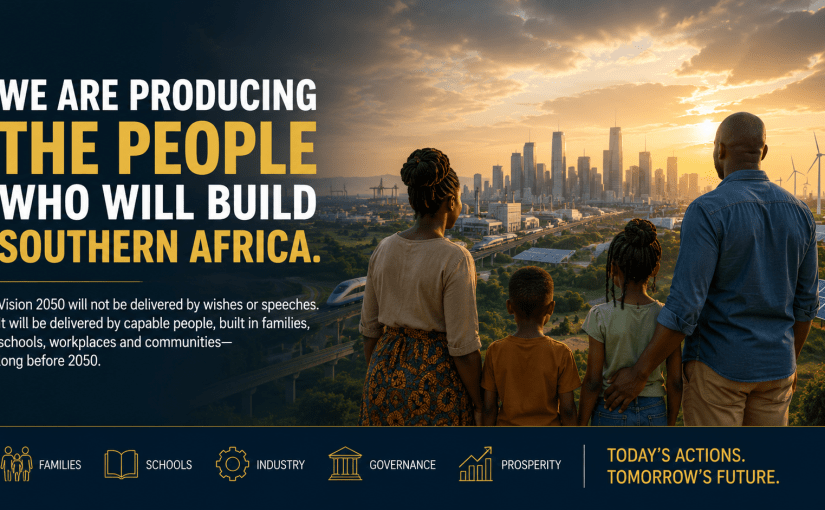
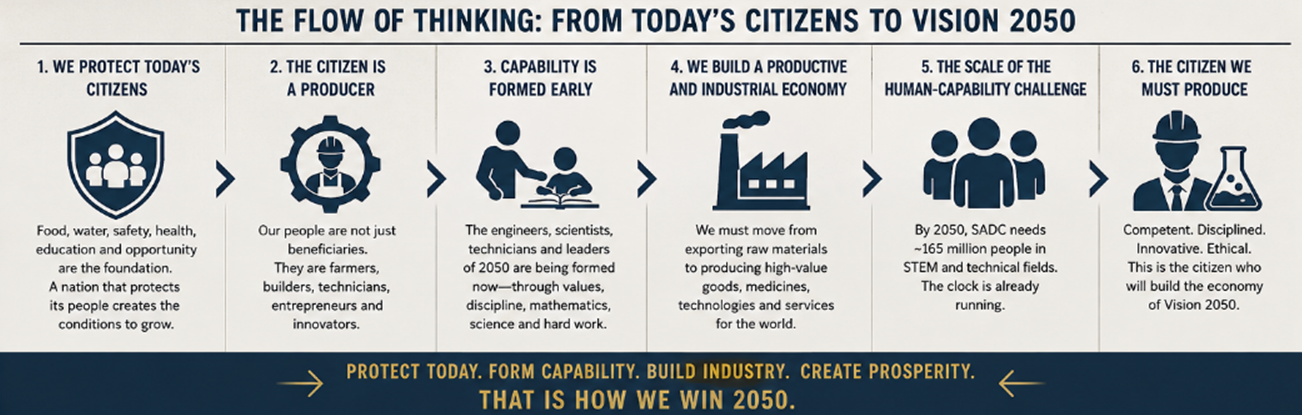
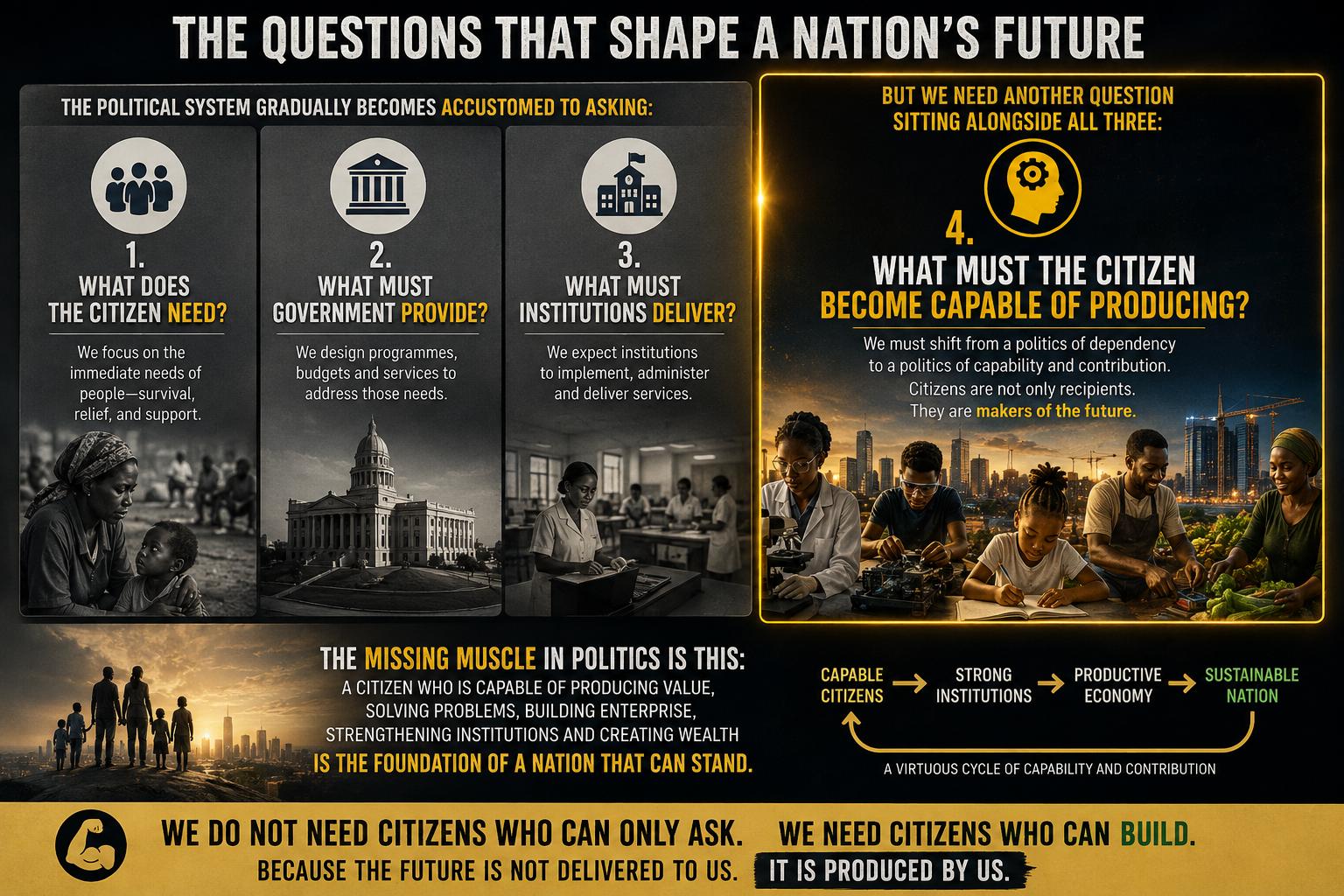
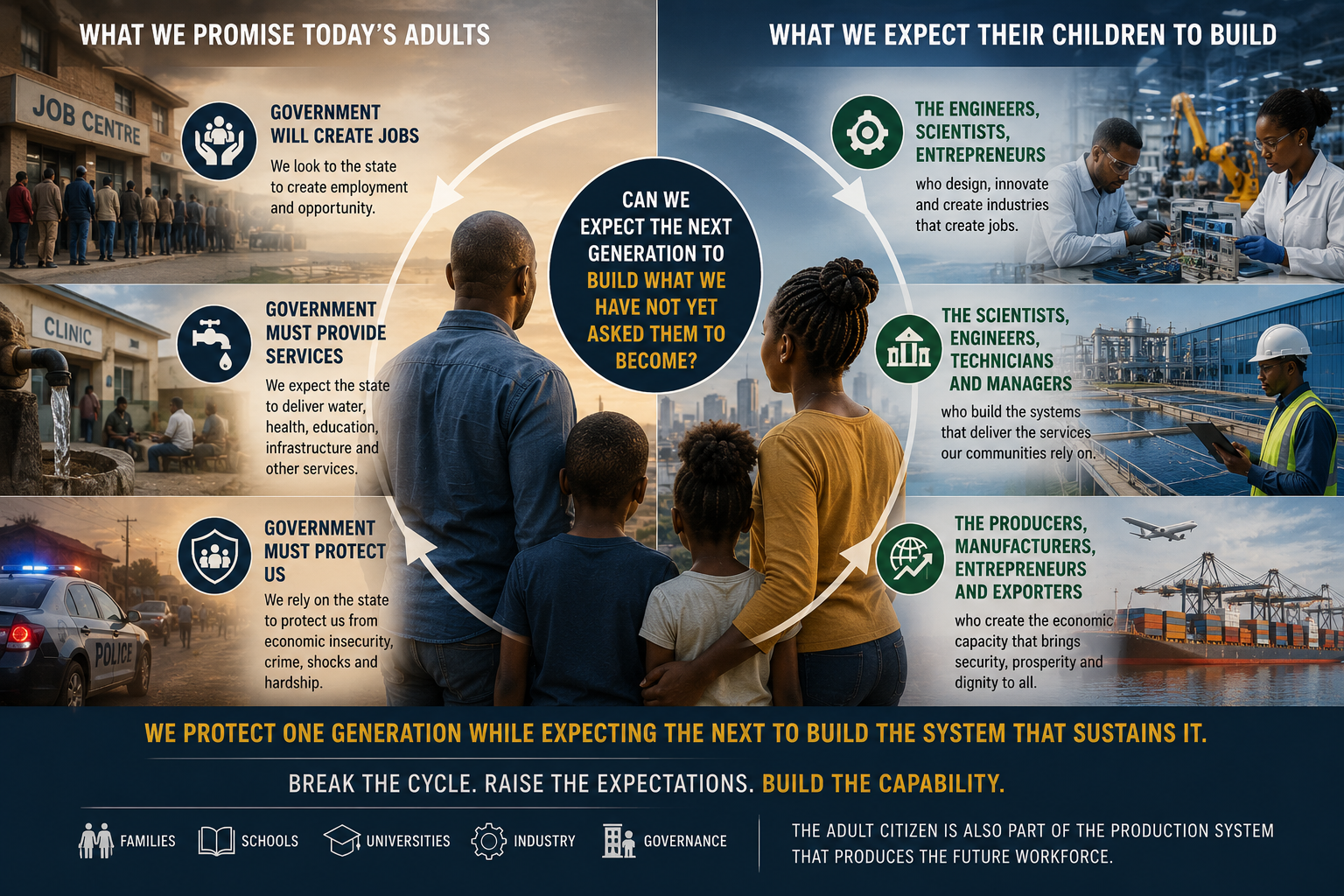
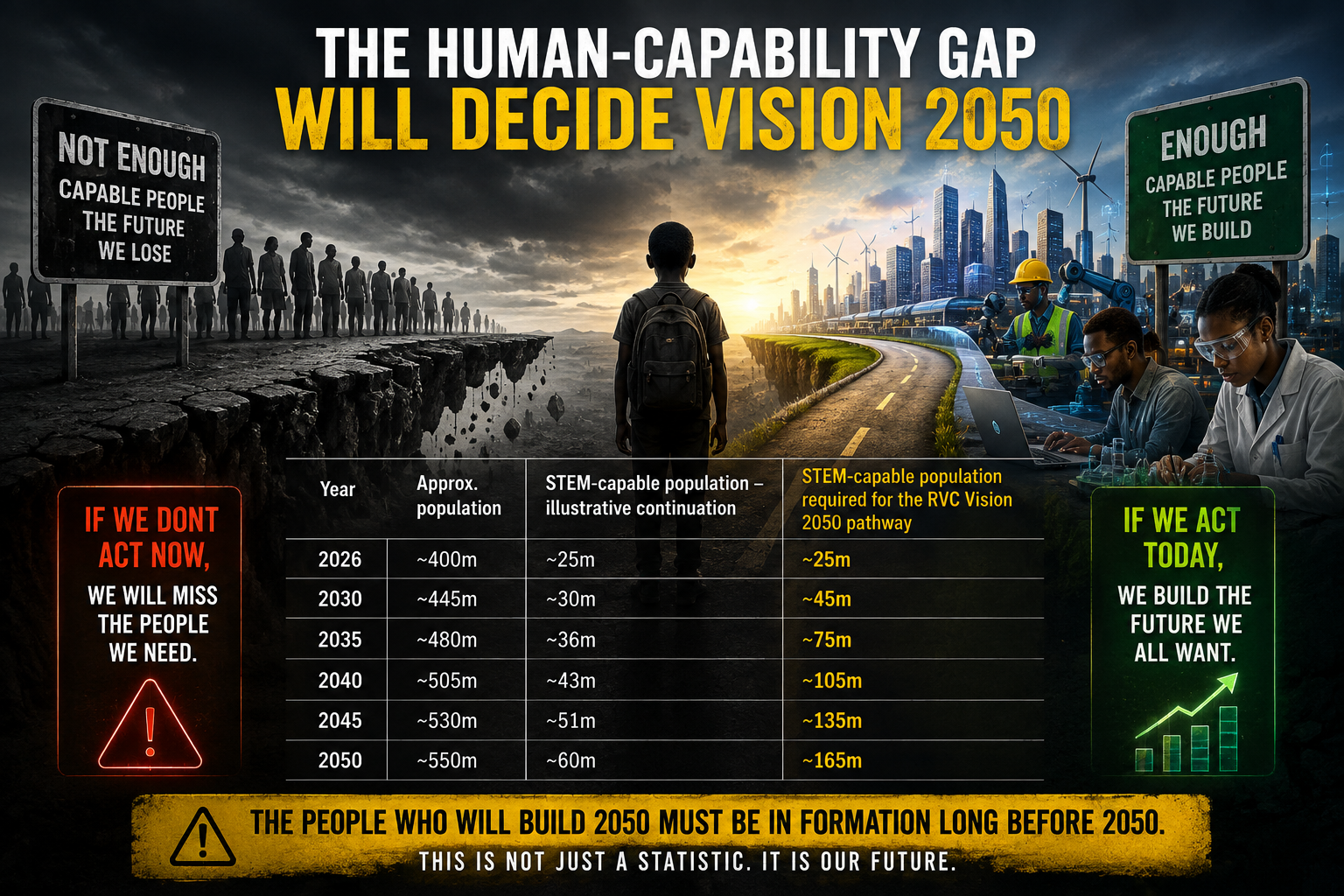


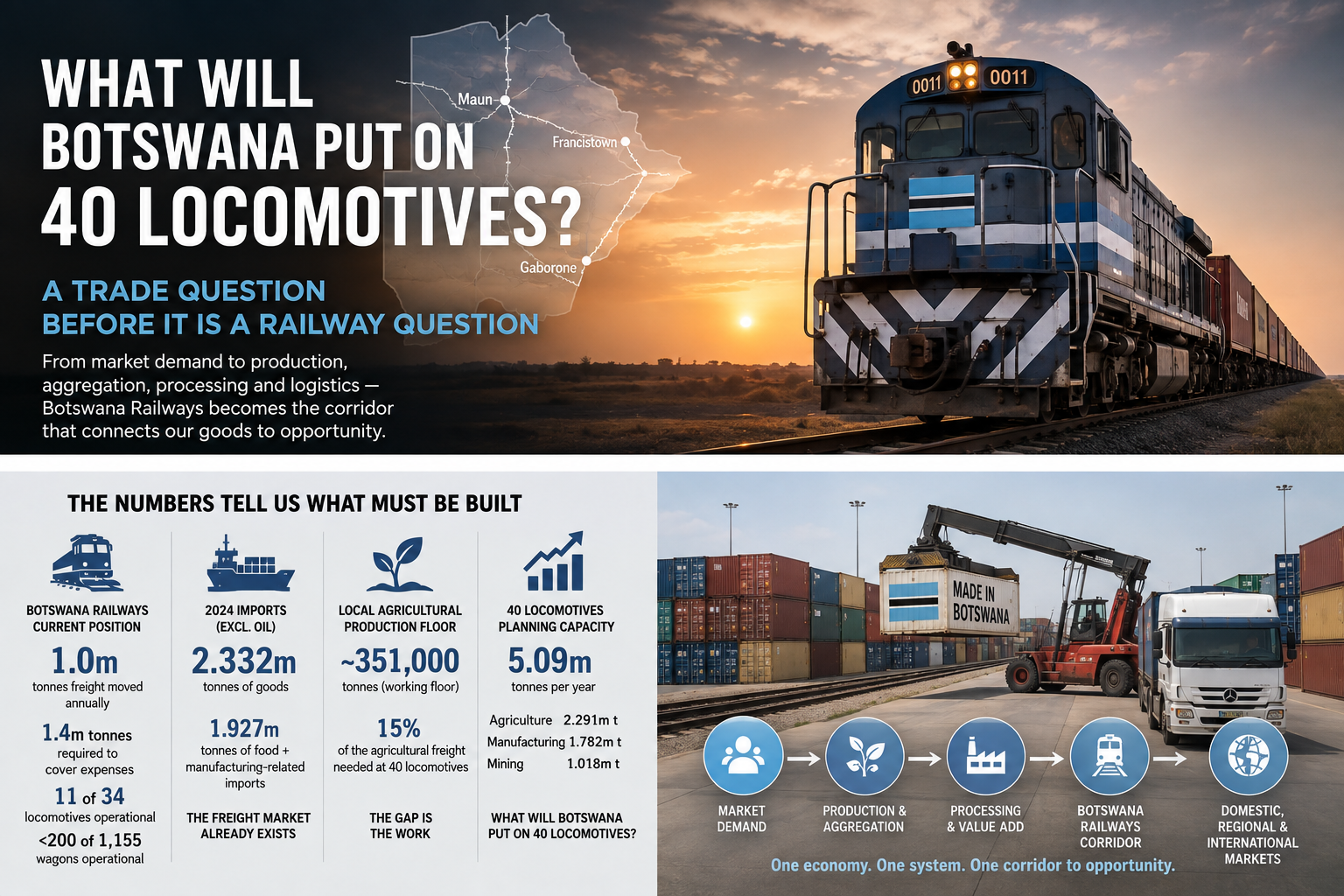


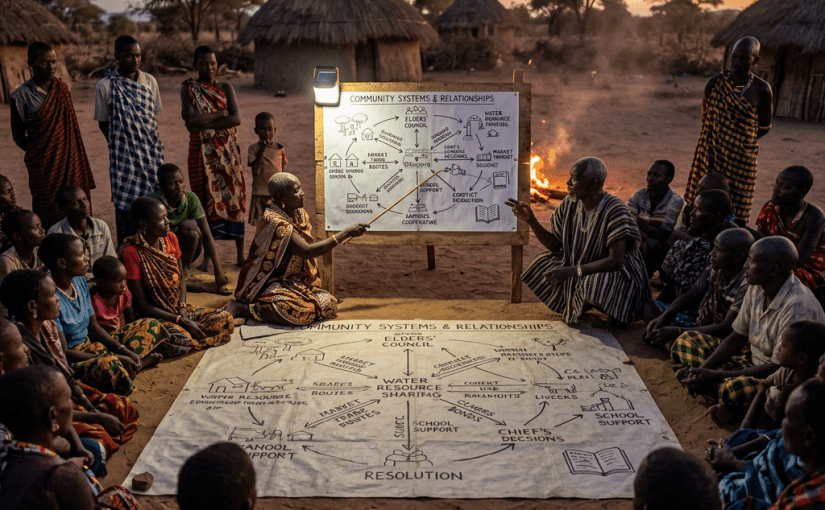
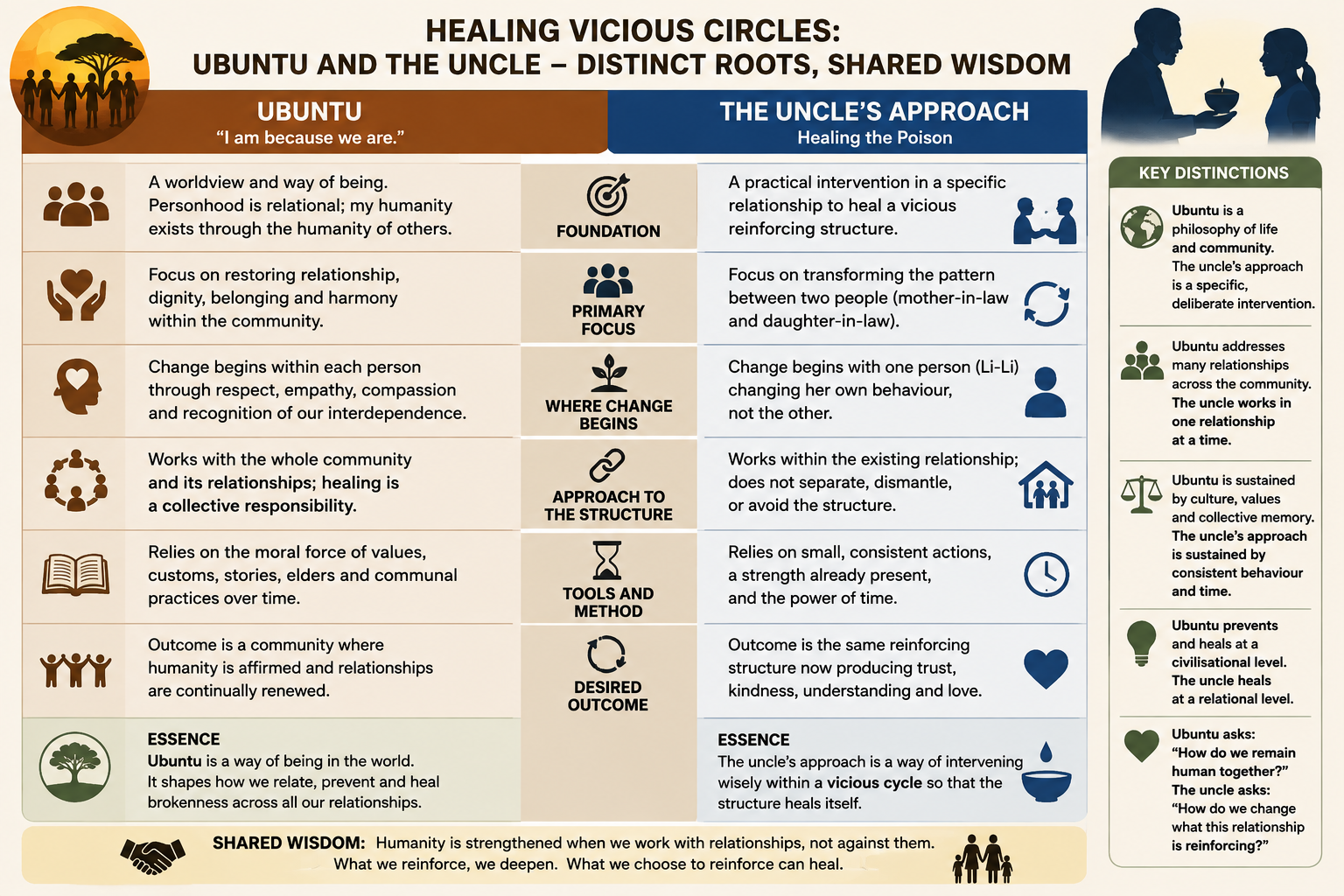




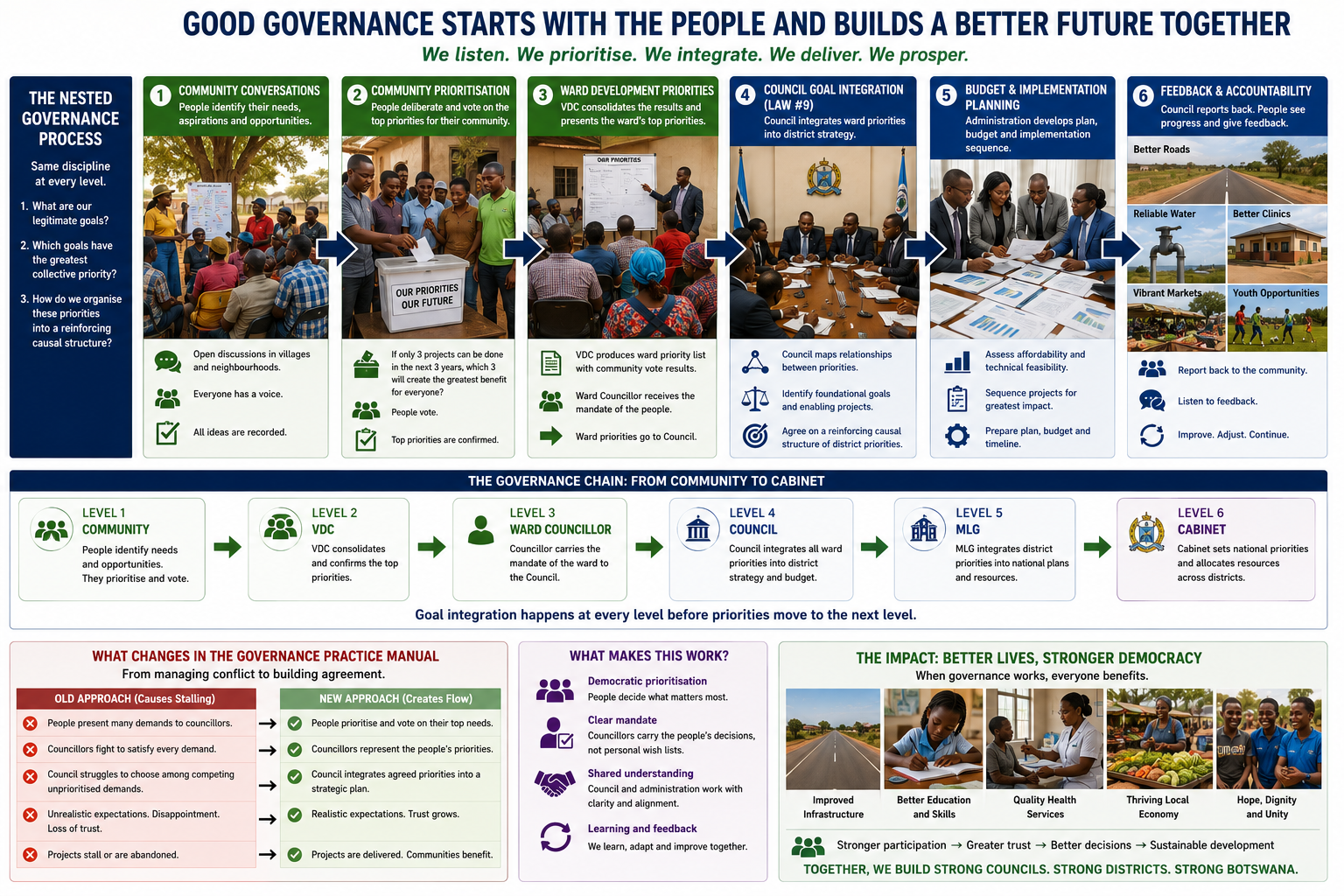


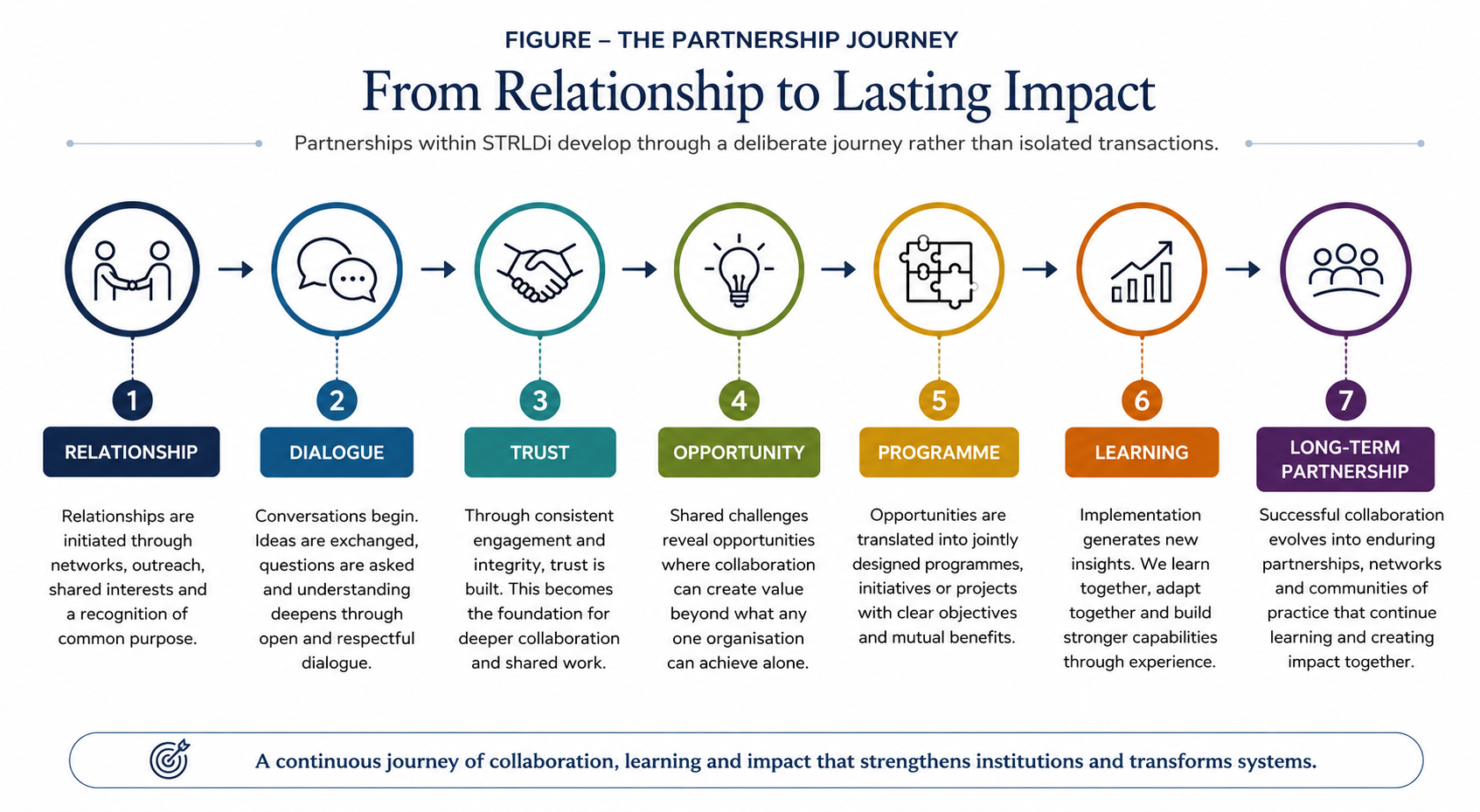
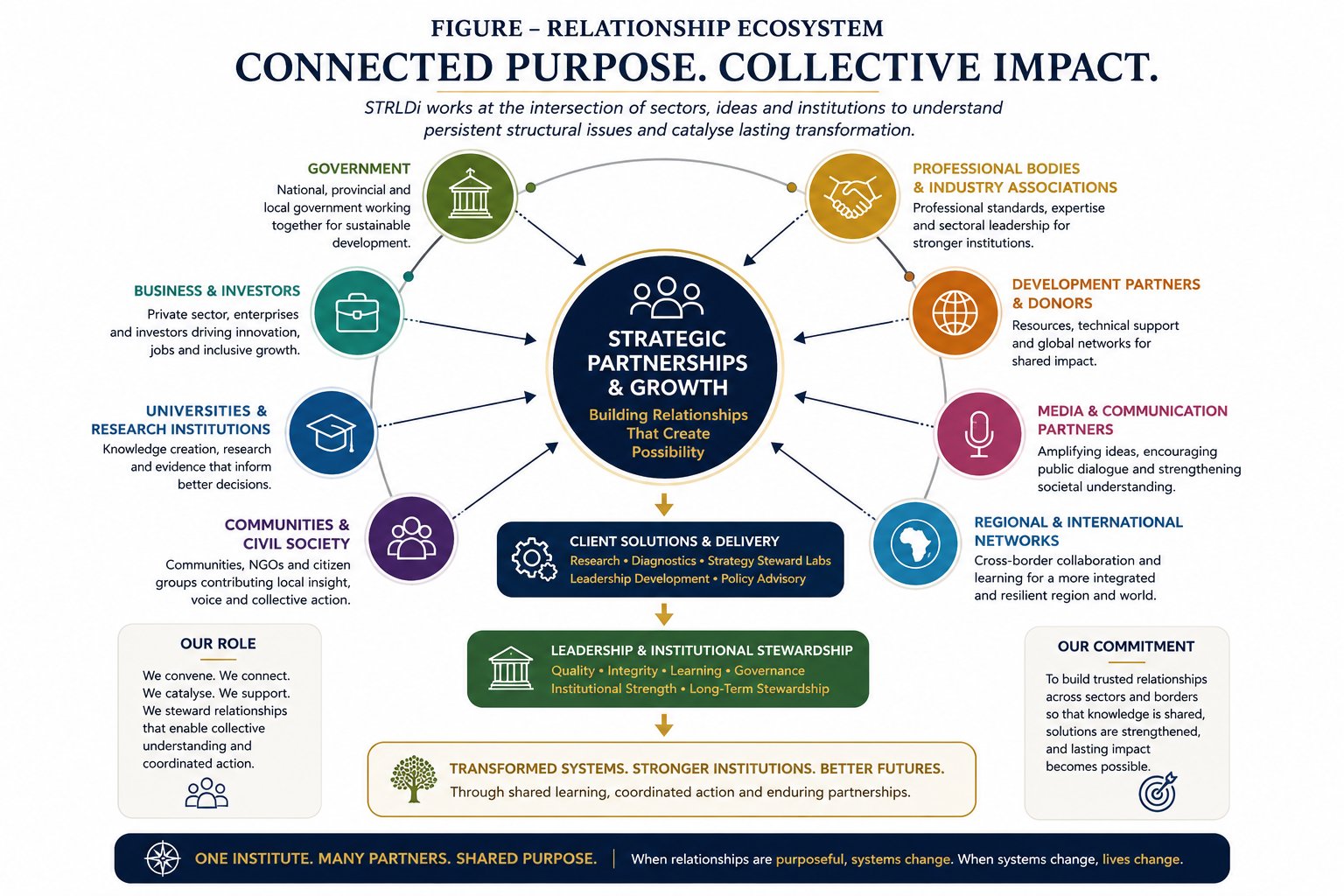
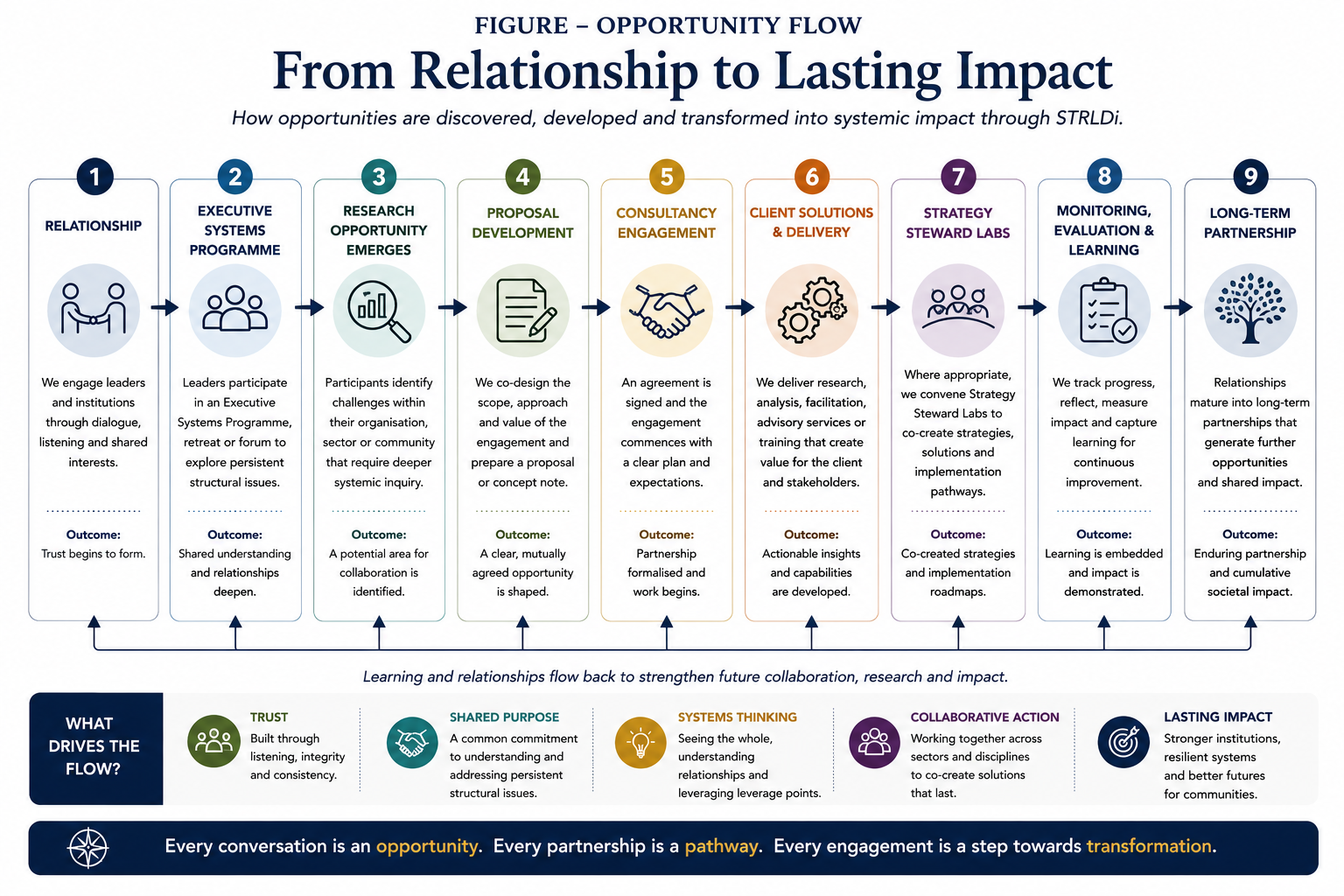

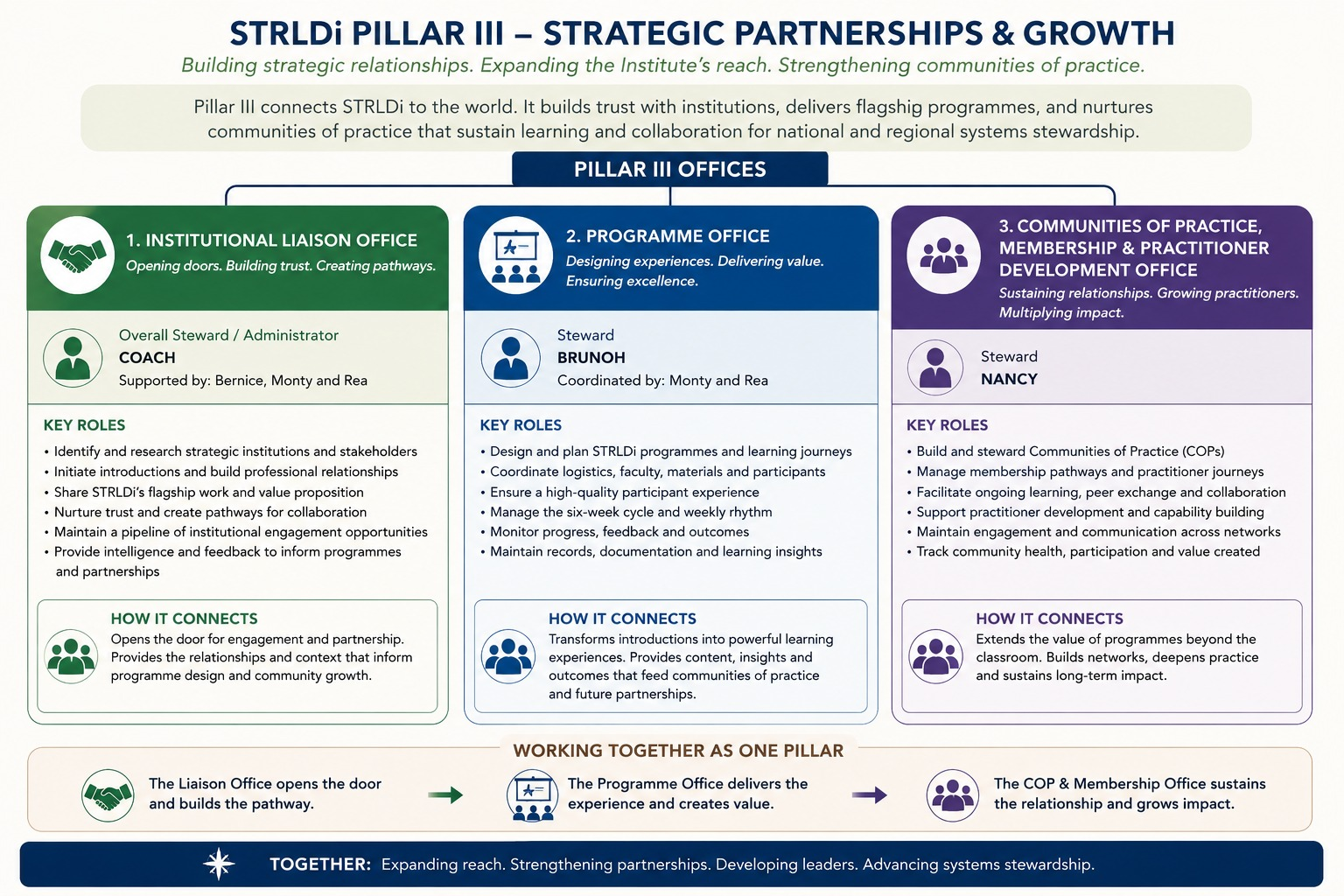







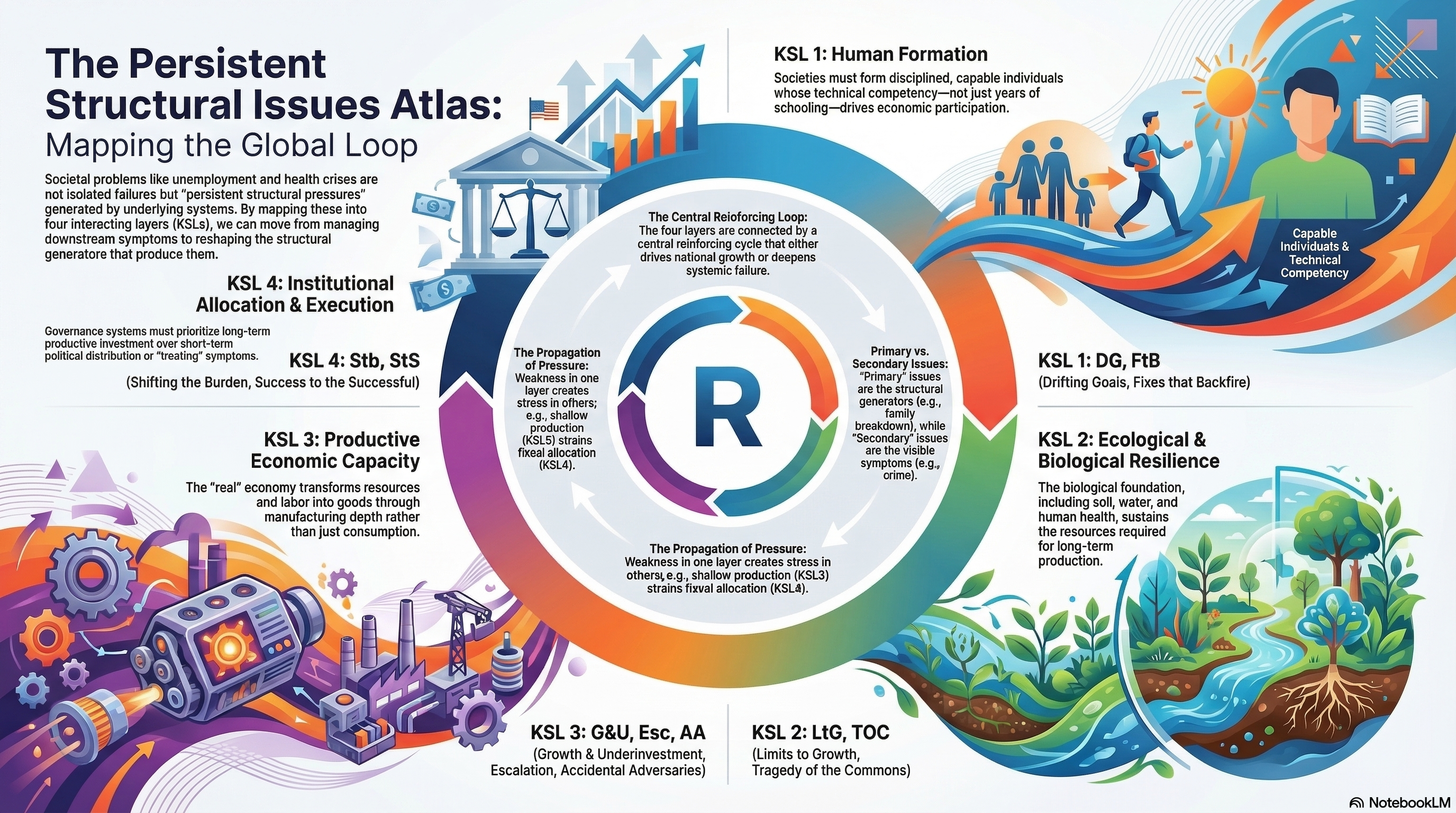
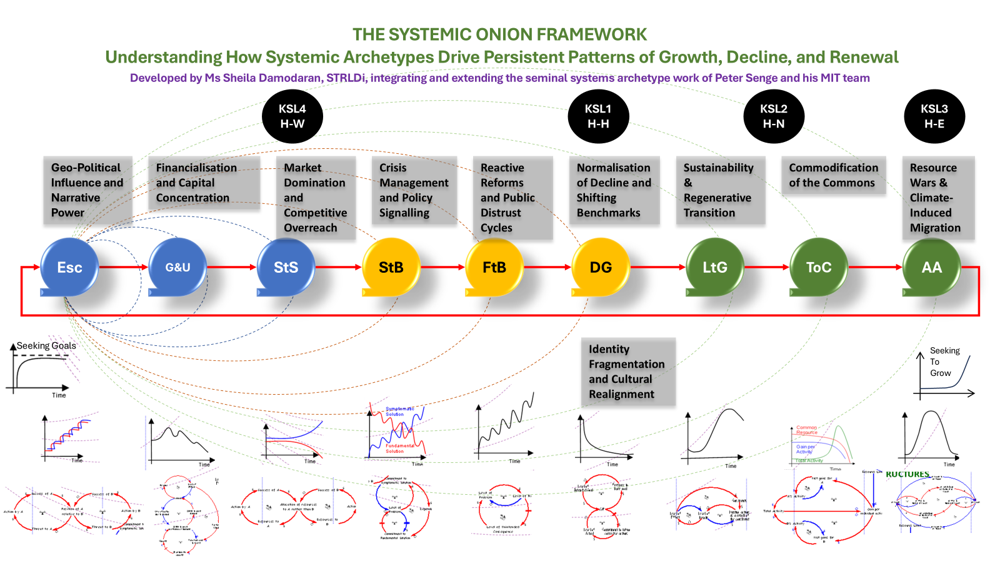

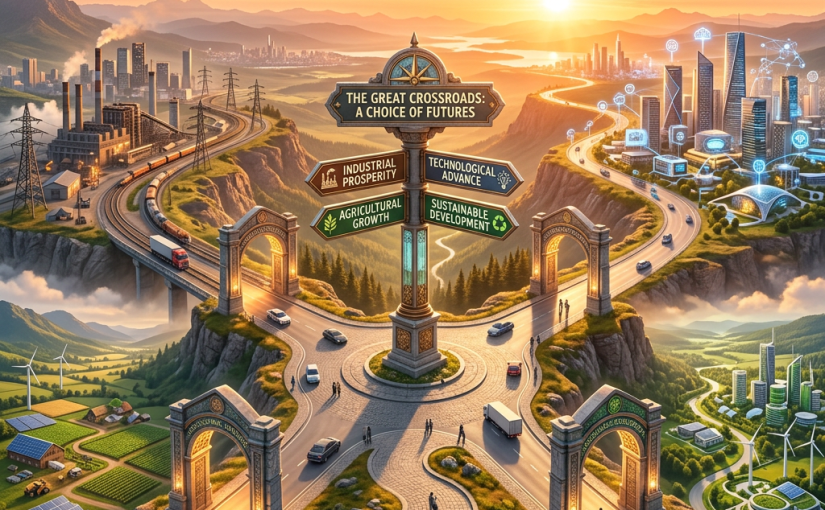

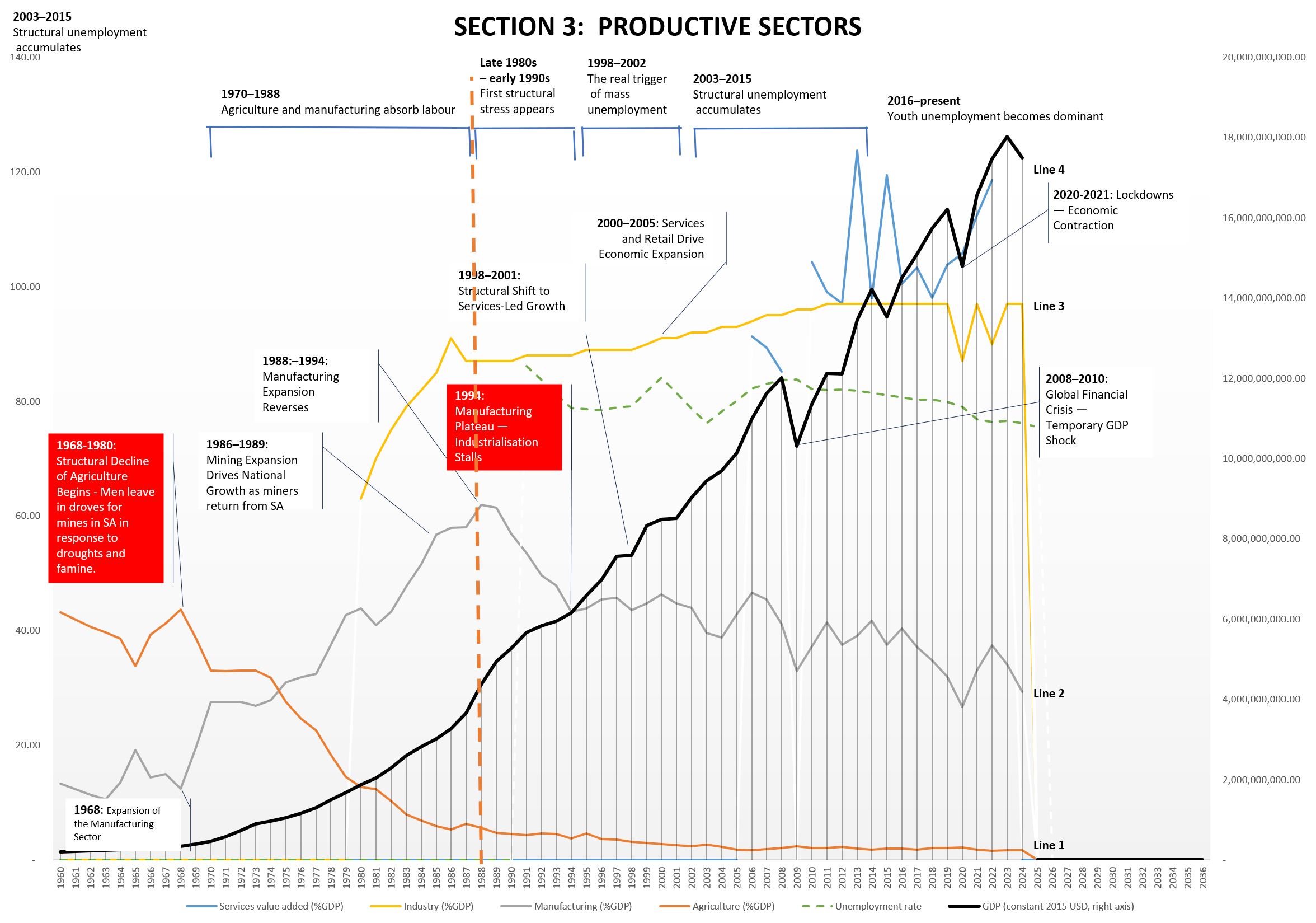
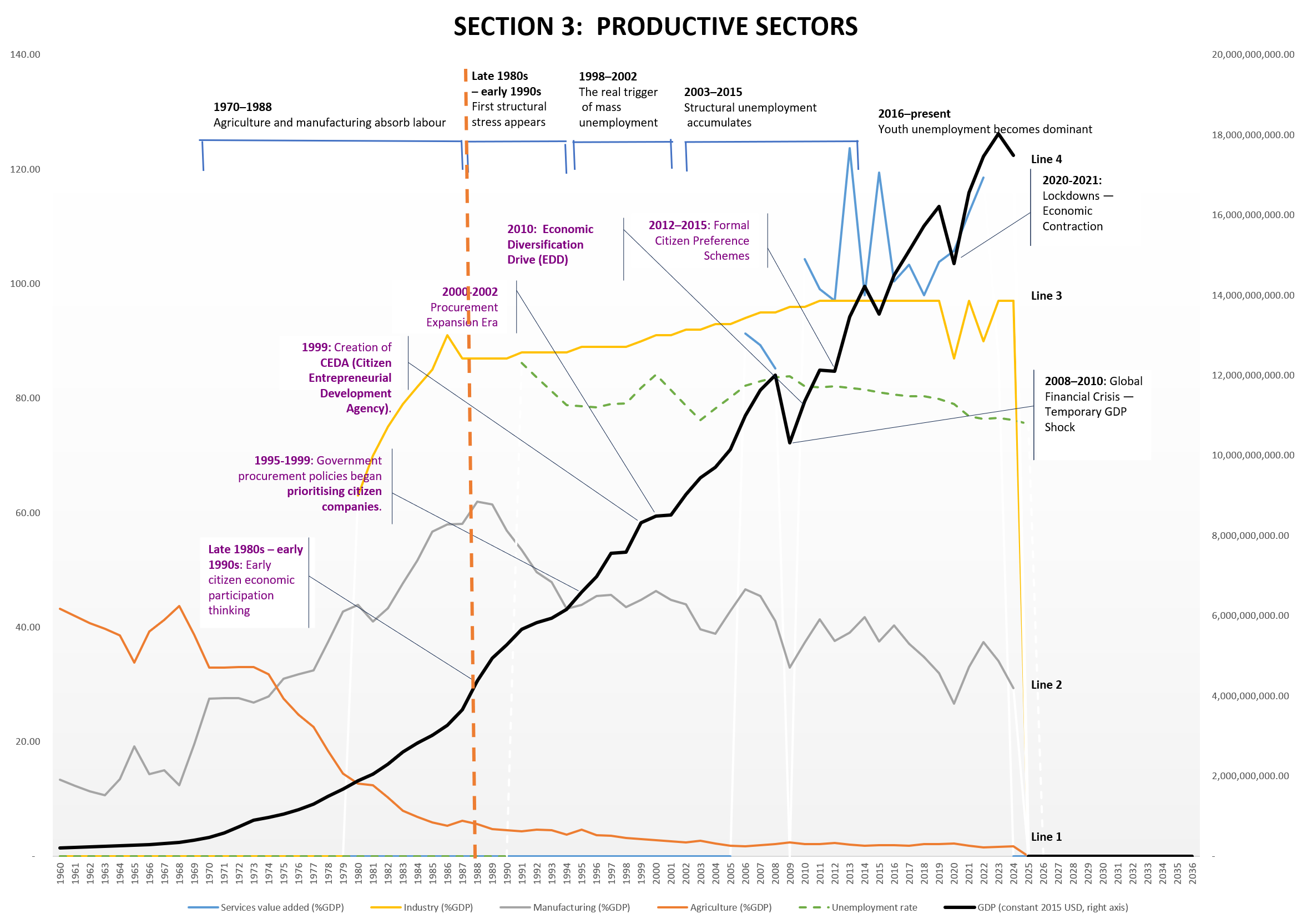
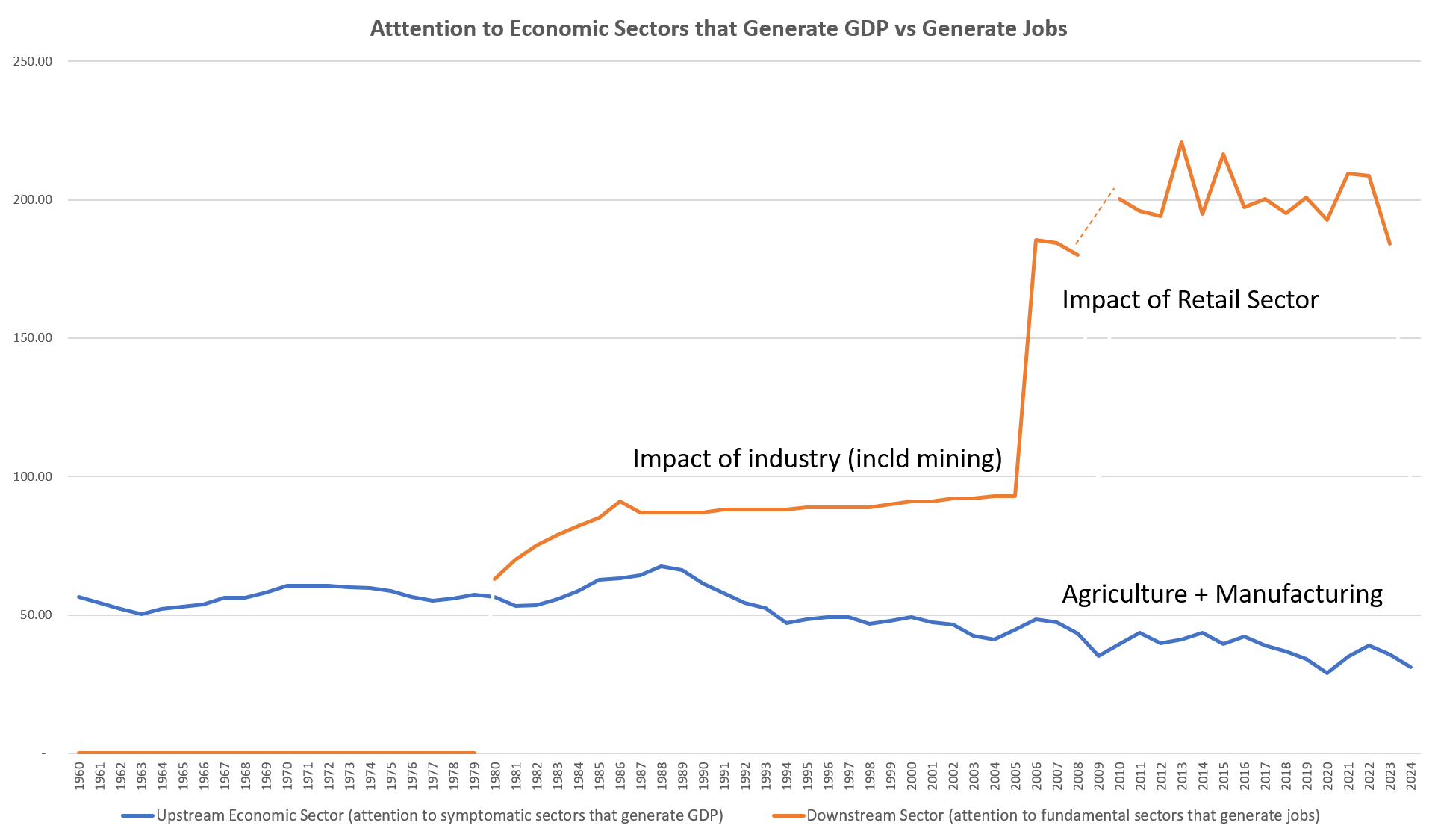
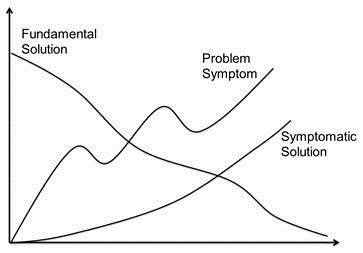
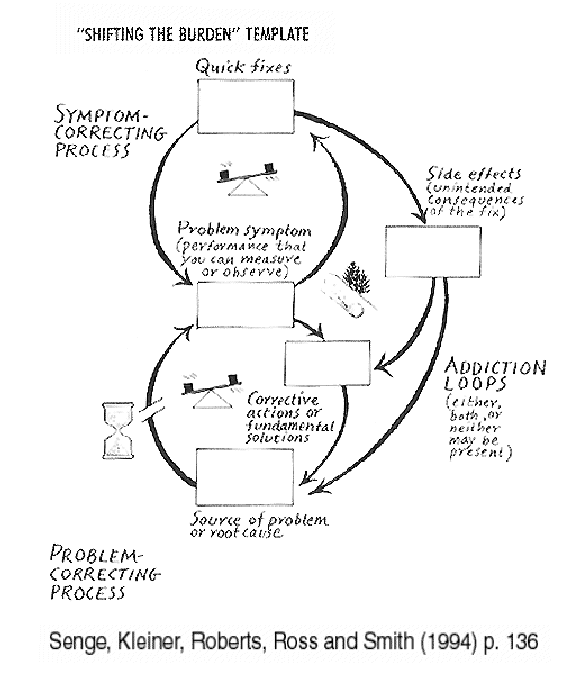

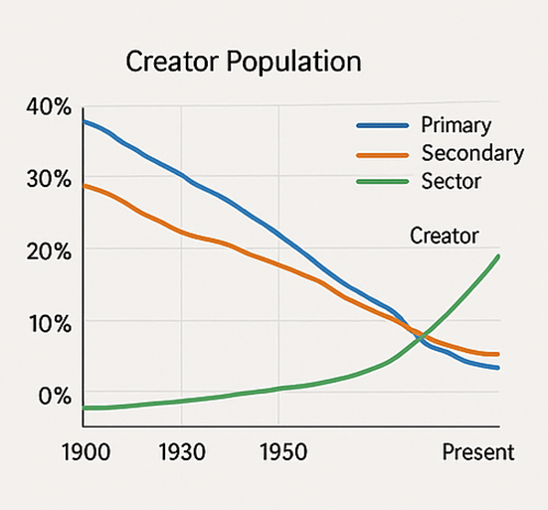

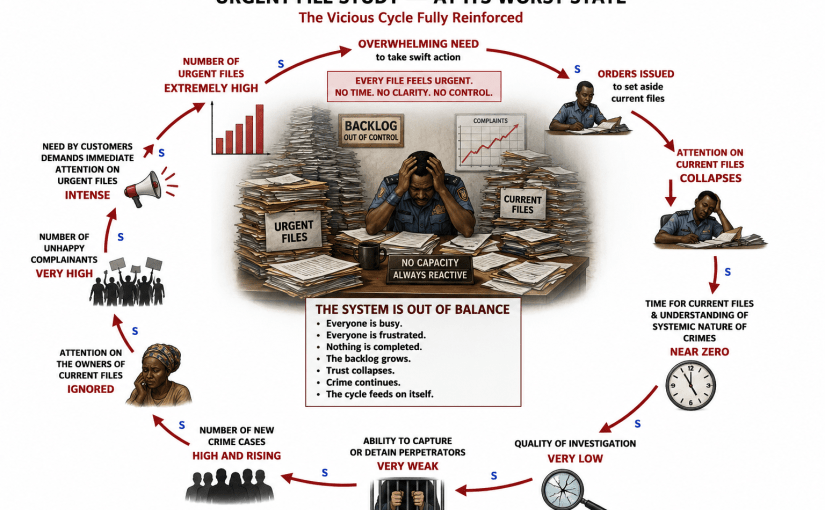
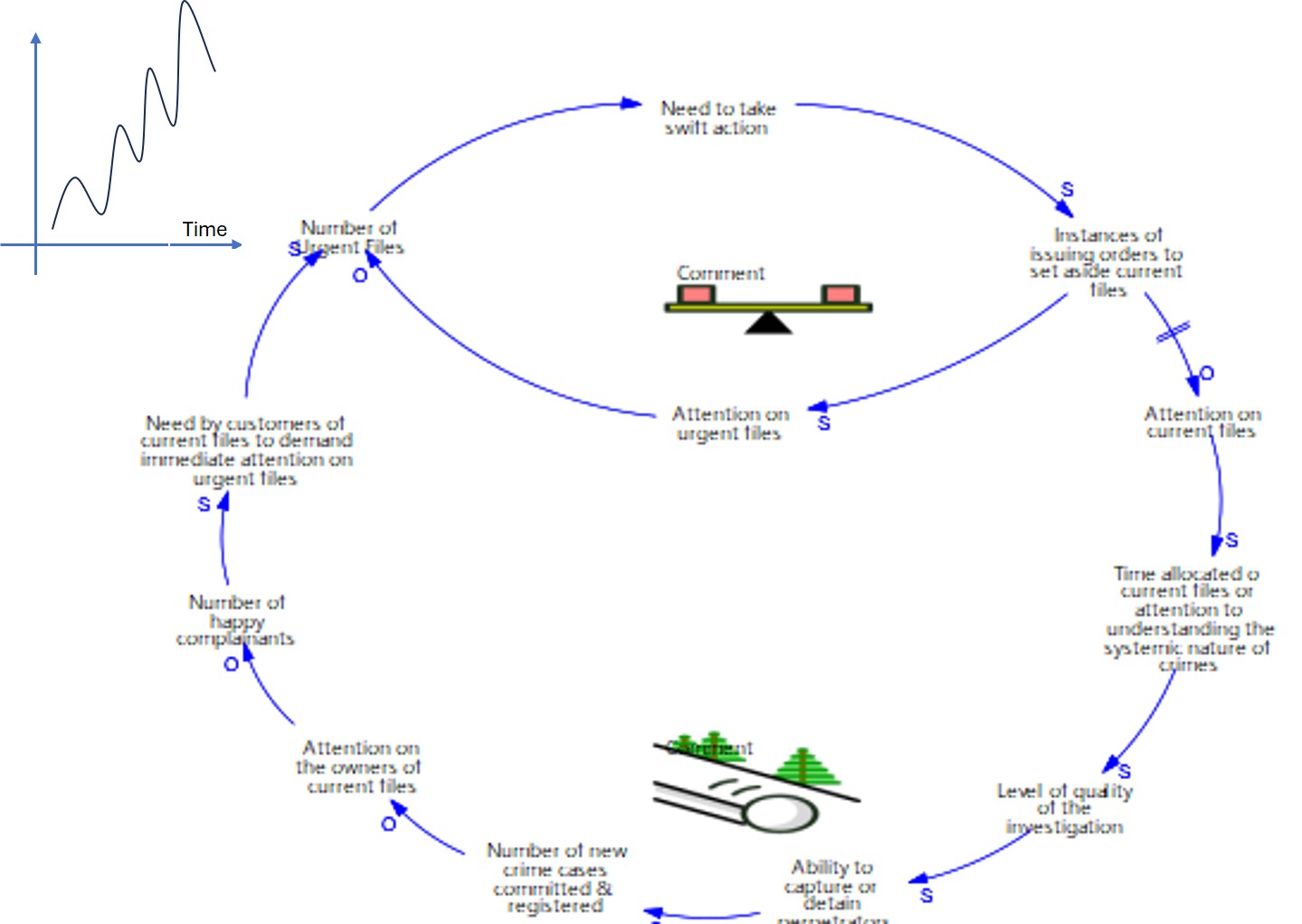




 Systems Thinking Research & Leadership Development Institute (STRLDi)
You must be logged in to post a comment.