The Structures Beneath the Surface: Why Persistent Problems Don’t Stay in Their Lane
When a country’s unemployment rises, the response is usually a labour policy. When food imports climb, agricultural reform gets discussed. When corruption surfaces, governance fixes are proposed. When mental health deteriorates, healthcare budgets get adjusted. Each problem gets its own lane, its own ministry, its own set of experts.
The trouble is that the problems don’t stay in their lanes.
This piece is drawn from a study that began with unemployment and gradually widened — because it had to. The more the data was examined, the more the pressures refused to stay separate. Labour oversupply showed up alongside weakened productive absorption. Educational expansion appeared alongside declining technical capability. Agricultural decline appeared alongside migration pressures and weakening generational continuity. The harder you looked at any one pressure, the more the others were already there beneath it.
What emerged from that widening is a framework for understanding how persistent issues actually move through society — not as isolated events requiring targeted fixes, but as interacting structural movements that propagate across generations, often long before anyone measures them.
The Gap Between Where Problems Appear and Where They Begin
The most important distinction in this entire framework is deceptively simple: the visible location of a problem and the generative location of a problem are not the same thing.
Take corruption. It becomes visible institutionally — in tender processes, in allocation decisions, in procurement scandals. But its behavioural roots often emerge much earlier: in weakened long-horizon thinking, in survival pressures normalised during upbringing, in the gradual acceptance of shortcuts within wider society. By the time it registers as a governance problem, the conditions producing it may have been quietly accumulating for a generation.
Or take institutional fragmentation. It appears within governance systems. But its deeper roots frequently emerge upstream in weakening continuity structures within human formation — in how people are raised, what values are transmitted across generations, how long-term thinking is cultivated or eroded.
Societies often intervene where pressures become visible rather than where they are structurally generated. This is not a failure of intelligence. It is a predictable consequence of how institutions are organised: by sector, by ministry, by profession. The problem is that persistent issues rarely respect those boundaries.
A Framework for Seeing Across Sectors
To organise the growing number of interacting variables without fragmenting their relationships, the study developed a four-quadrant framework. The quadrants are not rigid categories — they are lenses, each revealing where pressures are primarily generated, where they tend to become visible, and how they flow.
H-H — Human Formation The formation of capability, behaviour, discipline structures, educational orientation, labour identity, and long-horizon thinking.
H-E — Productive Economic Capacity Agriculture, manufacturing, productive enterprise formation, labour absorption, value creation systems, and infrastructure.
H-G — Institutional Allocation & Execution Governance systems, policy allocation, land administration, institutional coordination, investment priorities, and societal response mechanisms.
These four quadrants interact continuously. A pressure emerging in human formation may eventually surface economically through weakened productivity. Ecological pressures may become visible institutionally through fiscal strain or migration surges. The framework doesn’t try to eliminate that complexity — it tries to make it navigable.
The Onion: A Sequence of Systemic Behaviours
As the study widened, recurring structural behaviours kept surfacing — not randomly, but in recognisable patterns that systems thinkers call archetypes. What became increasingly clear was that these archetypes were not independent of one another. The pressures generated within one archetype appeared capable of tipping variables into the conditions required for the next one to emerge.
This gave rise to what the study calls the Onion framework: a causally linked sequence of system archetypes that describes how unresolved pressures tend to propagate through society over time.
The sequence is:
Accidental Adversaries (AA) → Escalation (Esc) → Growth & Underinvestment (G&U) → Success to the Successful (StS) → Shifting the Burden (StB) → Fixes that Fail (FtF) → Drifting Goals (DG) → Limits to Growth (LtG) → Tragedy of the Commons (ToC) → back to Accidental Adversaries (AA)
This is not a deterministic cycle. Human societies are adaptive, relational, and capable of renewal at any point. The Onion is better understood as a propagation-awareness framework — a way of seeing how pressures tend to move if underlying structures go unaddressed for long enough.
The sections that follow walk through each quadrant, showing the variables at play, which archetypes dominate, and where the pressures flow.
H-H — Human Formation
Dominant archetypes: Drifting Goals → Fixes That Fail (with Shifting the Burden emerging later)
Many pressures that later become visible economically or institutionally have earlier formative roots in how people are raised, educated, and shaped. The weakening of long-horizon thinking, practical capability formation, productive identity, and disciplined stewardship often appears upstream of much that later shows up in labour systems, governance, and enterprise.
The study also found that some adaptive behaviours emerging under difficult conditions temporarily relieve immediate pressure while simultaneously weakening long-term regenerative capability. Survival-oriented economic behaviour, opportunistic adaptation, weakened delayed gratification — these emerge gradually under sustained systemic stress. Short-term adaptation and long-term continuity do not always move in the same direction.
Variable
Generated In
Dominant Archetype
Detected In
Consequence Flows Into
Births outside stable marriages
H-H
DG
H-H
H-H → H-E → H-G
Male absence in households
H-H
FtF
H-H
H-H → H-G
Weak masculine continuity
H-H
FtF
H-H
H-E → H-G
Weak intergenerational transfer
H-H
FtF
H-H
H-E
Weak long-horizon thinking
H-H
DG
H-H
All quadrants
Emotionally unstable environments
H-H
FtF
H-H
H-N → H-E
Survival-oriented upbringing
H-H
StB
H-H
H-E
Crime
H-E / H-H
StB
H-H
H-N → H-E
STEM avoidance
H-H
DG
H-H / H-E
H-E → H-G
Fear of mathematically intensive disciplines
H-H
DG
H-H
H-E
Office-job orientation
H-H
StB
H-E
H-E → H-G
Credential accumulation mentality
H-H
FtF
H-E
H-E
Theory-heavy education
H-H
FtF
H-H / H-E
H-E
Weak apprenticeship systems
H-H
FtF
H-E
H-E
Weak practical application
H-H
FtF
H-E
H-E
Weak technical competency
H-H
DG
H-E
H-E → H-G
Reduced deep work capability
H-H
DG
H-H
H-E
Labour oversupply
H-E
LtG
H-E
H-G
Graduate oversupply
H-H
FtF
H-E
H-E → H-G
Education–Employment Mismatch
H-E
DG
H-E
H-E → H-G→ H-H
Underemployment
H-E
LtG
H-E
H-G
Survival psychology
H-H
StB
H-H
H-E → H-G
Status signalling
H-H
Esc
H-H
H-E
Visibility competition
H-H
Esc
H-H
H-G
Side-hustle normalization
H-H / H-E
StB
H-E
H-G
Opportunistic adaptation
H-H
StB
H-G
H-G
Rule-bending normalization
H-H
DG
H-G
H-G
Penal-code proximity
H-H / H-E
ToC
H-G
H-G
Drift toward organized crime
H-H / H-E
ToC
H-G
H-G
What the table reveals is that pressures appearing later in labour, governance, and productive systems often have earlier roots in formation structures. Human formation pressures rarely remain confined to the quadrant in which they originate.
H-N — Ecological & Biological Resilience
Dominant archetypes: Limits to Growth → Tragedy of the Commons (with Accidental Adversaries and Shifting the Burden transitional)
Human societies don’t operate independently from the biological and ecological conditions that sustain them. Productive systems, migration patterns, food systems, labour systems, and institutional pressures are all shaped by ecological carrying capacity over long periods.
A critical distinction surfaced here: survival adaptation and regenerative reversal are not the same process. Drought-resistant crops, low-water agricultural systems, and survival-oriented production methods may help populations endure worsening conditions. But enduring deterioration and reversing the underlying trajectory that produces it are fundamentally different things. Some systems successfully help societies survive decline while simultaneously failing to address what is causing it.
Variable
Generated In
Dominant Archetype
Detected In
Consequence Flows Into
Declining rainfall systems
H-N
LtG
H-N
H-E
Increasing drought frequency
H-N
LtG
H-N
H-E
Extreme weather intensification
H-N
LtG
H-N
All quadrants
Reduced carrying capacity
H-N
LtG
H-N
H-E → H-G
Soil degradation
H-N
ToC
H-N
H-E
Water stress
H-N
LtG
H-N / H-G
H-E → H-G
Indigenous drought-resistant systems
H-N
AA
H-N
H-E
Low-water survival agriculture
H-N
StB
H-N
H-E
Weak ecological reversal systems
H-N
ToC
H-N
H-E
Weak evapotranspiration restoration
H-N
ToC
H-N
H-N
Weak biodiversity regeneration
H-N
ToC
H-N
H-E
Weak landscape restoration
H-N
ToC
H-N
H-E
Declining agricultural profitability
H-E / H-N
LtG
H-E
H-G
Aging farmers
H-H / H-N
LtG
H-E
H-E
Weak generational farming continuity
H-H
FtF
H-E
H-E
Youth agricultural disengagement
H-H
DG
H-E
H-E
Male migration into mining systems
H-N / H-E
Esc
H-E
H-H
Rising food imports
H-E
StB
H-G
H-G
Reduced food sovereignty
H-N / H-E
ToC
H-G
H-G
Climate vulnerability
H-N
LtG
H-G
All quadrants
Health / Disease Outcomes
H-E
FtB
H-N
All quadrants
Childhood nutrition weaknesses
H-N
LtG
H-N
H-H
Processed food dependency
H-N
StB
H-N
H-H
Micronutrient deficiencies
H-N
LtG
H-N
H-H
Reduced cognitive resilience
H-N
LtG
H-H
H-H
Emotional regulation instability
H-N
LtG
H-H
H-H
Chronic disease rise
H-N
ToC
H-N
H-E
Diabetes
H-N
ToC
H-N
H-E
Hypertension
H-N
ToC
H-N
H-E
Fatigue economies
H-N
LtG
H-E
H-E
Mental health deterioration
H-N
LtG
H-H
H-E
Reduced productive lifespan
H-N
LtG
H-E
H-G
Ecological commons depletion
H-N
ToC
H-G
H-G
Notice how biological resilience flows into educational performance, labour productivity, and institutional behaviour. Nutrition quality, cognitive resilience, emotional regulation stability — these are not soft concerns. They shape the productive and institutional capacity of entire societies over time.
Economic weakness, as the study increasingly revealed, is rarely a standalone financial event. It tends to emerge as the interacting outcome of human formation pressures, ecological pressures, institutional allocation patterns, and productive underinvestment accumulating simultaneously over long periods. Productive systems inherit conditions from multiple upstream structures at once.
The study drew a sharpening distinction between productive enterprise formation and survival circulation systems. Some economic activity creates productive depth, technical capability, value addition, and long-term labour absorption. Other activity primarily circulates limited value within already constrained systems. Over time, the expansion of survival-oriented circulation — retail growth, import dependency, multi-income hustle strategies — can help societies adapt temporarily while steadily weakening their capacity to generate new productive depth.
Variable
Generated In
Dominant Archetype
Detected In
Consequence Flows Into
Weak agricultural reinvestment
H-E
G&U
H-E
H-G
Weak manufacturing ecosystems
H-E
G&U
H-E
H-G
Weak industrial deepening
H-E
G&U
H-E
H-G
Weak engineering ecosystems
H-H / H-E
G&U
H-E
H-G
Weak research ecosystems
H-H / H-E
G&U
H-E
H-G
Weak agricultural financing
H-G / H-E
G&U
H-E
H-G
High capital barriers
H-G
G&U
H-E
H-H
Weak agricultural banking
H-G
G&U
H-E
H-E
Weak enterprise incubation
H-G
G&U
H-E
H-E
Retail profitability dominance
H-E
Esc
H-E
H-G
Import-based circulation economy
H-E
StB
H-E / H-G
H-G
Government-employment prestige
H-H / H-G
StS
H-E
H-H
Tenderpreneurship expansion
H-G
StS
H-E
H-G
Investments shifting to circulation
H-E
Esc
H-E
H-G
Productive labour shifting to retail
H-E
Esc
H-E
H-H
Administrative expansion without production
H-G
FtF
H-E
H-G
Reduced productive entrepreneurship
H-H / H-E
G&U
H-E
H-G
Small-scale survival businesses
H-E
StB
H-E
H-G
Weak scaling capability
H-E
G&U
H-E
H-G
Weak value-chain integration
H-E
AA
H-E
H-G
Import dependency
H-E
StB
H-G
H-G
Weak local value addition
H-E
G&U
H-E
H-G
Weak industrial competitiveness
H-E
LtG
H-E
H-G
Reduced labour absorption
H-E
LtG
H-E
H-H
Informal circulation systems
H-E
StB
H-E
H-G
Multi-income survival systems
H-H / H-E
StB
H-E
H-G
Short-horizon enterprise behaviour
H-H
DG
H-E
H-G
Declining productivity per worker
H-E
LtG
H-E
H-G
Labour dilution into low-value sectors
H-E
Esc
H-E
H-G
External energy dependency
H-E
LtG
H-G
H-G
Weak industrial infrastructure
H-G
G&U
H-E
H-G
Electricity fragility
H-G / H-N
LtG
H-E
H-G
Rising production costs
H-E / H-N
LtG
H-E
H-G
What the productive quadrant reveals most clearly is that economic outcomes are downstream of structural conditions across multiple layers simultaneously. You don’t fix a hollow productive economy by targeting the economy alone.
H-G — Institutional Allocation & Execution
Dominant archetypes: Escalation → Success to the Successful → Shifting the Burden (with Tragedy of the Commons emerging later)
Governance systems sit in a uniquely difficult position. They are both detectors and responders to pressures generated across the entire civilisational structure. They are asked to stabilise labour pressures, ecological pressures, productive weakness, social fragmentation, and rising instability — often simultaneously — using policy allocation, resource distribution, welfare mechanisms, and political coordination.
The problem is that institutions themselves begin adapting under sustained pressure. Short political cycles, fragmented coordination, symptomatic policy responses, and expanding administrative management systems emerge progressively. Institutions start adapting to the pressure rather than resolving the structures generating it. Some governance responses — welfare expansion, import dependency management, reactive policy cycles — temporarily relieve immediate instability while reinforcing deeper structural dependencies. Short-term stabilisation and long-term regeneration are not the same thing institutionally.
Variable
Generated In
Dominant Archetype
Detected In
Consequence Flows Into
Short political cycles
H-H
StS
H-G
H-G
Weak long-term planning
H-H
StS
H-G
All quadrants
Weak civilizational horizon thinking
H-H
StS
H-G
All quadrants
Political responsiveness over structural investment
H-G
StS
H-G
H-E
Fragmented ministries
H-H
StS
H-G
H-G
Weak systems integration
H-H
StS
H-G
All quadrants
Weak policy continuity
H-H
StB
H-G
H-G
Repeated policy resets
H-G
StB
H-G
H-G
Public-Service Performance / Frustration
H-H
DG
H-G
H-E
Resource leakage
H-H
StB
H-G
H-G
Corruption
H-H
StB
H-G
H-G
Patronage systems
H-G
StS
H-G
H-G
Tenderpreneurial incentives
H-G
StS
H-G
H-E
Land Conflict / Land-Use Conflict
H-N
Esc
H-G
H-E
Land banking
H-H / H-E
StS
H-G
H-E
Housing Challenges
H-G
G&U
H-H
H-E
Elite accumulation
H-E
StS
H-G
H-G
Weak youth access
H-G
StS
H-G
H-H / H-E
Delayed productive deployment
H-G
StB
H-G
H-E
Corruption
H-H
StB
H-E
H-G
Corrupt allocation systems
H-H
StB
H-G
H-G
Underinvestment in STEM
H-H
StS
H-G
H-H / H-E
Underinvestment in regenerative agriculture
H-N
StS
H-G
H-N
Underinvestment in water systems
H-N
StS
H-G
H-N
Underinvestment in manufacturing ecosystems
H-E
StS
H-G
H-E
Underinvestment in apprenticeship systems
H-H
StS
H-G
H-H
Welfare dependence
H-H / H-E
StB
H-G
H-H
Youth grants without ecosystems
H-G
StB
H-G
H-H / H-E
Import dependency management
H-E
StB
H-G
H-E
Administrative expansion
H-G
StB
H-G
H-G
Retail licensing expansion
H-E
StB
H-G
H-E
Distrust in productive effort
H-H
StB
H-G
H-H
Rule-bending normalization
H-H
StB
H-G
H-H
Reduced civic cohesion
H-H
StS
H-G
H-H
Institutional fatigue
H-H / H-G
StB
H-G
H-G
Ecological depletion
H-N
ToC
H-G
H-N
Fiscal depletion
H-E
ToC
H-G
H-G
Institutional depletion
H-G
ToC
H-G
H-G
Governance legitimacy stress
All quadrants
ToC
H-G
All quadrants
Reduced long-horizon coordination capacity
H-H
ToC
H-G
All quadrants
Reduced regenerative capability
H-N / H-E
ToC
H-G
All quadrants
Increased systemic fragility
All quadrants
ToC
H-G
AA restart
The governance quadrant is where the accumulated pressures of human formation, ecological resilience, and productive capacity all converge and become measurable. It is, in a sense, the final detection layer — but rarely the origin of what it’s detecting.
The Quadrants in Motion
The four quadrants don’t operate in sequence. They interact continuously. Human formation shapes ecological stewardship. Ecological conditions reshape productive systems. Productive systems influence governance behaviour. Governance responses influence educational orientation, economic adaptation, and long-term societal behaviour in return.
This continuous interaction means pressures rarely stay contained where they first emerge. Declining ecological resilience propagates later into labour migration, food imports, fiscal strain, and institutional fatigue. Weak productive absorption propagates later into household stability, psychological adaptation, educational orientation, and governance pressure.
This is also why some interventions produce only temporary relief. If societies continuously intervene where pressures become visible while neglecting where they are structurally generated, many conditions gradually re-emerge elsewhere. The structure keeps producing what it was always structured to produce.
Interconnected Pressures, Interconnected Leverage
One of the most important observations to emerge from this study is that interconnected systems carry both interconnected pressures and interconnected possibilities for renewal.
Strengthening long-horizon human capability formation may later influence productive behaviour, institutional resilience, educational orientation, labour absorption, and governance quality simultaneously. Strengthening regenerative ecological systems may later influence food resilience, migration pressure, biological resilience, productive continuity, and fiscal stability. Strengthening productive capacity may later influence family stability, psychological adaptation, institutional pressure, and long-term societal confidence.
This doesn’t mean persistent issues yield to simple single-point interventions — human societies are too complex and historically layered for that. But it does suggest that long-term regenerative movement becomes more possible when societies start seeing the interacting structures beneath visible realities rather than treating each pressure as a standalone problem. The ability to perceive interrelationships may itself be part of the intervention.
Closing: What Persistent Unemployment Actually Reflects
Persistent unemployment may represent more than the absence of jobs. It may reflect simultaneous movements in human formation, ecological systems, productive systems, and institutional structures over long periods of time — educational orientation, ecological resilience, labour absorption, governance adaptation, social continuity, and psychological adaptation all interacting more closely than they appear when examined separately.
Organisations will continue managing themselves through sectors, departments, and ministries — that operational logic has its own validity. But persistent issues don’t respect those boundaries. They move across them, reinforce themselves through them, and reveal the same underlying structures expressing themselves differently in different parts of society.
The challenge isn’t only to solve isolated problems more efficiently. It’s to develop the capacity to see the interacting structures beneath them — patiently, coherently, and across generations. That capacity for systemic perception may be one of the most important things a society can cultivate.
When work begins to move, the instinct is often to expand — to reach out, to formalise, to build visibility. In practice, this is where most efforts begin to weaken, not strengthen, because movement is mistaken for readiness. What is required instead is structure — not as constraint, but as the condition that allows the work to hold, to land, and to grow without fragmentation.
This note sets out three things that must now be established deliberately: the 12-month development arc for coordination and delivery, the minimum infrastructure required to support the work, and the regional pathways through which the work may begin to circulate. These are not parallel tracks, but interdependent layers that must move in sequence.
2. A 12-MONTH DEVELOPMENT ARC
(From Coordination to Capability)
The role being developed is not administrative. It is a pathway into the work itself — beginning with visibility, moving through participation, and gradually building into capability. Each phase must be completed through practice, not assumption.
PHASE 1 (MONTH 1–3): STABILISING FLOW
Focus: Seeing the system as it moves
To Do: ▪️ Track all engagements (who, where, next step) ▪️ Coordinate meetings and follow-ups ▪️ Sit in on discussions and observe carefully ▪️ Maintain a clear record of movement
Not to Do: ▪️ Initiate institutional outreach ▪️ Over-structure conversations ▪️ Assume readiness where there is only interest
Output: ▪️ A clean engagement tracker ▪️ Weekly clarity on what is active, dormant, or emerging
PHASE 2 (MONTH 4–6): SHAPING ENTRY THROUGH SESSIONS
Focus: Allowing the work to land
To Do: ▪️ Identify and organise small, paid sharing sessions (5–15 participants) ▪️ Coordinate invitations and confirmations ▪️ Observe participant responses and patterns ▪️ Begin light support during exercises
Not to Do: ▪️ Scale sessions prematurely ▪️ Formalise institutional relationships ▪️ Rush conversion into programmes
Output: ▪️ 2–3 well-held sessions ▪️ Clear understanding of where the work resonates
PHASE 3 (MONTH 7–9): SUPPORTING DELIVERY
Focus: Holding the work in practice
To Do: ▪️ Coordinate session flow end-to-end ▪️ Work closely with ground operations ▪️ Support participant exercises and group work ▪️ Maintain continuity between sessions
Not to Do: ▪️ Take on full facilitation prematurely ▪️ Lose sight of participant experience ▪️ Fragment delivery across too many groups
Output: ▪️ Stable delivery support ▪️ Consistent participant engagement
PHASE 4 (MONTH 10–12): BUILDING CAPABILITY
Focus: Beginning to carry parts of the work
To Do: ▪️ Facilitate selected segments (exercises, reflections) ▪️ Support early-stage institutional coordination ▪️ Observe and participate in structured engagements ▪️ Continue strengthening delivery discipline
Not to Do: ▪️ Represent the work independently too early ▪️ Overextend into multiple directions ▪️ Lose grounding in the sessions themselves
Output: ▪️ Emerging facilitation capability ▪️ Readiness to support structured engagements
3. WHAT MUST BE SET UP TO WORK PROPERLY
(Minimum Viable Infrastructure)
The work will not hold on intent alone. It requires a basic structure that allows visibility, continuity, and discipline without slowing movement.
A. FINANCIAL BASE — SPONSORSHIP SUPPORT
The work must be stabilised financially to avoid distortion through urgency.
To Do: ▪️ Secure 1–2 anchor supporters (3–6 month commitment) ▪️ Position support as institutional development, not donation ▪️ Run small paid sessions in parallel
Not to Do: ▪️ Depend entirely on ad hoc payments ▪️ Expand delivery without financial clarity ▪️ Undervalue the work to gain access
B. SHARED WORKING PLATFORM
A simple, centralised system must exist.
Recommended (initial): ▪️ Shared drive (Google or M365 — minimal structure) ▪️ Engagement tracker (single source of truth)
To Do: ▪️ Maintain one central repository ▪️ Keep notes, sessions, and engagements visible
Not to Do: ▪️ Over-engineer systems ▪️ Split information across platforms ▪️ Build complexity before rhythm exists
C. ENGAGEMENT TRACKING DISCIPLINE
Every interaction must move.
To Do: ▪️ Record organisation, contact, and next step ▪️ Update consistently ▪️ Review weekly
Not to Do: ▪️ Allow “floating” conversations ▪️ Track activity without direction ▪️ Lose visibility of movement
D. WEEKLY ALIGNMENT
A fixed rhythm must hold the work.
To Do: ▪️ 30–45 minute weekly review ▪️ Clarify what is moving, stuck, next
Not to Do: ▪️ Over-meet ▪️ Allow drift between engagements
4. REGIONAL REACH — WHERE TO BEGIN
(Central, East, and Southern Africa)
The work does not expand through blanket outreach. It moves through pathways where alignment is possible, and where trust can be established through presence.
PRIMARY REGIONAL ENTRY: SADC
Countries to prioritise: ▪️ Botswana (core) ▪️ South Africa ▪️ Namibia ▪️ Zambia ▪️ Zimbabwe ▪️ Mozambique
EXTENDED EASTERN CORRIDOR
▪️ Tanzania ▪️ Kenya ▪️ Rwanda ▪️ Uganda
STRATEGIC ENGAGEMENT LAYER
▪️ African Union (AU) ▪️ SADC Secretariat ▪️ Regional economic and corridor bodies
APPROACH (CRITICAL)
To Do: ▪️ Begin with small, local sessions ▪️ Work through known contacts ▪️ Allow the work to circulate
Not to Do: ▪️ Approach presidency-level or central authority directly ▪️ Send formal proposals prematurely ▪️ Scale across countries without grounding
5. OUTREACH SEQUENCING BY COUNTRY
STAGE
ACTION
1
Identify trusted local contacts
2
Run small sharing sessions
3
Observe response and resonance
4
Build local continuity
5
Allow institutional pathways to emerge
6. OPERATING PRINCIPLE
The work does not move through pressure. It moves through recognition.
It is not introduced upward. It is built outward until it cannot be ignored.
7. MUST-READ CONTEXT (FOUNDATIONAL)
For those engaging with this work, the following provide essential grounding:
Why Nations and Organisations Are Surprised by Crises They Could Have Seen Coming
1. Why Nations and Organisations Keep Being “Surprised”
There is a recurring ritual in modern governance and organisational life. A crisis arrives. Leaders express shock. Investigations follow. Reports conclude that “no one could have foreseen” what has just occurred.
This ritual is comforting—and false.
Most crises are not sudden. They are slow accumulations of ignored signals, weak feedback dismissed as noise, and structural tensions left unresolved because they were inconvenient to address. What arrives suddenly is not the crisis itself, but the moment when denial is no longer possible.
Surprise, in this sense, is not an event. It is a diagnosis.
It tells us that learning did not keep pace with reality.
Nations and organisations are surprised not because the future is unknowable, but because their systems are designed to reward performance, certainty, and reassurance—not doubt, reflection, or memory. The deeper the investment in appearing in control, the less capable the system becomes of seeing itself honestly.
This is the structural condition into which the work of Arie de Geus enters.
Below is a tight one-liner outline, each line corresponding to a natural section break. If you only read these lines, you would still understand the arc.
1. Why nations and organisations keep being “surprised” by crises they could have seen coming
2. Arie de Geus: learning forged inside time, war, and long-lived institutions
3. Why forecasting failed — and why seeing mattered more than prediction
4. Scenario planning reborn: not as futures work, but as a discipline of perception
5. The Shell experience: how scenario planning reduced shock without predicting events
6. From scenarios to mental models: making hidden assumptions visible
7. From behaviour over time to archetypes: diagnosing recurring national and organisational traps
8. Why learning collapses when it is forced to justify decisions
9. Institutionalising learning without theatre: protecting time, memory, and dissent
10. Applying the discipline at national and ministerial level: reducing surprise before citizens pay the price
11. What de Geus gave the world that frameworks cannot: time as a discipline
12. The closing question: are we governing systems — or managing decline?
2. Arie de Geus: Learning Forged Inside Time, War, and Institutions That Outlived Individuals
Arie de Geus was not formed in a world that trusted permanence. Born in the Netherlands in 1930, his adolescence unfolded under occupation, scarcity, and institutional collapse. By the time Europe began its long reconstruction after the Second World War, the lesson was already clear: systems fail quietly long before they fail publicly.
This mattered profoundly.
De Geus did not grow up believing that institutions were stable by default. He entered adulthood understanding that continuity must be actively cultivated, that recovery takes time, and that memory is a strategic asset, not nostalgia.
Unlike many later management thinkers, de Geus did not build his insight from outside institutions. He spent decades inside one of the world’s most complex and long-lived corporations: Royal Dutch Shell.
That decision—to stay—was itself methodological.
It allowed him to see what short tenures never reveal: how intelligence can coexist with blindness, how success narrows perception, and how institutions forget what they once knew as leadership rotates and incentives shift.
His work was not forged in theory. It was forged in time.
3. Why Forecasting Failed — and Why Seeing Mattered More Than Prediction
Before de Geus, most futures work rested on a fragile assumption: that the future could be approached through better forecasts. Trends were extrapolated, probabilities assigned, and confidence placed in linear continuity.
Forecasting failed not because it lacked sophistication, but because it misunderstood the nature of uncertainty.
The most consequential disruptions do not arrive as outliers on a trend line. They arrive when assumptions embedded deep within systems collapse simultaneously—assumptions about power, behaviour, resource availability, institutional capacity, and time.
Forecasting asks: What is most likely to happen? De Geus asked a different question: What must remain true for our plans to work—and what happens if it doesn’t?
That shift—from prediction to perception—changes everything.
4. Scenario Planning Reborn: A Discipline of Perception, Not Futures Work
Scenario planning existed before de Geus. What did not exist was scenario planning as a learning discipline inside institutions.
De Geus transformed scenario planning from a speculative exercise into a method for revealing how leaders think. Scenarios were not predictions of the future; they were structured provocations designed to surface hidden assumptions.
The purpose was never to choose the “right” scenario. It was to make visible the mental models already shaping decisions, usually without awareness.
In this sense, scenario planning became a mirror. Leaders did not learn about the future. They learned about themselves.
This is why the practice worked where analysis failed. It did not argue with belief; it exposed belief through implication.
5. The Shell Experience: Reducing Shock Without Predicting Events
The most cited example of Shell’s scenario work—the 1973 oil crisis—is often misunderstood. Shell did not predict the embargo. What it did was far more important.
Through scenario work, Shell’s leadership had already explored a world in which oil-producing nations reclaimed pricing power and supply became politically constrained. When that world arrived, Shell was not paralysed by disbelief.
Competitors were surprised. Shell was not.
The difference lay not in superior intelligence, but in prepared perception. Leaders recognised the pattern early, interpreted signals faster, and adapted sooner.
Scenario planning did not eliminate risk. It reduced blindness.
6. From Scenarios to Mental Models: Making the Invisible Visible
At its core, scenario planning functions as a disciplined entry into the discipline of mental models.
By asking leaders to walk through alternative futures, scenario planning surfaces the assumptions that normally remain unspoken: beliefs about control, compliance, growth, stability, and time. These beliefs are rarely examined because they are rarely named.
Scenarios do not confront these assumptions directly. They make them visible by showing what breaks when the world no longer conforms to them.
This is why scenario planning succeeds where persuasion fails. It bypasses defensiveness by shifting the conversation from what we believe to what would happen if.
7. From Behaviour Over Time to Archetypes: Diagnosing Recurring Traps
Once scenarios are explored, a second layer becomes visible: patterns of behaviour over time.
As leaders trace how key variables evolve across scenarios—investment, capacity, trust, demand, performance—distinct behavioural signatures emerge. These signatures are not random. They repeat.
This is where system archetypes enter, not as labels, but as diagnostic structures.
Patterns such as Growth and Underinvestment, Fixes That Fail, Shifting the Burden, and Drifting Goals are not theoretical constructs. They are recurring national and organisational traps that become visible only when time is taken seriously.
Scenario planning provides the narrative. Behaviour-over-time graphs provide the fingerprint. Archetypes provide the structural explanation.
Together, they move analysis from events to structure.
8. Why Learning Collapses When It Is Forced to Justify Decisions
Most learning initiatives fail for a simple reason: they are forced to justify action.
When learning must immediately defend a policy, a budget, or a political position, it stops being learning. Defensiveness replaces curiosity. Silence replaces honesty. Theatre replaces insight.
De Geus understood this implicitly. Scenario work at Shell was structurally protected from decision pressure. It informed strategy, but it did not justify it.
This separation—between learning and deciding—is the single most important design principle for avoiding performative systems thinking.
Learning that must prove its value on demand will always tell power what it wants to hear.
9. Institutionalising Learning Without Theatre
The implication for nations and ministries is clear and uncomfortable.
If learning is to survive, it must be institutionally protected:
protected from electoral cycles
protected from performance metrics
protected from reputational management
This requires dedicated learning spines—structures whose sole mandate is to reduce surprise by improving collective seeing.
Such institutions do not announce solutions. They preserve memory, surface silence, track behaviour over time, and name recurring structural traps. They operate slowly, quietly, and persistently.
Their success is measured not by applause, but by the absence of shock.
A Closing Question for Leaders and Citizens
If crises are rarely sudden, and surprise is rarely accidental, then the real question is not whether we have enough data, talent, or strategy.
The question is this:
Are our institutions designed to learn—or merely to perform until reality intervenes?
That question, once asked seriously, changes everything.
The step-by-step process
Step 1 — Start with a single dominant future
Location in text:
“The Starting Point: A Single, Comfortable Future”
Here is the explicit, step-by-step mapping from Scenario Planning → Behaviour-Over-Time (BOT) Graphs → Archetype Identification, written to match your Onion discipline (seeing before doing, and BOT as fingerprint).
A disciplined pathway from “possible futures” to “present structure”
Step 0: Start with the right intention
Scenario planning is not used to select the future. It is used to stress-test the present.
Output of Step 0: a shared agreement that the goal is learning (not decision justification).
PHASE A — SCENARIO PLANNING (to surface Mental Models)
Step 1: Name the focal decision / vulnerability
Pick a strategic issue that matters and contains uncertainty.
Examples:
Oil supply security
Workforce skills pipeline
Food system import dependence
National unemployment absorption capacity
Water risk and agricultural resilience
Output: one focal question framed as:
“What could make our current strategy fail, even if we execute well?”
Step 2: Surface the hidden assumptions (Mental Models)
Ask “What must remain true for our plan to work?” until the real beliefs appear.
Typical assumption categories:
Power and control (“we retain pricing power”)
Resource availability (“supply remains stable”)
Behavioural response (“citizens will comply”, “farmers will adopt”)
Capacity (“institutions can implement”)
Time (“we have time to adjust later”)
Output: an explicit list of assumptions — the “invisible rails” of current strategy.
Reader-facing questions (for the addendum comments)
Which variable in your system would show the earliest BOT signal that your assumptions are failing?
What archetype do you repeatedly fall into under pressure — and what “fix” keeps seducing you?
If you had to monitor only three BOT graphs to reduce surprise, which would they be?
Ms Sheila Damodaran — this is the right final move. Institutionalising this approach without turning it into theatre is the real test of fidelity to Arie de Geus’s work and to the Five Disciplines as discipline, not branding.
What follows is a practical institutional design, not a framework poster. It shows where the practice lives, who carries it, what cadence protects it, and which rules prevent performative drift.
How to Institutionalise
Scenario Planning → BOT Graphs → Archetype Diagnosis Without turning it into ritual or theatre
The core principle (state this explicitly)
Learning must be structurally protected from performance pressure.
If learning is evaluated like performance, it dies. Everything that follows enforces that rule.
1. Separate the Learning Spine from the Decision Spine
(This is non-negotiable)
What usually goes wrong
Organisations collapse learning into:
strategy approval
budget justification
risk compliance
The moment this happens, defensiveness returns.
What de Geus implicitly did
He kept scenario work structurally adjacent to power, but not subordinate to it.
How to institutionalise this today
Create two distinct but linked spines:
A. Learning Spine (protected space)
Scenario Planning
Mental Model surfacing
BOT graphing
Archetype diagnosis
Early warning identification
B. Decision Spine (performance space)
Strategy
Budget
KPIs
Accountability
Hard rule: Outputs from the Learning Spine may inform decisions, but are never required to justify them.
This single separation prevents 80% of performative decay.
2. Anchor the Practice in Time, Not Projects
(Projects create theatre; time creates learning)
What usually goes wrong
One-off workshops
Annual “strategy offsites”
Consultant-led exercises
Learning resets every year.
How to institutionalise instead
Fix the practice to time-based cadence, not deliverables.
Minimum viable cadence:
Quarterly scenario conversations (not updates)
Semi-annual BOT reviews
Annual archetype confirmation / revision
Rule: No new framework unless behaviour over time is reviewed first.
Create a Learning Steward role (individual or small team) with three explicit constraints:
No budget authority
No performance targets
Direct access to senior leadership
Their mandate is narrow and powerful:
maintain continuity of scenarios
preserve BOT histories
track archetypal recurrence
surface silence
They are not rewarded for solutions — only for seeing.
4. Make BOT Graphs the Only “Permitted Evidence”
(This quietly disciplines thinking)
What usually goes wrong
Opinion dominates
Slides replace structure
Arguments go circular
Institutional rule
Any claim about improvement, decline, or risk must be shown as a BOT graph.
Not perfect data. Directional truth.
This forces:
time-awareness
humility
structure-seeking
It also naturally leads to archetype identification without naming it prematurely.
5. Delay Archetype Naming Until Behaviour Is Visible
(Archetypes are diagnosis, not vocabulary)
What usually goes wrong
Teams jump straight to:
“This is Fixes That Fail”
“Classic Limits to Growth”
The archetype becomes a label, not insight.
Institutional discipline
No archetype is named until:
multiple BOTs are drawn
a dominant pattern recurs
at least one failed fix is acknowledged
Archetypes are earned, not declared.
6. Protect Scenario Conversations from Action Pressure
(This is where courage is required)
What usually goes wrong
Leaders ask:
“So what should we do?”
“Which scenario do we choose?”
That question ends learning.
Institutional response (scripted)
The facilitator responds:
“This conversation is not for choosing. It is for seeing what would break our thinking.”
If action is demanded, the session ends. Learning resumes later.
This rule must be enforced culturally, not politely.
7. Institutionalise Silence as a Formal Signal
(This is rare — and decisive)
How to do it
At the end of every scenario/BOT session, ask:
“What did we not talk about today that might matter most?”
The Learning Steward logs:
avoided topics
jokes
deflections
discomfort spikes
Over time, these become predictors, not footnotes.
Silence becomes data.
8. Make Early Warning BOTs Public — Not Predictions
(Visibility without blame)
What de Geus did implicitly
Shell tracked signals that mattered before crisis.
How to do it today
Create a small, stable set of Early Warning BOTs that are:
visible to leadership
never tied to bonuses
reviewed regularly
These are not targets. They are nervous system sensors.
9. Rotate Leaders — Not the Learning Spine
(This is where memory usually dies)
What usually goes wrong
New leaders reset strategy
Learning artefacts are discarded
History is treated as baggage
Institutional rule
Leadership may rotate. The Learning Spine does not.
Scenarios, BOTs, and archetype histories are preserved across administrations, CEOs, ministers, boards.
This is how institutions outlive individuals.
10. One Final Anti-Theatre Rule
(Print this and pin it somewhere)
If the practice makes us look smarter, it is already failing. If it makes us less surprised, it is working.
What This Produces (Quietly, Over Time)
Leaders who recognise patterns early
Decisions that account for delayed consequences
Reduced shock amplitude
Fewer heroic “turnarounds” — because fewer collapses
Institutions that remember
Not speed. Not brilliance. Continuity.
Closing Reflection (for the article’s final comment prompt)
What structural protection would learning require in your institution to survive leadership turnover?
Which rule above would be hardest to implement — and why?
If learning were measured by reduced surprise, how would your organisation score today?
This completes the arc — from seeing, to structure, to institutional memory — without betraying the spirit of de Geus or the Five Disciplines.
Ms Sheila Damodaran — agreed. This is exactly where this work belongs.
What follows is a direct, disciplined mapping of Arie de Geus–style Scenario Planning → BOT Graphs → Archetype Diagnosis into a national / ministerial context, written so it can be used without becoming theatre, donor-speak, or another strategy document that learns nothing.
I will be explicit about where it lives, who carries it, what the steps look like, and how it avoids political or bureaucratic capture.
Institutionalising Scenario Planning at National / Ministerial Level
Without Turning It into Strategy Theatre
First, the non-negotiable framing
At national level, scenario planning is not:
a policy tool
a forecasting unit
a cabinet strategy exercise
It is a national learning infrastructure.
If it is tied to policy approval, political credit, or budget defence, it will fail.
WHERE THIS LIVES (STRUCTURALLY)
Create a National Learning Spine (NLS)
This does not sit inside a line ministry.
It sits:
Adjacent to Cabinet or Presidency
Outside electoral cycles
Without implementation authority
Its mandate is singular:
Reduce national surprise by improving collective seeing.
This is not a think tank. It is not a strategy unit. It is a memory and sensing institution.
A farmer hires a young hand. Each night, no matter the weather, the young man goes to bed early. When a storm finally breaks, the farmer panics. He runs to check the fields. However, he discovers that the barn doors are fastened. The tools are secured. The animals are sheltered. The hay is tied down. Everything had been prepared. The young man could sleep when the wind blew, because his work was already in order.
Budgets without backbone
Currently, I observe the following trends in the country. All governments, past and present, have focused mainly on budgeting and disbursing the funds they receive. The machinery is geared to release money and “create a conducive environment.” It monitors. But it does this without actually planning the industry itself.
That is a shame. Because when we avoid planning the industry, we trap ourselves in an endless cycle:
cash allocations that don’t yield repayment,
borrowers who appear to build assets with money that does not belong to them,
and a country that thickens its skin the next time it seeks funding — all without seeing real economic growth.
There is also an unspoken hope that we will be let off the hook because “we are Africans.” But finance does not forgive weak structures.
Dividing what should be united
Each cycle, allocations are trumpeted to youth, women, and farmers. But in reality, these three are not separate categories — they are a family. Women and youth are embedded in family farms. To slice them into compartments for the sake of budgeting is not only wasteful, it is divisive.
True industry planning does not start with who gets the allocation. It starts with building the backbone that ensures profitability for all: demand mapping, planting calendars, logistics, markets, and reinvestment. Once this spine is in place, the benefits naturally flow to every farmer — whether woman, youth, or elder.
Why the backbone is ignored
The deeper reason this backbone is overlooked is the dichotomy we live with as a nation. We underplay the role of STEM in our economy and agriculture. Yet agriculture is one of the industries that most demands a STEM-disciplined approach. This ranges from governance structures down to the farmer’s choice of seed.
When land and GDP are tended by hands guided by STEM discipline, they produce predictability, scaling, and growth. When managed without it, results fluctuate with the weather, pests, and luck.
One hectare, two futures
To make this real: take two farmers, each with 1 hectare.
The STEM-hardwired farmer runs soil tests and balances water precisely. She selects the right seed for climate and disease. She also manages pests with foresight. Over five years, her profits grow steadily from BWP 80,000 to over 100,000.
The non-STEM farmer plants by habit and intuition. Some seasons bring decent returns, others collapse under shocks. Over the same period, his profits swing wildly, sometimes as low as BWP 5,000.
One farmer can reinvest and scale. The other cannot.
STEM as the Backbone
Agriculture is not only about soil and seed — it is about systems, and systems require STEM discipline. From governance down to the individual farmer, STEM makes the difference between sustained growth and endless frustration.
On the farm — with STEM
Seed selection: Matching varieties to soil type, climate, and disease resistance using agronomic trials and data.
Water management: Irrigation calibrated to evapotranspiration rates, soil moisture sensors, and seasonal rainfall models.
Fertilisation: Nutrient application based on soil chemistry analysis, preventing both waste and depletion.
Pest management: Integrated pest management (IPM) using monitoring thresholds and biological controls rather than reacting late with chemicals.
Scaling: Precision data provides confidence to expand from 1 ha to 2, then 10 — with predictable margins.
On the farm — without STEM
Seeds chosen by habit or availability, vulnerable to climate shifts.
Irrigation by “eye” — too much or too little water.
Pests noticed too late, leading to crop loss or costly sprays.
Scaling is a gamble; banks are hesitant to lend.
The result? Inconsistent yields, poor profitability, and farmers dropping out of horticulture.
In the system — with STEM
Data pipelines: Retailers share weekly SKU-level demand, analysed and published as crop calendars.
Forecasting: National dashboards project shortfalls or surpluses, triggering clear import or storage policies.
Logistics design: Cold chain hubs placed using flow models of supply vs. demand, not guesswork.
Finance: Lenders and insurers trust the system because data reduces risk.
In the system — without STEM
Ministries working in silos — Agriculture with farmers, Trade with retailers, no shared demand–supply map.
Imports opened or closed arbitrarily, undercutting local farmers.
Collection centres built as afterthoughts, often underused because produce doesn’t match demand.
Credit extended, but repayment fails because profitability was never secured.
The absence of STEM discipline is what gets in the way of building the coordination systems horticulture requires. Without it, money flows — but growth stalls.
👉 This section shows concretely: STEM is not just a “nice-to-have” in farming. It is the backbone of both productivity and coordination.
Scaling to the nation
Now imagine horticulture taking 30% of Botswana’s crop land (≈3 million ha), with STEM adoption rising over time.
Year
STEM Area (ha)
Non-STEM Area (ha)
STEM Profit (BWP Bn)
Non-STEM Profit (BWP Bn)
Total Profit (BWP Bn)
3
600,000
2,400,000
54.0
72.0
126.0
5
1,200,000
1,800,000
108.0
54.0
162.0
10
1,800,000
1,200,000
162.0
36.0
198.0
20
2,400,000
600,000
216.0
18.0
234.0
With a STEM backbone, national profits rise steadily and reinvestment becomes possible. Without it, volatility, waste, and default persist.
What leadership requires
The leader who takes this on will not just fix horticulture. They will demonstrate that Botswana can move from funding to building industries that plan and re-fund themselves.
That leader will be remembered for building the industry spine. It was the system that allowed farmers, families, and the nation to reinvest. It let them scale and finally sleep when the wind blows.
Closing thought
Botswana does not lack hardworking farmers. It lacks the discipline of coordination and STEM-driven planning that secures the barns before the storm. If we build that spine, we can turn volatility into predictability, allocations into industries, and families into investors.
Your thinking is incisive — and it touches a painful global fault line.
🔵 INTRODUCTION
Fifty years ago, and even twenty years ago, eyes would quietly roll. This happened even just five years ago whenever I presented the unemployment case study. I called for the expansion of our economic base into agriculture and manufacturing. The analysis didn’t align with what many in Botswana held close to their hearts:
That the best jobs were in government. That the safest path was one with proximity to the national coffers. That careers worth pursuing were those of teachers, police officers, lawyers, and doctors. These roles are seen as stable, respected, and state-salaried.
In that worldview, STEM was invisible. It was neither prioritized nor financed. STEM has powered the rise of every economy now leading the world into the AI age. It is evident in Physics, Chemistry, and Mathematics.
But fifty years have passed. And the reality today no longer matches the dream.
The government coffers are no longer overflowing. Public sector job creation has slowed. And those trained in roles of the past now find themselves unskilled for a private sector that never fully materialized.
Looking back, we can forgive the choices of the early years. Botswana was young — trying to find its way. But the next 50 years will not wait. And it will not be gentle.
The time has come to name a reality many have quietly lived with. We must do so with compassion but also clarity. The reality is that STEM evokes pain. For many, it stirs memories of failure. It triggers feelings of not being good enough. People remember being left behind in schoolrooms that favoured quick calculations over poetic thought. Avoidance is no longer an option. We live in a world where everything we eat, wear, or build is grounded in the sciences. We operate everything through AI, except perhaps politics.
This is not to dismiss the Arts. They are necessary. They help us make meaning of what we have just lived through. But they are languages of the past. They draw their strength from nostalgia, memory, and reflection. They do not engineer propulsion. To leap into the future, we need STEM. It should not only be a subject in school. It should be the architecture of economic survival, governance, and production.
Every country has lived through that pain. Every person who has had to reckon with their place in this rapidly changing world has experienced it. You’re not alone in having struggled with STEM. But at some point, as individuals and as nations, we must find the courage to move forward with it anyway.
The future will not pause while we make peace with our past. We don’t have to pretend it was easy. But we also can’t let that pain define what comes next. It’s time to rise — not because it’s easy, but because it’s necessary.
This post explores three possible trajectories for Botswana from this point forward. The purpose is not to predict the future — but to sharpen our awareness of what we are choosing today. Each path is plausible. Each has its own consequences. But only one, I believe, leads to durable sovereignty, economic coherence, and generational uplift.
Looking back, we can forgive the choices of 50 years ago. It was Botswana’s first united front — a young nation trying to find its way. But the next 50 years will not wait.
So the question is no longer: What happened?
The real question now is: What must we be prepared for?
✳️ Introductory Paragraph:
The world is not waiting. Nations are restructuring their economies, education systems, and regulatory frameworks to meet the demands of an AI-powered, STEM-led global future. That shift was happening as far back as 200 years ago. In the span of a single generation, decisions made today in classrooms will determine the fate of countries. Ministries and boardrooms also play a crucial role in shaping the future. These choices will show if they fall behind or rise to global relevance.
Botswana stands at a crossroads. Will it continue on its current path — redistributing value instead of building it? Will it adopt surface-level AI tools without a real production engine? Or will it invest deeply in science, technology, engineering, and mathematics (STEM) to build resilient systems and regional value chains?
This post presents three strategic scenarios for Botswana’s future. Each scenario is shaped by the country’s choices around STEM investment. Governance models also play a role. Additionally, it depends on its willingness to lead rather than follow. These scenarios are not predictions. They are tools for clarity, planning, and courage.
✳️ Rationale for Developing the Scenarios:
These scenarios were developed in response to a growing national unease. This unease is about youth unemployment, growing regulation, policy stagnation, and technological disruption. They build on insights from systems thinking, development planning, and decades of underutilised potential in Botswana’s public and private sectors.
More urgently, they offer a language to speak about what we stand to gain or lose. This depends on whether we choose to centre STEM. It applies not only in education but also in governance, regulation, and production. It affects how we imagine our collective future.
Let’s walk through a likely 20-year scenario for Botswana (and similarly placed countries) if the current structural discomfort with STEM continues and the world’s STEM giants surge ahead:
🛰️ Scenario 1 for Botswana 2045: The Global Tech Divide Is Permanent — and Botswana Is on the Losing Side
1. STEM-Powered Superstates Set the Rules
China, India, Europe, and the STEM-enabled Middle East now own the AI, bioengineering, fusion power, agri-robotics, and climate-tech markets.
These regions no longer just produce the technologies. They have embedded them deeply into how society is governed. They also affect how infrastructure is maintained and how jobs are distributed.
2. Botswana is a Spectator to AI, Quantum, and Bio Revolutions
Botswana becomes a net consumer without a critical mass of home-grown STEM thinkers. It becomes a net consumer, not a producer. Botswana is not even a critical consumer.
The few tech services it can afford are scaled-down versions, pre-processed for Global South clients.
“It’s like drinking recycled water from a smart city you never helped design.”
3. The Global North No Longer Needs Botswana’s Minerals
Rare earths and diamonds are either:
Synthesized artificially (lab-grown diamonds, mineral extraction from space debris),
Or sourced from more politically stable, tech-integrated African countries (e.g., Rwanda, Kenya, Egypt).
The era of passive mineral wealth is over. The illusion that foreign spending will keep the country afloat is gone.
4. Socialist Redistribution Politics Struggle Without Revenue
With mining income gone and agriculture un-modernized, the state has less to redistribute.
Workers expect “entitlements,” but there is no productivity beneath to fund them.
The gap between promises and possibilities widens — leading to unrest, brain drain, and populist distraction politics.
5. Botswana’s Youth Are Angry — But Undertrained
With AI displacing traditional white-collar jobs, and no local STEM industries to absorb the loss, youth feel betrayed.
Ironically, many turn to the very influencers and entertainers the system elevated. They then realise that the real wealth and influence now sits in the STEM world. This is a world they were never invited into.
6. Global Tech Powers Pick and Choose African Partners
STEM-rich countries like Egypt, Tunisia, Kenya, and Rwanda become African nodes for future development partnerships.
Countries like Botswana are offered climate preservation roles, or eco-tourism zones — but not a seat at the decision-making table.
Foreign powers may still invest in:
Preserving biodiversity, not industrialising it.
Buying carbon credits, not helping industrial growth.
Charitable tech access, not capacity building.
In other words: you may be preserved, but not empowered.
✋ And Yet, It Was Preventable
This isn’t a natural outcome. It’s a choice — or rather, a series of avoided choices.
Countries like Botswana had 20 years to:
Rewire education to prioritise STEM (especially Physics, Chemistry, and Mathematics).
Reform leadership pipelines to demand STEM literacy in public service.
Stop glamorising “soft visibility” professions and reward quiet technical mastery.
🌱 But All Is Not Lost — If Action Starts Now
“The best time to plant a tree was 20 years ago. The second-best time is today.”
If Botswana invests now in building a critical mass of 35–40% STEM graduates, with integrity-based leadership:
It can leapfrog into renewable energy, regenerative agriculture, AI-supported public infrastructure, and STEM-backed governance.
It can serve as a regional hub for climate-tech, AI-integrated agriculture, or precision medicine.
That pivot requires courageous honesty about where things stand now. It also demands a break from the illusions of safety in visibility, poetry, or legacy mineral rents.
⚠️ Scenario 2 for Botswana 2045: Decoupled Growth – AI Without Foundations
“Digitised but unrooted. Tech glitters, but the soil is hollow.”
Botswana aggressively adopts AI technologies. This occurs in government, banking, security, and communication. However, the country is not building a foundational STEM ecosystem in its schools, industries, and governance systems.
Short-term gains (next 5–10 years):
Government digitises services.
Youth pick up quick AI tools (prompting, low-code apps, etc.).
Startups and donor-funded tech incubators emerge.
But…
Medium-term outcomes (by 2045):
Local talent cannot maintain or advance AI systems they adopt.
Manufacturing and agriculture remain underserved and unautomated.
Foreign firms dominate data, tools, cloud access — Botswana becomes a data client state.
This scenario creates a false sense of progress, masking the lack of sovereign technical depth.
If Botswana boldly shifts today, it can achieve a 60% STEM throughput within 10 years. This effort will allow them to catch up on lost time. By 2045, a radically different future is not just possible, it is probable.
Let’s explore that future in contrast to the previous scenario:
🌍 Scenario 3 for Botswana 2045 — The STEM Leapfrog Nation
“It was once called ‘the locomotive of Africa’ — now, it’s the driver of the engine.”
🔁 1. From Extractive to Generative Economy
Botswana no longer relies solely on mining rents; it now exports AI-driven agri-solutions, climate engineering services, and biotech intellectual property.
Former mining towns have been converted into STEM production corridors: solar microgrids, geothermal research hubs, fusion training centres.
Local manufacturing has revived — not cheap and dirty, but clean, precise, and export-oriented, led by engineers and digital technicians.
🧠 2. Public Sector Transformed: Led by Technocrats
60% STEM throughput means that half or more of public officers now have backgrounds in Physics, Chemistry, Mathematics, or Engineering.
Ministries no longer “consult” technical experts. They are the technical experts.
Policies are evidence-led, deeply simulated using systems models, and include impact foresight.
Regulatory culture shifts from defensive overreach to agile risk-tolerant frameworks — because people finally understand scale, feedback, and irreversibility.
“The government is no longer a referee of progress. It is the architect of it.”
👩🏽🌾 3. Botswana Becomes Africa’s Agri-Tech Command Centre
With climate volatility peaking, Botswana leads in regenerative precision agriculture, satellite-aided irrigation, and AI crop disease forecasting.
Thousands of rural youth are trained as agri-coders, drone operators, soil lab analysts, and seed technologists.
Regions like the Kgalagadi have become agro-innovation testing zones in collaboration with Indian and Dutch research stations.
The African Development Bank labels Botswana “The First Resilient Farm Nation.”
💼 4. Unemployment Nearly Eliminated — But It’s Not the Old Jobs
While mining and retail decline, jobs in:
Cybersecurity
Energy systems
AI governance
STEM teaching
Circular economy manufacturing grow rapidly.
Rather than waiting for jobs, young people are founding companies that export services and products into Africa and beyond.
The informal sector shrinks as people shift from hustle to mastery.
🧬 5. A New Botswana Identity Emerges
The national identity is no longer rooted in “a proud past” alone — but in a shared, technical future.
Botswana celebrates its engineers, data scientists, agronomists, and inventors — as deeply as it once celebrated singers and soldiers.
National TV channels run prime-time STEM storytelling, and annual “Botswana Grand Challenges” inspire national innovation sprints.
Even Setswana proverbs are being re-interpreted to align with scientific insights — grounding STEM in culture.
“Ga se ka lerumo le le bogale fela — le ka ntlha ya boikwetliso jwa gagwe.” It is not only because of a sharp spear — but because of the preparation of the one who wields it.”
🤝 6. Global Partnerships on Botswana’s Terms
Rather than waiting for Global North investors, Botswana becomes a technical equal.
It co-develops AI laws with Europe, shares data infrastructure with India, and hosts Africa’s Southern AI Observatory.
The Global STEM Diaspora is returning — not to visit, but to invest and teach.
Botswana is now chairing continental panels on STEM ethics, regenerative governance, and space economy for Africa.
⚖️ 7. The Political Culture Matures
The age of “elite populism” fades, replaced by civic science culture.
Parliamentary debates begin with simulations and systems maps.
Leaders are elected not by slogans, but by demonstrated grasp of complexity and ability to lead multi-disciplinary teams.
Even the military has STEM-led strategic units in cyber, space, and climate security.
🎓 8. The Ripple to SADC and the World
Botswana exports:
Curricula for STEM-primary schooling
Faculty to newly launched universities in Angola, DRC, and Zambia
Policy blueprints for AI regulation and STEM justice
Motswana professors are now guest lecturers at MIT, NUS, ETH Zurich.
Regional neighbours model their youth employment strategies on Botswana’s STEM value-chain training.
🛤️ How Did It Happen?
Through a radical national reckoning — and 3 unshakable reforms:
A National STEM Commitment Charter — enshrined in law.
Public Service STEM Track — 60% of new hires must be from Physics, Chemistry, Mathematics, and Engineering fields.
STEM x Culture Narrative Rewrite — using schools, churches, influencers, and village elders to normalise technical ambition.
Botswana can catch up on lost time if it boldly shifts today. It must commit to a 60% STEM throughput within 10 years. Then by 2045, a radically different future is not just possible, it is probable.
Let’s explore that future in contrast to the previous scenario:
We will next develop the three scenarios for Botswana’s future — arranged in a clear, escalating arc:
As the world accelerates in AI, biotech, manufacturing and advanced agriculture, Botswana stands at a pivotal crossroads. The choices made today will determine whether it builds systems. They will also determine if it becomes a dependent participant. It may also end up as a bystander in decline.
Here are three strategic scenarios to frame Botswana’s possible futures:
🚩 Scenario 1: Status Quo – STEM Neglect and Decline
“Redistribution without production. Regulation without understanding.”
Botswana continues on its current path:
Low STEM enrolment (9%) persists, with youth drawn to tenderpreneurship, arts, and political sciences.
Regulations remain tight — not due to strategic caution, but due to lack of internal technical fluency.
Tenders dominate local opportunity, sidelining hands-on production and systems-building.
Foreign experts parachuted in but fail to leave lasting capacity or ecosystems.
Socialism is used as political cover, redistributing limited gains but failing to grow new wealth.
Consequences by 2045:
Botswana becomes a pass-through state, relying on outside systems and consultants.
AI, engineering, and biotech are imported, not created.
Economic sovereignty weakens as the country remains resource-dependent (diamonds, minerals, tourism).
Society grows more fragile, with growing unemployment and state spending pressures.
🧨 Trigger signs already visible:
9% STEM graduation rate.
P800M procurement losses vs P80M in value.
Tight, reactive regulation vs anticipatory system design.
⚠️ Scenario 2: Decoupled Growth – AI Without Foundations
“Digitised but unrooted. Tech glitters, but the soil is hollow.”
Botswana aggressively adopts AI technologies — in government, banking, security, and communication. However, it does so without building a foundational STEM ecosystem in its schools, industries, and governance systems.
Short-term gains (next 5–10 years):
Government digitises services.
Youth pick up quick AI tools (prompting, low-code apps, etc.).
Startups and donor-funded tech incubators emerge.
But…
Medium-term outcomes (by 2045):
Local talent cannot maintain or advance AI systems they adopt.
Manufacturing and agriculture remain underserved and unautomated.
Foreign firms dominate data, tools, cloud access — Botswana becomes a data client state.
Main visual: Flowchart-style illustration showing system traps (feedback loops and delays). (Ensure this visual is saved or embedded when republishing.)
Why Manufacturing and Agriculture Struggle to Grow The education-sector mismatch and weak value chain integration
The Family Structure and the STEM Gap How early cognitive development affects long-term workforce capacity
The Entrepreneurial Trap Why relying solely on entrepreneurship won’t solve systemic unemployment
Building a National Economic Coordination Engine The missing institution to align government, industry, and communities for transformation
Sector Strategy: Plugging into Regional Demand Opportunities to scale manufacturing across SADC and beyond
Closing Reflections and Next Steps Call to action for government, private sector, and citizen co-creators
Opening Paragraph: Digging Deeper into the System
From Structural Insight to Societal Design
In Part 1, we uncovered how Botswana’s unemployment crisis is not simply an economic issue—it is the result of a system that was never structurally designed to absorb all its people into productive work. We explored how this system creates persistent gaps between education, enterprise, and employment, and why sectors like agriculture and manufacturing—though full of potential—have remained underutilized.
Part 2 continues this journey with a deeper look into the social systems and feedback loops that silently reinforce the status quo. It expands the lens to include:
The education pipeline and its disconnect from labour market realities
The overlooked influence of family structure in shaping national STEM capacity
The limits of entrepreneurship as a one-size-fits-all solution
And the capabilities mindset needed to rebuild a labour market that generates meaningful, inclusive employment
Together, these insights challenge us to move from temporary fixes to structural redesign—not just of the economy, but of the cultural, educational, and institutional systems that make it work.
Section 1: The Labour Absorption Gap
At the heart of Botswana’s unemployment crisis lies a structural gap: the economy is not designed to absorb its own people into productive, formal employment.
Every year, thousands of young people complete their education and enter the labour market. This is not a surprise—it is a predictable outcome of birth and schooling patterns observed 15 to 20 years earlier. Yet, despite this foresight, there is no built-in mechanism to ensure the economy expands in ways that absorb this growing workforce.
“We know when children are born, but we do not prepare the economy to receive them as workers.”
Instead of proactive planning, job creation is often treated as a reactive policy issue, tackled after economic pressures surface. The result is a growing backlog of underutilized talent, particularly among the youth, and rising social and economic strain.
What makes this more serious is that the labour force continues to grow, while the sectors best positioned to absorb labour—such as agriculture, manufacturing, and STEM-related services—remain either underdeveloped or stagnant. The informal sector temporarily absorbs some of this pressure, but it lacks the structure, protections, and scalability needed for long-term national prosperity.
This labour absorption gap is not a failure of individuals—it is a failure of system design. And until it is addressed at the structural level, any attempt to reduce unemployment will only scratch the surface.
Section 2: Skills Mismatch
LIMITS TO GROWTH OF MANUFACTURING & AGRICULTURE ECONOMIC SECTORS IN BOTSWANA
At the heart of Botswana’s labour market stagnation lies a persistent misalignment between education outcomes and economic sector needs. Despite steady investments in schooling and training, the pipeline from education to employment—especially in high-absorption sectors like agriculture and manufacturing—remains weak.
A System Designed Without Absorptive Capacity
A systems diagnosis reveals that the current configuration of the education system is structurally geared toward soft sciences—fields such as business studies, humanities, social sciences, and education. While these disciplines are valuable to a functioning society, they do not offer the absorptive scale or productivity gains necessary for industrial growth, economic self-sufficiency, or widespread job creation.
As a result, Botswana’s two most labour-intensive sectors—agriculture and manufacturing—remain underdeveloped, contributing a fraction of what the retail and service sectors do. In some cases, they generate as little as one-fiftieth the revenue of the retail sector.
“An economy that avoids production cannot scale employment. It can only circulate consumption.”
What’s Limiting the Shift?
Despite widespread awareness of the need for STEM-related skills, the transition has been slow. Several interlocking factors explain this:
Educational history and social perception: STEM disciplines are widely perceived as harder, less accessible, and more intimidating—especially in communities with weak early exposure to math and science.
Limited technical infrastructure: Vocational and technical training institutions remain under-resourced and under-prioritized.
Career pipeline uncertainties: Even employers in STEM-related industries often struggle to offer long-term pathways for growth or specialization, discouraging students from entering or staying in the field.
Policy fragmentation: Education policy, economic planning, and labour market development operate in silos, with limited coordination or shared goals.
The Resulting Skill Mismatch
Only 10% of graduates complete qualifications in science or applied science fields. Of this:
About 6% are in engineering
About 7% in the hard sciences
Less than 1% have training relevant to manufacturing
These proportions reflect tertiary-educated populations, meaning even fewer within the broader labour force possess the hard science and technical skills required for scaling production and industrial competitiveness.
Meanwhile, fields that don’t require economies of scale—such as nursing, teaching, or civil service—continue to grow, because they are state-funded and do not face direct market pressure to turn a profit.
This creates a self-justifying narrative: “We are better off pursuing white-collar jobs, where the money and security lie,” even though these sectors offer limited employment elasticity.
Where STEM Skills Still Matter
The paradox is that even in non-STEM jobs, transferable STEM skills—critical thinking, problem-solving, data literacy—are becoming more valuable across all sectors. Yet, Botswana’s slow pivot to STEM is not just about curriculum—it reflects a deep structural dependency on government employment and a lack of market-driven pathways for applied science fields.
What’s Needed
To unblock this feedback loop, Botswana must:
Rebalance tertiary education priorities, with aggressive incentives for STEM fields
Strengthen early exposure to math, science, and technical learning in primary and secondary schools
Invest in technical colleges and vocational training centres with modern equipment, qualified instructors, and employer partnerships
Create visible career ladders in agriculture, manufacturing, and industrial trades, backed by both private investment and public policy
Change the story: Productivity-driven work—whether on farms, in factories, or in labs—must be reframed as noble, necessary, and rewarding.
This is not only a matter of jobs. It’s about redesigning the architecture of Botswana’s future—where learning meets labour, and effort meets opportunity.
Section 3: The Role of the Household
Source: Statistcs Botswana
The data indicate a growing trend of children being born into households without a resident male figure, with ex-nuptial births rising to over 84% in 2022 and projected to reach near-universal levels by 2030. This represents a profound shift in family structure, where mothers—often unsupported by partners—assume the full responsibility of child-rearing. Many of these mothers are themselves unemployed and reliant on social support or informal networks, which further compounds the vulnerability of the household. This dynamic has socio-educational implications for children, particularly in shaping their early exposure to diverse intellectual development influences.
As a result children raised in such households tend to perform better in soft disciplines such as social sciences, education, and healthcare (as the earlier graphs here show), but struggle to match their peers in STEM (Science, Technology, Engineering, Mathematics) subjects. This pattern is linked to the absence of consistent male mentorship, which tends to play a formative role in developing a child’s abstract reasoning and spatial cognition—skills foundational to mastery in mathematics, physics, and technical fields. As STEM demands greater persistence and conceptual integration, children from single-parent households may face systemic disadvantages in accessing these domains, both cognitively and structurally.
This learning gap carries serious consequences for Botswana’s broader economic aspirations. The manufacturing and agriculture sectors—critical to national productivity—depend on a technically skilled workforce proficient in mathematics, science, and language. Without a strong STEM pipeline, these sectors remain underdeveloped, with low profitability and a limited base of competent talent to scale operations. If current trends persist, the absence of foundational male-led household balance will widen the STEM gap, constraining Botswana’s ability to build resilient, innovation-driven value chains in agriculture and manufacturing—further entrenching unemployment and economic fragility.
FROM PRODUCTIVE IDENTITY TO SURVIVAL ADAPTATION
As productive absorption weakens across societies for prolonged periods, populations do not simply stop adapting economically. Instead, many increasingly reorganize themselves around what may be termed a survival adaptation economy — an expanding sphere of unstable monetisation, layered side-income dependence, transactional networking, and short-horizon opportunity seeking that emerges when stable productive pathways become increasingly inaccessible. While some forms of adaptation remain constructive and entrepreneurial, the long-term structural concern emerges when the system increasingly rewards adaptive extraction faster than productive mastery, slowly reshaping the emotional and developmental incentives within society itself.
Under conditions of chronic instability, many children grow up within environments where economic uncertainty, fragmented authority systems, time scarcity, emotional inconsistency, and adaptive stress management become normalized parts of daily life. Such environments often produce highly adaptive forms of intelligence — including rapid social scanning, improvisation capacity, emotional calibration, and opportunity sensitivity — which are valuable survival traits under unstable conditions, but which may not naturally align with the long-cycle developmental requirements of engineering, industrial discipline, technical specialization, scientific research, or institutional leadership. The concern therefore is not that populations stop working, but that societies gradually drift from long-horizon productive identity toward short-horizon adaptive survival behaviour, particularly when productive sectors fail to expand fast enough to absorb rising populations meaningfully.
THE GLOBAL EXPANSION OF THE HUSTLING ECONOMY
This phenomenon is not unique to Botswana. Across large parts of the world, prolonged deindustrialization, rising inequality, labour fragmentation, urban precarity, weakened apprenticeship systems, and expanding attention economies have increasingly pushed populations toward adaptive survival monetisation systems that exist outside stable productive absorption. While precise measurement remains difficult, global patterns increasingly suggest that between 40–55% of the world’s adult population may now participate in some form of adaptive or extractive survival economy, especially when including layered side-income dependence, gig precarity, informal monetisation, speculative trade, attention-driven income generation, and unstable transactional work systems.
Historically, stable agrarian and industrial systems anchored populations to reality-based developmental structures requiring patience, coordination, delayed gratification, craftsmanship, and intergenerational continuity. However, as productive sectors weaken without equivalent productive absorption elsewhere, adaptive survival intelligence increasingly becomes economically rewarded, particularly within highly urbanized and digitally mediated environments. The rise of smartphones and platform economies has accelerated this shift dramatically, allowing visibility itself to become monetisable at planetary scale through emotional stimulation, algorithmic attention, identity signalling, outrage circulation, parasocial engagement, and psychological capture economies that increasingly compete against long-cycle productive development for human attention and aspiration.
ESCALATION WITHIN THE HUSTLING ECONOMY
As larger portions of populations enter unstable monetisation systems simultaneously, the hustling economy begins generating its own reinforcing pressures through the dynamics of the Escalation archetype. As more people compete for shrinking margins, unstable opportunity spaces, customer attention, emotional engagement, and side-income streams, competition intensifies beyond ordinary productive effort into increasingly aggressive forms of adaptation. Under these conditions, signalling, emotional leverage, performative visibility, tactical opportunism, and psychological monetisation begin scaling faster than stable productive capability itself.
Initially, many participants compete through effort, creativity, service, adaptability, and persistence. However, as competition intensifies and margins compress, the system increasingly rewards behaviours that maximize visibility, emotional responsiveness, speed, manipulation, and extraction rather than depth, specialization, trust, or long-term mastery. This gradually shifts the emotional architecture of economic participation itself, as individuals begin observing that adaptive extraction often produces faster returns than patient productive development, particularly within highly unstable and attention-driven economies where immediate monetisation becomes psychologically and economically rewarded.
Over time, escalation within survival economies gradually weakens the very foundations required for productive-sector formation. Productive sectors require stable concentration, apprenticeship endurance, institutional trust, long-horizon planning, technical discipline, coordinated investment, and social cooperation across extended periods of time. Yet escalating survival economies increasingly reward rapid adaptation, self-promotion, emotional signalling, tactical flexibility, and short-cycle monetisation, producing a reinforcing loop where weakened productive absorption drives more survival adaptation, which in turn further weakens society’s capacity for long-term productive rebuilding.
WHEN EXTRACTION BECOMES NORMALIZED
One of the deepest dangers within prolonged survival economies is not unemployment alone, but the gradual normalization of extraction as a legitimate pathway toward survival, recognition, stability, and identity. Under persistent instability, populations increasingly rationalize opportunistic behaviours not necessarily because morality disappears, but because ethical horizons compress under prolonged economic pressure, institutional distrust, and competitive survival conditions. Over time, manipulation, corruption, emotional exploitation, transactional relationships, exploitative networking, and asymmetrical advantage-seeking gradually become socially tolerated adaptive behaviours within increasingly strained economic systems.
Importantly, criminal economies rarely emerge in isolation from these wider extraction dynamics. Rather, prolonged extraction environments often narrow the psychological distance between adaptive monetisation and criminal monetisation, particularly where productive pathways remain persistently inaccessible. Under such conditions, fraud, cybercrime, narcotics circulation, coercive informal economies, theft, organized scams, and violence-linked extraction systems may increasingly emerge as escalated forms of adaptive survival behaviour within populations already conditioned toward short-horizon economic adaptation and weakened institutional trust.
THE WEAKENING OF THE PRODUCTIVE ECONOMY
The long-term danger for nations is that productive economies are not built merely through infrastructure, policy announcements, or financial capital alone. Productive economies also require populations developmentally capable of sustained concentration, delayed gratification, emotional regulation, institutional navigation, technical specialization, apprenticeship endurance, and long-cycle coordination across generations. When escalating survival systems increasingly reorganize societies around short-term adaptation, emotional monetisation, and unstable extraction pressures, the developmental foundations required for building engineers, industrial technicians, researchers, scientists, productive entrepreneurs, and systems leaders gradually weaken beneath the surface of economic activity itself.
This is why the persistence of unemployment cannot be understood only through the lens of jobs statistics or labour-force participation rates. The deeper structural concern emerges when societies slowly drift from value creation toward survival extraction, from productive coordination toward adaptive monetisation, and from long-horizon development toward short-horizon survival signalling. Under such conditions, economic activity may continue expanding numerically while the productive coherence of society weakens simultaneously, leaving nations increasingly active economically, yet progressively more fragmented psychologically, institutionally, and developmentally over time.
RESTORING BALANCE: REBUILDING FAMILY FOUNDATIONS TO STRENGTHEN NATIONAL RESILIENCE
To reverse the trend of growing male absence in households and its downstream effects on education and national productivity, national policy must shift from reactive punishment of gendered violence toward proactive systems that support healthy family formation and gender-balanced co-parenting. Families, communities, and institutions must be reoriented to treat fatherhood not merely as financial provision, but as an equally critical emotional and cognitive presence in the home.
Policies should focus on school-based and community-led programs that rebuild male identity around accountability, purpose, and interdependence—particularly in how boys learn to process emotions, resolve conflict, and lead without coercion. At the same time, national strategies must foster environments where young women are empowered to choose family partnerships from a position of strength and mutual respect, not economic desperation. Only through restoring dignity and functional roles for both genders within the household can Botswana shift the trajectory of family fragmentation and rebuild the foundational conditions for STEM learning, employment, and long-term national resilience.
Botswana’s persistent unemployment is not only economic or educational in origin—it is deeply social and familial. A closer look reveals that the very foundations of how children are raised, mentored, and prepared for the world of work carry profound implications for the country’s STEM capacity, labour readiness, and economic diversification.
Cognitive Development Starts at Home
By 2022, 84% of births in Botswana were ex-nuptial, with projections pointing to near-universal levels by 2030. This marks a dramatic restructuring of family life, where female-headed households—often without resident male support—carry the weight of child-rearing, often under significant economic strain. Many of these women are themselves unemployed or dependent on informal networks or social grants, which limits their ability to provide sustained cognitive enrichment for children.
The long-term implication? A large portion of Botswana’s youth develops strong capacities in social, emotional, and communicative skills, but lags behind in STEM disciplines—especially in mathematics, engineering, and physical sciences.
Research and behavioural patterns show that male mentorship—particularly through father figures—plays a critical role in fostering abstract reasoning, spatial cognition, and systems thinking, all of which are foundational to technical mastery in STEM fields.
“Botswana’s children are not failing STEM. STEM is failing to meet them where they are—and failing to reach the homes where foundational development should begin.”
Downstream Effects on National Sectors
This learning gap doesn’t stop at school. It extends into the economy. Sectors like agriculture and manufacturing, which rely on technical, spatial, and mechanical reasoning, continue to suffer from a lack of skilled labour. Despite their potential to absorb large segments of the unemployed population, these sectors remain underdeveloped and uncompetitive—not because of funding alone, but because of a shortage in the foundational STEM capabilities that underpin profitable, scalable operations.
Without a deliberate strategy to rebuild the cognitive and emotional ecosystem in households, Botswana risks reinforcing the very structural traps that sustain long-term unemployment.
Why the Family System Matters to Economic Planning
This is not just a moral or cultural concern—it is a strategic one.
Economic growth, industrial competitiveness, and technological innovation begin with brain development, mentorship, and multi-parental support in the early years. Without that, later reforms in education, vocational training, or entrepreneurship will not yield the intended systemic shift.
This family structure imbalance has also supported the expansion of employment in white-collar and social service roles (e.g. healthcare, teaching, government), which tend to be more forgiving of emotional labour gaps but do not require technical scale or global competitiveness.
Meanwhile, more masculine-coded, production-driven industries, which demand precision, long-term focus, and mechanical thinking, are either avoided or underutilised—widening the skills gap and deepening economic fragility.
The role of intact families in economic transformation is often misunderstood as moral or cultural. It is neither. As this study shows, productive economies—particularly those requiring STEM depth, manufacturing precision, and systems competence—depend on long-horizon learning and apprenticeship. Those capacities are not transmitted episodically through short-term training or policy cycles; they are compounded slowly through stable relational environments. Where families are intact, children inherit patience, delayed reward, and confidence in continuity. Where families are structurally fragile, learning horizons shorten and skill accumulation leaks. A companion analysis (“Violence Starts in Silence”) examines how prolonged unemployment, migration, and economic exclusion thin family stability itself—creating a reinforcing loop in which weakened families further undermine the very skill base productive economies require. Economic strategy, therefore, cannot be separated from the conditions that allow families to form, stabilise, and transmit belief forward.
To reverse these trends, Botswana must design holistic interventions that reframe fatherhood—not merely as financial contribution—but as an essential cognitive and emotional pillar in national development.
Key strategies include:
Shifting public policy from reactive punishment of gender-based violence to proactive support for healthy family formation and co-parenting
Embedding father-positive identity work in schools and communities: teaching boys to resolve conflict, lead with emotional intelligence, and value interdependence
Empowering girls and young women to choose family partnerships out of mutual respect, not economic survival
Developing curricula and parenting models that recognise the neurocognitive link between household stability and STEM success
“When we restore balance at home, we lay the cognitive and emotional groundwork for economic resilience in the nation.”
Build A Nation Ready to Compete Starts at Home: Building Botswana’s Production-Ready Future
Reclaim the household as the first economy—the place where work ethic, discipline, resilience, and self-sufficiency are formed. Botswana’s pathway to enduring prosperity lies not in aid or consumption, but in cultivating a tech-smart, production-ready workforce—an engine of national transformation that can power the next generation of agriculture, manufacturing, and export-oriented enterprises.
We must train not just for employment, but for global competitiveness. This means equipping citizens with technical competence, entrepreneurial mindset, and systems thinking—alongside a national culture that values efficiency, learning, and precision. It is no longer enough to aim for participation in the economy. We must become builders of it.
Industrial growth must be anchored in people-powered productivity. Let us shift from a model of aid-dependent employment to one of export-led livelihoods—grounded in long-term strategy, backed by modern infrastructure, and evaluated by how much value we create and retain at home.
Small Nation, Global Standards
Botswana’s size is not a constraint. It is our strategic advantage. We can move faster, integrate lessons quicker, and manage costs more smartly than our global competitors. With the right tools and mindset, Botswana can outperform much larger economies by focusing on high-efficiency production and smart value-chain integration.
If we focus our energy on cultivating a labour force designed for precision, discipline, and innovation, there is no reason Botswana cannot become a sought-after hub—first in SADC, then the continent, and globally.
This is our opportunity to lead—not just because we must, but because we can.
Summary of Implications
Unemployment is not only about a lack of jobs, but about a shortage of readiness—cognitively, emotionally, and structurally
The STEM education gap begins in early childhood, especially in father-absent homes
Key sectors cannot expand without a technically skilled labour force
White-collar sector growth is not absorbing enough workers to sustain economic growth
Economic dependence models (on grants, remittances, and retail) are crowding out productivity models
To break this cycle, Botswana must invest in:
Foundational household systems
STEM pathways starting from early childhood
Gender-balanced parenting
Sector strategies tied to human development
Section 4: Feedback Loops in Action
When seen through a systems lens, Botswana’s unemployment crisis is not a series of disconnected challenges—it is a tightly woven pattern of reinforcing feedback loops.
Each of the structural issues explored so far—labour absorption gaps, skills mismatches, and household instability—feeds into and amplifies the others.
This creates a self-reinforcing cycle, where the effects of one issue become the causes of another:
At the national level, these loops trap Botswana in a cycle where investments yield minimal systemic return, because they do not address the structures that are recreating the problem.
What appears to be a policy gap or implementation failure is, in fact, the behaviour of a system designed in such a way that it continually reinforces its own stagnation.
Until these feedback loops are disrupted, interventions will continue to treat symptoms rather than shift outcomes. Short-term successes will be absorbed into long-term patterns—and unemployment will persist.
“In systems thinking, the challenge is not to find someone to blame—it’s to find the loop you need to work at to reverse its effects – from its negative to its positive form.”
Section 5: The Entrepreneurial Trap
Why relying solely on entrepreneurship won’t solve systemic unemployment
Botswana, like many emerging economies, has championed entrepreneurship as the primary solution to unemployment. While entrepreneurship is an essential part of a dynamic economy, the push for everyone to become a “job creator” overlooks deeper structural realities.
Our study finds that entrepreneurship alone cannot solve persistent unemployment for three key reasons:
Structural Barriers Remain: Many aspiring entrepreneurs face systemic constraints—such as limited access to startup capital, weak value chains, low local demand, and inadequate market infrastructure. These barriers prevent even the most enterprising individuals from succeeding at scale.
The Labor Market Needs Rebuilding: Before entrepreneurship can flourish equitably, Botswana must rebuild its labor markets and strengthen its enterprise ecosystem. That means creating a broader base of functional, mid-sized firms that can employ others, mentor smaller startups, and stimulate demand.
Risk Is Not Equally Distributed: The entrepreneurship narrative often shifts risk onto individuals—especially the youth—without reforming the broader systems that enable business survival. In effect, many young people are encouraged to pursue entrepreneurship out of necessity, not opportunity, which only deepens economic insecurity.
Instead of promoting entrepreneurship as a standalone solution, the study recommends investing in sectors that can:
Absorb large numbers of skilled and unskilled workers;
Offer stable jobs and structured career pathways;
Foster local supplier networks where entrepreneurship can take root with institutional support.
Only 10% of the population is entrepreneurs.
Of these, 70% are survivalist / opportunitistic entrepreneurs, with no long-term plan to employ workers, while only 30% are growth-oriented.
This highlights why entrepreneurship—on its own—cannot carry the weight of systemic job creation.
When entrepreneurship is nested within a productive, coordinated value-chained economy—rather than seen as a replacement for it—it becomes a powerful tool for resilience and innovation.
Section 6: Coordinating the Economy for Systemic Transformation
Despite years of targeted reforms and investment initiatives, Botswana’s economy continues to fall short of its employment, productivity, and diversification targets. Our study shows that this is not due to a lack of will or capital, but to the absence of systemic coordination, misaligned leverage points, and the failure to embed long-term competitiveness in foundational sectors.
1. The Need for a National Economic Coordination Engine
Botswana’s current transformation framework is led through ministry silos, isolated reform units, and project teams. While well-intentioned, this approach lacks the capacity to synchronize cross-sector planning, create enduring institutional memory, and drive multi-year industrial development.
A central economic coordination engine is urgently needed—one that:
Connects MITI, BITC, private producers, educational institutions, and investor ecosystems
Sequences industrial development (upstream → midstream → downstream)
Sequencing value-chain development across time and geography
Tracks workforce readiness and adapts education-to-labour pipelines in real time
Functions outside short-term political and project cycles
“We cannot build an economy through siloed enthusiasm. It needs a brain that sees the whole body and coordinates its movement.”
Be empowered to guide long-term industrial sequencing and regional trade competitiveness
Monitor workforce readiness and gaps in real time
Anchor its work in both national development and systems thinking
Operate beyond political or project cycles
Without this coordination mechanism, reform will continue to stall and progress will be patchy, fragile, and reversible.
2. Household Systems Are the Hidden Leverage for STEM and Productivity
The study has shown a powerful, overlooked factor: household structure. Over 84% of children today are born outside of formal unions—many into single-parent homes where financial, emotional, and cognitive resources are limited.
This fragmentation hinders:
Early development in abstract and spatial reasoning (vital for STEM)
The confidence and discipline required to pursue science-based careers
Gender-balanced learning environments that support persistence and long-term planning
Only 10% of graduates are trained in applied sciences or engineering. This is not just an education problem—it’s a social systems issue, stemming from the ground-up. Without deliberate intervention, our factories and farms will continue to struggle—not from lack of capital, but from a weak pipeline of technically competent talent.
3. Build to Sustain a Strong, Self-Resilient Economy
Botswana is uniquely positioned to expand its manufacturing base by tapping into unmet regional demand—especially within the SADC region, where intra-African trade remains underdeveloped.
Rather than continuing to depend on extractive industries or retail imports, Botswana can reposition itself as a regional producer of essential goods. The key is to plug into value chain gaps and high-demand products that are currently being sourced from outside the continent.
📌 Why it matters: Many countries import 70–90% of these—Botswana can build a clean, trusted base for production.
⚙️ Automotive and Machinery Assembly
Farm tools, vehicle spares, irrigation kits
📌 Why it matters: Regional farmers depend on imports—Botswana can be a reliable assembly and service base.
🔌 Packaging Materials
Plastic, cardboard, labels, paper-based packaging
📌 Why it matters: Every regional producer needs packaging—Botswana can become a packaging hub.
✅ Implementation Strategy:
Locate industrial clusters along trade corridors (e.g., Lobatse, Francistown, Palapye)
Leverage SACU and SADC agreements for near-captive regional markets
Attract anchor firms with procurement incentives and public-private partnerships
Align skills development with product-specific industrial goals
Use AfCFTA to eventually scale toward continental market leadership
“We are not short on vision. We are short on synchronised execution. A well-planned manufacturing base will create the jobs our economy desperately needs.”
4. Building an Industrial Base Requires More than Capital Injection
Historically, Botswana’s agriculture and manufacturing sectors have consistently failed to generate sustained profits or absorb labour. This is not for lack of funding, but because:
Productivity remains low,
Input costs remain high,
Workforce skills are mismatched,
And sectors operate in silos with no connected value chains.
We cannot build these sectors organically. They must be engineered deliberately, with intentional sequencing, backward-forward linkages, and a consistent domestic and regional market focus.
5. Embed Job Creation into Economic Expansion
Economic growth alone will not solve unemployment. Botswana must intentionally embed employment outcomes into its development plans.
That means:
Prioritising labour-absorbing sectors like agriculture, local manufacturing, and service supply chains
Moving from extractive and retail dependency to production-based economies
Creating incentives for firms to adopt scalable, competitive, and job-generating models
Redesigning vocational and tertiary education to serve the production economy—not just the government or service economy
“True transformation happens when economic activity creates income, dignity, and participation at scale—not just profit.”
Key Quote (pullout):
“Unless employment is built into the structure of the economy, the workforce will keep outgrowing opportunities—and the cycle will continue.”
Yes, we do have content that aligns with “Closing Reflections and Next Steps” from the final sections of Part 2. Below is a refined version that fits the tone and purpose of a call to action for government, private sector, and citizen co-creators:
Section 7: Closing Reflections and Next Steps
A Call to Action for Government, Private Sector, and Citizen Co-Creators
The study reveals that persistent unemployment in Botswana is not just an outcome of economic underperformance—it is a structural reality reinforced by deep, interconnected systems: weak sectoral coordination, a misaligned education pipeline, fragmented family structures, and economic dependence on a narrow base of extractive and retail activity.
To reduce the effects of this negative cycle and harness its positive effects instead, we must stop viewing unemployment as a standalone problem and begin to see it as a system to be redesigned. This means:
🔹 For Government:
Create a National Economic Coordination Engine that aligns ministries, industry, educators, and communities.
Shift from ministry-specific projects to a shared, long-term strategy that strengthens productive value chains.
Rebuild trust and traction through inclusive planning platforms that invite cross-sector leadership and long-range thinking.
🔹 For the Private Sector:
Recognize your role not just as investors, but as co-creators of national productivity and employment ecosystems.
Invest in skills development and vocational pipelines aligned with the needs of agro-processing, manufacturing, and strategic services.
Partner in building regional supply chains—with local procurement strategies and scalable models that anchor growth.
🔹 For Citizens and Households:
Reclaim the household as the first economy—the place where work ethic, discipline, resilience, and self-sufficiency are formed.
Advocate for STEM literacy and family balance, not just as personal goals, but as national priorities.
Reimagine employment as a shared, societal outcome—not just the responsibility of the state or market.
“Botswana has what it takes to shift from economic fragility to generative resilience. But the shift won’t come from another round of spending—it will come from a new commitment to learning, alignment, and long-range systems design.”
Let us not lose this moment. Let us design together—across sectors, institutions, and generations. This study is not the final word; it is the invitation.
Conclusion: From Insight to Action
This study offers not just analysis, but a roadmap for redesign. Through systems thinking, we can move beyond short-term fixes and begin building a structure where every Batswana has a fair shot at meaningful work.
Botswana is not short of effort, intention, or resources. What it lacks is a system that can absorb, develop, and circulate human potential at scale. This study has shown that unemployment is not a policy failure—it is a structural consequence of how we’ve designed, connected, and reinforced our core institutions.
But systems can be redesigned.
Through systems thinking, we can now see the loops, gaps, and leverage points clearly. We know where to shift. The choice ahead is whether we will continue to operate on inherited assumptions—or rise to redesign the economy for inclusion, productivity, and regeneration.
“The future will not be built by accident. It must be structured.”
“Gaborone: The heart of Botswana’s economy—and its paradoxes.” Attribute: UN Tourism
What Sets The Study Apart
While there are global studies examining governance, workforce development, systems thinking, and unemployment independently, the STRLDi unemployment study appears to be among the first known attempts to integrate these dimensions into a single national systems framework. The study examines unemployment not merely as a labour-market issue, but as a structural output emerging from the interaction between governance systems, productive-capacity design, labour allocation patterns, aspiration systems, emotional structures, and national narratives.
Pioneering Systems Thinking for National Transformation
This is the first study of its kind in the field of Learning Organisation, and the first known application of The Fifth Discipline on a national economic scale. It represents a breakthrough not only for Botswana, but for the global community of systems thinking practitioners, in the Senge Forrester lineage.
We are delighted to share insights into how systems thinking can be used as a research methodology—moving beyond reflection, into structured, evidence-based intervention. This work pioneers new ground for how governments, businesses, and communities can approach complex, large-scale challenges.
It aligns with Peter Senge’s long-standing call to integrate systems thinking with robust research and practical application. This approach has gained recognition within the global Society for Organizational Learning (SoL) community and highlights the urgent need for more researchers and practitioner-leaders to co-create solutions across domains.
“This is not just a study. It is a prototype for how learning, leadership, and structure can come together to solve problems that have defied generations.”
What We’re Missing Why unemployment persists despite decades of investment
A Systems View Framing unemployment as a systemic design issue, not individual failure
Why the Economy Isn’t Absorbing Labour The mismatch between GDP growth, employment, and sectoral profitability
The Circulation Crisis How money flows out of the economy, weakening internal productivity loops
From Retail-Led Growth to Production-Led Resilience Why agriculture and manufacturing must be restructured to drive sustainable employment
A Learning Milestone in Systems Thinking How this study breaks new ground in national application of The Fifth Discipline
Opening Paragraph: Setting the Puzzle
Botswana has seen five decades of investment, aid, and policy reform—but unemployment remains stubbornly high. This isn’t due to lack of effort or funding. It’s something deeper—something structural.
Section 1: What We’re Missing
“Over five decades, Botswana has attracted billions in investment and international aid. The country has built infrastructure, expanded education access, and grown GDP per capita. Yet unemployment continues to rise, and the economy feels increasingly unable to absorb the talents of its people.”
Investments to-date (1960s–Present)
Since Independence, Botswana has received an estimated USD 1.2 trillion (≈ P16 trillion) in investments, government spending, and aid. Over the same period, our population has grown from approximately 580,000 in 1966 to around 2.7 million today. This translates to roughly USD 600,000 (≈ P8 million) invested per person over five decades—excluding inflation adjustments (sources: The Guardian, Reuters, Wikipedia).
As of Q1 2024, approximately 504,738 individuals are formally employed in Botswana—defined as those holding wage or salary jobs in the formal sector (VCDA.afdb.org, Trading Economics, Botswana LMO).
To put this in context:
The average monthly wage in the formal sector is P7,149 (~USD 500) (Stats Botswana Q1 2024, ILO, Botswana LMO).
Botswana’s total labor force is estimated at 1,173,186 individuals.
Therefore, only 43% of the labor force holds formal employment.
This is clear evidence that decades of investment have not translated into shared prosperity.
Despite numerous policy interventions, unemployment in Botswana has remained persistently high. With just 43% formally employed, and an estimated 1.5 million working-age individuals, this leaves 57%—nearly 6 in 10 employable people—without access to sustainable income.
“Our challenge is not the absence of effort or policy. It is the absence of a structure that is designed to translate growth into widespread, sustainable income.”
“Formal employment absorbs less than half the country’s working-age population. And of those absorbed, most are concentrated in a handful of public sector or capital-intensive industries that don’t scale with population growth.”
“The labour market isn’t broken because people are lazy. It’s broken because it was never structurally designed to absorb everyone.”
Growth ≠ Jobs
Here is the combined graph showing:
Botswana’s GDP (in billions of BWP, left Y-axis)
Population dynamics (right Y-axis), broken down into:
Rising unemployment and non-formal employment indicate structural absorption issues
“We continue to build systems that reward GDP growth, but not labour absorption. The mismatch is systemic, not accidental.”
Section 2: A Systems View
“What if unemployment in Botswana isn’t simply the result of failed programmes or policy gaps? What if it is the predictable outcome of how the system is designed?” (Part 1)
The study draws on insights from Peter Senge’s The Fifth Discipline, particularly its emphasis on systems thinking—a way of seeing problems not as isolated events, but as patterns produced by structures, delays, and feedback loops.
Source: STRLDi analysis using Statistics Botswana, World Bank/ILO, and national labour data.
📊 From Demographic Inflow to Labour Market Pressure
This Behaviour Over Time (BOT) graph traces the structural build-up of unemployment in Botswana by comparing cumulative labour supply (driven by births, deaths, and immigration) against economic absorption capacity (formal employment).
The upper trajectory represents the supply of labour — a steadily rising curve shaped by demographic inflows. Notably, each birth cohort enters the labour market approximately 18 years later, creating a predictable and continuous increase in entrants over time. This growth persists regardless of leadership or policy cycles.
The lower trajectory reflects the demand for labour — the economy’s ability to absorb workers into formal employment. While this line also rises, it does so at a much slower pace, revealing a persistent gap between entrants and absorptive capacity.
The widening space between these two curves represents the cumulative unmet labour stock — individuals who are not absorbed into formal employment. By the current position (2026), this gap has grown significantly, and projections to 2043 show it continuing to expand if the structure remains unchanged.
A critical feature of this graph is that it shows stock accumulation, not just annual flows. Even if job creation improves in a given year, the backlog continues to grow unless annual absorption exceeds annual entrants — a threshold that has not been met.
The highlighted points along the curves draw attention to specific periods where:
Labour supply accelerates due to demographic momentum,
Absorption remains constrained, and
The system quietly compounds pressure over time.
“Systems thinking helps us move beyond symptoms. It challenges us to ask: What are the underlying structures that keep producing the same results—even when we change the players, the funding, or the policies?” (Part 1)
What becomes clear is that unemployment in Botswana is not a short-term fluctuation but a structural outcome. The pattern has remained consistent across policy shifts, economic cycles, and leadership changes — indicating that the causal structure itself is driving the behaviour.
Left unchecked, this structure will continue to steer future outcomes along the same trajectory.
The opportunity, however, lies in seeing it clearly. Once the structure is understood, the direction of the system can be deliberately changed.
The unemployment study does not treat joblessness as a standalone issue. Instead, it approaches it as a system-wide pattern—shaped by how we educate, govern, allocate capital, and design labour absorption pathways.
“We must shift from treating unemployment as a problem to be solved, to seeing it as a system to be redesigned.”
Circular traps within the system (e.g., weak education feeding low productivity)
“Unemployment persists not because of individual failures—but because of reinforcing loops built into the system.”
Section 3: Delays, Stocks, and Structures
One of the most overlooked dynamics in Botswana’s unemployment crisis is delay—the long and predictable time lag between population growth and job readiness.
“We know when children are born. We know how long it takes to educate and prepare them for the workforce. Yet national economic planning treats workforce entry as a short-term policy issue, rather than a structural inevitability.”
This is a classic stock-and-flow problem:
The stock is the growing pool of working-age individuals.
The flow—job creation—has not kept pace with this growth.
Delays between population growth and job readiness
But the challenge runs deeper. Even when new entrants are ready to work, Botswana’s economy struggles to absorb them. The missing link? The country’s capacity to scale production and market reach.
Production Constraints and Market Access
Botswana’s enterprises—particularly in manufacturing and agriculture—have not been able to consistently meet regional and international standards in quality, speed, and output volume. This is not due to lack of ambition, but to the limited readiness of the workforce to perform at scale. Even where isolated excellence exists, system-wide performance is weak.
“When firms can’t meet standards consistently, they can’t retain or expand markets. And without markets, there’s no growth. Without growth, there’s no hiring.”
This creates a self-reinforcing loop:
As a result, firms choke themselves out of opportunity—not because of external shocks, but because of internal misalignments between labour, process, and market demand.
Evidence from Sector Data
The study’s behaviour-over-time graphs show that even with investment, manufacturing and agriculture have failed to generate sustained profitability as national sectors.
THE CAPACITY OF ECONOMIC SECTORS TO CREATE EMPLOYMENT
Since surpassing the mining sector in 2008, retail has become the leading driver of Botswana’s economy. Its continued growth reflects the rising influence of commerce, services, and consumer demand in shaping economic progress. Unlike mining, which depends on finite resources, the retail sector thrives on innovation, entrepreneurship, and the ability to respond to evolving needs. With revenues steadily outpacing costs, retail offers strong potential for job creation, business expansion, and economic resilience. Targeted investment in skills development, digital transformation, and local enterprise growth can further strengthen this vital sector.
Once the backbone of Botswana’s economy, the mining sector has faced growing volatility since the 2008 global financial crisis. Revenues have fluctuated, and lab-grown diamonds are gaining ground with global consumers due to their lower cost. While a recovery remains possible as global markets improve, the sector has shown no sustained growth over the past two decades. This prolonged uncertainty underscores the urgent need for economic diversification and greater investment in industries that offer long-term stability and resilience.
Resource-dependent emerging economies often balance raw material production with a strong manufacturing base to drive growth. Botswana, centrally located and landlocked, holds untapped potential as a regional hub for both agriculture and manufacturing, offering vital employment opportunities.
However, these sectors have struggled to take off. They contribute less than a tenth—and in some cases as little as a fiftieth—of what the retail sector generates. As a result, job creation has stalled. Agriculture and manufacturing have yet to establish profitable, scalable business models capable of supporting long-term economic growth (G&U).
To fully realize its potential, Botswana must restructure its agriculture and manufacturing sectors to ensure they are both competitive and sustainable.
A well-developed plant- and animal-based production and manufacturing sector (left diagram) lays the groundwork for regenerative, future-facing growth. It provides a strong foundation for sustainable economic development while generating and absorbing significant employment.
By contrast, extraction-based industries (right diagram) are typically capital- and technology-intensive, employing fewer people and depleting the natural resources essential for building a resilient, job-creating economy.
GROSS PRESENTATION OF THE SCALE OF THE ECONOMY. (AS OF THE LAST CENSUS YEAR IN 2011) PRESENTED BY ECONOMIC SECTORS. IT ALSO INCLUDES THE MISSING SECTORS.
IT SHOWS THE SCALE OF THE UNEMPLOYED WHEN THE FOUNDATION SECTORS ARE MISSING.
The grey, brown, and green portions represent the sizes of the manufacturing, mining, and agriculture sectors’ ability, respectively. These sectors should be readied to absorb unemployment. https://en.wikipedia.org/wiki/Botswana
The Circulation Crisis: When Value Doesn’t Flow
When Earning Isn’t Enough: The Circulation Crisis
Botswana has built an impressive track record of export-led earnings and prudent fiscal management, but a deeper issue persists beneath the surface: the money we earn does not stay in the economy long enough to generate sustained impact. Instead, it exits almost as quickly as it enters—through imports, repatriated profits, external contracts, and other financial leakages. This pattern undermines the very purpose of economic growth. It’s not that Botswana doesn’t earn—it does. The problem is that those earnings don’t multiplywithin the local economy, depriving it of the fuel needed to create jobs, deepen industries, or uplift communities. This paper unpacks the scale of that leakage, where it goes, what remains, and what must be done to reverse it.
Exporting Wealth, Importing Dependency
It is a fair and data-backed observation that a substantial share of the income Botswana earns—whether through exports, government revenue, or trade—does not stay within the economy but instead exits rapidly. This dynamic is particularly evident in years like 2022, when Botswana exported approximately USD 8.9 billion worth of goods, yet spent about USD 8.7 billion on imports. That means nearly every pula earned through international trade was matched by a pula spent abroad. The result is a system where revenues generated through diamonds and other exports flow out just as quickly via imported fuel, machinery, vehicles, food, and services, with little absorption into domestic value chains. Without robust processing, manufacturing, or reinvestment capacity, the economy behaves like a conduit rather than a container—passing wealth through without compounding its benefits locally.
How Much Leaves, How Little Stays
In estimating the leakage, if we treat total exports (≈ USD 8.9 billion) as a proxy for total revenue, and combine import spending with factors like profit repatriation, external contract payments, and debt service, a conservative estimate suggests that at least 60–80% of this national income leaves the country. That means only 20–40% of what Botswana earns circulates internally—supporting government wages, local consumption, and limited domestic procurement. In 2022, for example, government revenue stood around USD 5.5 billion, while import bills were higher still at USD 8.7 billion—making imports roughly 158% of revenue. This points to a structural imbalance where even sovereign income is insufficient to retain wealth domestically.
The Need to Build Domestic Multipliers
What little money remains is spent primarily on public salaries, social services, and recurring operational costs, which in turn often rely on imported inputs—thereby creating additional layers of leakage. Without strengthening Botswana’s domestic production capacity—especially in manufacturing, agriculture processing, and infrastructure development—these funds will continue to create jobs and incomes elsewhere, not at home. The weak local value chain not only limits domestic job creation but also increases vulnerability to external price shocks and supply disruptions. Unless this economic architecture is reshaped to prioritize internal circulation and value capture, Botswana may continue to earn big but circulate little—leaving a growing population without the employment or enterprise opportunities it deserves.
The result? Botswana’s economic engine spins but does not pull. Resources move at the top, but do not multiply across the broader economy.
“We earn, but we don’t multiply. We produce, but we don’t distribute. This is how an economy grows on paper but feels stuck in practice.”
Section 4: What the Study Did
This study set out not merely to document unemployment trends in Botswana, but to reveal the underlying structures that continue to produce them—despite well-intentioned policies, funding, and reform efforts. It applies systems thinking, drawn from The Fifth Discipline by Peter Senge, to diagnose the national economy as a living system—one that has not been designed to absorb its people into meaningful, productive livelihoods.
The study using 20-year data:
Tracked the disconnect between population growth and employment absorption
Identified sector-level profitability stagnation, particularly in agriculture and manufacturing
Mapped the structural traps and feedback loops reinforcing unemployment and low productivity
Highlighted the circulation crisis—how value generated fails to move across the economy in a way that multiplies opportunity
“The problem isn’t a lack of effort—it’s that we’re working inside a system that was never designed to deliver the outcomes we now expect.”
At its core, the study surfaces three persistent systemic failures:
The Absorption Gap: There is no built-in pathway to absorb the growing workforce into formal, productive sectors.
The Productivity Trap: Key sectors remain underperforming, not from lack of investment, but from workforce misalignment and poor process standards.
The Circulation Breakdown: Value accumulates in isolated areas without circulating into broader economic and employment growth.
Using systems thinking tools—such as feedback loops, time delays, stock-flow structures, and archetypal traps—the study identifies leverage points that could reverse these patterns:
Aligning education, training, and production
Restructuring sectors to reinvest and scale
Redesigning governance for flow, not fragmentation
Here is the closing paragraph for Part 1, crafted to bring the post to a thoughtful and anticipatory conclusion, while inviting readers forward into Part 2:
Conclusion: Preparing for the Deep Dive Ahead in Part 2
Botswana’s persistent unemployment is not the result of any single actor or decision. It is the outcome of a system whose design has not kept pace with its people. This study reveals that until job creation is structurally embedded—until sectors are rebuilt for absorption, productivity, and flow—the frustration across government, private sector, and households will continue.
But there is a path forward.
Through the lens of systems thinking, we begin to see where leverage lies—not just in programmes or reforms, but in the very architecture of how our economy functions. In Part 2, we examine the specific feedback loops, social disruptions, and sectoral misalignments that reinforce the current state—and explore how these can be shifted.
“The goal is not to fix the old system. It is to redesign the economy so that people—and their potential—are no longer left out of the future.”
Introduction to Part 2
Click here for Part 2 of the article. It covers the next:
Yes, we do. Here’s the refined write-up for the section titled:
🎓 A Learning Milestone in Systems Thinking
How this study breaks new ground in national application of The Fifth Discipline
This is the first study of its kind in the field of Learning Organisation. It marks the first large-scale application of Peter Senge’s The Fifth Discipline to a national issue—persistent unemployment—and does so using a full systems diagnosis. This milestone represents not just a personal achievement, but a breakthrough for the global community of systems thinking practitioners.
It demonstrates that the discipline of Systems Thinking can be rigorously applied beyond organizations—into the complex, cross-sectoral domain of national development. For those working on public policy, economic transformation, and institutional renewal, this work offers a new, structured framework for addressing systemic stagnation.
The study aligns with the direction advocated by Dr. Senge and the global Society for Organizational Learning (SoL): pairing systems thinking with robust research methodology. It also underscores the importance of not isolating systems thinking as a “soft” or intuitive practice, but grounding it in structured diagnosis, modelling, and evidence-based design.
🔖 Pull Quote
“This is the first national-level application of The Fifth Discipline—a step change in how countries can diagnose and redesign complex challenges.”
We welcome the opportunity to engage with researchers, educators, governments, and private sector partners who want to better understand this methodology—and consider how it might be adapted to other pressing national or regional challenges. The study offers a replicable approach for countries confronting economic exclusion, sectoral imbalance, or policy fragmentation.
🔹 Technical Appendix Note
Note on Methodology and Assumptions
This Behaviour Over Time (BOT) graph is constructed using cumulative estimates of labour market entrants derived from demographic inflows (births adjusted for deaths and net migration), with an assumed 18-year lag to represent entry into the working-age population.
In the absence of complete year-by-year data, intervening annual variations were smoothed, and estimates were applied in a manner that ensures cumulative alignment with known reference points, including the observed labour market position in 2025–2026.
The demand curve reflects formal employment absorption capacity, based on available employment data and projected growth trends.
The resulting gap represents the cumulative unmet labour stock — individuals not absorbed into formal employment. It is important to note that this is a stock accumulation model, meaning that unless annual job creation exceeds annual entrants, the gap will continue to widen over time.
This model is not intended as a precise yearly forecast, but as a structural representation of system behaviour, allowing for identification of underlying causal dynamics rather than short-term fluctuations.
🔎 Source
Author’s analysis (STRLDi), based on compiled data from:
Statistics Botswana – Population, Labour Force, and Employment Data
World Bank / ILO – Labour market and demographic benchmarks
Ministry of Finance & National Planning (Botswana) – Budget and economic reports
HRDC (Human Resource Development Council) – Labour and skills data inputs
Model constructed using cumulative demographic inflow (births – deaths + net migration) with an 18-year labour market entry lag, and estimated formal employment absorption capacity.
Peter looks down at his high school examination results transcript for the first time. It is not a pretty picture. He had been praying hard the results that would peer back at him would be different but he also knew deep down that it may not. He had been dreading this moment. It has arrived.
Still, he had wished for otherwise. He is a bright student. But it had not been an easy past few years. He had just lost his older sibling to a debilitating illness. They had been very close to each other. He is also dauntingly aware his parents are not close to each other and fears they may find other partners and break up the family and sanctity that he seeks. What would that mean as a family? Where can he seek counsel? Will he be intruding? It bothers him.
Turning his eyes back at the results, he knows he can do much better than what he sees. The reality is dawning at him. He is facing it squarely. These results will not help him get into his dream course at the university of his choice. It hurts him. What should he do now?
Suddenly he remembers that he has to announce these results to his family. He has been known to be the one with a sound head on his shoulders. But now. With this. What would they think of him? Maybe they would not ask. He consoles himself.
But they did. He chose to keep quiet. Perhaps they will understand. He hopes. But meanwhile, he needs to come up with a strategy. Fast. So that his peers do not leave him behind.
He thinks.
He needs to get grades. Good grades. Fast. What subjects will help him do so? French. Perhaps. Grades that would allow him to put his foot through the door of a tertiary institution. What can he do so that he can catch up with his peers in the shortest possible time? He has the coming summer months to do so.
What jobs are out there that he should prepare for? He really did like the sounds of the field of nautical engineering. He had really enjoyed seeing and fiddling in the cockpit of a cruise ship during one of his summer vacations. It had made him feel happy and come alive. And he loves his Maths and Physics. But he has been told that manufacturing here is not a big deal in terms of jobs. What should he do? How should he decide?
Are his days of plain sailing through life over? Will he face the same dilemmas when he is out there in the big wide world looking for a job? With only four jobs available for every ten working-age population, what will become of his chances with not-so-great grades? The supply of labor is now outstripping the demand for labor. Will jobs become too slim for his picking?
He will need to figure this out. He needs time. But does he have the time?
We all know a story like this.
One way or another.
And so. Here is the situation (Click on the link to the case study). You are now charged as the Head of this State. What would you do to turn around the situation?
Run, you say? Oh, you did not say that. Good! Invite more investors, locals as well as foreigners, to invest in the country?
Your predecessors have done that. Poured trillions for decades with the help of past heads of states and a cabinet of citizen representatives. Yet, widespread unemployment today, has grown to prevail at 60%! How did that happen?
You say perhaps “they” have not done enough. That you will do more than them. That is possible. For how long would you do more of the same? What went wrong? What else could we do?
Some measures are drastic and feel more like a bitter pill to swallow. But I hope it will make the tough actions we would take at a later stage become easier to bear with. So here goes.
1. “EXPORT” UNEMPLOYMENT
Don’t have solid agricultural and manufacturing bases? Finding it too difficult to build them? Well, here’s a strategy—though said tongue-in-cheek—to ease the short-term pain of unemployment: continue exporting unemployment at the same rate you’ve been importing manufactured goods and raw materials. That way, the unemployed will follow the money being spent on goods produced outside the country (or region) but consumed within. While this may momentarily relieve some pressure, it’s a reflection of the deeper economic challenge that needs addressing.
2 “MATCH” BIRTHS TODAY TO JOB CREATION TOMORROW
If we’re confident we’ll be able to create more jobs tomorrow, then by all means, go ahead and multiply. But if we’re not sure… well, you get the idea.
An unchecked population growth leads to rising unemployment, which eventually becomes difficult to manage.
The supply of labor isn’t driven by our education system alone—it’s determined by birth rates, from twenty years ago. That’s the time for a young person to mature and be ready for the job market.
Matching the decisions made by families today with boardroom decisions twenty years from now isn’t easy. But here’s the key: the same people who bring children into this world are the ones responsible for creating the jobs those kids will need in the future. And no, I’m not talking about divine intervention—it’s you and me.
We need to believe we can build businesses that will generate jobs for the next generation. Companies shouldn’t just be a means to hustle for profit today or a temporary shell to discard once we’ve met our immediate needs. They should be about creating a legacy and shaping the future for our children.
So, the question is, do you believe you can do that?
3 NATIONAL & COMMUNITY DIALOGUES AS FAMILIES Q: What allows industries to grow?
The choices we make as families and as a nation are deeply interconnected.
Decisions about acquiring skills for agriculture and manufacturing begin within families and households. However, these decisions are often shaped by perceptions of what is happening “out there,” rather than personal experience. It feels distant and unrelated to our immediate lives.
If we believe that our population lacks the skills needed for manufacturing, and as families, we feel the country isn’t doing enough to create jobs in that sector, we find ourselves in a lose-lose situation.
To move forward, we need to clarify our intentions, address the concerns, and develop a strategy to share accurate information as a nation. In today’s world, where countries can do grocery shopping online, solving this issue may not be as challenging as we believe.
Community Dialogues on household decisions and impact on national unemployment and vice-versa
4 CONSTRUCT REGIONAL MATRIX-ED GOODS VALUE CHAINS MAP
Get your foundation in order. Know your goals and pursue them with clarity.
Understand the interconnected structure of raw material supply chains driven by regional customer needs and develop strong agricultural and manufacturing sectors by following these steps:
Focus on what customers demand, not just the products you currently have. Build a comprehensive value chain map.
Identify how goods complement each other to efficiently meet end-customer needs in local, regional, and global markets.
Assess what resources are available and what is lacking.
Leave aside the question of who holds specific resources for now; this becomes relevant once the map is fully formed.
Pinpoint critical processes within the chains that, if absent, could halt production and disrupt the supply chains.
Don’t wait for other regions to develop their maps and then approach you for manufacturing. By doing so, you risk losing the influence and value needed to manage the process.
Co-develop this map on an ongoing basis with private sector organizations. Bring them on board. Present the reality. Ask what they want to do. Do not push their responses to another organization. Keep the conversations going. Do not let anyone think that the government will fund them. Ask what can all do to grow the nation together. How can they collaborate with each other and respond to the market demand and forces while creating employment for more?
Once the mapping is complete, you’ll have a roadmap to align your efforts and drive progress, both as a nation and as a region.
5 ALIGN AND BUILD HUMAN RESOURCES
Align and, where necessary, develop human resource skills for the agriculture and manufacturing sectors, with a focus on building both foundational and advanced competencies in English, Mathematics, and Science—particularly in Physics and Chemistry—across the nation. This will enhance resilience and inclusivity within these two critical sectors.
6 BUILD UP THE PYRAMID OF THE ECONOMY
Establish coordinated corporations within the agricultural (crop, plant, and raw material production) and manufacturing sub-sectors, ensuring alignment with the regional industry value chain matrix and scheduling.
Economies that rely heavily on extraction industries will have large pockets of unemployment that continue to persist in the nation. These industries gross high returns but they do so by employing fewer people and more machines to keep the costs of operations under control and therefore ensure the growth of the industry. This way the GDP would certainly look good (but not the food on our tables, which is the real GDP).
Machines do not create jobs for the unemployment rates.
Plant and animal-based primary production and manufacturing economic sectors when well-developed have greater potential for creating and absorbing significant employment. Extraction-based industries are typically technology-driven and have a lower capacity for the employment of human resources.
The nation is shifting its focus to production, particularly in plants. It will learn to mitigate climate effects one country at a time. This approach would allow the region to produce consistently throughout the year. It will keep the manufacturing sector humming.
Invite regional and global industry leaders. Alternatively, incentivize and groom local captains of industry with long-term overseas stints. These leaders can lead, chart, and build the sub-sectors from the ground up. This includes efforts within households and education sectors.
As it appeared in the Sunday Standard, Botswana on Sunday Jan 20, 2013 edition.
Change Happens at the Speed of Thinking about the Whole Rather than of Our Individual Parts
How did “Uncle solve the problem”? Ignoring is not solving.
Should we see a fire at the corner of our house, caused say, by dry leaves, we know what to do.
We would find ways to put it out by cutting off the supply of oxygen that feeds the fire. We can do that because our effort to correct it, i.e. beating it down with sticks, or throwing sand or water on it can be greater than the effort by the fuel that feeds the fire. It is easy said and done.
But imagine this, if the fire is caused by a gas pipe from afar that is growing steadily in size and supplies fuel at a rate faster than the effort we can make to put it out. Dousing it even with foam by fire engines, will not make much difference. And, to make matters worse, we can’t see the pipe. This is now easier said than done.
The thinking that says, “Put out the fire” stops working here. It even becomes life threatening.
The thinking that says, “What is causing the fire?”, and deal with the cause, now becomes relevant to change. Even lifesaving.
Many persistent issues of the day are like the second type of fire. There are things happening, beyond what we can see (the obvious fire) that keeps ‘feeding the issue’. These keep bringing the problem back, stronger each time.
I find one murderer or rapist or fraudster or thief and put him behind bars. That does not mean that another is not ‘being created’ somewhere else.
Any police (as well as military and judiciary) organizations in the world have not only existed but grown as much as they have today, because we have not asked the question, “What is causing the fire?” At least not yet.
We had been with the question, “How do we put out the fire that we can see?” It is a necessary correction but not a solution. We would need to expect the problem to return despite our efforts.
There are tons more in every nation: water shortages, health concerns, industrial growth, unemployment, destitution, labour conflicts, economic diversification (or its lack of), wildlife diseases, poaching, land use conflicts, food security, pollution, divorces, work productivity, HIV/AIDs epidemics, floods, droughts, debts, household income levels, crop production, just to name a few are examples of persistent issues. These are issues political parties everywhere find ways to pick bones with each other and feed off its fire.
The story of the mother-in-law (MIL) and daughter-in-law (DIL) (The full ‘Healing Poison’ story first appeared in the column on Jan 13, 2013), is a classic example of the second kind of fire.
We find the story of MIL-DIL resonate the world over. They do not share the same MIL or DIL, but they share the same story. They do not enjoy a relationship the way they do with their own mothers or daughters which typically grows better over time. In some societies, they may even go so far as to kill off each other. Literally. In others, we avoid this phenomenon altogether by choosing not to marry at all.
But choosing to ignore it (e.g. staying apart), does not mean the problem is solved. It may postpone it by “sweeping it under the carpet”. But that does not mean the problem is gone. Should we “lift the carpet”, the problem is still there. Just out of sight. For now.
In the story, we know the uncle solved the problem. Quietly but surely. What would you say he did to keep it solved? Last week we explored the metaphor of the boiled frog and we said,
“For frogs to be boiled, the frogs must not know they are being boiled.
For change to happen (completely), change must not know it is happening.”
So, the uncle, boiled “the frogs” between MIL and DIL. What would you say he was boiling? Did you say their attitudes? Yes, you are right!
How did he do that? Remember, he was not even ‘at the scene of the crime’? How did he manage to change their attitudes, without managing (think performance management, coaching, mentoring, etc.) their performance?
And I mentioned there were ten things that happened in the story between MIL and DIL In this edition we will explore a few of them. What were they?
No judgment
Most uncles, should the DIL complain to him about MIL, would either take things in his hand and set up a terse meeting with the MIL or take the DIL to task and say, that’s not how a DIL should behave and then set the rules.
How about this uncle? He says, “You want to kill MIL? Wait here, we will do it together!”
Should he have judged the DIL, it would have been quite easy for the DIL to say, “Wrong uncle! Go need to find the right one.”
What allowed him not to judge either side? Notice he paid less attention to what they said or did but rather to look for the vicious cycle that has now taken over and is ruling their lives viciously. He needed to find a way to ‘heal the circle of causality’ and turn it around. When the cycle turns around (cycles are both good and bad news), the events go away themselves. That’s the healing in the “Healing Poison” story.
Start small
Notice he created steps not to ‘jerk’ the system for a quick correction. Cycles do not respond to such corrections. Events may. But not cycles. Should he have called for an urgent meeting, ‘the frogs would have jumped out’. They would have either absconded the meeting or appears and agrees but does not carry out the actions (it is the same as absconding) to full.
He needed to boil their attitudes to change. To do so, he had to start small. How small was it? As small as a smile. The longer the cycle had been running, the smaller the action needs to be, to reverse the effects of the cycle. That’s the nature of causality.
Work smart with delays
The uncle devised a way for the DIL to continue with the act of smiling. To do so, he tricked her into believing that if she did not do carry out the act for six months, or tried to change things too quickly, somebody might suspect it is her.
Why? This is to allow, the timed needed for changes in the story to lead on in ways that give the people the choice to make their own change, as a result of changes that are happening to them by their realities.
Of course, the change between MIL and DIL will happen even faster when the two can see the circular causality that is causing them to run in circles. Just as the uncle could “see it”. Change will then happen in a snap! That’s how fast change can really be. But till we see the cycle, the change has not changed yet.
What do you think are the remaining seven things that happened in the story?
Next week, we open a brand new subject and deepen these lessons in turn. We will explore HIV/AIDs and what causes its viral nature regardless of anywhere in the world, be it India, China, Europe, America or here in Africa.
Meanwhile, google its behaviour of growth over time. Go back to the 1980s. What do you notice? Has it been stubborn? “What is causing the fire?” What does the gas pipe look like? And we know, it is not the truck drivers. Yet they do make an interesting metaphor for the cause. Smile.
Wishing you a great week ahead of discovery and learning.
As it appeared in the Sunday Standard, Botswana on Sunday Jan 20, 2013 edition.
Change Happens at the Speed of Thinking about the Whole Rather than of Our Parts
What causes the change to stay changed?
If we have managed change and it has happened, it should not go back to its old ways. Yes?
If it does, then, change, as the meaning of the word stands, really has not happened. And there is a reason. We have not yet understood how change happens.
Over the past two editions of this column, we ran a story of the mother-in-law and daughter-in-law and with the uncle’s help; we saw the relationship between the two turn from that which was sour and ugly to one where they have now became the best of friends.
Here’s a before and after summary of that story.
Change over time:
BEFORE THE START OF THE STORY
AFTER THE STORY ENDS
Mindset
“All mother-in-laws (MIL) are bad!”“All daughter-in-laws (DIL) are here to rob me of my family’s wealth”
“Mother-in-law can be my friend”“What great DIL I have! What would we do without her?”
Structure:
Pattern of quality of their relationship over time
Event
Gets upset with each other
Slamming of doors
DIL washes her own laundry
MIL does cooking for herself
MIL sits down and has tea with DIL
Both go for shopping and movies together
They have picnics with both their families
I left you with a question at the end of that story. How did the story help to bring about the changes in their situation?
Here’s a quick summary of the story:
As DIL began to smile at her MIL every night while she served her with a hot cup of milk, and MIL drank the milk it led MIL to feel more energized over time. As a result, things began to look up for the MIL who returns favour by cooking supper for her DIL. This leads to a chain of reactions that eventually sees the boss of the DIL praising her for a job well done with promises of a job promotion.
As things began to look up for DIL, she returns the favour to MIL by spring-cleaning the whole hose. When the MIL returns, she could not believe her eyes how all of their lives have transformed in a short four months and decides to call it truce between them. I left the story at the point MIL sitting down with DIL on the verandah enjoying their tea together.
How did a story that was going nowhere except horribly wrong (think crop or animal wipeouts, or budget deficits, or unemployment, or destitute not graduating or crimes not abating) turn around and as we speak enjoy a splendid outcome with all signs that anything from the past is now no more. How was that possible? What caused it?
Question is what caused the circle to stay turned around?
The Boiled Frog
Have you heard of the parable of the “boiled frog”? It is a metaphor that is very commonly used in Systems Thinking circles to understand how change happens in reality and to appreciate why corporates and nations die-off suddenly or what causes them to grow from strength-to-strength. In fact, we can’t appreciate systemic thinking without first appreciating this concept.
Boiling Frog (Photo credit: DonkeyHotey)
Many changes when they start, is not sudden or abrupt as many of us believe. They start very slowly and changes are often not perceptible on our radars and sometimes even dismissed off as one-off events. And yet, these small changes over time, often build themselves up eventually to crisis-level proportions.
It is a maladaptation on our part to recognize gradually building threats. Our minds and bodies are typically conditioned to see and react when a fire has become large. Not when it starts small.
How do we boil a frog? Yes, a frog! Not quite the ones we see around here. But the green slippery, wet species that live in water (not sand). Because if we attempted to catch them, they slip through our fingers. Literally. If we attempted to throw them in hot water, they jump off easily. So how then do we boil them (I did not ask, how do we eat them, smile).
Well, to boil them (like any change), it has start with where the frog is. They are cold-blooded animals and so when we place them in water, we place them in a cold pot of water. They sit there quietly. They are comfortable there. And then?
Well, then, we start with ONE piece of hot firewood. Place it under the pot. And since, it is only one piece; the water does not boil over suddenly. It boils gradually. So gradual that it allows the frog to adapt itself to the new temperature. It thinks to itself, “Haa … winter is over and spring has finally come.” But it sits in the pot. It does not jump out.
And then we bring on another piece of firewood. Again, the temperature in the pot rises gradually, but persistently. The frog has time to adapt again to its gradually changing surroundings. It even says to itself, “Summer is already here”. But it stays put in the pot.
And then, we bring on another piece of firewood. What do you think, the frog will say this time? You guessed it right! “Summer is really, really hot this times, is it not?” But it had time to adapt again. It is becoming groggy. But it stays put on the land, I mean, in the pot.
And when we bring on finally one more piece of firewood, well … the water is now boiling but the same frog that had first jumped out of the hot water when we first threw in it, continues to stay there. It does nothing. What has happened to it?
Well, it did not even know …. well, you know, died!
Why? Because the frog’s internal apparatus for sensing threats to survival is geared to sudden changes in his environment, not to slow, gradual changes. As a result, it did not react, and it got boiled.
Just as earth’s atmosphere when it warmed gradually over from the 70s nobody (on earth) thought much of it, because it was gradual and we adapted without being aware we were doing so. It was sub-conscious. While, we boiled (literally, sometimes), like the frog, the change too for the atmosphere, was boiling slowly, just like the frog in the parable.
For frogs to be boiled, the frogs must not know they are being boiled.
For change to happen, change must not know it is happening.
So, was the uncle, boiling “the frogs” between MIL and DIL? What was he boiling? Did you say their attitudes? Sure, you are right?
How did he do that? Remember, he was not even ‘at the scene of the crime’? How did he manage change, without managing (think performance management, coaching, mentoring, etc.) it?
There were ten things that happened in the story between MIL and DIL (refer to the story in the column’s edition dated Sunday Standard, Jan 13, 2013) that made the change possible. What were they?
This will make a great supper discussion with your own family, would it not? That will be the subject of discussion in Part V of this instalment.
Psst …. Are you still wondering what came of the liquid in the bottle? Well, the uncle admits later. It was not actually poison. It was Vitamin C. Yes! So the MIL is not only having a great relationship with her DIL, she is also now in the pink of health! Smile.
Wishing you a great week ahead of discovery and learning. Don’t forget the question? What were ten things that happened in the story between MIL and DIL that brought about a change in their lives?
Ms Sheila Damodaran, from Singapore and based here, is an international Strategy Development Consultant working with national planning commissions tasked with national strategy development. She welcomes comments at sheila@loatwork.com. For upcoming programmes, refer to www.loatwork.com/Senior_Leadership_Introduction.html.
As it appeared in the Sunday Standard, Botswana on Sunday Jan 13, 2013 edition.
Change Happens at the Speed of Thinking about the Whole rather than of Our Part
What causes change to be real? Understanding it with a story: “The Healing Poison”
Hope all of you had fabulous New Year festivities with family loved ones! And of course, wishing all of you a bright and promising year in 2013!
Just before Christmas, this column began running the story of the uncle, the daughter-in-law and mother-in-law. Over the holidays, I had many of you asking how does the story end. I am sure you have figured how it ends!
It was meant to illustrate how we turn around and solve persistent issues. These are issues that resist efforts to change. In short, for any causality cycle that is vicious, are they unemployment or greening the country or HIV or crime.
Well, here’s a recap of the beginning of that story.
The Story
Both daughter-in-law (DIL) and mother-in-law (MIL) started their relationship with each other really well. As we all do. Except over time, they find themselves in an increasingly difficult relationship! That happens too.
In frustration, the DIL shares her problem with her favorite uncle. She now believes if she gets rid of MIL, she would have got rid of the problem. She has come to her uncle to seek for help on how to get rid of her MIL.
The uncle advises her, giving her first a small bottle with some liquid inside, that she drops two drops of it in a hot cup of milk and present the cup of milk to her MIL. She must make sure that MIL drinks one cup for every night for the next six months.
And when she hands the cup of milk to her MIL, she must do so, with a smile. He assured her that by the end of six months, the MIL will be gone.
So, what do you think happened next?
Well, as difficult as it was now to smile at her MIL, the DIL had been so bent on getting rid of the problem; she decides to put the plan to action right away.
That night, just before her MIL approached her bed-time, she carefully boiled a cup of milk on the stove, dropped the two drops of the liquid her uncle gave her and she proceeded to her MIL’s room.
On the way, she spots a mirror, preens into it and tests her smile in the reflection. Happy with what she saw, she then knocks on the door and steps into her MIL’s room. With a smile. Just as the uncle prescribed it!
She then says, “MIL, I have prepared a hot cup of milk for you. I know how tired you must be after a hard day at work for all of us. Please drink it.
Being her first night at this, she left the cup of milk next to the MIL’s bedside and quickly walked out of the room. Except, she was not sure, if the MIL actually drank it. She could not sleep the whole night.
The next day, she made her way back to her MIL’s room. To check. True enough. The MIL had drunk the milk.
MIL had been tired and so she actually welcomed the drink. When she drank she had a restful sleep.
Smiling quietly, the DIL thinks, “Good one night down, six more months to go!” And so, the DIL resolves to make this a nightly ritual with her MIL for the next six months.
So, what do you think happened next?
Well, let’s switch the story over to MIL. What does she see? She sees her DIL present the cup of milk with a smile. And when she drinks it, she finds her sleep improves and she now sleeps like a baby. When she gets up in the morning, she is refreshed.
Over time, as her body rejuvenates, she finds herself completing the daily chores in a jiffy and even finds time to spend with her two grandchildren. In the past, she would feel tired to do so, but these days she enjoys their time together.
A few weeks later, as her moods begin to lift, she decides to gather a group of her close friends to dabble in her favourite past time – a round of cards. And because she sleeps better, she finds herself concentrating better on the game and soon learns to win better with each try.
Since they play for the money, after just a few weeks, she was learning to bring home a tidy sum of money. A few months on, she was actually, bringing in 500 pula each time! She was overjoyed. This was at month No. 2.
One afternoon, as she sipped her tea on the veranda, she began to realize that life indeed seems to feel different. She is energized these days and she is now enjoying her time with family and friends and she wondered, what caused it.
She then realized things had begun to change, from the time her DIL started giving her the cup of milk. She felt grateful for the action. And then, there is something about when our attitudes go up by themselves, our willingness to return that favour on our volition (choice), goes up too.
The next day, she decides she should return the favour to DIL. So that evening, when the DIL returns home, tired and hungry from work, she spots a hot piping supper on the table. She could not believe her eyes!
The MIL comes out of the kitchen and says to her, “I have prepared this meal for you. Do have it.” The MIL then pops back into the kitchen. Out of gratitude, the DIL sits down at the table, to have the meal. When the MIL comes out a few minutes later, she notices that the DIL has accepted the meal. She feels happy, and decides she will continue to make the meal for her DIL.
So, what do you think happened next?
Well, the DIL finds she does not need to make supper, she decides to use that time to help her children with their schoolworks. And because the mother has time to inspire their learning, the children find it easier to focus in the classroom, and soon find their grades improve.
When the grades began to grow, the mother finds herself better able to focus at the workplace. With improved focus, she finds herself diligent not just completing but also leading her work. When the boss notices the change in her, he is pleased and says to her, “Keep that up, and you will be promoted”. This was now month No. 4.
The DIL could not believe her ears! The boss had always been on her back, but these days, he is talking about her promotion! What happened? Her relations in the family and at work are improving and she has never been happier. What caused it, she wonders.
She then realizes that things began to change, when her MIL began to prepare her supper. She felt grateful for the action. And then, there is something about when our attitudes go up by themselves, our willingness to return that favour on our volition (choice), goes up too.
The next day, DIL decides, she should return that favour to MIL. MIL is already out of the house, playing cards with her friends. When she returns, with now 900 pula in her pockets and she crosses the threshold into the house, a gasp escapes her lips. She notices a very clean and tidy house! DIL has cleaned the whole house and she is stunned by its beauty. She says to herself, “What a great DIL I have!”
As she moves around admiring the newly spanked home, she begins to wonder to herself, “Why are we still quarrelling?”
And then she decides (herself), she is going to change things once and for all.
She quickly goes to the kitchen, boils two cups of tea and proceeds to look for her DIL. When she finds her, she sits down with her, and with a smile she asks, “Shall we call it truce?”
The DIL was delighted, of course! ….
What do you think happened next? Have things changed? For good?
This concept of managing change is new to most of us. We could escape ourselves by miring in addictions or resign to stay in depressions, but there is another way. And it can start with anyone or anywhere.
As we learn to see and turn the cycle around, the cycle takes over and helps to create new experiences that are felt by its participants. This gives birth to new attitudes from within the participants and therefore these lead to new actions by the participants themselves.
Since it is led by experiences that are real for them rather than suggested or set for them, the change will not revert.
Otherwise, nothing would have changed, would it?
Do you remember how it all started? Question is, what caused the change? What caused the circle to turn around?
This will make a great supper discussion with your own family, would it not? That will be the subject of discussion in Part IV of this instalment.
Psst …. Did you ask you want to know what came of the liquid in the bottle? That’s coming next week! Smile.
Wishing you a great week ahead of discovery and learning.
Ms Sheila Damodaran, originally from Singapore, is an international Strategy Development Consultant focussed on assisting national commissions tasked with strategy development. She welcomes comments at sheila@loatwork.com. For upcoming programmes, refer to www.loatwork.com/Senior_Leadership_Introduction.html.
As it appeared in the Sunday Standard, Botswana on Sunday Dec 23, 2012 edition.
Seeing the Trees and the Forest
If the problem is solved, it should not come back. Period! We would be seeing results.
If it recurs, then this is a sign that we have not solved it. Yet. Period!
Last week, we ran a story of the occurrence (an event) of 9/11, and then we learned it was actually a re-ocurrence (pattern) of an issue that has now become persistent or as we say, stubborn. The event was not meant to be one-off.
Of course, we know that now.
The more one ‘did this’, the more the other ‘did that back’, which in turn led one to ‘do this’ and so on (see figure). Similar stories run between the eastern and the western worlds. Between locals and foreigners, between husband and wife, families, neighbours, communities, organizations, nations, between mothers-in-law and daughters-in-law, and so on. You can substitute A and B for any of the above, and it will explain its recurrence. Try it.
The purpose of the recurrences is to point to the need to learn of another way to solve stubborn problems. We learn these by watching its behaviour over time, even before our lifetimes.
Characteristics of vicious cycles
Firstly, the more the cycle runs viciously, the more it becomes expensive. Think the 2008 economic global recession. Some would say, we are still feeling its effects, today in 2012.
In circular causality there is NO starting or ending points. The root cause has a cause. I know this defies everything we have learned. This reasoning is important as it will help us appreciate that the starting point is not in any one part of the cycle.
For example, the thinking rainfall causes vegetation is part true. It is part true, because, vegetation too in turn causes rainfall. This can also mean we cannot get away by saying that the developed countries have ‘caused’ global warming. Their TVs and phones are in our homes. If we did not demand for them, they would not have been producing it.
But unlike a wheel that retards on friction, this one gathers its strength with each iteration of the cycle. It grows stronger.
The land appears drier. More youths walk on the streets for jobs. More adults succumb to HIV. School grades continue to decline. Couples divorce. Addictions increase. Crime and corruption increases. And so on. It is now behaving like a bullet that has just been released from its gun. It continues to stay on its course and resist our efforts to change it until we are able to see and learn to work with the cycle as a whole.
Yet, separately, both sides would find it difficult to see the interwoven and vicious nature of this circle of causality between the two.
It was obviously difficult for ‘Bush and Bin Laden’ to sit side-by-side with each other, to see for themselves this non-stopping (and vicious) nature of this cycle that keeps all of us in a spin. It is still difficult today. It happens to the best of us. Often, we become too busy either looking out at ourselves or at the other party. Yet, till we do so, the issue remains unresolved.
Ten years on, from 2011, we now know that this is true. How about ten years from today?
Lastly, the trick is not about working at it harder. We have done so exactly that since biblical times. Having said so, it will be difficult to appreciate this failure, in just seeing our lifetime of experiences.
The solution
But if this circle of causality is the real culprit, then blaming any one side of it will really not solve the problem. While we could blame the people or government or a sector separately for our woes, we really do so because it is the easier way out. It is easy because it is the part of the circle of causality that is obvious to us. We are usually oblivious to the rest of the the circle of causality.
Blaming is therefore not a solution.
Can vicious cycles of causality turn around by itself? No!
It is like a wheel that has been set into motion. Like a bullet released from the gun. It does not reverse its course on its own.
To solve it, first the circle needs to become more obvious to our perceptions.
The solution to this interwoven complexity then lies in working with the interwoven nature of the problem as a whole. Not directly at the problem per se or parts of the causality.
How do we do then treat these vicious cycles?
Here’s a story to illustrate how this may be done. This is Part I. Part II will be presented in the next insert.
The title of the story is, “The Healing Poison”.
A Story
This daughter-in-law (DIL) finds herself in a difficult relationship with her mother-in-law (MIL) (see figure)!
She (DIL) had done everything possible to try and bridge the gap between the two, except the more she tried, the worse their relationship seems to become. She has now arrived at a point where she has concluded that “The problem is mother-in-law (MIL). So, if I wish to get rid of the problem, then all I have to do is to get rid of mother-in-law”.
Except, it was not easy, to get rid of MIL. The more she tried, the more she worried that somebody might suspect it was her. One afternoon at wits end, as she sat down to rest, she suddenly thought of her favourite uncle. Someone, whom as she grew up took care of her problems for her and she gas come to respect him for his wisdom. She decided, she should pay him a visit the very next day to seek help to her current problem.
The uncle was delighted to see her. As they settled down, she starts talking. “What is happening?” asks the uncle. The DIL spills her beans. So when the uncle asks, “What do you want to do?”, she shares that she’s arrived at this conclusion that should we get rid of the MIL, the problem will be solved! The uncles probes and asks, so “What do you want me to do about this?” She quips, “I would like you to help me get rid of MIL!”
“I see. Wait here”, says the uncle.
A few minutes later, he pops back and this time, he is holding a small bottle with some liquid inside. He then adds, “Here’s what you need to do. Every day, drop two drops of this liquid, in a hot cup of milk. Present the cup of milk to her, one for every night for the next six months, and make sure that she drinks it.”
“Well, that’s easy. Is there anything else I have to do?”, asks the DIL.
“Yes, there is one more thing you have to do.” “What is that?” she asks.
“Well,” adds the uncle. “Every night, when you present the milk to your MIL, you must make sure that you smile. Because if you do not, somebody might suspect it was you.”
Hmm …. that’s going to be tough. To smile. “Are you sure she will be gone, at the end of six months?” “Yes!”, assured the uncle.” “Well, in that case, I shall do it!”
On that note, the uncle hands the bottle to her and wishes her well. As the DIL turns quickly to walk back home, you could almost detect a twinkle in the uncle’s eye and a smile on his lips!
Could the uncle see the circle of causality between the two? Does he see the trees and the forest at the same time? How about the DIL? The MIL? How do you think the story would end?
These will be the subject of discussion of this column in the new year. Happy discovering and learning with your family and friends over the holidays!
Merry Christmas and of course, wishing you ahead, may everything you wish for, become real for you in the New Year!
As it appeared in the Sunday Standard, Botswana on Sunday Dec 16, 2012 edition.
Dynamic Complexity vs. Detail Complexity
We face problems daily. And, we do not doubt our ability to deal with them.
Sometimes, this confidence can pull wool over our heads that we can deal even with the stubborn ones, in much the same way. We would say to ourselves, just work harder. We will overcome it.
Stubborn problems are issues that despite efforts to manage or contain it, while it first they may look like they are relenting, the results are short-lived (two-to-three years). And, then it comes back again, this time harder and faster.
For example, in our efforts to survive arid conditions, we engage in pastoral farming. Except, over time, such practices wipe out the greens (as when livestock consume grass) that would otherwise encourage rainfall. In some countries, this means it gets only summer rainfall. This causes conditions to become arid even further.
Notice, however, when droughts strike, they wipe out the livestock numbers. This is an attempt by the system to do a correction, so as to recover itself. The correction by the system is usually not that visible to us. We now have a stubborn problem in our hands.
Can you tell, who comes across as more stubborn?
I am sure you can think of lots of other examples of stubborn problems. Economic growth declines. Lack of wage increases. Divorce rates. Rainfall levels and/or water tables (Nov/Dec 2012 series of this column). New HIV/AIDs infection (coming in Jan 2013). Unemployment (October 2012 series). National school grades. Performance in agriculture, manufacturing and retail sectors. Economic diversification. Crime. Obesity. Diabetes. Road accidents. Poaching. Budget deficits. Wars. These are some, among others.
Firstly, the stubborn nature in such issues is usually not that easily visible at the onset, till we have had to face them for years on end, sometimes even decades. It escapes our attention even for the best of us when tasked to manage them for the short-term (three-to-five years).
As legislatures, managers and enforcers we believe in the power of our word or our hands and feet to make a difference to such problems. We become effective at doling out corrections each time the problem surfaces.
And when we fail to do so, it looks like project implementation is not taking off or the officer or the function is not performing well. The enemy is out there. Or, we may sometimes, shrug them off as ‘things that are beyond our borders and therefore our control’.
Where such problems exist, managing one time occurrences are easy. Recurrence makes them tough.
Two kinds
However, to understand why such problems resist change, we need to first understand what causes their persistence. To do so, it helps to appreciate that there are two kinds of complexity. Detail and dynamic complexity.
Most organizations (and professions) are designed to deal with the first kind. Detail complexity. As it would be, when one “drills down”. How many baskets did we sell last month? What was our profit this year? How many permits did we issue? How many crimes were committed?
We are not quite organized to deal with the second. What causes sales or profits to keep falling? Or why does crime keep rising?
But first, what does the word complexity mean here? The dictionary says “it consists of related parts” (as in composites) or “complicated” (as in a complex problem).
But it is perhaps the Latin word “complexus” from which this word derives its meaning that sets it apart for us. It says “embracing, interwoven”.
To see the interwoven nature of a problem, it would require our minds to “zoom out” from the problem. However, our years of drilling our minds down to details, makes the experience of letting go of the problem to see its dynamic nature, a new and rather anxious one for many of us. It is understandable.
However, when we do not see the interwoven nature of these issues, it makes some of the most persistent issues of the day, well … remain stubborn. Yet the solutions to some of our most pressing issues lie in learning to see and work with this interwoven nature. There is no easy way out. No shortcuts. No magic pill. Unfortunately.
First, let’s see what the interwoven nature of a problem would look like.
Interwoven nature of reality
We shall use an example.
Let’s go back to 2001. 9/11: The day when the two planes hit the World Trade Centre. Notice what happened. Overnight, airports around the world responded in exactly the same way. First stunned. And then a mad scramble to ‘shore its security’. Yes?
Overnight, we saw passengers snake their way over two-hour waits to security screens. No belt, shoe or stone were left unturned. Do you remember those days?
One passenger underwent several levels of security screenings. A typical airport would have thousands of passengers passing through its doors in a single day. In a month or in a year, we would say well, that was a lot of work!
What would you call that kind of complexity? This is what we refer to as ‘Detail Complexity’.
Most professions and performance management systems have their focus on this.
Systemic Thinking on the other hand, focusses its attention on ‘Dynamic Complexity’.
Let’s go back to the same context.
To find the dynamic complexity we start by asking, ‘why did we do what we did’? Why did we build those screens?
Well we say it was important to do that so as to ‘weed the terrorists out’.
Yet, should we go across to “the enemy”, and ask the question, “From your view, who would you say, is the terrorist?” What do you think would be their answer? Did somebody whisper, “The other side”. You bet!
So what do you notice?
Can you see what causes its recurrence? Some might add, the recurrence has been happening since biblical times. If so, will doing ‘corrections’ by one side acting on the other’ ever put a stop to the other side doing its corrections to us? We know, that will not stop the problem. And continuing to fight ‘the other side’, becomes very expensive.
But notice this dynamic complexity view becomes clearer to see when we zoom away from the bustle of managing the activities at the airports.
Why is it important to see this inter-relationship? How then, do we handle such problems? How do we handle Dynamic Complexities?
This will be the subject of the 2nd part of this article.
Hope this mail finds all of you in good spirits among all that you wish for in your life.
Some of you may know that I have been away from Singapore since 2007 being part of a programme here in Botswana where I had assisted the government learn and appreciate the five disciplines in dealing with persistent or stubborn issues that faces the nation. These range from issues such as unemployment and budget deficits to standards of education levels to HIV/AIDs and other health scares. The use of the five disciplines till today, continue to amaze me the ease with which the five disciplines help anyone provide clarity on why issues resist change and what causes its sustained stubbornness.
My focus and attention these days is in assisting governments in the planning of systemic development of their regional, sectoral and national strategies. Organizational plans and programmes for departments and performance management (people) and project monitoring may be the next steps from this process. Learning about the five disciplines is a first step in the (20-part) process of teams that work with me.
Today was one of those days when I seem to be living one of my dream days. We may not see it when we are in it, but as I step back from the day, it fits to a tee.
I had made a visit to a media house, where I was meeting someone I had come to seek his help on reaching potential clients through the media. He is a young person, perhaps in his early thirties. Let me refer to him as YP here. I am planning to expand my practice in the region and was working on the idea of running one-day programmes for the public at large here and was at the media house to explore my options in placing some adverts with them.
I am writing here the conversation as it happened as it would allow us to appreciate how as conversations go back and forth between individuals, one may appreciate a little better how talking about systems thinking can excite people but I was particularly struck by a couple of epiphanies that was happening for the both of us as a result of the conversation.
YP: So what is that you do?
Sheila: I do a work involving the discipline of systems thinking (immediately most minds think it is computer systems) to deal with stubborn problems. (Immediately YP’s eyes puckered up to show he is confused. )
Sheila: Well, let’s think HIV/AIDs infection rates or water shortages faced by the country. For how many years or has it decades would you say have we been trying to tackle it?
YP: Yes, you are right. Well, from the time they started presenting themselves in the 80s and 60s respectively.
Sheila: How have such issues behaved over time till today?
(We both then pour over a piece of paper, where I draw the X and Y axis and while today’s situation on HIV/AIDs show a significant levels of decline from its peak in the 1990s, it has not found itself back to zero yet. It is hovering about 15-30% rates of the population. YP watches the graph and agrees quickly. I then pose another question).
Sheila: How would we draw the graph of the investments we have poured into this programme?(again we pour ourselves over the same graph and draw a graph that shows, the rate of investments have unrelented showing a steady incline over the years, that today they are surpassing levels that we have imagined was necessary. YP’s eyes light up as he now sees what a stubborn problem means). Sheila (continues): Given the rate at which we have poured investments and how it has surpassed the trends for infections, we should have been successful at bringing it down . . . . by now. Yes?
YP: Yes.
Sheila: And then here’s how we really tell we have a stubborn problem to start with. Supposing the money was not there, what would the (real trend) for HIV/AIDs look like?YP (adds slowly): It would have looked like the graph that looks like the rate we have been pouring money in to deal with it – an unrelentless increase than can quite quickly spread itself even beyond the borders of the country.
Sheila: Yes, you are right! That pattern that you see in front of you is a pattern caused by a vicious circle of causality that keeps pushing the trend one way, upwards and faster, like an exponential line. That graph is a sign that whatever causes the rate of increase of infection HIV (notice I did not say the next infection) is no longer a linear or straight-line causality but the causality has now closed itself in and it is now assuming a reinforcing behaviour like a wheel that does not stop, assuming greater levels of force and speed in each iteration. Think hurricane. This is the battle we are fighting. However, pouring water on the fire when we do not know what is causing the fire to keep coming back, is money down the drain. The fire will not stop. [The phone rings. YP is clearly irritated by the distraction. He answers it and returns quickly back to the discussion. Remember he is still at work!]
YP: Now I get it! Wow! My this is so exciting to see it. (he pauses and then continues)
YP: What about if we use this work to look at other current concerns we face in a country? One thing that bothers me is the declining levels of standards of education we face in our public schools in the country. Each year we see that the grades of new graduands from the system, make lower standards of education compared to earlier years (and then he adds – he now has a new language) despite as a government and as a country we had poured more money each year. How would we use something like this to understand why that may be happening?[When he opened the new question, I felt suddenly, that I was back at my sessions, and that felt really good – despite I was well aware that I was sitting in a cubicle of one of the front desk officers in a media house. It still was somehow befitting. I allowed it.]
Sheila: This story is classic to one of the laws that we hold in this work, which is the area of highest strategic leverage is one that is the least obvious. Today, as Ministry of Education, the Minister sees teachers as a means to aid students raise their standards of education. And teachers carry out this role diligently believing that should they pour ‘from their container’ to the ‘container of the child’, the child with enough hard work should reach their standards. Sometimes this strategy works. Most times it does not. [At that point, I draw on another piece of paper a quick set of factors that distinguishes education from learning. ]
Sheila: Education is a physical and mental process very much influenced by external factors that we can see and touch, such as the quality of the infrastructure, teachers, books, stationery and general education environment including those we set at home, all of which is a mandate a Ministry of Education can easily set for itself. An area however that sits next to impossible and so falls easily outside the mandate of education is learning.
Learning unlike education is a purely emotional process and very personal. [It is not a one-off process that happens when we buy a school book that we think the child needs for his education. It is a process that is largely driven by the person himself or herself and cannot be led by an external force. It comes from an inner drive spurred on by sense of curiosity and a hunger to want to learn something for the sake of seeking knowledge for itself (learning about something as it is) and not what it may do (how) for the owner of the knowledge. I can learn about ‘the principle of moments’ in physics, because it will aid me in using a screwdriver to do things with less effort. Or I can learn about ‘moments’ and be stunned by how such knowledge grew in people’s minds to be able to write it down for others to see and therefore learn from.]
Sheila (continues): However the bedrock of that emotional development is a function of the child’s relationship with his parent. When the child sees two things that his parent’s show, i. e. the parent’s behave as if they are still on a journey of learning and not they have arrived at a destination. This experience is often a product of a person who believes in himself. When one does not, we find having to stay on a journey becomes a restless activity, unlike the sense of comfort we have when we arrive home. And when parents believe in themselves, it often becomes easier for the parent to believe in his child as well. A child that sees a parent who believes in the child, often finds it easier for itself to grow to believe in itself. When parents do not spend the time with the child, as it may be for parents that stay apart or grow a child up single-handedly, such parents will find it harder to be consistent in relaying such emotions and beliefs to his child. Sheila (continues): A child who does not believe in himself, will find learning for the sake of learning a difficult experience. Learning becomes a means to another end. Not an end in itself. The result: School grades decline.
Sheila (continues): But the Ministry of Education thinks it does not have a ‘mandate or control on the above area’. It has started on a battle (in education) that is not designed to win but to just get by. Sheila (continues): Parents’ emotional relationship with a child is a necessary part in nurturing the spirit of learning and it happens indirectly (hence the ‘least obvious’). Teachers play a role as far as in furthering education but can play little beyond that in a space at trying to replace the role a parent plays in fostering the conditions needed for the spirit of learning to grow for the child.
YP: So, that’s why MOE did not have much impact through its current programmes. Parents are the missing key in the equation. But, most of us in the country raise our children single-handedly and we are focus on seeing our children on a need ‘to pay school fees’ basis. How then would we foster such beliefs? I see this step happening as next to impossible. What causes couples to stay separately and not grow to be together?
Well, . . . you can now guess what happened next!
We spent the next hour or so, looking at issues ranging from couples learning to grow closer, to rates of vehicle accidents on the roads, to private sector growths, to impending labour strikes, to agricultural outputs, to rainfall level behaviour, to unemployment levels, to divorces. Both of us did not see the time pass by and literally forgot that we were right in the middle of a room that deals with front desk issues. The learnings on the other hand were non-stop.
And then the following epiphanies began to hit the both of us!
We all know that Systems Thinking is a process of searching for what’s causing something to keep coming back at us – a search for the vicious circles of causality. Each time as we brought ourselves through a different circle of causality, we began to realize:
Epiphany #1: When the practice is carried out in a consistent and disciplined way, it does something to our minds. As we keep seeing circles unfold from the straight-line thinking, and almost like ‘magic’, we find ourselves willing to let go of whatever we are focused on or tied to (and tends to burgeon, be they levels of poverty, malnutrition, labour and political unrests, unemployment, etc. ) to seeing ‘the bigger picture’ of what’s causing us to be bogged down. It is an experience of zooming out. We see the forest now and we gasp with surprise.
Epiphany #2: The effect of zooming out begins to also help us in the process of stretching or as we say broadening the mind. This is more than just joining the dots or arrows or seeing the details of a circular causality. Here’s the magic: It is the ability of the mind to see itself zooming out of a situation. This experience is not an ordinary experience. It is new to the mind. We usually drill inwards. Not out. It is unusual. And when the mind sees itself zooming out, something else happens to the mind. It learns to let go of our fears in overcoming the problems. We begin to realize the baselessness of straight line cause-effect thinking in dealing with vicious problems and so is an overbearing focus on ‘core mandates’ or missions or goals. We begin to see how they pay attention to a part of the circle of causality – and why such thinking would not take us far from the realities we are facing. We begin to see how we will be led back to the problem again. Our minds are stretched.
Epiphany #3: The immediate reaction to the above is, once the mind has been ‘stretched’ in this way, it does not as easily snap back to where it was before.
If these do not happen to us, then systemic thinking has not quite worked (its magic) on us as yet. Don’t give up yet.
However, do not blame the tools of or the discipline of systems thinking or yourself for not experiencing “the magic”. Blame the consistency of the practice of that discipline. This is often the reason systemic thinking defies immediate replicability. The ability to analyse comes with the willingness to be disciplined by the discipline of Systems Thinking.
Do talk about it within your communities and share your reflections with us.
“We are peaceful people,” because we do not talk to each other when we are feeling angry (about something or somebody).
Instead we keep it (bottled) inside within us (causing our body blood pressures and the cost of running the Ministry of Health in the country both to rise). We do this, because, “should we not bottle it within, and let it out, then than talk through things, we are likely to end up ‘killing each other'”.
So, we keep quiet. Therefore we are a peaceful nation.
Have you heard of this phrase before?
Well … welcome to the world of non-generative conversations! This is the world of not understanding and learning to work with distinctions or differences that exist between us.
When we reach a certain age, we do not expect to stay in conversation. We expect to be heard rather than hear. Conjure images of persons watching you speak as they listen. This bodes well in most of our minds as we reach significant positions or age. We often relegate pictures of dialogue and being in conversations to women, young persons, inter-generational conversations, and perhaps spouses. But not the rest of us.
Discussions, Yes. Debates, Yes, Negotiation, Yes.
Dialogue? No. The buck stops there. That’s where we draw the line.
Men and women handle anger differently. Men seek that space to figure out by himself what he would need to do next. Women on the other find ways to close that space so she may express her feelings about her anger to someone who is willing to hear her, so that when she sees and feels she is being heard, she allows herself to release the pain enough to free up space within her to figure what she needs to do and so then becomes clearer what to do next.
But when women handle anger the way the men does and she’s not figuring out what to do, except to shut the world out from her, we are heading right into trouble. As a nation, there is a crisis. A personal as well as an identity crisis. A crisis brought on by not knowing what to do. Men become “lost” in this too as they are not hearing from their woman what is it that he needs to do differently and why so. As a result, both sides stay polarized in their positions. There is stuckness. The easy way out of such polarization is to shut out one’s world from the other.
But for a woman such an action is likely to work against her. It leads her to stay stuck in her hole. She possibly comes out of it, bitter as her emotions are not yet been given space and time to be heard and for her to feel she is understood by someone other than herself. This level of emotional validation is central to her personal well-beingness [this runs contrary to work spaces that advocate for professionalism or that emotional behaviors are discouraged or even frowned upon]. She may become distracted by life, even resorting to addictive tendencies (such as drinking or smoking), but she continues to stay unresolved internally. It is more likely to lead her to a meltdown one day or she may end up over-consuming to a point that now illnesses take over and ride out her life. Men however deal with such situations by living out their fantasy to be able to fly, disappear and reappear and zip in and out of realities as they see fit. They lose touch with the realities and families around them. Women, on the other hand, behave the ways of the men, either because that’s the behaviour they see of someone with whom they feel intimate with and look upon as their leader (be they the father, brother, boyfriend or husband) or do not have another female person or mentor in guiding them in the ways of the women that are emotionally (compared to physically) distinct from men.
But do we understand such distinctions exist between men and women or even just between ourselves? What is getting in the way of us understanding such differences?
And particularly when men do not participate in dialogue, they miss out on a whole side of the story that is not partial to their own points of view.
What about differences in the ways we view at issues? How would we handle them?
REACHING THE GOALS YOU HAVE SET IS NOT EASY TILL …. WE FACE AND DEAL WITH STUBBORN PROBLEMS
It is a management question.
Are you there yet? What are you doing to get there? Have you set goals for you and your team?
Yet, setting of goals is really the easy part. And there are tons of research and help on how we may do so and even on how to manage the settings. Making out a list of “Things to do today” is one such everyday activity and we are pretty good at it.
However, reaching them is another story. And there is not as much research on why it does not happen or how it may happen for our organizations. And not to say, much help.
It is an area that we stay quiet on. Sometimes, even a undiscussable.
WHAT IS HAPPENING?
And we learn over time with experience that using charisma, meeting of heads, efforts at cascading, seeking to agree, cajole, counsel and sometimes even assuming punitive stances does not realistically make that much of a difference in reaching those goals or implementing programmes as an institution or as a nation in a sustainable way.
And we may carry out various activities to do so. Be it implementing performance management systems, setting of directives, designing project management, re-engineering business processes, coaching, mentoring, going for corporate retreats, organizing seminars, conferences, district and village meetings and signing of memorandums, monitoring and evaluation and so on. The list of work required to reach those goals is seemingly endless and appears necessary. But the price we pay as a nation is heavy (including for our attorneys).
We all know this deeply; though we may not necessarily say it out aloud. We do lead ourselves to believe they work, and yet sometimes we would rather choose to continue to lower our standards in reality to meet realistic levels of achievement over time and not understand what’s getting in the way of reaching those goals. The former is easier. The latter is harder. And we are sometimes not aware that such things may be happening to us. Often we assume the reason is the fault of the employee, or of the team manager or of the market or of the citizens or even the global recession. And we get away by blaming “them out there”. We get away with crime!
However, the bottom line is the ability of the organization and / or of the nation to sustain itself.
When we do not do so, it usually shows up in our balance sheets as deficits. Eventually. Sometimes sooner than we expect leading us to make call outs to government for bailouts, bank loans or grants and aids. Nevertheless, we would start the same rigmarole all over again when given a second chance.
SO GIVEN THE ABOVE, WHY DOES IT HAPPEN AND WHAT COULD WE DO ABOUT IT?
What are we not learning?
The reasons cited above are what we see on the tip. The obvious reasons.
The ones the problems present to us if we are not careful in search for the reasons more deeply. Those are usually not the real ones.
If you have come this far, I am sure you are not surprised by this conclusion. The real reasons are less obvious because they have become what we call cyclical in nature or assumes a systemic quality. Systemic because of key interrelationships (vicious circles) that have taken on a quality of recurrent influence / causality over time.
When they assume that recurrent influence, they also tend to worsen in each iteration of the cycle and therefore these cycles grows deeper and away from our everyday perceptions of reality (underlying). These structures do also one more thing. They typically learn to defy any efforts on our part to ‘correct’ the situation or a problem with the programmes or initiatives institutions come up with. Therefore programme or activity implementation efforts tend to stand to fail or do not reach the goals set for them.
Identifying these vicious circles require investigation and a tactic that is very different from the straight-line approaches we are used to when dealing with them. One that requires the mind ‘to bend’. The causality is not that much different from one nation to another (and so much less differences exist between institutions), nevertheless, rather than leave participants with the solution, I prefer participants learn to discover the reasons jointly with each other whilst with the facilitator. This is strategic.
In this way, the participants learn to leave the sessions carrying with them in their minds and hearts ways to continue to deepen their practice with each other over time to get to the bottom of the issue, and eventually to reach there by themselves.
Most countries think supply of labour should drive demand. We forget then (or choose not to admit to ourselves) that it is demand that drives supply in any situation. Not the other way around. It is just not realistic to believe that because we have so many ‘young ones’ here, that there should be jobs out there for them. But we do. The two however are not related in reality. But we ‘force that relationship in our minds’.
When we dug for data over time, to our surprise we were noticing that unlike what the country thought, its population was not declining. Yes, it’s overall population numbers may be dropping to attrition due to deaths (in part speeded up along by HIV/AIDs) and migration. However, its fertility rate on the other hand had been quite high and continues to grow.
English: Total Fertility Rate vs GDP per capita (2009, USD). Only countries with over 5 Million population were plotted to reduce outliers. (Photo credit: Wikipedia)
So what was causing its fertility rates to increase?
This was in part driven by a few reasons.
The first, and the least inconspicuous of the three was a hidden matriarchal system (the mothers and women here wield more power than it thought). This was fuelled by fears of security they held on to as young women themselves as they watched their husbands leave them for long-term employment in mines in neighbouring countries and had to learn to cope to fend for themselves and their children very quickly. Over time, this evolved to driving their children to produce more children in the belief that the more there are children within one’s own family, the more potential the family had in eventually bringing in income from their lands and the economy. It was a long-term retirement plan for the women. (Need for Security on Maslow’s Hierarchy of Needs)
Diagram of Maslow’s hierarchy of needs. (Photo credit: Wikipedia)
Men on the other hand, played a hand in this too, each trying to outdo the other in producing children. The more children he had, the better a man he was going to be in the eyes of the persons around him. It was an immediate gratification or ego trip for the men (Need for Ego / Belonging on Maslow’s Hierarchy of Needs)
These children in turn grew up over time, seeing a world where they knew who were their friends and who were their enemies and this line was drawn up by who is within their core family and who was outside it (to a point it sometimes included the fathers who bore them). This often meant that as they grew up they were learning not to ‘let go of the families they were born into’ enough to build long-term relationships with their spouses (someone who is ‘outside’ their families) and their in-laws to help build core family systems (husband, wife and their children) for themselves. It was the need for maintaining or finding sense of belonging for the child or security in the familiarity or long-term childhoodness which sometimes perpetuated in older age as girlfriendhood or boyfriendhood syndrome and the need in not having to assume responsibilities for the consequences of one’s actions. (Need for Security on Maslow’s Hierarchy of Needs)
The core Brodie family (L-R: Adeeb, Leyla, Conor, Michael, Nicole) (Photo credit: Wikipedia)
Hence this meant the demise of the core family system and the growth and existence of the extended family as a support system for the individuals. Today, these numbers are rising up to 70% levels. Less than 30% levels of the population stay married and these numbers continue to decline.
However, when core families do not develop within the system, the system (particularly the males) does not learn a key lesson of life which is “what it takes to hold, build and share perspectives outside its comfort zones needed for a more “collaborative, extended and systemic organizations and industrial relations” and therefore the birth and growth of corporations (by the locals).
This would lead locals themselves particularly as the males to learn to build (not just participate) the economy. For men to do so, it is in part as a result of the type of relation he enjoys with his spouse (but not his mother). The more intimate the couple is emotionally (not just physically), the greater is his sense of resilience and motivation he is able to gain to meet and overcome the challenges he would face in the world of businesses and the economy.
Sir Robert Hotung, with his 3 generations of extended family (Photo credit: Wikipedia)
And so, when the economy does not grow, it is unable to create more jobs within the economy (as revenues are declining as much as costs may be rising) and therefore, unemployment continues to exist and worsens in the face of growing population numbers (fertility) which means the family in turn finds more of its people are not participating in the economy and therefore able to bring in resources into it. When this part of a man’s life is not growing, he becomes more conservative and reserved and succumbs to addictions, substance abuses and violence and a general disregard for respect for themselves and others. The signals a death knell for the economy. The organized economy suffers. The subsistence economy takes over.
Gradually, this in turn leads women to bear children outside of marital relations (most children born in this country are born to women who are not married and that trend is rising).
In the mind of the woman, bearing a child to a man (particularly if he has the means to support relative to herself) would ensure a somewhat steady source of income for their family through their children (sometimes to the point of coercing the father of the child to continue to bear expenses for it and the family) or it stops the existing male persons within the extended family to build relations outside his family in order to support the needs of the family (to children and sisters who are not married).
Have we come full circle yet? Do you see the vicious circle?
How would we treat this vicious problem?
Can the government realistically solve this problem?
Do not expect to learn to solve the problem, if one did not create the problem!
Despite our efforts to set up judiciary courts to preside over cases involving employers and employees embroiled in disputes with each other as well as educate ‘people’ on ways to avoid disputes with each other, why do relations between employers and employees continue to sour and such disputes tend to soar year after year? Surely, it should have made a dent to the trend by now. If not, why so? As this forces us to allocate even further public resources to it the following year!
Think how much money we have poured (country after country) to ‘douse the flames and put out the smoke’ after thirty, forty, fifty years of working at our industrial relation efforts. Has that been little amount of money?
So why do things not change?
Will it get better? Or can it get worse?
Why do things happen that way? Why are such trends resisting our efforts to control it (for the sake of up-liftment of our economies, we would argue)?
But what causes fidelity? Whatever that causes fidelity, when it is not there, causes infidelity!
So, what causes fidelity?
A couple goes through different stages or types of intimacy during their times together and experience one or more stages in their lifetime. To the extent the couple moves through the different stages would depend on the time and attention they place on their relationship. These include with no specific order or preference i.e. being:
Sexually intimate with each other (be it where the couple experiences sexual intimacy either regularly, or on an ad-hoc basis)
Physically intimate (where the couple moves to live in the same space together)
Emotionally intimate (where the couple enjoys a relationship where each helps the other meet their needs emotionally; here the couple has learned to understand each others’ pasts as well as learnt to share and value unique moments together such as dinners, holidays, family events, and so on.)
Mentally intimate (where the couple has learned to see the view of the partner not from one’s own perspective but that of the partner’s and in doing so learns to bring their minds together so that they may plan their lives together from the past, present and into the future and not meet their future as contingent (“let’s cross the bridge when we get there”. i.e, there is child born to them and so they need to meet its living and educational expenses, and so on)
Spiritually intimate (where each regard the other as their soul-mate and enjoy a celestial or soul mate experience together)
Where do you think sexual fidelity begins to happen for the couple? Would it be at sexual intimacy or at physical intimacy or when the couple has learned to experience emotional intimacy?
What does sexual fidelity look like? It includes among other things, a willingness by each person in the relationship to regard his or her partner as:
The only sexual partner for life;
Where the relationship is not given (as in blood relations), but the couple has chosen to learn to want to be together;
The relationship has grown beyond physical intimacy to include (or aspires to include) all or other forms of intimacy between the two and not limited to one or two out of the five;
The couple is in the relationship because they ‘want to’ and not because they ‘had to’ (it is an obligation or transaction or choices made by parents or forced to) be in it;
The couple regards each’s relationship with the other emotionally (as opposed to physically, materially, mentally) as equals and not assumes either as superior (head of the household) or inferior (submissive) to the other.
Did you say, the above (particularly sexual fidelity) happens when the couple learns to build emotional intimacy? Yes, you are right! We know couple who have reached the first two stages in the relationship and have even chosen to marry each other, yet, do not necessarily enjoy sexual fidelity with each other.
So how does emotional intimacy happen? Does it happen magically or it requires hard work on both sides? How would they need to work with each other so that they meet the other’s needs emotionally?
The following is something I have found useful as a I work with Dr Gray’s work. It helps appreciate the level of intimacy that may happen for a couple.
What do you notice happening between the two (notice the threads in red)?
Does it happen one way or would it need to happen two-ways?
Are the needs of the two genders the same?
So who starts first?
Do these steps happen overnight or do they take time?
Do they happen by accident or it helps that both sides of the couple first really appreciate what really ticks the other in (or off)?
How would such learning happen? It is easier if one sees one’s parents do it? However, should that not be the case, what are the implications for society, the couple and the future? What could happen differently?
NEEDS OF THE TWO GENDERS AND THE ORDER THESE NEEDS GROW / REINFORCE OVER TIME TO CREATE SUSTAINABLE RELATIONSHIPS IN A COUPLE: BY DR JOHN GRAY, AUTHOR OF “MEN ARE FROM MARS, WOMEN ARE FROM VENUS”
She Needs
He Needs
Caring– When he shows interest in a woman’s feelings and heartfelt concern for her well-being, she begins to trust him more
Trust– When she believes in her man’s abilities and intentions that he is doing his best and that he wants the best for his partner, he is more caring and attentive to her feelings and needs
Understanding– When he listens without judgment but with empathy, the easier it is for her to give her man the acceptance he needs
Acceptance– When she receives a man without trying to change him, he listens and gives her the understanding she needs
Respect– When he acknowledges her rights, wishes, and needs, she feels respected. It is easier for her to give her man the appreciation he deserves
Appreciation– When she acknowledges having received personal benefit and value from a man’s effort and behaviour, he feels appreciated. He knows his effort is not wasted and is thus encouraged to give more and he respects his partner more.
Devotion– When he gives priority to a woman’s needs and proudly commits himself to supporting and fulfilling her, the woman thrives and feels adored. When she feels number one in his life, she admires him.
Admiration– When she admires him with wonder, delight and pleased approval, he feels secure enough to devote himself to his woman and adore her.
Validation– When he does not object to a woman’s feelings and instead accepts their validity, she truly feels loved and gives the approval the man needs.
Approval– When she sees her man as her knight in shining armour and recognizes the good reasons what he does, she signals that he has passed her tests and this becomes easier for him to confirm her feelings.
Reassurance– When he repeatedly shows that he cares and devotes himself to his partner (the woman should come to expect sexual fidelity and that the man provides and protects her exclusively), tells a woman that she is continually loved. He must remember to reassure her again and again. This moves her to encourage him to be a man bigger than himself.
Encouragement– A man primarily needs to be encouraged, understood and if need to see the woman sympathize and he sees her stands by him. Her encouraging attitude gives hope and courage to a man by expressing confidence in his abilities and character. When her attitude expresses trust, acceptance, appreciation, admiration and approval, it encourages a man to be all that he can be. This motivates him to give her the loving reassurance she needs.
Curing the disease when it is already transmitted (attack the problem that we can see)? or
Preventing the disease from being transmitted (defend ourselves from the problem?) or
‘Cure’ ‘the reason that causes the disease to be transmitted (what causes the problem)?
Let’s take this situation. Suppose there is a couple, both of whom are HIV positive and both are sexually fidel to each other. Given so, would the two increase the prevalence of the disease ‘out there’ in society? No, you say? You are right!
So when does the disease increase its prevalence?
It (only) happens when one or both partners choose the act of infidelity with each other. Should partners choose fidelity with each other, transmission of the disease is likely to plunge immediately across society. And plunge faster than any interventions by government or organizations will make it possible.
And it is (way) cheaper. There is the price we pay for not dealing with the causality. And the price tag is US$27 billion! and that is just by one country – USA. That is money that could have been somebody’s salary increase. However, I suppose when we do not figure these out, we probably do not deserve those salary increases! Otherwise, it can easily be there for our takings.
Now, this was interesting for the Department of HIV/AIDs because a big part of its efforts and budgets placed to curb the epidemic was to ‘prevent the disease being transmitted between mother to child’. However when they recognized that 80% or so transmissions are because of indiscretions by couples in their sexual behaviour (and the primary causality of the disease), they began to realize that whilst they worked hard to stop the disease being transmitted from mother to child and hospitals therefore saved the child from its mother but when the child grows up, and becomes an adult, it is possible that the child may not be able to save from itself should it engage in sexually indiscriminate practices itself! The money it had used to save the child, ‘literally was now become money that it had poured down the drain’!
But it is harder to ‘work on the fidelity between the couple’ in the bedroom. It is easier to manage the transmission at the hospital between the mother and the child. So we ignore it, choosing easier ways out such as resorting to dispensing condoms, or encouraging practices of circumcision among men or extolling the vices of maintaining sexual networks or encourage total abstinence. They work somewhat, but not realistically enough to make sure the country will meet its target of zero infection rates. Yet, we are not talking as yet for us to learn what it takes for couples to learn to want to be together and afterwards it learns to also exercise sexual fidelity between each other. Till we get there, can we expect to solve this problem? No. You can deal a blow, but not solve it.
So, what causes sexual fidelity? Or have you too given up that the idea is possible?
Notice most sexual indiscretions happen away from the glare of the ‘day’ and under the cover of the night and in spots that are deliberately designed to keep ‘the authorities out’ (see pages 3-5) and apparent ‘disorder in’? What are we hiding from? Who are we running from and then afterwards who are we running into? There lies the answer to our questions on fidelity!
So what would lead a couple to become fidel with each other?
UNEMPLOYMENT = SUPPLY OF LABOUR > DEMAND FOR LABOUR
In a country, where levels of unemployment stay persistent over time, then it is a sign that the rates of growth of the supply of labour (population numbers -” child creation”) each year is growing at rates faster than the rate of growth of the demand for labor (job creation). And we as a nation are not noticing these two trends. Period.
When the supply consistently outstrips demand over time, we have persistent unemployment. It is an unhealthy situation (as we would have with when supply of manufactured goods exceeds their demand we would have a drop in prices, when supply of rainfall exceeds demand for water, we have rising water levels, when supply of migrant influx exceeds rate of city planning we have slums, and so on). Unemployment is a function of how these two variables are behaving relative to each other. Period.
And should the problem be led by the supply of labour, we need to be realistic to expect that the demand for labour (be they by job vacancies by the private (employment) or the government sectors (education, employment) will grow fast enough to overtake and get rid of the state unemployment in the country. Seeing scenes of citizens walking the streets looking for jobs is here to stay. Period. Again.
What influences the supply of labor?
The rate of supply of labour is influenced by the rate of the population’s growth (i.e. procreation). The only issue is the supply we see today of twenty and thirty-year olds in the labour market, was set into motion twenty or thirty years ago. By the population. The children born then have today become the youth and labour of today …. and therefore today’s unemployment.
In most cases, the populace do not see the relationship of the birth-rates of yesteryears (well pretty much like what happens between the sheets and the timing of births) and much less so their impacts on the labor supply for tomorrow. It is and is likely to stay “unrelated” in our minds for as long as these inter-relationships are not raised and discussed by all. Instead, our mind replaces that (“vacuüm in our) thought by fears of our survival or security for our future should “if “the one, two or three” dies or moves away tomorrow?” (this is the voice of the grandmother in the lesser developed countries). So, we multiply … mindlessly.
But there is a misconception and it is unfortunate!
Supply does not drive the demand for labour. This means, that ‘should there be excess labour’, it is not to say that the demand for labour should go up. It could go up for compassionate reasons but not on economic grounds. We forget that in reality, it is the demand for labour that drives its supply. Period.
What influences the demand for labour?
I sometimes joke, it is often easier to “create children” than it is to “create jobs”. But in both cases, the “jobs” are done by the “same person” – Adults. So well, how is it then that we do not see how we are attempting to solve a problem we have created by our own volition?
Also the mind that ‘looks for a job’ for oneself to feed my children, is not the mind that learns to ‘create jobs’ for others, including for our children.
So it is the fault of the ‘bosses’ for not creating jobs, or the ‘fault of the rest of us’ for not thinking about creating jobs for others (while we are busy trying to find one for ourselves)?
What influences our ability to create jobs?
It is dependent on the propensity by the same adults of the country to grow the economy, i.e. the private sector. It includes us defining the ability of the country (and sector / industries) to see :
Capital, flow into the economy (and not the family only)
Increase of the economy’s revenue and
Reduction in the costs of running the economy
Diversification of the economy (systemic growth)
As the margin between the two widens, so to does the country’s / industry’s capacity to see:
Creation of further posts for existing employees to progress into
With progression of existing employees in moving to higher level jobs, it leaves the posts vacant for younger entrants (youths) to more easily enter the labour market
More likelihood of higher wages increase across the board for all
This is dependent on the systemic development (what diversification could look like) of the economy, e.g. the story of the dairy milk production.
So, is this just a case of “not enough jobs”? Yes? Given what? We would need to complete the sentence … for everyone!
What should we be doing today to solve the problem of unemployment? Who is the ‘we’? The government? The private sector? The public sector? The citizens? The male or the man (the demand for labour?)? The female or the woman (the supply of labour?)?
What, in your view, would citizens need to understand about these realities before they begin ‘discussions about unemployment’ in the country and to figure their own ways to turn the situation around?
When should we be thinking about the solution to the problem? When we create the problem or when the problem leads us to another problem?

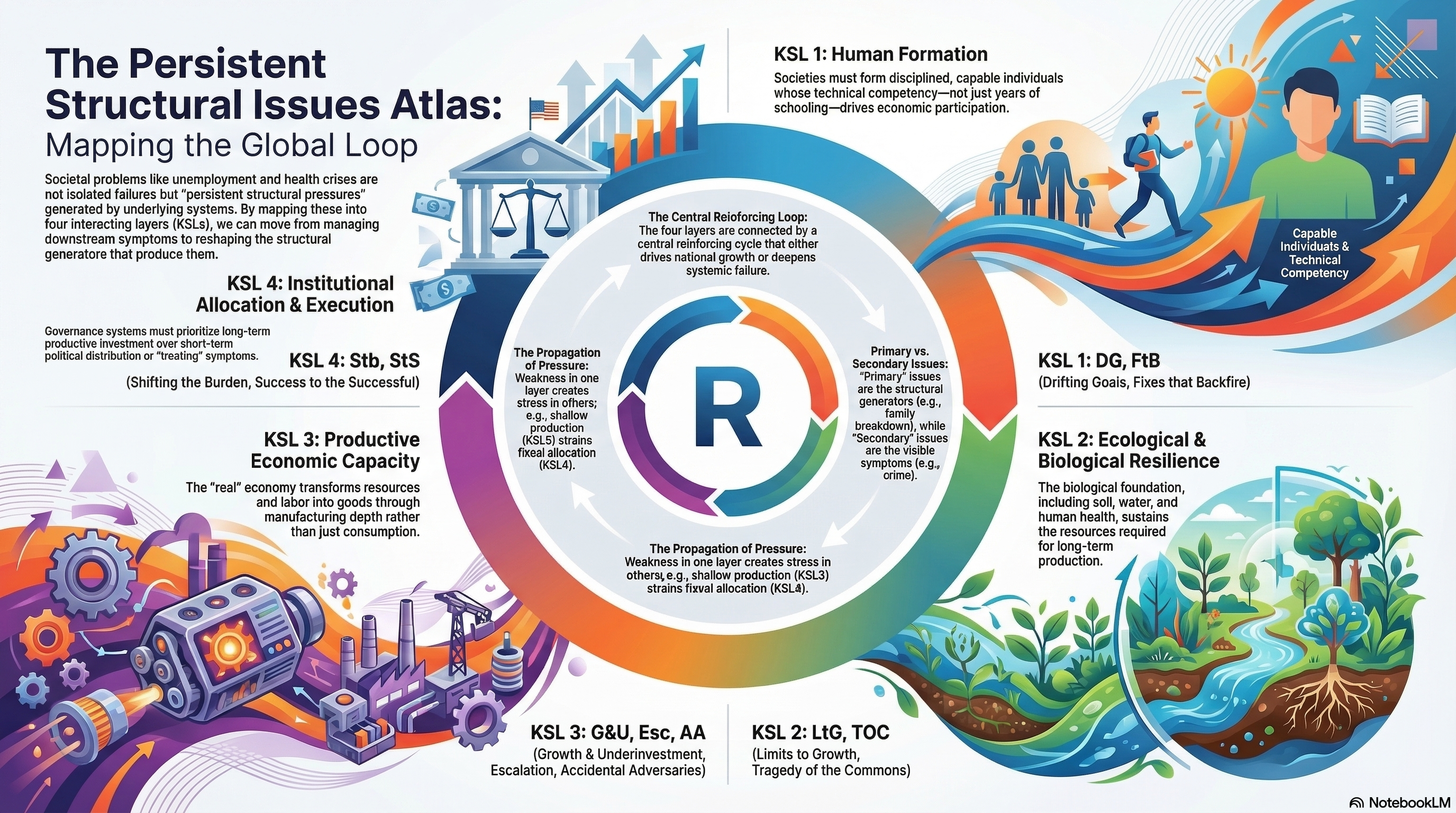
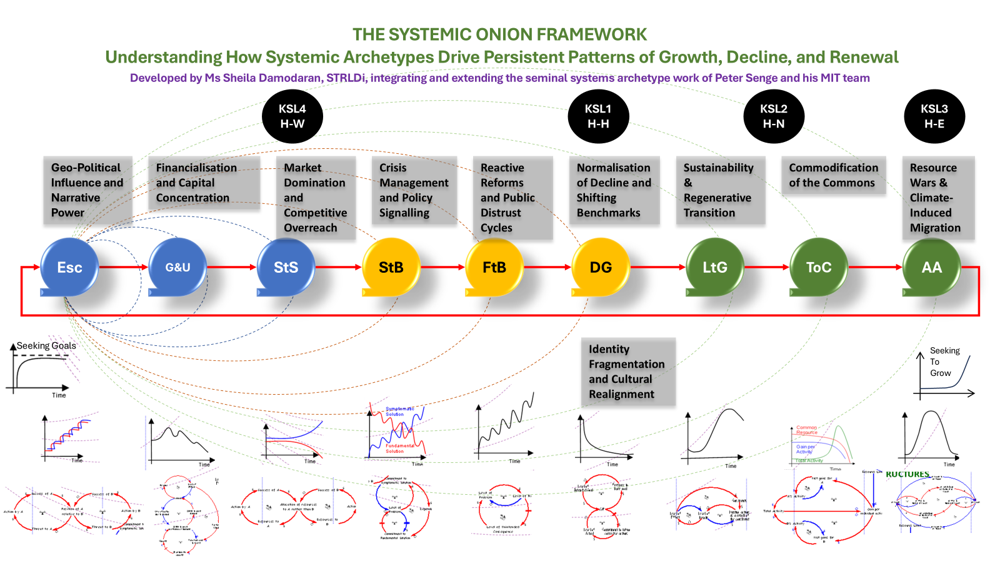

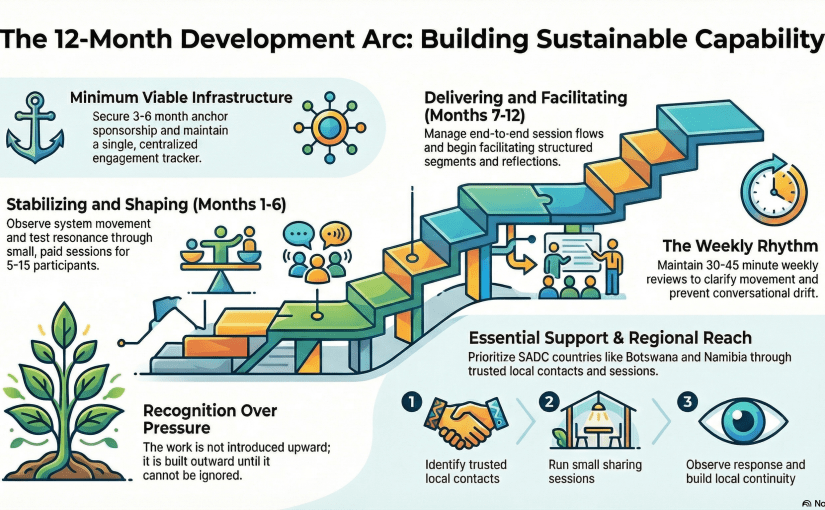


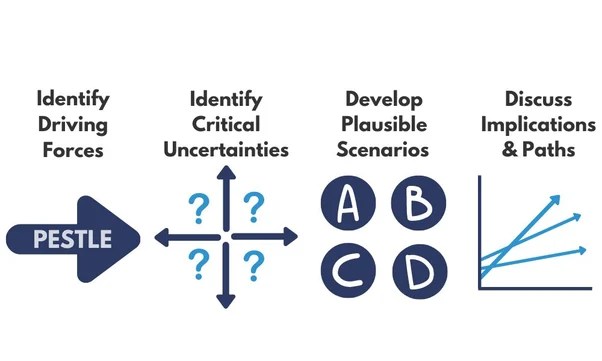




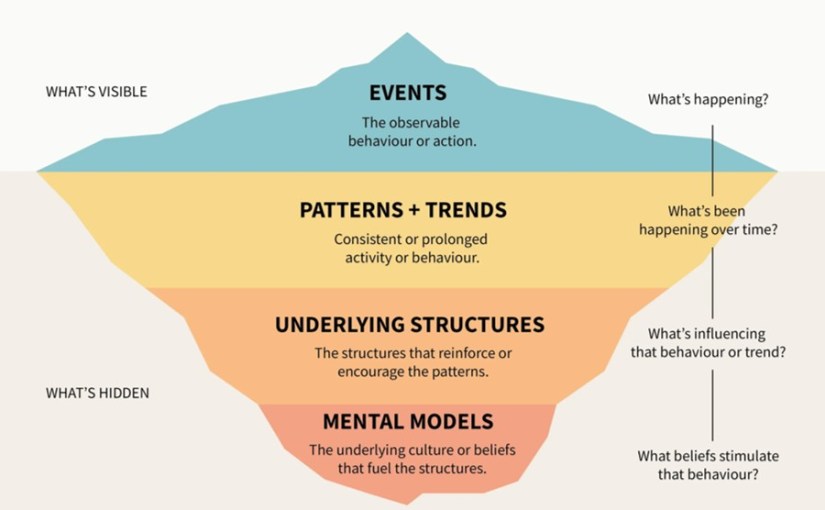

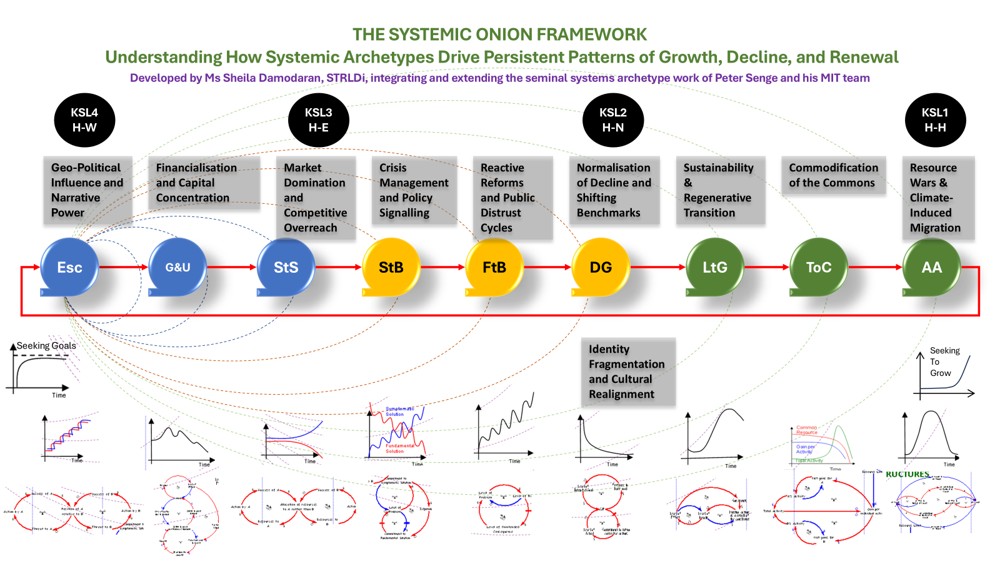
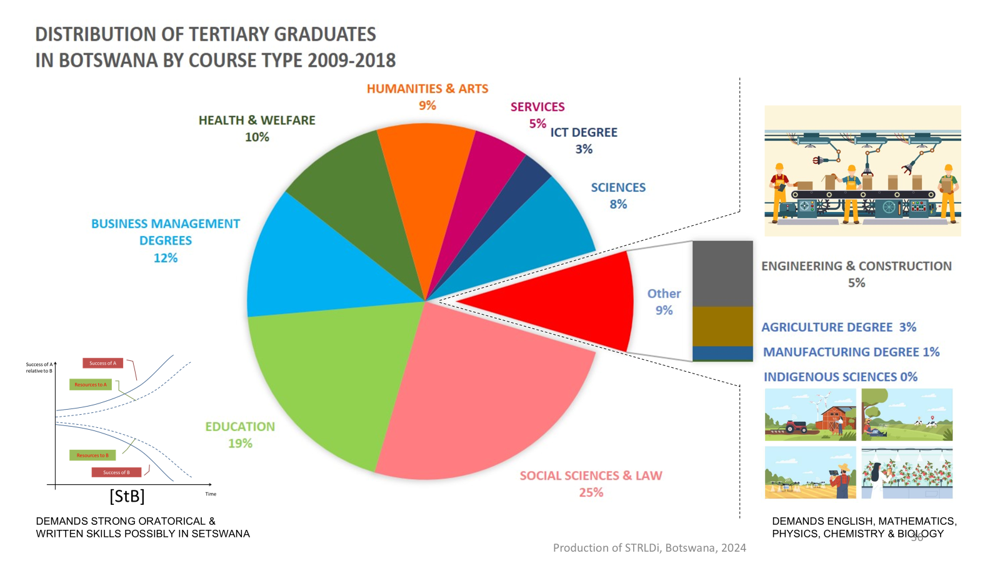
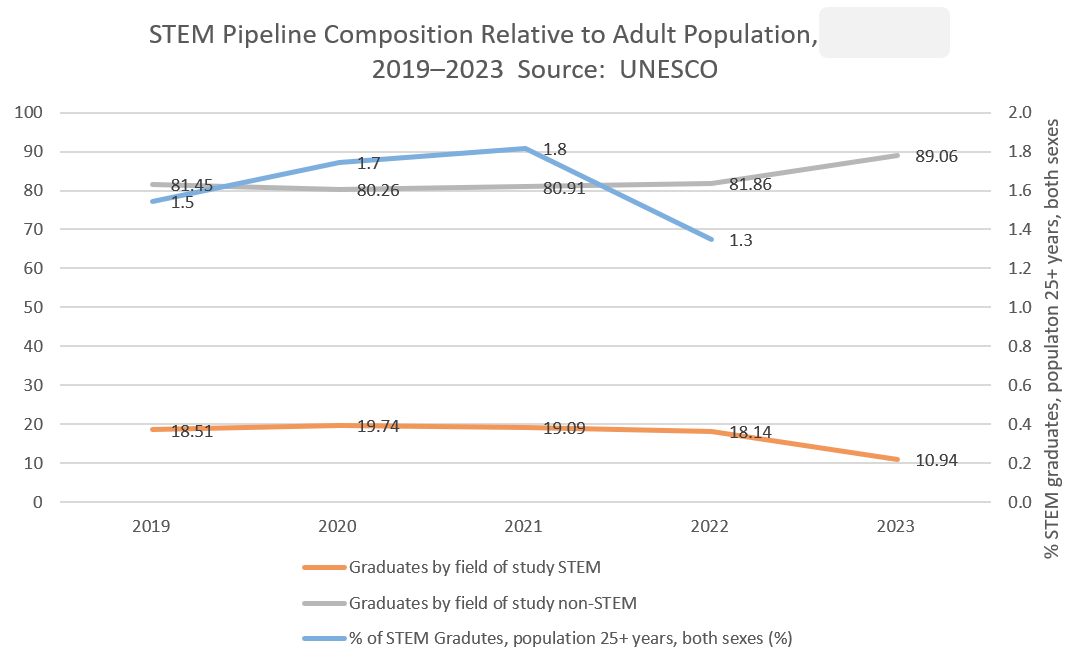
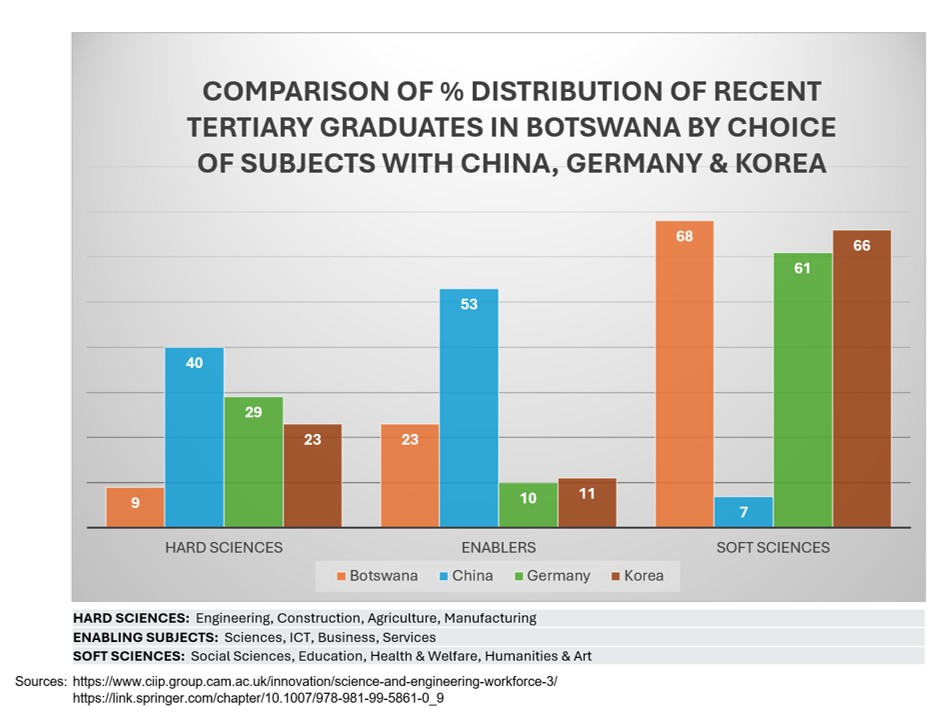

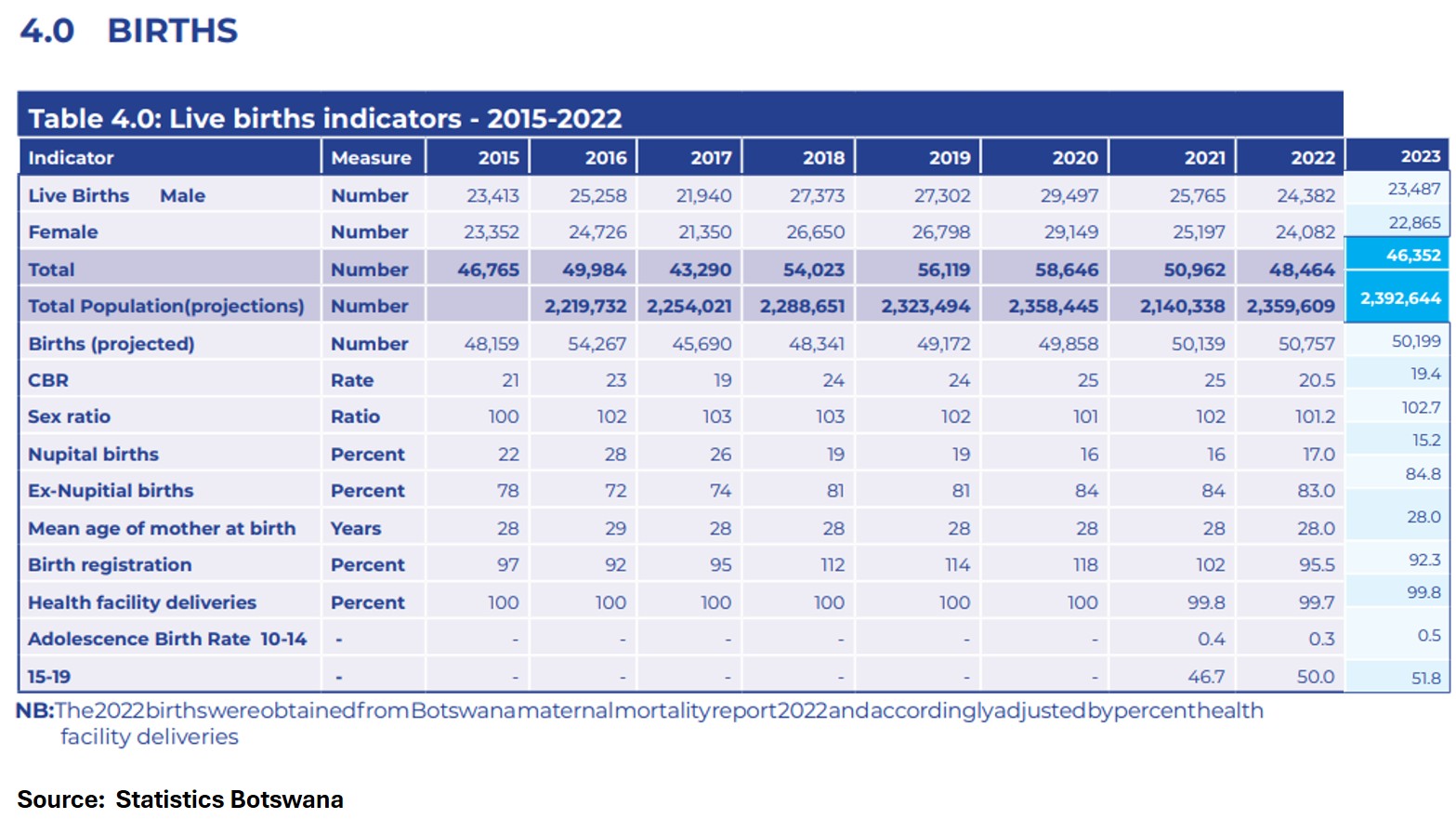
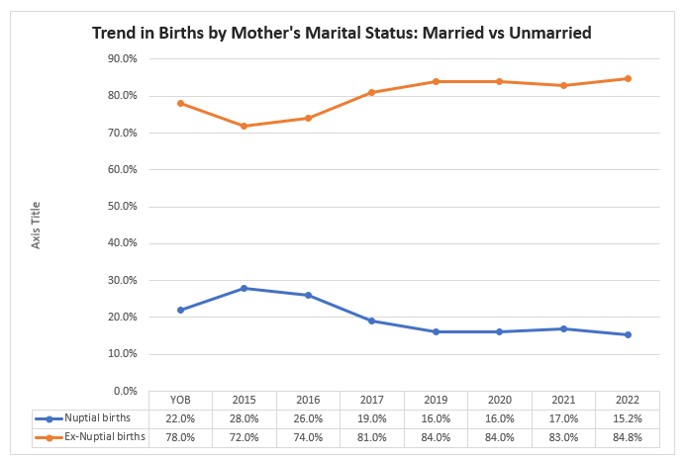

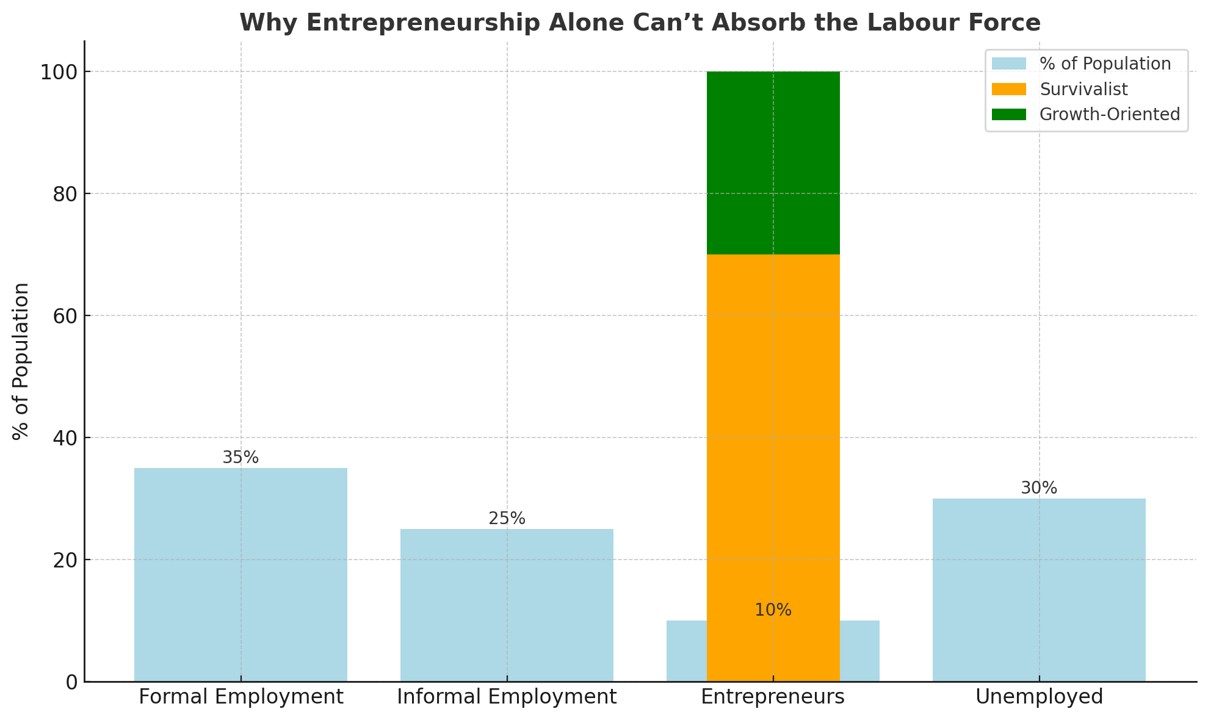





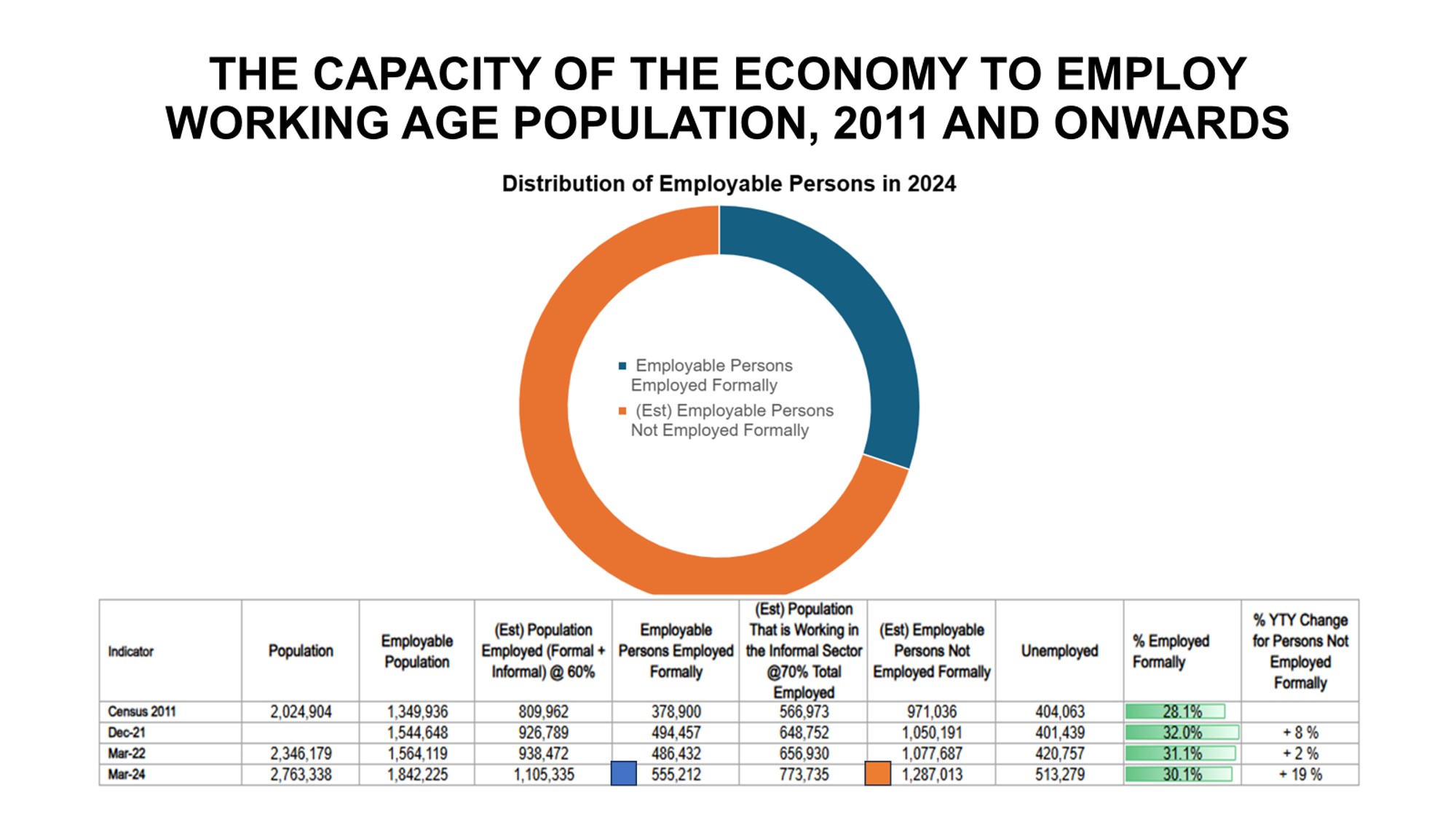

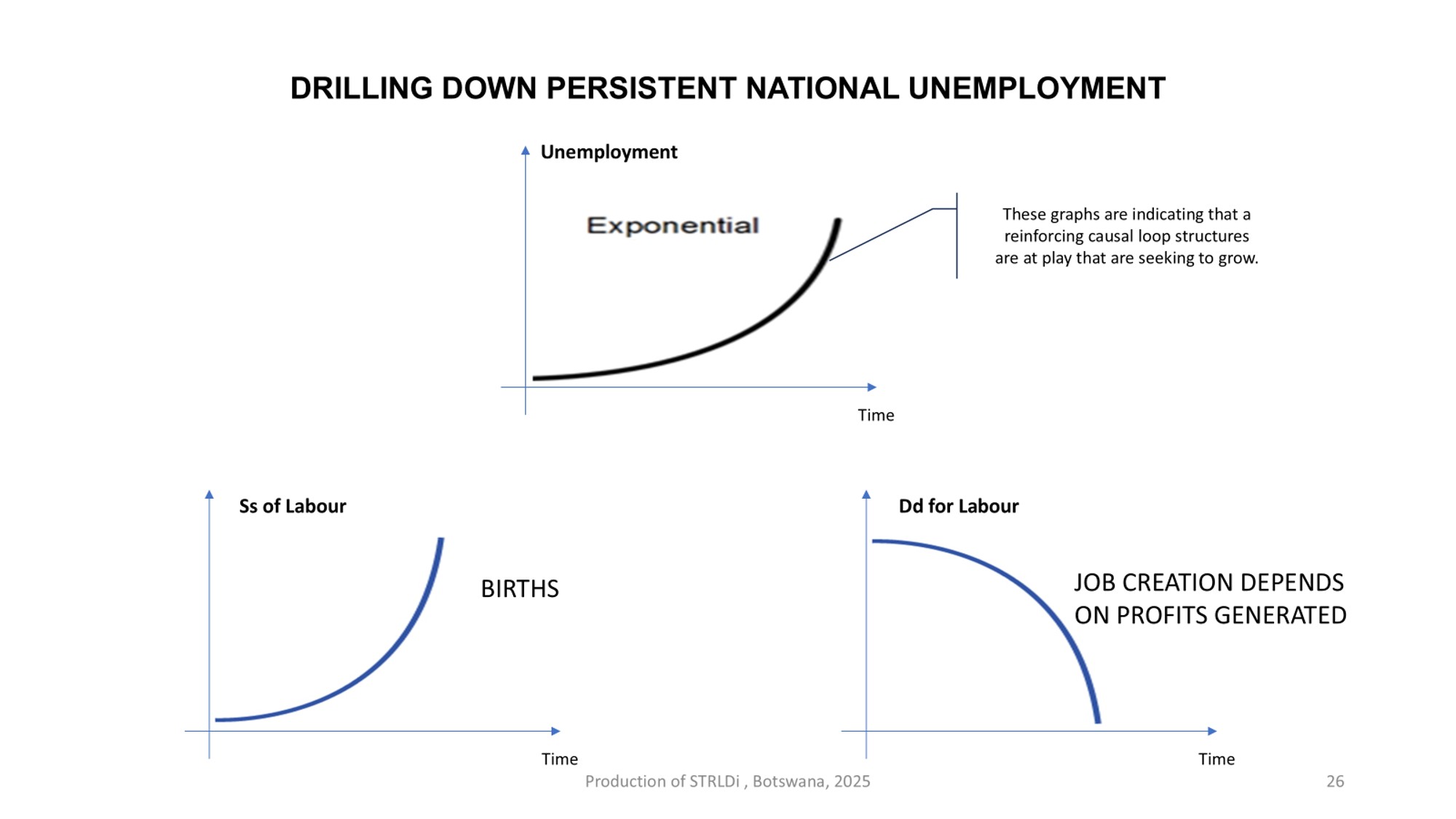
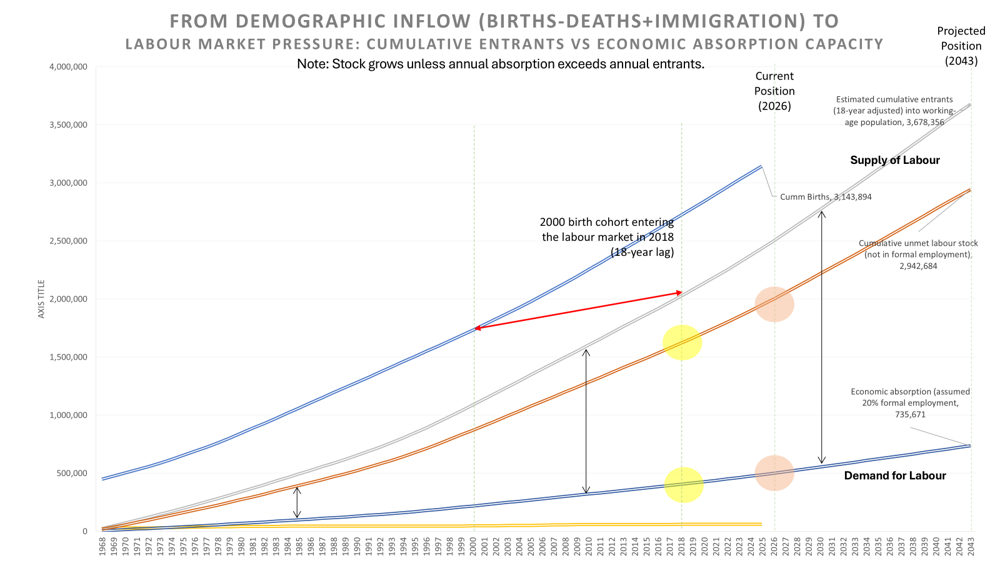


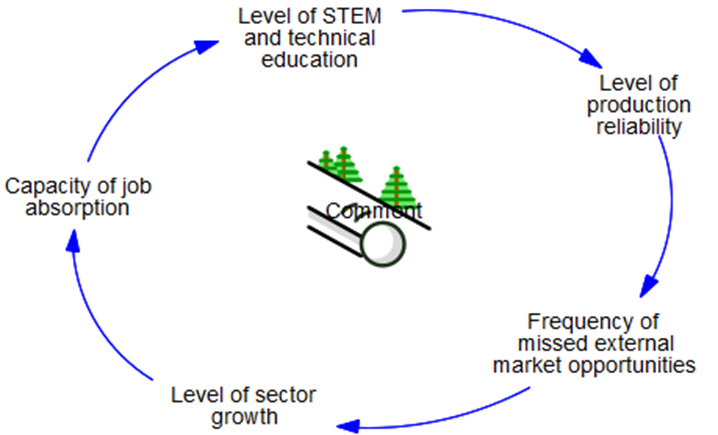
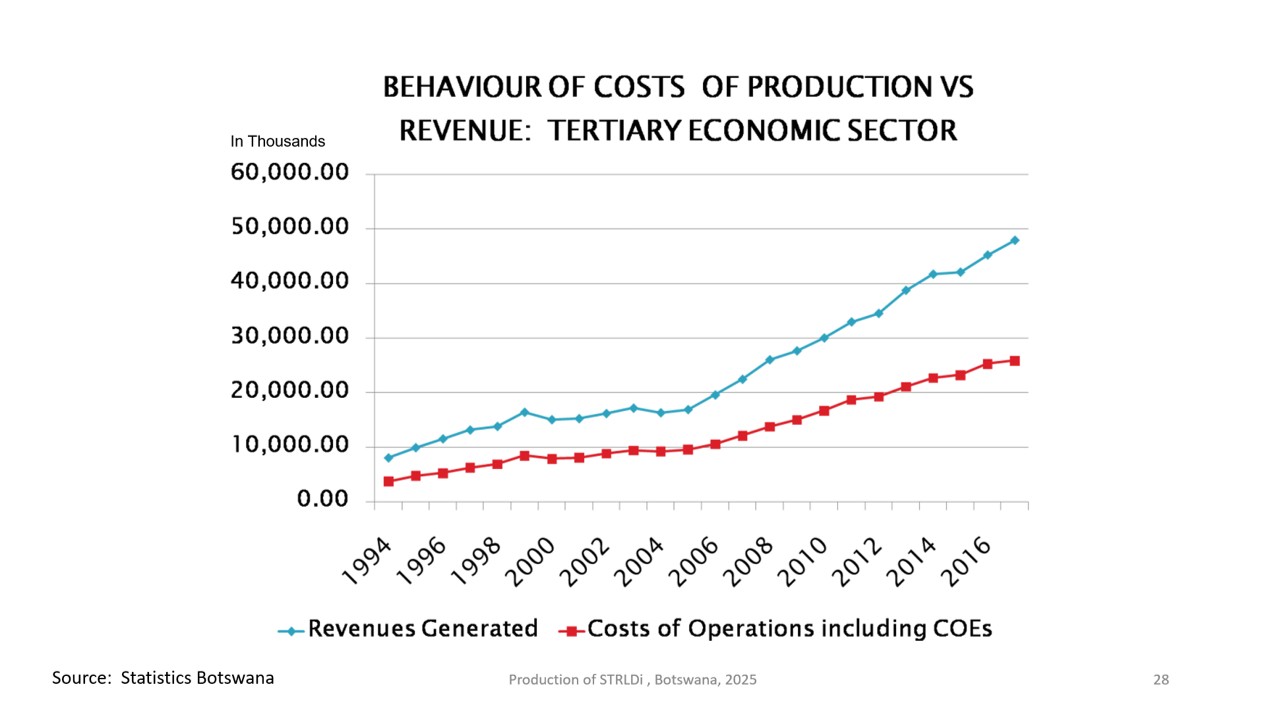
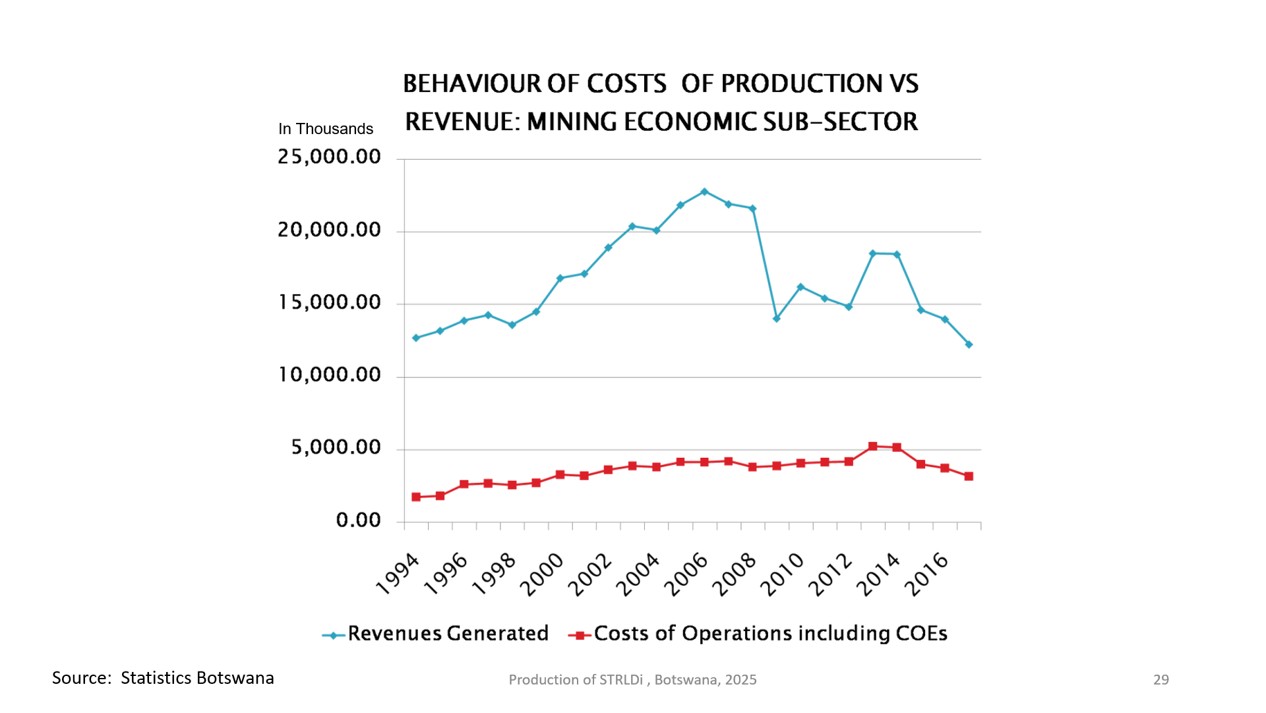

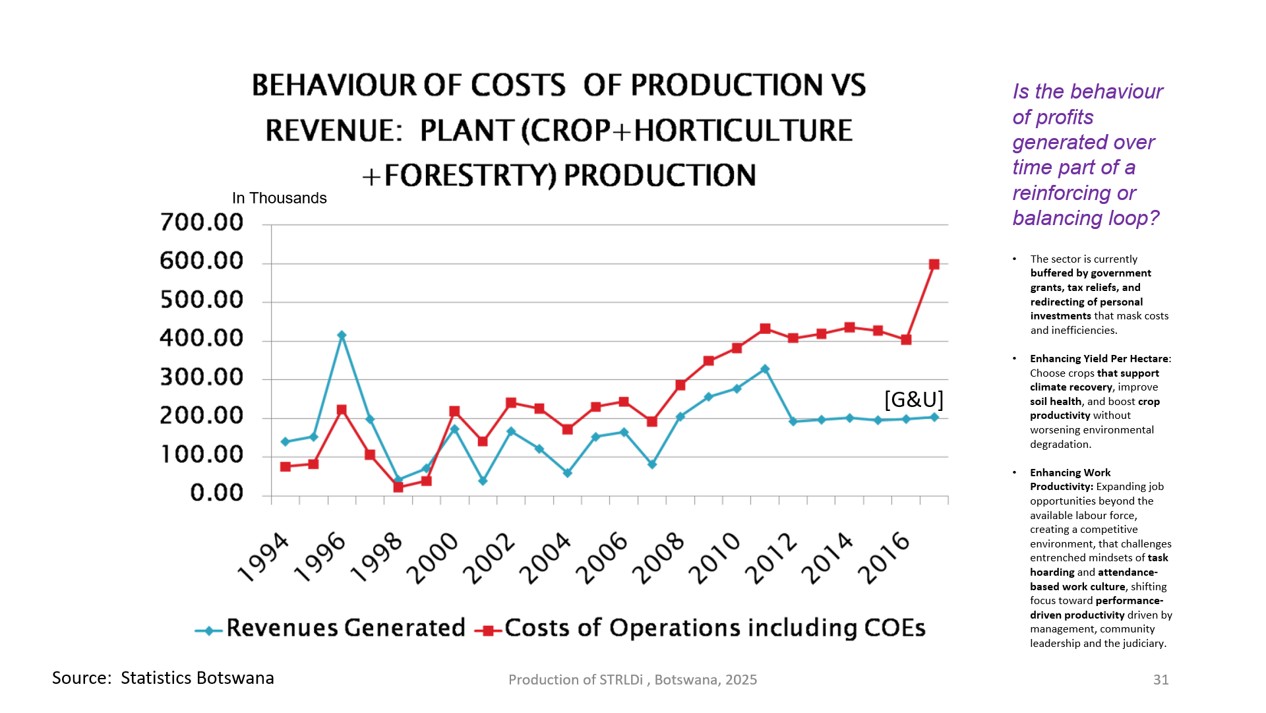


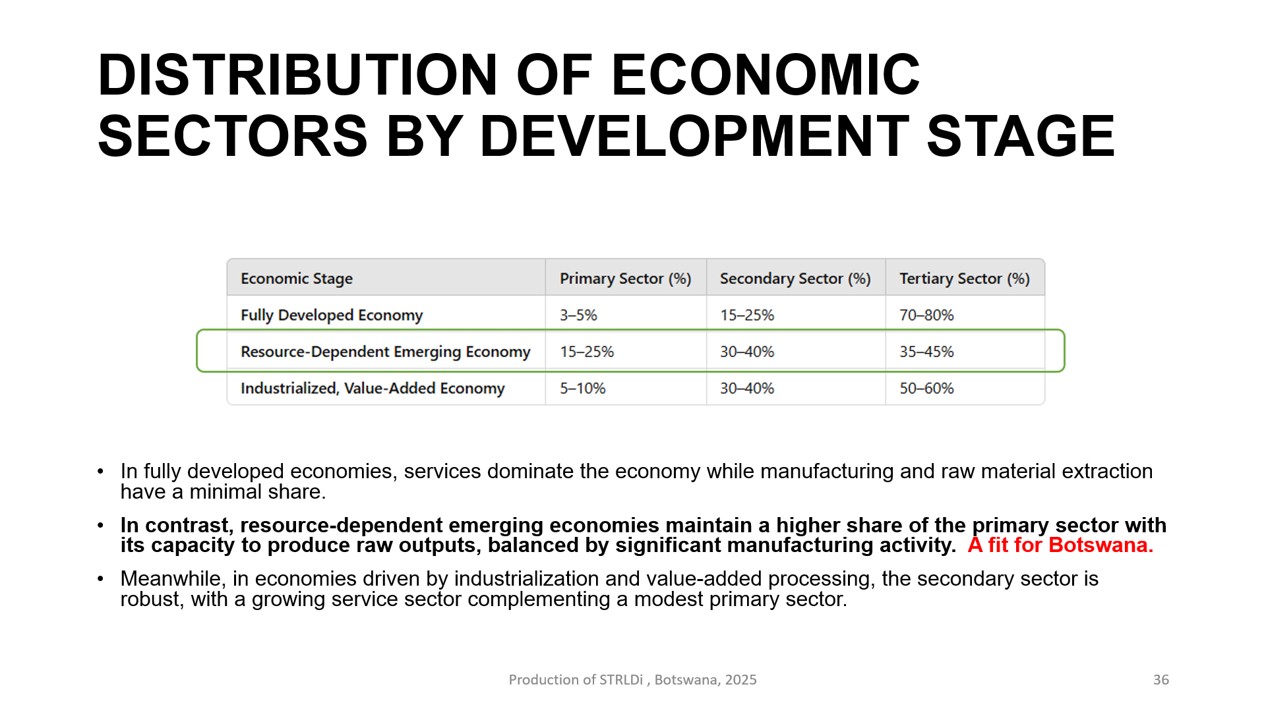
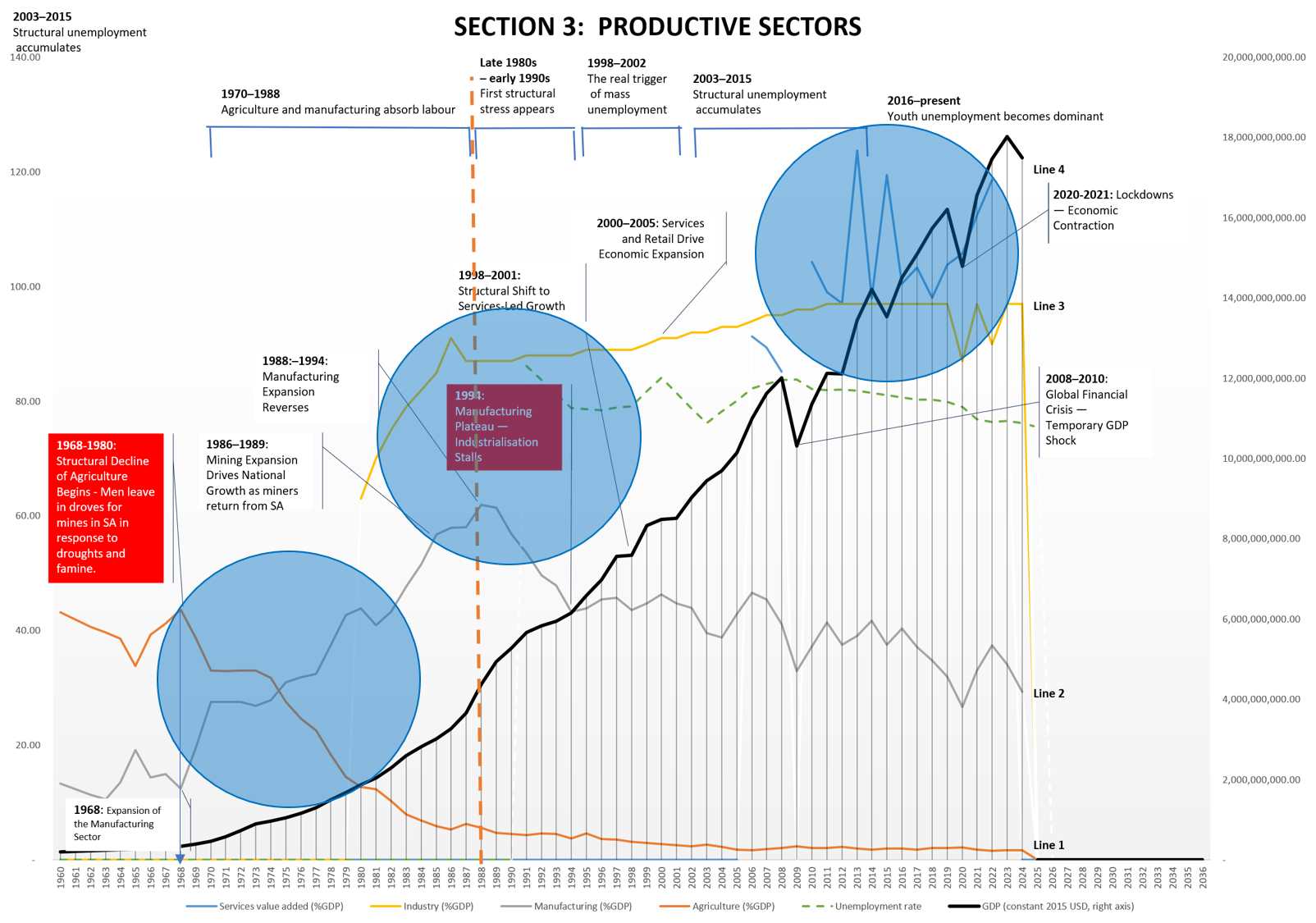
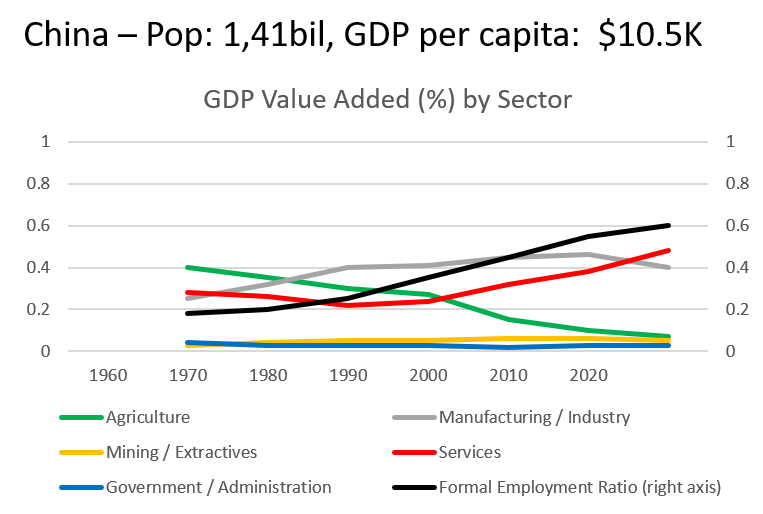
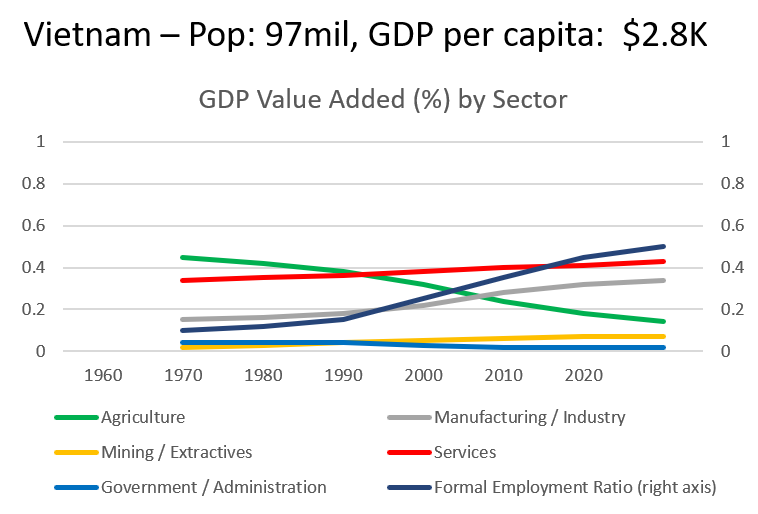
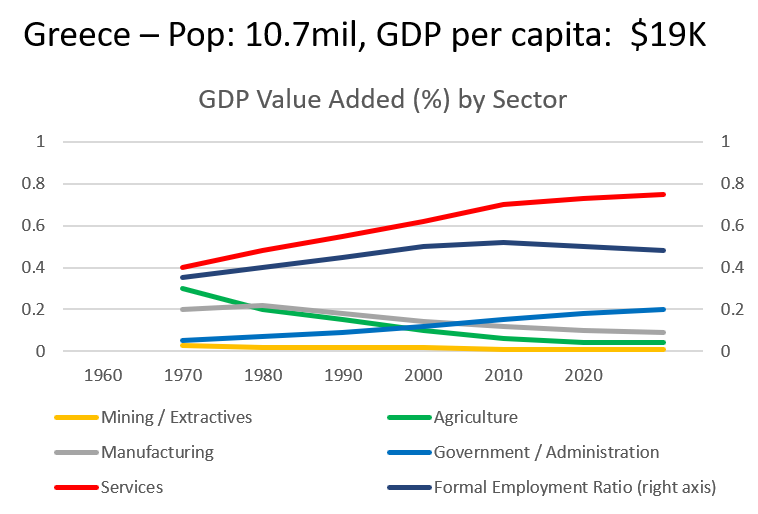
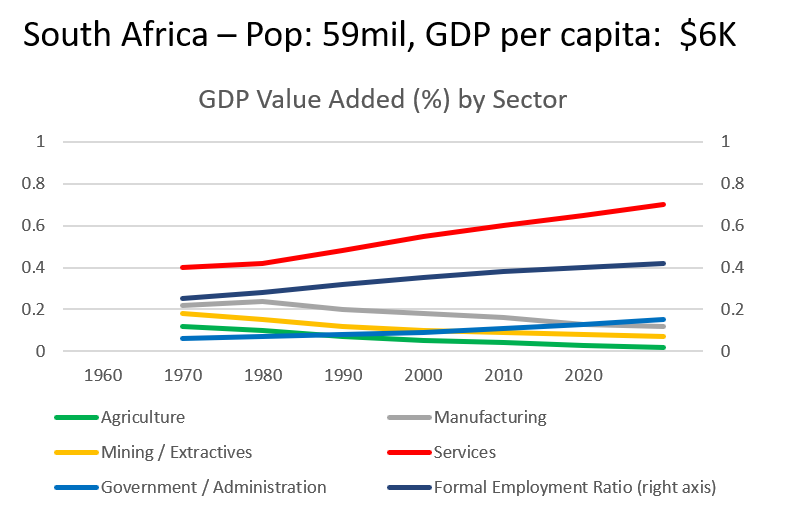
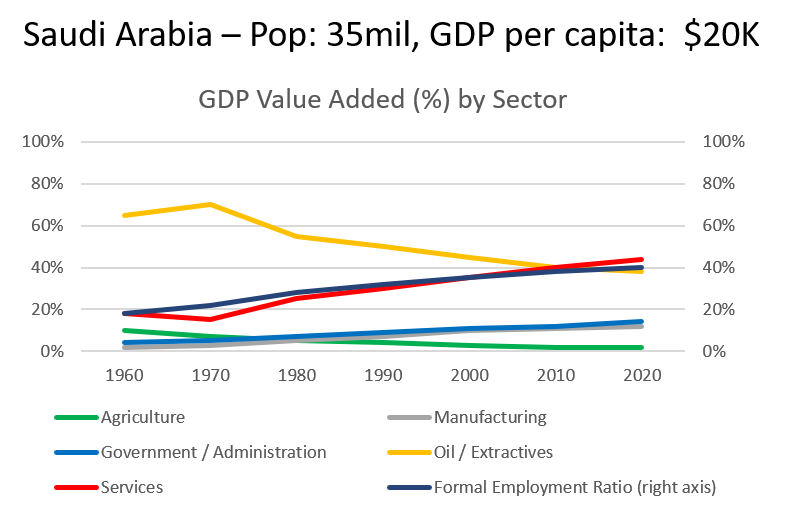
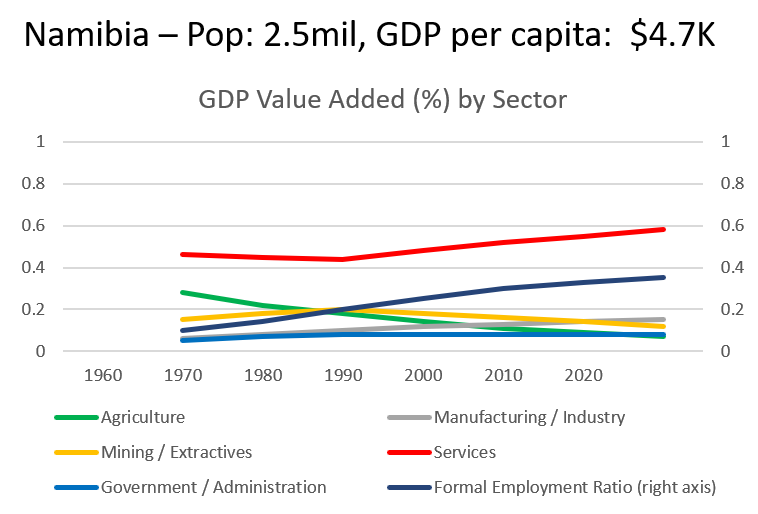
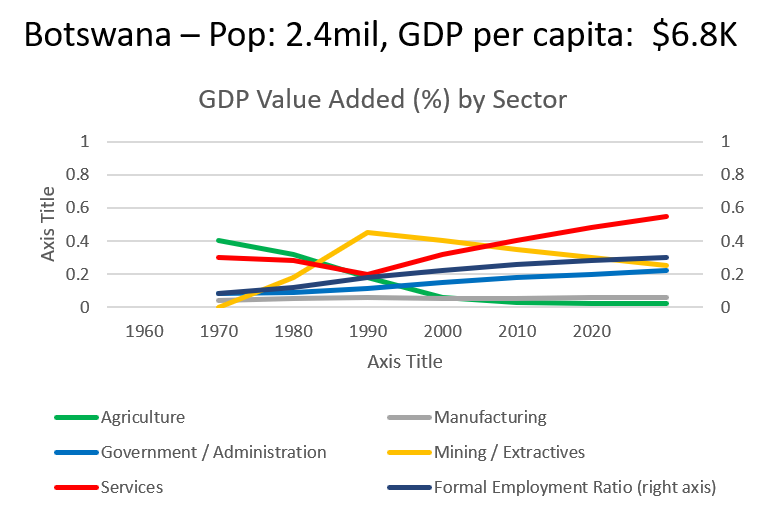
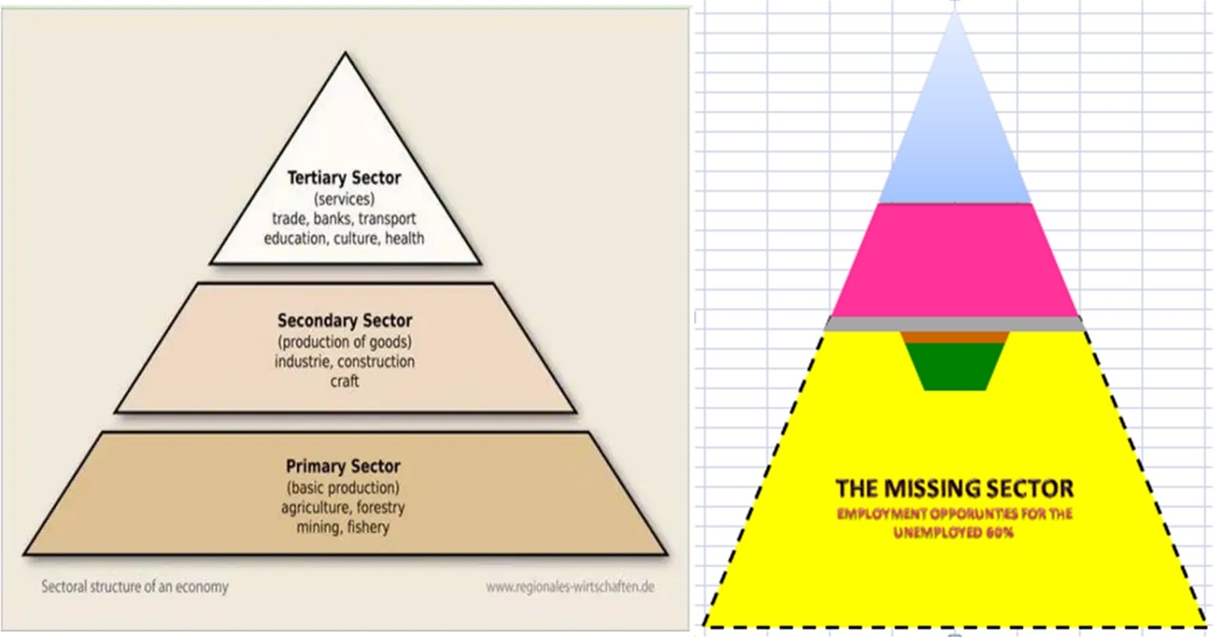
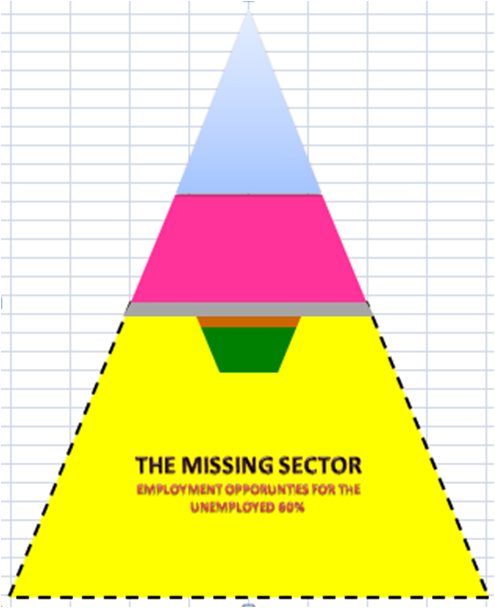

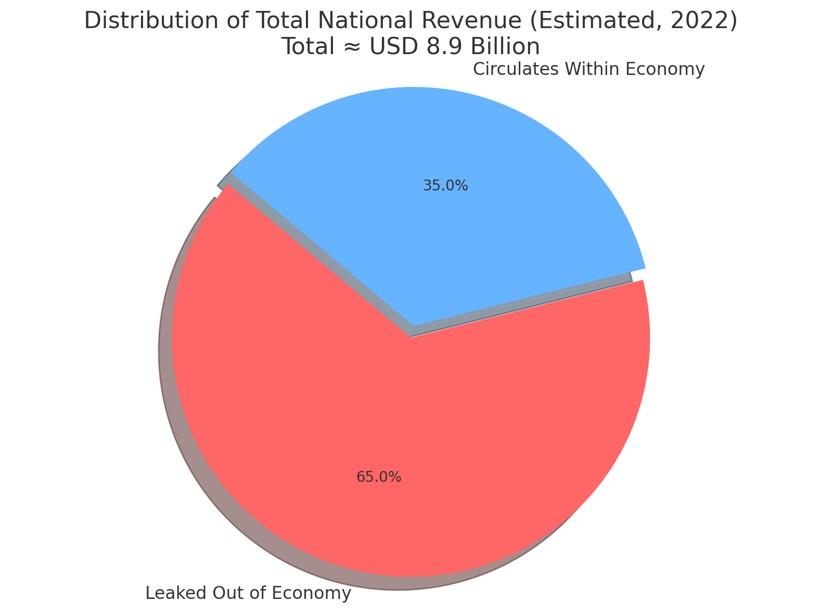
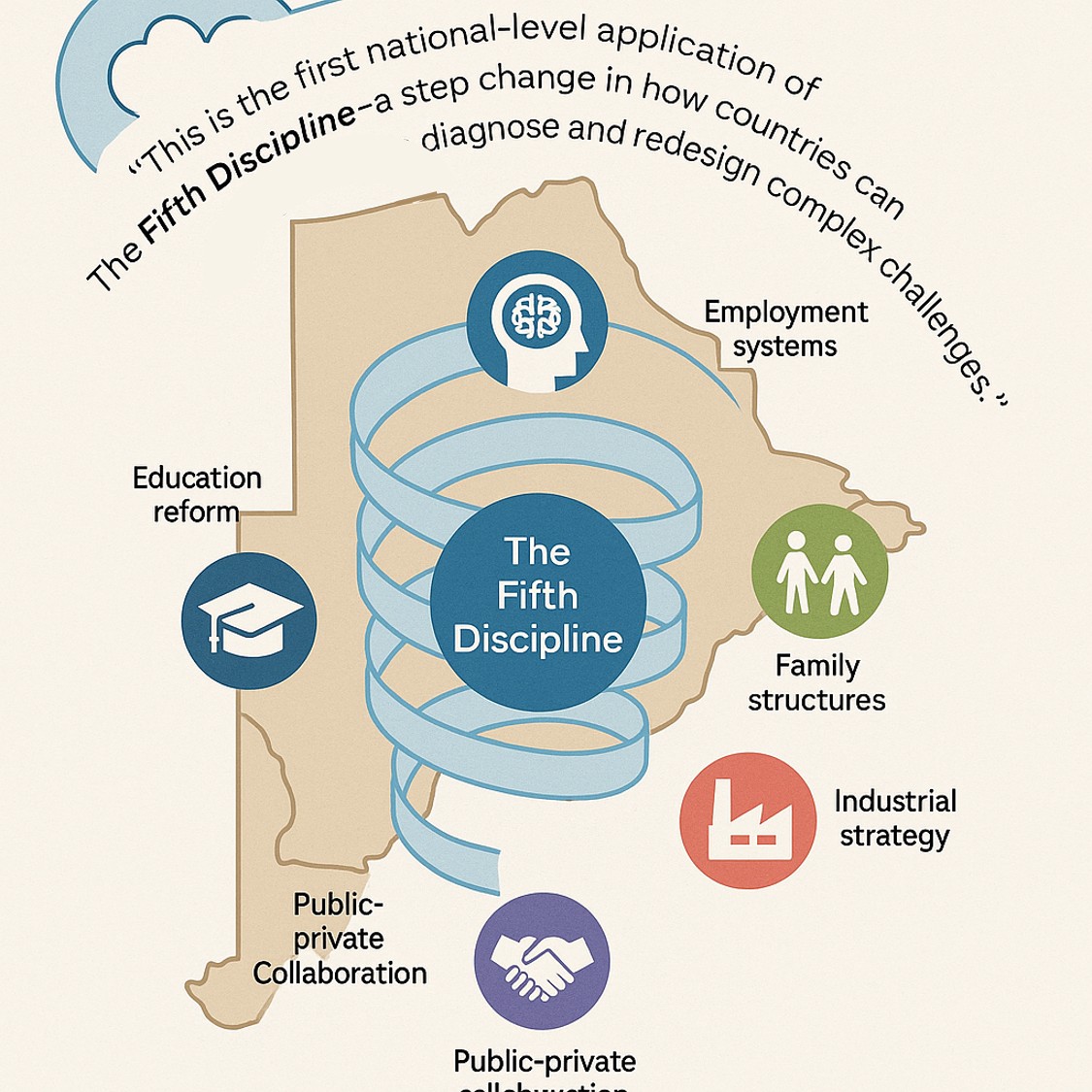


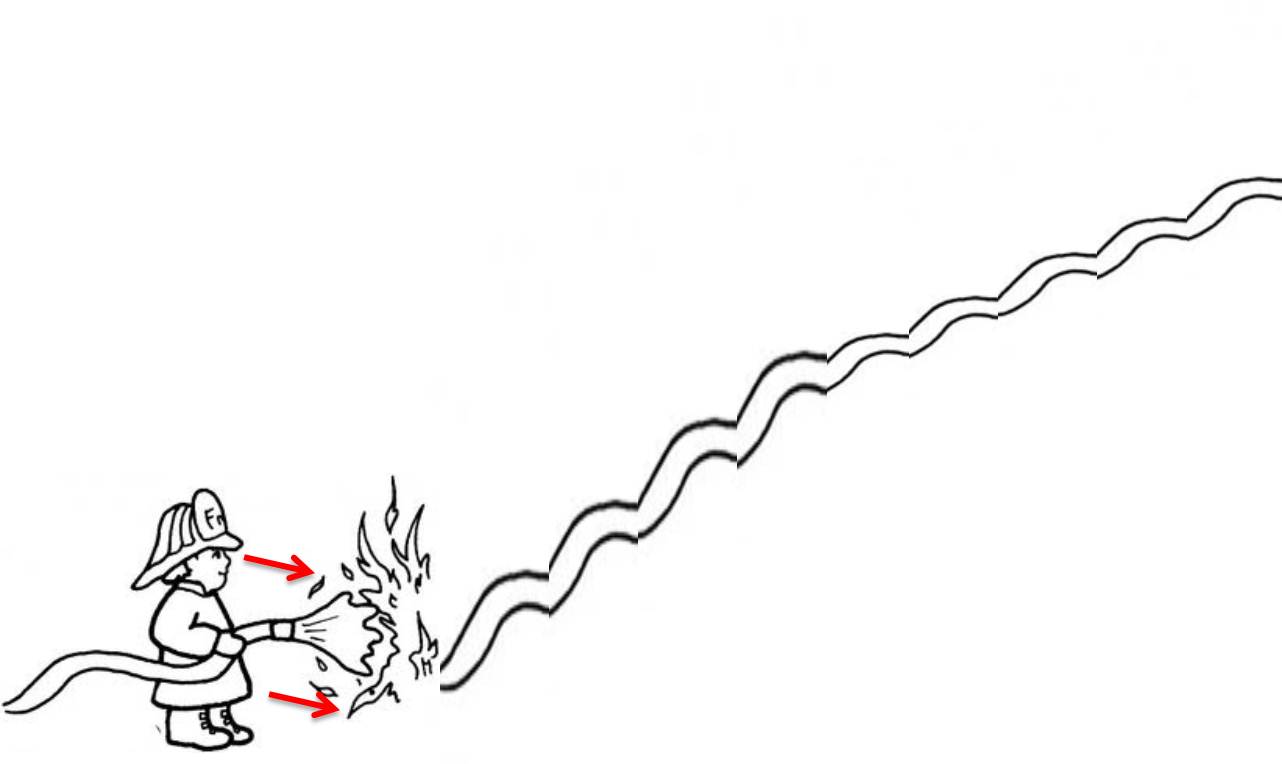


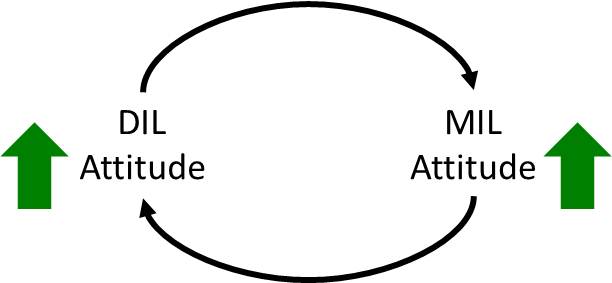




You must be logged in to post a comment.