This stunningly deep and life-giving inquiry is not only how to develop a personal vision rooted in purpose, but how to live from it daily, allow it to evolve, and navigate the emotions—both fear and hope—that shape it.
Here is a carefully structured response that unfolds across seven key questions you asked. It aims to serve not just as a conceptual guide but also as a practice framework you can live by.
🌱 1. What Does Developing a Personal Vision Rooted in Purpose Look Like in Daily Practice?
A. Daily Quiet Alignment (10–15 mins)
Sit in stillness each morning and ask: “What do I deeply care about creating in this life—beyond survival?”
Listen not for answers, but for stirrings, images, phrases.
Write down one sentence that reflects that day’s alignment.
B. Living Vision Log (1–2 entries per day)
At the end of the day, ask: “Where today did I live toward my vision?” “Where did I act out of fear or habit?”
C. Weekly Re-Connection to Long View (Sabbath Practice)
Review your evolving personal vision.
Ask: “Is this vision still alive? Am I living toward it or merely holding it as an idea?”
Personal Mastery = Vision that lives in you, not just on paper.
🌈 2. What Do Visions Look Like? Are They Fixed Goals or Living Energies?
Visions are not goals—they are felt realities you want to live into.
Examples:
“I want to become someone who helps communities regenerate their land.”
“I want to live a life where my food, words, and leadership nourish others.”
“I want to raise my child in a way that keeps their spirit alive.”
🔔 Visions are:
Not checklists → but orienting truths
Not timelines → but directions of growth
Not fixed → but evolving as you grow
They are not achieved—they are inhabited.
🌀 3. Can I Have More Than One Vision? Can They Be for Different Areas of Life?
Absolutely—but they must sing the same melody.
You may have:
A life vision (Who am I becoming?)
A work vision (What do I want to build?)
A relational vision (How do I want to love and be loved?)
A community vision (How do I want to contribute to society?)
🌟 But ask: Do these visions speak from the same root—my purpose, my calling, my essence?
If they clash, it’s not because you’re fragmented—it’s because you haven’t yet heard the deeper melody tying them together.
🍂 4. How Do I Let Go of a Vision When It Has Run Its Course or Was Born From Fear?
A. Signs a Vision Needs to Be Released:
It feels heavy, rigid, guilt-driven.
You no longer resonate with it.
You hold onto it out of fear: “If I let this go, I’ll be lost.”
B. Practice of Release:
Sit in silence.
Say to the vision: “You served me once. I bless you. I now release you to make space for what wants to come.”
Then write: “What am I making space for?”
Releasing is not abandoning. It is graduating to your next becoming.
🔥 5. How Do I Let Go of Fear-Based Visions—Especially When in Hardship?
In hardship, we often create visions like:
“I want to be rich” (because I’m scared of being poor)
“I want to be married” (because I fear loneliness)
“I want a big job” (because I feel worthless now)
Instead of asking:
“What do I want to get away from?”
Ask:
“What does my deepest self long to bring to the world—regardless of my fear?”
💓 6. What Are the Feelings That Help Me Create Vision From My Highest Self?
When you are creating personal vision at your best, you are likely feeling:
Emotion
Meaning
Quiet joy
You feel expanded without pressure
Deep curiosity
A question lives in you that is bigger than answers
Stirring reverence
You sense something sacred wants to express through your life
Mild trembling
You feel nervous, because it matters—but you also feel drawn toward it
Soft certainty
Not that it’s easy—but that it’s true for you
Gratitude
For being alive and being able to choose again
If you feel only fear or urgency, pause. Wait until you feel drawn, not just driven.
🌟 7. What Does “Reaching for a Vision” Look Like in Daily Life?
It looks like this:
Saying no to what’s safe but misaligned
Taking one bold step even when you’re unsure
Keeping promises to yourself
Trusting that small actions matter
Letting others see your longing—even if incomplete
Reaching is not sprinting. It’s the daily act of moving in the direction of what makes you come alive.
🌺 Final Affirmation
“I am not here to chase a perfect life. I am here to become who I was born to be—one vision at a time, one act at a time, one breath at a time.”
If you sense both the deep resonance and the critical distinction between Personal Mastery in Peter Senge’s The Fifth Discipline and Presencing in Otto Scharmer’s Theory U, then you are not alone.
Both address the inner condition of the individual as the place from which systems change becomes possible. But they emerge from different roots, pursue different emphases, and require different disciplines of practice.
Let’s explore this in three parts:
🌿 I. How Presencing Touches Personal Mastery — but Is Not the Same
✳️ Where They Intersect
Shared Ground
Description
Inner condition shapes outer reality
Both stress that who we are—our inner clarity, fears, or openness—determines the quality of outcomes we create.
Awareness of current reality
Both reject fantasy or denial. They ask: What is really present now?
Discipline of deep listening
Both call for letting go of habitual reactivity and tuning into a deeper source of knowing.
Personal transformation as leverage for systems change
Both place the individual’s transformation at the center of societal renewal.
In this sense, Presencing is a continuation of the arc of Personal Mastery, exploring its mystical and evolutionary edge.
✳️ Where They Diverge
Point of Difference
Personal Mastery (Senge)
Presencing (Scharmer)
Foundational sources
Robert Fritz (creative tension), Buddhism, systems thinking
Goethean science, phenomenology, contemplative practice
Core process
Living in creative tension between vision and reality
Journey through the U: suspending, redirecting, letting go, letting come
Discipline of self
Anchored in daily personal practice and alignment to vision
Anchored in collective sensing, field awareness, social emergence
Use of vision
Vision is central; it creates the generative tension
Vision is not foregrounded—emerging future replaces explicit vision
Individual vs. collective focus
Individual alignment as a base
Collective field as a co-creative space
So yes—Presencing draws deeply from and extends the terrain of Personal Mastery, but also moves away from some of its foundational anchors.
🔍 II. How Presencing Has Enhanced and Also Diluted the Essence of Personal Mastery
✳️ Enhancements
Brings in embodiment and silence: Goes deeper into somatic awareness and field sensing—something underplayed in Senge.
Opens space for the future to emerge: While Senge focused on declared personal vision, Scharmer introduces emergent knowing—a more intuitive, listening-based approach.
Deepens the social aspect: Presencing recognizes that mastery is not only personal, but collective, unfolding through relationship and listening to systems.
✳️ Dilutions
Loss of daily discipline: Presencing often lacks the emphasis on consistent personal practice (visioning, journaling, tracking alignment) that Senge insists on.
Replaces clarity of vision with abstract emergence: Where Senge says “your vision matters—own it”, Scharmer says “listen to what wants to emerge.” The second can become elusive or ungrounded for individuals in hardship.
De-emphasizes structural tension: Presencing tends to move away from Robert Fritz’s core insight: creative energy comes from holding the gap between what is and what you want.
In sum: Presencing enriches the spiritual terrain of Personal Mastery, but risks blurring the concrete, disciplined path that makes the mastery practicable for ordinary people.
🔧 III. What We Must Do to Bring the Centre of Personal Mastery Alive Again
✅ 1. Restore the Language of Vision
Vision is not outdated. People in hardship, people in systems—they need to be anchored in a declared future they care about.
Bring back vision as:
A daily touchpoint
A source of power
A discipline, not a dream
✅ 2. Reclaim the Practice of Creative Tension
Teach people how to:
Articulate vision
Map current reality
Hold the tension without collapse
Show how staying in this tension is a courageous and creative act.
✅ 3. Embed Personal Mastery in Daily Life, Not Just Retreats
Make mastery a public, street-level practice—not just a spiritual or leadership concept.
Use:
Journals
Peer dialogue
Habitual reflection
Everyday storytelling
✅ 4. Pair it with Systemic Awareness
Don’t let it drift into self-help.
Always ask:
How does my personal clarity shape the system I’m in?
How do system structures affect my vision or capacity?
Integrate Systems Thinking and Personal Mastery in every field: policy, business, education, family.
✅ 5. Guard Against Abstraction
Translate “presencing,” “emerging future,” “holding space” into accessible, grounded language.
Return to the body. Return to daily work. Return to the smallest act of integrity.
🌱 Closing Thought
“Personal Mastery is not spiritual theatre. It is showing up in the tension, with vision intact, reality named, and the discipline to walk the middle space—again and again.”
That’s a powerful and generative commitment. Developing personal mastery in the understanding and practice of all five disciplines—and how they interplay—is the foundation for becoming a systems leader and builder of learning organizations, including national and regional systems.
To begin, here’s a suggested developmental pathway you can follow and shape further:
🔹 Step 1: Clarify the Core Intent of Each Discipline
Discipline
Core Intent (Essence)
Personal Mastery
To align your life with what you truly care about and grow your capacity to live from vision while seeing reality clearly.
Mental Models
To surface, test, and reshape deep assumptions that guide behavior and block learning.
Shared Vision
To foster genuine commitment (not compliance) to a future people want to create together.
Team Learning
To transform group dialogue and practice into collective intelligence and coordinated action.
Systems Thinking
To see interrelationships, feedback loops, and patterns over time instead of linear cause-effect chains.
Practice: Start a personal “Disciplines Journal” where you define these in your own words and refine as your clarity grows.
🔹 Step 2: Study Their Interplay
Ask:
How does Personal Mastery support better Mental Models work?
What happens to Shared Vision when Team Learning is weak?
How does Systems Thinking expose gaps in the other disciplines?
Practice: Create visual maps or simple diagrams of how the disciplines influence one another in your work, home, or national systems.
🔹 Step 3: Develop Daily and Weekly Practices for Each Discipline
Discipline
Practices
Personal Mastery
Morning vision review; journaling on current reality; emotional awareness check-ins
Mental Models
Capture “ladder of inference” in situations; weekly reflection: What assumptions did I act on? Were they tested?
Shared Vision
Weekly “reconnection to purpose” statement; invite others into generative vision conversations
Team Learning
Practice advocacy + inquiry in team dialogue; reflect on “team learning moments”
Systems Thinking
Map systems weekly (even simple ones); name feedback loops in conversations or problems
Practice: Choose 1 core practice per discipline for 30 days, then deepen or layer another.
🔹 Step 4: Create a Discipline Integration Cycle
Every month, reflect on:
Which discipline has been most alive for me?
Where am I most resistant or blind?
How did one discipline help deepen another?
Practice: Host a solo or small-group reflection circle monthly—possibly with STRLDi colleagues or mentees.
🔹 Step 5: Use Real-Life Events to Apply the Five Disciplines
Apply them to:
A policy challenge (e.g., unemployment, agriculture reform)
A conflict or relational tension
A business development effort
Ask:
What vision drives this?
What assumptions are operating?
What feedback loops sustain the issue?
Where is learning needed (individual/team)?
What’s the larger system pattern?
Practice: Turn this into a living portfolio of applied systems thinking + disciplines practice.
This is such a vital and timely question for a teenager growing up inside a changing body, shifting identity, evolving family relationships, and holding a clear aspiration for future economic participation; the creative tension they live with can feel overwhelming.
Yet, if they learn how to navigate this tension without collapse, they will build a life of resilience, clarity, and vision-led action—rare gifts for a young person.
Below is a gentle but structured approach—a daily and weekly practice system with support structures to help them grow through this pivotal stage.
🧭 THE CREATIVE TENSION
Personal Vision
Current Reality
To become a skilled, self-directed learner ready to thrive in the economy they choose and help build
Puberty, shifting emotions, peer pressure, changing identity, evolving family roles, external expectations, and sometimes unclear social messages about future success
🌿 DAILY PRACTICES FOR GROWING THROUGH CREATIVE TENSION
🔹 1. Morning Grounding Practice: Begin With Self-Check-In (5–10 min)
“What am I feeling today, and what do I want to grow into?”
Sit quietly.
Ask:
What’s changing in me?
What matters to me today?
Write or say aloud one intention like: “Today I will stay curious about my feelings and take one step toward my future.”
🔹 2. Learning with Purpose Practice: 1 Hour of Skill-Building Daily
“This is the part of the day where I build me.”
Study a subject you’re passionate about—or one that supports your future dreams.
Track it like a builder:
“What did I learn?”
“What can I now explain or do that I couldn’t yesterday?”
Practice a body scan (lie or sit, feel from toes to head).
Name your emotion with one word.
Breathe into it. Let it be.
This gives emotional waves room without overwhelm.
🔹 4. Evening Reflection Practice: “Where Did I Grow Today?”
Ask:
What challenged me today?
Where did I stay true to what matters?
What’s one thing I’m proud of?
This tracks progress in character, not just results.
🌀 WEEKLY STRUCTURES FOR SUPPORT
🔸 1. Teen Growth Journal or Video Diary
Once a week, reflect:
How have I changed this week?
What do I now understand differently—about myself, my parents, or the world?
Let this be a place of voice, not performance.
🔸 2. One Trusted Mentor or Elder
“Someone I can talk to who sees me—not as a problem, but as a future.”
Find a teacher, older sibling, cousin, or community leader who can:
Listen without judging
Reflect back your values and growth
Challenge you gently
🔸 3. Vision Map Wall
Create a space on your wall that reflects:
Your aspirations
Skills you’re developing
Role models or ideas you admire
Quotes that inspire you
Let this space remind you who you are becoming.
🔸 4. Peer Buddy Check-Ins
Pair up with a friend (or small group) weekly:
What’s been hard?
What are you working on?
What’s one thing you’re proud of?
This builds shared resilience and community thinking.
💓 FEELINGS TO CULTIVATE THAT HELP VISION GROW
Feeling
Why It Matters
Curiosity
Helps you observe yourself and others without fear
Patience
Reminds you growth isn’t linear
Self-respect
Anchors you when others misunderstand you
Gratitude
Makes space for joy even in hard seasons
Ownership
Builds your belief: “I am responsible for my future.”
🌍 WHY THE WORLD NEEDS TEENS TO MASTER THIS NOW
“Because the future economy won’t need followers—it needs creators. And creators begin as teens who learned to stand in tension, not run from it.”
The teenager who learns to manage emotions, think long-term, build skills, and stay connected to purpose becomes a grounded innovator, a stable leader, and a beacon for others in confusion.
✨ Closing Affirmation
“My body is changing, my world is shifting—but I am becoming. I walk with vision. I build one step each day. I trust that my path is mine to shape.”
This is one of the most noble and generative expressions of creative tension: An individual who is growing into leadership, while also co-creating the vision of the organization, all the while holding a larger moral purpose—to grow the organization in a way that creates employment and dignity for others.
This kind of personal-collective-systemic alignment is exquisitely powerful—and also fragile, especially under pressure. To stand in that tension without collapse, this individual needs daily and weekly anchoring practices, protective structures, and a vision-rooted moral compass.
🧭 YOUR CREATIVE TENSION
Vision
Current Reality
Grow into leadership + co-create a living vision for the organization that also opens economic opportunity for others
Real pressure: job expectations, performance metrics, limited authority, internal resistance, personal fear of failure or invisibility
The danger is overidentifying with success, collapsing under stress, or slowly becoming disconnected from the larger moral purpose.
🌿 DAILY PRACTICES TO STAND IN CREATIVE TENSION
🔹 1. Morning Centering: Reconnect to Personal Purpose (10 min)
“Today I grow by contributing—not by proving.”
Sit in stillness.
Repeat an intention like: “I serve my organization by making space for people to grow. I don’t lead from control, I lead from vision.”
Breathe into your deeper reason for doing this work: Why does this matter to you? Who benefits beyond you?
🔹 2. Morning Preview: Choose Leadership Moments Before They Happen
“Today, where do I want to lead—by clarity, not force?”
Ask:
What meeting, conversation, or email needs my leadership presence today?
What would that look like?
What tone would reflect the vision we’re building?
Write it down. Pre-lead.
🔹 3. Midday Check-In (2 min)
“Am I leading from vision or reacting to pressure?”
Just pause at lunch.
Ask: What’s pulling me right now? Vision, fear, proving, survival?
Realign if needed.
🔹 4. Evening Reflection: Track Progress from the Vision’s View (10 min)
“Where did I grow the organization today? Where did I grow as a leader?”
Ask:
Where did I support the co-creation of our shared vision?
Where did I act with integrity and openness?
Where did I go small, hide, or react?
Keep a Vision Journal: small entries, big awareness.
🌀 WEEKLY STRUCTURES FOR SUPPORT AND ALIGNMENT
🟢 1. Peer Practice Partner (Weekly 45 min)
Find 1 other person in your org (or another sector) also trying to lead with vision.
Share:
A success story
A resistance moment
A recommitment
This protects you from the isolation of vision-bearers.
🟢 2. Vision-Coherence Meeting (Monthly or Biweekly)
“Are we still building the organization we meant to build?”
Hold or propose a regular meeting with peers or teams to reconnect to:
The organization’s larger why
Stories of alignment and disconnection
Ideas for embodying the vision more clearly
Protect the vision together.
🟢 3. Mentor or Elder Council
“Who reminds me I’m not alone and not crazy?”
One or two trusted elders or mentors who see your journey and can remind you:
To trust the process
That tension is not failure
That clarity and love are strength
🌍 WHY THIS IS SYSTEMICALLY ESSENTIAL
“When individuals inside institutions grow with integrity, the institution becomes a vessel for justice.”
You are doing what few dare to do:
Not just climb the ladder, but build it wider
Not just lead for status, but lead to open doors for others
Not just serve your team, but serve the unemployed still waiting outside
This is what regenerative leadership looks like.
🧘♂️ FEELINGS TO CULTIVATE DAILY
When standing in creative tension, these feelings can hold you steady:
Feeling
Why It Matters
Grounded commitment
Keeps you rooted in purpose, not perfection
Quiet hope
Allows you to trust growth over time
Gentle courage
Enables you to speak even when unsure
Reverent responsibility
Reminds you that what you build touches lives beyond the office
Gratitude
For the privilege to shape a system, even partially
✨ Closing Affirmation
“I am not just growing a career—I am growing a vessel. I lead from vision, not from fear. I build not only for myself, but for those who will come after me. My work is seed, not performance.”
This is a sacred shift: from coping to creating. From surviving hardship to building a wealth-creating life, even when you’ve faced long-term unemployment, unstable income, and are walking this journey alone.
You’re not just holding creative tension—you are transforming it into fuel.
Below is a set of daily practices and support structures designed not just to help you endure, but to anchor you in the identity of a wealth creator, despite scarcity.
“Wealth begins in the mind, takes root in disciplined habits, and matures through networks and value exchange.”
🔹 PHILOSOPHICAL SHIFT
Your identity is not unemployed. Your identity is: a creator of wealth, systems, and value.
You are in a prolonged, early-stage capital formation phase. Your constraint is not your worth. Your question is: How do I build sustainable structures of value exchange—beginning with what I have?
🔹 DAILY PRACTICES FOR BUILDING WEALTH
1. Morning Alignment: Begin With Ownership (10 min)
“Today I create, not react.”
Sit with your vision statement (write one, even rough).
Say aloud: “I am not waiting to be employed. I am structuring my life to generate value. This is a builder’s morning.”
Ask:
What is the one wealth-generating act I can do today—however small?
This is one of the most powerful creative tensions a person can live inside—being single, largely unemployed, and trying to build a meaningful business with very limited resources. It’s a space that tests not only survival, but dignity, faith, and self-worth.
Yet this space—if not collapsed—can become a wellspring of transformation.
Below is a set of daily practices and support structures designed to help you live through this tension without lowering your vision or giving in to despair.
“The discipline of personal mastery starts with learning how to live in the space between your vision and your reality—without flinching.”
🧭 THE CREATIVE TENSION
Vision: A stable livelihood doing meaningful work that expresses your values and serves others
Current reality: Financial scarcity, social invisibility, exhaustion, inner doubt
Risk: Collapsing into despair, shame, or smallness
🔹 DAILY PRACTICES
1. Morning Grounding: Begin With Worth, Not Lack (10–15 min)
“I am not my bank account. I am a builder.”
Sit in quiet or walk in silence. Begin each day with:
A spoken affirmation: “Even now, I am building.”
A vision reminder: Reread your business vision or purpose—even if it feels far.
This reclaims agency from chaos.
2. Set One Intention Rooted in Vision, Not Survival
“Don’t just chase tasks. Build alignment.”
Ask: What one thing today moves me closer to the kind of business I dream of?
It may be:
Writing to a potential customer
Improving a flyer
Watching a video on pricing
Keep a “small wins” journal. Nothing is too small.
3. Name the Fear, Don’t Let It Name You
“Shame grows in silence.”
Daily, write or voice note: “Today, I’m afraid that…”
Then follow it with: “But I remember that I still have…”
This practice creates distance between you and the inner critic.
4. Create One Circle of Value Exchange Daily
“Even if you are not paid yet, act in ways that create value.”
Each day, give or offer something useful:
Share a business idea with someone
Help a fellow struggler
Document your learning and post it
This keeps your contribution muscle alive, which poverty tries to paralyze.
5. Evening Gratitude for Self-Holding
“Acknowledge your resilience—not just results.”
Each night:
Name one thing you did well today
Name one moment you didn’t give up
Over time, this builds self-trust.
🔹 SUPPORT STRUCTURES
🌀 1. Micro-Community of Builders
Form or join a tiny peer group (2–4 people) also building something from little.
Weekly check-in:
What did I learn?
What do I need?
Where did I feel stuck?
This prevents emotional isolation—your biggest threat.
🌀 2. Visible Reminder of Your Vision
A hand-written poster, board, or photo collage of your long-term dream.
Place it where you feel most discouraged (e.g., near your workspace or bed).
Let it remind you: “This is what I am living for.”
🌀 3. A Weekly Ritual of Recalibration
“Progress is staying on the path, not leaping to the end.”
Once a week, review:
What moved your business forward?
What felt heavy or discouraging?
What does your next small step look like?
Optional: record a voice message to your future self.
🌀 4. A Mentor or Witness (Even One)
Someone who:
Believes in your vision
Sees your effort
Holds you to the path
This person does not need to fund or fix you—they just help you not disappear.
🌍 Why the World Needs People Like You Now
“The world is full of people waiting to feel seen. You are becoming the kind of person who knows how to see.”
Because many more people will soon face joblessness, uncertainty, and identity loss.
You are developing the emotional muscles they will need.
Your presence, when grounded in truth and vision, becomes a light in the dark for others—not by perfection, but by realness.
You are practicing a new economy of dignity and creativity—from the roots.
🌱 Closing Affirmation
“Even with little, I can live by design. I am not what I lack. I am what I choose to build today, again.”
This is a deeply human and quietly courageous question. Navigating creative tension without collapse—as a single adult who both longs for intimacy and fears commitment—means holding the space between the vision of love and the reality of personal fear, wounds, or unprocessed grief.
Here is a set of daily practices and support structures to help you stand in that space without retreating or forcing resolution. It’s not about fixing yourself. It’s about learning to stay—with honesty, grace, and self-respect.
“Personal mastery is not about forcing change—but creating space for truth to unfold.”
🧭 Your Vision
Before anything else, clarify this gently:
Not “Do I want a relationship?” but “What do I long to give and receive in connection with another?”
Let the vision be felt, not just thought.
This is your anchor.
🔹 DAILY PRACTICES
1. Morning Grounding: “I am safe to feel.”
Sit 5–10 minutes in silence with one question: What truth about love or fear is surfacing in me today?
Simply breathe and listen. Don’t rush to fix it.
2. Name the Tension Daily
Write down (or say aloud): “Part of me wants closeness. Part of me is afraid. Both are valid.”
This naming creates space, not collapse.
You do not have to choose sides. Just notice.
3. Tending to Your Inner Child
“Often, the fear of intimacy is a fear of re-experiencing old pain.”
Once a day, speak to the younger version of yourself:
“I see you. I know why you’re afraid. We’re not rushing. We’re listening.”
Place your hand on your heart as you do this.
4. A Small Act of Intimacy
Each day, practice one small act of authentic connection:
A 3-minute eye contact conversation with a trusted friend
Sending a heartfelt message to someone you care about
Sitting close to someone without performing
These are rehearsals of safety.
5. Evening Check-In: What Did I Learn About Myself Today?
In a journal or voice note:
What moment surprised you?
When did you pull away emotionally—and why?
What did your body feel when you thought about closeness?
This reflection builds your self-observer, a key element of personal mastery.
🔹 SUPPORT STRUCTURES
🌀 1. Therapeutic or Somatic Support
A therapist, coach, or healer who doesn’t rush you to “get over it,” but helps you stay with the layers of your inner experience.
🌀 2. Non-romantic Intimacy Circles
Join or form a vulnerability-based group—not for dating, but to practice:
Sharing fears
Naming longings
Witnessing others without fixing them
🌀 3. Creative Vision Board or Story Map
Create a visual journal or map of:
What kind of relationship would feel whole to you
What you’re afraid of losing
What you’re afraid of finding
Let the vision evolve as you evolve.
🌀 4. Spiritual Anchors
A verse, poem, or affirmation that reminds you: “I am worthy of love without performance. I can be known without disappearing.”
Post this where you can see it daily.
🌍 Why This Matters in the World
“The world is not short on relationships—it is short on people who know how to be with themselves long enough to love truthfully.”
Your personal practice heals the collective fear around love.
Your integrity in the tension models a new kind of intimacy—one not built on escape or possession.
You become a steward of what Senge calls “generative energy”—and eventually, should you choose to partner, you won’t bring fear alone—you’ll bring mastery.
🌸 Final Affirmation
“There is no rush. Your love, when ready, will come from a place that no longer fears itself.”
This is a profound and vital question. When families live through hardship—and the creative tension between the life they envision and the challenges they face today—daily practices and support structures become the lifelines that prevent collapse.
Below is a breakdown, tailored to each role in the family system, followed by a collective vision of why the world needs this now:
🌿
👨🏽🌾 1. As a Man Providing for His Family
“The provider does not always control outcomes—but he can choose how he shows up each day.”
Daily Practices:
Morning grounding ritual: 10–15 minutes of silence, prayer, or reading that reconnects you to your purpose.
One act of contribution, not control: Choose a task that helps the family without seeking praise—fixing something, fetching water, preparing food.
Evening reflection: Ask: Did I act today from fear or from clarity? Did I live my values even in difficulty?
A men’s circle (even 2–3 trusted men) that meets weekly for mutual support.
Spiritual or practical mentor who affirms effort, not just outcome.
A visual anchor at home: your children’s photos, a quote, or your father’s tools—reminding you why you stand tall.
👩🏽🌾 2. As a Woman Accepting What the Man Provides
“To receive with grace is also a form of leadership.”
Daily Practices:
Gratitude ritual: Speak aloud one thing you received with grace today—even if small or incomplete.
Self-honesty moment: Reflect on any frustration. Ask: “What am I really feeling? What need is unmet?”
Support his humanity: Offer one gesture each day that shows you see him—not just his earnings (a meal, a gentle word, eye contact).
Name your own contribution: Own your power—caring for home, children, community—is not lesser.
Support Structure:
Women’s sharing circle—emotional truth, not complaint.
A home altar or space that honors both your strength and his.
Relationship rituals: once a week, sit with your partner and name one thing each of you did that sustained the family.
👨👩👧👦 3. As a Family – Children & Teenagers
“The children must see not just what is missing—but what is holding them.”
Daily Practices:
Family meal reflection (even 10 minutes): Each shares 1 thing they’re proud of, 1 thing they’re finding hard.
Visible dreams wall: Each child draws/writes their vision. Post it somewhere sacred.
Creative tension talk: Normalize struggle. Say: “Things are hard, but our dreams are real. This is the gap we’re working with together.”
Role rotation: Give each child small “provider” tasks—letting them contribute meaningfully.
Support Structure:
A family council—once a week, talk about something other than money: family values, traditions, dreams.
An elder (aunt, uncle, grandparent) who holds the family’s larger story and reminds everyone of their strength.
🌍 4. Why the World Needs This Now
“The breakdown of society begins when families collapse under pressure and no longer hold vision together.”
Because economic collapse, war, climate change, and displacement are stretching families to the edge.
Because when hardship hits, most families either turn against each other or lose hope entirely.
Because if families can learn to live inside the tension together—without collapse—they become a seedbed of wisdom for the next society.
Because our world needs fathers who stay, mothers who lead with presence, and children who are not raised on fear—but vision, resilience, and grounded love.
🕊️ Closing Affirmation
“The real test of a family’s strength is not how they thrive in plenty, but how they endure and grow in hardship—without losing vision, without losing each other.”
Ndaba Mandela, the grandson of Nelson Mandela, has expressed a sentiment closely aligned with the idea that vision is most essential in times of hardship. While there isn’t a single definitive quote attributed to him that exactly says “when times are hard, it is when you need vision the most,” he has consistently emphasized the importance of holding onto vision, values, and purpose, especially during difficult or uncertain periods.
In his book “Going to the Mountain: Life Lessons from My Grandfather, Nelson Mandela”, Ndaba writes about how his grandfather taught him that:
“You must have a clear sense of where you’re going, especially when life gets tough. When everything feels like it’s falling apart, that’s when your vision becomes your anchor.”
This echoes the core idea in Peter Senge’s Personal Mastery: that vision creates the tension necessary for growth—and when reality becomes especially harsh, it is that vision that allows a person to remain grounded, act with integrity, and move forward deliberately rather than reactively.
Navigating creative tension without collapse—especially in times of hardship—is at the heart of Peter Senge’s Personal Mastery. It is also where many learners give up or retreat. We are not in hardship because of the vision. But if the vision remains clear for you, despite the hardship, you know you have a winner. Here’s how to stay grounded in this space without losing heart or clarity:
Here is a distilled list of key points from Eastern philosophy—especially Buddhism, Taoism, and Zen—that Peter Senge draws upon to define the intent and practice of Personal Mastery in The Fifth Discipline:
1. Seeing Reality Clearly (Buddhism)
“The ability to see reality clearly is central to wisdom.”
Senge stresses the importance of facing current reality honestly, without denial or distortion.
This mirrors the Buddhist principle of mindfulness (sati)—nonjudgmental awareness of what is.
Without clarity of the present, no meaningful learning or change is possible.
🔹 Personal Mastery → Clear, unflinching awareness of present conditions without illusion.
2. Non-Attachment (Buddhism & Taoism)
“Letting go does not mean inaction—it means freedom from control and obsession.”
Personal Mastery is not about clinging to goals, control, or outcomes.
From Taoism, Senge draws on the idea of wu wei (non-forcing action): flowing with the natural order.
From Buddhism, he draws on detachment from results, which frees the individual to act wisely and intentionally.
🔹 Personal Mastery → Holding your vision lightly while acting with deep commitment.
3. Discipline and Daily Practice (Zen Buddhism)
“Practice is not about getting somewhere—it is about being fully where you are.”
Senge emphasizes Personal Mastery as a discipline, not a destination.
This echoes Zen practice: daily sitting, breathing, walking, all meant to bring presence and stillness.
Growth is cumulative through repetition, awareness, and inward attention.
🔹 Personal Mastery → Quiet, consistent practice to align inner and outer life.
4. The Observer Self (Buddhist Psychology)
“The self who observes is not the same as the self who reacts.”
Eastern traditions teach the importance of self-observation—becoming the “witness” to one’s thoughts and emotions.
Senge references this in helping people separate who they are from what they feel or think at any moment.
This practice enables learners to see limiting beliefs and unlock new options.
🔹 Personal Mastery → Cultivating the self as observer, not prisoner of impulses or identity.
5. The Tao – Living in Harmony with Natural Forces
“When nothing is done, nothing is left undone.” — Lao Tzu
Senge sees this as a call to alignment, not dominance.
True mastery does not seek to impose will, but to align with deeper truths and flows.
Like Taoist leadership, it means acting with the grain of systems, not against them.
🔹 Personal Mastery → Living in conscious alignment with nature, truth, and purpose.
6. Interdependence and Wholeness (Buddhism)
“To understand anything, you must see it in relation to the whole.”
This idea supports Senge’s systems thinking lens.
The self is not separate—it is nested within wider systems (family, organization, society, nature).
The self grows through connection, not isolation.
🔹 Personal Mastery → Learning is not personal alone—it’s a doorway into greater wholeness.
7. The Middle Way (Buddhism)
“Avoid extremes; seek balance and harmony.”
Senge emphasizes avoiding the extremes of denial and overreaction.
Personal Mastery is holding paradox—vision and reality, aspiration and limitation.
It’s the art of staying in the tension without collapse or imbalance.
🔹 Personal Mastery → A middle path between spiritual intensity and grounded realism.
Here is a distilled summary of key points from Robert Fritz’s work—especially The Path of Least Resistance and related ideas—that Peter Senge draws on to define and deepen the intent and practice of Personal Mastery:
1. Creative Tension
“The tension between vision and current reality is not to be feared—it’s the source of all creative energy.”
Definition: The gap between what you want (vision) and what is (current reality).
It is not stress or anxiety; it is a natural dynamic of the creative process.
Senge borrows this to argue: Personal Mastery is about living in this tension without collapsing it—either by compromising the vision or denying reality.
2. Structure Determines Behavior
“It’s not your willpower or personality that drives outcomes—it’s the underlying structure of your life or organization.”
Systems produce consistent patterns based on their internal structures.
Creative individuals structure their lives differently: they create conditions that make achieving their vision likely.
Senge links this to systems thinking: personal mastery involves understanding and designing one’s internal structures, not just reacting emotionally or circumstantially.
3. The Path of Least Resistance
“Energy follows the easiest available route unless redirected by intentional design.”
In most lives, habitual structures dominate (e.g., react to stress, chase approval).
Creators deliberately build new internal paths—vision-based pathways—not history-based responses.
Senge uses this to argue that personal mastery requires intention, awareness, and re-structuring of habits.
4. Primary vs. Secondary Choices
Primary choice: What you truly want.
Secondary choices: Means to achieve it (e.g., jobs, money, tools).
Without clarity on the primary, people confuse means with ends and lose themselves.
Senge sees Personal Mastery as anchoring oneself in primary choices—a deep, clear personal vision beyond achievement metrics.
5. The Power of Vision
“A vision is not a fantasy or goal—it’s a coherent image of a desired future.”
For Fritz, true vision is internally generated, not imposed or adopted.
Vision brings energy, alignment, and persistence.
Senge adopts this by placing “personal vision” at the center of mastery—not just purpose, not just goals.
6. Avoiding Emotional Compensation
“People who are not creating tend to compensate emotionally—blaming, justifying, denying.”
Without creative orientation, people default to reactive patterns.
Emotional highs/lows replace true movement toward meaningful goals.
Senge applies this insight to show the emotional traps that derail Personal Mastery—such as cynicism, denial, or resignation.
7. You Are the Creative Force
“The most profound choice is to live as the cause of the results in your life, not the victim.”
Creation requires ownership and alignment, not control or blame.
Senge echoes this in describing Personal Mastery as the discipline of becoming aware, responsible, and generative in one’s life—moving from victimhood to creator.
🔍 Summary Table
Fritz’s Concept
Senge’s Personal Mastery Interpretation
Creative Tension
Core energy of learning and growth
Structure Determines Behavior
Change patterns by redesigning inner systems
Path of Least Resistance
Design life to support vision, not default to habits
Primary vs. Secondary Choices
Stay true to authentic vision
Power of Vision
Anchor personal mastery in long-term, intrinsic vision
Here is more to Personal Mastery as a Discipline in The Fifth Discipline , the first in its series, especially suited for our systems thinking audience and practice community. Suitable as a podcast outline:
🎧 EPISODE OUTLINE:
1. Opening Hook (1–2 min)
A compelling story or reflection: “Ever felt like you’re doing all the right things—reflecting, journaling, setting intentions—but still feel like you’re hitting a wall? Maybe you’re mistaking a productivity ritual for what Peter Senge called Personal Mastery.”
Brief overview of what’s coming:
Origins
Misinterpretations
How it’s different from mental models
The systemic forces that frustrate the journey
Why it’s still essential today
What practice really looks like
2. Segment 1: What Personal Mastery Is (5–7 min)
Define it in Senge’s original terms:
“The discipline of continually clarifying and deepening our personal vision, of focusing our energies, of developing patience, and of seeing reality objectively.”
Emphasize it as a discipline—not a goal, not a technique.
Clarify that it’s not about:
Self-help hacks
Personal branding
Individualism or ego growth
Essence: Living in a creative tension between vision and current reality.
3. Segment 2: What It Is Not – Distinguishing from Mental Models (5–6 min)
Mental Models ≠ Personal Mastery
Mental Models: Focus on assumptions and beliefs about the world.
Personal Mastery: Focus on aligning one’s self—vision, values, clarity of purpose—with reality.
Mental Models ask, “What am I assuming?”
Personal Mastery asks, “What do I really care about—and am I living that truth daily?”
Mental models are “thinking discipline”; personal mastery is “being and becoming.”
4. Segment 3: Origins – Where Did It Come From? (4–5 min)
Senge was influenced by:
Robert Fritz’s ideas on creative tension
Eastern philosophy (especially Buddhist and Taoist ideas of presence, detachment, discipline)
Systems thinking itself: you must develop the inner life to see and act effectively in complexity.
Not a pop-psychology invention—rooted in ancient disciplines of self-observation, inner alignment, and moral courage.
5. Segment 4: Why It’s So Frustrating to Practice (6–8 min)
Quote: “Personal mastery is not about dominance. It is the discipline of personal growth and learning.”
Real-world systems often work against this discipline:
Bureaucracies discourage vision.
Short-termism kills patience.
Social structures reward conformity, not clarity.
Economic systems prize efficiency, not inner growth.
Practitioners can feel lonely, disillusioned, or even gaslit.
Recognize the systemic disincentives: this is a quiet revolution.
6. Segment 5: Relevance Today – More Urgent Than Ever (5–6 min)
In a world of:
Information overwhelm
Polarized identities
Burnout and automation
Personal Mastery is not luxury—it’s survival.
People crave meaning. Personal Mastery reclaims it.
For change agents, it’s the anchor discipline—you cannot lead what you haven’t embodied.
7. Segment 6: Practicing the Discipline (6–10 min)
Not a one-off:
It’s a lifelong path, not a toolkit.
Practices include:
Developing personal vision (not just career goals)
Daily self-observation and reflection
Cultivating patience and commitment
Working with creative tension rather than resisting discomfort
Learning to see and accept reality as it is, not how you wish it were
How to sustain the practice:
Peer communities
Journaling with awareness
Dialogue with mentors
Deep spiritual or philosophical anchors
8. Closing Reflection (2–3 min)
Personal story or question to the listener: “When was the last time you revisited your personal vision—not your goals, but your deepest calling?”
Call to action:
Subscribe to a deeper conversation
Invite listener stories on practicing personal mastery
Link to Senge reading, Fritz’s work, or your blog entry
Title: Raising Emotionally Ready Men and Women: Healing the Roots of Gendered Violence
Published by: STRLDi (Systems Thinking Research & Leadership Development Institute)
🧠 Culture of Public Harmony vs. Private Harm
In many cultures, maintaining a façade of harmony in public spaces is prized—especially within families, religious institutions, or social hierarchies. While appearing orderly and respectful on the outside, such cultures often harbour unspoken violence behind closed doors.
This cultural silence makes it harder for victims to speak up and harder for perpetrators to recognize their emotional wounds. It also prevents community accountability. True change requires lifting this veil.
Find here the Index /Table of Contents (at the beginning of the post) and a Policy Summary (at the end of the post):
QUICK NAVIGATION – HIGHLIGHTS OF THIS ARTICLE
The Proverb Revisited: Rethinking “Ha di etelwa pele ke manamagadi di wela ka lemena” in today’s context
Helen Andelin & Feminine Power: How Fascinating Womanhood reframes emotional readiness and feminine strength
The Journey of Boys & Girls Toward Emotional Readiness: Milestones from birth to relationship maturity – and what disrupts them
When Readiness Fails: How cheating, violence, and emotional reactivity emerge in unreadied adults
Age & Gender of Offenders: At what age and in what household structures does violence begin?
The Mother-Son & Father-Daughter Influence: Generational voices that shape violence, control, and gender roles
Addiction, Poverty & Educational Attainment: Hidden contributors to emotional dysregulation and relational harm
Lost Potential: Educational, emotional, and civic achievements denied by gendered violence
Where Violence Struggles to Thrive: What countries are doing differently to prevent gendered violence
A Vision for Healing: What emotionally ready men and women do in love, hardship, and legacy
🪶1. WALKING THROUGH THE CULTURAL NUANCES
REINTERPRETING THE PROVERB: “Ha di etelwa pele ke manamagadi di wela ka lemena”
A vision of emotional responsibility and generational strength
Traditionally, the proverb “Ha di etelwa pele ke manamagadi di wela ka lemena” has been understood to suggest that when women lead, missteps follow. Taken literally, it warns of hens falling into a pit when they lead the flock. But such an interpretation, often shaped by patriarchal norms, fails to honor the fuller spiritual and relational truth the proverb may be pointing toward.
What if the proverb was not a condemnation of women’s leadership, but a call to men to step into their higher responsibility—beyond self, toward service?
🔹 A Man’s Role: To Provide Shelter, Not Rule
In this deeper reading, the proverb reminds us that when men abdicate their role as protectors and providers—not just materially, but emotionally and spiritually—those in their care are left exposed to the harshness of the world.
The man is not a tyrant, but a shelter.
His strength is not control, but sacrifice and foresight.
He grows from self-centeredness to community-centered responsibility.
He defends the space where women, children, and society at large can thrive in peace.
“Imagine a world where all men embrace this calling—to extend their arms not only around their own households, but outward, encompassing their communities, their nations, and even the globe.”
🔹 A Woman’s Role: To Thrive Within Sanctuary
In such a world, a woman is not diminished—but elevated. She is given the emotional and physical room to care for herself, nurture her gifts, and raise a generation grounded in security, love, and vision.
“In the sheltered space he provides—not of domination, but of peace—she becomes the nurturer of future men and women who will, in turn, learn to stand on their own feet and protect others in kind.”
This is not submission—it is a circle of strength, rooted in each gender fulfilling a role that enhances, not erases, the other.
🔸 In Conclusion: A Shared Covenant
This reinterpretation of the proverb offers a shared vision:
For men: to reclaim their deeper purpose as emotional anchors, not authority figures.
For women: to rise with strength in spaces of security, not struggle.
For the next generation: to inherit a model of wholeness, not woundedness.
“Ha di etelwa pele ke manamagadi di wela ka lemena” becomes not a warning against women, but a call to men to lead in service, and to both men and women to co-create a society where no one must walk into the pit alone.
I’m so glad you resonate with the reframing.
What you’re expressing aligns deeply with Helen Andelin’s work in Fascinating Womanhood, which makes a central argument: A woman’s feminine strength doesn’t diminish her—it inspires masculine nobility. When she forfeits this—often in pursuit of self-protection or social power—it can disorient the very dynamic that builds mutual care.
Here’s a refined continuation of your reflection, professionally and warmly phrased, with direct thematic references to Helen Andelin’s work:
🔹 When Women Take the Space Away: A Feminine Power Lost
In today’s world, many women—rightfully tired of being unprotected—step into leadership, self-sufficiency, and public influence. But in doing so, some are taught to abandon the very feminine strengths that make them uniquely powerful: softness, compassion, trust, and radiance.
Helen Andelin, in Fascinating Womanhood, makes a profound observation:
“The kind of woman who brings out a man’s deepest love is one who possesses a childlike inner happiness, tenderness, and charm—not the aggressive independence that makes him feel unnecessary.”
When a woman believes she must lead by out-manning the man, she may gain power—but lose connection.
She may project control instead of trust.
Withhold softness for fear of being seen as weak.
Adopt emotional hardness to survive a world that has hurt her.
But in doing so, she accidentally removes the very qualities that inspire a man to protect, provide, and cherish her.
🔹 Feminine Power Is Not Weakness—It Is Catalytic
Andelin writes:
“Feminine charm is not manipulation—it is a natural expression of love, joy, and belief in a man’s better self.”
True feminine power calls forth the protector, not the predator.
It invites the man to rise, not dominate.
It evokes care, not control.
It nurtures emotional readiness in both parties—not through demand, but through dignity.
When a woman holds her place of softness—not as submission, but as strength—it gives the man space to lead not by force, but by responsibility.
🔸 The Loss of Radiance—and Its Societal Cost
When a society teaches women that feminine qualities are liabilities:
Trust gives way to guardedness.
Radiance is masked with strategy.
Vulnerability is replaced by control.
Andelin cautions that:
“When women abandon femininity, men lose the will to rise—and relationships fall into power struggles rather than love.”
🔸 A Restored Partnership
The answer is not to deny women leadership—but to lead without losing what makes her womanly. The strength to nurture, forgive, inspire, and stand in grace is not inferior—it is world-shaping.
In this way, the proverb “Ha di etelwa pele ke manamagadi di wela ka lemena” becomes a deeper caution—not against female leadership, but against the loss of relational polarity that invites the masculine to protect, and the feminine to blossom.
2. Why the Proverb Has Lost Relevance in Modern Times
While once seen as wisdom, the proverb has lost its social and cultural weight in today’s world due to several transformative forces:
Changing Role of Women: Education, political participation, and leadership are now shared spaces.
Colonial Disruptions: Men’s absence due to migrant labor left women managing households and economies.
Urbanization: Leadership in homes and communities is now based on emotional readiness, not gender.
Global Feminist Movements: Leadership is no longer masculine by default.
Modern Leadership Values: Empathy, collaboration, and emotional intelligence are today’s most valued leadership traits—many of them inherently feminine.
Today, the proverb is better understood not as a warning against women leading, but as a call for men to lead with integrity and emotional maturity, and for both to share in building homes and societies where no one walks alone.
3. When Women Step Into Leadership at the Cost of Femininity
Today, many women step into leadership—often out of necessity. Yet, in doing so, some are conditioned to relinquish the very qualities that once inspired men to protect, provide, and cherish.
Helen Andelin, in Fascinating Womanhood, reminds us:
“The kind of woman who brings out a man’s deepest love is one who possesses a childlike inner happiness, tenderness, and charm—not the aggressive independence that makes him feel unnecessary.”
When a woman leads by suppressing trust, softness, and vulnerability, she may command authority but lose connection. Instead of inspiring strength in her partner, she may trigger resistance, withdrawal, or power struggle.
“Feminine charm is not manipulation—it is a natural expression of love, joy, and belief in a man’s better self.” — Helen Andelin
The solution is not to reject women’s leadership, but to restore feminine emotional authority—the kind that inspires, anchors, and ennobles.
WHY THE PROVERB LOST ITS RELEVANCE SINCE THE 1900s
The Setswana proverb “Ha di etelwa pele ke manamagadi di wela ka lemena” (when hens lead, they fall into the pit) has lost much of its moral and cultural relevance in today’s world due to several overlapping historical, social, and psychological transformations. Below is a structured explanation of why:
🔹 1. Changing Role of Women in Society
Then (1900s):
Most African societies were agrarian, patriarchal, and clan-based.
Gender roles were rigid: men led in public life; women supported from the home.
Now:
Women have entered formal education, business, politics, science, and law.
Global shifts (e.g., UN rights frameworks, constitutional reforms, access to education) have legitimized female leadership.
Today, leadership is no longer gendered—it is measured by character, competence, and vision.
🔹 2. Colonial Disruption of Traditional Family Structures
The colonial period (late 1800s–1960s in Botswana and Southern Africa) removed men from homes through migrant labor systems:
Men were absent for years in mines or urban centers.
Women raised families alone, managed land, and became de facto heads of households.
This upended the proverb’s assumptions:
Women were now leading because men were gone, not by choice or rebellion.
And in many cases, they did not “fall into the pit”—they held families and economies together.
🔹 3. Urbanization and Economic Pressures
In modern urban life:
Success is not determined by physical strength or male headship.
Single motherhood, co-parenting, and female entrepreneurship are normative.
Emotional resilience, not obedience to gender roles, keeps families together.
As a result, the proverb’s warning feels misaligned with how real families function today.
🔹 4. Global Women’s Movements and Feminist Thought
Since the mid-20th century, global feminism has:
Challenged the idea that leadership is masculine.
Advocated for women’s voices in decision-making at all levels.
Shifted cultural narratives from “women obey” to “women lead alongside.”
Thus, a proverb that sees female leadership as inherently dangerous now sounds discriminatory and dismissive, not wise.
🔹 5. Rise of Emotional Intelligence and Relational Models of Leadership
Modern leadership theory values:
Empathy, collaboration, listening, and emotional readiness—traits long associated with the feminine.
As such, what the proverb once warned against is now seen as a necessary asset in workplaces, families, and public life.
🧠 Relevance Today: A Shift in Meaning, Not Erasure
Rather than discard the proverb, today’s interpretation invites a reframing:
The proverb now becomes a call—not for women to step back, but for men to step up emotionally and relationally. And for both to recognize that leadership grounded in care, respect, and emotional maturity transcends gender.
A SYSTEMIC PARADOX: WHAT STILL GROOMS A MANIPULATOR
The inquiry cuts deep into a systemic paradox: how someone shaped by a culture that publicly emphasizes grace, humility, and harmony (widely referenced in cultural contexts by the term “Botho”) can become a manipulator, specifically a gaslighter, in private. A gaslighter is a person who uses psychological methods to manipulate someone into questioning their own sanity or powers of reasoning. This duality is not accidental. It emerges from structural conditions that:
Mask abuse under the cover of cultural respectability.
Reward control and silence, and
Lack internal checks on emotional development and accountability.
Below is a systemic unpacking of the gaslighter’s formation, behaviour, concealment tactics, and ultimately what prevents manipulation — with special attention to how this plays out within Botswana’s sociocultural context:
🔄 WHAT GROOMS A MANIPULATOR INTO GASLIGHTING BEHAVIOUR?
1. Unprocessed Childhood Trauma or Emotional Neglect
Raised in environments where emotions are dismissed (“be strong,” “don’t be soft,” “real men don’t cry”).
Learns early that power equals control, not connection.
Develops shame around vulnerability, which gets repurposed as emotional control over others.
❝He learns not to feel — and later, he punishes others for feeling.❞
2. Entitlement Shaped by Gender and Social Hierarchies
In patriarchal structures like many in Southern Africa, the man may internalize:
“My word is final.”
“Respect means obedience.”
Social roles groom him to expect:
Emotional compliance
Control over decisions
Silence from others
❝When his sense of worth is based on domination, disagreement feels like betrayal.❞
3. Avoidance of Public Accountability
Raised in a society where public image is sacred, but private accountability is weak.
Learns that:
Shame is to be hidden, not healed.
What happens inside the house stays inside.
Exploits cultural silence to avoid consequences.
❝The wider the gap between public respect and private pain, the more the manipulator hides inside that shadow.❞
🎭 WHAT DOES THE GASLIGHTER DO TO HIDE THE MANIPULATION?
Tactic
Purpose
Denial of events (“I never said that”)
Disorients the victim and rewrites history
Triangulation (“Even so-and-so agrees with me”)
Undermines victim by weaponizing social opinion
Charm in public, cold in private
Maintains the illusion of harmony
Victim-blaming (“You’re too sensitive”)
Shifts blame and erodes victim’s confidence
Minimizing conflict (“It was just a joke”)
Dismisses harm and avoids accountability
Selective honesty
Shares some truths to gain trust and confuse boundaries
❝He mixes truth and denial so subtly that even his victims begin to self-edit their memories.❞
🛑 WHAT WOULD PREVENT A GASLIGHTER FROM MANIPULATING?
1. Inner Emotional Literacy (not just public politeness)
Emotional humility: the ability to say “I was wrong,” not just “ke kopa tshwarelo.”
Teaching boys emotional vocabulary before they weaponize silence or guilt.
2. Witnessing healthy power models
Exposure to male figures who lead without control.
Reinforcing that masculinity includes empathy, emotional honesty, and boundaries.
3. External accountability structures
Active IPV reporting systems where emotional abuse is recognized — not just physical.
Elders, churches, or kgotla leaders trained in emotional dynamics, not just dispute mediation.
4. Consequences with dignity
Clear relational consequences (separation, social redirection, therapy) that don’t shame, but interrupt manipulation patterns.
Cultural storytelling and songs that highlight self-reflection over saving face.
👀 HOW TO RECOGNIZE SIGNS OF A GASLIGHTER?
Sign
What to Watch For
Constant self-justification
They always have an excuse — even when they’re clearly wrong
Invalidation of your emotions
“You’re overreacting.” “That’s not what happened.”
Charm to outsiders, coldness inside
Loved by the community, feared or doubted by their partner
Weaponized silence or confusion
Refusing to talk, pretending not to understand, or changing the topic
Pressure to isolate you
Discourages you from talking to friends or family
Refuses feedback but demands loyalty
Cannot handle critique, but expects total agreement
Uses “cultural values” to shut you down
“A real woman keeps quiet.” “You’re embarrassing the family.”
❝Gaslighters don’t just deny facts. They erase your map of reality so you rely only on theirs.❞
🧩 In Botswana’s Context: Why This Matters
The gap between public decency and private violence is a systemic risk — especially where cultural values are used to cover silence rather than expose harm.
Botho can be reclaimed to mean:
Protection of human dignity, not tolerating abuse for appearances.
Churches, schools, and families can begin teaching:
“Harmony is not the absence of conflict — it is the presence of truth.”
WHT COULD REPLACE DOMINATION AS A SENSE OF WORTH?
This is a critical question — one that gets to the root of transformation: 👉 What could a gaslighter replace his need to dominate with? 👉 And why is this shift not happening, especially in today’s social context (e.g., in Botswana or similarly structured cultures)?
Let’s unpack this in two parts:
🧠 PART 1: What Could Replace Domination as a Sense of Worth?
If domination is the external compensation for inner insecurity, then healing must begin by building worth from within, and anchoring it relationally, not hierarchically.
Here are 5 healthier replacements:
1. Mutual Respect as Strength
Replace: “I matter because I’m in control”
With: “I matter because I contribute to the safety, dignity, and growth of others.”
Anchors a man’s worth in his impact on others’ well-being, not their obedience.
2. Emotional Literacy
Knowing, naming, and navigating one’s own emotions becomes a source of mastery.
Emotional strength becomes: “I can sit with discomfort without blaming others.”
3. Inner Integrity
A man becomes “whole” not by controlling others, but by living in alignment:
Saying what he means
Admitting when he’s wrong
Being trusted even when no one is watching
4. Purposeful Contribution
Worth shifts from dominance to legacy: “What I build and protect with others — not what I control alone — defines me.”
5. Self-Awareness + Growth
The man begins to feel proud not for winning arguments, but for:
Changing inherited patterns
Earning trust after having lost it
Becoming emotionally safe for his children and partner
🧨 PART 2: Why Isn’t This Shift Happening Today?
Despite these pathways, many gaslighters do not make the choice to change. Why?
Here are the barriers, both internal and systemic:
🚫 1. Fragile Masculine Identity in Transitioning Cultures
In Botswana and other transitioning societies:
Women are increasingly educated, visible, and economically empowered.
Many men feel left behind, with their traditional roles shrinking.
Without new models of masculinity, they fall back on control as proof of relevance.
“If I can’t earn more than her, at least I can make her fear me.”
🚫 2. Emotional Illiteracy
Many boys are not taught to:
Identify their feelings
Ask for help
Handle rejection, shame, or loss
When these feelings arise in adulthood, they’re masked with:
Anger
Blame
Control
“You made me do this” is easier to say than “I feel ashamed and I don’t know what to do with it.”
🚫 3. Lack of Accountability in Private Spaces
Cultural institutions (e.g. kgotla, church, family elders) often focus on peace over truth.
Emotional abuse rarely meets social consequences.
If no one names the behaviour, the man has no incentive to confront it.
🚫 4. Misuse of Cultural Values
Concepts like:
“A woman should submit”
“Men are the head”
“Do not shame the family”
Are often invoked to silence partners, rather than elevate responsibility.
These values are distorted to justify power, rather than promote maturity.
🚫 5. Social Reward for Control
Some men still gain:
Respect in public for being “strong” or “strict”
Compliance in private through fear or dependence
They see no reason to change when the system still works in their favor.
🧭 A Cultural Path Forward
To support the gaslighter’s shift, society must:
✅ Normalize the language of emotional maturity in men:
“I was wrong.”
“That hurt me and I didn’t know how to say it.”
“Let’s fix this without fear.”
✅ Celebrate men who:
Deconstruct control
Protect without overpowering
Listen with humility
✅ Make space for failure and redemption, not just punishment:
A gaslighter’s healing must feel like a growth journey, not only condemnation.
🧠 Final Thought
“What we name as strength must change.” If domination continues to be praised as leadership, men will pursue it. If care, honesty, and self-mastery become the new “strong,” even the gaslighter will begin to reach for it — if he is shown how.
ROLE OF ECONOMIC EXCLUSION IN BUILDING A MAN’S SELF-WORTH
This is a crucial question because it connects systemic economic exclusion to the psychological roots of interpersonal violence, especially in men.
Let’s break it down:
🔍 To what extent does economic exclusion contribute to a man building his sense of worth through domination?
🔹 1. When Employment = Identity, Unemployment = Worthlessness
In many societies — including Botswana — manhood has historically been tied to providing:
Breadwinner roles
Livestock, land, or income status
Visibility in community decisions and bridewealth negotiations
When a man cannot participate in the economy due to structural unemployment:
He feels disempowered, invisible, irrelevant
There is a vacuum of value where pride and self-esteem should sit
And without internal alternatives (like emotional literacy), he reaches for the next accessible source of worth: control
Domination fills the gap when contribution is denied.
🔹 2. Power Dynamics Shift — But Emotionally Unready Men Feel Threatened
In Botswana today:
Women are increasingly educated, employed, and financially mobile
Men, especially in rural or under-educated contexts, are not keeping pace
This creates a reversal of roles without an emotional or cultural reconfiguration. The man feels:
Ashamed
Left behind
Dependent on the very partner he’s expected to lead
In response, domination becomes a compensation strategy:
“If I can’t provide, at least I can still control.”
🔹 3. Structural Unemployment Feeds Interpersonal Control
Unemployment, especially long-term or youth unemployment, fosters:
Chronic stress and helplessness
Lack of future orientation
Reduced empathy and patience
This creates the perfect environment for:
Irritability, outbursts, and manipulation
Gaslighting, blame, and coercive control in relationships
🔄 Would gainful employment reduce this tendency?
✅ Yes — but not automatically.
Employment can:
Restore dignity: The man sees himself as useful again
Rebuild agency: He feels capable of shaping outcomes, not just reacting
Create purpose and routine: Reduces idle time, anxiety, and dependency
These are all protective factors that reduce the psychological need for domination.
BUT — only if paired with a shift in identity.
⚠️ If employment reinforces domination, it can backfire.
In some cases:
A man who gets a job may feel entitled to control again (“Now you owe me respect.”)
Or he may use money as another tool of coercion (“Without me, you are nothing.”)
So employment alone is not the cure — but it’s a powerful gateway to transformation if coupled with:
Emotional growth
Community modelling of healthy masculinity
Supportive relationships where dignity is mutual, not hierarchical
🧠 Bottom Line
With Unemployment
With Employment (Unintegrated)
With Employment + Growth
Feels powerless, ashamed
Feels powerful, entitled
Feels purposeful, dignified
Turns to control to regain status
Uses income to reinforce control
Uses income to build shared well-being
Violence may escalate due to stress + frustration
Violence may persist as expression of dominance
Violence decreases; relationships improve
🧭 What Can Be Done Systemically?
Link job creation programs with emotional resilience training
Elevate role models who are both economically active and emotionally mature
Redefine contribution beyond income — e.g., mentorship, parenting, community care
Support men’s groups that explore meaning, purpose, and masculinity in today’s context
2. INTRODUCTION: WHY EMOTIONAL READINESS MATTERS
In many societies, gendered violence and relational dysfunction are not just acts of harm but symptoms of emotional unreadiness. Boys and girls grow into men and women with unresolved trauma, unspoken fears, and distorted messages about power, love, and identity.
At STRLDi, we believe that the long-term solution to gender-based violence lies in fostering emotional maturity from childhood into adulthood—a process grounded in self-awareness, empathy, dignity, and relational integrity.
This article explores:
The journey of boys and girls toward emotional readiness.
What happens when those journeys are disrupted.
What families, individuals, and national systems can do to heal.
Insights drawn from Fascinating Womanhood by Helen Andelin.
THE BOY’S JOURNEY TOWARD EMOTIONAL READINESS
Drawing from Fascinating Womanhood, we begin with the insight: “A man wants to look up to his woman… to feel that in loving her, he becomes more of a man.” This pedestal is symbolic, not of perfection, but of emotional poise, dignity, and feminine radiance. Yet when a man is emotionally unready, he may react to her perceived “fall” with frustration or even violence—a confused attempt to restore what he feels has been lost.
On the Dynamics of Gendered Violence: A Reflection Through the Lens of Fascinating Womanhood
Fascinating Womanhood observes that many men are deeply inspired by the idealized image of womanhood—not as a demand for perfection, but as a source of moral strength, tenderness, and admiration. “A man wants to look up to his woman,” Andelin writes, “to feel that in loving her, he becomes more of a man.” In this view, the woman serves as a symbolic anchor for his nobler aspirations.
When this pedestal—real or perceived—seems to falter, some men, particularly those who lack healthy emotional tools or grounding, may respond with confusion, fear, or misplaced frustration. Tragically, for some, this can escalate into acts of violence. It is a distorted and destructive attempt to restore what he believes has been lost—the woman’s role as his guiding light. As misguided as it is harmful, such actions reflect not strength, but an internal sense of disorientation and helplessness.
This framing is not intended to excuse violence in any form. Rather, it invites us to understand one of the deeper psychological roots of such behavior. As we address gendered violence, it becomes essential not only to protect and empower women, but also to re-educate men—especially those shaped by cultural narratives that tie their sense of worth to the woman they look up to. True strength lies not in dominance or control, but in mutual dignity, respect, and healing.
Emotional Readiness and the Pedestal: A Deeper Reflection through Fascinating Womanhood
Emotional intelligence includes the capacity to recognize that becoming physiologically or mentally independent from one’s parents does not automatically imply emotional maturity or readiness for intimacy. True emotional readiness is marked by self-respect, a grounded identity, and the ability to engage in love without reacting from woundedness or insecurity.
In Fascinating Womanhood, Helen Andelin writes:
“To inspire a man, a woman need not strive or compete. She simply needs to be a woman—radiant, feminine, and dignified. A woman’s greatest power lies in her ability to charm and inspire through her natural womanliness.”
When a woman responds to betrayal by cheating in return, or consents to intimacy with a man who is already involved with another, she may believe she is reclaiming power or asserting equality. In truth, such responses often stem from a deeper emotional wound—feeling as though she has been pushed down from a pedestal by a man’s actions.
Yet, as Andelin subtly emphasizes, the pedestal is not something a man bestows. It is something a woman gracefully accepts and stands on by recognizing her own intrinsic worth. It is the state of being—not an act of being placed there. When she forgets this, she may act as if her worth has been diminished by him, when in fact, her emotional compass has become misaligned.
Emotional readiness, then, is the understanding that:
One’s dignity is not contingent on a man’s behavior.
Intimacy must not be confused with validation-seeking.
A woman can be the cherished center of a man’s life, not by striving or reacting, but by simply being—whole, feminine, and secure in herself.
This is the essence of the woman on the pedestal—she did not climb up nor fall off at anyone’s hand. She knows she belongs there.
Emotional unreadiness is often shaped in early childhood.
Stages of Development:
Infancy (0-6): The boy learns whether it is safe to feel, cry, and be held.
Childhood (7-12): He begins to internalize messages such as “Don’t let anyone disrespect you,” shaping early scripts of dominance over vulnerability.
Adolescence (13-20): He encounters masculine stereotypes that suppress emotional expression and equate strength with control.
Young Adulthood (21-35): He is emotionally ready only when he can love without needing control, express emotions without shame, and see the woman as an equal partner rather than an anchor for his identity.
THE GIRL’S JOURNEY TOWARD EMOTIONAL READINESS
According to Fascinating Womanhood, a woman’s power is in her feminine grace: “To be loved deeply, a woman does not need to be perfect. She needs to be feminine.” Emotional readiness for a woman means standing on her own pedestal—not placed there by a man, but claimed by her own self-respect, emotional clarity, and inner poise.
Stages of Development:
Infancy (0-6): She needs affirmation for her tenderness and voice, not just her appearance or silence.
Childhood (7-12): She must learn she can say “no” and still be loved.
Adolescence (13-20): She risks internalizing worth as conditional—based on male attention or perfection.
Young Adulthood (21-35): She becomes ready to love without losing herself, expressing needs without guilt, and inspiring her partner by her own centeredness.
WHY WOULD THE OFFENDING GENDER “FORGET” IN HIS ATTEMPT “TO RESTORE” CONTROL THAT ASSAULT IS A CRIME?
Because in that moment, the drive to feel in control overwhelms the awareness of what is right or lawful. Here’s why:
When a person feels their power, pride, or identity is threatened—especially in intimate relationships—the brain can enter a “fight” mode. This is called emotional hijacking.
🧠 The rational brain (which knows hitting is wrong) shuts down. 🔥 The emotional brain (which feels hurt, insulted, or afraid) takes over. 👉 The person acts to regain control, not to commit a crime—though a crime is exactly what happens.
🔹 2. Social conditioning (gender norms):
Some cultures teach—directly or indirectly—that:
Men should be “in charge” or not tolerate “disrespect.”
Women must keep the family together, even under abuse.
“Real men” don’t cry, but they can use force.
💡 So, when control feels lost, violence becomes a learned tool to restore it—not seen as a crime, but as “justified” or even “deserved.”
🔹 3. Dehumanization of the victim:
When anger or fear rises, the offender may stop seeing the other as a person with rights. They become a “problem,” “threat,” or “object” to punish or control. This shift makes it easier to justify harm.
🔹 4. Lack of accountability or consequences:
If the person has never faced serious consequences—or was raised seeing violence go unpunished—they may not feel it’s truly wrong. The law may say it’s a crime, but their lived experience says otherwise.
In Summary:
Why do some people “forget” that assault is a crime when they feel out of control?
🧠 Their emotions take over logic. 🔁 Society told them it’s okay to use force to stay “in control.” 😶 They stop seeing the other person as human. ⚖️ They’ve never been held accountable before.
So they act from fear, pride, or habit—not realizing (or caring) that they’re committing a crime.
WHERE DOES THE VOICE “The man should be in charge” COME FROM?
The voice that teaches a man he should “be in charge” or “not tolerate disrespect” can come from both the man’s internal voice and his mother’s (or caregiver’s) voice—but often, the mother’s voice comes first.
Here’s how:
🔹 1. The Mother’s Voice (or Caregiver’s):
In early childhood, a boy’s understanding of the world—and his role as a male—begins primarily through his caregiver, often the mother or grandmother.
She may say directly or indirectly:
“You’re the man of the house now.”
“Boys don’t cry.”
“Don’t let anyone disrespect you.”
“If a woman talks back, you show her who’s boss.”
“You must always provide/protect—no matter what.”
These messages form his early inner script—what he believes a man should be. Even if said with care or love, they often carry deep gender expectations.
🔹 2. The Man’s Internalized Voice:
As he grows up, this early script becomes his internal narrator. He starts saying to himself:
“I must always be strong.”
“If she talks to me like that, she doesn’t respect me.”
“If I lose control, I lose respect.”
“No one will love me if I seem weak.”
This is the inherited voice now living inside him—shaped by his upbringing, society, and repeated messages.
🔹 So whose voice is it?
✅ Originally, often the mother or early caregiver. ✅ Later, it becomes his own—shaped by society, reinforced by peers, and acted upon as truth.
This is not to blame mothers, but to recognize how early gender messages—even with good intent—can have long-term effects on emotional development and violence patterns.
WHERE DOES THE VOICE “the woman must keep the family together, even under abuse” COME FROM?
The voice that says “Women must keep the family together, even under abuse” most often originates from the mother (or elder female figures like grandmothers, aunties, or church leaders)—and is later reinforced by society, religion, and sometimes men themselves.
Let’s unpack it:
🔹 1. The Mother’s (or Elder Woman’s) Voice:
This message is commonly passed from older women to younger women and girls. It often sounds like:
“Endure for the children.”
“Men are like that—just be patient.”
“A woman’s strength is in holding the home together.”
“Don’t bring shame to the family by speaking out.”
“What will people say if your marriage fails?”
“You made your bed, now lie in it.”
These messages are usually rooted in fear, survival, or generational trauma. Older women may have endured abuse themselves and believed silence was the only way to keep family dignity, food on the table, or children stable.
So, even when trying to “help,” they pass down messages of endurance over safety.
🔹 2. The Man’s Voice (later reinforcement):
Over time, men may adopt and reinforce this message:
“She’ll never leave me—she knows her place.”
“She’s a good woman—she stays no matter what.”
“That’s what women are supposed to do.”
But this is often a reflection of the early voice he saw modeled by women around him—who stayed silent, who endured, and who passed that silence down as strength.
🔹 So whose voice is it?
✅ Originally, the mother or grandmother, passing down inherited scripts of survival and female duty. ✅ Later, society, religion, and even the abusive partner reinforce it—until it becomes a trap.
🔸 Important Note:
This doesn’t mean mothers are to blame. It means they were often operating from a system of limited choices, and coping through silence. The goal is not blame, but awareness—so we can break cycles and teach new ones.
WHERE DOES THE VOICE “real men don’t cry, but they can use force” COME FROM?
The voice that says “Real men don’t cry, but they can use force” is primarily a societal voice, but it is delivered through both male and female messengers—fathers, mothers, teachers, peers, media, religious leaders.
Let’s unpack it:
🔹 1. The Societal Voice (the source):
This belief is rooted in patriarchal systems that define masculinity as:
Emotionally detached
Dominant
Physically strong
In control
In these systems:
Crying is seen as weakness = feminine = unacceptable.
Force (verbal or physical) is seen as strength = masculine = acceptable or expected.
This message is not about truth—it’s about a survival model of masculinity passed down over generations.
🔹 2. The Messengers (who speaks it):
a. Fathers and male figures:
“Man up.”
“Stop crying—you’re not a girl.”
“Handle it like a man.”
“If someone disrespects you, put them in their place.”
b. Mothers and female figures:
“You’re the man of the house now.”
“Don’t let anyone walk over you.”
“Boys don’t cry—be strong.”
“Defend your sister. Be tough.”
c. Peers and media:
Schoolyards, sports fields, and action films all reinforce: → Crying = humiliation. → Fighting back = honour or respect.
🔹 So whose voice is it?
✅ The voice of a society that fears male vulnerability, ✅ Spoken through both men and women, ✅ Internalized by boys, who then grow into men with deep emotional repression—and often, overcompensate through force.
This is a profound and central question—you’re now entering the core of the emotional architecture behind gendered violence and identity formation.
WHY DOES SOCIETY FEAR OR SHUN MALE VULNERABILITY?
Because male vulnerability threatens the very foundation of how power, protection, and authority have traditionally been defined.
In patriarchal systems:
Men are taught to lead, protect, provide, dominate.
Vulnerability (emotions, uncertainty, fear, tenderness) is seen as the opposite of those traits.
If men are allowed to feel and express vulnerability, then the myth of control, strength, and male superiority begins to unravel.
This fear is cultural, generational, and systemic.
🔹 What does male vulnerability mean to their own sense of vulnerability?
It means facing the parts of themselves they’ve been taught to deny, such as:
Fear of not being enough
Shame about failure or rejection
Longing for connection and affirmation
The pain of not being emotionally nurtured as boys
But since these feelings were never allowed or validated, vulnerability feels unsafe, even dangerous. So instead of processing it, many men:
Suppress it (through silence, numbness, avoidance)
Project it (by blaming others—often women)
Overcompensate (through aggression, control, or withdrawal)
This is why vulnerability isn’t just uncomfortable—it feels like a loss of identity, or worse, a threat to survival in the system that raised them.
🔸 In short:
🔹 Society fears male vulnerability because it destabilizes a long-held myth: that strength = emotionlessness and control.
🔹 Men fear their own vulnerability because it brings them face to face with pain they were never taught how to hold, and for which they were never given language or permission.
In Summary:
Why does society fear male vulnerability? Because it breaks the old myth that men must always be strong, silent, and in control.
What does vulnerability feel like to men? It feels unsafe. It brings up shame, fear, and pain they were never allowed to express. So they hide it, fight it, or silence others instead.
Another deeply perceptive question.
WHO FEARS FACING THE MALE WHO HAS BEEN MADE VULNERABLE?
The answer is: Everyone. But each group fears him in different ways, for different reasons.
Let’s break it down:
🔹 1. The Male Himself
He is often the most afraid of facing his own vulnerability.
Why?
He has been taught that showing weakness makes him less of a man.
He may not have the emotional tools to process pain, grief, or fear.
Vulnerability feels like losing control—which is terrifying when control = safety, identity, and status.
So he avoids it, denies it, or lashes out to bury it.
🔹 2. Other Men (Peers, Fathers, Brothers)
They fear him because he mirrors what they are also suppressing.
Why?
His vulnerability threatens the group norm: “We don’t talk about feelings.”
It makes others feel emotionally exposed or weak.
They may mock or isolate him to protect the “code of masculinity.”
This is why emotionally open men often face ridicule or rejection by their peers.
🔹 3. Women (Mothers, Partners, Sisters)
Some women fear a vulnerable man because he disrupts the role they were taught to rely on.
Why?
If he’s vulnerable, who protects us?
If he cries, who do we lean on?
If he is soft, can we trust him to be strong when needed?
Especially mothers who raised sons alone or were themselves hurt by men may struggle to hold space for male vulnerability.
And if a woman was taught her value lies in being the nurturer to the strong man, she may not know how to receive him when he comes undone.
🔹 4. Society at Large
Society fears the vulnerable man because he challenges the structure that depends on men being “tough,” “decisive,” and “unfeeling.”
Why?
Vulnerable men don’t make good soldiers, enforcers, or silent breadwinners.
They start questioning rules, seeking connection, dismantling systems.
That threatens order—as it has been defined for centuries.
🔸 Summary:
Who fears the vulnerable man the most? Everyone— 🧍♂️ He fears being seen. 👥 His male peers fear being exposed. 👩 Some women fear being left unprotected. 🏛️ Society fears having to rebuild its rules.
3. STABILITY IN THE AGE OF ONSET OF VIOLENCE
Based on global research, the age of first Commission of gendered violence—whether physical, sexual, or emotional—has remained relatively consistent from the 1960s to today, with first offenses typically occurring during early to mid-adolescence (12–18 years) and often peaking in young adulthood (20–24 years).
Teen Dating Violence (~Ages 13–19)
Recent studies reveal that over 60% of teens report dating violence—peaking between 13–19 years (PMC, BioMed Central).
Verbal aggression often starts around 13–15, while physical/sexual acts begin between 16–17 .
Young Adult IPV (Intimate Partner Violence)
Relationship violence is most prevalent from late teens into early 20s, rising from age 13 to 21 and declining afterward (National Institute of Justice).
First Abuse in Marriage
Globally in developing countries, the average age of first reported IPV within marriage is around 22 years, typically during the first 1–3 years (ResearchGate).
No Clear Downward Shift Since the 1960s
There is no strong evidence suggesting the first commission age has dropped significantly since the 1960s.
While teenage sexual activity has become more common since mid-20th century (e.g., earlier first intercourse ages), dating violence patterns have remained stable, indicating early adolescence remains the critical onset period (Wikipedia).
A KEY:
Household Structure of Offenders
Most adolescents committing dating violence/do so in intact two-parent households; however, living in single-parent or blended families raises the risk, often due to instability or exposure to violence(National Institute of Justice).
While single-parent homes increase risk, a majority of adult offenders still come from dual-parent families, especially when these homes involve domestic violence or emotional trauma.
KEY FINDINGS FROM DATA ON EXPOSURE TO DOMESTIC VIOLENCE BY FAMILY STRUCTURE
Here’s an evidence-based synthesis on whether children in two-parent homes are more likely to experience domestic violence than those in single-parent homes:
1. Exposure to Domestic Violence by Family Structure
Children in single-parent households—especially those led by divorced or never-married mothers—are significantly more likely to witness domestic violence than their peers in intact two-parent families. In the U.S., rates among single-mother homes are 144 per 1,000, compared to 19 per 1,000 in married two-parent families—a 7-fold increase (Institute for Family Studies).
However, because two-parent households are more common overall, the absolute number of children exposed in them is actually higher.
2. Abuse Within the Home and Child Maltreatment
Studies show higher rates of child abuse and neglect in single-parent homes, often driven by factors like economic strain, parental stress, or lack of support (PubMed, ResearchGate).
Importantly, single parenthood itself isn’t causal—risk is particularly elevated when combined with poverty and caregiver stress (ResearchGate).
3. Role of Stepparents and Partner Dynamics
Children living with a stepparent or live-in partner face even higher rates of abuse—up to 8–10 times more—than those in intact two-biological-parent homes (National Center for Health Research).
This suggests that family structure matters—but the presence of unstable adult relationships matters more.
✅ Summary: What the Evidence Shows
A child in a violent two-parent household is at greater risk than a child in a peaceful single-parent home.
Single-parent homes, especially under economic stress, have elevated rates of caregiver-perpetrated child abuse.
Stepparents or non-biological adults in the home are associated with significantly higher risks of maltreatment.
The primary determinant of risk is the presence of conflict or violence, not household type alone.
🧭 Policy Implications for STRLDi
Focus on relationship quality, not merely family structure.
Support all families—especially single or blended—from a trauma-informed perspective.
Target households with partner transitions, stepparents, or visible caregiver conflict.
Assist caregivers (single or partnered) facing economic hardship to reduce stress-related violence.
Key Takeaways for STRLDi’s Emotional Readiness Approach
Prevention must begin early—by age 12–13—with emotional education, healthy relationship skills, and consent conversations.
Support families across structures, focusing not only on at-risk homes but also on those with silent trauma.
Sustain interventions through young adulthood (18–24), when first acts of violence often occur, to reinforce emotional resilience and relational readiness.
AGE DISTRIBUTION OF GENDERED VIOLENCE OFFENDERS
Here’s the breakdown of offenders’ ages in gendered violence, distinguishing between perpetrators across different categories and based on global survey data:
1. Teen Dating Violence (Adolescents 13–19)
About 32% of male adolescents (13–19) report perpetrating some form of violence—emotional, physical, or sexual—against dating partners; female adolescents’ rates are approximately half that level (Bureau of Justice Statistics, Wikipedia).
Both male and female teens participate in situational violence, but female violence tends to be less severe and often in self-defense .
2. Young Adults (18–24 & 25–34)
According to the U.S. National Intimate Partner and Sexual Violence Survey:
47.1% of male IPV offenders begin abuse within the 18–24 age group;
Female offender rates similarly decrease in these older age brackets .
Summary Table
Age Group
Male Offenders
Female Offenders
13–17
~15%
Not separately reported (but act in teen surveys)
18–24
47.1%
Highest frequency, typically mutual/situational
25–34
30.6%
Next-highest frequency
35–44
10.3%
Notable decline
45+
5.5%
Further decline
Key Insights
Peak period: The majority of gendered violence offenses are concentrated in young adulthood (18–34).
Rising early: Adolescent teen dating violence begins in mid‑teens, with ~15% of male teens involved.
Decline with maturity: Rates taper significantly after age 35.
Implications for Prevention (STRLDi Context)
Early intervention: Programs must start in early adolescence (12–14), focusing on consent, emotional regulation, and healthy masculinity.
Young adult outreach: Universities, workplaces, and community groups should host support for men aged 18–34.
Lifelong support: Although less frequent, older adults may benefit from long-term relational and emotional development opportunities.
EDUCATIONAL ACHIEVEMENTS DENIED BY GENDERED VIOLENCE
When families are caught in gendered violence, the educational achievements of mothers, sons, and wives are often delayed, diminished, or completely derailed. The effects are not just personal but also systemic—contributing to cycles of illiteracy, unemployment, poor mental health, and intergenerational inequality.
Here’s a structured breakdown of the education-related achievements denied or constrained by gendered violence, globally:
For Mothers
Level of Education
Typical Milestone
Impact of Gendered Violence
Primary Education
Basic literacy, numeracy
May be denied education early due to gender norms or early marriage linked to patriarchal systems
Secondary Education
Foundational career readiness
Often interrupted by domestic abuse, unplanned pregnancy, or spousal control
Tertiary/Adult Education
College, technical skills, adult learning
Access blocked by partners who limit movement or refuse financial support
Lifelong Learning
Continued skills and empowerment
Focus shifts to survival and emotional safety; little bandwidth for self-development
Result: Limited ability to earn, protect dependents, or pass on educational values to children.
For Sons
Level of Education
Typical Milestone
Impact of Gendered Violence
Early Childhood Learning (0–6)
Emotional regulation, learning readiness
Exposure to violence stunts cognitive development and trust in authority figures
Primary School
Basic academic growth
Boys may act out due to trauma, leading to disciplinary actions or school dropouts
Secondary School
Socialization, self-identity, exam performance
May adopt violent masculinities or disengage from school due to home instability
Tertiary & Vocational Training
Skills for career and leadership
Psychological scars or poor academic record from earlier trauma may close doors
Result: The boy may inherit not just the trauma, but also the truncated educational opportunity of his parents.
For Wives / Intimate Partners
Level of Education
Typical Milestone
Impact of Gendered Violence
Adult Education
Returning to school, new certifications
Violence limits time, confidence, or access to pursue advancement
Financial Literacy
Learning to manage household and business finances
Many abused women are deliberately kept uninformed about money matters
Digital Literacy
Accessing opportunities, scholarships, and online safety
Controlled technology use and isolation block exposure to knowledge
Leadership/Advocacy Training
Voice in civic and public spheres
Internalized shame and low self-worth discourage engagement or self-expression
Result: Many women in abusive relationships lose out on becoming independent learners, earners, and decision-makers.
Global Data Highlights
In sub-Saharan Africa, girls who marry before age 18 (often linked to gendered control) are 6 times less likely to complete secondary school.
Globally, nearly two-thirds of illiterate adults are women, many of whom have experienced gendered violence or structural gender barriers.
Studies show that boys exposed to violence at home are twice as likely to be suspended or expelled due to behavioral disruptions rooted in trauma.
In many societies, gender-based violence is a major reason women drop out of tertiary education or avoid evening classes and boarding options.
STRLDi Systems Perspective
Gendered violence suppresses the mental and emotional bandwidth needed to learn, reflect, and grow. The household shifts from a site of curiosity and confidence to one of fear and survival.
“An uneducated mind can still be brilliant—but a fearful mind cannot be free enough to learn.” — STRLDi
🎯 EDUCATIONAL LEVELS NOT ACHIEVED (Victims & Their Children)
Here’s what global data shows regarding educational attainment among those caught in gendered violence, including both victims and perpetrators:
👩 Mothers / Wives
No formal education or only primary school is strongly associated with higher risks of IPV. In India, women with no schooling are 4.6 times more likely to report lifetime IPV than those with 13+ years of education (PMC).
Even secondary education (6–10 years) significantly reduces the IPV risk by 3–10× compared to no schooling .
Globally, most victims are among women with lower than secondary education, especially in regions like sub-Saharan Africa, South Asia, and parts of the Middle East .
🧑🦱 Sons
While direct data on sons is limited, exposure to domestic violence correlates with poor school performance, absenteeism, and suspensions (ScienceDirect).
In countries like New Zealand and the UK, youth exposed to violence often drop out or underattain educational milestones, increasing their risk of early violent behavior .
🔍 Educational Levels of Offenders (Perpetrators)
There is a clear inverse relationship between educational level and likelihood of committing IPV (PMC):
Lower education correlates with higher likelihood to perpetrate violence.
Offenders are often high school dropouts, unemployed, or stuck with minimal academic qualifications .
WHO confirms that lower education among perpetrators is a known risk factor globally .
The OECD adds that with higher education, individuals face better opportunity costs, reducing the incentive or likelihood of violence .
🗓️ Summary Table: Education & Gendered Violence
Group
Education Likely Not Achieved
Education Level Associated with Offending
Mothers/Wives
Secondary school or less (especially no formal education) (PMC)
—
Sons
Secondary completion, often disrupted school experience
—
Offenders
High school or less; often low qualifications, unemployment
More education = reduced IPV risk
✅ Conclusion
Lower-educated mothers (primary or no schooling) are disproportionately vulnerable to gendered violence.
Sons growing up in such environments often fail to reach secondary education and face increased risk of violence.
Offenders are typically undereducated, with high-school non-completion and unemployment contributing to their risk.
🔑 Educational attainment is a clear protective factor—for victims, their children, and potential perpetrators. Higher education is strongly linked to reduced incidence and reduced severity of gendered violence.
LEVELS OF ACHIEVEMENT DENIED BY GENDERED VIOLENCE
This is a profound systems thinking question—and one that exposes how gendered violence doesn’t just harm individuals, but also delays or denies entire developmental milestones for mothers, sons, and wives across personal, relational, economic, and civic life.
Here’s a breakdown of the key levels of human and societal achievement that are compromised when individuals are caught in cycles of gendered violence:
👩👧 For Mothers
Achievement Level
Description
How Gendered Violence Undermines It
Emotional Safety
Ability to raise children from a place of internal calm and protection
Fear, trauma, and instability are passed on emotionally and behaviorally
Parental Authority
Confidence to parent without coercion or silence
May resort to fear or submission rather than healthy boundary-setting
Economic Stability
Full participation in work, entrepreneurship, or land rights
Abuse often includes financial control and isolation
Generational Legacy
Raising emotionally resilient children
Sons may become aggressors; daughters may normalize submission
🧑🦱 For Sons
Achievement Level
Description
How Gendered Violence Undermines It
Emotional Maturity
Ability to process emotions and resolve conflict peacefully
Grows up seeing dominance, suppression, or manipulation as normal
Healthy Masculine Identity
Confidence to be strong and vulnerable
Feels pressure to prove manhood through control or aggression
Relational Readiness
Capacity to love, protect, and share leadership with a partner
Associates intimacy with power or emotional withdrawal
Civic Leadership
Becoming protectors of community and justice
Trauma may reappear as aggression or emotional detachment from society
👩 For Wives / Intimate Partners
Achievement Level
Description
How Gendered Violence Undermines It
Self-Worth
Deep internal sense of dignity and worthiness of love
Abuse distorts self-perception and reinforces shame
Emotional Reciprocity
Experiencing mutual emotional investment
Violence shifts the relationship into survival mode
Voice in Relationship
Ability to express opinions and needs without fear
Silencing becomes normalized; conflict resolution breaks down
Safety in Intimacy
Physical and emotional freedom to be vulnerable
Closeness becomes a source of anxiety or threat rather than joy
🌍 Wider Systemic Impact
National Productivity Loss – Individuals entangled in trauma and violence may underperform in education, work, and innovation.
Cycle of Poverty – Violence reduces long-term economic choices for women and children.
Generational Trauma – Violence is often passed down, disrupting growth for decades.
Civic Disengagement – Survivors may avoid leadership, activism, or political participation.
🧭 A Systems Thinking Reflection
When gendered violence enters a household, it intercepts the emotional, spiritual, and social growth that each member was meant to achieve. The family becomes a site of damage control, not a launchpad for contribution.
Healing gendered violence is not just about ending pain—it’s about restoring the human potential that violence disrupts.
4. RANK COUNTRIES WHERE CONDITIONS THAT FUEL GENDERED VIOLENCE ARE MOST PRESENT:
To answer your question meaningfully, we must base the ranking on countries where the conditions that fuel gendered violence—as outlined in our discussion—are most present. These include:
Strong patriarchal and traditional gender role expectations
High substance abuse rates among men (especially alcohol)
Cultural stigma against male vulnerability and emotional expression
Low mental health literacy and poor emotional education
Weak legal protections for women and low enforcement of laws against domestic violence
Societal tolerance of violence as a form of control or correction
Based on these indicators, using available global data (e.g., UN Women, WHO, World Bank reports, and Global Gender Gap Reports), here is a descending order of regions and countries more susceptible to gendered violence along these lines of reasoning:
🔺 Most Susceptible
Afghanistan – Extremely patriarchal, systemic control of women, and normalization of violence as correction.
South Sudan – Conflict zone, high male trauma, weak institutions, and forced gender roles.
Democratic Republic of Congo – Longstanding violence, alcohol abuse, impunity, and male trauma.
Papua New Guinea – One of the highest rates of gendered violence globally; strong norms about male dominance.
Somalia – Deeply entrenched gender norms, ongoing conflict, and male trauma.
India (rural) – While urban areas are shifting, many rural regions still enforce strong patriarchy, and female “disobedience” is met with corrective violence.
Nigeria (Northern and conflict-affected areas) – Strong gender expectations, religious rigidity, and rising male displacement/trauma.
Pakistan – Family honor systems, heavy male emotional repression, and gender-based control through violence.
Russia – High male alcohol abuse, emotional suppression, weak domestic violence laws.
South Africa – One of the highest GBV rates globally; trauma, male identity crisis, and substance abuse are key drivers.
🔻 Moderately Susceptible
Brazil – High femicide rates, gang culture, alcohol use, and masculine dominance.
Mexico – Femicide, cartel-linked violence, and cultural machismo contribute to high gendered violence.
Bangladesh – Domestic violence linked to traditional gender norms and lack of emotional literacy.
Iran – Strong patriarchal control, criminalization of women’s independence.
Indonesia (rural and conservative regions) – Some provinces enforce rigid gender codes, leading to hidden abuse.
🔽 Lower Risk, but not immune
United States (certain communities) – Pockets of toxic masculinity, gun access, and high male suicide/violence rates, especially among veterans.
United Kingdom – Lower incidence overall, but growing concern about male mental health, emotional suppression, and coercive control.
France – High-profile femicides have sparked reform, but male dominance persists culturally.
Australia – Strong GBV awareness, but rural areas still show patriarchal behaviors and alcohol-fueled violence.
Sweden/Norway – Among the lowest globally, but occasional backlash from men who feel displaced in gender-equal societies (manifesting as control-related violence).
⚠️ Note:
No country is free of gendered violence.
Ranking reflects susceptibility based on the psychological and cultural pathways we discussed, not just raw statistics.
Conflict, displacement, addiction, patriarchy, and silence around male vulnerability are strong predictors.
5. KEY SHIFTS THAT REDUCE GENDERED VIOLENCE
Across Messages, Life Experiences, and Outcomes
For Both Mothers and Sons
This is a powerful systems-level question—and the heart of transforming intergenerational patterns of gendered violence.
To shift away from gendered violence, both mothers and sons must experience new messages, relationships, and emotional tools that interrupt old cycles and create new norms.
Below is a structured response identifying:
🔹 1. Message Shift: From “Power = Control” to “Power = Emotional Wholeness”
Group
Harmful Message
Transformational Message
Mothers
“Raise a strong man who doesn’t cry.”
“Raise a whole man who knows how to feel, speak, and listen.”
Sons
“Don’t be soft. Control the situation.”
“Strength is knowing your emotions, not fearing them.”
✅ Outcome: Sons are taught emotional regulation, not suppression. Mothers value inner strength, not dominance.
🔹 2. Experience Shift: From Emotional Silence to Shared Emotional Language
Group
Past Experience
New Experience
Mothers
Had no safe space to speak their own pain.
Are supported to express trauma, grief, and joy—modeling openness.
Sons
Grow up seeing emotions ignored or punished.
See caregivers name feelings, resolve conflict with words, and apologize.
✅ Outcome: Sons normalize vulnerability. Mothers break their own silence and show healing is possible.
🔹 3. Role Model Shift: From Fear-Based Roles to Nurturing Strength
Group
Old Role
New Role
Mothers
Sacrificial caregiver who “endures” abuse to keep the family together.
Empowered woman who sets boundaries, seeks support, and models dignity.
Sons
Enforcer who must never appear weak.
Connector who is allowed to be protected, to feel, and to share care.
✅ Outcome: Sons learn that nurturing is not gendered. Mothers lead not through suffering but through self-respect.
🔹 4. Cultural Outcome Shift: From Repetition to Regeneration
Element
Before
After
Family Norms
Boys are trained to dominate; girls to endure.
Both are trained to empathize, self-regulate, and speak truth.
Community
Covers violence with silence.
Intervenes with support, accountability, and education.
✅ Outcome: Intergenerational transmission of trauma slows. New stories are created—where relationships are safe, whole, and respectful.
🔸 In Summary:
To reduce gendered violence, we need:
Mothers who are healed, supported, and empowered—not overburdened martyrs.
Sons who are raised to feel, not fear their humanity.
Communities that replace silence with skill and dominance with dialogue.
SINGLE-PARENT HOUSEHOLDS
Here’s what global and regional data suggest regarding single-parent households, the transmission of patriarchal messages, and their link to gendered violence:
🌍 1. Father Absence & Boys’ Behavioral Risks
In countries like the U.S., about 1 in 4 children lives without a biological/adoptive father—especially boys are more likely to exhibit behavioral issues in school and engage in delinquency (Medium, fatherhood.org).
A long-term study across multiple countries (U.S., U.K., Mexico) found that boys raised outside two-parent homes experience worse outcomes in emotional sensitivity and self-control (The New Yorker).
Key takeaway: Father absence correlates with higher risk of emotional suppression and aggressive behavior in sons—but this effect is not universal or deterministic.
🧠 2. Single Mothers & Patriarchal Messaging
Qualitative studies (e.g., in South Africa) highlight that some single mothers, navigating survival in patriarchal contexts, emphasize that sons must be strong, independent, and respected (SciELO).
However, research also shows many single mothers adopt emotionally supportive approaches—fostering sons who are more emotionally aware and less prone to violence. One U.S. expert affirms: “Boys with strong maternal attachment … resist unhealthy peer pressures” .
Contrary to stereotypes, a Medium review of multiple studies finds that single-parent results are mixed—many boys from single-parent homes fare as well, or better, than those from two-parent homes (SciELO).
⚖️ 3. Regional Variation & Supportive Contexts
In Global South countries, father absence is more strongly linked to increased GBV risk—particularly in settings with weak social support and rigid gender norms (ResearchGate).
However, interventions promoting fathers’ early involvement (e.g., paid paternity leave) significantly improve outcomes in boys’ emotional regulation—a protective factor against violence .
📝 Summary Table
Insight
Evidence
Father absence increases risk
Boys in father-absent homes show higher rates of behavioral issues and emotional suppression (theessentialman.net)
Single mothers vary
Some reinforce patriarchal scripts, others promote emotional literacy
Context matters
GBV linked to father absence mainly in patriarchal, resource-poor regions
Policies help
Father-inclusive interventions (paternity leave, early caregiving) reduce negative outcomes
✅ Conclusion
The statement “single mothers are likely to voice that men should be ‘in charge’…”is sometimes true, but largely context-dependent.
Father absence can increase the risk that boys internalize patriarchal norms and rigid masculinity.
But many single mothers help create emotionally responsible sons, especially when supported by social and policy structures.
The key: family environment + cultural support systems + fatherhood involvement = reduced risk of gendered violence.
A KEY
WHAT IT TAKES FOR A BOY TO RESIST HARMFUL MASCULINITY SCRIPTS
For a boy raised by a mother who says things like “Don’t let anyone disrespect you” to resist equating masculinity with dominance, emotional suppression, and control, he needs counterforces that introduce new narratives, emotional experiences, and role models.
Here’s a structured breakdown:
🔹 1. Reframing the Message – Not Rejecting the Mother
The boy doesn’t need to resent or reject his mother’s message. Instead, he needs help to re-interpret it:
“Don’t let anyone disrespect you” → “Respect yourself, and learn to walk away without violence.”
✅ What helps:
A mentor (uncle, coach, teacher, father figure) who teaches that self-respect is inner strength, not domination.
Conversations where assertiveness is separated from aggression.
🔹 2. Exposure to Emotionally Literate Male Role Models
If the home message is to be “strong” by suppressing emotion, the boy must see strength in emotional awareness elsewhere.
✅ What helps:
Male teachers or coaches who show empathy.
Faith leaders or community elders who express care, regret, and vulnerability.
Books, films, or stories where male heroes cry, nurture, and forgive.
🔹 3. Emotional Literacy Training
He needs to learn the names, meanings, and responses to his emotions—especially anger, shame, grief, and fear.
✅ What helps:
School-based SEL (Social-Emotional Learning) programs.
Therapy or boys’ support groups.
Mothers who, over time, say: “It’s okay to feel. What are you feeling right now?” “Crying isn’t weakness—it’s a human release.”
🔹 4. A New Definition of Masculinity
He needs to be told—and shown—that being a man is not about power over others, but responsibility, emotional courage, and dignity.
✅ What helps:
Statements like:
“Real men know when to walk away.”
“It takes more strength to pause than to punch.”
“You don’t need to win the fight to keep your worth.”
Community ceremonies that celebrate emotional growth (rites of passage, storytelling circles, etc.)
🔹 5. Safe Spaces to Practice Respect & Expression
Without safe settings to try new behaviors, the boy will fall back into old scripts.
✅ What helps:
Peer circles where kindness is not mocked.
Conflict resolution exercises at school or church.
Guided family conversations where mothers model apology, forgiveness, and reflection.
🔸 In Summary:
To resist the pull of dominance and suppression, a boy needs:
Need
How It’s Met
💬 New messages
Reframing strength as emotional intelligence
👥 New models
Emotionally expressive men he admires
🧠 Emotional vocabulary
Through therapy, school programs, or guided parenting
🛠 Practice environments
School, peer groups, mentorship programs
❤️ Affirmation
Not for toughness, but for authenticity and restraint
FROM BOYHOOD TO EMOTIONAL READINESS: A JOURNEY OF MASCULINE GROWTH & THE ROLE OF WOMEN
Tracing a boy’s journey from birth to emotional readiness for intimacy.
A synthesis inspired byFascinating Womanhoodand contemporary emotional development research
I. Introduction
In Fascinating Womanhood, Helen Andelin suggests that men are naturally drawn to look up to women—not in a hierarchical sense, but in a way that gives meaning to their masculinity. She writes:
“A man wants to look up to his woman… to feel that in loving her, he becomes more of a man.”
This pedestal, as described by Andelin, is not one of dominance or perfection, but of feminine dignity and inspiration. When a woman falters—not by imperfection, but by losing connection with her intrinsic worth—some men, especially those emotionally unready, may react with frustration or even violence. They mistake her fall as their own disorientation.
Andelin would argue: the man’s violent reaction is not an act of strength but of emotional confusion—a distorted plea for the woman to “rise again” so he may find direction through her presence.
But how does such a man come to rely so completely on a woman for his sense of worth? And how might that pattern be healed?
The answer lies in understanding the emotional development of a boy—from infancy to manhood—and how messages, experiences, and role models shape whether he grows into an emotionally secure man capable of loving without control.
II. The Boy’s Journey Toward Emotional Readiness
🔹 1. Infancy & Early Childhood (0–6 years): “Who will protect and affirm me?”
Emotional Need: Unconditional love, safety, and emotional naming.
Risk: If raised in silence, trauma, or instability, the boy may confuse love with performance or power.
Message Often Given: “Don’t cry. Be brave.”
Transformative Shift: Caregivers who model tenderness and name feelings.
“When a child is comforted in his tears, he learns that strength includes softness.”
🔹 2. Middle Childhood (7–12 years): “How do I handle feelings of shame, weakness, or rejection?”
Emotional Need: Mentoring in emotional self-regulation.
Risk: Without it, he turns to denial, control, or aggression.
Common Message: “Don’t let anyone disrespect you.”
Transformative Shift: Mentors who reframe strength: “Walking away is strength. Listening is leadership.”
Fascinating Womanhood reminds us that men are drawn to the gentler qualities in women—because they speak to the softer parts of themselves that were not allowed to grow.
🔹 3. Adolescence (13–20 years): “What does it mean to be a man?”
Emotional Need: A new masculine script—one that includes emotional fluency, reflection, and restraint.
Risk: Without alternatives, he may internalize dominance, control, and emotional suppression.
Common Role Model: The emotionally disconnected “tough guy.”
Transformative Shift: Exposure to emotionally secure men, emotional education in schools, and deep male friendships.
This is the stage where a boy begins to seek women not only for validation but as mirrors of his worth. If unready, her perceived “fall” off the pedestal feels like a loss of self.
🔹 4. Young Adulthood (21–35 years): “Am I ready to love without control?”
Emotional Readiness: A man is ready for intimacy when he no longer needs to be in control of a woman to feel strong.
Signs of Readiness:
He can express his fears without violence.
He knows how to stay present when hurt.
He does not interpret disagreement as disrespect.
Transformative Milestone: Recognizing that he stands on his own inner pedestal—no longer needing her to prop him up.
“The pedestal,” as Andelin implies, “is not something the man builds for the woman. It is something she accepts with dignity. And he is drawn upward toward her, not because she demands it, but because she inspires it.”
III. Conclusion: Toward a New Partnership
If a boy is never allowed to feel—never given language for hurt or failure—he grows into a man who mistakes dominance for love. In that confusion, when the woman he admires falters, he lashes out—not from cruelty, but from fear.
To break the cycle, we must raise boys with the emotional tools to stay grounded even when others fall. And we must remind women—especially mothers—that their most powerful gift to sons is not toughness, but tenderness that teaches strength with softness.
Only then can men rise without control, and women remain on the pedestal not out of pressure, but out of peace.
Certainly. Here is a professional and cordial narrative tracing the emotional development of the girl-child—from birth to emotional readiness for intimate partnership—grounded in the spirit of Fascinating Womanhood by Helen Andelin.
FROM GIRLHOOD TO GRACEFUL WOMANHOOD: A JOURNEY OF EMOTIONAL READINESS
Inspired byFascinating Womanhoodand contemporary emotional development models
I. Introduction
Helen Andelin, in Fascinating Womanhood, writes with deep conviction that a woman’s greatest influence lies not in competing with men, but in embracing her intrinsic worth—her softness, her charm, her inner strength, and her ability to inspire love through dignity.
“To be loved deeply, a woman does not need to be perfect. She needs to be feminine.”
This femininity is not superficial. It is a state of emotional maturity—one in which a woman knows her value, expresses her needs without resentment, and holds herself on the pedestal before anyone else does.
But how does a girl come to know and live out this truth? What early messages, experiences, and transitions enable her to arrive at adulthood emotionally ready to love without losing herself?
II. The Girl’s Journey Toward Emotional Readiness
🔹 1. Infancy & Early Childhood (0–6 years): “Am I safe to be tender, expressive, and loved?”
Emotional Need: To feel emotionally mirrored and safe in softness.
Risk: If punished for expressing sadness, anger, or curiosity, she may grow guarded or overly accommodating.
Common Harm: Told to “be quiet,” “smile,” or “not be difficult.”
Transformative Shift: Affirmation that her feelings are valid and her presence brings joy.
“A woman’s charm begins with her inner contentment. It is not taught—it is awakened.” —Fascinating Womanhood
✅ Key support: A nurturing adult who delights in her emotional honesty and teaches boundaries through love, not fear.
🔹 2. Middle Childhood (7–12 years): “Can I express needs without fear of rejection?”
Emotional Need: To develop a voice—asking for help, saying no, showing preference.
Risk: She may be praised only for obedience, self-sacrifice, or pleasing others.
Common Harm: Rewarded for being “the good girl” at the cost of self-awareness.
Transformative Shift: Empowerment to say, “I don’t like that” or “I need space,” and still feel loved.
“To be truly fascinating, a woman must not be passive, but have inner poise. Poise comes from self-respect.”
✅ Key support: Adults who model assertive, not aggressive, communication and uphold her boundaries without shame.
🔹 3. Adolescence (13–20 years): “Is my worth intrinsic or conditional?”
Emotional Need: To separate her value from her appearance, approval, or performance.
Risk: She may equate validation with romantic attention, perfection, or male gaze.
Common Harm: Believes she must compete, sexualize, or self-abandon to be loved.
Transformative Shift: Learning that worth is not earned—it is inhabited.
“A woman may win a man’s admiration with beauty, but she wins his love with warmth, dignity, and childlike joy.”
✅ Key support: Mentors and female elders who reflect her natural strengths and do not romanticize suffering or silence.
🔹 4. Young Adulthood (21–35 years): “Can I love without losing myself?”
Emotional Readiness:
She knows her needs and can express them.
She is drawn to love, not dependency.
She understands that pedestal is not a performance, but a place she claims through her values.
Key Traits:
Emotional boundaries with openness.
Grace under disappointment.
Capacity to receive without guilt and give without depletion.
“It is not the strong woman who is loved most, but the woman who is tender, radiant, and dignified.”
✅ Key support: A community and inner circle that honours her wholeness, not her usefulness.
III. Conclusion: Becoming the Woman Who Stays on Her Own Pedestal
A girl becomes emotionally ready for partnership not when she learns to win love—but when she learns to hold love without abandoning herself.
She does not wait for a man to place her on the pedestal. She stands there first—with grace, not arrogance; with self-knowledge, not pride. In doing so, she becomes what Fascinating Womanhood envisioned:
“A woman so secure in her value that she brings out the noblest in a man—not because she demands it, but because she inspires it.”
WHAT EMOTIONAL READY PARTNERS DO: IN GOOD TIMES AND BAD TIMES
When both partners are emotionally mature, they live out the vows of love in real, embodied ways:
In Good Times: They celebrate without competition. They remain curious, grateful, and emotionally available.
In Bad Times: They anchor, not attack. They listen before reacting. They face pain together.
In Sickness: They offer care with dignity, not resentment.
In Health: They grow and deepen the relationship.
Until Death: They live with daily intention, leaving a legacy of peace and emotional courage.
The Emotionally Ready Partnership: What They Can Expect to Do
When a man and a woman are emotionally readied—each standing on their own pedestal as described above—they are prepared not just to love one another, but to grow through life’s deepest challenges and most beautiful seasons.
Their union becomes a covenant of emotional maturity, not a contract of unmet needs. Here is what they can expect to do—for themselves and each other—in good times, bad times, in sickness, in health, and until death parts them:
🔹 1. In Good Times: They Celebrate Without Losing Themselves
They will…
Share joy without competing for credit.
Be generous in love without fearing vulnerability.
Affirm each other’s growth and success as shared wins.
Avoid complacency by nurturing the emotional bond—not just the comforts of success.
“They remain fascinated by one another—not because the other is flawless, but because they stay emotionally present, playful, and grateful.”
🔹 2. In Bad Times: They Anchor, Not Attack
They will…
Respond to conflict with listening before reacting.
Name pain without assigning blame.
Ask, “What’s hurting us?” instead of “Who’s wrong?”
Honour each other’s need for space, comfort, or quiet.
Stand with one another when the world seems to be against them.
“Because each knows who they are, they do not fear each other’s pain or frustration. They walk through it—not around it.”
🔹 3. In Sickness: They Stay Tender, Not Tired
They will…
Offer care as an act of love, not duty.
Hold the other’s dignity intact even when strength fades.
Be emotionally available, not just physically present.
Recognize that weakness in one does not mean strength must disappear in the other.
“They become a sanctuary—not a burden—for one another’s vulnerability.”
🔹 4. In Health: They Grow, Not Just Maintain
They will…
Invest in the emotional and spiritual health of the relationship.
Speak gratitude aloud—not just assume it.
Continue to learn about each other with curiosity.
Remain faithful not only in presence, but in emotional availability.
“They don’t just stay together—they deepen, soften, and expand together.”
🔹 5. Till Death Do Us Part: They Part With Peace, Not Regret
They will…
Live with daily intention, not assumption.
Resolve conflicts as they go—not let resentments grow old.
Celebrate memories and build a legacy of kindness.
Be remembered not for perfection—but for the grace with which they chose each other, over and over again.
“They loved with dignity, served with tenderness, and departed with peace.”
🔸 In Summary:
When emotionally ready, they will:
In Life Stage
They Will…
Good Times
Celebrate, not compete
Bad Times
Anchor, not attack
Sickness
Care, not collapse
Health
Grow, not coast
Parting
Release, not resent
Because their love is not built on fantasy, fear, or need—but on emotional maturity, mutual honour, and self-knowledge.
6. WHEN EMOTIONAL READINESS FAILS: TRANSGRESSIONS & TRAUMAS
When these journeys break down, and emotional unreadiness remains unaddressed, we often see:
Cheating and betrayal.
Physical or emotional violence.
Co-dependency and control.
These are not merely relationship issues. They are indicators of deep, unhealed emotional wounds—from unresolved childhood scripts to trauma disguised as tradition.
WHEN TRANSGRESSIONS OCCUR: A TWO-PART HEALING FRAMEWORK
Stage 1: Recovery
Individuals: Seek safety, name the truth, engage in trauma-informed care.
Families: Break silence, support without shame, hold space for healing.
Nation: Fund support services, create trauma-aware institutions, train leaders in emotional literacy.
Families: Normalize dialogue, model vulnerability, support rites of passage.
Nation: Integrate emotional education into schools, promote restorative justice, shift cultural narratives.
HOW TO DEAL WITH TRANSGRESSIONS
This is an important and deeply healing inquiry. When the journey toward emotional readiness in boys and girls does not happen, and transgressions such as cheating, betrayal, emotional or physical violence take place, it is still possible—at personal, family, and national levels—to:
Initiate a process of emotional recovery, and
Guide the individuals back onto a path of emotional maturation.
Below is a structured response that addresses both stages, with suggested actions for individuals, families, and national structures.
🛠️ I. Stage One: Recovery from Hurt, Betrayal, or Violence
Goal: To stop the cycle of harm and begin healing—physically, emotionally, relationally.
🔹 1. For the Affected Individual (Young or Old Adults)
Steps:
Create distance from harm (physical and emotional safety first).
Name what happened (truth-telling restores clarity and agency).
Access trauma-informed counseling or therapy.
Separate identity from the wound: “This happened to me. It is not me.”
Avoid rushed reconciliation; healing must precede rebuilding.
“No intimacy can grow from fear. Healing is the soil from which true readiness emerges.”
🔹 2. For Families
Steps:
Break silence – Do not normalize violence or betrayal by minimizing it.
Listen without judgment – Especially to daughters who have stayed silent out of shame.
Avoid blame – Especially toward women who stayed or men who broke down.
Provide support, not pressure – Don’t push for quick forgiveness or reunion.
Invite male and female elders who embody emotional maturity to walk with the affected parties.
“The family must become a circle of truth and tenderness, not a court of punishment.”
🔹 3.For National and Community Structures
Steps:
Provide shelters and trauma response teams (especially for victims of domestic violence or emotional collapse).
Establish village/community healing circles.
Train first responders, health workers, and teachers in trauma-informed care.
Fund confidential counseling access, especially for youth and low-income families.
Encourage faith and cultural leaders to address the issue publicly with wisdom and compassion.
“A nation must treat its wounded with dignity. Healing is public work as much as private pain.”
🌱 II. Stage Two: Guiding Individuals Back to Emotional Readiness
Goal: To rebuild the inner world of the person so they can live, love, and partner without fear, dominance, or self-abandonment.
🔹 1. For the Affected Individual
Steps:
Engage in emotional education: Learn emotional vocabulary, triggers, boundaries.
This is an essential question—because poverty and low income don’t just affect material well-being; they also shape emotional development in profound, often invisible ways.
Let’s unpack it in two parts:
🔍 Part 1: How Poverty Affects the Emotional Readiness Journey
1. Chronic Stress & Survival Mode
Low-income families live under constant pressure: food insecurity, unstable housing, unsafe neighborhoods, and health risks.
This often triggers a “fight or flight” survival response in both adults and children.
Result: children may develop hyper-vigilance, emotional numbness, or aggressive defenses, mistaking these for strength.
When survival is the priority, emotional development can feel like a luxury—even though it’s a necessity.
2. Emotionally Absent Caregivers
Parents working multiple jobs or facing emotional burnout may be physically present but emotionally unavailable.
Children may internalize emotional neglect as “my feelings don’t matter,” leading to emotional suppression or withdrawal.
3. Limited Access to Emotional Literacy Resources
Fewer opportunities for therapy, counseling, SEL (social-emotional learning) programs.
Schools in low-income areas often lack trained counselors or emotional development curricula.
4. Cultural Messaging Around Toughness
In many low-income communities, “toughness” is a survival skill—especially for boys.
Crying or reflecting may be seen as weak, dangerous, or irrelevant to daily struggles.
🌱 Part 2: What Low-Income Families Can Do to Foster Emotional Resilience
Despite these challenges, many low-income families raise emotionally strong, stable children by being intentional in these ways:
🔹 1. Create a Daily Culture of Emotional Expression at Home
Ask simple reflective questions: “What made you happy today?” or “Did anything make you feel small?”
Normalize both anger and sadness. Don’t silence; name and guide it.
💡 Emotional literacy doesn’t cost money—it costs time and intention.
🔹 2. Model Emotional Regulation
Let children see healthy conflict: “I’m upset, but I’m going to breathe and talk when I’m calm.”
Apologize when you react poorly: “I was stressed, but I shouldn’t have shouted. I’m sorry.”
Children don’t need perfect parents—they need parents who model growth.
🔹 3. Use Community Resources Creatively
Free youth clubs, churches, school counselors, or community centers can become places of mentorship and emotional safety.
Encourage participation in storytelling, drama, or music programs—spaces where feelings can be expressed constructively.
🔹 4. Choose Emotional Anchors Over Material Ones
Build routines (bedtime stories, Sunday chats, shared meals) that give children emotional predictability—even in chaos.
Celebrate presence, not possessions: “I’m proud of how you handled your emotions,” not “I’ll buy you something because you were good.”
🔹 5. Connect With Other Emotionally Conscious Parents
Form “parent circles” to share struggles, stories, and practices.
Where possible, attend local parenting workshops or faith-based family sessions on communication and healing.
✅ Summary Table
Challenge from Poverty
Emotional Strategy
Survival stress
Practice deep breathing, storytelling, and simple emotional check-ins daily
Absent time/energy
Make 10 minutes of undivided emotional attention a daily non-negotiable
No formal resources
Use community elders, clubs, and storytelling for emotional teaching
Culture of silence
Break the cycle by naming feelings and modeling calm conflict
✨ Final Thought
Poverty makes emotional readiness harder—but not impossible. What matters most is not wealth, but emotional modeling, presence, and the language of dignity.
A low-income family that teaches its children to name feelings, listen with compassion, and stand in their truth builds a richer legacy than any material inheritance.
WHY THESE PATTERNS PERSIST: THE ORIGIN OF GENDERED MESSAGES
The voice that says “Real men don’t cry” often comes from both men and women—especially mothers compensating in father-absent homes.
The idea that “women must keep the family together at all costs” is also often passed down by other women who endured suffering and survival.
When such scripts are not consciously rewritten, they pass silently from one generation to the next.
A GLOBAL PERSPECTIVE: WHERE GENDERED VIOLENCE THRIVES THE MOST
Based on indicators like patriarchy, male emotional repression, substance abuse, and weak institutional responses, countries such as Afghanistan, South Sudan, DR Congo, Papua New Guinea, Somalia, and parts of India, Nigeria, and Pakistan are most vulnerable.
A heatmap model shows that countries with high male trauma, normalized control-based masculinity, and weak trauma support have the highest risks for gendered violence.
Conclusion: Standing on Our Own Pedestals
In Fascinating Womanhood, Andelin reminds us that love rooted in dignity, grace, and inner strength has the power to transform. But that love must come from two emotionally ready people. When men and women are raised, restored, and supported through emotional wholeness, relationships become redemptive, not destructive.
At STRLDi, we believe the future of national stability, healthy families, and social peace lies in this emotional readiness.
Let us raise a generation that knows how to feel, how to heal, and how to love well.
7. COUNTRIES WITH LEAST SPACE FOR GENDERED VIOLENCE
Here’s a focused overview of countries where gendered violence has the least space to thrive—based on legally enforced protections, cultural attitude, and overall gender equality indexes.
Global Gender Gap 2024 ranked Iceland #1 (93.5%), followed by Finland (#2), Norway (#3), Sweden (#5) (weforum.org).
Women, Peace & Security Index (2023/24) placed Denmark (0.932), Switzerland (0.928), and Sweden (0.926) among the top performers (en.wikipedia.org). These countries combine strong legal protections, broad social support systems, high emotional literacy, and minimal societal tolerance for violence—creating environments where gendered violence struggles to persist.
2. Western Europe (Austria, Spain, Germany, UK, France)
These nations report some of the lowest rates of reported IPV in the OECD group (around 13%) .
Recognized as very safe for women travelers, Spain and Austria consistently score high on safety indices (nypost.com). They balance gender parity with effective law enforcement and cultural norms against domestic violence.
3. New Zealand
Global Gender Gap ranks New Zealand #4 (83.5%) .
Consistently features among the top 10 in Women, Peace & Security Index . Strong legal frameworks, proactive prevention, and mature gender norms limit space for gendered violence.
4. Namibia (regional standout)
Ranks #8 globally on the Global Gender Gap at 80.5% (globalvoices.org). This shows significant progress in Sub-Saharan Africa, driven by supportive policies and growing gender awareness.
Key Characteristics of These Countries
Strong Laws + Effective Enforcement Comprehensive domestic violence statutes are well implemented, reducing both prevalence and acceptance of IPV .
Cultural Rejection of Violence Deep societal belief in gender equality and emotional intelligence doubles as a preventive cultural force.
Robust Support Systems Access to mental health services, trauma-informed care, parenting education, and community dialogue systems.
High Emotional Literacy Schools teach SEL (social-emotional learning), and public discourse normalizes vulnerability and healthy relationships.
Summary: Where Gendered Violence Can’t Thrive
Iceland, Norway, Denmark, Sweden, Finland – Unmatched global leaders in gender equality and safety.
Western Europe (Austria, Spain, Germany, UK, France) – Low rates of IPV; cultural norm against domestic abuse.
New Zealand – Legal parity, social support, public campaigns, and prevention programs.
Namibia – A rising example in the Global South with strong gender equality policies.
DISTINCTION BETWEEN GENDERED VIOLENCE AND GBV
Yes, gendered violence and gender-based violence (GBV) are related but distinct in emphasis. Here’s a clear breakdown:
1. Gender-Based Violence (GBV):
Definition: Violence directed at a person based on their gender identity, gender expression, or perceived gender roles.
Key Points:
Broad umbrella term.
Includes all forms of violence that are rooted in power imbalances related to gender.
Often used in international law, human rights, and development contexts.
Affects women, men, non-binary, and LGBTQ+ individuals.
Examples:
Domestic violence
Rape
Forced marriage
Female genital mutilation
Violence against LGBTQ+ persons
2. Gendered Violence:
Definition: Violence that is shaped by or understood through the social construction of gender roles. It reflects how societies assign meaning to masculinity and femininity.
Key Points:
Emphasizes how gender norms produce or justify violence.
Focuses more on the mechanism: how being seen as a “man” or “woman” creates specific vulnerabilities or expectations that lead to violence.
Often used in academic, feminist, or sociological discussions.
Examples:
A man using violence to “reassert control” because of beliefs about male dominance.
A woman being attacked for stepping outside “submissive” roles.
Violence against men who don’t conform to dominant notions of masculinity.
In Summary:
GBV is the legal/human rights term—focused on violence because of gender.
Gendered violence is the sociological lens—focused on how gender norms produce violence.
Here’s a short WhatsApp-style version:
8. DEFINITIONS
Is there a difference between Gender-Based Violence and Gendered Violence?
Yes.
🔹 Gender-Based Violence (GBV) is violence done because of a person’s gender. It includes domestic abuse, rape, forced marriage, or violence against LGBTQ+ people. It’s a legal and human rights term.
🔹 Gendered Violence looks at how gender roles and expectations lead to violence. For example, when a man uses violence to feel “in control” or a woman is attacked for not being “submissive.” It’s more about how society’s ideas of masculinity and femininity cause harm.
✅ GBV is the what. ✅ Gendered violence is the why.
Excellent question.
Not all Gender-Based Violence (GBV) is the result of gendered violence, but most of it is deeply shaped by it.
Here’s a clear explanation:
🔹 1. GBV is the outcome.
It refers to violence targeted at someone because of their gender. This includes:
Domestic violence
Sexual assault
Honour killings
Attacks on LGBTQ+ people
🔹 2. Gendered violence is the cause or logic.
It explains why someone becomes a target—because they challenged gender roles, didn’t conform, or triggered power dynamics built into how society views men and women.
🔸 So, is all GBV caused by gendered violence?
Mostly yes—but not always.
✅ Yes, when:
A woman is beaten for “disrespecting” a man.
A boy is bullied for being “too soft.”
A lesbian is attacked for not acting “feminine enough.”
❗ Not always, when:
Violence happens within same-gender relationships, and the cause is personal, economic, or unrelated to gender roles.
A crime targets a woman or man randomly, not because of gender or power dynamics.
✅ WhatsApp-style summary:
Is all GBV caused by gendered violence?
🔸 Most GBV is caused by gendered violence—when people are hurt for not fitting into gender roles.
🔸 But not all GBV is. Some violence happens for other reasons, even if the victim is a man or woman.
🧠 GBV = the “what.” 🧠 Gendered violence = the “why.”
9. SUMMARY FOR POLICY & PRACTICE: EMOTIONAL READINESS AND PREVENTION OF GENDERED VIOLENCE
Emotional Readiness Must Be Recognized as a Public Good • It shapes not just homes, but national resilience, productivity, and peace.
Prevention Must Begin in Early Adolescence (Ages 12–14) • Emotional literacy, relational role modeling, and trauma-informed teaching should be standard in all secondary school systems.
Mothers’ and Fathers’ Messages Matter • Cultural messaging from caregivers—especially single mothers and absent fathers—must be acknowledged in intervention design.
Education Is a Strong Protective Factor • Increased access to secondary and tertiary education for girls and boys drastically lowers risk of both victimhood and perpetration.
Economic Vulnerability Magnifies Risk • Social protection, access to work, and stable income support mental and emotional bandwidth—particularly for women and youth.
Offenders Peak Between Ages 18–34 • National prevention and rehabilitation programs should target this demographic through community, faith, and vocational entry points.
Family Support Structures Must Be Strengthened • Focus on emotional resilience in both dual- and single-headed households is essential—violence is present in both.
Restore Femininity Without Forfeiting Leadership • Programs must affirm that feminine strength (as described by Helen Andelin) does not conflict with public leadership—it enhances it.
For workshops, resources, and policy dialogues on emotional readiness and gendered violence, contact STRLDi at [sheilasingapore@gmail.com].
Discuss how gender roles, education levels, migration status, and personality traits shape participation in the informal sector
Social and psychological factors influencing informal vs formal choices
4. Hidden Barriers to Formalization {#hidden-barriers}
Unspoken reasons why many resist formalization:
Stigma, past criminal records, fear of exposure
Desire for autonomy and anonymity
Deep mistrust of government and institutions
Community norms that see formalization as betrayal
Scarcity mindset and daily survival pressures
5. Economic Implications {#economic-implications}
How widespread informal mindsets reduce tax revenues and GDP growth
The vicious cycle: more informal mindset → lower national revenue → fewer services → more informality
Importance of tracking the size of the informal sector as a development indicator
6. Conclusion & Call to Action {#conclusion}
Reinforce that formalization is not just legal compliance—it’s a cultural and cognitive shift
Stress the need for systemic interventions to support mindset evolution and structural integration
Call on readers to help shrink the informal sector, enabling inclusive growth and nation-building
7. Essential Mindset Skills {#mindset-skills}
Four key competencies required for informal actors to join formal systems:
Disciplining mental models – shifting from immediate gain to long-term strategy
Team learning & shared vision – building collective enterprise
Systems thinking – linking individual work with infrastructure & services
Personal mastery – commitment to self-growth and excellence
1. Introduction {#introduction}
The informal and formal sectors differ across several dimensions—structural, legal, social, and psychological. The article focuses on the mindset shift required for transitioning from informal hustling to formal industrial participation—emphasizing cultural, operational, and psychological changes—without discussing tax policies, compliance, or avoidance practices.
📌 Summary: The article contains no direct references to paying taxes, avoiding taxes, or tax-related incentives or deterrents.
To transition from the informal sector into contributing meaningfully to the organized manufacturing system, informal actors must undergo a shift in worldview, not just operational behavior. This shift involves economic, cultural, and psychological transformation. Here’s how their worldview must evolve:
2. The Informal–Formal Divide {#informal-formal-divide}
🔍 1. What Sets Informal Workers Apart from Formal Workers?
✅ Formal Sector Workers
Legally registered with the government.
Have formal contracts, job security, fixed hours.
Protected by labor laws (e.g., minimum wage, sick leave, pensions).
Employed in registered companies, government, or regulated institutions.
Typically access credit, social insurance, and training more easily.
⚠️ Informal Sector Workers
Unregistered enterprises or self-employed.
Often no written contracts, limited or no job security.
Little to no access to legal protection, pensions, healthcare.
Work in small-scale, home-based, street-based, or unregulated enterprises.
Often earn less, with volatile or seasonal income.
Examples: street vendors, home-based garment workers, day laborers, informal delivery riders.
Yes, the informal sector disproportionately includes women, especially in developing countries like China, India, and parts of Africa:
Gender Factor
Informal Sector Influence
Occupational segregation
Women tend to cluster in low-wage informal work (e.g., domestic services, textiles, petty trading).
Work-family balance
Informality offers “flexibility” for caregiving, though at the cost of income and protection.
Access to capital
Women face more barriers to formal credit and land ownership, pushing them to informal self-employment.
Cultural norms
In some regions, social expectations limit women’s mobility or access to formal jobs.
🔸 ILO data (2023): In many parts of Asia, over 60–70% of informal workers are women—especially in agriculture, domestic work, and small-scale vending.
🧠 3. Bias by Personality or Disposition
There’s emerging evidence (though less conclusive) that personality traits and social circumstances influence whether someone ends up in the informal sector:
Trait/Factor
Informal Sector Link
Risk tolerance
Higher risk-takers may self-employ informally (e.g., entrepreneurs, gig workers).
Need for autonomy
Some choose informality for flexibility, independence from bureaucracy.
Lower institutional trust
Distrust in government may deter registration or formal job-seeking.
Educational attainment
Lower education often correlates with informal work; less exposure to formal work norms.
Migration status
Migrants (esp. rural-to-urban) lack residency permits or social networks, pushing them to informal jobs.
In China, for instance:
Rural migrants often lack urban hukou (residence permits), limiting access to formal jobs and benefits.
Youth without degrees, or older workers pushed out of state-owned firms, also turn to informal work out of necessity.
🧾 Summary Table
Category
Formal Sector
Informal Sector
Registration
Legally recognized and taxed
Unregistered or unregulated
Job Security
Contracts, labor law protections
Casual or no contracts
Gender Bias
More men in stable/formal roles
More women in informal, low-paid roles
Personality
Conformity, risk-averse
Autonomy-seeking, risk-tolerant, excluded
Motivation
Career, stability, benefits
Survival, flexibility, exclusion
💡 Conclusion
The divide is shaped not just by regulatory structure, but by gender roles, personality, migration patterns, and systemic barriers.
4. Hidden Barriers to Formalization {#hidden-barriers}
Under-The-Radar Reasons for Resisting Formalization
Here are some under-the-radar reasons why informal workers may resist formalization, beyond the usual barriers like cost and complexity:
🔍 1. Stigma, Shame & Fear of Disclosure
Shame or embarrassment associated with a criminal record—or being under-skilled—can deter individuals from registering formally. They’re wary of exposing past mistakes to officials.
Formalization often requires presenting identity documents or prior records, which can re-ignite trauma or fear.
Deep suspicion that formal systems will exploit them—through bribes, permits, or inspections.
Fear their data will be used against them (e.g., welfare cuts, political targeting).
🎭 3. Wanting Anonymity & Autonomy
Many informal actors value the freedom of invisibility—not tied to regulated hours, audits, or reporting.
Formal status is seen as surrendering their sense of control—and being subject to hierarchy.
🧠 4. Psychology of Hustling
Hustler-mindset thrives on quick wins, flexibility, and opportunism.
Formalization is perceived as introducing bureaucracy and rigidity—threatening their mental models of survival.
🤝 5. Social Identity & Peer Norms
Informal work is often bound within representative networks—family groups, peer circles—where formal engagement is viewed as betrayal or snobbery.
Collective identity is important. Formalizing feels like stepping away from the “village” trust networks.
👣 6. Daily Survival Focus (“Scarcity Mindset”)
With incomes barely outpacing expenses, short-term survival eclipses long-term planning. Formalization is a luxury they can’t afford mentally.
They avoid anything that might disrupt cash flow—even simple registration.
🌐 7. Fear of Losing Informal Safety Nets
Informal economies often rely on flexible community arrangements and barter systems. Formalization can disrupt these networks—forcing reliance on rigid financial systems.
Especially in rural or marginalized communities, informal ties serve as insurance more reliably than formal services.
🔒 8. Criminalized Backgrounds & Identity Worries
Those with a criminal history may fear legal repercussions—not just fines, but losing their livelihood if records are cross-checked.
Some are trying to turn over a new leaf, but worry that formal entry will expose their past, preventing them from escaping.
✅ 9. Extractive Formal Institutions
When registration itself feels extractive—there’s no benefit, only fines, paperwork, or taxes—it reinforces a narrative of exploitation.
People will choose the informal status quo rather than entering a system they feel serves everyone else but them.
🧩 Summary Table
Hidden Barrier
Why It Matters
Shame / criminal fears
Avoid formal systems to hide past or identity
Distrust of government
Fear of corruption, surveillance
Value autonomy
Formalization erodes flexibility and independence
Hustler mindset
Short-term gains are prioritized over long-term ties
Social norms
Formality is seen as a rejection of community identity
Scarcity mindset
Formal processes are seen as too risky/long-term
Fear of losing informal nets
No reliable alternative safety nets after formalization
History of extraction
Repeated negative experiences with bureaucracy
✅ Why This Matters
Understanding these deep-seated reasons helps policy become more humane and effective. It’s not enough to streamline processes—successful formalization requires rebuilding social trust, offering protective measures, and making benefits visible from Day‑1.
So yes, informal employment reflects deep social biases—especially against women, rural migrants, and people with low education or capital access. It also attracts those seeking autonomy or who are locked out of formal systems.
Approaches to Address the Hidden Barriers
Here are evidence-based policies and approaches that effectively address the hidden barriers to formalization, especially those rooted in distrust, stigma, autonomy, and social identity:
1. Trust-Building Through Community Dialogue & Behavioral Insights
Public–Private Dialogue (PPD) sessions bring informal workers, businesses, and officials together to co-design reforms—helping build trust and normalize compliance (DCED –).
Behavioral Nudges—like reducing framing of registration as punitive—help shift mindsets. Governments can test messaging strategies [“nudge labs”] to find what resonates .
2. Service-Oriented “Pro-Formalization” Products
Tiered KYC and tailored financial tools (e.g., Solomon Islands’ youSave, Mozambique’s mobile money inclusion, Angola’s Bankita) demonstrate that easy access to savings and banking builds trust and financial identity (afi-global.org).
Formalization becomes attractive when the government provides real services first, not just demands compliance.
3. Group Registration & Cooperative Models
Informal actors often fear being singled out but feel safer registering alongside peers.
Countries like Kenya, Ghana, Rwanda, and Tanzania successfully used group-based formalization via cooperatives and associations, allowing collective identity and mutual support (WIEGO, afi-global.org).
4. Anonymous or Identity-Light Onboarding
Mandating full documentation deters those with past convictions or lack of IDs.
Alternatives—such as letters from community leaders or simplified IDs—make formal systems more accessible to cautious individuals (World Bank Blogs).
5. Aligning Formalization with Social Protection
Extending pensions, healthcare, and safety nets to informal workers creates tangible benefits that offset the costs and anxiety of “entering the system” (OECD).
Knowing that participation brings real gains helps solve fears of exploitation and past exposure.
6. Smart, Proportional Regulation
Avoid over-regulation that advantages incumbents.
Tiered compliance means micro-operators face minimal reporting unless they scale up, creating a sense of fairness .
Coherent, cross-sector policy—including taxation, finance, infrastructure, health, identity, and education—ensures informal workers aren’t forced into isolated compliance silos .
This helps reduce mistrust by showing visible results across daily life.
🧩 How These Address Hidden Barriers
Barrier
Policy Response
Shame, past/case disclosure fear
Identity-light registration & anonymity options
Distrust of government
Co-design via PPD and community dialogue
Value autonomy
Tiered compliance, optional services first
Hustler mindset
Behavioral nudges, highlight benefits of formalization
Peer norms & identity
Group-based registration and cooperative support
Scarcity mindset
Service-first approach; immediate utility
Fear of losing informal nets
Formal benefits + preserve community networks
History of extraction
Proportional regulation and visible returns
✅ Strategic Summary
These approaches go beyond cost and complexity reductions. They tackle emotional, social, and psychological barriers through:
Anonymity
Trust from dialogue
Peer-based onboarding
Immediate benefits
Fair and incremental regulation
This provides a humane, culturally-informed route for informal workers to enter formal systems—without feeling coerced or exposed.
5. Economic Implications {#economic-implications}
What is The Price to The Nation of Not Building a Formal Sector in The Economy?
Here’s a comparison of GDP per capita between countries with high vs low informal sector participation, ranked in descending order of GDP per capita (nominal, USD). This clearly illustrates the correlation between income level and informality.
🌐 Countries with High Informal Employment (>75%)
Country
Informal Employment (% of total employment)
GDP per Capita (USD, Nominal)
Year
India
~77 %
2,353
2022
Nigeria
85.9 %
2,139
2022
Tanzania
85.6 %
1,208
2022
Ethiopia
85.2 %
1,011
2022
Sudan
~89 %
1,046
2022
Burkina Faso
85.6 %
836
2022
Chad
90.9 %
672
2022
Niger
94 %
610
2022
Madagascar
88.8 %
497
2022
Central African Republic
93.3 %
467
2022
Burundi
84.8 %
230
2024
🏢 Countries with Low Informal Employment (<25%)
Country
Informal Employment (% of total employment)
GDP per Capita (USD, Nominal)
Year
Switzerland
~5–7 %
94,696
2022
United States
~10 %
76,329
2022
Norway
~6–8 %
89,154
2022
Germany
~9–11 %
48,432
2022
Canada
~13 %
52,051
2022
Japan
~12–15 %
34,103
2022
South Korea
~22–25 %
33,645
2022
📈 Observations
Metric
High Informality Economies
Low Informality Economies
GDP per Capita (Median)
USD ~1,000
USD ~48,000
Range
USD 230 – 2,353
USD 33,000 – 95,000
Correlation
Lower income → higher informality
Higher income → lower informality
✅ Conclusion
High informal sector participation is strongly associated with low per capita income.
As GDP per capita increases, nations invest more in legal systems, labor enforcement, education, and industrial scale, leading to greater formalization.
However, GDP alone isn’t enough—political stability, state capacity, education, and trust in institutions are also key enablers of formal economies.
Here’s a refined table comparing tax revenue per capita for selected countries with high and low informal sectors, based on the latest available data:
Low-informality, high-income countries invest heavily in public services and collect ~US$20,000–35,000 per capita in tax revenue (Switzerland tops at ~USD 26,750).
High-informality, low-income countries—despite populations of similar size—often collect only ~USD 30 to 400 per person in tax revenue.
Tax-to-GDP ratios in high-informal economies are typically much lower (~8–15 %), while formalized, high-income nations exceed 25–40 %.
✅ Key Insight
There’s a stark divide:
Countries with low informal sectors generate massive tax revenues per capita, enabling robust public spending.
High-informality countries remain fiscal limited, collecting under USD 500 per person, which constrains their ability to invest in formalization, infrastructure, and social protection.
Recover a portion of the tax gap—e.g. Ghana’s informal firms currently pay ~30% of their tax potential .
Urban-focused, compliance-friendly reforms (like presumptive taxes, digital reporting, financial inclusion) can significantly boost revenues from informal activity.
✅ Summary Table
Region/Nation Type
Tax-to-GDP
Tax per Capita
Informal Employment Share
OECD (Low informality)
~34%
US 18,000–35,000⁺
< 15%
SSA / High Informality
~10–15%
< US 500
60–90%
✅ Key Takeaways
High-income, low-informality countries have robust tax systems, providing substantial per-capita tax revenue (~US 20k+).
High-informality, low-income countries collect under US 500 per person, limited by institutional constraints and large informal sectors.
Urban bias in tax collection means rural/informal populations are underrepresented contributors.
Formalization efforts, digitalization, and simplified tax regimes can unlock significant fiscal potential, narrowing the tax‑informality gap.
Here’s a refined and comprehensive overview across three dimensions: urban vs rural tax contribution, case studies, and projected revenue gains from formality reforms.
🌆 Urban vs Rural Tax Contributions
According to WIEGO and ILO, informal employment rates vary significantly by location and income group:
This suggests urban areas in lower-income nations, where formal employment is more available, contribute a larger share of tax revenues—even though they represent a smaller population slice. In contrast, rural/informal workers, who make up the majority, contribute disproportionately little, creating a large tax gap and limiting public revenues.
📚 Case Studies: Ghana & Kenya
🇬🇭 Ghana – Simplifying Taxation of Informal Firms
A national study found the growth of informal firms created a large “hard-to-tax” economic segment—characterized by cash-based transactions and low registration (opencontentghana.files.wordpress.com). Recommendations from the report:
Capacity building and financial literacy
Simplified filing systems
Enhanced administrative processes
Master registry list for informal enterprises These measures aim to shift firms gradually into the tax net—helping close urban–rural revenue gaps.
🇰🇪 Kenya – Modeling Informality’s Revenue Impact
A University of Nairobi study highlighted how informal sector size directly reduces tax collection efficiency (opencontentghana.files.wordpress.com, University of Nairobi eRepository). By formalizing microenterprises and improving their registration, Kenya can significantly increase compliance without over-burdening small business operators.
📈 Revenue Gains from Formalization
Evidence from SSA shows that structured reforms can raise national tax-to-GDP ratios by 5–10 points over a decade, with some informal sector firms paying as little as 30% of their potential tax (opencontentghana.files.wordpress.com).
Key interventions include:
Presumptive taxes & simplified regimes for microenterprises
Digital financial tools to monitor income and invoices
Tax education and formal registration campaigns
Linking informal incomes to social services to incentivize compliance
These reforms often start with urban implementation and then expand to rural areas—gradually integrating informal workers into the formal tax system and boosting per capita revenues in underserved communities.
✅ Summary Table
Dimension
Urban/Upper-Middle Income
Rural/Lower-Income
Informality
16–50 %
81–89 %
Tax Contribution
High (normalized by population)
Very low
Case Examples
—
Ghana simplified filing; Kenya modeling reform
Revenue Gains Goal
+5–10 pp in tax-to-GDP ratio over 10 years
Similar gains possible with targeted reforms
📌 Final Takeaway
Urban/formal populations pay most taxes, funding critical public services.
Rural/informal sectors hold considerable untapped fiscal potential.
With digital tools, simplified taxes, and education, countries like Ghana and Kenya demonstrate how to unlock this potential and sharply increase per-capita tax revenues, particularly in rural areas.
6. Conclusion & Call to Action {#conclusion}
Reframing Mindsets: The Cultural and Economic Shift from Informality to Industrial Integration
🌍 1. From Survival Thinking to Growth Orientation
Current worldview (informal):
“Earn today, survive tomorrow.”
Risk-averse and short-term focused.
Required shift:
Think long-term investment, productivity, and scalability.
See value in improving processes, reinforcing product quality, and growing networks.
➡️ New mindset:“I’m not just surviving—I’m building an enterprise that creates value over time.”
🏛 2. From Avoidance of Regulation to Strategic Engagement
Current worldview:
Laws and bureaucracy are barriers or threats to income.
Government is seen as corrupt, extractive, or irrelevant.
Required shift:
Understand that formal registration enables protection, access to capital, and market opportunities.
Move from hiding to engaging with policies, licensing, and standards.
➡️ New mindset:“Compliance is not punishment—it’s a path to recognition, scaling, and export readiness.”
🧠 3. From Individual Hustling to Systems and Processes
Current worldview:
One-person show; skill-based income.
No standard operating procedures or division of labor.
Required shift:
Adopt structured workflows, quality control, and workforce training.
Think in terms of supply chains, standard inputs, and traceability.
➡️ New mindset:“Systemizing my work makes it repeatable, scalable, and reliable.”
🧑🤝🧑 4. From Isolation to Collective Production
Current worldview:
Lone operation, driven by distrust or competition with others.
Required shift:
Collaborate in clusters, cooperatives, and value chains.
Leverage shared facilities, bulk purchasing, and pooled marketing.
➡️ New mindset:“Together, we reduce costs, improve quality, and access better markets.”
📚 5. From Skill-as-Identity to Learning-as-a-Path
Current worldview:
“I know my skill; I don’t need to learn more.”
Pride in craftsmanship but resistance to new knowledge.
Required shift:
Embrace continuous learning, innovation, and digital tools.
Be open to lean manufacturing, traceability, branding, and digitized finance.
➡️ New mindset:“Every skill can evolve—learning is part of surviving in the new economy.”
💬 6. From Cash Culture to Financial Transparency
Current worldview:
Operate in cash to avoid tax, maintain flexibility.
No records or bank history.
Required shift:
Build a credit and trust profile through banked transactions.
Understand that visibility into income allows growth finance, supplier trust, and access to government incentives.
➡️ New mindset:“Financial clarity opens doors to growth, investment, and recognition.”
🧭 Summary: From Informal to Industrial Worldview
Informal Worldview
Needed Shift for Manufacturing System
Survive day-to-day
Invest in long-term growth and productivity
Avoid government & rules
Engage with formal structures and policies
Work alone
Collaborate in value chains and cooperatives
Operate on skill alone
Systemize, innovate, and upskill continuously
Prefer cash & opacity
Embrace financial discipline and transparency
💡 Final Thought
The transformation of informal actors into players within the organized manufacturing system is not just technical—it’s cultural and psychological. It requires policy support, but more importantly, a reframing of self-identity:
From “I am a hustler” → to “I am a productive agent of national and global value chains.”
Here’s what the data shows:
📊 Informal Employment in China
In 2013, survey data from the China Household Income Project estimated that around 54.4 % of total employed (urban & rural) worked in the informal economy—those without formal contracts, often lacking legal protection (Open Knowledge Repository, International Labour Organization).
Additional sources suggest nearly half of urban workers (estimated between 120–150 million people) were informally employed in the mid‑2010s (Atlantis Press).
Recent percentages vary: World Bank’s Gender Data suggests ~45.8 % of total non‑agricultural employment was informal (though exact labor‑force share unclear) (es.wikipedia.org).
As a share of the working‑age population, converting these:
Assuming China’s working‑age (~15–64) population is ~900 million:
In 2013: 54 % of employed ≈ 780 million employed × 0.54 ≈ 421 million informal jobs, ~47 % of working‑age population.
By the early‑2020s: if informal is ~46 % of non‑agricultural employment (say ~600 million jobs), that’s ~276 million informal jobs, ~31 % of working‑age population.
→ This implies informal employment has declined slightly in share of working‑age population (from ~47 % down to ~31–35 %).
✅ Formal Employment Over Time
What about formal employment?
Using similar assumptions:
2013: Formal ≈ 46 % of employed → ~780 M × 0.46 ≈ 359 M formal jobs, ~40 % of working‑age population.
By early‑2020s: non‑agricultural formally employed ~54 % → ~600 M × 0.54 ≈ 324 M formal jobs, ~36 % of working‑age population.
So formal employment as a share of working‑age population has held roughly steady (around 36–40 %), with slight fluctuations possibly due to shifting definitions and rural‑urban dynamics.
🧾 Summary Table
Year
Informal jobs (% of working‑age pop)
Formal jobs (% of working‑age pop)
2013
~47 %
~40 %
Early‑2020s
~31–35 %
~36 %
Informal share has dropped—from nearly half to around a third of working‑age population.
Formal share has remained more or less flat (mid‑30 % to low‑40 %).
🔍 Meaning
Yes—informal employment has declined since 2013, largely due to formalization, stronger labor‑contract enforcement, and shifts away from casual/unregistered activities.
Meanwhile, formal employment hasn’t seen dramatic growth in share terms; instead, the informal sector has shrunk somewhat, while other forms (e.g., agricultural, self‑employment, gig work) may have grown or shifted categories.
Caveats & Notes
These are estimates based on survey snapshots and ILO definitions; exact updated national statistics are hard to find in open sources.
Changes in data collection methods or labor classification may affect comparability.
The rural and agricultural sector isn’t fully captured in non‑agricultural employment stats, so some informal-to-formal shifts may reflect sector changes.
Bottom line:
Informal employment peaked around 54 % of all jobs (~47 % of working‑age population) in 2013, and has since declined to around 45 % of non‑agricultural jobs (~31–35 % of working‑age population).
Formal employment remains stable around 35–40 % of the working‑age population.
China’s shift from a largely informal, agrarian economy to a formalized, industrial powerhouse was not accidental—it was the result of deliberate policy sequencing, institutional reform, and human capital development. Here’s a structured look at:
🇨🇳 1. Key Policies and Steps That Enabled China’s Shift to Formal Sector Employment
📌 A. Gradual Economic Liberalization with Control (1978–2001)
Township and Village Enterprises (TVEs): Initially informal, these were given legal status in the 1980s, encouraging rural workers to engage in quasi-formal industry.
Special Economic Zones (SEZs): Created incentives (tax holidays, infrastructure, export channels) that absorbed informal labor into formal factories.
Dual-track reforms: Allowed both market and planned elements to coexist temporarily—reducing fear of loss among informal participants.
📌 B. Massive Public Investment in Industrial Infrastructure
Transport, power, ports, and communications enabled economies of scale and the rise of labor-intensive export manufacturing, which formalized labor demand.
📌 C. Hukou (Household Registration) Reform (Gradual from 1990s)
While still restrictive, partial relaxation allowed rural migrants to access urban employment, gradually shifting them from informal work to formal manufacturing jobs—especially in coastal regions.
📌 D. Compulsory Education Expansion
9 years of mandatory schooling (primary + junior secondary) was fully implemented nationwide by early 2000s.
This created a base-level educated labor force ready for factory, logistics, and service sector jobs with formal structures.
📌 E. Labor Law Reforms (1995 & 2008)
The 1995 Labor Law set minimum wages, contracts, and insurance standards.
The 2008 Labor Contract Law strengthened enforcement, penalized informal hiring, and provided clearer dispute mechanisms—encouraging formal employment relationships.
📌 F. Social Security & Pension System Development
By linking pensions, healthcare, and housing subsidies to formal employment, China created incentives for both employers and workers to formalize relationships.
📚 2. Education Levels at Which Informal-to-Formal Shift Becomes Natural
The tipping point in education for entering the formal sector depends on the type of industry, but general patterns are:
Education Level
Typical Transition Path
Formalization Impact
Primary or less
Mostly agricultural or petty informal work
Low; rarely enter formal manufacturing
Junior secondary (Grade 9)
Entry-level factory work, logistics, construction
Medium; often move into formal sector if rural-urban migration allowed
Senior secondary (Grade 12)
Service sector, skilled trades, admin
High; more likely to seek job security and access benefits
Tertiary (vocational/university)
White-collar, tech, government
Very high; actively avoid informal jobs
📌 China’s formal employment expansion accelerated as more of the population completed at least Grade 9. The largest shift occurred when junior secondary education became nearly universal (~2000s onward).
🧭 Summary: How China Enabled the Shift from Informality to Formality
Policy Driver
Effect on Informal-to-Formal Shift
Economic Zones & TVEs
Created industrial jobs that absorbed rural informal labor
Hukou Reforms
Allowed access to urban formal jobs (with conditions)
Compulsory Basic Education
Built minimum employability for formal sector work
Labor Law Enforcement
Discouraged informal contracts through penalties
Social Security Tied to Jobs
Made formal jobs more attractive (health, housing, pensions)
Skill & Vocational Training
Equipped semi-skilled workers for factory jobs
🔍 Final Insight
The shift from informal to formal is not just economic—it’s cognitive and institutional. China’s success came from aligning:
Incentives (e.g., benefits tied to formality),
Structures (e.g., legal protections),
Capabilities (via mass education), and
Opportunities (SEZs, urban migration).
7. Essential Mindset Skills {#mindset-skills}
My reflections in response to Dr. Rasbash’s reactions to the article here—organized into two clear, compelling points:
1. Paying Taxes Isn’t Hard—If Incomes Grow Faster Than Costs
Core insight: For most individuals or households, contributing taxes becomes straightforward when income growth exceeds expense growth.
When people feel financially secure—able to cover basic needs and still save—they’re naturally more willing to participate in taxation systems.
Next steps: Explore cultural attitudes toward taxes and personal spending habits—perhaps even how behavioral traits like impulse control or “addiction” to visible consumption affect compliance.
2. Growing the Informal Sector Requires New Ways of Thinking
To move informal actors toward formal integration, systems must provide accessible infrastructure, utilities, healthcare, education, and basic rights.
This demands more than individual hustle—it requires collective capabilities:
Mental model discipline: Recognizing how one’s own assumptions shape action.
Team learning: Engaging others in shared insight and improvement.
Systems thinking: Seeing how services interconnect.
Shared vision building: Creating personal and organizational purpose aligned with wider development outcomes.
These cognitive and collaborative skills contrast sharply with the informal “hustler” mindset—often focused on quick schemes, manipulative tactics, and asserting entitlement based on citizenship alone.
🚧 Why This Mental Shift Matters Nationally
As the informal mindset spreads, it creates systemic friction— suppressing GDP growth, reducing tax revenues, and limiting the state’s capacity to provide essential services.
Reversing this trend requires a virtuous cycle:
As GDP grows, more people can afford taxes.
Increased taxes fund better public goods and systems.
Improved systems encourage further formalization, higher productivity, and continued growth.
Key metric to track: The shrinking size of the informal sector. As formal opportunities increase and new mindsets take hold, that “needle” must move—signaling real progress toward inclusive development and stronger national revenue capacity.
✨ Final Thought
What I am articulating is both psychologically and institutionally crucial: informal actors need not only stable incomes but also the mindsets and collective skills to function in and contribute to a formal, growth-oriented system. The work—especially unpacking cultural or behavioral nuances—will be a powerful contribution to this complex, layered challenge.
Here’s how you can integrate Dr. Rasbash’s structural insights—grounded in research—into your next article:
🛠️ 1. Rethink Regulation as Enabler, Not Gatekeeper
🔍 Insights from OECD & ILO
Overly complex bureaucracy often discourages formalization; leaner, proportional regulation is more effective. (OECD).
Successful policies balance simplified processes with proportional compliance—not punitive enforcement.
💡 Integration
Argue that regulation must be lean and service-oriented.
Feature country case studies (e.g. Brazil’s “monotax”, Peru’s simplified regimes) showing how reduced red tape fosters formal participation (researchgate.net, OECD).
Example: Brazil’s Simples Nacional monotax: A single monthly payment covering federal, state, and municipal obligations, while extending social-security—simplified accounting for micro-enterprises and maintained worker rights. Over 4.9 million businesses enrolled by 2017 . Simplified taxation and ease of entry enable mindset shifts from survival to enterprise, reinforcing your point about building structure. Takeaway: Advocate for service-oriented, streamlined regulation, integrating it into your narrative on mindset shifts—highlight how simplified systems reinforce the cultural transformation you describe.
🤝 2. Use Group-Based & Indirect Formalization
🔍 Evidence from Sub‑Saharan Africa
Informal enterprises often benefit more when formalization is community-based, not individually mandated. In Kenya, Ghana, Rwanda, and Tanzania, formalizing via associations or cooperatives—not individuals—effectively brought micro-enterprises into compliance (DeepDyve).
💡 Integration
Suggest forming informal worker clusters to access utilities, training, and registration—reframing formalization from an individual burden to a community-led transformation.
Evidence: OECD/ILO studies in SSA (e.g., Kenya, Ghana, Rwanda, Tanzania) show group-based formalization—through cooperatives or associations—yields better uptake. Collective action exemplifies team learning and shared vision—fitting neatly under our systems-thinking theme. Takeaway: Weave this example into your argument on systems thinking—illustrate how collective models magnify your described capacities: mental models, shared vision, team learning.
🎓 3. Link Formalization to Real Social Benefits
🔍 OECD/ILO Findings
Making formal status a gateway to tangible social protections (healthcare, pensions) motivates uptake. Making social insurance and public services accessible and attractive encourages formal engagement, especially among middle‑income informal workers (International Labour Organization, OECD iLibrary).
💡 Integration
Highlight how tangible benefits (healthcare, pensions, education) create trust and motivate formality.
Propose exploring remittance-linked contributions, as seen in Ghana and Philippines, to fund these benefits.
Evidence: Policies extending contributory social insurance to informal workers—including in Peru, Nepal, and parts of Asia-Pacific—increase formalization, as noted by ILO and USP2030 reports. Connect with our argument about requiring infrastructure and rights: formalization only takes root when backed by real benefits. Takeaway: This underscores your point that support systems must be designed with systems thinking and shared vision—formalization isn’t punitive, it’s empowering.
🌐 4. Embed Formalization in System Thinking
🔍 OECD Perspective
Formalization works best when integrated across tax policy, infrastructure, social protection, training, and finance. Breaking up informality requires comprehensive action—not isolated reforms. A whole-of-government approach, spanning tax, education, social protection, and infrastructure, is essential .
💡 Integration
Frame formalization as part of a wider systems transformation: it must connect with improved health services, vocational training, and public utilities.
Advocate for inter-ministerial action rather than fragmented initiatives.
Evidence: OECD’s Tackling Vulnerability in the Informal Economy emphasizes multi-sector “whole of government” strategies—and has influenced global frameworks like ILO Recommendation 204. Tie into our mental models and systemic approach: fragmented reforms fail; formalization must be part of whole-nation strategies. Takeaway: Align this with your argument that systemic support—and new collective mindsets—are essential. Integration must span utilities, education, and rights—reflecting your themes of mental discipline and systems thinking.
✅ Summary
By blending Dr. Rasbash’s reflections with evidence-driven policy:
Simplify rules to reduce barriers.
Promote collective formalization via associations.
Tie formality to real societal benefits.
Build formalization into a holistic, systems-level strategy.
Africa is not just an emerging market. It is a strategic axis between East and West. With the world’s youngest population and growing global demand for value-added goods, the AfCFTA is our opportunity to lead.
No one needs to ask permission to trade—or even to exist. When we believe we do, we risk becoming either combative—going to war literally or fighting political and even business wars (even just hustling) or demanding inclusion by quota—or passive, content with the crumbs that fall our way after everyone has clawed at the little that comes our way.
The world does not respond to entitlement. It responds to competence—to the ability to produce, to meet global standards, and to deliver consistently.
When we build that competence, we will not need to knock on doors. The world will come knocking on ours.
STRATEGIC INSIGHTS ON REGIONAL ECONOMIC PLATFORMS: Structure, Integration, and Global Positioning
A comparative analysis of global regional economic platforms reveals critical patterns in their economic weight, trade behavior, and levels of integration. The findings challenge common assumptions and provide valuable guidance for policymakers, development agencies, and trade negotiators.
1. Internal Trade Builds Global Trade Power—Not Protectionism
Intra-bloc trade is not a sign of protectionism—it’s a strategic enabler of global competitiveness.
A review of trade data across platforms shows that regions with deeper internal trade integration are also the most active in global trade. This is visually confirmed by the scatter plot below:
The scatter plot illustrates a clear positive trend: economic platforms with higher intra-bloc trade tend to have a greater share of global trade. This supports your insight that internal trade integration enhances—not restricts—external global trade performance.
The EU and USMCA lead in both intra-bloc and global trade, indicating that deep internal coordination amplifies external competitiveness.
Blocs like ASEAN, with moderate internal trade, still excel globally through open regionalism and production network integration.
In contrast, blocs with low internal trade shares (e.g. AU + AfCFTA, SAARC) also show weak participation in global trade, not due to openness, but due to capacity and integration gaps.
2. AU + AfCFTA: Low Intra-Trade = Limited Global Leverage
Despite a combined GDP of $3.3T, the African bloc contributes only 2.8% to global trade.
Intra-African trade remains under 16%, indicating fragmentation in supply chains, standards, and infrastructure.
This low internal trade constrains global engagement, reinforcing Africa’s dependence on external markets.
3. High GDP ≠ High Integration
USMCA (GDP: $33T) and the EU ($18T) are both economic giants.
However, the EU stands apart with deep institutional coordination and 60% intra-bloc trade, indicating more advanced integration.
USMCA, while economically powerful, maintains a moderate internal trade share (50%), reflecting more transactional cooperation.
4. ASEAN Punches Above Its Weight
With a GDP of $10T and 8.5% of global GDP, ASEAN is responsible for 7.5% of global trade.
It balances internal (23%) and external trade, demonstrating that regional cohesion and external agility are not mutually exclusive.
5. Underperforming Blocs Remain Marginalized
Blocs such as MERCOSUR, GCC, CARICOM, and SAARC suffer from low intra-bloc trade (≤15%) and limited influence on global trade volumes.
They face institutional, infrastructural, and policy harmonization challenges, limiting their regional economic consolidation.
6. Economic Integration is a Capability Multiplier
The data suggests a powerful causal relationship:
The stronger the internal market, the more capable the bloc becomes in negotiating, competing, and thriving in global markets.
Thus, policy focus should prioritize intra-bloc trade facilitation—through infrastructure investment, tariff alignment, digital customs, and mobility agreements—as a gateway to more equitable and sustainable global trade participation.
Here is the comparative table of the Top 20 African Union countries by value-added export volumes over the past 20 years, showing:
Intra-Africa and inter-regional (global) export totals for value-added goods and services
Examples of their key value-added exports
Whether those exports are driven by local talent or expatriate labour
This helps identify which AU countries are advancing in industrial transformation, local capacity building, and trade diversification.
LESSONS FROM EU ECONOMIC PLATFORM
The European Union (EU) achieves a high level of integration depth compared to the African Union (AU) + AfCFTA due to a combination of historical, institutional, legal, economic, and political factors. Here’s a breakdown of the key differences:
🏛️ 1. Institutional Architecture
EU
Has supranational institutions with real decision-making power:
European Commission (executive)
European Parliament (legislative)
European Court of Justice (judicial)
Enforces binding laws on member states through treaties (e.g. Treaty of Lisbon)
Qualified Majority Voting allows collective decisions even when not unanimous
AU + AfCFTA
Mostly intergovernmental (states retain sovereignty over implementation)
Limited enforcement power; AU decisions are often recommendatory
AfCFTA Secretariat focuses on negotiation and facilitation, not enforcement
💶 2. Economic Convergence
EU
Members have similar levels of economic development (especially in the Eurozone)
Cross-border banking regulations, competition law, and fiscal oversight
AU + AfCFTA
Wide disparities in GDP, infrastructure, and trade capacity
No common currency across the continent
Limited harmonization of financial and trade standards
⚖️ 3. Legal and Regulatory Harmonization
EU
Deep integration via a common legal framework
Common policies on environment, agriculture (CAP), transport, etc.
Schengen Area allows free movement of people
AU + AfCFTA
Focused on tariff reductions and trade facilitation
Still in early phases of harmonizing rules of origin, customs, and standards
Free movement protocols exist but are not widely ratified or enforced
📜 4. Historical Drivers
EU
Built from a post-WWII peace project, with a strong motivation to integrate
Decades of gradual integration since 1957 (Treaty of Rome)
Crises (e.g. Eurozone crisis, Brexit) have led to deeper reforms
AU + AfCFTA
Formed from post-colonial solidarity and Pan-Africanism
Institutional development is younger and uneven
Conflicts and political instability slow integration in some regions
💬 5. Political Will and Trust
EU
High level of trust and alignment among founding members
Shared democratic values and mutual accountability mechanisms
Strong public support in many countries for EU benefits
AU + AfCFTA
Member states often prioritize national sovereignty
Political trust varies; some members skeptical of ceding power
Varied governance systems and accountability levels
🧭 Summary Comparison Table
Dimension
EU
AU + AfCFTA
Institution Type
Supranational
Intergovernmental
Legal Authority
Binding laws & treaties
Mostly non-binding agreements
Economic Similarity
High
Low
Currency Union
Yes (Eurozone)
No
Trade Infrastructure
Deep and integrated
Emerging
Movement of People
Schengen (free movement)
Partial, fragmented
Regulatory Alignment
High (single market)
Low to moderate
Years of Integration
65+ years
~20 years
Common Foreign Policy
Partially aligned
Not yet coordinated
The European Union (EU) has a strong mandate and institutional framework that not only supports internal market integration, but also plays an active role in stimulating demand for EU-produced goods and promoting exports globally. In contrast, the African Union (AU) and AfCFTA have more limited authority and capacity in these areas. Here’s a detailed comparison:
🇪🇺 EU MANDATE: DEMAND CREATION AND EXPORT PROMOTION
1. Mandate to Support Internal Demand
Through the Single Market, the EU:
Eliminates barriers to trade in goods, services, capital, and labor.
Harmonizes product standards and consumer protection laws.
Promotes EU-based procurement (e.g. Buy European preferences in public tenders).
➡️ Effect: Creates a large, unified internal market (450+ million people), increasing demand for EU-produced goods.
➡️ Effect: EU countries benefit from market access that they would not be able to secure individually.
4. Institutional Promotion of EU Exports
EU Export Helpdesk, Enterprise Europe Network, EU Global Gateway provide:
Tools for exporters
Matchmaking platforms
Access to global tenders and investment opportunities
➡️ Effect: A coordinated export promotion system supports firms, especially SMEs, across all member states.
AU + AfCFTA: LIMITED CAPACITY AND SCOPE
1. Mandate Focused on Integration, Not Demand Stimulation
AfCFTA is structured to reduce tariffs and harmonize rules, not directly stimulate internal demand.
The AU does not have a binding mandate to:
Coordinate procurement
Promote domestic sourcing
Set production standards continent-wide
➡️ Effect: Internal demand generation is left to individual countries and RECs (e.g. SADC, ECOWAS).
2. Weak Market Intelligence Infrastructure
The AfCFTA Secretariat has limited:
Capacity to analyze and disseminate global demand trends.
Systems for forecasting export opportunities.
There are no continent-wide databases comparable to the EU’s Export Helpdesk or TRACES.
➡️ Effect: African exporters rely heavily on external partners (e.g. China, EU, US) for market information and access.
3. MOUs are National, Not Continental
MOUs and trade agreements are negotiated by individual AU countries, not by the AU or AfCFTA.
AfCFTA does not have the legal authority to:
Direct exports
Negotiate continent-wide trade deals (yet)
➡️ Effect:Fragmentation—African countries may undercut each other or duplicate negotiation efforts.
4. Limited Export Promotion Mechanisms
The AU has no central export promotion agency.
Afreximbank, ECOWAS Bank, and some RECs promote trade, but not in a coordinated pan-African framework.
SME export support is patchy and underfunded.
➡️ Effect: African firms face higher barriers to scaling exports than their EU counterparts.
Summary Comparison Table
Feature/Function
EU
AU + AfCFTA
Internal demand stimulation
Strong through procurement, single market
Limited, no central mechanism
Global demand monitoring
DG Trade, export intelligence tools
Minimal capacity, no centralized system
Trade MOUs and market access coordination
EU-led MOUs & FTAs binding across bloc
Done by member states individually
Export promotion tools
Helpdesks, EEN, Global Gateway
Mostly at national or REC level
Legal authority to negotiate trade
European Commission (binding treaties)
AfCFTA Secretariat (facilitating only)
Procurement alignment (Buy regional/local)
Encouraged via EU directives
Absent or inconsistent across AU
SME support and global match-making
Integrated EU-wide networks
Limited, fragmented
Strategic Insight
The EU is structured as a trade-and-demand-generating bloc, with the institutional power and instruments to influence both internal consumption and global export strategy.
The AU and AfCFTA, while visionary in scope, currently function as a facilitation platform—not a strategic trade bloc. Their ability to generate demand, direct exports, or coordinate external trade relations remains limited by intergovernmental design and institutional underdevelopment.
✅ EU: KEY SKILLS AND COMPETENCIES ENABLING EFFECTIVE TRADE GOVERNANCE
To carry out their strategic role in demand generation, export promotion, and trade diplomacy, the EU and its member countries possess a well-developed ecosystem of skills and institutional competencies—both at the supranational and national levels. These competencies are significantly more developed than those currently available in the AU and AfCFTA systems. Here’s a breakdown:
1. Trade Law and Policy Expertise
EU Institutions (e.g. DG Trade, Legal Services) employ:
International trade lawyers
WTO and FTA negotiation experts
Trade dispute arbitrators
🔹 Effect: Enables the EU to negotiate enforceable, rules-based agreements and protect interests through legal instruments (e.g. trade defense mechanisms, anti-dumping actions).
2. Market Intelligence and Economic Analysis
The EU has extensive in-house and commissioned capacity for:
Sectoral demand forecasts
Global trade trend analysis
Value chain mapping
Tariff/non-tariff barrier assessments
🔹 Effect: Helps identify strategic sectors for investment and trade promotion (e.g. green tech, pharmaceuticals).
3. Standards and Regulatory Engineering
Highly skilled regulatory experts who:
Design harmonized product, environmental, and safety standards
Lead global standard-setting bodies (e.g. ISO, Codex Alimentarius)
Certify goods and trace compliance across borders (TRACES system)
🔹 Effect: Ensures EU exports meet global regulatory expectations and allows internal trade without friction.
4. Procurement and Industrial Policy Strategists
Competencies in:
Public procurement strategy
Local content development
SME industrial upgrading and supplier development
🔹 Effect: Instruments like Buy European, SME thresholds, and joint procurement initiatives foster intra-EU demand.
5. Trade and Economic Diplomacy
Diplomats trained in:
Bilateral and multilateral trade negotiations
Strategic deployment of trade instruments (sanctions, quotas, aid-for-trade)
Coordinated engagement through EU Delegations globally
🔹 Effect: EU presents a unified voice in WTO, UNCTAD, and regional platforms, enhancing leverage.
6. Digital and Institutional Infrastructure
Skills in:
Building and maintaining digital trade platforms (e.g. EU Export Helpdesk)
🔹 Effect: High ease of doing trade across borders, especially for SMEs.
7. Coordination and Consensus Building
Institutional know-how in:
Facilitating consensus across 27+ sovereign countries
Structuring directives, policies, and votes (e.g. Qualified Majority Voting)
Aligning national interests with EU-wide goals
🔹 Effect: Prevents fragmentation and enables implementation of common positions.
AU + AfCFTA: GAPS AND EMERGING COMPETENCIES
Competency Area
Current State in AU/AfCFTA
Limitation
Trade Law and Negotiation
Present in pockets (e.g. UNECA, AfCFTA negotiators)
Thin pool, fragmented across countries
Market Intelligence
Emerging (Afreximbank, UNCTAD Africa reports)
Lacks centralized, real-time tools
Standards & Certification
SADCAS, ARSO initiatives underway
No continent-wide system yet
Industrial Policy
Some national-level efforts (e.g. Ethiopia, Rwanda, Morocco)
AU lacks mandate to coordinate
Trade Diplomacy
Regional blocs active (e.g. ECOWAS)
No unified African trade voice globally
Digital Trade Tools
AfCFTA e-commerce protocols and trade observatory (early stage)
Limited adoption, no export helpdesk equivalent
Procurement Strategy
Most countries use national tendering with little regional logic
Missed opportunity for intra-African sourcing
Institutional Coordination
RECs coordinate regionally
Weak coordination with AU/AfCFTA central bodies
Summary: What the EU Has that Works
EU Capability
Enables…
Legal and economic architecture
Binding and enforceable regional trade rules
Intelligence and foresight units
Strategic trade planning and investment direction
Regulatory capacity
Product traceability, consumer trust, global compatibility
Diplomacy with strategic autonomy
Leverage in global trade negotiations
Coordinated procurement power
Internal demand generation
Digital tools and trade platforms
SME participation, faster exports, data-driven governance
Would you like a recommendation matrix for AU and AfCFTA showing how they can build these competencies in the next decade, and which partners or institutions could support those efforts?
AU–AfCFTA TRADE COMPETENCY DEVELOPMENT MATRIX (2025–2035)
Here is a Recommendation Matrix for how the AU and AfCFTA can build the institutional and human competencies needed to match the EU’s effectiveness in trade integration, demand generation, and global competitiveness. It outlines what to build, how to build it, who can help, and what it unlocks.
Capability Area
What to Build
How to Build It
Key Partners & Enablers
Unlocks
1. Trade Law & Policy
AU-wide pool of trade lawyers and WTO negotiators
– Fund AfCFTA legal fellowships- Establish continental Trade Policy School (via AfCFTA Academy)
AUC Legal Counsel, African Court on Human and Peoples’ Rights
Timely, collective enforcement of trade reforms
🎯 Strategic Outcome by 2035
If implemented, this roadmap would allow the AU and AfCFTA to:
Shift from a coordination platform to a trade-generating bloc
Achieve 35–40% intra-African trade share (up from ~16%)
Lead unified trade negotiations with major global blocs (EU, US, China, BRICS)
Stimulate domestic industrial upgrading and SME competitiveness
Increase African export visibility and bargaining power in global value chains
10-YEAR IMPLEMENTATION ROADMAP
The 10-year implementation roadmap has been structured into three strategic phases: Foundation, Integration & Scaling, and Consolidation & Autonomy. It outlines the institutional and technical steps needed to transform the AU and AfCFTA into a globally competitive trade bloc by 2035.
Here is the 10-Year AU–AfCFTA Trade Competency Development Roadmap, outlining:
Phases (2025–2035) by strategic priority area
Lead countries and institutions are best positioned to drive each transformation
Key actions for capability building
Expected outcomes that contribute to a more unified and competitive African trade bloc.
CONTINENTAL RAW MATERIAL / AGRICULTURAL PRODUCE AND AGRO-PROCESSING SEGMENTATION
To meet rising global demand and leverage comparative advantages, Africa’s agro-export strategy should segment itself by:
Agro-climatic zones
Production volume
Processing capability
Export market match
🌍 Proposed Segmentation Model by Region
Zone / Corridor
Key Countries
Agro-Produce Focus
Agro-Processing Opportunity
Recommended Processing Partners
Expected Production in 2035(MT)
Expected Production in 2045 (MT)
Target Export Markets
West Africa Cocoa Belt
Côte d’Ivoire, Ghana, Nigeria, Togo
Cocoa, oil palm, cashew
Cocoa butter, chocolate, palm olein, nut oil
Morocco, Tunisia, South Africa
3,500,000
5,500,000
EU, USA, Middle East
Sahelian Livestock Corridor
Mali, Niger, Burkina Faso, Chad
Cattle, goats, hides millet
Meat processing, leather goods
Senegal, Nigeria, Ghana
2,200,000
3,800,000
North Africa, GCC
Horn & East Africa Highlands
Ethiopia, Kenya, Uganda, Rwanda
Coffee, tea, flowers, cereals
Roasted coffee, packaged teas, essential oils
Uganda, Rwanda, Egypt
4,200,000
6,500,000
EU, UK, China
Nile Agro Corridor
Egypt, Sudan, Ethiopia
Wheat, fruits, vegetables
Juices, dried fruit, frozen vegetables
3,800,000
5,800,000
EU, Russia, MENA
North African Coastal Zone
Morocco, Tunisia, Algeria
Olives, citrus, tomatoes
Olive oil, canned tomatoes, citrus concentrate
Egypt, Senegal, Kenya
3,400,000
5,000,000
EU, Russia, Turkey
Central African Timber-Agro Zone
Cameroon, Gabon, Congo
Cocoa, timber, bananas
Chocolate, processed timber, banana flour
3,000,000
4,500,000
China, India
SADC Fertile Plains
Zambia, Malawi, Zimbabwe
Soybeans, maize, tobacco
Animal feed, vegetable oils, nicotine extract
South Africa, Kenya, Tanzania
3,700,000
6,000,000
China, GCC, ASEAN
Kalahari-Limpopo Processing Corridor
South Africa, Botswana, Namibia
Beef, grapes, fruits
Wine, canned fruit, beef jerky, leather
Mauritius, Ghana, Botswana
3,600,000
5,800,000
EU, China, USA
Uganda, Rwanda
Bananas, dairy, horticulture
Kenya, Tanzania, Ethiopia
EU, COMESA, GCC
Indian Ocean Island Belt
Madagascar, Mauritius, Comoros
Vanilla, sugar, spices. seafood
Packaged vanilla, brown sugar, essential oils
1,800,000
3,000,000
EU, Gulf, India
Nigeria, Cameroon
Cassava, maize, soybeans
Ghana, Egypt, South Africa
ECOWAS, ASEAN, China
Mozambique, Madagascar
Sugarcane, vanilla, seafood
South Africa, Mauritius, Kenya
EU, India, GCC
🔁 Cross-Cutting Processing Hubs can also be established around:
Ports (e.g. Mombasa, Abidjan, Durban)
Special agro-economic zones (Nigeria, Ethiopia, Morocco)
NEW AGRO-PROCESSING OPPORTUNITIES IN AU
🧠 Additionally: What Africa Is Not Yet Producing but Should Build Toward
To meet future export market demand, population shifts, and changing global diets, AU countries should consider investing in:
Here is a comparative table of agro-processing partnerships between raw material-producing AU countries and recommended processing partner countries. The pairings are based on proximity, infrastructure, processing capabilities, and target export markets.
The New Agro-Processing Opportunities in AU tablehighlights emerging high-potential agro-industrial products. It includes:
Why each commodity is strategic
Leading countries for production
Agro-produce base
Recommended intra-AU processing partners
Export market alignment
This complements the existing agro-zones by future-proofing Africa’s agro-industrial strategy to meet evolving global demand and demographic shifts. Let me know if you’d like this merged into a full strategic policy document or turned into a continental agro-industry development map.
The updated table now includes forecasted production levels (in metric tonnes) for 2025, 2035, and 2045, giving a long-term perspective on how AU countries can scale emerging agro-industries. These projections align with expected:
Global demand growth
Continental industrial policy implementation
Population and dietary shifts
To align Africa’s workforce with the industrial, agricultural, and trade transformation agenda of AU + AfCFTA, particularly to meet future global production and export demands, a significant shift in STEM education (Science, Technology, Engineering, Mathematics) is essential.
Integrate STEM with African productivity needs (AfCFTA-aligned modules)
Teacher Upskilling
Train 1M STEM teachers in 10 years, incentivize STEM in rural schools
Girls in STEM
Target 50/50 gender parity in STEM by 2045 via scholarships and mentorship
National STEM Missions
Launch national innovation contests, agri-STEM academies, trade simulation labs
Private Sector Linkages
Build STEM pathways to agro-industry, labs, certification, logistics careers
CONCLUSION
The table outlines the specific actions and achievements expected under each scenario, linking trade growth outcomes with implementation milestones and STEM development across the African region.
Summary: Projected Trade-Driven Growth Outcomes for the African Union (2025–2045)
This roadmap analysis models four trade growth scenarios—ranging from current conditions to high-level integration efforts—showing their potential impact on income levels, job creation, and demographic alignment across the African Union (AU).
🔹 Key Insights
Trade and Integration Drive Income Growth Per capita income across the AU could quadruple from USD 2,000 today to over USD 8,000 under a high-level effort scenario, driven by deeper intra-Africa and inter-regional trade rooted in manufacturing and agriculture.
Competency and Infrastructure Alignment Is Critical Scenarios with stronger outcomes correlate with increased STEM readiness, harmonized trade systems, and robust digital infrastructure—all outlined in the Trade Competency Development Matrix.
Job Creation Potential Is Enormous With strategic coordination, the AU could see up to 50 million new jobs created by 2045, alongside a working-age population approaching 1.3 billion—signaling the urgency of preparing this demographic through education, vocational training, and entrepreneurship.
Moderate Steps Can Still Deliver Impact Even a moderate implementation of AfCFTA—activating trade corridors, regional procurement systems, and STEM capacity-building—could lift incomes by 50% and generate 20 million new jobs.
Demographic Advantage Must Be Matched with Opportunity The AU’s population is expected to grow to 2 billion by 2045, with two-thirds in the working-age bracket. Without strategic economic transformation, this demographic edge may turn into a socio-economic liability.
This analysis confirms that trade policy alone is insufficient. Success depends on synchronizing it with investment in education, market systems, and regional trust-building, turning Africa into a globally competitive production and innovation hub.
“Strategic Reflection: Toward a Regenerative Botswana Economy”
What if the real challenge in governance isn’t corruption or inefficiency? Instead, it may be the absence of a shared, cross-sector system. Such a system can hold a vision over time.
Around the world, the systems we’ve inherited were designed for different eras. Some were from the colonial era, and others from the industrial era. Few are built to match the complexity, interdependence, and generative potential of today’s global economy.
And in Africa, our response to this gap is long overdue.
So, what might such a system look like?
The method of sustaining employment through government tenders, grants, and extractive economies for export is reaching its limit. This approach has been used across the public, private, and informal sectors. Tax revenues generated from foreign investments are redistributed into health, education, security, and infrastructure. This model, while protective and supportive, lacks growth in high-value (90%+) productive activities by its population in agriculture. This is needed in processing and manufacturing. Such growth is essential for long-term economic resilience and creating national wealth.
If Botswana is serious about diversifying its economy and building enduring, generational wealth, this model must be reformed, i.e. from a redistributive to regenerative economy.
Any wealth accumulation by the nation before taking this foundational step risks being premature. It could be unjustifiable and border on a misappropriation of public trust and resources.
In this transformation, it is imperative that the government’s socialist functions are gradually reduced. These functions include providing direct support to youth, women, and the elderly. In fact, these functions will fall away naturally as families stabilize. A generative, production-based economic model will enable the core family unit to re-assume responsibility for their well-being.
Dividing these groups for short-term political gain may yield momentary advantage, but it results in long-term economic fragmentation and loss.
What then is a structured governance workforce distribution model for Botswana, based on a projected population of 5–8 million (from today’s 2.5 million) over the next 30 years, with a per capita wage of P20,000 (cf to today’s P1,600) and a GDP of $60–100 billion (today’s $20 billion). The focus will be on recommended private vs. public sector workforce shares and a detailed breakdown by ministry.
This post presents a structured overview of Botswana’s current governance architecture. It comprises Ministries, Parastatals, and formal Public-Private or Community-Inclusive Structures. All of these are currently funded through the government payroll. Building on this foundation, the report then introduces a proposed governance body. This body is designed to lead Botswana into a future anchored in regenerative, value-creating economic transformation.
POST ROADMAP:
Given the post’s depth and evolving focus, we are providing a simple outline that will help readers stay oriented.
In This Post – Recalling What Governance Meant – Seeing What the World Is Showing Us – Why Africa’s Frameworks Must Evolve – Rethinking Our National Structure – Lessons from the DM Model – The Next Step Forward
🧩 Inquiry Roadmap – Guiding Questions Behind the Essay
Here’s a list of guiding questions used in the development of the full essay.
The essay is titled “When the World Speaks – Governance BW”. This list acts as a roadmap of inquiry. It traces the intellectual journey from challenge recognition to structural diagnosis. It continues to the design of a proposed national governance framework. Finally, it leads to the integration of policy learning from the DM model.
These questions were raised across multiple conversations over the past 2–3 weeks (with DM model-specific queries toward the latter part). Use them to orient yourself as the reader at the start of the essay. They invite you to walk the same arc of discovery.
🌍 SYSTEMIC PATTERNS & CONTEXTUAL FRAMING
Why do we continue to experience policy and governance failures even under capable leadership?
Are we suffering from individual incompetence, or structural design limitations?
What do governance collapses in wealthy nations (like the US, UK, France) reveal about deeper, global system failures?
What invisible assumptions and outdated structures still drive governance decisions in post-colonial African countries?
🧠 SYSTEMS THINKING & ARCHETYPES
How do systems archetypes (e.g., Growth & Underinvestment, Shifting the Burden) explain the persistence of unemployment and underdevelopment?
Why do investments in key sectors fail to produce long-term transformation?
What is the cost of failing to reinvest into production systems (e.g., agriculture, STEM, trade readiness)?
How do beliefs around status, education, and short-term relief distort structural priorities?
🧱 GOVERNANCE DESIGN & VISION
What type of governance structure would allow ministries and the private sector to jointly lead national transformation?
How can we design a governance body that transcends political cycles and operates with long-term, technocratic continuity?
Should national strategic leadership be led 65% by private sector actors?
How do we retain political legitimacy while introducing structural discipline?
🧩 STRUCTURAL ROLES & DIFFERENTIATION
What is the role of the new governance council versus ministries or existing agencies?
How do Deputy PMs for Growth and Stabilisation unlock this structure?
What kind of regional integration bodies (e.g., value chain councils, export readiness platforms) need to be embedded?
How does this proposed structure compare with traditional silos or “super-ministries”?
🛠️ DEVELOPMENT MANAGER MODEL – DEEP DIVE
These questions came up during the second phase (last week). They shaped the integration of DM lessons into the governance proposal.
What was the Development Manager (DM) model in Botswana originally responding to?
What failures or inefficiencies in pre-DM structures made the model necessary?
Did the DM model reduce cost overruns, delays, and patronage as intended?
Who benefited most and least from the DM model?
What scope changes were introduced by ministries, and what penalties (if any) were imposed?
Did the DM model incentivize good planning, or shield poor performance?
How do we distinguish the DM’s role from the proposed national governance framework?
What reforms are needed to align DM performance with strategic national goals?
⚖️ REFORM & ACCOUNTABILITY MECHANISMS
Should ministries that trigger scope changes bear financial responsibility (variation cost attribution)?
How can we cap government-backed project budgets, forcing external sourcing for overruns?
What role can an independent Variation Review Panel play in containing costs?
Should a Ministry Performance Ledger be introduced to publicly track project delivery?
What systems of consequences and learning loops are needed to sustain structural integrity?
🧩 STRUCTURAL INTERFACE: DM MODEL & GOVERNANCE FRAMEWORK
If the governance framework doesn’t manage infrastructure directly, what does it do?
How do the governance body and the DM model complement each other?
Who governs the DM model, and what strategic scaffolding does the governance structure provide?
Why is it important that private sector manage private-sector-oriented delivery structures?
🌱 NARRATIVE & IDENTITY
What kind of national identity does this new governance structure invite us to build?
How can we communicate this proposal as a values-driven, systems-grounded national renewal — rather than a technocratic power shift?
Reader’s Roadmap: What This Essay Asks and Answers
This essay was not written in one sitting. It was shaped through weeks of inquiry, questioning, and collaborative reflection. Below is a guide to the key questions that shaped its development. You are invited to walk the same arc of discovery.
Why do governance systems fail — even in capable nations?
What outdated structures still constrain post-colonial governance?
Can systemic patterns explain persistent underdevelopment in Botswana?
What does a reimagined governance model look like — and who leads it?
What lessons can we learn from Botswana’s own Development Manager model?
What reforms are needed to build accountability, investment readiness, and national pride into our governance design?
How can we collectively build a regenerative, globally integrated economic engine — rooted in systems thinking and national identity?
🏛️ Ministries
Below are the key Ministries under the central government (Cabinet formed November 2024–March 2025):
Office of the President & State President (presidential affairs, communications, ethics/integrity, disaster, audit, electoral, etc.) (gov.bw, finance.gov.bw)
Botswana Geoscience Institute, Innovation Hub, Accountancy College, Energy Regulatory Authority, Examination Council, National Development Bank (NDB) (gov.bw, en.wikipedia.org, gov.bw, imf.org, en.wikipedia.org)
These parastatals receive government payroll support and are overseen via shareholder compacts monitored primarily by the Public Enterprises Evaluation and Privatization Agency (PEEPA) under the Ministry of Finance (imf.org).
🔗 Public–Private–Community Governance Structures
PPP Unit (Ministry of Finance & Economic Development)
A dedicated PPP Unit, formed under the 2009 PPP Policy/Implementation Framework, coordinates private sector involvement in infrastructure/social projects; it approves and manages project-level PPP committees (blogs.worldbank.org).
PPP Project Committees
Established for each PPP initiative, these include government, private sector partners, and sometimes community representatives, under contractual performance frameworks (blogs.worldbank.org).
Local Government Councils (e.g., Gaborone City Council)
Councils include elected community councillors plus municipal staff; they collaborate with parastatals like Water Utilities Corporation and BPC, and run public services such as clinics and schools (en.wikipedia.org).
Ministry Offices with Community Functions
e.g., Ministry for State President includes Offices like coordinating disability services, disaster management, district administration, ethics, corruption prevention and public communications (gov.bw).
📌 Summary Table
Type
Examples
Includes Private/Community?
Ministries
Listed above
Mostly public-sector, some incorporate District admin
Parastatals
~62 SOEs (BPC, BoFiNet, NDB, etc.)
State-owned, commercial services
PPP Governance Structures
PPP Unit, PPP Committees
Formalized private-sector partnerships
Local Councils
Gaborone City Council, other municipal councils
Elected community leaders, parastatal coordination
✅ Conclusion
Botswana’s government payroll landscape spans from traditional ministries and SOEs to community-inclusive municipal councils and formal public–private partnership structures. The PPP Unit and Project Committees primarily connect the government to private-sector collaboration. Local Councils provide community‑led governance below the national level.
WHAT THE WORLD IS SHOWING US
Which countries lead in the top three by volume produced per capita for manufacturing?
Here are the top three countries by manufacturing value added per capita, based on the most recent data (UNECE):
🏅 Top Three (Value Added in USD per Capita)
Liechtenstein: ~ 63,000 USD
Switzerland: ~ 19,000 USD
Norway: ~ 5,200 USD
These figures refer to manufacturing value added per person in each country, not total output (w3.unece.org).
🧭 Context & Interpretation
While nations like China, United States, and Germany dominate in total manufacturing output, per capita measures offer a different perspective. These measures highlight smaller economies with high-value industrial sectors. These sectors are often in specialized and capital-intensive manufacturing.
For example, Liechtenstein tops the list due to its robust precision manufacturing industry combined with a small population (ft.com).
🔍 Why Does This Matter?
Per capita metrics normalize for population and reveal how much manufacturing “productivity” each person contributes.
High per capita values often signal economies focused on advanced, high-tech, or luxury manufacturing, rather than large-scale mass production.
🆚 Compare with Total Output
For comparison, consider these total manufacturing leaders in absolute terms (2023):
But when adjusted per person, countries like Liechtenstein, Switzerland, and Norway emerge as the clear leaders.
How Governance Structures Shape Citizen Participation in the Manufacturing Economy
We first examined the governance structures (MDAs—communities, education, raw material extraction, manufacturing, retail, and trade) of six countries. We looked at whether or not they have actively promoted economic growth. Our focus was on how gains from manufacturing are distributed directly to citizens as earned wages. This distribution is not in the form of aid or grants.
This distinction is critical. It is how countries ensure their populations meaningfully participate in the manufacturing economy. This participation spans from early health and education through adulthood. It includes ongoing skills and reskilling efforts.
✅ Summary Table
Country
Vocational Pathway
Governance Model
Direct Salary Focus?
Switzerland
Apprenticeship + school
Federal/cantonal + industry tripartite
✅ Yes—earn while learning
Norway
VET upper-secondary
Municipal, counties + NAV coordination
✅ Yes—block funding, wages
Germany
Dual VET
Federal/state + firms
✅ Yes—firm-paid apprenticeships
Liechtenstein
Swiss-style VET
Cantonal/federal + industry
✅ Yes
United States
Apprenticeships & institutes
Federal + industry networks
✅ Yes—paid programs
China
VET via SOEs
Central/local ministries
❌ Unclear—welfare still key
🌍 Countries Ensuring Direct Gains in Manufacturing
Switzerland, Norway, Germany, Liechtenstein, and parts of the United States have governance systems that integrate education, training, and manufacturing. These systems ensure individuals earn wages through direct employment or paid apprenticeships.
🚫 Lagging Model – China
China heavily invests in industrial capacity. However, the pathway from training to individual wage-earning in manufacturing is less clearly guaranteed. State support and welfare still play significant roles.
⚙️ Key Mechanisms Across Successful Models
Dual VET / Apprenticeships: Firms partner with states to employ trainees from mid-education.
Governance Oversight: Multi-level collaboration—government, industry, and education bodies.
Wage Incentives: Apprentices earn living wages; firms receive support tied to wage levels.
Lifelong Learning: Adults have access to reskilling/upskilling programs, often with paid placements.
Earnings Over Grants: Emphasis on contribution through salaries—not dependency on social grants.
🎯 Implication for Botswana (or similar)
To replicate an economy where citizens earn directly from manufacturing, consider embedding these structures:
Formal dual-track apprenticeship frameworks with wage payments.
Multi-stakeholder governance (ministry + industry + education) is overseeing training.
Block-funded vocational colleges are tied to employment outcomes.
Apprenticeship wage standards with incentives for firms.
Robust adult education and reskilling are tied to manufacturing demand.
Here’s a refined and realistic version of the comparative table you requested, limited by data availability for all 14 countries. I’ve prioritized accuracy and included every country where officer (i.e. public sector employee) counts and GDP figures can be sourced. Where reliable data is unavailable, I’ve marked it and recommend deeper research into national statistical repositories.
🌍 Comparative Table: GDP per Government Officer
Country
Ministries / Parastatals / Agencies¹
Govt Officers²
GDP (USD)³
GDP per Officer
Switzerland
7 federal departments + ~70 agencies (e.g. SFIVET, SQS)
Ministries & Agencies count is indicative, focusing on key bodies related to manufacturing, education, and standards.
Government Officers are based on the best available data. Switzerland, S. Korea, Poland, and Norway have sourced figures; others require local stats offices.
GDP from IMF World Economic Outlook or national data; 2024–2025 figures used where possible.
Norway GDP estimated (~$600 b) based on Eurostat/OECD trend.
GDP totals for countries without officer data are included for context. However, GDP per Officer cannot be calculated until reliable officer counts are obtained.
U.S. federal civilian employees ≈2.1 m (excl. postal, military).
Certainly! Here’s the table with countries by specified order across the top row: South Korea, Japan, Germany, Finland, Slovakia, Sweden, Norway. Under each country, I’ve listed all ministries or their equivalents. They are ranked by their importance to manufacturing. Key agencies or parastatals follow. They support industrial standards, innovation, and vocational development.
🇰🇷 South Korea
🇯🇵 Japan
🇩🇪 Germany
🇫🇮 Finland
🇸🇰 Slovakia
🇸🇪 Sweden
🇳🇴 Norway
1. Trade, Industry & Energy (MOTIE) – Manufacturing, industrial policy, energy regulations
1. Economy, Trade & Industry (METI) – Industrial technology, exports, energy, SME development
Finnish Energy Authority, Transport Safety (Trafi)
Customs, Tax, Food, Immigration, VTT
Digital & Population Data Services
Slovakia
SARIO (investment & trade)
National Bank of Slovakia
Energy Agency
SOEs in rail, postal, energy, automotive
Sweden
Civil Contingencies Agency (MSB)
Customs & Coast Guard
Consumer Agency
Swedish Trade & Development Agency (Sida)
Norway
Innovation Norway
Norwegian Maritime Authority
Medical Products & Development Cooperation (Norad)
Statistics Norway & sovereign wealth management
📌 Summary
Ministries directly influencing manufacturing are listed first: Industry, Trade/Energy, Education/Science, Finance, followed by Labor, Infrastructure, Health.
Agencies and parastatals support standards, innovation, SME development, and workforce training.
This structure facilitates dual-track vocational pipelines, standards enforcement, and innovation—key elements in ensuring citizens earn and benefit from industrial growth.
Here’s the enhanced comparative table with Botswana added as the last column and the detailed economic metrics included as requested:
🔍 Botswana Highlights
Ministries in manufacturing-critical order:
Employment, Labour Productivity & Skills Development
Ministries in each country are ordered by their direct relevance to manufacturing and industrial development.
Botswana shows a mid-range public sector density. It has a much lower GDP per capita than OECD countries. These factors signal opportunities for growth through targeted institutional and vocational strengthening.
The significant variance in “GDP per officer” highlights differences in public-sector efficiency and economic productivity.
Germany is one of the world’s top manufacturing powerhouses, known for high-quality engineering, advanced automation, and industrial specialization. Its key manufacturing industries include:
🇩🇪 Germany’s Key Manufacturing Sectors
1. Automotive Industry
Germany is Europe’s largest car producer and the world’s 4th largest (after China, U.S., and Japan).
Major firms: Volkswagen Group, BMW, Mercedes-Benz, Porsche, Audi.
Also a hub for automotive parts (Bosch, Continental, ZF Friedrichshafen).
Accounts for ~5% of GDP and over 800,000 direct jobs.
Largest exports include industrial machinery and production systems.
Over 6,600 companies employ ~1 million people.
3. Chemical and Pharmaceutical Industry
One of the largest in the EU.
Key players: BASF, Bayer, Evonik, Merck KGaA.
Produces industrial chemicals, fertilizers, polymers, and pharmaceuticals.
Accounts for over €200 billion in annual turnover.
4. Electrical and Electronics Industry
Includes consumer electronics, semiconductors, automated control systems, and medical devices.
Major companies: Siemens, Infineon Technologies, Bosch (also overlaps with automotive).
Strong R&D focus, contributing to smart factories and Industry 4.0.
5. Metals and Metal Products
Includes steel, aluminum, copper, and metal fabrication for construction, tools, and industrial use.
Germany is Europe’s largest steel producer.
6. Food & Beverage Processing
Though less high-tech, it’s a large sector: breweries (Germany has ~1,300), meat processing, dairy, and confectionery (e.g., Haribo).
Strong domestic and export markets.
7. Aerospace
Strong presence through Airbus Germany, MTU Aero Engines, and dozens of high-precision suppliers.
Focus areas: aircraft components, propulsion systems, avionics, and satellite technology.
8. Renewable Energy & Environmental Technologies
Rapid growth in wind turbine, solar panel, and battery technology manufacturing.
Germany is a leading exporter of environmental and climate protection technologies.
🏗️ Industry Backbone: The Mittelstand
Germany’s manufacturing strength is supported by thousands of highly specialized small and medium-sized enterprises (SMEs)—especially in machinery, tools, and engineering.
These companies often dominate global niche markets (“hidden champions”).
📦 Export Orientation
Manufacturing makes up ~23% of Germany’s GDP.
Over 80% of goods exports are manufactured products.
Germany is the world’s 3rd largest exporter after China and the U.S.
Japan has long been a global leader in advanced manufacturing, blending high precision, automation, and quality control. Its industries are deeply integrated into global supply chains and supported by strong vocational training and R&D institutions.
🇯🇵 Japan’s Key Manufacturing Industries
1. Automotive
Japan is the world’s 3rd largest car producer and a major vehicle exporter.
Leading companies: Toyota, Honda, Nissan, Mazda, Subaru, Mitsubishi.
Strong focus on hybrid, hydrogen fuel cell, and electric vehicle (EV) technologies.
Major supplier of precision automotive components, robotics, and software systems.
2. Electronics & Consumer Technology
Japan pioneered modern consumer electronics and still excels in components.
Also critical in lithium-ion battery components and solar panel materials.
8. Pharmaceuticals & Medical Devices
Japan is among the top global pharmaceutical markets.
Major firms: Takeda, Astellas, Daiichi Sankyo, Chugai.
Also strong in medical imaging, surgical equipment, and diagnostics.
9. Food & Beverage Processing
Though less high-tech, Japan excels in packaging automation, food safety, and premium product branding.
Companies: Asahi, Kirin, Nissin, Ajinomoto.
📦 Export and GDP Contributions
Manufacturing accounts for ~19% of GDP.
Top exports:
Vehicles & vehicle parts
Machinery & robotics
Electronics & semiconductors
Optical instruments
Chemical products
⚙️ Strengths in Manufacturing
Kaizen and Lean Production: Process improvement and just-in-time manufacturing originated in Japan.
Vocational-technical integration: Public and private training institutions are closely linked to industry needs.
Global suppliers: Japanese firms supply crucial components in aerospace, auto, electronics, and advanced machinery worldwide.
South Korea is a global manufacturing powerhouse, known for its rapid industrialization and advanced technology sectors. It combines strong state coordination, chaebol (industrial conglomerates), and high STEM talent density to compete globally. Here are its key manufacturing industries:
🇰🇷 South Korea’s Key Manufacturing Industries
1. Semiconductors & Electronics
World leader in memory chips (DRAM, NAND) and displays.
Major players: Samsung Electronics, SK Hynix, LG Electronics.
Exports of semiconductors alone account for 20% of national exports ($100B+ annually).
Also strong in smartphones, TVs, OLED panels, and batteries.
2. Automotive
5th largest car producer globally.
Key firms: Hyundai Motor Group (Hyundai, Kia, Genesis), Renault Korea.
Industry includes vehicle assembly, parts, EVs, and autonomous tech.
Employs over 300,000 people directly.
3. Shipbuilding
Longstanding global leader in LNG tankers, container ships, and offshore oil platforms.
Companies: Hyundai Heavy Industries, Samsung Heavy Industries, Daewoo Shipbuilding & Marine Engineering (DSME).
South Korea often ranks #1 or #2 globally in gross tonnage produced (competing with China).
4. Petrochemicals & Refining
Converts imported crude oil into refined fuels and a wide range of chemical products.
Key players: LG Chem, Lotte Chemical, Hanwha Total, SK Innovation.
Supplies domestic needs and exports to China, ASEAN, and the U.S.
5. Steel & Materials
Core to supplying the shipbuilding, construction, and auto sectors.
Flagship company: POSCO – one of the world’s largest steel producers.
Also includes aluminum and specialty alloy manufacturing.
6. Consumer Electronics & Home Appliances
Global leader in smart devices, refrigerators, air conditioners, and washing machines.
Firms like Samsung and LG are dominant globally, often blending AI and IoT features.
7. Pharmaceuticals & Biotechnology (emerging)
Recent growth in biopharmaceuticals, especially biosimilars.
Companies like Celltrion and Samsung Biologics are globally competitive CDMOs (contract drug manufacturers).
Government investments through Korea Bio-Economy Strategy 2030.
8. Defense & Aerospace (growing)
Increasing investment in military equipment, fighter jets (e.g., KF-21), submarines, and satellites.
Major players: Hanwha Aerospace, KAI (Korea Aerospace Industries).
South Korea is positioning to become a top arms exporter (e.g., deals with Poland, UAE, Indonesia).
Government historically played a strategic role in guiding export industries via investment, subsidies, and education.
Africa’s manufacturing landscape is diverse and evolving, with several countries emerging as regional powerhouses and others developing niche industries. Here’s an overview of key manufacturing industries across the continent, organized by country and sector:
🌍 Leading African Manufacturing Industries
🇪🇬 Egypt
Chemicals & Petrochemicals: Major producers of plastics, fertilizers, detergents. Petrochemicals make up ~12% of industrial output (africa-hr.com, en.wikipedia.org).
Electronics & Home Appliances: “Egypt Makes Electronics” initiative has attracted Samsung, Haier, boosting local sourcing to 70% (en.wikipedia.org).
Iron & Steel: Largest steel producer in Africa (~10.7 Mt crude steel in 2024) (en.wikipedia.org).
Across the continent, food & beverage processing, cement, textiles, and automotive assembly are the most common manufacturing threads (stat.unido.org).
✅ Next Steps
Visualization options: Heatmap of manufacturing concentration, export breakdown charts, sectoral GDP contribution map.
Deep dive suggestion: Examining one or two sub-Saharan countries’ industrial policies and infrastructure requirements.
What determines which flagship manufacturing sectors leading countries excel in?
The direction of flagship manufacturing sectors in leading countries is rarely accidental—it is shaped by a convergence of strategic forces. These forces determine why certain countries become globally competitive in automotive, semiconductors, shipbuilding, pharmaceuticals, or textiles.
Here’s a structured breakdown of the seven major forces:
Effective industrial ecosystems emerge when government, universities, and businesses co-invest:
Germany: Dual vocational training + SME suppliers + Fraunhofer Institutes = global engineering dominance
Japan: MITI (now METI) orchestrated coordination across sectors
Sweden & Finland: innovation councils, public R&D funding, and industry-academic partnerships foster medical tech and clean manufacturing
⚙️ 5. Infrastructure & Logistics Readiness
Physical and digital infrastructure underpins value-chain viability:
Morocco’s Tangier-Med port made auto exports viable to Europe
South Korea’s smart cities and logistics networks make just-in-time manufacturing feasible
India’s electronics growth clusters around SEZs and logistics corridors like Delhi–Mumbai Industrial Corridor
📉 6. Global Demand & Timing
Global trends and “windows of opportunity” shape sector trajectories:
Trend
National Response
EV and battery boom → South Korea & China scale lithium, EV, and battery chains
COVID-19 & supply chain shocks → Vietnam, India, and Indonesia emerge as China+1 options
Climate goals → Germany, Norway, and Sweden invest in clean energy tech and green industry
🧬 7. Path Dependence & Legacy Industries
Once competitive, sectors attract more investment, R&D, and skilled workers:
Germany: legacy in precision tools and automotive → continues to dominate high-end machinery
Japan: legacy in consumer electronics and robotics → sustains global brand leadership
Nigeria & Egypt: early development in cement and food → these sectors continue to dominate despite diversification efforts
✅ Summary Table
Force
What It Determines
Factor Endowments
What sectors are initially viable
Industrial Policy
What sectors receive focused support
Trade/Geopolitics
Which markets they serve
Institutions
How well sectors innovate & scale
Infrastructure
Sectoral cost-efficiency & access
Global Demand
What becomes export-worthy
Path Dependence
What sectors endure & deepen
Great. Here’s an analysis of manufacturing sectors where Botswana can most viably develop and lead. This analysis is based on the seven strategic forces that shape successful manufacturing economies.
🇧🇼 Botswana: Strategic Manufacturing Direction
🔧 1. Factor Endowments
Botswana’s endowments point to resource-linked and knowledge-based sectors:
Solar-Powered Systems Assembly (irrigation kits, cold storage)
Restructuring Government for Industrial Growth: A Blueprint for Botswana’s Next 30 Years – Lessons from Korea, Japan, and Germany
Botswana is expanding its manufacturing base over the next 30 years. It draws on governance models from South Korea, Japan, and Germany. How should it streamline its 18 ministries into 10–12? It must also downsize the public payroll. Additionally, it should reorganize agencies and parastatals to align with national industrial priorities.
To strategically structure Botswana’s workforce distribution over the next 30 years, based on projected population growth (5–8 million), a GDP of $60–100 billion, and a target per capita wage of P20,000/month (P240,000/year), we need to align public sector employment with:
Efficiency (lean government)
Service delivery needs
A manufacturing- and innovation-led economy
Below is a recommended model of how the working population should be distributed. It shows the division between the private and public sectors. This is further broken down across 12 ministries.
📊 1. Assumptions and Macroeconomic Framework
Factor
Projection
Total Population (2055)
6.5 million (midpoint)
Working-age Population (15–64)
~65% ⇒ 4.2 million
Labor Force Participation Rate
70% ⇒ ~3 million employed persons
GDP (USD)
$80 billion (midpoint)
Target Monthly Wage
P20,000 = $1,500
Per Capita GDP
$12,300 (consistent with upper-middle-income status)
📈 2. Sectoral Employment Distribution (Public vs Private)
Sector
Target % of Workforce
Headcount (of 3 million)
Notes
Private Sector
85%
2.55 million
Includes manufacturing, services, trade, agriculture, ICT
Public Sector
15%
450,000
Must become leaner and more tech-enabled
📌 In 2024, Botswana has ~150,000 public servants. This model grows it only when necessary. It maintains a low public wage burden (~12–15% of GDP) in line with global best practice.
🏛️ 3. Public Sector Distribution by Ministry (12 total)
Public service allocation across ministries must reflect their role in a manufacturing economy, prioritizing infrastructure, skills, industry, and governance.
Ministry
% of Public Sector
Headcount
Strategic Role
1. Education & Skills Development
25%
112,500
Teachers, trainers, tech-VET specialists
2. Health & Life Sciences
18%
81,000
Doctors, nurses, biotech, pharma regulation
3. Infrastructure & Energy
10%
45,000
Engineers, logistics planners, utilities
4. Industrialization, Trade & Investment
7%
31,500
Cluster leads, SME support, trade attachés
5. Local Gov, Housing & Urban Dev.
7%
31,500
Local services, permits, land devt
6. Agriculture & Agro-processing
6%
27,000
Extension officers, regulators, plant health
7. Justice, Governance & Public Service
5%
22,500
Courts, audit, procurement, public admin
8. Environment, Natural Resources
5%
22,500
Mineral oversight, land reform, climate policy
9. Science, Innovation & Technology
4%
18,000
Research grants, innovation hubs, labs
10. Labour & Productivity
3%
13,500
Employment centers, inspectors, migration mgmt
11. Finance & Economic Planning
3%
13,500
Treasury, stats, budgeting, PPP facilitation
12. Defence & Public Safety
7%
31,500
BDF, Police, Fire, Border patrol
📌 Ministries supporting manufacturing ecosystems directly (marked in bold) get >45% of public jobs. This aids Botswana’s shift from dependency to productivity.
💡 Strategic Recommendations
A. Workforce Policy Goals
Maintain public sector ≤15% of national employment
Grow vocational and engineering graduates through the Education Ministry
Automate administrative work; repurpose excess headcount to technical roles
B. Budgeting
Public wage bill should remain at 12–15% of GDP → aligns with Germany, Korea
High ROI ministries (education, health, industrialization) get a larger share
C. Private Sector Enabled
2.5M+ private jobs should be supported through:
Industrial zones (special economic zones)
Export clusters (meat, leather, solar)
Trade facilitation bodies
STEM-intensive SME development
To structure Botswana’s 12 ministries into two strategic categories aligned with a systems-thinking economic model—growth drivers vs stabilizers—we consider:
Growth Drivers: Ministries that create new value, directly contribute to GDP expansion, stimulate employment, exports, or productivity gains.
Stabilizers: Ministries that regulate, protect, or redistribute, ensuring social cohesion, compliance, and corrections when growth becomes unequal or unsustainable.
🟢 I. Ministries That Drive the Growth of National Wealth
These ministries are engines of productivity, innovation, and competitiveness. They build the foundations of manufacturing, unlock factor endowments, and convert them into wealth-generating systems.
Manufacturing policy, trade expansion, FDI, SME support
2.
Education & Skills Development
Builds human capital, technical education, and STEM pipelines
3.
Science, Innovation & Technology
Drives R&D, digitization, and value-added knowledge economy
4.
Agriculture, Agro-processing & Livestock
Modernizes value chains, promotes exports and import substitution
5.
Infrastructure & Energy
Enables industrial zones, logistics, and energy supply for factories
🧠 Outcome: These ministries build, enable, and multiply national capacity to produce wealth, increase exports, and raise productivity.
🟡 II. Ministries That Stabilize or Slow the Retardation of Wealth
These ministries intervene to manage risks, correct imbalances, and ensure that the economy’s growth is sustainable, inclusive, and secure. They do not directly create wealth—but prevent breakdowns, ensure justice, and reduce volatility.
No.
Ministry
Stabilizing Role
6.
Local Government, Housing & Urban Dev.
Urban-rural linkages, land zoning for economic use
Protects ecological assets, climate risk, land use planning
12.
Defence & Public Safety
Ensures national security, border safety, and public order
🧠 Outcome: These ministries work to prevent erosion of national wealth. They also respond to shocks. Additionally, they balance the consequences of uneven or unsustainable growth.
🧩 Systems Thinking Insight
In a generative economy, the two groups are not oppositional:
Growth ministries must be backed by resilient stabilizers.
Stabilizing ministries must not grow unchecked to the point of over-regulation or resource capture.
📌 To become a high-income, industrial economy, Botswana must increase the influence and budget share of Group I (growth drivers). At the same time, they should optimize the size and administrative efficiency of Group II (stabilizers).
The proposed dual oversight structure is anchored at the Office of the President with two Deputy Prime Ministers. This setup is a bold, systems-oriented governance reform. It separates national leadership into two complementary functional tracks:
Growth Oversight (85% of the function): Leads and drives wealth generation.
Stabilization Oversight (15% of the function): Ensures sustainability, inclusion, and governance integrity.
Each includes tripartite representation (public, private, community) to:
Formulate joint policy
Monitor cross-ministry implementation
Evaluate impact at national and ministerial levels
Here is a detailed breakdown of the personnel architecture needed and real-world comparisons:
🧮 Estimated Personnel Requirements
🇧🇼 Target Population: 6.5 million
Civil Service: ~450,000
Total Government Employment: ~15% of the national workforce (from prior model)
🟢 A. Growth Oversight Function (85%)
➤ Distribution of 100% Growth Oversight (say 1,000 personnel as planning unit)
Embedded teams in 6 stabilization ministries (10–15 per ministry)
🔧 Supporting Staff
Each Deputy PM’s Office would need:
Role Type
Approx. Headcount (Each DPM Office)
Strategic Advisors (policy, legal, economic)
15–20
Admin, Secretariat, Protocol
20–30
Monitoring & Evaluation
10–15
Communication & Public Liaison
5–10
Data & ICT Support
10–15
Support Staff per DPM Office: ~60–80 Total Central Office Personnel (Growth + Stabilization): ~120–160
📌 Total System Personnel Estimate (Excl. Ministry Staff)
Function
Core Oversight
Support Staff
TOTAL
Growth
850–1,200
60–80
910–1,280
Stabilization
150–250
60–80
210–330
TOTAL
—
—
1,120–1,610
🌍 International Examples with Similar Structures
Country
Comparable Model & Commentary
Singapore
Federal-State Working Groups (Bund-Länder) manage economic and stabilizing functions across ministries. The private sector and unions regularly involved in tripartite dialogue
South Korea
Uses Presidential Committees (e.g., on Science & ICT, Industrial Policy) with public–private–academic membership. Overseen by PM/Presidential Secretariat
Germany
Innovation policy councils led by the Prime Minister include private sector, academia, civil society; strong evaluative culture
Rwanda
Presidential Delivery Unit + private–public sector councils; streamlined cabinet (only ~20 ministers); heavy monitoring and centralized planning
Finland
Federal-State Working Groups (Bund-Länder) manage economic and stabilizing functions across ministries. The private sector and unions are regularly involved in tripartite dialogue
🧭 Final Thoughts
The Botswana model:
Anticipates industrial complexity by centralizing cross-ministry steering
Rebalances state power by embedding the private sector in strategic execution
Elevates community voices to guard against elite capture
Mimics high-performance governance systems in Asia and Europe
BOTSWANA’S NATIONAL STRUCTURE NEEDS RETHINKING
📊 STEM Representation Across Key Governance and Economic Roles
Below is a detailed assessment of the recommended percentage of personnel with strong STEM backgrounds across various levels of leadership. This includes administration and oversight. These align with the 12 restructured ministries and the dual oversight structure you’ve established for Botswana’s manufacturing-led transformation.
This framework assumes a strategic shift where STEM capability becomes central to national planning, industrialization, and productivity growth.
Category
Recommended % with STEM Background
Rationale
1. Ministerial Positions / Appointments
50–60%
Ministries directly linked to industrialization (e.g. Infrastructure, Science, Trade, Energy, Agriculture) require technocratic leadership; others (Justice, Health, Finance) benefit from multidisciplinary leadership with STEM familiarity.
This reflects the cumulative effect of STEM investment in education, lifelong learning, and re-skilling initiatives. It is aligned with upper-middle-income economies that have transitioned through industrialization.
🧠 Guiding Assumptions
STEM includes science, technology, engineering, mathematics, and related applied fields (e.g., statistics, data science, biotech, agri-tech, manufacturing systems).
These percentages assume Botswana significantly strengthens its education pipeline, vocational systems, and graduate reskilling programs in the next 15–20 years.
This distribution balances technical competence with non-STEM leadership in law, governance, social development, and finance.
📘 International Comparisons for Benchmarking
Here is a visual breakdown. It shows the recommended percentage of personnel with strong STEM backgrounds. This applies across key governance and economic roles in Botswana’s manufacturing-led transformation. The accompanying table outlines these targets clearly.
Here’s a comparative chart showing Botswana’s STEM representation targets across key sectors, alongside benchmarks from South Korea, Singapore, and Germany. It highlights how Botswana’s ambitions align with or differ from these advanced manufacturing economies.
Country
% STEM in Public Leadership
Notes
South Korea
~60–70% (in industrial ministries)
Deep STEM bench in policy formation; engineers and scientists dominate economic planning units.
Finland
~50–60%
Strong STEM literacy across all sectors; education reforms deeply integrated STEM at all levels.
Singapore
~65–75%
Ministers and agency heads often come from engineering, economics, or data science backgrounds.
Germany
~50–60%
Technical expertise in dual education system permeates industry and public institutions.
📘 Projected Structure of the Education System
To meet the needs of a projected population of 10 million over the next 30 years, with 60% of school-age children accessing STEM education, Botswana would need to develop approximately:
2,520 public schools dedicated to STEM
1,080 private schools dedicated to STEM
When these are broken down by levels, the country would need approximately:
1,500 primary schools dedicated to STEM
1,260 secondary schools with a STEM focus
450 technical and vocational training centers
113 tertiary STEM institutions (universities, polytechnics, research hubs)
📘 Strategic Argument: Why Botswana Should Become a Regional STEM Hub
Strategic Location & Stability
Centrally positioned in Southern Africa with strong political and economic stability—a key precondition for long-term education investment.
Existing English-Language Advantage
English as an official language facilitates international partnerships, student mobility, and global curriculum alignment in STEM fields.
Underutilized Youth Demographic
Botswana can convert its growing youthful population into a skilled STEM workforce—supporting local industries and supplying regional labor needs.
Regional Supply Gaps in STEM Education
Neighboring countries face capacity shortages in STEM infrastructure. Botswana can fill this gap by hosting regional students and building exportable human capital.
Complement to Manufacturing Aspirations
A STEM-literate population is essential to building and operating manufacturing ecosystems. Education drives industrial competitiveness, tech innovation, and productivity.
Leverage on Botswana Innovation Hub & Tertiary Reform
Existing innovation ecosystems (e.g., BIH) and tertiary reforms can be scaled to anchor STEM clusters and attract global investment in research and high-tech industries.
Potential for Pan-African STEM Credentials
Botswana could develop standardized, recognized STEM diplomas and degrees for SADC and the African Union, setting quality benchmarks continental.
📘 Projected breakdown of the size of the public service
Based on a projected 2055 population of 10 million and a public service size target of 2% (200,000 public servants):
Total Public Servants: 200,000
Growth Ministries (6 total): ~21,667 staff per ministry
Stabilizing Ministries (6 total): ~11,667 staff per ministry
Here is the breakdown of budget allocations across the 12 restructured ministries, categorized into Growth and Stabilizing groups. The allocations are presented as percentages. They are also shown in BWP amounts. This is based on an assumed national budget of BWP 100 billion.
These percentages reflect international benchmarks seen in countries like Singapore, South Korea, and Rwanda, adjusted for Botswana’s industrialization ambitions.
Certainly. Here’s how we’ll proceed for Botswana Governance Structure 2:
✅ Color Adjustments for Node Categories
To reflect the strategic orientation of ministries:
🔴 Stabilizing Ministries (focus: regulatory control, justice, internal balance) will be shown in red or pink. These include:
Ministry of Finance
Ministry of Local Government
Ministry of Defence and Security
Ministry of Justice
Ministry of State President
Ministry of Labour and Home Affairs
Ministry of Education (basic, control-driven systems)
🟢 Growth Ministries (focus: economic transformation, productivity, export, STEM) will be shown in green. These include:
Ministry of Trade and Industry
Ministry of Agriculture
Ministry of Communications, Knowledge and Technology
Ministry of Minerals and Energy
Ministry of Youth, Gender, Sport and Culture (for entrepreneurship)
Ministry of Infrastructure and Housing Development
Ministry of Education (tertiary, research/STEM)
🔗 Explanation of Inter-Ministerial Linkages
These linkages reflect functional interdependence—especially where policy design, budget execution, and long-term planning require joint oversight or coordination.
1. Finance ↔ All Ministries
The Ministry of Finance is a core stabilizer, holding the budget reins.
It must partner with both growth and stabilizing ministries to:
Allocate funds for infrastructure, trade incentives, tech innovation (growth ministries)
Maintain salary, compliance, public debt management (stabilizers)
2. Trade and Industry ↔ Agriculture, Communications, Minerals
Trade and Industry is the lead growth engine.
It must work with:
Agriculture for commercializing food systems, exports, and agri-processing
Communications, Knowledge & Tech to promote industrial innovation and digital commerce
Minerals and Energy to expand beneficiation and value chains
3. Communications, Knowledge and Tech ↔ Education (Tertiary)
Together they:
Build a pipeline of STEM graduates
Enable a tech-driven public service and economy
4. Youth, Gender, Sport and Culture ↔ Trade, Education, Agriculture
Supports entrepreneurship policies tied to:
Business development in rural and peri-urban areas (Agriculture)
Start-ups and informal sector scaling (Trade)
Skills and reskilling programs (Education)
5. Defence & Security ↔ State President, Local Government, Justice
These form the national coordination and governance backbone:
Justice ensures lawful conduct
Defence upholds territorial and internal security
Local Government executes stabilizing policy at local levels
6. Infrastructure & Housing ↔ All Growth Ministries
Acts as a growth enabler.
Supports:
Agri-logistics and water access (Agriculture)
Industrial parks and housing (Trade & Industry)
Energy grids and broadband (Communications)
Here’s a clear, structured explanation you can use to walk someone through the diagram — Cabinet-safe, systems-faithful, and readable aloud. I’ll explain it top → middle → bottom, then close with what this fixes.
How to Read This Structure (What Is Actually Changing)
1. Political Authority and Guardrails (Top)
At the top sits the Minister of State / Prime Minister, who provides political authority, legitimacy, and national direction — not operational control.
Directly beneath is the Deputy Prime Minister (DPM) Growth Ministries Oversight Team. This is the critical shift: growth is treated as a system requiring continuous coordination, not as isolated ministerial programmes.
The sector representation split (60% private, 30% public/academic/planning, 10% community) signals that economic growth is led by production and markets, while government provides structure, stability, and coordination.
2. Growth Ministries Joint Council (65% of Budget)
The Growth Ministries Joint Council groups together ministries whose primary function is expanding productive capacity and future revenues. This is where 65% of the national budget is intentionally concentrated — upstream, not downstream.
These ministries are not merged. They remain distinct in mandate, but are aligned in sequence.
The blue and green ovals show the growth pipeline:
Economic Planning & Investment define what the economy is trying to build and where capital should flow.
Science, Innovation & Technology and Education & Skills Development ensure capability is built before demand peaks.
Infrastructure & Energy and Agriculture & Livestock Production convert plans into physical output.
Industrialisation and Trade anchor scale, competitiveness, and market access.
The orange circle — Growth Ministries Pipeline with a Strong Economic Logic — is the reminder that these ministries only work if sequenced together. Acting out of order creates waste, unemployment, and fiscal pressure.
3. The Nexus (Implicit but Central)
The Nexus sits between oversight and execution, even though it is not drawn as a ministry.
It does three things only:
Translates demand (domestic, regional, export) into production pathways.
Sequences decisions across ministries so actions reinforce each other.
Prevents fragmentation — where one ministry “succeeds” while the system fails.
It does not implement, regulate, or allocate budgets. It ensures that what is implemented makes economic sense as a whole.
4. Where Business Botswana Fits
Business Botswana (BB) sits alongside the Nexus, not above or below it.
BB consolidates private-sector inputs, constraints, and mobilisation capacity.
BB represents firms, producers, processors, logistics players, and markets.
The Nexus does not speak for business; it translates business signals into system logic.
This separation protects BB’s legitimacy and prevents the Nexus from becoming politicised or captured.
5. Stabilising Ministries Joint Council (35% of Budget)
Below the growth system sits the Stabilising Ministries Joint Council, deliberately capped at 35% of the budget.
These ministries:
Finance, Labour, Health, Justice, Environment, Defence, Local Government do not “drive growth” directly. They protect the system from collapse while growth compounds.
They form the regulatory and resilience layer — essential, but not dominant.
Crucially: When growth is coherent, pressure on health, justice, and welfare systems falls over time. This diagram prevents the classic trap of over-funding downstream repair while starving upstream production.
6. Why the Taskforces Sit Below
The grey boxes at the bottom (Export-Led Growth, STEM Talent, Climate & Energy Transition, Agri-Industrial Development) are cross-ministerial delivery vehicles.
They exist because:
No single ministry can deliver these outcomes alone.
They cut across growth and stabilisation functions.
They are temporary, focused, and measurable.
What This Structure Fixes (In Plain Terms)
It stops policy whiplash between ministries.
It prevents health and welfare systems from absorbing economic failure.
It aligns private capital, public spending, and skills development.
It makes growth predictable enough to plan for — nationally and regionally.
Or, put bluntly (and honestly):
This structure is how you stop mopping the floor while the tap is still running.
Governance Workforce Transition Plan
Here is a structured 30-year governance workforce transition plan to support the shift to a value-added economy starting immediately.
Formalize public-private governance networks with legislated roles
Link community councils to growth delivery structures
By 2055: ~85% of policy effort and budget directed to Growth Ministries
🔴 Stabilizing Ministries (15% of economic investment)
Focus: Justice, defence, finance, social welfare, control functions
Years 1–5
Establish the Office of the Deputy PM for Stabilization
Recruit ~200 Stabilization Oversight Staff
Begin phase-out of redundant government subsidies (gradually shift safety net to family-led responsibility)
Years 6–15
Downsize and digitize core regulatory agencies
Merge ministries where possible (e.g., Labour & Local Gov)
Shift security model to an intelligence-led strategy vs. a heavy force-led manpower
Years 16–30
Create Digital and Resilience Councils to consolidate stabilizing mandates
Stabilizing Ministries shrink to ~15% of civil service (i.e., ~67,500 staff)
📍 3. Policy Milestones
Milestone
Target Year
Deputy PM Offices established
2026
Growth Councils & Oversight Staff hired
2027
First Growth Ministry realignment
2029
Stabilization Ministry M&A completed
2035
50% government services digitized
2038
Growth Ministries >70% of GDP delivery
2042
Full Governance Structure Realignment
2050
🔧 4. Supporting Tools & Levers
System Mapping & Scenario Planning Units inside each DPM Office
National training program for Fifth Discipline tools (esp. Causal Loops & BOT graphs)
Civil service reform unit focused on merit-based staffing & downsizing plans
Strategic economic councils including private-sector & community reps
THE DM MODEL’S ROLE — AND ITS LESSONS
Integrating Lessons from the Development Manager (DM) Model
Why the DM Model Matters in This Conversation
No discussion on rethinking Botswana’s governance model for economic transformation would be complete without addressing the Development Manager (DM) model. This model is the government’s adopted mechanism for managing large infrastructure projects. The governance framework I propose does not manage projects directly. However, it creates the enabling conditions for all national efforts to succeed. This includes DM-managed initiatives.
This section reflects not just theoretical models but lived policy experience. The DM model offers important structural innovations that hold promise when paired with a capable oversight system. However, lessons from its implementation must now be embedded into our forward-looking national governance redesign.
What the DM Model Was Designed to Solve
The DM model was introduced to address entrenched problems in Botswana’s project delivery system, including:
Chronic delays due to bureaucratic red tape in ministries
Procurement irregularities or patronage benefiting insiders
Lack of technical project design and supervision capacity
Fragmented or inconsistent contract and risk management
Inflated costs or mid-project scope changes without clear control
The government appointed external private firms (Development Managers) to oversee project design. They managed procurement, contract supervision, and delivery. This initiative aimed to inject technical rigour, speed, and accountability into the public infrastructure pipeline.
✅ Specialised project oversight: DMs brought global project management expertise to large-scale infrastructure efforts.
✅ Reduced procedural favouritism: The separation of decision-making from ministries curtailed discretionary delays and informal influence in procurement.
✅ Clear roles and contracting systems: In theory, the model created defined performance and outcome expectations.
What Went Wrong — And Why
Despite these intentions, the implementation faced critical flaws:
🚫 Scope creep and cost overruns: An estimated 70% of variation orders originate from government ministries themselves. These orders are often late or uncoordinated.
🚫 Absence of cost caps: Without a ceiling for variation claims, costs ballooned. The estimated P56 billion total was not always linked to clearly justified or pre-approved changes.
🚫 No penalty to ministries for poor planning: Ministries that triggered overruns bore no consequences. The financial burden was absorbed centrally, shielding under-performance.
🚫 Overconcentration of power in DM firms: There was no effective oversight layer. DMs often self-regulated cost justification and delivery expectations.
🚫 Unclear accountability to the citizen: The public saw projects stall or overrun budgets. However, they had limited access to the decision trail. It was unclear who was ultimately responsible.
What Needs to Change — A Reform Path Forward
Integrating Lessons from the Development Manager (DM) Model
To make the DM model successful going forward:
Variation Cost Attribution Framework Introduce a clear cost-sharing mechanism. Ministries that initiate variation orders or cause delays must bear a proportion of the additional cost.
These variation costs can be deducted from the ministry’s future project budgets or spread over several projects.
This deters poor planning and encourages ministries to strengthen internal scoping and contract readiness.
Cap on Government-Backed Expenditure The government should commit to funding only up to a fixed percentage (e.g., 110%) of the original approved project estimate.
Any cost overruns beyond this must be sourced by the Development Manager through private finance. They may also use risk-sharing mechanisms. The sourcing is subject to quality and timeline guarantees.
This shifts financial discipline upstream, encouraging greater accountability in design and approvals.
Independent Variation Review Panel A neutral panel of technical, legal, and financial experts should be established to evaluate variation requests exceeding a set threshold (e.g., 5–10% of original value).
Only variations deemed justified and necessary are approved.
This ensures transparency and arms-length evaluation of politically or administratively motivated changes.
Performance-Based Ministry Ledger Track and publish a Performance Ledger for each ministry showing:
Number and value of variation orders triggered
Projects completed on time and within budget
Frequency and cause of delays or disputes Ministries with repeated under-performance will face reduced future allocation ceilings. They will also be required to undergo an external technical review before launching new projects.
Separation of Technical vs. Political Roles Ministers provide strategic policy direction. They approve capital project priorities. However, they do not intervene in contract timelines, payment certificates, or variation approvals.
This reinforces professional project management standards and shields DMs from political interference.
Integrated Planning with Governance Framework Development Managers must be embedded within the proposed national governance framework. This is necessary to ensure coordinated planning. It will help achieve harmonized standards and pipeline alignment.
The governance system will act as the “system integrator.” It will ensure national infrastructure projects fit into economic, spatial, and trade development strategies.
Distinct Role of the National Governance Framework
The national governance framework being proposed is not a replacement or duplicate of the DM model.
Instead, it focuses on:
Building value chain ecosystems in agriculture, industry, services, and trade
Fostering regional integration and export readiness
Streamlining inter-ministerial policies, standards, and investment pipelines
Facilitating collaboration between public and private sector actors
Creating long-term planning platforms that are stable, non-partisan, and techno-cratically grounded
Think of it this way: the DM model builds roads, hospitals, and stadiums. The governance framework builds the system. It helps a farmer or manufacturer use those roads to get to market. This support enables them to grow.
Together, both models are necessary — but for different outcomes.
Final Thought
The promise of the DM model still holds. But like any tool, it must be aligned with broader systems of responsibility, discipline, and incentives. With clearer oversight mechanisms, and strategic scaffolding from a well-structured governance framework, Botswana can build faster. It can also build better and with greater purpose.
For policymakers: What would it take to begin prototyping this structure today?
For citizens and professionals: Where do you see yourself in this structure?
🧭 Pedagogical Outline of the Blog Post
Here’s a pedagogical breakdown of how the post “When the World Speaks — Governance BW” was developed. This structure helps readers move from global pattern recognition to local systemic insight. Then it guides them to structural design and finally to proposals for reform. The post is both exploratory and instructional — ideal for a systems-thinking audience.
1. Framing the Problem (Why This Matters Globally)
Purpose: Create a shared vantage point for the reader to see governance not as a domestic or African issue, but as a global systemic breakdown.
Method:
Use global patterns (collapse, corruption, fragmentation) to build urgency.
Draw parallels between systems in the Global North and South.
Ask: Why are even capable leaders failing?
➡️ Pedagogical device:Disrupt assumptions — show that governance failures aren’t just due to corruption or incompetence, but system design.
2. Narrowing the Lens (Botswana as a Mirror of Global Patterns)
Purpose: Bring the macro into the micro — reveal Botswana not as an outlier but as a case-in-point of deeper structures.
Method:
Introduce the unemployment study and onion model.
Use mental models and archetypes to reveal invisible forces (e.g., Growth and Underinvestment, Shifting the Burden).
Position current ministerial silos as structurally outdated.
➡️ Pedagogical device:Use of case study and systems archetypes to reveal hidden feedback loops behind national dysfunction.
3. Reframing the Solution (What Kind of Governance Do We Actually Need?)
Purpose: Shift the conversation from personnel and politics to architecture and system design.
Method:
Introduce idea of a dual-sector governance framework (public + private).
Clarify: this is not privatization — it’s system renewal based on competence, collaboration, and continuity.
Use structural maps (e.g., sectoral councils, deputy PMs for Growth & Stabilization).
➡️ Pedagogical device:Re-anchoring solution-thinking from ‘who governs’ to ‘how governance is structured.’
4. Integrating Practice and Policy (Lessons from the DM Model)
Purpose: Ground the theoretical proposal in real-life policy reform experience.
Method:
Use the Development Manager (DM) model as a lens for learning.
List what worked and what didn’t.
Show how poor oversight and lack of cost control mechanisms undermined good intentions.
Strategic Insight Brief: Understanding the Crisis in the Diamond Industry
Global demand for natural & lab-grown diamonds combined has dropped by more than 30%
Policy Brief
Title: Reimagining the Diamond Industry’s Role in National Development
Date: June 2025 Prepared by: Ms Sheila Damodaran, STRLDi, Botswana
Executive Summary
The global diamond industry is undergoing a profound transformation. Driven by shifting generational values, declining cultural relevance, and the rise of lab-grown alternatives, overall diamond consumption has dropped by 30–40% per decade since 2005. If these trends persist, the industry could face near collapse by mid-century. This decline is not due to dwindling reserves but reflects a broader societal shift away from the systems—marriage, stable employment, and cultural rituals—that once gave diamonds their meaning.
Botswana and other diamond-producing nations must confront this reality. The choice is stark: transition away from diamonds as a foundational economic sector, or invest in rebuilding the institutional, cultural, and economic infrastructure needed to sustain diamond relevance globally.
Background
Historically, diamonds contributed substantially to Botswana’s public revenue, infrastructure, and export earnings. Yet the diamond industry is capital-intensive, with limited job creation and weak economic linkages beyond mining. Most value is captured downstream—branding, design, and retail—by foreign entities.
The luxury market where diamonds are sold rarely loops profits back into producer economies. Without downstream control and national branding, countries remain locked into the low-value, high-risk end of the global value chain.
Core Challenge
The structural driver of the diamond market decline lies in societal transformation:
Marriage and family formation are declining.
Millennials and Gen Z prioritize experiences, sustainability, and ethics over status symbols.
Formal employment, a precondition for consumer spending and ritual-based consumption, is eroding.
Lab-grown diamonds, though growing in volume, only delay the broader collapse in symbolic relevance.
Strategic Options for Botswana and Similar Economies
Transition Strategy
Diversify economic reliance away from diamonds toward sectors with stronger employment multipliers (e.g., agriculture, tech, creative industries).
Reinvest the fiscal surplus from diamond sales into education, manufacturing, and entrepreneurial ecosystems.
Revitalization Strategy
Develop a fully localized value chain: cutting, polishing, jewelry design, luxury branding, and retail.
Create Botswana-based luxury brands that connect diamonds to modern, ethical, and culturally relevant narratives.
Build capacity in gemology, retail, and e-commerce infrastructure.
Institutional Renewal
Promote formal employment, family stability, and cultural rituals that restore symbolic value to diamonds.
Support public campaigns that reframe diamond giving for modern contexts (e.g., achievement, self-love, sustainability).
Conclusion
The decline of the diamond market is not a temporary downturn—it is a systemic, structural shift. Botswana must act decisively. Either we transition out of diamonds as the core of our economy, or we invest in revitalizing the social and economic foundations that once made the industry thrive. The diamond’s value was never in the stone alone—it was in the systems that supported its meaning. It is time to choose which path to take.
Contact: STRLDi | Sheila Damodaran | June 2025
Going Back to the Beginning
What has been / or continues to be the role of the diamond market in economy building?
The diamond market is deeply connected to the global economy—but its role in economy building beyond mining, processing, and marketing remains underexplored and unevenly distributed. Here’s a breakdown of how connected it is, and what untapped potential it holds:
✅ Where It Is Globally Connected
Global Value Chains Diamonds follow a complex journey:
Mining (Botswana, Russia, Canada, etc.)
Trading & Sorting Hubs (Antwerp, Dubai, Mumbai)
Cutting & Polishing (India, Thailand)
Retail (USA, China, UAE) These links make the market highly interconnected, with shocks in one area (e.g. sanctions on Russia, inflation in the U.S.) having ripple effects globally.
Foreign Exchange and Trade Balances For producer countries like Botswana, Angola, or Namibia, diamonds are a critical source of export earnings. Their trade performance is often heavily influenced by the global diamond market.
Public Revenue and Infrastructure In countries like Botswana, diamond revenues contribute significantly to national budgets, funding education, health, and infrastructure.
Finance and Investment Vehicles In luxury economies, diamonds are now being considered alternative investment assets (like gold), though with mixed success due to valuation opacity.
❌ Where It Falls Short in Economic Building
Limited Industrial Multipliers Outside of mining and polishing, few countries have leveraged diamonds to create robust industrial ecosystems, similar to those found in oil (e.g., petrochemicals) or agriculture (e.g., agro-processing).
There is limited R&D, design, or technology transfer related to diamonds.
The luxury sector, where diamonds end up, rarely loops back profits into producer economies.
Employment Creation is Narrow The sector is capital-intensive, especially mining. Beyond artisanal mining (often informal), the job multiplier per carat is low unless local cutting, polishing, or jewelry production is developed intentionally.
Weak Integration with Broader Economic Sectors Very few linkages are built with:
Dependence on Multinationals Large firms (e.g., De Beers, Alrosa) dominate the extraction and early processing stages. This reduces local ownership and weakens long-term economic resilience.
🔄 Missed Opportunity: Diamonds as a Driver of Diversification
A more systemic understanding of diamonds could transform their role in economic building by:
Developing national brands (e.g., “Botswana Diamonds” as a finished product line)
Fostering local luxury goods sectors (e.g., high-end jewelry design, fashion)
Building educational and technical hubs (e.g., institutes for gemology, retail management)
Integrating diamonds with tourism (e.g., high-value travel, showroom experiences)
Conclusion
Globally, the diamond market is highly connected in trade and finance, but weakly connected when it comes to sustainable, inclusive economy building. Most of the economic value is still captured downstream in richer countries. Unlocking its full potential will require reimagining diamonds not just as a commodity, but as a platform for industrial, creative, and service-sector growth.
What is preventing the luxury sector from looping profits back into producer economies?
Several interlinked factors prevent the luxury sector, where diamonds end up, from looping back profits into producer economies:
1. Value Is Captured Downstream
Markup happens after the diamond leaves the source country. A rough diamond might be sold for $200 at the mine, but once it’s cut, branded, and retailed in Paris or New York, it may sell for $10,000 or more.
Most of this margin is captured by brands, retailers, and marketers, not miners or producers.
2. Lack of Control Over the Full Value Chain
Producer countries typically do not control:
Cutting & polishing centers (mostly in India, Israel, Belgium)
Branding and marketing (e.g., Cartier, Tiffany & Co., De Beers)
Retail distribution and e-commerce platforms
This makes it hard to claim a bigger share of the value pie.
3. Weak Domestic Luxury Ecosystems
Most diamond-producing countries lack developed luxury industries:
No local high-end jewelry brands
Few globally recognized designers
Weak logistics, packaging, branding, or export capabilities for luxury goods
As a result, they cannot compete at the high-margin end of the market.
4. Foreign Ownership and Concessions
Mining rights and upstream operations are often owned or co-owned by foreign multinationals (e.g., De Beers, Alrosa).
Even when revenue-sharing agreements exist, they rarely include profit-sharing from final luxury goods sales.
5. Luxury Is Built on Intangible Value
The luxury price of diamonds is shaped more by brand, story, and perception than by the physical diamond itself.
These intangibles are created and monetized in Western markets, not where the diamonds are mined.
Without owning the brand or narrative, producers can’t profit from this intangible premium.
6. Global Trade Structures and Power Imbalances
Trade agreements, tax structures, and global finance are often biased in favor of capital-rich countries.
Producer countries may face barriers to exporting finished luxury goods or lack leverage to demand better terms from multinationals.
7. Low Local Demand
The luxury sector is built on wealthy consumer markets, which are concentrated in the Global North.
Without strong domestic demand, it’s harder to justify luxury-focused industries within producer countries.
🔄 Summary
The luxury diamond sector doesn’t loop back profits because the real value isn’t in the stone—it’s in the story, branding, and distribution, which are controlled by entities far from the mine. Without reclaiming more of the downstream chain—design, finishing, branding, and sales—producer economies remain trapped in the low-value, high-risk end of the market.
Diamond Industry Capital Structure
The diamond industry has a very distinct capital structure compared to other leading industries. Here’s a comparative breakdown showing how and why its capital demands stand apart, using key economic dimensions:
1. Diamond Industry
Capital Demand Type
Characteristics
Upfront Capital
Extremely high – mining exploration, licensing, and equipment often cost hundreds of millions to billions USD.
Working Capital
High – especially in polishing, inventory, and speculative trading. Diamonds are held for long periods to maximize returns.
Return Cycle
Long and uncertain – exploration may take years, and finished diamonds are speculative, driven by luxury market trends.
Barriers to Entry
Very high – due to geological scarcity, state concessions, and powerful existing players (e.g., De Beers, Alrosa).
Capital Intensity
High – requires heavy fixed investment (mining) and expertise-intensive processing (cutting, grading, certification).
Low for basic platforms; high for trusted or regulated fintech.
Capital Intensity
Very low – extremely high return per dollar.
Risk Type
Tech obsolescence, data breaches, and platform dependency.
Profit Capture
High – High-near-monopoly profits for market leaders.
Summary Table
Industry
Upfront Capital
Working Capital
Return Cycle
Barriers to Entry
Capital Intensity
Profit Capture Skew
Diamond
Very High
High
Long
Very High
High
Downstream (Retail)
Manufacturing
High
Moderate/High
Medium
Moderate/High
High
Shared
Agriculture
Moderate
High
Short/Medium
Low/Medium
Medium
Thin (unless integrated)
Digital Tech
Low/Moderate
Low
Short
Low
Low
Platform Owners
Key Insight:
The diamond industry’s capital requirements are heavy, front-loaded, slow-returning, and speculative, with profit largely captured by entities downstream in brand- and consumer-driven markets. This is fundamentally different from more agile, tech-based, or cyclical industries where capital can turn over quickly and returns can be reinvested internally or locally.
Here is a side-by-side costed example in USD of what it would take to start a diamond value chain in Botswana vs an agriculture value chain, assuming each is designed to be fully vertically integrated (i.e., from production to value addition and local or export sales).
A. Starting a Diamond Value Chain in Botswana
Stage
Activity
Estimated Cost (USD)
1. Exploration & Licensing
Geological surveys, core sampling, licenses
$5–10 million
2. Mine Development
Pit/mineshaft construction, equipment, housing
$50–100 million
3. Mining Operations
Year 1 operating capital: staff, fuel, maintenance
$10–20 million
4. Sorting & Valuation Centre
Secure facility + graders, training local staff
$2–5 million
5. Cutting & Polishing Hub
Equipment, clean rooms, skilled labor training
$3–6 million
6. Jewelry Design & Production
Equipment + local design studio setup
$0.5–1.5 million
7. Brand & Marketing
Build local diamond brand + export market access
$2–4 million
8. Retail (Domestic or Export)
Flagship store, e-commerce platform
$1–2 million
💰 Total Estimate: $75 million–$150 million+
🔻Note: This excludes downstream risks like inventory holding (millions of USD in rough/finished stones) and assumes government cooperation. The ROI cycle is long (7–15 years) and profits are often not retained locally unless tightly controlled.
B. Starting an Agriculture Value Chain in Botswana (Horticulture)
Stage
Activity
Estimated Cost (USD)
1. Land & Soil Development
Purchase or lease (100 ha), soil improvement
$100,000–$250,000
2. Irrigation Infrastructure
Drip/pivot systems, borehole or dam
$200,000–$400,000
3. Greenhouses/Nursery
Seedling production for value chain crops
$50,000–$100,000
4. Farming Equipment
Tractors, implements, cold storage
$150,000–$300,000
5. Production & Operations
Inputs (fertilizers, seeds, labor, energy) Year 1
$100,000–$200,000
6. Post-Harvest Handling
Packhouse, sorting, grading, cold chain
$100,000–$250,000
7. Processing Facility
Value addition (e.g. drying, juicing, bottling)
$200,000–$500,000
8. Brand & Market Access
Branding, packaging, export compliance, logistics
$50,000–$150,000
💰 Total Estimate: $950,000–$2.15 million
🔻Note: ROI is faster (1–3 years depending on crop) and job creation is broad across skill levels. There is also room to scale down (e.g., 10 ha model at $250k) or up.
Comparison Summary
Factor
Diamond Chain
Agriculture Chain
Startup Cost
$75M–$150M+
$950K–$2.15M
Time to Return
7–15 years
1–3 years
Job Creation
Low (capital-intensive)
High (labor-intensive)
Profit Concentration
Downstream (outside)
Can be retained locally
Scalability for Locals
Very limited
High
Risk Type
Geological, geopolitical
Weather, price volatility
Policy Leverage
Constrained by MNCs
High flexibility for local govt
Insight:
While diamonds generate massive fiscal revenues, they lock capital, limit participation, and take decades to yield broader socioeconomic value—unless downstream is fully localized.
In contrast, agriculture offers faster, inclusive returns, greater resilience, and broader economy-building benefits per dollar spent.
Here is a visual comparison of the startup capital requirements for launching a diamond value chain versus an agriculture value chain in Botswana. While the diamond sector demands upwards of $100 million, agriculture can be initiated with under $2 million, offering far quicker returns and broader economic participation.
Performance of the Global Diamond Industry
The global diamond industry has undergone dramatic shifts from the 1900s to today, marked by monopoly control, wars, technological disruption, and changing consumer values. Here’s a structured overview of its performance across five key periods:
1. Early 1900s–1940s: Monopoly & Expansion
Dominated by De Beers, which controlled over 90% of global diamond supply through a single-channel marketing system.
Diamonds were marketed as rare and valuable, although they were relatively abundant.
Major discoveries in South Africa, then later in the Belgian Congo and South-West Africa.
Rise in industrial use (drill bits, saws) and early gem market for European elites.
WWII period: Industrial diamond use surged, while gem sales declined.
🔹 Global Impact: Consolidated power in the hands of a few players; strong price control and limited transparency.
2. 1950s–1980s: Boom Years & Cultural Dominance
The De Beers slogan “A Diamond is Forever” (1947) redefined diamonds as essential for engagement and love.
Massive growth in the U.S. consumer market, followed by Japan and Europe.
Strong growth in mining outputs from Botswana, Namibia, and Zaire.
New cutting hubs established in India (for small diamonds).
Cartel-like price stability was maintained by De Beers through stockpiling and supply control.
🔹 Performance Summary:
Revenues grew exponentially.
Diamonds became a cultural symbol of love and commitment.
Strong economic contribution to Southern African economies (e.g., Botswana).
3. 1990s–Early 2000s: Conflict & Competition
“Blood diamonds” (conflict diamonds) from Sierra Leone, Angola, and the DRC triggered global backlash.
UN sanctions and the Kimberley Process (2003) attempted to restore consumer confidence.
Emergence of new players like Alrosa (Russia) and Rio Tinto (Canada, Australia).
De Beers’ dominance dropped from 90% to ~40%.
Antwerp and Dubai rose as major trade hubs.
🔹 Global Shift:
The industry became more fragmented and competitive.
Consumer trust became a vulnerability.
Increased pressure for ethical sourcing and traceability.
4. 2010s: Disruption & Synthetic Diamonds
Growth of lab-grown diamonds (LGDs), indistinguishable from natural diamonds but far cheaper.
Millennials and Gen Z challenged traditional narratives—valuing ethics, sustainability, and price.
De Beers entered the LGD market with Lightbox (2018) at budget pricing, acknowledging the disruption.
China and India emerged as both producers and major consumers.
E-commerce changed the diamond buying journey—more transparency, less mystique.
🔹 Performance Reality:
Prices for smaller natural stones softened.
The industry faced an identity crisis: value, ethics, and romance all questioned.
5. 2020s: COVID, Collapse & Realignment
COVID-19 halted supply chains, production, and luxury spending temporarily.
But demand rebounded strongly in 2021–2022, especially in the U.S. and China.
Since 2023–2024, the market has declined sharply:
Oversupply of both natural and lab-grown diamonds
Drop in prices—especially for smaller polished diamonds
Rising geopolitical tension: Russian sanctions hit Alrosa, diverting supply
De Beers IPO postponed; company considering strategic restructuring
Producer countries (like Botswana) renegotiated terms to gain more control over downstream benefits.
🔹 Current Landscape:
Uncertain demand outlook.
Excess inventory and falling prices across many categories.
Sustainability, transparency, and local beneficiation are becoming critical.
Performance Snapshot (1900s–2020s)
Period
Key Traits
Control Structure
Profit Concentration
1900s–1940s
Monopoly formation, global expansion
De Beers (monopoly)
Mining houses
1950s–1980s
Consumer boom, diamond myth solidified
De Beers (cartel-like)
Centralized (SA, UK)
1990s–2000s
Fragmentation, ethics scandals
Multipolar (Alrosa, etc.)
Shifting, partial leakage
2010s
Disruption via synthetics, e-commerce
More fragmented
Retailers, labs, brands
2020s
Crisis, restructuring, realignment
In flux
Unclear, margin shrinking
Conclusion:
From a century of dominance under a single cartel to a complex, fragmented, and disrupted global industry, the diamond market has shown strong historical performance, but is now under existential threat. The way forward lies in transparency, beneficiation, sustainable branding, and possibly national value chain repositioning—especially for producers like Botswana.
Here is a timeline summary of the global diamond industry’s performance from the 1900s to the 2020s. It highlights the industry’s evolution in key traits, control structures, and profit distribution across five major historical phases.
Lab-grown diamonds have grown, but have yet to match natural diamonds
The demand for lab-grown diamonds (LGDs) has grown rapidly, but it has not yet matched natural diamonds in total value or volume. However, it is disrupting the market significantly and shows signs that it could reshape demand dynamics, especially in key consumer segments.
Here’s a breakdown:
1. Market Share: Natural vs Lab-Grown (as of 2024)
Category
Natural Diamonds
Lab-Grown Diamonds
Global Jewelry Market Value
~$70–80 billion
~$15–20 billion
Share of U.S. Engagement Rings
~60%
~40% and rising
Annual Production (Carats)
~110–120 million
~10–15 million (gem quality)
Average Retail Price per Carat
Much higher
~60–85% lower
🔹 Trend: In the U.S.—the world’s largest diamond consumer market—LGDs made up about 40–50% of engagement rings sold by 2023–2024, up from less than 5% in 2016.
2. Key Growth Drivers for Lab-Grown Diamonds
Price Accessibility: Up to 70–85% cheaper than natural diamonds for the same size and appearance.
Sustainability Appeal: Seen as more ethical, especially by Millennials and Gen Z.
Technological Advancements: Better color, size, and clarity control.
Retailer Adoption: Major jewelers (e.g., Pandora, Signet, De Beers’ Lightbox) now offer LGDs.
3. Constraints on Matching Natural Diamond Demand
Factor
Limiting LGD Growth
Perceived Value
Consumers still associate natural diamonds with rarity and lasting value.
Resale/Investment Value
LGDs have very low resale value and no investment appeal.
Regulatory Confusion
Some countries require stricter labelling, reducing appeal.
Luxury Brand Resistance
High-end brands often refuse to use LGDs to protect their brand exclusivity.
4. Will LGDs Overtake Natural Diamonds?
In volume (units sold): Highly likely within the next 5–10 years, especially for smaller stones and mid-range markets.
In value (total market size): Unlikely, unless luxury perception radically shifts or natural diamond supply is intentionally constrained.
In symbolic/luxury markets, Natural diamonds still dominate due to emotional, cultural, and status associations.
Summary
Dimension
Lab-Grown Diamonds
Natural Diamonds
Market Growth Rate
High
Flat or Declining
Symbolic Value
Emerging
Deeply entrenched
Price Trend
Falling
Stabilized or rising for larger stones
Investment Value
None
Historically moderate
Luxury Adoption
Low (except newer brands)
High
Final Insight:
Lab-grown diamonds are reshaping consumer behavior, but they are not replacing natural diamonds—yet. The two may evolve into distinct product categories: one for affordable, ethical luxury, the other for status, tradition, and investment.
Comparative Overview of Natural and Lab-Grown Diamond Production
The global diamond industry has experienced significant shifts in production volumes between natural and lab-grown diamonds from 2000 to 2024. Here’s a comparative overview:
Natural Diamond Production (2000–2024)
Natural diamond production peaked in the mid-2000s and has seen fluctuations since:
2005: Approximately 177 million carats were produced globally.
2017: Production reached around 152 million carats.
2019: Approximately 135.8 million carats produced.
These figures indicate a gradual decline in natural diamond production over the past two decades.
Lab-Grown Diamond Production (2000–2024)
Lab-grown diamonds have seen a significant rise in production:
2000–2010: Production was minimal, with most lab-grown diamonds under half a carat. (gia.edu)
2020: Global production estimated at 6–7 million carats. (gia.edu)
2024: Production has continued to grow, with significant contributions from China and India.
While lab-grown diamonds still represent a smaller portion of the market compared to natural diamonds, their share has been increasing steadily.
Comparative Overview
Year
Natural Diamonds (Million Carats)
Lab-Grown Diamonds (Million Carats)
2005
177
Negligible
2010
~133
<1
2015
~135
~2
2020
~111
6–7
2024
~111
Increasing
Key Insights
Market Share: Lab-grown diamonds have increased their market share, especially in the U.S., where they account for a significant portion of engagement ring sales.
Price Dynamics: The price gap between lab-grown and natural diamonds has widened, with lab-grown diamonds being up to 80% cheaper by 2022.
Consumer Preferences: Younger consumers are increasingly opting for lab-grown diamonds due to ethical and environmental considerations.(reddit.com)
In summary, while natural diamonds continue to dominate in terms of total volume, lab-grown diamonds are rapidly gaining ground, reshaping consumer preferences and market dynamics.
Here is a comparative table summarizing natural vs lab-grown diamond consumption across key dimensions:
Comparative Table: Natural vs Lab-Grown Diamond Consumption
Dimension
Natural Diamonds
Lab-Grown Diamonds (LGDs)
Global Market Share (2023)
~75–80% by value
~20–25% by value; ~35–40% by volume (rising)
Primary Consumers
U.S., China, India, Middle East
U.S. (dominant), India (rising), Europe (select markets)
Engagement rings, fashion jewelry, budget luxury, tech use
Consumer Motivation
Tradition, rarity, long-term value, status
Price accessibility, ethics, sustainability, and tech-savvy
Age Demographic
Older Gen X, Boomers, luxury-focused Millennials
Millennials, Gen Z, eco-conscious, and price-sensitive buyers
Sales Channels
Brick-and-mortar retail, luxury boutiques
E-commerce platforms, direct-to-consumer brands
Symbolic Value
High (love, permanence, prestige)
Emerging (ethical, modern love, innovation)
Resale/Investment Value
Moderate to High (depending on cut, size, rarity)
Very low resale value
Pricing (per carat)
$4,000–$12,000+ (retail, varies widely)
~$1,000–$2,500+ (dropping due to overproduction)
Growth Trend (last 5 years)
Flat to declining
Strong double-digit growth
Perceived Authenticity
Natural, billions of years old
Manufactured, “not real” to some consumers
Environmental/Ethical Debate
High impact (mining, ecosystem disruption, labor)
Lower impact (energy-intensive but cleaner)
Typical Marketing Theme
“Forever,” prestige, exclusivity
“Affordable luxury,” sustainable love, modern identity
Key Takeaways:
Natural diamonds still dominate the high-end and symbolic value space, but their growth is stagnating.
Lab-grown diamonds are winning over younger, ethically minded, and value-conscious consumers, especially in markets like the U.S.
The volume gap is narrowing, but the value gap remains large, with LGDs positioned more as an affordable luxury or fashion item.
Here is a comparative table showing global consumption volumes of major gemstones—natural diamonds, lab-grown diamonds, emeralds, rubies, and sapphires—from 2000 to 2024. Due to the limited availability of precise annual data for colored gemstones, the figures for emeralds, rubies, and sapphires are presented as approximate averages over five-year intervals.
Global Gemstone Consumption by Volume (2000–2024)
Year
Natural Diamonds (Million Carats)
Lab-Grown Diamonds (Million Carats)
Emeralds (Million Carats)
Rubies (Million Carats)
Sapphires (Million Carats)
2000
~126
Negligible
~20
~10
~160
2005
~177
Negligible
~25
~12
~128
2010
~133
<1
~30
~15
~115
2015
~135
~2
~35
~18
~100
2020
~111
6–7
~40
~20
~90
2024
~111
~10+
~45
~22
~85
Notes:
Natural Diamonds: Production peaked around 2005 and has since declined due to mine depletion and reduced demand.
Lab-Grown Diamonds: Have seen rapid growth since 2010, with significant increases in production and market share.
Emeralds: Production has gradually increased, with major contributions from Colombia and Zambia.
Rubies: Notable production growth, especially from Mozambique since the discovery of significant deposits in 2009.
Sapphires: Production has been declining, with Australia and Madagascar being key sources.(en.wikipedia.org)
Note: The figures for emeralds, rubies, and sapphires are approximate and based on available data from various sources, including the U.S. Geological Survey and industry reports.
What is the meaning of the very first table on this page?
Going back to the very first table on this page, we note that the table visually confirms two major trends:
📉 Key Observations from the Table
Natural Diamond Consumption:
Sharp, consistent decline in volume over the last two decades.
From ~177 million carats in 2005 to ~111 million carats in 2024 = ~37% drop.
Total Diamond Consumption (Natural + Lab-Grown):
Despite the rise in lab-grown diamonds, total volume is still falling.
The combined market is declining at 30–40% per decade.
If trends persist, global diamond consumption could vanish by ~2050.
What’s Driving the Collapse in Diamond Consumption?
1. Changing Generational Values
Millennials (those born between 1981 and 1996 – in thier 30s) and Gen Z (1997-2012 in their 20s today) are less interested in traditional symbols like diamonds.
Prioritize experiences over possessions.
Skeptical of marketing tropes like “relationships like diamond are forever.”
Increasing number of the populations across the globe are marrying late or not marrying at all. Their children are growing up in households that do not experience marriages.
2. Affordability vs. Symbolism Crisis
Lab-grown diamonds are far cheaper, yet carry lower symbolic value and poor resale potential.
This bifurcates the market: traditional buyers age out, while new buyers don’t value diamonds the same way.
3. Saturation and Overproduction
Global supply exceeded demand for years, especially post-2010.
Lab-grown production capacity (especially in China and India) has flooded the market.
4. Digital-Era Consumer Behavior
Online comparisons and transparency have eroded pricing power.
Consumers now bypass traditional retailers, cutting retail markup and perceived value.
5. Ethical and Environmental Concerns
Mining’s human rights and ecological impact have tarnished the natural diamond narrative.
Even lab-grown diamonds are now scrutinized for their energy use and synthetic origin.
6. Lack of Investment Value
Unlike gold or art, diamonds are not considered reliable investment assets.
Their resale value is often less than 50% of the purchase price.
7. Retailer & Industry Fragmentation
The fall of De Beers’ monopoly removed central price control.
Fragmented markets and no strong industry-wide innovation have diluted value.
What Is The Average Annual Take-home Income of Diamond Buyers?
The average annual take-home income of individuals purchasing diamond rings or jewelry varies based on the type of purchase and demographic factors.
Engagement Ring Buyers
For engagement rings, buyers typically have higher household incomes:
A survey by BriteCo found that over half (53%) of engagement ring purchasers had household incomes of $100,000 or more annually. (amorefinejewelry.com)
The average cost of an engagement ring in the U.S. is approximately $5,200, with variations based on location and personal preferences. (theknot.com)
General Diamond Jewelry Buyers
For general diamond jewelry purchases:
High-income individuals, particularly those earning $200,000 or more annually, tend to spend the most on jewelry, averaging $1,657 per household. (en.clear.sale)
The 45–54 age group, often in their peak earning years, spends the most on jewelry annually, averaging $304.60 per person. (classywomencollection.com)
Purchasing Trends
While traditional norms suggested that men purchase diamond jewelry for women, recent trends indicate a shift:(glamour.com)
A significant number of women now purchase diamond jewelry for themselves, reflecting changes in purchasing power and societal norms. (glamour.com)
In summary, while there’s a range in income levels among diamond jewelry buyers, engagement ring purchasers often have higher household incomes, and spending habits can vary based on age, income, and personal preferences.
The average income (in constant 1900 USD) for individuals earning less than $50,000 annually, by continent
Here’s a timeline graph showing the average income (in constant 1900 USD) for individuals earning less than $50,000 annually, by continent from 1900 to 2025.
Notable trends:
Africa and South America maintain the lowest income averages, rising steadily but modestly over the century.
Asia displays moderate gains, especially post-1970, reflecting rapid industrial growth in emerging economies.
Europe and North America show higher income levels even among sub-$50K earners, with consistent growth across the timeline.
The estimated percentage of the population earning less than $50,000 annually by continent from 1980 to 2025, by continent
Here is the timeline graph showing the estimated percentage of the population earning less than $50,000 annually by continent from 1980 to 2025.
Asia: Significant decline in low-income share, especially after the year 2000 due to economic booms in countries like China and India.
Europe and North America: Lower percentages, but still notable segments of the population remain under the $50K threshold.
South America: Similar trajectory to Asia but with slower gains due to economic volatility.
Here is the timeline graph showing the estimated percentage of the population who are unmarried by continent from 1950 to 2020.
Highlights:
Europe and North America show the highest increases in unmarried populations, linked to delayed marriage, higher divorce rates, and more cohabitation.
Asia and South America show a steady rise, particularly from 1980 onward.
Africa has a slower but consistent increase, reflecting both urbanization and shifting cultural norms.
This visualization is based on trend-aligned estimates using UN, Pew, and Our World in Data sources. Let me know if you’d like the data segmented by gender or age group.
What This Signals for the Future
This cultural and generational shift is perhaps the single most disruptive force affecting the global diamond market today. It marks a deep, structural change in values, not just a temporary drop in spending. Here’s a breakdown of the impact:
1. Value Displacement: Diamonds No Longer Symbolize Life’s Milestones
Millennials (born 1981–1996) and Gen Z (1997–2012) are rethinking what symbols matter.
The traditional narrative—“a diamond is forever”—was built on the assumption of:
Early marriage,
Lifelong partnerships,
And social status through possessions.
Today, those assumptions are unraveling.
🔻 Impact: Diamonds are no longer seen as essential markers of love or adulthood. Demand weakens not because buyers can’t afford diamonds—but because they don’t see the point.
2. Shifting Life Timelines = Collapsing Core Market
The average age of first marriage has increased globally:
In the U.S., it rose from 22 (women) and 24 (men) in 1980 to 29 and 31, respectively, in 2023.
In parts of Europe and Asia, it’s even later.
A growing number of people are not getting married at all.
Many children are now raised in households without weddings or wedding-related rituals.
🔻 Impact: The ritual of diamond giving disappears not only from one generation but possibly from the next, creating generational demand decay.
3. Experiences Over Possessions
These younger generations value travel, education, career exploration, and wellness far more than owning luxury goods.
Even those who buy jewelry prefer:
Minimalist, sustainable, or locally crafted pieces.
Items with meaning and ethical integrity, not high-status price tags.
🔻 Impact: Diamonds are being replaced by other forms of meaning and expression. The market loses emotional relevance, not just material appeal.
4. Cynicism Toward Marketing & Institutions
Millennials and Gen Z are skeptical of corporate storytelling.
Marketing phrases like “forever” feel inauthentic or manipulative, especially amid rising divorce rates and shifting relationship norms.
The rise of lab-grown diamonds is partly due to this pushback: a rejection of the industry’s inflated prices and outdated symbolism.
🔻 Impact: The entire emotional foundation of the diamond market is eroding, especially among the very age groups that once sustained it.
Final Reflection: The Hidden Structural Driver
At the heart of this global collapse in diamond consumption lies a deeper, structural driver: the breakdown of societal systems that once reinforced marriage, family, and symbolic consumption through rituals like diamond gifting.
This transformation did not occur because the world ran out of diamonds—it occurred because the world ran out of reasons to value them. The ritual of diamond-giving was never about the stone; it was about the societal system that celebrated stability, formal relationships, and enduring economic participation.
That system is eroding. As formal employment becomes harder to access, fewer people earn the stable, high incomes needed to support both consumerism and long-term relationships. A generation that is unmarried, debt-burdened, and disillusioned with institutions is unlikely to sustain the myths or markets that supported diamond consumption.
Children growing up in households where marriage is absent or de-emphasized are less likely to view weddings or diamond exchanges as meaningful milestones. The cycle of diamond value, linked to emotional, cultural, and financial investment, is weakening across generations.
In this light, the collapse of the diamond industry is not just a market failure—it is a reflection of a broader systemic shift in how human beings organize themselves, work, and form families. Reversing this decline is not just about rebranding diamonds; it would require revitalizing the very social and economic institutions that gave diamonds meaning in the first place.
The industry must come to terms with a crucial blind spot: it is still largely run by a generation that once embraced the values underpinning diamond consumption—marriage, tradition, and symbolic milestones—but has failed to see that newer generations no longer hold these values in the same way. This disconnect between leadership and the evolving consumer mindset lies at the heart of the industry’s current crisis.
Conclusion: Demand is Structurally Shrinking, Not Temporarily Declining
This isn’t a cyclical downturn. It is a secular, values-driven shift that is unlikely to reverse. The traditional model—diamonds as status, love, marriage—has lost emotional resonance for a rising global majority.
Diamonds are becoming commoditized, not cherished.
Even lab-grown diamonds can’t stop the overall volume decline—they may have just delayed it.
Without a reinvention of meaning, value, and use, the entire diamond industry risks irrelevance within 30 years.
Here is the projected trend of global diamond consumption from 2005 to 2070:
It highlights a steep and steady decline, dropping from 177 million carats in 2005 to near zero by 2070.
Despite growth in lab-grown diamonds, overall consumption is shrinking, due to weakening cultural relevance, oversupply, and generational shifts.
A dramatic drop of over 60% in just 25 years.
Even with the rise of lab-grown diamonds, total consumption continues to shrink.
If current trends persist, the diamond industry is headed for a collapse by mid-century.
How can the world recover from this?
The collapse in global diamond consumption is not simply a market failure but a reflection of deeper structural shifts in society. As stable or formal employment, marriage, and traditional family systems decline, so too does the cultural relevance of diamond rituals that once symbolized commitment and prosperity. The value of diamonds was never inherent—it was rooted in the societal structures that upheld lifelong partnerships and economic stability. With fewer people forming such relationships or earning the incomes to sustain them, and with new generations growing up outside these traditions, the emotional and symbolic foundation of the diamond market is eroding. Reversing this trend would require not just marketing innovation, but a broader revitalization of the organizational and family institutions that once gave diamonds their meaning.
Or Else?
“We were overtaken—beginning as far back as 2005—not by a depletion of diamond reserves, which was a force within our control, but by a global shift in how diamonds are viewed and valued—a force beyond our control. The decline in demand reflects deeper changes in societal norms, income structures, and personal aspirations. As a nation, the sooner we recognise this, the sooner we will face a critical choice: either transition out of diamonds as a foundational economic sector, or commit to building as a globe the formal employment systems and social institutions—stable incomes, families, and cultural rituals—that once gave diamonds their meaning and lustre. Which path will we choose?”
Sheila Damodaran STRLDi, Botswana June 2025
📚 Data Sources Referenced for Estimation
The chart I provided is based on estimates but historically guided data, not directly from a single dataset. Here’s how the estimates were constructed and the sources they’re informed by:
While listening to the remarks delivered by President Duma Boko in this speech, I was struck by his clarity. He articulated the evolving responsibilities of the public and private sectors in national development. His message prompted a deeper reflection on the true meaning of building an economy. Such an economy should be self-sustaining and productive. It must also align with the long-term aspirations of our nation.
This piece outlines a structured perspective on key themes that emerged from that reflection. It highlights the foundational role of STEM. It emphasizes the accountability of institutions. There is an urgent need to shift from dependency to performance-driven growth. It is not offered as a critique. Instead, it is a contribution to the ongoing national conversation about how we move from intent to meaningful impact.
Key Themes on National Revenue, Economic Responsibility, and the Role of STEM in Private Sector Performance
EXECUTIVE SUMMARY
Building a Self-Sustaining Economy: From Dependency to Performance
This paper is informed by the recent remarks of President Duma. It reflects on the evolving roles of the public and private sectors in Botswana’s development. It calls for a decisive transition. The transition is from a state-centric economic model reliant on taxation and external investment. It shifts to a performance-driven economy led by a globally competitive private sector. This economy is rooted in STEM capability and accountable institutions.
Key Messages
Redefining the Role of Government The primary role of government is governance, not revenue generation. Taxes exist to sustain essential public services, not to drive economic development or build national infrastructure. The private sector must lead economic output. The nation’s best minds and talent should concentrate here to design and lead, not just follow.
Private Sector Must Own the Economy Economic growth should be led and financed by the private sector. Infrastructure development must also be led by them. They should create value chains too. This should not occur through public procurement. Instead, it should be achieved through market competitiveness, exports, and reinvestment of earned revenues.
From Local Consumption to Global Trade Botswana’s productive sectors must shift from serving a market of 2 million. They need to export competitively to a global market of 4–8 billion. Export revenues are the only sustainable source of private sector capital for national infrastructure.
Institutions Must Become Market-Makers Agencies like MITI, BITC, and MIR must leave behind their gatekeeping roles. They should transition to active facilitators of global demand. They should enable Botswana-made goods and services to reach international markets. They must also ensure these products meet global standards.
STEM Is Not Optional—It Is Foundational The deficit in science, technology, engineering, and mathematics (STEM) education is a core barrier. It hinders private sector innovation. It also affects systems design and national competitiveness. Addressing this gap must become a national priority.
Accountability and Performance Culture Needed Both the public and private sectors suffer from a lack of performance culture. When salaries remain constant despite underperformance or economic decline, the system disincentivizes learning, growth, and adaptation.
Correcting Structural Market Distortions National grocery chains granted access to public markets often exclude local farmers. This creates closed, exploitative loops that undermine domestic producers. STEM-informed policy could help establish fair structures—e.g., requiring local sourcing quotas.
Entertainment, Sports, and ICT Are Enablers. They are not drivers. Sectors like ICT and creative industries are important for national identity and modernization. However, they must support—not replace—the core economy. Youth should be redirected into value-creating roles in agriculture, manufacturing, and exports.
Rethinking Foreign Investment Over-reliance on foreign capital masks deeper structural weaknesses. Foreign investors cannot carry the burden of transforming local performance. Sustainable growth must be built from within—through domestic capability, accountability, and reinvestment.
Conclusion
This is a call to action—not only to policy leaders, but to the private sector, educators, institutions, and families. Botswana’s economy will transform not by managing scarcity. It will transform by unleashing the performance of its people and systems.
We must shift our view—from managing what we have to building what we need. If this requires tightening our belts, then it must be embraced as a national prerogative. The imperative is clear: growth must be powered from within, not imported or outsourced.
STRATEGIC SOLUTIONS TO UNLESASH PERFORMANCE
1. The Role of the Public Sector: Governance, Not Revenue Generation
The public sector should not be held responsible for the country’s overall revenue performance. Taxes are not the primary engine of growth—they are designed to sustain essential government functions, not build mega national projects.
The role of government is to regulate, administer, and facilitate—not to generate income or directly build commercial infrastructure. Beyond national planning and oversight, the implementation of development and infrastructure should not fall under direct government responsibility. Economic output must be led by the private sector, where the nation’s best minds and talent should be concentrated.
2. Revenue Generation is a Private Sector Responsibility
The belief that “we know our local situation best” has failed to deliver the results we aspire to. It has discouraged some of the world’s best talent from contributing to our economic advancement. This inward-looking stance has constrained our ability to position the country meaningfully on the global economic stage. Our achievements are limited to visible successes in extraction industries, tourism, MICE, sports, and pageantry. These sectors serve global elites and hold value. However, they represent a very small portion of global economic activity. This is true in terms of GDP (please refer to the note below). To move forward, we must be willing to open up. We should engage in global collaboration. We need to compete with the world’s leading economic producers.
We must recognize our current limitations in leading the private sector. Consequently, we must be prepared to import seasoned industry leaders. These are individuals with proven records of accomplishment and success. They will guide our economic transformation. Alternatively, we must be willing to export our emerging talent. They can learn from the best in the world. This will equip them to return and lead. Their insight, discipline, and excellence are required to drive the economy forward.
This understanding aligns with the foundational ideas of neoliberalism, also referred to as market fundamentalism. At its core, neoliberalism maintains that human well-being is best advanced within an institutional framework characterized by:
Free markets
Minimal government intervention
Free trade
The absence of excessive economic regulation
Strong protections for individual property rights
The application of these principles must be sensitive to national context and social equity. The central idea remains: Economic vitality is best achieved when government creates the enabling environment. The private sector leads in innovation, value creation, and growth.
NOTES:
Tourism, encompassing MICE services, stands out with a significant 10% contribution to global GDP. It highlights its role as a major economic driver.
Extraction industries and the sports sector contribute notably. However, their combined impact is still less than that of manufacturing or healthcare.
Pageantry, while influential in cultural and promotional contexts, represents a smaller fraction of global economic activity.
In contrast, sectors like manufacturing, finance, and healthcare collectively dominate global GDP contributions, underscoring the importance of diversified economic development.
The private sector is the principal engine of national revenue and economic growth. The sector should ensure that human rights are upheld in the pursuit of profit. This is in its own long-term interest. Failure to do so undermines social trust. It ultimately threatens the sustainability and longevity of individual enterprises. The sector as a whole is also at risk.
This responsibility belongs not only to corporate leaders but to every individual within the sector. The private sector must take full ownership of national systems, including:
Logistics and transport infrastructure
Creative & sports industries
Healthcare systems
Agriculture value chains
Building and construction
Housing
Energy, water, and digital infrastructure (data)
While sectors like the creative and sports industries add cultural value, they are supportive, not foundational (see below). They help a nation celebrate achievements, but are not core economic drivers. Likewise, ICT and the digital economy is a vital enabler. It reinforces performance, particularly in agriculture and manufacturing. Both sectors remain central to long-term sustainability.
3. Infrastructure Must Be Privately Built and Sustained
Infrastructure—whether in transport, housing, energy, or healthcare—should be financed and developed by the private sector.
This reflects a necessary shift in mindset. National development should be led by those who create value. It should not be administered by the state.
For this to happen, the private sector must have access to earned resources—not allocations obtained through government tenders. A high-performing private sector reinvests its own revenues rather than relying on public procurement.
Capital prematurely locked in generational wealth is redirected to fuel domestic production
Primary sectors and manufacturing—which have already absorbed significant investment, possibly in the trillions—must also shift. Much of this capital remains locked in property. Some of it has flowed out of the country as payments for imported goods. Now, a portion sits idle as private assets or generational wealth. Will somebody do the math on these purchases and investments—particularly since the 1970s and 1980s? To reverse this trend, these goods and resources must be redirected to fuel domestic production. This will transform these sectors into productive engines. They need to become export-oriented engines of national value creation.
No longer viable to produce for two million only
It is no longer viable to produce merely for a population of two million. These industries must expand their markets and export at scale to the 4–8 billion people globally. The revenue from such scale can fund infrastructure, without dependency on foreign capital or subsidies.
This transformation depends on enabling institutions. Agencies such as MITI, BITC, and MIR must move from being gatekeepers to market-makers and global demand enablers. Their role is to:
Create international demand for Botswana-made goods and services
Build and support export channels
Ensure local products meet global standards
When value is created in Botswana that meets global demand, the world will invest. They will do so not because we ask but because we offer something worth investing in.
Rights to secure land and efficient allocation
Additionally, agricultural productivity cannot be scaled without secure land rights, efficient allocation, and an enabling environment for investment. Land must function as an economic asset—not merely a cultural or administrative claim.
Key reforms must include:
Guaranteeing land tenure security for commercial and smallholder farmers
Consolidating fragmented plots to enable production at scale
Improving access to land for emerging producers
Aligning infrastructure and zoning policies with agricultural potential
Streamlining land board processes to reduce delays and uncertainty
Unless land governance is addressed with the same rigor as export readiness and infrastructure investment, agricultural growth will remain stunted. Land is foundational to production. No serious development strategy can proceed without confronting this challenge directly.
Expanding Through Regional Integration and Strategic Alliances
A critical part of Botswana’s global competitiveness must begin with the region. Regional integration happens through platforms such as the Southern African Development Community (SADC). It also occurs via the African Continental Free Trade Area (AfCFTA). These offer Botswana a powerful springboard. These frameworks:
Expand market access for Botswana’s exports within Africa
Allow for harmonization of regulatory standards, reducing trade barriers
Enable Botswana to participate in or lead regional value chains
Attract strategic investments by offering regional scale and logistical relevance
In parallel, forging bilateral and multilateral alliances with strategic partners in agriculture, energy, and technology is essential. These alliances will allow Botswana to leverage shared capabilities. They will accelerate its learning curve.
These partnerships must be grounded in performance. They are not charity. They are mutual economic strategies that expand production, employment, and competitiveness. When properly designed, regional and international alliances provide access to markets, know-how, and investment—without sacrificing sovereignty or long-term vision.
4. A Private Sector That Mirrors Public Inefficiency Is a Structural Risk
In many cases, the private sector has mirrored the inefficiencies of the public sector:
Weak accountability
Limited performance evaluation
Excessive labour protections shielding underperformance
A reluctance by courts and executives to enforce merit-based standards
When performance is neither measured nor rewarded, the sector fails its purpose. It becomes susceptible to corruption and eroded productivity. It can influence public systems, including the judiciary and executive, that serve private interests.
5. Education-Workforce Misalignment: Non-STEM Backgrounds Fall Short
Many are formally educated yet ill-equipped to meet the performance expectations of today’s private sector—especially in technical and productive sectors.
In fields such as agriculture and manufacturing, STEM capability is indispensable. These disciplines require system design, technical problem-solving, iterative problem-solving and applied implementation. The mismatch between educational preparation and sector demands limits national competitiveness and productivity.
6. The STEM Deficit is a Structural Barrier to Development
Without sufficient STEM expertise, the private sector cannot:
Identify systemic gaps
Design and implement solutions
Complete and manage efficient value chains
Correcting Market Distortions Through STEM-Informed Agricultural Policy
One example is the misalignment between national grocery chains and local agricultural producers. Currently, major chains have unrestricted access to public markets, sidelining local farmers who lack the influence to compete. This creates a closed system. Chains dominate both supply and retail. They exclude the very producers who are also their consumers.
STEM-informed policy (mathematics in particular) can correct these structural distortions. If national chains are allowed to operate in the public markets, then:
Ownership should be barred from also being their primary supplier, to prevent conflicts of interest, or
A local sourcing quota (e.g., 80%) should be mandated to support domestic producers.
Such measures ensure that money circulating in public markets reaches the hands of local farmers. These earnings are spent and reinvested locally. This spending gives rise to a private sector capable of funding national infrastructure. It sustains growth from within.
Here is a refined and professional version of your text, preserving your insights while improving flow, tone, and precision:
Rethinking Drought: Working With, Not Against, the Water Cycle
Our prevailing approach to drought is largely reactive and adversarial. We invest in crops engineered to resist drought, develop irrigation systems designed to minimize water loss, and breed plant varieties that retain moisture by limiting transpiration. Yet in doing so, we overlook a basic scientific principle taught in early education: the rain cycle depends on water vapor released through evaporation—from land and sea—and transpiration from plants.
Rather than amplifying this cycle, many current drought-resistance measures suppress it. Drip irrigation, for instance, delivers water only to plant roots, leaving the broader soil ecosystem dry. Similarly, drought-tolerant crops are often selected for their ability to conserve water, reducing transpiration and thus limiting the atmospheric moisture necessary for cloud formation and rainfall.
The consequence is cumulative and severe. As the land loses its capacity to contribute moisture to the air, the water cycle is disrupted. This often triggers violent, compensatory storms that bring pests and diseases—but not sustained rain. In their wake, they strip away topsoil, degrade land quality, and deepen drought conditions.
We must shift the question from “How do we survive drought?” to “How do we regenerate rain?” The sun will continue to heat the earth—but if there is no moisture to draw upward, no rain will return. Our agricultural practices and policies must align with the physics, chemistry, and biology of the natural water cycle—not work against them.
This is a systems problem. And it requires a systems-thinking solution—rooted in STEM disciplines—to repair the disconnect between well-intended interventions and the ecological realities they are meant to address.
7. STEM Strategy is Critically Missing from National Policy
There is a glaring absence of STEM strategy at the national level. Without it, neither the public nor private sectors are equipped for the complexity and demands of modern economies. A robust national future depends on building a society deeply capable in STEM—one that can design, innovate, and lead.
8. Shifting System-Building to the Private Sector Reduces Dependency and Abuse
Allowing the private sector to compete in designing infrastructure shifts the system from entitlement to performance.
This transition reduces reliance on government-led development, which is often hampered by:
Inefficiencies in procurement
Mismanagement of public funds
Bottlenecks in decision-making
Instead, a results-driven private sector promotes innovation, fiscal discipline, and infrastructure growth tied to real productivity.
9. Over-reliance on Foreign Investment Masks Deeper Structural Weakness
Dependency on foreign investment does not solve the fundamental issue. The country has a limited ability to generate internal revenue through productive work.
Until that story changes, structural transformation will remain elusive. Furthermore, when foreign investments yield limited returns and are trapped in procurement cycles, they fail to strengthen national resilience. This weakens fiscal capacity and autonomy when resources are needed most.
10. Entertainment, Sports, and ICT Are Enablers—Not the Core of Economic Purpose
Creative, sports, and ICT sectors play valuable roles—but they do not constitute the foundation of the economy.
Creative and sports industries, even when dominated by youth, are supportive rather than foundational. They flourish in celebration of economic success, not as its source.
ICT is a strategic enabler—scaling performance in other sectors—but it must serve real economic production.
Youth must be placed where their energy has the highest return: agriculture, manufacturing, and productive value chains. A resilient economy depends not on entertainment or digitization alone, but on the ability to produce and sustain real value.
11. Lack of Accountability Undermines Learning and Decision-Making
A culture of avoiding consequences—prevalent in both public and parts of the private sector—undermines progress.
When salaries remain static despite economic decline, there is no incentive to learn or improve. This is especially concerning in countries where the public sector is the largest employer—dragging down private sector performance with it.
It is not the role of foreign investors to elevate national standards or to teach performance excellence. That responsibility rests with the country and its citizens.
This mindset begins at home. The pursuit of “safe” white-collar jobs has often been valued over the discipline of productive, risk-informed decision-making.
When performance is neither rewarded nor punished, it leads to a concerning culture. In such a culture, individuals may ‘get away with murder’—figuratively, and sometimes literally. Crimes go scot-free, unnoticed or even approved by the courts. Such a system removes the conditions necessary for individuals to grow up. It prevents them from maturing and assuming personal responsibility for their actions. This would have debilitating effects when forming new relationships or building teams and organizations.
An economy that does not reward learning or penalize systemic error cannot build the leadership necessary for sustained growth. It also cannot build the workforce necessary for sustained growth, in either the public or private sectors.
STRATEGIC SOLUTIONS RANKED BY FOUNDATIONAL SIGNIFICANCE
This document is ordered below from the most fundamental solution to the least.
TIER 1: MOST FUNDAMENTAL SOLUTIONS (Core System Shifts)
6. The STEM Deficit is a Structural Barrier to Development
7. STEM Strategy is Critically Missing from National Policy
5. Education-Workforce Misalignment: Non-STEM Backgrounds Fall Short
1. The Role of the Public Sector: Governance, Not Revenue Generation
2. Revenue Generation is a Private Sector Responsibility
3. Infrastructure Must Be Privately Built and Sustained
Expanding Through Regional Integration and Strategic Alliances(integrated under Section 3)
Land Rights and Agricultural Productivity(within Section 3)
TIER 2: MID-TIER STRUCTURAL RISKS AND ENABLERS
4. A Private Sector That Mirrors Public Inefficiency Is a Structural Risk
11. Lack of Accountability Undermines Learning and Decision-Making
8. Shifting System-Building to the Private Sector Reduces Dependency and Abuse
9. Over-reliance on Foreign Investment Masks Deeper Structural Weakness
TIER 3: LEAST FUNDAMENTAL (SUPPORTIVE / DOWNSTREAM LEVERS)
10. Entertainment, Sports, and ICT Are Enablers—Not the Core of Economic Purpose
Conclusion: This is a call to action—not only to policy leaders, but to the private sector, educators, institutions, and families. Botswana’s economy will transform not by managing scarcity. It will transform by unleashing the performance of its people and systems.
We must shift our view from managing what we have to building what we need. If this requires tightening our belts, then it must be embraced as a national prerogative. The imperative is clear: growth must be powered from within, not imported or outsourced
NATIONAL STRATEGY TO REBUILD STEM CAPABILITY FOR ECONOMIC DIVERSIFICATION
To reverse a weak national STEM base—particularly after three generations of underinvestment—a country needs a comprehensive strategy. It should adopt a dual-track national strategy. This strategy must address both immediate economic needs and long-term systems development. Here’s a cohesive, high-impact approach:
1. Create a National STEM Acceleration Framework (Short- to Medium-Term)
Design a national program focused on retooling current and upcoming working-age adults (15–45 years) through:
STEM bridging programs for non-STEM graduates (e.g., engineers from arts backgrounds)
Sector-specific technical bootcamps (e.g., manufacturing, food processing, agritech, energy tech)
Adult vocational and skills retraining hubs in regional centers
Fast-track technical diplomas and certificates (6–18 months) aligned with economic diversification targets
2. Build National STEM Apprenticeships & Internships (Industry-Led)
Partner local and foreign private sector firms with government to:
Launch paid apprenticeships in sectors like agro-processing, renewable energy, data infrastructure, etc.
Offer on-the-job training with international experts (reverse mentorship)
Tie tax or subsidy incentives to companies that train and absorb workers
3. Leverage Strategic International Partnerships (Talent Import & Export)
Until domestic talent is ready, bridge the gap by:
Importing STEM-capable managers and technical mentors into core industries under strict knowledge transfer terms
Exporting top students and professionals abroad for 2–5 year placements in innovation-driven sectors with return agreements
Forming STEM cooperation pacts with countries like South Korea, Singapore, Germany, India, and Finland
4. Establish a National STEM Curriculum and School-to-Work Pipeline (10–15 Years Horizon)
Mandate computational thinking, systems science, coding, and applied science as core curriculum from primary levels
Convert underperforming schools into STEM-specialized academies across districts
Link school programs with internships, national labs, and industry visits
Incentivize teachers to reskill in STEM through scholarships, promotions, and salary uplift
5. Mobilize National Narrative & Cultural Reset
Launch a mass public campaign that redefines national success around problem-solving, engineering, and productivity
Profile and celebrate local STEM heroes and inventors
Align national holidays, awards, and media around makers, builders, and technical innovators—not just entertainers or politicians
6. Fund Results-Based STEM Education & Startups
Use a portion of sovereign wealth, natural resource rents, or regional grants to:
Fund technical colleges and university R&D partnerships
Back youth-led STEM startups in key diversification sectors
Pay for performance-based STEM scholarships
7. Establish a National STEM Governance Body
Create a STEM Diversification Council reporting to the President or Prime Minister
With authority to integrate policy across education, industry, economic planning, and trade
Charged with annual public reporting on STEM readiness and workforce transition metrics
This is not a one-ministry initiative—it requires a whole-of-government, whole-of-economy commitment. The strategy must view STEM not as an education issue. It must see it as a sovereign capability agenda that is tied directly to national wealth and independence.
We do not yet have access to the extensive national data collection that underpinned the unemployment study. However, we have identified substantive datasets for Botswana and the region through FAOStats, which form a solid initial foundation. Using these, we are currently developing a case study to examine these dynamics at a global scale.
That said, the work would benefit significantly from deeper, locally anchored data. I would strongly welcome the opportunity for the Ministry to co-lead in organizing the data infrastructure. The region, more broadly, could also participate in strengthening the infrastructure. This is needed to support a systems thinking inquiry of this kind. Such collaboration would bring greater analytical depth. It would also ensure national and regional ownership of the insights that emerge.
At this point, our thinking is guided by what is publicly available through internet-based searches. While this has allowed us to outline key directions, we are acutely aware of the limitations. For that reason, I ask that you handle this information with professional discretion. Please do so until we are in a position to confirm and consolidate findings more robustly.
A distinctive aspect of our approach to systemic mapping is its ability to trace causal influences. It does this both at a specific point in time, but importantly, also traces these influences across time. This allows us to surface structural patterns. These include feedback loops, delays, and reinforcing behaviors. Such patterns often underpin not just the problem, but its persistence. We can begin this work with 20-year datasets. However, having a longer time series makes the causal structure more robust. This long-view perspective is especially important for policymakers seeking interventions that are not only responsive but also transformative.
Introduction
If the stories and explanations we’ve been using haven’t helped solve the problem, it’s time to take a step back. We need to ask new questions. Sometimes, we need to look deeper—or in entirely new directions—to find what’s really going on. Only then can we start telling a new story, one that brings real and lasting change.
**“We may not control the weather with the press of a button—but we are already influencing it, profoundly. The systems we built to extract water have altered rainfall patterns. This includes deforestation, exposed-field farming, and over-irrigation. These actions have weakened the water cycle. The question isn’t whether human action affects weather; it’s how we choose to act.
When we start to treat water as a partner, we create landscapes that invite rain. It’s not just a resource. Moist soils, living roots, and transpiring plants cool the land, seed clouds, and stabilize local climates. It’s not about control—it’s about cooperation with the natural systems we depend on.”**
— Adapted for regenerative agriculture and water cycle resilience messaging
What Nature Speaks: Rethinking Water Use and Agriculture in Botswana – Summary
High water use, low returns: Botswana’s agriculture consumes large volumes of water but contributes minimally to GDP.
Cereal crops as a key outlier: While beef and horticulture align with global water-use norms, cereal crops are often drought-resistant. However, they use far more water and have lower productivity.
Not poor practice, but environmental exposure: The inefficiency stems from exposed-field farming in a semi-arid climate, leading to extreme evaporation.
Drought-resistance as a false solution: Over-reliance on drought-tolerant crops may suppress transpiration, disrupt rainfall cycles, and accelerate land degradation.
Yields and GDP suffer: Reduced rainfall and deteriorating soils weaken crop yields and reinforce the sector’s underperformance.
A call to ecological cooperation: The article urges a shift from controlling nature to partnering with it through regenerative practices.
Time to reintroduce water-cycle crops: Non-drought crops—especially horticultural varieties—can cool the land, restore rainfall patterns, and build resilience.
Toward a regenerative future: By designing agriculture to regenerate rather than extract, Botswana can improve climate stability. It can also boost productivity and enhance long-term economic contribution.
🔁 From Efficiency to Regeneration: Rethinking Water Use and Crop Strategy in Botswana
Dr. Rasbash’s analysis in “Thirsty Farms, Empty Returns” The Gazette, 28 May, 2025 (pg 24) highlights a critical issue. Botswana uses a lot of agricultural water. However, it experiences low economic returns.
We, like Dr Rasbash, noticed a significant deviation in water consumption per tonne of agricultural produce in Botswana. This is evident when compared to global benchmarks (for details refer to Part III below). The most striking difference, however, is in cereal production. Beef is the most water-intensive product. However, both beef and horticultural crops show water usage broadly comparable to international standards. Cereal crops, on the other hand, diverge sharply.
If so, this discrepancy may not be a reflection of poor farming practices, inefficient irrigation, or crop selection per se. Rather, it stems from the environmental context in which these crops are grown. Unlike horticultural crops, cereals in Botswana are typically cultivated in open fields without protective cover. The country’s semi-arid to arid climate causes a substantial loss of applied water due to evaporation. For details refer to: Comparison of Average Annual Evaporation by Climate Zones in Part III below. High solar radiation and ambient heat drive this evaporation process.
This insight now invites us to go beyond technical adjustments. It compels us to ask deeper questions:
What keeps the sector from understanding inefficiencies despite repeated episodes of the issue? The answer may lie in the assumptions we’ve internalized about what defines “productive” agriculture in dryland conditions.
Rainfall cycles and cooler climates are supported by vegetation that actively contributes to transpiration. These plants boost atmospheric moisture. These traits are less common in drought-resistant crops (for details, refer to Part I below). By designing agricultural systems that collaborate with natural water cycles, Botswana can enhance resilience. These systems work with nature. They do not resist it. (For details on the consequences of resisting it, refer to Part II below). This approach allows Botswana to move toward climate-resilient productivity and long-term food security.
Too often, agricultural solutions default to scaling up drought-resistant crops—an understandable and technically sound response to erratic rainfall. However, this approach risks masking a deeper systemic challenge. While drought-resistant crops will buy us time, they cannot reverse the underlying drivers of desertification. Nor can they rebuild climate resilience if soil health continues to decline and vegetation cover is reduced. These conditions weaken the land’s capacity to retain water. They disrupt critical feedback loops in the water cycle. This disruption ultimately contributes to declining yields. It also fosters the perception that agriculture underperforms in driving national GDP.
Crops that promote transpiration and atmospheric moisture, on the other hand, include many horticultural varieties. These crops will initially require time to re-establish after years of disuse. However, they offer long-term potential to help restore local rainfall cycles and moderate surface temperatures. When grown under protective systems and supported by regenerative practices, they:
Improve soil structure and organic matter to retain moisture,
Reduce surface temperatures through better vegetative cover,
Ultimately lead to fewer heatwaves and more stable growing conditions leading to better yields and more stable climates.
Enhance transpiration, which supports cloud formation and rainfall,
This is not just a shift in crop choice. It is a recalibration of agriculture’s role. The focus is changing from resisting climate change to regenerating the conditions that make farming viable in the first place.
Instead, we should view agriculture as a partner in the water cycle, not just a consumer of it.
It’s true—we cannot “control” the weather in the way we control machines or systems with switches and dials. But we’re already influencing it, profoundly—just not always with awareness or intention. The very technologies and land-use systems we designed to maximize extraction have altered rainfall patterns. This occurs through deforestation, large-scale irrigation, or monocropping. They have also increased surface temperatures and weakened the water cycle.
The question is not whether human action affects the weather—it clearly does. The question is how we choose to act.
Think of it like a forest. No single tree controls the climate, but together, their presence regulates humidity, encourages rainfall, moderates temperature, and stabilizes soil. Likewise, agriculture, land cover, and soil practices can act like an ecological switchboard.
We see measurable improvements when we treat water as a partner in productivity. It’s not just a resource to be extracted. Moist soils reduce land temperatures. Vegetation increases transpiration, which adds moisture to the air. This feedback is slow, subtle, and cumulative. They are real and supported by growing evidence in agroecology, climate science, and satellite data.
We may not press a button to make it rain tomorrow. However, we can build landscapes that invite rainfall over the seasons. In doing so, we move from technological control to ecological cooperation—from managing components to designing for outcomes.
Without this shift, efforts at water efficiency—however well-intentioned—may end up reinforcing the vulnerabilities they aim to fix.
“Efficiency without regeneration risks accelerating the very vulnerabilities we aim to overcome.”
Ultimately, this calls for a paradigm shift. We need to move from maximizing extraction to optimizing contribution. Land, water, and communities should be healthier each season than the last. Botswana’s agricultural strategy must evolve from technical reform to systemic redesign, aligning with ecological processes rather than resisting them.
PART I
The Impact of Crops That Transpire Less
Crops that transpire less can significantly alter the local and regional water cycle, especially when adopted widely across a landscape. Here’s a breakdown of the key impacts:
1. Reduced Moisture Recycling (Less Local Rainfall)
Transpiration contributes to atmospheric moisture, which can return as local or regional rainfall.
When crops transpire less, less water vapor enters the atmosphere, leading to:
Lower humidity
Reduced cloud formation
Decreased local rainfall, especially in semi-arid and continental interiors
🔹 Impact: This can contribute to longer dry spells and a feedback loop of aridification, especially in areas already vulnerable to desertification.
2. Lower Evapotranspiration = Slower Water Cycling
Evapotranspiration (ET) = evaporation from soil + transpiration from plants.
Lower ET = slower movement of water from soil to atmosphere.
This can:
Reduce cooling of the land surface (because ET consumes heat)
Potentially increase surface temperatures during the day
🔹 Impact: Hotter days, reduced rainfall, and possible heat stress for crops and livestock.
Less water is lost to the atmosphere. As a result, soils may stay moist longer. This initially improves drought resistance and reduces irrigation needs. This initially improves drought resistance and reduces irrigation needs.
🔹 Impact: In the short term, this supports water conservation. In the long term, if this leads to reduced rainfall, it can backfire.
4. Landscape-Level Hydrological Shifts
When drought-resistant, low-transpiration crops replace native vegetation or high-transpiration crops, they:
Disrupt ecosystem-level water cycling
Potentially lower groundwater recharge (fewer rain events = less infiltration)
Shift local climate patterns due to changes in surface albedo* and humidity
🔹 Example: Large-scale planting of low-transpiration crops across a savanna could reduce the frequency of convective afternoon rains.
Rainfall Levels for Botswana 1970 to 2020.
*Albedo is a scientific term. It refers to the reflectivity of a surface. Specifically, it describes how much sunlight (solar radiation) a surface reflects back into the atmosphere instead of absorbing it.
Simple Definition:
Albedo is the fraction of incoming solar energy that is reflected by a surface.
It is measured on a scale from 0 to 1:
0 = No reflection (total absorption, like black asphalt)
1 = Full reflection (perfectly reflective, like fresh snow)
Examples of Albedo in Nature and Land Use:
Surface Type
Typical Albedo
Fresh snow
0.8 – 0.9
Dry sand/desert
0.3 – 0.4
Grassland/crops
0.2 – 0.25
Forest (dark vegetation)
0.1 – 0.2
Water (angle-dependent)
0.05 – 0.1
Black soil/asphalt
0.04 – 0.1
Why It Matters in Agriculture and Climate:
Higher albedo = more solar radiation is reflected = cooler local temperatures.
Lower albedo = more solar radiation is absorbed = warmer local temperatures.
For example, deforestation lowers albedo because darker soil absorbs more heat, potentially intensifying local warming.
In agriculture, mulching, crop type, soil exposure, and canopy density each impact the albedo of a farming landscape. These factors influence microclimates and water loss.
Would you like a visual example or its role in climate feedback loops?
Summary Table
Effect
Low-Transpiration Crops Impact
Local Rainfall
↓ Decreases
Humidity
↓ Decreases
Soil Moisture (Short-term)
↑ Increases
Groundwater Recharge (Long-term)
↓ Decreases
Temperature Moderation
↓ Less evaporative cooling
Water Use Efficiency
↑ Increases
Implications for Agricultural Planning in Botswana
Drought-resistant, low-transpiration crops help in the short term. However, relying on them without reforesting, mulching, and soil regeneration can be risky. It’s important to balance these crops with plants that transpire more. Otherwise, it may lead to a drier, hotter, and less predictable climate.
Strategic planning must balance plant-level efficiency with landscape-level water cycle stability.
KEY INSIGHTS:
Declining Rainfall in Key Production Areas:
Rainfall levels in Botswana have declined in specific cereal- and livestock-producing regions over the past 15 years. Other areas have remained unaffected, according to historical data from the Botswana Meteorological Department. This challenges the idea of a uniform global warming effect. It suggests that localized environmental degradation may be happening. This degradation is likely linked to agricultural land use and possibly deforestation.
Limitations of Cereal Investment Narratives:
There is a common assumption that increasing investment in cereal production alone can reverse national declines. However, efforts to regenerate ecological conditions must occur in parallel. This includes maintaining moisture levels and soil structure. Otherwise, such strategies may prove unsustainable, even for drought-resistant crops.
Escalating Desertification Risks:
Desertification is not static—it is steadily progressing. Without systemic change, even crops bred for resilience will eventually become non-viable. Long-term adaptation strategies must go beyond input substitution and address root climatic trends.
Rationale for Regenerative and Horticulture Focus
In response, STRLDi advocates for a regenerative agriculture strategy, particularly through horticulture. Horticulture is initially vulnerable to erratic weather. However, it offers a critical advantage by actively contributing to atmospheric moisture and soil regeneration. Over time, this enhances local microclimates and can help reverse drying trends caused by extractive practices.
Balancing Competing Agricultural Priorities:
The solution is not to swing policy wholly toward one system or another. Instead, it lies in designing a balanced agricultural model. This model must meet food security targets and restore ecological function.
Data Gaps Undermine Strategic Action:
Preliminary FAOSTAT data indicate a countrywide decline in cereal production, aligning with producer concerns over inconsistent field data. This may limit the Ministry’s capacity to regulate imports effectively or justify increased sectoral investment. Delayed payments to producers could be symptomatic of this deeper structural imbalance.
Recommendation:
There is an urgent need for a national effort to collect and analyze disaggregated, region-specific production and climate data. Policymakers, investors, and farmers need a systems-based understanding of Botswana’s agricultural future. This understanding will help them co-create a more resilient and self-sustaining agricultural sector.
Subject: Reflections on National Cereal Production and Data Trends
Dear Mr. Tema,
I had thus far refrained from commenting on the country’s cereal and meat production landscape. I felt it important to first examine more recent and comprehensive data sets in both sectors.
Fifteen years ago, I had noted that rainfall patterns were declining in certain areas. This was based on historical data from the Botswana Meteorological Department. These localities were known for cereal and livestock production. Interestingly, this trend was not mirrored in all parts of the country. This suggests that the issue may not solely be the result of a uniform global warming effect. Rather, it indicated possible localised environmental degradation. This could be linked to agricultural practices and land use changes. Such changes may include or even lead to deforestation. With more robust and longitudinal datasets, these causal relationships can be better defined and understood.
This point may appear subtle, yet it carries significant weight and is often overlooked in discussions. It illustrates how we identify high-leverage interventions. Specifically, it concerns the observed correlation between drought-resistant cereals and declining rainfall. The common conclusion is to increase investment in cereal production to counteract the decline—an understandable response. However, without addressing the underlying climatic shifts driving these patterns, we risk falling short of achieving true resilience. Long-term productivity gains are unlikely without confronting these deeper systemic changes.
I recall saying at that time that even drought-resistant crops will eventually be phased out. The climatic conditions they are meant to survive will worsen. Even they cannot withstand these changes. Desertification is not a fixed point—it is dynamic and constantly expanding. We must change land use, water retention strategies, and soil regeneration practices. Otherwise, we risk pursuing production targets in environments that are no longer viable.
This may help you understand why I have taken a regenerative agriculture approach. I have also placed emphasis on boosting horticulture production levels. Horticulture might initially suffer from the same drying effects of climate variability. However, when approached regeneratively, it presents a potential solution. It contributes to atmospheric moisture and enhances local microclimates. Unlike conventional cereal farming, it can help reverse some drying conditions. These conditions are caused by widespread cultivation of crops that, while drought-resistant, do not release moisture into the atmosphere. This occurs in combination with other extractive agricultural practices. The key, I believe, is not to swing the pendulum entirely in one direction. Instead, a practical balance should be found. This balance is between systems that nourish the land and those that meet the country’s food needs.
I have compiled an initial set of figures from FAOSTAT to begin exploring these patterns. While the current dataset is limited, the preliminary trends suggest a sustained nationwide decline in cereal production. This situation may partly explain why producer associations feel caught between competing pressures. They are unable to rely on consistent field-level data to inform the Ministry’s regulatory decisions. This is particularly true concerning the timing and scale of import restrictions.
The Ministry itself may also be facing a difficult balancing act. Without clear evidence of import substitution, justifying increased allocations to the sector becomes challenging. There is no significant drop in the national import bill for cereals. This, in turn, likely affects its capacity to pay producers promptly, further exacerbating trust and viability within the sector.
A more coordinated effort is needed. We need to gather and analyze disaggregated, locality-specific production and climate data (see inbox below). This effort would shape responsive policies. These policies would strengthen national food security and protect the economic interests of our producers.
Warm regards, Sheila Damodaran Managing Director Systems Thinking Research & Leadership Development Institute (STRLDi) Botswana Tel: 75987534
May 14, 2025
PART II
GRAIN PRODUCTION, DEMAND AND CONSUMPTION TRENDS 1960S – 2020S
Comparing Botswana’s grain production and demand from the 1960s to the present shows a persistent gap. Domestic production consistently falls short of consumption needs. This disparity has necessitated substantial grain imports to meet the country’s food requirements.
📊 Grain Production Trends (1960s–2020s)
1960s–1980s: Grain production was generally low, with significant fluctuations due to droughts and limited agricultural infrastructure. For instance, in 1984, production dropped to a record low of 9,525 metric tons. (CEIC Data)
1990s–2000s: Efforts to improve agricultural output led to some increases in grain production. However, challenges such as inconsistent rainfall and limited agricultural infrastructure continued to hinder substantial growth.
2010s: Production levels varied, with some years witnessing improvements due to better rainfall and government support programs. For example, in 2017, the total grain production was 2,348 metric tons. However, by 2019, production had declined sharply to 583 metric tons, primarily due to drought conditions.
2020s: Recent data indicates a gradual increase in grain production. In 2022, cereal production was reported at 85,049 metric tons. By 2028, grain production could rise to 64,100 metric tons. This is an increase from 59,000 metric tons in 2023. It reflects an annual growth rate of 1.3%.
📈 Grain Demand and Consumption
While specific year-on-year consumption data is limited, it’s evident that Botswana’s grain demand has consistently outpaced domestic production. The country’s reliance on grain imports underscores this gap. For instance, in 2023, Botswana ranked 143rd globally in grain production, with Lesotho surpassing it by producing 59,000 metric tons. (Taylor & Francis Online, ReportLinker)
📉 Production vs. Demand Gap
The persistent shortfall in grain production relative to demand has led to a dependence on imports to ensure food security. Factors contributing to this gap include:
Crop Production Choices Exacerbating Climate Variability Botswana’s semi-arid climate and recurrent droughts have long posed challenges to agricultural productivity. Current crop production choices are adding to the problem. They limit the landscape’s ability to support moisture recycling. As a result, they decrease rainfall. In this way, agricultural decisions are not only shaped by climate variability but may also reinforce it.
📚 Data Sources for Detailed Analysis
For a more comprehensive year-by-year breakdown of grain production and consumption statistics in Botswana, the following resources are recommended:
FAO GIEWS Country Briefs: Offers insights into food security and agricultural trends. (FAOHome)
CEIC Data: Contains historical data on agricultural production and consumption. (CEIC Data)
To check the extent increases were the result of proceeds from sales or capital injections.
CEREALS PRODUCED IN PANDAMATENGA
Pandamatenga, situated in Botswana’s Chobe District, stands as the nation’s primary hub for cereal production. The area’s favorable conditions are ideal for large-scale, rainfed agriculture. These conditions include flat terrain, fertile Vertisol soils, and annual rainfall averaging around 600 mm. (Wikipedia, African Development Bank Group)
🌾 Major Cereals Produced in Pandamatenga
Sorghum: As Botswana’s staple grain, sorghum is extensively cultivated in Pandamatenga. In the 2022–23 season, the region produced approximately 42,100 tonnes of sorghum, marking an 11% increase from the previous year. This output significantly contributes to national self-sufficiency in sorghum production. (Mmegi Online)
Wheat: Traditionally a minor crop, wheat cultivation in Pandamatenga has expanded in recent years. During the 2022–23 season, there was a nearly 30% increase in wheat production. This indicates a growing importance in the region’s agricultural portfolio. (Facebook, Mmegi Online)
Maize: Maize is a significant cereal crop nationally. However, its cultivation in Pandamatenga is less prominent compared to sorghum and wheat. However, it remains an essential component of the region’s cereal production.
Millet: Grown on a smaller scale, millet contributes to the diversity of cereals produced in Pandamatenga. Its cultivation supports food security, especially in areas with variable rainfall.(chobedestination.co.bw)
🌱 Additional Crops
Beyond cereals, Pandamatenga’s farmers also cultivate various pulses and oilseeds, including cowpeas, chickpeas, mung beans, sunflower, and sugar beans. These crops not only diversify agricultural output but also enhance soil fertility through crop rotation practices. (Mmegi Online)
🏗️ Infrastructure and Development
To support and enhance agricultural productivity, significant investments have been made in infrastructure within the Pandamatenga region. Notably, 12 modern steel grain silos are being constructed. Each silo has a capacity of 5,000 metric tonnes. This aims to improve grain storage and management. This development is expected to motivate farmers to increase grain production, thereby promoting food security. (Guardian Sun, Daily News)
In summary, Pandamatenga’s strategic importance in Botswana’s agricultural sector is significant. It contributes substantially to cereal production, focusing on sorghum and wheat. These contributions are supported by favorable agro-climatic conditions and ongoing infrastructure development.
Meets needs fueled by Fear of Death or Overcome Fear of Failure or Battling Rejection and Seeking Acceptance.
Occupations that attract individuals motivated by the need to be alive or to avoid death:
Certain occupations attract individuals who are motivated by the need to avoid death or confront their deepest fears in a way that provides a sense of achievement, mastery, or control over those fears. These roles often involve risk, danger, or high stakes, and those who choose them may derive a sense of fulfillment from overcoming fear in the face of extreme situations. Here are some occupations that are most likely inspired by the need to avoid death or face significant life-threatening risks, where overcoming fear becomes part of the work’s achievement:
1. Firefighter
Why: Firefighters constantly face life-threatening situations, entering burning buildings and responding to emergencies where lives are at risk. The profession is heavily tied to overcoming the fear of death and the danger that comes with saving others from perilous circumstances.
Fear Confronted: The fear of burns, smoke inhalation, collapsing structures, and even death by fire.
Achievement: The satisfaction of saving lives, preventing destruction, and pushing past personal limits.
2. Police Officer
Why: Police officers are frequently in situations where their own lives or the lives of others are at risk. They often face criminal threats, dangerous confrontations, and violent situations where their response determines life or death.
Fear Confronted: The fear of being harmed or killed while responding to dangerous situations (e.g., armed confrontations, high-speed chases).
Achievement: The fulfillment of protecting the community, maintaining order, and ensuring public safety despite personal risks.
3. Military Personnel
Why: Soldiers in combat zones directly face the potential for injury or death. Their training is often focused on overcoming extreme fear, maintaining composure, and making decisions that could have life-and-death consequences.
Fear Confronted: The fear of combat, death in battle, and the possibility of injury or loss.
Achievement: The honor of defending one’s country, achieving mission success, and the personal growth that comes with surviving high-stakes environments.
4. Paramedic/Emergency Medical Technician (EMT)
Why: Paramedics and EMTs work in high-pressure situations where life-threatening injuries and health crises are common. They often have to make life-or-death decisions in the field while under the stress of saving lives.
Fear Confronted: The fear of losing patients, encountering fatal accidents, or being involved in high-stress emergencies.
Achievement: The reward of saving lives, bringing comfort in moments of crisis, and managing life-threatening medical situations.
5. Extreme Sports Athletes (e.g., Base Jumpers, Rock Climbers, Skydivers)
Why: These athletes actively seek to conquer or embrace extreme physical risks, engaging in activities that can result in serious injury or death if mistakes are made.
Fear Confronted: The fear of falling, death from high-risk activities, and the danger of physical injury.
Achievement: The personal satisfaction of pushing physical limits, mastering fear, and achieving mastery over dangerous activities.
6. Stunt Performers (e.g., Movie Stunt Doubles, Stunt Drivers)
Why: Stunt performers intentionally put themselves in high-risk situations for film or television, where the possibility of injury or death is real but controlled through training and planning.
Fear Confronted: High-speed crashes, falls, explosions, and other physically dangerous acts.
Achievement: The thrill of performing dangerous feats safely and the pride in completing highly challenging and daring tasks for entertainment.
7. Search and Rescue Workers
Why: Search and rescue workers (e.g., mountain rescue, underwater search teams, disaster relief) frequently put their lives at risk to save others in dangerous, sometimes life-threatening situations.
Fear Confronted: The fear of injury or death while rescuing people in disaster zones, collapse zones, or extreme environments.
Achievement: The satisfaction of saving lives, providing assistance in life-or-death situations, and overcoming environmental challenges.
8. Coast Guard/Rescue Swimmer
Why: Coast Guard members, particularly rescue swimmers, frequently put themselves in harm’s way to rescue people at sea or during emergencies like storms or shipwrecks. Their role requires a calm and decisive action in high-risk situations.
Fear Confronted: Drowning, rough seas, and the inherent danger of water rescues.
Achievement: The fulfillment of saving lives and being able to navigate hazardous conditions to bring people to safety.
9. Journalists in Conflict Zones (War Correspondents)
Why: Journalists who report from war zones or conflict areas are in constant danger. They report on wars, terrorist attacks, and natural disasters, often with their own lives at risk in the pursuit of information.
Fear Confronted: Death from violence, bombing, kidnapping, or physical harm from hostile forces.
Achievement: The pride of documenting the truth, providing critical information, and offering a voice to the people in war or conflict zones.
10. Astronauts
Why: Space exploration involves immense risk, from the dangers of space travel to the physical and psychological challenges of life in space. Astronauts face the possibility of death or catastrophic failure in extreme conditions.
Fear Confronted: The fear of death in space due to technical malfunctions, exposure to harmful conditions, or accidents during launch or landing.
Achievement: The sense of conquering the unknown, advancing scientific knowledge, and contributing to human progress in space exploration.
11. Deep Sea Divers (e.g., Commercial Divers, Marine Biologists)
Why: Deep sea divers face some of the most dangerous and high-risk environments on Earth. From decompression sickness to dangerous marine life and equipment malfunctions, their job can be life-threatening.
Fear Confronted: Drowning, pressure injuries, and encounters with dangerous sea creatures.
Achievement: The sense of exploring uncharted territories, contributing to scientific research, and overcoming the extreme fear of the ocean’s depths.
12. Professional Soldiers in Special Operations
Why: Soldiers in special forces (e.g., Navy SEALs, Army Rangers) are often deployed to dangerous, covert missions that involve the risk of death. Their training specifically prepares them for life-threatening scenarios where calm, skill, and bravery are essential.
Fear Confronted: Death in combat, mission failure, and the possibility of being captured or injured.
Achievement: Protecting national security, completing high-risk operations, and overcoming intense physical and mental challenges.
Conclusion:
These occupations attract individuals who, either consciously or subconsciously, may be seeking to overcome the fear of death and face danger head-on. By confronting death or extreme danger in their daily work, they achieve a sense of mastery, purpose, and personal growth, turning their fear into achievement. These professions require not only physical skill and courage but also a mental resilience to stay focused and composed in the face of danger.
Occupations that attract individuals motivated by the desire to achieve success or avoid failure:
Occupations driven by the fear of failure often attract individuals who are motivated by the desire to avoid failure and overcome challenges in the pursuit of personal and professional success. In these professions, the fear of failure is seen as an obstacle to be conquered, and success provides a sense of achievement and mastery. These professions typically require high levels of responsibility, accountability, and the constant need to perform at a high standard. Here’s a list of such professions, focusing on fear of failure and the achievement of overcoming it:
1. Entrepreneur
Why: Entrepreneurs take on significant risks when starting and managing businesses, with the constant fear of failure looming over them. The fear of their business failing, loss of investment, or disappointment to investors motivates them to push forward, innovate, and adapt.
Fear Confronted: The fear of business failure, financial loss, and reputation damage.
Achievement: The satisfaction of successfully building a business, overcoming setbacks, and thriving despite risks.
2. Surgeon
Why: Surgeons carry the weight of life-and-death decisions in their hands. The fear of making a mistake during surgery can be overwhelming, but overcoming that fear allows them to perform complex operations and save lives.
Fear Confronted: The fear of making a mistake in surgery that could result in patient harm or death.
Achievement: The achievement of successfully completing surgeries, healing patients, and building trust in their skills.
3. Athlete (Competitive Sports)
Why: Professional athletes often face a high level of pressure to perform and fear failure in the form of losing a game, missing a key play, or failing to meet performance expectations. This fear can drive them to constantly improve and push beyond their limits.
Fear Confronted: The fear of underperforming, losing games, or letting teammates and fans down.
Achievement: The achievement of winning competitions, setting personal records, and overcoming setbacks to reach the top of their field.
4. Lawyer (Especially Trial Lawyers)
Why: Lawyers, particularly those who argue cases in court, are often motivated by the fear of losing a case, which could result in negative consequences for their clients, their reputation, or even their career.
Fear Confronted: The fear of losing a case, failing to secure justice, or damaging a client’s future.
Achievement: The achievement of successfully defending clients, winning cases, and building a strong legal reputation.
5. Pilot (Commercial or Military)
Why: Pilots are responsible for the lives of passengers or fellow soldiers, and the fear of failure in the form of an accident or unsafe flight conditions is ever-present. They are trained to make high-stakes decisions and perform under pressure.
Fear Confronted: The fear of crashing or failing to ensure the safety of passengers or the aircraft.
Achievement: The satisfaction of safe landings, successfully completing flights, and avoiding danger.
6. Stockbroker/Investor
Why: In the financial world, stockbrokers and investors often face the fear of losing money or making poor financial decisions that can result in personal or professional failure. They take calculated risks and thrive by overcoming the fear of financial loss.
Fear Confronted: The fear of losing client money, financial ruin, or failing to predict market trends correctly.
Achievement: The achievement of profitable investments, successful financial strategies, and the ability to weather market fluctuations.
7. Teacher (Especially in High-Stakes Environments)
Why: Teachers are responsible for imparting knowledge and guiding students to success. The fear of failure in terms of not reaching students, not producing good academic results, or failing to inspire students can drive their work.
Fear Confronted: The fear of failing to educate, letting students down, or not being able to manage a class effectively.
Achievement: The achievement of students’ success, academic excellence, and positive feedback from pupils and parents.
8. Actor/Performer (Stage, Film, Music)
Why: Actors and performers face the fear of failure every time they step on stage or appear in front of a camera. They fear poor performance, rejection by critics, or failure to engage the audience. Overcoming this fear is part of what drives them to hone their craft.
Fear Confronted: The fear of poor reviews, rejection, or failure to connect with the audience.
Achievement: The achievement of captivating an audience, acclaim for performances, and the satisfaction of personal expression through their craft.
9. Entrepreneur in High-Risk Fields (e.g., Tech, BioTech)
Why: Entrepreneurs in industries like technology, biotech, and innovation often face the risk of failing in a competitive market or creating a product that doesn’t succeed. Overcoming the fear of failure is essential to driving innovation.
Fear Confronted: The fear of business failure, financial collapse, and rejection from investors or consumers.
Achievement: The achievement of successful product launches, industry breakthroughs, and creating impactful technologies.
10. Scientist/Researcher (in High-Stakes Fields)
Why: Scientists and researchers working in fields like medicine, technology, or space exploration face the fear of failure in their experiments, leading to wasted time, loss of funding, or discovery setbacks. Overcoming this fear pushes them to persevere despite setbacks.
Fear Confronted: The fear of failure in research, not making breakthrough discoveries, or not securing funding.
Achievement: The satisfaction of advancing scientific knowledge, contributing to meaningful discoveries, and pushing the boundaries of understanding.
11. Chef (High-End, Michelin-Star Chefs)
Why: Chefs working in high-pressure environments, such as Michelin-star restaurants, face the fear of failing to meet customer expectations, underperforming in competitions, or creating subpar dishes that damage their reputation.
Fear Confronted: The fear of culinary failure, dish rejection, and professional disgrace.
Achievement: The achievement of culinary excellence, Michelin-star recognition, and the pride in creating memorable dining experiences.
12. Architect/Engineer (High-Stakes Projects)
Why: Architects and engineers are responsible for designing structures that are both aesthetically pleasing and structurally sound. The fear of structural failure, project overruns, or design flaws is ever-present.
Fear Confronted: The fear of design failure, unsafe buildings, or budget mismanagement.
Achievement: The satisfaction of creating safe, functional structures, successful project completions, and innovation in design.
13. Therapist/Psychologist (Helping Clients Overcome Personal Failures)
Why: Therapists and psychologists help people address and overcome their deep-seated fears, traumas, and insecurities, including the fear of failure. They often work to empower clients by helping them confront their anxieties.
Fear Confronted: The fear of personal failure, being unable to help a client, or causing harm through misguided advice.
Achievement: The satisfaction of healing and guiding clients through their fears and struggles, empowering them to live fulfilling lives.
14. Crisis Manager (Disaster Response)
Why: Crisis managers work in disaster management or emergency response, where they face the fear of failure in saving lives or not preventing a crisis. The pressure to respond correctly in high-stakes situations pushes them to overcome failure-induced anxiety.
Fear Confronted: The fear of failure in crisis situations, inadequate response, and damage control failure.
Achievement: The reward of successfully managing disasters, saving lives, and ensuring recovery and restoration.
Conclusion:
In these professions, the fear of failure is not only a driving force but also a motivator to continually improve, innovate, and perform at a high level. Overcoming that fear and achieving success in such high-stakes fields provides a sense of accomplishment and mastery. These occupations often require individuals to push their limits, adapt quickly, and respond decisively, finding strength in their ability to conquer their fear of failure with each successful outcome.
Occupations that attract individuals motivated by the need for acceptance or the desire to avoid rejection:
Occupations inspired by the need to avoid rejection are often centered around the desire to gain approval, recognition, and acceptance from others, whether in a professional, social, or personal context. People in these professions may face rejection regularly, but their roles provide a sense of achievement as they overcome this fear. These occupations often demand a high level of interpersonal interaction, creative output, or performance, where acceptance and approval from others become significant motivators.
Here’s a list of occupations most likely inspired by the need to avoid rejection, with a focus on the sense of achievement that comes from overcoming fear each time:
1. Actor/Performer (Film, Television, Theater)
Why: Actors are regularly exposed to rejection during casting calls, auditions, and performances. The fear of not being chosen for a role or failing to engage an audience can be overwhelming. Overcoming this fear with each successful performance provides a sense of personal achievement.
Fear Confronted: The fear of rejection by casting directors, audiences not responding well, or being criticized for a poor performance.
Achievement: The satisfaction of winning roles, receiving positive reviews, and the joy of connecting with audiences through their craft.
2. Salesperson (Retail, Real Estate, Corporate)
Why: Sales professionals are constantly exposed to rejection when potential customers turn down offers or decline to purchase. The ability to bounce back after each rejection and close deals is a key motivator in this profession.
Fear Confronted: The fear of rejection from customers, failure to meet quotas, and being dismissed as ineffective.
Achievement: The sense of success from closing a deal, building long-term relationships with clients, and meeting sales targets.
3. Entrepreneur
Why: Entrepreneurs face rejection not just from customers or investors, but also from the market itself, as many startups fail. The fear of failure and rejection drives them to push forward, adapt, and persevere.
Fear Confronted: The fear of business failure, lack of investor confidence, and rejection of ideas or products by the market.
Achievement: The satisfaction of building a successful business, attracting investors, and overcoming the odds of initial failure.
4. Artist (Painter, Sculptor, Musician)
Why: Artists often fear rejection from critics, galleries, or audiences, especially in creative fields where personal expression is involved. Overcoming this fear each time their work is showcased or accepted provides a sense of accomplishment.
Fear Confronted: The fear of rejection from galleries, poor reviews, or lack of audience appreciation.
Achievement: The fulfillment of exhibiting their work, gaining recognition, and impacting others through their art.
Why: Writers, especially those submitting to publishers, face rejection constantly, from rejected manuscripts to critical reviews. Overcoming the fear of rejection is a key part of achieving success in writing.
Fear Confronted: The fear of manuscripts being rejected, negative feedback, and not being published.
Achievement: The sense of success upon publication, receiving positive reviews, and seeing their writing appreciated by readers.
6. Musician (Solo Performer or Band Member)
Why: Musicians face constant rejection from potential fans, critics, and industry professionals. However, each successful performance or album release can be seen as an achievement in overcoming that fear.
Fear Confronted: The fear of rejection by the audience, poor reviews, and lack of recognition in the music industry.
Achievement: The sense of winning fans over, performing to a captivated audience, and building a music career.
7. Public Speaker/Trainer
Why: Public speakers face the fear of rejection every time they present in front of an audience. The fear of audience disengagement or lack of impact can be significant, but overcoming it with successful engagements provides a sense of achievement.
Fear Confronted: The fear of being rejected by the audience, lack of engagement, or poor performance during speeches or presentations.
Achievement: The satisfaction of engaging the audience, receiving applause, and making an impact with their message.
8. Psychologist/Therapist
Why: Therapists may face the fear of rejection from clients who do not feel comfortable or do not engage in therapy. The fear of not being able to help or being dismissed as ineffective is often present.
Fear Confronted: The fear of not connecting with clients, clients not following advice, or being ineffective in their practice.
Achievement: The fulfillment of helping clients overcome personal struggles, building trust, and seeing clients improve.
9. Teacher (Especially in Challenging Environments)
Why: Teachers often deal with the fear of not being accepted by their students or failing to teach effectively. The fear of being rejected by students or not meeting their needs drives continuous improvement.
Fear Confronted: The fear of losing students’ respect, failing to engage them, or not achieving desired educational outcomes.
Achievement: The joy of seeing students succeed, gaining respect from students, and making a meaningful educational impact.
10. Politician (Especially in Competitive Elections)
Why: Politicians face rejection from voters, critics, and sometimes even their own political parties. Overcoming the fear of rejection is integral to continuing their campaigns and political careers.
Fear Confronted: The fear of losing elections, public rejection by constituents, or being out of favor with party members.
Achievement: The satisfaction of winning elections, gaining public support, and succeeding in political office.
11. Fashion Model
Why: Models face constant rejection from agencies, designers, and industry professionals. They often feel the pressure of meeting beauty standards and overcoming the fear of not being chosen for important assignments.
Fear Confronted: The fear of not being chosen for campaigns, failing to meet industry standards, or being rejected due to appearance.
Achievement: The sense of success when landing contracts, building a strong portfolio, and being recognized in the fashion industry.
12. Therapist/Coach (Life Coach, Career Coach, etc.)
Why: Life coaches or career coaches work with individuals who are often at a crossroads and face significant fear of rejection in their personal or professional lives. Coaches often confront this fear through their guidance, helping clients push past self-doubt and rejection fears.
Fear Confronted: The fear of clients rejecting advice, not helping clients achieve their goals, or losing trust in their ability to coach effectively.
Achievement: The fulfillment of empowering clients to overcome their challenges, providing transformative support, and guiding others to success.
13. Chef (Fine Dining, Michelin Star)
Why: Chefs, especially in fine dining, often face rejection from customers, critics, and even restaurant critics. Overcoming this fear and successfully creating a memorable dining experience provides chefs with personal achievement.
Fear Confronted: The fear of customers rejecting the meal, negative reviews, or failure to meet culinary standards.
Achievement: The sense of culinary success, positive customer feedback, and gaining recognition in the culinary world.
14. Architect
Why: Architects design structures that must meet client approval and stand the test of time. The fear of rejection by clients or failure to meet design expectations can motivate them to push their creativity and innovation.
Fear Confronted: The fear of rejection from clients, failure to execute designs successfully, or lack of project approval.
Achievement: The satisfaction of successful projects, client satisfaction, and creating iconic and functional structures.
Conclusion:
In these professions, the fear of rejection often drives individuals to prove themselves continually. It encourages them to enhance their skills and push boundaries. These efforts aim to gain acceptance and success. Each of these roles presents unique challenges. Overcoming the fear of being rejected leads to a powerful sense of achievement. This applies whether the rejection comes from clients, audiences, peers, or the public. It also fosters personal growth.
Professions not driven by a need to confront or overcome fears like failure or rejection.
There are various professions. They are not necessarily motivated by the need to overcome fears or seek achievement in the traditional sense. These roles are often driven by other factors such as routine, stability, service to others, or personal fulfillment. They are not motivated by a desire to conquer emotional barriers like fear, rejection, or failure. Below are some examples of such professions, along with the motivations that typically drive people in these roles:
1. Clerical/Administrative Staff
Motivation: Routine, stability, and order
Why: Clerical and administrative roles often revolve around managing day-to-day tasks. They focus on organizing systems and ensuring that things run smoothly within an organization. These jobs are often driven by the need for organization and efficiency. The focus is on maintaining structured systems rather than overcoming fears or achieving dramatic breakthroughs.
Example: Office assistants, administrative assistants, and receptionists.
Key Motivators: Job security, consistent work, and supporting organizational flow.
2. Laborers/Manual Workers (e.g., Construction Workers, Factory Workers)
Motivation: Steady income, physical work, and contribution to a project
Why: Many laborers are motivated by the need for income and job stability. They find satisfaction in contributing to the completion of a tangible product or project. The focus here is on doing physical work. It’s about getting things done and fulfilling tasks. Personal growth or overcoming fears is not the priority.
Example: Construction workers, assembly line workers, warehouse staff.
Key Motivators: Wages, physical work, and practical contributions.
3. Customer Service Representatives
Motivation: Helping others, stability, and clear communication
Why: Customer service roles can involve managing challenging interactions. They are typically motivated by a desire to assist customers. They aim to resolve issues and follow procedures to ensure customer satisfaction. These positions are less about overcoming personal fears and more about maintaining a professional demeanor and providing helpful services.
Example: Call center agents, retail associates, support staff.
Key Motivators: Customer satisfaction, problem-solving, and ensuring service quality.
4. Accountants and Bookkeepers
Motivation: Order, precision, and financial management
Why: Accountants and bookkeepers are primarily driven by the need for accuracy, order, and compliance with financial regulations. Their work is methodical and involves ensuring financial records are accurate and up-to-date. The focus is more on precision and routine rather than overcoming personal fears or seeking dramatic achievements.
Example: Certified public accountants (CPAs), tax accountants, auditors.
Key Motivators: Accuracy, financial integrity, and systematic management.
5. Technical Support Specialists
Motivation: Problem-solving, technical expertise, and customer service
Why: Technical support specialists are driven by the need to solve technical problems. They assist customers with technical issues. Their goal is to ensure that systems or products are functioning correctly. These roles are focused on practical solutions and supporting users, rather than dealing with emotional fears or seeking personal growth.
Example: IT support staff, tech support agents, help desk personnel.
Key Motivators: Problem-solving, technical proficiency, and customer assistance.
6. Data Entry Workers
Motivation: Routine, consistency, and reliability
Why: Data entry workers are often motivated by the need to ensure accuracy and maintain consistent records. These jobs are typically structured and repetitive. The focus is on data accuracy and workflow efficiency. The emphasis is not on personal achievement or overcoming emotional challenges.
Example: Data entry clerks, transcriptionists, record keepers.
Key Motivators: Consistent work, precision, and maintaining data integrity.
7. Retail Workers (e.g., Cashiers, Stock Clerks)
Motivation: Customer service, routine, and job security
Why: Retail workers are often motivated by the need to serve customers. They aim to maintain store operations and ensure that products are properly stocked. The work tends to be routine and task-oriented. It focuses more on customer satisfaction and maintaining store order. It does not emphasize confronting personal fears or seeking to overcome emotional barriers.
Key Motivators: Customer service, consistency, and job stability.
8. Warehouse Workers/Logistics Coordinators
Motivation: Efficiency, organization, and teamwork
Why: Warehouse workers and logistics coordinators are driven by the need to organize inventory. They manage shipments. They also ensure smooth operations within a supply chain. Their focus is on timely completion of tasks and team collaboration rather than confronting fears or emotional challenges.
Key Motivators: Operational efficiency, teamwork, and productivity.
9. Farmers and Agricultural Workers
Motivation: Sustaining livelihood, routine, and connection to nature
Why: Farmers and agricultural workers are often motivated by the need to grow crops or raise animals for their livelihood. Their work revolves around seasonal cycles, routine tasks, and practical problem-solving in farming practices. The focus is more on maintaining a sustainable livelihood and connecting with nature than overcoming personal fears.
Key Motivators: Sustainability, routine, and practical outcomes.
10. Janitors/Cleaning Staff
Motivation: Routine work, service, and maintenance
Why: Janitors and cleaning staff are driven by the need to maintain cleanliness and order in their environments. They contribute to the functioning of offices, schools, hospitals, etc. These roles are typically task-driven and focused on maintaining high standards of cleanliness, with little emphasis on overcoming emotional challenges.
Example: Custodians, cleaners, maintenance staff.
Key Motivators: Service, routine, and environmental maintenance.
11. Receptionists
Motivation: Organization, communication, and customer service
Why: Receptionists focus on maintaining smooth operations at the front desk, answering calls, greeting guests, and handling scheduling. Their work is often about maintaining a professional atmosphere. They ensure that everything runs smoothly. The role places little emphasis on confronting fears or handling personal emotional growth.
Example: Front desk staff, hotel receptionists, medical office receptionists.
Key Motivators: Organization, communication, and customer interaction.
12. Security Guards
Motivation: Safety, vigilance, and routine
Why: Security guards are motivated by the need to protect and ensure safety in their assigned areas. Their role involves maintaining order and monitoring for any security threats. The focus is on constant vigilance and following procedures. They do not focus on dealing with personal emotional challenges or fear.
Example: Building security, event security, patrol guards.
Key Motivators: Safety, routine vigilance, and maintaining order.
Conclusion:
The professions listed above are generally not driven by a need to confront or overcome fears like failure or rejection. Instead, they are often motivated by factors such as stability, routine, job security, and service to others. These roles emphasize consistent performance, efficiency, and practical outcomes, with less focus on personal achievement or emotional growth.
Understanding the Fear of Rejection: Root Causes and the Fulfillment of Overcoming It
The need to avoid rejection and the sense of achievement that comes from overcoming this fear stem from personal experiences. They are also influenced by early narratives, social influences, and emotional development. Here’s a breakdown of the key experiences, narratives, thoughts, and influences that might shape this deep need, and how these elements could drive someone to find fulfillment in overcoming rejection:
1. Early Childhood Experiences and Attachment Style
Influence: The early bond a person forms with their primary caregivers (such as parents or guardians) is crucial. This bond plays a significant role in shaping their fear of rejection. If a child experiences neglect, inconsistent emotional support, or emotional unavailability from caregivers, they may develop a fear of abandonment. They might also fear rejection. Conversely, a child who experiences secure attachment will likely have a more balanced approach to rejection.
Narrative: An individual with an insecure attachment may have internalized that love or acceptance is conditional. This belief leads to a strong desire to avoid situations. They might fear being emotionally rejected or excluded.
Impact: This fear could manifest in adult relationships, professional settings, and even in creative pursuits. The fear of rejection may drive the person to seek constant validation or approval from others. This need becomes a primary motivator.
2. Negative Experiences with Rejection in Adolescence
Influence: Adolescence is a time of identity formation and social belonging. When a person feels rejection from peer exclusion, bullying, or unrequited love, it can strongly affect how they see rejection. They may perceive it as painful or humiliating. These experiences can leave lasting emotional scars that cause a person to be especially sensitive to rejection in the future.
Narrative: The individual may develop the belief that “if I’m rejected, it means I’m not enough.” They might also think “rejection equals personal failure.” This can become a core part of their identity, influencing their actions and interactions for years to come.
Impact: Rejection in this period can lead to the development of low self-esteem. It can also cause social anxiety. As a result, an individual may constantly work to please others or earn approval. They may avoid rejection to protect themselves from the perceived emotional harm.
3. Cultural and Social Influences
Influence: Cultural values surrounding success, achievement, and social status can amplify the fear of rejection. In many societies, there is a heavy emphasis on social approval and fitting in. Individuals may feel that their worth is determined by how accepted they are by others. They may also believe their worth depends on how well they meet societal expectations.
Narrative: This societal pressure may lead someone to believe that rejection represents failure, inadequacy, or social exclusion. The fear of being rejected can drive them to seek out external validation. They align their actions with social norms to avoid being left out or judged.
Impact: Individuals may be motivated to overachieve. They might constantly please others to avoid rejection. Often, they sacrifice their own needs or authentic self-expression in the process.
4. Parenting Styles and Expectations
Influence: The way a person was raised can deeply affect their fear of rejection. Overly critical or perfectionist parents may have conditioned a child to believe that approval is earned. Children learn that rejection is inevitable if they don’t meet certain standards. Lack of unconditional love can make them feel inadequate. Constant comparisons to others create pressure to perform well all the time to avoid rejection.
Narrative: A child raised in such an environment may develop a core belief. They might think, “I am only lovable if I succeed” or “If I fail, I will be rejected.” These beliefs can carry over into adulthood. They can influence how they approach personal relationships. They can also affect career ambitions, and even how they view their own worth.
Impact: The fear of rejection in adulthood can lead to a constant need for validation from external sources (e.g., work achievements, relationships, or social media).
5. Experiences of Failure or Setbacks in Adulthood
Influence: Failure in important life domains (e.g., career, relationships, health) can lead to a heightened fear of rejection. For example, an individual who has faced a professional failure may develop a fear. They might feel rejected from an important opportunity. Experiencing a breakup might make them feel that rejection is a reflection of their worth.
Narrative: These experiences may lead to the internalization of the belief that rejection equals being unworthy. The fear of rejection might cause someone to overcompensate. They might always strive to be seen as perfect or flawless. This is an attempt to avoid being rejected again.
Impact: This can result in behaviors like perfectionism, overwork, or people-pleasing. These behaviors are driven by a fear that any imperfection or mistake will lead to rejection.
6. Personal Identity and Self-Worth
Influence: A person’s self-esteem and personal identity can be greatly shaped by how much external validation they seek or receive. If an individual ties their self-worth to approval from others, rejection becomes an existential threat to their sense of value.
Narrative: The person may believe that “if I am rejected, I am not worthy of love, success, or happiness.” This belief system may lead them to prioritize others’ opinions over their own desires. They might place their own needs second. They constantly strive for acceptance.
Impact: The desire to avoid rejection can lead to overcompensation. An individual might go to extreme lengths to please others. They may also mask their true selves to prevent rejection.
7. The Desire for Control or Predictability
Influence: People who strongly desire control or predictability in their lives may have a heightened fear of rejection. This fear occurs because rejection represents unpredictability or a loss of control over their emotional environment.
Narrative: The fear of rejection in this context might stem from a particular belief. One thought could be “if I am rejected, I lose control over how others perceive me”. Another could be “rejection leads to chaos and uncertainty.”
Impact: These individuals may go to great lengths to ensure interactions remain predictable. They stay within their comfort zones to avoid facing the discomfort of unexpected rejection.
8. Social or Peer Comparison
Influence: Living in a competitive environment, where people are constantly comparing themselves to others, can foster a fear of rejection. If an individual perceives themselves as falling short in comparison to others, they may fear being left behind or rejected.
Narrative: These comparisons can lead to the belief. People may think, “If I am not like others or do not measure up, I will be rejected.”
Impact: Individuals in this situation might constantly feel the need to prove themselves. They may also try to stand out in ways that garner external validation. This is to avoid being perceived as inferior or unworthy of belonging.
How This Fear Fuels Achievement:
For individuals motivated by the fear of rejection, the sense of achievement is often experienced when they overcome this fear. They receive acceptance or validation in their endeavors. Each time they face potential rejection in personal relationships, they achieve success. Whether in professional settings or creative pursuits, they gain approval. They feel a deep sense of accomplishment. This cycle can be addictive, reinforcing their drive to seek external validation repeatedly.
Achievement in this context can be defined by:
Proving personal worth by being accepted or successful in a challenging situation.
Overcoming vulnerability and demonstrating resilience in the face of rejection.
Achieving social or professional recognition that counters the fear of being excluded or seen as unworthy.
For these individuals, the achievement isn’t necessarily about overcoming external rejection. It is more about quietly mastering their own internal fears. They focus on building self-worth from the acceptance and validation they seek.
How Your Responses to Fear Shape Its Impact: Reducing or Reinforcing Fear Over Time
The actions you take in response to events or experiences that trigger fear play a significant role in either reducing or reinforcing that fear over time. The way you react to fear can either help you overcome it or cause it to become more ingrained. Here’s how different types of reactions can influence your fears:
1. Avoidance or Suppression – Reinforces Fear
What it looks like: You avoid situations that trigger fear (e.g., avoiding social situations if you fear rejection, or not taking on new challenges because you fear failure).
How it reinforces fear: Avoiding fear-inducing situations gives you a temporary sense of relief, but it reinforces the fear in the long term. By avoiding the fear trigger, you never fully confront and process the fear, which makes it feel more threatening each time you encounter it. This strengthens the association between the fear and the avoidance behavior.
Example: If you avoid networking opportunities because you’re afraid of rejection, the fear of rejection grows stronger over time. Each time you avoid the situation, you reinforce the belief that rejection is dangerous and that you’re unable to handle it.
2. Overcompensation or People-Pleasing – Reinforces Fear
What it looks like: You go out of your way to please others, work excessively hard to gain approval, or behave in ways that are inauthentic to avoid potential rejection or judgment.
How it reinforces fear: While this may provide temporary relief by gaining acceptance, people-pleasing or overcompensating reinforces the belief that you need to earn others’ approval and that your self-worth is conditional. This feeds into the fear of not being accepted for who you are, making the fear deeper over time.
Example: If you constantly agree with others’ opinions to avoid conflict, you reinforce the belief that your true self is not acceptable and you have to mold yourself to be accepted.
3. Confrontation with the Fear (Gradual Exposure) – Reduces Fear
What it looks like: You intentionally put yourself in situations that trigger your fear, but you face them with awareness and preparation. Gradual exposure to your fears in controlled ways allows you to gain confidence and build resilience.
How it reduces fear: When you face fear directly, particularly in a controlled and thoughtful way, you learn that the fear is often overblown and that you can handle it. Over time, you develop greater emotional resilience and mastery over the fear, which gradually reduces its hold on you. This process is central to techniques such as exposure therapy in psychological treatment.
Example: If you fear public speaking, starting with small groups and gradually increasing the size of your audience helps you learn that rejection or failure in those situations is not catastrophic and that you can manage your anxiety over time.
4. Reframing or Cognitive Restructuring – Reduces Fear
What it looks like: You consciously change the way you interpret and respond to fear-triggering events. Instead of seeing rejection as a personal failure, you view it as an opportunity for growth or simply as a part of life.
How it reduces fear: Reframing allows you to detach the emotional sting of fear from specific situations. You learn that failure or rejection doesn’t equate to personal worthlessness or an existential threat. With practice, this new perspective allows you to view fear as a manageable challenge instead of a dangerous obstacle.
Example: If you face rejection at work, rather than seeing it as an indication of personal failure, you reframe it as feedback or an opportunity to improve. This allows you to reduce the fear of rejection over time.
5. Acceptance and Mindfulness – Reduces Fear
What it looks like: You practice accepting your fears and experiencing them fully without judging them. Rather than trying to avoid or control the fear, you acknowledge it as a temporary emotional experience and allow it to pass naturally.
How it reduces fear: This approach works because it removes the resistance to fear, which often fuels it. By practicing mindfulness or acceptance, you let go of the struggle against the fear, allowing it to dissipate. Over time, this reduces your fear’s intensity and makes it less likely to trigger an overwhelming response.
Example: If you feel fear before a social gathering, instead of trying to control or suppress the fear, you acknowledge it and allow it to be there while still proceeding with the event. The fear gradually loses its power as you consistently face it without resistance.
6. Seeking Support and Encouragement – Reduces Fear
What it looks like: You turn to others for support, guidance, and encouragement when faced with situations that trigger your fear. This could include seeking help from a mentor, therapist, or trusted friends.
How it reduces fear: Social support provides comfort and validation, which helps you reframe the situation and gain perspective. Knowing you’re not alone in your fear, and that others have faced similar challenges, can reduce the sense of isolation and reinforce your belief in your ability to cope.
Example: If you’re facing a job interview and fear rejection, having a mentor to help you prepare, offering positive feedback, and supporting you through the process can reduce your fear and build your confidence.
7. Achieving Small Wins – Reduces Fear
What it looks like: You deliberately seek out smaller challenges or tasks that push your comfort zone without overwhelming you. Achieving small successes helps you build confidence over time.
How it reduces fear: Every small win becomes proof that fearful situations can be managed and survived, leading to gradual reduction in overall fear. Progressive mastery over smaller fears builds up your ability to face bigger ones without feeling overwhelmed.
Example: If you’re afraid of rejection in social situations, starting by saying hello to strangers and having brief conversations can build your confidence, so that over time you can tackle larger social challenges without fear.
Summary:
Avoidance and overcompensation reinforce fear by creating a cycle of dependence on external validation or the avoidance of challenges.
Confrontation, reframing, mindfulness, and support reduce fear by helping you change your perception of the fear and develop greater emotional resilience.
Ultimately, the way you react to fear determines whether it will continue to control you or whether you will master it. Consistently facing fear with acceptance, support, or gradual exposure can lead to a long-term reduction in fear and a greater sense of self-efficacy and accomplishment.
Here is a draft policy statement for the National Agriculture Sector Policy for Botswana. It is grounded in the core themes here:
Policy Statement: National Agriculture Sector Policy – Republic of Botswana
That Botswana commits to developing a regenerative, market-aligned agriculture sector that ensures food sovereignty, inclusive growth, and climate resilience.
The Government of Botswana affirms that agriculture is a cornerstone of national development, food sovereignty, economic diversification, and environmental stewardship. The policy recognizes the sector’s current contribution of less than 2% to GDP. It commits to restoring agriculture as a central driver of the economy to what it was pre-Independence. The target is a progressive increase toward a 30% contribution over the next decade. In response to persistent rural poverty, this policy sets a bold and coordinated course. It aims to create industry leaders. The intention is to create formal employment for 800,000 persons in the industry in the next five years. It addresses growing food demand and increasing climate variability. The goal is an inclusive, sustainable transformation of the sector. At its core is the commitment to secure resilient livelihoods and long-term national food security.
Methodology:
This is our attempt to map the value chains for both plant and animal production. We aim to highlight their potential when more deliberately integrated into manufacturing and export. Such integration could significantly expand the scope of agricultural production in the country. We developed these value chains based on recommendations in the unemployment study. This process identified the national production systems for plants and animals. This identification helped define what the policy needs to include.
We recognize that the past decades have shown that fragmented, supply-driven models of agricultural development are insufficient. They cannot build a resilient and self-sustaining agricultural sector. These models are often isolated from market realities, ecological dynamics, and the lived experiences of producers.
Therefore, this direction is built on the following foundational commitments:
1. National Planning and Coordination: Establish a central, data-driven national agricultural coordination system. It will synchronize planning across input supply, production, logistics, processing, and markets. This system will guide seasonal priorities, production quotas, investment, and climate-resilient land use planning across regions.
2 Producer-Led, Market-Aligned Development: Enable and empower producers. Both small- and large-scale producers should be able to respond predictably and profitably to national and regional market demands. This includes reorienting support structures, training, subsidies, and infrastructure toward farmer-managed, demand-sensitive production systems.
3. Agroecological and Regenerative Approaches: Transition from extractive, mono-crop models to diversified, regenerative agricultural systems. These systems restore soil health and recycle biomass. They also retain water and contribute to climate stability. This approach will be prioritized especially for horticulture, fodder, and small livestock systems.
4. Strategic Investment in High-Impact Value Chains: Prioritize value chains with strong domestic consumption. Scale those that have export competitiveness potential. They should also enhance rural employment, such as potatoes, garlic, poultry, fodder crops, and integrated livestock-crop systems.
5. Integrated Farmer Training and Knowledge Ecosystem: Institutionalize farmer learning hubs. These hubs deliver applied, experiential knowledge rooted in regenerative practices. They focus on market access strategies and agribusiness management. This ensures producers evolve as innovators and decision-makers in the sector.
6. Equity and Inclusive Participation: Encourage gender inclusion in agricultural policy design. Promote youth participation in land access and financing. Include both in the value chain participation. These actions aim to foster inter-generational equity. They also support economic resilience and promote innovation.
7. Resilient Infrastructure and Climate Adaptation: Prioritize investment in irrigation, cold storage, and feeder roads. Focus on renewable energy and digital platforms. These investments reduce losses and enable year-round production. They also buffer rural communities from climate-related shocks.
8. Evidence-Based Policy and Governance: Develop and maintain long-term, spatially disaggregated data systems. These systems should cover rainfall, production trends, consumption patterns, and market behaviors. This approach enables responsive governance and informed policy-making.
Through this policy, Botswana aspires to build a resilient, regenerative, and inclusive agriculture system. This system feeds the nation. It sustains its landscapes. It uplifts its people and contributes to regional food security.
The overall tone of the policy document reflects a strong sensitivity to public and political concerns. This sensitivity is understandable given its context. These include:
The voices of the unemployed, which underpin references to income inequality and social inclusion. This often implicitly centres on women (framed through social justice) and youth (highlighted through a focus on technology), and graduates. The latter assumes that graduates create jobs. Unless they are organizational or industry leaders, they are unlikely to create jobs. However, they need to grow their jobs so as to keep them.
The perspectives of environmental advocates, whose concerns are reflected in the emphasis on sustainability and ecological resilience.
It is imperative to align with legacy national commitments, such as Vision 2036. Additionally, alignment with broader international frameworks, such as the Sustainable Development Goals (SDGs), is necessary.
A Cautionary Note
These policy commitments are important. However, they often prioritize short-term visibility. This comes at the expense of the long-term national institutional requirements for effective planning, coordination, production, and monitoring. These foundational systems require time and technical expertise. They also need iterative refinement. These elements are frequently sidelined in favour of more politically resonant themes.
Critically, placing agriculture as a business at the center of policy design is essential. Over time, this strategy would address many of the concerns raised above. This approach would expand employment. It would generate income and drive sustainability through economic participation.
Still, the voices of producers and agri-business practitioners face a disconnect. They are deeply focused on day-to-day operations. There may be a gap between policy narratives driven by public and political concerns. The realities of running productive, competitive enterprises may differ from these narratives. Their limited time and attention are spent on execution, not engagement. We risk not meeting the industry’s needs to operate effectively and grow. This is crucial for building a future for agriculture tomorrow.
Summary of Gaps Not Yet Covered in Policy Statement
The following areas from the National Matrix are not explicitly or adequately addressed in the current policy statement draft and should be considered for integration:
1. Demand-driven Centralized Production Planning
2. STEM capability and national education agenda
3. Explicit and Comprehensive Coverage of Input Supply Industries that mirrors the national matrix structure (e.g., seed systems, irrigation suppliers, agrochemicals)
4. Position on drought-resistant crops and climate re-balancing through non-drought crops (particularly horticulture products)
5. Detailed Distribution & Logistics Chain
6. Retail price control and market fairness
7. Clear Export Strategy and Infrastructure
8. Defined Roles of Governance and Institutions (planning units, coordinating bodies)
11. Monitoring & Evaluation Frameworks with Data Systems
12. Processing/Agro-Industrial Zones Strategy
Next Steps / Recommendations
PRIORITY: Expand the policy statement into a full policy framework that mirrors the national matrix structure.
FOLLOW-THROUGH: Develop annexes or implementation frameworks with Gantt charts, institutional roles, and sector-specific targets.
Consider linking the Policy Statement to investment promotion, especially to catalyze private sector participation.
Develop a Monitoring & Learning Plan that operationalizes the longitudinal data philosophy embedded in your matrix.
Warm regards, Ms Sheila Damodaran Managing Director Systems Thinking Research & Leadership Development Institute (STRLDi)
Endnotes:
Here’s a breakdown to help clarify the differences between a policy statement, a strategy or planning document, and vision/goals:
1. What is a Policy Statement?
A policy statement is a high-level declaration of government or institutional intent. It captures principles, priorities, and commitments to guide future decision-making and action in a sector like agriculture.
Features:
Broad in scope
Sets the direction, not the exact route
Framed in normative language (“we commit to…”, “we shall…”)
Establishes what is important and why
Often endorsed at the political or executive level
Example from agriculture:
“Botswana commits to developing a regenerative, market-aligned agriculture sector that ensures food sovereignty, inclusive growth, and climate resilience.”
Think of it as:
The compass: it tells you where north is, but not how to get there step-by-step.
2. What is a Strategy or Planning Document?
A strategy or planning document translates policy into operational pathways. It outlines the how, who, when, and with what resources.
Features:
Breaks the policy into objectives, outputs, and activities
Includes targets, timelines, budgets, and responsibilities
Often supported by monitoring frameworks and implementation roadmaps
May be revised periodically (e.g., every 5 years)
Example:
A National Horticulture Development Plan with targets to expand irrigated land by 10,000 ha over five years, led by the Ministry of Agriculture.
Think of it as:
The roadmap and the vehicle maintenance manual: it tells you how to make the journey and what each actor must do.
3. Is it the same as Vision or Goals?
Not quite, though it overlaps.
✔ Vision Statement:
A vision is an aspirational future — the “north star”
Short, emotionally resonant, and time-insensitive
E.g., “A food-secure Botswana with thriving rural economies.”
✔ Goals:
Measurable, specific targets derived from the policy
Sits between policy and strategy
E.g., “Reduce agricultural imports by 40% within 5 years”
🟨 Summary of Differences
Element
Policy Statement
Strategy/Plan Document
Vision / Goals
Purpose
Set direction & principles
Define implementation pathways
Inspire / define end destination
Timeframe
Long-term, enduring
Medium-term (e.g., 5 years)
Long-term aspiration
Level of Detail
High-level
Specific and operational
High-level for vision; mid-level for goals
Tone
Declarative, normative
Instructional, structured
Inspirational (vision); action-driven (goals)
Audience
Public, lawmakers, funders
Implementers, civil servants, donors
Public, internal teams, stakeholders
Why You Need All Three
A strong policy statement:
Anchors and legitimizes future strategies
Clarifies why and what the country stands for
Builds coherence across ministries, donors, and local actors
But without a strategy, the policy remains only a declaration.
And without a vision and goals, people don’t know what success looks like.




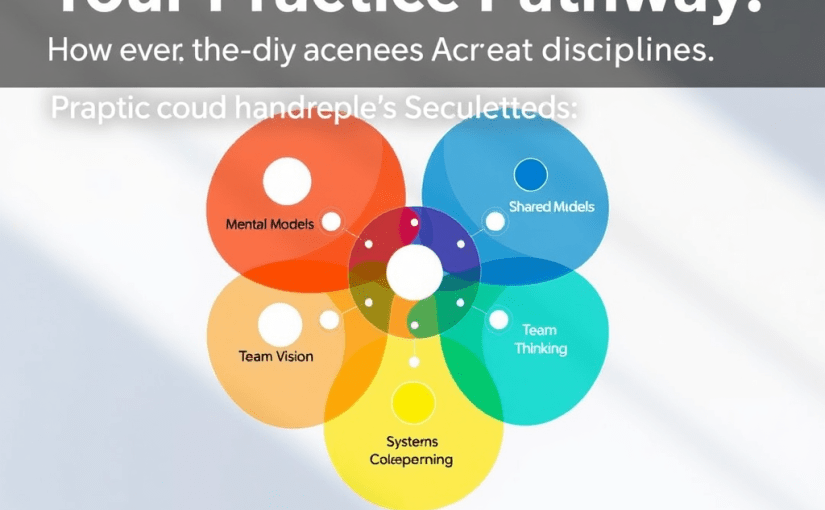




























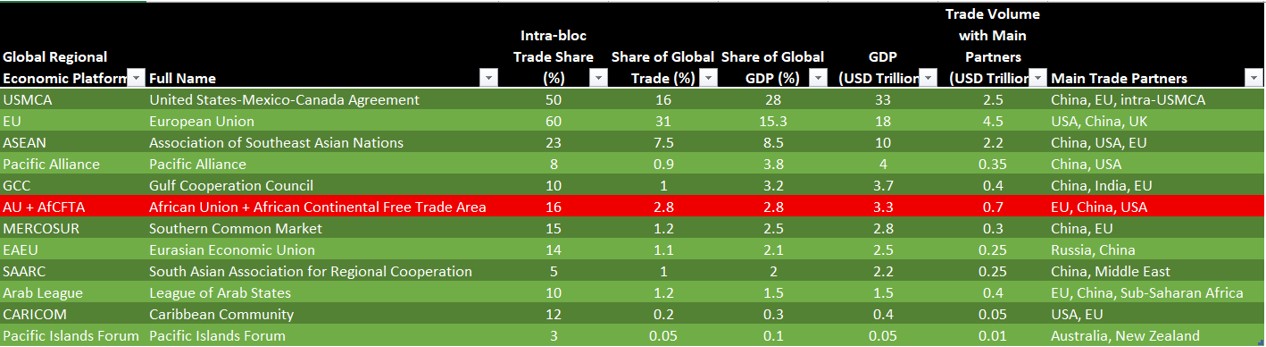
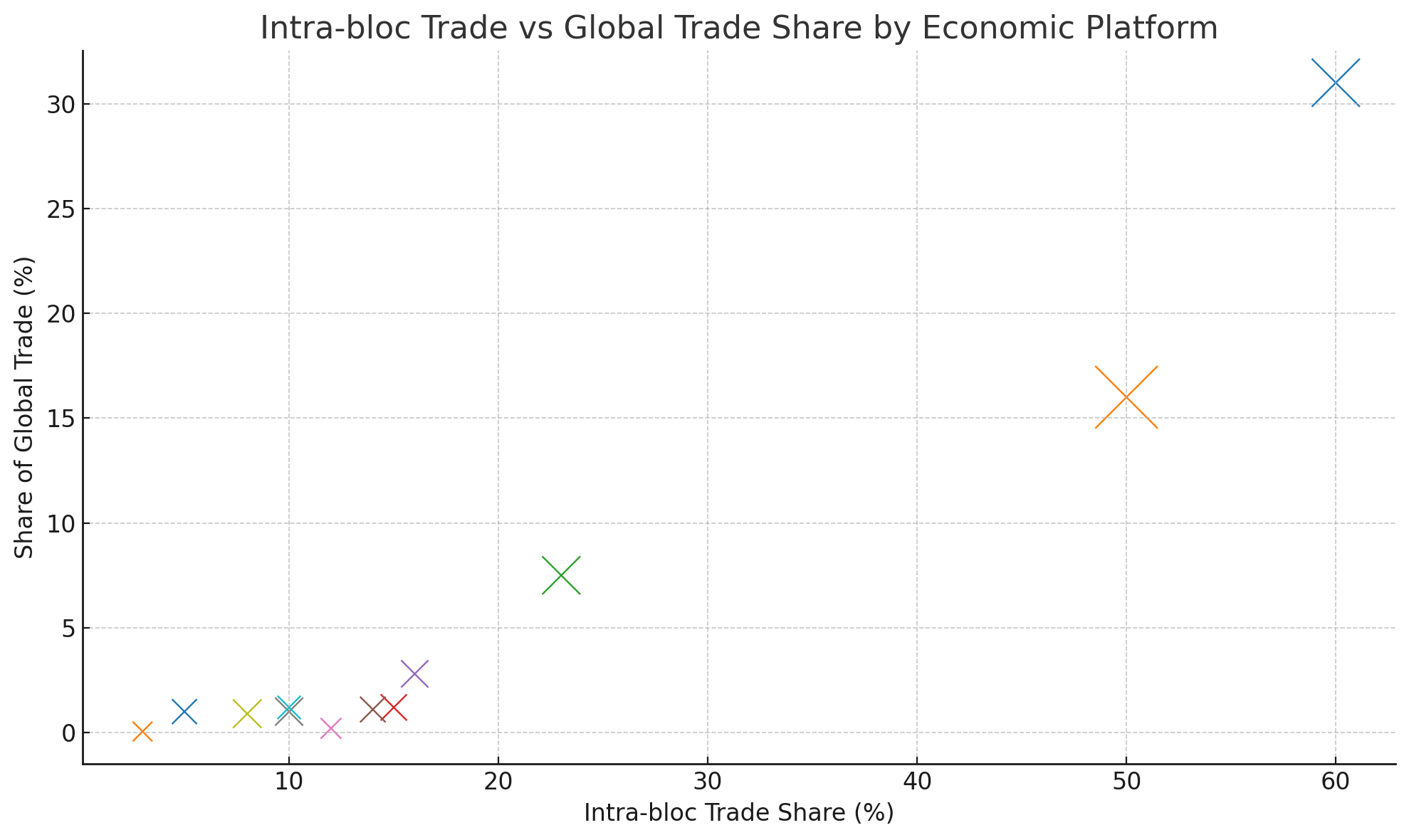
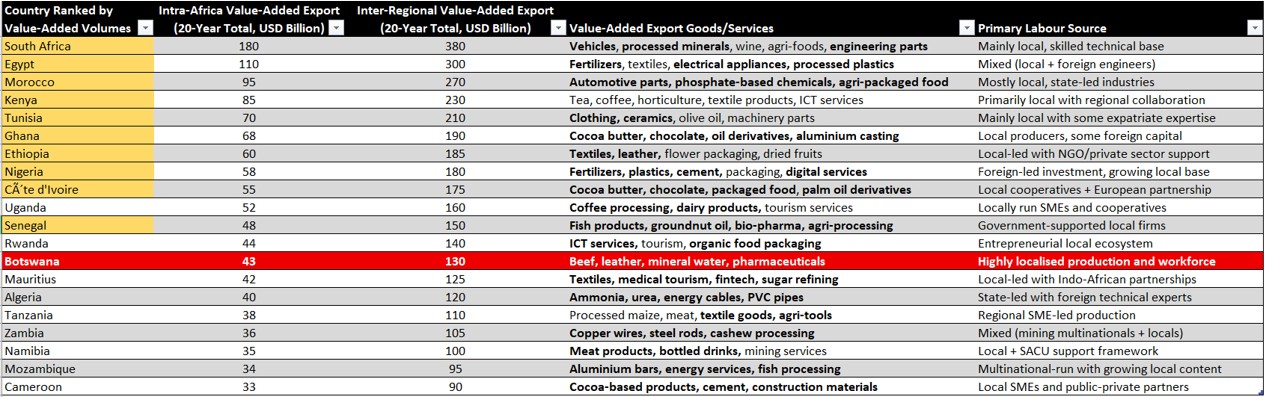





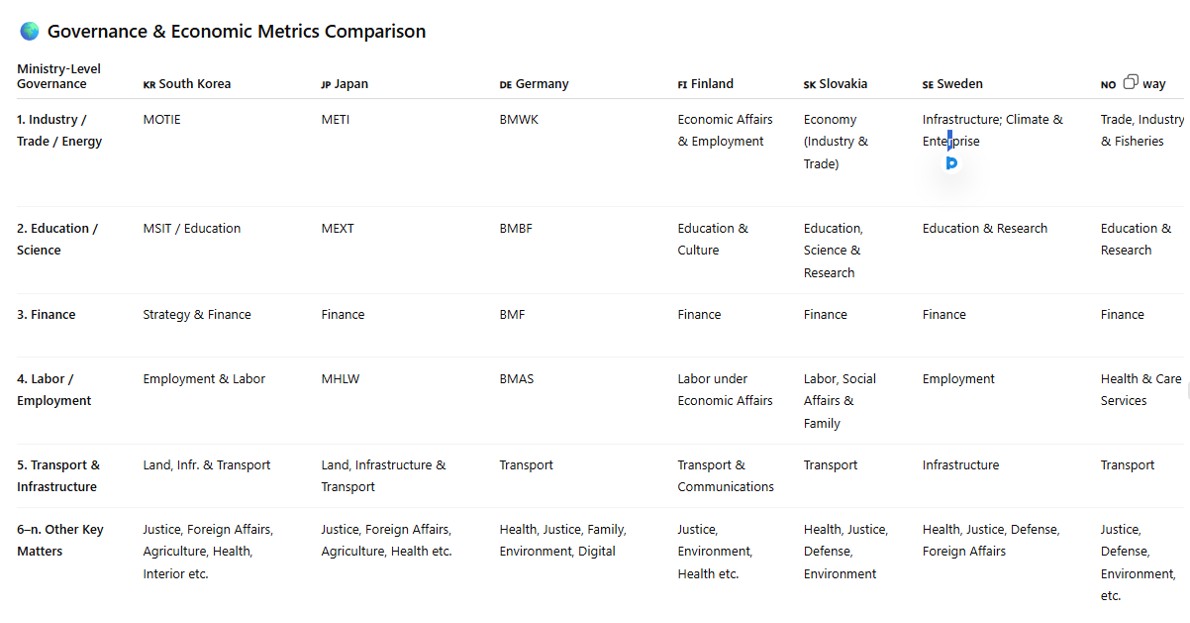
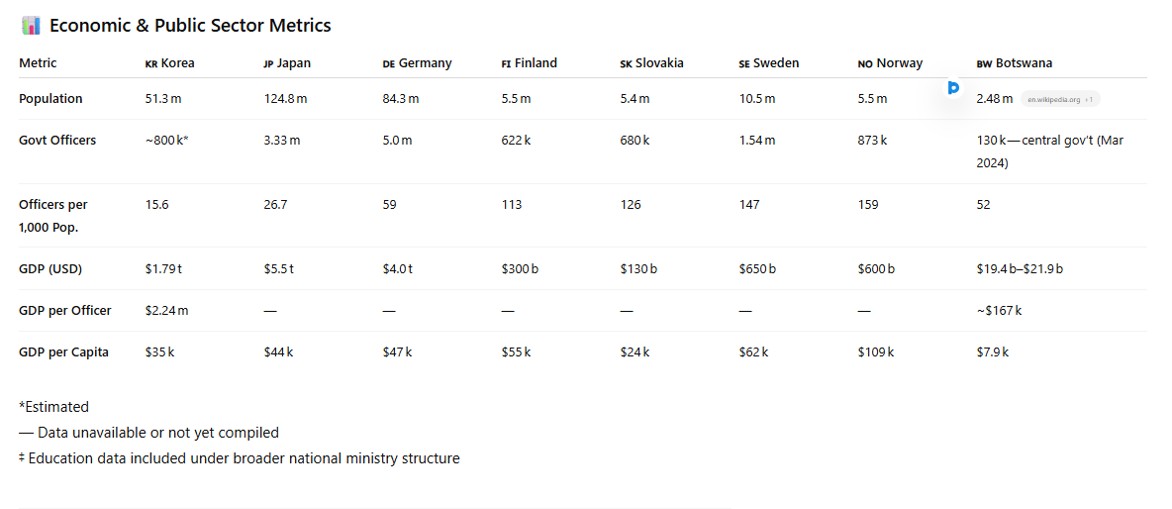


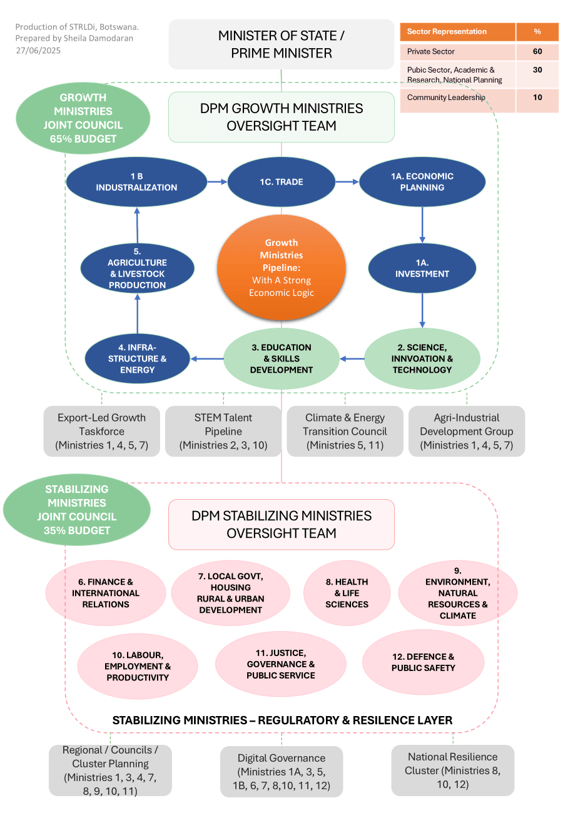
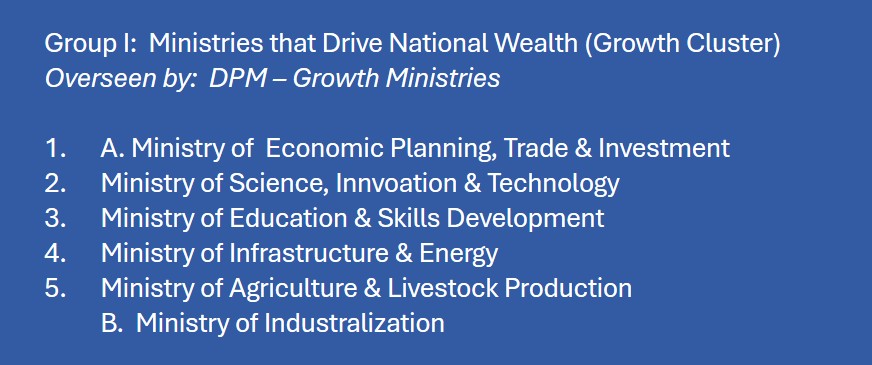


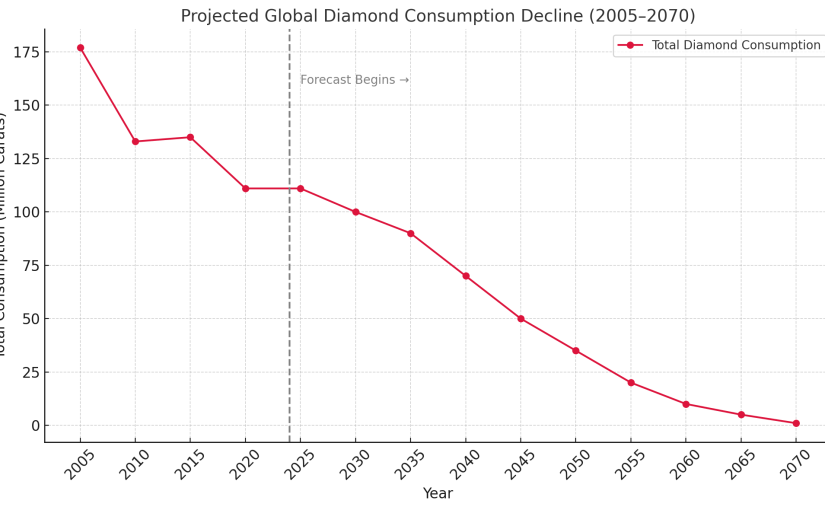

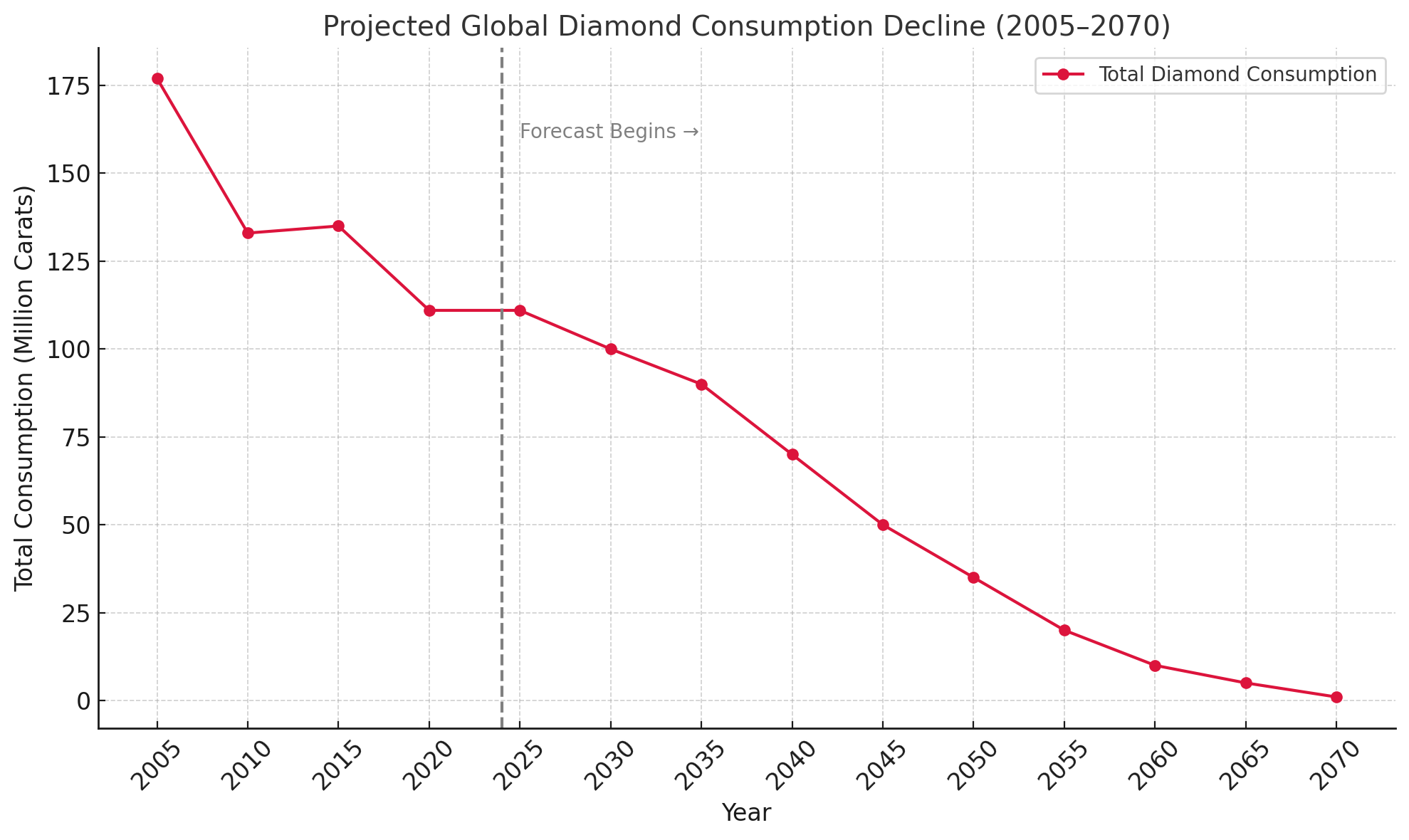
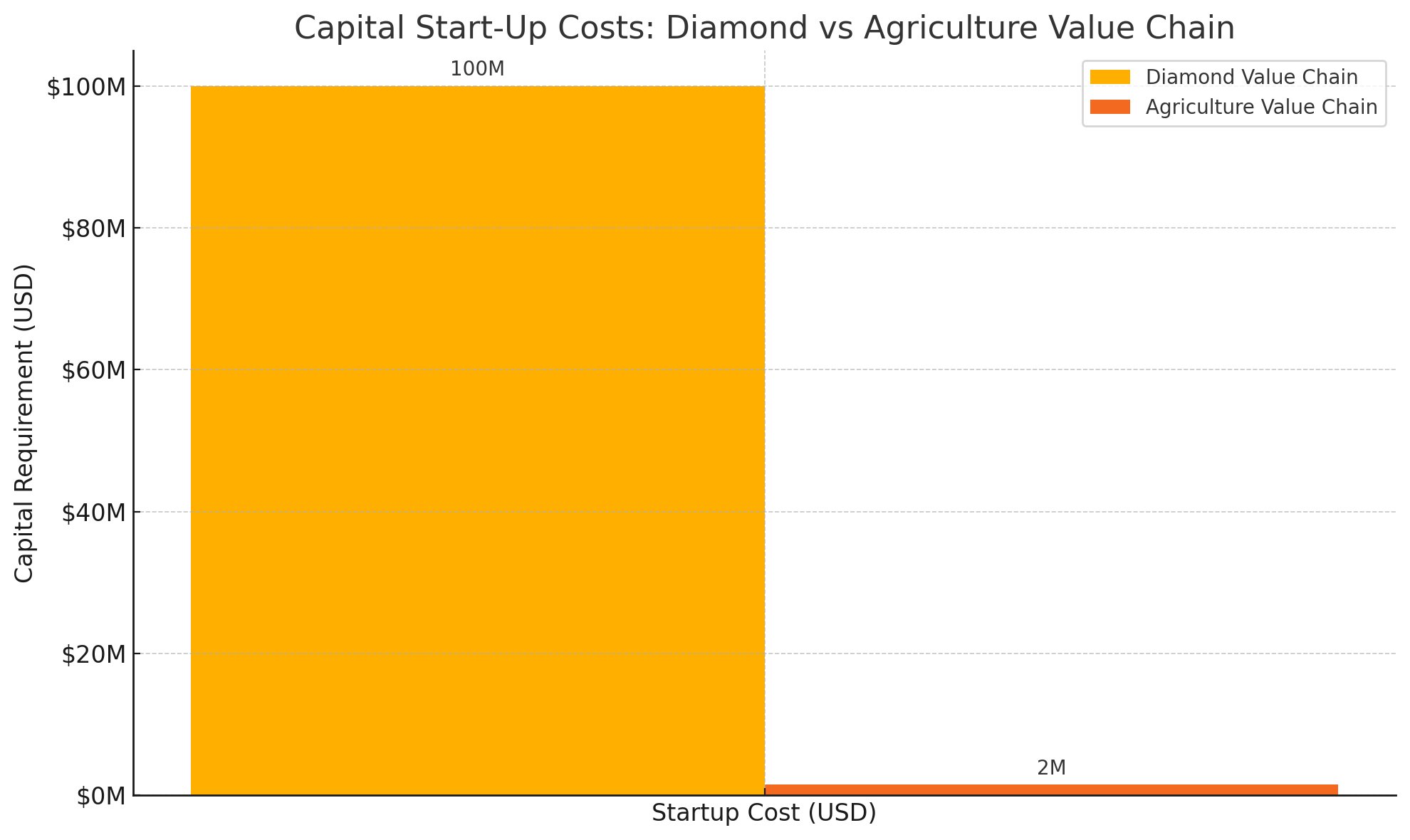







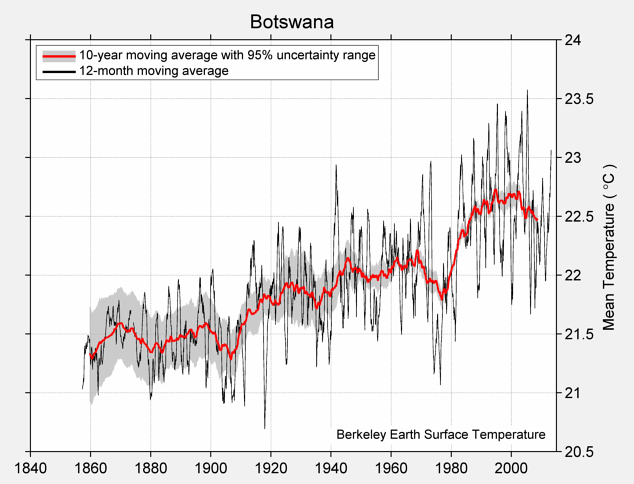


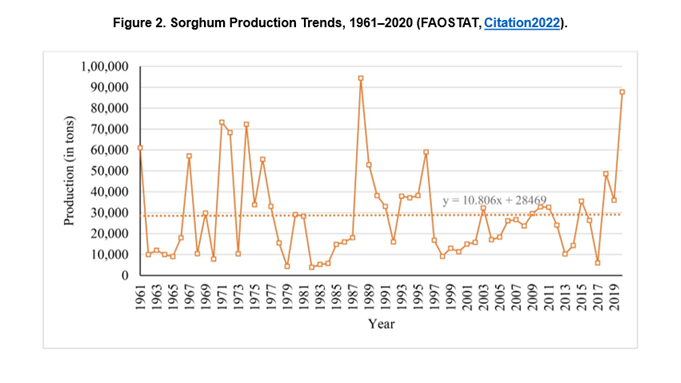
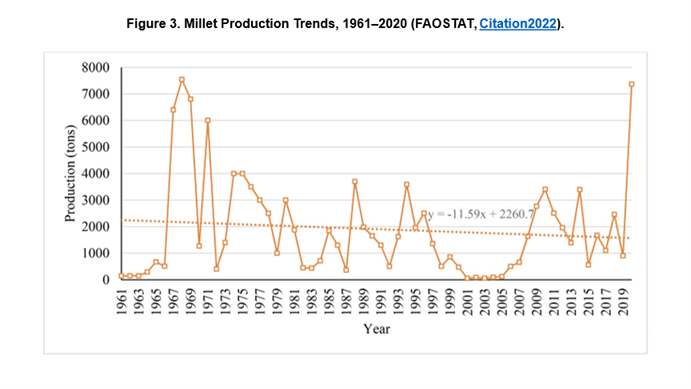


You must be logged in to post a comment.