Category: Strategy Development
-
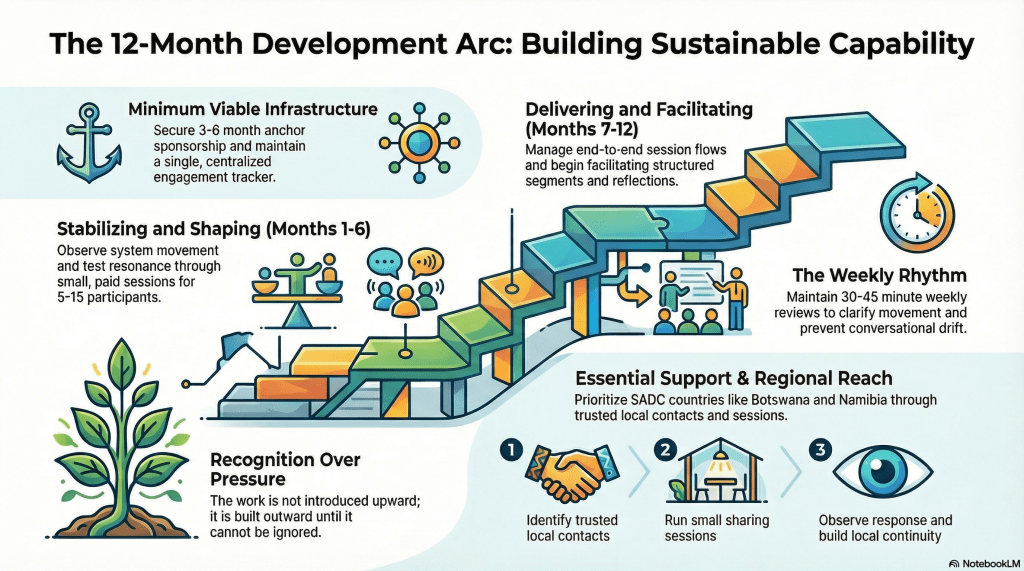
Structuring the Work for the Command Centre: A 12-Month Development Arc, Support System and Regional Reach
(STRLDi Operating Discipline in Practice) Task Assignment: Reabetswe Koosenye 1. THE POINT OF DEPARTURE When work begins to move, the instinct is often to expand — to reach out, to formalise, to build visibility. In practice, this is where most efforts begin to weaken, not strengthen, because movement is mistaken for readiness. What is required…
-

Scenario Planning as a Learning Discipline: From Arie de Geus to National Seeing
The text outlines a systematic approach to scenario planning, aimed at fostering organizational learning and preparedness rather than merely predicting outcomes. It details steps from identifying dominant futures to surfacing hidden assumptions, constructing scenarios, and translating them into behavioral graphs, ultimately identifying recurring archetypes and leverage points. This process is designed to reduce unexpected crises…
-
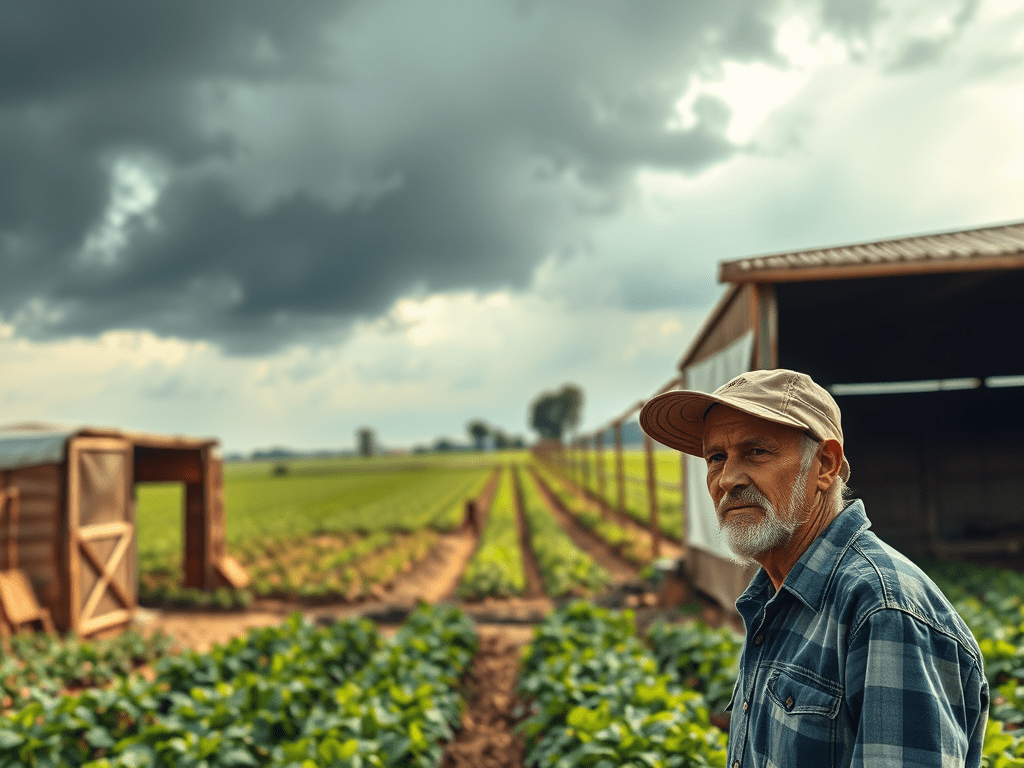
I Can Sleep When the Wind Blows: What Botswana’s Horticulture Needs Beyond Funding & Allocations
The parable “I Can Sleep When the Wind Blows” illustrates the importance of preparation, mirrored in agricultural practices and national budgeting. Effective industry planning, guided by STEM principles, ensures sustainable growth and stability. Without this backbone, the system falters, leading to volatility and inefficiency, hindering farmers and economic progress.
-

Builders or Bystanders? Three Strategic Scenarios for Botswana’s STEM Future
Your thinking is incisive — and it touches a painful global fault line. ✳️ Introductory Paragraph: The world is not waiting. Nations are restructuring their economies, education systems, and regulatory frameworks to meet the demands of an AI-powered, STEM-led global future. That shift was happening as far back as 200 years ago. In the span…
-

Addressing Persistent Unemployment in Botswana: A Systems Thinking Approach (Part 2)
Botswana’s unemployment crisis is rooted in systemic issues like labor absorption gaps, skills mismatches, and household instability. Solutions require rebalancing educational priorities towards STEM, improving family structures, and fostering cross-sector economic coordination. A holistic design is essential to energize key sectors, ensuring sustainable employment and economic resilience amidst persistent challenges.
-

Addressing Persistent Unemployment in Botswana: A Systems Thinking Approach (Part 1)
Botswana has faced decades of investment without addressing the structural causes of high unemployment. This study employs systems thinking to highlight key systemic failures in absorbing the workforce, underperforming sectors, and value circulation. Solutions lie in redesigning economic structures for sustainable growth and job creation, challenging existing policies and practices.
-
Newspaper Column #12: Why do some problems defy, no, NOT change? – Part IV
As it appeared in the Sunday Standard, Botswana on Sunday Jan 20, 2013 edition. Change Happens at the Speed of Thinking about the Whole Rather than of Our Parts What causes the change to stay changed? If we have managed change and it has happened, it should not go back to its old ways. Yes?…
-
Newspaper Column #11: Why do some problems defy, no, NOT change? – Part III
As it appeared in the Sunday Standard, Botswana on Sunday Jan 13, 2013 edition. Change Happens at the Speed of Thinking about the Whole rather than of Our Part What causes change to be real? Understanding it with a story: “The Healing Poison” Hope all of you had fabulous New Year festivities with family loved…
-
Newspaper Column #10: Why do some problems defy, no, NOT change? – Part II
As it appeared in the Sunday Standard, Botswana on Sunday Dec 23, 2012 edition. Seeing the Trees and the Forest If the problem is solved, it should not come back. Period! We would be seeing results. If it recurs, then this is a sign that we have not solved it. Yet. Period! Last week, we ran a…
-
Newspaper Column #9: Why do some problems defy, no, NOT change? – Part I
As it appeared in the Sunday Standard, Botswana on Sunday Dec 16, 2012 edition. Dynamic Complexity vs. Detail Complexity We face problems daily. And, we do not doubt our ability to deal with them. Sometimes, this confidence can pull wool over our heads that we can deal even with the stubborn ones, in much the same way. We would…
-
Article 1: The Magic of Systems Thinking!
Dear all, Hope this mail finds all of you in good spirits among all that you wish for in your life. Some of you may know that I have been away from Singapore since 2007 being part of a programme here in Botswana where I had assisted the government learn and appreciate the five disciplines…
-
Article 4: Remove self-doubt. Replace Visions.
Under construction (Photo credit: Wikipedia) The two however, does not exist together. It is one or the other. But not both.
-
Article 5: Growing Virtuous Cycles
Under construction (Photo credit: Wikipedia) Find the vicious cycles and turn them around.
-
Article 3: We are peaceful people
“We are peaceful people,” because we do not talk to each other when we are feeling angry (about something or somebody). Instead we keep it (bottled) inside within us (causing our body blood pressures and the cost of running the Ministry of Health in the country both to rise). We do this, because, “should we…
-
Article 2: Setting goals is the easy part. Reaching them is not!
REACHING THE GOALS YOU HAVE SET IS NOT EASY TILL …. WE FACE AND DEAL WITH STUBBORN PROBLEMS It is a management question. Are you there yet? What are you doing to get there? Have you set goals for you and your team? Yet, setting of goals is really the easy part. And there are…
 Systems Thinking Research & Leadership Development Institute (STRLDi)
You must be logged in to post a comment.