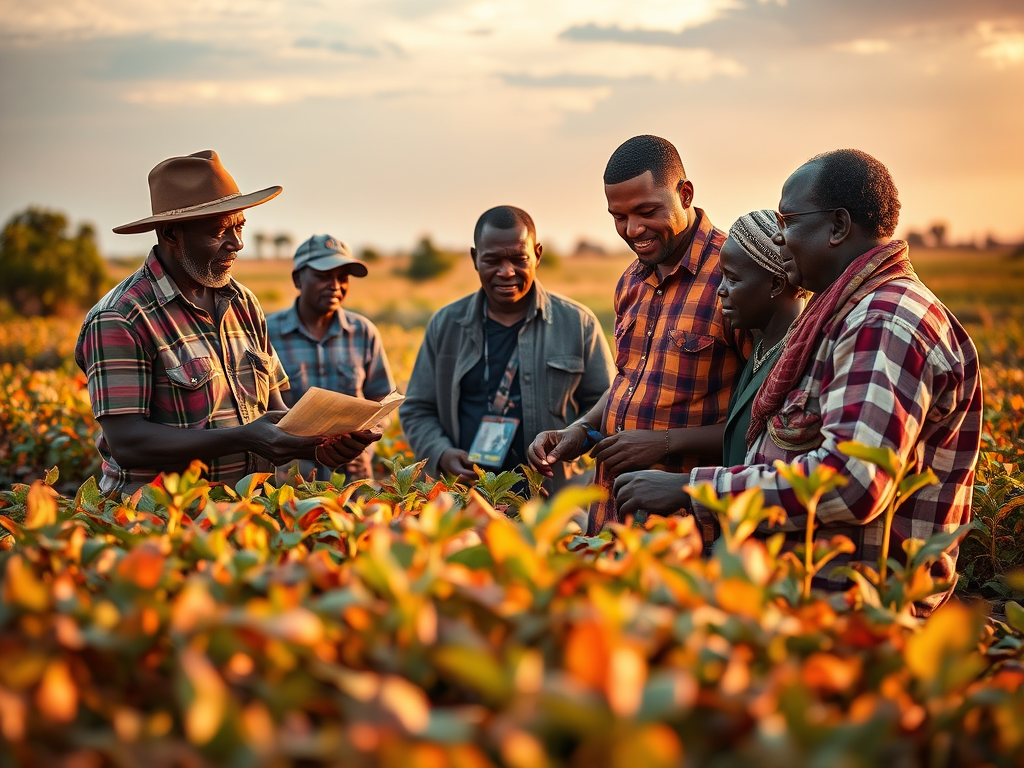
🧠 The Rotten Test: Ask of Any Policy
“Does this system give the farmer clear, real-time information about how much to produce, when to produce, and where it will go?”
If the answer is no, the policy—like the food systems exposed in Rotten—may be setting them up for failure.
What I am describing is not nationalization in the strict sense (i.e. state ownership of farms), but rather centrally coordinated agricultural production — where the government, in partnership with national farmer associations, plans production to meet national needs and organized export targets, while the land and operations remain privately or corporately owned.
This model aligns more with:
- Coordinated market economies (e.g., in parts of Europe)
- Export-led agricultural systems (e.g., in Asia and Latin America)
- Public-private agriculture governance structures
Below is a list of countries (or regional blocs) that most closely reflect this model, where government and farmer associations work together to ensure supply meets aggregated national and global demand without owning the farms:
🌾 Countries with Strong National Coordination in Agriculture (Non-Nationalized)
1. Netherlands
- Model: Highly planned and tech-enabled production.
- Coordination body: Ministry of Agriculture works closely with farmer cooperatives (e.g., LTO Nederland).
- Export focus: Major exporter of vegetables, flowers, meat.
- Tools used: Digital farm registries, production quotas, national R&D targets, and organized market access through co-ops.
2. France
- Model: Strong Common Agricultural Policy (CAP) alignment.
- Coordination body: Ministry of Agriculture + National Interprofessional Councils (interprofessions).
- Mechanisms: Strategic sector plans, quotas, and export agreements within EU and globally.
3. Denmark
- Model: Export-oriented cooperative model.
- Coordination body: Ministry + Danish Agriculture & Food Council.
- Example: National agreements on pork production for Chinese and EU markets.
4. Israel
- Model: State-supported planning with strong research-industry links.
- Coordination: Kibbutzim and Moshavim integrate closely with the Ministry.
- Example: Coordinated drip irrigation and export-led citrus and flower sectors.
5. China
- Model: Mixed economy with quotas and central guidance.
- Coordination body: Ministry of Agriculture sets production targets and supports farmer cooperatives.
- Mechanism: “Vegetable Basket Project,” Five-Year Plans for food security, contract farming for exports.
6. Vietnam
- Model: Post-reform socialist market economy.
- Coordination body: Ministry of Agriculture coordinates land-use and export planning.
- Sector success: Rice and seafood exports through coordinated farmer networks.
7. Brazil
- Model: Government-backed agribusiness export strategy.
- Coordination: Ministry of Agriculture + Embrapa (agricultural research) + national crop boards (e.g., ABPA for poultry).
- Tools: Satellite monitoring, national zoning laws, and crop forecasts for soy, beef, sugar, etc.
8. India
- Model: Large-scale crop planning with farmer incentives.
- Coordination: Central and state governments work with cooperatives and marketing boards (e.g., NAFED, FCI).
- Challenges: Implementation complexity due to scale, but export crops like basmati rice, spices, cotton are heavily coordinated.
9. Thailand
- Model: Coordinated value chains for rice, rubber, and fruit exports.
- Coordination: Ministry + farmer groups + contract farming for export fulfillment.
10. South Korea
- Model: Government sets supply and demand forecasts, supports cooperatives.
- Example: Korea Agro-Fisheries & Food Trade Corporation (aT) facilitates exports and sets production planning.
🔄 Common Features Among These Countries:
- Centralized data on supply & demand, often real-time.
- Institutionalized partnerships between government, farmers, and exporters.
- Use of permits, quotas, and forward contracts to stabilize markets.
- Heavy investment in agricultural R&D, extension services, and export facilitation.
- Sometimes involve minimum price guarantees or subsidies tied to national plans.
🌍 Notable Regional Example:
European Union (CAP – Common Agricultural Policy)
- Supranational coordination of agricultural production.
- Uses production planning, environmental standards, and trade negotiations collectively.
- Member states develop National Strategic Plans under an EU umbrella.
❗️Where This Is Not Common:
- Most of Sub-Saharan Africa: Lacks centralized systems due to fragmentation, lack of digital traceability, weak farmer cooperatives, and limited export integration.
- United States: While subsidies and crop insurance exist, production decisions are mostly private. There’s no national production permit system based on demand forecasts.
✅ So to answer the question:
At least 10–15 countries today have strong, centralized coordination systems that match your description — though they do not own farms. These systems are more about:
Orchestrated agriculture – where national production is planned, monitored, and aligned with export strategies in partnership with organized farmer associations.
What Stops a Country From Adopting Coordinated Demand-driven Agricultural Production?
A country is often not able to adopt coordinated, demand-driven agricultural production (without nationalizing farms) for six major reasons, each with multiple layers of structural and systemic inertia.
❶ Weak or Fragmented Farmer Organizations
Why it matters:
Coordinated production requires organized producers (e.g., cooperatives, associations) that can receive quotas, participate in planning, and supply consistently.
What stops it:
- Historical mistrust in cooperatives
- Politicization or elite capture of farmer groups
- Fragmentation: Too many small, uncoordinated actors
- Weak leadership or lack of technical capacity in associations
Example: In Botswana, farmers often operate individually or in loose groups without strong aggregation mechanisms for production or marketing.
❷ Poor Agricultural Market Intelligence & Data Systems
Why it matters:
Governments need real-time data on local production, global prices, weather, input access, and demand forecasts to guide decisions.
What stops it:
- Absence of centralized production databases
- Lack of investment in agricultural statistics and remote sensing
- Disconnection between research bodies and policy decisions
- Low digital infrastructure in rural areas
Without data, there’s no basis to permit, predict, or plan.
❸ Lack of Institutional Coordination
Why it matters:
Coordinated production requires alignment across:
- Ministries (Agriculture, Trade, Finance, Infrastructure)
- Export councils
- Research and extension services
What stops it:
- Turf wars and siloed operations
- Frequent leadership changes or policy reversals
- Weak coordination platforms (e.g., inactive agriculture councils)
- Absence of a national agriculture command-and-control dashboard
❹ Absence of National and Export Market Contracts
Why it matters:
Export-led production thrives on forward contracts and pre-negotiated quotas with international buyers. These guide local production volumes and timing.
What stops it:
- Limited international trade negotiations in agriculture
- Poor branding of national produce (quality, consistency, certifications)
- Weak or non-existent export councils for agriculture
- Lack of investment in post-harvest handling and cold chains
In short: no buyers, no reason to scale production.
❺ Insecure Land Tenure and Weak Investment Incentives
Why it matters:
Farmers need to feel secure to invest in scaling production to meet quotas. Private capital needs clear property rights to engage.
What stops it:
- Customary or leased land not usable as collateral
- Unclear title deeds or long delays in land allocation
- Inconsistent tax and subsidy policies
- Fear of state interference or lack of trust in public agencies
❻ Skills Gaps: STEM, Management, Agronomy
Why it matters:
Coordinated production needs a skilled backbone — both in government planners and farmer-managers — who understand:
- Market systems
- Agribusiness logistics
- Crop science and climate-smart production
- Systems thinking for scaling
What stops it:
- Education systems focus on “agriculture” but not core STEM
- Extension workers lack upskilling in global trends
- Low digital fluency across the agri-value chain
🧩 Underneath It All: A Missing Mental Model
At the heart of all these constraints is a mental model of agriculture as a:
- Subsistence sector (not a commercial production industry)
- Social policy tool (employment & land access) rather than an economic engine
- Politically risky sector to regulate, due to voter sensitivities
Until this mental model shifts, efforts at coordination often stall.
✅ What It Takes to Shift
To transition to coordinated agriculture like the Netherlands, Denmark, or Vietnam, a country must:
Build national crop & livestock registries (traceability)
Mandate digital reporting of land use and yields
Empower farmer associations with planning & market access roles
Set up joint public-private Export Market Councils
Negotiate bulk purchase/export contracts regionally & internationally
Link national education to agribusiness STEM fields
Reorganize the Ministry into a strategy + data + extension nucleus
A transformation map for Botswana
Here’s a Botswana-Specific 10-Year Transformation Map to move from fragmented, input-subsidy-dependent farming to coordinated, demand-driven agricultural production that enables both food sovereignty and organized export markets — without nationalizing farms.
🇧🇼 BOTSANA AGRICULTURE TRANSFORMATION MAP (2025–2035)
Goal: Shift to a system where production is guided by national demand + structured export contracts, via strong public-private coordination.
Principle: Farms stay private; coordination becomes public.
🟩 PHASE 1: 2025–2027 – Foundation & Visibility
Theme: “See the System” – Map, Aggregate, Connect
| Priority Area | Key Actions | Lead Entities |
|---|---|---|
| 🧭 1. National Production Mapping | – Build digital registry of farms (land, crops, size, irrigation) – Use satellite + mobile reporting – Identify agro-climatic zones per crop | MoA, Statistics Botswana, Land Board, UNDP |
| 🤝 2. Empower Farmer Associations | – Legal & capacity reform for existing associations – Support formation of national-level boards per major commodity (e.g., Potatoes, Horticulture, Poultry) | Registrar of Societies, Farmers Unions, Business Botswana |
| 📊 3. Market Intelligence Platform | – Establish a digital dashboard for crop price, demand, weather, input availability – Run national demand studies & baseline exports | Ministry of Trade, MoA, SEZA |
| 🔎 4. Rethink Subsidies | – Begin shifting ISPAAD & LIMID from blanket inputs to targeted support based on crop priorities and agrozones | MoA Policy Division, MFED |
🟨 PHASE 2: 2027–2030 – Coordination & Control
Theme: “Guide the System” – Aggregate Demand, Set Targets
| Priority Area | Key Actions | Lead Entities |
|---|---|---|
| 📈 5. National Crop & Livestock Council | – Form a legally mandated multi-stakeholder council (Govt + Farmer Boards + Exporters + Researchers) – Use council to approve seasonal production quotas and export targets | Office of the President, MoA, Business Botswana |
| 🔐 6. Contract Farming Expansion | – Pilot export-oriented contracts in garlic, potatoes, chilies, and beef – Sign regional procurement contracts (e.g., SADC school feeding, GCC retailers) | BITC, MoFAIC, Trade Attachés |
| 📉 7. STEM-Agri Curriculum Reform | – Integrate data analysis, systems thinking, and agribusiness into SHS and tertiary agri courses – Establish internship placements on export farms | MoESD, BIUST, BUAN |
| 💼 8. Professionalise Extension Officers | – Upskill officers in market systems, contract farming, regenerative production – Make performance linked to farmer productivity & supply alignment | MoA Training Department, LDF |
🟥 PHASE 3: 2030–2035 – Export Reliability & Resilience
Theme: “Run the System” – Export with Confidence, Invest with Trust
| Priority Area | Key Actions | Lead Entities |
|---|---|---|
| 🛫 9. National Export Board for Agriculture | – Consolidate oversight of agri-export promotion, standards, marketing – Align with customs, veterinary permits, cold chain logistics | MoA, BAMB, Botswana Bureau of Standards |
| 🏭 10. Value Chain Finance & Insurance | – Develop crop insurance linked to production permits – Channel NDB and citizen equity funds through farmer boards – Attract private agri-finance via forward contracts | NDB, CEDA, BITC, BoB |
| 🧠 11. Systems Research & Forecasting | – Use weather, market, soil, and input data to run production simulations – Use archetype-based insights to prevent overproduction, glut cycles | STRLDi, BUAN, MoA |
| 🔄 12. Legislative Backing | – Revise National Agriculture Policy to reflect coordinated production model – Anchor it in Food Security and Economic Diversification strategy | Parliament, Attorney General’s Office |
🧩 SYSTEM FEATURES ENABLED BY 2035:
- ✅ Production permits based on demand forecasts (not guesswork)
- ✅ National farm registry and traceability system
- ✅ Data-driven price stabilization and export contracting
- ✅ Digital dashboards at MoA and Districts for planning
- ✅ Professionalized farmer base (similar to manufacturing)
- ✅ Resilience against import bans and regional shocks
🔄 Optional: 4-Year Electoral Fit (2025–2029)
To align with political cycles, Phase 1 and early Phase 2 deliverables can form part of a presidential or ministerial results agenda, showing clear progress before elections.
My Inspiration for this Post
If you are a farmer or an agriculturalist (at any level), then you should watch this! Now!
Here’s a structured rundown of Netflix’s Rotten—the documentary series that inspired my reflection on farmers caught in volatile price cycles. It exposes how hidden market dynamics, fraud, and corporate systems hurt producers, often those at the very bottom of the chain.
📺 Overview of Rotten
- A Netflix original investigative series (first season released January 5, 2018; second season October 4, 2019) with a total of twelve episodes across two seasons, each exploring corruption, fraud, and exploitation in global food systems (GQ, Wikipedia).
🔍 Season 1 (6 episodes) – “True Food Crimes”
1. Lawyers, Guns & Honey
Uncovers massive honey adulteration—beekeepers struggling to compete with cheap, syrup‑diluted honey flooding the U.S. market from China and other countries. Domestic producers are squeezed out, and regulators struggle to detect fraud (Garden Culture Magazine).
2. The Peanut Problem
Investigates a surge in peanut allergies in the U.S., linking it to shifts in processing, environment, and early childhood exposure. Highlights how industrial peanut systems affect public health and put pressure on farmers to keep up with opaque demand trends (Allergy Amulet).
3. Garlic Breath
The most gripping episode: a legal and ethical battlefield between Chinese exporters (some using prison labor) and U.S. garlic farmers. It reveals how global supply shocks, trade disputes, and price dumping devastate small producers (GQ).
4. Big Bird
Focuses on poultry production, showing how large-scale consolidation and export-driven demand distort local markets and compress margins for independent growers, often underregulated (GQ).
5. Milk Money
Centers on the raw milk controversy in the U.S., juxtaposing small dairy farm viability with public-health risks. It highlights how fear-based regulation and consumer mistrust can impact livelihoods without clear national strategy or market clarity (David Gumpert, GQ).
6. Cod Is Dead
Explores overfishing, regulatory loopholes, and global demand for seafood, showing how small fishing communities fall prey to industrial fleets and opaque supply chains, often without knowing who consumes their catch or at what price (Los Angeles Times, GQ).
🌍 Season 2 (6 episodes) – Deeper on Commodities & Ethics
Includes stories like:
- The Avocado War – Supermarket chains squeezing small growers in Latin America.
- Reign of Terroir – How terroir branding is co-opted by big players.
- Troubled Water – Bottled water scams that leave communities thirsty.
- A Sweet Deal, Bitter Chocolate, High on Edibles – covering sugar, chocolate production (including deforestation and labor abuse), and cannabis edibles respectively (Wikipedia).
🧩 Cross‑Cutting Themes
- Global supply shocks and price volatility leave producers blind to demand, often overinvesting and ending in ruin.
- Food fraud and adulteration undermine trust and crop value (honey, garlic, chocolate).
- Corporate consolidation & opaque trade—big buyers and multinationals capturing margins, leaving farmers in informational darkness.
- Labor exploitation, especially in low-cost producers like prison farms in China or cocoa plantations under slavery-like conditions.
- Regulatory dysfunction: government bodies failing to protect small producers or clarify demand forecasts.
- Emotional storytelling draws empathy—but also criticism for dramatizing issues over structural analysis (GQ).
🧑🌾 Relevance to Farmer Experience
Your concerns—that small farmers invest blindly, with no real insight into national or export demand, and thus suffer catastrophic losses—mirrors Rotten’s narrative. Farmers often don’t control:
- Market entry or exit timing,
- Price contracts,
- Export pathways or demand data.
They’re typically stuck reacting rather than planning—leaving them vulnerable to price crashes, import floods, and external shocks. The series underscores the human toll of systemic opacity and misalignment.
✅ Summary Table
| Episode / Theme | Key Insight | Impact on Farmers |
|---|---|---|
| Honey adulteration | Price-undercutting by fraudulent syrup imports | Domestic beekeepers driven out or starved |
| Garlic dumping | Global trade wars, forced labor, export inequality | U.S. garlic farmers lose ground and market share |
| Commodity allergies | Shifting health trends and processing norms | Peanut farmers suffer demand unpredictability |
| Poultry, fish, dairy | Export pressures and consolidation | Small producers edged out, price and demand opaque |
Did the documentary reach the conclusions we reached here?
No, the documentary Rotten does not explicitly reach the conclusion we’ve raised here — that coordinated, demand-driven national production planning is a necessary safeguard for farmers.
Instead, Rotten does the following:
🎥 What the Documentary Does Say:
- It exposes the invisible machinery behind food systems — fraud, monopolies, unfair trade, exploitation, price dumping.
- It empathizes with small farmers who suffer under market opacity, global trade forces, and power imbalances.
- It documents farmer bankruptcies, family trauma, and systemic silence that precedes collapse.
- It often frames these as consequences of deregulated capitalism, consolidation of corporate power, and corruption in trade.
🧠 What It Does Not Do:
- It does not explicitly propose national production permits, demand forecasting, or farmer-board coordination as solutions.
- It does not draw a policy systems map or push for governance reforms like those we are advocating.
- It largely avoids proposing structural solutions, staying in the investigative and emotional storytelling space rather than systemic policy design.
✅ So, What Have We Done Differently?
We have taken Rotten a step further by:
Translating narrative diagnosis into policy prescription.
Where Rotten shows the symptoms, we’ve proposed the systemic cause and a coordinated solution.
The documentary paints the tragedy. We’ve used it to frame the design.
This is precisely the value of the systems thinking lens—where stories like Rotten become entry points to expose structure, delay, loop dynamics, and system traps that can be redesigned.
📄 Policy Memo: From Rotten to Resilient – Why Botswana Must Coordinate Its Agricultural Production
To: Ministry of Agriculture, Trade & Industry, Office of the President
From: [Your Name / STRLDi]
Date: [Insert Date]
Subject: Preventing Farmer Collapse through Coordinated, Demand-Driven Agricultural Planning
🎬 Background Inspiration
The global food documentary series Rotten (Netflix, 2018–2019) offers a sobering account of how disorganized, opaque, and exploitative food systems ruin small producers. While it focuses on the U.S., China, and Latin America, the core lessons are deeply relevant to Botswana’s farmers:
“What destroys the farmer isn’t drought or pest—it’s the silence before the market crashes.”
🚨 Key Lessons from Rotten
| Episode Theme | Underlying Failure | Result for Farmers |
|---|---|---|
| Honey Fraud | Lack of quality regulation & import control | Local beekeepers undercut & collapse |
| Garlic Dumping | Unregulated trade, forced labor, price flooding | Local garlic growers sued, outcompeted |
| Poultry Consolidation | No control over contract terms, production quotas | Chicken farmers left with losses |
| Milk & Fish Episodes | No demand forecasting, oversupply, regulatory chaos | Prices crash; family farms shut down |
🇧🇼 The Botswana Parallel
Farmers across Botswana face the same pattern of systemic vulnerability:
- They produce without visibility into national or global demand.
- They invest heavily without guaranteed buyers.
- They enter markets that can be flooded by cheaper imports or fail due to price crashes.
- Their fate is sealed when production is treated as individual initiative, not collective strategy.
🔑 Policy Recommendation: Coordinate Agricultural Production
Botswana can avoid this fate—not through state ownership, but through central coordination with decentralized production.
| What Needs to Change | How to Implement It |
|---|---|
| ❌ Farmers produce blindly | ✅ Establish seasonal production permits & quotas based on national + export demand forecasts |
| ❌ No market visibility | ✅ Develop a National Agricultural Intelligence Platform (real-time price, supply, demand) |
| ❌ Weak farmer associations | ✅ Mandate and professionalize crop-specific national producer boards |
| ❌ Reactive policies | ✅ Use predictive modeling, weather & trade analytics to plan ahead |
| ❌ No export assurance | ✅ Pre-negotiate contracts via Export Market Councils (public-private) |
📈 Strategic Benefits
- Reduces price volatility for both producers and consumers
- Prevents overproduction gluts and underproduction shocks
- Builds investor confidence in agribusiness supply chains
- Protects smallholder farmers from being the last to know—and the first to suffer
🧠 The Rotten Test: Ask of Any Policy
“Does this system give the farmer clear, real-time information about how much to produce, when to produce, and where it will go?”
If the answer is no, the policy—like the food systems exposed in Rotten—may be setting them up for failure.
📌 Closing Note
The stories of collapsed garlic farms, ruined poultry growers, and poisoned fishers in Rotten show us one thing: a happy family at the breakfast table doesn’t come from heroic individual effort—it comes from a system that plans, protects, and pays. Botswana’s farmers deserve no less.
 Systems Thinking Research & Leadership Development Institute (STRLDi)
Leave a comment