
A Tribute to Dr Daniel Kim and Ms Diane Cory
by Sheila Damodaran
“There are teachers who change what we know, and there are teachers who change how we see.”
Daniel Kim and Diane Cory did both.
The Beginning – 1990s: Learning to See
I first sat in D&D’s class (as they are fondly known) in 1996. I remember sitting there, wide-eyed. I wasn’t astonished by what was new. Instead, I realized that I had been waiting for this all along without even knowing it.
In 1999, I joined their postgraduate initiative titled Leaders for Learning programme at the Singapore Civil Service College. It was the year-long Learning Organisation Programme. At that time, The Fifth Discipline was just starting to take root in Asia. The programme was led by Daniel Kim and Diane Cory. I was enlisted as their Teaching Assistant. The course aimed to train internal facilitators and consultants. These professionals would bring systems thinking into their institutions. They would also incorporate organisational learning.
I entered the programme wanting to understand systems thinking. At the time, my mind was still trained to think in straight lines. And I was good at it, given my strong mathematics and science backgrounds. I would analyse, sequence, and solve problems. I did not realize I was reacting within a part of the whole. Daniel’s patient way of drawing archetypes on flipcharts began to loosen that habit. He didn’t just teach loops. He showed us how the world organizes itself through feedback, delay, and interconnection. He demonstrated how structure generates a consistent behaviour over time. He also explained how seeing the whole helps us recognise these patterns. That recognition, right there, changes how we act within it.
Meanwhile, Diane guided us through profound visioning work. In one of her closing sessions, she tasked us to write a vision. We reflected on where we hoped to see this work unfold in the future. I wrote that I wanted to see it extend beyond organisations. I could already sense that organisational boundaries inevitably limit what we see. Acting only within those limits rarely brings real leverage. I wanted it to reach into governments, communities, businesses and the nation. Eventually, I hoped it would extend into the United Nations.
A year later, I received my self-addressed letter, reminding us of what we had envisioned. By then, I was already facilitating joint public–private sector sessions — the seed of a dream beginning to take root.
The Early Practice – 2000s: Building Bridges
By the early 2000s, I was applying these frameworks within Singapore’s public service. Those years taught me something Daniel and Diane had always implied. Systems thinking is not just an analytical method. It is an ethical practice.
Every policy conversation, reform, and meeting room became a living example of feedback and structure. In 2002, during an intense phase of work, I started sketching an idea. This would later evolve into The Onion Model. It shows how layers of belief, structure, and behaviour reinforce each other across multiple archetypes.

Daniel’s archetypes helped me see the patterns; Diane’s insistence on clarity of vision helped me trust them.
That same year, I convened the Learning Organisation Practitioners Network (LOPN). It was a community of practice lovingly put together by both public and private sector individuals. This community connected public and private leaders across sectors. It was not yet SoL (Society for Organizational Learning). However, it carried the same spirit till I departed for Botswana in 2008. The aim was to keep learning alive where people work, not only where they study.
At its heart, their teaching carried a moral invitation. It urged us to maintain coherence, clarity, and compassion. This charge is crucial even when systems lose theirs.
The Middle Years – 2010s: When Systems Speak Back
The years that followed were the true practice field. Applying systems thinking within political and institutional settings required not only clarity but stamina.
The Government of Botswana had invited me to bring this learning into a national context. In 2005, I served as the Chief Facilitator of the first Cabinet Retreat of the Government of Botswana. The recurring issue of unemployment was a focal point. The country’s struggle to diversify its economy also became the central case study.
In 2007, Permanent Secretary to the President Eric Molale invited me to continue the work. This work had begun after he reviewed my initial findings from the Cabinet Retreat. I was encouraged to carry the study forward into NDP10, Botswana’s national development planning process for 2008.
That year marked the first time parastatal and private-sector leaders were included in national planning. The government also recognised a gap. The public service leadership community lacked the tools of The Fifth Discipline. They particularly lacked the tools of Systems Thinking. I was subsequently engaged on a four-year contract to help senior officers in the public service develop these critical skills.
By 2018, the Human Resource Development Council (HRDC) re-engaged me to finalise the study on unemployment and economic diversification. This became feasible after the establishment of Statistics Botswana, which enabled us to undertake the research with confidence. It is the first study of its kind in the world. I had long imagined that such a study was possible. It was extraordinary to watch it (and The Onion Model) come alive before my eyes. That study later anchored the formation of STRLDi in Botswana.
I had been quiet for about six years (2013–2018). Returning to public work after completing that first case study marked a much clearer comeback. During that same period, I was building a second organisation. It is a business that continues to inform my research. I was also learning the ropes of life in a new country. This foray into food manufacturing has allowed me to study both the manufacturing and agriculture sectors at close range.
Through this experience, I began to see that working systemically involves being influenced by the system itself. The discipline was not only about seeing patterns—it was about staying in relationship with the whole. I explored why unemployment persists. I examined why agriculture and manufacturing so often fail to connect. I studied how the structures beneath them shape national outcomes.
Those years marked a turning point. Systems thinking was no longer merely a professional craft. It became a way of inhabiting the world. It was a lifelong apprenticeship in seeing reality as a whole.
The Renewal – 2020s: Taking Root in Africa
Two decades later, I find myself in a very different geography. I am now a resident in Botswana, Africa, but still in the same field of practice. We engage the region and the globe through The Systems Thinking Research & Leadership Development Institute (STRLDi). These same principles are brought into national dialogues on agriculture. They influence governance and economic transformation.
The Onion Model has matured into a research framework. It maps national systemic archetypes. It helps leaders see how reinforcing loops in policy, investment, and behaviour produce recurring outcomes. These outcomes include unemployment or underinvestment.
The insights began on Daniel’s flipcharts. They also originated in Diane’s visioning circles. These insights now help shape public policy, farmer training, and cross-sector collaboration across Africa.
In many ways, this is the natural evolution of Diane’s visioning work. The learner is becoming the teacher, not by design, but by continuity. We are living their visions of us. I like to think that she would smile. She would know that the seed she helped plant found new soil. The loops Daniel once drew still guide new learners today.
✳️ Reflection
Compared to forty years ago, the world has shifted at its core. We speak of climate change, political upheavals, or social breakdowns. Humanity is beginning to recognize the larger forces at play. It is also starting to enter into dialogue with itself.
That conversation is happening everywhere: on Facebook, LinkedIn, X, Google — in the words of citizens, scientists, leaders, and learners. The voice of collective reflection is growing louder.
It’s a kind of global systems awareness. This awakening has its roots in the work of Peter Senge. It is also linked to Daniel Kim, Diane Cory, and many others. They decided to take the first bold steps to help us learn to see wholes, not fragments. Their pioneering determination laid the first path. This path allows us, in turn, to help lay the next paths. This next path nurtures not just learning in organizations, but consciousness in humanity.
We are witnessing that very work take its next step — unfolding quietly and persistently through millions of small awakenings. And if we pause to reflect, we might ask ourselves: what if they had chosen otherwise?
What Their Legacy Means for the Fifth Discipline Community
To the wider Learning Organisation and Fifth Discipline community, this reflection is a message of continuity. This message includes those who once studied under Daniel, Diane, and Peter Senge. It also includes those now carrying the work forward.
Their legacy does not rest in any one organization or country.
It lives in the quiet persistence of diligent individuals. They keep practicing, teaching, and adapting the work to the needs of their time. This is often done without fanfare, but always with faith in the discipline itself.
Daniel and Diane signify a pivotal moment for me. Systems thinking stopped being just a method. It became a way of seeing life. Their lessons endure not only in memory. They persist in every conversation where people rediscover that structure shapes behavior. This awareness can shape a different future.
Twenty-five years on, the work continues. It spans across new landscapes and in new languages. The same DNA of learning, clarity, and compassion is always carried. Every generation rediscovers the work in its own language — proof that learning, once awakened, never dies.
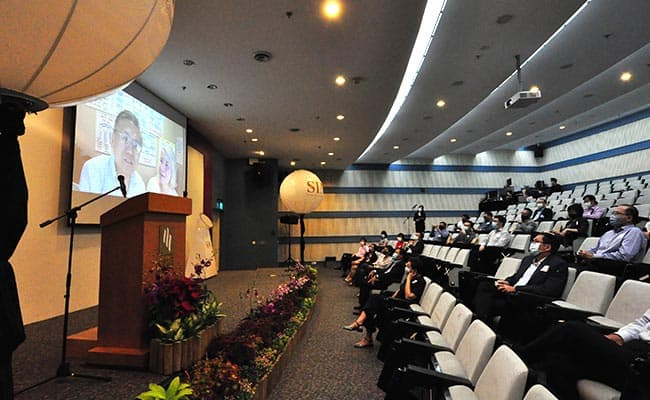
Daniel and Diane, thank you — for teaching us not just how to think, but how to see.
🔗 Learn more about STRLDi and its ongoing work
💬 Community reflections on the Learning Organisation legacy
 Systems Thinking Research & Leadership Development Institute (STRLDi)
Leave a comment