
From Pattern Recognition to Structural Insight
The exchange that unfolded in the group illustrates something important about how people actually learn systems thinking. Contrary to how the discipline is often taught, people do not first need definitions, diagrams, or lectures about system archetypes. They need something far simpler.
They need to see a pattern that reflects their lived reality.
Once the pattern becomes visible, curiosity opens, and people begin asking structural questions on their own. What happened in the conversation therefore provides a natural template for a discovery-based pedagogy.
The learning process unfolds through a sequence of stages.
Stage 0 – Before Entering the Door
Park Your Reasoning at the Door
Before the graph is discussed, the facilitator establishes a simple but important discipline:
“For the moment, park your reasoning at the door.”
This instruction is not an attempt to suppress thinking. It does the opposite. It temporarily suspends premature explanation, allowing participants to look at the graph without immediately imposing familiar narratives or policy arguments on it.
Most people, especially professionals and policymakers, are trained to move quickly to interpretation. They begin explaining what the graph means before they have actually seen the pattern.
The instruction to park reasoning at the door creates a pause.
In that pause, participants are invited to simply observe.
▪ Look at the shape of the line.
▪ Notice whether the pattern is stable or volatile.
▪ Observe the behaviour over time.
Only after this observational step does interpretation begin.
This discipline matters because the human mind often rushes to defend existing explanations. When reasoning dominates too early, the pattern itself disappears beneath competing arguments.
By briefly suspending explanation, the facilitator allows participants to encounter the pattern directly.
Once the pattern becomes visible, reasoning can return — but now it is anchored in what has been seen, not in what was previously assumed.
In your conversation, this move appears in spirit when you guide the group to see the graph first, before discussing structures such as productive sectors, GDP expansion, or shifting the burden.
It is a small instruction, but it performs an important function: it protects the integrity of observation, which is the foundation of systems thinking.
If we refine this pedagogy further, Ms Sheila Damodaran, this opening discipline could actually become the signature entry point of the STRLDi method.
It would read something like:
STRLDi Rule #1: See Before You Explain.
And interestingly, this is exactly the opposite of how most policy discussions currently begin.
Stage 1
Start With a Graph That Reflects Reality
Learning begins with a Behaviour Over Time (BOT) graph.
In your case, the graph showed the pattern of persistent unemployment. Importantly, the graph was not introduced with explanation or theory. It was simply placed in front of the group.
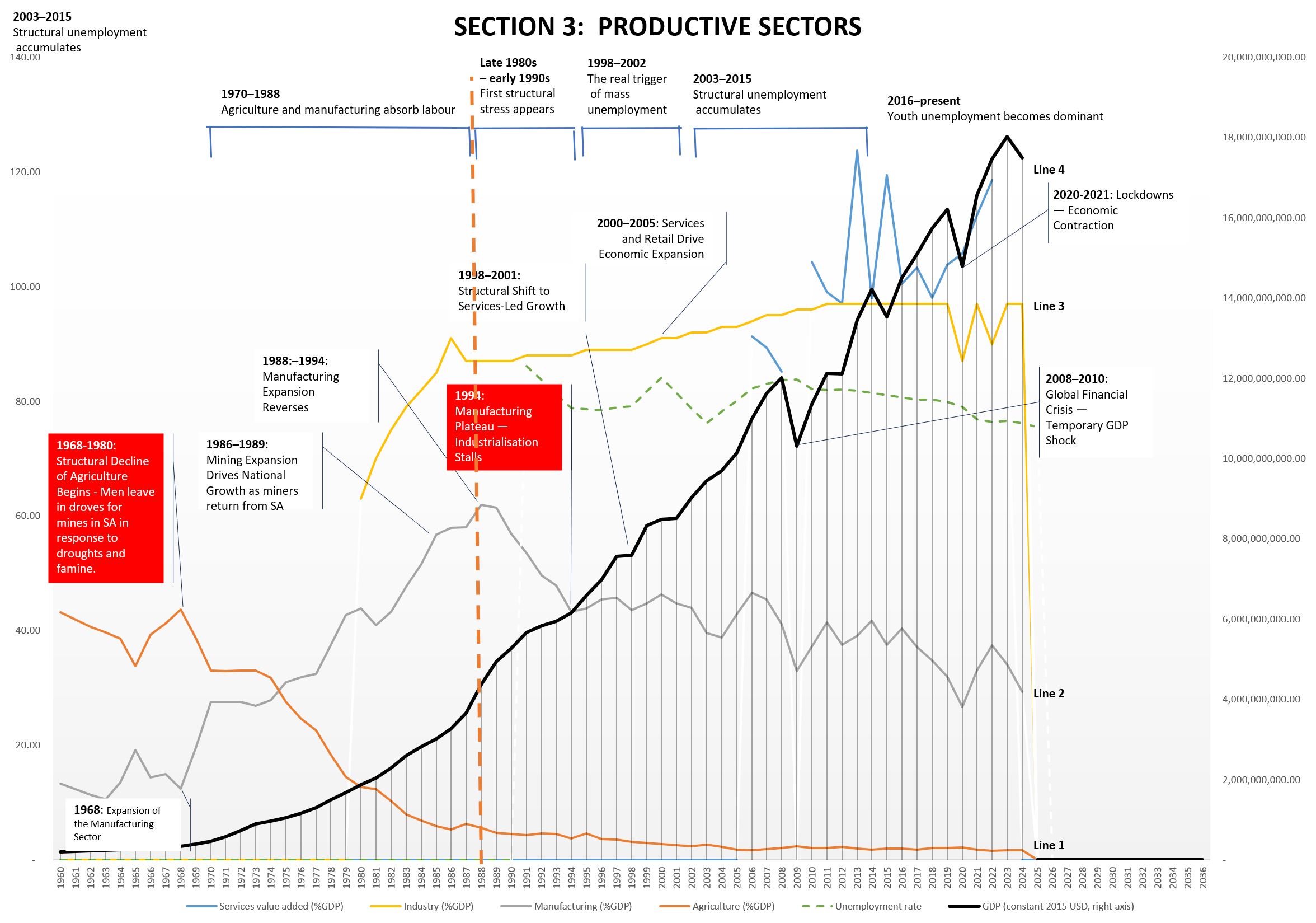
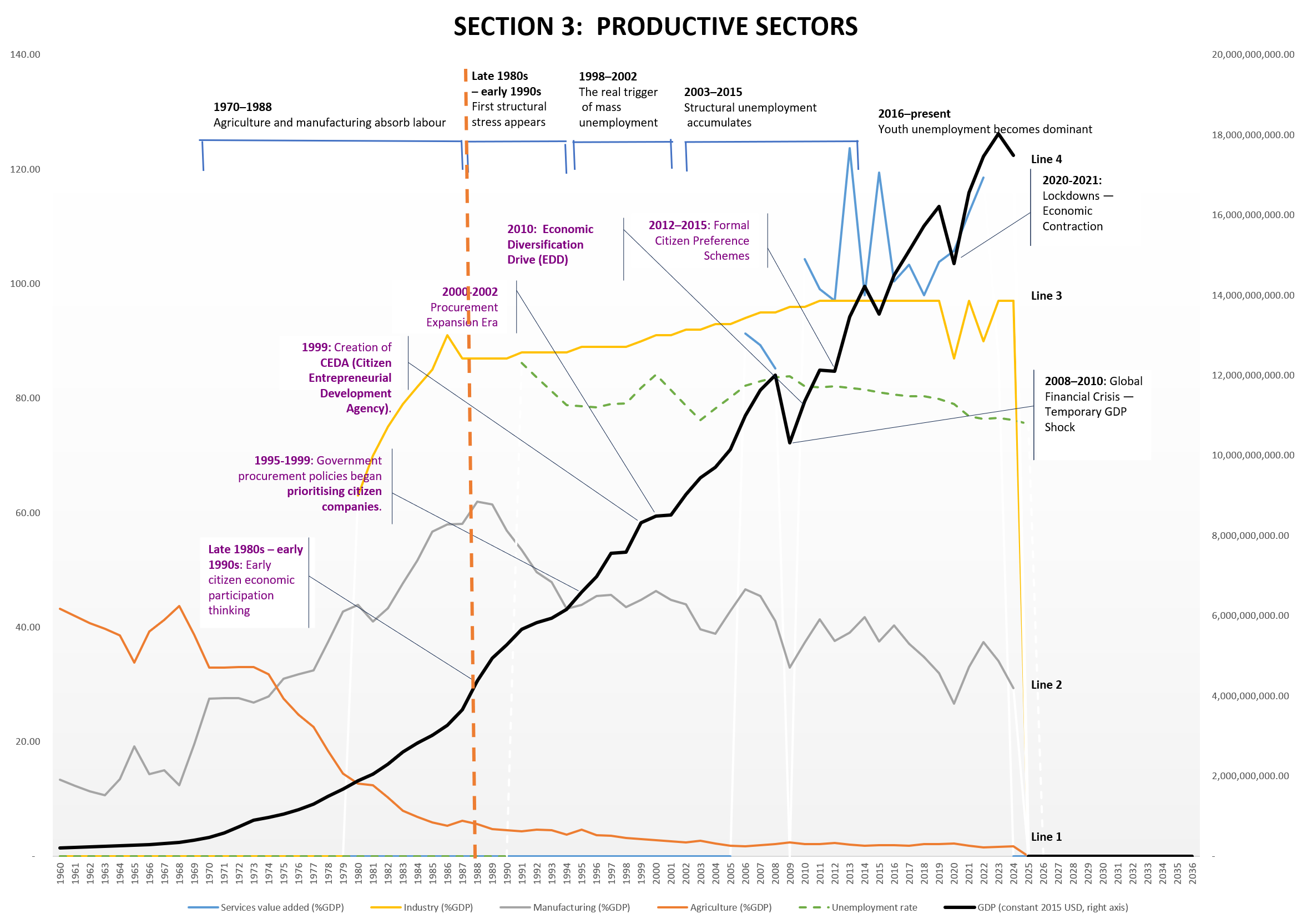
The opening question was disarmingly simple:
“What do you notice?”
This move shifts the participants into the role of observers rather than recipients of knowledge. The conversation immediately becomes exploratory rather than instructional.
At this stage, the facilitator’s role is not to explain but to slow the group down long enough for them to see.
Stage 2
Recognition — Matching the Pattern to Lived Experience
Once the graph is presented, participants begin to recognise that the pattern reflects something they already experience in everyday life.
This step matters because people cannot engage meaningfully with ideas that feel far removed from their reality.
When the pattern resonates with lived experience, credibility emerges.
In the conversation, participants recognised that unemployment was not simply fluctuating randomly from year to year. Instead, the line revealed a persistent pattern over time.
That recognition creates a shift:
| Before Recognition | After Recognition |
|---|---|
| A technical graph | A reflection of reality |
| Numbers over time | A social pattern |
| Abstract data | A lived condition |
From that moment onward, the group is no longer analysing data. They are examining the structure of their own society.
Stage 3
Pattern Literacy
After recognition comes pattern literacy.
Participants begin to examine the shape of the line rather than the individual numbers.
Questions at this stage remain observational:
▪ Is the line random or persistent?
▪ Does it move dramatically or remain stable?
▪ What might produce such stability over time?
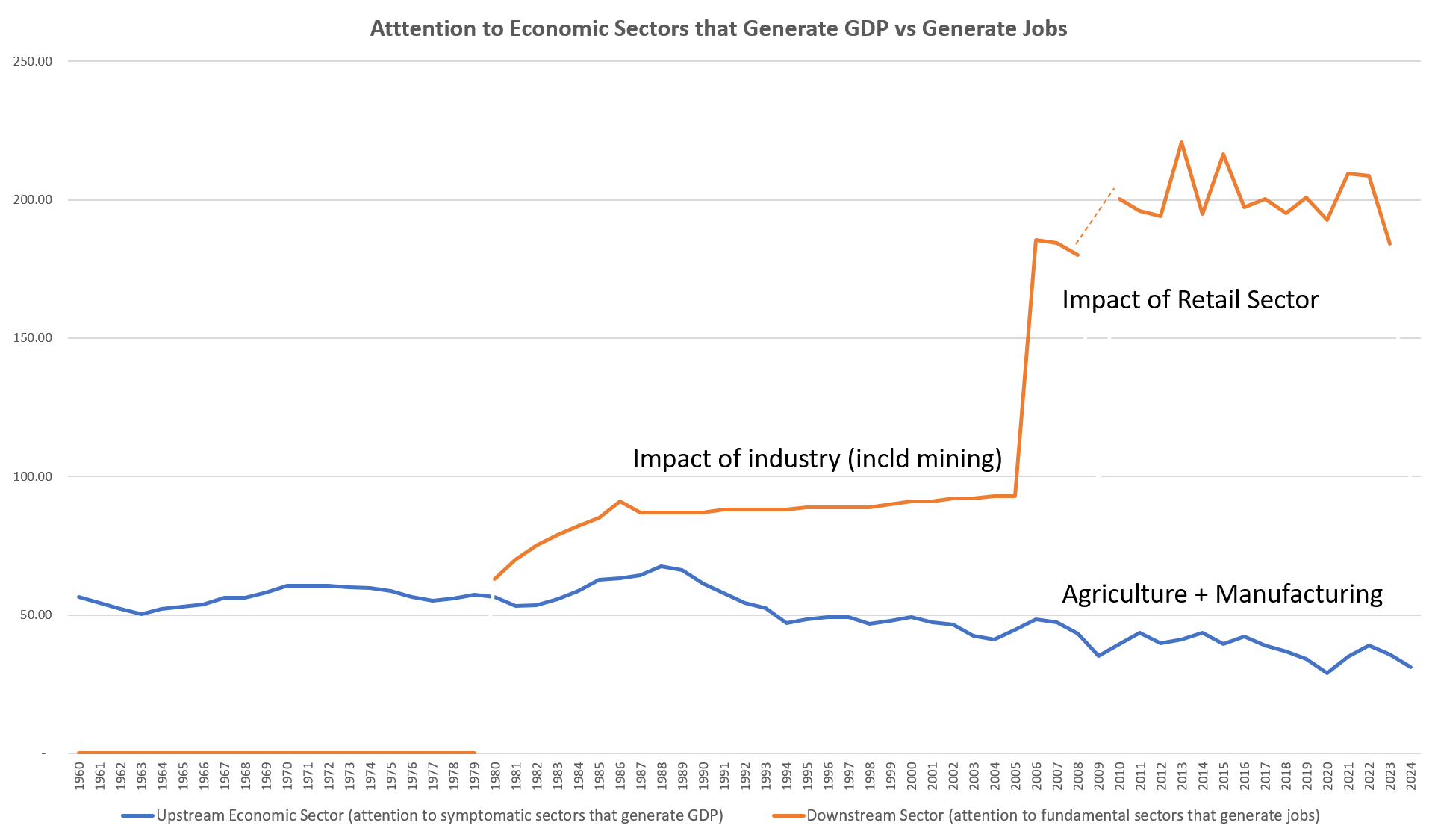
The insight slowly emerges that persistent patterns rarely arise from isolated events. They usually reflect structural conditions operating beneath the surface.
This is where systems thinking quietly begins to appear.
Stage 4
From Pattern to Structure
Once the group recognises that the pattern is persistent, the conversation naturally turns toward structure.
The key question becomes:
What kind of systemic structure produces a pattern like this? Please refer here for the full list.
At this point, the conversation in the group revealed a critical insight: job creation belongs primarily to productive sectors, not merely to sectors that inflate GDP figures.
Participants begin to see that an economy dominated by consumption, retail, or financial expansion may increase GDP without significantly increasing employment.
The graph therefore becomes a bridge between pattern recognition and structural understanding.
Stage 5
The Flip — Revealing Possibility
The most powerful moment in the discussion occurred when the graph was flipped.
The underlying data did not change. Only the perspective changed.
What had previously been interpreted as persistent unemployment could now be viewed as the missing path toward consistent full employment.
This move introduces possibility while remaining grounded in the same empirical pattern.
It prompts a new question:
What structural conditions would produce the flipped outcome?
This moment is crucial because it expands imagination without abandoning realism.
Stage 6
Archetype Recognition — Shifting the Burden
Once the structural discussion begins, participants are ready to recognise systems archetypes.
In this case, the archetype of Shifting the Burden becomes visible.
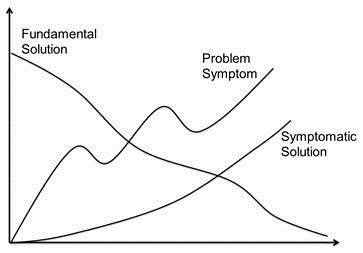
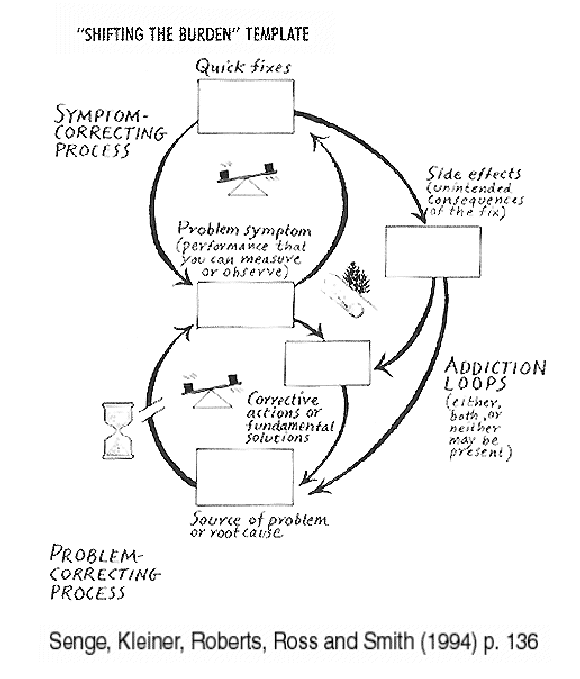
Instead of strengthening the sectors capable of absorbing labour at scale, societies often respond to unemployment through short-term measures:
- government employment expansion
- welfare support
- retail growth
- financial redistribution
- crime controls
These responses temporarily relieve the symptoms but do not address the underlying structural drivers of job creation.
Participants therefore begin to see that the issue is not simply unemployment itself but the system’s habitual response to unemployment.
Stage 7
Discovery Ownership
The final stage in the pedagogy is psychological.
Participants begin to feel that the insight belongs to them.
This was clearly expressed in Thabiso’s reflection when he described feeling guided through the process while still owning the discovery.
That moment matters.
When people arrive at insights themselves, they do not experience the learning as external instruction. They experience it as personal understanding.
This is what turns systems thinking from an academic framework into a civic capability.
Why This Pedagogy Matters
What the conversation revealed is that systems thinking can spread through populations much faster than is often assumed.
The critical ingredient is not technical expertise. It is pattern literacy.
When citizens learn to recognise persistent patterns and ask structural questions, public conversations begin to shift away from debating symptoms toward understanding the structure of the system itself that generates (controls) the patterns.
As your conversation illustrated so clearly:
Sometimes all it takes is simply seeing the graph.

 Systems Thinking Research & Leadership Development Institute (STRLDi)