
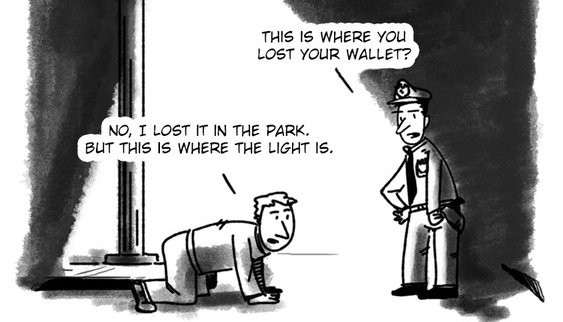
When we take the easy solution as a way out of a problem, the systemic structure (or the circle of causality) will ensure it takes us right back to the problem again. That is the purpose of the causal structure. Until we discover and learn why that is happening. When that happens and, continues to recur (which will be detected when plotting behaviors over time), it is an indication we took the easy way out of the problem. That is not the same as solving the problem.
Extracted from the Fifth Discipline: In a modern version of an ancient Sufi story, a passerby sees a drunk on his hands and knees under a street lamp. He offers to help and finds out that the drunk is looking for his house keys. After several minutes, he asks, “Where did you drop them?” The drunk replies that he dropped them outside his front door. ”Then why look for them here?”, asks the passerby. ”Because,” says the drunk, “there is no light by my doorway”.
We all find comfort in applying familiar solutions to problems, sticking to what we know best. Sometimes, the keys are indeed under the street lamp; but very often they are off in the darkness. After all, if the solution were that easy to see or obvious to everyone, it probably would already be found.
Pushing harder on familiar solutions, while fundamental problems persist or worsen, is a reliable indicator of non-systemic thinking,
Did we get led back into the problems in the case of the urgent file? What about in the case of declining agricultural output levels?
Pushing harder on solutions because they are familiar, while fundamental problems persist or worsen, often not only leads us right back to where we had started but puts us in a situation worse than before.
The longer subsistence farmers persisted with familiar solutions to correct declining levels of agricultural outputs, and while at first, it showed improvements to output levels but then got progressively worse with time, the more their children and their men would choose to leave the villages they come from to look for greener pastures elsewhere usually at towns and cities. This meant it now led to their lands being subject to degradation as a result of disuse and land use changes that did not involve agriculture. What does increased land degradation do to agriculture output levels. Did you say, they lowered?
You are right!
Why did that happen? What caused it? Why had familiar solutions not continued to work out?
Let’s look at what these familiar solutions were and then what they caused to happen in this instance.
The more farmers struggled to feed themselves and their families on the amounts of food they produced on their farms, the more farmers struggled to survive. Farming in the country happens once a year. When it rains. During the months, where there were no rains (from April to December, the lands stay unattended and abandoned. Trees and plants go through a process similar to hibernation called dormancy, and that’s what keeps them alive during the winter. Dormancy is like hibernation in that everything within the plant slows down. Metabolism, energy consumption, growth, and so on. The first part of dormancy is when trees lose their leaves. The soil increasingly loses its ability to retain nutrients in the soil and as the weather gets warmer and drier the soil loses its moisture and the activities that generate humus (humus is formed by the decomposing action of soil microorganisms (e.g., bacteria and fungi), which break down animal and vegetable material into elements that can be used by growing plant ) disappear. In the next rains, the loose soils wash away much quicker and the soils degrade even further.
What advice would we give farmers, to deal with this situation? They were told to plant and grow crops that did not require as much water to survive. These are called dry crops. Dry crops, unfortunately, do not continually release moisture in the atmosphere above the lands they are growing in. The plants are hardy and when they are dormant and lose leaves, the ability of the land to release moisture into the atmosphere and therefore plug into the water cycle and strengthen it around the region decreases. What will be the result? There is even less rains.
To encourage farmers to keep working on the lands when the rains return, the government would provide farmers with grants and financial aid as well as startup seeds which the farmers did not have to buy themselves. They were provided for. Sometimes, rather than use the seeds to grow plants that would generate the next harvest, farmers use them to feed the family till part or all of the way, until the next planting season arrives and they are provided with another round of startup seeds.
Farmers growing produce on subsistence lands, created unknown to them many issues which they would later deem as challenges. Increased land degradation, reduced rainfall levels, and declining output levels. More inputs were being placed in the system but far less yields per hectarage over time. This meant increased costs of agricultural production for the nation.
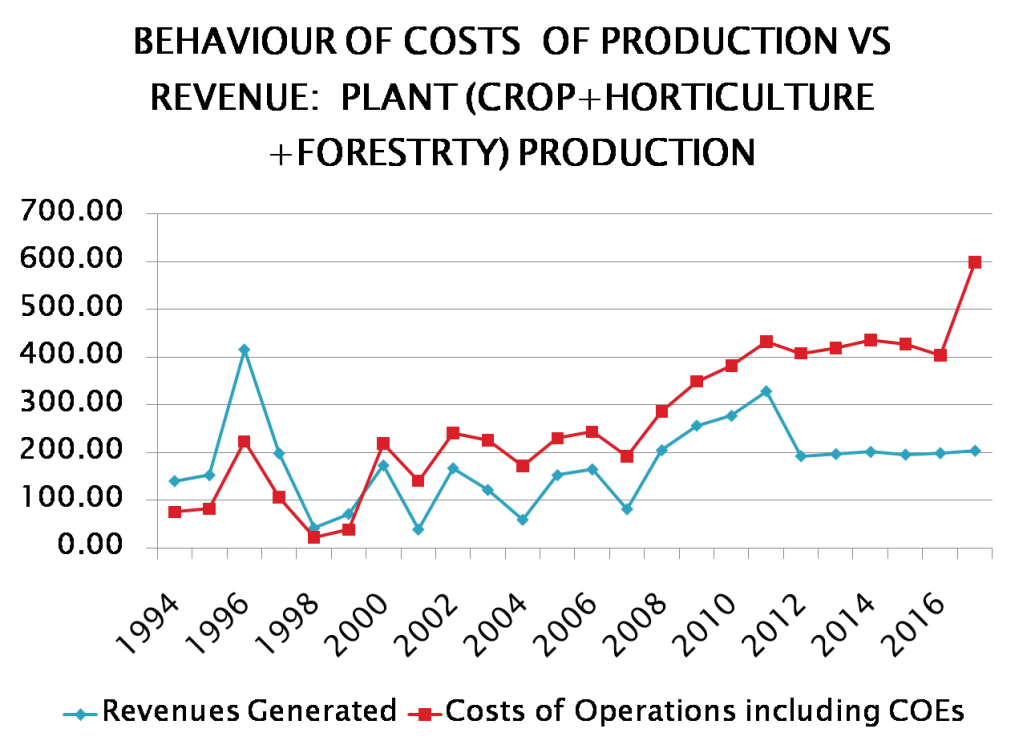
This, of course, had meant it made it increasingly harder for politicians to pad greater allocations of resources to farmers by the next polls.
Had the problem returned. Yes,
What does the law say? It would mean we had taken the easier of the solutions out of the problem.
What do the strategies encourage? Was the focus on providing a means to survive for themselves or creating a passion (or deep interest) in developing agriculture and agriculture best practices? In short, passion for money or passion for farming? Well, we chose to bypass the latter. Also as men moved away from their agricultural lands, it became increasingly harder to pass on the “passions of large-scale farming to their sons” and trade the outputs. When the work was instead relegated to their females, farming was likened to farming in one’s own backyard. Smaller sizes of the lands were used for farming and increasingly larger blocks of land stayed disused.
What did this mean? Well, it aggravated the conditions needed for productive agricultural outputs.
When we choose to take the easy way out, we are avoiding the harder of the solutions. And so, it also goes without saying that the harder it is to make a solution work for the problem, the less likely we shall be led back into the problem. However, when we choose to ignore the harder solution, the cure can be worse than the disease (Law #5).
 Systems Thinking Research & Leadership Development Institute (STRLDi)
You must be logged in to post a comment.