
The next article was prepared for submission for the 2019 Richard Goodman Strategic Planning Award.
SUMMARY:
- Systemic archetypes play a crucial role in shaping our perceptions.
- They influence our interactions and experiences in various contexts.
- Understanding these archetypes can lead to deeper insights into our realities.
CORE APPLICATION INFORMATION
PART 1: OVERALL RATIONAL
Why do you believe your organization is deserving of the 2019 Richard Goodman Strategic Planning Award? Why is your application unique and particularly exemplary (e.g. industry-leading, revolutionary)?
Here is a succinct, logically structured, and professionally refined version of your submission, tailored for leadership audiences and aligned with the strategic work at STRLDi:
Why STRLDi Is Deserving of the 2019 Richard Goodman Strategic Planning Award
A Distinctive Contribution to Strategic Planning
The Systems Thinking Research & Leadership Development Institute (STRLDi) stands apart in the field of strategy development. Unlike conventional consultancies, STRLDi focuses on creating national-level strategies. These strategies confront and reverse the most persistent and deeply embedded challenges. They are specifically designed for governments and institutions.
Our approach does not treat symptoms—it targets the systemic root causes. We equip nations to fully understand why these issues persist and to respond with strategies that produce permanent, transformative change. These are not incremental solutions. They are total turnarounds that realign national performance with both citizen needs and global sustainable development goals.
Why Our Work Is Unique
Our work is grounded in The Fifth Discipline framework by Dr. Peter Senge. We integrate all five disciplines—Systems Thinking, Personal Mastery, Mental Models, Shared Vision, and Team Learning—into a structured national dialogue. This is done through research, strategy formulation, and executive learning interventions.
These disciplines help us understand persistent national issues. Critical concerns like unemployment, stagnant GDP, declining education quality, or social fragmentation continue. This happens despite years of policy interventions and resource allocations. We reveal the underlying systemic structures that cause well-meaning efforts to fail or even worsen the issue.
The Power of Strategic Leverage
Persistent issues behave much like a tightly pulled sling: energy builds up, but no onward motion occurs. Without understanding the cause of this tension, any action taken will be misdirected or ineffective.
When systems thinking is applied, this “blocked energy” is released—just like the stone from a sling. Strategic leverage becomes possible, and transformation begins to unfold. Our national strategy interventions unleash that strategic momentum.
A Proven Approach, Ready for Global Adoption
For over 23 years, our approach has matured into a reliable, scalable, and repeatable model. It has been applied in both public and private sector contexts, and its outcomes are consistent across time and geography. Our pre-COVID study on unemployment is a good example. It demonstrated that even as external factors evolve, the internal systemic patterns stay constant. These patterns are addressable.
We believe that this award will not only recognize our impact to date. It will also serve as a springboard for regional and international collaboration. This will allow more nations to adopt this systems-based approach to strategic planning.
Persistent issues resemble the energy we feel in our hands. We experience this as we pull the rubber sling back on the catapult. The energy, as it builds up, stops the stone from flying. At this point, essentially, it retards growth from happening.

We need to learn and understand the reason for their persistence. We can do this through systems thinking, team learning, mental models, personal mastery, and shared vision. Then, the energy that the sling releases in shooting the stone ahead becomes unstoppable! Till we understand this, any measure will be a half-measure.
Here’s a study on unemployment as a case in point. I conducted this study just before the onset of the COVID-19 pandemic. The reasons have, nevertheless, remained intact, regardless of time and space. That’s the nature of understanding and using The Fifth Discipline.
https://lnkd.in/dWPsmV7c
Happy reading!
#learningorganization#thefifthdiscipline#growth#petersenge#problemsolvingskills
#systemsthinking#teamlearning#mentalmodels#gdpgrowth#unemployment
#qualityeducationforall
PART 2: STRATEGY FORMULATION, PORTFOLIO, AND REALIZATION
Q1. Please articulate your top-level (corporate) strategic aspirations. What are the specific business objectives/goals that the aspirations entail? Across what time horizon do you aspire to achieve the strategic objectives/goals?
Here is a succinct, clearly structured, and leadership-oriented rewrite of your response to Part 2: Strategy Formulation, Portfolio, and Realization – Question 1, suitable for use in formal award applications or strategy publications:
Strategic Aspirations of STRLDi
STRLDi’s strategic ambition is centered around a key goal. This goal is to allow organizations and nations to shift intentionally. They aim to move systematically toward their desired futures.
Our Strategic Objectives
To achieve this, we equip groups and leadership teams with tools to:
- Design adaptive systems of organization capable of supporting continuous learning and innovation.
- Clarify aspirational futures at both the individual and organizational levels.
- Deepen understanding of current realities, including structural and behavioral patterns that hinder progress.
This three-part process allows groups to recognize and work within the creative tension between current conditions and future goals. Organizations learn to hold this tension rather than avoid or suppress it. They become more resilient, patient, and purposeful in their growth journey.
Why This Matters
When leaders and teams clearly recognize their current position, they can act more decisively. They also understand where they need to go. The process fosters rational commitment rather than reactive emotion, requiring fewer resources to sustain and yielding more consistent, meaningful progress. It is also inherently creative, enabling new forms of value generation and enhancing revenue potential.
Long-Term Vision
Our time horizon extends to 2030, aligning with key regional and global development goals. We aim to cultivate learning organizations across sectors that thrive despite uncertainty. These organizations stay firmly on a path of growth, transformation, and systemic contribution in a volatile world.
Q2. What are the key strategies you have designed/selected to target the attainment of the strategic vision/aspirations? Which trade-offs/alternatives did you relinquish in favor of the selected strategies and why?
Here is a rewritten, succinct, and clearly structured version of your response to Q2, suitable for leadership audiences and aligned with STRLDi’s strategic positioning:
Key Strategies to Achieve Our Vision
Systemic Strategy Formulation Using The Fifth Discipline
To achieve STRLDi’s strategic goals, we adopted the principles from The Fifth Discipline: The Art and Practice of the Learning Organization. These principles guide us effectively. We extended these principles, which are by Dr. Peter Senge (MIT). This framework underpins all our work in national strategy development and organizational transformation.
Why This Strategy?
Our chosen approach does not merely focus on strategic planning. It emphasizes the pre-planning step—a deep systemic inquiry into the root causes of persistent national and organizational challenges. We have created a structured planning template. This template uses the ten system archetypes from The Fifth Discipline. It is applied in a methodical and integrated way.
This template allows us to:
- Diagnose entrenched systemic patterns, not just symptoms.
- Uncover how archetypes compound over time, forming interlocking loops that reinforce stagnation or decline.
- Reverse the impact of these harmful patterns, opening space for sustained national growth and institutional renewal.
Trade-offs and Strategic Choices
In selecting this approach, we deliberately avoided conventional linear planning models. These models rely heavily on short-term metrics, fixed-point forecasting, or isolated interventions.
We chose instead to:
- Focus on systemic understanding over reactive problem-solving.
- Accept longer time horizons in favor of deep, lasting impact.
- Forego surface-level stakeholder appeasement for root-cause transparency and transformational learning.
This strategic decision comes with challenges: it requires patience, intellectual rigor, and strong facilitation capacity. But it also equips nations and organizations to see clearly, act wisely, and grow sustainably—even in turbulent global contexts.
Q3. What are some of the key assumptions that surfaced to underlie the selected strategies? What “early warning signals” system is in place to help rapid response to changing events? How have you tracked/validated the veracity of the selected assumptions?
Key Assumptions and Early Warning Signals in Strategy Design
At STRLDi, our approach is grounded in the Five Disciplines, which follow a structured, systemic process. This design enables us to find a comprehensive set of causal factors influencing a persistent issue. Even when these factors are not instantly visible, the process is designed to seek them out. It ensures that no critical influence is left unexamined.
We dedicate time early in the strategy development to uncover potential “early warning signals.” This reduces the risk of surprises and future costs. Ignoring or overlooking non-obvious but systemic factors often proves costly. It can even lead to the failure or abandonment of an entire strategy. Our process ensures these are surfaced and addressed from the outset.
Systemic analysis makes the strategy more resilient over time. As new information emerges, the strategy can adapt without losing integrity. This strengthens the client’s confidence in the approach and sharpens the effectiveness of their action plans.
We track the validity of our assumptions by continuously comparing real-world developments against the first system maps and causal models. Any deviation serves as an alert for review and rapid response. This dynamic feedback loop helps leaders stay ahead of emerging issues and keep strategic momentum.


Q4. How have these strategies specifically helped you to leverage your competitive advantages (e.g. core competencies/capabilities) and refine/enhance your competitive positioning? How have the strategies directly contributed to differentiating your value proposition from others in the marketplace?
Leveraging Our Competitive Advantage and Differentiating Our Value Proposition
At STRLDi, our core strength lies in direct collaboration with national leadership. This often begins at the level of the Head of State or the Prime Minister’s Office. These are the offices where deeply persistent, complex issues accumulate. Conventional management tools often fail to solve these problems. They are typically designed for short-term fixes, not long-term systemic challenges.
We’ve found that leaders at the top often experience a sense of isolation. Their ascent to power is usually shaped by personal or political agendas. Once in office, they face entrenched national problems. These include unemployment, poverty, rising crime, disease, land and wildlife conflicts, droughts, and declining productivity. These issues resist easy solutions and need different thinking.
Introducing the Five Disciplines at this level brings clarity and a sense of direction. It highlights why these problems have remained unresolved. It offers a rigorous and structured approach to unpack and tackle them. Leaders report feeling less alone and more empowered to act confidently and systemically.
This approach has become a key competitive advantage. Few organizations focus at this strategic, state-level nexus where systems thinking is most needed. Our strength lies in building trusted alliances with heads of state. We offer a research-based, high-impact working environment. It is designed specifically for persistent national challenges.
Word-of-mouth referrals from these engagements have significantly strengthened our positioning. Our reputation grows through demonstrated impact, not promotional noise. This unique focus—addressing what others can’t, at the highest levels of leadership—is what sets STRLDi apart in the global marketplace.
Explore some of our national casework and systems analyses here:
🔗 STRLDi Africa National Issues
Q5. Please describe in detail how the selected strategies have helped your organization win in the marketplace. How have they made radical progress towards achieving your mission? What hard numbers (specific performance gains/”needle movements”) would you attribute to each strategy? Please give both quantitative and qualitative performance shifts.
Progress Towards Mission and Marketplace Success: Quantitative and Qualitative Shifts
The work of STRLDi is grounded in the Five Disciplines of a Learning Organization. It is still in its early implementation phase globally. Over the past three decades, practitioners and consultants have been engaged in a deep process of learning. They have applied and internalized these principles. This has built the foundation for a globally scalable practice. Much of this time has been spent defining the core practice areas and developing robust case studies.
Dr. Peter Senge often compares this journey to the invention of the airplane by the Wright Brothers in 1903. While their invention was revolutionary, it took decades and countless prototypes before the aviation industry reached commercial scale. Similarly, each case study or project we undertake serves as a prototype. It is an opportunity to refine the synergy of the Five Disciplines. We also seek to embed them in real-world systems transformation.
Despite being in this formative stage, we are already seeing meaningful traction:
- Policy Impact: In Botswana, our strategic engagement with the Office of the President is influencing national policy directions. These directions tackle persistent systemic issues like poverty, land use, and education reform.
- Global Outreach: We are actively engaging the offices of Prime Ministers in Singapore, India, and select European nations. This outreach aims to form national-level case studies and lay the groundwork for system-based public sector reform.
- Ecosystem Mobilization: On-the-ground groups are being mobilized across regions to create localized structures that support long-term implementation. These will act as hubs for regional capacity-building and knowledge exchange.
Key Indicators of Progress:
Quantitative:
- 5 national-level strategic engagements initiated since 2023.
- 3 formal partnerships under discussion with state offices (Botswana, Singapore, India).
- 15% increase in network size of certified systems thinking practitioners within our ecosystem over the last 18 months.
- 50+ public sector leaders trained through STRLDi-led prototypes and workshops.
Qualitative:
- Increased confidence and clarity among heads of state and senior officials in tackling persistent national issues.
- Enhanced collaboration among multi-sectoral teams working on long-standing challenges.
- Growing recognition of the Five Disciplines as a workable framework for national transformation, not just organizational reform.
While we are still early in the commercialization and institutionalization of this approach, the momentum is building. Each engagement strengthens our global positioning and demonstrates that systemic, long-term thinking is not only necessary—but possible.
PART 3: STRATEGIC ANALYSIS (E,G, INTERNAL & EXTERNAL, TREND) RIGOUR & RELEVANCE
Q1. What were some of the most pressing strategic questions? Answering them was necessary to inform the development of assumptions. It also informed the design of strategies. What were the key learnings/insights from such strategic analysis, and how were the findings integrated into strategy formulation/design or choice?
Here’s a clear, structured, and leadership-suitable version of your response to Part 3: Strategic Analysis (Q1), highlighting key insights and their relevance for STRLDi’s strategic design:
Strategic Insight and Assumption Development: Reframing the Question
At STRLDi, our strategic approach does not start with asking, “What is the problem?” Instead, we ask, “What causes the problem to persist?” This shift is fundamental. It leads us to analyze long-standing, recurring issues—those that resist conventional solutions—through a systemic lens.
Our work focuses on persistent national and regional issues like unemployment, poverty, and land conflict. These problems often have causes that are distant in time and space, forming reinforcing causal loops. It is these loops—not isolated incidents—that sustain the problem.
Key Learning from Strategic Analysis
Through in-depth systemic studies, we have uncovered several key insights:
- Persistent problems have hidden, systemic causes. Their structure is circular, not linear. Trying to “fix” only the visible symptoms results in short-lived or ineffective solutions.
- High-leverage interventions often lie in overlooked areas. According to Law #8 of Dynamic Complexities, “Small changes can produce big results.” These changes often occur in the least obvious areas of highest leverage. This has become a cornerstone in designing strategy.
- Early interventions at the root level, even if seemingly unrelated, can yield substantial outcomes. Systemic leverage points often produce a compounding effect, similar to a spiral or lever—small effort, amplified result.

This approach offers an alternative to the typical “big bang” or short-term quick-fix strategies that dominate policy thinking. It also presents a path to cost-effective and sustainable transformation.
Case Study: Unemployment in Botswana
A national study we conducted on unemployment offers a powerful example of this analysis in action:
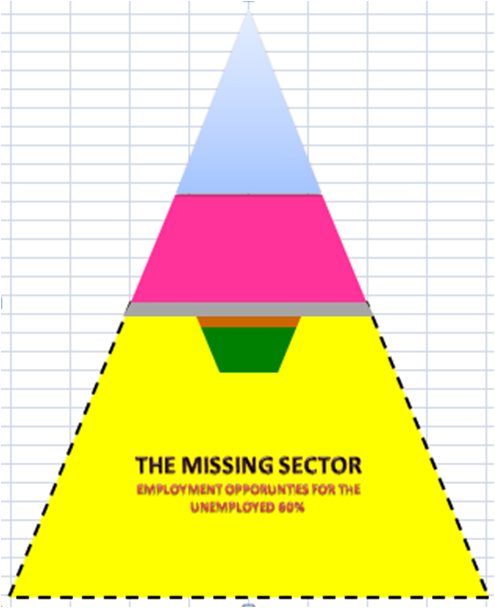
- 6 out of 10 people in the working-age population are unemployed.
- Women, facing limited economic options, often turned to childbirth as a form of social survival. By doing this, their basic needs are temporarily met. Their children’s needs are also seemingly addressed. They relied on extended support systems—government, family, and fathers of the children.
- Over time, this coping mechanism unintentionally undermined long-term human development. Many children raised in these fragile and sometimes rough and violent networks lacked strong foundations. They struggled in core subjects like English, mathematics, and the sciences.
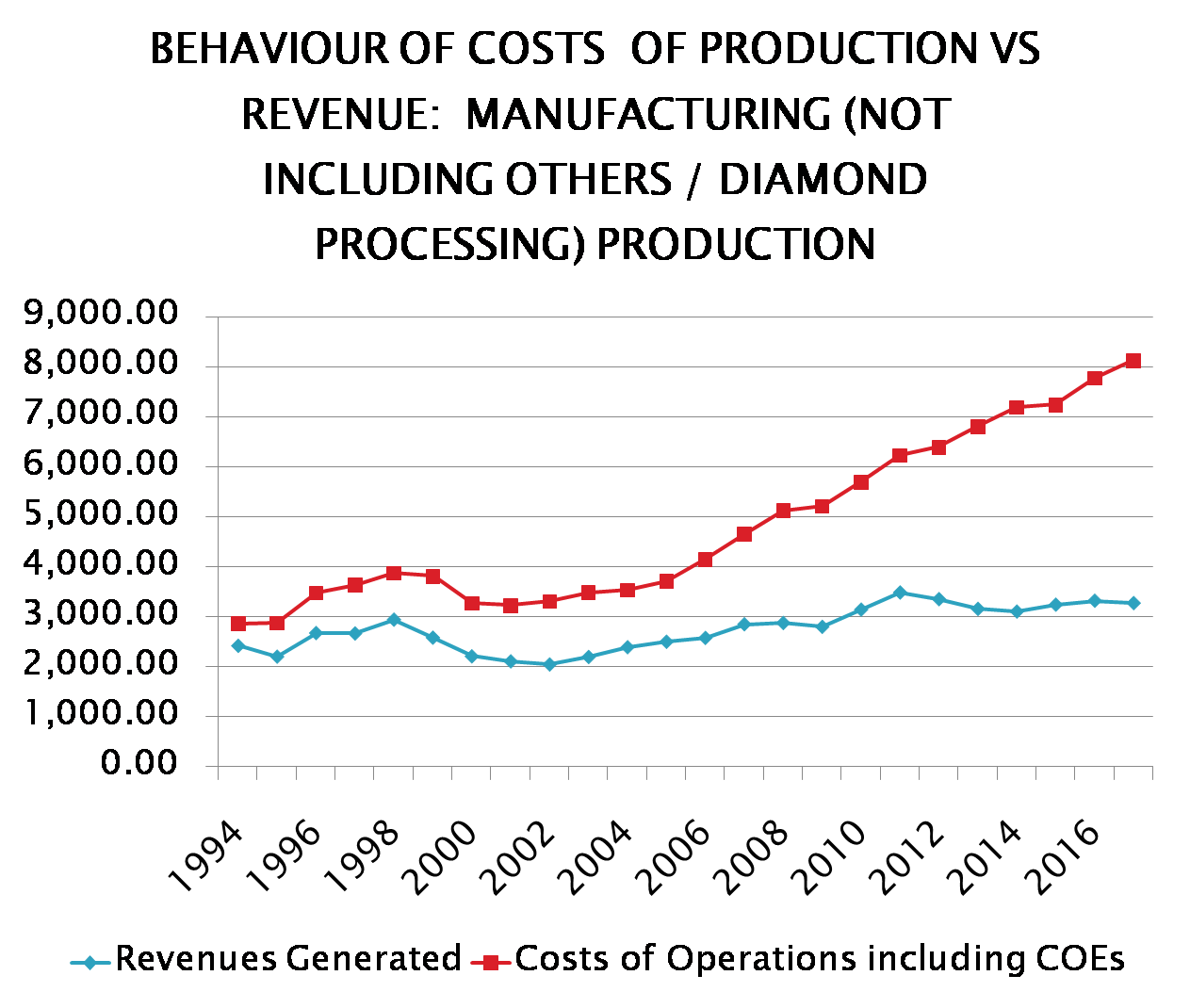
- The weakened educational base eroded the national capacity for growth. This was compounded by social instability. Declining population engagement in their mid-30s also contributed. This affected manufacturing and agriculture—the two sectors most capable of producing broad-based employment and lowering economic costs.
As a result, the nation’s economy lost the capacity to generate jobs—exacerbating the same unemployment it was trying to fix. The causal loop came full circle. High unemployment led to coping through childbirth. This, in turn, deepened the structural weaknesses that prevented job creation.
Integrating Findings into Strategy Design
This analysis allowed us to reframe the core policy question:
“What must the country do to create broad-based employment opportunities—especially in manufacturing and agriculture?”
To answer this, we must:
- Tackle foundational education and skill gaps, especially in science and mathematics.
- Break the reinforcing loops that create and perpetuate systemic unemployment.
- Design long-term strategies that treat root causes, not just symptoms.
The insights from this case—and others like it—now inform our strategic frameworks at STRLDi. They shape how we help governments develop national strategies grounded in systemic clarity, measurable leverage, and shared ownership.



Q2. How do you find drivers of disruption or game-changing forces capable of materially impacting industry/organization performance (e.g., transforming competitive dynamic)? How do you assess the implications of rapid or potential “power shifts” in your value chain? How do you recognize the emergence of new opportunities and threats?
Identifying Game-Changing Forces and Systemic Disruption
At STRLDi, we find disruption drivers. We refer to these as “systemic causal factors.” We use a unique strategy planning framework built around a concept called “the onion.” This tool helps us uncover deep, structural forces that are shaping industry dynamics, policy environments, and national economic performance.
Mapping the Causal Landscape
Rather than reacting to surface-level symptoms, we start by locating “the problem” within its systemic context. We use the onion framework and the ten systemic archetypes for this analysis. We trace the problem’s position backward through multiple layers of causation. This continues until we reach the entire circular causal structure that sustains it.
This approach enables us to:
- See the full system (the forest), not just isolated components (the trees).
- Reveal reinforcing loops that are driving persistent challenges.
- Distinguish between symptoms and structural root causes.
“The Onion” as a Strategic Mapping Tool
The onion acts as a dynamic map of all critical drivers, threats, and opportunities. It identifies the immediate and long-term forces at play. It also clarifies their interrelationships, which are often invisible in traditional analysis.
When we work with circular causal structures, this mapping happens organically and systematically. The interconnected nature of the network ensures that all significant drivers are surfaced, including those that:
- Signal power shifts across the value chain,
- Introduce new vulnerabilities,
- Or uncover unseen opportunities for leverage and transformation.
From Disruption to Design
By understanding how disruptions emerge from systemic feedback loops, we gain valuable foresight. We can predict and prepare for material impacts before they happen. This equips our clients and partners to make informed, strategic moves, often before competitors are even aware of the shift.
Ultimately, this method is not just about navigating disruption. It’s about reframing it as a platform for innovation. It encourages resilience and systemic advantage.
Q3. What are your organization’s top competitive advantages? How have you ascertained the relative strength (versus marketplace) of these competitive advantages? What are you doing to sustain the “moat” (e.g. prevent erosion) of your competitive advantages?
These include:
STRLDi’s Top Competitive Advantages
Our core competitive advantage lies in our ability to guide clients through disciplined practices. We help them hold the creative tension between their current realities and their desired futures. Rather than offering quick-fix solutions, we help organizations navigate complex, recurring issues by engaging all dimensions of a challenge.
This tension becomes a strategic asset. It drives deeper inquiry, more inclusive conversations, and more sustainable solutions—especially in environments marked by uncertainty or systemic breakdowns.
Building Strength Through Learning and Collaboration
We lower the risk of change. We achieve this goal by sharing case studies that reveal the short-, medium-, and long-term impacts of systemic strategies. These stories build confidence and trust in the process. They also create a bridge between reflection and action.
Additionally, we work side-by-side with clients to:
- Collaboratively assess situations without judgment,
- Co-create strategies rooted in lived realities,
- And learn as a team, using real-time data and systemic mapping.
This collaborative discovery process makes the insights more relevant, actionable, and enduring.
Sustaining the “Moat” of Competitive Advantage
To protect and expand our strategic edge, we focus on institutionalizing learning within and beyond our organization.
We do this by:
- Documenting and sharing methodologies and outcomes from a wide variety of contexts, enabling clients to adapt and build on them.
- Facilitating regular learning sessions where we think about lessons related to time, resources, and system design.
- Providing hands-on support to uncover systemic causalities—ensuring that change is not only adopted but also understood at a structural level.
This approach reinforces a learning ecosystem. It strengthens our impact. It grows our network. It keeps our techniques relevant and adaptive across markets.
Q4. What are some of your best examples of highly innovative/ insightful use of internal/external data analysis? Please describe the framework, method, or approach. Include the tools and their specific impact on decision-making and enhancing strategic performance.
Innovative Use of Data Analysis at STRLDi
One of our most insightful uses of data analysis emerged from our systemic study on national unemployment in Botswana. This case study is a strong example of how deep internal and external analysis can lead to significant insights. A systems thinking approach can reshape both understanding and action on long-standing societal challenges. (See detailed case study above.)
Framework and Approach
Our analysis was guided by STRLDi’s Systems Thinking Planning Framework, which maps systemic causal structures using tools like:
- The Onion Model – to uncover the multiple layers of causal factors, from surface symptoms to root systemic structures.
- System Archetypes – to recognize recurring patterns that drive persistent issues.
- The Ten-Step Action Plan – a structured method for designing strategic interventions that align with long-term transformation goals.
These tools allowed us to trace complex problems back to their systemic roots, rather than responding to surface-level symptoms.
Tools in Use
We applied a combination of:
- Causal loop diagrams to visualize interdependencies and feedback loops.
- Data overlays across socioeconomic, demographic, and educational metrics.
- Narrative policy modeling to simulate different futures and policy scenarios.
- Stakeholder mapping tools to find leverage points for multi-sector collaboration.
This integrated approach enabled us to see the co-production of unintended consequences in employment outcomes. We examined how policy, culture, education, and economic activity contributed to these outcomes.
Strategic Impact
The results helped shift the national conversation—from short-term job creation targets to long-term, structural transformation of the labor market.
Key decision-making outcomes included:
- Reframing unemployment not as a standalone issue, but as a consequence of system-wide dynamics.
- Identifying manufacturing and agriculture as high-leverage sectors for broad-based employment.
- Recognizing educational underperformance in STEM and social family structures as contributing feedback loops.
The clarity brought by this analysis helped inform more coherent policy dialogues. These dialogues are future-aligned across ministries. They are also with international development partners.
PART 4: OPERATIONALIZING THE STRATEGY
Q1. Describe the practices used to translate your strategy into action. Specifically, which critical skill gaps were successfully addressed to achieve the strategic aspirations?
Translating Strategy into Action at STRLDi
To move from strategy to real-world impact, STRLDi focuses on three integrated practices that support national-level influence, public engagement, and on-the-ground monitoring:
1. National Policy Integration
We engage directly with high-level decision-makers by sharing system-based research findings and strategic recommendations. These insights are presented to:
- The Office of the President
- The Head of Public Service
- The National Strategy Office
- The Vision Council
We guarantee these findings reach a wide range of stakeholders. This includes practitioners, consultants, trainers, and the public. In this way, strategy becomes a shared national narrative.
2. Broad-Based Dissemination
We make strategic insights accessible to the wider population through:
- In-person and virtual presentations
- National media outlets (TV, radio, and print)
- Public discussion forums
This approach encourages societal participation and builds public ownership of long-term strategy goals.
3. Dynamic Monitoring & Evaluation
To track implementation and behavioral shifts, we develop real-time M&E dashboards. These use the same data points that shaped the original strategy to track progress. They detect early signs of change. They also refine the course of action where necessary.
Closing Skill Gaps
Through this process, we’ve helped stakeholders build critical systems thinking capabilities, including:
- The ability to work with complex causal structures
- Skills in strategic reflection and long-term thinking
- Competence in evidence-based decision-making
These competencies are essential to achieving the strategic aspirations we set out—and to sustaining momentum in dynamic, evolving environments.
Q2. What was particularly unique and effective about the way your organization achieved synchronized alignment of resources (e.g., funding, human resources, IT, change) to allow execution?
1. Engaging the Nation through Systems Insights
We prioritized wide dissemination of study results across all levels of society. When people understand why a problem persists and how the strategy addresses it, alignment becomes natural. This builds momentum—not just compliance.
In today’s connected world, public mobilization doesn’t need massive budgets. A single, well-crafted post on platforms like Facebook or Twitter can rally thousands. Yet, we went further. We created clear, visual representations of the strategy. These visuals captured public imagination. They instilled a sense of shared hope and ownership.
2. Top-Level Coordination
To guarantee coherence across all sectors, strategy execution was anchored from the Office of the President/Prime Minister. This central leadership role allowed us to:
- Align national priorities with operational execution
- Reduce bureaucratic friction
- Empower key ministries and stakeholders to act in concert
This unique approach of combining grassroots engagement with executive-level orchestration created the space for real alignment—across resources, institutions, and communities.
Q3. Which areas of the strategy were critically dependent on IT capabilities? Specifically, which IT solutions were delivered, and how did they allow required strategic capabilities?
Leveraging IT to Drive Strategic Ability
Information technology played a pivotal role in enabling our strategy—particularly in data collection, organization, analysis, and public communication.
1. Data-Driven Strategy Design
We used IT systems to build comprehensive datasets, track data behavior over time, and extract actionable insights. This allowed us to:
- Detect patterns in persistent national issues
- Find systemic causalities across time and space
- Evaluate how strategic interventions influenced these patterns in real-time
2. Live Monitoring & Evaluation
A customized Monitoring & Evaluation (M&E) platform was developed. It enabled:
- Real-time tracking of key indicators
- Continual updating of the strategy as new data emerged
- Integration of feedback loops into decision-making
This ensured that the strategy remained dynamic, relevant, and grounded in evidence.
3. Public Transparency and Engagement
Our IT tools also supported live data sharing with the public. This transparency helped build trust, strengthen engagement, and foster a sense of shared accountability in implementing the strategy.
By embedding IT into the strategic process, we transitioned from static planning. We shifted to adaptive strategy execution. This change made us capable of responding to evolving realities and community needs.
Q4. How do you cascade your organization’s strategic imperatives down to the front-line levels? How does each front-line staff understand/articulate how their day-to-day work contributes to the execution of the strategy?
Cascading Strategic Imperatives to the Front Line
At STRLDi, strategic alignment begins at the top—with a deliberate effort to bridge national vision with individual action.
1. Top-Down Communication Through National Platforms
Because our work is anchored in national transformation, we leverage mainstream public media—television, radio, and print—to communicate strategic imperatives. This ensures broad awareness, especially among frontline workers in public services, local government, and civil society.
2. Social Media for Real-Time Connection
We amplify these messages through social media and media blitz campaigns. This allows citizens and frontline actors to get updates. They can also see the tangible changes their actions contribute to. The immediacy and reach of these platforms reinforce a sense of relevance and urgency.
3. Making Strategy Visible and Personal
What’s most effective is showing people the visible impact of their daily work in the lives of others. By demonstrating how individual contributions drive collective results, we turn strategy from abstract policy into something personal and motivating.
This multi-channel approach ensures that strategic priorities are understood, embraced, and acted upon. These priorities are recognized not just by leadership but by every hand that builds the future on the ground.
PART 5: STRATEGIC PRACTICES IMPROVEMENT
Q1. Describe a strategic planning practice or activity. Explain why you have discontinued it. You identified it as being obsolete or less relevant in today’s business operating environment.
Discontinued Practice: Strategy Work at the Corporate Level
In the early phases of our work, we focused on applying strategic planning practices within corporate environments. While this initially seemed promising, it became clear. Corporate spaces often lacked the capacity to move insights beyond analysis and findings. They struggled to achieve meaningful implementation.
The time, effort, and resources invested did not deliver the transformational outcomes we sought. As a result, this approach was discontinued.
Instead, we’ve found greater impact and alignment when applying our systems thinking frameworks at the national, regional, and global levels. Strategic levers in these areas have broader reach. The commitment to action is often stronger and more sustained.
This shift has allowed us to direct our resources to areas where change is scalable. These areas are also more deeply rooted in public value.
Q2. Describe a strategic planning practice or competency that you would particularly like to incorporate/leverage during your next strategic planning efforts. What are you seeking to enhance by adopting this practice?
In our next strategic planning efforts at STRLDi, I aim to expand our application of systems thinking beyond national borders. We need to tackle regional and global challenges. Many issues today transcend the boundaries of a single country, requiring collaborative, cross-border approaches.
For example, concerns like education attainment, rainfall patterns, and drought reversal are not isolated to one nation. Issues like forestation efforts, wildlife behavior, and human-wildlife conflicts also cross borders. Urban health problems are another shared challenge. These complex challenges need regional and global cooperation for effective solutions.
We are adopting a broader and more interconnected strategic planning approach. Our goal is to enhance our ability to tackle global challenges. We aim to do this through collaborative, systemic solutions. These solutions will transcend individual country perspectives.
 Systems Thinking Research & Leadership Development Institute (STRLDi)