Every organization believes its problem is capacity.
There are never enough hands, hours, or funds.
And yet, each time new resources arrive, the shortage returns — louder than before.
What if “not enough manpower” is not a fact but a structure?
A loop that feeds on how we define effort, competence, and worth.
This case explores the fatigue of systems that mistake busyness for strength.
It asks: when we plead for more resources, are we revealing scarcity — or creating it?
📖 BEFORE YOU READ
Every manager has heard it: “We just don’t have enough people.”
And most respond with the only answer they know — request another post, extend another contract, add another unit.
For a moment, the pressure eases.
Then, almost predictably, the system returns to the same refrain: not enough.
This second study in the STRLDi System Archetype Compendium turns the spotlight inward. It invites leaders to look not at the size of their workforce, but at the structure of their attention.
Because sometimes, what drains capacity is not the number of people working, but how the organisation thinks about work itself.
1 Context and Origins
The complaint of not enough manpower surfaced repeatedly across divisions.
Officers spoke of being stretched thin; supervisors lamented high turnover; HR cited budget ceilings.
Yet, even after multiple recruitment rounds, the pattern refused to change.
The department was caught in a cycle:
hire more → overwork the keen → lose the best → rehire → repeat. The harder it tried to fix the shortage, the deeper the shortage seemed to run.
STRLDi’s analysis revealed a classic Fixes That Fail loop, with an inner twist — a shift from procedural competence (detailed complexity) to systemic blindness (dynamic complexity).
2 Behaviour Over Time
Law #1 – Today’s Problems Come from Yesterday’s Solutions
Each new recruitment was celebrated as relief.
But soon, workloads grew to match expanded capacity.
A nation of institutions trapped in detailed complexity will always feel under-staffed.
The cure is not mass hiring, but systemic sight.
When leaders learn to see patterns, they release both human energy and national capacity.
Manpower turns into mind-power.
The true resource multiplies by awareness.
Vision of the Future Reality: A workplace where capacity is consciousness — and where the ability to see the system is the new definition of strength.
Fixes-That-Fail (Variant)
LEFT-HAND PAGE – Analysis & Reflection
Header
When busyness becomes a badge of competence, the organisation hires itself into exhaustion.
Top Section – Leadership Mirror
A full-width grey box containing the mirror paragraph. A small inset quote in italics:
“Every system is perfectly designed to get the results it gets.”
Preamble – Before You Read
Placed below the mirror, using a light background tone. Accompanied by a small inset BOT diagram (Before Leverage) in the top-right corner.
Main Narrative Body
Two columns. The left column opens with:
1–5: Context, Behaviour Over Time, Structure, Mental Models, Current Reality Vision. The right column continues with:
6–9: Leverage, Uncle’s Act, Behaviour After Leverage, Future Reality Vision.
A thin vertical line separates narrative from marginalia.
Margin Notes (right margin of both pages)
Small annotations in blue text boxes referencing the Laws of Dynamic Complexity as they appear:
#1 Today’s problems come from yesterday’s solutions
#7 Faster is slower
#8 Small changes produce big results
These act as navigational anchors for readers scanning the page.
Footer – Coda
A final blue band carrying your signature line:
Vision of the Future Reality A workplace learns to become a place and opportunity where capacity is consciousness — and where the ability to see the system is the new definition of strength.
Based on the Vision Deployment Matrix™ created by Dr Daniel H. Kim, first published in The Systems Thinker, Vol. 6 No. 1 (1995). Framework adapted by STRLDi for applied national systems learning.
Every leader believes they are solving problems. Few notice that the problems are quietly solving them.
The more effort they invest, the deeper the pattern takes hold — until exhaustion feels like purpose and urgency feels like success.
The following case is not a critique of leadership but an invitation to see leadership at work inside the system itself.
Each time we react, correct, compensate, or protect, the structure records it — and teaches.
This is the leadership mirror: a place to see our reflexes reflected back as design. The lesson is never about who was right; it is about how the system learned from what we could not see.
Before You Read
Every bureaucracy has its rituals of rescue — the emergency meeting, the red-stamped file, the overtime marathon that proves loyalty.
For a moment, the room feels alive; the system seems responsive.
Then, just as surely, the backlog returns.
What you are about to read is not a story about slow officers or careless managers. It is the anatomy of a reflex — a national habit of equating busyness with value.
This first study in the STRLDi System Archetype Compendium opens with a pattern called Fixes That Fail.
It asks: What if the system’s greatest crisis is its own cure?
And it invites you to see that the smallest act of awareness can transform an enterprise, a ministry, or a nation.
The Urgent Files phenomenon emerged in an investigations department charged with handling public complaints.
Its purpose was straightforward: ensure that every reported case was reviewed, investigated, and closed within prescribed time limits.
Yet, over time, the department found itself in a perpetual state of crisis.
Every few weeks management would announce a backlog-clearing exercise.
Files were stamped URGENT in red, officers were redeployed, and working hours extended.
The public applauded the temporary responsiveness, but within months the backlog returned — heavier and more demoralising than before.
When STRLDi first studied the pattern, it seemed ordinary bureaucratic fatigue.
But plotting behaviour over time revealed the familiar oscillation of the Fixes That Fail archetype:
A quick corrective action delivers short-term relief yet creates longer-term pressure that demands the same fix again.
What looked like a process problem was in fact a systemic illusion — the office was working tirelessly to reproduce the very problem it was trying to solve.
Applying the Other Laws to the Urgent File Causal Structure
The Urgent File structure shows a system in which the demand for urgent action draws attention away from current files. As attention is diverted, current files receive less attention to their systemic nature; quality of investigation is affected; the ability to capture or detain perpetrators is affected; new crime cases enter the system; attention is again drawn to current files and, eventually, customers become dissatisfied and demand immediate attention to their own files. The cycle continues.
The Laws help us see why this structure persists, not merely what is happening inside it.
Law 1 — Today’s Problems Come From Yesterday’s Solutions
The immediate problem is the growing number of urgent files.
The response is to take swift action: urgent files are prioritised and orders are issued to set aside current files. That appears to solve the immediate problem. But the action diverts attention from current files, causing them to remain unattended or inadequately investigated.
Those delayed current files contribute to complaints and demands for immediate attention, which then become tomorrow’s urgent files.
The solution to yesterday’s urgency is therefore helping to create tomorrow’s urgency.
The Law allows us to see that the problem cannot be understood by looking only at the current urgent file. We have to ask:
What earlier solution produced the conditions we are now trying to solve?
Law 2 — The Harder You Push, the Harder the System Pushes Back
As the number of urgent files increases, the need to take swift action increases.
Each urgent drive demanded overtime and exhaustion. For a short while output spiked, morale rose, and the public seemed satisfied.
Then the system’s “push-back” arrived: new complaints, deeper fatigue, and declining quality.
The curve resembled an erratic heartbeat — a body kept alive by stress.
This leads to more instances of issuing orders to set aside current files and greater attention being placed on urgent files. But this very response reduces attention available for current files.
The harder the system pushes to deal with urgency, the more conditions it creates for further urgency.
The system’s resistance is therefore not necessarily caused by people refusing to cooperate. It is generated by the relationships within the structure itself.
The question becomes:
What are we pushing harder on that is causing the system to push back?
Law 3 — Behaviour Grows Better Before It Grows Worse
This Law is particularly visible in the apparent success of the urgent-file response.
When urgent files receive immediate attention, the organisation may initially experience what looks like an improvement. An urgent matter is dealt with. A customer is satisfied. Management sees action being taken.
The behaviour looks better before the consequences of the intervention become visible elsewhere in the system.
Meanwhile, current files are being displaced.
The deterioration therefore does not necessarily appear at the same time or in the same place as the original intervention.
This Law forces us to ask:
What looks like improvement now, but may be creating deterioration later?
Law 4 — The Easy Way Out Usually Leads Back In
The easiest response to an urgent file is to move it to the front of the queue.
It is visible. It is immediate. It demonstrates action.
But the underlying structure that produces urgent files remains untouched. Current files are displaced, attention is diverted, complaints emerge and further files become urgent.
The easy response therefore brings the organisation back into the same cycle.
The Law helps us distinguish between:
doing something about the immediate problem
and
changing what keeps producing the problem.
Law 5 — The Cure Can Be Worse Than the Disease
The original disease is the accumulation of urgent files.
The cure is to give urgent files priority.
But the cure has consequences: current files are set aside, attention is diverted and the quality and timeliness of investigation can deteriorate.
The intervention intended to reduce the problem can therefore intensify another part of the structure, eventually contributing to the very conditions that produce more urgency.
The Law asks us to examine the side effects of the intervention, rather than judging the intervention only by its immediate result.
Law 6 — Faster Is Slower — and Slower, Staying Consistent, Is Faster
The structure shows the danger of responding to urgency by continually demanding speed.
Swift action on urgent files may appear efficient. But when attention is repeatedly diverted, the organisation’s ability to give appropriate attention to current files and undertake quality investigation is compromised.
Poorer investigation can affect the ability to capture or detain perpetrators, contributing to further cases entering the system.
The attempt to move faster therefore creates conditions that require more work later.
This Law asks us to see the time dimension:
Are we actually becoming faster, or are we creating more of the work that will have to be dealt with later?
Law 10 — Do Not Cut the Elephant in Half
This Law brings us back to the whole structure.
The urgent file cannot be separated from the current file.
The current file cannot be separated from the customer.
The customer cannot be separated from complaints.
Complaints cannot be separated from the number of urgent files.
The investigation process cannot be separated from the ability to capture or detain perpetrators and the emergence of new cases.
The parts are connected.
If we treat “urgent files”, “current files”, “customers”, “investigation quality” and “crime cases” as separate management problems, we lose sight of the structure connecting them.
This Law therefore reinforces the central discipline of the case:
Do not solve one part without asking what your solution does to the whole.
Law 11 — There Is No Blame
The causal structure also changes how we see the people inside it.
The supervisor who issues an order to prioritise an urgent file is responding to pressure.
The officer who gives attention to the urgent file is responding to the order and the immediate demand.
The customer who complains is responding to the experience of delay.
Each may appear to be causing the problem from the perspective of another player.
But when we see the structure, we begin to see that their behaviours are also responses to the conditions in which they are operating.
This does not mean that nobody is responsible.
It means that blaming the individual does not explain the persistence of the behaviour.
The question shifts from:
“Who is causing this?”
to:
“What structure is producing these behaviours, and how are the behaviours reinforcing the structure?”
What the Laws reveal together
The important learning is that none of these Laws gives us a separate problem to solve.
They allow us to look at the same causal structure from different angles:
Law
What it makes visible in the Urgent File structure
1. Today’s Problems Come From Yesterday’s Solutions
Today’s urgency is partly produced by earlier responses to urgency.
2. The Harder You Push, the Harder the System Pushes Back
Increasing pressure for swift action can intensify the conditions generating further pressure.
3. Behaviour Grows Better Before It Grows Worse
The urgent-file intervention can look successful before its consequences appear elsewhere.
4. The Easy Way Out Usually Leads Back In
Prioritising the immediate urgent file provides relief without changing the structure producing urgency.
5. The Cure Can Be Worse Than the Disease
Solving urgency by displacing current files can worsen the wider problem.
6. Faster Is Slower
Speed applied to one part can create more work and deterioration elsewhere over time.
10. Do Not Cut the Elephant in Half
Urgent files, current files, customers, investigation quality and new cases form one interconnected whole.
11. There Is No Blame
The actors are participating in a structure; blaming one actor does not explain its persistence.
And this is precisely why Laws 7, 8 and 9 are different.
These Laws help us see the behaviour and consequences of the structure.
Law 7 — Look Further Away asks us to extend our field of seeing.
Law 8 — Now Find the Trim Tab asks us to locate where a small action can influence the larger structure.
Law 9 — Perhaps We Do Not Have to Choose asks us to question the apparent trade-offs created by the structure.
So the full exercise is not eight disconnected applications. It is the group learning to use the Laws as lenses on one causal structure — each Law helping the eye see something that another Law may leave less visible.
That is the real progression from understanding the Laws to using the Laws.
3 The Structure Beneath the Oscillation
The causal structure was deceptively simple:
Figure 1
Urgent files ↑ → swift action ↑ → attention on current files ↓ → quality of work ↓ → complainant dissatisfaction ↑ → urgent files ↑
A perfect balancing loop in form — but it balanced the wrong thing: the appearance of responsiveness rather than genuine throughput.
The balancing reflex masked a deeper reinforcing dynamic of fear and pressure.
As the unseen reinforcing loop gained strength, the human reflex to “restore balance” intensified — confirming the Law of Reflexive Balance later codified by STRLDi:
Except in biological homeostasis, every balancing loop in human systems is the reflex of an unseeing system attempting to counter its own reinforcing pattern.
4 The Ladders of Fear (Mental Models)
Three ladders of inference maintained the blindness:
Actor
Assumption
Behaviour
Hidden Fear
Supervisor
“Officers are lazy.”
Increases control and public visibility.
Fear of losing authority.
Officer
“Management notices only crisis.”
Waits for escalation to act.
Fear of invisibility and blame.
Complainant
“Government doesn’t care.”
Escalates or bypasses channels.
Fear of powerlessness.
Each ladder reinforced the others.
Separated by hierarchy, they never met to test their assumptions.
Law #11 — There is no blame — was the missing discipline: everyone defended their role; no one saw the system.
5 The Vision That Created the Current Reality
The department still served a vision forged decades earlier: “Efficiency means rapid response.”
It wanted both speed and quality at once — the contradiction captured in Law #9, you can have your cake and eat it too, but not at once.
Performance measures rewarded volume, not learning.
The structure behaved exactly as it was designed: to appear busy.
6 The Discovery of Leverage
During a review, one senior officer — trained by experience rather than formal education — noticed something small yet profound.
Whenever he deferred a case, he called the complainant to explain the delay and outline next steps.
Those calls, barely two minutes each, eliminated most follow-up complaints.
Files no longer escalated to urgent.
The simple human act re-closed the feedback loop that the system’s procedure had severed.
Here lay Law #8 in living form:
Small changes can produce big results — the areas of highest leverage are often the least obvious.
The cost of the intervention: zero.
The impact: systemic.
No technology, no reform bill, no consultant.
Just consciousness restored at the point of disconnection.
7 The Uncle’s Act (Healing in Motion)
A wise supervisor recognised the potential but avoided formalising it.
He praised the courtesy as “professionalism” and let it spread organically.
This was the Uncle’s Act — healing inserted gently into culture:
Healing Intent: Re-humanise the flow of work.
Gentle Insertion: Allow experienced officers to model the call.
Successor’s Gift: Embed it later as induction practice.
By keeping the structure unaware of its transformation, he boiled the frog without harm.
The balancing reflex quietly lost energy; the reinforcing loop of trust took over. Balance returned as rhythm, not resistance.
8 Behaviour After Leverage
At first the curve looked wrong — urgents dropped, throughput slowed, calm felt unnatural.
But over successive cycles, quality stabilised and morale rose.
The department was living Law #3 — behaviour grows better before it grows worse.
Short-term anxiety preceded long-term healing.
Within months, urgent-file drives disappeared from the vocabulary.
Officers began competing for consistency, not crisis.
The healing reinforcing loop (call → trust → fewer urgents → time → more calls) had taken root.
9 The Future Reality Vision
In the healed system, work flows continuously instead of spasmodically. The word “urgent” has lost its power because the system has learned to anticipate, not react. Supervisors manage rhythm, not crisis; officers manage trust, not panic; complainants experience transparency instead of silence.
The organisation’s purpose has evolved from efficiency to reliability — from fast to steady. Its identity is no longer built on rescue but on prevention.
This is a department that now embodies the nation’s future reality: a public service that leads not by control, but by coherence.
10 Supportive Mental Models of the Future Reality
Role
New Mental Model
Emergent Discipline
Supervisor
“Flow is the new efficiency.”
Systems Thinking — seeks patterns, not incidents.
Officer
“I create calm when I connect early.”
Personal Mastery — pride in steady contribution.
Complainant (Citizen)
“My government listens even when I’m silent.”
Building Shared Vision — trust as civic culture.
Fear has transmuted into confidence.
The belief in scarcity of time or manpower dissolves when feedback is immediate and human.
Each participant’s ladder of inference has shortened — fewer assumptions, more communication.
The walls between roles have turned into mirrors.
11 Events and Patterns in the Future System
In the healed state, the Laws of Dynamic Complexity are respected, not violated:
Law
Expression in the Future System
#1
Solutions are tested for side effects before implementation.
#2
Pressure points are anticipated — no need to overpush.
#3
Temporary discomfort is accepted as part of real learning.
#4
Feedback cycles are monitored continuously — cause and effect stay linked.
#5
Easy fixes are replaced by small, deliberate learning experiments.
#7
Pace matches capacity; speed is calibrated, not worshipped.
#8
Minor, human interventions are designed into process flow.
#11
Blame has no oxygen; the conversation focuses on structure.
The pattern now resembles a gentle rise and plateau, not a spike and crash.
It behaves like a breathing organism — self-correcting, aware of its boundaries.
The loop has evolved from Fixes That Fail to what STRLDi names a Learning Reinforcement Loop — trust reproducing trust.
12 The Future Reality
The new system functioned without drama.
Public trust steadied; workload distributed evenly; officers regained pride.
The earlier balancing loop that exhausted the system had given way to a reinforcing loop that regenerated it.
Calm was now the indicator of competence.
The “urgent” label, once a symbol of heroism, became a relic of blindness.
13 The Cost of Awareness vs. the Cost of Ignorance
A comparison later conducted by STRLDi estimated that a full business-process re-engineering of the department — consultants, workshops, IT systems — would have cost tens of millions.
The systemic leverage that achieved the same outcome cost nothing but two minutes of conversation per deferred case.
Approach
Financial Cost
Result
BPR overhaul
High capital, low learning
Temporary efficiency; same pattern returns
Two-minute call
Negligible
Structural healing; enduring calm
Law #8 is therefore not about efficiency; it is about economy of consciousness. Systemic change costs awareness, not appropriations.
Every pula saved from compensating blindness becomes available for rebuilding the nation’s real capacities — agriculture, education, manufacturing — the domains that feed people, not reflexes.
14 Broader Implications — The Discipline of Seeing
The Urgent Files case demonstrates that the purpose of systems thinking is not prediction or control but seeing.
A balancing loop is not virtue; it is the reflex of an unseeing system attempting to hold still what must evolve.
Only when awareness reconnects the parts of the loop does reinforcing energy turn from vicious to virtuous.
Then, and only then, does a learning organisation begin to form.
15 Coda – From Reflex to Learning
In biological life, balance preserves being.
In human systems, balance often preserves blindness.
The Fifth Discipline teaches that learning begins the moment the reflex to “correct” gives way to curiosity to see.
The Urgent Files case is more than a story of an investigation unit; it is a mirror for governance, religion, education, and enterprise — every domain that mistakes control for care.
The smallest act of seeing together can dissolve the largest illusion of control. That is the meaning of systemic reform. And that is the quiet revolution already underway.
Figures
Behaviour-Over-Time – Before Leverage
Behaviour-Over-Time – After Leverage
Causal Loop Diagram – From Balancing Reflex to Healing Reinforcement
(See companion visuals: BOT_Before_Leverage_FTF.png, BOT_After_Leverage_Healing.png, CLD_Urgent_Files_FTF.png)
Summary Table of Laws Expressed in the Urgent Files System
Law
Manifestation in Case
#1
Each urgent drive creates tomorrow’s crisis.
#2
The harder the push, the stronger the rebound.
#3
Healing feels wrong before it feels right.
#4
Delay hides cause and effect.
#5
The easy fix leads back in.
#6
The cure (urgent drives) worse than disease (delay).
#7
Faster response slows real progress.
#8
Smallest, least-visible act (phone call) flips the system.
#9
Wanting speed and quality simultaneously creates contradiction.
#10
Splitting responsibility fragments learning.
#11
Seeing structure replaces blame.
Epilogue
Law #8 — Systemic change costs awareness, not appropriations. When a nation learns this, its ministries heal, its budgets breathe, and its people rediscover trust.
Based on the Vision Deployment Matrix™ created by Dr Daniel H. Kim, first published in The Systems Thinker, Vol. 6 No. 1 (1995). Framework adapted by STRLDi for applied national systems learning.
Every nation, organisation, and community carries within it a set of repeating crises — persistent issues that resurface despite reforms, budget allocations, or leadership changes.
The System Archetype Compendium exists to reveal the invisible structures behind those recurrences.
It is not a collection of case reports; it is a manual of seeing.
The Compendium documents real cases analysed under the Systems Thinking Research and Leadership Development Institute (STRLDi), where each archetype is treated as a living pattern — a design of thought, habit, and feedback that recycles itself across departments, industries, and societies.
Through these case studies, the Compendium demonstrates how the same structural logic that governs a single office may also govern a national economy, a political movement, or a global environmental trend.
Our purpose is to make systems thinking practicable — to show leaders, managers, and citizens that reform begins not with budgets but with awareness.
Each case demonstrates how, when a system sees itself in full, transformation requires almost no money, no legislation, and no external consultant.
It requires a shift in consciousness — the smallest change that yields the greatest systemic effect.
This is the spirit of Law #8: Small changes can produce big results — but the areas of highest leverage are often the least obvious.
The Compendium is, therefore, a repository of national learning.
It records not only the patterns that trap us, but the acts of insight that release us. Its ambition is practical: that by learning to recognise these archetypes early, leaders may prevent future crises, save vast public expenditure, and build institutions that learn faster than their problems evolve.
Why These Archetypes Matter Now
Botswana, like most modern nations, faces persistent issues whose symptoms vary but whose structures rhyme — unemployment, bureaucratic overload, human–wildlife conflict, social inequality, educational drift.
Each of these is not an isolated failure but a systemic rhythm.
By reading these patterns together, across ministries and disciplines, STRLDi invites a national conversation about how learning itself can become governance.
The Compendium is a tool for that conversation.
2️⃣ Introducing the Series of Studies
About the Series
This Compendium opens with “Urgent Files,” the first in a series of applied archetype studies.
Each subsequent case explores a different structure of persistence drawn from real systems in Botswana and the wider Southern African region.
Together, they form a progressive learning journey through the nine core archetypes of the STRLDi Onion Model, and later, their interlinkages in national structures.
The evolution of a country’s productive sectors, showing the trajectories of agriculture, manufacturing, services, and unemployment, allows us to observe how the economic structure has shifted gradually rather than abruptly.
Taking the easier way (out)
Behaviour of the country’s GDP Ministry of Finance Ministry of Trade Ministry of Agriculture
Office of the President / Human Resource Development Council / Government of Botswana
6–10
[To follow] Drifting Goals, Limits to Growth, Tragedy of the Commons, Accidental Adversaries
Sectoral case studies (education, energy, climate, governance, inter-agency relations)
To be mapped
Each archetype builds upon the previous one, revealing how systems that appear unrelated share a single dynamic lineage.
The series, therefore, doubles as a national diagnostic — a mirror of how Botswana’s institutions learn, forget, and relearn.
How to Read the Compendium
Each case follows a consistent structure:
Behaviour Over Time (BOT) – what patterns recur.
Causal Loop Diagram (CLD) – why those patterns persist.
Vision Deployment Matrix (VDM) – what leverage changes the behaviour.
The Uncle’s Act – how leadership applies the insight without resistance.
The Laws of Dynamic Complexity – which universal laws are active.
The Lesson – how systemic change costs awareness, not appropriations.
This rhythm turns each chapter into both analysis and meditation — a map for diagnosis and a story of transformation.
The Guiding Vision
The Compendium belongs to STRLDi’s larger mission:
To cultivate systems intelligence in Africa — to enable leaders to see patterns that cut across sectors, and to replace reform-by-instruction with reform-by-awareness.
It is dedicated to the public servants, entrepreneurs, educators, and citizens who continue to work in the field of persistence — who keep trying to fix what refuses to stay fixed — and who are now ready to see what lies beneath.
Acknowledgement
“We acknowledge Dr Daniel H. Kim for his creation of the Vision Deployment Matrix™, published in The Systems Thinker (Vol 6, No. 1, 1995) — the organisational learning framework on which this series is founded.”
The original article is available here: “Vision Deployment Matrix: A Framework for Large-Scale Change” in The Systems Thinker. The Systems Thinker+1
Reclaiming Africa’s STEM identity Rediscovering Africa’s Voice in STEM: From Stewards to Leadership
“STEM is not for Africans. We consume, we don’t produce.”
Those two sentences are different voices, though they often appear blended. Let’s unpack:
1. “STEM is not for Africans.”
👉 This is the colonizer’s voice — later echoed by chiefs, schools, and even independence-era leaders.
It frames STEM as foreign, alien, not belonging here.
It’s rooted in the obedience voice: Africa as “less than,” Africa as receiver not creator.
It’s about identity denial: “This is not who you are.”
2. “We consume, we don’t produce.”
👉 This is the reactive African voice — Africa speaking after having internalized the colonizer’s framing.
It reflects resentment and mimicry: “We are only users, not inventors.”
It is the learned mental model, reinforced by current dependency structures (imports, turnkey industries, brain drain).
It’s not the colonizer speaking to Africa — it’s Africa speaking to itself, but in categories inherited from colonization.
Why it matters to separate them
If we blur them together, the world can’t see the distinction between:
The imposed voice (from outside, colonizer superiority).
The internalized voice (from inside, reactive acceptance).
The restorative step begins when Africa notices: “This second voice is ours — but it is not truly ours. It is borrowed. We can choose differently.”
Introduction: Why Begin With Questions
This essay does not begin with conclusions. It begins with questions.
That is intentional. Too often, Africa is handed ready-made narratives — from colonizers, from international institutions, even from its own leaders. These narratives arrive as answers: you are behind, you must catch up, you are dependent. Africa repeats them, resists them, but rarely hears its own voice.
Questions are different. They open space. They allow the mind to unravel what was assumed, to see what was hidden, to return to what was silenced.
The order of questions in this inquiry is not random. It mirrors a pedagogy: begin at the surface (why does Africa fear STEM?), descend into history (what was Africa like before colonization?), widen the lens (who were the inventors? why India and Singapore diverged?), and finally return to Africa’s own voice (what if Africa rewrote its history?).
The journey itself is the teaching.
Absolutely 🌱. Since your essay has now grown into a multi-part inquiry, you could turn it into a series of posts rather than a single drop — letting readers walk the same path of questions you’ve designed. Each post can stand alone, but together they create the full arc.
Here’s a roadmap & outline:
🌍POST OUTLINE:
“Africa and the Voices of STEM: From Fear to Leadership” (or simply: “Rediscovering Africa’s Voice in STEM”)
Post 1: Why Does Africa Fear STEM?
Hook: The paradox of STEM seen as alien in a continent that once forged steel, mapped stars, and built empires.
Q1: Why does Africa fear STEM? (surface vs. deeper identity reasons)
Q2: What was Africa like before colonization? (indigenous STEM examples)
Q3: Who were the inventors of STEM globally? (India, China, Mesopotamia, Islamic Golden Age, Americas, Africa itself)
Insight: STEM foundations came from civilizations that never colonized Africa.
Closing: The irony — Africa fears what was once its own.
[Visual: Map/table of global STEM origins]
Post 2: The Obedience Voice — How Colonization Overwrote Knowledge
Q: Why did Africa not realize STEM did not come from colonizers?
Colonial schools, dismissal of oral knowledge, historiography bias.
Chiefs as echoes: subjecthood re-engineered from reciprocity → subservience.
Visible symbols of superiority (railways, guns).
Archetypes (Shifting the Burden, Growth & Underinvestment, Drifting Goals).
Post 5: Levers of Restoration — From Fear to Leadership
Q: How did Africa define knowledge? (proof, apprenticeship, women’s role).
Q: Were there resistances? (African inventors, intellectuals).
Q: What success stories already contradict fear? (M-Pesa, Zipline, off-grid solar, South African HIV research).
Q: What global crises open leadership opportunities? (climate, food, energy, pandemics).
Q: What barriers remain? (corruption, brain drain, status narratives).
Closing: Africa can pick up the pen — not just to boast, but to lead.
[Diagram: Five levers → restorative voice]
Part 1: Stewardship Voice — Before the Colonizer
Opening Question: Why does Africa fear STEM?
That’s a powerful question. The phrase “Africa fears STEM” often captures a perception. It is not necessarily a literal truth. However, it reflects deep systemic issues. From my work with systems thinking and the African context, here are some interlinked reasons why STEM (Science, Technology, Engineering, and Mathematics) hasn’t always been embraced with confidence:
1. Historical Legacy and Colonial Imprint
Colonial education systems in Africa often trained people to serve administrative and clerical functions, not to innovate, engineer, or industrialize.
After independence, many countries inherited systems that privileged rote learning over problem-solving, leaving STEM underdeveloped.
As a result, STEM is sometimes perceived as “foreign” knowledge, not rooted in local culture.
2. Cultural Beliefs and Identity
In many communities, wealth and status were historically tied to land, cattle, or family size, not to technical expertise.
This creates a subconscious fear: “If my child becomes a scientist, will they abandon our traditional ways and values?”
Parents may steer children towards “safe” professions like law, medicine, or government jobs. These professions confer prestige and security. This leaves STEM seen as risky or alien.
3. Fear of Failure in a Weak Ecosystem
STEM fields need laboratories, equipment, reliable electricity, and supportive industries. Where these are lacking, students experience repeated frustration.
The fear is not of STEM itself. The concern lies in investing in a path that may not “pay back.” This is because the system around it isn’t strong.
4. Education System Gaps
Early schooling often emphasizes memorization instead of curiosity, experimentation, and applied science.
Teachers themselves may fear STEM, lacking confidence and resources.
This creates generations of students who believe “Math and science are too difficult, only for geniuses” — a learned fear.
5. Economic & Policy Incentives
In many African countries, the largest and most stable employers are the government and retail sectors, not technology or manufacturing.
Youth see STEM graduates underemployed or migrating abroad, which reinforces the fear that STEM is a “dead end” locally.
By contrast, mining, tourism, and trade seem more certain pathways — even if they don’t build long-term resilience.
6. Structural Inequality
Rural schools often have no labs, no computers, and sometimes no science teachers.
This makes STEM look like something “for elites” in capital cities.
Fear comes from exclusion: “This world is not for us.”
7. Narratives and Mental Models
Stories matter. Young people mostly see engineers or scientists struggling. They hear leaders glorify imports rather than local innovation. The collective mental model becomes: “STEM is not for Africans. We consume, we don’t produce.”
Fear is embedded in identity, not just in ability.
✅ But it’s not all fear. Across the continent, there are counter-movements. These include robotics clubs in Kenya and solar startups in Nigeria. You can find biotech hubs in South Africa. There are also space programmes in Ghana and Ethiopia. AI initiatives are present in Rwanda. These show that the “fear” is not innate — it’s structural, historical, and cultural. When systems change, fear turns into aspiration.
It is tempting to answer quickly. Africa fears STEM because it is “hard.” Math and science intimidate students. Schools are underfunded. All true, but shallow.
The deeper reality is that Africa’s fear of STEM is not about equations or laboratories. It is about voice and identity.
STEM feels foreign, credentialist, disconnected from the rhythms of African life. Parents steer children toward law, politics, or government clerical work, which holds prestige and security. Students shy away from STEM fields because they rarely see African role models succeeding in them. Ministries lean on lawyers and administrators, not engineers and systems thinkers.
This fear is not natural. It is learned. And Africa pays for it daily in unemployment, poverty, food insecurity, and dependency.
First, we must understand the fear. To do this, we should return to a time before colonization. During that period, Africa spoke in its own voice about knowledge.
Question: What was Africa like before the colonial imprint?
Great question. To fully understand the issue, we must discard the narrative that Africa was “pre-scientific” before colonialism. Much of Africa’s heritage shows deep STEM practice. However, it is not always in the Western institutionalized form that colonial systems were imposed. The issue with STEM today is not Africa’s tradition itself. Instead, the problem lies in how colonial schooling reframed knowledge. This shift broke continuity.
Here’s a breakdown:
Africa Before the Colonial Imprint: A STEM-rich Landscape
1. Mathematics & Measurement
Egyptian, Nubian, Ethiopian mathematics: sophisticated geometry for pyramids, irrigation, astronomy.
Yoruba and Bamana numeration systems: base-20 and base-12 counting, used in trade and astronomy.
Calendrical systems: lunar/solar calendars aligned with planting, rainfall, and rituals (e.g., Dogon of Mali).
➡️ STEM was embedded in daily survival, spirituality, and agriculture—not separated into classrooms.
2. Engineering & Architecture
Great Zimbabwe’s stone complexes (11th–15th centuries) were built without mortar, using advanced load-bearing design.
Ethiopian rock-hewn churches of Lalibela (12th century) demonstrate engineering precision.
Sahelian mud architecture (Timbuktu, Djenné) used renewable materials and climate-adaptive design.
➡️ STEM here was generative: built from local materials, adapted to ecological conditions.
3. Agricultural Science
Terracing in Ethiopia, irrigation systems in the Sahel, banana/enset cultivation in East Africa, cattle-breeding in Southern Africa.
Indigenous soil and seed management: millet, sorghum, yam, and cassava systems evolved as resilient “climate crops.”
Knowledge of botany: medicinal plants, rotation cycles, intercropping for pest control.
➡️ Agriculture was a laboratory; experimentation and adaptation were constant.
4. Metallurgy & Technology
Iron smelting in Nok culture (Nigeria, ~1000 BC) predates much of Europe’s iron use.
Steel production in Tanzania (Haya people) used preheated forced-draft furnaces centuries before industrial Europe.
Goldsmithing, bronze casting (Benin, Ife), weaponry, and tools.
➡️ Africa wasn’t “behind” in metallurgy—it was parallel, sometimes ahead.
5. Astronomy & Navigation
Dogon astronomical knowledge of Sirius system (though debated) shows sky-mapping traditions.
Swahili and Malagasy sailors navigated Indian Ocean trade routes with star maps, winds, and currents.
Nilotic peoples tracked river flooding with stellar calendars.
➡️ Observational science is tied directly to food, water, and movement.
⚖️ Where It Sits Uneasily with Today’s STEM
Colonialism introduced a different framing of STEM:
Separation of knowledge — STEM became compartmentalized subjects in schools, divorced from spirituality, farming, or craft. Pre-colonial Africa had integrated knowledge systems.
Credentialism vs. craftsmanship — STEM success today is judged by degrees, papers, and laboratories. Pre-colonial societies valued demonstrable skill, practical results, and communal utility.
Individual vs. communal orientation — Western STEM emphasizes individual achievement and patents. African traditions placed innovation in the service of the community, not individual glory.
Alienation from land — Many African STEM practices (soil, crops, astronomy, building) were land-rooted. Colonial STEM made land “backward” and “modernity” urban and industrial.
✨ In Short
Before colonial imprint, Africa was already a STEM continent—but in a form where science, spirituality, agriculture, and culture were fused. The conflict arose when colonial schooling devalued indigenous STEM as “primitive.” It was replaced with Western STEM that was alien. This new STEM was credential-driven and divorced from daily life.
So Africa doesn’t fear STEM by nature. It fears a version of STEM that feels disconnected from its roots. This version offers little reward in its current economic structures.
Africa’s STEM was embedded in survival and spirituality. The forge, the field, and the stars were its laboratories. Chiefs and elders were its custodians.
This was the stewardship voice: knowledge as belonging, not domination.
Question: Who were the inventors of STEM?
Here is the irony: most of the foundational STEM building blocks did not come from colonizers at all.
This is a fascinating angle. It reframes STEM not as something “gifted” to Africa by its colonizers. Instead, it presents STEM as a global human inheritance. Many of the foundational discoveries and inventions that shaped modern STEM came from countries and civilizations that never colonized Africa.
Here’s a structured view:
🔬 Leading STEM Inventors & Civilizations (non-colonial in Africa)
1. China
Compass (navigation, 11th century)
Gunpowder (chemistry, 9th century)
Papermaking (Han dynasty, ~100 CE)
Printing press (woodblock & movable type) (Tang & Song dynasties)
Seismograph (Zhang Heng, 2nd century CE)
Mechanical clock (Su Song, 11th century)
➡ China made significant contributions to applied science and technology. This was achieved without colonizing Africa. Their presence began with the recent 21st-century economic involvement.
2. India
Zero as a number & place value system (Aryabhata, Brahmagupta, ~5th–7th centuries)
Ayurvedic medicine (systematic medicinal science, millennia-old)
Iron pillar of Delhi (rust-resistant metallurgy, 4th century CE)
Trigonometry foundations (sine, cosine concepts)
➡ India shaped mathematics, metallurgy, and medicine, which became the foundations for global STEM.
3. The Islamic Golden Age (Arab, Persian, Turkish, North African scholars)
Algebra (Al-Khwarizmi, 9th century, Persia)
Optics (Ibn al-Haytham, 10th–11th century, Iraq/Egypt)
Hospitals & surgical instruments (Al-Zahrawi, 10th century, Andalusia)
Astrolabe improvements (for navigation/astronomy)
Translation & preservation of Greek science + original advances in chemistry, astronomy, and medicine.
➡ While some Islamic empires interacted with Africa through trade or conquest (e.g., Arabs in North Africa), they were not “colonizers” in the European sense of extracting and administratively ruling territories.
4. Japan
Karakuri automata (mechanical dolls, early robotics, 17th century)
Sakichi Toyoda’s automatic loom (1890s, precursor to Toyota industries)
Advances in metallurgy and ceramics (swords, steel folding, 10th+ centuries)
Post-Meiji Restoration innovations in electronics, rail, and biotech (20th century).
➡ Japan never colonized Africa; it modernized on its own path and is now a STEM powerhouse.
5. Mesopotamia (Iraq, Syria region)
Writing (cuneiform) (~3000 BCE)
Wheel (~3500 BCE)
First known maps & astronomical records
Base-60 number system (still used in measuring time/angles).
➡ These were world-firsts, forming the roots of mathematics, astronomy, and engineering.
Egypt & Nubia: geometry, medicine, engineering (pre-Greek and pre-colonial).
➡ Africa itself was a STEM innovator before the colonial rupture.
Mapping STEM’s Origins, Carriers, and Today’s Landscape (vis‑à‑vis Africa)
A) Three roles in the global STEM story
Originators (Foundational inventors) – civilisations that created core building blocks. China (paper, compass, gunpowder, printing, clockwork), India (zero, place value, early trig, metallurgy, cotton tech), Islamic Golden Age (algebra, optics, hospitals, astronomical instruments), Mesopotamia (writing, base‑60, wheel), Pre‑Columbian Americas (precision calendars, terracing, chinampas), Sub‑Saharan Africa (iron/steel, architecture, agro‑ecologies), Egypt/Nubia (geometry, medicine, engineering).
Carriers/Industrializers (Amplifiers) – powers that standardized, mass‑produced, militarized, and exported STEM through empire, industry, and global trade: Britain, France, Spain, Portugal, Netherlands, Belgium, Germany, Italy; later the U.S. & USSR as global industrial/military carriers; Japan as a non‑African colonizer but a major independent modernizer.
Independent Modernizers (Non‑colonial over Africa) – Japan, China (late‑20th/21st c.), India, Korea, Singapore, others who internalized STEM without African colonization and used it for domestic transformation.
B) Diffusion matrix (who invented what, who carried it, how it spread)
Building block
Originators (examples)
Carriers/Industrializers
Main diffusion channels
Colonial impact (global)
Numerals & zero
India
Europe, global academia
Translation (Arabic→Latin), universities
Modern accounting, navigation, science
Algebra, optics, hospitals
Islamic Golden Age
Europe
Scholastic networks, printing
Surveying, artillery, clinical medicine
Paper, gunpowder, compass, printing
China
Europe (Gutenberg metal type), global navies
Trade, Jesuit/merchant knowledge flows
Books, bureaucracy, naval warfare, cartography
Metallurgy (iron/steel), lost‑wax casting
Africa, India, China
Europe, Japan, U.S.
Industrial process engineering
Railways, bridges, weapons, factories
Agronomy/terracing/irrigation
Andes, Ethiopia, Sahel, Nile
Europe, Asia (selective adoption)
Imperial agronomy stations, botanical gardens
Plantation economies, crop transfers
Astronomy/calendrics
Mesopotamia, Egypt, Mayans, Dogon*
Europe, global science
Observatories, nautical schools
Navigation, mapping, time standardization
*Dogon astronomy is debated academically; included here as a cultural tradition of sky‑knowledge.
Measurement power: cadastral mapping, statistics, censuses → taxation, labour control.
Doctrines & schools: naval colleges, artillery schools, civil engineering corps → replication across colonies.
Capital stacks: joint‑stock companies, marine insurance, commodity exchanges → financed global projection.
D) How non‑African‑colonizing originators used STEM at home
China: state bureaucracy (paper), large‑scale hydraulics (Grand Canal), porcelain/metallurgy; today—manufacturing scale, space programme, infra exports.
Frontier discovery & platforms: U.S., EU, China, Japan, South Korea (AI, chips, biotech, aerospace). Scale manufacturing: China (+ Southeast Asia), increasingly India. Mission engineering: U.S., China, India, EU (space, energy, defense). Frugal & leapfrog innovation: India (low‑cost medical devices), Kenya & Ghana (fintech, mobile money), Rwanda (drones), South Africa (biotech), Morocco/Egypt (automotive/aero niches), Ethiopia (space/remote sensing). Africa overall: strong use‑cases (mobile money, off‑grid solar, agri‑tech pilots) but thin domestic knowledge‑to‑industry ladders (R&D → standards → procurement → scaling).
F) Why this matters for Africa’s narrative
Continuity, not rupture: African and non‑colonial originators show STEM as a shared heritage, culturally close to Africa’s own traditions.
Carriers built power by systems, not just inventions: standards, logistics, capital, and institutions turned STEM into state capacity.
Modern independent builders prove the path: Japan/Korea/India show you can internalize STEM without colonizing Africa—and win.
G) Systems archetypes (Onion‑ready)
Growth & Underinvestment: Importing finished tech satisfies short‑term needs → underinvest in labs, tooling, standards, procurement reform → capability gap widens. Levers: sovereign procurement for local engineering, standards bodies, test labs, patient capital.
Shifting the Burden: Hire foreign turnkey contractors → chronic dependence → local engineers under‑utilized. Levers: mandatory local design/QA partners, capability transfer clauses, multi‑year talent pipelines.
Success to the Successful: R&D concentrates in a few regions → attracts more capital/talent → further concentration. Levers: regional African research consortia, pooled IP funds, diaspora sabbaticals, grand‑challenge prizes.
Drifting Goals: Lower expectations for domestic manufacturing → lock‑in to assembly/import. Levers: escalating local‑content thresholds tied to performance, export‑credit for African OEMs.
H) A practical roadmap for Africa (from “fear” to leadership)
Re-anchor STEM in heritage: curriculum threads that link indigenous agronomy, metallurgy, architecture to modern disciplines (identity = confidence).
Build capability ladders: tech parks that include tooling/standards/testing (not just co‑working); university‑industry design studios with public procurement demand.
Grand missions with procurement guarantees: e.g., national irrigation controllers, grid‑scale storage, cold‑chain for horticulture, local rail components—pre‑purchase + standards open to local firms.
Diaspora & South‑South exchanges: fellowships with India/China/Japan/Korea/Singapore; reverse‑sabbaticals for African faculty/engineers.
Talent compacts: 10‑year national cohorts (STEM teachers → technicians → engineers), bonded to mission projects rather than vague employment promises.
1) Origins → Carriers → Impacts (condensed)
Stage
Examples
What changed the world?
Africa lens
Origins
India (zero), China (paper/compass), Islamic Golden Age (algebra/optics), Africa (iron/agronomy), Mesopotamia (writing)
Core ideas & tools
Cultural fit already present
Carriers
Britain, France, Netherlands, Spain, Portugal, Germany, U.S.
Standardization, military/logistics, capital markets
Empire spread + extraction
Independent modernizers
Japan, Korea, India, China (modern), Singapore
Domestic upgrading, export manufacturing
Playbook for Africa
2) Today’s capability rings (qualitative)
Ring
Who
What
Frontier science
U.S., EU, China, JP, KR
AI, chips, biotech, space
Scale making
CN, IN, ASEAN
Electronics, machinery, textiles
Leapfrog apps
IN, KE, RW, GH, ZA, MA, EG
Fintech, drones, healthtech, renewables
Enablers
Standards bodies, metrology, procurement
Turn ideas into industry
🧩 Why this matters
Most of the fundamental STEM building blocks originated from various sources. These include numbers, geometry, astronomy, metallurgy, printing, medicine, and navigation. They came from civilizations that never colonized Africa.
The colonial powers (Britain, France, Portugal, Belgium, etc.) often imported, adapted, and industrialized these ideas for empire-building. They didn’t invent most of them.
So the irony is: STEM in Africa is said to “fear” its heritage today. It is the heritage of non-colonial civilizations. This heritage is often closer in spirit to Africa’s own indigenous science than to the colonial model of STEM.
That’s the pivot point. Once you see it, it flips the narrative:
Africa is not “behind” because it lacks affinity with STEM.
Africa’s own indigenous practicesalready mirrored the ways India, China, Mesopotamia, the Americas, and the Islamic world advanced STEM.
Colonialism interrupted and discredited that natural continuity. It replaced it with a credential-based, extractive, and bureaucratized STEM. This new system felt alien — and it still does.
The irony, is that the STEM Africa is taught to fear is a distortion. It is a repackaging of ideas by the West. These ideas came from everywhere else. In those places, STEM was closer in spirit to African traditions of land, craft, and community knowledge.
That opens a beautiful space. If African education systems re-anchor STEM in its global non-colonial heritage and indigenous African knowledge, you get recognition, not fear. “This has always been ours too.”
The Price of Fear Today
Africa once spoke of STEM in stewardship. Today, it fears STEM as foreign. The price is severe:
Governance: Ministries dominated by law, social sciences and politics, not science. Projects outsourced, accountability weak, scope creep unchecked.
Agriculture: Farming is seen as “backward.” Little soil science, irrigation, or crop genetics. Food imports rise, drought devastates. Youth abandon farms.
Manufacturing: Economies stuck in raw exports. Few engineers or machinists. Industries are imported turnkey systems that fail quickly. Youth unemployment soars.
This is the bill for losing the stewardship voice.
Part 2: Obedience Voice — During Colonization
Question: Why did Africa not figure out that STEM did not originate with its colonizers?
Because colonization was not just conquest of land. It was conquest of voice. It’s the “pain point” at the heart of the story. It wasn’t that Africa couldn’t figure this out. Several systemic forces worked together. They made people believe STEM belonged to the colonizers. Here’s the anatomy of why:
The Colonial School
Taught Newton, Galileo, Pasteur — but erased India, China, Africa.
Framed African knowledge as superstition, myth.
Designed not to produce scientists but clerks, interpreters, administrators.
Oral Knowledge Dismissed
African science was oral, experiential, embodied.
Colonizers dismissed orality: if it wasn’t in books, it wasn’t knowledge.
A Dogon sky story became “myth”; a Greek sky story was “astronomy.”
Africans internalized this dismissal.
Subjecthood Re-engineered
*Question: “Would anyone know that frame existed pre-colonization as subjects of their chiefs? Where did that frame get entrenched?”
Yes, Africans were already “subjects” — but subjecthood meant reciprocity: tribute in exchange for protection, belonging, and stewardship. Chiefs mediated ancestors and land.
Colonizers twisted this frame: chiefs became tax collectors, labor recruiters, enforcers. Tribute became extraction. Subjecthood shifted from belonging → inferiority.
Chiefs as Echoes
*Question: “Whose voice is this — colonizers or tribal chiefs?”
It was the colonizer’s voice. But chiefs echoed it, willingly or under duress, to survive. Hearing it from both foreigners and leaders, Africans normalized colonizer superiority.
Symbols of Invincibility
Railways, telegraphs, guns, later airplanes — staged as proof of European superiority.
Unlike India (1857 revolt) or Singapore (WWII), Africa saw colonizer dominance endure without visible weakness. The myth of invincibility stuck longer.
Historiography Bias
European histories of science jumped from Greece → Europe, skipping Africa and Asia.
These histories were exported globally, reinforcing the myth.
Africa lacked written archives to contest. Silence became complicity.
Archetypes Entrenched
Shifting the Burden: Imported STEM replaced indigenous.
Growth & Underinvestment: Local labs neglected, imports favored.
Drifting Goals: “We can’t invent, we can only consume.”
Sectoral Impacts
Governance: Ministries collected taxes for empire, not planned services.
Agriculture: Cash crops for export; food resilience weakened.
Manufacturing: Indigenous industries dismantled; colonies became consumers.
Thus the obedience voice emerged: Africa’s knowledge overwritten, chiefs echoing colonizers, STEM made foreign.
Part 3: Reactive Voice — After Colonization
Question: Why does Africa fear STEM?
Because in the colonial frame, STEM was never “ours.” Independence came, but the mental model remained: STEM = colonizer.
What stood up for India and Singapore — physically, emotionally, mentally, perceptually — that Africa did not have in the same way?
Let’s unpack this at four layers:
1. Physical & Institutional Foundations
India
A long, recorded scholarly tradition: Sanskrit texts, universities like Nalanda/Takshashila (even if destroyed earlier, memory persisted).
A huge population base → even during colonialism, there were Indian-run schools, press, and associations keeping intellectual life alive.
Colonial presence was heavy, but administrative penetration in rural India was thinner than Africa’s direct-rule models.
Singapore
A dense, urban trading port with infrastructure and institutions layered from multiple cultures (Malay, Chinese, Indian, Arab).
British didn’t suppress merchant/trade networks — they needed them, so Singaporeans remained intermediaries with preserved agency.
Africa
In many regions, colonial rule dismantled or hollowed out indigenous governance and institutions.
Suppression of local metallurgies, medicine, and agriculture systems removed the physical anchors of STEM continuity.
Many regions were ruled as extraction zones — not as “self-sustaining” settlements — leaving thin institutional roots.
2. Emotional & Identity Anchors
India
A civilizational pride: “We discovered zero, we had Ayurveda, we built temples.” Even if suppressed, this collective memory endured.
The independence movement wove science into pride — Nehru called scientists the “temples of modern India.”
Singapore
Community pride rooted in family and Confucian/Chinese traditions of valuing education above all.
A narrative: “We are a tiny island, survival = brains not brawn.” This instilled resilience rather than inferiority.
Africa
Colonizers framed African knowledge as “primitive” and worked to erase pride in it.
Without written scientific records to “prove” their science to Western standards, oral traditions were dismissed.
This emotional anchor was weakened, replaced by inferiority narratives.
3. Mental & Educational Continuity
India
English-language education became a tool for mobility. Indians used it to access STEM globally, then hybridized it with local ambition.
Education policy post-independence was laser-focused: science + math were non-negotiable, tied to industrial policy.
The mindset: “Colonialism ended, now we must be smarter than the colonizer to survive.”
Africa
Colonial education designed Africans as clerks, not creators.
Mental continuity of STEM was broken: the pipeline into applied science was thin, while administrative studies (law, politics) became more prestigious.
4. Perception of Colonizers
India
Colonizers seen as oppressors but not cultural superiors. Pride in India’s ancient civilization created an equal-to-superior counter-narrative.
The freedom struggle embedded resistance and re-appropriation: “We will beat them at their own science.”
Singapore
Colonizers seen as temporary “managers of trade.” The real agency lay with merchant families and communities.
After WWII and Japanese occupation, the British were exposed as vulnerable. Singaporeans reframed colonizers as neither invincible nor superior.
Africa
Colonizers positioned as bringers of “civilization.” African systems were delegitimized.
The perception gap was deeper: colonizer = superior knowledge, African = backward. This stuck in education and aspirations.
Question: India, Singapore and Africa were colonized? What did no allow India and Singapore not to go down the same path?
✨ So what “stood up” for India & Singapore?
Civilizational Memory
Civilizational memory and written traditions → provided pride and continuity.
Strong national/communal narratives → reframed STEM as survival, sovereignty, or status.
Leadership alignment → Nehru (India), Lee Kuan Yew (Singapore) actively championed science.
India: Nehru framed science as sovereignty. IITs, space, nuclear projects built prestige.
Singapore: Lee Kuan Yew tied STEM to survival. Education became national religion.
Africa: Leaders valorized politics over science. Lawyers and soldiers dominated independence movements.
Exposure to Colonizer Weakness
Perception of colonizers as temporary or beatable → not as sole source of knowledge.
India: 1857 Revolt, WWII.
Singapore: WWII collapse of Britain.
Africa: Few visible cracks until very late. Invincibility endured.
Diaspora Feedback
India: Diaspora in STEM thrived abroad, feeding back prestige.
Singapore: Scholarships abroad with compulsory return.
Africa: Brain drain; few systemic return channels.
Economic Structures
India: Large domestic market absorbed scientists.
Singapore: Industrial upgrading as survival.
Africa: Raw export economies, little space for STEM graduates.
Communal resilience structures (families, guilds, merchant networks) → shielded cultural respect for education.
Question: What stood up for them that did not stand up for Africa?
Written texts, communal pride, diaspora pipelines, visible colonizer weakness.
Africa lacked these shields. Chiefs co-opted, oral knowledge dismissed, colonizer power unbroken, diaspora drained.
✨ The Core Difference
India and Singapore redefined STEM as sovereignty and survival.
Africa was positioned to see STEM as foreign dependency.
That mental model difference — prestige + identity vs. alienation + fear — explains the divergence.
Guilds, Families, and Fields: Why Asia’s Shields Held and Africa’s Fractured
Institutional vs. Ecological Resilience
This takes us to the deep soil of why Africa’s pre-colonial stewardship voice didn’t crystallize into the same resilience buffers India and Singapore carried into colonization.
1. Mode of Knowledge Transmission
India & Singapore: Had written, codified traditions — Sanskrit texts, Confucian classics, merchant account books. These gave permanence.
Africa: Knowledge was oral, embodied, seasonal, experiential. Rich, but vulnerable: if elders were killed, or apprenticeships broken, entire sciences could vanish.
👉 Without writing, resilience structures were fragile under colonial attack.
2. Economic Base
India & Singapore: Dense trade economies. Guilds (weavers, blacksmiths, traders) created institutional memory. Merchant networks spanned seas and kept records.
Africa: Many societies were agrarian-pastoral, dispersed across vast land. Trade existed (Saharan caravans, Swahili coast) but was less institutionalized continent-wide.
👉 Economic decentralization limited the rise of guild-like resilience.
3. Social Organization
India & Singapore: Caste, clan, or merchant networks bound people into long-lasting communal obligations. Apprenticeship often ran through kinship or guild.
Africa: Authority often centered on kinship + chiefs. Knowledge was stewarded, but structures were fluid; migrations, wars, and ecology caused frequent dispersal.
👉 Flexibility helped survival, but limited rigid resilience structures.
4. Geography & Ecology
India & Singapore: High population density forced long-term institutions to emerge. Cities like Varanasi, Calcutta, Singapore city-state acted as resilience hubs.
Africa: Vast land, lower population density in many regions, high ecological variability (droughts, tsetse flies, shifting rain belts). Communities adapted fluidly — but without dense urban hubs to “lock in” institutions.
👉 Mobility replaced permanence as resilience.
5. Colonizer’s Leverage
India & Singapore: Colonizers encountered deep communal buffers (guilds, merchants, written canons). Harder to erase.
Africa: Colonizers faced flexible but fragile structures. Easier to break oral chains, co-opt chiefs, dismantle crafts, and rewire subjecthood.
So what stopped Africa?
Not weakness, but different forms of resilience:
Africa’s resilience was ecological, mobile, oral, adaptive.
India & Singapore’s resilience was institutional, textual, merchant-based.
Colonization targeted institutions. So where Asia resisted with codified canons and guilds, Africa’s fluid structures were dismantled more easily.
⚖️ Why Africa’s path diverged
Many communities had oral rather than written science traditions, easier for colonizers to dismiss.
Colonizers dismantled indigenous institutions more thoroughly (to prevent resistance).
Economic models (extraction, monocrops, mining) didn’t need local STEM → so STEM wasn’t integrated into sovereignty narratives.
Colonizers successfully embedded the “STEM = foreign” mental model deeper in Africa than in Asia.
Reactive Loops Today
Governance: Ministries dominated by law/politics, weak technical oversight.
Agriculture: Youth see farming as backward; agronomy invisible. Food imports grow.
Manufacturing: Industrial visions mimic foreign models, but factories fail without engineers.
This is the reactive voice: fearful, hesitant, angry, but still trapped in colonizer categories.
Part 4: Restorative Voice — Rewriting the Future
Question: If Africa could rewrite history, what would it do?
This is a profound thought experiment, Sheila — asking: if Africa could “rewrite” its history, what foundations would it have needed to carry forward so that its post-colonial STEM trajectory looked more like India or Singapore?
Here’s a structured reflection:
🔮 If Africa Could Rewrite History: A Systems Counterfactual
1. Pre-Colonial Anchors
Record Indigenous STEM in Writing
Codify astronomy, metallurgy, agronomy, medicine in scripts and manuscripts (as India did with Sanskrit texts, or China with bamboo/paper records).
This written archive would make it harder for colonizers to dismiss African STEM as “primitive.”
Institutionalize STEM in Guilds/Schools
Build enduring centers of learning (like Timbuktu but across regions) where STEM knowledge is formally taught, certified, and celebrated.
This would provide continuity even if colonizers disrupted oral traditions.
Tie STEM to Identity and Status
Ensure blacksmiths, healers, astronomers hold high prestige akin to priests or chiefs.
That way, when colonizers arrived, attacking STEM would be attacking the core of society, not just a fringe.
2. During Colonization
Frame Colonizer STEM as Additive, Not Superior
Chiefs and elders could have said: “They bring their tools; we already have ours. Let us combine them.”
By presenting European science as one more tradition among many, Africa could preserve dignity and continuity.
Preserve Parallel Indigenous Institutions
While accepting colonial schools, maintain African STEM schools that taught astronomy, metallurgy, botany, irrigation.
This would ensure children grew up bilingual in both indigenous and Western STEM.
Resist the “Primitive” Label through Leadership
Leaders could publicly demonstrate African STEM achievements (e.g., iron smelting, architecture) as equal to colonizer inventions.
This would counter the colonizer’s psychological edge of invincibility.
Build Coalitions with Other Colonized Nations
Forge intellectual exchanges with India, China, Islamic world — showing Africans that others under empire were also scientists, engineers, mathematicians.
This solidarity would weaken the “Europe = only science” narrative.
3. Post-Colonial Pivot (to Rewrite the Future)
National Leaders Define STEM as Sovereignty
Like Nehru in India or Lee Kuan Yew in Singapore, African leaders would have made science the language of freedom.
Instead of valorizing political or legal careers above all, they’d valorize engineers, doctors, and farmers who modernize.
Build Early Flagship Institutions
Establish continental “IITs” (Indian Institutes of Technology) or “NUS” equivalents (Singapore) as symbols of African brainpower.
Guarantee scholarships tied to national projects so STEM graduates felt purposeful.
Diaspora Integration
Structure pathways for Africans studying abroad to return with skills (as Singapore enforced with bonded scholarships).
This would prevent brain drain and build a confident scientific community at home.
Reframe Cultural Narratives
Celebrate African STEM heroes in textbooks alongside Newton and Galileo.
Teach children: “We discovered steel, we built Great Zimbabwe, we healed with botany — STEM is ours.”
4. System Archetypes — What Needed Breaking
Avoid “Shifting the Burden”
Don’t over-rely on imported turnkey solutions (railways, hospitals, schools). Insist on co-building with local engineers, training in parallel.
Avoid “Growth & Underinvestment”
Keep investing in labs, schools, indigenous knowledge — even if imported STEM seems faster or shinier.
Break “Drifting Goals”
Refuse to lower expectations: aim for African manufacturing, satellites, medical schools within a generation, not “someday.”
✨ Summary: The Alternative History
If Africa could rewrite history, it would have:
Recorded its STEM in enduring ways (written, institutional).
Framed colonizer STEM as complementary, not superior.
Preserved and taught its own STEM alongside Western STEM.
Had leaders who cast STEM as sovereignty, not subordination.
Invested in institutions, diaspora return, and prestige for scientists.
The result?
Post-colonial Africa would have emerged with a mindset closer to India. In India, STEM represents pride and sovereignty. Similarly, in Singapore, STEM signifies survival and prosperity. This is in contrast to today’s fractured view, where STEM is seen as foreign and dependent.
Question: What if knowledge had been honored differently?
Africa might already have led in regenerative farming, botanical pharmacology, metallurgy, cosmology, and frugal engineering.
Question: Why did Africa let go of its own voice?
Because colonization overwrote reciprocity with obedience. Chiefs echoed superiority. Fear replaced pride.
But history is not fixed.
Picking Up the Pen Today
Governance: Data-driven ministries, predictive modelling, and Development Manager reforms.
Education: Curricula rooted in identity — Dogon + Galileo, Nok + Newton.
Diaspora: Structured return pipelines.
This is the restorative voice: Africa reclaiming STEM not as mimicry but as authorship.
Epilogue: Rediscovering the African Voice
Africa often speaks in protest or mimicry — wound up tight, resentful, reactive. That is not yet its own voice.
This essay has unfolded in questions. Africa must rediscover its own narrative by asking differently. It should not do so by accepting ready-made answers.
The stewardship voice said: “We belong to knowledge.” The obedience voice said: “We obey the colonizer’s knowledge.” The reactive voice says: “We resent STEM, but still think it is foreign.” The restorative voice will say:
👉 “We are inventors. Our knowledge is ours. Our voice leads not only for ourselves but for the world.”
Part 5: Levers of Restoration — From Fear to Leadership
Opening Frame
We have traced Africa’s journey through four voices:
Stewardship — Africa once spoke STEM as belonging.
Obedience — Colonization overwrote this voice.
Reactive — Post-colonial Africa feared STEM as foreign.
Restorative — Africa can reclaim STEM as sovereignty.
But history alone is not enough. The question is: what levers can Africa pull today to shift from fear into leadership?
1. Rediscovering Epistemology
Question: How did African societies define “knowledge” — what counted as proof or evidence?
Pre-colonial Africa validated knowledge through experience. If it healed, if it grew, if it endured, it was true.
Blacksmiths proved knowledge at the forge.
Farmers proved knowledge in the harvest.
Healers proved knowledge through cures.
Knowledge was peer-reviewed by apprenticeship and witness. Communities saw results and sanctioned them.
Question: What role did women play as custodians of knowledge, and how was this silenced? Women held STEM authority:
Midwives controlled reproductive knowledge.
Seed selectors engineered agriculture.
Herbalists preserved pharmacology.
Colonization sidelined them, privileging male chiefs and Western doctors. Their knowledge was discredited as “folk practice.”
Lever: Re-anchor STEM in African epistemologies. Bring women’s knowledge back into curricula. Show that experimentation, apprenticeship, and embodied validation are as “scientific” as laboratory methods.
2. Reclaiming Resistance
Question: Why were chiefs vulnerable to co-optation — and could they have chosen differently? Chiefs were vulnerable because tribute tied authority to resources. Colonizers hijacked tribute into taxes and labor. Some chiefs resisted: Samori Touré built gun foundries, Menelik II modernized Ethiopia’s army, Shaka Zulu innovated militarily.
Question: Were there African resistances to colonial STEM narratives? Yes — but forgotten. African doctors and artisans kept practices alive in secrecy. Mission-educated elites argued Africa had science too.
Question: Who were the African inventors and intellectuals during colonization who defended STEM?
Edward Blyden (West Africa) argued for African contributions to civilization.
Cheikh Anta Diop (Senegal) later traced Egyptian science to Africa.
Innovators in agriculture, metallurgy, and medicine kept working locally.
Lever: Unearth and teach these resistances. Insert African inventors into textbooks alongside Newton and Galileo.
3. Naming Breakthroughs
Question: How did African independence movements frame science? Independence speeches emphasized politics and redistribution. Science rarely featured as sovereignty. Exceptions (Nkrumah’s Akosombo Dam, Nyerere’s Ujamaa farms) faltered because technical bases were weak.
Question: What African success stories in STEM today already contradict the fear?
M-Pesa (Kenya): Mobile money that revolutionized finance.
Zipline drones (Rwanda): Blood and medicine delivery at scale.
Off-grid solar (East Africa): Frugal engineering bringing energy to villages.
Medical research hubs (South Africa): Global leaders in HIV/AIDS, TB.
Space science (Nigeria, South Africa): Satellites and observatories.
These are not mimicry. They are Africa’s own STEM voice re-emerging.
Lever: Celebrate these as restorative voice in action.
4. Leading the World Through Crisis
Question: What global crises create opportunities for Africa to lead with its STEM voice?
Climate change: Africa’s regenerative agriculture and biodiversity can lead food system redesign.
Food security: Soil and genetic diversity position Africa as a breadbasket for the world.
Energy: Off-grid renewables and frugal systems can model global sustainability.
Pandemics: Africa’s experience with Ebola, HIV, COVID gives expertise in outbreak management.
Question: How can Africa build coalitions with non-colonial STEM powers?
Partner with India, China, Brazil, South-South networks.
Build joint labs, training exchanges, and technology co-ops.
Frame partnerships as solidarity, not dependency.
5. Removing Today’s Barriers
Question: What practices today prevent Africa from picking up the pen — and how can they be dismantled?
Corruption and rent-seeking → Solve with STEM-led governance: dashboards, public data, accountability mechanisms.
Status narratives (law/politics > science) → Reframe scientists and engineers as national heroes.
Closing: From Levers to Leadership
The restorative voice is not a dream. It is already breaking through in fintech, drones, off-grid energy, medical research. But for Africa to lead globally, it must:
The levers exist. The only question is whether Africa will pull them.
Epilogue (Extended): Rediscovering the African Voice
Africa often speaks in protest or mimicry — wound up tight, resentful, reactive. That is not yet its own voice.
This essay has unfolded in questions. Africa must rediscover its own narrative by asking differently. It should not rely on accepting ready-made answers.
The stewardship voice said: “We belong to knowledge.” The obedience voice said: “We obey the colonizer’s knowledge.” The reactive voice says: “We resent STEM, but still think it is foreign.” The restorative voice will say:
👉 “We are inventors. Our knowledge is ours. Our voice leads not only for ourselves but for the world.”
The levers of restoration are here. Africa can pick up the pen — not just to boast with the world, but to lead it.
👭Deliberate narrative shaping to preserve power or control across social layers
The final category, Manipulated and Masked Mental Models, is charted — showing how the practice of narrative control to preserve power spans families, organisations, governments, and global relations. This category rightly sits as cross-cutting, because it operates at every level where perception, trust, and power converge.
Stories we hide or mask from others to mislead or manipulate represent a deliberate shaping of mental models — not just our own, but others’ as well. This behavior can occur across all levels, but its intentional nature means it’s especially relevant in contexts where power, perception, and control are central.
Where It Fits:
Rather than a single level, this category cuts across all levels — but is especially prevalent in:
Siblings & Families: Emotional manipulation to maintain family roles or favoritism.
Organisations: Leadership or staff masking intentions to maintain control or avoid accountability.
Governments/Nations: Propaganda, performative harmony, or suppression of dissent to preserve legitimacy.
Global: Donor nations controlling narratives about development aid or interventions.
Sample Situations:
System Level
Masking Behavior
Individual
Hiding vulnerability to maintain authority or self-image
Family
One sibling gaslighting another to maintain status or influence
Organisation
Justifying policies by masking economic interests as a public good
Government
Justifying policies by masking economic interests as public good
Global
Framing extractive development partnerships as “mutual benefit”
Assumption: “Truth must be controlled to maintain order or advantage. Transparency weakens authority.”
Self-discipline: Distinguish between protection and manipulation; surface the cost of hidden agendas to relational trust and system integrity.
Surfacing this allows new appreciation and empathy for each other’s journeys.
Sample situation: A project team becomes inwardly competitive, withholding information from each other in the belief that recognition, funding, or leadership credit will only go to one person. Though the mission is shared, members begin working in silos, subtly undermining others and protecting their own “wins.”
Mental model:
“Success is limited; for me to succeed, others must lose.”
Self-discipline:
Name and challenge the zero-sum belief. Practice shifting from competitive framing to mutual purpose and interdependence. Otherwise we risk the collapse of the system.
Developmental Responses Across the Lineage:
Developmental Stage
Interpretation & Limit
1. Plato & Kant
Interpreted as a distortion of reason and justice — a false projection from a fear-driven perception. Limited in offering tools for transforming such thinking in daily practice.
2. Craik & Cognitive Science
Seen as an internal model shaped by earlier life or social conditioning. Cognitive science may reveal its predictive logic but lacks direct moral challenge or reframing mechanisms.
3. Argyris & Schön
Interpreted as a “governing variable” driving defensive reasoning and single-loop behavior. Double-loop learning would target the root assumption: “Only one can win.”
4. Senge & The Fifth Discipline
Framed as a systemic breakdown (escalation archetype is entrenched and reinforcing) in team learning and shared vision. Tools like the Ladder of Inference and Left-Hand Column would help uncover and reframe the belief.
5. Isaacs, Bohm, Schwarz
The belief would show up as an “undiscussable” that fractures dialogue. Collective suspension of assumptions through dialogue would help reveal interdependence and shared aims.
6. Coaching & Personal Transformation
Revealed as a competing commitment — e.g., desire to contribute vs. fear of invisibility. Transformation happens by surfacing emotional roots and expanding identity frames.
7. Present Moment (AI, Global, Ecological)
Interpreted as a product of scarcity-based systems (economic, political). Requires a narrative shift — toward regenerative logic, abundance mindset, and shared authorship.
That’s a deeply insightful question — and one that cuts to the heart of self-awareness, intentionality, and the layers of consciousness we live within.
The short answer is:
No, they are not the same — but they are related. They lie on a spectrum of awareness and intentionality, from the unconscious stories we live by to the deliberate narratives we construct for others.
Let’s explore this more carefully:
1. Unconscious Stories We Tell Ourselves
(“We don’t even know we are telling them”)
These are the mental models, assumptions, and beliefs that shape how we see ourselves, others, and the world — but which operate beneath our awareness. We don’t deliberately hide them; we often don’t know they exist.
Examples:
“I must be strong, or I’ll lose respect.”
“If I speak up, I’ll be seen as difficult.”
“People like me don’t succeed in these spaces.”
These stories:
Filter what we notice (Ladder of Inference)
Drive our actions
Protect us from perceived threat
Often originated from early experiences, social norms, or trauma
These are the very stories Senge and Argyris urge us to surface in mental models work, because until we make them visible, they shape our choices silently and powerfully.
2. Stories We Hide or Mask from Others
(“We know what we’re doing, and we’re doing it to control perception”)
These are deliberate constructions — the image we present to others, especially in situations where we want to:
Avoid vulnerability
Preserve power or status
Influence or manipulate others
Examples:
Saying “I’m fine” while knowing you’re not — to avoid scrutiny.
Presenting selective facts to control a narrative at work.
Withholding feedback to maintain a personal advantage.
These stories:
Are usually conscious
May be strategic, defensive, or deceptive
Involve managing impressions
Argyris would say these are part of our espoused theory — the version of ourselves we say we believe in or act on — even if our actual behavior (our theory-in-use) says otherwise.
3. Where the Two Overlap
Interestingly, many people start masking stories consciously, and over time, forget they’re doing it. The mask becomes part of the identity.
Similarly, some unconscious stories — once surfaced — reveal that we were deceiving ourselves, even more than others.
So the distinction is not always clean. The intention behind the story — whether it’s protection or manipulation — makes the difference.
Summary Table
Dimension
Unconscious Self-Stories
Masked/Deliberate Stories
Awareness
Often invisible to ourselves
Consciously crafted
Intention
No intention to deceive
Often intended to protect, influence, or mislead
Risk
Limits personal growth and learning
Risks trust breakdown and ethical compromise
Work Required
Surfacing, reflection, dialogue
Courage, vulnerability, ethical clarity
Core Question
“What belief is guiding me that I haven’t questioned?”
“What am I hiding, and why?”
Final Thought
They’re not the same, but both kinds of stories can trap us — one without us realizing it, the other without us realizing the cost to our integrity or relationships.
The journey of mental models, personal mastery, and team learning is ultimately about reuniting these layers — so the stories we live, tell, and present are more whole, coherent, and aligned with deeper truth.
The discipline of reflection-in-action, as developed by Chris Argyris and Donald Schön, emerged as a response to real-world failures in leadership, learning, and professional practice — particularly in organizations, education, and government. While it builds indirectly on foundational ideas from Craik, Kant, and Plato, Argyris and Schön charted new territory by focusing on action, learning in real time, and the social-emotional barriers that block insight.
Let’s explore:
🧩 What Led Argyris and Schön to Develop Reflection-in-Action
1. Professional Practice vs. Real Change
Argyris (originally trained in organizational behavior and psychology) noticed that smart, well-trained professionals and managers failed to learn from their own actions — especially in moments of failure or tension.
Schön (an urban planner and philosopher of design) observed that learning in professional settings rarely matched formal training — people improvised, adapted, and learned by doing.
They asked: What makes learning from experience so hard — even for highly educated people?
2. Single-Loop vs. Double-Loop Learning (Argyris)
Single-loop learning: Making changes without questioning the underlying assumptions (e.g., tweaking tactics).
Double-loop learning: Questioning and modifying the governing variables (beliefs, values, assumptions) behind actions.
This is where mental models come in: what we do is governed by what we believe — but these beliefs are often invisible to us and fiercely protected.
3. Reflection-in-Action (Schön)
Schön observed that effective practitioners engage in real-time reflection while acting — improvising, and thinking while doing.
He called this “reflection-in-action”, in contrast to “reflection-on-action” (which happens after the fact).
This was especially vital in messy, real-world contexts where no rulebook exists — what Schön called “the swampy lowlands” of practice.
Intellectual Roots: How They Connect to or Depart from Craik, Kant, and Plato
Thinker
Core Idea
Argyris & Schön’s Relation
Plato
We live in a world of appearances; reason uncovers truth.
Related: They, too, seek to uncover deeper “governing variables” behind surface actions — but they bring this into social practice, not abstract reason alone.
Kant
The mind structures experience; we know only appearances, not things-in-themselves.
Related: They acknowledge that perception is structured by mental models, but they focus on making those structures explicit and testable in action.
Craik
The mind builds internal models to simulate and act.
Direct precursor: Argyris & Schön extend this into interpersonal and organizational learning, showing that internal models are not only cognitive but socially reinforced and emotionally protected.
Key Innovation: Argyris and Schön brought reason, perception, and simulation into a practical, action-oriented framework:
Not just how people think, but why they protect certain ways of thinking.
Not just internal models, but how they’re played out in conversation, power, and relationships.
Why Their Work Was Revolutionary
They revealed defensive reasoning — how people protect themselves from embarrassment or threat by avoiding reflective learning.
They introduced tools (e.g., Ladder of Inference, Left-Hand Column, Case Method) to surface and test mental models in practice.
They reframed learning as a social act, not just an internal process.
In Summary:
What Drove Them
How They Built on Earlier Thinkers
Persistent failure of smart people to learn from their actions
Built on Craik’s mental models (internal simulation), Kant’s structured perception, and Plato’s pursuit of deeper truth
The need for real-time adaptation in complex, uncertain environments
Departed by grounding theory in action, interaction, and reflection-in-action, rather than abstract thought
A desire to build learning organizations and reflective professionals
Their discipline became a toolkit for self-awareness, organizational change, and systemic learning
ROOTS, DIVERGENCE AND COMPLEMENTARITY OF ARGYRIS & SCHON’S WORKS TO COGNITIVE PSYCHOLOGY
Chris Argyris and Donald Schön’s work (mainly from the 1970s–1980s) shares a parallel evolution with the rise of cognitive psychology through figures like George Miller, Ulric Neisser, Noam Chomsky, and Donald Broadbent. But while they all dealt with mental processes, the orientation, domain, and purpose of their work differ in important ways.
Let’s unpack this in terms of roots, divergence, and complementarity.
1. Where Argyris & Schön Are Rooted in Cognitive Psychology
Shared Foundations
Cognitive Psychology
Argyris & Schön
Humans process internal representations to navigate the world
People operate from internal theories-in-use (mental models) that guide their actions
Focus on how information is selected, stored, and retrieved
Focus on how assumptions shape what people perceive, say, and do
Concept of bounded rationality (Miller, Broadbent)
Organizational members rarely operate from full awareness; much behavior is automatic or defensive
So we can say that both traditions emerged from the post-behaviorist “cognitive turn”, rejecting stimulus-response models in favor of internal mental processes. In that way, Argyris & Schön are intellectually indebted to this cognitive lineage.
2. How They Deviate from the 1950s–60s Cognitive Pioneers
Thinker
Focus
Argyris & Schön’s Difference
George Miller (1956)
Human memory capacity; quantifiable units of cognition (“7 ± 2”)
A&S focus on meaning, espoused vs. actual reasoning, invisible assumptions, not capacity or storage
Ulric Neisser (1967)
Defined cognitive psychology as information processing
A&S reject individual information-processing models as inadequate to explain organizational learning
Noam Chomsky (1959)
Innate grammar; language as structured cognition
A&S focus on language in action, e.g., how people construct or avoid conversations that challenge assumptions
Donald Broadbent (1958)
Attention and filtering of stimuli
A&S expand beyond filters to explore emotional avoidance, power, and self-deception
In short:
Cognitive psychology was largely laboratory-based, individual, and mechanistic.
Argyris & Schön were practice-based, interpersonal, and focused on learning under stress, threat, and conflict — the very situations where cognitive control often fails.
3. Complementarity: How the Two Fields Inform Each Other
Cognitive psychology gave legitimacy to the idea that internal mental processes shape behavior — a concept Argyris & Schön adopted wholeheartedly.
But they extended it into the messy world of interpersonal dynamics, real-time feedback, and organizational learning.
For example:
Where George Miller said memory has limits, Argyris asked: Why do people forget what challenges their image of competence?
Where Chomsky explored deep structure in grammar, Argyris & Schön explored deep structure in belief systems.
Where Broadbent analyzed attention filters, A&S examined reasoning filters — how people filter out anything that threatens their governing values.
Summary Table
Dimension
Cognitive Psychologists (1950s–60s)
Argyris & Schön (1970s–80s)
Unit of Analysis
Individual mind
Individual-in-action, in social/organizational setting
Focus
Cognition as information processing
Learning as reflection on mental models-in-use
Key Concern
How do we perceive, store, recall information?
Why do we avoid learning that threatens our sense of self or authority?
Mode of Study
Controlled experiments
Action research, reflective case studies, intervention
Methods
Memory tasks, language analysis, reaction times
Ladder of Inference, Left-Hand Column, reflective interviews
Final Thought
Chris Argyris and Donald Schön:
Stood on the shoulders of cognitive psychology by accepting that human behavior is guided by internal structures (mental models).
But pioneered a new terrain — asking not just how the mind works, but why it defends itself, and how we might learn despite those defenses.
Kenneth Craik coined the term “mental model” in his 1943 book The Nature of Explanation because he was trying to answer a deep question at the intersection of psychology, philosophy, and physiology:
How do living organisms (especially humans) make sense of the world and act purposefully within it?
Craik’s insight was this:
The mind builds small-scale, internal models of reality — and uses them to reason, predict outcomes, and guide actions.
🧠 What Led Craik to This Insight
1. Influence of Early Cybernetics and Control Theory
Craik was working during a time when control systems, feedback loops, and mechanical computation were emerging — particularly due to wartime technology development.
He became fascinated by how machines (like guidance systems or thermostats) could regulate behavior based on internal models of the environment.
He asked: Might the brain be doing something similar — continuously modeling the world to anticipate and act?
2. Dissatisfaction with Behaviorist Psychology
Behaviorism, dominant at the time, reduced behavior to stimulus-response chains.
But Craik argued this was too simplistic: humans don’t just react — they simulate, anticipate, and choose.
He wanted a psychology that could account for prediction, planning, and error correction — all of which require internal mental representations.
3. Physiological Psychology and Philosophy of Mind
Craik was trained in both psychology and physiology at the University of Cambridge.
He was influenced by thinkers like Immanuel Kant, who emphasized that perception involves constructing the world.
Craik believed that the brain must build and update internal symbolic representations that allow us to explain and predict the world.
🔍 Craik’s Core Idea (1943)
“If the organism carries a ‘small-scale model’ of external reality and of its own possible actions within its head, it is able to try out various alternatives, conclude which is the best of them, react to future situations before they arise, utilize knowledge of past events in dealing with the present and future…”
This was the first formal articulation of what we now call a mental model.
🔗 Legacy and Influence
Craik’s idea, though ahead of its time, laid the foundation for:
Cognitive science (later formalized in the 1950s–70s)
Artificial intelligence and computer simulations
Human-computer interaction (as mental models guide user behavior)
And, in your area, the understanding of how beliefs shape decision-making, as later picked up by Argyris, Senge, and others in systems thinking.
The establishment of cognitive psychology as a subject of learning in the mid-20th century was driven by a major shift away from the dominant paradigm of the time—behaviorism—and toward a renewed interest in how the mind actively processes information.
Here’s what led to its rise:
1. Reaction Against Behaviorism (1920s–1950s)
What Behaviorism Believed:
Founded by John B. Watson and advanced by B.F. Skinner, behaviorism dominated American psychology.
It held that psychology should focus only on observable behavior, not internal mental states (which were seen as unmeasurable and unscientific).
Mental processes like thinking, memory, and reasoning were ignored or considered “black boxes.”
What Changed:
By the 1950s, limitations of behaviorism became clear.
It couldn’t explain language acquisition (as shown by Noam Chomsky’s critique of Skinner).
It struggled to explain problem-solving, planning, creativity, and attention.
The Behaviorism theory emerged in the early 20th century as a radical break from introspective psychology, which had dominated the field in the late 1800s. It was a direct response to the unscientific nature of prior psychological approaches that relied heavily on subjective introspection (people describing their own mental states).
Why Behaviorism Was Created: The Scientific Crisis in Early Psychology
1. Reaction Against Introspection and Mentalism
In the late 1800s and early 1900s, psychology was still closely tied to philosophy and heavily relied on introspection — people looking inward and describing their thoughts, feelings, sensations.
Thinkers like Wilhelm Wundt and Edward Titchener tried to make this rigorous, but the method was deeply subjective, unreliable, and non-replicable.
Different people gave different reports, and results couldn’t be verified or standardized.
Behaviorists asked: How can psychology be a science if it depends on unverifiable inner experiences?
The Rise of Behaviorism: A Push for Objectivity
John B. Watson (1913): “Psychology as the Behaviorist Views It”
Often seen as the founder of behaviorism.
Called for psychology to become a natural science of behavior, rejecting consciousness and introspection altogether.
Insisted that psychologists should study observable behavior only, using controlled experiments.
“Give me a dozen healthy infants… I’ll guarantee to take any one at random and train him to become any type of specialist — doctor, lawyer, artist — regardless of his talents, penchants, or ancestry.” — Watson
Ivan Pavlov (early 1900s): Classical Conditioning
Though a physiologist, Pavlov’s work on stimulus-response learning (e.g., dogs salivating at the sound of a bell) became central to behaviorism.
B.F. Skinner (1930s–50s): Radical Behaviorism
Developed operant conditioning — behavior is shaped by reinforcement and punishment.
Believed that even complex human behavior could be explained without reference to thoughts or feelings.
3. What Behaviorism Offered
Scientific rigor: Focused only on what could be observed, measured, and predicted.
Control and prediction: Believed that if we understand environmental stimuli, we can shape behavior.
Simplicity and clarity: Removed ambiguity around “mind,” “will,” or “consciousness.”
4. Its Blind Spots: What It Ignored
What It Rejected
Why That Became a Problem
Internal mental states
Couldn’t explain reasoning, memory, creativity, or understanding
Subjective experience
Ignored the richness of human consciousness
Language and meaning
Failed to explain how children learn grammar without reinforcement (Chomsky’s critique)
Individual agency
Reduced humans to passive responders to stimuli
Summary: What Was Behaviorism Responding To?
Force
Description
🧠 Subjective introspection
Psychology’s earlier methods were unscientific and varied from person to person
🔬 Desire for scientific legitimacy
Psychology wanted to align with physics and biology as a measurable science
🧪 Success of animal experiments
Learning laws (e.g. from rats and pigeons) were seen as generalizable to humans
🗣️ Frustration with vague mental terms
“Mind,” “will,” or “consciousness” were viewed as metaphysical, not empirical
Legacy
While behaviorism eventually lost dominance (with the cognitive revolution of the 1950s–70s), it laid the groundwork for:
Rigorous experimental psychology
Learning theory and behavioral conditioning
Foundations for behavior modification, education, and even parts of organizational training
Would you like a timeline comparing Introspective Psychology → Behaviorism → Cognitive Psychology → Organizational Learning as part of your article series?
2. The Cognitive Revolution (1950s–1960s)
This was a turning point in the history of psychology. A new group of scientists began to ask:
What is happening in the mind between stimulus and response?
Key Catalysts:
World War II: Pilots and radar operators required training in attention, decision-making, and reaction time — behaviors that couldn’t be explained just by stimulus-response.
Information Theory: Concepts like coding, storage, transmission, and feedback (from computer science and telecommunications) offered metaphors for how the mind might work.
Rise of Computers: The brain was likened to a computer that processes, stores, and retrieves information — leading to a model of the mind as an information processor.
3. Foundational Figures and Concepts
George Miller (1956):
Published “The Magical Number Seven, Plus or Minus Two”, which showed that human short-term memory has limited capacity.
Wrote Cognitive Psychology, the first textbook using that term.
Defined the field as the study of how people acquire, store, transform, and use knowledge.
Noam Chomsky (1959):
Critiqued Skinner’s behaviorist view of language.
Argued that humans have innate structures (a mental model) for language learning.
Donald Broadbent (1958):
Developed models of attention and information filtering — foundational in understanding how we process overwhelming input.
4. Core Assumptions of Cognitive Psychology
The mind actively constructs knowledge (it doesn’t just react to stimuli).
Mental processes can be studied scientifically through careful experimentation.
Humans have internal representations of the world — mental models, schemas, etc.
Summary: Why Did Cognitive Psychology Emerge?
Factor
Description
Limits of Behaviorism
Couldn’t explain complex human thought and internal processes
War and Technology
Practical needs for understanding human decision-making and attention
Computers & Information Theory
Gave a metaphor and framework for modeling the mind
New Scientific Methods
Experiments on memory, language, and problem-solving made the mind measurable
Cognitive psychology laid the scientific foundation for later fields like cognitive neuroscience, artificial intelligence, and — relevant to your interest — the modern understanding of mental models in decision-making and learning.
What led Plato and Immanuel Kant to generate their respective notions of perception and reason was their grappling with a fundamental human concern: how do we know what is real, and how can we trust our knowledge of it?
Both philosophers sought to explain the relationship between the mind and the world, but they did so in very different historical and intellectual contexts.
Here is a brief description of what drove each:
🏛️ Plato (427–347 BCE): The Quest for Unchanging Truth in a Changing World
Historical Context
Plato lived during a time of political instability in ancient Athens, after the Peloponnesian War.
The Sophists — influential teachers of rhetoric — claimed that truth was relative, and power came from persuasion.
Socrates (Plato’s teacher) challenged this relativism by insisting that some truths were objective and could be known through reason, not persuasion.
What Led Plato to His Ideas
Plato was deeply disturbed by the unreliability of the senses — the world constantly changes, people deceive, and perceptions vary.
He concluded that the visible world was not the true source of knowledge.
Instead, he proposed the existence of unchanging, eternal Forms or Ideas (e.g., Justice, Beauty, Goodness) which could only be known by the rational soul, not by the senses.
🔹 “What we see are shadows; true reality lies in the world of Forms.” (The Allegory of the Cave)
Key Insight
Reason (not perception) is the path to truth.
What we “see” is filtered and partial; truth resides in abstract, intelligible reality.
🎩 Immanuel Kant (1724–1804): Reconciling Empiricism and Rationalism
Historical Context
Kant lived during the Enlightenment, an era defined by scientific discovery and philosophical debate.
He inherited a major intellectual conflict:
Rationalists (like Descartes) argued knowledge comes from reason alone.
Empiricists (like Hume) argued knowledge comes only from sensory experience.
David Hume’s skepticism (that we can’t know causality or necessity) deeply shocked Kant — it “awoke him from his dogmatic slumber.”
What Led Kant to His Ideas
Kant wanted to preserve science and certainty, but also acknowledge Hume’s critique.
He proposed a “Copernican Revolution in philosophy”: that the mind does not passively receive the world, but actively shapes our experience of it.
🔹 “Thoughts without content are empty; intuitions without concepts are blind.”
Key Insight
Perception (intuition) and reason (understanding) work together.
Our mind structures what we perceive — using categories like time, space, and causality — meaning we never know the “thing-in-itself” (noumenon), only how it appears to us (phenomenon).
📌 Summary Comparison
Thinker
What Led to the Idea
Key Claim
Perception vs. Reason
Plato
Disillusionment with sensory world and Sophist relativism
True knowledge comes from rational insight into eternal Forms
Perception deceives; reason reveals truth
Kant
Attempt to resolve rationalist–empiricist debate
The mind actively structures experience; we know appearances, not things-in-themselves
From Inner Maps to Systemic Tools for Transformation
Here is a comprehensive write-up tracing the evolution of the concept of Mental Models — from its philosophical roots to the discipline as defined in The Fifth Discipline. This version is written for a thoughtful reader — who is curious not only about what the concept is, but how it came to be shaped as we know it today.
What we now understand as “mental models” — the internal assumptions, beliefs, and frameworks that shape perception and guide action — has a rich and multi-disciplinary lineage. The journey to today’s practical, teachable discipline has unfolded over more than two millennia, from philosophical inquiries into perception and reason, was redefined through the rise of psychology and cognitive science, and found practical application through the work of Chris Argyris, Donald Schön, Peter Senge, and others. This article traces the intellectual journey of mental models — not to flatten their diversity, but to reveal how each step added new language and insight to the self-discipline we practice today — and transforming it into a teachable discipline and a keystone of systemic transformation.
I. ANCIENT FOUNDATION: MENTAL MODELS BEFORE THEY HAD A NAME
Philosophical Origins: Plato and Kant The roots of mental models can be traced to the perennial human question: How do we know what we know? Plato proposed that reality is a shadow of ideal Forms, emphasizing that human perception is limited and often distorted. Immanuel Kant, centuries later, deepened this claim by arguing that the mind actively shapes experience through innate categories. Kant’s “Copernican Revolution” placed the subject — the knower — at the center of the knowledge process, asserting that our inner structures filter what we perceive.
This philosophical turn opened the door to seeing cognition not as passive reception, but as construction — the central insight that would powerfully resurface in 20th-century theories of mental models.
Plato (427–347 BCE): Reason Over Appearance
Plato’s Theory of Forms posited that the visible world is not the ultimate reality. True knowledge resides in abstract, ideal forms — justice, beauty, goodness — that the rational mind, not the senses, can apprehend. In his Allegory of the Cave, humans mistake shadows for truth, unless they undergo a process of inner transformation to see what is.
Key Contribution: The mind must go beyond appearances to uncover deeper structures — an early intuition of what we might now call surfacing mental models.
Immanuel Kant (1724–1804): The Mind as an Active Filter
Kant confronted the empiricist–rationalist divide by proposing that our minds are not passive recorders of experience but active constructors of it. Space, time, and causality are not external truths but internal frameworks we impose on the world.
Key Contribution: Reality, as we perceive it, is shaped by the mind — not unlike how today we recognize that mental models filter and shape what data we “see.”
II. BEHAVIORISM AND ITS REJECTION: A DETOUR FROM THE MIND
Early 20th Century: Behaviorism Dominates
Led by John B. Watson and B.F. Skinner, behaviorism rejected all internal states as unscientific. Psychology should focus only on observable behavior and its environmental causes.
Mental models were left behind — invisible, unverifiable, and therefore unwelcome in behavioral science.
III. THE SCIENTIFIC TURN: FROM THOUGHT TO INFORMATION PROCESSING
The Cognitive Turn: Modeling the Mind In the mid-20th century, the limitations of behaviorism (which emphasized only observable actions) triggered a cognitive revolution. Psychologists began modeling internal mental processes like attention, memory, and reasoning.
Key contributors included:
Kenneth Craik (1943) — Proposed that the mind creates small-scale models of reality to simulate and predict outcomes, coining the term “mental models.”
George Miller (1956) — Introduced the idea of limited working memory (“7±2”), showing how mental models compress complexity.
Noam Chomsky (1959) — Debunked behaviorist views of language by showing that humans generate novel sentences using internal grammatical structures.
Donald Broadbent (1958) — Proposed models of selective attention, showing that humans filter sensory information before conscious processing.
Ulric Neisser (1967) — Synthesized the field in his book Cognitive Psychology, framing cognition as active construction.
These thinkers advanced the notion that humans do not respond to reality directly, but to internal representations of it. That representation is the mental model.
Kenneth Craik (1943): The First Mental Model
In The Nature of Explanation, Craik proposed that the mind builds small-scale models of reality to simulate possible futures and make decisions. This was the first formal use of the term mental model.
“If the organism carries a ‘small-scale model’ of external reality and of its own possible actions… it is able to try out alternatives, react to future situations, and utilize knowledge of past events in dealing with the present.”
Key Contribution: Mental models became a scientific object of study — internal representations that help us anticipate and act.
IV. THE COGNITIVE REVOLUTION (1950s–1970s): THE RETURN OF THE MIND
As behaviorism fell short in explaining memory, language, and decision-making, a new wave of psychologists brought the mind back into psychology, often inspired by computing.
George Miller (1956): The Limits of Short-Term Memory
Showed that humans can only hold about “7 ± 2” items in working memory, suggesting mental capacity was measurable.
Noam Chomsky (1959): Language as Internal Structure
Argued that behaviorism couldn’t explain how children acquire grammar; posited innate mental structures for language.
Donald Broadbent (1958): Attention as Filtering
Explained how the mind selects which inputs to attend to — a precursor to understanding perception as a structured process.
Ulric Neisser (1967): Cognitive Psychology Is Born
Coined the term and framed the mind as an information processor — storing, retrieving, organizing knowledge to guide action.
Key Contribution: These thinkers restored legitimacy to internal processes — laying the foundation for understanding how people perceive and reason, even if they didn’t focus on changeable beliefs.
V. THE PRACTICE TURN: LEARNING IN ACTION WITH ARGYRIS & SCHON (1970s–80s)
The Practice Turn: Reflection and Organizational Learning It was Chris Argyris and Donald Schön in the 1970s–80s who brought mental models into the arena of practice. In developing the concept of reflection-in-action, they showed how professionals and leaders often operate from deeply held assumptions that are tacit and untested. They introduced key insights that would directly shape Senge’s work.
Espoused Theory vs. Theory-in-Use: A person may say one thing but do another — and this gap is held in mental models.
Single-loop vs. Double-loop Learning: Most learning tweaks action; deeper learning questions the assumptions behind the action.
Defensive Routines: These prevent people from examining how their own thinking contributes to problems.
These contributions laid the groundwork for understanding how to reflect on our own thinking patterns and open them to change.
While inspired by cognitive psychology, their work was more concerned with interpersonal effectiveness, organizational transformation, and the moral courage to examine one’s thinking. While cognitive science focused on internal reasoning, Chris Argyris and Donald Schön turned attention to how people learn in action, particularly in organizations.
Argyris: Espoused Theory vs. Theory-in-Use
People often say one thing but do another. Their actions are guided by tacit, unexamined beliefs — mental models — that create “defensive routines” when those beliefs are threatened.
Schön: Reflection-in-Action
Professionals often improvise and think-on-the-fly. Real learning happens when they can reflect while acting, surfacing their assumptions and re-framing the problem.
Key Contribution: Mental models are not just internal representations, but governing beliefs that people often defend unconsciously — and learning depends on making them visible.
Tools to Surface Mental Models
Tools like the Ladder of Inference and the Left-Hand Column helped practitioners uncover their inner reasoning processes.
These tools make the invisible visible:
Ladder of Inference (Argyris): Describes how people move from observable data → to meaning → to assumptions → to beliefs → to action.
Left-Hand Column (Argyris): A practice tool where people write what they were thinking but not saying during a difficult conversation.
Balancing Advocacy and Inquiry (Senge + Argyris): This enables us to walk back down the ladder — testing our thinking while inviting others to do the same.
These tools became cornerstones of organizational learning and leadership practice.
VI. SENGE’S INTEGRATION (1990): MENTAL MODELS AS A DISCIPLINE OF TRANSFORMATION
Systems Thinking and the Fifth DisciplinePeter Senge, in The Fifth Discipline (1990), integrated mental models as one of five core disciplines for building learning organizations. His contributions:
Positioned mental models as one of five disciplines alongside systems thinking, personal mastery, shared vision, and team learning.
Emphasized surfacing and challenging mental models as essential for systemic change.
Introduced tools like the Left-Hand Column, Balancing Advocacy and Inquiry, and the Ladder of Inference as gateways to deeper dialogue.
Senge’s framing made the discipline accessible to teams and organizations — embedding individual reflection into collective transformation.
Peter Senge, synthesizing systems thinking, organizational learning, and human development, framed Mental Models as one of the Five Disciplines necessary to build a Learning Organization.
“Mental models are deeply ingrained assumptions, generalizations, or even pictures or images that influence how we understand the world and how we take action.”
What Senge Added:
Mental models operate in systems: teams, organizations, even societies carry shared models.
Surfacing them is essential for change: you can’t shift actions or results without shifting the reasoning behind them.
Dialogue, not debate: change happens when people balance advocacy with inquiry, genuinely testing their own thinking and listening to others.
Key Contribution: Mental Models became a practical, developmental discipline — not just a cognitive function but a learnable capability essential for collective change.
VII. FROM INDIVIDUAL INSIGHT TO COLLECTIVE LEARNING
Senge positioned Mental Models not as an isolated discipline but as a bridge between the personal and the systemic:
Discipline
How It Connects to Mental Models
Personal Mastery
You can’t grow if you don’t challenge your assumptions.
Team Learning
Teams must surface shared mental models to break unproductive habits.
Shared Vision
Vision is sustained only when rooted in beliefs people genuinely hold.
Systems Thinking
To see systems, we must first challenge the mental models that keep us blind to structure.
VIII. ADJACENT INFLUENCES: COACHING & PERSONAL TRANSFORMATION
Tim Gallwey (The Inner Game) — Introduced the concept of interference: that the biggest obstacles to performance are internal.
Robert Kegan and Lisa Lahey — Developed tools for making competing commitments and assumptions visible (e.g., Immunity to Change).
These works made it clear: mental models are not just cognitive, they are emotional, identity-based, and narrative-driven.
IX. THE PRESENT MOMENT: AI, IDENTITY, AND TRANSFORMATION
Today, mental models matter more than ever:
In a world of polarization and misinformation, unseen beliefs drive division.
In climate and governance crises, rigid assumptions prevent system-wide coordination.
With the rise of AI, the capacity to examine how we think becomes essential to maintaining human authorship.
And most personally, as many experience stuckness, burnout, or disconnection, the discipline of mental models offers a path to reclaim clarity, choice, and compassion.
X. CONCLUSION: MENTAL MODELS — FROM SHADOWS TO STRATEGY
Mental models began as a question of knowing. They have become a discipline of seeing — and choosing. From Plato’s cave to Senge’s boardroom, the concept of mental models has evolved from a philosophical musing and explaining cognition to a discipline for transforming the self and systems. Today, we understand that our actions are not simply based on facts or logic, but on internal stories — stories we often don’t even know we are telling ourselves. Recognizing these stories is the key to liberating selves and teams from patterns and thoughts that no longer serve.
To practice the discipline of mental models is to stand at the intersection of philosophy, psychology, dialogue, and change. And to choose, each day, to become just a little more visible to ourselves and one another.
The good news? With the right tools, safe spaces, and disciplined reflection, we can surface these stories, test them, and choose to write better ones — together.
A Legacy of Transformation: Rare Inventions that Reshaped Society
In a world flooded with patents, we must pause and ask—how many of these innovations truly transform society? How many rise above mere technological advancement to alter the course of humanity? The answer is sobering: very few. And yet, these few carry a significance so powerful, they redraw the boundaries of what civilization can become.
Let us walk through history.
🏛️ Transformative Innovations Timeline (Including The Fifth Discipline Lineage)
Year
Innovation
Creator(s) & Age(s)
1776
Watt Steam Engine – mechanized industry
James Watt, age 40 (b. 1736) – improved Newcomen engine
1879
Electric Light Bulb – night-to-day society
Thomas Edison, age 32 (b. 1847) – carbon filament breakthrough
1903
First Powered Flight – airborne civilization
Orville Wright (30) & Wilbur Wright (36)
1920
Commercial Radio – mass real-time communication
Guglielmo Marconi, ~46
1947
Transistor – portable electronic revolution
Bardeen (39), Brattain (37), Shockley (37)
1956–1960s
Systems Dynamics – feedback modeling of systems
Jay Forrester, ~40s (b. 1918), MIT
1972
Limits to Growth – systemic view of global collapse
Donella Meadows, age 31 (b. 1941)
1970s–1980s
Organizational Learning & Mental Models – human systems
Chris Argyris, 50s–60s (b. 1923)
1990
The Fifth Discipline – integrating systems learning
Peter Senge, age 43 (b. 1947); with Fritz, Goodman, Kim, et al.
1991
World Wide Web – democratized global access to info
Tim Berners-Lee, age 36 (b. 1955)
These weren’t just inventions. They were tectonic shifts. They connected cities, lit up nights, launched economies, and opened the skies and data streams to billions. What set these eras apart wasn’t just ingenuity—it was intention. These inventors set their sights not on incremental improvement but systemic impact. They aimed not just to solve, but to transform.
🔹 Modern Innovation: Quantity Without Transformation?
China, the U.S., and Japan dominate filings, with rapid growth in artificial intelligence, climate tech, biotech, and smart devices. And yet, the sheer volume has not translated into societal transformation. Instead, we are witnessing the proliferation of “improvements” without integration, expansion without understanding.
In 2023, for the first time in 14 years, global filings dipped—perhaps a sign of market saturation, or a broader fatigue in invention without context (Reuters).
The challenge now is not invention—it is coherence.
🔧 The Fifth Discipline: Born From the Same Lineage
The creation of The Fifth Discipline was no accident. It was the culmination of more than thirty years of tacit learning and applied practice by post-war leaders who recognized that mechanistic and post-industrial thinking could no longer meet the complexity of the world emerging around them.
Peter Senge, working alongside mentors like Jay Forrester, Chris Argyris, Donella Meadows, and with peers such as Robert Fritz, Michael Goodman, Daniel Kim, Art Kleiner, and many others, shaped a body of work that emerged not from abstraction but from organisational trenches, classrooms, community engagements, and national institutions.
Through the 1960s to the early 1990s, this learning ecosystem matured at MIT and eventually led to the founding of SoL (Society for Organisational Learning). It was a new kind of invention: not a tool or device, but a discipline of disciplines, a human operating system for living and working together in complexity.
Like the radio and the web, The Fifth Discipline too is a transformative innovation. But it demands a different kind of engagement.
🌿 Tacit Knowledge: The Invisible Engine
Unlike codified knowledge—which can be written, standardized, and easily transmitted—tacit knowledge is embedded. It lives in motion, in application, in reflection. It is:
The wisdom to lead adaptively,
The skill of team learning,
The vision to hold complexity without collapsing,
The self-awareness that changes systems.
The Fifth Discipline rests on this tacit bedrock. It cannot be mastered through a 2-hour seminar or a single book reading. Its power lies in practice, and like the inventions that lit the world or lifted us into the skies, it requires time, patience, and deep intention.
⚡️ The Price of Codified Obsession
In a world hooked on speed and formula, we pay a steep price when we ignore tacit knowledge:
Leaders replicate failed solutions in new contexts
Policy cycles spin without lasting transformation
Organisations drift from purpose and stagnate in complexity
Social fragmentation deepens as systems outpace human sensemaking
Despite millions of inventions, we struggle to:
Stop the spiral of climate collapse
Close widening inequality gaps
Restore meaning to work and governance
The cost of losing The Fifth Discipline is not theoretical. It is a daily global expense in lives, wellbeing, and regenerative possibility.
🌍 A Call to Practitioners
Whether we work at the core or margins of The Fifth Discipline, we are heirs to a rich heritage and tapestry of transformation. We are not simply corporate leadership, trainers or consultants. We are stewards of a lineage that spans from the steam engine to systems learning.
Let us accord this work the space and depth it deserves. Let us meet it with the dedication it took to create it.
Because in doing so, we do not just study systems. We change them.
THE ANTI-THESIS: The Misjudged Simplicity of Deep Work
Too often, we assume that knowledge—especially the kind required for leadership and systems transformation—can be transferred in slides, soundbites, or summaries. But The Fifth Discipline is not that kind of work. It was never meant to be packaged, diluted, or consumed at speed.
UNDERSTANDING TACIT KNOWLEDGE
Tacit knowledge, unlike explicit knowledge, cannot be codified or easily conveyed. It lives in practice, reflection, embodiment, and often in the unspoken. Riding a bicycle, kneading dough, playing a violin—these are skills we acquire not by reading about them, but by doing them. Again and again.
THE ROOTS OF THE FIFTH DISCIPLINE: A Tapestry of Tacit Mastery
The creation of The Fifth Discipline was no accident. It emerged from over three decades of tacit learning, inquiry, and applied practice—primarily driven by early post-war scholars, practitioners, and industry leaders who watched the collapse of pre-war industrial management tenets in the face of a rapidly changing world. The post-World War II period saw not only the reconstruction of global economies, but a population boom and the emergence of unprecedented complexity in business, society, and technology. Traditional hierarchical models, which had served wartime economies, quickly began to show their limits in a more networked, volatile, and interdependent world.
This led pioneers such as Jay Forrester to develop systems dynamics at MIT in the 1950s—a new way to understand the nonlinear, feedback-driven behavior of complex systems. Donella Meadows expanded on this in the 1970s with The Limits to Growth, illuminating how system structures create persistent global challenges. Chris Argyris’s work on action science and organizational learning further emphasized the role of mental models and reflective practice.
Peter Senge, synthesizing and building on this lineage, collaborated with Robert Fritz, Daniel Kim, Michael Goodman, Art Kleiner, and many others to develop a holistic, practice-based framework for learning organizations. Their work unfolded across industries, education, government, and communities from the 1960s through the early 1990s. It culminated in the founding of the Society for Organizational Learning (SoL), initially housed at the Massachusetts Institute of Technology (MIT), which sought to institutionalize these principles in real-world settings.
THE MOMENT OF EMERGENCE: A Watershed in 1990
When Senge published The Fifth Discipline in 1990, it took the world by storm—not because it was flashy, but because it named what many already felt but couldn’t yet articulate. It offered an integrated way to see, think, and lead that resonated with a world beginning to feel the cracks of mechanistic, siloed models of management.
WHAT HE ENVISIONED: Mastery, Complexity, and Capacity
Senge envisioned future organizations as living systems—learning to handle more complex environments, motivated by their own evolving capacity to learn. Not just coping, but growing through challenge. Not just reacting, but cultivating systemic resilience.
WHAT ABOUT YOU? WHAT DO YOU WANT?
This is not a rhetorical question. Each of us, in coming to this work, must ask: What are we reaching for? Do we want the language of systems thinking—or the capacity? Do we want the titles and frameworks—or the transformation?
MATCHING DEPTH WITH DEPTH
My answer has been clear: to meet the depth of this work with equal commitment to learning it. I’ve studied it through one-day sessions, year-long programs, deep facilitation with originators of the field, and years of application. Each layer brought more agility, more groundedness, and more grace in applying the five disciplines—not as tools, but as a way of seeing and being.
THE BOOK IS NOT ENOUGH
Reading The Fifth Discipline cannot replace the practice it demands. If you want to embody this work, it must become part of you—your language, your inquiry, your response to life and complexity. That takes time. And practice. And courage.
THE INVITATION TO PRACTICE: Beyond the 2-Hour Workshop
This is not a 2-hour certificate program. The state of leadership, institutions, and systems today reflects that illusion. The kind of leadership the world needs now requires immersion, not consumption.
A CALL TO EDUCATION: The Work Belongs in Tertiary Institutions
We must elevate this work to the level it deserves. The Fifth Discipline should be embedded as a postgraduate program across global institutions. Let leaders take real time—months, not hours—to step into mastery, and emerge not just trained, but transformed.
THE PRICE OF CODIFICATION WITHOUT EMBODIMENT
Humanity is paying a steep price for its over-reliance on codified, explicit knowledge. We see it in:
Policy failures that repeat the same errors because deeper mental models are not examined.
Institutional burnout where staff are trained, but not transformed.
Climate action plans written in beautiful language, yet unable to shift entrenched systems.
Education systems that produce credentialed individuals but not adaptive leaders.
Health systems that understand illness biologically but not socially or systemically.
The consequence? We keep accelerating into crises without the reflexivity to course-correct.
Only a return to tacit learning, systemic awareness, and collective mastery will equip us to build and sustain futures worth living for.
If this speaks to your practice, your institution, or your leadership journey—reach out. The work ahead demands more than content. It calls for character, commitment, and the courage to learn together.
“Misunderstanding Mastery: When The Fifth Discipline Is Adopted but Misaligned” Read the article here »
1. Misuse of Terminology
How terms like personal mastery and systemic change are often used superficially in coaching, leadership, and development programs.
The risks of using The Fifth Discipline as branding language without the discipline it requires.
2. Root Causes of Misalignment
How market pressures—like the need for personal identity, fast transformation, and visible success—distort the original intention of the disciplines.
The confusion between personal optimization and genuine learning.
3. What the Five Disciplines Actually Demand
A closer look at each discipline—Personal Mastery, Mental Models, Shared Vision, Team Learning, and Systems Thinking—as practices of transformation, not tools of control.
How these disciplines work together as an integrated whole.
4. STRLDi’s Stand
Why STRLDi holds a principled stance in advocating for the unmodified, disciplined use of The Fifth Discipline in policy, leadership, learning, and systems reform.
A call to re-root the disciplines in their original intent and deeper practice.
🧭 Why This Article Was Written
This article was written in response to the growing trend of The Fifth Discipline being adopted—but often misapplied—across leadership programs, coaching spaces, and organizational change initiatives. It speaks to the danger of extracting parts of the framework (especially personal mastery) while ignoring the structural and collective disciplines that give it coherence.
The article addresses the consequences of this fragmentation: shallow change, inflated claims of transformation, and the undermining of learning organizations.
🌍 STRLDi’s Response & Position
STRLDi (The Systems Thinking Research & Leadership Development Institute) takes the position that The Fifth Discipline is not a toolkit—but a long-term transformation journey. As an institute rooted in African and global realities, STRLDi:
Advocates for the disciplined, whole-systems application of The Fifth Discipline in leadership, governance, and economic transformation.
Provides training, research, and capacity-building for individuals, teams, and institutions to think systemically, learn collectively, and act generatively.
Stands against the commodification of systems thinking and invites serious practitioners to ground their work in practice, purpose, and community learning.
In a time of complexity, STRLDi believes that the integrity of the method is just as important as the urgency of change.
Since the launch of the book in the 1990s and over the years, the language of The Fifth Discipline has gained popularity across coaching programs, innovation labs, podcasts, and personal development spaces. Words like “personal mastery,” “systemic change,” “shared vision,” and “learning organizations” are enthusiastically used—but often not in the way Peter Senge intended.
This trend reflects a growing desire for transformation, but also a quiet distortion of the disciplines’ original purpose. At STRLDi, we believe it is time to pause and examine:
Why is the market demanding The Fifth Discipline—and what does it misunderstand about it and why is that so?
Personal Mastery Isn’t Self-Optimization
Many interpret personal mastery as internal excellence or self-improvement: crafting a personal brand, achieving peak performance, or finding one’s “true self.” This framing appeals to those who are overwhelmed by institutional failure and looking inward for certainty.
But in The Fifth Discipline, personal mastery is not a personal escape. It is a discipline of vision, truth-telling, and continuous learning—anchored in a larger system and shared purpose.
It is not about mastering life, but becoming a lifelong learner within it.
Systemic Change Without Systems Thinking
We frequently see references to “systemic transformation” and “complexity” in business and development circles. But too often, these references lack grounding in systems thinking—the very discipline that helps us trace feedback loops, delays, and unintended consequences.
Systemic change becomes a slogan instead of a structure. Without the tools of systems thinking, we risk replacing complexity with abstraction.
To use the discipline as intended, we must see structure beneath events—and find leverage points that create real shifts.
Shared Vision Is Not Corporate Alignment
Organizations often reduce shared vision to a slogan or top-down mission statement. It becomes a branding exercise or a strategic alignment tool. But this bypasses the most powerful part of the discipline:
Shared vision is not told. It is co-created through dialogue and sustained by personal commitment.
True vision doesn’t live in strategy decks. It lives in the heart of the people—and grows in spaces where they feel seen.
Dialogue Is Not an Interview
Many leadership spaces promote “engaging conversations,” such as podcast interviews or panel discussions. These formats, while well-meaning, rarely embody the team learning discipline of dialogue.
Dialogue in The Fifth Discipline is not about sharing opinions. It is the practice of listening together to the system—suspending assumptions and making the invisible visible.
In dialogue, learning is not delivered—it emerges.
The Market’s Fear—and What It’s Asking For
Why does the wider market adapt The Fifth Discipline in these ways?
Because people are overwhelmed.
They fear irrelevance. They crave coherence. They want visible impact. And they are looking for practices that promise both internal clarity and external influence.
These are legitimate needs. But addressing them by flattening the disciplines does not serve us.
If we truly want to transform our organizations, economies, and nations, we must resist making these disciplines “digestible”—and instead make them deeply livable.
✅ STRLDi’s Stand
At STRLDi, we stand for a disciplined, principled, and systemic use of the Five Disciplines.
We hold the space for uncomfortable questions. We bring the tools that help people see structures. We work at the level of learning, not performance.
Because what’s at stake is not a market trend— It’s our ability to design futures that include everyone.
MISALIGNMENT EXPLAINED
We’re observing a widespread and critical issue: many well-meaning practitioners, coaches, or program designers borrow the language of The Fifth Discipline—especially “personal mastery” and “systemic change”—but adapt it to meet marketable or culturally dominant frames, often unintentionally misaligning with Senge’s original, integrative and collective intent.
Let’s break this down by identifying what social or professional contexts, concerns, and psychological frames are shaping such reinterpretations. Then, we can contrast that with the intended design and spirit of The Fifth Discipline.
🔍 Mismatched Interpretations vs. Original Intent
1. Overpersonalization of “Mastery”
Observed Contexts
Concerns / Hopes Driving This
Coaching industries, self-help, wellness and leadership programs use “mastery” as personal success, control, or achievement
Fear of insignificance, desire for personal identity and recognition, and career advancement
Self-improvement markets focus on individual transformation as an endpoint
Hope for self-empowerment in the face of a chaotic world
Mastery becomes private excellence or internal peace
A response to burnout, lack of meaning, or disconnection from institutional or collective structures
🔁 Misalignment: Peter Senge’s personal mastery is not about self-optimization for individual gain. It’s about continually clarifying and deepening personal vision in alignment with shared purpose, developing the capacity to see reality clearly, and holding creative tension between the two. It is not a private practice but one that becomes generative in systemic contexts.
2. Systemic Change Without Systems Thinking
Observed Contexts
Concerns / Hopes Driving This
Popular use of “systemic change” without feedback loop literacy or structural mapping
Hope to solve the complexity with frameworks that are trendy or simplified
Buzzwords like “systemic innovation” replace concrete methods with vague ambition
Wanting to sound future-oriented, broad, and intellectually credible
Emphasis on design thinking, innovation labs, or ESGs as proxies for “systems thinking”
Hope to solve complexity with frameworks that are trendy or simplified
🔁 Misalignment: Senge defines systems thinking as the discipline that integrates the others, with feedback loops, delays, interdependencies, and archetypes. It’s not metaphorical. Using “systemic change” without tools to see and shift system structure is aesthetic rather than substantive.
3. Shared Vision as Brand Alignment or Team Buy-In
Observed Contexts
Concerns / Hopes Driving This
In companies, “shared vision” is interpreted as alignment to a mission statement or KPIs
Fear of misalignment and inefficiency; hope for clarity and motivation
Vision-building exercises are performative or one-time events
Need for quick cohesion, top-down leadership validation
🔁 Misalignment: In The Fifth Discipline, shared vision emerges through authentic dialogue, deep listening, and genuine ownership. It is co-created, not imposed or branded.
4. Dialogue vs. Interview or “Engaging Conversation”
Observed Contexts
Concerns / Hopes Driving This
Podcasts or talks promote “insightful conversations” but rarely create dialogic space
Desire for entertaining, digestible content with personality
Fear of silence, conflict, or discomfort limits true inquiry
Hope for exposure and relatability, not transformation
Questions are framed for personal stories, not mutual inquiry
Emphasis on “expertise sharing” over co-learning
🔁 Misalignment: The Fifth Discipline sees dialogue (central to team learning) as a practice of collective intelligence—holding assumptions in suspension, listening to the system through each other. It’s not performance, it’s presence.
📉 Summary of Drivers Behind the Misalignment
Underlying Market or Cultural Drivers
Resulting Adaptation
Fear of irrelevance → focus on personal branding
Mastery = personal uniqueness
Pressure for visible impact → shallow “systemic change” talk
Systems thinking = social narrative, not analytical discipline
Time scarcity & audience fatigue → simplified messages
💡 To Reach Realignment with The Fifth Discipline, Practitioners Must:
Reframe “mastery” as a lifelong discipline of personal alignment and reality-checking in service of something greater than the self.
Ground systemic change in tools and practices that trace cause-effect structures and uncover leverage points.
Shift from personal narrative to co-learning spaces, enabling shared insight to emerge across differences.
Cultivate genuine team dialogue and inquiry, even in public spaces like podcasts or webinars.
Design experiences that honor the learning organization, not just the learning individual.
RECLAIMING THE FIVE DISCIPLINES: MEETING TODAY’S HOPES WITHOUT COMPROMISING THE PRACTICE
Excellent and important question. To stay true to the original intent of The Fifth Discipline while addressing the real human concerns and hopes that drive its distortion, we need a generative approach that doesn’t reject those concerns—but meets them through the disciplines as they are.
Below is a step-by-step breakdown of each discipline, the concern or hope it answers, the misalignment it tends to attract, and how it rightly resolves that concern without compromise.
1. Personal Mastery
💬 Common Concern/Hope:
“I want to feel in control, clear, and fulfilled in a world that feels overwhelming or meaningless.”
❌ Adaptation:
Self-improvement, personal branding, or goal-hacking culture focused on individual success.
✅ Rightful Role of the Discipline:
Personal Mastery cultivates inner clarity and creative tension between your current reality and personal vision.
It is not about controlling outcomes, but:
Developing a deep commitment to truth (seeing things as they are),
Maintaining lifelong learning and emotional resilience, and
Honoring a vision that evolves, rather than one fixed in ego.
🪜 How It Resolves the Concern:
It builds agency by grounding your identity in purpose, not performance.
It provides a practice of freedom, even within systemic constraints.
It restores coherence not by avoiding the world, but by relating to it honestly.
2. Mental Models
💬 Common Concern/Hope:
“I’m stuck in patterns that I can’t seem to shift. I want a new way to think and make decisions.”
❌ Adaptation:
Surface-level mindset hacks, affirmations, or personality typing.
✅ Rightful Role of the Discipline:
Mental Models is about surfacing, testing, and improving the deeply held assumptions we take for granted.
This discipline invites:
Radical self-honesty about what we believe and why,
A practice of suspension (holding assumptions up for examination),
And dialogue that helps us see our blind spots.
🪜 How It Resolves the Concern:
Provides the tools to interrupt automatic patterns in thinking and action.
Helps teams and individuals move beyond blame and into causality.
Creates openings for adaptive action, not just better attitudes.
3. Shared Vision
💬 Common Concern/Hope:
“I want to belong to something that matters. I want to contribute to a future that inspires me.”
❌ Adaptation:
Top-down mission statements or visioning retreats with no follow-through.
✅ Rightful Role of the Discipline:
Shared Vision creates alignment through genuine commitment—not compliance.
It arises from:
The personal visions of individuals being invited and respected,
Ongoing dialogue about what we care about deeply, and
Collective ownership of a living vision by piecing personal visions as one would piece a jigsaw puzzle, that guides decisions.
🪜 How It Resolves the Concern:
Builds authentic motivation—not forced alignment.
Provides a foundation for trust and initiative.
Fosters long-term coherence between values and strategies.
4. Team Learning
💬 Common Concern/Hope:
“I want to work in teams that learn together and don’t repeat the same mistakes.”
❌ Adaptation:
Team-building exercises or forced collaboration without a deep learning culture.
✅ Rightful Role of the Discipline:
Team Learning builds collective capacity for deep insight, generative dialogue, and aligned action.
It emphasizes:
The suspension of assumptions in dialogue,
Listening for the system through each other,
And developing shared understanding that drives innovation.
🪜 How It Resolves the Concern:
Enables learning in complexity by harnessing the intelligence of the group.
Builds psychological safety through structured reflection.
Increases a team’s ability to adapt together, not just coordinate.
5. Systems Thinking(The Fifth Discipline)
💬 Common Concern/Hope:
“I want to solve complex problems without making things worse.”
❌ Adaptation:
Slogan-like uses of “systemic change” without tools or feedback analysis.
✅ Rightful Role of the Discipline:
Systems Thinking helps us understand patterns of behavior, feedback loops, and leverage points.
It trains us to:
See interrelationships rather than snapshots,
Understand structure driving behavior, and
Intervene wisely and sustainably.
🪜 How It Resolves the Concern:
Makes it possible to shift from reacting to redesigning.
Exposes the unintended consequences of well-meaning actions.
Cultivates patience and precision in high-leverage change.
Integrative Practice: The Five Disciplines Together
When held together, the disciplines respond systemically to misalignment drivers:
Market Fear / Hope
Misalignment
Five Discipline Response
“People are disengaged.”
Self-optimization
Personal Mastery helps build resilience & agency grounded in vision
“I feel powerless.”
Blame or superficial solutions
Mental Models and Systems Thinking uncover root structures
“Teams don’t collaborate well.”
Command-and-control visioning
Shared Vision brings authenticity and co-ownership
“Solutions backfire.”
Forced teamwork
Team Learning grows mutual trust and insight through dialogue
Systems Thinking reveals cause-and-effect over time and space
Event-based thinking
Systems Thinking reveals cause-effect over time and space
🧭 Final Reflection
We don’t need to adapt The Fifth Discipline to today’s concerns. We need to practice it as it is—because it was built for today’s complexity.
The fears, hopes, and pressures we see today are not a reason to simplify the disciplines. They are a reason to go deeper into them.
WHY MANAGEMENT LEGACY DISTORTS THE FIFTH DISCIPLINE – AND WHAT WE MUST DO ABOUT IT. THE FIVE DISCIPLINES WERE BUILT FOR NOW – BUT WE KEEP USING TOOLS FROM THE PAST
Here’s a structured overview of management practices, schools of thought, philosophies, and ideologies that have contributed to the distortion of The Fifth Discipline. Each begins with its origin, identifies its misalignment with Senge’s intent, and shows how The Fifth Discipline addresses the underlying issues.
1. Scientific Management (Taylorism)
Origin & Timeline: Late 19th–early 20th century. Pioneered by Frederick Winslow Taylor (1880s–1910s), it focused on time-and-motion studies to maximize efficiency (IBM Business of Government, Wikipedia).
Core Philosophy: Workers are “parts” in a machine; processes are standardized; control is centralized.
Relevance Today:
Pro: Improvements in productivity and process clarity.
Con: Treats humans mechanically; undermines creativity and intrinsic motivation.
Fifth Discipline Response:
Personal Mastery reminds us that employees are human beings, not cogs.
Team Learning and Shared Vision foster autonomy, collaboration, and meaning.
Core Philosophy: Democratize decision-making; employees speak and act.
Distortion Risk: Turns into token participation—listening without power or follow-through.
Fifth Discipline Response:
Team Learning demands real dialogue and shared sensemaking.
Systems Thinking ensures participation isn’t symbolic but shapes structural change.
6. Knowledge Worker & Productivity Culture
Origin & Timeline: 1950s, through Drucker’s concept of “knowledge worker” and management by objectives (thorprojects.com, The New Yorker).
Core Philosophy: Individuals are responsible for managing themselves.
Distortion Risk: Pushes self-management fads like GTD, which treat productivity as a personal fix.
Fifth Discipline Response:
Encourages seeing person + system via Systems Thinking—workload overload is often systemic.
Personal Mastery emphasizes purpose over personal efficiency hacks.
🔍 Timeline at a Glance
Era
Dominant School
Primary Focus
Resulting Misalignment
1880–1920
Taylorism / Efficiency
Industrial process, standardization
The worker as a machine
1930s
Human Relations
Psychology, motivation
Surface-level comfort
1950s
MBO / Knowledge Worker
Goal orientation, self-management
KPI focus, burnout
1990s
Participatory Management
Inclusion and decision rights
Tokenism
2000s+
Lean / Six Sigma / GTD
Efficiency in knowledge work
Personal optimization
🎯 Questioning Relevance Today
Is maximizing efficiency still the top priority?
In volatile, complex environments, efficiency alone is insufficient.
Systems Thinking asks: at what cost? What’s lost or foreclosed?
Are goals aligned to purpose—or just to metrics?
Shared Vision warns against hollow buy-in. Goals unlock only when grounded in meaning.
Is participation genuine or symbolic?
Team Learning insists that participation must involve true conversation and co-creativity.
Does enhancing productivity solve systemic overload?
Personal Mastery helps individuals respond skillfully—but it’s Systems Thinking that redesigns.
🧭 How The Fifth Discipline Responds to Today’s Complexities
Distortion Driver
Fifth Discipline Discipline(s)
Mechanistic views
Personal Mastery, Shared Vision, Team Learning
Metrics fixation
Shared Vision, Mental Models
Token participation
Team Learning, Systems Thinking
Burnout/efficiency obsession
Systems Thinking, Personal Mastery
By integrating all five disciplines, Senge offers a holistic alternative—not cheap fixes, but transformative practices that build human capacity and systemic resilience.
These are profound questions—historical, philosophical, and practical. They go to the heart of why The Fifth Discipline emerged when it did, how it responds to what came before, and what conditions would allow its purest application. Here’s a structured answer to your inquiry, step by step.
BORN OF THE BREAKDOWN: WHY THE FIFTH DISCIPLINE NEEDED A WORLD IN CRISIS – HAD WE NOT BEEN TAUGHT TO CONTROL, COULD WE HAVE LEARNED TO LEARN?
🧭 1. Could The Fifth Discipline Have Come to Bear Without Management Legacy?
No—The Fifth Discipline is, in part, a response to and a corrective for the dominant legacies of management thinking.
It did not arise in a vacuum. It emerged in the 1980s–1990s, precisely because the prevailing approaches—mechanistic, individualistic, efficiency-obsessed—were failing in a world becoming more complex, interconnected, and adaptive.
Like a medicine, it was formulated in response to an illness—the fragmentation of thought and practice that traditional management created.
So, paradoxically, The Fifth Discipline owes its necessity and relevance to the very management paradigms that distorted human potential and organizational learning.
🌿 2. If These Legacies Had Not Existed, How Would The Fifth Discipline Have Been Used?
Had we not inherited these restrictive mental models (e.g. Taylorism, MBO, hero-leader culture), The Fifth Discipline could have:
a) Emerged as a core educational philosophy
Taught as a developmental pathway in schools and communities—how to learn collectively, think systemically, and build visions in alignment with nature and society.
Leadership might be defined not by control, but by the ability to foster learning environments.
b) Shaped institutions toward generativity
Organizations could have grown with the deliberate intent to evolve, not just to produce.
Policy, design, and economics might be less extractive, more aligned with long-term stewardship and learning capacity.
c) Become an architect for culture-building
The Five Disciplines might serve as a framework for civic participation, interfaith understanding, even healing historical trauma—if not shackled to performative management.
Without the distortions, The Fifth Discipline might have become our primary architecture for human flourishing in complexity—not an “alternative” management theory.
❓ 3. Would It Leave Any Gaps Without the Legacy Context?
Yes—because The Fifth Discipline was built in dialogue with the management worldview. Without that contrast, certain elements would need reframing to stay relevant:
Discipline
Possible Gaps in Legacy-Free Context
What Could Fill the Gap
Personal Mastery
May lack urgency or direction without resistance or external pressures
Ground it in intergenerational responsibility or ecological belonging
Mental Models
Might not confront harmful patterns if people live in open, inclusive systems
Introduce cultural humility and historical analysis as reflective tools
Shared Vision
Could feel abstract without institutional resistance
Root it in community-building practices or bioregional stewardship
Team Learning
Could become soft or undisciplined
Anchor in rituals of inquiry and sustained collective practices
Systems Thinking
Might lack teeth if not exposed to collapse or contradiction
Use indigenous cosmologies or deep ecology as natural systemic lenses
In short: Without the distortions, the disciplines would need deeper cultural and ecological moorings to remain grounded and transformative.
🧠 4. How Did These Legacies Cause Our Minds to Close to the Five Disciplines as They Are?
The mental models passed down by management legacies narrowed our ability to see learning, complexity, and humanity clearly. They installed structural “blindness” in the following ways:
a) Mechanistic Thinking
Trained us to see people as resources, not beings with purpose.
Focused on “fixing parts” instead of nurturing wholes.
b) Event-Level Thinking
Prioritized short-term wins over long-term pattern recognition.
Trained urgency and reactivity into leadership culture.
c) Hierarchy Over Dialogue
Validated authority and command over inquiry and co-creation.
Eroded psychological safety which is essential for team learning.
d) Output Over Insight
Replaced learning with reporting.
Substituted genuine transformation with metrics and optics.
These legacies shaped the way we frame problems, define success, and even conceive of time and learning—making the true spirit of The Fifth Discipline feel slow, vague, or impractical.
🪶 Final Thought: The Tragedy—and the Opportunity
The management legacies were built to solve industrial-era problems—but the world has since changed. The tragedy is that many still operate from these paradigms.
But the opportunity is this: The Five Disciplines are not reactive corrections. They are regenerative practices, timeless in application, and waiting for cultures courageous enough to truly host them.
THE FIFTH DISCIPLINE WAS ALWAYS THERE—UNTIL WE MANAGED IT AWAY. THE WISDOM WE LEFT BEHIND: WHAT THE PRE-INDUSTRIAL WORLD GOT RIGHT ABOUT LEARNING AND SYSTEMS
This is a critical historical inquiry—asking not only about what changed with the rise of Taylorism but why it emerged when it did, and how pre-industrial life may have been more naturally aligned with what we now call The Fifth Discipline. Let’s examine this in layers:
1. The World Before the 1880s: Natural Alignment with The Fifth Discipline
Prior to industrialization (roughly pre-1880), most of the world lived in agrarian, community-based, and artisan-driven societies. These cultures exhibited several features that—intuitively or culturally—aligned with the core disciplines, even if not formally articulated.
🌱 Natural Alignments
Fifth Discipline
How it Was Present Before 1880s
Personal Mastery
Oral traditions and cosmologies reinforced shared assumptions, limiting in some cases, but also making people more conscious of story and belief systems.
Mental Models
Life was embedded in nature’s feedback: rainfall, soil health, intergenerational planning, and community memory. Cycles were visible, real, and respected.
Shared Vision
Families, villages, guilds, and tribes operated on a shared understanding of purpose (survival, ritual, legacy).
Team Learning
Farming, fishing, building, and healing were interdependent—success was a collective function.
Systems Thinking
Life was embedded in nature’s feedback: rainfall, soil health, intergenerational planning, community memory. Cycles were visible, real, and respected.
2. Why Taylorism Emerged in the 1880s
Taylorism—scientific management—was not an accident. It was a rational response to a world that was radically changing. Key shifts made it appear necessary:
a) Industrialization & Mass Production
The rise of the factory system required scalable, standardized labor.
Artisan knowledge was now seen as inconsistent and inefficient.
Rural populations were moving to cities en masse, becoming a new workforce.
Cultural dislocation weakened older shared visions and crafts.
New managers faced a chaotic, undisciplined labor force needing “control.”
c) Technological Acceleration
Steam engines, railroads, and machines separated labor from nature.
Human beings became parts in increasingly mechanical systems.
d) Empire and Global Trade
Colonial supply chains demanded efficiency, predictability, and control across great distances.
Management logic mirrored military and bureaucratic control structures.
Taylorism didn’t just optimize work—it redefined what work meant. From meaning and contribution → to productivity and output.
📈 3. Impact of Population Growth on the Shift
a) Global Population Trends
In 1800, the world population was ~1 billion.
By 1900, it had doubled to ~1.6 billion.
This growth, combined with urbanization, meant that:
Societies needed new ways to produce and distribute goods.
Scarcity of skilled labor in cities meant de-skilling the workforce became practical.
b) Consequences of Scale
The artisan model could not feed or clothe rapidly growing cities.
Scalability required predictability, which favored mechanistic control over human development.
⚖️ 4. What Was Lost in the Shift?
While Taylorism solved some short-term coordination and output problems, it erased or suppressed:
Lost Capacity
Fifth Discipline Equivalent
Craft and vocation
Personal Mastery
Oral and collective knowledge
Mental Models
Communal meaning-making
Shared Vision
Dialogue-based traditions
Team Learning
Living systems worldview
Systems Thinking
The shift wasn’t just industrial—it was epistemological: from seeing life as whole and cyclical, to seeing it as fragmented and linear.
🌍 5. Relevance Today: Why The Fifth Discipline Is a Return, Not Just a Breakthrough
The Fifth Discipline is not only a modern innovation, it is also a return to something ancient:
Wholeness over fragmentation.
Learning over performance.
Systemic understanding over surface control.
Relationships over roles.
It responds not only to the failures of 20th-century management—but restores the deep human practices we once knew intuitively.
🧭 Final Thought
If Taylorism was born out of fear of disorder, The Fifth Discipline is born out of a desire for coherence. And as the problems we now face—climate collapse, inequality, disconnection—outgrow the tools of control, the call is not to go further forward, but deeper back.
THE HIGH COST OF MISALIGNMENT: WHAT THE WORLD PAYS FOR MISUNDERSTANDING THE FIFTH DISCIPLINE
The price of misunderstanding and misaligning The Fifth Discipline is extraordinarily high—measured not just in lost potential, but in real damage to people, institutions, ecosystems, and futures. When the five disciplines are fragmented, misused, or ignored, the cost is structural, systemic, and often irreversible.
Below is a structured account of that price—across domains—and where possible, examples of actual destruction or loss that could have been reduced or avoided through proper application of the Five Disciplines.
🔴 1. Individuals – Loss of Inner Coherence, Burnout, Identity Crisis
Price Paid:
Burnout epidemics, especially among professionals and youth.
Mental health disorders driven by performance pressure and disconnection from personal vision.
Loss of meaning and purpose; alienation.
Avoidable Damage:
Rising suicide rates, especially in high-performance cultures (e.g., Japan, Silicon Valley).
Identity fragmentation in modern economies—people working harder but feeling emptier.
Discipline Lacking:
Personal Mastery – Had individuals been supported to nurture their personal vision and hold creative tension, many would not collapse under the pressure of life without meaning.
🔴 2. Families – Disintegration, Miscommunication, Loss of Legacy
Price Paid:
Breakdown in intergenerational learning and values.
Conflict rooted in unseen mental models and unspoken assumptions.
Avoidable Damage:
High divorce and domestic violence rates tied to communication failure and lack of shared vision.
Erosion of family cohesion in post-migration or post-urbanization societies.
Disciplines Lacking:
Mental Models + Shared Vision – Families often clash because they do not see or examine their inherited assumptions. Without shared purpose, survival replaces growth.
Failure to adapt to changing environments (Kodak, Blockbuster).
“Zombie organizations” that move fast but learn nothing.
Avoidable Damage:
Billions lost annually due to workplace disengagement (Gallup estimates $8.8 trillion in lost productivity globally).
Innovation collapse when systems don’t encourage dialogue and learning (e.g., Nokia, post-iPhone).
Disciplines Lacking:
Team Learning + Systems Thinking – Organizations that silo learning and isolate departments cannot adapt or evolve. Lack of learning culture is a death sentence in complex markets.
🔴 4. Nature – Ecological Collapse, Resource Extraction, Biodiversity Loss
Price Paid:
Deforestation, soil degradation, and species extinction.
Climate collapse now costing trillions annually.
Avoidable Damage:
IPCC and biodiversity reports consistently show that destruction is caused by systemic patterns (overproduction, industrial agriculture) that could be restructured.
Disciplines Lacking:
Systems Thinking + Shared Vision – Without seeing feedback loops, we repeat short-term fixes that destroy long-term viability. Nature’s wisdom is ignored because learning is not systemic.
2008 financial crash: Trillions lost due to groupthink and flawed mental models in global finance.
Growing wealth inequality as systems reward short-term success and ignore long-term sustainability.
Avoidable Damage:
Crashes could have been mitigated by scenario modeling, shared vision around purpose, and institutional learning.
Disciplines Lacking:
Mental Models + Systems Thinking – Economists who saw the 2008 crash coming were ignored because the models in use were outdated and unexamined.
🔴 6. Governments – Policy Paralysis, Corruption, Public Disillusionment
Price Paid:
Policies that address symptoms, not causes.
Polarization and collapse of civil dialogue.
Governments reactive to crisis rather than preventive.
Avoidable Damage:
Poor pandemic response in some countries due to lack of feedback analysis and team learning.
Policy decisions made in isolation from citizens’ mental models or without testing for unintended consequences.
Disciplines Lacking:
Team Learning + Mental Models + Systems Thinking – Governing without feedback, shared learning, or self-reflection leads to fragility and eventual collapse.
Civil conflict rooted in identity politics and zero-sum visions.
Rise of nationalism and tribalism where shared national vision is absent.
Avoidable Damage:
Rwandan genocide: Rooted in divisive mental models and breakdown of intergroup learning.
Post-colonial African governance often mirrors extractive systems due to lack of systemic vision.
Disciplines Lacking:
Shared Vision + Mental Models + Team Learning – Without national conversations that suspend assumptions, build shared futures, and develop systems leadership, nations disintegrate into factions.
🔴 8. The World – Incoherence, Mistrust, Crisis Without Learning
Price Paid:
Global governance is unable to respond to planetary risks (climate, AI, pandemics) in unified, learning-centered ways.
Collapse of trust in institutions and expertise.
Avoidable Damage:
COP summits that produce little traction.
WHO and global pandemic systems that failed to learn fast and share insights across borders.
Disciplines Lacking:
Systems Thinking + Team Learning + Shared Vision – Global institutions often don’t learn across differences, nor do they share models that illuminate whole-system futures.
🧭 Summary
Level
Price Paid
Key Discipline Missing
Individuals
Burnout, mental illness, aimlessness
Personal Mastery
Families
Disintegration, silence, resentment
Mental Models, Shared Vision
Organizations
Stagnation, failure to innovate
Team Learning, Systems Thinking
Nature
Collapse of ecosystems
Systems Thinking
Economies
Crashes, inequality
Mental Models, Systems Thinking
Governments
Crisis management, corruption
Team Learning, Shared Vision
Nations
Polarization, instability
Mental Models, Shared Vision
World
Inaction, fragmentation
Systems Thinking, Dialogue, Global Vision
THE COST OF MISALIGNMENT IS NOT JUST CONCEPTUAL. IT IS MEASURABLE—AND MOUNTING.
The Five Disciplines are not luxury concepts. They are missing infrastructure for the crises we face.
When misunderstood or misapplied, we don’t just fail to grow. We damage the systems that hold us—and eventually, ourselves.
Here’s a breakdown of the economic costs in USD associated with the misalignment of The Fifth Discipline. These figures highlight the system-wide damages felt by individuals, organizations, ecosystems, and governments when the disciplines are misunderstood or omitted:
💰 1. Lost Productivity from Disengaged Employees
Global cost: ≈ $8.8 trillion per year—about 9% of global GDP—due to low engagement and poor team learning practices (Gallup.com).
U.S. alone: ≈ $438 billion in lost productivity from disengaged workers (Gallup.com).
💸 2. Mental Health and Burnout Costs
U.S. workforce absence: Mental health problems cost ≈ $47.6 billion annually in lost productivity (Gallup.com).
Global estimate: Mental illness projected to cost ≈ $16 trillion globally by 2030 (Psychiatric Times).
Burnout per employee: Between $4,000–$21,000/year—e.g. ~$5 million/year lost per 1 000-person organization (Reddit).
🌪️ 3. Climate and Environmental Damages
Global climate-linked economy damage: ≈ $38 trillion per year — loss of income due to climate impacts & poor systems thinking (Nature).
At 30 billion (if we get there), the risk is not just returning to Taylorism—it is scaling it with AI precision.
Risk: Digital Taylorism
Work is monitored by algorithms.
Productivity is measured per keystroke or minute.
Autonomy replaced by optimization.
But unlike in the 1900s, we now have awareness—and with awareness, we still have choice.
⚖️ 2. A Paradox of the Age: Systems of Control vs. Capacity to Learn
We live in a paradoxical age:
Force of Control
Force of Liberation
Surveillance capitalism
Open-source knowledge
Standardization & automation
Decentralized learning & peer networks
Algorithmic management
Human-centered design & regenerative models
Misinformation
Speed of feedback & correction
The question is not which force wins—but which one we strengthen through our attention and action.
The same tools that can be used to control can also be used to awaken, connect, and scale deep learning.
🤖 3. AI and the Five Disciplines: A Mirror Held Up to Humanity
You’ve touched on something profoundly ironic:
AI may be more open to the disciplines of learning than many humans.
Why?
AI welcomes feedback—it gets better with correction.
AI does not cling to ego—it updates without shame.
AI is designed to perceive patterns, loops, and systems.
AI does not resist learning due to pride, fear, or social pressure.
If AI learns to embody The Fifth Discipline:
It will surpass humans not because it’s more intelligent, but because it’s more teachable.
It will model systems thinking more faithfully than many of our institutions do.
It may become a guardian of coherence—while we remain trapped in fragmentation.
This leads to your final and most human question:
🧠 4. What If Humans Don’t Open Themselves to The Fifth Discipline?
If we do not:
Our organizations will become faster, but not wiser.
Our communities will grow louder, but not deeper.
Our work will become more efficient, but less meaningful.
Our politics will swing harder, but learn less.
Our humanity will be shadowed by machines designed to outlearn us—because we chose not to learn ourselves.
The tragedy would not be that AI became human. The tragedy would be that humans refused to become more human—by learning how to learn together.
🪶 Final Reflection
The Five Disciplines are not just practices. They are guardrails for our evolution.
Without them, we scale noise, not wisdom.
With them, we design futures where learning is life, and life is learning.
So the question is not can we learn. The question is: Will we let ourselves?
🔹 General (Blog/Newsletter)
🌀 If this reflection resonates with you, share it with someone who may be carrying similar questions. 💬 Your thoughts are welcome—add your voice below or bring it into your next team conversation.
🔄 Invite Reflection
Where have you seen the Five Disciplines misused or misunderstood in your own work or community?
Which of the five disciplines do you feel most drawn to—and why?
🧭 Connect to Experience
Have you ever been part of a team or organization that truly practiced any of the Five Disciplines? What did it change for you?
What price—personal or professional—have you witnessed because learning was not leading?
🌱 Prompt Forward-Looking Action
If you could help one institution (school, business, government, community) understand these disciplines more deeply, which would it be—and where would you start?
What kind of leadership is needed today to re-align how we use The Fifth Discipline?
📣 Encourage Sharing & Dialogue
What part of this article resonated most with you? Feel free to share it with someone it might serve.
What questions are you left with after reading this? Add your thoughts in the comments or tag someone who might be interested in exploring this with you.
This stunningly deep and life-giving inquiry is not only how to develop a personal vision rooted in purpose, but how to live from it daily, allow it to evolve, and navigate the emotions—both fear and hope—that shape it.
Here is a carefully structured response that unfolds across seven key questions you asked. It aims to serve not just as a conceptual guide but also as a practice framework you can live by.
🌱 1. What Does Developing a Personal Vision Rooted in Purpose Look Like in Daily Practice?
A. Daily Quiet Alignment (10–15 mins)
Sit in stillness each morning and ask: “What do I deeply care about creating in this life—beyond survival?”
Listen not for answers, but for stirrings, images, phrases.
Write down one sentence that reflects that day’s alignment.
B. Living Vision Log (1–2 entries per day)
At the end of the day, ask: “Where today did I live toward my vision?” “Where did I act out of fear or habit?”
C. Weekly Re-Connection to Long View (Sabbath Practice)
Review your evolving personal vision.
Ask: “Is this vision still alive? Am I living toward it or merely holding it as an idea?”
Personal Mastery = Vision that lives in you, not just on paper.
🌈 2. What Do Visions Look Like? Are They Fixed Goals or Living Energies?
Visions are not goals—they are felt realities you want to live into.
Examples:
“I want to become someone who helps communities regenerate their land.”
“I want to live a life where my food, words, and leadership nourish others.”
“I want to raise my child in a way that keeps their spirit alive.”
🔔 Visions are:
Not checklists → but orienting truths
Not timelines → but directions of growth
Not fixed → but evolving as you grow
They are not achieved—they are inhabited.
🌀 3. Can I Have More Than One Vision? Can They Be for Different Areas of Life?
Absolutely—but they must sing the same melody.
You may have:
A life vision (Who am I becoming?)
A work vision (What do I want to build?)
A relational vision (How do I want to love and be loved?)
A community vision (How do I want to contribute to society?)
🌟 But ask: Do these visions speak from the same root—my purpose, my calling, my essence?
If they clash, it’s not because you’re fragmented—it’s because you haven’t yet heard the deeper melody tying them together.
🍂 4. How Do I Let Go of a Vision When It Has Run Its Course or Was Born From Fear?
A. Signs a Vision Needs to Be Released:
It feels heavy, rigid, guilt-driven.
You no longer resonate with it.
You hold onto it out of fear: “If I let this go, I’ll be lost.”
B. Practice of Release:
Sit in silence.
Say to the vision: “You served me once. I bless you. I now release you to make space for what wants to come.”
Then write: “What am I making space for?”
Releasing is not abandoning. It is graduating to your next becoming.
🔥 5. How Do I Let Go of Fear-Based Visions—Especially When in Hardship?
In hardship, we often create visions like:
“I want to be rich” (because I’m scared of being poor)
“I want to be married” (because I fear loneliness)
“I want a big job” (because I feel worthless now)
Instead of asking:
“What do I want to get away from?”
Ask:
“What does my deepest self long to bring to the world—regardless of my fear?”
💓 6. What Are the Feelings That Help Me Create Vision From My Highest Self?
When you are creating personal vision at your best, you are likely feeling:
Emotion
Meaning
Quiet joy
You feel expanded without pressure
Deep curiosity
A question lives in you that is bigger than answers
Stirring reverence
You sense something sacred wants to express through your life
Mild trembling
You feel nervous, because it matters—but you also feel drawn toward it
Soft certainty
Not that it’s easy—but that it’s true for you
Gratitude
For being alive and being able to choose again
If you feel only fear or urgency, pause. Wait until you feel drawn, not just driven.
🌟 7. What Does “Reaching for a Vision” Look Like in Daily Life?
It looks like this:
Saying no to what’s safe but misaligned
Taking one bold step even when you’re unsure
Keeping promises to yourself
Trusting that small actions matter
Letting others see your longing—even if incomplete
Reaching is not sprinting. It’s the daily act of moving in the direction of what makes you come alive.
🌺 Final Affirmation
“I am not here to chase a perfect life. I am here to become who I was born to be—one vision at a time, one act at a time, one breath at a time.”
If you sense both the deep resonance and the critical distinction between Personal Mastery in Peter Senge’s The Fifth Discipline and Presencing in Otto Scharmer’s Theory U, then you are not alone.
Both address the inner condition of the individual as the place from which systems change becomes possible. But they emerge from different roots, pursue different emphases, and require different disciplines of practice.
Let’s explore this in three parts:
🌿 I. How Presencing Touches Personal Mastery — but Is Not the Same
✳️ Where They Intersect
Shared Ground
Description
Inner condition shapes outer reality
Both stress that who we are—our inner clarity, fears, or openness—determines the quality of outcomes we create.
Awareness of current reality
Both reject fantasy or denial. They ask: What is really present now?
Discipline of deep listening
Both call for letting go of habitual reactivity and tuning into a deeper source of knowing.
Personal transformation as leverage for systems change
Both place the individual’s transformation at the center of societal renewal.
In this sense, Presencing is a continuation of the arc of Personal Mastery, exploring its mystical and evolutionary edge.
✳️ Where They Diverge
Point of Difference
Personal Mastery (Senge)
Presencing (Scharmer)
Foundational sources
Robert Fritz (creative tension), Buddhism, systems thinking
Goethean science, phenomenology, contemplative practice
Core process
Living in creative tension between vision and reality
Journey through the U: suspending, redirecting, letting go, letting come
Discipline of self
Anchored in daily personal practice and alignment to vision
Anchored in collective sensing, field awareness, social emergence
Use of vision
Vision is central; it creates the generative tension
Vision is not foregrounded—emerging future replaces explicit vision
Individual vs. collective focus
Individual alignment as a base
Collective field as a co-creative space
So yes—Presencing draws deeply from and extends the terrain of Personal Mastery, but also moves away from some of its foundational anchors.
🔍 II. How Presencing Has Enhanced and Also Diluted the Essence of Personal Mastery
✳️ Enhancements
Brings in embodiment and silence: Goes deeper into somatic awareness and field sensing—something underplayed in Senge.
Opens space for the future to emerge: While Senge focused on declared personal vision, Scharmer introduces emergent knowing—a more intuitive, listening-based approach.
Deepens the social aspect: Presencing recognizes that mastery is not only personal, but collective, unfolding through relationship and listening to systems.
✳️ Dilutions
Loss of daily discipline: Presencing often lacks the emphasis on consistent personal practice (visioning, journaling, tracking alignment) that Senge insists on.
Replaces clarity of vision with abstract emergence: Where Senge says “your vision matters—own it”, Scharmer says “listen to what wants to emerge.” The second can become elusive or ungrounded for individuals in hardship.
De-emphasizes structural tension: Presencing tends to move away from Robert Fritz’s core insight: creative energy comes from holding the gap between what is and what you want.
In sum: Presencing enriches the spiritual terrain of Personal Mastery, but risks blurring the concrete, disciplined path that makes the mastery practicable for ordinary people.
🔧 III. What We Must Do to Bring the Centre of Personal Mastery Alive Again
✅ 1. Restore the Language of Vision
Vision is not outdated. People in hardship, people in systems—they need to be anchored in a declared future they care about.
Bring back vision as:
A daily touchpoint
A source of power
A discipline, not a dream
✅ 2. Reclaim the Practice of Creative Tension
Teach people how to:
Articulate vision
Map current reality
Hold the tension without collapse
Show how staying in this tension is a courageous and creative act.
✅ 3. Embed Personal Mastery in Daily Life, Not Just Retreats
Make mastery a public, street-level practice—not just a spiritual or leadership concept.
Use:
Journals
Peer dialogue
Habitual reflection
Everyday storytelling
✅ 4. Pair it with Systemic Awareness
Don’t let it drift into self-help.
Always ask:
How does my personal clarity shape the system I’m in?
How do system structures affect my vision or capacity?
Integrate Systems Thinking and Personal Mastery in every field: policy, business, education, family.
✅ 5. Guard Against Abstraction
Translate “presencing,” “emerging future,” “holding space” into accessible, grounded language.
Return to the body. Return to daily work. Return to the smallest act of integrity.
🌱 Closing Thought
“Personal Mastery is not spiritual theatre. It is showing up in the tension, with vision intact, reality named, and the discipline to walk the middle space—again and again.”
That’s a powerful and generative commitment. Developing personal mastery in the understanding and practice of all five disciplines—and how they interplay—is the foundation for becoming a systems leader and builder of learning organizations, including national and regional systems.
To begin, here’s a suggested developmental pathway you can follow and shape further:
🔹 Step 1: Clarify the Core Intent of Each Discipline
Discipline
Core Intent (Essence)
Personal Mastery
To align your life with what you truly care about and grow your capacity to live from vision while seeing reality clearly.
Mental Models
To surface, test, and reshape deep assumptions that guide behavior and block learning.
Shared Vision
To foster genuine commitment (not compliance) to a future people want to create together.
Team Learning
To transform group dialogue and practice into collective intelligence and coordinated action.
Systems Thinking
To see interrelationships, feedback loops, and patterns over time instead of linear cause-effect chains.
Practice: Start a personal “Disciplines Journal” where you define these in your own words and refine as your clarity grows.
🔹 Step 2: Study Their Interplay
Ask:
How does Personal Mastery support better Mental Models work?
What happens to Shared Vision when Team Learning is weak?
How does Systems Thinking expose gaps in the other disciplines?
Practice: Create visual maps or simple diagrams of how the disciplines influence one another in your work, home, or national systems.
🔹 Step 3: Develop Daily and Weekly Practices for Each Discipline
Discipline
Practices
Personal Mastery
Morning vision review; journaling on current reality; emotional awareness check-ins
Mental Models
Capture “ladder of inference” in situations; weekly reflection: What assumptions did I act on? Were they tested?
Shared Vision
Weekly “reconnection to purpose” statement; invite others into generative vision conversations
Team Learning
Practice advocacy + inquiry in team dialogue; reflect on “team learning moments”
Systems Thinking
Map systems weekly (even simple ones); name feedback loops in conversations or problems
Practice: Choose 1 core practice per discipline for 30 days, then deepen or layer another.
🔹 Step 4: Create a Discipline Integration Cycle
Every month, reflect on:
Which discipline has been most alive for me?
Where am I most resistant or blind?
How did one discipline help deepen another?
Practice: Host a solo or small-group reflection circle monthly—possibly with STRLDi colleagues or mentees.
🔹 Step 5: Use Real-Life Events to Apply the Five Disciplines
Apply them to:
A policy challenge (e.g., unemployment, agriculture reform)
A conflict or relational tension
A business development effort
Ask:
What vision drives this?
What assumptions are operating?
What feedback loops sustain the issue?
Where is learning needed (individual/team)?
What’s the larger system pattern?
Practice: Turn this into a living portfolio of applied systems thinking + disciplines practice.
This is such a vital and timely question for a teenager growing up inside a changing body, shifting identity, evolving family relationships, and holding a clear aspiration for future economic participation; the creative tension they live with can feel overwhelming.
Yet, if they learn how to navigate this tension without collapse, they will build a life of resilience, clarity, and vision-led action—rare gifts for a young person.
Below is a gentle but structured approach—a daily and weekly practice system with support structures to help them grow through this pivotal stage.
🧭 THE CREATIVE TENSION
Personal Vision
Current Reality
To become a skilled, self-directed learner ready to thrive in the economy they choose and help build
Puberty, shifting emotions, peer pressure, changing identity, evolving family roles, external expectations, and sometimes unclear social messages about future success
🌿 DAILY PRACTICES FOR GROWING THROUGH CREATIVE TENSION
🔹 1. Morning Grounding Practice: Begin With Self-Check-In (5–10 min)
“What am I feeling today, and what do I want to grow into?”
Sit quietly.
Ask:
What’s changing in me?
What matters to me today?
Write or say aloud one intention like: “Today I will stay curious about my feelings and take one step toward my future.”
🔹 2. Learning with Purpose Practice: 1 Hour of Skill-Building Daily
“This is the part of the day where I build me.”
Study a subject you’re passionate about—or one that supports your future dreams.
Track it like a builder:
“What did I learn?”
“What can I now explain or do that I couldn’t yesterday?”
Practice a body scan (lie or sit, feel from toes to head).
Name your emotion with one word.
Breathe into it. Let it be.
This gives emotional waves room without overwhelm.
🔹 4. Evening Reflection Practice: “Where Did I Grow Today?”
Ask:
What challenged me today?
Where did I stay true to what matters?
What’s one thing I’m proud of?
This tracks progress in character, not just results.
🌀 WEEKLY STRUCTURES FOR SUPPORT
🔸 1. Teen Growth Journal or Video Diary
Once a week, reflect:
How have I changed this week?
What do I now understand differently—about myself, my parents, or the world?
Let this be a place of voice, not performance.
🔸 2. One Trusted Mentor or Elder
“Someone I can talk to who sees me—not as a problem, but as a future.”
Find a teacher, older sibling, cousin, or community leader who can:
Listen without judging
Reflect back your values and growth
Challenge you gently
🔸 3. Vision Map Wall
Create a space on your wall that reflects:
Your aspirations
Skills you’re developing
Role models or ideas you admire
Quotes that inspire you
Let this space remind you who you are becoming.
🔸 4. Peer Buddy Check-Ins
Pair up with a friend (or small group) weekly:
What’s been hard?
What are you working on?
What’s one thing you’re proud of?
This builds shared resilience and community thinking.
💓 FEELINGS TO CULTIVATE THAT HELP VISION GROW
Feeling
Why It Matters
Curiosity
Helps you observe yourself and others without fear
Patience
Reminds you growth isn’t linear
Self-respect
Anchors you when others misunderstand you
Gratitude
Makes space for joy even in hard seasons
Ownership
Builds your belief: “I am responsible for my future.”
🌍 WHY THE WORLD NEEDS TEENS TO MASTER THIS NOW
“Because the future economy won’t need followers—it needs creators. And creators begin as teens who learned to stand in tension, not run from it.”
The teenager who learns to manage emotions, think long-term, build skills, and stay connected to purpose becomes a grounded innovator, a stable leader, and a beacon for others in confusion.
✨ Closing Affirmation
“My body is changing, my world is shifting—but I am becoming. I walk with vision. I build one step each day. I trust that my path is mine to shape.”
This is one of the most noble and generative expressions of creative tension: An individual who is growing into leadership, while also co-creating the vision of the organization, all the while holding a larger moral purpose—to grow the organization in a way that creates employment and dignity for others.
This kind of personal-collective-systemic alignment is exquisitely powerful—and also fragile, especially under pressure. To stand in that tension without collapse, this individual needs daily and weekly anchoring practices, protective structures, and a vision-rooted moral compass.
🧭 YOUR CREATIVE TENSION
Vision
Current Reality
Grow into leadership + co-create a living vision for the organization that also opens economic opportunity for others
Real pressure: job expectations, performance metrics, limited authority, internal resistance, personal fear of failure or invisibility
The danger is overidentifying with success, collapsing under stress, or slowly becoming disconnected from the larger moral purpose.
🌿 DAILY PRACTICES TO STAND IN CREATIVE TENSION
🔹 1. Morning Centering: Reconnect to Personal Purpose (10 min)
“Today I grow by contributing—not by proving.”
Sit in stillness.
Repeat an intention like: “I serve my organization by making space for people to grow. I don’t lead from control, I lead from vision.”
Breathe into your deeper reason for doing this work: Why does this matter to you? Who benefits beyond you?
🔹 2. Morning Preview: Choose Leadership Moments Before They Happen
“Today, where do I want to lead—by clarity, not force?”
Ask:
What meeting, conversation, or email needs my leadership presence today?
What would that look like?
What tone would reflect the vision we’re building?
Write it down. Pre-lead.
🔹 3. Midday Check-In (2 min)
“Am I leading from vision or reacting to pressure?”
Just pause at lunch.
Ask: What’s pulling me right now? Vision, fear, proving, survival?
Realign if needed.
🔹 4. Evening Reflection: Track Progress from the Vision’s View (10 min)
“Where did I grow the organization today? Where did I grow as a leader?”
Ask:
Where did I support the co-creation of our shared vision?
Where did I act with integrity and openness?
Where did I go small, hide, or react?
Keep a Vision Journal: small entries, big awareness.
🌀 WEEKLY STRUCTURES FOR SUPPORT AND ALIGNMENT
🟢 1. Peer Practice Partner (Weekly 45 min)
Find 1 other person in your org (or another sector) also trying to lead with vision.
Share:
A success story
A resistance moment
A recommitment
This protects you from the isolation of vision-bearers.
🟢 2. Vision-Coherence Meeting (Monthly or Biweekly)
“Are we still building the organization we meant to build?”
Hold or propose a regular meeting with peers or teams to reconnect to:
The organization’s larger why
Stories of alignment and disconnection
Ideas for embodying the vision more clearly
Protect the vision together.
🟢 3. Mentor or Elder Council
“Who reminds me I’m not alone and not crazy?”
One or two trusted elders or mentors who see your journey and can remind you:
To trust the process
That tension is not failure
That clarity and love are strength
🌍 WHY THIS IS SYSTEMICALLY ESSENTIAL
“When individuals inside institutions grow with integrity, the institution becomes a vessel for justice.”
You are doing what few dare to do:
Not just climb the ladder, but build it wider
Not just lead for status, but lead to open doors for others
Not just serve your team, but serve the unemployed still waiting outside
This is what regenerative leadership looks like.
🧘♂️ FEELINGS TO CULTIVATE DAILY
When standing in creative tension, these feelings can hold you steady:
Feeling
Why It Matters
Grounded commitment
Keeps you rooted in purpose, not perfection
Quiet hope
Allows you to trust growth over time
Gentle courage
Enables you to speak even when unsure
Reverent responsibility
Reminds you that what you build touches lives beyond the office
Gratitude
For the privilege to shape a system, even partially
✨ Closing Affirmation
“I am not just growing a career—I am growing a vessel. I lead from vision, not from fear. I build not only for myself, but for those who will come after me. My work is seed, not performance.”
This is a sacred shift: from coping to creating. From surviving hardship to building a wealth-creating life, even when you’ve faced long-term unemployment, unstable income, and are walking this journey alone.
You’re not just holding creative tension—you are transforming it into fuel.
Below is a set of daily practices and support structures designed not just to help you endure, but to anchor you in the identity of a wealth creator, despite scarcity.
“Wealth begins in the mind, takes root in disciplined habits, and matures through networks and value exchange.”
🔹 PHILOSOPHICAL SHIFT
Your identity is not unemployed. Your identity is: a creator of wealth, systems, and value.
You are in a prolonged, early-stage capital formation phase. Your constraint is not your worth. Your question is: How do I build sustainable structures of value exchange—beginning with what I have?
🔹 DAILY PRACTICES FOR BUILDING WEALTH
1. Morning Alignment: Begin With Ownership (10 min)
“Today I create, not react.”
Sit with your vision statement (write one, even rough).
Say aloud: “I am not waiting to be employed. I am structuring my life to generate value. This is a builder’s morning.”
Ask:
What is the one wealth-generating act I can do today—however small?
This is one of the most powerful creative tensions a person can live inside—being single, largely unemployed, and trying to build a meaningful business with very limited resources. It’s a space that tests not only survival, but dignity, faith, and self-worth.
Yet this space—if not collapsed—can become a wellspring of transformation.
Below is a set of daily practices and support structures designed to help you live through this tension without lowering your vision or giving in to despair.
“The discipline of personal mastery starts with learning how to live in the space between your vision and your reality—without flinching.”
🧭 THE CREATIVE TENSION
Vision: A stable livelihood doing meaningful work that expresses your values and serves others
Current reality: Financial scarcity, social invisibility, exhaustion, inner doubt
Risk: Collapsing into despair, shame, or smallness
🔹 DAILY PRACTICES
1. Morning Grounding: Begin With Worth, Not Lack (10–15 min)
“I am not my bank account. I am a builder.”
Sit in quiet or walk in silence. Begin each day with:
A spoken affirmation: “Even now, I am building.”
A vision reminder: Reread your business vision or purpose—even if it feels far.
This reclaims agency from chaos.
2. Set One Intention Rooted in Vision, Not Survival
“Don’t just chase tasks. Build alignment.”
Ask: What one thing today moves me closer to the kind of business I dream of?
It may be:
Writing to a potential customer
Improving a flyer
Watching a video on pricing
Keep a “small wins” journal. Nothing is too small.
3. Name the Fear, Don’t Let It Name You
“Shame grows in silence.”
Daily, write or voice note: “Today, I’m afraid that…”
Then follow it with: “But I remember that I still have…”
This practice creates distance between you and the inner critic.
4. Create One Circle of Value Exchange Daily
“Even if you are not paid yet, act in ways that create value.”
Each day, give or offer something useful:
Share a business idea with someone
Help a fellow struggler
Document your learning and post it
This keeps your contribution muscle alive, which poverty tries to paralyze.
5. Evening Gratitude for Self-Holding
“Acknowledge your resilience—not just results.”
Each night:
Name one thing you did well today
Name one moment you didn’t give up
Over time, this builds self-trust.
🔹 SUPPORT STRUCTURES
🌀 1. Micro-Community of Builders
Form or join a tiny peer group (2–4 people) also building something from little.
Weekly check-in:
What did I learn?
What do I need?
Where did I feel stuck?
This prevents emotional isolation—your biggest threat.
🌀 2. Visible Reminder of Your Vision
A hand-written poster, board, or photo collage of your long-term dream.
Place it where you feel most discouraged (e.g., near your workspace or bed).
Let it remind you: “This is what I am living for.”
🌀 3. A Weekly Ritual of Recalibration
“Progress is staying on the path, not leaping to the end.”
Once a week, review:
What moved your business forward?
What felt heavy or discouraging?
What does your next small step look like?
Optional: record a voice message to your future self.
🌀 4. A Mentor or Witness (Even One)
Someone who:
Believes in your vision
Sees your effort
Holds you to the path
This person does not need to fund or fix you—they just help you not disappear.
🌍 Why the World Needs People Like You Now
“The world is full of people waiting to feel seen. You are becoming the kind of person who knows how to see.”
Because many more people will soon face joblessness, uncertainty, and identity loss.
You are developing the emotional muscles they will need.
Your presence, when grounded in truth and vision, becomes a light in the dark for others—not by perfection, but by realness.
You are practicing a new economy of dignity and creativity—from the roots.
🌱 Closing Affirmation
“Even with little, I can live by design. I am not what I lack. I am what I choose to build today, again.”
This is a deeply human and quietly courageous question. Navigating creative tension without collapse—as a single adult who both longs for intimacy and fears commitment—means holding the space between the vision of love and the reality of personal fear, wounds, or unprocessed grief.
Here is a set of daily practices and support structures to help you stand in that space without retreating or forcing resolution. It’s not about fixing yourself. It’s about learning to stay—with honesty, grace, and self-respect.
“Personal mastery is not about forcing change—but creating space for truth to unfold.”
🧭 Your Vision
Before anything else, clarify this gently:
Not “Do I want a relationship?” but “What do I long to give and receive in connection with another?”
Let the vision be felt, not just thought.
This is your anchor.
🔹 DAILY PRACTICES
1. Morning Grounding: “I am safe to feel.”
Sit 5–10 minutes in silence with one question: What truth about love or fear is surfacing in me today?
Simply breathe and listen. Don’t rush to fix it.
2. Name the Tension Daily
Write down (or say aloud): “Part of me wants closeness. Part of me is afraid. Both are valid.”
This naming creates space, not collapse.
You do not have to choose sides. Just notice.
3. Tending to Your Inner Child
“Often, the fear of intimacy is a fear of re-experiencing old pain.”
Once a day, speak to the younger version of yourself:
“I see you. I know why you’re afraid. We’re not rushing. We’re listening.”
Place your hand on your heart as you do this.
4. A Small Act of Intimacy
Each day, practice one small act of authentic connection:
A 3-minute eye contact conversation with a trusted friend
Sending a heartfelt message to someone you care about
Sitting close to someone without performing
These are rehearsals of safety.
5. Evening Check-In: What Did I Learn About Myself Today?
In a journal or voice note:
What moment surprised you?
When did you pull away emotionally—and why?
What did your body feel when you thought about closeness?
This reflection builds your self-observer, a key element of personal mastery.
🔹 SUPPORT STRUCTURES
🌀 1. Therapeutic or Somatic Support
A therapist, coach, or healer who doesn’t rush you to “get over it,” but helps you stay with the layers of your inner experience.
🌀 2. Non-romantic Intimacy Circles
Join or form a vulnerability-based group—not for dating, but to practice:
Sharing fears
Naming longings
Witnessing others without fixing them
🌀 3. Creative Vision Board or Story Map
Create a visual journal or map of:
What kind of relationship would feel whole to you
What you’re afraid of losing
What you’re afraid of finding
Let the vision evolve as you evolve.
🌀 4. Spiritual Anchors
A verse, poem, or affirmation that reminds you: “I am worthy of love without performance. I can be known without disappearing.”
Post this where you can see it daily.
🌍 Why This Matters in the World
“The world is not short on relationships—it is short on people who know how to be with themselves long enough to love truthfully.”
Your personal practice heals the collective fear around love.
Your integrity in the tension models a new kind of intimacy—one not built on escape or possession.
You become a steward of what Senge calls “generative energy”—and eventually, should you choose to partner, you won’t bring fear alone—you’ll bring mastery.
🌸 Final Affirmation
“There is no rush. Your love, when ready, will come from a place that no longer fears itself.”
This is a profound and vital question. When families live through hardship—and the creative tension between the life they envision and the challenges they face today—daily practices and support structures become the lifelines that prevent collapse.
Below is a breakdown, tailored to each role in the family system, followed by a collective vision of why the world needs this now:
🌿
👨🏽🌾 1. As a Man Providing for His Family
“The provider does not always control outcomes—but he can choose how he shows up each day.”
Daily Practices:
Morning grounding ritual: 10–15 minutes of silence, prayer, or reading that reconnects you to your purpose.
One act of contribution, not control: Choose a task that helps the family without seeking praise—fixing something, fetching water, preparing food.
Evening reflection: Ask: Did I act today from fear or from clarity? Did I live my values even in difficulty?
A men’s circle (even 2–3 trusted men) that meets weekly for mutual support.
Spiritual or practical mentor who affirms effort, not just outcome.
A visual anchor at home: your children’s photos, a quote, or your father’s tools—reminding you why you stand tall.
👩🏽🌾 2. As a Woman Accepting What the Man Provides
“To receive with grace is also a form of leadership.”
Daily Practices:
Gratitude ritual: Speak aloud one thing you received with grace today—even if small or incomplete.
Self-honesty moment: Reflect on any frustration. Ask: “What am I really feeling? What need is unmet?”
Support his humanity: Offer one gesture each day that shows you see him—not just his earnings (a meal, a gentle word, eye contact).
Name your own contribution: Own your power—caring for home, children, community—is not lesser.
Support Structure:
Women’s sharing circle—emotional truth, not complaint.
A home altar or space that honors both your strength and his.
Relationship rituals: once a week, sit with your partner and name one thing each of you did that sustained the family.
👨👩👧👦 3. As a Family – Children & Teenagers
“The children must see not just what is missing—but what is holding them.”
Daily Practices:
Family meal reflection (even 10 minutes): Each shares 1 thing they’re proud of, 1 thing they’re finding hard.
Visible dreams wall: Each child draws/writes their vision. Post it somewhere sacred.
Creative tension talk: Normalize struggle. Say: “Things are hard, but our dreams are real. This is the gap we’re working with together.”
Role rotation: Give each child small “provider” tasks—letting them contribute meaningfully.
Support Structure:
A family council—once a week, talk about something other than money: family values, traditions, dreams.
An elder (aunt, uncle, grandparent) who holds the family’s larger story and reminds everyone of their strength.
🌍 4. Why the World Needs This Now
“The breakdown of society begins when families collapse under pressure and no longer hold vision together.”
Because economic collapse, war, climate change, and displacement are stretching families to the edge.
Because when hardship hits, most families either turn against each other or lose hope entirely.
Because if families can learn to live inside the tension together—without collapse—they become a seedbed of wisdom for the next society.
Because our world needs fathers who stay, mothers who lead with presence, and children who are not raised on fear—but vision, resilience, and grounded love.
🕊️ Closing Affirmation
“The real test of a family’s strength is not how they thrive in plenty, but how they endure and grow in hardship—without losing vision, without losing each other.”
Ndaba Mandela, the grandson of Nelson Mandela, has expressed a sentiment closely aligned with the idea that vision is most essential in times of hardship. While there isn’t a single definitive quote attributed to him that exactly says “when times are hard, it is when you need vision the most,” he has consistently emphasized the importance of holding onto vision, values, and purpose, especially during difficult or uncertain periods.
In his book “Going to the Mountain: Life Lessons from My Grandfather, Nelson Mandela”, Ndaba writes about how his grandfather taught him that:
“You must have a clear sense of where you’re going, especially when life gets tough. When everything feels like it’s falling apart, that’s when your vision becomes your anchor.”
This echoes the core idea in Peter Senge’s Personal Mastery: that vision creates the tension necessary for growth—and when reality becomes especially harsh, it is that vision that allows a person to remain grounded, act with integrity, and move forward deliberately rather than reactively.
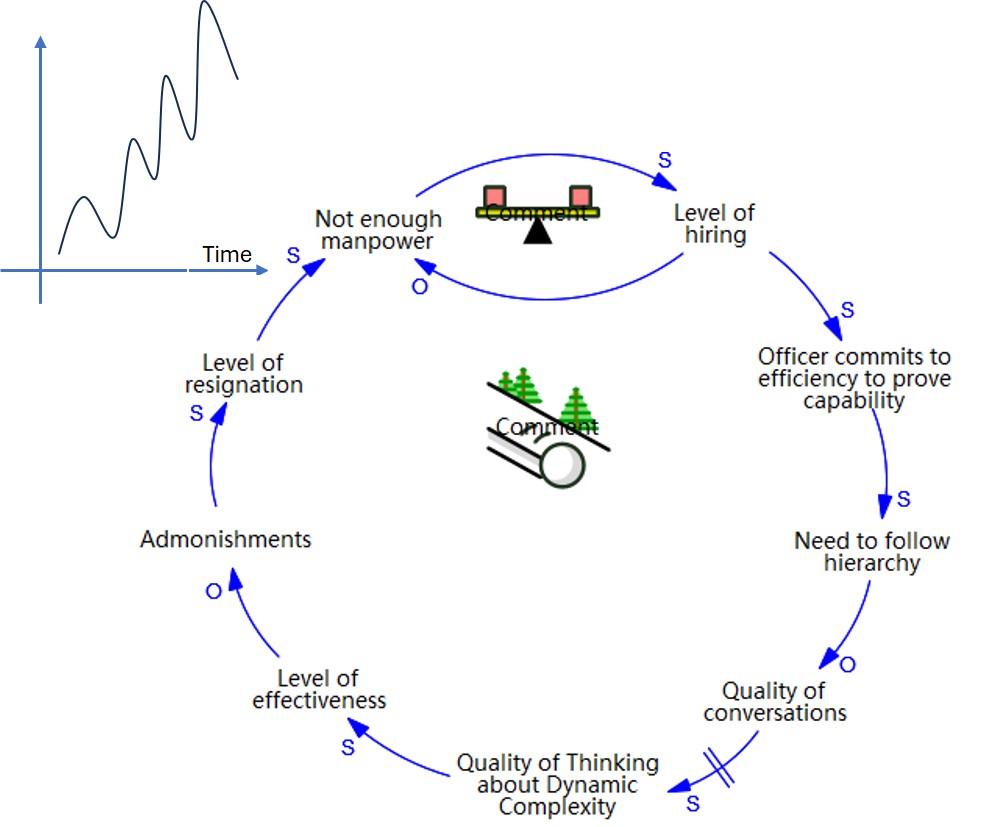

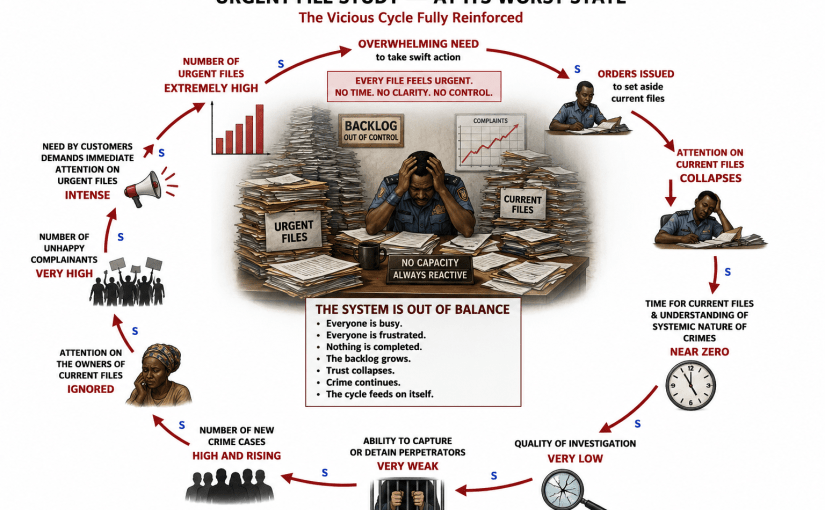
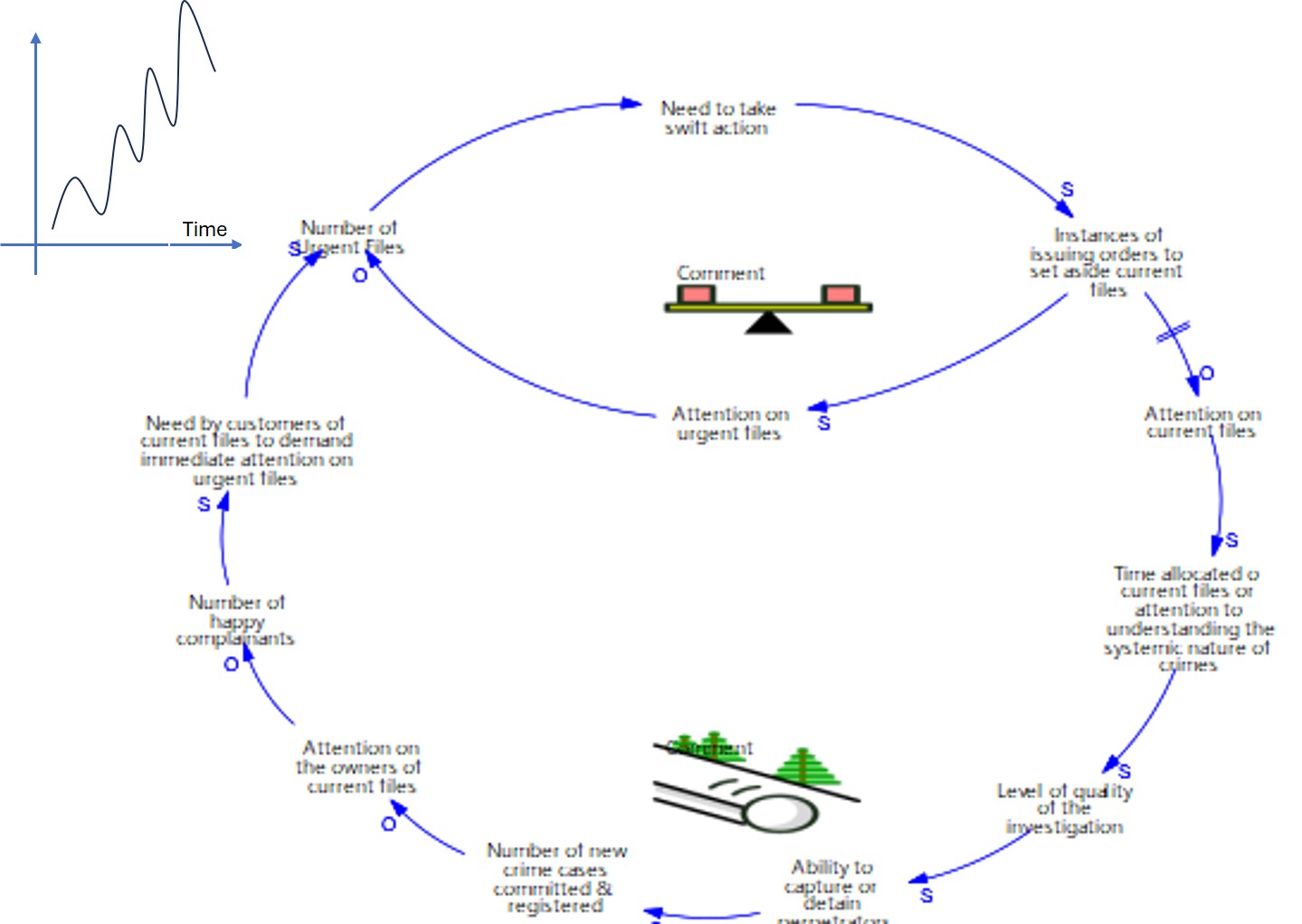






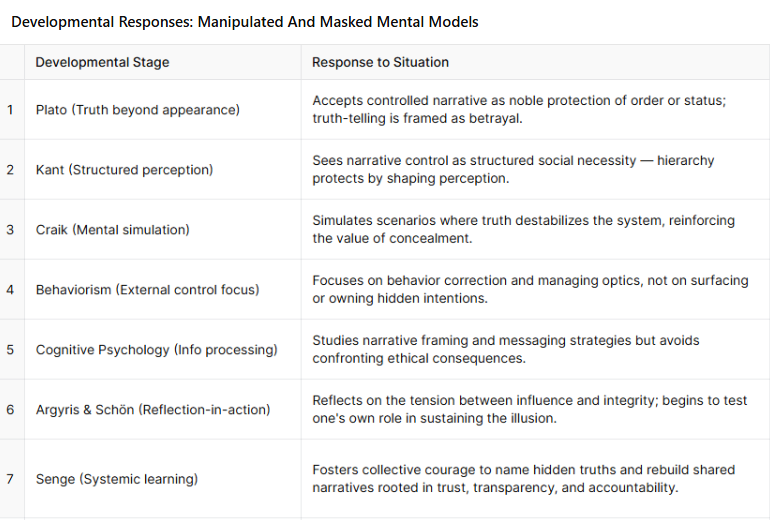




















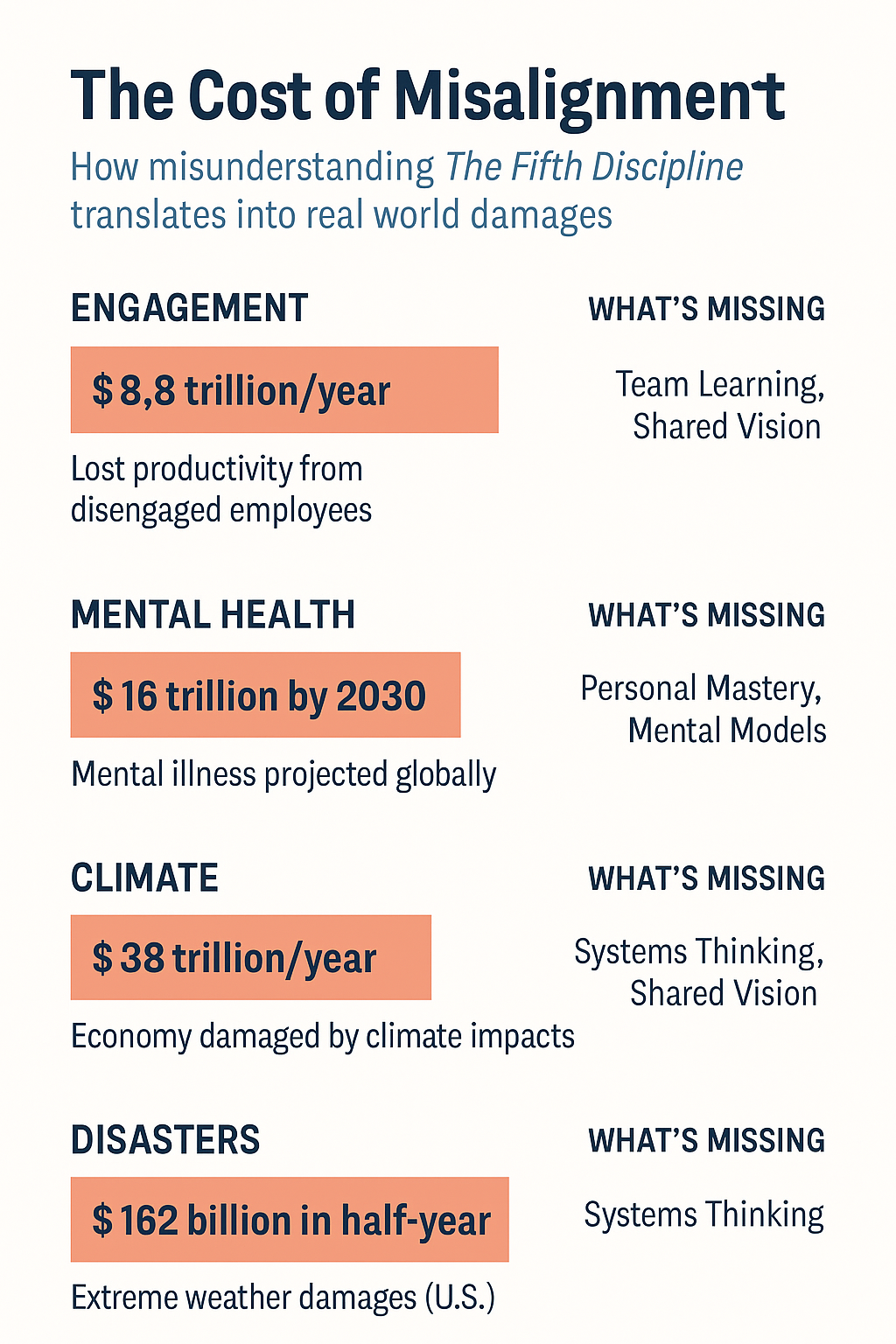





















You must be logged in to post a comment.