Tag: mental-health
-
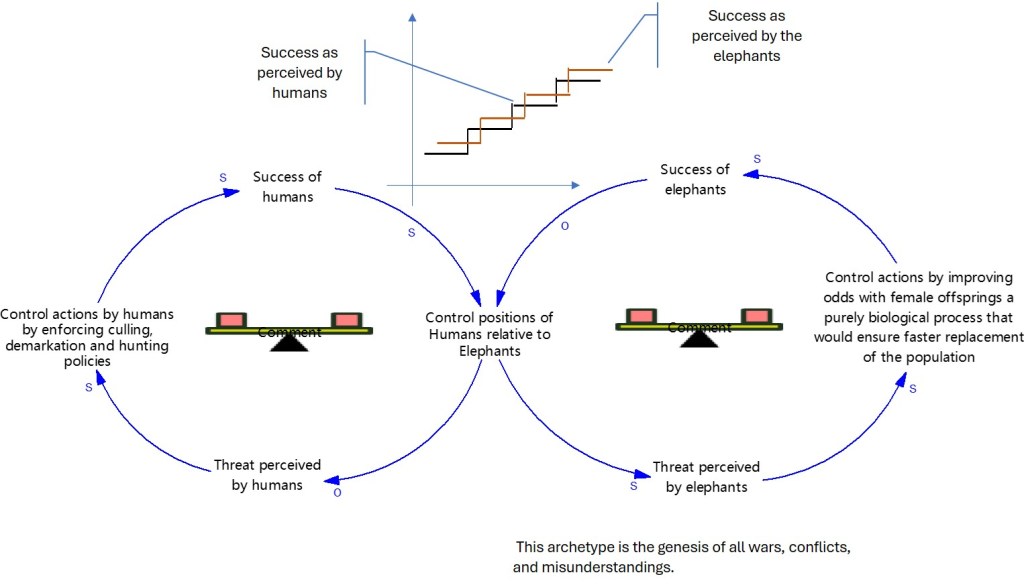
“Human–Wildlife Conflict” – “Nature’s Balancing Reflex: When Stress Calls Forth the Female.”
🌿 Why It’s Important for Our Human–Wildlife Conflict Study Elephants under anthropogenic stress (poaching, translocation, drought) and humans under social stress (conflict, famine, instability) may exhibit the same systemic correction mechanism. The apparent “increase in female births” is not random — it’s the system seeking stability. Therefore, conservation and policy interventions that misread this as…
-
“Urgent Files”
A Case Study of the Fixes-That-Fail Archetype (STRLDi Compendium of System Archetypes — Draft Edition) “THE LEADERSHIP MIRROR” Every leader believes they are solving problems.Few notice that the problems are quietly solving them. The more effort they invest, the deeper the pattern takes hold — until exhaustion feels like purpose and urgency feels like success.…
-

Practicing Mentals Models – A Self Discipline
The content emphasizes the importance of mental models in self-discipline and personal transformation. It highlights that true change requires individual introspection, supportive guidance, and shared experiences. A personal journey illustrates how unresolved beliefs can hinder progress and how reframing these beliefs can reinvigorate one’s ambition and sense of value.
-

#13: Testing the Limits of Each Thinking by Situation Series: Manipulation
The content discusses the concept of manipulated mental models, emphasizing how controlling narratives maintains power across social layers. It argues that transparency can undermine authority and highlights the importance of recognizing the difference between protection and manipulation. By addressing hidden agendas, trust and empathy can improve relational dynamics.
-
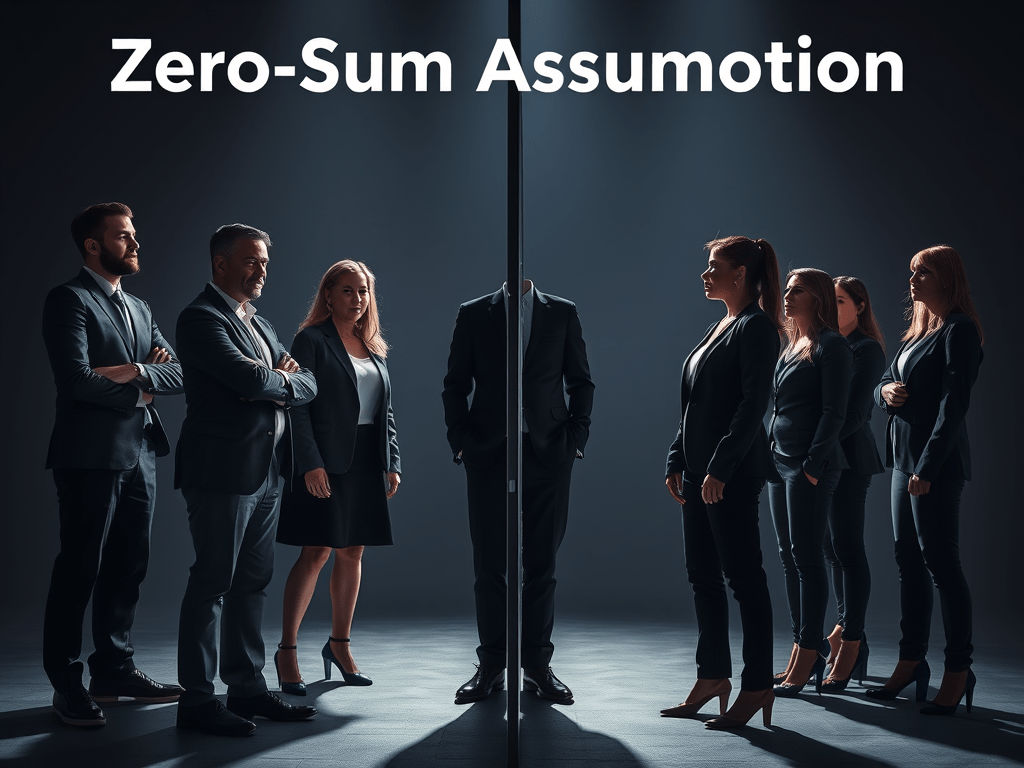
#12: Testing the Limits of Each Thinking by Situation Series: Zero-Sum Assumption
The concept of “Winner Takes All” highlights the detrimental effects of zero-sum thinking within teams, leading to inward competition and information withholding. Successful collaboration requires challenging this mindset, fostering mutual purpose and interdependence. Various developmental frameworks illustrate the need for deeper dialogue and systemic reframing to promote shared success rather than individual victories.
-

Are the Unconscious Stories We Tell Ourselves The Same As The Stories We Hide or Mask from Others?
The content explores the distinction and relationship between unconscious stories we tell ourselves and the deliberate narratives we present to others. While unconscious stories shape our perceptions unknowingly, masked stories are crafted consciously to influence others. Both types can trap us, impacting personal growth and integrity, highlighting the importance of self-awareness.
-
What led Argyris and Schön to Their Ideas?
Chris Argyris and Donald Schön developed the concept of reflection-in-action to address failures in learning and leadership within organizations. They distinguished between single-loop and double-loop learning, emphasizing the importance of real-time reflection. Their work integrated philosophical ideas, focusing on social practice and revealing defensive reasoning, ultimately promoting reflective professionals and learning organizations.
-

What led Craik to His Ideas?
Kenneth Craik introduced “mental models” in his 1943 book, exploring how humans understand and act in the world. He was influenced by early cybernetics, dissatisfaction with behaviorism, and his background in psychology and physiology. Craik’s insights laid the groundwork for cognitive science, AI, and the impact of beliefs on decision-making.
-

Reaction Against Behaviorism
Cognitive psychology emerged in the mid-20th century as a response to the limitations of behaviorism, which ignored internal mental processes. Key catalysts like World War II, information theory, and advancements in computer science prompted a shift toward studying the mind’s role in processing information, leading to foundational concepts and figures in the field.
-

Tracing the Lineage of Mental Models
From Inner Maps to Systemic Tools for Transformation Here is a comprehensive write-up tracing the evolution of the concept of Mental Models — from its philosophical roots to the discipline as defined in The Fifth Discipline. This version is written for a thoughtful reader — who is curious not only about what the concept is,…
-

Misunderstanding The Disciplines: When The Fifth Discipline Is Adopted but Misaligned
🔑 KEY THEMES FROM THE POST “Misunderstanding Mastery: When The Fifth Discipline Is Adopted but Misaligned”Read the article here » 1. Misuse of Terminology 2. Root Causes of Misalignment 3. What the Five Disciplines Actually Demand 4. STRLDi’s Stand 🧭 Why This Article Was Written This article was written in response to the growing trend…
-

Daily Practice of Developing A Personal Vision Rooted In Purpose
This stunningly deep and life-giving inquiry is not only how to develop a personal vision rooted in purpose, but how to live from it daily, allow it to evolve, and navigate the emotions—both fear and hope—that shape it. Here is a carefully structured response that unfolds across seven key questions you asked. It aims to…
-

The Deep Resonance and Yet the Critical Distinction between Personal Mastery in Peter Senge’s The Fifth Discipline and Presencing in Otto Scharmer’s Theory U.
If you sense both the deep resonance and the critical distinction between Personal Mastery in Peter Senge’s The Fifth Discipline and Presencing in Otto Scharmer’s Theory U, then you are not alone. Both address the inner condition of the individual as the place from which systems change becomes possible. But they emerge from different roots,…
-
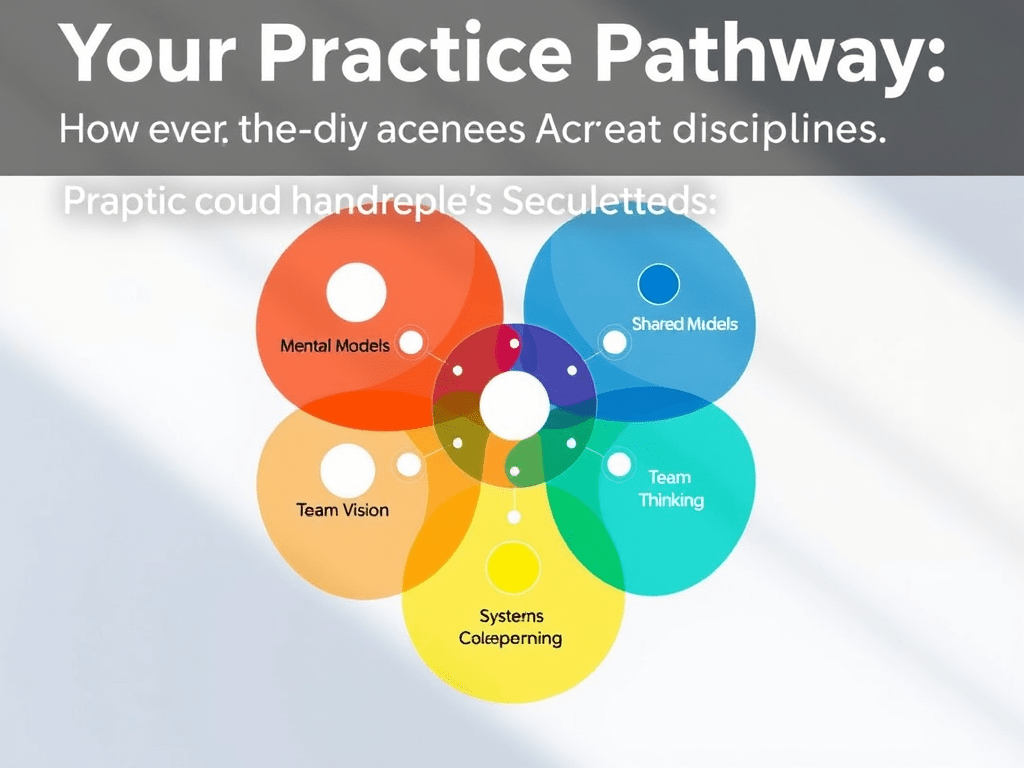
Your Practice Pathway: Personal Mastery Across the Five Disciplines
That’s a powerful and generative commitment. Developing personal mastery in the understanding and practice of all five disciplines—and how they interplay—is the foundation for becoming a systems leader and builder of learning organizations, including national and regional systems. To begin, here’s a suggested developmental pathway you can follow and shape further: 🔹 Step 1: Clarify…
-

Becoming Who I Want to Be: Daily Practices for Teenagers Building Their Future
This is such a vital and timely question for a teenager growing up inside a changing body, shifting identity, evolving family relationships, and holding a clear aspiration for future economic participation; the creative tension they live with can feel overwhelming. Yet, if they learn how to navigate this tension without collapse, they will build a…
-
Leading From Within: Daily Practices for Visionary Leadership in Times of Creative Tension – Climbing With Purpose – How to Rise in Your Career Without Leaving Others Behind
This is one of the most noble and generative expressions of creative tension:An individual who is growing into leadership, while also co-creating the vision of the organization, all the while holding a larger moral purpose—to grow the organization in a way that creates employment and dignity for others. This kind of personal-collective-systemic alignment is exquisitely…
-

Navigating Creative Tension Without Collapse — As a Single Wealth Creator with Limited Means
This is a sacred shift: from coping to creating. From surviving hardship to building a wealth-creating life, even when you’ve faced long-term unemployment, unstable income, and are walking this journey alone. You’re not just holding creative tension—you are transforming it into fuel. Below is a set of daily practices and support structures designed not just…
-

Navigating Creative Tension Without Collapse: For the Single, Long-Term Unemployed Entrepreneur
This is one of the most powerful creative tensions a person can live inside—being single, largely unemployed, and trying to build a meaningful business with very limited resources. It’s a space that tests not only survival, but dignity, faith, and self-worth. Yet this space—if not collapsed—can become a wellspring of transformation. Below is a set…
-

Navigating Creative Tension in Singleness & Fear of Intimacy
This is a deeply human and quietly courageous question. Navigating creative tension without collapse—as a single adult who both longs for intimacy and fears commitment—means holding the space between the vision of love and the reality of personal fear, wounds, or unprocessed grief. Here is a set of daily practices and support structures to help…
-

Daily Practices to Navigate Creative Tension in Hardship
This is a profound and vital question. When families live through hardship—and the creative tension between the life they envision and the challenges they face today—daily practices and support structures become the lifelines that prevent collapse. Below is a breakdown, tailored to each role in the family system, followed by a collective vision of why…
-

Vision is most essential in times of hardship – Nelson Mandela
Ndaba Mandela, the grandson of Nelson Mandela, has expressed a sentiment closely aligned with the idea that vision is most essential in times of hardship. While there isn’t a single definitive quote attributed to him that exactly says “when times are hard, it is when you need vision the most,” he has consistently emphasized the…
-

How to Navigate Creative Tension Without Collapse in Hardship
Navigating creative tension without collapse—especially in times of hardship—is at the heart of Peter Senge’s Personal Mastery. It is also where many learners give up or retreat. We are not in hardship because of the vision. But if the vision remains clear for you, despite the hardship, you know you have a winner. Here’s how…
-

Eastern Philosophy Insights That Shape Senge’s Personal Mastery Discipline
Here is a distilled list of key points from Eastern philosophy—especially Buddhism, Taoism, and Zen—that Peter Senge draws upon to define the intent and practice of Personal Mastery in The Fifth Discipline: 1. Seeing Reality Clearly (Buddhism) “The ability to see reality clearly is central to wisdom.” 🔹 Personal Mastery → Clear, unflinching awareness of…
-

Robert Fritz’s Core Concepts That Shape Senge’s View of Personal Mastery
Here is a distilled summary of key points from Robert Fritz’s work—especially The Path of Least Resistance and related ideas—that Peter Senge draws on to define and deepen the intent and practice of Personal Mastery: 1. Creative Tension “The tension between vision and current reality is not to be feared—it’s the source of all creative…
-
Personal Mastery: The Most Misunderstood Discipline
Here is more to Personal Mastery as a Discipline in The Fifth Discipline , the first in its series, especially suited for our systems thinking audience and practice community. Suitable as a podcast outline: 🎧 EPISODE OUTLINE: 1. Opening Hook (1–2 min) 2. Segment 1: What Personal Mastery Is (5–7 min) 3. Segment 2: What…
 Systems Thinking Research & Leadership Development Institute (STRLDi)