Tag: history
-
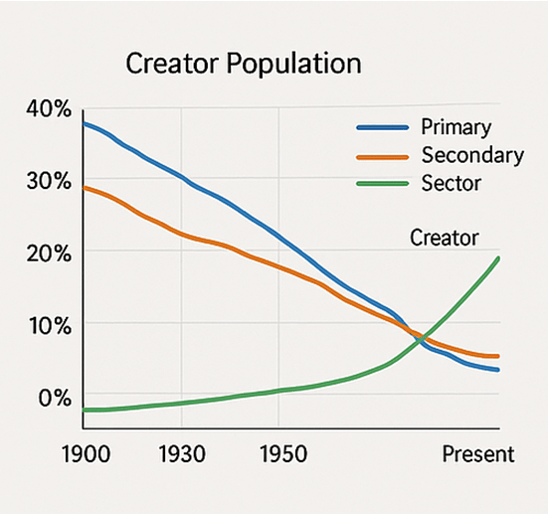
THE GREAT LABOUR MISALLOCATION:
The global attention economy is reshaping employment dynamics, particularly for youth, who increasingly divert their focus from foundational sectors to unstable digital careers. This shift leads to an oversupply of creators, low income stability, and potential societal impacts, threatening essential economic capacities and exacerbating issues like unemployment and mental health crises.
-

Introducing the Compendium: Exploring The Fifth Discipline’s Impact on Leadership
The System Archetype Compendium reveals the structural patterns behind recurring crises in nations and organizations, emphasizing that awareness rather than funding drives transformation. It compiles case studies to encourage national dialogue and learning about systemic issues, providing tools to prevent crises and foster governance through understanding.
-

When the World Speaks … Africa & STEM
The essay explores Africa’s complex relationship with STEM, differentiated into four voices: stewardship, obedience, reactive, and restorative. The stewardship voice reflects Africa’s historical contributions to STEM, while the obedience voice signifies colonial influences that framed STEM as foreign. The reactive voice depicts contemporary fears rooted in this colonial legacy, whereas the restorative voice emphasizes reclaiming…
-

When Economy Speaks … Regional Shared Production Planning – SADC
The post discusses the challenges and opportunities for enhancing trade and production collaboration between Zambia and Botswana. It explores historical barriers such as colonial infrastructure and national self-sufficiency mindsets. The call for shared production planning emphasizes regional interdependence, addressing food security and economic resilience, while leveraging frameworks like AfCFTA for sustainable development.
-

What led Plato and Kanto to Their Ideas?
Plato and Kant addressed the nature of knowledge and reality under different circumstances. Plato viewed true knowledge as attainable through reason, positing eternal Forms beyond sensory perception. In contrast, Kant sought to reconcile empiricism and rationalism, asserting that the mind actively shapes our experiences, meaning we perceive phenomena, not the noumenon directly.
-
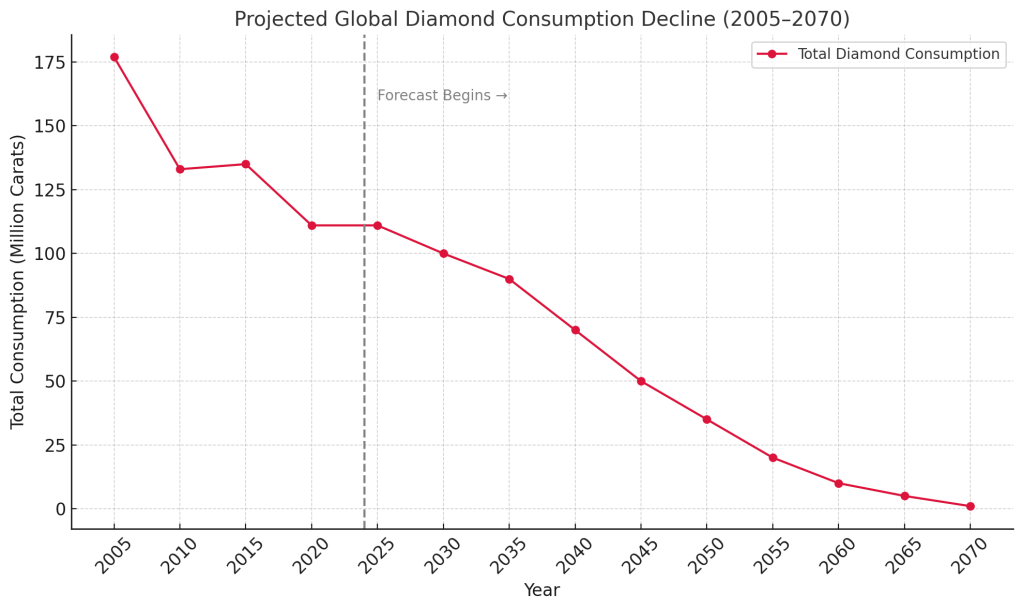
When Economy Speaks … The Global Diamond Market
The diamond market, encompassing natural and lab-grown diamonds, faces a severe decline of over 30%, with predictions of total consumption vanishing by 2050. Key factors include generational shifts valuing experiences over material goods and market oversaturation. Producer economies must transition away from dependence on diamonds to foster sustainable growth.
 Systems Thinking Research & Leadership Development Institute (STRLDi)